The export of voluntary clubs has been recognized as a distinct feature of the ‘British World’. Secret societies, settler associations, clubs, charities, and trade unions were among a plethora of associations that travelled with migrants. These organizations provided settlers with fellowship, mutual support, and opportunities for personal advancement.Footnote 1 In fostering ‘supra-national identities’ these organizations also intensified the connection between distant places.Footnote 2 Individuals at opposite sides of the globe were tied in common membership. This article focuses on one particularly important organization, the Manchester Unity Independent Order of Oddfellows (henceforth the MU).
Recent literature has focused on both the role of associations in identity formation and on their broader social impact.Footnote 3 Work on the Orange Order and St George societies has looked at their role in cultivating ethnic identities among Irish and English migrants.Footnote 4 Elsewhere, Harland-Jacobs has explored how freemasonry fostered ‘imperialist identities’.Footnote 5 Yet the underlying organizational practices of these ‘global’ associations have received less attention. Those practices may seem mundane but they were crucial in facilitating the growth of such organizations and ‘connecting’ members from distinct regions. This article discusses the mechanics of spatial diffusion; how international ‘transfers’ between the constituent parts of an organization were managed; and why associations remained unified in some areas but fragmented in others.
Friendly societies were one of the most important voluntary associations of the nineteenth century. Broadly speaking they were self-administered convivial clubs providing mutual insurance to members for sickness and death.Footnote 6 Large affiliated orders – like the Oddfellows, the Foresters, and the Rechabites – emerged in industrial centres in the north of England early in the nineteenth century. These societies were organized around small ‘lodges’ of up to 150 members. The vast majority excluded women and most catered for skilled workers in stable employment. Although similar to the freemasons in ritual practices and a federal organization (with an interlocking system of grand lodges, districts, and lodges), friendly societies were distinct. Sickness and funeral benefits were much more formalized. Members were entitled to remuneration if they were sick, and most lodges had a contracted doctor. Before widespread commercial insurance and state welfare schemes emerged as alternatives, these societies were one of the few ways in which settlers tackled the ubiquitous problem of morbidity.
‘Friendlies’ were unusually large associations. In 1900 the Manchester Unity Independent Order of Oddfellows had 819,567 members, with 95,021 of these outside Britain.Footnote 7 In the USA and Canada, the North American Independent Order of Oddfellows (the IOOF) had 1.9 million members by 1921, representing 6% of all males over sixteen.Footnote 8 In 1900 Victoria (Australia) had 95,819 members in 29 societies and by 1895 there were over 50,000 friendly society members in New Zealand.Footnote 9 Peter Clark placed ‘friendlies’ in the more general category of ‘benefit associations’, which was one of the most widespread forms of clubbing in the early modern period.Footnote 10 Moving into the nineteenth century, friendly societies grew in relative influence but they were still part of a broader spectrum of self-help organizations.Footnote 11 Therefore, although ‘friendlies’ were a distinct type of organization, studying them sheds light on associational culture more generally.
This article makes two historiographical contributions. First, although there are excellent studies of friendly societies in individual countries, comparative and international studies are scarce.Footnote 12 The regional and national focus of the existing literature may be one reason why ‘friendlies’ have not featured in recent work on the ‘British World’.Footnote 13 Yet this oversight is unjustified. Friendly societies had as many members as trade unions, charities, and settler societies, organizations that Magee and Thompson have focused on in their recent work on globalization in the nineteenth century.Footnote 14 Second, this article contributes to our understanding of associational culture in the ‘British World’ by assessing how successfully this organization coordinated its activities in distant places.
The article is divided into three parts. Part one documents the diffusion of MU lodges and identifies ‘micro-social’ and ‘macro-structural’ forces that explain this growth. Part two examines global transfers between different districts of the society, drawing on the concept of a ‘network’, which has become influential in ‘British World’ scholarship.Footnote 15 International connectivity was engrained in the psyche of the MU, and after the South African War its Grand Master claimed that ‘our work has done almost as much as anything else to cement together the English speaking world’.Footnote 16 However quotations such as this prove little but the existence of a rhetoric of ‘globalization’ if it cannot be demonstrated that international ‘transfers’ counted for something in social and organizational practice.Footnote 17 I identify specific ‘transfers’ – of people, funds, and information – between lodges of the MU and argue that, although coordinating these transfers was extremely difficult, the effort was justified because it helped migrants save for times of infirmity. Part three discusses the centripetal and centrifugal forces within the MU and why the organization remained intact in some regions but fragmented in others.Footnote 18
The specific focus on the Manchester Unity Independent Order of Oddfellows requires justification. First, the size and influence of this organization is one reason for the choice. Second, despite being atypical in size the MU was similar in organizational structure to other ‘affiliated societies’ such as the Foresters. Therefore any findings will be relevant for scholars working on other friendly societies. Third, the focus on this organization has allowed me to pursue a particular methodology. This article investigates the MU at multiple spatial levels, and this approach would not have been possible without particularly rich source material. Annual reports, directories, and the Order's magazine have been used for a ‘bird's eye’ view of the society as a whole. Elsewhere I have used local-level records, such as minute books, registration, books and district level reports, for a grassroots perspective. These sources are very rare and the records for the MU in Victoria, Australia, are unusually complete.Footnote 19 By focusing on a single society, and using sources from both the ‘centre’ and the ‘peripheries’, this article makes conclusions about the experience of the MU across the English-speaking world without obscuring local peculiarities.
Origins and geographical diffusion
The Manchester Unity Independent Order of Oddfellows was the largest friendly society in the world and the progenitor society of other Oddfellow associations that, as we will see, broke away from the MU over the nineteenth century. Like most friendly societies, the MU claimed an ancient lineage going back to biblical times.Footnote 20 In reality it was formally established in Lancashire between 1809 and 1812.Footnote 21 Lodges proceeded to spread to other regions: the first Oddfellows lodge in the USA was founded in 1819 in Baltimore;Footnote 22 over the next three decades MU lodges were established in New Zealand (1841), Australia (1844), Canada (1843), Barbados (1846), and South Africa (1858).
At one level the successful spread of friendly societies such as the MU was a consequence of a universal problem for wage earners: loss of income due to illness or injury was one of the great risks to the standard of living of a wage earner's household.Footnote 23 In the absence of commercial health insurance and the welfare state, a patchwork of protection emerged.Footnote 24 Friendly societies were one of the most important organizations in the ‘mixed economy of welfare’, providing benefits to cover lost wages, medical attendance, and medicine, and lump sum pay-outs for relatives on the death of a member. Most societies provided a bundle of these benefits. Death pay-outs helped to mitigate the shock to the household from the loss of a wage earner but they also spared the deceased from the social stigma of a pauper burial.Footnote 25 Benefits were psychological as well as financial; the desire for brotherhood, regard, and status were also important.Footnote 26 The rulebook of one of the first Australian friendly societies justified its existence in precisely these terms:
[W]e may not recount all the sufferings that a few weeks illness may occasion, the examples are as numerous as they are appalling … We can perceive nothing to cheer us in the prospect of sickness and adversity, except through our united exertions to save from our weekly gains such an amount as may form a fund to relieve those who may be unable to provide for themselves and families the common necessities of life … Formed in such a society we cease to be strangers and friendless in this land of our adoption.Footnote 27
The emphasis on inter-personal bonds between members was a result of the basic organizational unit of the friendly society movement: the ‘lodge’. ‘Friendlies’ were organized around semi-autonomous ‘lodges’. Between 1866 and 1900 the average members per lodge in Victoria fluctuated from fifty-nine in 1879 to eighty-six in 1900, groupings small enough for members to build meaningful friendship ties.Footnote 28 Lodges appointed their own officials, initiated new members, administered benefits, collected contributions, and met frequently for both official and convivial reasons. The Oddfellows had a federal structure that curtailed lodge independence to a degree. Yet even in this large Order a lodge functioned in much the same way as in a ‘local’ society.Footnote 29 The lodge was crucial to the functioning of a friendly society; the social intimacy of members curtailed opportunism and reduced monitoring and transaction costs. Moreover, for many migrants they served to reconstitute a Gemeinschaft community based on ‘fictive kin’ relations between ‘brothers’.Footnote 30 Lodges were so important in migrant social networks that some were formed on boats before disembarking.Footnote 31
Lodges travelled with migrants. Using the directories of the MU, which list the lodges of the Order, it is possible to summarize their spread. In the 1840s and 1850s the MU established outpost lodges around the globe but the Order had not yet gained momentum in any one region. In 1845 the MU had just twenty-seven lodges outside Great Britain.Footnote 32 By 1858, however, it had spread to all the regions where it would remain influential. In total there were 130 non-British lodges. Of the seventy-two in Australia, twenty-one were in New South Wales, twenty-two in Victoria, eighteen in South Australia, eight in Tasmania, and one in West Australia. There were twenty-five in Canada, eighteen in New Zealand, seven in the USA, three in Barbados, two in South Africa, one in Malta, and one in Calcutta.Footnote 33 From this point on, Victoria led the way.
In the 1860s and 1870s lodges began to proliferate. In 1866 there were 265 lodges outside the UK; by 1877 this number had risen to 526.Footnote 34 Yet it was the 1880s and 1890s that were crucial decades in the expansion of the MU into the rural interior of the ‘regions of recent settlement’. By 1887 the Order had reached the west coast of Canada and the interior of South Africa and Australia. The depression of the 1890s hit Antipodean membership figures hard but lodges were surprisingly resilient. The number of lodges in Australia actually increased from 446 in 1887 to 543 in 1895.Footnote 35 Much of the growth was in the rural interior (see Figure 1).
The Manchester Unity Independent Order of Oddfellows in 1913. Source: A list of the lodges composing the Independent Order of Oddfellows, Manchester Unity, Manchester, 1914, OOA.

By 1913 the MU had 1,279 lodges around the world. Figure 1 shows the influence of the Order in select regions. Throughout the period, lodges in the USA were concentrated in Massachusetts, New York, and Connecticut. In Canada, lodges clustered around the Great Lakes and the coast of Nova Scotia and New Brunswick. Lodges in South Africa were mainly in mining regions and ports. In Australia and New Zealand, however, lodges had spread to both rural and urban areas.
The dominance of the Antipodes is reflected in the membership figures (see Figure 2). By 1900 there were over 21,500 MU Oddfellows in Victoria, 18,993 in New South Wales, and 13,729 in New Zealand. Canada and the USA were some way behind across the period, with 7,216 and 1,763 members respectively in 1900. However, these figures do not include the number of Oddfellows in the North American IOOF and do not capture the post-1900 increase in MU members in Canada (unfortunately the relevant tables were not published after 1900). By 1920 there were ninety-six lodges in Canada with 5,903 members, representing a large increase.Footnote 36
Regional breakdown of MU members in 1900. Source: Independent Order of Oddfellows, Manchester Unity, quarterly report, April 1900, Manchester, 1900.
How and why did the MU spread so far and wide? These questions can be unpacked through a dialectical micro–macro approach. The proliferation of lodges around the ‘British World’ can be considered a grassroots variant of what Belich has termed ‘institutional cloning’.Footnote 37 The federated structure of the Order was conducive to the spread of lodges: while each lodge was autonomous, the Order provided infrastructural support for establishing new lodges. Theoretically one needed a dispensation from Manchester, but this document could be acquired retrospectively. The Strangers Refuge Lodge in Nelson (New Zealand) was established on the voyage from Liverpool, when Thomas Sullivan realized that several of his passengers were fellow members of the MU.Footnote 38 Dispensations were large parchments lavishly decorated with seals, signatures, and elaborate calligraphy proclaiming the principles of Oddfellowship.Footnote 39 They served a ceremonial purpose and augmented the sense of occasion at the founding of a lodge. Rulebooks, registration books, minute books, collection books, and other vital administrative items could be ordered from the local district, which in turn sent moneys for these goods to the Order in Manchester.Footnote 40 This ‘set-up kit’ approach allowed lodges to adopt standardized and up-to-date bookkeeping practices without any learning through trial and error. The governance structure of the MU was expressly geared towards expansion. In Australia, the moveable committee system, where delegates met annually in different locations, was used for ‘cementing and circulating the glorious benefits of out noble institution throughout the colonies’.Footnote 41 New Zealand lodges pushed for a Triennial Moveable Committee in the belief that ‘other societies have “boomed” because of having such a body control their affairs’.Footnote 42
As important as the federal structure was, alone it could not have cultivated expansion: agents were required for that. MU officials were particularly proactive. The founding of a lodge at Murchison in Canada in 1903 was fairly typical. A group of officials from various lodges took a train to the new lodge, initiated candidates and officers, and gave them instructions about running the lodge.Footnote 43 The same model was followed in Nova Scotia in February 1901, when a group of fifteen lodge officials from the Arcadia district travelled to French Village, where they instituted a new lodge, before going on to Halifax to inaugurate the King Edward Lodge.Footnote 44 Supervision prevented the foundation of ‘bad’ lodges. The pursuit of expansion was not allowed to undermine financial stability and in 1882, reflecting on the early spread of the society, the Grand Master of the Victoria district argued that ‘the Order has never adopted in any one case the unwise and financially unsound practice of taking in foundation members at low entry money and often at advanced age simply for the purpose of starting a new lodge’.Footnote 45 Supervision in the foundation phase of the lodge was particularly critical given that it was in this early phase that lodges were most vulnerable.Footnote 46
In England, many lodges were founded through existing local societies affiliating with the MU, but in the colonies the drive to spread the Order seems to have been stronger. A letter from Pietermaritzburg to the Oddfellows Magazine in 1901 argued that ‘our Order is the strongest in South Africa but we must not be content with this, but rather be more energetic and vigorous … [and] claim the new colonies almost solely as strongholds of the Order’.Footnote 47 The Natal district went on to achieve a recruitment rate four times that of the Order in Great Britain.Footnote 48 In Barbados, Brother John C. Cordle was a particularly enthusiastic Oddfellow, setting up lodges in Trinidad and Jamaica.Footnote 49 Meanwhile, in 1898 the Grand Master of the Victoria district congratulated the Order ‘on possessing among its members men who are continually on the alert to inaugurate a branch of the Order in any of the new settlements which are being formed’.Footnote 50 In addition, top-level officials regularly undertook tours to aid the foundation of new lodges. In 1903 the Grand Master of New South Wales announced that his upcoming tour of the Hunter River district ‘will be the means of spreading the Order more general than it has been previously’.Footnote 51
More generally there were ‘macro-structural’ forces that lay behind the growth of the MU. The migration process itself boosted the impulse to establish friendly society lodges.Footnote 52 Through correlation analysis, Gorsky has argued that the growth of lodges in the industrial north early in the nineteenth century was not just a consequence of the pressures of industrialization; lodges were also a means for an increasingly mobile workforce to create ‘fictive kin’ networks in unfamiliar circumstances.Footnote 53 Migration disturbed informal patterns of relief and left individuals and households less able to cope with uncertainty. Friendly societies helped overcome this challenge. They also provided access to social networks in far off lands.Footnote 54 Given the importance of internal migration in the birth of the friendly society movement it is unsurprising that ‘friendlies’ became important for international migrants in the late nineteenth century.Footnote 55 Yet mass migration alone cannot explain their growth. Temporary migrations were not as conducive to the foundation of fraternal organizations such as friendly societies because a sojourner would not have had as much incentive to invest capital for deferred benefits if they intended to return home in the near future. Mass migration and settlerism are different phenomena. Settlers do not just occupy another's land, nor do they simply recreate their homeland; they modify the metropole in the process of settlement.Footnote 56
As settlers created new societies they set up durable institutions such as ‘friendlies’ to cement and stabilize their lives. In 1914, on the diamond jubilee of the Loyal Natal Unity Lodge, the Mayor of Pietermaritzburg called ‘the building in which they sat a golden monument to the early pioneers, who by their wisdom and forethought had established that institution for self help and mutual thrift’.Footnote 57 Settlers also discarded old world institutions. One aspect that Australasian colonial authorities were intent on avoiding was the new Poor Law, which was never adopted in Australasia as it had been in (early) North America.Footnote 58 The aim was to produce a new world without welfare.Footnote 59 Similarly, there was pronounced Canadian resistance to the poor laws in the mid to late nineteenth century.Footnote 60 Generally, politicians in settler societies abhorred the poor laws and chose to believe that if poverty existed it must be the result of thriftless behaviour.Footnote 61 In his tours of Australia, James Inglis realized that ‘friendlies’ fitted well within this ideology and grew because of the lack of any alternative.Footnote 62 By the end of the nineteenth century, attitudes to government welfare were changing. Although the Order's magazine approved of the 1898 Old Age Pension Act in New Zealand, the author worried that it would have ‘the effect of causing people to become too careless and indifferent to the future’.Footnote 63 The effect of government welfare is important in relation to the decline of friendly societies, but this is a complex debate and is outside the scope of this article.
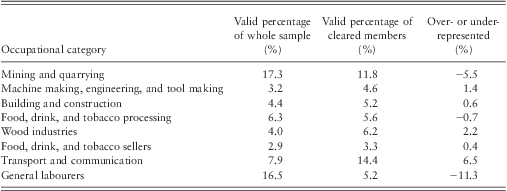
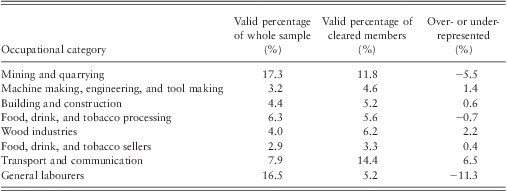
Industrialization was another force that initiated the friendly society movement, and the geographical spread of ‘friendlies’ mirrored the spread of the wage labour system.Footnote 64 Friendly society members were overwhelmingly skilled working-class institutions, but the higher real wages in regions of recent settlement allowed less well-paid workers to join as well.Footnote 65 Unskilled and general labourers had a better chance of being able to afford the weekly contributions overseas than in Britain, where the poorest third of the working class were not well represented.Footnote 66 In Caversham and Dunedin in New Zealand 25% of members were unskilled and a further 12% were semi-skilled.Footnote 67 In South Africa many lodges were founded in mining areas but, as the South African Medical Journal acknowledged in 1907, the majority of members were wage labourers too poor to afford private medical care.Footnote 68 In Victoria a sample of five lodges, mainly chosen because of source survival, shows that general labourers and miners were the most prevalent occupations in both rural and urban lodges (see Table 1). In contrast, in the USA fraternal organizations had a more cross-class flavour.Footnote 69 However the ‘fraternal’ bracket is a broad one including masonic societies, and like other friendly societies the North American IOOF was a ‘working-class’ organization. White-collar occupations were well represented in the Canadian and American IOOF, but blue-collar jobs dominated. In Toronto in 1911 most lodge members were shopkeepers or skilled labourers, and in a sample of nine IOOF lodges from 1877 to 1914 blue-collar occupations ranged from 35% to 80% of all members.Footnote 70
Occupations of members in five MU lodges in Victoria, 1858–1915
Sources: NBA, Membership Registers for the Loyal Camberwell Lodge (Z262, Item 237), the Loyal Stawell Lodge (Z227, Box 410), the Loyal Gold Miner's Pride Lodge (Z227, Item 74), the Loyal Myrtleford Lodge (Z227, Box 3), and the Loyal Mildura Lodge (Z227, Item 415).
The spread of friendly societies into settler societies was also driven by the expansion of agricultural frontiers. David Neave's pioneering research has shown that agricultural labourers were not excluded from the friendly society movement in Britain, as was often assumed to be the case.Footnote 71 The globalization of agriculture was a driving force behind mass migration to the regions of recent settlement, and MU lodges followed in the wake of frontier expansion. In 1900 one correspondent pointed the officials of the Natal District to the settlement of Ladysmith, ‘a garrison town, with a white population of about 3000 situated in a good pastoral and agricultural district’, as suitable for a new lodge.Footnote 72 In Canada, lodges were so spread out across the prairies that delegates were expected to travel up to 800 miles for district meetings.Footnote 73 In New Zealand, rural labourers in small remote villages established many MU lodges.Footnote 74 Some lodges were so remote that the ‘tyranny of distance’ made functioning impossible: one reason why the Loyal Melton Lodge in Victoria imploded was that there were no doctors living within a commutable distance.Footnote 75 Yet the society continued to expand into rural Australia. In the 1890s, with ‘the present trend of population towards the country, rather than the continued congestion in the metropolis, it is natural that new settlements and townships will spring up’, wrote one Grand Master of Victoria, and he pressed the MU to take advantage of this geographical trend.Footnote 76
The British empire was another force in the global spread of friendly societies. Imperial networks were the bedrock of cooperative and collaborative exchange; they engendered a sense of interdependence and created links that bridged the ‘Old’ and ‘New’ worlds.Footnote 77 For many MU officials, establishing branches in the colonies was seen as a logical extension of the goals of the society at home. Imperial networks also fostered common lifestyle norms.Footnote 78 Workers were more likely to found new lodges of existing British societies than to set up entirely new societies, so as to replicate patterns of British associational culture. The empire also aided the growth of friendly societies by establishing a relatively common institutional framework.
The primary intermediary in the relationship between ‘friendlies’ and the state was the office of the Registrar of Friendly Societies. This office was responsible for registering lodge rules and compiling lodge statistics.Footnote 79 Registration was incentivized with concessions. The 1855 and 1875 Acts of Parliament authorized the purchase of buildings and the investment of funds in mortgages and land for registered lodges.Footnote 80 Registrar offices were set up in the colonies, and by 1886 there were registrars in New South Wales, New Zealand, South Australia, and Victoria.Footnote 81 While these offices were theoretically autonomous they replicated the practices of the office in Britain. The New Zealand Friendly Society Act of 1877, for example, was modelled on the 1875 British act.Footnote 82 These offices also established connections with one another. In 1879 a MU reported ‘that the Registrar in Britain has promised to place himself in communication with the Colonial Registrars, with a view of carrying out … the increase in the number of registered lodges’.Footnote 83 In New Zealand the registrar from 1885 to 1902, Edmund Mason, was particularly good at getting lodges to register and instructing them in actuarial principles.Footnote 84 The MU was experienced at interacting with the registrars; in particular, officials knew how to get rules accepted and how to make financial returns. The MU also turned to the registrars for advice, support, and information. In debating an increase in contributions in 1868, the Victoria district regularly interacted with the registrar, and the Grand Master announced he was ‘that gratified to find that [the registrar] had already organized a staff to work out the vital statistics of the colony and of our friendly society, with a view to the preparation of tables of sickness and mortality, similar to those at home’.Footnote 85 Some officials thought that the registration legislation was so advantageous that they pressed for its extension. In 1911 the friendly societies in Jamaica were ‘agitating for an amended and improved friendly societies’ law embodying the principal points of the English Friendly Societies Act’.Footnote 86
The registrar's office did not exist in the USA, and British officials argued that this weakened friendly societies. A 1904 report on Oddfellowship in the USA argued that lodges were not actuarially sound, that they did not have facilities for prosecution in cases of fraud and misappropriation, and that they were not benefiting from concessions such as the exemption from stamp duty.Footnote 87 Yet there is no definitive evidence that the absence of a registrar impeded the growth of friendly societies in the USA.
Transfers
Many friendly societies were self-consciously globalized. This awareness stands in contrast to Paul Johnson's argument that ‘friendlies’ accentuated the particularism of localities.Footnote 88 In February 1845 the Independent Order of Rechabites (Salford Unity) received a letter from Toronto in which the author proclaimed that the Rechabite movement ‘is not national or sectarian, but universal, in its adaptation, disdaining to be circumscribed by geographical boundaries or political institutions’.Footnote 89 This sort of rhetoric served a purpose. For the MU, emphasizing the society's international credentials helped justify the somewhat overblown claim that it was ‘an Order cosmopolitan in its character … debarring no country, colour, nor creed from participation in its benefit and privileges’.Footnote 90
Did globalist rhetoric accord with organizational practices? How interconnected were individual lodges in the global ‘network’ of MU lodges? The second part of this article looks at ‘transnational transfers’: in particular, exchanges of people, funds, and information. These transfers were complex and multifaceted. In some ways, the MU was a well-connected global organization. However there were centrifugal forces constantly at work that undermined the ‘vertical integration’ of the various levels of the society. It is important to be specific about the boundaries of transnationalism. In the case of the MU this means identifying where transfers were successful and where they were unsuccessful. All of the following is grounded in evidence from Victoria, but I also refer to other regions. It would be impossible to go into great detail for every region to which the MU spread. Moreover to investigate these transfers required in-depth archival research and the archival holdings for the MU in Victoria are unique, giving grassroots insights not visible in the British MU records.
A pillar of the MU was the clearance system, which allowed membership rights to be transferred from one lodge to another. The member's old lodge issued him with a clearance certificate, which he ‘threw in’ to the new lodge.Footnote 91 The traveller was embedded in the psyche of the Order. An Oddfellows songbook of 1823, reprinted in 1866, contain the lyrics to the ‘Song of the wanderer’, which began:
I've wandered far on foreign strands,
Where fate has bade me roam;
And oft tho’ strange in stranger lands,
I've found a welcome home.
A friendly Brotherhood I've met,
Co-mingling age and youth;
And never can I e'er forget,
Their Friendship, Love and Truth.Footnote 92
The clearance system, like the ‘Song of the wanderer’, emerged in the first two-thirds of the nineteenth century, a period dubbed the ‘great age of the tramping artisan’.Footnote 93 Based on a statistical study by Francis Neison in 1877, historians have argued that travelling benefits became less important from the mid century.Footnote 94 This trend was symptomatic of a shift from temporary internal migration to international migration, and international clearances were common by the mid century. Many members arrived in Victoria with clearances in 1852 in search of gold.Footnote 95 International movements were sufficiently important that the MU set up reciprocal travelling rights with the American IOOF in 1850 and a separate Canadian Order of Oddfellows in 1853.Footnote 96 The movement of members did not end with the decline of tramping and international migrations have been underestimated.
The rules governing clearances changed over time.Footnote 97 Generally MU lodges were obliged to accept members under forty-five.Footnote 98 Initially there was no additional premium for transferring membership.Footnote 99 However, age-based tariffs were introduced as the MU became more financially sophisticated. The logic behind these tariffs was that if a member had paid contributions to one lodge for a number of years so as to cover the risk of making future claims, then this stock of capital should travel with the member to the lodge that would be liable for future benefits.Footnote 100
Clearances were less important than initiations for recruiting new members but still represented a significant stream of people. The percentage of new members joining lodges in Victoria by clearance hovered around 10–15% between 1878 and 1900; however, in 1882 and 1883 this value was 38% and 25% respectively. The lines in Figure 3 mirror general migratory trends, with a steady increase until 1890 and then a decline and a pick-up in the second half of the next decade. Clearances into lodges outstripped clearances out of lodges during the 1880s, indicating that Victoria was receiving clearing members from outside the colony. From 1890 to 1900 clearances out were greater than clearances in because many members were emigrating from the colony as economic opportunities haemorrhaged.
The volume of clearances in and out of Victoria friendly societies, 1878–1900. Source: ML, Q319 2/V, ‘The statistical register for the colony of Victoria, 1900’, pp. 681–3.
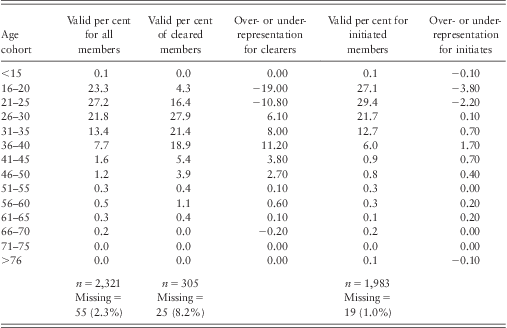
What kind of individual cleared? In a sample of five Victorian lodges 305 (13.1%) of 2,376 members were admitted by clearance. These ‘in-clearers’ had a mean age of 31.6 as compared with a mean age of 26.7 for all members. Of the 246 for whom the last place of residence was listed, 14.1% recorded England and 45.6% Victoria, compared with 5.7% and 44.4% respectively in the complete sample. Therefore, although English migrants were overrepresented, the system was particularly important for internal migrations. In terms of marital status, 43.3% of all members were single on admission and 56.9% were married. In contrast, 81.8% of clearers were married and only 18.2% were single. These figures undermine the idea that the clearance system catered for young single migrants. Table 1 records select data on occupation. The small figures reflect the large spread of occupations in the total sample. Miners were actually less likely to clear than other occupations: they made up 17.3% of the total sample but only 11.8% of those who entered by clearance. Those working in transport and communications (engine drivers, railway employees, carters, telegraphists, and railway engineers) were the most overrepresented category. In contrast, general labourers were the most underrepresented, suggesting that poorer members found it more difficult to move between lodges.
Vertical integration is taken here to mean the organizational alignment of the different levels of the MU in different locations. The scope for misalignment over clearances was considerable. There were variations in how the system was run. Some lodges granted ‘informal clearances’ with little of the required information on the clearance form.Footnote 101 Many districts developed their own independent clearance systems to cope with internal migration and this frustrated establishing uniform international practices. The USA was the most important destination for British migrants, and from the late 1870s the MU repeatedly tried to set up reciprocal rights with the North American IOOF.Footnote 102 The MU wanted special passwords but the IOOF already had separate passwords for clearers and members with ‘travelling cards’. The IOOF reasoned that an extra password would have made things too confusing and instead proposed the exchange of the MU password and the North American clearance password instead.Footnote 103 An informal agreement was struck. Yet the example highlights the challenges faced in coordinating the system.
For a receiving lodge the clearance system was a double-edged sword. New members spread future liabilities over more members. However, they could be a burden. Lodges had less control over entry than with an initiation. Through the proposition and seconding process, lodges could vet poor candidates. Lodges latched onto the social networks of their members and charged them to inquire as to whether the recruited individual was of good health and a sound moral character.Footnote 104 In contrast, a cleared member could be refused but only on health grounds and only after following rigorous procedures.Footnote 105 Furthermore, the member could always appeal. Many lodges were concerned that they were taking on liabilities by accepting cleared members, and consequently colonial lodges wanted more control over the clearance system. Their concerns were not misplaced. Recruiting young members was vital to the stability of a lodge. However clearers into lodges aged between fifteen and twenty are significantly underrepresented, while those over twenty-five and particularly those between thirty-five and forty years of age are overrepresented (see Table 2). From 1853, after much protest, the MU gave the Sydney district further powers over the clearance system and printed a notice in that year's report that any member arriving in the colonies from beyond Australasia should produce a surgeon's certificate stating that he and his wife were in good health and that he was not over thirty-six. Moreover, the member was required to pay six months’ contributions up front, or twelve months’ if he was over thirty-six.Footnote 106 From 1880 the MU reports also contain a reoccurring notice from the Sydney and Canadian districts that lodges should also supply emigrating members with a letter of recommendation.Footnote 107
If colonial lodges were concerned with letting members in too easily, British lodges were concerned with the reverse. A sending lodge was eligible for benefits for the first twelve months after the member joined a new lodge.Footnote 108 This rule was a variant of the general waiting period that all members had to go through before they could claim benefits.Footnote 109 Upon sending for remittance, some Australian lodges discovered that the cleared member was more than six months in arrears and was ineligible for benefits.Footnote 110 Clearly some members emigrated before settling up with their home lodge. Under these circumstances the clearance form was normally incomplete and the MU reports repeatedly contained notices for colonial lodges that they should return any incomplete clearances so that member could be charged for arrears.Footnote 111
Whether the clearance system proactively influenced migration is impossible to tell. However, at the very least it can be said to have smoothed migration.Footnote 112 At one level, social capital networks were embedded in organizations such as friendly societies.Footnote 113 At another level, the system harmonized the potentially incompatible goals of the ‘prudential saver’ and the ‘prospective migrant’. As one individual told a Royal Commission in 1892, ‘the working man, who is not satisfied with his lot can … establish himself in a new home without losing any of the advantages for which he has subscribed’.Footnote 114 Friendly society membership required small and regular contributions for deferred and uncertain returns. Migration usually required a large capital expenditure to make the initial move. If an individual decided that he was going to migrate, it is easy to imagine how this commitment might have affected his participation in a society that did not offer transferable membership. Why would one continue to invest if there was a high probability that the years when one would need sickness insurance the most – in old age – were going to be spent in a place where any money invested would be useless?
The February 1911 quarterly report of the Nottingham Imperial Independent Order of Oddfellows, a smaller organization that broke away from the MU, discussed this precise issue. Over the previous decade the management committee had pressed for reform of the clearance system to make clearing easier. Delegates had opposed reform on the grounds that they did not want the central funeral fund of the UK to be liable, and did want independent colonial district funeral funds. In 1911 the Grand Master reported to members that:
this constant drain of our young life by emigration has materially affected the position of the Order and it can readily be conceived that where persons are thinking of leaving the old country, they will not hamper themselves with payments that are likely to retard the accomplishment of their purpose, when such payments can be of no advantage to them in their new home.Footnote 115
A would-be emigrant would not contribute to a central fund that they could not access once abroad but also would not contribute to a colonial district fund that they could not access in the UK, in case they never achieved their goal of migrating. This Grand Master echoed the concerns of a predecessor, who in 1901 wrote that colonial expansion and integration was of ‘vast importance and requires very careful consideration at your hands … [for] if we are not prepared to cater for a migratory class of artisan our operations must necessarily be local and consequently limited’.Footnote 116 The colonies were not a sideshow.Footnote 117 The ability to transfer members affected the ability to recruit members.
Monetary transfers were less important than transfers of people. The federal structure gave districts and lodges considerable financial autonomy and any attempt to override this independence was vehemently opposed.Footnote 118 When it came to cash flows, the rhetoric of global brotherhood often counted for little.Footnote 119 In 1877 the Canadian and New York districts opposed the payment of levies for management costs ordered by the British Annual Moveable Committee and pressed for permanent colonial exemption.Footnote 120 In 1878 the Australian districts made the same objection, claiming that when it came to management issues they were entirely separate and autonomous districts.Footnote 121
Small sums of money were constantly going back and forth between lodges, districts, and the Order's head office in Manchester. The annual reports contain pages of balance sheets that show that colonial districts were often disproportionately in debt for items such as minute books.Footnote 122 Indebtedness was probably a consequence of the time that it took for money to arrive, rather than financial dependency. A more substantial yet unrecorded volume of small transfers occurred between lodges because of the clearance system. Lodges regularly had to remit money because in the first twelve months the sending lodge was responsible for any claims. The normal practice was for the receiving lodge to pay the benefits and then send a bill to the original lodge. Discrepancies in benefit scales frustrated this system. Higher wages in Australia meant that lodges had to increase benefits so as to make sick pay a just compensation for absence from work. Yet sending lodges were only required to remit what they would have paid the member. From the 1880s repeated notices in MU reports instructed emigrants to the USA to carry a letter from their lodge secretary with the benefit scales of the home lodge.Footnote 123 In 1853 an MU report requested colonial lodges to ensure that they were only paying newly cleared members the same benefits that they would receive in a British lodge.Footnote 124 In 1904 the Sydney district complained when a number of lodges had found themselves out of pocket.Footnote 125
Vertical integration required different levels of the Order to have access to a common pool of reliable information. For lodges to pay the correct amount to a newly cleared member they needed to know the benefits offered in the sending lodge. Lodges were probably able to access this information with little difficulty. A cleared member would simply have been asked.Footnote 126 If he had lied then he would be found out when the lodge sent the bill. At worst he would be expelled; at best he would lose considerable social standing among his new ‘brothers’. The interpersonal bonds that lodges cultivated meant that the British management board did not need to keep lodges constantly updated on changes in benefit scales. In fact, the above examples of discrepancies are hard to come by. Normally reliable information travelled around the MU with individuals.
Yet some information transfers did require central coordination. The MU provided crucial information for potential migrants. The directories were major projects that could have only been completed with central coordination. They listed the location of every lodge, the nights of the week that it met, and the address of the secretary. These were the first points of reference for a member who decided to transfer membership. Directories also contained separate lists of contact details for district officers responsible for relieving travellers.Footnote 127 The Order went out of its way to acquire information for migrants. In 1909 one report asked ‘to receive from lodge Secretaries the names and addresses of members who have emigrated to the colonies, especially to Canada … [as] we should be glad of the opportunity of putting our members in communication with each other, and, if possible, encouraging them to form a Branch of the Order’.Footnote 128 Moreover, across the period, notices to emigrating members included contact details for officials in Canada, Australia, and the USA.Footnote 129
The Order in Britain stepped in with information when the honesty of members broke down, with the Order's reports naming and shaming those who broke the rules. Via the annual reports, foreign and British lodges could find out about expelled individuals and ensure that they did not accept them by accident. The 1853 report listed members who had been expelled from their lodges, including Thomas Smith of the Adelaide Lodge for detaining money belonging to lodge when he was secretary, and John Coughlan from the Loyal Rose of Australia Lodge, Sydney, for ‘disgraceful conduct’. In total, the report publicly shamed twenty-one members of the MU from outside the UK.Footnote 130
The communication of ‘regard’ through the Order was another form of information transfer that cultivated a global consciousness. International well-wishing was a staple activity, usually taking place at the start of district meetings.Footnote 131 In 1887 the Victoria district of the MU sent their ‘heartfelt sympathy’ to the IOOF in the USA at the loss of the Grand Secretary of the Order.Footnote 132 In the 1860s a group of Victoria lodges raised £223 for the relief of members in Manchester affected by the ‘cotton famine’.Footnote 133 And after the South African War the Manchester quarterly report of June 1905 contained a long tribute to members who had died in the conflict.Footnote 134 Less dramatic news from abroad was constantly circulating. The annual statistical reports recorded in a separate table the annual increase in overseas members, and the Order's magazine had numerous sections dedicated to news from the colonies, which could be very detailed.Footnote 135 In 1899 a section on the position in the Transvaal included a breakdown of the district's finances and a list of all officials in attendance at an annual meeting.Footnote 136 Through all these transfers of information members became aware that theirs was a movement stretching beyond the confines of the lodge room.Footnote 137
Communication fostered learning. In 1904 a report on Oddfellowship in the USA was intended to ‘find improvement on our methods in England, copy any that may be beneficial, and by persuasion eradicate any evils existing’.Footnote 138 In 1882 the MU in England attempted to set up a superannuation scheme. The society had been hard hit by the claims of members who were perpetually unable to undertake employment because of their age. In an attempt to cover the costs, the Order established a scheme whereby members could contribute extra and become eligible for superannuation. The scheme made little sense for the average member because it meant paying more for effectively the same benefits.Footnote 139 By 1884 fewer than 4,000 of 600,000 members had joined.Footnote 140 The Victoria district wrestled with the idea in the 1890s but in 1894 decided not to pursue the plan because of its failure in Britain.Footnote 141
Information transfers were as vexed as other transfers. The main source of tension was the repeated failure of colonial lodges to send statistical returns. The MU reports are filled with notices to colonial lodges on this issue. The report of 1867 stated that ‘it is very advisable that the colonial districts should at least occasionally make correctly filled out returns’.Footnote 142 Eventually British officials resigned themselves to incomplete returns and realized that estimates of the capital held by the Order would always be inaccurate.Footnote 143
Centripetal and centrifugal forces
In 1867 Angus Denis Meacham arrived in Melbourne and immediately made enquiries after the Grand Master of the Australian Ancient Independent Order of Oddfellows, another friendly society. Meacham was the ‘Special Deputy Grand Sire’ of the North American IOOF, which was formally established in 1843 when the American lodges of the MU decided to secede from the mother organization after mounting tensions. The Americans had three major complaints: they wanted to ban drinking within the society, they wanted to make lodge ritual more elaborate, and they were annoyed that some British emigrants were taking advantage of travelling rights by claiming the higher benefits that American lodges offered while still contributing to the cheaper English lodges.Footnote 144
By the time that Meacham arrived in Melbourne, the IOOF had spread across the USA to California, where Meacham was a member. The Australian Order was also born of the MU. The ‘Australian Felix’ lodge, established in 1842, was the first Oddfellows lodge in Victoria. It had applied for affiliation with the MU after its foundation because of the time taken for a dispensation to arrive. A group that had rejected this connection formed the Australian IOOF. Yet it had found that being the only friendly society of the five biggest Orders in Victoria not to have a connection to Britain was an obstacle to attracting new settlers. The MU, on the other hand, had gone from strength to strength. So in 1857, upon hearing of the IOOF in the USA, the General Secretary of the Australian Order wrote to New York in an attempt to establish links. Distance had proved a major obstacle. A voyage to the USA took seven weeks and letters frequently failed to arrive. In 1862 one official had to abandon a trip to California, and the plan seemed dead in the water. Nevertheless, Meacham arrived late in 1867 and announced his intention ‘to add more links to that great chain of universal brotherhood that we believe is destined to encircle the earth’. On 22 February 1868 sixty delegates from around Australasia met and passed a motion by sixty votes to nine in favour of affiliating with the IOOF.Footnote 145
The story highlights the fact that, despite the evident importance placed on maintaining international links, as friendly societies spread they also fragmented. Why did the MU remain intact in some places but not in others? This is the same question that Humphrey Southall posed for the Amalgamated Society of Engineers (the ASE), another skilled working-class international organization.Footnote 146 He argued that, despite different political circumstances and labour markets, the ASE remained united because of the sickness benefits system that it offered and because it had transferable membership rights, a policy that catered for the migratory tendencies of its members.Footnote 147 In short, the ASE operated like a global friendly society.
The MU was the most important global friendly society but it still had to fight to contain considerable centrifugal forces. Schismatic tendencies were embedded from its early years in Britain, with lodges and districts periodically breaking away over the repeated attempts by the leadership to impose more business-like practices.Footnote 148 Why did the MU in Australia, New Zealand, and Canada follow a different path from the USA, and avoid secession? Distance presented the same challenge. Consequently, the MU formally granted autonomy to these districts. It took so long for dispensations to arrive that the management board sent blank charters to the Canadian and Sydney districts in the 1840s.Footnote 149 Moreover, when it came to the primary function of lodges, the collection of contributions and the payment of benefits, foreign lodges and districts were entirely self-sufficient. The MU had no mechanism like that of the ASE, whereby funds were redistributed internationally from richer to poorer branches so as to cover sickness benefits.Footnote 150 Financial independence was compounded by democratic independence. The MU was organized around annual moveable committees (AMCs), where elected district delegates voted on various issues.Footnote 151 Colonial districts occasionally sent officials to the British AMC: for example, the 1903 meeting had some delegates from South Africa and New Zealand.Footnote 152 Yet the lack of Australian and Canadian delegates is important. These districts had their own AMCs. In 1878 the Sydney and Adelaide districts declined to pay into the Unity Sick and Funeral Fund ‘upon the ground that they have to support their own members, and that their rules are under the control of their own AMCs and their local legislature’.Footnote 153 In 1861 the Victoria district argued that it ‘cannot recognize the claim or levy made upon this province by the Corresponding Secretary of England, upon the principle of having for many years held the power of self-government, and further that they have no representatives at the AMC that orders such levy’.Footnote 154 These were effectively declarations of independence, and it was as early as 1856 that the district of Victoria dropped the affix ‘colonial’.Footnote 155
Transnational transfers undoubtedly helped bind the MU together. In addition, colonial districts both needed and wanted to be part of the MU. They often turned to the Order's management board in Manchester for advice and as an external arbiter in internal disputes. In 1878 the Wellington district wrote to the AMC that ‘in order to rationalize and standardize the initiation ceremony … it has been suggested that a competent Past Officer should visit the Colonies for the purpose of instructing the several districts in the proper manner of giving the various signs and Degrees in connected with the Order’.Footnote 156 Like a spurned child, the district complained that ‘not since the Order was established in 1843 have we been visited, nor have any come amongst us who were able to instruct us, and consequently some discrepancies have crept into our present system’.Footnote 157
Individual members also benefited from the option of turning to the MU. Appeals rarely made their way up to central officials, but it was important that the option was available. In 1867 the MU Corresponding Secretary, Henry Ratcliffe, intervened in a dispute between the Hobart Town district and J. W. John over funeral pay.Footnote 158 Districts benefitted too. In the 1870s the Victoria and Sydney districts fought over the foundation of a lodge at Woodonga in Victoria by the Sydney district. The affront to the Victoria district's sense of territoriality led to an ongoing border dispute that the districts failed to resolve. They sent the case to the board of directors in Manchester for discussion, who sent back an ambiguous reply: ‘This board are of the opinion that, when the power of holding AMCs and making General Laws was given to the colonies, it was clearly contemplated that their power should be exercised within the boundary of each colony respectively; though they are further of the opinion that the said lodge should belong to the Victorian District.’Footnote 159 The officials were keen to remind the two districts that they were autonomous, but they were still willing to help and the intervention effectively resolved the dispute. The Woodonga case illustrates how centripetal and centrifugal forces could coexist uneasily. The colonial districts were fiercely autonomous on many issues but saw no reason to abandon their connection with Manchester when it caused them no serious loss and could be useful for advice in times of internal conflict.
A second, more contingent, centripetal force was the economic bust of the 1890s. If the Australian lodges were to have seceded, then 1880–1890 was the decade to have done so; initiations had boomed and the capital held by the society had increased. In stark contrast, the 1890s were a devastating shock for all friendly societies and many were afraid of making any changes. Moreover the depression was marked by net emigration, and Australian lodges now found that it was their members who were being refused admission to lodges in Britain. In 1902 the North Queensland district complained to the British quarterly committee about English lodges not accepting emigrating members.Footnote 160 Meanwhile, as early as 1890 the Victoria quarterly committee protested that English corresponding secretaries had declined to pay ‘sick gifts’ to members who had cleared back to England, probably because the Australian benefits scales were too expensive.Footnote 161 The affect of the 1890s is a demonstration of the importance of ‘thinking in the rounds’.Footnote 162 Successive booms and busts shaped the MU in Australia, and the depression reconnected Australia with Manchester.
Centrifugal forces threatened to fragment the MU throughout this period but, in the end, centripetal forces and international transfers were sufficiently important to hold the society together. The exception was the USA, where the MU seceded and forged an independent path. This reflects a more general trend. British and US ‘friendlies’ were different in three respects. First, in the USA friendly societies were part of a broader category of ‘fraternal’ organizations.Footnote 163 The native Oddfellows orders of the USA were more closely related to the masons, secret societies, and fraternal brotherhoods than were British friendly societies. This was particularly the case when it came to ritual practices, an issue that led the US lodges of the MU to break away from the society in Britain in the 1840s. Second, traditional friendly societies were weaker in the USA, and by the twentieth century they had been eclipsed by life assurance orders such as the Ancient Order of United Workmen.Footnote 164 This was a development unique to the USA; in Britain, Australia, and Canada, British ‘friendlies’ such as the MU, the Foresters, and the Rechabites remained dominant until the First World War. Finally, friendly societies in the USA catered for different age cohorts. Household savings levels were generally higher in the USA than in other settler societies and in the ‘Old’ world, and thus friendly society members were usually young men seeking to make provision for illness while they were accumulating their own savings.Footnote 165 In contrast, British and Australasian societies catered for older members and many of these members were provided with de facto pensions.Footnote 166 The experience of the MU in various regions outside Britain sheds light on the ‘British World’ as a unit of historical analysis. Friendly societies were influential around the English-speaking world. However, the MU was more specifically a ‘British World’ organization. Outside Britain the society was influential in Australia, New Zealand, and, to a lesser extent, Canada. This conclusion lends legitimacy to the concept of the ‘British World’ organization at the level of associational culture and suggests seeing American friendly societies as exceptional.
Conclusion
Historians of friendly societies have tended to focus on particular regions. In contrast, this article has concentrated on a single society in multiple regions and adopted a comparative and a ‘connective’ approach. The MU was a sophisticated global organization, which grew at a rapid rate between 1850 and 1914. Yet the ‘globalization’ of the society was not restricted to the diffusion of lodges into multiple continents. Despite the considerable difficulties involved, the Order successfully coordinated transfers of people, funds, and information between lodges. The clearance system was particularly important: it helped migrants settle and made it easier for them to save for times of infirmity. Thus, maintaining a good relationship with colonial lodges was of major importance for the society in Britain.
After the South Africa War, the Grand Master of the MU claimed that the society had ‘cement[ed] together the English speaking world’.Footnote 167 In one sense he was wrong. Centrifugal forces were ever-present, and in the USA the lodges of the MU forged an independent path. The MU was restricted to the ‘British World’. Yet in another sense the Grand Master was correct. In other regions, ‘network’ ties were resilient enough to hold the organization together. Lodges on opposite sides of the planet were genuinely interconnected and, given the size of the MU, the claims of the Grand Master were not so farfetched as they seem.
Arthur Downing is a prize fellow of All Souls College, Oxford, and a graduate student in economic and social history.