Introduction
The assertive community treatment (ACT) model of delivering care to psychiatric patients with severe mental illness includes high frequency of contact, team approach, 24-h availability and small case loads. Described a quarter of a century ago (Stein & Test, Reference Stein and Test1980), the key elements of this model include improved patient social functioning and social inclusion. In this approach, the care co-ordinator is primarily (case manager) responsible for ensuring ongoing assessment, care and review of people and individualised treatments (Stein & Test, Reference Stein and Test1980; Bhugra & Cochrane, Reference Bhugra and Cochrane2001). In England, Assertive Outreach (AO) has been made a standard part of community mental health services since 2000, and resembles ACT except that dual diagnosis and vocational rehabilitation workers are not typically included with the team, and often case loads for each care manager are 15 or more, rather than the 12 recommended in fidelity guidelines for ACT (Stein & Test, Reference Stein and Test1980; Burns et al. Reference Burns, Creed, Fahy, Thompson, Tyrer and White1999). By comparison, generic community mental health teams (CMHT) usually have care co-ordinator case loads of 30–40 and because of their multiple roles can give less frequent and intensive treatment and care (McHugo et al. Reference McHugo, Drake, Teague and Xie1999). Burns & Firn (Reference Burns and Firn2002) and Burns et al. (Reference Burns, Catty, Dash, Roberts, Lockwood and Marshall2007) suggest that people with fluctuating mental state, psychosis, poor compliance and poor engagement benefit from AO. The reduction in patients' unmet health needs is the strongest predictor of increase in quality of life (Thornicroft & Tansella, Reference Thornicroft and Tansella2005).
For Black and ethnic minority patients, there is often poor engagement with mental health services, and they are more frequently treated coercively (Bhugra & Cochrane, Reference Bhugra and Cochrane2001). Mental health policy in England (Department of Health, 2004) both focuses on ‘hard-to-engage’ individuals, and also directly on the specific mental health needs of people in black and minority ethnic communities; nevertheless, there has been a policy view that local services should be for all members of the population, and that services which in any sense are ethnically matched are not recommended. At the same time, outside the National Health Service (NHS) it has been much more common for the voluntary sector (non-governmental organisations) to provide particular services to promote the engagement of people with mental illness in ethnic minority groups, although such initiatives have rarely been evaluated. This is the first study to compare AO delivered by a voluntary organisation (Family Health – ISIS), intended only for Black patients, with treatment as usual (TAU) delivered by the CMHT in the same geographical area.
Aims
(1) To ascertain whether non-statutory AO is acceptable to Black patients with severe mental illness.
(2) To establish whether rates and duration of admission can be reduced using an AO team.
(3) To identify whether AO reduces illness severity.
Primary hypothesis
An ethnically matched assertive outreach team (AOT) will be more acceptable to Black participants than standard CMHT care.
Method
Setting
The study was set in the London Borough of Lewisham, where a Black-only voluntary organisation (ISIS) was awarded a contract to deliver AO for difficult to engage people with severe mental illness, especially those who were on enhanced Care Programme Approach (an approach with clear guidelines on management to reduce attrition from services), and who had multiple admissions in the previous 3 years. The Borough of Lewisham is relatively socially deprived and has a Mental Illness Needs Index of 112.4 (the national average being 100). Of the 30 London boroughs, community psychiatric service caseloads in Lewisham rank third largest per 100 000 population (Heer & Woodhead, Reference Heer and Woodhead2002). The Borough has a total population of 248 922, of which 23.4% comprise Black and Black British ethnic groups (Office for National Statistics, 2008). Black, in this instance, is a self-ascription used by patients and includes Black British, Black African, Black Caribbean and African Caribbean as used in the census data of 2001. ISIS is a voluntary organisation and was established in 1989 and currently has a total of over 20 staff, of whom five are trained AO key workers, each with an average caseload of 10–12. There is also additional contribution by ten volunteers and six tutors/facilitators of Black British (African and Caribbean) origin.
Sample
Participant inclusion criteria were:
(i) severe mental illness (a clinical diagnosis of schizophrenia, schizo-affective disorder or bipolar affective disorder as defined by the International Classification of Diseases, Tenth Edition, ICD 10) (WHO, 1995);
(ii) a history of poor engagement with local CMHT services (a majority of clinical appointments missed in the preceding year); and
(iii) more than four admissions in the preceding 3 years.
Exclusion criteria were: (i) those who declined to participate or (ii) people with significant learning disability or organic brain damage.
Concealment of randomisation was ensured as it was performed by an administrator not involved with the study, using random numbers through stratified allocation and randomised permuted blocks. The study received ethical approval from the ethics committee of the Institute of Psychiatry, as well as the local ethics committee of Lewisham Hospital. Patients gave signed informed consent to the study. They were given written information sheets as approved by the Ethical Committee according to regulations.
Assessments
Symptoms
The clinical ratings were made by the single researcher using the Brief Psychiatric Rating Scale (BPRS) (Overall & Gorham, Reference Overall and Gorham1962) at the initial allocation and again at follow-up a year later.
Satisfaction
The Client Satisfaction Questionnaire (CSQ-8) (Larsen et al. Reference Larsen, Attkisson, Hargreaves and Nguyen1979) was used to obtain levels of satisfaction with the services, both at initial engagement and subsequent follow-up. Each of the eight items on this scale is rated 1–4, with a score of 1 indicating poor satisfaction or negative attitude to the service received and 4 a high satisfaction with the service received.
Intervention
For the AOT/ISIS group, black staff worked with patients, seeing them at least once daily, providing patients with culturally appropriate food, grooming products and other needs. They also worked with carers and saw them 2–5 times per week. They followed patients on the ward and spending time on the ward.
For TAU/CMHT, regular follow-up by key worker was provided. This varied from once-a-week to once-a-month follow-up. The contact with carers too was limited.
No economic analysis was carried out, which is a shortcoming of the present study.
Statistical analyses
The differences between the groups in numbers of admissions, mean admission days and BPRS scores were estimated from analysis of covariance, adjusting for the baseline values. An intention-to-treat analysis was performed (all available follow-up data were analysed according to the randomisation group, irrespective of treatment received). The analyses were carried out using SPSS Version 11.
Results
Sample
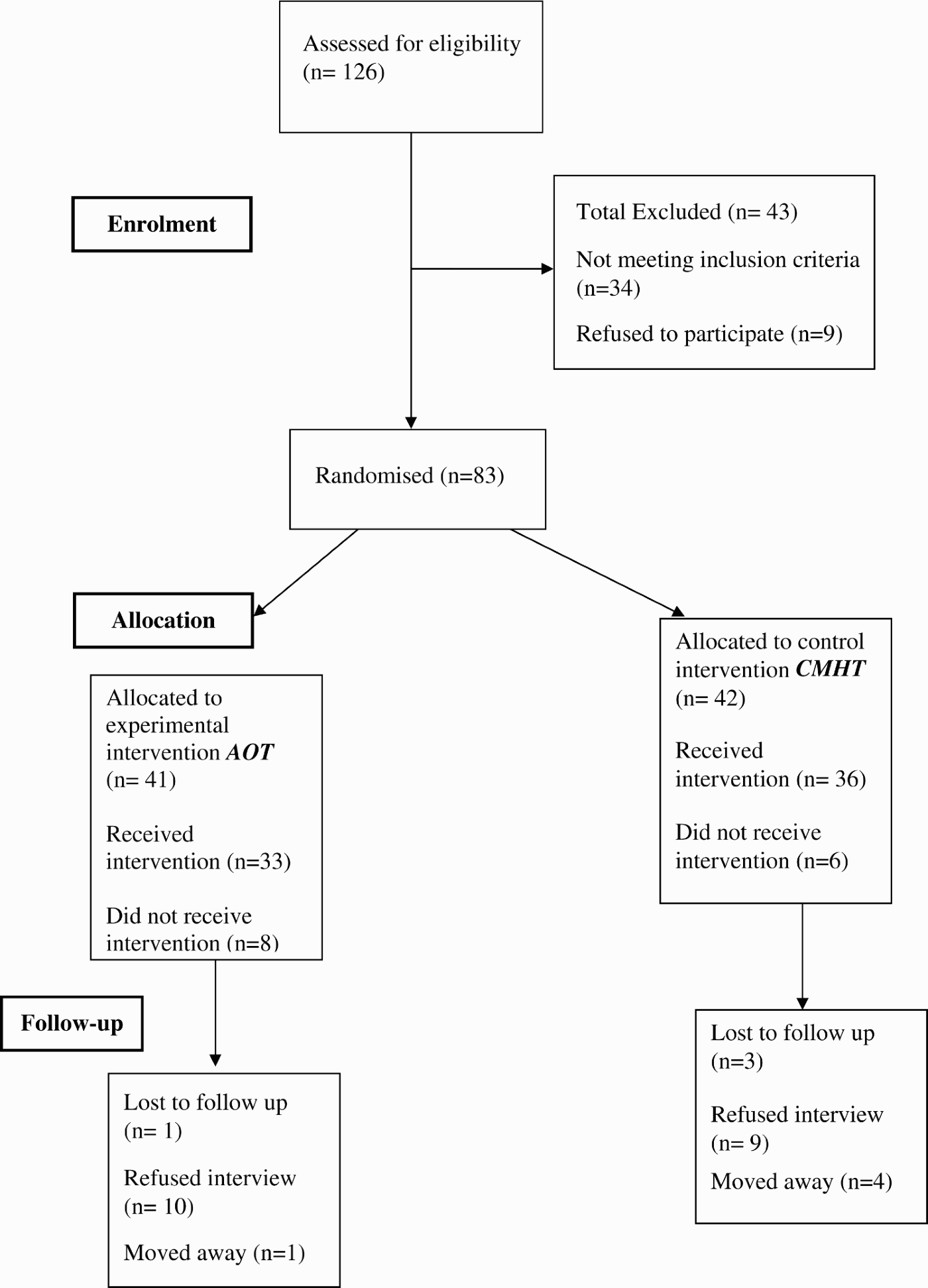
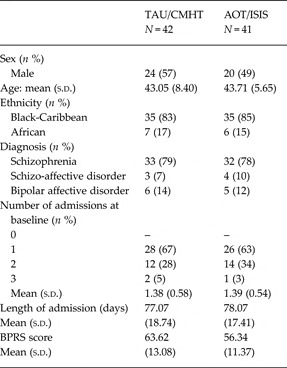
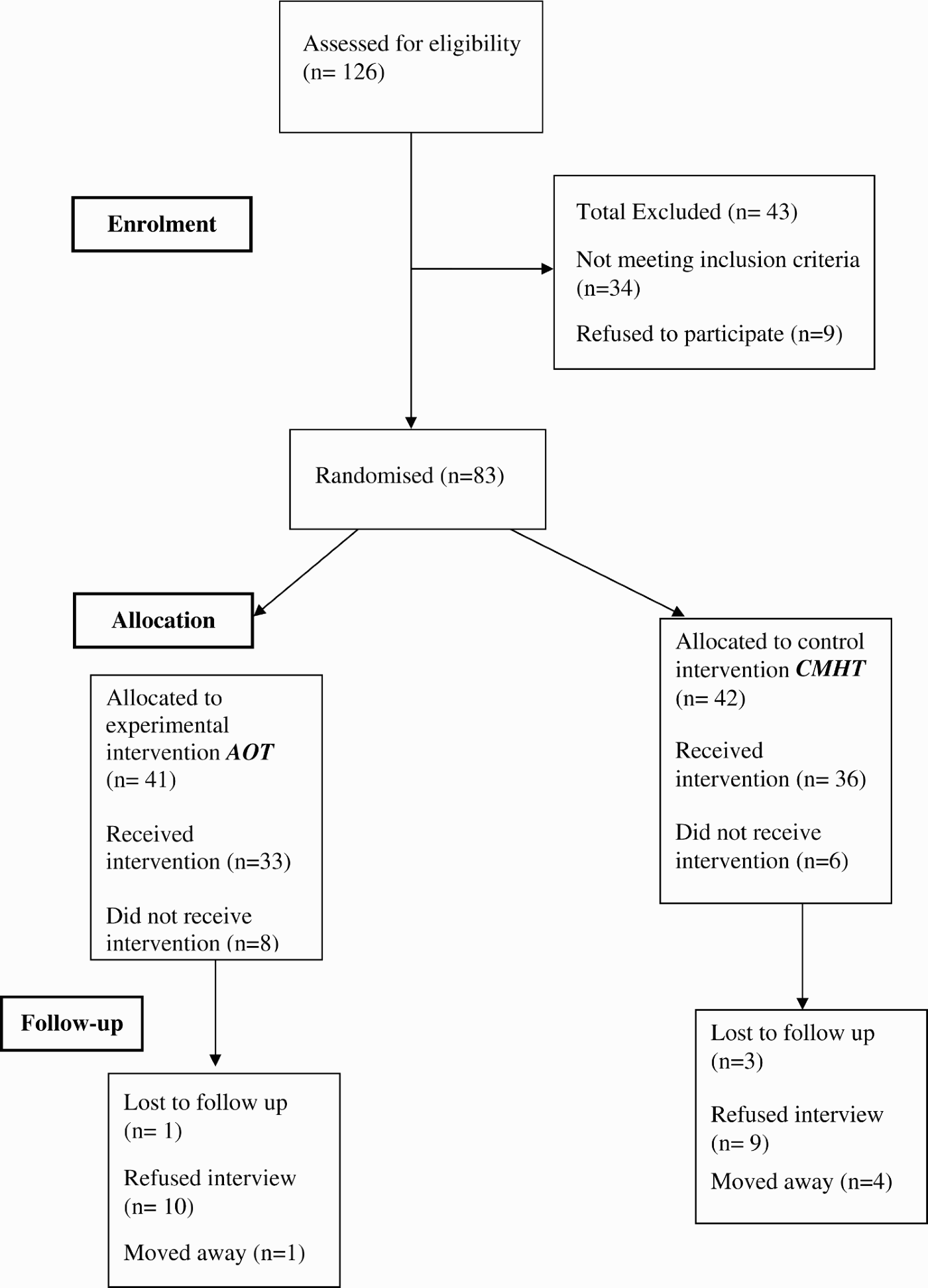
Eighty-three people fulfilled the criteria for the study and they were randomly allocated between the two groups (see Consort diagram in Fig. 1). To detect a standardised effect of 0.8 (moderate) is 95% using alpha = 0.05 it was calculated that 40 subjects were required in each arm. Symptom severity and satisfaction data were available for 29 in the AOT/ISIS group and 26 in the TAU group, because the remainder did not consent to be interviewed or could not be followed up. There were no statistical differences in age, gender or duration of symptoms between the groups at baseline. There were no statistical differences in demographic or illness characteristics between those who did and those who refused to participate. The main diagnostic cluster (85%) was schizophrenia, while others had a schizo-affective disorder (5%) or bipolar affective disorder (10%). Baseline socio-demographic and clinical characteristics are shown in Table 1. The arms were well balanced at baseline for the administrative data on admissions, but those who agreed to participate had somewhat lower BPRS scores in the AOT arm, although this was not statistically significant.
Consort diagram of the trial.
Baseline socio-demographic and clinical characteristics of patients

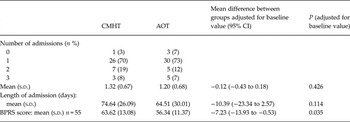
Table 2 shows the number and duration of admissions, and the BPRS scores at follow-up. The total number of days of admissions in the follow-up period is presented.
Admission to hospital and symptoms (BPRS score) at follow-up

Follow-up data were almost complete for number and duration of admissions (94%). For these outcomes, there was no evidence of significant differences between groups.
At follow-up BPRS scores were available for 55 (66% of the sample), and they ranged from 47 to 106 for the AOT/ISIS group (with a mean score of 56 at follow-up (s.d. 12.2)), compared with 74 (s.d. 26.8) at baseline, a 24% reduction.
In the CMHT group, the BPRS scores ranged from 38 to 102, mean (s.d. 14.3) compared with 72 (s.d. 25.6), an 11% reduction in symptom severity from baseline. The available data showed highly significant differences between groups (adjusted mean difference −7.23, 95% CI −13.93 to 0.53, p = 0.035). Of the core symptoms, the main factors associated with change were suspiciousness, hostility, uncooperativeness and self-neglect, while other factors showed no significant differences between groups.
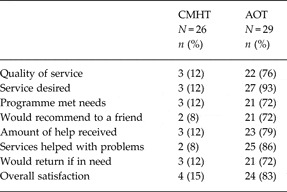
The client satisfaction scores are illustrated in Table 3.
Client Satisfaction Questionnaire (CSQ-8)

Scales all from 1 to 4 (negative 1–2, positive 3–4). Percentages are for positive responses. p < 0.001 for all scales; (p < 0.05, Bonferroni corrected).
The overall satisfaction was significantly greater in the AOT/ISIS than in the CMHT group (p < 0.001), and the scale sub-scores also showed all the significant differences in the same direction (p < 0.05, Bonferroni corrected).
Discussion
Several limitations need to be considered in interpreting these findings. First, the numbers in each group are relatively small. Second, the severity and satisfaction data were available only for a subgroup, namely those who were interviewed at follow-up. Finally, the findings on satisfaction may reflect a halo effect identified by the people from the AOT/ISIS group where acceptable or positive experiences from AOT interventions are generalised to other facets of the care received. The CMHT, on the other hand, may be associated with a reverse halo effect where perceived adverse experiences such as hospital detention are generalised to other CMHT roles. No economic analysis of the cost comparison across two groups was carried out, which is a major limitation. It is also difficult to know which aspects of AOT/ISIS may have made a difference whether it was a cultural aspect or AOT aspect.
The main findings of this study are that ethnically matched AOT was more acceptable to Black participants than standard CMHT care. Some areas of symptom severity (BPRS) such as suspiciousness, hostility and lack of cooperation were less manifest in the AOT group. There was no significant reduction in duration of admission in the groups.
Surprisingly, there was no evidence of an effect of the intervention on hospital admission. There were, however, striking differences between the two groups in terms of reduction of symptoms and increase in satisfaction, albeit only for those patients who agreed to be interviewed at follow-up. Although these people showed a slight difference by arm at baseline (with those in the AOT arm having slightly lower BPRS), this was not statistically significant and there was no evidence that these people differed from those who did not in terms of socio-demographic characteristics. The present study does not aim to investigate specific components of the AOT process, which is a limitation. Thus, it is difficult to hypothesise which specific component is more successful in increasing engagement. It may be that shared identity, history and world views between the patients and their key workers may be more acceptable therefore manifesting less suspiciousness and hostility than would be the case with the CMHT. While not explored in detail, the ethnic specificity of AOT may be perceived by some people as having a service of their own against a background of perceived social exclusion.
Admissions
Better engagement, reduction in symptoms and service satisfaction would be expected to contribute to earlier and better after-discharge care. In fact, in this sample there was no evidence that lower BPRS scores at follow-up were significantly associated with shorter admissions. Killaspy et al. (Reference Killaspy, Kingett, Bebbington, Blizard, Johnson, Nolan, Pilling and King2009) found no reduction in the need for inpatient beds in spite of ACT. In our study, the intervention, while reducing symptoms, for at least some patients did not reduce admissions overall. It was noted that the key workers in the AOT/ISIS team did keep in touch with the patients during their admission, provided them appropriate meals and grooming products, as well as providing an advocacy service. Although by themselves these are little gestures, they indicate a sense of acknowledgement of the individual's needs, values and concerns. This was reflected in the satisfaction findings of the study. It would be expected that improved client satisfaction levels would also encourage patients to remain in touch with services, with the possibility of early discharge and a shorter duration of admission. Our findings did not support this.
Symptom score
For a subgroup of patients, the treatment appeared to reduce BPRS scores significantly. However, it has to be recognised that only those patients who agreed to be interviewed were assessed, although there was no evidence that such individuals differed significantly at baseline from the whole sample in the severity of symptoms or duration of illness. It is worth emphasising that the symptoms that showed the most reduction, especially in the AOT/ISIS group, were hostility, suspiciousness and uncooperativeness. As these symptoms are not essentially attributable to the clinical condition alone but are commonly related to and attributed to race and ethnicity, this reduction may reflect engagement with the voluntary agency only. The AOT/ISIS care model also included provision of care and support based on Black ethnic identity and ideologies. An acknowledgement and acceptance of such a model may have led to a greater reduction in suspiciousness and hostility and may have contributed to better levels of engagement and treatment adherence. The improvement in appearance and reduction of self-neglect as identified by BPRS may also be a result of increased availability and access to culturally appropriate grooming materials and skin care products in these settings. The CMHT services did not provide such culturally specific interventions. Although speculative, it indicates that little things can make significant differences.
Client satisfaction
The satisfaction levels were much higher in the AOT/ISIS group, indicating their acceptability of AOT/ISIS also confirming Thornicroft & Tansella's (2005) assertion. It appeared that the patients rejected the illness model held by the CMHT staff, whereas the AOT/ISIS model was more culturally acceptable. The range of AOT activities was found to be more acceptable than the activities generally available at the CMHT. It is possible that better levels of acceptance in the AOT/ISIS model are related to ethnic matching of the workers, who were all Black, whereas this was not the case in the CMHT. It is also possible that their previous contacts with CMHT, which may have forced them to take medication, instigating and enforcing involuntarily hospital admission, inpatient experience and staff turnover, may have produced longer-lasting negative effects. In contrast, the new AOT-type approach may have appeared more attractive, and less restrictive or punitive. The study confirms the findings of Killaspy et al. (Reference Killaspy, Bebbington, Blizard, Johnson, Nolan, Pilling and King2006) who, in a larger sample, had produced better levels of engagement in patients who received AO treatment.
Conclusions
While there was no significant reduction in the duration or number of admissions in patients receiving AO, there was a reduction in the severity of symptoms in those interviewed. Furthermore, there was a significantly increased level of satisfaction among these patients. These positive findings could only be observed for a proportion of patients. A further detailed analysis on symptoms with a larger sample may help to clarify this. A much larger study with such a targeted intervention might show some effect on the rates and durations of admissions. With such a study it might be possible to ascertain whether our positive findings are linked with AO itself or with the more culturally appropriate and culturally acceptable nature of the service provided.
Declaration of Interest
We acknowledge financial support from the Department of Health via the National Institute for Health Research (NIHR) Specialist Biomedical Research Centre for Mental Health award to South London and Maudsley NHS Foundation Trust (SLaM) and the Institute of Psychiatry at King's College London.