


1 INTRODUCTION
A ship's course must be controlled to reach its destination in a fast and efficient manner. Due to the uncertainty of wind, wave, current and so on, a ship always presents a nonlinear motion (Fossen, Reference Fossen2002). Backstepping is a powerful tool for nonlinear control, and it is a design method of regression which combines the theories of Lyapunov stability and controller design. Making use of the characteristics of system structure, backstepping is a recursively structured Lyapunov candidate function for overall system control (Krstic and Smyshlyaev, Reference Krstic and Smyshlyaev2008; Nejati et al., Reference Nejati, Shahrokhi and Mehrabani2012; Tsai et al., Reference Tsai, Wang, Lee and Li2015; Zhu et al., Reference Zhu, Krstic, Su and Xu2015). Lin (Reference Lin2007) designed a nonlinear robust adaptive controller for ship course-keeping based on backstepping by introducing an integral item to eliminate the static error. To linearize the ship motion system, the nonlinear item of the system was cancelled during the controller design. Liu et al. (Reference Liu, Bu and Zhu2012) proposed a linear tracking controller using the backstepping method and Lyapunov's direct method, and the linear track-keeping control effect was made satisfactory by altering the designed parameters while the environmental disturbances, such as the wind, waves and current were ignored. Considering the Lyapunov candidate function and the Hurwitz conditions, Perera and Guedes Soares (Reference Perera and Guedes2013) proposed a control algorithm based on a second-order Nomoto model which was simulated on a ship steering system and performed successfully. Li et al. (Reference Li, Wang and Zhang2015) proposed a finite-time output feedback trajectory tracking control scheme for Autonomous Underwater Vehicles (AUVs), based on the proposed state feedback backstepping controller. To get a faster convergence rate and a higher tracking accuracy for trajectory tracking control for AUVs, the control scheme design procedure was complicated. At the same time, Xia et al. (Reference Xia, Shao and Zhao2015) developed a nonlinear robust passive observer for surface ships in surge, sway and yaw. To verify the efficiency of the observer, backstepping and Lyapunov redesign techniques were utilised. Peng et al. (Reference Peng, Jia and Hu2014) proposed a nonlinear inverse H-infinity optimal control algorithm, which was used to transform the global optimisation into finding the Lyapunov candidate function of the closed-loop system. Simulation results demonstrated that the heading overshoot decreased, and the maximum rudder angle reduced to 25° from 29° in the case of course turning from 000° to 030° at full speed, when applied to the Dalian Maritime University training ship Yulong. It could be concluded that the algorithm realised the control optimisation of course keeping for ships, as well as saving energy with a relatively complex calculation process. It is difficult for researchers to design a controller considering the concepts of reserving the nonlinear item of system, a simplified construction method and energy saving when applied to a practical control system.
However, it is worth mentioning that Zhang (Reference Zhang2010) designed a concise backstepping controller of course keeping for ships based on Lyapunov stability. This concise backstepping controller did not cancel the nonlinear item of the system and the procedure of controller design reduced from two steps to one step. Due to the experience of teaching and researching in recent years, it was found that the effect of the controller clearly improved if nonlinear feedback driven by the sine function was added (Zhang and Zhang, Reference Zhang and Zhang2016). Combining the special backstepping construction method based on the Lyapunov candidate (Zhang, Reference Zhang2010) with the nonlinear feedback (Zhang and Zhang, Reference Zhang and Zhang2016), an improved backstepping controller is acquired with theoretical proof in this article. Applying the improved concise backstepping controller to a simulation experiment of the training ship Yulong, the results indicate that the maximum rudder angle drops from 22° to 13°, 40.9% down, the settling time falls to 150 s from 200 s and the heading overshoot disappears. The control effect is more satisfactory and the improved concise backstepping controller has some robustness.
2 NONLINEAR SHIP MODEL
In this section, the Dalian Maritime University training ship Yulong is taken as an example because of its substantial sea trials, which are convenient to verify the precision of the nonlinear ship model adopted in this section. The ship's main particulars are shown in Table 1. This article adopts a response model considering a rudder servo system to represent the nonlinear ship model (Van, Reference Van1982; Zhang and Jin, Reference Zhang and Jin2013) shown in Figure 1, which is composed of a first order Nomoto model with a nonlinear feedback compensating item. For the purpose of making the simulation closer to marine practice, a rudder servo system is considered, which covers the rudder transport delay, angle limiter and revolution rate limiter. Rudder transport delay T
r
=6s, rudder angle
 $\delta \in \lsqb -35^{\circ},35^{\circ}\rsqb $
, and the revolution rate of the rudder is 2.3°/s. The first order Nomoto model from δ to yaw rate r is presented as
 $$G_{r\delta } (s)={K\over Ts+1}$$
while the nonlinear feedback compensating item f(u) is expressed as
 $$f\!(u) = (\alpha -1/K)\dot{\psi}+\beta \dot{\psi}^{3}$$
where K, T are the ship manoeuvrability indices and α and β are the proportional coefficients of yaw rate
 $\dot{\psi}$
. The parameters K, T, α, β are calculated by a Visual Basic program, utilising the principle illustrated in Nomoto et al. (Reference Nomoto, Taguchi, Honda and Hirano1957) and Zhang (Reference Zhang2012) Hence, the model parameters are listed in Table 2.
Nonlinear ship model considering the rudder servo system.

Simulation particulars for training ship Yulong.

Ship mathematical model parameters.

To describe the precision of the mathematical model, the concept of conformity C M is formed as
 $$C_{{\rm M}} ={\min (S_{{\rm D}},R_{{\rm D}})\over \max (S_{{\rm D}},R_{{\rm D}})}\times 100\%$$
where S
D and R
D are the simulation tactical diameter and tactical diameter of the real ship. According to the comparison of the ship turning tests with the rudder angle
 $\delta =-35^{\circ}$
shown in Figure 2 and Table 3, the horizontal S
D is 518·3 m, while the horizontal R
D is 542·2 m, so
 $C_{{\rm M\_horizontal}} = 95.6{\%}$
. The vertical S
D is 473·8 m, while the vertical R
D is 443·9 m, then
 $C_{{\rm M\_vertical}} = 93.7{\%}$
. Hence, the average conformity
 $\overline{C}_{{\rm M}} $
in the horizontal and vertical directions is 94·6%. The precision of the nonlinear mathematical model is acceptable for a ship with large inertia and nonlinearity.
Comparison of the ship turning tests.

Data comparison of the ship turning tests.

3 IMPROVED BACKSTEPPING CONTROLLER DESIGN VIA NONLINEAR FEEDBACK TECHNIQUE
Considering the uncertainty of the ship motion parameters, the nonlinear control scheme of the course keeping for ships is first designed. The ship heading angle is defined as ψ set course ψ r course error e and yaw rate r. Figure 3 presents a diagram of the closed loop system in ship motion.
Diagram of the closed loop system in ship motion.

Then a special algebraic coordinate transformation can be proposed as
 $$\left\{ \matrix{ e=\psi_{r} -\psi \hfill \cr x_{1} =\psi \hfill \cr x_{2} =\dot{{x}}_{1} =\dot{{\psi }}=r} \right.$$
Hence, the state space equation and output equation of the system is represented as
 $$\left\{\matrix{\dot{{x}}_{1} =x_{2} \hfill \cr \dot{{x}}_{2} =f \lpar x_{2}\rpar +bu \cr y=x_{1} \hfill} \right.$$
where the output of system can be defined as y, and the nonlinear function f(x 2) can be further written as
 $$\left\{ \matrix{f(x_{2}) =-{K \over T}H (\dot {\psi}) \cr H (\dot {\psi })=\alpha \dot {\psi }+\beta \dot {\psi }^{3} \cr b={K\over T} \hfill \cr u=\delta \hfill \cr } \right.$$
where δ is the input of rudder angle and u is the designed control scheme of course keeping for ships. Assuming
 $$\left\{\matrix{z_{1} =x_{1} -\psi_{r} \cr z_{2} =x_{2} \hfill} \right.$$
if the controller can stabilise the state variables z 1 and z 2, the original system reaches the uniform asymptotic stability at the equilibrium point shown in Equation (8)
 $$\left\{\matrix{x_{1} =\psi_{r} \cr x_{2} =0 \hfill} \right.$$
A Lyapunov function can be structured according to Zhang (Reference Zhang2010), which is performed as
 $$V_{1} ={1\over 2}z_{2}^{2}$$
The differential relationship between z
1 and z
2 has been considered, which possesses a certain universality. If z
2 is stabilised on the equilibrium point of zero, z
1 is stabilised simultaneously.
 $\dot{V}_{1} $
contains the information of z
1 implicitly so as to ensure the proper control scheme and stabilise z
1 and z
2 simultaneously, though V
1 does not contain z
1 directly.
 $$\dot{V}_{1} = z_{2} \dot{z}_{{\rm 2}}$$
 $$\dot{z}_{2} =\dot{x}_{2} =f(x_{2})+bu$$
To make
 $\dot{V}_{1} \le 0$
, the designed control scheme u is constructed as follows.
 $$u={1\over b}[ \,f(x_{2} )-k_{1} \sin (\omega z_{1}) ]$$
where ω, k
1 are the designed parameters of the controller, which satisfy k
1>0,
 $\omega \in \lpar 0,1\rpar $
. According to the Taylor series expansion and restricting to the third order (Arunnehru and Paramasivam, Reference Arunnehru and Paramasivam2014), Equation (13) is derived.
 $$\sin (\omega z_{1} ) \approx \omega z_{1} - \displaystyle{{{(\omega z_1)}^3} \over {3!}}$$
Substituting Equation (13) into Equation (12), we obtain Equation (14) by combining Equations (4)–(7) and (12).
 $$\eqalign{\dot{V}_{1} &=z_{2} \lpar \,f \lpar x_{2}\rpar +bu\rpar \cr & \approx z_{2} \left\{f\ \lpar x_{2} \rpar +b\cdot {1\over b}\left[f (x_{2} )-k_{1} \omega z_{1} +{k_{1} \omega^{3}z^{3}_{1}\over {6}} \right]\right\} \cr & =2x_{2}\,f(x_{2} )-k_{1} \omega z_{1} z_{2} +{k_{1} \omega ^{3}z^{3}_{1} z_{2} \over {6}} \cr & =-2b(\alpha x_{2}^{2} +\beta x_{2}^{4}) -k_{1} \omega {x_{1} -\psi _{r} \over {h}}hx_{2} +{k_{1} \omega^{3}\over {6}}\left({x_{1} -\psi_{r} \over {h}}\right)^{3}h^{3}x_{2} \cr & \approx -2b(\alpha x_{2}^{2} +\beta x_{2}^{4})-k_{1} \omega hx_{2} ^{2} +{k_{1} \omega^{3}h^{3}\over {6}}x_{2}^{4} \cr & =-\lpar 2b\alpha +k_{1} \omega h\rpar x_{2}^{2}-\left(2b\beta -{k_{1} \omega^{3}h^{3}\over {6}}\right)x_{2}^{4}}$$
where b, α, β, h are positive, h is the sample time. Noting that the first item of
 $\dot{V}_{1} $
 $$-\lpar 2b\alpha +k_{1} \omega h\rpar x_{2}^{2}\le 0$$
and in marine practice,
 $\omega \in \lpar 0,1\rpar $
, h≤1s, if taking k
1≤0.6 then Equation (16) can be derived
 $$\displaystyle{k_{1} \omega^{3}h^{3}\over {6}}\lt 0.1$$
In a general way,
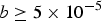 $b\ge 5\times 10^{-5}$
,
 $\beta \ge 10^{3}$
in marine practice (Van, Reference Van1982; Zhang and Jin, Reference Zhang and Jin2013), therefore
 $2b\beta \ge 0{\cdot}1$
. In this article,
 $b=K/T=0{\cdot}48/216{\cdot}58=2{\cdot}2\times 10^{-3}$
,
 $\beta =10836{\cdot}12$
, therefore
 $2b\beta =25{\cdot}8$
. The latter item of
 $\dot{V}_{1} $
follows that
 $$- \left( {2b\beta - \displaystyle{{k_1\omega ^3h^3} \over 6}} \right)x_2^4 \le 0$$
Combining Equations (14), (15) and (17), we obtain
 $$\dot{V}_{1} \le 0$$
In summary, the system will reach uniform asymptotic stability at the equilibrium point of x 1=ψ r , x 2=0. The control scheme of Equation (12) meets the requirements and reserves the nonlinear item of the system without normal cancellation. The procedure of nonlinear controller design has been reduced from two steps to one step by choosing the simple Lyapunov candidate function rather than the conventional backstepping construction approach.
In addition, Equation (19) is formulated in Zhang (Reference Zhang2010).
 $$u={1\over b}[f(x_{2} )-k_{1} z_{1}]$$
Comparing Equation (19) with Equation (12), the sine function of z 1 with the same controller is constructed, which makes up a new mode of nonlinear feedback
4 SIMULATION STUDIES
In this section, the Simulink toolbox is used to illustrate the effectiveness of the designed controller in a MATLAB environment. The control effects of course keeping for ships and energy saving situation are analysed in the case of standard feedback and nonlinear feedback.
4.1 Course Keeping Control
Taking
 $k_{1} =0{\cdot}001$
,
 $\omega = 0{\cdot}6$
in the control scheme Equation (12) and
 $\psi_{r} =050^{\circ}$
in Equations (4), we can obtain results for comparison under two different control schemes, which are shown in Figure 4 and Table 4. Figure 4(a) indicates that the heading overshoot is eliminated as well as the settling time t
s drops to 150 s from 200 s under the nonlinear feedback control. Figure 4(b) shows that the maximum rudder angle δmax drops to 13° from 22° while the mean rudder angle
 $\bar{\delta}$
falls to 2·3° from 3·6° 36·1% down. Referring to Tu (Reference Tu2008), energy consumption lies in the fields of steering stability, the manoeuvring times (when rudder angle exceeds 0·5° ), the acting time and the revolution amplitude of the rudder blade. In Figure 4(b), the dotted line of rudder angle controlled by the nonlinear feedback is smoother than the other, which stands for a smaller revolution amplitude of rudder blade and less wear of steering gear, saving energy indirectly. Considering the cost-function
Comparison of the control effects: backstepping control (solid line) and nonlinear feedback control (dotted line).

Comparison of the closed loop performance.

 $$J=\int {\delta^{{\rm 2}}\hbox{d}t}$$
discretising Equation (20), Equation (21) is derived
 $$J=\sum_k {\delta^{2}(k)}$$
The cost-function J=4291 with nonlinear feedback while J=10764 without nonlinear feedback, dropping by around 60.1%. Also the reduction of rudder angle means safer sailing and energy saving on account of the smaller rolling angle.
4.2 Energy Saving Validation
We set a simulation experiment of sine wave course tracking to verify the energy saving of nonlinear feedback. The simulation parameters are chosen as
 $\psi_{r} =30\sin [(2\pi/600)t]$
deg,
 $\psi_{0} =010^{\circ}$
. Control scheme u remains the same, but we take k
1=0.008 because of the sharp variation of ship set course, thus the gain coefficient k
1 needs to be larger to improve the system response rate. Figure 5(a) shows that the heading angle with nonlinear feedback control is almost capable of tracking the set course. Figure 5(b) shows that a variety of energy-consuming indices decrease, which results in falls in the value of the maximum rudder angle δmax from 24° to 15° referred to in Table 4. The mean rudder angle
 $\bar{\delta}$
drops to 2·8° from 3·3°, 15·2% down while the cost function J falls to 13391 from 22420, 40·3% down, with the nonlinear feedback control. Hence, the control effectiveness of the nonlinear feedback control is better than the conventional backstepping control.
Simulation results of the sine wave course tracking: set course (dash dot line), backstepping control (solid line) and nonlinear feedback control (dash line).

5 ROBUSTNESS ANALYSIS
5.1 External Disturbances Rejection Test
It is clear that wind and wave disturbances exist in practical engineering, therefore these cannot be neglected when the sway motion and heading deviation of a ship are considered. Whether the designed controller behaves well or not should be verified in a higher sea state. The wind disturbance is divided into the average wind and the impulse wind. The average wind can be deemed as an equivalent rudder angle
 $\delta_{{\rm wind}} $
(Guo, Reference Guo2009) while impulse wind or gusts are considered as white noise (Kallstrom, Reference Kallstrom1982) According to Zhang and Zhang (Reference Zhang and Zhang2013a; Reference Zhang and Zhang2013b; Reference Zhang and Zhang2014),
 $\delta_{{\rm wind}} $
can be calculated through an empirical formula as follows
 $$\delta _{{\rm wind}} = K^0\left( {\displaystyle{{V_R} \over V}} \right)^2\sin \gamma _R$$
where
 $K^{0},V_{R},V,\gamma_{R} $
are the leeway coefficient, relative wind speed, ship speed, and wind angle on the bow respectively.
 $\delta_{{\rm wind}} =3^{\circ}$
when the wind scale is equal to Beaufort scale 6 and the wind bearing is 030° by computation.
For wave disturbance, a simplified transfer function model shown in Equation (23) is capable of simulating it under the Beaufort scale 6, which is a second-order oscillating system driven by a Gaussian white noise (Zhang et al., Reference Zhang, Chen, Lu and Yin2014)
 $$\psi_{{\rm H}} ={0.4198s\over s^{2}+0.3638s+0.3675}w_{{\rm H}}$$
where
 $w_{{\rm H}} ,s,\psi_{{\rm H}} $
are the Gaussian white noise, Laplace operator and high frequency wave disturbance. As shown in Figure 3, ψH directly acts on the ship heading angle ψ.
Suppose the Gaussian noise power w H is 0·001 and the sample time equals 10 s, the same as that in the simulation of impulse wind. The curves of the heading angle and rudder angle of ship are given in Figure 6 under the different control schemes. The curves indicate that the two control schemes achieve a good performance in course keeping control with wind and wave disturbances. However, the dotted one with nonlinear feedback control possesses less overshoot and smaller mean rudder angle than with backstepping control.
Comparison of the control effects with the wind and wave disturbances: backstepping control (solid line) and nonlinear feedback control (dotted line).

5.2 Internal Parameter Perturbation Rejection Test
The ship manoeuvrability indices K,
 $T (K=0{\cdot}48s^{-1}$
,
 $T=216{\cdot}58$
s) in Figure 1 and Table 2 are calculated when ship speed is 15 knots. However, the ship speed usually reduces because of the fouling on the bottom surface of the hull and external disturbances. Based on the theoretical analysis and Visual Basic program validation, K decreases while T, α, β increase proportionally along with the reduction of ship speed (Zhang, Reference Zhang2012). Assume the external disturbances remain unchanged, the sample time equals 200 s for the sake of a more visual simulation (Lei and Guo, Reference Lei and Guo2015). Suppose that K, T vary in a series of K1=K, T1=T(solid line) K2=0·7K, T2=T/0.7(dash line) K3=0·5K,
 $T3=T/0{\cdot}5$
(dotted line) K4=1·5K,
 $T4= T/1{\cdot}5$
(dash dot line) Figures 7 and 8). α, β change simultaneously.
Simulation results with backstepping control.

Simulation results with nonlinear feedback control.

It can be concluded from Figures 7 and 8 that the overshoot and mean rudder angle increase together when K decreases. Meanwhile the controller with nonlinear feedback performs better than that with backstepping control, which possesses less overshoot and smaller mean rudder angle. The multiple simulation tests show that the heading angle stabilises after long oscilation when K5=0·3K,
 $T5=T/0{\cdot}3$
. However the ship steering system is acting over a long time to hold a large rudder angle which is accepted in marine practice. Although the settling time extends when K increases, mean rudder angle also reduces. Since K tends to decrease with reduction of ship speed, the robustness of nonlinear feedback control is stronger than with backstepping control.
5.3 The Effectiveness of the Improved Control Algorithm on a Complex Mathematical Model
As mentioned above, the improved concise backstepping control algorithm is tested on a Nomoto model with a nonlinear item, and the effectiveness of the algorithm has been affirmed. In this section, the above-mentioned improved control algorithm is exerted on the controlling of a more complex nonlinear mathematical model Equation (24) of ship dynamics, which can denote a situation similar to the motion of a full scale ship (Fossen, Reference Fossen2011). To some extent, if the improved control algorithm still works, its robustness is further proven.
 $$\left\{ \matrix{ {(m + m_x)\,\dot u - {\rm (}m + m_y{\rm )}\,vr - mx_Gr^2 = X_H + X_P + X_R} \cr {(m + m_y{\rm )}\, \dot v + {\rm (}m + m_x{\rm )}\,ur + mx_Gr^2 = Y_H + Y_P + Y_R} \hfill \cr {(I_{zz} + J_{zz}{\rm )}\,\dot r + mx_G{\rm (}\dot v + ur){\rm } = N_H + N_P + N_R} \hfill \cr {\dot \psi = r} \hfill } \right.$$
where u, v, r, ψ express the linear velocities, angular velocity and heading angle respectively; m and I
zz
are the ship's mass and mass moment of inertia;
 $m_{x} ,m_{y} ,J_{zz} $
are the added mass and added moment of inertia.
 $X_{H} ,Y_{H} ,N_{H} ,X_{P} ,Y_{P} , N_{P} ,X_{R} ,Y_{R} ,N_{R} $
are the hydrodynamic forces and the corresponding moments acting on the ship's hull, propeller and rudder. The related non-dimensional hydrodynamic coefficients for the training vessel Yulong are listed in Table 5. More details about the nonlinear mathematical model Equation (24) can be found in Jia and Yang (Reference Jia and Yang1999) and Fossen (Reference Fossen2011).
The non-dimensional hydrodynamic coefficients for the vessel Yulong.

We assume the external disturbances remain unchanged, and take
 $k_{1} =0{\cdot}001$
,
 $\omega =0{\cdot}6$
in control scheme Equation (12),
 $\psi_{r} =050^{\circ}$
in Equations (4) and then we can get the comparison results under two different control schemes, which are shown in Figure 9. Based on the mathematical model of ship dynamics, both control schemes achieve a good course keeping performance with wind and wave disturbances. However, the nonlinear feedback control possesses less overshoot and smaller mean rudder angle than the solid one. This means that the control energy is reduced with the introduction of nonlinear feedback.
Comparison results of complex nonlinear mathematical model.

6 CONCLUSIONS
In this article, an improved concise backstepping control algorithm is proposed to solve the problem of course keeping for ships by virtue of the two regulating parameters: gain coefficient k 1 and angular frequency ω. The procedure of nonlinear controller design has been reduced from two steps to one step by choosing the simple Lyapunov candidate function rather than the conventional backstepping construction approach. Meanwhile the final controller does not cancel the nonlinear item of the system since the existing nonlinear information of the system has been utilised. The control energy is reduced with the introduction of sine function feedback, while the simulation results validate the strong ability of the proposed improved algorithm with disturbance rejection and robustness to the nonlinear mathematical model. Furthermore, the procedure of nonlinear controller design is to some extent universal by taking full advantage of the systematic nonlinear information and structural characteristics. This work cannot deal with every detail of the control task, e.g., the proposed algorithm may not obtain its targets because of the saturation of control actions, and this will be addressed in future research.
ACKNOWLEDGEMENTS
We are grateful to the reviewers for their valuable comments and suggestions to improve the quality of this article The authors would like to acknowledge the support from the National Natural Science Foundation of China (Grant No.51679024) and the National Postdoctoral Program for Innovative Talents (No. BX201600103), the China Postdoctoral Science Foundation (No. 2016M601600), and the Fundamental Research Funds for the Central University (Grant No.3132016315).



