Introduction
One night in the spring of 1912, the dean of the Harvard Medical School of China, Dr Martin R. Edwards, as special guest speaker, delivered a public talk regarding the better understanding of health in Shanghai. Using 13 well-prepared slides, Edwards listed the six most important factors for improving health, one of which was the significance of diet. Understanding the ‘relation between food and health’ was very important, emphasized Edwards, because ‘having better foodstuffs with a proper eating habit was the sine qua non for any country that wanted to be strong’.Footnote 1 Edwards’ talk was moderated by Wu Tingfang who had retired to Shanghai after serving for several years as the Qing ambassador to the United States. In addition, Yu Fengbin, a Chinese physician trained in Western medicine, was present at the talk, ensuring that medical terms were adequately translated into Chinese. In both the advertisements for and the reports on the talk, Shenbao, the most popular Chinese daily in Shanghai, referred to the theme of his talk as the ‘technique of health preserving’ (yangsheng), a time-honoured practice of traditional Chinese medicine.Footnote 2
In the 1910s, Western medical missionaries conducted and published early research which was to form the foundation of modern nutrition science in China. Although their professional research circulated only within the narrow confines of the academic community, important changes in popular dietary interests were occurring at the same time.Footnote 3 As seen by Edwards’ talk, the non-specialist public tended to understand this new knowledge within the traditional context of ‘health-preserving techniques’, the ultimate goal of which was to achieve individual health and longevity through better drinking and eating habits.Footnote 4 Against this backdrop, Wu Tingfang, who was also a keen dietary reformer, attempted to reach the public through Edwards’ public talk in order to address social problems related to Chinese dietary habits.
This article examines the development of nutritional understanding and the subsequent dietary reform movement in early twentieth-century China within the context of burgeoning popular concerns over bodily health and an increasing sense of urgency. Among the various sub-disciplines of Western science and medicine introduced to modern China, none was more attractive to a public audience than nutrition science because of its close relationship to popular concerns about bodily health and everyday culinary curiosity. For this reason, nutrition science was vulnerable to being used as an ideological tool by the authorities to direct popular eating habits to achieve certain political purposes. Even without state intervention, nutrition science itself tended to have a strong didactic impulse, going far beyond limited academic circles to influence the public's decisions on what to eat and what not to eat.Footnote 5 Nonetheless, this does not mean that the government claimed to have carte blanche in inculcating proper eating habits among the public, nor did nutritional experts uncritically prescribe a new dietary regimen to non-expert audiences in the name of national salvation. Instead, as this article argues, popular concerns about bodily health and the culinary curiosity that was prevalent in major Chinese cities not only paved the way for the popularization of new nutritional knowledge, but also helped the state-led wartime dietary reform campaigns that culminated during the Sino-Japanese War (1937–1945).
In various ways, modern warfare stimulated the convergence of the state apparatus, nutritional knowledge, and popular health concerns to create a social phenomenon with few contradictions. War demanded the provision of a public meal service that was both nutritious and economical on an unprecedented scale—from military barracks to hospitals, from refugee camps to orphanages, as well as on the home front—to feed the ordinary civilian population forced to endure extreme austerity. The state never spared its resources, which were already fully mobilized, to support the needs of wartime provisions. In return, nutritionists and dieticians stepped up their research into achieving better public health.Footnote 6
During the Sino-Japanese War (1937–1945), the Guomindang leaders, whose ultimate goal was to achieve military victory over the invading Japanese Army at any cost, had many reasons to maximize, if not manipulate, the benefits of nutritional knowledge to support their total war efforts. First and foremost, it was imperative for the Guomindang authorities to meet a dual demand: to create an optimal military ration for the soldiers on the frontline and, at the same time, to rationalize food consumption on the home front where, they believed, wasteful eating habits were prevalent.Footnote 7 In fact, unstable national food security had been the most challenging problem facing the authorities even before the outbreak of war in 1937.Footnote 8 What would happen if a potential enemy country blockaded China's coasts and cut off the food trade routes? The Guomindang leaders fully understood the significance of the food problem (liangshi wenti) posed by impending war with Japan, one of the strongest industrial and military powers in the world. However, the long-pledged ‘total war’ began much sooner than expected, well before war preparations were completed. Once the War began, national food security became Republican China's Achilles heel. Knowing that nutrition science was a useful tool to amend, if not fundamentally change, the wartime food problem, Nationalists facilitated the popularization of a scientifically proven new regimen. Against this backdrop, a full-scale nutrition improvement campaign was initiated wherever Nationalist control held sway in China. This wartime experience, in return, paved the way for the development of Chinese nutritional research in the decades following the War.Footnote 9
Recent studies have shed much light on how the Chinese adaptation of Western medical knowledge generated multiple connotations of health and disease in the turbulent twentieth century. Scholars have argued that bodily health was not solely perceived as an issue of individual well-being; rather, it was also the key component of building communal health, that is, national strength or racial health.Footnote 10 In spite of the significance in the discourses and practices of public health and hygiene, however, few have paid attention to nutrition in China.Footnote 11 With a cardinal purpose to strengthen control over the population at minimal cost but to maximum effect, nutrition science was, from its inception, indispensable to the rise of the modern nation-state. However, the populace was never simply a passive recipient of the public health promotion projects directed by the state, nor was the state-led dietary reform campaign a unilateral, top-down exercise. Insofar as nutrition science was a new type of expertise about what to eat and what not to eat day-to-day, the non-specialist public enjoyed unparalleled independence in developing its own culinary understanding of the new regimen the public health authorities provided.
From the perspective of the public health authorities, nutrition science had to compete with lay knowledge. Consequently, nutritional instructions tended to be accusatory. At the same time, nutritional knowledge in and of itself harnessed the potential of the state's persuasive power to garner the people's willing compliance, if not tacit obedience. The scientific outcome of nutritional experiments, as Jan Golinski argues, became significant only through ‘effective acts of communication’ with the public audience.Footnote 12 Historians have acknowledged that modern Chinese cities became the locus of the rise of the urban public, comprising consumers of cultural products and commodities. Not merely an undifferentiated mass, they were avid readers of books, newspapers, and magazines; at other times, they appeared as spectators at urban events, such as exhibitions, amusement centres, parades, and rallies.Footnote 13 They were also food consumers who were anxious about chronic grain shortages and simultaneously asserted their dietary preferences regarding the appropriate quality of the food they consumed.Footnote 14 For example, as Chieko Nakajima points out, ideas of health and hygiene were a quintessential part of commercial culture in Republican Shanghai.Footnote 15 Given this background, dietary reformers provided this audience for new nutritional knowledge with ample opportunities to acquire knowledge through attendance at public lectures, exhibitions, and parades; as well as by reading cookbooks, recipes, and the ‘food’ sections of daily newspapers and magazines. Whether showing a personal concern for bodily health, a pseudoscientific perception of racial health, or gastronomic curiosity about exotic foodstuffs, the non-specialist public was able to work out from the state's propagandistic illusion what was genuinely worthwhile for one's health.
The early popularization of new nutritional knowledge
At the heart of the early popularization of modern nutritional knowledge was the Society for Cautious Diet and Hygiene (shenshi weisheng hui), founded by Wu Tingfang, moderator of the abovementioned public lecture by Edwards. Having had many chances to observe American culinary customs during his stay in the United States from 1897 to 1903, Wu founded the Society to promote new lifestyles and healthy dietary practices in 1910s Shanghai.Footnote 16 Through contributing to the print media and organizing public lectures, to which many Chinese and foreign experts were invited, both the Society and Wu became influential. Arguing that dietary reform was both better for one's individual health and one's country, Wu reached the public though simple messages transmitted in everyday language. In particular, Wu called on people to change their eating habits regarding China's main staple grains, insisting that they should eat less rice and more wheat and other grains because, contrary to popular belief, the nutritional value of rice was much lower than wheat.Footnote 17 However, in order to promote eating wheat over rice in Shanghai, the Society had to do something more than just organize public lectures, as rice was the staple grain among Shanghainese, as it was in other places in southern China. Thus, the Society introduced a Western-style bakery and arranged for home delivery of bread made out of wheat flour, if customers required it.Footnote 18 Slowly, Wu's reputation as an advocate of wheat-based dietary reform began to resonate with increasing numbers of people interested in better dietary practices.
The main argument of a booklet, The Treasured Book for the Military and Civilians: The Healthy Way of a Coarse Diet, with the subtitle ‘Textbook for Eating (chifan jiaokeshu)’, was the same argument promoted by Wu: eat more wheat and less rice. The Treasured Book argued that the key to a healthy life lay in consuming simple foodstuffs such as unpolished rice, wheat, and other grains, rather than in ‘precious delicacies from all around the world (shanzhen haiwei)’.Footnote 19 The centrepiece of the booklet was an advertising leaflet issued by the Chinese noodle company, Xinghua, which was representative of the ideas Wu brought to Shanghai:
Of the five most important cereals, wheat is the best. This is the reason why Dr. Wu Tingfang eats both rice and wheat once a day. The wheat (flour) he eats is the very one this company produces. Look at the physiques of Westerners and our northerners, which are much bigger than in southerners. But, all those having smaller physiques do not eat wheat.Footnote 20
While neither Wu nor Liu were educated in modern nutrition science, nonetheless, their early dietary reform advocacy was successful in making the public interested in food and their eating habits. The aforementioned physical difference between northerners and southerners and the link to their eating habits was a sufficiently interesting story to the people. Even a noodle-making company grasped the commercial potential in this new type of knowledge.
In Chinese culinary culture, all cereals, except for rice and wheat, held less value. Rather than being referred to individually—as millet, sorghum, or maize—these grains were often collectively referred to as ‘miscellaneous grains’ (zaliang) and grouped together with yams, taro, sweet potatoes, and others.Footnote 21 Even in comparisons between rice and wheat, rice was far more highly regarded than wheat in southern China. Eating rice—in particular highly polished white rice (baimi)—was therefore a somewhat lavish purchase, partly because of the higher prices it commanded and partly because of its superior taste.Footnote 22 Thus, the Chinese, particularly the southern Chinese, tended to prefer eating rice to wheat—as long as they could afford to do so. Moreover, a regional distinction was apparent: rice was a stable of the southerners’ diets, whereas northerners ate wheat and other ‘miscellaneous grains’ as their staples (nanren shimi beiren shimai). From late-Imperial yangsheng literature to the eyewitness accounts of twentieth-century foreign observers, the South–North distinction in dietary habits was a given aspect of Chinese culinary life.Footnote 23 One convincing explanation for this regional dietary distinction can be found in the ecological differences between the North and the South. Because of different environmental conditions, which were confirmed by the prominent American agriculturalist, John Lossing Buck, northerners mainly cultivated wheat while southerners cultivated rice, resulting in a dietary distinction in their staple diet.Footnote 24
Whether it was a result of reformist concern or culinary curiosity, the increasing popular interest in the correlation between dietary differences and physical stature is important to understanding the social problems facing Republican China. In May 1912, when Shanghai and its vicinity experienced rising rice prices, one reformist group, called the Association for People's Livelihood and National Plan (Minsheng guojihui), petitioned the local authorities to encourage local people to eat wheat-based noodles as much as they did rice; the intention was not to entirely replace rice, but at least to prevent increasing rice shortages. One obvious reason for the recent rise in rice prices, according to this group, was that many new ‘immigrants to Shanghai were rice-eating people and their numbers doubled the local population’. While ‘southerners were accustomed to eating rice, they would not be resistant to the idea of eating both rice and noodles together temporarily for the time of dearth at least’. The petition insisted that ‘although it was not easy to change their dietary habits, it should be properly understood that northerners eat wheat and so did the Westerners; therefore, they are both strong and healthy’.Footnote 25 In other words, the petition implied that eating less rice was not only beneficial to individual health, therefore satisfying yangsheng, but it could also be conducive to the communal good. Nevertheless, southerners had to face the question of the palatability of wheat.
Indeed, the 1910s were a watershed in terms of better understanding of what to eat, having developed from the perspective of yangsheng-style, individual health-preserving skills to that of modern nutrition science (yingyang xue). This is not to say, however, that Chinese reformers and intellectuals developed their own field of nutrition science for a peculiar purpose. From its inception, nutrition science incorporated a strong link between many key political perceptions of the time such as race, class, nation, and Social Darwinism. In the early 1910s in British India, for example, British colonial nutritionists scientifically demonstrated that physical disparities between the frail Bengalis and the robust Sikhs of northern India could be attributed to their different dietary habits. The Bengalis’ staple diet was rice, whereas the Sikhs’ was wheat. A few years later, this scientific ‘fact’ was confirmed by another group of colonial nutritionists working in Africa. In this instance, despite experiencing the same environmental conditions, the Masai tribe was taller and stronger than the neighbouring Kikuyu because the diet of the former was based on meat and dairy products, while the latter relied heavily on a vegetarian diet.Footnote 26 Thus, in his public talk at Shanghai, Dr Edwards’ acknowledgement of the importance of food to a county's national strength was part of the contemporary scientific discourse.
Dietary difference and national strength
The late 1920s and early 1930s saw an ostensible change in the field of nutrition science. Many young Chinese nutritionists and dieticians who had obtained higher degrees in related fields overseas returned to China one by one and began to work at the universities and other professional institutions.Footnote 27 The more scientific and professional the field became, however, the stronger the didactic tone that was adopted. The most prominent figure was Professor Wu Xian of the Department of Biochemistry at the Peking Union Medical College, who had obtained his doctoral degree in biochemistry from Harvard.Footnote 28 In 1932, Wu attributed China's national decline to the Chinese people's two-fold sickness: selfishness and physical weakness. Physical fitness, Wu argued, could be remedied by improving Chinese dietary habits.Footnote 29 If ‘rice-eating Asian people's physique and strength be compared to the Europeans and Americans who regularly eat meat, egg, and milk’, Wu lamented, the question of ‘who is stronger’ became all too obvious. A Chinese vegetarian diet could not even provide proper vegetarian nutrition because it consisted mostly of grains, often resulting in vitamin deficiency diseases. For example, the prevalence of beriberi, Wu diagnosed, was due to the consumption of white rice.Footnote 30 In Wu's eyes, the Chinese public was completely ignorant of the correlation between diet and physique. Therefore, more than any other intervention, public campaigns were needed to promote a correct understanding of dietary information. He argued that once the Chinese people corrected their eating habits, the physical gap between the Chinese and Westerners would be narrowed. Wu Xian offered an interesting example: ‘Today's Chinese immigrants in Hawaii are our Cantonese offspring, but they are taller than those in Guangdong. The Japanese population that settled in California was also taller than the same generation growing up in Japan. This difference stems from life conditions and the improvement in diet.’ While genetic inheritance could not be changed, nutrition could be improved, and no one who was concerned with the future of China, Wu insisted, should dismiss food as a trivial matter.Footnote 31
Within the historical context of the 1930s, this obsession with physical strength that often accompanied racial comparisons was not unusual. After 1930, as Frank Dikotter argues, the ‘casual use of eugenic arguments became increasingly common in scholarly circles’.Footnote 32 Zhang Junjun was noteworthy for his use of nutritional knowledge in his efforts to popularize his idea of Chinese racial improvement.Footnote 33 In his most representative work, Improving the Chinese Race, Zhang argued that no other element could more convincingly explain the gap in physical quality (tizhi) between northern and southern Chinese than dietary differences. Zhang's argument was not about the physical difference between southern and northern Chinese, but rather to do with their dietary habits, which he believed was the most significant factor in determining one race's superiority over another. In Zhang's eyes, the ‘physical qualities of northerners were mighty (weida) and substantial (chongshi), while those of southerners were undersized (aixiao) and sophisticated, yet frail (wenruo)’. Zhang lamented the general ignorance of nutrition in China, despite the country's surprising culinary sophistication. Zhang concluded, ‘generally, the height and weight of rice-eating races (minzu) were not as good as wheat-eating northern races’.Footnote 34 Despite, or perhaps more precisely because of, his argument's similarity with the popular perception of the North–South dietary distinction, Zhang was able to claim academic validity for his case. In return, the popular perception of the link between physical differences and distinctions in diet found authoritative recognition. In his foreword, Cai Yuanpei, the first president of Academia Sinica and former Peking University president, wrote that Zhang's argument was ‘obviously trustworthy (zikexinren)’.Footnote 35
We do not know how many Chinese people agreed with and accepted such extremist eugenic arguments, but it is not difficult to assume that nutritional knowledge was easily translated into a popular message because of its cognitive affinity with culinary curiosity. Low-brow magazines were important in the popularization of nutritional knowledge. In the cartoon magazine Shanghai manhua, the popular novelist Xu Xinqin introduced a pseudoscientific correlation between dietary habits and racial strength. In the short essay ‘Rice-eating habit weakens China’, Xu stated that wheat-eating Western countries were strong, whereas, except for the Japanese, rice-eating races were generally weak.Footnote 36 Radio broadcasting also brought the same nutritional message to listeners. In his radio talk about the ‘problem’ Chinese diet, the physiologist Zheng Ji, who had obtained his doctorate from Indiana University, stated that the wheat-based northern diet was superior to the rice-based southern diet. Zheng again emphasized that physical differences resulted from eating different foods.Footnote 37 To the public audience, the correlation of dietary differences with the superiority of physiques was not a new idea as Darwinian thought was dominant in China as well as the rest of the world.
The Guomindang approached the dietary problem in a somewhat different manner. First, they understood the dietary problem to be the solution to the food supply problem, which was one of the greatest issues the authorities had to face in the late 1920s and early 1930s. Chen Gongbo, minister of Commerce and Industry, argued that self-sufficiency in China's food supply was the most urgent goal to be achieved before his term of office ended.Footnote 38 Despite differences in the estimates, statistical surveys unanimously warned that China was heavily dependent on foreign rice to meet demand. Urban populations in many coastal cities such as Guangzhou and Shanghai preferred consuming imported foreign rice, even though rural provinces such as Hunan and Anhui produced excessive amounts of rice. Coupled with an underdeveloped transportation infrastructure that further hindered the interprovincial rice trade, coastal cities became increasingly dependent on foreign rice imports.Footnote 39 Technocratic elites in the government proposed two ways to resolve the national food problem: increase overall grain production and reduce overall consumption, or, at the very least, minimize food waste, while improving nutritional intake. Agricultural scientists in Guangdong, for example, estimated that it would take a minimum of five to six years to achieve grain sufficiency at the provincial level, whereas the conservative estimate was 10 years.Footnote 40 However, increasing grain production could not be achieved overnight. In comparison, reducing food consumption was a faster and more efficient attempt, albeit not fundamental, to achieving long-term food self-sufficiency in China. What, then, would happen if the Chinese people ate more of the traditionally neglected ‘miscellaneous grains’ instead of rice? Or what if they ate at least unpolished coarse rice rather than highly polished white rice? Sun Xingdong, professor of horticulture at the National Central University at Nanjing, argued for the urgency of becoming self sufficient in food production as part of the preparations for war, and insisted on the significance of reducing food waste. Government authorities and nutritionists alike knew very well that changing the eating habits of the population would not be easy. Nonetheless, Sun argued that persuading people to eat more unpolished coarse rice (caomi) rather than highly polished rice (baimi) could reduce the overall amount of rice consumption in China.Footnote 41
Nothing proved more persuasive to the advocates of dietary reform than repeated outbreaks of beriberi (jiaoqi), a disease caused by vitamin B deficiency. Despite its superb palatability, rice was seriously deficient in vitamin B, since most of the bran was lost during milling and polishing processes. According to the popular understanding of ‘health preserving techniques’, even before the widespread dissemination of modern nutritional knowledge, beriberi symptoms were known as a ‘rice poison[ing] (midu)’, which mostly occurred in southerners. In the early years of the Republic, in 1913, a New Military unit garrisoned in the city of Hangzhou suffered heavily from an outbreak of beriberi, ultimately affecting more than a quarter of the entire brigade; more than 6 per cent of those affected never recovered. Neither traditional Army physicians nor Western army medical officers could find the cause. Nonetheless, despite their different backgrounds, both groups of medical officers agreed that the disease should be called ‘rice poison[ing]’, following the popular term.Footnote 42 Nutritional remedies for such diseases suggested by the dietary reform advocates were not difficult to understand, nor were they different from a folk remedy. A popular magazine, Guanghua weishengbao, introduced a new dietary suggestion for the prevention of beriberi, which readers ‘should inevitably follow’: ‘If one wants to prepare a bread-based meal, bread should be made of whole-wheat wheat. If one wants to make a rice-based meal, rice must be coarse rice or less-polished rice.’Footnote 43
To public health authorities, beriberi was as troublesome as other, contagious diseases because it often occurred in military camps, schools, or factories where communal meal services were consumed. Needless to say, these institutions were very important to the Chinese government's reconstruction projects which were aimed at building a stronger nation. One small booklet, Beriberi, published in 1932 by the Hygienic Office of the Ministry of the Interior, provides a good example. As ‘machine-powered polishing techniques became more widely available in China, particularly in the southern coastal cities, people became fond of high-grade white rice (shangdeng baimi) whose bran was completely removed’, which also resulted in the loss of vitamin B and other nutrients. Moreover, the booklet contended, ‘These days, such public places as jail and school’ were particularly vulnerable, and their ‘rice-based diets should be replaced with diets mixed with bean and barley’. The best prevention for beriberi was actually much easier than anticipated, the booklet insisted, for all one had to do, was to ‘stop providing a white rice diet and supplying a coarse rice diet with no exception’. In addition, such supplementary foodstuffs as beans, barley, eggs, and vegetables should accompany the coarse rice diet.Footnote 44 In fact, the encouragement to eat less white rice as the best and easiest way to prevent beriberi was one of the most popular themes in the food-related sections of the print media.Footnote 45 Despite this seemingly easy remedy, beriberi was one of the most serious diseases to haunt the military in Republican China. In the Guangxi Provincial Army Corps, the medical officer Ying Yanling reported that beriberi was one of the five most common diseases he saw, along with parasites, malaria, tuberculosis, and syphilis. Most of the deaths in his Corps were due to tuberculosis and beriberi.Footnote 46 In the First Capital Army Hospital in Nanjing, beriberi-associated mortality was less serious, but in 1929 it still ranked third in mortality rates, after tuberculosis and dysentery.Footnote 47
Nutrition and wartime mobilization
The outbreak of the Sino-Japanese War enabled the convergence of the popular interest in nutrition and the mass movement. After the fall of Shanghai and Nanjing by December 1937, Guangzhou became the focal point for the transformation of dietary reform advocacy into a wartime food-saving movement. Guangzhou was the sole Chinese entrepôt for the international supply line for the nation's war efforts until it too fell in October 1938. From the news media to government officials’ speeches, no issue was more urgent than protecting wartime provisions because these were the cornerstone of provincial defences, as well as the embodiment of the nation's lifeline. What could the civilians on the home front do for the soldiers caught in the life-and-death struggle on the frontlines? As one local newspaper editorial exhorted: ‘Food is a weapon on the battlefield; the countryside is therefore an arsenal.’Footnote 48 As a result, the Guangdong Food Committee, established in October 1938, focused on mobilizing popular participation in a food-saving movement, which involved restaurateurs and teahouse owners’ guilds to canteen chefs of schools, hospitals, and hostels.Footnote 49 However, the forms and contents of the movement were by no means strange to Guangzhou's residents. It required only that people eat less white rice and more less-polished rice and miscellaneous grains.
The first task of the Guangdong Food Committee was to establish ‘fasting days for national crisis commemoration (guonan jieshiri)’ on the seventh, eighteenth, and twenty-eighth of each month. These three days were supposed to symbolize the three Japanese military provocations: the Marco Polo Bridge Incident (7 July 1937), the Mukden (Manchurian) Incident (18 September 1931), and the Shanghai Incident (28 January 1932), respectively. On each commemoration day, all government officials had to observe a fast. While the public did not have to fast, it was strongly encouraged that they observe a no-rice day. Perhaps concerned with palatability, the head of the provincial government, Wu Tiecheng, cautiously added that fasting ‘only three times a month would not disturb culinary customs or the popular appetite’. To make it easier for the populace to remember the days, Wu changed the initiative to the ‘three-fifths days fasting movement’, with fasting taking place on the fifth, fifteenth, and twenty-fifth of each month. In the print media published outside of Guangzhou, this abstention from rice was known as the Miscellaneous Grains Movement (zaliang yundong), and it was extolled as a model example of a wartime effort on the home front.Footnote 50 Given the tense wartime situation, the Guangdong Food Committee maintained the movement, not as a food-saving effort per se, but rather as a mass effort to keep up people's fighting spirit. Then, on the seventh anniversary of September 18th Day (1938), the Committee focused on unoccupied China. It encouraged all the guild members of restaurants, tea-houses, inns, and hotels throughout the city to avoid selling rice and rice-based dishes for just one day. If they did so, they were encouraged to donate the price of a rice-based dish to the wartime efforts.Footnote 51 Even in the last days before the city fell into Japanese hands in October 1938, the Committee organized a massive parade for a Total Mobilization Day for Food Saving. At this parade, all student organizations throughout the city participated in the rally to lead a mass march; it was followed by a number of trucks bearing placards and banners, calling for the people to eat more coarse rice and miscellaneous grains.Footnote 52
However, this does not mean that nutritional knowledge was simply turned into an instrument for wartime propaganda. The Guangzhou Miscellaneous Grains Movement publicized precisely what the dietary reformers had advocated before the outbreak of war. As the publication of new recipes was a good way to reach the wider public, the Committee published and disseminated 1,000 free copies of Recipe for Miscellaneous Grains, containing various ways of cooking with the different grains. In the recipes, eating unpalatable miscellaneous grains was not portrayed as an individual sacrifice for the nation; rather, it was presented as the best and easiest way to improve individual health. The list of what to do was not difficult and included, first, eating more unpolished rice; second, eating more miscellaneous grains; third, reducing or, if possible, stopping altogether unnecessary meals such as afternoon tea or night-time snacks; fourth, restricting brewing and making fodder of edible foodstuffs; fifth, reducing or stopping unnecessary banquets; and, finally, eating the nutritious parts of foodstuffs customarily considered non-edible, such as brans, peels, and sprouts.Footnote 53 For those readers who still hesitated to eat miscellaneous grains because of their unaccustomed taste, magazine articles were written in not-too-difficult prose about the correlation between nutritional intake from grains and bodily health. In this respect, the local physician, Lao Bihua's article, ‘Let us discuss the problem of nutrition and bodily health from the viewpoint of the Miscellaneous Grain Movement’ was exemplary. Lao wrote that the Movement was not simply about wartime mobilization but also about nutrition science; specifically, it was aimed at improving the readers’ individual bodily health through scientific practice. Lao argued that, instead of being a temporary campaign for wartime mobilization, the Movement should be continued even after victory in the War because it would correct the Chinese national citizen's long-standing nutritional defects.Footnote 54
The highlight of this campaign was the willing participation of women, particularly middle-class homemakers. Before publishing Recipe, the editorial board consulted a number of female celebrities, such as the ‘famous female culinary expert’, Ms Gao Guirong; the renowned female physical educator, Ms Chen Yingmei; Ms Liang Ruwen; and the secretary and board members of the Canton Young Women's Christian Association.Footnote 55 Wu Tiecheng contributed a special article emphasizing the ‘important mission of the family food saving movement’ and arguing that the ‘secret of the Allied Powers’ final victory’ during the First World War was the fact that ‘the government authorities trusted and encouraged women's leading role in the home-front movement’. He concluded, ‘Chinese women had the indigenous virtue of being hard working. Should all the homemakers proactively participat[ed] in the campaign, the movement would be overachieved.’Footnote 56 One official in the provincial government also insisted that the participation of middle-class households was the key to success.Footnote 57 The Movement seemed to be successful in drawing popular participation, from women in particular. To respond to the Committee's campaign initiative, several civic associations joined the Movement through its voluntary organization, the Household Food Saving Practice Corps, which attracted several hundred members. A major portion of the total membership were members of the Provincial Women's Association, the Provincial Alliance for Women's Rights, and the Young Women's Christian Association. The Movement drew cautious attention from the Japanese, who saw it as a successful wartime mobilization campaign in the belligerent country.Footnote 58
Even after Guangzhou had fallen in October 1938, the Movement continued. In the wartime capital, Chongqing, the nutrition improvement movement blossomed, again with the full support of the authorities. After Chongqing was declared the wartime capital in late 1938, more than 600,000 people flocked to the city, following the Nationalist government from coastal China, staying there until the end of the War.Footnote 59 More importantly, substantial numbers of them were sophisticated urbanites, known by Chongqing natives as ‘downriver people’, who brought to the new wartime capital their political awareness and cultural tastes.Footnote 60 Although topographical conditions offered an incomparable advantage for the military defence of the city, the surrounding mountains and waterways meant there was less arable land in the vicinity. Consequently, the capital's ‘Achilles heel’ was its reliance for urban provisions on river-borne shipping from ‘downriver’, from where the Japanese were approaching in a westward direction.Footnote 61 With the resultant limited quantity of foodstuffs, the authorities needed to maximize the nutritional intake of both soldiers and civilians.
Having witnessed the successful mobilization of Guangzhou, the Guomindang authorities determined to extend the food-saving movement in the name of national nutrition improvement (guomin yingyang gaijin yundong). On 13 December 1940, at the preliminary meeting for organizing a national nutrition improvement committee, Kong Xiangxi, vice president of the Executive Yuan and finance minister, asserted that the government would take urgent steps to remedy the national nutrition problem (guomin yingyang wenti). This stepping stone would enhance ‘national health (minzu jiankang)’ and, ultimately, ‘determine the nation's strength and prosperity’.Footnote 62 In the following months, the Nutrition Research Society (Yingyang yanjiuhui) was organized with strong support from the government.Footnote 63 None in the Society denied the urgency of publicizing as much as possible how to eat in a more scientific but, at the same time, patriotic manner. In April 1941, for example, the Central Institute of Hygienic Experiment created the Department for Training Hygiene Experts which offered a special nutrition class to the staff of supply departments at every level of central and local government.Footnote 64
The number of recipes and cookbooks that included the word ‘nutrition’ in their title was phenomenal. Small booklets published as part of a ‘Nutrition Series’ appeared one after another, from 1941 on, with the support of the Executive Yuan. The target audience was the non-specialist public, and thus the booklet titles ranged from General Explanation for People's Nutrition Improvement to New Recipe to How to Plant and Cook Spinach, along with many other titles.Footnote 65 The foods they featured were not necessarily emergency foods; rather, they were acceptable foods for civilian daily life. One monograph in the series—Nutritious Cook Book with Miscellaneous Grains—introduced ‘ten wholegrain dim sum items’ that could be substituted for their lavish and wasteful counterparts during banquets.Footnote 66 Government bureaus helped distribute these new ‘nutritious recipes’ to the public canteens of schools, hospitals, and public institutions.Footnote 67 In addition, the Nutrition Research Laboratory, part of the National Health Administration published a series of 20 volumes.Footnote 68 If this booklet series was aimed specifically at a popular audience, then the concurrent professional periodicals also delivered the same message to their subscribers. For example, Weng Deqi, former faculty member of the College of Agriculture at the National Central University, contributed an article to Kexue (Science), the Chinese Science Association's official periodical, explaining why nutrition improvement was scientifically valid and, at the same time, significant to wartime efforts.Footnote 69 Moreover, the pre-war advocate of racial improvement, Zhang Junjun, was an indefatigable promoter of the cause. In 1942, Zhang published Building the Chinese Army and Student Nutrition, the highlight of which was its appendix on the ‘scientific recipe’. His consistent arguments on improving national health through individual nutrition improvement drew audiences more successfully than ever before. Having revised and extended the chapters from one of his previous works, he published another book, How to Improve People's Nutrition during Wartime, in 1940. To meet the unexpected demand of readers, 2,000 more copies were printed through the branch office of a publisher in Shaanxi.Footnote 70
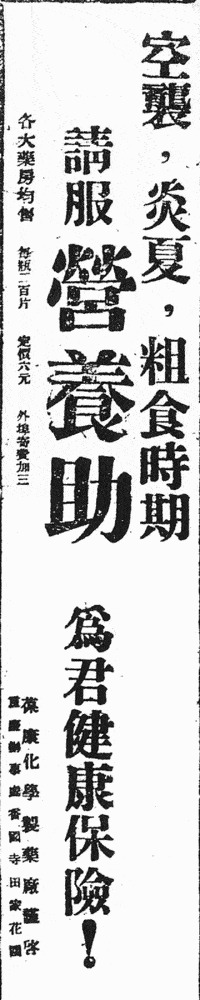
Although the nutrition movement was not a ‘movement from below’ by any means, no other wartime catchword more powerfully impressed the public on the home front than ‘nutrition’. Thanks to its etymological affinity with traditional ‘health preserving techniques’ (yangsheng), the word ‘nutrition’ (yingyang) was perceived by the public as something closely related to bodily health. There may have been complaints about the coarse taste of miscellaneous grains or less-husked rice, yet this would have been balanced by the time-honoured Chinese proverb ‘good medicine tastes bitter (liangyao kouku)’. Indeed, ‘nutrition’ was the core catchphrase even for purely commercial purposes. One newspaper advertisement for a nutrition supplement produced by a private pharmaceutical company noted, ‘While the nutrition problem is becoming the popular theme, a great contribution is Baokang [a brand name] Nutrition Supplement.’ Approximately a month later, perhaps after the steamy summer had already started, the same advertisement became: ‘In the time of air raids, scorching summers, and coarse diets, please take Nutrition Supplements to get your health assured’Footnote 71 (see Figure 1). While the issue of nutrition continued to capture headlines, ‘Nutritious Rice (yingyangmi)’, a brand name used by the Rice Industrial Processing Company (Zhongguo miliang gongye gongsi), a rice company built and run directly by the Ministry of Food, also appeared in printed advertisementsFootnote 72 (see Figure 2). Rather than lecturing repeatedly about eating unpalatable coarse grains, government authorities found that approaching the public with an eye-catching word such as ‘nutrition’ to be a smoother path to achieving their goal. In August 1941, the central authorities ordered each province under their control to ensure that all public meal services, without exception, were using coarse rice.Footnote 73 Even in Yan’an, the Communist guerrilla base area, ‘nutrition’ was an important catchword.Footnote 74 Whether it was the Nationalist or the Communists, during wartime the authorities advanced the original, if not hidden, purpose of the movement: encouraging people to eat more coarse rice, thereby reducing the overall wartime consumption of rice.
A newspaper advertisement for a nutrition supplement. It reads, ‘In the time of air raids, scorching summers, and coarse diets, please take Nutrition Supplements to get your health assured.’ Source: DGB, 14 June 1941.

A newspaper advertisement for ‘Nutritious Rice (yingyangmi)’, a product of the Rice Industrial Processing Company (Zhongguo miliang gongye gongsi), a rice company built and run directly by the Ministry of Food. It accompanied other products such as whole grain pancakes, corn pancakes, and coarse black bread. Source: DGB, 4 September 1942.

The Nutrition Convention in 1942
The centrepiece of the nutrition movement was a mass convention held in June 1942. Spectacular conventions and rallies in Chongqing were the most salient features of the wartime effort conducted by the New Life Movement General Association—founded by Chiang Kai-shek's loyal followers among the Party members—to improve wartime morale.Footnote 75 While they knew very well that mass rallies were extremely dangerous because of the threat posed by Japanese air raids to civilian populations, nothing was more attractive to the public audience than a spectacular event.Footnote 76 For this very reason, the Nationalists intentionally pushed forward with the rallies because they needed to showcase China's wartime resolution. Even on the very first day of the preliminary meeting—6 April 1942—all participating officials, nutritionists, public health specialists, and other civilian leaders were given a special warning in advance. If they encountered an air raid at the scheduled meeting time of 2 pm, they were to stay in the closest bomb shelters until the air raid warning stopped. No matter when the raid ended, exactly one hour afterwards, they were to show up at the venue.Footnote 77 At the meeting, participants decided to continue the convention at a symbolic place in the wartime capital—the New Life Movement Model Town—which was located in the commercial district of downtown Chongqing, called Fuzichi, an area heavily damaged during the Japanese aerial bombing in early May 1939.Footnote 78
To show the nation's resolution and to inspire popular morale, the authorities decided to build a model town over the ruins. At the heart of the project was the half-commercial, half-residential complex building, completed before the end of that year, where all of the residential units, convention halls, and public canteens were located and which was intended to demonstrate model wartime life according to the principles of the New Life Movement. Before moving in, all tenants had to sign a covenant to follow the cause of the Movement; for example, their restaurant businesses had to meet hygiene requirements, and retailers could not sell luxury items. Once approved, restaurateurs opened for business in the canteen, and their dishes strictly followed the dietary regimens and hygiene requirements suggested by the nutrition authorities. Next to this model town, an indoor gymnasium and an outdoor stadium (of 800 and 20,000 person occupancies, respectively) were built to accommodate wartime public events and rallies. One eyewitness stated that ‘the magnitude of the building impressed the local population’, particularly because of its modern fitness facilities.Footnote 79 In his memoir, Huang Renlin, chair of the New Life Movement General Association, recollected that, during the rest of the War, this model town was the ‘bulwark of China's anti-Japanese fighting spirit’.Footnote 80
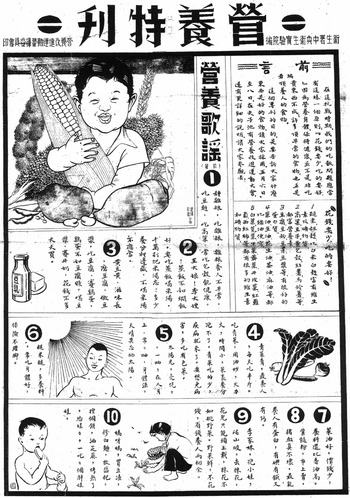
Before the event, succinct yet eye-catching slogans were created, as was a theme song with a simple melody and rhythm.Footnote 81 On opening day—1 June 1942—numerous posters and other visual materials were hung on the walls of the four exhibitions halls, partitioning the gymnasium, to explain how to improve one's health through new dietary suggestions (see Figure 3.) Once the spectators had finished touring the four indoor exhibition halls, their path took them to the outdoor canteens where model dishes from model diets could be tasted. The second exhibition room was the most popular, because it specialized in the nutritional improvement of children and infants. Likewise, the lecture hall where Ms Li Bang, the chairperson of the Society for Child Nutrition Improvement, delivered a special lecture on ‘children's nutrition’ was packed with female homemakers, who comprised the majority of spectators.Footnote 82 On the third day, ‘group visitors, each of which counted no less than a thousand’ poured into the Exhibition.
The Food Saving Exhibition Poster. The image of the healthy boy holding corn and other miscellaneous grains provides a stark contrast to a stereotypical image of the ‘sick man of Asia’. All of the messages (1 to 10) are written in simple verse and illustrated with small pictures under the subtitle ‘Nutrition Song (yingyang geyao)’. Source: Courtesy of the Academia Historica Archives (guoshiguan dang’anguan). ‘Liangzheng xiejinhui’, AHA, 119000006654A.

The Exhibition was regarded as a spectacular success. The Party-controlled newspaper, Zhongyang ribao, reported the ‘total entrance numbers counted more than 40,000 when the entire event closed’.Footnote 83 In a timely statement, the Chongqing Physicians’ Society announced that every member of the Society endorsed and supported all of the regimens and cooking methods displayed during the Exhibition and that the Exhibition had presented the best ways to save food for the nation and to improve individual health.Footnote 84
The Exhibition made an impact, if not a fundamental culinary change, on the home front. The model canteens, particularly the cafeteria (zizucan) and tea house (chalou), became popular for their decent menus offered at reasonable prices. A majority of the customers were, according to the recollection of a wartime Chongqing resident, ‘lower-ranking civil servants, writers, journalists, actors, teachers, and students’.Footnote 85 Impressed by the model canteens and meal services provided at the Exhibition, provincial and local governments declared that they would build model ‘nutrition canteens’ wherever public meal services were required in their jurisdictions.Footnote 86 The Chongqing municipality, for example, decreed that, without exception, all the public canteens in the city had to serve less-husked rice.Footnote 87 The Canadian missionary, Lena J. Jolliffe, was struck by the increase in the numbers of public canteens during wartime, stating that ‘public dining halls sponsored by the New Life Movement, the Chinese YMCA and the [Guomindang] Youth Corps, feed the multitude who otherwise would have the misery of hunger added to the long anxious wait in the dug-out’.Footnote 88 Refugees were not the sole target of the movement: the Nutrition Research Society opened a chef-training programme to teach what private culinary schools could not: ‘scientifically proven wartime diets’.Footnote 89
Afterwards, the public health authorities defined the Exhibition as one of the ‘major developments in six years’ in wartime China.Footnote 90 This is not a typical wartime self-congratulation by any means. In her eyewitness account, Jolliffe described the repercussions in society as follows: ‘the demand for flour in provinces formerly populated only by rice-eating people has increased six and eight times beyond the requirements of a few years ago. This change has affected the milling industry and has brought large modern flour mills into the suburb of the cities.’Footnote 91
Even after triumph in the War, the clamour for dietary reform did not diminish. The aspiration to build a new China overwhelmed the country: victory in the War led to a revival of China's territorial integrity as they reclaimed sovereign rights over Manchuria and Taiwan. On the other hand, the wartime mobilization of nutritional knowledge by the Nationalists and nutritionists could not help matters when a fierce civil war devastated China, particularly when it gave rise to food conditions that were even worse than had been experienced in previous years. The government authorities again urged all public meal services to follow the regimen proven by the health authorities, which, of course, consisted of coarse rice or miscellaneous grains. The use of euphemistic names also increased, with the authorities referring to all varieties of coarse rice that had to be used by the public meal services as ‘healthy rice’ (jiankangmi).Footnote 92 Hence, the continued wartime emergency became a good opportunity for nutritionists to enhance their professional authority. The China Nutrition Society suggested a husking standard for the best nutritional intake: rice had to be polished to 92 per cent (that is, 100 kg of rice had to have a minimum weight of 92 kg after husking), and wheat had to meet a minimum of 81 per cent.Footnote 93
Conclusion
This article has highlighted nutrition science as a crucial component of the nation-building project in early twentieth-century China. Given the significance of public health in the vision of strengthening the Chinese population's bodily health, neither the government authorities nor the medical elite spared support for nutritional research. This is not to say that all Chinese people passively accepted the new dietary regimen directed by the state. Even during wartime, the state and its top-down approach alone could not succeed in creating a convergence of nutritional knowledge and popular mobilization, nor was moral suasion sufficient to impact on the public psyche. Moreover, the prolonged war profoundly exhausted the administrative capacity of the Nationalist regime to change people's eating habits coercively.
What we have seen is that modern nutrition science possessed an intrinsically popular element simply because its key theme was everyday food consumption and eating habits. To the public audience, therefore, the message was instructive yet captivating and, sometimes, entertaining. During peacetime, before the outbreak of the War, ordinary people had ample opportunity to learn about and discuss nutrition, and even practise the preparation of food, in various ways, including reading cookbooks and recipes, subscribing to newspapers and magazines, and visiting public talks and exhibitions.Footnote 94 The wartime state was not able to mobilize the masses and organize propaganda for the food-saving campaign overnight. Instead, it was able to give a nationalist and patriotic flavour to the pre-existing popular interest in nutritional knowledge in the name of wartime urgency.
The People's Republic of China practised precisely the same methods as the previous regime in order to improve ‘national health’ through dietary reform, because food scarcity could not be ameliorated overnight. On 30 August 1949, roughly one month before the official founding of the People's Republic, the People's Daily (Renmin ribao) published an article called ‘How to Improve the People's Nutrition (Ruhe gaijin renmin yingyang)’. This was, however, a replica of an article originally drafted by the biochemist Wu Xian and his colleague Zhou Qiyuan; the only difference was the simple replacement of a word, ‘national citizen’ (guomin) with ‘people’ (renmin).Footnote 95 Afterwards, a series of similar food-saving campaigns was instituted.Footnote 96 However, the Communists’ attitude towards the public was profoundly different from that of the Nationalists. Whereas the Nationalists’ mobilization campaign ‘exhorted, passed down decrees, and herded’, as Frederic Wakeman puts it, the Communists came down to the grassroots level and called for active participation by the people.Footnote 97 Primarily, all of the Guomindang's euphemistic prefixes were removed, as were both nationalistic (guomin) and racist terms (minzu). Instead, the new regime used the Nutrition Society's suggestions, ‘Ninety-two rice (jiuer mi)’ and ‘Eighty-one noodle (bayi mian)’, perhaps because they believed that the quantified terms sounded more neutral, more scientific, or both.Footnote 98 The admonishing tone that had been used to describe regional eating habits also faded, particularly with respect to southerners, for whom more nuanced expressions were used. For instance, a booklet targeting child readers in Shanghai, entitled Ninety-two Rice and Eighty-one Noodle, stated that ‘southern peasants (nanfang de nongmin) ate “coarse rice,” while “highly polished rice” was a bit more popular in the cities’. However, the southern peasants had ‘more nutrition and were better with hygienic conditions’, which was demonstrated by the fact that ‘urban dwellers’ health was not as good as peasants’.Footnote 99
More than anything else, the Communists came to place much more emphasis on popular participation in the dissemination of nutritional knowledge. In the booklet How to Save Food, a testimonial was included to support a new method of cooking rice. Fan Guoliang, the author, was not a nutrition expert by any means; he was the chief receptionist at the Xinya Cantonese Restaurant, one of the most famous high-end restaurants in Shanghai. Fan extolled the new method of cooking rice, which, he said, ensured both taste and nutritional value. In his 13 years of work at the restaurant, Fan said, he had never experienced so many customers leaving laudatory feedback on the bowl of rice they were served.Footnote 100 This is not to say that one should accept Fan's testimonial at face value. However, the Chinese populace was provided with unprecedented opportunities to take part in the nutrition movement, which the Communists, having inherited it from a previous era, embarked on anew.