Introduction
The importance of patient safety was first expressed by the ancient Greek civilization, when Hippocrates stated that an important tenet of medical care was to abstain from doing harm. It later becomes the most important principle of the Hippocratic Oath – ‘Primum non nocere’ (first do no harm). The likely impact of adverse drug reactions (ADR) were brought to the attention of the public as a result of the severe birth defects noticed following the administration of thalidomide to pregnant women in the early 1960s.Reference McBride1 Since then a number of high profile incidents, involving medicines, have been reported, which has raised the importance of focusing on the safety aspects of medicines used during the prescribing process. Changes to the population demography in the western world, where people live longer and survive diseases that in the past might have resulted in their death, coupled with the development of a range of new medicines and the use of modern technologies to deliver better care, make prescribing a risky business in an ageing population. Studies in England have shown that 21% of inhabitants are over 60 years of age but receive 56% of all prescriptions dispensed.Reference Lenaghan, Holland and Brooks2, Reference Lowe, Raynor, Purvis, Farrin and Hudson3
Terminology and definitions
Both the terminology and definition used for an ADR often vary across the range of studies undertaken exploring this problem. This creates a difficulty when trying to compare the outcomes of such studies. For example, the term ADR is often used interchangeably with adverse drug events (ADE). An ADE is a general term used to describe any injury resulting from medical intervention relating to a drug.Reference Bates, Cullen, Laird, Petersen, Small and Servi4 This definition assumes no direct association between drug and event. Nebekar and colleagues categorized ADE using five different classes: adverse drug reactions, medication error, therapeutic failures, adverse drug withdrawal events, and overdoses.Reference Nebeker, Barach and Samore5 The World Health Organisation (WHO) defined ADR in 1969 as: ‘A response to a drug that is noxious and unintended and occurs at doses normally used in man for the prophylaxis, diagnosis or therapy of disease or for modification of physiological functions’.6 This definition was recently rewritten because it was considered too vague for routine application and also included all minor reactions as ADR. The new definition introduced by Edwards and Aronson (2001) includes any reaction that occurs due to a medication error.Reference Edwards and Aronson7 They defined ADR as: ‘An appreciably harmful or unpleasant reaction, resulting from an intervention related to the use of a medicinal product, which predicts hazard from future administration and warrants prevention or specific treatment, or alteration of the dosage regimen, or withdrawal of the product.’ This definition has been used in recent studies that enabled the direct comparison of study outcomes.Reference Davies, Green, Taylor, Williamson, Mottram and Pirmohamed8–Reference Pirmohamed, James, Meakin, Green, Scott and Walley10 ADR are further classified into type A and B reactions.Reference Rawlins, Thompson and Davies11 A Type A reaction is common, dose related and related to the known pharmacological action of the drug, whereas a Type B reaction is seen as bizarre and unpredictable. Recently, a new approach to classifying ADR based on dose relatedness, timing, and patients' susceptibility was introduced.Reference Aronson and Ferner12
In this review the incidence, burden, and characteristics of ADR occurring in older patients are discussed. In addition, the different approaches that can be used to reduce the occurrence of ADR are also discussed. PubMed and MEDLINE electronic databases were searched to inform the review. Additional studies were identified by reviewing the references cited in these publications.
Scale of the problem
Recently, concern over drug safety has grown rapidly with several meta-analyses, original research papers and numerous review articles published each year, defining the problem and suggesting approaches to limit the adverse effects of medicines. The risk of drug treatment has been clearly highlighted in published studies, although the incidence and burden of ADR varies worldwide. The diverse outcomes noted were contributed to by a variation in the definition, classification of incidence, causality assessment, and methods used to detect ADR.Reference Rommers, Teepe-Twiss and Guchelaar13
Key studies focusing on ADR in older patients can be broadly divided into two main categories: ADR studies focusing on the hospital setting and those in the community setting. Studies conducted in secondary care have largely focused on ADR causing hospital admission, although some report the occurrence of ADR during in-patient stay, especially on general medical and geriatric wards as well as patients seen in the emergency department.
ADR as a cause of hospital admission
Over the past decade, the reported prevalence of ADR causing hospital admission has not changed. A study published in 1991, which drew the attention of the public to the impact of adverse events, reported that 3.7% of 30,195 patients admitted to an acute hospital experienced adverse events.Reference Leape, Brennan, Laird, Lawthers, Localio and Barnes14 Injuries due to medical treatment accounted for 19.4% of adverse events identified in this study.
A seminal paper focusing on adverse drug events (ADE) as a primary outcome reported that the rate of medicine-related risk was 6.5 per 100 adult admissions amongst 4031 medical and surgical in-patients.Reference Bates, Cullen, Laird, Petersen, Small and Servi4 The mean age for patients included in this study was 51.8 years. Twenty-eight per cent of the events identified were judged as preventable. This prevalence was later confirmed in a systematic review of 68 prospective and retrospective studies, reporting a mean ADR rate of 6.7% (95% CI 6.6–6.8).Reference Wiffen, Gill, Edwards and Moore15 Another meta-analysis of 68 studies carried out by Dutch researchers demonstrated that the average rate of ADR-related hospital admission was four times higher in studies focusing on older patients (age > 65 years) compared with the non-elderly, 16.6% and 4.1%, respectively.Reference Beijer and Blaey16 These results were confirmed in a large UK-based study by Pirmohamed and colleagues, where a prevalence of 6.5% (95% CI 6.2–6.9%) in 18,820 admissions was described.Reference Pirmohamed, James, Meakin, Green, Scott and Walley10 Patients admitted with ADR were significantly older (median age 76 years) than those without ADR (66 years), and almost two-thirds (72%) of the ADR identified were considered to be preventable.
In the USA, the overall rate of ADE in the ambulatory care setting focusing on older patients aged 65 years and over was found to be 50.1 per 1000 person-years.Reference Gurwitz, Field, Harrold, Rothschild, Debellis and Seger17 Other studies in older patients have shown higher rates, with the incidence ranging from 5.3 to 30.7%.Reference Azad, Tierney, Victor and Kumar18–Reference Gray, Sager, Lestico and Jalaluddin25 These findings clearly demonstrate that the rate of ADR is higher in older patients when compared with other age groups.
ADR occurring during hospital in-patient stay
An overview of the principle studies examining ADR incidence by location is provided in Table 1. The rate of ADR was reported to be higher in patients during their in-patient stay, although only a small number of studies have been published in this area.Reference Davies, Green, Mottram and Pirmohamed26 Studies from the early 1960s reported that 10–20% of patients experienced an ADR during their hospital stay.Reference Seidl, Thornton and Cluff27, Reference Hurwitz and Wade28 Smith and colleagues reported, in 1996, that 7% of 20,000 medical in-patients experienced an ADR while in hospital.Reference Smith, Bennett, Pearce, Harrison, Reynolds and Aronson29 Other studies have reported varying incidences of ADR; ranging from as low as 0.86% in one Australian studyReference Simmons, Georgeson and Hill30 to 37% in a study of older patients in the Netherlands.Reference van Kraaij, Haagsma, Go and Gribnau31 The large variations reported are likely to be due to the sample size and the location of the individual studies.
Summary of published studies relating to adverse drug events in older people
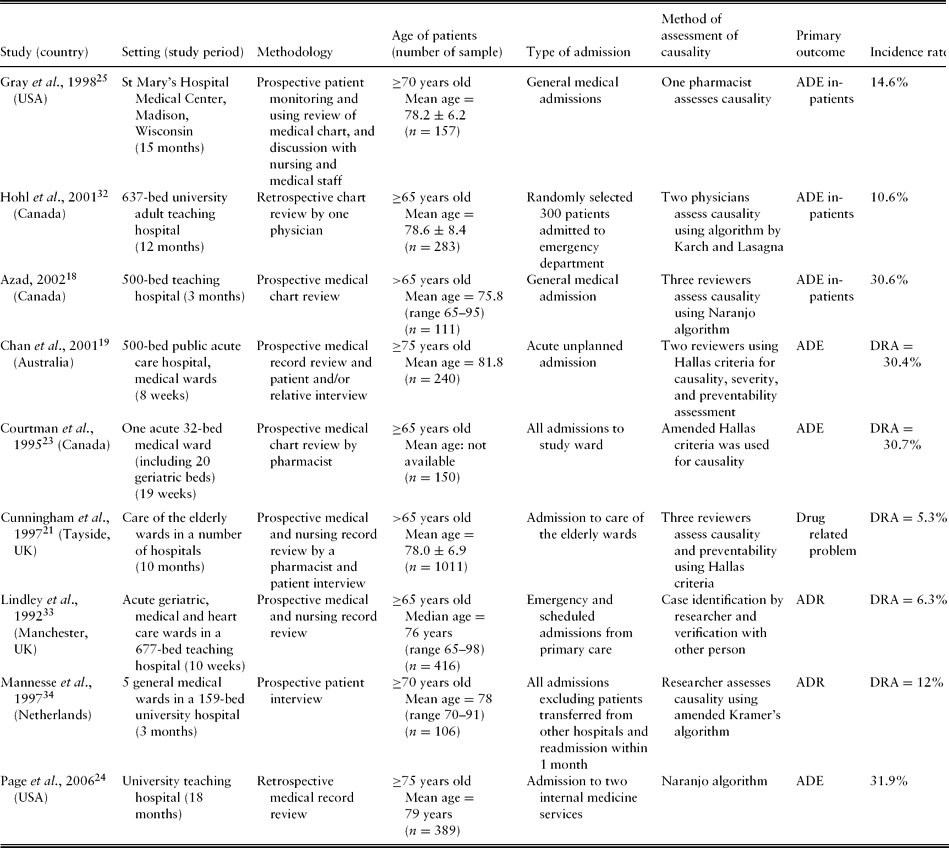
DRA, drug-related admission rate.
A recent study conducted in the UK reported an incidence rate of 14.7% (95% CI 13.6–15.9),Reference Davies, Green, Taylor, Williamson, Mottram and Pirmohamed8 when 3695 patient-episodes were monitored for ADR on twelve wards. All patients over 18 years of age were included in the study, and the median age of patients in the ADR group was 72 years (IQR 56–81) compared with 62 years (IQR 41–77) in the non-ADR group. The result of this study suggests that, in the UK, the incidence of ADR has not changed over the last decade.
There are few recent studies investigating ADR that occur during hospital stay in the older patient. Although the incidence of ADE ranges from 10.6 to 31.9%,Reference Azad, Tierney, Victor and Kumar18, Reference Page and Ruscin24, Reference Gray, Sager, Lestico and Jalaluddin25 the majority of these studies focused on patients older than 65 years with sample sizes ranging from 111 to 2814 patients.
Burden of ADR for the patient
Although ADR have been shown to have an impact on patient morbidity and mortality, they also have financial implications. In the USA, ADR is considered among the fourth to sixth cause of death in hospitalized patients,Reference Lazarou, Pomeranz and Corey35 and the seventh most common cause of death according to a recent Swedish survey.Reference Wester, Jonsson, Spigset, Druid and Hagg36
In 2001, a UK government report entitled ‘A Spoonful of Sugar’ denounced the growing incidence of deaths caused by ADR and medication errors, citing a 5-fold increase over a 10-year period.37 Subsequently, Pirmohamed and colleagues reported that mortality was over 2% in patients admitted due to experiencing an ADR, and when followed for a further 6 months an incidence rate of 0.15% was observed.Reference Pirmohamed, James, Meakin, Green, Scott and Walley10 If these results were applied to the 3.8 million hospitalized patients in the UK, it is estimated that 5700 deaths could be attributable to ADR. Norwegian researchers detected an incidence of fatal ADE of 18.2%, of which 48.1% of all deaths were drug related.Reference Buajordet, Ebbesen, Erikssen, Brors and Hilberg38
As ADRs are implicated in the morbidity of patients it suggests that there is a worsening of quality of life and that an ADR could contribute to an increase in GP visits, hospital admission and length of hospital stay. A recent study demonstrated that the median length of stay in patients experiencing an ADR was 12 days longer when compared with patients who had not experienced an ADR.Reference Davies, Green, Taylor, Williamson, Mottram and Pirmohamed8 Sometimes ADR could be misdiagnosed as a primary medical condition which, in turn, can lead to more medicines being prescribed, further increasing the risk to the patient.
Burden of ADR for the organization
ADR also have financial implications for society and governments. The Audit Commission revealed that ADR and medication errors cost the NHS in England, £0.5 billion annually.37 Pirmohamed and co-workers estimated that the ADR burden costs £466 million (€706, $847) each year, accounting for 4% of the hospital bed capacity in the UK. In the USA, it has been calculated that ADR-related hospital admissions increase the cost of patient care by $2,262 per-patient.Reference Classen, Pestotnik, Evans, Lloyd and Burke39 Similarly, the cost of preventable ADR in a 700-bed hospital has been estimated to be $2.8 million per annum.Reference Bates, Spell, Cullen, Burdick, Laird and Petersen40 A retrospective USA study, conducted by Rothschild et al., on data retrieved from a New England malpractice insurance company showed that 6.3% of claims made were due to adverse drug events, of which 73% were considered preventable.Reference Rothschild, Federico, Gandhi, Kaushal, Williams and Bates41
Risk of experiencing an ADR
The higher incidence of ADR in older people may be due to several factors, each multidimensional and often interconnected. Polypharmacy (both prescribed and non-prescribed medicines), altered drug pharmacokinetic profiles and/or pharmacodynamic responses as a result of ageing and altered adherence, caused by depression or cognitive impairment, contribute to this increase in risk to older people.Reference El Desoky42
Identifying an ADR in the older patient is often more challenging as the presentation can be both atypical and non-specific as often symptoms of an ADR are ascribed to the onset of a disease or simply due to frailty. For example, falls, delirium, drowsiness, lethargy, light headedness and apathy are frequently attributed as primary diagnoses rather than being related to the medicines the patient is taking.Reference Tangiisuran, Wright, Van Der Cammen and Rajkumar43
Altered pharmacokinetic and pharmacodynamic profile
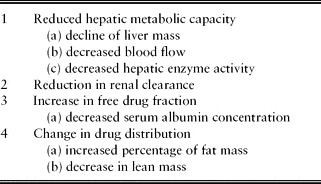
Physiological changes that occur due to ageing may affect drug distribution, metabolism and excretion, even if the drug regimen has not been previously modified.Reference Mangoni and Jackson44–Reference Zeeh and Platt46 Although these physiological changes are unavoidable in old age they are, to some extent, predictable. Adjustment to drug dosage may be required in older people, which can help avoid Type A reactions. Table 2 summarizes the important physiological changes noticed due to ageing that contribute to the higher risk of ADR. Reduction in hepatic capacity, renal function and changes in body composition may result in pharmacokinetic changes of certain drugs. For example, digoxin dosage may require considerable modification in older people due to the reduction in renal clearance and volume of distribution which then increases the serum concentrations and potential for harm.Reference Wang47 Changes in the target organ were identified as the main reason contributing to pharmacodynamic alterations in the older person. Alteration in receptor function can result in higher sensitivity at a given drug plasma concentration. The use of benzodiazepines and anti-psychotic agents in older people is associated with higher risk of ADR due to increased sensitivity to these drug classes.
Physiological changes in older people

Polypharmacy and multiple pathologies
According to the National Service Framework for older people, 36% of people over 75 years receive more than four regularly prescribed medicines48 so that polypharmacy is a reality for this age group. Polypharmacy can be defined as the use of multiple medications due to multiple disease conditions, and has been shown to be an independent predictor of ADR.Reference Field, Gurwitz, Avorn, McCormick, Jain and Eckler49–Reference Veehof, Stewart, Meyboom-de Jong and Haaijer-Ruskamp51 For example, in a recent study by Davies and colleagues (2009), they identified the number of drugs the patient was taking as the only independent predictor of ADR, with a hazard ratio of 1.14 (95% CI 1.09–1.20).Reference Davies, Green, Taylor, Williamson, Mottram and Pirmohamed8 Similar results have been reported by a range of studies conducted over an 8-year period.Reference Field, Gurwitz, Avorn, McCormick, Jain and Eckler49, Reference Nguyen, Fouts, Kotabe and Lo50, Reference Onder, Pedone, Landi, Cesari, Vedova and Bernabei52–Reference Leendertse, Egberts, Stoker and van den Bemt55 In addition, polypharmacy contributes to drug interactions that can cause falls and other problems which may lead to hospital admission, increase the length of hospital stay or even result in the death of patients.Reference Campbell, Seymour and Primrose56, Reference Kennerfalk, Ruigomez, Wallander, Wilhelmsen and Johansson57
Studies exploring the potential benefit of medicines in the primary and secondary prevention of chronic diseases often exclude the older patient. However, with people living longer there is now momentum gathering to demonstrate the benefit of medicines for the older generation, for example in the treatment of hypertension,Reference Beckett, Peters, Fletcher, Staessen, Liu and Dumitrascu58 which may establish the real benefit of a pharmacological treatment for this age group. The consequence is likely to be an increase in the prescribing of certain medicines, according to the evidence, which in turn is likely to result in patients experiencing more ADR.
Drug interactions
Drug interactions in older people are increased by concurrent use of multiple medications, which might contribute to ADR.Reference Juurlink, Mamdani, Kopp, Laupacis and Redelmeier59–Reference Holbrook, Pereira, Labiris, McDonald, Douketis and Crowther61 Davies et al. (2009) found that 59% of the registered ADR were linked to drug interactions, of which 91.7% were classified as pharmacodynamic interactions, 5.3% pharmacokinetic and the remaining 3% with mixed mechanism.
The prescribing cascade
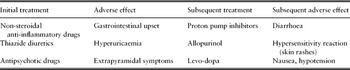
Often new symptoms caused by a drug go unrecognized and require the addition of another drug to the patient's existing therapy. This phenomenon is known as the prescribing cascade.Reference Rochon and Gurwitz62 In some cases, the drug treatment can be inappropriate and therefore can increase the risk of further ADR. Difficulties in identifying drug-related symptoms and polypharmacy in older people further increase the likelihood of the prescribing cascade occurring. Examples of common prescribing cascades are shown in Table 3.
Examples of prescribing cascade

Other contributing factors
Inappropriate prescribing is reported to be common, especially in older people.Reference Hamilton, Gallagher and O'Mahony63 Hajjar and colleagues reported that 44% of frail older patients were treated with at least one unnecessary drugReference Hajjar, Hanlon, Sloane, Lindblad, Pieper and Ruby64 and a UK study revealed that almost 50% of ADR could be attributed to inappropriate prescribing.Reference Lindley, Tully, Paramsothy and Tallis33
Certain drug classes such as cardiovascular agents have been shown to increase the risk of ADR 2.4 times compared with other medications.Reference Bates, Cullen, Laird, Petersen, Small and Servi4 Medication that required therapeutic monitoring (digoxin) was found to be an independent predictor of ADR.Reference Schneider, Mion and Frengley65, Reference McElnay, McCallion, Al-Deagi and Scott66
Some conditions commonly observed in older people, such as anaemia,Reference Bowman, Carlstedt, Hancock and Black67 malnutrition,Reference Vakil, Kulkarni, Chabria, Chadha and Deshpande68 and multipathology, have been recognized to increase the risk of ADR. Due to multiple diseases, prescribers from different specialities can initiate medications used in older patients. According to an expert consensus panel, multiple prescribers represent a potential risk factor for ADE.Reference Hajjar, Hanlon, Artz, Lindblad, Pieper and Sloane69 Other research has further confirmed the number of prescribing physicians as an independent risk factor for patients self-reporting an ADE in the out-patient setting.Reference Green, Hawley and Rask70
A higher risk of developing an ADE has been shown in patients known to have a degree of cognitive impairment (OR 0.94; 95% CI 0.90–0.97).Reference Ganjavi, Herrmann, Rochon, Sharma, Lee and Cassel71 However, a contradictory result was shown in another study where cognitive impairment was associated with a reduced risk of ADR.Reference Onder, Gambassi, Scales, Cesari, Vedova and Landi72 Difficulties in the identification of ADR in older people and lack of thorough assessment may have contributed to this result. Older people with cognitive impairment also have difficulty communicating their problem to physicians, which further complicates the condition.Reference Davies, Green, Mottram and Pirmohamed26, Reference Onder, Gambassi, Scales, Cesari, Vedova and Landi72–Reference Mannesse, Derkx, de Ridder, Man in't Veld and Van Der Cammen74
Drug classes causing ADR
Certain drug classes appear to be recurrently associated with ADR. A systematic review identified six classes of drugs (antibiotics, anticoagulants, cardiac glycosides, diuretics, hypoglycaemic agents, and NSAIDs) as responsible for 60–70% of ADR, causing hospital admission or occurring during hospital stay.Reference Wiffen, Gill, Edwards and Moore15 A more recent systematic review also highlighted four major drug classes (anti-platelets, diuretics, NSAIDs, and anti-coagulants) as causing 50% of preventable drug-related admissions.Reference Howard, Avery, Slavenburg, Royal, Pipe and Lucassen75 In the older person, diuretics were identified as the drug class most commonly associated with ADR.Reference Davies, Green, Mottram and Pirmohamed26 These outcomes probably represent the high usage of this drug class in this patient group.
Careful and frequent monitoring should be done when prescribing these high-risk medications in older people. Assessment of the relative risk-benefit for each newly prescribed medication should be carefully considered. For example, the use of drugs with recognized potential to cause harm such as anti-platelets and diuretics should be tailored to individual patient's needs, as there is growing evidence of their benefits. Dosage and frequency should be tailored based on the changes in physiological functions expected due to the ageing process.
Preventing ADR
Implementation of new strategies to reduce the occurrence of ADR seems to be a reasonable and achievable goal. At present, there are two main approaches to preventing ADR: the first is more focused on the analysis of the process of care, while the second is aimed at identifying ‘at risk’ patients.
The first approach focuses on the process of care and presupposes that ADR are closely related to medication errors. Hence trying to minimize the occurrence of errors could help to reduce ADR. This concept has been adopted from Reason's Swiss Cheese model, which describes a system of failures, highlighting the important role of systems of defence.Reference Reason76
In this model, an organization's defences against failure are modelled as a series of barriers, with individual weaknesses in parts of the system (holes in Swiss cheese), permitting ‘a trajectory of accident opportunity’, so that a hazard passes through all of the holes in all of the defences, leading to a failure. For example, a patient can be administered a drug, despite a history of allergy. This will most likely result in a drug reaction due to re-exposure, which is considered predictable and preventable. There are several preventative measures currently available; for example, use of a computerized system, pharmacy intervention, spontaneous reporting and documentation.
In the second approach, patients' characteristics are analysed to detect individual risk to tailor subsequent interventions. Due to the complex context, an intervention combining both strategies might be more effective.
Process of care
An ADR is classified as preventable if it is due to inappropriate prescribing that includes misuse, overuse or underuse of drugs.Reference Pham and Dickman77 Any measures that improve the drug use process can be used effectively to minimize ADR occurrences. Some useful strategies within this aim are the use of an electronic prescribing database, pharmacists' involvement in patients' care and spontaneous reporting systems.
Utilizing computer systems
The implementation of computerized or information technology (IT) in healthcare systems has been shown to reduce the rates of drug administration errors that indirectly reduces ADR.Reference Rommers, Teepe-Twiss and Guchelaar13 A computerized system is helpful in obtaining a patient's record including previous clinical information and also for continuous monitoring of a patient's condition. Leape and colleagues (1995) identified that lack of patient information at the point of prescribing accounted for 18% of the reported errors.Reference Leape, Bates, Cullen, Cooper, Demonaco and Gallivan78
Computerized Physician Order Entry (CPOE) with a Clinical Decision Support System (CDSS) was found to be beneficial, despite several limitations.Reference Rommers, Teepe-Twiss and Guchelaar13 In CPOE, the medication order is performed online, whereas CDSS is a system that provides advice during the prescribing process. CDSS provides information automatically about drug allergies, interactions, doses and routes. A recent review of five studies highlighted the potential of these systems to reduce medication error.Reference Kaushal, Shojania and Bates79
Implementation of the CPOE system in the actual clinical setting produced a significant decline in the preventable and non-detected ADE: from 10.7 events for 1000 patient days to 4.68 events with a decrease of 84% in transcription errors.Reference Bates, Leape, Cullen, Laird, Petersen and Teich80 Other studies have found an improvement in detecting ADE through computer-based monitoring systems.Reference Rommers, Teepe-Twiss and Guchelaar13 Nevertheless, there is still a lack of evidence available to confirm that these interventions can be effective in reducing ADR.Reference Kaushal, Shojania and Bates79
Pharmacy interventions
Pharmacist knowledge of pharmacology of medicines, particularly of their side-effect profiles, can be useful in preventing ADR. A study conducted on a general medicine unit showed that pharmacist participation in the ward-round team reduced the rate of preventable ADE from 26.5 to 5.7 per 1000 hospital days.Reference Kucukarslan, Peters, Mlynarek and Nafziger81 Interestingly, 98% of the recommendations by the pharmacist, mainly dose-related changes and adding a new drug to existing therapy, were accepted by the team. A meta-analysis of 32 studies performed on older patients showed that pharmacists' interventions can increase the understanding and adherence among patients.Reference Holland, Desborough, Goodyer, Hall, Wright and Loke82 However, the evidence of benefit in reducing hospital admission and mortality has not been demonstrated, which reflects the suboptimal design of many of the studies undertaken to date.
On the other hand, a significant decrease in morbidity and cost of care were recorded in a randomized controlled study focusing on pharmacist-led medication review of patients over 80 years old.Reference Gillespie, Alassaad, Henrohn, Garmo, Hammarlund-Udenaes and Toss83 This study was conducted in Sweden. Four hundred patients were randomized into control (n = 201) and intervention (n = 199) groups. The control group received standard care without direct involvement from the pharmacist on the ward, whereas ward-based pharmacists were involved in performing the interventions in the other group. There was an 80% reduction in drug-related readmission, 47% in visits to emergency departments and 16% in all hospital visits. A more practical solution might be to narrow pharmacists' assistance to a group of patients recognized as at high risk.
Spontaneous reporting and documentation
Identification and reporting of ADR is key in the prevention strategy. National pharmacovigilance systems such as the Yellow Card System in the UK represent the most important approach for monitoring and detecting ADR-associated factors in medications and patients. It was developed in 1964 and currently includes electronic reporting, and direct reporting by the public. Under-reporting was identified as the main limitation of the system, although a gradual increasing trend has been registered in recent years. Since the introduction of this system, several drugs have been withdrawn, resulting in a reduction of ADR due to specific drugs.
Poor documentation of patients with a history of ADR can lead to re-exposure of the offending drug, causing the patient to re-experience the ADR. Previous occurrence of ADR is an important risk factor for developing ADR. Thus simple intervention, such as emphasizing the importance of accurate documentation of ADR at the time of reaction, and providing relevant information to the patient about ADR, can help to prevent recurrence.
Communication and other interventions
Improving communication between the healthcare provider and patients has been recognized to moderately reduce ADE. A significant reduction in serious ADE was observed in frail and older patients randomized to receive a comprehensive geriatric assessment, compared with the usual care.Reference Schmader, Hanlon, Pieper, Sloane, Ruby and Twersky84 Providing information and communicating the benefits and risk of medication to patients can improve adherence through shared decision-making based on pharmaceutical need.
Continuous education for healthcare professionals can also help in preventing ADR. Prescribers with up-to-date information on new and high-risk medications, including information on comparative benefits, risk and contraindications, can make the best decision at the point of prescribing.
The introduction of newer generation drugs with a lighter burden of side-effects may reduce ADR. For example, COX-2 inhibitors have a similar anti-inflammatory effect to aspirin and ibuprofen, but a lower gastro-intestinal impact. However, these drugs have since been proven to have adverse cardiovascular effects, necessitating withdrawal of many of this class.Reference Andersohn, Suissa and Garbe85 Perhaps the best way to prevent ADR is to minimize pharmacological treatment.
There is a growing interest in non-pharmacological treatment, which could be an option to avert ADR.Reference Pham and Dickman77 For example, cognitive behaviour therapy and relaxation techniques have been shown to reduce anxiety and therefore anxiolytic usage.Reference Ayers, Sorrell, Thorp and Wetherell86 Regardless of various methods described that target the process of care, a multifaceted approach involving more than one intervention, which considers the variation observed in individual patients, could be the most effective way to prevent ADR.
Highlighting patients at risk
Identification of subjects at risk of ADR using risk factors such as genetic predisposition or other clinical characteristics is the main approach in this method. Recent advances in pharmacogenetics, especially identification of mutations and polymorphism in genes coding drug-metabolizing enzymes, drug transporters and receptors, has provided an explanation of increased individual susceptibility for ADR.Reference Meyer87
Ross and colleagues have demonstrated that subjects with genetic variants in the Thiopurine Methyltransferase (TPMT) gene are more prone to severe myelosuppression after administration of azathioprine. It can be fatal in individuals with homozygosis in low activity variants (e.g. TPMT*3A), which reduce inactivation of azathioprine, and lead to accumulation of thioguanine nucleotides in haematopoietic tissues.Reference Ross, Katzov, Carleton and Hayden88 Variations in the human genome represent an interesting field for further research, but application in routine clinical practice could be limited by high costs and lack of laboratory facilities.
Predicting ADR
A risk stratification approach to preventing an event has been used successfully in different areas.89 Information about patients, diseases or treatment is drawn prospectively with the aim of stratifying subjects for their risk of developing an event.90 The theoretical structure of a predicting model is based on the identification of risk factors and estimation of individual rates of risk and benefit. To date, numerous models have been proposed to predict adverse events. Variation in the outcome measures, methodologies, and level of complexity limits direct comparison between the studies.66,91–94
Elnicki and Schmitt initiated the hypothesis that each adverse event could be caused by a multiplicity of concurrent factors, but a single risk factor is not enough to predict the occurrence of any adverse event.95 Another attempt to build a risk model for ADE led to identification of seven variables,66 whilst previously only two factors had been recognized as significant to predict ADE.4 However, these models were not used in clinical practice due to low sensitivity and not being validated in different populations.
Recently, Onder and colleagues developed and validated a new predicting tool consisting of six variables to stratify older patients who are at risk of ADR during in-patient stay. Although it was based on secondary analysis using a dataset collected by The Gruppo Italiano di Farmacoepidemiologia nell'Anziano (GIFA),94 the tool was validated in four different European countries. This increases the generalizability of the model developed.
Conclusion
ADR are relatively common in older patients, and the majority are preventable. In consideration of the recognized impact of ADR on patients' outcome, quality of life, length of hospital stay, mortality, morbidity and risk of hospital admission, several approaches with the aim of reducing the high incidence of ADR have been proposed.
Accurate identification of ADR, especially detection of preventable ADR, is key to successful prevention strategies. There are multiple methods currently available with the aim of reducing the occurrence of ADR, including trying to identify at-risk patients in order to target additional attention and intervention. Several models are available, unfortunately not validated in bigger, and the UK, populations. The ideal model to predict ADR should include a variety of patients, therapeutic and environmental characteristics. Information and research into genetic susceptibility to ADR would sharpen the predictive ability of the model developed. Any newly developed risk stratification tool should be evaluated using an intervention or well-defined outcome-oriented study. It should be extended by a double blind, randomized trial. Intervention plans should be designed for those patients who are classified as having a higher risk of ADR. Patients should be followed up for the evaluation of several outcome measures including clinical outcomes, length of hospital stay, frequency of ADR, hospital admission, emergency department attendance, changes in quality of life, independence, cognition, and subjective health. To further strengthen the findings, a pharmacoeconomic evaluation of the benefits of the intervention should also be performed.
Future studies should consider the challenges and difficulties that may arise due to the complexity of drugs used in older patients. Inappropriate prescribing, lack of monitoring or drug-taking behaviour are several contributors to medicine-related problems.Reference Wiffen, Gill, Edwards and Moore15, Reference Leape, Bates, Cullen, Cooper, Demonaco and Gallivan78, Reference Kanjanarat, Winterstein, Johns, Hatton, Gonzalez-Rothi and Segal96 Clearly, the role of prescriber, pharmacist and patient are inter-related and crucial to the successful implementation of any prevention strategy. Perhaps future study should cover both primary and secondary care, including nursing home and residential homes.
Additional research in this area is a priority to reduce impact of ADR upon patient care, financial cost and reduction of hospital admission and length of stay. Methodological limitations and lack of standardized definition of the primary outcome have proved to be obstacles, and need to be improved in future studies. Clearly, an eclectic multidimensional approach is needed to prevent the occurrence of ADR in older people.
Conflicts of interest
All the authors declare no conflicts of interest.