1. Introduction
Public stigma refers to the endorsement of negative stereotypes and discriminating attitudes about serious mental illness (SMI) by the general population (Gerlinger et al., Reference Gerlinger, Hauser, De Hert, Lacluyse, Wampers and Correll2013). The effects of stigma on individuals include perceived, experienced, anticipated and self-stigma. Anticipated stigma (or the expectation to be discriminated because having a SMI) is common, can occur even in the absence of previous experiences of discrimination and contributes to social withdrawal and self-stigma (Dubreucq & Franck, Reference Dubreucq and Franckin review). Self-stigma occurs when someone moves beyond awareness of stigma to accepting the negative stereotypes about SMI as true to describe him/herself (Gerlinger et al., Reference Gerlinger, Hauser, De Hert, Lacluyse, Wampers and Correll2013). Self-stigma is associated with decreased hope, wellbeing, quality of life, motivation to achieve life goals and poorer recovery-related outcomes (Dubreucq & Franck, Reference Dubreucq and Franckin review). Some people with SMI will however respond to the awareness of stigma with indifference or righteous anger (Gerlinger et al., Reference Gerlinger, Hauser, De Hert, Lacluyse, Wampers and Correll2013).
According to qualitative analysis, stigma resistance (SR) is as an empowering process of using one's strengths, knowledge and experiences to fight stigma at the personal, peer and public levels (Firmin et al., Reference Firmin, Luther, Salyers, Buck and Lysaker2017). At the personal level, SR is defined as one's ability to deflect or challenge stigmatizing beliefs about oneself and other people with SMI (Thoits, Reference Thoits2011; Firmin et al., Reference Firmin, Luther, Salyers, Buck and Lysaker2017). SR implies to develop and maintain a meaningful identity and purpose apart from mental illness (Firmin et al., Reference Firmin, Luther, Salyers, Buck and Lysaker2017). At the peer and public levels, SR can involve using one's experience to help other people with SMI and to challenge public stigmatizing beliefs (Firmin et al., Reference Firmin, Luther, Salyers, Buck and Lysaker2017).
SR concerns a wide range of people with SMI (Brohan, Elgie, Sartorius, Thornicroft, & GAMIAN-Europe, Reference Brohan, Elgie, Sartorius and Thornicroft2010; Brohan, Gauci, Sartorius, Thornicroft, & GAMIAN-Europe, Reference Brohan, Gauci, Sartorius and Thornicroft2011). In a 2016 meta-analysis composed of 48 studies (Firmin, Luther, Lysaker, Minor, & Salyers, Reference Firmin, Luther, Lysaker, Minor and Salyers2016), there was a strong negative correlation between SR and self-stigma. SR was positively associated with self-efficacy, self-esteem, empowerment, hope, social function, personal recovery and subjective quality of life in SMI (Firmin et al., Reference Firmin, Luther, Lysaker, Minor and Salyers2016; Lau et al., Reference Lau, Picco, Pang, Jeyagurunathan, Satghare, Chong and Subramaniam2017; O'Connor, Yanos, & Firmin, Reference O'Connor, Yanos and Firmin2018). Greater SR is associated with preserved metacognitive abilities (Nabors et al., Reference Nabors, Yanos, Roe, Hasson-Ohayon, Leonhardt, Buck and Lysaker2014; Kao, Lien, Chang, Wang, Tzeng, & Loh, Reference Kao, Lien, Chang, Wang, Tzeng and Loh2016; Firmin, Luther, Salyers, Buck, & Lysaker, Reference Firmin, Luther, Salyers, Buck and Lysaker2017), outpatient treatment (Sibitz et al., Reference Sibitz, Amering, Unger, Seyringer, Bachmann, Schrank and Woppmann2011), lower stereotype endorsement (Nabors et al., Reference Nabors, Yanos, Roe, Hasson-Ohayon, Leonhardt, Buck and Lysaker2014; Kao et al., Reference Kao, Lien, Chang, Wang, Tzeng and Loh2016; O'Connor et al., Reference O'Connor, Yanos and Firmin2018), higher insight into illness (Firmin et al., Reference Firmin, Luther, Lysaker, Minor and Salyers2016), a preserved social network (Sibitz et al., Reference Sibitz, Amering, Unger, Seyringer, Bachmann, Schrank and Woppmann2011; Thoits & Link, Reference Thoits and Link2016; Chan, Lee, & Mak, Reference Chan, Lee and Mak2018), social power (Campellone, Caponigro, & Kring, Reference Campellone, Caponigro and Kring2014) self-compassion (Chan et al., Reference Chan, Lee and Mak2018), psychological flexibility (Chan et al., Reference Chan, Lee and Mak2018) and the use of adaptive coping strategies (Kao et al., Reference Kao, Lien, Chang, Wang, Tzeng and Loh2016; O'Connor et al., Reference O'Connor, Yanos and Firmin2018). Lower SR is associated with the fear of negative evaluation (Firmin et al., Reference Firmin, Luther, Salyers, Buck and Lysaker2017), perceived stigma (Rüsch et al., Reference Rüsch, Corrigan, Wassel, Michaels, Olschewski, Wilkniss and Batia2009), self-stigma (Firmin et al., Reference Firmin, Luther, Lysaker, Minor and Salyers2016), negative symptoms (Nabors et al., Reference Nabors, Yanos, Roe, Hasson-Ohayon, Leonhardt, Buck and Lysaker2014) and maladaptive coping strategies (Kao et al., Reference Kao, Lien, Chang, Wang, Tzeng and Loh2016; O'Connor et al., Reference O'Connor, Yanos and Firmin2018). Age and education have been found to moderate the relations between SR and recovery-related outcomes, such as self-stigma, hope, quality of life and social function (Firmin et al.;, Reference Firmin, Luther, Lysaker, Minor and Salyers2016; O'Connor et al., Reference O'Connor, Yanos and Firmin2018).
Given its association with recovery-related outcomes, promoting SR in patients enrolled in psychiatric rehabilitation appears promising (Firmin et al., Reference Firmin, Luther, Lysaker, Minor and Salyers2016). Compared with self-stigma, SR is under-studied. It is mostly measured with a subscale of Internalized Stigma of Mental Illness Scale (ISMI; Boyd-Ritsher, Otilingam, and Grajales, Reference Boyd-Ritsher, Otilingam and Grajales2003). Studies on SR are often small-sized and report only a limited number of outcomes (Firmin et al., Reference Firmin, Luther, Lysaker, Minor and Salyers2016). Most studies concern people with schizophrenia (63.5% of the participants in a 2016 meta-analysis; Firmin et al., Reference Firmin, Luther, Lysaker, Minor and Salyers2016). The most frequently reported associations concern self-stigma, psychiatric symptoms, self-esteem, hope and psychosocial function (Firmin et al., Reference Firmin, Luther, Lysaker, Minor and Salyers2016). Impairments in cognitive functioning, metacognition and social cognition predict increased self-stigma (Lysaker, Vohs, & Tsai, Reference Lysaker, Vohs and Tsai2009; Lysaker et al., Reference Lysaker, Vohs, Hasson-Ohayon, Kukla, Wierwille and Dimaggio2013) while preserved cognitive abilities protect against self-stigma (Lysaker et al., Reference Lysaker, Vohs, Hasson-Ohayon, Kukla, Wierwille and Dimaggio2013). Preserved cognitive abilities and social cognition could facilitate SR through more adaptive coping strategies. To our knowledge, this association has not yet been investigated.
According to a recent meta-analysis, there is a positive relationship between insight into illness and SR (n = 4 studies; Firmin et al., Reference Firmin, Luther, Lysaker, Minor and Salyers2016). There is however evidence supporting that a lack of insight could protect against self-stigma and insight-related depression (Lysaker, Roe, & Yanos, Reference Lysaker, Roe and Yanos2007; Yanos, Roe, Markus, & Lysaker, Reference Yanos, Roe, Markus and Lysaker2008; Lysaker et al., Reference Lysaker, Vohs, Hasson-Ohayon, Kukla, Wierwille and Dimaggio2013). People with low insight and low group identification (i.e. the extent to which people believe they belong to the group of people with SMI) may respond with indifference to public stigma (Yanos, Reference Yanos, Roe, Markus and Lysaker2018). Conversely, righteous anger may occur in people with high insight, high group identification but also high in-group value (i.e how people with SMI see their own group) and low perceived legitimacy of stigma (i.e. the extent to which people believe negative stereotypes are correct; Rüsch et al., Reference Rüsch, Corrigan, Wassel, Michaels, Olschewski, Wilkniss and Batia2009).
The first data from the REHABase network, with over half of the participants in the late stages of personal recovery at enrollment in psychiatric rehabilitation, suggests potential relations between a lack of insight, SR and personal recovery (Franck et al., Reference Franck, Bon, Dekerle, Plasse, Massoubre, Pommier and Dubreucq2019). This hypothesis and the potential mediating effects of SR on the relationship between insight and personal recovery remain to be investigated. Reinvesting valued social roles extending beyond mental illness (having his/her personal accommodation, working or being student, living in relationship, being parent) contributes to personal recovery (Leamy, Bird, Le Boutillier, Williams, & Slade, Reference Leamy, Bird, Le Boutillier, Williams and Slade2011) and could be associated with greater SR. The associations between SR and these social roles are still unclear and should be further investigated.
In summary, SR could be a key target for improving treatment outcome during psychiatric rehabilitation independently of the level of self-stigma. SR was studied in cross-sectional studies including mostly people with SZ. Its correlates in patients enrolled in psychiatric rehabilitation or being diagnosed with other SMI remain largely unknown. Compared with other correlates of SR, insight, cognitive functioning, social cognition and recovery-related outcomes are under-investigated. The present study sought to assess the frequency of SR and to examine several hypotheses about the correlates of elevated SR in a large multicentric non-selected psychiatric rehabilitation SMI sample. We hypothesized that: (i) SR would be positively associated with recovery-related outcomes and late stages of recovery; (ii) SR would be negatively associated with insight, self-stigma and impairments in executive function and social cognition; (iii) age and education would moderate the relations between SR, self-stigma, wellbeing and personal recovery; (iv) SR would mediate the relationship between insight and recovery-related outcomes such as wellbeing or personal recovery.
2. Material and methods
2.1 Study population
The REHABase cohort is made up of patients from a French network of psychiatric rehabilitation centers that has been extensively described in a previous article (Franck et al., Reference Franck, Bon, Dekerle, Plasse, Massoubre, Pommier and Dubreucq2019). The aims of the REHABase cohort are to better characterize SMI patient's needs for psychiatric rehabilitation and to investigate longitudinally the impact of psychosocial interventions on recovery-related outcomes. Patients are referred to these centers by their general practitioner or psychiatrist, who remains in charge of routine care and treatment. The inclusion criteria are: (i) a diagnosis of SMI (i.e. schizophrenia, bipolar disorder, borderline personality disorder, major depression or severe anxiety disorders, according to the SAMHSA (2014) definition; ‘persons aged 18 or older who currently or at any time in the past year have had a diagnosable mental, behavioral, or emotional disorder (…) that has resulted in serious functional impairment’; SAMHSA;, 2014) or autism spectrum disorder (ASD; DSM-V criteria; APA, 2013); (ii) a score below the cut-off scores for social recovery according to Jääskeläinen et al. (Reference Jääskeläinen, Juola, Hirvonen, McGrath, Saha, Isohanni and Miettunen2013) [a score of less than 61 on the Global Assessment of Functioning (GAF) scale]. A comprehensive clinical, functional and cognitive assessment is performed to establish the individual's strengths and weaknesses, autonomy and occupational level. Therapeutic tools are selected based on the participant's personal life goals as part of an individualized psychiatric rehabilitation action plan. The action plan can include psychoeducation, joint crisis plans, cognitive remediation, cognitive behavior therapy, social skills training, peer-delivered interventions and supported employment (Franck et al., Reference Franck, Bon, Dekerle, Plasse, Massoubre, Pommier and Dubreucq2019). Follow-up is planned to last for 2–3 years. Evaluations are scheduled at baseline, annually, and after the action plan is completed. The action plan can begin before the evaluation when clinically relevant to support patient's engagement in mental health care or psychiatric rehabilitation. This is for instance the case for strengths-based case management in early psychosis and supported employment, housing or parenting. A total of 2053 patients were included in the eight REHABase sites between January 2016 and April 2019. In total, 738 (35.9%) were effectively evaluated at the time of extraction. Patients with borderline personality disorder (n = 64) were included in the analysis because these patients may be more vulnerable to self-stigma due to feelings of shame and high level of public stigma (Rüsch et al., Reference Rüsch, Hölzer, Hermann, Schramm, Jacob, Bohus and Corrigan2006; Gunderson et al., Reference Gunderson, Herpertz, Skodol, Torgersen and Zanarini2018). Patients with ASD (n = 45) were not included in this analysis due to small sample size and potential heterogeneity with the other populations. The study obtained the authorizations required under French legislation (French National Advisory Committee for the Treatment of Information in Health Research, 16.060bis; French National Computing and Freedom Committee, DR-2017-268). All participants gave their informed consent.
2.2 Site selection and training
The REHABase network was set up under a decree from the French Health Ministry aiming at disseminating recovery-oriented practices in mental health facilities and increasing the access to psychosocial treatment (Franck et al., Reference Franck, Bon, Dekerle, Plasse, Massoubre, Pommier and Dubreucq2019). It is composed of nine sites (Lyon, Grenoble, Saint-Etienne, Limoges/Poitiers, Bordeaux, Clermont-Ferrand, Roanne and Bourg-en-Bresse) that cover a large part of the French territory. Although it cannot be asserted that the REHABase database is a representative sample of the French population of SMI patients, it could be representative of those enrolled in psychiatric rehabilitation. Site selection and training have been described in a previous article (Franck et al., Reference Franck, Bon, Dekerle, Plasse, Massoubre, Pommier and Dubreucq2019). Each center has accepted and been trained to use the same package of assessment tools for the baseline visit and follow-up. Clinical team members have regular group meetings to monitor quality control and ensure good inter-rater reliability.
2.3 Data collected
2.3.1. Stigma resistance
SR was assessed using the ISMI scale (Boyd-Ritsher et al. Reference Boyd-Ritsher, Otilingam and Grajales2003; Brohan et al. Reference Brohan, Elgie, Sartorius and Thornicroft2010), a 29-item self-report measure designed to assess one's personal experience of stigma related to mental disorders and is rated on a 4-point Likert scale. Items are summed to provide a mean total score and five subscale scores (alienation or feeling of being a devaluated member of the society; stereotype endorsement or agreement with the negative attitudes about SMI; discrimination experience; social withdrawal as a coping strategy; SR). SR subscale consists of the following reverse coded five items: ‘I can have a good, fulfilling life, despite my mental illness’; ‘People with mental illness make important contributions to society’; ‘In general, I am able to live life the way I want to’; ‘Living with mental illness has made me a tough survivor’; ‘I feel comfortable being seen in public with an obviously mentally ill person’. SR was analyzed independently of self-stigma, these constructs having been identified as independent from each other (Firmin et al., Reference Firmin, Luther, Lysaker, Minor and Salyers2016). A higher score reflects a higher level of SR. A score above 2.5 indicates elevated SR (Firmin et al., Reference Firmin, Luther, Lysaker, Minor and Salyers2016). The internal consistency of ISMI SR subscale is often low to moderate (alpha = 0.58 in a 2016 meta-analysis composed of 48 studies; Firmin et al., Reference Firmin, Luther, Lysaker, Minor and Salyers2016).
2.3.2. Personal recovery
Personal recovery was measured using the Stage of Recovery Instrument (STORI; Andresen, Caputi, and Oades, Reference Andresen, Caputi and Oades2006). The STORI is a 50-item self-report instrument assessing the five stages of personal recovery described by Andresen, Oades L, and Caputi in Reference Yanos, Roe, Markus and Lysaker2003 (moratorium, awareness, preparation, rebuilding and growth). The first stage of personal recovery (moratorium) is characterized by a profound sense of loss and hopelessness. The second stage (awareness) corresponds to the first glimmer of hope for a better life and that recovery is possible. During the third stage (preparation), the person resolves to start working on recovery (e.g. by taking stock of personal resources, values and limitations). The fourth and fifth stages, rebuilding and growth, correspond to the late stages of personal recovery. The fourth stage, rebuilding, corresponds to the active stage of personal recovery by redefining a positive identity, setting meaningful goals and taking control of one's life. The fifth stage, growth, is characterized by living a full and meaningful life beyond mental illness. Ten themes are assessed, each with five items ranging from 0 ‘Not at all true’ to 5 ‘Completely true’ mapping onto the five stages of personal recovery. A score for each stage is calculated ranging from 0 to 50 and the participant is allocated to the stage with the highest score. In case of equal scores in two stages, the participant is allocated to the higher stage. The STORI has good internal consistency (alpha 0.88–0.94; Andresen et al., Reference Andresen, Caputi and Oades2006).
2.3.3. Cognitive assessment
Baseline neuropsychological cognitive assessments include the Wechsler Adult Intelligence Scale-4th edition (Wechsler, Reference Wechsler2011) subscale assessing short-term and working memory, the California Verbal Learning Test (Woods, Delis, Scott, Kramer, and Holdnack, Reference Woods, Delis, Scott, Kramer and Holdnack2006) or RL/RI-16 (Van der Linden et al. Reference Van der Linden, Coyette, Poitrenaud, Kalafat, Calicis, Wyns and Adam2004) for global verbal memory, d2-R for selective attention, concentration and speed of processing (Brickenkamp, Schmidt-Atzert, & Liepmann, Reference Brickenkamp, Schmidt-Atzert and Liepmann2015) and shopping test (Fournet, Demazières-Pelletier, Favier, Lemoine, & Gros, Reference Fournet, Demazières-Pelletier, Favier, Lemoine and Gros2009) or Six Element Test (Murakami et al., Reference Murakami, Owan, Oguchi, Nomoto, Shozawa, Kubota and Kawamura2015) for planning abilities. Theory of mind was assessed using the Movie for the Assessment of Social Cognition (Cronbach's alpha [CA] = 0.865; Martinez, et al., Reference Martinez, Alexandre, Mam-Lam-Fook, Bendjemaa, Gaillard, Garel and Krebs2017) and attribution style with the Ambiguous Intentions and Hostility Questionnaire (CA: 0.91-0.99; Combs, Penn, Wicher, and Waldheter, Reference Combs, Penn, Wicher and Waldheter2007).
2.3.4. Secondary outcomes
General information on education, marital status, economic status, illness onset and trajectory and comorbidities was recorded. Illness severity was assessed using the Clinical Global Impression (Haro et al., Reference Haro, Kamath, Ochoa, Novick, Rele and Fargas2003) scales. Insight and treatment adherence were measured with self-reported measures (Birchwood Insight Scale; BIS; CA = 0.78; Birchwood et al., Reference Birchwood, Smith, Drury, Healy, Macmillan and Slade1994; Medication Adherence Rating Scale; CA = 0.75; Thompson, Kulkarni, and Sergejew, Reference Thompson, Kulkarni and Sergejew2000). General Functioning was measured with the GAF scale (Startup, Jackson, and Bendix, Reference Startup, Jackson and Bendix2002). Quality of Life was evaluated with the self-reported Quality of Life scale (CA = 072–0.90; Auquier et al., Reference Auquier, Simeoni, Sapin, Reine, Aghababian, Cramer and Lançon2003) and wellbeing using the Warwick-Edinburgh Mental Well-being Scale (Tennant et al., Reference Tennant, Hiller, Fishwick, Platt, Joseph, Weich and Stewart-Brown2007). Self-esteem was assessed with the Self-Esteem Rating Scale-Short Form (CA = 0.87–0.91; Lecomte, Corbière, and Laisné, Reference Lecomte, Corbière and Laisné2006). Satisfaction in four life dimensions (social, familial and intimate relationships, occupational status) was measured using visual analogue scales and a structured interview adapted from the Client Assessment of Strengths, Interests and Goals (CASIG; Wallace, Lecomte, Wilde, and Liberman, Reference Wallace, Lecomte, Wilde and Liberman2001).
2.4 Statistical analysis
Data are presented as the mean and s.d. for continuous variables and number and percentage for categorical variables. A one-way analysis of variance was performed and the p-values were adjusted for multiple comparisons using Tukey's method. The internal consistency of the ISMI total scale and subscales was measured using Cronbach's alpha (α). Data are presented as the mean and s.d. for continuous variables and number and percentage for categorical variables. For comparison between groups, Chi-square test was used for categorical variables and Student's t test for continuous variables. Univariate logistic regression was used to calculate OR with 95% CI to identify factors associated with SR and to select variables for multivariate regression (variables with a significant p value at 0.1 were entered in multivariate analysis). A multivariate logistic regression adjusted by ISMI total score (without SR) gender and age was performed to investigate the factors independently associated with the level of SR. Moderation analyses were conducted to test whether age, gender and education moderate the relations between SR and self-stigma, wellbeing and personal recovery. A path analysis was conducted following the procedure described by Baron & Kenny (Reference Baron and Kenny1986) to test for potential mediating effects of SR in the relationships between insight, wellbeing and personal recovery. The first step was to test for correlations between the predictor (insight) and the variable to be explained (wellbeing or personal recovery). The second step was to test the effect of the predictor (insight) on the potential mediating variable (SR). The third step was to test for indirect effects mediated by SR and to see whether the relationship between the predictor and the variable to be explained remained or not significant after controlling for SR (partial or full mediation). p-values <0.05 were considered significant. All statistical analyses were performed using R (R Foundation for Statistical Computing, Vienna, Austria; https://www.R-project.org/; R Core Team, 2015).
3. Results
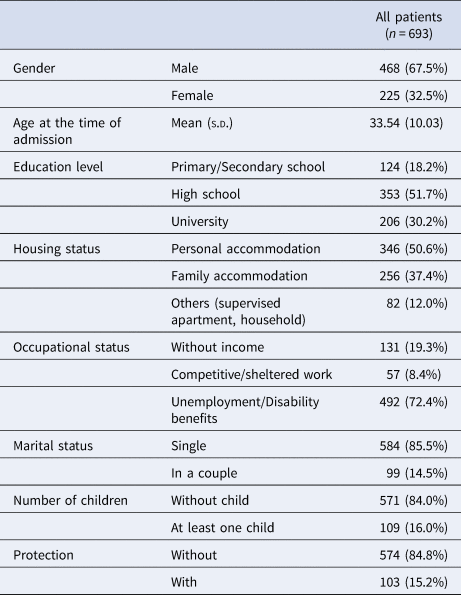
A total of 693 clinically stabilized patients with SMI were recruited from the REHABase network. They had been included in this cohort study between January 2016 and April 2019. Schizophrenia was the most represented diagnosis with 466 patients (63.1%). Other diagnoses were bipolar disorder (117, 15.9%), borderline personality disorder (64, 8.7%), major depression (27, 3.7%) and anxiety disorders (19, 2.5%). Baseline sample characteristics are shown on Table 1.
Patient characteristics
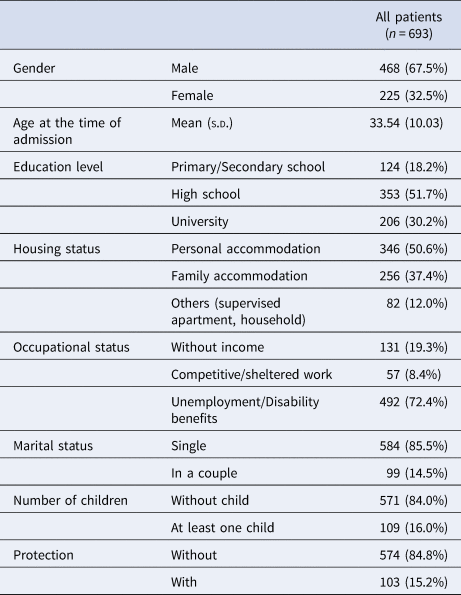
Values are mean (s.d.) or N (%)
3.1 Frequency of SR
The internal consistency for the 24-item ISMI was α = 0.90. The SR subscale had an internal consistency of α = 0.51. The internal consistency for the four other subscales was comprised between 0.69 and 0.81. A strong negative association was found between SR, ISMI total score and the four other subscales (data not shown). Elevated SR was found in 54.1% of the total sample (55.4% in schizophrenia, 52.1% in bipolar disorder, 59.3% in major depression, 36.8% in anxiety disorders and 51.6% in borderline personality disorder).
3.2 Correlations between elevated SR and personal recovery
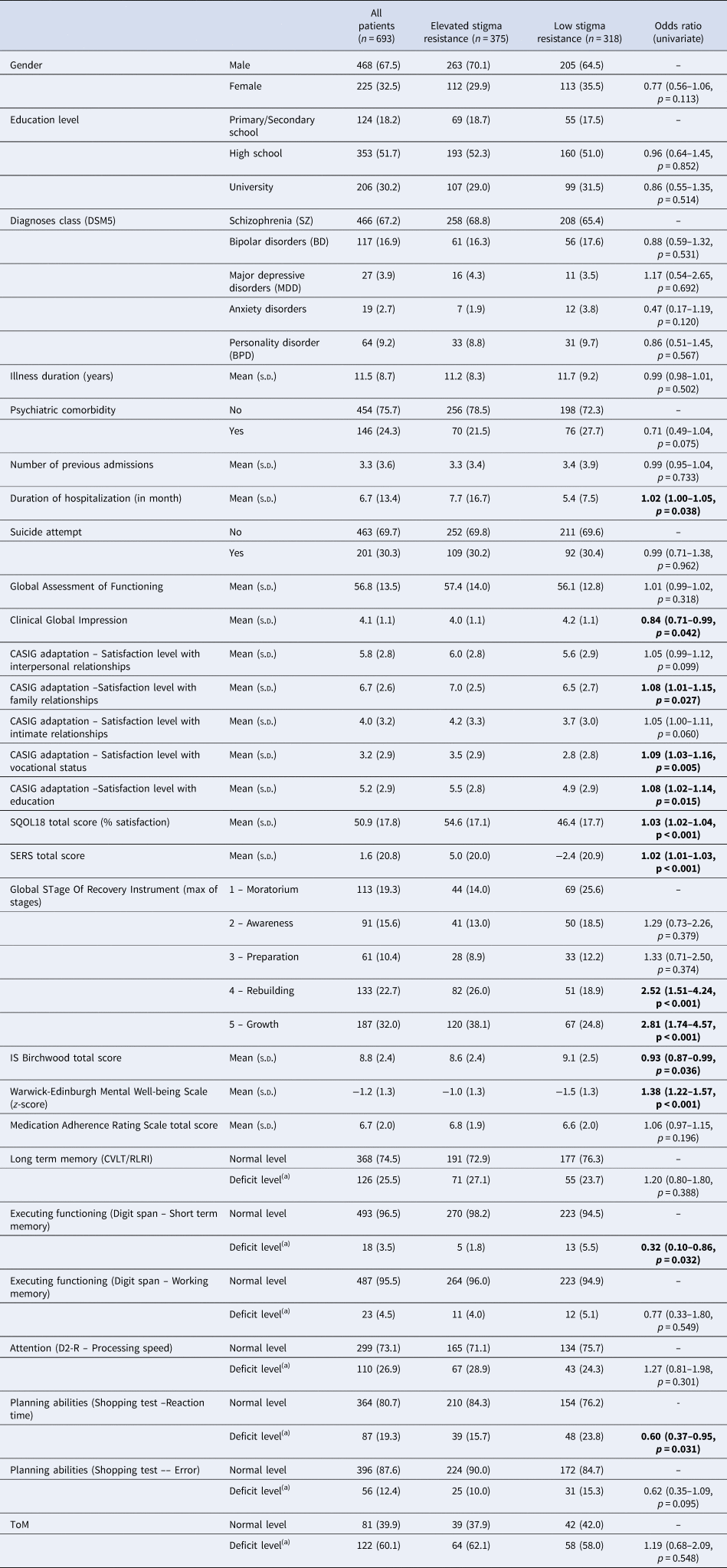
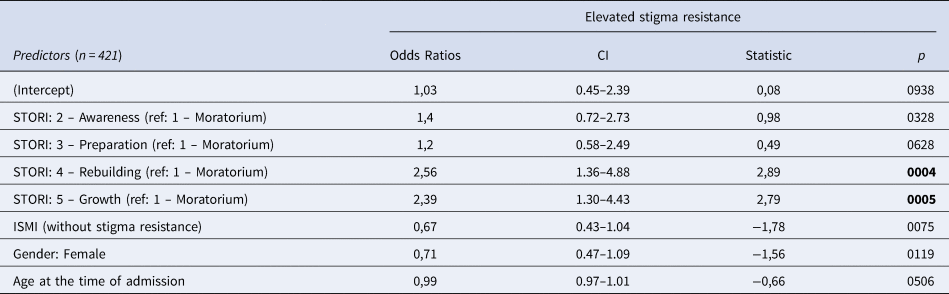
Table 2 presents the results of the univariate analyses for the correlates of elevated SR. SR was positively associated with personal recovery (p < 0.001). Compared with participants in the moratorium stage of personal recovery, those in later stages showed significantly higher levels of SR (rebuilding, p < 0.001; OR = 2.52 (1.51–4.24); growth, p < 0.001; OR = 2.81 (1.74–4.57)). Table 3 presents the result of the multivariate analysis. In the multivariate analysis, elevated SR was best predicted by the advanced stages of personal recovery (rebuilding; p = 0.004, OR = 2.89 (1.36–4.88); growth; p = 0.005, OR = 2.79 (1.30–4.43)). The total score at ISMI (without SR) was not a significant predictor of SR in the adjusted multivariate model.
Association between medical factors and quality of life with elevated resistance stigma in univariate logistic regression (SMI)
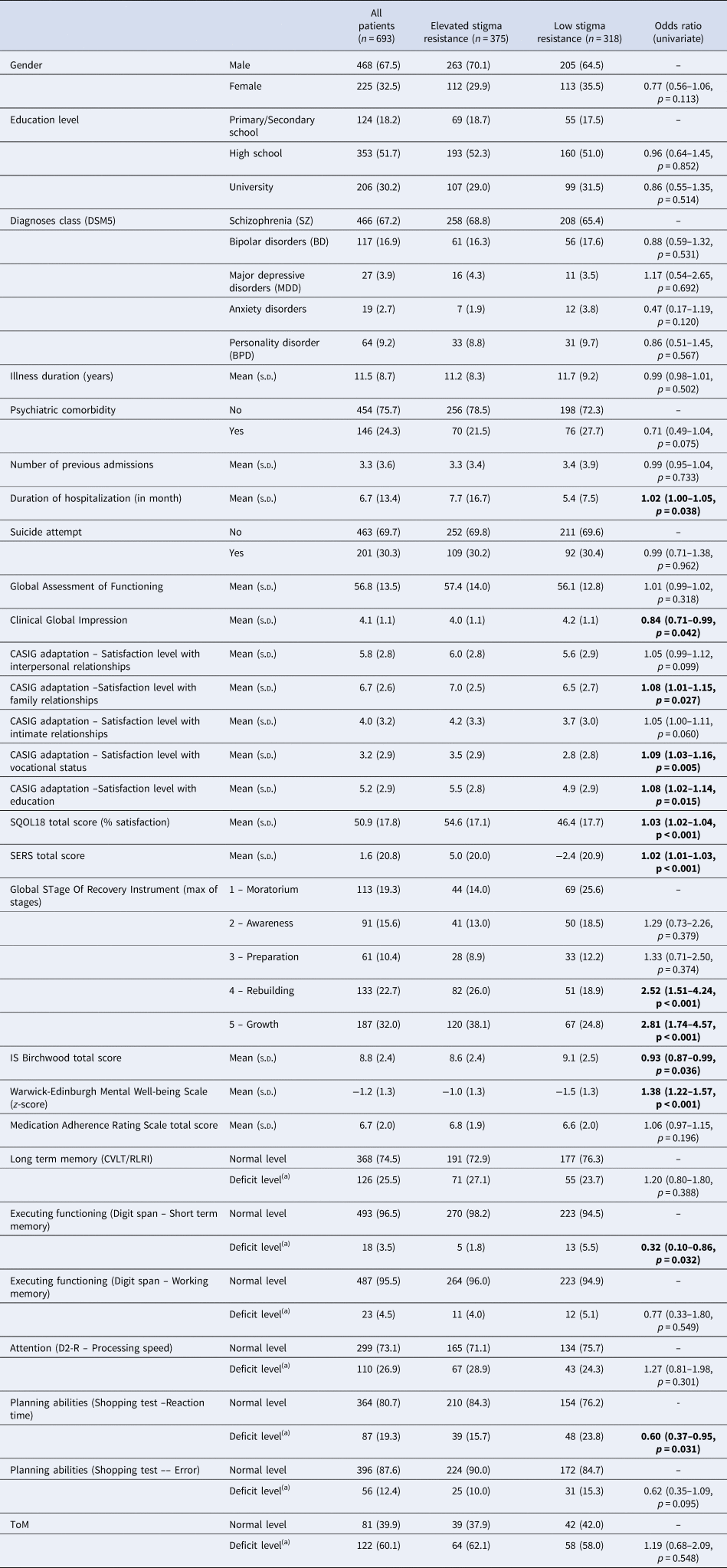
Values are mean (s.d.) or N (%).
Bold font indicates p value <0.05.
Cognitive deficits class was performed by score < 5th percentile or z-score <−1.65.
Multivariate logistic regression summary (with stepwise selection)
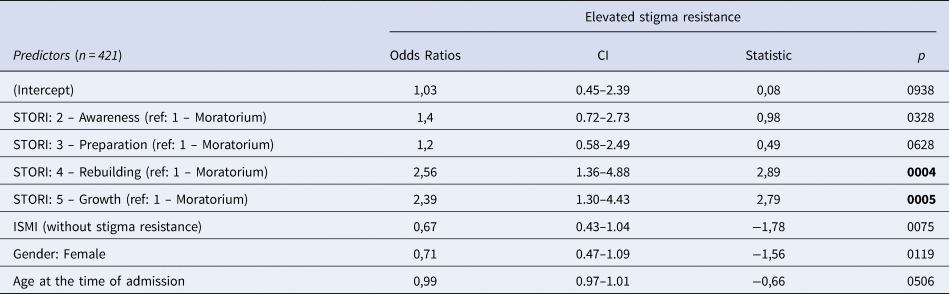
Bold font indicates p value <0.05.
Logistic regression adjusted by ISMI (without stigma resistance), gender and age at the time of admission.
χ2(7) = 26.32, p = 0.00.
3.3 Correlations between elevated SR and other outcomes
Elevated SR was positively associated with wellbeing, self-esteem, quality of life and satisfaction with life. It was associated with better executive functioning and lower clinical severity and insight.
3.4 Moderation/mediation analyses
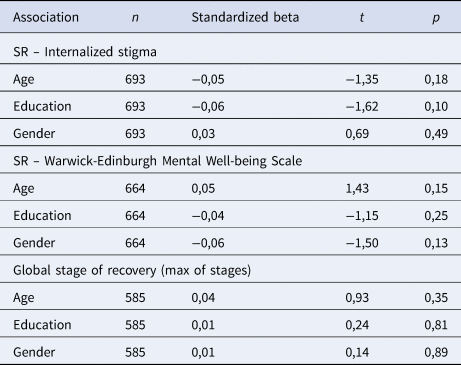
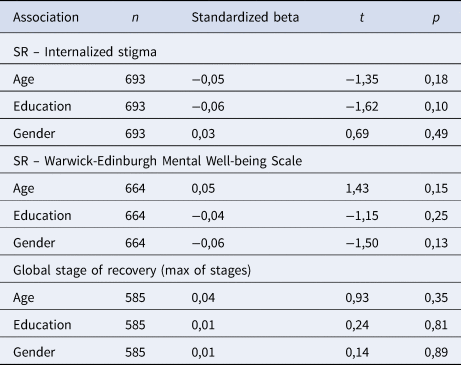
Table 4 presents the results of moderation analyses. Age, gender and education did not moderate the relationship between SR and self-stigma, wellbeing and personal recovery. The mediation models are shown in Table 5. SR mediated partially the effects of insight on wellbeing (beta = −0.09; p = 0.03; the proportion of the total effect mediated by SR = 9%) and personal recovery (beta = −0.017; p = 0.04; the proportion of the total effect mediated by SR = 12%).
Moderation analyses
Mediation analyses
Insight-stigma resistance – wellbeing

Signif. codes: 0 ‘***’ 0.001 ‘**’ 0.01 ‘*’ 0.05 ‘.’ 0.1 ‘ ’ 1
N = 589
Insight-stigma resistance – personal recovery

Signif. codes: 0 ‘***’ 0.001 ‘**’ 0.01 ‘*’ 0.05 ‘.’ 0.1 ‘ ’ 1
N = 521
ACME, Average causal mediating effects; ADE, Average direct effect.
4. Discussion
4.1. Main findings
To our knowledge, this study is the first assessing of the frequency of SR in a large multicentric non-selected psychiatric rehabilitation SMI. Our primary hypothesis was supported by the data. People in the advanced stages of personal recovery (rebuilding or growth) had respectively a two-fold and a three-fold likelihood, of presenting a high level of SR compared with those in the moratorium stage. These associations were independent of the level of self-stigma in the adjusted multivariate model. Elevated SR was positively associated with self-esteem, QoL, wellbeing and satisfaction with different life domains. Our second hypothesis was partially supported by the data with negative associations with self-stigma and executive function as expected but no association with social cognition or outcomes related to social recovery. Contrary to our expectations and previous research, age or education did not moderate the relations between SR and recovery-related outcomes (Firmin et al., Reference Firmin, Luther, Lysaker, Minor and Salyers2016; O'Connor et al., Reference O'Connor, Yanos and Firmin2018). As expected, SR mediated partially the relationship between insight and personal recovery.
4.2. Interpretation of the results
More than half of people with SMI included in the REHABase network showed elevated SR. This concurs with other studies conducted across the world (weighted proportion for schizophrenia = 53.1% of 2202 participants; Dubreucq and Franck, Reference Dubreucq and Franckin review; 59.7% of 1182 participants; Brohan et al., Reference Brohan, Gauci, Sartorius and Thornicroft2011). There are significant variations in the proportion of people with SZ reporting elevated SR in Europe (from 49.2% to 63%; Brohan et al. Reference Brohan, Elgie, Sartorius and Thornicroft2010; Sibitz et al. Reference Sibitz, Amering, Unger, Seyringer, Bachmann, Schrank and Woppmann2011) and in Africa (from 49.4% to 72.7%; Bifftu, Dachew, & Tiruneh, Reference Bifftu, Dachew and Tiruneh2014; Mosanya, Adelufosi, Adebowale, Ogunwale, & Adebayo, Reference Mosanya, Adelufosi, Adebowale, Ogunwale and Adebayo2014). This might account for international variations but also for methodological or sample differences. Large-scale multi-country studies comparing SR in different geographical areas and SMI are therefore needed.
In line with previous research, there was a strong negative relationship between SR and self-stigma (Firmin et al., Reference Firmin, Luther, Lysaker, Minor and Salyers2016). The large associations between SR and the late stages of personal recovery were however independent of self-stigma. This concurs with several other studies and gives further evidence that SR and self-stigma are distinct though strongly related (Firmin et al., Reference Firmin, Luther, Lysaker, Minor and Salyers2016). Overall SR was strongly associated with the personal recovery and correlated positively with all recovery-related outcomes. This is in line with several studies showing positive associations between self-esteem, subjective quality of life and satisfaction with life, personal recovery and SR (Firmin et al., Reference Firmin, Luther, Lysaker, Minor and Salyers2016; Lau et al., Reference Lau, Picco, Pang, Jeyagurunathan, Satghare, Chong and Subramaniam2017; Chan et al., Reference Chan, Lee and Mak2018; O'Connor et al., Reference O'Connor, Yanos and Firmin2018).
In contrast with Firmin et al. (Reference Firmin, Luther, Lysaker, Minor and Salyers2016), the relationship between SR and insight into illness was negative and there was no correlation with psychosocial function or outcomes related to social recovery. SR in people enrolled in psychiatric rehabilitation could therefore result from a lack of insight protecting against self-stigma and its effects on one's social identity (Lysaker et al., Reference Lysaker, Roe and Yanos2007, Reference Lysaker, Vohs, Hasson-Ohayon, Kukla, Wierwille and Dimaggio2013; Yanos et al., Reference Yanos, Roe, Markus and Lysaker2008). Insight into illness predicts and compounds the effects of self-stigma on depression and suicidal ideation (Lysaker et al., Reference Lysaker, Vohs, Hasson-Ohayon, Kukla, Wierwille and Dimaggio2013; Dubreucq & Franck, Reference Dubreucq and Franckin review; Schrank, Amering, Hay, Weber, & Sibitz, Reference Schrank, Amering, Hay, Weber and Sibitz2014; Oexle, Waldmann, Staiger, Xu, & Rüsch, Reference Oexle, Waldmann, Staiger, Xu and Rüsch2018; Dubreucq et al., Reference Dubreucq, Plasse, Gabayet, Faraldo, Blanc, Chereau and Fanck2020). Improvements in insight have been associated with better longitudinal clinical and functional outcomes but also poorer recovery-related outcomes (Lysaker, Pattison, Leonhardt, Phelps, & Vohs, Reference Lysaker, Pattison, Leonhardt, Phelps and Vohs2018). Psychoeducation during psychiatric rehabilitation should therefore be recovery-oriented to prevent insight-related depression (Lysaker et al., Reference Lysaker, Vohs, Hasson-Ohayon, Kukla, Wierwille and Dimaggio2013).
Impairments in synthetic metacognition (or the range of activities by which intentions, thoughts and feelings are organized and integrated into a complex and coherent representation of self and others; Lysaker and Dimaggio, Reference Lysaker and Dimaggio2014) have been associated with lower psychosocial function, more severe negative symptoms, lower intrinsic motivation, lower therapeutic alliance, lower SR and less subjectively experienced personal recovery (Kukla et al., Reference Kukla, Lysaker and Salyers2013; Lysaker & Dimaggio, Reference Lysaker and Dimaggio2014; Nabors et al., Reference Nabors, Yanos, Roe, Hasson-Ohayon, Leonhardt, Buck and Lysaker2014). Improving metacognitive abilities during psychiatric rehabilitation with specific approaches such as Metacognitive Reflection and Insight Therapy (MERIT; Lysaker and Dimaggio, Reference Lysaker and Dimaggio2014) might result in richer self-narratives, improved insight and SR and less insight-related depression (Lysaker et al., Reference Lysaker, Vohs, Hasson-Ohayon, Kukla, Wierwille and Dimaggio2013; De Jong et al., Reference De Jong, van Donkersgoed, Timmerman, Aan Het Rot, Wunderink, Arends and Pijnenborg2019). The inclusion of a scale measuring synthetic metacognition such as the Metacognition Assessment Scale – Abbreviated (Lysaker et al., Reference Lysaker, Carcione, Dimaggio, Johannesen, Nicolò, Procacci and Semerari2005b) in the REHABase database could allow an investigation of the relations with SR at enrollment in psychiatric rehabilitation and after 2 years of follow-up.
There was a negative relationship between SR and executive functioning. Impaired executive function is negatively associated with the use of adaptive coping strategies (Lysaker, Davis, Lightfoot, Hunter, & Stasburger, Reference Lysaker, Davis, Lightfoot, Hunter and Stasburger2005a), which predicted SR in previous research (Kao et al., Reference Kao, Lien, Chang, Wang, Tzeng and Loh2016; O'Connor et al., Reference O'Connor, Yanos and Firmin2018). Resilience and metacognitive abilities are thought to mediate the effects of cognitive impairments, respectively, on self-stigma, social function and global functioning (Lysaker et al., Reference Lysaker, Shea, Buck, Dimaggio, Nicolò, Procacci and Rand2010; Galderisi et al., Reference Galderisi, Rossi, Rocca, Bertolino, Mucci and Bucci2014). Cognitive remediation could indirectly improve SR through improved executive functioning, improved resilience (Hofer et al., Reference Hofer, Post, Pardeller, Frajo-Apor, Hoertnagl, Kemmler and Fleischhacker2019) and increased use of adaptive coping strategies (Wykes & Spaulding, Reference Wykes and Spaulding2011). Social cognition has been identified as a protective factor against self-stigma and insight-related depression (Lysaker et al., Reference Lysaker, Vohs, Hasson-Ohayon, Kukla, Wierwille and Dimaggio2013). The negative relationship between SR and insight might explain this absence of association with social cognition. Improvements in social cognition-related insight during cognitive remediation could result in better treatment's outcomes but also in lower SR. The potential impact of social cognitive remediation addressing coping strategies in stigma contexts should be evaluated.
The positive association between SR and satisfaction with interpersonal and family relationships concurs with other studies showing a positive relationship between SR and social support (Sibitz et al., Reference Sibitz, Amering, Unger, Seyringer, Bachmann, Schrank and Woppmann2011; Thoits & Link, Reference Thoits and Link2016; Chan et al., Reference Chan, Lee and Mak2018). Family psychoeducation has shown effectiveness in improving clinical and functional outcomes in people with schizophrenia (Harvey, Reference Harvey2018). Recovery-oriented family psychoeducation could improve SR through increased satisfaction with familial relationships, although this remains to be investigated.
Improving SR could facilitate social and personal recovery by developing a positive social identity extending beyond mental illness (Firmin et al., Reference Firmin, Luther, Lysaker, Minor and Salyers2016). In contrast, improvements in patient's outcomes during psychiatric rehabilitation could improve abilities for resisting stigma. One of the purposes of the REHABase network is to examine longitudinally patient's outcomes after attending to psychiatric rehabilitation. Mediation analyses showed that SR explained a small part of the variance in wellbeing and personal recovery. Improving SR could attenuate the detrimental effects of insight on wellbeing and personal recovery but this remains to be investigated. It is still unclear whether the growth of SR occurs through the empowerment/identity transformation process targeted by psychiatric rehabilitation or is just an epiphenomenon of positive characteristics associated with better outcomes at follow-up. A longitudinal examination of SR and its impact on recovery is therefore needed.
Our findings have several potential implications for future longitudinal studies. Future research should investigate whether psychiatric rehabilitation improves SR and the potential effects of improved SR on social and personal recovery. The impact of changes after psychiatric rehabilitation in self-stigma, insight, cognitive function and recovery-related outcomes on SR should be further investigated. The effectiveness of MERIT intervention in enhancing SR through enriched self-narratives and improved metacognition should be evaluated. The potential effects of recovery-oriented family psychoeducation on self-stigma and SR should be investigated.
Limits: The main limitation is the moderate internal consistency of SR subscale (0.51 compared with 0.58 in a 2016 meta-analysis; Firmin et al., Reference Firmin, Luther, Lysaker, Minor and Salyers2016) that could explain the lack of association between SR and several other potential correlates. The SR factor structure was examined and was homogeneous. The strong association with personal recovery was however independent of self-stigma in the adjusted multivariate model, which is a considerable strength. The one-factor structure of SR in this study was verified and is another strength. The cross-sectional nature of this study is a considerable limitation. Large-scale longitudinal studies are needed to investigate the evolution of SR within the context of psychiatric rehabilitation. Self-reported and clinician-rated measures of insight are often poorly correlated. The measurement of insight with a self-reported instrument may have limited the accuracy of the results. The insight scale had however acceptable internal consistency. Although the REHABase network covers a large proportion of the French territory, it cannot be definitively asserted that its database constitutes a representative sample of the French population of SMI patients. The REHABase database is composed of participants enrolled in psychiatric rehabilitation and might therefore not be representative of all patients with SMI. However, some sample characteristics (including sex ratio, age at illness onset, comorbidities) suggest that the present sample is comparable to the general community-dwelling SMI population.
Strengths. The present study has some clear strengths: a large non-selected sample of community-dwelling SMI outpatients, the use of a large bundle of standardized evaluation scales, and the inclusion of a large number of potential confounding factors in the adjusted multivariate analysis.
In short, elevated SR was frequent in a large non-selected sample of people with SMI enrolled in psychiatric rehabilitation. The correlations between SR, cognitive functioning, insight, wellbeing, self-esteem, satisfaction with life and personal recovery suggest to design specific interventions targeting SR. The effectiveness of psychiatric rehabilitation on SR and the potential mediating role of changes in SR on treatment outcomes should be further investigated.
Acknowledgements
This work was funded by Auvergne-Rhône-Alpes and Nouvelle-Aquitaine regional health agencies. The authors thank Emmanuel Gauthier and Mara Conil for data management; and the members of the REHABase Network (the following teams have all participated in developing the study and collecting the data: C2RL, Limoges; C2RP, Bordeaux; C3R, Grenoble; CL3R, Lyon; CREATIV & URC Pierre Deniker, Poitiers; CMP B CHU Clermont-Ferrand, CH Roanne, DSRP Bourg en Bresse and REHALise, Saint-Etienne). This work was funded by Auvergne-Rhône-Alpes and Nouvelle-Aquitaine regional health agencies. The funding source had no role in the database creation and data analysis or interpretation.
Conflicts of interests
none