Introduction
Child maltreatment is a global public health problem, with approximately 23% of children experiencing physical abuse (PA) (Stoltenborgh et al. Reference Stoltenborgh, Bakermans-Kranenburg, van Ijzendoorn and Alink2013), and about 18% of females and 8% of males experiencing sexual abuse (SA) (Stoltenborgh et al. Reference Stoltenborgh, van Ijzendoorn, Euser and Bakermans-Kranenburg2011). Although substantial evidence exists about the association between exposure to child maltreatment and impaired mental and physical health (Gilbert et al. Reference Gilbert, Widom, Browne, Fergusson, Webb and Janson2009; Norman et al. Reference Norman, Byambaa, De, Butchart, Scott and Vos2012), much less is known about its association with other measures of functioning in young adults, such as life satisfaction. There is also limited evidence in the literature about sex differences in the effects of child maltreatment on health outcomes (Gilbert et al. Reference Gilbert, Widom, Browne, Fergusson, Webb and Janson2009; Tonmyr et al. Reference Tonmyr, Thornton, Draca and Wekerle2010), partly due to methodological problems in available studies, where sampling is restricted to either sex, or there is a failure to formally test for sex differences when males and females are included.
To date, only a few studies of community-based samples have employed statistical interactions to test for sex differences in abuse outcomes. For example, a birth cohort study in New Zealand examined the association between child SA and a broad range of adult developmental outcomes (to age 30 years), which included mental disorders, psychological well-being, life satisfaction, physical health, among others (Fergusson et al. Reference Fergusson, McLeod and Horwood2013). No significant sex interactions were found, suggesting similar SA effects on outcomes for males and females. A US study involving a sample of urban minority young adults (22–24 years) found the association between cumulative adverse childhood experiences, including reported child abuse and neglect, and self-rated health and life satisfaction, depressive symptoms, anxiety, and substance use, with no significant sex differences (Mersky et al. Reference Mersky, Topitzes and Reynolds2013).
Young adult sequelae
Previous studies examining health-related quality of life (HRQOL) of individuals maltreated in childhood have reported significant associations between child abuse and impairment in mental and/or physical health (Dickinson et al. Reference Dickinson, deGruy, Dickinson and Candib1999; Walker et al. Reference Walker, Gelfand, Katon, Koss, Von Korff, Bernstein and Russo1999; Biggs et al. Reference Biggs, Aziz, Tomenson and Creed2003; Edwards et al. Reference Edwards, Holden, Felitti and Anda2003). However, the use of selective samples and failure to control adequately for confounding variables limit the generalisability of many of these studies. A nationally representative cross-sectional survey from the Netherlands reported that child maltreatment was associated with poorer HRQOL independent of socio-demographic factors, psychiatric disorders and physical health conditions (Afifi et al. Reference Afifi, Enns, Cox, de Graaf, ten Have and Sareen2007), while another survey of members from a US Health Maintenance Organization also found a significant association between child maltreatment and HRQOL (Corso et al. Reference Corso, Edwards, Fang and Mercy2008). These findings are generally consistent with previous reports; however, unmeasured confounding variables, such as childhood family socioeconomic status (SES) and childhood health and functioning could have contributed to the observed relationships. In addition, sex differences in these relationships were not extensively examined.
Life satisfaction is influenced by daily activities at school or work, experiences with friends and neighbours and living circumstances associated with income, housing and residency. This concept has not been examined in a community-based sample in relation to child maltreatment, except for the New Zealand study referred to above (Fergusson et al. Reference Fergusson, McLeod and Horwood2013); it may be an important indicator of overall well-being in emerging adulthood.
The relationship between child maltreatment and substance use disorders has been reported in several studies (Widom et al. Reference Widom, Ireland and Glynn1995, Reference Widom, White, Czaja and Marmorstein2007; Anda et al. Reference Anda, Croft, Felitti, Nordenberg, Giles, Williamson and Giovino1999; Simpson & Miller, Reference Simpson and Miller2002; Gilbert et al. Reference Gilbert, Widom, Browne, Fergusson, Webb and Janson2009; Topitzes et al. Reference Topitzes, Mersky and Reynolds2010; Goldstein et al. Reference Goldstein, Henriksen, Davidov, Kimber, Pitre and Afifi2013). A cross-sectional study involving a US representative adult sample found associations between five types of child maltreatment (physical, sexual, emotional abuse, witnessing intimate partner violence and neglect) and various types of substance use including alcohol, drugs and nicotine (Afifi et al. Reference Afifi, Henriksen, Asmundson and Sareen2012). A prospective US survey also found that child PA and SA were associated with regular smoking in young adults (around 22 years) after adjusting for demographics and depression (Roberts et al. Reference Roberts, Fuemmeler, McClernon and Beckham2008).
What is less clear in the relationship between child maltreatment and substance use problems are sex differences (Tonmyr et al. Reference Tonmyr, Thornton, Draca and Wekerle2010). Several studies that employed sex-stratified analyses reported different patterns of findings (Afifi et al. Reference Afifi, Henriksen, Asmundson and Sareen2012), where the associations between child maltreatment and substance use appeared in some studies to be larger for females than males (Widom et al. Reference Widom, Marmorstein and White2006; Wilson & Widom, Reference Wilson and Widom2009). In a study of US surveillance data (18 years and older), Fuller-Thomson et al. (Reference Fuller-Thomson, Filippelli and Lue-Crisostomo2013) found an association between child PA and smoking in both sexes, and a female-specific association between child SA or verbal abuse and smoking. In these studies, sex differences were not statistically tested. Among a few studies with a community-based sample that employed abuse-by-sex interactions to test for sex differences in abuse outcomes, a Canadian cross-sectional survey of a province-wide adult sample (15–64 years) found the associations between SA and PA and alcohol as well as illicit drug abuse/dependence, with a significant sex interaction where the association between PA and illicit drug abuse/dependence was significantly stronger for females than males (MacMillan et al. Reference MacMillan, Fleming, Streiner, Lin, Boyle, Jamieson, Duku, Walsh, Wong and Beardslee2001). The New Zealand birth cohort study did not find significant sex interactions for the associations between child SA and illicit drug as well as alcohol dependence in adults (to age 30 years) (Fergusson et al. Reference Fergusson, McLeod and Horwood2013). Smoking was not examined in either one of the latter studies.
We used data from the Ontario Child Health Study (OCHS), a prospective community-based study to examine the association between child PA and SA and each of six areas of young adult functioning (mental health, physical health, life satisfaction, illegal substance use, alcohol problems and daily smoking), adjusting for confounding variables measured at baseline in 1983 (childhood family SES, parental factors, childhood health and functioning) and at follow-up in 2000/2001 (SES of respondents). We provided information about the extent to which the overall associations between two types of child abuse and young adult functioning vary by respondent sex, as well the sex-specific effects of abuse on these outcomes.
The availability of longitudinal data from a young adult sample that has been followed up from early childhood with the correction for loss to follow-up is rare and provides important information about the relationship between child abuse and HRQOL in this critical yet often overlooked developmental period.
Methods
Sample
OCHS respondents were drawn from a representative sample of Ontario children aged 4–16 years who were selected using stratified, cluster random sampling (Boyle et al. Reference Boyle, Offord, Hofmann and Catlin1987).Footnote 1 Initial data collection took place in 1983; home-visit interviews were conducted with 3294 children from 1869 households (91.1% of eligible households) and their parents. The second and third waves of data collection occurred in 1987 and 2000/2001. In the third wave, data were collected from 2355 children (71.5%) then aged 21–35 years, of which 1928 (58.5%) completed questionnaires. Of those, 98.2% had sufficient data to determine their exposure to child PA and SA, resulting in a final sample of 1893. We used data from the first wave (1983) and the most recent wave (2000/2001) that provided sufficient information about childhood background and adult outcomes. A detailed description of the OCHS methodology is provided in other publications (Boyle et al. Reference Boyle, Offord, Hofmann and Catlin1987, Reference Boyle, Georgiades, Racine and Mustard2007).
Measures
Independent variable
Childhood abuse was assessed when participants were young adults (21–35 years). Child PA and SA were measured with the Childhood Experiences of Violence Questionnaire (CEVQ) short form (Walsh et al. Reference Walsh, MacMillan, Trocmé, Jamieson and Boyle2008). In the CEVQ, abuse items and the cutoff frequencies to determine the abuse classifications were selected through consultation with a range of experts, including child welfare workers (Walsh et al. Reference Walsh, MacMillan, Trocmé, Jamieson and Boyle2008). In a sample of 179 adolescents aged 12–18 years from clinical and community settings, the CEVQ showed 2-week test–retest reliability with kappas of 0.85, 0.77, 0.92 and 0.87 for PA, severe PA, SA and severe SA, respectively, and criterion validity when measured against clinical assessment with kappas of 0.67 and 0.70 for PA and SA, respectively. The CEVQ has demonstrated content and construct validity. The CEVQ short form has properties comparable with the original CEVQ in a sample of child-welfare involved youth aged 14–16 years (Tanaka et al. Reference Tanaka, Wekerle, Leung, Waechter, Gonzalez, Jamieson and MacMillan2012).
PA was assessed by three items: ‘How many times before age 16 did an adult … (1) slap you on the face, head or ears or hit or spank you with something like a belt, wooden spoon or something hard? (2) push, grab, shove or throw something at you to hurt you? (3) kick, bite, punch, choke, burn you, or physically attack you in some way?’ Participants were asked to choose one response from: ‘never’, ‘1–2 times’, ‘3–5 times’, ‘6–10 times’, and ‘more than 10 times’. PA was present if item (1) or (2) happened at least ‘3–5 times’, or item (3) happened at least ‘1–2 times’. Severe PA was present if item (1) or (2) occurred ‘more than 10 times’ or the item (3) occurred at least ‘1–2 times’.
SA was measured by one item: ‘Before age 16 when you were growing up, did anyone ever do any of the following things when you didn't want them to: touch the private parts of your body or make you touch their private parts, threaten or try to have sex with you or sexually force themselves on you?’ SA was assessed with a binary measure without severity. Any response except ‘never’ was considered exposure to SA. All other responses that did not meet abuse categories were classified as ‘no abuse’. For the analysis, three separate binary variables: (1) non-severe PA (PA without meeting the severe classification), (2) severe PA, and (3) SA were used. Non-severe PA and severe PA are mutually exclusive classifications, while SA could have co-occurred with either form of PA in respondents' childhoods.
Dependent variables
Six young adult outcomes were measured by self-report in 2000/2001, with a higher score indicating a better outcome for continuous variables. Mental health and physical health functioning were measured with the SF-36 Health Survey (α = 0.88 in study sample), a valid and reliable measure of global mental and physical health and well-being during the past month (Brazier et al. Reference Brazier, Harper, Jones, O'Cathain, Thomas, Usherwood and Westlake1992; Ware et al. Reference Ware, Kosinski and Keller1994). The SF-36 consists of 36 questions that assess eight health indicators – physical functioning, role-physical, bodily pain, general health, vitality, social functioning, role-emotional and mental health. We used Mental Component Summary and Physical Component Summary scores, which were derived by weighting and summing the original eight dimensions.
Life satisfaction was measured by the newly derived question: ‘Think about those things which are important to you and then tell me, in general, how satisfied you are with each of the following’: (1) health, (2) education, (3) job or main activity, (4) finances, (5) housing, (6) neighbourhood, (7) spouse, living partner or single status, (8) relationship with friends and family members, and (9) life in general. For each of nine areas, respondents were asked to choose one response from: 1 = ‘Very satisfied’ to 5 = ‘Very dissatisfied’. We reverse-scored and summed individual items to create a positively oriented total life satisfaction scale, scored from 9 to 45. The study sample mean was 37.1 (s.d. = 5.0), range: 14–45, and α = 0.78. In the OCHS pilot study conducted on a small adult sample (n = 66), test–retest reliability was ICC = 0.62.
Daily cigarette smoking was assessed by the question: ‘At the present time, do you smoke cigarettes?’ Daily smoking was present if response was ‘daily’ and absent if response was ‘occasionally’ or ‘not at all’.
Current use of illegal substance was assessed by two questions: (1) frequency of marijuana use, and (2) the use of other illegal substances during the past 12 months. For (1), there were 6 response options: ‘not at all’, ‘once or twice’, ‘3–6 times’, ‘monthly’, ‘weekly’, or ‘daily or almost daily’ in the past year. Current marijuana use was defined as present if the frequency was ‘monthly’ or greater. For (2), participants were asked to mark ‘Yes (=1)’ or ‘No (=0)’ for the use of eight types of illegal drugsFootnote 2 without prescription during the past 12 months. From questions (1) and (2), we created a derived binary indicator for current illegal substance use, defined as the use of marijuana or any other substance.
The Alcohol Use Disorders Identification Test (AUDIT, Babor et al. Reference Babor, Higgins-Biddle, Saunders and Monteiro2001) was used to assess the current use of alcohol. The AUDIT was developed by the WHO as a brief assessment for excessive drinking and is valid across sex, age and culture (Saunders et al. Reference Saunders, Aasland, Amundsen and Grant1993a , Reference Saunders, Aasland, Babor, de la Fuente and Grant b ; Allen et al. Reference Allen, Litten, Fertig and Babor1997). The ten-item self-report AUDIT was used for this study (α = 0.83 in the OCHS sample).Footnote 3
Control variables
Adulthood family SES was a composite measure derived by the participant's years of education and labour force participation status (and those of spouse, then prorated), and household annual income, with scores ranging from −9.00 to 16.93 with a mean of −0.0041 (s.d. = 1.806).
Childhood family variables were based on information obtained during the home interview of the parent during the first wave in 1983. Urban v. small urban/rural residence status was measured and coded as 1 = urbanFootnote 4 and 0 = small urban or ruralFootnote 5 . Other family factors include young mother defined as maternal age at birth of the first child younger than 21 years; low-income family status defined as the family with a total income that falls below the cutoff for its family size and place of residence classified by Statistics Canada; and a continuous measure of family SES derived from three standardised variables: family income, parental years of education and occupational prestige measured by the Blishen scaleFootnote 6 (Blishen et al. Reference Blishen, Carroll and Moore1987). For parental capacity, we assessed parental mental health condition by determining whether ‘one or both parents [was] ever being treated or hospitalised for nervous condition’ or ‘ever arrested’.
Childhood health and functioning were each assessed by parental report during the first wave for the presence or absence of (1) child functional limitationFootnote 7 ; (2) psychiatric disorders; and (3) repeated grade in school. A child was classified with a psychiatric disorderFootnote 8 based on problem checklist assessments obtained from mothers and teachers (for children aged 4–11 years) and mothers and youth (for adolescents aged 12–16 years)Footnote 9 . A child was classified as repeating a grade if mothers answered yes to the question: ‘has __ ever repeated or failed a grade?’
Analysis
The characteristics of the OCHS sample were presented by sex. The main effects of child PA and SA on each of the measured variables were assessed by a series of ANOVAs and chi-square tests. We used multilevel regression analysesFootnote 10 to estimate the associations between child PA and SA with each of six outcomes. Multilevel regression analysis partitions response variability between vs. within families (siblings in the same household), taking into account response dependencies (i.e., family clustering). For each multilevel regression model, three binary child abuse variables were entered together as independent variables. In the adjusted models, estimates were adjusted for all the confounding variables. In all models, beta coefficients and s.e. (for continuous outcomes) and odds ratios (OR) and 95% confident intervals (CI) (for dichotomous outcomes) were presented (the intercept and random effects are not shown to simplify Tables but are available on request).
Analyses were conducted in the following order: (1) we estimated the adjusted associations for each of six outcomes for the entire sample; (2) we tested for abuse-by-sex interactions in adjusted models in (1); and (3) we conducted sex-stratified analyses.
A number of key variables in the OCHS (e.g., SES, child, parent and family functioning) were associated with sample attrition. Boyle et al. (Reference Boyle, Hong, Georgiades, Duku, Racine and Mustard2006) created attrition weights using weighted complete-case analyses (Little & Rubin, Reference Little and Rubin2002). These weights successfully recaptured the original sample characteristics. Attrition and sampling weights were applied for all the analyses.
Results
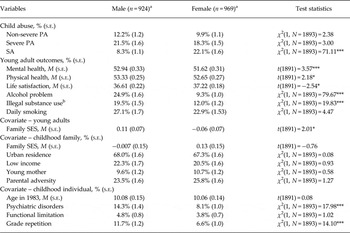
Table 1 summarises the characteristics of the OCHS sample by sex. As outlined in a previous publication, 33.7% of males and 28.2% of females reported exposure to child PA (non-severe and severe forms combined); 8.3% of males and 22.1% of females experienced child SA (MacMillan et al. Reference MacMillan, Tanaka, Duku, Vaillancourt and Boyle2013). About 4.9% of males and 11.6% of females reported both PA (two forms combined) and SA. Males exhibited significantly better mental and physical health than females, while females had significantly higher levels of life satisfaction than males. Males had a higher prevalence of alcohol use problems, illegal substance use and daily smoking than females; these sex differences were significant except for smoking. Childhood psychiatric disorders and grade repetition were significantly more prevalent among males than females.
Sample characteristics by sex

PA, physical abuse; SA, sexual abuse; s.e., standard error; SES, socioeconomic status.
aUnweighted number. Weighted analysis.
bMonthly marijuana use or use of at least one of the following substances: (1) cocaine or crack, (2) psychedelics, hallucinogens (lysergic acid diethylamide (LSD), mescaline, peyote, psilocybin, dimethyltryptamine (DMT), phencyclidine (PCP)), (3) speed, amphetamines or uppers, (4) heroin (dust, horse, junk, smack), (5) opiates other than heroin (demerol, morphine, methadone, darvon, opium), (6) barbituates, sedatives, downers, sleeping pills, seconal, quaaludes (without prescription), (7) sniffed or inhaled glue, solvents or gasoline, (8) tranquilisers, valium, librium.
*p < 0.05, **p < 0.01, ***p < 0.001 for sex difference on χ 2 test for binary variables and t test for continuous variables.
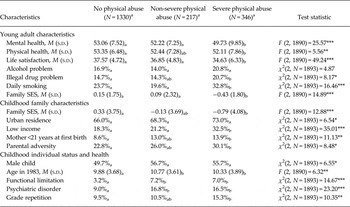
Regarding the main effects of child PA with severity on each of the measured variables (Table 2), significant group differences emerged on most of the variables, except for alcohol problem in young adults. In general, means and percentages of the severe PA group indicated poorer outcomes compared with those in the non-PA group (Table 2).
Characteristics of sample and outcomes by child physical abuse status

SES, socioeconomic status.
aUnweighted number. Weighted analysis.
*p < 0.05, **p < 0.01, ***p < 0.001.
Means and percentages with different subscripts within the same row differ significantly at p < 0.01.
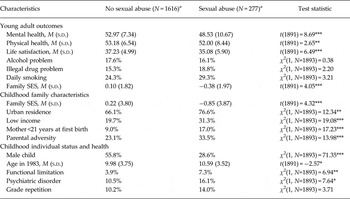
Table 3 summarises the main effects of child SA. Group differences were found for most variables, except for alcohol problem, illegal drug problem and daily smoking in young adults and grade repetition in childhood. Both child PA and SA were associated with a higher percentage of urban residence compared with no PA and no SA groups, respectively (Tables 2 and 3).
Characteristics of sample and outcomes by child sexual abuse status

SES, socioeconomic status.
aUnweighted number. Weighted analysis.
*p < 0.05, **p < 0.01, ***p < 0.001.
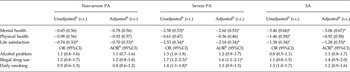
Table 4 presents the results from six multilevel regression analyses for the entire sample. In the adjusted model, both severe PA and SA were associated with poor mental health, and both forms of PA and SA were associated with poor life satisfaction. In addition, severe PA showed a significant association with illegal substance use. There were no significant associations between child abuse variables and physical health, alcohol problems and daily smoking.
Regression of young adult outcomes on child physical and sexual abuse for entire sample (n = 1893a)

AOR, adjusted odds ratio; CI, confidence interval; OR, odds ratio; PA, physical abuse; SA, sexual abuse; s.e., standard error; SES, socioeconomic status.
aUnweighted number. Weighted analysis.
bAdjusted for the following covariates: age; sex; childhood urban residence; childhood family SES; childhood low income; maternal young age; parental adversity; childhood psychiatric disorders; childhood functional limitation; grade repetition; current family SES.
*p < 0.05.
The test for abuse-by-sex interaction was performed for six outcomes. No significant interactions were found in these analyses (not in Table 4).
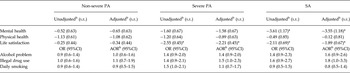
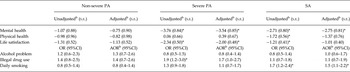
Tables 5 and 6 present the results from the stratified multilevel regression analyses for males and females, respectively. In the adjusted model for males (Table 5), SA showed a significant association with poorer mental health, and both severe PA and SA were significantly associated with lower life satisfaction.
Regression of young adult outcomes on child physical and sexual abuse for males (n = 924a)

AOR, adjusted odds ratio; CI, confidence interval; OR, odds ratio; PA, physical abuse; SA, sexual abuse; s.e., standard error; SES, socioeconomic status.
aUnweighted number. Weighted analysis.
bAdjusted for the following covariates: age; childhood urban residence; childhood family SES; childhood low income; maternal young age; parental adversity; childhood psychiatric disorders; childhood functional limitation; grade repetition; current family SES.
*p < 0.05.
Regression of young adult outcomes on child physical and sexual abuse for females (n = 969a)

AOR, adjusted odds ratio; CI, confidence interval; OR, odds ratio; PA, physical abuse; SA, sexual abuse; s.e., standard error; SES, socioeconomic status.
aUnweighted number. Weighted analysis.
bAdjusted for the following covariates: age; childhood urban residence; childhood family SES; childhood low income; maternal young age; parental adversity; childhood psychiatric disorders; childhood functional limitation; grade repetition; current family SES.
*p < 0.05.
In the adjusted model for females (Table 6), both severe PA and SA were associated with poorer mental health, and only severe PA was associated with lower life satisfaction. In addition, SA was associated with daily smoking.
Discussion
In a Canadian study with a representative province-wide sample, we examined the association between child PA and SA and each of six areas of young adult functioning, adjusting for a comprehensive set of covariates. In the integrated sample, we found a significant association between both severe PA and SA and poorer mental health functioning with no sex difference. The association between two types of child abuse and physical health functioning was not significant in the OCHS sample; this result differs from previous studies that reported associations between child maltreatment and both mental and physical health aspects of QOL (Afifi et al. Reference Afifi, Enns, Cox, de Graaf, ten Have and Sareen2007). A recent systematic review examining the consequences of non-sexual child abuse and a broad range of health outcomes found strong robust associations for mental disorders, drug use and suicide attempts, among others, while it did not find a strong consistent association for chronic diseases (Norman et al. Reference Norman, Byambaa, De, Butchart, Scott and Vos2012). The lack of consistent findings may arise from methodological differences across studies. For example, the Netherlands study by Afifi et al. (Reference Afifi, Enns, Cox, de Graaf, ten Have and Sareen2007) included a sample with a wider age range (18–64 years) than our OCHS sample. The child abuse effects on impaired physical health functioning may become more apparent among older adults. Also, the percentage of PA and SA reported in the Netherlands study (7.3 and 6.9%, respectively) was much smaller than the OCHS sample (31.0 and 15.0%, respectively). It is possible that, in the Netherlands study, the thresholds to report child abuse were higher, thus detecting only severe abuse.
We also found a significant association between both forms of child PA and SA and worse life satisfaction with no sex difference. This finding is similar to the New Zealand study that found a significant association between child SA and life satisfaction (Fergusson et al. Reference Fergusson, McLeod and Horwood2013). Life satisfaction is associated with heath indicators in adult populations. In a US cross-sectional survey (n = about 12 million, 18 years and older), Strine et al. (Reference Strine, Chapman, Balluz, Moriarty and Mokdad2008) found that general life satisfaction was linked with physical inactivity, smoking and drinking. Furthermore, a 20-year longitudinal Finnish study (n = 29 173, 18–64 years) found that dissatisfaction with life at baseline (reduced interest in life, happiness, general ease of living and loneliness) predicted suicide throughout the follow-up period, adjusting for age, sex, health status, alcohol consumption, smoking status and physical activity at baseline (hazard ratio = 1.74, 95% CI = 1.02–2.97) (Koivumaa-Honkanen et al. Reference Koivumaa-Honkanen, Honkanen, Viinamäki, Heikkilä, Kaprio and Koskenvuo2001). Life satisfaction in young adulthood may serve as an early indicator of long-term health risk, and thus is important to measure when evaluating the effectiveness of interventions aimed at improving outcomes among maltreated children and youth.
We found a significant association between severe PA, but not SA, and illegal substance use with the entire sample with no sex difference. The two studies referred to above that used sex interactions reported slightly different findings. MacMillan et al. (Reference MacMillan, Fleming, Streiner, Lin, Boyle, Jamieson, Duku, Walsh, Wong and Beardslee2001) found a significant association between PA and illicit drug abuse/dependence with significant sex difference where PA effect was stronger for females than males; no sex difference was found for SA (MacMillan et al. Reference MacMillan, Fleming, Streiner, Lin, Boyle, Jamieson, Duku, Walsh, Wong and Beardslee2001). The New Zealand study found a significant association between child SA and illicit drug dependence with no sex difference (Fergusson et al. Reference Fergusson, McLeod and Horwood2013).
We did not find significant associations between child abuse variables and alcohol problems. Unlike our results, MacMillan et al. (Reference MacMillan, Fleming, Streiner, Lin, Boyle, Jamieson, Duku, Walsh, Wong and Beardslee2001) found significant associations between both PA and SA and alcohol abuse/dependence. Fergusson et al. (Reference Fergusson, McLeod and Horwood2013) also found a significant association between SA and alcohol dependence. No significant abuse-by-sex interactions were found in either of these latter studies.
Very few community-based studies are available that examined the association between child maltreatment and smoking behaviour. We did not find significant associations between both forms of PA and SA and daily smoking in the entire sample, with no sex difference; however, our sex-stratified analyses revealed a significant adjusted association for SA only among females. The sex-specific pattern of the association between SA and smoking is somewhat similar to the findings from the US survey referred to above that found an association between PA and smoking in both sexes, however, the effects of SA or verbal abuse on smoking were found only among females (Fuller-Thomson et al. Reference Fuller-Thomson, Filippelli and Lue-Crisostomo2013).
We used self-report screening or questionnaires to assess illegal substance use, alcohol problems and daily smoking, whereas in the earlier studies (MacMillan et al. Reference MacMillan, Fleming, Streiner, Lin, Boyle, Jamieson, Duku, Walsh, Wong and Beardslee2001; Fergusson et al. Reference Fergusson, McLeod and Horwood2013), a diagnostic interview was used to measure psychiatric disorders. Given the variation in measurement of key variables, it is not possible to make meaningful comparisons across studies. More community-based studies that employ validated measures and examine statistical interactions in testing sex differences are required to understand sex-specific associations between different types of child abuse and health-related outcomes.
In our study, the magnitude of adjusted estimates for severe PA was larger than that of non-severe PA for mental health, life satisfaction and illegal substance use, indicating a strong impact of severity of PA on functional impairment in young adults.
Limitations of our study include the retrospective measurement of child abuse, and exclusion of other types of child maltreatment, including emotional abuse, neglect and exposure to intimate partner violence. It was not possible to obtain self-report information about these types of maltreatment, given the time constraints on administering this province-wide survey.
In summary, this study employed two methods to examine sex differences in the relationship between child PA and SA and six areas of young adult functioning. Our results highlight the impact of abuse on mental health and life satisfaction in young adult males and females, with the strongest association being between SA and mental health functioning. The results also indicate a strong association between severe child PA and illegal drug use. We did not find significant sex differences in this study. Community-based studies that employ statistical interaction for examining sex differences, in addition to stratified analyses, provide information about the nature and magnitudes of sex differences. We need to understand where sex-specific differences exist (and where they do not) in developing and targeting interventions among those exposed to maltreatment.
Acknowledgements
This study was conducted at the Offord Centre for Child Studies, Department of Psychiatry and Behavioural Neurosciences, McMaster University.
Financial Support
This study was funded by a grant from the Canadian Institutes of Health Research (CIHR). The research was also supported by the CIHR Institutes of Gender and Health; Aging; Human Development, Child and Youth Health; Neurosciences, Mental Health and Addiction; and Population and Public Health. Harriet MacMillan is supported by the Chedoke Health Chair in Child Psychiatry. Michael Boyle is supported by a Canada Research Chair in the Social Determinants of Child Health (grant number 950-218803). Tracie Afifi is supported by a CIHR New Investigator Award and a Manitoba Health Research Council (MHRC) Establishment Award.
Statement of Interest
None.
Ethical Standard
The study was approved by the Hamilton Health Sciences/McMaster University Research Ethics Board. The authors assert that all procedures contributing to this work comply with the ethical standards of the relevant national and institutional committees on human experimentation and with the Helsinki Declaration of 1975, as revised in 2008.