Although hypertension in children is generally due to secondary causes, the frequency of primary hypertension is increasing. Genetic predisposition, environmental factors, and lifestyle have a role in the development of primary hypertension. Reference Candan and Caliskan1 In primary hypertension, family history of hypertension has been found to be an important risk factor in the development of hypertension in children. Reference Van den Elzen, de Ridder, Grobbee, Hofman, Witteman and Uiterwaal2 Moreover, the presence of early cardiovascular changes has been demonstrated in normotensive children of hypertensive parents who are known to have a higher blood pressure profile compared to children of normotensive parents. Therefore, individuals with a positive family history are at a risk for hypertension. Reference Staessen, Wang, Bianchi and Birkenhäger3 The evaluation of children at risk is important for preventing the occurrence of the disease and taking the necessary precautions.
Hypertension is known to be associated with arterial stiffness, a term used to describe the viscoelastic properties of the vessel wall. Reference Mancia, Fagard and Narkiewicz4–Reference Johnson, Baugh, Wilson and Burns7 Pulse wave velocity measurement was proposed by the European Society of Hypertension- European Society of Cardiology in 2003 to determine arterial stiffness. Reference Mancia, Fagard and Narkiewicz4 In addition to pulse wave velocity, information on vascular structures can be obtained using parameters such as central systolic and diastolic blood pressures, augmentation index, and reflection magnitude simultaneously. The combined measurement of these parameters gives an idea about the pressure generated by the pulse wave starting from the aortic arch in the process of moving to the periphery, as well as the compliance and wave reflections in the vessel wall. This procedure is defined as pulse wave analysis, which can be performed by ultrasonography, MRI, and ambulatory tonometric or oscillometric methods. Reference Hirata, Kawakami and O‘Rourke8
To determine the risk of cardiovascular disease, the pulsatile component of blood pressure (such as pulse pressure) has recently become more important compared to peripheral systolic and diastolic blood pressure values. Central blood pressure measurement and evaluation of arterial stiffness in the ascending aorta or carotid arteries can provide a clearer idea about cardiovascular events compared to conventional brachial blood pressure measurement. Reference Hirata, Kawakami and O‘Rourke8 Central blood pressure is more sensitive than peripheral blood pressure for evaluating target organ damage and response to antihypertensive therapy. Reference Mancia, Fagard and Narkiewicz4,Reference Hirata, Kawakami and O‘Rourke8
The aim of this study is to investigate whether the specified variables including systolic and diastolic blood pressures, pulse wave velocity, augmentation index, and central blood pressure measured with ambulatory 24-hour automatic pulse wave analysis monitoring by oscillometric method in normotensive children and adolescents of different age groups who may be genetically at risk because of essential hypertension in their parents differ from the control group.
Materials and methods
Selection of cases
One-hundred and twelve normotensive (blood pressure percentile <90 p with respect to age, sex, and height) children aged 7–18 with hypertensive parents (normotensive children of hypertensive parents) were included in the study. Moreover, 101 age- and sex-matched normotensive and healthy children with no history of hypertension in their parents who were admitted to the paediatric cardiology outpatient clinic with an innocent heart murmur or non-specific chest pain (normotensive children of normotensive parents) were considered as the control group. Children and their families were informed by explaining the purpose and method of the study, and then written consent of their voluntary participation was obtained. The presence of hypertension in the family was defined as having a history of essential hypertension, which was diagnosed by a physician in at least one of the parents requiring regular antihypertensive therapy. Children who had a history of chronic diseases or a history of any disease requiring drug use, overweight or obese children, and those with dyslipidemia were excluded from the study. Those with a history of cardiovascular disease, diabetes, chronic renal failure, hyperlipidaemia or obesity in their parents were not included in the study. Normotensive state of the parents in the control group was confirmed by measuring their blood pressure three times with 15-minute intervals. The ages of the parents in the study and control groups were recorded.
Approval for the study was obtained from Eskisehir Osmangazi University Faculty of Medicine Clinical Research Ethics Committee with the decision dated 18 May, 2016 and numbered 80558721/128.
Before the study, detailed medical history as well as personal and family history of all children was questioned, and systemic physical examination was performed. Family histories were examined in terms of hypertension. Blood pressure was digitally measured by the oscillometric method using the Nihon Kohden Life Scope N OPV-1500 K monitor (Nihon Kohden Corp. Shinjuku-ku, Tokyo, Japan). After 15 minutes of rest, blood pressure measurements were performed on the right arm in a sitting position with the cuff, while the cuff was at heart level. The average of blood pressure values which were calculated from three measurements at 15-minute intervals was taken into account. Children under 90 percentile with respect to age, sex, and height were included in the study. Study and control groups were subdivided into three age groups: 7–10 years (prepubertal), 11–14 years (pubertal), and 15–18 years (postpubertal), and 24-hour blood pressure and pulse wave analysis measurements were evaluated.
Blood glucose, insulin, total cholesterol, triglyceride, high-density lipoprotein cholesterol, and low-density lipoprotein cholesterol levels of the children after a fasting period of at least 12 hours were examined. According to the Cardiovascular Disease Risk Reduction Guideline in Children and Adolescents, children with a low-density lipoprotein cholesterol level of <130 mg/dL, triglyceride level of <150 mg/dL, total cholesterol level of <200 mg/dL, and fasting blood glucose level of <120 mg/dL, and high-density lipoprotein cholesterol level of >35 mg/dL were included in the study. Reference Kavey, Daniels, Lauer, Atkins, Hayman and Taubert9
PWA monitorisation
Mobil-O-Graph pulse wave analysis monitor (Industrielle Entwicklung Medizintechnik und Vertriebsgesellschaft mbH, Stolberg, Germany) was used for 24-hour automatic pulse wave analysis monitorisation using the oscillometric method. The children were advised not to perform heavy exercises, not to take caffeinated drinks or any medical treatment a day in advance before starting the monitorisation. All children were monitored for 24 hours by wrapping a suitable cuff for their age and upper arm circumference. Daytime was determined as the hours when the children were awake, whereas night-time was determined as the hours when they were asleep. Device protocol was set to make a measurement once every 20 min during the day and 30 min at night.
During the test; 24-hour mean peripheral systolic blood pressure, 24-hour mean peripheral diastolic blood pressure, 24-hour mean central systolic blood pressure, 24-hour mean central diastolic blood pressure, 24-hour mean pulse pressure, 24-hour mean arterial pressure, pulse wave velocity, reflection magnitude, augmentation index, and peripheral resistance were measured.
Statistical analysis
IBM SPSS Statistics 21.0 program was used for data analysis. The ShapiroWilk test was used to investigate the suitability of data for normal distribution. For normally distributed variables, comparisons between two groups were made using a t test and comparisons between multiple groups were made using the ANOVA test. Post hoc tests (Tukey or Tamhane test) were used to determine the source of the difference in cases where a significant result was obtained in the ANOVA test. For parameters without normal distribution, comparisons between two groups were made using the MannWhitney U-test, and multiple comparisons were made using the KruskalWallis test. The Wilcoxon signed-rank test was performed to examine whether there is a statistically significant difference in the median values of a dependent variable between two related groups. Data with normal distribution were presented as mean ± standard deviation, and data without normal distribution were presented as median (25–75%). Pearson’s chi-square test was used for analysing the cross tables. To determine the strength and direction of the relationship between variables, Spearman’s correlation analysis was performed because of the lack of normality. For all tests, p < 0.05 was considered to be statistically significant.
Results
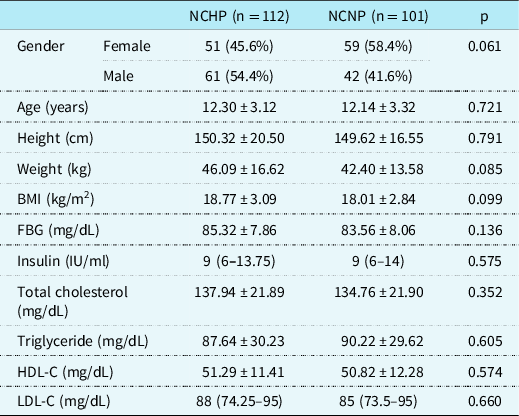
Anthropometric data and biochemical values of the normotensive children of hypertensive parents and normotensive children of normotensive parents are given in Table 1. There was no statistically significant difference between the groups in terms of age, gender, weight, height, and body mass index (p > 0.05). There were no statistically significant differences between the study and control groups in terms of fasting blood glucose, serum insulin, total cholesterol, triglyceride, high-density lipoprotein cholesterol, and low-density lipoprotein cholesterol values (p > 0.05).
Anthropometric and biochemical values of the groups

Parameters with normal distribution are shown as mean ± SD, whereas parameters without normal distribution are shown as median (25–75%).
BMI= body mass index; FBG = fasting blood glucose; HDL-C = high-density lipoprotein cholesterol; LDL-C = low-density lipoprotein cholesterol; NCHP = normotensive children of hypertensive parents; NCNP = normotensive children of normotensive parents.
Forty one (36.6%) of the children in the study group had a history of hypertension only in the mother, 61 (54.4%) had a history of hypertension only in the father, and 10 (8.9%) had a history of hypertension in both parents. While the mean mother age was 40.58 ± 4.93 years and the father age was 43.69 ± 6.31 years in the study group, the mean mother age was 39.52 ± 5.01 years and the mean father age was 42.06 ± 5.71 years in the control group. There was no statistically significant difference between the study and control groups in terms of mother and father ages (p > 0.05).
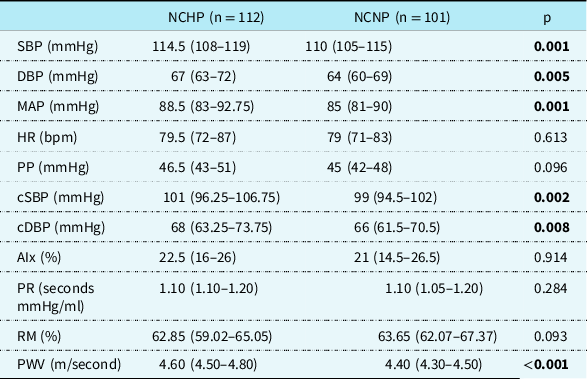
The comparison of pulse wave analysis parameters between the study and control groups is given in Table 2. Systolic blood pressure, diastolic blood pressure, and mean arterial pressure values of the normotensive children of hypertensive parents were significantly higher than the normotensive children of normotensive parents (p = 0.001, p = 0.005, and p = 0.001, respectively). In addition, central systolic blood pressure, central diastolic blood pressure, and pulse wave velocity values were higher in the study group than the control group (p = 0.002, p = 0.008, and p < 0.001, respectively). Central systolic and diastolic blood pressure values were statistically significantly lower than peripheral systolic and diastolic blood pressure values, respectively (p < 0.001, p < 0.001, respectively).
Comparison of pulse wave analysis parameters
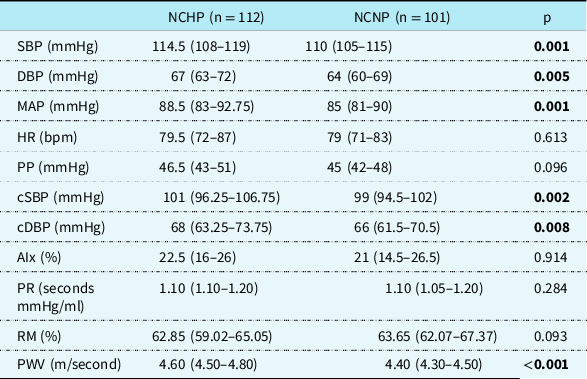
Parameters without normal distribution are shown as median (25–75%). p values written in bold are < 0.05.
AIx = augmentation index; cDBP = central diastolic blood pressure; cSBP = central systolic blood pressure; DBP = diastolic blood pressure; HR = heart rate; MAP = mean arterial pressure; NCHP = normotensive children of hypertensive parents; NCNP = normotensive children of normotensive parents; PP = pulse pressure; PR = peripheral resistance; PWV = pulse wave velocity; RM = reflection magnitude; SBP = systolic blood pressure.
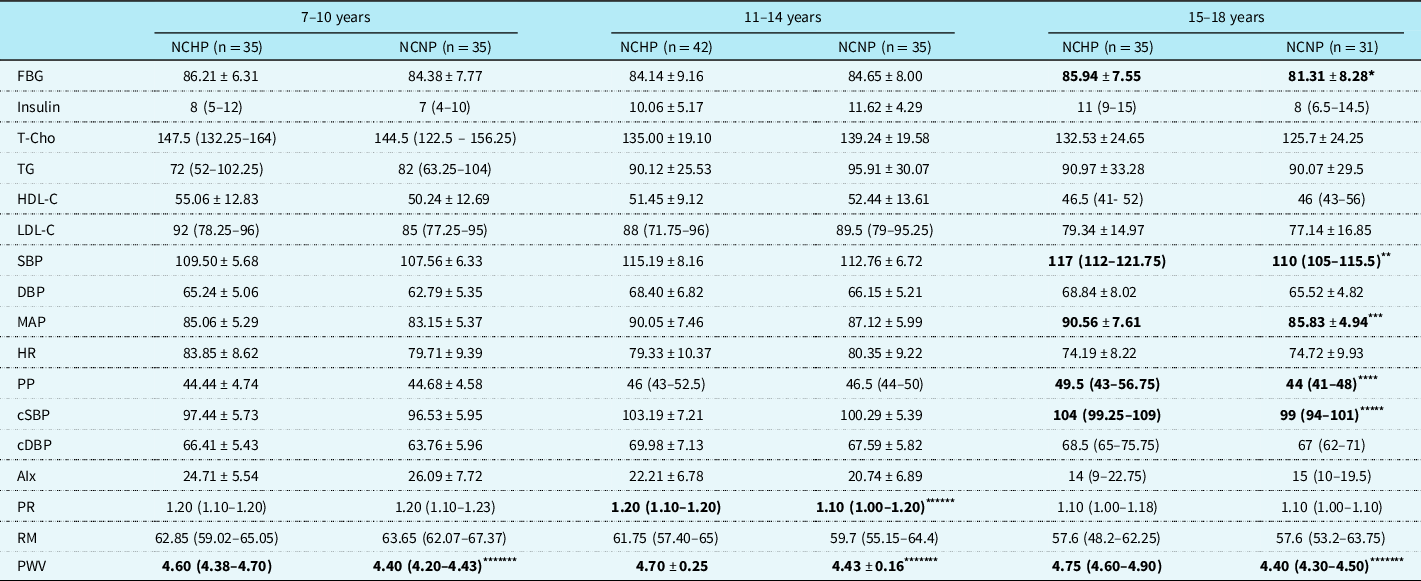
The comparison of pulse wave analysis parameters of the study and control groups with respect to age groups is given in Table 3. In the 7–10 years age group, only the median value of pulse wave velocity was higher in normotensive children of hypertensive parents compared to the control group (p < 0.001); in the 11–14 years age group, in addition to pulse wave velocity, vascular resistance was also higher in the study group compared to the control group (p < 0.001, p = 0.030, respectively). In the 15–18 years age group, systolic blood pressure, mean arterial pressure, pulse pressure, mean systolic blood pressure, and pulse wave velocity values were significantly higher in normotensive children of hypertensive parents compared to the control group (p = 0.037, p = 0.002, p = 0.003, p = 0.008, p = 0.001, p < 0.001, respectively). No statistically significant differences in biochemical parameters were found between cases in the study and control groups in all age groups, with the exception of fasting blood glucose. In 15–18 years age group, fasting blood glucose level was higher in the study group than in the control group (p = 0.011).
Distribution of pulse wave analysis and biochemical parameters of the study and control groups according to age groups
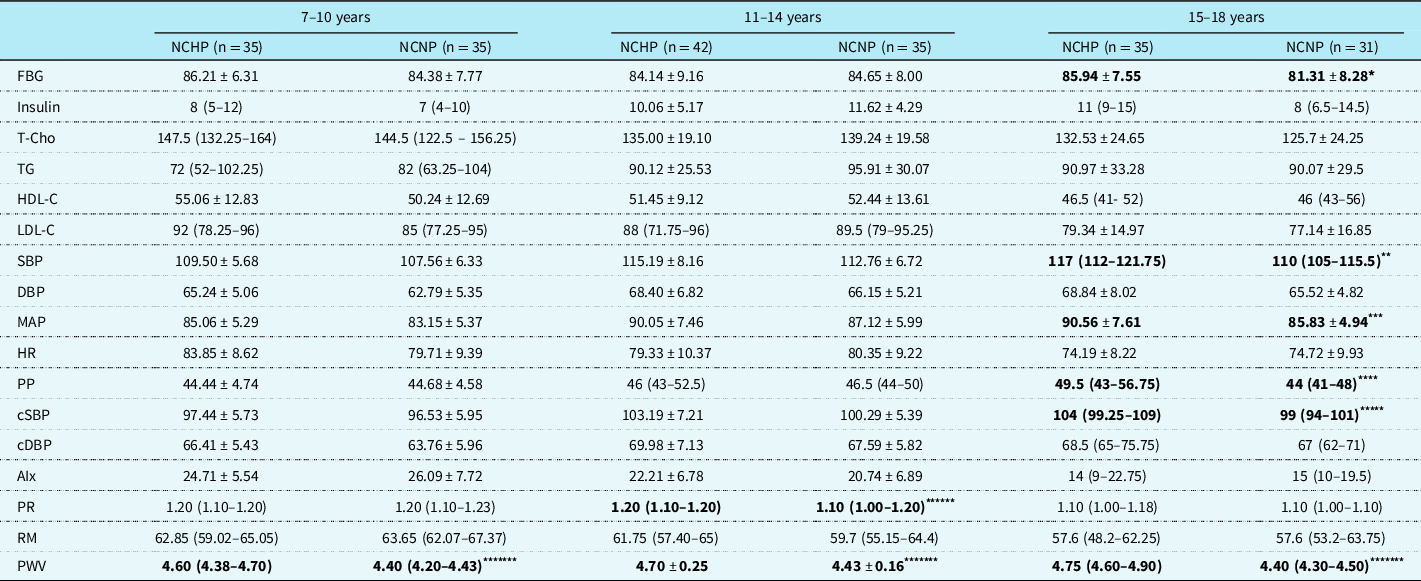
Parameters with normal distribution are shown as mean ± SD, whereas parameters without normal distribution are shown as median (25–75%). p values written in bold are < 0.05.
AIx = augmentation index (%); cDBP = central diastolic blood pressure (mmHg); cSBP = central systolic blood pressure (mmHg); DBP = diastolic blood pressure pressure (mmHg); FBG = fasting blood glucose (mg/dL), insulin (IU/ml); HDL-C = high-density lipoprotein cholesterol (mg/dL); HR = heart rate (bpm); LDL-C = low-density lipoprotein cholesterol (mg/dL); MAP = mean arterial pressure pressure (mmHg); NCHP = normotensive children of hypertensive parents; NCNP = normotensive children of normotensive parents; PP = pulse pressure (mmHg); PR = peripheral resistance (seconds mmHg/ml); PWV = pulse wave velocity (m/second); RM = reflection magnitude (%); SBP = systolic blood pressure (mmHg); T-Cho = total cholesterol (mg/dL); TG = trygliceride (mg/dL).
*p = 0.011.
**p = 0.002.
***p = 0.003.
****p = 0.038.
*****p = 0.001.
******p = 0.030.
*******p < 0.001.
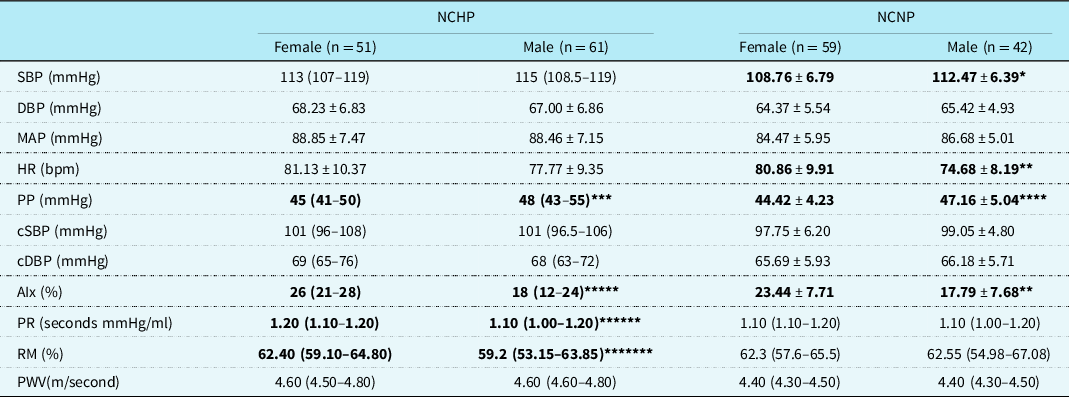
The comparison of the pulse wave analysis parameters in the study and control groups according to gender is given in Table 4. Augmentation index was found to be higher in girls compared to boys in both groups (p < 0.001, p = 0.001, respectively). There was no difference between the genders in terms of pulse wave velocity in the study and control groups.
Distribution of PWA parameters in NCHP and NCNP groups according to gender
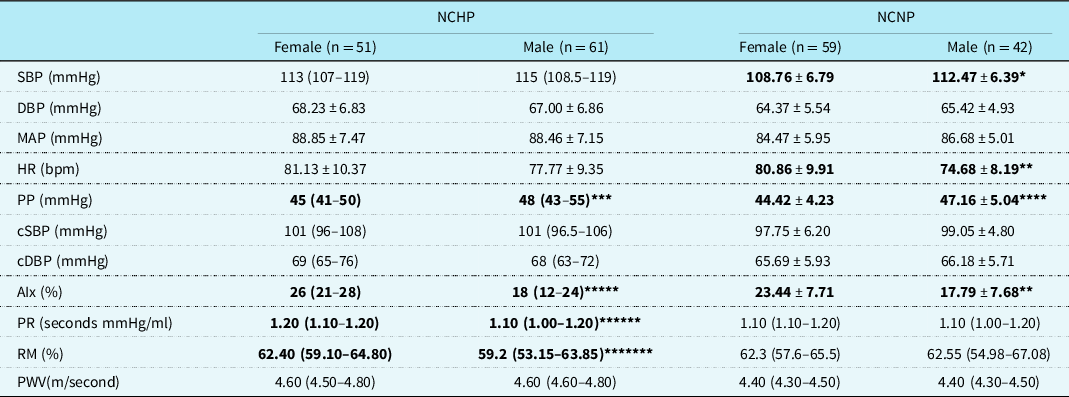
Parameters with normal distribution are shown as mean ± SD, whereas parameters without normal distribution are shown as median (25–75%). p values written in bold are < 0.05.
AIx = augmentation index; cDBP = central diastolic blood pressure; cSBP = central systolic blood pressure; DBP = diastolic blood pressure; HR = heart rate; MAP = mean arterial pressure; NCHP = normotensive children of hypertensive parents; NCNP = normotensive children of normotensive parents; PP = pulse pressure; PR = peripheral resistance; PWV = pulse wave velocity; RM = reflection magnitude; SBP = systolic blood pressure.
*p = 0.010.
**p = 0.001.
***p = 0.023.
****p = 0.008.
*****p < 0.001.
******p = 0.005
*******p = 0.015.
When individually evaluated within age groups, augmentation index was higher in girls compared to boys in both groups in the 7–10 years age group (in the study group, 27.77% ± 5.02% in girls versus 21.25% ± 3.85% in boys, p < 0.001; in the control group, 28.52% ± 7.20% in girls versus 23.0% ± 7.44% in boys, p = 0.025). In the 11–14 years age group, there was no difference between the genders in the study group (24.25% ± 7.11% versus 20.96% ± 6.38%, p > 0.05), but the augmentation index was higher in girls than boys in the control group (22.45% ± 7.06% versus 17.58% ± 5.53%, p = 0.045). In the 15–18 years age group, augmentation index was higher in girls compared to boys in both groups (in the study group, median 23% (17.5–26.5%) in girls versus 10% (9–14%) in boys, p < 0.001; in the control group, 19.27% ± 6.15% in girls versus 10.9% ± 3.72% in boys, p < 0.001).
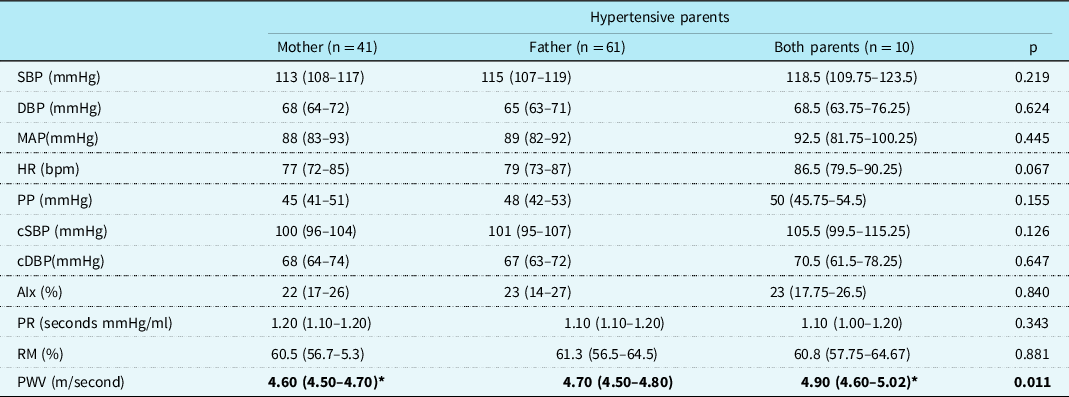
Table 5 shows the comparison of pulse wave analysis parameters with respect to the presence of hypertension in parents. There was no statistically significant difference in the parameters studied between children with hypertension only in the mother and children with hypertension only in the father (p > 0.05). There was no statistically significant difference in the parameters studied between children with hypertension only in the father and children with hypertension in both parents (p > 0.05). Pulse wave velocity was significantly higher in children whose both parents are hypertensive compared to children with hypertension only in their mother (p = 0.011).
Comparison of parameters studied as per the presence of hypertension in the parents
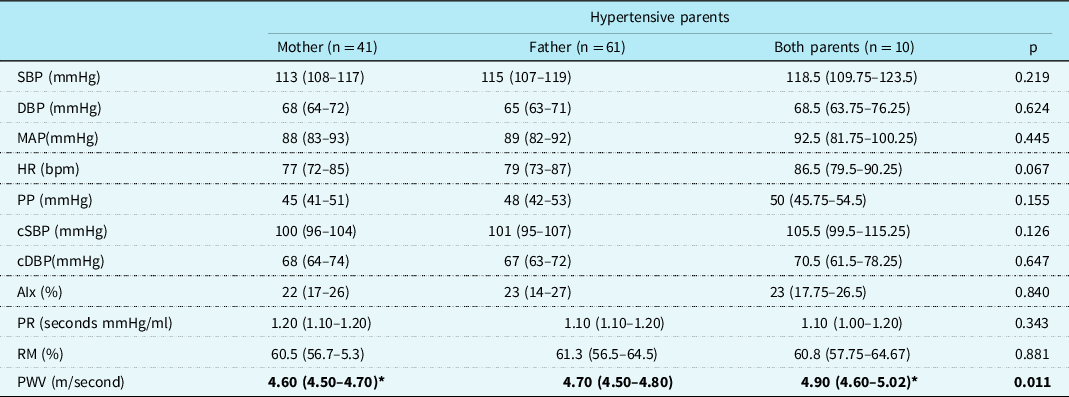
Parameters with normal distribution are shown as mean ± SS, whereas parameters without normal distribution are shown as median (25–75%). p values written in bold are < 0.05.
AIx = augmentation index; cDBP = central diastolic blood pressure; cSBP = central systolic blood pressure; DBP = diastolic blood pressure; HR = heart rate; MAP = mean arterial pressure; PP = pulse pressure; PR = peripheral resistance; PWV = pulse wave velocity; RM = reflection magnitude; SBP = systolic blood pressure.
*PWV was significantly high in children with HT in both parents compared to children with HT only in their mother (p = 0.011).
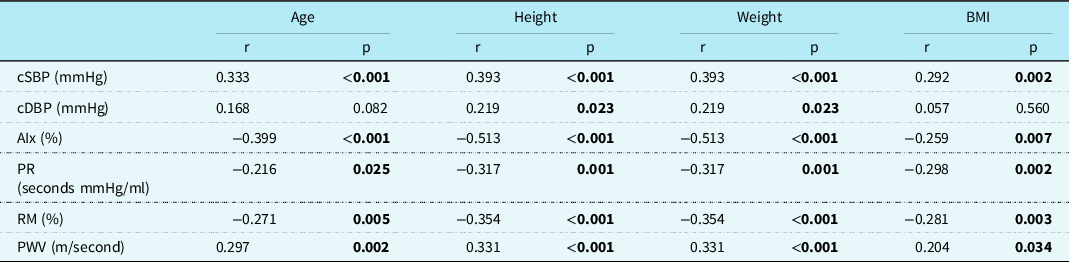
The correlations of the pulse wave analysis parameters measured with anthropometric characteristics of children in the study group are given in Table 6. Central systolic blood pressure and pulse wave velocity showed a strong positive correlation with both height and weight. Augmentation index, peripheral resistance and reflection magnitude showed negative correlation with age, height, weight and body mass index.
Correlation of parameters studied with anthropometric measurements in the study group

p values written in bold are < 0.05.
AIx = augmentation index; BMI = body mass index; cDBP = central diastolic blood pressure; cSBP = central systolic blood pressure; PR = peripheral resistance; PWV = pulse wave velocity; RM = reflection magnitude; r = correlation coefficient.
Discussion
In this study, blood pressure values of normotensive children with hypertensive parents which were examined by 24-hour pulse wave analysis monitoring by an oscillometric method were shown to be normal; however, pulse wave velocity, peripheral systolic blood pressure, diastolic blood pressure, and mean arterial pressure, central systolic blood pressure, and central diastolic blood pressure values were higher than the control group. It has been reported that the pressure changes in the aortic root begin in childhood when the hypertensive changes and atherosclerosis process begins while the peripheral systolic and diastolic blood pressure has not increased yet and are associated with end organ damage. Reference García-Espinosa, Curcio and Marotta10–Reference Boutouyrie, Vermeersch, Laurent and Briet13 Studies investigating the blood pressure of individuals with a family history of hypertension mostly focus on the 8–22 years age group. Reference Pelà, Pattoneri and Passera14–Reference Andersson, Quiroz and Enserro18 These studies have generally investigated the young adulthood period; however, our study focused on 7–18 years age group and arterial stiffness parameters, which are the pathophysiological findings of high blood pressure, were evaluated together with blood pressure.
In the meta-analysis of Vlachopuulos et al., it was found that an increase of 10 mmHg in central blood pressure increased the risk of cardiovascular disease by 9%. Reference Vlachopoulos, Aznaouridis, O’rourke, Safar, Baou and Stefanadis19 Similar to our study, Othman et al. measured the central blood pressure in 100 healthy children with hypertensive parents and 100 healthy children with normotensive parents using oscillometric method and found higher central blood pressure in children with a family history of hypertension. Reference Othman, Othman, Rosman, Nudin and Rahman20 In our study, we found that both central systolic blood pressure and central diastolic blood pressure were higher in children with a family history of hypertension compared to the control group. Furthermore, Shiraishi et al. found that central blood pressure and peripheral blood pressure differ from each other due to pulse wave amplification from the aorta to the peripheral arteries in children. Thus, pressure wave reflection, which plays an important role in pulse wave amplification, is increased in young children. It has been noted that pressure wave reflection decreases with a change in propagation distance along with height growth, and aortic length is of great importance in the difference between central blood pressure and peripheral blood pressure. Reference Shiraishi, Murakami and Higashi21 Also in our study, central systolic and central diastolic blood pressure values were statistically significantly lower than peripheral systolic and diastolic blood pressure values (p < 0.001, p < 0.001, respectively).
Pulse wave velocity is known to be high in obese children and chronic diseases such as renal failure, hyperlipidaemia, diabetes, and in cases of increased arterial stiffness. Reference García-Espinosa, Curcio and Marotta10,Reference Cote, Harris, Panagiotopoulos, Sandor and Devlin22–Reference Celik, Ozcetin and Yerli25 However, there are few studies investigating pulse wave velocity in normotensive children of hypertensive parents. Kucerova et al. and Kyevelou et al. compared the pulse wave velocity and augmentation index values of healthy individuals with a family history of hypertension with the values of individuals without a family history of hypertension, and found higher augmentation index and pulse wave velocity values in normotensive children of hypertensive parents. Reference Kuerová, Filipovský and Staessen26–Reference Kyvelou, Vyssoulis and Karpanou27 In our study, pulse wave velocity was found to be significantly higher in normotensive children of hypertensive parents compared to the control group (p < 0.001). When examined separately in different age groups in the study and control groups, pulse wave velocity was higher in normotensive children of hypertensive parents in all age groups compared to the control group (p < 0.001). The high level of pulse wave velocity in the normotensive children of hypertensive parents compared to the control group indicates that subclinical atherosclerosis may have begun before the development of hypertension in these children; and increased pulse wave velocity may be a marker for the emergence of hypertension and cardiovascular diseases in the future. The augmentation index value, obtained by proportioning the elevation pressure to the pulse pressure, indirectly showing the reflection characteristics of the pulse wave and associated with left ventricular function, was higher in children with a family history of hypertension compared to the control group; however, there was no statistically significant difference between the groups. Consistent with our study, Othman et al. measured the augmentation index of 100 healthy children with hypertensive parents and 100 healthy children without a family history of hypertension, and reported no significant difference between the two groups in terms of augmentation index. Reference Othman, Othman, Rosman, Nudin and Rahman20 In the study of Buus et al., augmentation index values of healthy young adults aged 18–36 with hypertensive parents were significantly higher compared to individuals with normotensive parents. Reference Buus, Carlsen, Khatir, Eiskjaer, Mulvany and Skov28
It has been shown that the onset of the pathophysiological changes of hypertension and atherosclerosis extends to childhood; clinical findings may not be detected in childhood, but are observed with increasing age. Reference Kavey, Daniels, Lauer, Atkins, Hayman and Taubert9,Reference Munger, Prineas and Gomez-Marin29–Reference Bao, Threefoot, Srinivasan and Berenson30 In a prior study conducted in our clinic, carotid intima-media thickness and blood pressure of healthy children with a family history of hypertension and healthy children with no family history of hypertension were assessed. In that study, when the children were divided into age groups, systolic blood pressure after 15 years of age was reported to be higher in the study group compared to the control group. Reference Yildirim, Kosger, Ozdemir, Sahin, Ucar and Kilic31 A few studies in the literature have demonstrated that children of hypertensive parents have increased blood pressure and arterial stiffness compared to children of normotensive parents, which is more pronounced in the adolescent period. Reference Van den Elzen, de Ridder, Grobbee, Hofman, Witteman and Uiterwaal2,Reference Toker, Yildirim, Demir, Ucar and Kilic15,Reference Kuerová, Filipovský and Staessen26–Reference Kyvelou, Vyssoulis and Karpanou27 In this study, pulse wave velocity was higher in normotensive children of hypertensive parents compared to the control group in all age groups, whereas in the post-puberty period (15–18 years), systolic blood pressure, mean arterial pressure, pulse pressure, and central systolic blood pressure, as well as pulse wave velocity, was significantly higher in the study group compared to the control group. Our results support the hypothesis that pathophysiological changes that start in early childhood but do not show any clinical results become more pronounced with age and clinical findings begin to occur.
Yasmin et al. evaluated the relationship between augmentation index and pulse wave velocity and reported that pulse wave velocity and augmentation index, measured by tonometric method in 115 healthy adults with hypertension in their family, showed a positive correlation; moreover, the correlation was stronger when each gender was separately evaluated. Reference Yasmin and Brown32 However, when the genders were compared with each other, the authors showed that augmentation index was higher in women. Krzesinski et al. evaluated the effect of gender on cardiovascular haemodynamics in hypertension in 144 adults with the diagnosis of essential hypertension and found that augmentation index was higher in women compared to men. Reference Krzesiński, Stańczyk and Gielerak33 They stated that as women are shorter compared to men, higher augmentation index in women may be attributed to the rapid addition of the pulse wave from the peripheral vascular bed, which reaches the heart in a shorter time, onto the wave formed by systole. Moreover, they speculated that physiological phenomena such as menstrual cycle, physical activity, drug use, and diurnal rhythm could affect the augmentation index. In this study, there was no difference in pulse wave velocity between males and females; however, augmentation index was higher in girls compared to boys in both the control and study groups, consistent with the literature. When age groups were separately evaluated, in the 7–10 years age group, augmentation index was higher in girls compared to the boys in both the study and the control groups (p < 0.001 and p = 0.025, respectively), whereas no difference was found between genders in normotensive children of hypertensive parents in the 11–14 years age group, which is a period of fast height growth in girls. Furthermore, augmentation index was higher in girls than boys in the control group (p = 0.045). In the 15–18 years age group, augmentation index was higher in girls than boys in both the study and the control groups (p < 0.001).
There are studies in the literature that argue that the age of onset of hypertension in parents and the number of parents with hypertension are indicators of risk for hypertension in children. The risk is 1.5 times higher in the presence of hypertension in the mother, 1.8 times higher in the presence of hypertension in the father, 2.4 times higher if both parents have hypertension, and 6.2 times higher if both parents have hypertension before the age of 55. Reference Wang, Young, Meoni, Ford, Erlinger and Klag34 DeStefano et al argued that the presence of hypertension in the mother is a stronger risk factor. Reference DeStefano, Gavras and Heard-Costa35 However, Mitsumata et al observed that there was no difference in hypertension development in the child in terms of hypertensive mother or father. Reference Mitsumata, Saitoh, Ohnishi, Akasaka and Miura36 Evalein et al. examined 5-year-old children and reported that carotid intima-media thickness was increased in children with hypertension in their mothers. Reference Evelein, Geerts, Bots, van der Ent, Grobbee and Uiterwaal37 Moreover, both carotid intima-media thickness and arterial stiffness were increased in children with hypertension in both parents. Rodrigues-Moran et al. conducted a study on 6–10-year-old normotensive children of hypertensive parents and reported that cardiovascular risk factors such as high blood pressure, hyperglycaemia, hyperinsulinemia, and low high-density lipoprotein cholesterol level were frequent in children with hypertensive mothers compared to children with hypertensive fathers. Reference Rodríguez-Moran, Aradillas-García and Simental-Mendia38 They argued that the history of hypertension in the mother causes a higher risk of cardiovascular diseases in the child. They thought that cardiovascular disease risk could be inherited by mitochondrial inheritance. In our study, the mean age of the mothers and the mean age of the fathers were under 55 years in the study group. Because of the early onset of hypertension in the parents of our cases, it was thought that pulse wave analysis in children could be more affected in early childhood. Unlike the literature, there was no significant difference in the parameters studied between children having hypertension only in the mother and those having hypertension only in the father (p > 0.05). There was no difference in the study parameters between children with hypertensive fathers and children with hypertension in both parents (p > 0.05). Pulse wave velocity was significantly higher in children with hypertension in both parents compared to children with hypertension only in the mother (p = 0.011).
Pulse wave velocity increases with age and height increase in children. Reference Elmenhorst, Hulpke-Wette, Barta, Dalla Pozza, Springer and Oberhoffer5 It has been shown that pulse wave velocity is positively correlated with age, height, and weight in children. Reference Reusz, Cseprekal and Temmar39 In a Chinese study, Yiming et al. evaluated pulse wave velocity in 5757 adults aged 15–88 and reported that pulse wave velocity had a strong positive correlation with age and body mass index. Reference Yiming, Zhou and Lv40 Mecci et al measured pulse wave velocity in healthy, obese, and hypertension children between the ages of 4 and 18 years and reported a strong positive correlation between body mass index and pulse wave velocity. Reference Kulsum-Mecci, Goss, Kozel, Garbutt, Schechtman and Dharnidharka23 In our study, it was found that pulse wave velocity had a positive correlation with age, height, weight, and body mass index. Similarly central systolic blood pressure demonstrated a strong positive correlation with age, height, weight, and body mass index. Furthermore augmentation index, peripheral resistance and reflection magnitude showed a negative correlation with age, height, weight, and body mass index.
In conclusion, higher pulse wave velocity in all age groups in normotensive children of hypertensive parents and higher systolic blood pressure, mean arterial pressure, pulse pressure, and central systolic blood pressure in addition to high pulse wave velocity in the study group over 14 years of age compared to the control group, demonstrated that subclinical atherosclerosis and endothelial dysfunction may have started in these children, and clinical manifestations began to appear with the increase in age. Although cardiovascular events are very rare in childhood and adolescence, preliminary identification of diseases associated with endothelial dysfunction and atherosclerosis that may arise in the future with pulse wave analysis and central blood pressure assessment is very important for preventing disease progression and complications. We think that in cases where pulse wave velocity increases in childhood even in the absence of hypertension and other cardiovascular risk factors, especially in normotensive children of hypertensive parents, it may be possible to prevent the disease or delay disease development by recommending dietary and lifestyle changes in individuals at risk before hypertension develops. We think that this study will contribute to the literature as there are very few studies in the literature evaluating arterial stiffness with pulse wave analysis and central blood pressure measurement in children.
Acknowledgements
None.
Financial support
This study has been supported by Eskisehir Osmangazi University Scientific Research Projects Coordination Unit under grant number 2016-953.
Conflicts of interest
None.