1. Introduction
Robots have permeated various aspects of our daily lives [Reference Wang, Chen, Xiao, Xu, Li, Jia and Meng1], aiding people with a range of tasks, including rehabilitation [Reference Sobrepera, Nguyen, Gavin and Johnson2], exploration [Reference Liu, Wang, Chi, Chen and Sun3], and inspection [Reference Yin, Liu, Wang and Wang4]. Currently, at most airports, luggage trolleys are gathered manually – a labor-intensive and time-consuming process. This collection process necessitates the employment of a large workforce whose sole responsibility is to collect and return these luggage trolleys to designated locations for passengers’ convenience. Introducing robots into this scenario to undertake the task of luggage trolley collection can reduce the human resources required, thereby improving collection efficiency and curtailing management costs for the airport. However, the robotic autonomous luggage trolley collection process is a complex operation that requires integrating several vital components, including object detection, localization, motion planning, and manipulation.
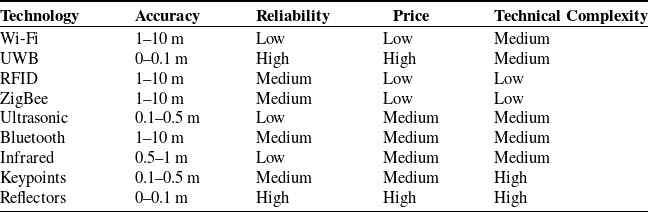
In this intricate operation, accurate indoor localization appears as the critical element. The robot is not merely required to locate the trolley but to position itself precisely behind it, ensuring optimal alignment for subsequent manipulations. Indoor localization techniques present a vast array, each with inherent strengths and limitations. Some indoor localization methods may prioritize accuracy. Others might focus on factors such as reliability, price, and technical complexity, as shown in Table I. The challenge lies in selecting a method that balances these considerations best to meet the specific demands of luggage trolley collection. Thus, rigorous academic exploration and evaluation become critical to discern the optimal localization approach that aligns seamlessly with robotic luggage trolley collection demands, ensuring efficiency and reliability.
Characteristics of different indoor localization techniques [Reference Jiménez, Schwarzl and Martin5–Reference Yassin, Nasser, Awad, Al-Dubai, Liu, Yuen, Raulefs and Aboutanios8].

Given the diverse considerations in choosing the proper technique, it is vital to understand the various indoor localization methods available. Indoor localization methods, depending on the type of sensors used, can be broadly divided into three categories:
-
• Wireless Sensor Network Localization: This method employs a range of wireless sensing technologies, such as RFID [Reference Tlili, Hamdi and Belghith9], Wi-Fi [Reference Tong, Wang, Liu and Qu10], and UWB [Reference Yubin, Weilin and Xuejun11]. Generally, the distance information between the sensors is obtained through ranging algorithms, such as Time of Arrival [Reference Leonard and Durrant-Whyte12], Time Difference of Arrival [Reference Chen and Gao13], Angle of Arrival [Reference Geng, Yuan and Huang14], and Received Signal Strength Indicator [Reference Hamdollahzadeh, Amiri and Behnia15]. The object’s position is then calculated using the established geometric relationships.
-
• Visual Localization: Sensors used in this method include monocular, binocular, and RGB-D cameras. This method achieves localization by estimating the camera’s pose from the captured image information. Visual Simultaneous Localization and Mapping (VSLAM) [Reference Xu, Dong, Wang, Wang, Zhang and He16] is a well-known research area in visual localization.
-
• Laser localization: This method typically utilizes 2D or 3D LiDAR sensors. One approach to laser localization is constructing a map with LiDAR in advance and then calculating location information by matching the LiDAR data with the map features [Reference Guo, Rong, Wang and Wu17]. Additionally, LiDAR can obtain information based on optical properties, allowing localization to be achieved based on the apparent difference in the reflection intensity of reflectors.
Airports are intricate indoor environments where precise indoor localization is essential for tracking luggage trolleys. Considering the attributes of various indoor localization methods and the sensor classifications above, this article presents a systematic evaluation of four popular and representative indoor localization methods: RFID, UWB, Keypoints, and Reflectors. These methods are assessed explicitly within the context of robotic autonomous luggage trolley collection at airports, as depicted in Figure 1. Such an evaluation not only highlights the practical utility of these methods but also sets a reference for their application in other scenarios.
The contributions of this study are three-fold:
-
• Comprehensive Evaluation Framework: A systematic evaluation framework has been developed. This novel framework, incorporating both qualitative and quantitative metrics, serves as a tool for assessing the effectiveness of various indoor localization methods. It offers a standardized approach to compare different methods on common grounds.
-
• Real-world Experimental Verification: Real-world experiments are conducted on the robotic autonomous luggage trolley collection system. This practical testing enables objective comparisons between indoor localization methods, bridging the gap between theory and practice.
-
• Application-Oriented Analysis: This research provides a practical perspective on selecting indoor localization methods. The Keypoints method is the most suitable for the robotic autonomous luggage trolley collection. This finding advances the application of autonomous robotic systems in real-world scenarios and provides a valuable reference, enhancing the understanding and application of indoor localization methods in other scenarios.
Different localization methods evaluation in robotic autonomous luggage trolley collection.

2. Related Work
This work mainly focuses on effective indoor localization in robotic autonomous luggage trolley collection. To further clarify the motivation of this article, this section summarizes the research in this area and discusses the shortcomings of the existing research.
2.1. Indoor localization
In [Reference Nuaimi and Kamel18], the authors compare various indoor localization systems and enumerate some of the challenges encountered by these systems. Liu et al. [Reference Liu, Darabi, Banerjee and Liu7] assess various wireless indoor localization methods and deliberate on different performance measurement criteria, including some of their tradeoffs. The study in [Reference Amundson and Koutsoukos19] reviews localization methods for mobile wireless sensor networks. It primarily focuses on indoor and outdoor wireless sensor networks, furnishing a classification for mobile wireless sensors and localization and citing some practical applications of mobile sensors. Davidson and Piché [Reference Davidson and Piché20] primarily review indoor localization methods applied to smartphones, including localization based on Wi-Fi, Bluetooth, and magnetic field fingerprinting, among others. A comprehensive overview of localization systems for emergency responders is outlined in [Reference Ferreira, Fernandes, Catarino and Monteiro21]. This review principally discusses various indoor localization methods and their relative strengths and weaknesses in emergency response systems. Faheem et al. [Reference Zafari, Gkelias and Leung22] present a thorough review of different indoor localization techniques, technologies, and systems, proposing an evaluation framework to assess different indoor localization systems. The study in [Reference Obeidat, Shuaieb, Obeidat and Abd-Alhameed23] introduces localization system technologies, indoor localization techniques, localization detection techniques, and wireless technologies.
However, most existing literature consists of reviews of indoor localization methods, concentrating on the comparative analysis of principles without constructing an evaluation framework for systematic assessment. Although some literature evaluates indoor localization methods, physical experimental verification is deficient. In other words, these theoretical evaluations lack validation under real-world conditions, making it difficult to ascertain the effectiveness of these localization methods. Consequently, this research formulates a systematic evaluation framework and designs real-world experiments to verify the performance of four popular indoor localization methods.
2.2. Robotic autonomous luggage trolley collection
The first solution for robotic autonomous luggage trolley collection is proposed in [Reference Wang, Mai, Ho, Liu, Li, Pan and Meng24]. This research introduces a luggage trolley pose estimation method based on point cloud matching. [Reference Wang and Meng25–Reference Sun, Lei, Xie, Liu, Gao, Zhang and Wang27] present some novel algorithms designed to improve the performance of robotic navigation for autonomous luggage trolley collection. Xiao et al. [Reference Xiao, Luan, Zhao, Hong, Zhao, Chen, Wang and Meng28] develop a novel mobile manipulation system applicable to robotic autonomous luggage trolley collection. Similarly, Xie et al. [Reference Xie, Xia, Hu, Zhao, Meng, Sun, Gao, Wang and Meng29] present the low-cost mobile manipulation robot designed to efficiently collect and transport multiple luggage trolleys in dynamic airport environments. In terms of localization, they employ a keypoint detection net and the Efficient Perspective-n-Point (EPnP) algorithm [Reference Lepetit, Moreno-Noguer and Fua30] to determine a 6D pose of the luggage trolley. Ultimately, the state of the luggage trolley could be obtained in combination with the robot’s pose.
The robotic autonomous luggage trolley collection constitutes a complex system, posing a significant challenge in addressing all its issues within a single study. Existing literature primarily focuses on the path-planning algorithm and the design of the entire system. Although the indoor localization method based on vision has been applied to the luggage trolley, a comprehensive comparative analysis is absent, and the effectiveness of the luggage trolley localization still needs to be evaluated.
Four representative methods, RFID, UWB, Keypoints, and Reflectors, are selected for evaluation and analysis to address these challenges. In the context of robotic autonomous luggage trolley collection, experiments are designed on a real robot system to assess the performance of these methods.
The rest of this article is organized as follows. Section 3 details four indoor localization methods, including RFID, Keypoints, UWB, and Reflectors. The experiment setup, results, and discussion are explained in Section 4. Section 5 concludes this work and addresses the future direction.
3. Four Indoor Localization Methods
This section outlines the main features of four selected indoor localization methods: RFID, UWB, Keypoints, and Reflectors. These four methods represent three different types of sensors utilized in indoor localization. RFID and UWB methods rely on wireless sensors, while the Keypoints and Reflectors methods are based on visual and laser sensors. In this assessment, RFID and UWB are utilized in their commercially matured forms, originating from established products available in the market. While minor adjustments have been made to fit this specific application’s needs, the core technology behind them remains unchanged. From a research perspective, specific iterations of RFID and UWB showcase superior performance compared to the versions discussed in this article. However, these advanced iterations are still in the developmental stages and are currently out of reach for broad practical implementation. This article emphasizes evaluating established technologies, given their more immediate potential for real-world applications, especially in luggage trolley localization.
3.1. RFID localization method
RFID possesses the features of non-contact communication, high data rate, and low cost [Reference Yamano, Tanaka, Hirayama, Kondo, Kimuro and Matsumoto31], which makes it a promising option for indoor localization [Reference Sanpechuda and Kovavisaruch32]. The principle of RFID involves using radio frequency for data communication between the RFID reader and the tag, thereby achieving the objective of identifying and tracking objects. RFID tags are classified into active and passive types [Reference Tesoriero, Gallud, Lozano and Penichet33]. In this experiment, active tags are employed. Using the RFID method, the location information of the received signal needs to be predetermined. When localizing the luggage trolley, since the position of the luggage trolley is not fixed, the tag’s location information cannot be preset. Therefore, simply collecting the tag information via the RFID reader does not yield the real-time position of the luggage trolley. The position and unique identifier of the antenna are presented, and the localization of the luggage trolley can be determined by receiving the unique identifier information of the antenna proximate to the luggage trolley. Consequently, the RFID system employed in this article comprises an activator with four antennas, an RFID reader, an active tag, and a computer, as shown in Figure 2.
The schematic diagram of the RFID method.

Each activator has four antennas with a designated position and a unique identifier. When the active tag is close to the antenna, it will be activated and carry the unique identifier of the corresponding antenna. The active tag transmits a signal and relays this unique identifier. The system discerns the current position of the tag via the strength and unique identifier of the detected tag signal. The localization accuracy of this RFID system primarily relies on the range of antenna detection.
The localization process of this RFID system can be elucidated through a series of equations and principles. This RFID system relies on multiple antennas, each with a designated position and a unique identifier. The position of each antenna
 $i$
can be represented as
 $\mathcal{P}_i$
, and its unique identifier is denoted as
 $\mathcal{I}_i$
. As a tag comes within the detection range of an antenna, a simple principle determines whether the antenna detects it. Specifically, if the distance
 $\mathcal{D}_{\operatorname{tag}-i}$
between the tag and antenna
 $i$
is less than the maximum detection range
 $\mathcal{D}_{\max }$
, the antenna will detect the tag. Mathematically, this can be expressed with the function:
 \begin{align} \begin{cases}1 & \text{ if } \mathcal{D}_{\text{tag-i}} \leq \mathcal{D}_{\max } \\[3pt] 0 & \text{ otherwise }\end{cases}. \end{align}
Furthermore, the strength of the signal
 $\mathcal{S}_i$
received by an RFID reader is inversely proportional to the square of its distance to the tag. Hence, we can formulate this relationship as:
 \begin{align} \mathcal{S}_i=\frac{k}{\mathcal{D}_{\text{tag-i}}^2}, \end{align}
where
 $k$
is a system-specific constant. With the objective of pinpointing the tag’s location, the system must first identify the antenna receiving the strongest signal. This is accomplished by:
 \begin{align} \mathcal{P}_j=\mathcal{P}(\arg \max _i \mathcal{S}_i). \end{align}
It can be implying that the tag’s position
 $\mathcal{L}_{tag}$
is estimated to be close to the position
 $\mathcal{P}_j$
of the antenna with the highest signal strength.
3.2. Keypoints localization method
The 6D pose estimation of objects is pivotal to a wide array of real-world applications, specifically in robot manipulation and grasping [Reference Zhang, Tian and Shao34,Reference Zhu, Derpanis, Yang, Brahmbhatt, Zhang, Phillips, Lecce and Daniilidis35]. This estimation can facilitate many tasks, such as identifying object orientation and location, aiding robot navigation, and enabling precise manipulation and grasping of objects. Given the importance of accurate pose estimation, several techniques and methods have been developed, of which the Keypoints method is a prime example [Reference Cheng, Liu, Zhang, Ma, Wang and Zhang36].
As illustrated in Figure 3, the six 2D keypoints (
 $p_k = [x_k, y_k]^T$
,
 $k=0, 1,\ldots, 5$
) can be estimated by using a stacked hourglass network structure. The stacked hourglass network structure, a deep learning model, excels in tasks that require comprehension of the spatial hierarchy among features, thus making it suitable for pose estimation tasks. Once these keypoints are estimated, they can be utilized to solve the Perspective-n-Point (PnP) problem through the EPnP algorithm, which enables the computation of the 6D pose of the luggage trolley.
The schematic diagram of the keypoints method.

The localization process of Keypoints method can be explained through a series of equations and principles. Using a deep learning approach, six 2D keypoints are estimated from the input image by deploying a stacked hourglass network structure. Mathematically, this process can be articulated as:
 \begin{align} p_k=\mathcal{F}_{\text{hourglass }}(I), \end{align}
where
 $I$
represents the input image and
 $\mathcal{F}_{\text{hourglass }}$
denotes the stacked hourglass network function. The output consists of 6 distinct 2D keypoints, represented as
 $p_k=\left [x_k, y_k\right ]^T$
. With these 2D keypoints in hand, they’re coupled with predefined 3D reference points, serving as the inputs to the EPnP algorithm to compute the 6D pose:
 \begin{align} (R, T)=\operatorname{EPnP}\left (p_k, X_k\right ). \end{align}
In this equation,
 $X_k$
embodies the predefined 3D points corresponding to the 2D keypoints
 $p_k$
. Then, the derived rotation
 $R$
and translation
 $T$
values from EPnP are used, in conjunction with the robot’s localization data, to obtain the luggage trolley’s position:
 \begin{align} \begin{aligned} P_{\text{trolley}} &= P_{\text{robot}} + R \times T, \\[3pt] \theta _{\text{trolley}} &= \theta _{\text{robot}} + \theta (R). \end{aligned} \end{align}
Combining this, the trolley’s state is given by:
 \begin{align} \left [\begin{array}{l} x_{\text{trolley }} \\[3pt] y_{\text{trolley }} \\[3pt] \theta _{\text{trolley }} \end{array}\right ]. \end{align}
This combined information provides a comprehensive understanding of the trolley’s position and orientation in the physical space, serving as a critical input for subsequent robotic manipulation tasks.
3.3. UWB localization method
UWB is a radio frequency technology that has gained significant attention for precise indoor localization in recent years. LinkTrack is a state-of-the-art indoor localization system based on UWB technology. Numerous localization studies based on the LinkTrack system have been carried out. For instance, Cao et al. [Reference Cao, Liu, Yuen, Athukorala, Ng, Mathanraj and Tan37] present a solution to estimate the relative localization of mobile robots. Similarly, Fishberg and P. How [Reference Fishberg and How38] propose a multi-agent 2D relative pose localization approach built on the LinkTrack system. This research also utilizes the LinkTrack system to achieve indoor localization of the luggage trolley. As depicted in Figure 4, the four base stations positioned at the room’s corners can pinpoint the tag’s location affixed to the luggage trolley. This localization data is then transmitted to the robot to obtain the luggage trolley’s location.
The schematic diagram of the UWB method.

However, the single-tag UWB system can only acquire the object’s
 $x$
and
 $y$
coordinates. A dual-tag setup is utilized in the UWB system to obtain angle information.
Two tags are fastened on both sides of the luggage trolley, designated as points
 $A$
and
 $B$
, respectively. The coordinates of points
 $A$
and
 $B$
are
 \begin{align} \vec{A}=\left [\begin{array}{l} x_A \\[3pt] y_A \end{array}\right ], \quad \vec{B}=\left [\begin{array}{l} x_B \\[3pt] y_B \end{array}\right ]. \end{align}
 $\vec{O}$
is the midpoint between
 $\vec{A}$
and
 $\vec{B}$
, and the coordinates of
 $\vec{O}$
are
 \begin{align} \vec{O}=\frac{\vec{A}+\vec{B}}{2}=\left [\begin{array}{c} \frac{x_A+x_B}{2} \\[3pt] \frac{y_A+y_B}{2} \end{array}\right ]. \end{align}
 $\vec{U}$
is the unit vector from
 $\vec{A}$
to
 $\vec{B}$
, and the coordinates of
 $\vec{U}$
are
 \begin{align} \vec{U}=\frac{\vec{B}-\vec{A}}{\|\vec{B}-\vec{A}\|}=\left [\begin{array}{c} \frac{x_B-x_A}{\sqrt{\left (x_B-x_A\right )^2+\left (y_B-y_A\right )^2}} \\[3pt] \frac{y_B-y_A}{\sqrt{\left (x_B-x_A\right )^2+\left (y_B-y_A\right )^2}} \end{array}\right ]=\left [\begin{array}{l} x_U \\[3pt] y_U \end{array}\right ]. \end{align}
The unit vector
 $\vec{V}$
is obtained by rotating
 $\vec{U}$
90 degrees counterclockwise, and the coordinates of
 $\vec{V}$
are
 \begin{align} \vec{V}=\left [\begin{array}{c} y_U \\[3pt] -x_U \end{array}\right ]. \end{align}
Therefore, if
 $\vec{C}$
is at a distance of
 $d$
in the unit direction of
 $\vec{O}$
, the coordinates of
 $\vec{C}$
are
 \begin{align} \vec{C}=\vec{O}+d \vec{V}=\left [\begin{array}{l} \frac{x_A+x_B}{2}+d y_U \\[3pt] \frac{y_A+y_B}{2}-d x_U \end{array}\right ]. \end{align}
3.4. Reflectors localization method
A reflector is a highly reflective material that directs incoming light back toward the light source. The more light a reflector reflects, the higher its reflection intensity will be. Leveraging this property, LiDAR can be employed to distinguish reflectors from ordinary objects based on their reflection intensities [Reference Yu, Shen, Luo and Xiao39]. Due to the simplicity and convenience of installing and maintaining reflectors, they can be widely applied in various scenarios. Therefore, identifying reflectors using LiDAR is an effective method for indoor localization.
By setting a reflection intensity threshold, it becomes possible to filter and capture the point cloud of the reflector. As illustrated in Figure 5, the point cloud data acquired by the LiDAR is filtered to extract the point clouds of two reflectors attached to the pole behind the luggage trolley. These two resulting point cloud clusters are then grouped by applying the K-Means clustering method [Reference Na, Xumin and Yong40], and the center points of these two clusters are marked as points
 $A$
and
 $B$
. Subsequently, the method for deriving the coordinates of point
 $C$
is the same as the one used in the UWB localization method described above.
The schematic diagram of the Reflectors method.

The Reflectors-based localization process can be elucidated using a set of equations and foundational principles. Let
 $I_t$
be the threshold for reflection intensity. When the intensity
 $I_r$
exceeds this threshold, it signifies the presence of a reflector:
 \begin{align} I_r \gt I_t \implies \text{Reflector is present}. \end{align}
The point cloud data, once collected, is processed through filtering to distinguish the reflectors. If
 $P$
represents the entire point cloud data from LiDAR and
 $F(P)$
denotes the filtered point cloud, then:
 \begin{align} F(P)=\left \{p \in P \mid I_r(p)\gt I_t\right \}. \end{align}
Once filtered, K-Means clustering is employed to group the point clouds corresponding to each reflector. Let the clusters be denoted by
 $C_1$
and
 $C_2$
. For K-Means:
 \begin{align} \min \sum _{i=1}^2 \sum _{p \in C_i}\left \|p-\mu _i\right \|^2, \end{align}
where
 $\mu _i$
represents the mean of points in
 $C_i$
. After clustering, the means of these clusters are marked as points
 $A$
and
 $B$
:
 \begin{align} A=\mu _1, \quad B=\mu _2. \end{align}
Lastly, the process to find point
 $C$
is analogous to the method applied in the UWB localization method. If the method used in UWB is represented by function
 $\mathcal{U}({\cdot})$
, then:
 \begin{align} C=\mathcal{U}(A, B). \end{align}
These steps collectively form an efficient method to detect reflectors and determine their positions, making the Reflectors localization method practical for implementation in Laser localization.
4. Experiments and Results
In this section, four indoor localization methods are evaluated through a combination of qualitative and quantitative experiments. In this study, the emphasis is placed on the localization of one luggage trolley, neglecting the potential impact of obstacles on the luggage trolley’s localization.
4.1. Experiment setup
As illustrated in Figure 6, the luggage trolley collection robot is the experimental platform for this research. The robot’s dimensions are 0.45 m
 $\times$
0.416 m
 $\times$
1.2 m, while the luggage trolley measures 0.79 m
 $\times$
0.525 m
 $\times$
1.01 m. The robot, equipped with sensors such as LiDAR and a camera, is controlled by a NUC computer and uses a manipulator to collect the luggage trolleys.
The experimental platform of the robotic autonomous luggage trolley collection.

In the qualitative experiments, Localization Accuracy, Mobile Power Supplies, Coverage Area, Cost, and Scalability serve as evaluation metrics for these four indoor localization methods. As depicted in Figure 7, for the robot to complete the luggage trolley collection task, the localization error must be confined within 10 cm while obtaining the angle information of the luggage trolley. The RFID method’s localization error extends to meters and does not provide the angle information of the luggage trolley. Thus, relying solely on RFID for localization cannot fulfill the task of luggage trolley collection. Consequently, only a qualitative analysis is conducted for the RFID method. During the quantitative experiments, the performance of UWB, Keypoints, and Reflectors methods is examined regarding Localization Accuracy and Success Rate.
Localization redundancy error in luggage trolley collection tasks.

The sensing range for the Keypoints, UWB, and Reflectors methods varies significantly in terms of distance and angle during the localization process. To ensure a fair comparison of the localization accuracy between the Keypoints, UWB, and Reflectors methods, points are specifically selected where all three methods could successfully perform localization. Figure 8 visually demonstrates the spatial distribution of these selected sample points.
The spatial distribution of sample points. The black dots symbolize the Ground Truth. The blue, green, and orange dots represent the coordinates obtained through the Keypoints, UWB, and Reflectors methods, respectively. The gray dashed lines connecting the points denote the difference between the measured results of the three methods and the Ground Truth. The red dot marks the observation point of the robot.

In the experiment evaluating statistical success rate, the robot’s position remains fixed while the distance and angle of the luggage trolley are varied, as depicted in Figure 9. Regarding the angle, the semicircle is segmented at intervals of
 $15^\circ$
, and concerning distance, the radius of the semicircle is divided at intervals of 1.5 m, ranging from 3 m to 9 m. Furthermore, at the polar coordinates derived from each combination of angle and distance, the luggage trolley rotates
 $360^\circ$
at intervals
 $30^\circ$
. Due to the symmetry, this semicircle can represent the success rate of the entire circular space.
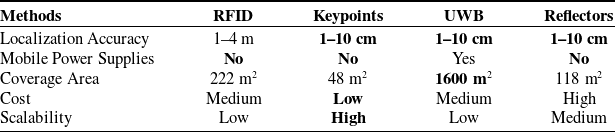
The results of four methods in qualitative metrics.

Different initial states of the luggage trolleys. The orange point is the pose of the robot. The dot represents the different initial poses of the luggage trolley. Each dot is similar to a polar coordinate, with different distances and rotation angles, as shown in the semicircle shape. The luggage trolley has twelve rotation angles at each blue point, as shown in the square.

4.2. Experiment results
4.2.1. Qualitative experiment results
These four methods are evaluated using several qualitative metrics, namely Localization Accuracy, Mobile Power Supplies, Coverage Area, Cost, and Scalability. The results are presented in Table II.
-
• Localization Accuracy: One of the most critical attributes of indoor localization methods is localization accuracy. Particularly in robotic grasping operations, a robust indoor localization method should be capable of locating the object within a range of 10 cm, a criterion known as
 $microlocation$
[Reference Zafari, Papapanagiotou and Christidis41].
-
• Mobile Power Supplies: In indoor localization methods, components that consume substantial power should ideally be transferred to a server or unit with access to an uninterrupted power supply. However, some indoor localization methods still require mobile power supplies due to communication limitations.
-
• Coverage Area: Ideally, an indoor localization method should ensure effective localization in extensive indoor environments such as hospitals, shopping malls, and airports. A high coverage area can reduce the equipment needed, lowering the financial burden of localization.
-
• Cost: The financial investment in indoor localization methods should not be exorbitant. Ideally, a method should incur no additional costs, including extra equipment and installation costs. While adding proprietary hardware devices can enhance localization accuracy, it also leads to additional costs.
-
• Scalability: A localization system should exhibit scalability, implying that the accuracy and real-time localization remain unaffected by the increased number of localized objects. At the same time, considering the cost implications of the growth in localized objects is also essential.

Regarding Localization Accuracy, the RFID method ranges from 1 to 4 m, while the other three methods – Keypoints, UWB, and Reflectors – all fall within a 10 cm range, as illustrated in Table II. The subsequent quantitative experiments provide a more precise comparison among the Keypoints, UWB, and Reflectors methods.
Mobile Power Supplies refers to the additional mobile power required in the process of luggage trolley collection. The Keypoints method requires no extra mobile power because it requires no additional equipment other than the camera installed on the robot. Although the RFID method utilizes an active tag, it comes equipped with a battery, which lasts for a long time. The UWB method, on the other hand, requires communication between multiple tags, necessitating each tag to be equipped with a mobile power supply. The comparison of the four methods in terms of mobile power supplies is presented in Table II.
Concerning coverage area, the RFID method’s four antennas each cover a circular area with a radius of 4.2 m, resulting in an individual coverage of approximately 55.39
 $\mathrm{m}^{2}$
and a combined total of around 222
 $\mathrm{m}^{2}$
. The Keypoints method, represented by a sector spanning a
 $66^\circ$
angle and a 9.17 m radius, covers an area close to 48
 $\mathrm{m}^{2}$
. The UWB method dominates with an expansive coverage, spanning dimensions of 40 m by 40 m, totaling 1600
 $\mathrm{m}^{2}$
. The Reflectors method, delineated by a circle of 6.13 m radius, encloses an approximate area of 118
 $\mathrm{m}^{2}$
. A detailed comparison illustrating the coverage area of these four methods is depicted in Figure 10. It’s worth noting that the coverage area of a localization method could be a crucial factor when considering its application in specific scenarios, as the extent of coverage directly impacts the operational efficiency and overall performance of the system.
The coverage area of the four methods.

The cost of equipment for each method has been considered. For RFID and UWB, the costs are around US$500 (encompassing one activator with four antennas, one RFID reader, and one active tag) and US$700 (comprising seven tags, four supports, and four mobile power supplies), respectively. The Reflectors method incurs a substantial cost of US$3200, which includes the expense of a LiDAR and two reflectors. In comparison, the Keypoints method is more economical, priced at US$400 for one camera. While the RFID and UWB methods demand the establishment of supplementary systems, the Reflectors method relies on the integration of LiDAR and reflectors, and the Keypoints method requires the installation of a camera. The setup procedures for Reflectors and Keypoints are straightforward and economical, whereas those for RFID and UWB are complex and have higher costs. Therefore, while the RFID and UWB methods have moderate costs, the Keypoints method is more affordable, and the Reflectors method emerges as the most expensive, as shown in Table II. While LiDAR and cameras come with a higher cost, their versatility adds value. For example, LiDAR can also be utilized for the robot’s global localization, and cameras can be used for object recognition. Moreover, even as the count of luggage trolleys increases, the cost for these two methods stays relatively stable.
As the number of objects to be localized increases, both the RFID and UWB methods would require additional equipment to ensure localization accuracy and effectiveness. For instance, every additional luggage trolley would require its tag. Furthermore, if the distribution space of the luggage trolleys expands, additional reference points and anchors would need to be installed. However, the Keypoints method does not require any additional equipment as long as the keypoints of the luggage trolleys remain unchanged. On the other hand, the Reflectors method would necessitate the attachment of corresponding reflectors onto the luggage trolleys. Consequently, the scalability of the RFID and UWB methods is low, while that of the Keypoints and Reflectors methods is high and medium, respectively, as illustrated in Table II.
4.2.2. Quantitative experiment results
The Mean Absolute Error (MAE) and Root Mean Square Error (RMSE) are calculated between the coordinates observed by the UWB, Keypoints, and Reflectors methods and the coordinates of ground truth. The formulas of MAE and RMSE are as follows:
 \begin{align} MAE= \frac{1}{n} \sum _{i=1}^n(\left |x_i-\hat{x}_i\right | + \left |y_i-\hat{y}_i\right |) \end{align}
 \begin{align} RMSE=\sqrt{\frac{1}{n} \sum _{i=1}^n[\left (x_i-\hat{x}_i\right )^2 + \left (y_i-\hat{y}_i\right )^2]} \end{align}
The results are displayed in Table III. Based on the MAE and RMSE calculations, it is observed that the
 $xy$
coordinates derived from the Reflectors method exhibit the highest accuracy, followed by the Keypoints method, while the UWB method ranks last. Upon analysis, it is deduced that the error introduced is relatively minimal when the LiDAR of the Reflectors method detects the reflectors. Solution errors may arise during the estimation of the camera pose for the Keypoints method. In the case of the UWB method, unavoidable errors could occur due to white noise during signal transmission. Hence, considering the comparative accuracy of these three indoor localization methods, the most suitable approach can be selected for specific scenarios and requirements.
The MAE and RMSE results of three methods in xy-coordinate.

Visualization of success rate based on polar coordinates.

The success rates for three indoor localization methods based on distance and angle variations.

At each polar coordinate point, the success rate for each method in completing the luggage trolley collection task at different rotation angles of the luggage trolley is calculated. Only two outcomes are considered at a specified luggage trolley rotation angle: success or failure. Then, the robot’s success rate in collecting the luggage trolley at the given polar coordinate point can be calculated as shown in Figure 11. The results of success rate are illustrated in Figure 12, with part of the real-world experimental process depicted in Figure 13. In Figure 12, the X-axis represents varying distances in meters, the Y-axis denotes different angular positions in degrees, and the Z-axis shows the corresponding success rates in percentages. Each plotted point provides insights into the success rates of each method under specific distance and angular conditions.
Screenshots of part of the real-world experiment process. Pictures are intercepted at four distinct time points: 2s, 12s, 22s, and 32s, effectively illustrating the entire collection process. The blue box, green box, and orange box represent the collection process of the Keypoints, UWB, and Reflectors methods, respectively. In the UWB method, the red box marks the UWB tag’s position on the luggage trolley, while in the Reflectors method, it indicates the reflector’s location on the luggage trolley.

The findings show that the UWB method exhibits exceptional performance, maintaining a 100% success rate from
 $0^\circ$
to
 $180^\circ$
. This remarkable result is due to the extensive coverage area of the UWB method, which spans a 40 m
 $\times$
40 m space, a range considerably beyond the experimental scope. Additionally, the localization accuracy of the UWB method satisfies the necessary precision for successfully collecting the luggage trolley. Conversely, the Keypoints and Reflectors’ success rates are noticeably impacted by two variables: the distance between the robot and the luggage trolley and the luggage trolley’s orientation angle.
The Keypoints method struggles in specific scenarios, mainly when the rotation angle ranges from
 $45^\circ$
to
 $180^\circ$
. In these instances, the success rate descends to 0% as the luggage trolley falls outside the camera’s field of view, preventing the acquisition of the necessary keypoints. Additionally, even when the luggage trolley is within the camera’s field of view, occlusions from the luggage trolley can restrain the effective recognition of keypoints. For instance, the detection success rate at
 $0^\circ$
stands at just 91.67% due to the partial occlusion of the luggage trolley, which prevents the keypoints’ recognition at certain angles. This occlusion effect becomes pronounced as the distance between the robot and the luggage trolley widens, resulting in a more rapid drop in the success rate.
Meanwhile, the Reflectors method experiences challenges due to the placement of the reflectors on the rear of the luggage trolley. The LiDAR can only register the reflectors’ information on the backside of the luggage trolley, resulting in a low success rate for the Reflectors method. Notably, the recognition of the reflectors is also influenced by the distance between the robot and the luggage trolley. Once a certain distance is surpassed, the LiDAR fails to register the intensity information from the reflectors, thereby affecting the overall success rate.
4.3. Discussion
These four methods possess distinct characteristics, making them apt for diverse indoor scenarios. While the RFID and UWB methods predominantly rely on wireless sensors, the Keypoints and Reflectors methods diverge by visual and laser sensors, respectively. Such diverse sensors indicate their unique adaptability across various applications.
The RFID method is a common choice for tracking inventory in large warehouses or retail stores due to its ability to detect objects at a reasonable distance without needing precise location details. It can also be used effectively in library management systems where the primary focus is identifying the presence of books rather than pinpointing their exact location. Unlike the UWB method that necessitates a mobile power supply, the self-sufficiency of RFID in power aspects makes it more practical in power-constrained settings. While RFID is cost-effective and covers a large area, its low localization accuracy and inability to provide angle information make it unsuitable for precise tasks such as luggage trolley collection.
The UWB method is often employed in applications that demand high-precision localization, such as real-time indoor navigation systems, robotics, and sports training analysis, where the exact position of objects or people needs to be tracked continuously. The UWB method’s ability to provide centimeter-level accuracy makes it a more suitable choice in these scenarios than the RFID method. UWB offers high accuracy and extensive coverage; however, requiring multiple tags and mobile power supplies increases cost and complexity, limiting its scalability.
The Keypoints method, using visual sensors, is essential in environments demanding steady and high-precision localization. A typical application of this method would be in surveillance systems where the goal is to track the movement of individuals or objects within a particular area. Besides, the Keypoints method is instrumental in VSLAM. In autonomous driving, a car equipped with a camera (or several cameras) could use the Keypoints method to identify distinct features in its surroundings. Observing these features over time allows the vehicle to estimate its motion and build a map of the environment, thus aiding navigation and obstacle avoidance. The Keypoints method provides precise localization within the camera’s field of view and does not require additional hardware, though it is constrained by occlusion and the camera’s range.
The Reflectors method boasts the highest localization accuracy due to its use of laser sensors. For instance, in manufacturing environments, precise docking can be essential when a robot arm needs to pick up, move, or assemble parts with high accuracy. The Reflectors method can guide the robot arm to the exact location required for efficient and error-free operation. Overall, the Reflectors method’s high precision makes it ideal for any application requiring automatic docking with tight tolerances. Although the Reflectors method is the most accurate, its effectiveness is highly dependent on the placement of the reflectors and the sensor’s recognition range, which may impact scalability.
The UWB and Reflectors methods exhibit sensitivity to the position of tags or reflectors. For the UWB method, while it ensures robust detection within its coverage range, accurate angle estimation is highly dependent on the precise position of the tags on the luggage trolley. Incorrect spacing or placement of these tags can result in increased localization errors. Similarly, the performance of the Reflectors method is closely tied to the position of the reflectors relative to the sensor. Localization accuracy and success rates can be significantly affected if the reflectors are not placed within the optimal recognition range or angle.
Airports present several challenges for localization systems, including dynamic environments with moving objects and people, occlusion issues for visual methods, and logistical complexities related to power management for UWB tags. Scaling the system to handle hundreds of luggage trolleys would require substantial investment in equipment and infrastructure, significantly increasing costs. In robotic autonomous luggage trolley collection, localization accuracy is essential. Therefore, the RFID method, which lacks sufficient precision, is unsuitable for this application. Similarly, equipping each luggage trolley with UWB tags and mobile power supplies results in high costs, making this approach impractical for large-scale deployment. Additionally, the random positioning of luggage trolleys in airports often prevents reflectors from being consistently detected by LiDAR, making the Reflectors method unreliable. Considering these factors and evaluating these methods on criteria such as Localization Accuracy, Power Requirements, Coverage Area, Cost, Scalability, and Success Rate, the Keypoints method emerges as the most viable solution for this scenario.
While the methods compared in this article are limited, each one is highly representative, symbolizing different sensor applications. In a comparative analysis focusing on four representative sensor applications, the vision-based approach is found to be the most suitable for the robotic autonomous luggage trolley collection. This discovery propels the implementation of autonomous robotic systems in complex, real-world contexts, furnishing a noteworthy reference point. It deepens comprehension and broadens the application of indoor localization methods in diverse scenarios.
5. Conclusions and Future Work
This article systematically evaluates the performance of four popular and representative indoor localization methods using qualitative and quantitative experiments. The findings obtained from this research, particularly the verification conducted in real-world experiments, offer a substantial reference for indoor localization methods applied in other environments. This research expands the understanding of indoor localization methods and enhances their application across diverse scenarios.
Through the experimental results analysis, it’s evident that the Keypoints method stands out as the optimal choice for robotic autonomous luggage trolley collection. Such a discovery advances the practical deployment of the luggage trolley collection system at airports. However, challenges such as occlusion remain to be addressed. As part of future research, we aim to investigate more advanced algorithms and perception frameworks to overcome these limitations and further enhance the robustness and performance of the visual-based localization system.
Author contributions
Zhirui Sun conceived, designed, and wrote this work. Zhirui Sun and Can He conducted the physical hardware experiments. Weinan Chen and Jiankun Wang provided guidance and supervision.
Financial support
This work is partially supported by National Natural Science Foundation of China Grant #62103181, Shenzhen Science and Technology Program under Grant RCBS20221008093305007, 20231115141459001, Young Elite Scientists Sponsorship Program by CAST under Grant 2023QNRC001, High level of special funds (G03034K003) from Southern University of Science and Technology, Shenzhen, China.
Competing interests
The authors declare no competing interests exist.
Ethical approval
Not applicable.