Transcatheter cryoablation is a well-established technique for the treatment of atrioventricular nodal re-entry tachycardia and right accessory pathways in children, especially if located in the septal space.Reference Miyazaki, Blaufox, Fairbrother and Saul 1 – Reference Drago, Righi and Placidi 10
Conventional treatment of cardiac arrhythmias with catheter ablation requires the use of fluoroscopy for catheter visualisation. Radiation exposure carries potential long-term risks to both patients and the catheterisation laboratory personnel.Reference Ait-Ali, Andreassi and Foffa 11
Since the late 1990s, three-dimensional mapping systems have been used; one of the advantages of this technology is that it allows to reduce or even avoid the use of fluoroscopy for real-time visualisation of the position of electro-catheters. The effectiveness of these systems has been well documented in children as well.Reference Drago, Silvetti and Di Pino 12 – Reference Tuzcu 14
The EnSite Velocity™ Cardiac Mapping System (St. Jude Medical, St. Paul, MN, USA) is a three-dimensional mapping technology that allows visualisation and guides all types of electro-catheters, including cryocatheters, for the electro-anatomical reconstruction of the heart and ablation of re-entry circuits. This system was introduced in our electrophysiology laboratory in the second half of 2013 (July).
Given our good experience with cryoablationReference Drago, De Santis, Grutter and Silvetti 2 , Reference Drago, Silvetti, De Santis, Grutter and Andrew 4 – Reference Drago, Russo and Silvetti 6 , Reference Drago, Placidi and Righi 9 , Reference Drago, Righi and Placidi 10 , we believed that using this three-dimensional system for cryoablation in the second half of the year would provide a unique opportunity to evaluate its actual usefulness in reducing fluoroscopy exposure and increasing the effectiveness of cryoablation, regardless of the learning curve of four participating interventional electrophysiologists who used this three-dimensional system.
On this ground, the aim of this study was to compare the acute/mid-term success rate and patient radiation dose of conventional versus three-dimensional mapping in transcatheter cryoablation of re-entry circuits located in the septal space in children.
Materials and methods
Patient population
From 1 January, 2013, to 31 December, 2013, 81 children with symptomatic supraventricular tachycardia due to right septal accessory pathways or atrioventricular nodal re-entry circuits underwent transcatheter cryoablation at our Institution. Patients’ age and body mass index are reported in Table 1.
Patient characteristics.

AVNRT=atrioventricular nodal re-entry tachycardia; AVRT=atrioventricular re-entry tachycardia; BMI=body mass index.
From January to June, 2013, 41 procedures were performed using conventional mapping for the treatment of symptomatic atrioventricular nodal re-entry tachycardia (n=32) or atrioventricular re-entry tachycardia due to a manifest accessory pathway located in the septal space (n=9).
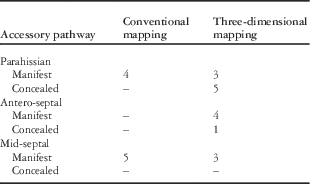
From July to December, 2013, 40 procedures were performed using the EnSite Velocity™ Three-Dimensional Cardiac Mapping System v3.0 for the treatment of atrioventricular nodal re-entry tachycardia (n=24) or atrioventricular re-entry tachycardia due to a manifest or concealed right-sided septal accessory pathway (n=10 and n=6, respectively; see Table 2 for details of accessory pathway location). Among the 24 patients with atrioventricular nodal re-entry tachycardia, two had previously undergone an acutely unsuccessful conventional cryoablation and two experienced atrioventricular nodal re-entry tachycardia recurrence during follow-up after an acutely successful procedure performed before 2013, at 1 and 6 months, respectively. Among the 16 patients with atrioventricular re-entry tachycardia, four had previously undergone an acutely unsuccessful cryoablation before 2013, one experienced atrioventricular re-entry tachycardia recurrence during follow-up after an acutely successful procedure performed with the conventional method before 2013, and three had previously undergone an unsuccessful radiofrequency transcatheter ablation in another institution.
Accessory pathway characteristics in atrioventricular re-entry tachycardia cryoablation procedures.

Dose measurement
All the procedures were performed using a monoplane C-arm angiography system (Artis zee, Siemens, Erlangen, Germany) equipped with a 30×40 cm flat panel detector. This system incorporates dose-reduction features, including pulsed fluoroscopy, low-dose continuous fluoroscopy, spectral filtration, visualisation of collimator and filter positioning without radiation, and real-time display of incident air kerma (ICRU 74) 15 at the patient entrance reference point (CEI EN 60601-2-43), 16 and air kerma–area product (ICRU 74). 15 The patient entrance reference point is located along the central ray of the X-ray beam, 15 cm back from the system isocentre towards the focal spot (CEI EN 60601-2-43).
According to ICRU 74, we considered incident air kerma at the patient entrance reference point (CEI EN 60601-2-43) and air kerma–area product as the dosimetric quantities correlated with deterministic and stochastic effects. Dosimetric quantities were displayed on the console of our C-arm interventional X-ray equipment.
At the end of the procedure, total fluoroscopy time as well as cumulative air kerma and air kerma–area product values were recorded for each patient. The amount of radiation exposure with both three-dimensional and conventional mapping was calculated from the regression coefficient (y=mx+q) of cumulative air kerma or cumulative air kerma–area product to body mass index. In the former, m represents the cumulative air kerma increase per unit of body mass index, whereas in the latter m represents the cumulative air kerma–area product increase per unit increase in body mass index. The m values obtained allowed for a dosimetric comparison between the two techniques.
Electrophysiological study
All anti-arrhythmic drugs were interrupted for at least five half-lives before the procedure to allow a complete pharmacological wash-out.
Written informed consent was obtained from all the patients before the procedure.
The procedure was performed under general anaesthesia induced with sevoflurane or propofol and was maintained with sevoflurane. A thermal mattress was used to maintain normal body temperature.
Surface electrocardiogram leads and endocardial potentials were recorded and stored on a multi-channel recorder (Bard Electrophysiology, Billerica, MA, USA).
All the patients without manifest ventricular pre-excitation underwent trans-oesophageal atrial pacing in order to identify the type of re-entry supraventricular tachycardia based on electrocardiographic features and ventricular–atrial interval and to determine whether cryoenergy could be used.Reference Gallagher, Smith and Kasell 17
In addition, two quadripolar electro-catheters were positioned in the His bundle region and in the high right atrium via the left femoral vein. In case of a concealed posteroseptal accessory pathway or atypical atrioventricular nodal re-entry, a multi-polar catheter was inserted into the coronary sinus via the right jugular vein for a better localisation of the site of re-entry.
Atrial or ventricular single, double, and triple premature extrastimuli as well as incremental pacing were used to induce supraventricular tachycardia. The stimulation protocol was repeated under isoproterenol infusion (0.01–0.04 mcg/kg/min in incremental doses) if supraventricular tachycardia was not inducible at baseline.
Cryoablation was performed in patients with inducible atrioventricular re-entry tachycardia or atrioventricular nodal re-entry tachycardia, with or without isoproterenol infusion, or an atrial-His jump clearly diagnostic of dual atrioventricular nodal physiology, defined as a sudden prolongation of the atrial-His interval by 50 ms or greater when shortening the cycle length of atrial pacing or the coupling interval of the atrial extrastimulus by 10 ms, if atrioventricular nodal re-entry tachycardia was not inducible and/or inducibility of reciprocating supraventricular tachycardia with a ventricular–atrial interval <70 ms was clearly documented on a previous trans-oesophageal electrophysiological study.Reference Gallagher, Smith and Kasell 17
Conventional cryoablation
Diagnostic and cryoablation catheters were positioned using fluoroscopy.
The cryoablation system consists of a central console (CryoCath Technologies Inc., Montreal, Quebec, Canada) and a steerable 7 Fr catheter (Freezor®, Medtronic Cryocath LP, Montreal, Quebec, Canada) using N2O as a refrigerant fluid. The cryoablation system has already been described previously.Reference Drago, De Santis, Grutter and Silvetti 2
A steerable 7 Fr catheter with a 4- or 6-mm tip electrode was preferably used in patients <35 kg or >35 kg, respectively.Reference Drago, Placidi and Righi 9 – Reference Drago, Righi and Placidi 10
Cryomapping and cryoablation were performed as already described in detail elsewhere.Reference Drago, Placidi and Righi 9 – Reference Drago, Righi and Placidi 10 A brief description follows.
Atrioventricular nodal re-entry tachycardia
After diagnostic confirmation and subsequent determination of a reproducible protocol for atrioventricular nodal re-entry tachycardia induction or atrial-His jump, the cryocatheter was inserted through the right femoral vein and advanced into the heart under fluoroscopic guidance. An electrophysiological approach for slow pathway ablation was adopted if either a Haissaguerre or a Jackman potential was identified during sinus rhythm;Reference Haissaguerre, Warin and Lemetayer 18 , Reference Jackman, Wang and Friday 19 otherwise, an anatomical approach was used.Reference Drago, Placidi and Righi 9
“Fixed cryomapping”, performed by reducing the tip temperature to –30°C for a maximum of 60 s, or “step-by-step cryomapping”, performed by progressively decreasing the tip temperature by 10°C every 5 s from –30 to –70°C, was attempted at the discretion of the operator. During cryomapping, repeat extra-stimulus testing or ramps were conducted to assess tachycardia inducibility or the absence of atrioventricular nodal slow pathway conduction. If cryomapping was positive – that is, non-inducibility of tachyarrhythmia, no re-entry beats, or no AH jump – the tip temperature was further lowered to create a permanent lesion. Cryoablation was performed using the single-lesion technique followed by one or more cryobonus to consolidate the lesion, as previously described,Reference Drago, Placidi and Righi 9 or using the linear lesion technique.Reference Czosek, Anderson, Marino, Connor and Knilans 8
Atrioventricular re-entry tachycardia.
Manifest ventricular pre-excitation
The site of accessory pathway was identified along the tricuspid annulus by careful mapping of the atrial and ventricular activation pattern using distal unipolar and bipolar electrograms, in an attempt to detect the shortest local atrioventricular interval, the earliest anterograde ventricular activation to surface delta wave during sinus rhythm, and “QS” morphology on unipolar leads. Cryomapping was then performed, and if there was a sudden loss of ventricular pre-excitation a full cryoapplication was delivered to create a permanent irreversible lesion.
Concealed accessory pathways
The tricuspid annulus area was mapped during atrioventricular re-entry tachycardia and the site of the earliest retrograde atrial activation was identified. Cryomapping was performed at this site, and if a sudden retrograde interruption of supraventricular tachycardia was observed cryoablation with a goal temperature of −75/−80°C was performed to create a permanent lesion followed by one or more cryobonus to consolidate the lesion.
For all the procedures, if cryomapping or cryoablation produced undesirable effects – for example, transient atrioventricular block or lengthening of the PR interval – cryoapplication was discontinued to allow tissue re-warming and reversibility of the loss in electrical function. Subsequently, the cryocatheter was re-positioned at another target site, and cryomapping was repeated.
In all patients, a post-ablation electrophysiological study at baseline and during isoproterenol infusion was performed immediately and 30 min after successful cryoablation to confirm complete and persistent interruption of retrograde and anterograde conduction over the accessory pathway and/or atrioventricular re-entry tachycardia non-inducibility or to demonstrate complete and persistent slow pathway modification and/or atrioventricular nodal re-entry tachycardia non-inducibility. In patients with manifest ventricular pre-excitation, intravenous adenosine was administered (100–200 mcg) to confirm the absence of abnormal conduction during transient atrioventricular block.
In all cases, there was a total waiting time of 30 min after successful cryoablation before checking for any subtle changes in the electrocardiogram potentially predictive of pre-excitation recurrence or supraventricular tachycardia re-inducibility.
Cryoablation with three-dimensional mapping
In total, seven skin patches were applied to guide the non-fluoroscopic navigation system with accurately repeatable catheter location and navigation to within 1 mm.Reference Tuzcu 14 , Reference Miyake, Mah and Atallah 20 The EnSite Velocity™ surface patches were used as positional reference.
A quadripolar catheter was inserted into the left femoral vein and advanced through the inferior caval vein towards the right atrium. During this operation, the position and movement of the catheter tip were kept under control only by the three-dimensional system in an attempt to reduce or eliminate the use of fluoroscopy. If the catheter failed to reach the desired location because of an obstacle, it was gently moved and re-directed until the junction between the inferior caval vein and the right atrium was reached, as documented by the recording of an atrial electrogram.
After reaching the right atrium, the catheter was gently moved to acquire geometrical reconstruction of the right atrium, the superior caval vein, and the inferior caval vein, and it was then positioned in the right atrial appendage.
Using the same technique and the reconstructed map, another quadripolar catheter was advanced through the left femoral vein and positioned into the right atrium for His bundle electrogram recording. Subsequently, the catheter position was shadowed on the EnSite Velocity™ System map to provide a constant marker for the His bundle.
In addition, a coronary sinus catheter was inserted via the right jugular vein to minimise the use of fluoroscopy, if necessary.
The 7 Fr cryoablation catheter was introduced through the right femoral vein and advanced into the right atrium using the EnSite Velocity™ System three-dimensional reconstruction. Following this, the atrial side – during overt atrioventricular re-entry tachycardia or atrioventricular nodal re-entry tachycardia – or the ventricular side – during anterograde pre-excitation – was mapped by moving the catheter tip in a posterior–inferior and lateral direction around the tricuspid annulus, guided by a balanced atrial or ventricular electrogram. The three-dimensional mapping was usually performed using right and left anterior oblique views.
All cryomapping and cryoablation points were acquired and depicted on the three-dimensional map.
Atrioventricular nodal re-entry tachycardia.
High-density/linear lesion cryoablation
If a permanent result was not achieved by single-point cryoablation using the EnSite Velocity™ Cardiac Mapping System, a high-density linear lesion was created delivering multiple overlapping cryolesions from the ventricular side of the tricuspid annulus to the atrial side. High density was achieved using three-dimensional markers of 4 mm in diameter for each lesion – that is, about the average of the cryoball created by 4- and 6-mm tip cryocatheters – and overlapping the three-dimensional spheres/lesions of at least half of the diameter of 2 mm.
Atrioventricular re-entry tachycardia
In addition to what was described above, the site with the best electrophysiological characteristics was confirmed by the colour-coded three-dimensional map: all data were manually checked by fixing the onset of ventricular or atrial electrogram as the reference point. The potential targets corresponding to the early atrial or ventricular activation sites were also identified using the EnSite Velocity™ System OneMap tool, which enables to collect both geometry and mapping points simultaneously. Cryomapping was performed at this site, followed by cryoablation, if sudden retrograde interruption of supraventricular tachycardia or disappearance of ventricular pre-excitation was observed.
Post-ablation follow-up
Clinical examination and an electrocardiogram were performed in all patients 24 hours and 1 month after the procedure. Holter monitoring and exercise stress test were performed in all patients every 6 months. Recurrence was defined as electrocardiographically documented tachycardia, relapse of pre-excitation (delta wave), or resumption of pre-procedural clinical symptoms.
Statistical analysis
Statistical analysis for comparisons of acute success and recurrence rates was based only on the first procedure, whereas for complication rates all the procedures were considered. The unpaired Student’s t-test was used for group comparisons of procedure characteristics and individual parameters. When normality and equal variance analyses failed, a Mann–Whitney ranks sum test was used. The non-parametric combination test (v2.0) was applied for group comparisons of acute and mid-term success rates. The significance level was set at p<0.05. Student’s t-test on the difference of the angular coefficients m1 and m2 of regression lines of body mass index (BMI) versus cK and of body mass index versus cKAP relative to patients treated with conventional mapping and three-dimensional mapping was performed in both cases testing the null hypothesis H0: m1=m2 i e., m1−m2=0.
SPSS v12.0 (SPSS Inc., Chicago, IL, USA) was used for all the descriptive and inferential statistical analyses.
Results
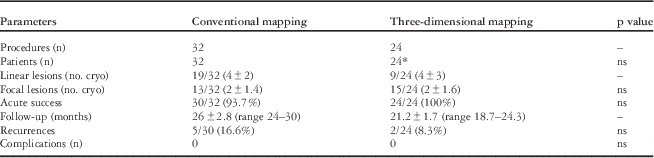
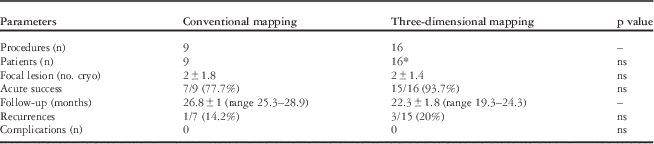
No permanent cryoablation-related complications were recorded in either group. No patent foramen ovale was found in our study population. No significant differences in terms of age and body mass index were observed between patients treated with conventional mapping or the EnSite Velocity™ System (Table 1). Using conventional mapping, the acute success rate was 93.7% in patients with atrioventricular nodal re-entry tachycardia and 77.7% in patients with atrioventricular re-entry tachycardia, with a recurrence rate of 16.6 and 14.2%, respectively. Using three-dimensional mapping, the acute success rate was 100% in patients with atrioventricular nodal re-entry tachycardia and 93.7% in patients with atrioventricular re-entry tachycardia, with a recurrence rate of 8.3 and 20%, respectively (p=ns). Detailed results of cryoablation with conventional and three-dimensional mapping are reported in Tables 3 and 4.
Results of atrioventricular nodal re-entry tachycardia cryoablation procedures.

Number of cryo, number of cryoenergy applications to successful ablation sites.
* Including two unsuccessful conventional cryoablation procedures performed at our centre in 2013, two recurrences after an acutely successful cryoablation performed at our centre before 2013.
Results of atrioventricular re-entry tachycardia cryoablation procedures.

Number of cryo, number of cryoenergy applications to successful ablation sites.
* Including four unsuccessful conventional cryoablation procedures performed at our centre before 2013, one recurrence during the follow-up of an acutely successful cryoablation procedure performed at our centre with conventional mapping before 2013, and one recurrence of ventricular pre-excitation immediately after an acutely successful cryoablation procedure using the three-dimensional mapping EnSite Velocity™ System.
High-density linear-lesion three-dimensional cryoablation
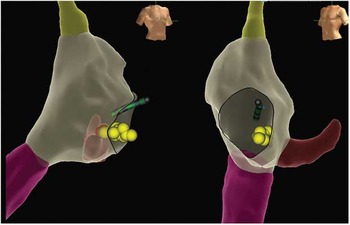
High-density linear lesions were successfully used in nine patients (Fig 1); two of them had previously undergone an unsuccessful cryoablation with conventional mapping. In these two patients, the anatomy of the nodal region, characterised by a very small triangle of Koch and a particular Thebesian valve morphology, along with the well-known peculiar size and stiffness of the cryocatheters, had made it difficult to find an appropriate site for ablation.
Example of a high-density linear lesion in a patient with atrioventricular nodal re-entry tachycardia who underwent successful three-dimensional cryoablation.

Of these nine (11.1%) patients, one experienced an atrioventricular nodal re-entry tachycardia recurrence during the follow-up.
Three-dimensional cryoablation in atrioventricular re-entry tachycardia – particular cases
Out of 16 patients, two of them who underwent three-dimensional cryoablation of a manifest parahissian and antero-septal accessory pathway, respectively, received conventional cryoablation 2 years previously. At that time, cryoenergy delivery resulted in accessory pathway disappearance, but a few seconds later a transient prolongation of the PR interval was recorded. Therefore, both procedures were interrupted because of the high risk of atrioventricular block.
During three-dimensional mapping-guided cryoablation, PR interval prolongation was once again noted at the site of apparently successful cryoablation. Cryoenergy delivery was, therefore, immediately stopped and the ablation site was marked with the three-dimensional system. Cryomapping was then performed very close to this site, where an insult of the atrioventricular node was also recorded. The procedure was successfully completed without complications, requiring the use of fluoroscopy in one case. At the 1-month follow-up, recurrence of antero-septal accessory pathway was reported in the absence of supraventricular tachycardia.
In one case, supraventricular tachycardia sustained by an antero-septal, occasionally manifest, accessory pathway was accidentally interrupted by bump mapping rendering it non-re-inducible. Cryomapping and cryoablation were successfully performed in the exact site of bump mapping under three-dimensional guidance using the RealReview function. During follow-up, a recurrent episode of ventricular pre-excitation was reported without clinical recurrence of supraventricular tachycardia, which occurred frequently before cryoablation despite anti-arrhythmic therapy.
Radiation exposure
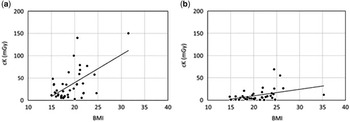
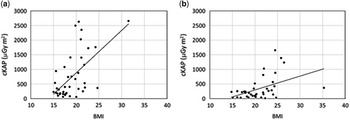
Regression coefficients of cumulative air kerma and cumulative air kerma–area product to body mass index are reported in Table 5. For both dosimetric quantities, m values were lower in patients treated with three-dimensional mapping compared with conventional mapping, with a reduction in cumulative air kerma and cumulative air kerma–area product of 76.4 and 67.3%, respectively (p<0.05; Figs 2 and 3).
Scatter plot with regression line of cumulative kerma (cK) versus body mass index (BMI) in patients treated with conventional mapping ( a ) or three-dimensional mapping ( b ).

Scatter plot with regression line of cumulative air kerma–area product (cKAP) versus body mass index (BMI) in patients treated with conventional mapping ( a ) or three-dimensional mapping ( b ).

Angular coefficients m of regression lines of cumulative air kerma (cK) and cumulative air kerma–area product (cKAP) to body mass index in patients treated with conventional or three-dimensional mapping.

Discussion
Absorbed dose is one of the fundamental dosimetric quantities in radiological protection. At low-dose levels, the effective dose and equivalent dose are taken to be indicators of the probability of subsequent stochastic effects; at high-dose levels, the absorbed dose to the more heavily irradiated sites within the body is taken to be an indicator of the severity of deterministic effects (ICRP 103). 21 In case of deterministic effects at high-dose levels (>2 Gy), lesion severity can be predicted from the local absorbed dose in the skin. Therefore, the skin dose in the most heavily irradiated area is usually the most relevant quantity to be determined in interventional radiology. Cancer induction is generally considered the main risk related to stochastic effects for patients after radiological imaging. A quantitative approach for risk assessment is a more complex issue than for acute effects, depending on low probabilities at low doses (UNSCEAR, 2000). 22 For the purpose of radiation protection, the total risk of lethal cancer induction for a person is assumed to be related to the sum of the weighted organ doses; this is known as the concept of effective dose (ICRP 103).
An expert consensus document on “Radiation Safety in the Practice of Cardiology”, published by the American College of Cardiology, recommends that all catheterisation laboratory staff adopt the principle of ALARA – that is, radiation doses “as low as reasonably achievable”.Reference Limacher, Douglas and Germano 23 Several approaches have been evaluated to minimise X-ray exposure during catheterisation procedures.Reference Davies, Cowen and Kengyelics 24
Catheter ablation without use of fluoroscopy was first reported by our group in 2002, using the CARTO navigation system (Cordis Webster, Marlton, NJ, USA) for radiofrequency ablation of right-sided free-wall accessory pathways in children.Reference Drago, Silvetti and Di Pino 12
More recently, several authors have reported their experience with the use of the EnSite Velocity™ System to minimise or avoid fluoroscopy exposure.Reference Smith and Clark 13 , Reference Tuzcu 14 , Reference Miyake, Mah and Atallah 20
The EnSite non-fluoroscopic mapping system enables visualisation of the majority of electro-catheters, including the cryocatheter, from the beginning of the procedure, allowing continuous monitoring of their position. In this setting, the CARTO™ system can also be configured to allow visualisation and recording of the cryocatheter but only after the specific radiofrequency ablation catheter (Navistar, Biosense Webster Inc., Diamond Bar, California, United States of America) has been positioned in the electromagnetic field. This can make the procedures more expensive than those performed with the EnSite system. In addition, the CARTO™ system does not allow the use of cryoablation catheters for the continuous recording of electrophysiological signals and cannot mark its location with shadows or three-dimensional markers.
Our study describes the first single-centre comparison of cryoablation with three-dimensional versus conventional mapping for the treatment of right septal accessory pathways or atrioventricular nodal re-entry circuits in a paediatric population. Only the EnSite Velocity™ System v3.0 as the three-dimensional mapping system was used. In particular, the One Model™ tool, a new feature in the EnSite Velocity™ System, has already demonstrated a dramatic improvement in terms of accuracyReference Tuzcu 14 compared with previous software versions used in the paediatric setting.Reference Smith and Clark 13
It is well known that one of the major concerns about the EnSite Velocity™ System regards geometry shifts relative to a reference electrocatheter. This may occur if the reference intra-cardiac catheter moves inadvertently or as a result of oesophageal peristalsis if an oesophageal catheter is chosen as the reference catheter.
In contrast with other previous experiences,Reference Smith and Clark 13 , Reference Tuzcu 14 , Reference Miyake, Mah and Atallah 20 it is noteworthy that in our study neither oesophageal nor coronary sinus catheters were necessary as the system reference. This was due to the innovative combination of surface patches as a stable “positional reference” with use of general anaesthesia. The latter allows working with less variability in terms of respiration and movements that may cause transient shifts.
In our study, the use of the EnSite Velocity™ System was associated with a significant reduction in patient dose, decreasing long-term radiation-related risks for both patients and staff.
Exposure time for fluoroscopy is not considered a physical measure directly related to stochastic or deterministic radiation effects (ICRU 74) because of the wide range of technical parameters used in electrophysiological studies, which at a given exposure time may result in higher radiation dose delivery even by an order of magnitude. In addition, the large range of body mass index values in children also plays a major role, as is the case in our study population: cumulative air kerma and air kerma–area product of a radiological procedure may vary greatly according to body mass index.
In contrast, cumulative air kerma–area product and cumulative air kerma values are directly related to radiation-induced stochastic and deterministic effects, respectively. They can be affected by several factors including projections used, body mass index, field size, frame rate, dose rate setting – low, medium, or high – filtration, and the incident photon’s energy. In our study, a good overall correlation was observed between cumulative air kerma and cumulative air kerma–area product, and negligible deviations from linearity with respect to the reference configuration – projection, field size, patient’s body mass index, and fluoroscopy time – are consistent with previous findings.Reference Miller 25
As a result of our institutional experience with cryoablation of right-sided accessory pathways over a 10-year period, we already reported a significant reduction in fluoroscopy time by approximately 20% using conventional mapping.Reference Drago, Placidi and Righi 9 In the present study, the success rate did not increase significantly; however, the decrease in cumulative air kerma and cumulative air kerma–area product was even more outstanding if we consider the learning curve period of the four participating interventional electrophysiologists; this seems to make the use of a three-dimensional system strongly recommended in children.
In our study, cryoablation with three-dimensional mapping was not associated with increased procedural success rate.
On the other hand, regarding AVNRT ablation, the three-dimensional system seemed to be very effective in performing successful “high-density linear lesions”, because by using this three-dimensional protocol all the procedures were acutely successful and recurrences were not observed in any patients, even in those where conventional linear lesions failed to eliminate the slow pathway, and regarding the accessory pathways the three-dimensional system helped us in safely performing high-risk cryoablation and allowed us to perform a successful cryolesion in the “bump” site when bump mapping transiently interrupted the accessory pathways conduction.
Study limitations
This is a non-randomised comparison of cryoablation with three-dimensional mapping versus conventional mapping in children; however, the two study groups were composed of consecutive unselected patients.
Conclusion
Cryoablation of right septal accessory pathways or atrioventricular nodal re-entry circuits can be performed safely with high acute success rates in children, and the use of the EnSite Velocity™ System allows to reduce patient dose in this setting; three-dimensional mapping does not significantly improve the overall success rate of cryoablation, but may be useful and should be considered in those cases with high risk for inadvertent injury to the conduction system.
Acknowledgements
The authors thank Dr Elisa Del Vecchio for her valuable collaboration in the editorial revision.
Financial Support
This research received no specific grant from any funding agency, commercial, or not-for-profit sectors.
Conflicts of Interest
None.
Ethical Standards
The authors assert that all procedures contributing to this work comply with the ethical standards of the relevant European guidelines on human experimentation and with the Helsinki Declaration of 1975, as revised in 2008, and has been approved by the institutional committees of Bambino Gesù Children’s Hospital and Research Institute.