London, March 1664. He had been walking in the garden at home on Seething Lane, relieved that the rain had stopped long enough for a stroll, when his cousins stopped by unexpectedly. Reluctantly, he went inside to greet them. His brother Tom was in poor health, they explained, and now needed help around the house. He did not think much of the news and made arrangements to find someone to help. But mere moments after his cousins left, a note arrived that spelled out the gravity of the situation: Tom was not only unwell, but fatally so. He called his cousins to return once more and only then did they divulge what they had intended, but could not bear, to communicate the first time around. Tom was “deadly ill,” they confided, “and which is worse, that his disease is the pox.” He headed to Tom’s house where he found the patient in bed, barely sensible, rambling idly. Just five days later, he was picking out a spot for his brother’s burial.1
This narrative comes to us by way of Samuel Pepys, a naval administrator immortalized for his uncommonly intimate diary about living in London in the 1660s. In the seventeenth and eighteenth centuries, venereal disease, or the “pox,” was a dreaded diagnosis throughout Europe. It encompassed multiple sources of contagion – many sexual but some not – as well as a nexus of symptoms that varied by severity, type, and location. A mild infection, often called a clap or gonorrhea, brought burning sensations while urinating, genital excretions, and unsightly sores. These forms of the disease were thought to develop from pestilent matter passed from one external part to another, be it by touching, sharing a drink, co-sleeping, wearing a “warm pocky glove,” or sitting on a recently used bathroom seat.2 Severe cases of the disease, known as a “true” or “great” pox, could result from longstanding or untreated claps or, alternatively, penetrative sex. More severe cases were marked by pain, pustules, ulcers, itching, and scabs. When the venereal venom seeped deep into the blood the patient could develop paralysis, a fallen palate, or sunken nose. Rather than differentiate all these symptoms as those of discrete diseases as we do today (syphilis, chlamydia, gonorrhea), early modern individuals viewed them all as versions of a single malady under the broad umbrella of “venereal disease.” This was a capacious category.
The ghastly marks of the disease, along with their inexorable link to sex, made a diagnosis a source of great shame. Venereal disease was so stigmatizing that it was commonly called “the secret disease.” The name hinted at patients’ concerns about privacy while also playing on “secrets” as slang for a woman’s genitals. When he first learned about his brother’s condition, Samuel Pepys was quietly informed by an uncle that the case was a “secret.” Most poxed patients and their families would have wanted the same.
Tom was no upstanding man. He headed the family’s tailoring business but was not well suited to the work. He brought in little money and had a number of unpaid debts to friends, doctors, and family members. He also had an illegitimate child, and his maid divulged that he “hath been a very bad husband as to spending his time.” She caught him “sitting up” on two Saturday nights “when all were a-bed doing something to himself.” (She does not specify what he was doing, but presumably it involved masturbation.) Pepys was quick to enumerate these sins, as if to contextualize his brother’s wretched diagnosis in a life of excess, carelessness, and illicit sex. A pox diagnosis made sense, and Pepys immediately began fretting about its ramifications. “The shame of this very thing, I confess, troubles me as much as anything,” he wrote. Pepys was concerned about his brother’s health, but most of all he was apprehensive about the consequences for himself. He noted feeling “troubled” at least four times in the days leading up to Tom’s death and he turned over in his mind whether it would be better for his own reputation if Tom survived or died. Either way, it seemed that Tom was “a ruined man” and Pepys was collateral damage.3
Amid this hand-wringing, a family member had the wherewithal to bring in a new doctor in the hopes of obtaining a more dignified diagnosis. Based on a re-evaluation of a mouth ulcer, this new doctor delivered: he cleared Tom of the pox completely. Fearing the worst and hoping for the best, Pepys himself examined Tom’s body and was pleased to find him “as clear as ever he was born.” He embraced these new findings and the freedom from shame that came with them. Over the next few days, Pepys continued talking about the case, reminding friends, family, and perhaps himself most of all, that Tom did not die from the “foul disease.” He was rewriting the ending to his brother’s story.4
The case of Tom Pepys highlights the fear and indignity that could accompany a diagnosis of venereal disease and the ease with which patients and their loved ones could obscure clinical information to save face. Evasions could be subtle – a careful avoidance of facts, a re-interpretation of signs. Some patients were outwardly deceptive, while others occupied a murkier position. There is nothing duplicitous about asking for a second opinion, after all. Pepys even corroborated the new doctor’s findings with his own examination and it is very possible that Tom, indeed, never even had the disease. Yet there is a striving in Pepys’ writing, a desperation in his need to embrace the diagnosis that cleared his family name. The frank diary exposes this complex reaction in its varied stages, from wholehearted acceptance that Tom was infected with the pox to a growing eagerness to absolve him from such a disgraceful diagnosis. Pepys was not devious, but he does seem disingenuous.
Such maneuvers, whether intentional or involuntary, could be compounded by the difficulty of making a persuasive diagnosis at all. Pepys was living and writing long before the advent of antibody tests and medical imaging. What one of Tom’s doctors determined to be venereal, another denied. A third assessment from a group of women who stripped Tom’s body for burial found him to be “clear as any they ever saw.” Added to all this, when he first fell sick a few months before his final illness, Tom was diagnosed with consumption (what would later be called tuberculosis), a different condition altogether. His body was not wholly reliable, the symptoms of venereal disease too ambiguous to discern with any certainty. His speech, too, was untrustworthy. In the days following the initial diagnosis, he was barely able to string two words together, and in moments of lucidity he did all he could to avoid the stain of the pox.5 Like so many other cases in the time period, the ambiguities of venereal disease and its dishonorable associations made any definitive diagnosis elusive. Poxed bodies could be inscrutable, patients’ words insincere, and even those who specialized in treating the disease came to be associated with deception. Woven through all the stories in this book is the essential unknowability of the disease.
We now have tests that eliminate many diagnostic uncertainties, and yet even modern diseases can be unknowable all the same. Is Pepys’ rewriting of his brother’s death really so different from families altering obituaries for gay men at the peak of the HIV/AIDS crisis in the United States? Venereal disease within the early modern popular imagination was linked tightly with “forbidden” sex – that is, sexual activity that was deemed excessive, “unnatural,” or outside the confines of marriage. (Such explanations seemed to focus on the type and frequency of sexual activity rather than the biological sex of partners. There was little written in England about same-sex relations as a source of venereal disease.6) In reality, the pox likely spread in less lurid ways: routine sexual contact with a spouse or, for newborns, tainted milk from a wet-nurse. As a result of these presumptions about the disease and the moral status of those infected with it, a diagnosis of the pox in the 1600s and 1700s, much like for HIV/AIDS in the 1980s and 1990s, was accompanied by a muffling cloud of shame. It is little surprise that HIV/AIDS activists made speech central to their campaign for generating awareness and change (Silence = Death). Even diseases without any connection to sex, like COVID-19, bear a degree of unknowability because patients choose to mask their conditions. They do so for a range of reasons that can include shame, as well as varied measures of debility or tolerance of discomfort, differing attitudes toward risk, lack of access to healthcare, a desire to minimize disruptions or avoid missing work, distrust of doctors, and more. Giving patients a voice, despite a degree of unknowability, is a challenge of many histories of disease. That aim lies at the heart of this book.
Yet this task can be tricky given that so few people in early modern England recorded their experiences of having venereal disease at all. The scarcity of first-hand accounts from the era is all the more remarkable given the prevalence of the pox. A significant swath of London’s population by the mid 1700s likely suffered from it at some point, or at the very least knew someone who did. Roger North alarmed his family when he came down with a clap in 1705 on account of his “London whores.” They hired a surgeon to treat him, but he left in the middle of his therapy, never to return. He married an alleged “poxt whore” and, as his father resignedly put it, “there is the end of him.”7 A diagnosis of venereal disease was common, and yet could close down communication between family members. It ruined reputations and destroyed marriages. Glimpses of the disease in letters like North’s or diaries like Pepys’ are exceptional, and even these two instances are recorded by third parties rather than the patients themselves. How, then, do we capture everyday experiences of a disease that so few people even admitted to having?
Writing a History of a Secret Disease
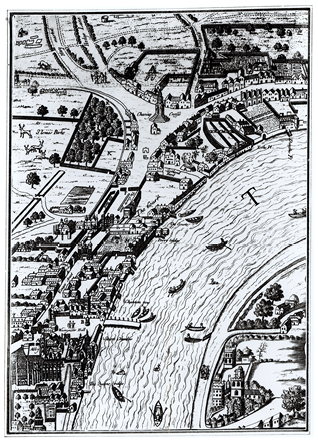
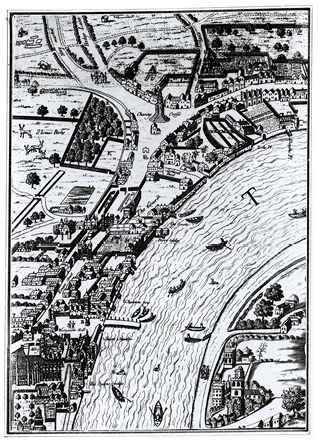
Much of what we know about venereal disease in this era has developed out of the most abundant and obvious historical sources available: medical books and hospital records. Learned medical men debated fiercely in print about the sudden appearance of the disease in Europe in the 1490s. Was the malady new or a variant of an older, pre-existing one? How was it transmitted? What was the best way to treat it? On the other end of the social spectrum, individuals who could not afford to purchase remedies or hire private healers turned to pox hospitals, many of which sprung up in urban areas to meet an ever-growing demand.8 Yet neither medical theorizing nor institutional care can capture the lived experiences of Tom Pepys and Roger North. What was it like to have this disease outside a “foul ward”? What would it have been like to shop for a cure along London’s Fleet Street or to make a healing balsam in your kitchen? This book answers these questions by turning away from typical medical spaces and instead toward streets, shops, homes, and courts. It situates the disease in daily urban life. The teeming, vibrant, pox-riddled city of London is our geographical focus (Figure 0.1).
Bird’s-eye view of the River Thames and the surrounding area. Cropped version of the George Vertue map of London (1730s after 1560s).
The following chapters stroll along streets where everyday practitioners peddled their tinctures. We visit the gardens and kitchens where ordinary sufferers concocted cures and listen in on intimate exchanges between patients and healers at home and in taverns. Readers still meet medical practitioners, but analysis expands beyond traditional sites of care to include retailers of remedies who had no formal connection to medicine at all. We learn about the lives of the poxed elite, as well as the maidservants and prostitutes who left few, if any, words behind. While most individual patients would have wanted to keep their infections secret, my approach shows that the disease and its cures were not sequestered to secret back rooms nor relegated to the city’s seedy underbelly. Remedies could be had along busy avenues, outside bookstalls, at grocers markets, and in print shops. In spite of (or because of) the stigma associated with it, the pox was a part of day-to-day conversations, transactions in streets, domestic work in kitchens, testimony in courts. One might receive unsolicited advice for curing a clap from a waterman hired to cross the Thames River. (The waterman’s tip: hen’s eggs for breakfast, “shells & all.”9) Shifting our point of view away from typical sites of medical care and onto everyday experiences in London streets, shops, homes, and courts shows how the pox – far from a “secret disease” – was a common component of life in the capital city.
Widespread venereal disease in this era is not news, nor is its accompanying shame. Pox healers promised secret back entrances to their shops and promoted pills that worked “so privately that a friend in bed shall not know it.”10 Rather than retell that story, I add to it by privileging nonmedical spaces and the patient’s point of view. This perspective shows that the pox was everywhere, but experiences of it varied depending on where we look. I follow shoppers down alleys as they searched for cures, using maps to reconstruct their paths and diaries and advertisements to imagine how the shame of the disease informed commercial transactions. I peek into consultation rooms to recover patient–healer negotiations, finding there that shame framed the contours of clinical interactions and healers’ displays of expertise. Opening doors to kitchens and closets shows that stigma seeped into seemingly private spaces, influencing the logic and phrasing of household remedies. Perhaps most surprising of all is how the disease surfaced in legal cases. Here, in semi-public courtrooms, I find that poxed women did not hide their embarrassing symptoms but accentuated them. Female litigants could speak intimately and deliberately about the painful effects of having the foul disease. In lawsuits filed for separation and for rape, the marks of the disease provided physical proof of unlawful sex and a language for expressing acts that were unutterable in other contexts. In court, the dread of the disease worked to women’s advantage by giving them a way to manage a deeply patriarchal legal system.
Experiencing venereal disease was not relegated to a single urban site, of course. The same patient might produce a homemade remedy in their kitchen one week and purchase an over-the-counter medicine the next. The pills and potions that patients consumed, whether concocted at home, purchased ready-made, or doled out free from a hospital dispensary, did not much differ in form and substance. But the meanings, dynamics, and relationships involved in accessing those treatments varied. Some places, such as courts and consultation rooms, can tell us more about how Londoners wrote or spoke about the disease than their actual experiences of enduring it. Both legal and medical cases, after all, report past events using well-worn tropes and scripts. Other places, such as the potter’s shop between Drury Lane and Bridges Street where a patient might pick up a pox cure, expose dimensions of the disease as a lived reality.11 By turning to new places, new stories of the disease and its stigma emerge, both real and imagined.
No single London locale, then, can represent fully what it was like to have and treat the pox. By looking outside strictly medical spaces, a range of stories emerge. Taken together, those stories cohere into a vision of disease that begins to resemble that of a later era. For instance, the alleged greed and insincerity of pox healers in early modern print mirrors stereotypes about seductive “confidence men” of a later Victorian period. And the disease generated a commercial response in London in the 1600s and 1700s that, in its reach and reliance on nonmedical retailers, foreshadows the high tide of commercialized medicine in the late 1800s. In courts and consultation rooms, the disease was so deeply stigmatizing that doctors could not trust patients’ words and so turned to observations of bodies in ways that anticipated nineteenth-century medical clinics and jurisprudence. And the presumption that moral redemption could influence physical recovery was ingrained in early modern household pox cures, presaging approaches to care in later English institutions.12 I do not suggest that these anxieties, experiences, treatments, and views of disease all emerged for the very first time in early modern London. But their convergence around a specific disease in this time and place is noteworthy. Together, they create a composite image of a disease that looks out of step with time.
Yet it was neither a medical breakthrough nor a revolutionary idea that made the pox seem modern for its moment. Rather, it was the social dimensions of the disease – its sordid meanings and lurid associations – that did so. The stigma and fear that came with a diagnosis compelled doctors to privilege bodies in new ways. Embarrassing symptoms and assumptions about the principles of poxed patients led to moralizing household remedies and an ever-expanding market for anonymous, ready-made cures. It was shame rather than medical insights and discoveries that created such modern-seeming ways of viewing and treating this disease.
The Pox in the History of Disease
To fully appreciate what seems so modern here requires situating this history of the pox within the history of disease more broadly. Differences between diseases then and now are not just semantic. In the 1600s and 1700s, there was no sense that diseases developed from particular pathogens. Learned medical thinkers began to classify certain disease species, but ordinary people did not conceive of diseases as specific conditions that manifested the same way in all bodies. Rather than universal and fixed, diseases were believed to be individual and fluid. They were seen as ever-shifting clusters of symptoms unique to each patient’s particular constitution and lifestyle. Symptoms could relocate in the body and, in some instances, transform altogether. (Pain and fever, for instance, were thought to roam and settle in specific body parts, like a foot or an eye.) Complaints like coughs, headaches, fevers, and colds were often considered to be ailments in their own rights rather than symptoms of other underlying disorders. This meant that multiple people with the exact same set of symptoms could receive completely different diagnoses. It also meant that diagnosing disease centered largely on patients’ subjective perceptions of felt symptoms rather than healers’ objective evaluations of physical signs. If diseases were continually mutating and defined by clusters of symptoms unique to each person, then a definitive diagnosis could be elusive. This was especially true for the pox, a disease of which the bodily marks tended to be ambiguous and freighted with moral meanings.
The aim of early modern healthcare was not to eradicate disease so much as restore wellbeing by altering the body and its environment. Whether bodies were thought to be made up of fluids known as humors or, by the mid 1700s, organized by a nervous system, the same key principle held: each body was distinct and sickness was a holistic problem. A patient’s particular physical makeup, environment, and lifestyle determined the quality and consistency of their internal matter, which had ramifications for health. Immoderate or inappropriate diet, for instance, could create clogs, decay, or weakness that led to illness. Medical remedies were tailored to each patient and took the form of dietary adjustments, environmental changes, and therapies that removed corrupt or blocked internal matter by way of sweats, enemas, purges, blisters, and bloodletting.
Our own view of diseases as fixed entities that progress more or less the same way in all bodies was born in the early 1800s, when new instruments, methods, and statistical data ushered in new ways of seeing bodies themselves. This shift is most often associated with clinicians in Paris who began observing masses of patients in overcrowded hospital wards. The sheer numbers of sick people grouped together by malady enabled them to notice and generalize common stages of disease. Physical examinations and sensory observations at the bedside gave them a way to measure and imagine those processes in the living, while autopsies offered graphic evidence in the degraded tissues and damaged organs of the dead. A new conception of disease came to privilege objective bodily signs over patients’ subjective words. Whereas earlier physicians centered their evaluations on what patients told them, nineteenth-century clinicians could listen to a rattling chest and visualize the damaged lungs within it. Measurable signs ascended to be more reliable determinants of diagnostic truth than patients’ reported symptoms and sensations.13
This conceptual shift was neither sudden nor linear. And as one of a handful of definitive disease categories in early modern Europe, venereal disease offered glimmers of it long before the 1800s. A 1735 court case, as an example, includes testimony from a surgeon who was able to diagnose venereal disease upon prescribing a medical treatment “as for the French Disease and the Distemper submitted to them.” (“French disease” was a common euphemism for the pox, at least for the English. The French preferred other names.) This surgeon’s view of disease mirrors that of later nineteenth-century clinicians, one in which disease was fixed and responsive to a particular remedy – often mercury, as we will see – regardless of the infected body in question. Yet the case, too, is a helpful reminder that eighteenth-century clinicians found venereal disease difficult to diagnose with certainty. Nor were they of one mind about how to treat it. Even if the disease seemed to respond to particular medicinal products, few physicians treated all bodies identically. This is not a tidy history.14
If venereal disease seemed modern for its moment, stigma is the reason why. A growing number of ready-made cures were available by the early 1700s, a response to market forces that may have helped to create the “modern body,” as one historian has put it – that is, the notion that all bodies manifested disease and therefore responded to the same treatments more or less in uniform ways.15 Yet, when it comes to the pox, stigma is key to that story. Over-the-counter antivenereals grew in popularity largely because they promised anonymity. As venereal disease surged, ready-made drugs allowed consumers to purchase treatments quickly and discreetly, without lengthy consultations and individualized treatment plans. Likewise, in clinical interactions, venereal healers relied on sensory observations and manual manipulations to evaluate the sick people in front of them, much like those later nineteenth-century clinicians in crowded Paris hospitals. But they did so because they distrusted what patients told them, not because they could envision the disease’s trajectory and knew how to interpret signs with certainty. Likewise, the pox was featured in numerous court cases involving illicit sex because it offered long-lasting, visible evidence of penetrative sex that was divorced from problematic oral testimony. Poxed bodies were still vexing, but in court they seemed to speak more loudly and legibly than patients’ words.
And yet, in the period covered in this book, the first-hand accounts of patients were still crucial for diagnosis and treatment, most especially for a disease associated with unlawful sex. There were no definitive diagnostic tests for venereal disease or tools to measure bodily signs. Bodies themselves could be ambiguous and difficult to decipher. Symptoms of venereal disease were frequently overlooked, misinterpreted, or confused with those of other conditions. And there was no consensus about how to treat the pox, nor was there a common view that it followed the same progression in all bodies. Many healers continued to tailor treatments to individual patients even as the sale of ready-made cures climbed. The stories here unfolded long before any breakthrough connecting disease to a microbial vector, which for syphilis was not until the early 1900s. (Early modern medical writers attributed some forms of venereal disease to the spread of “pocky matter,” but this was a far cry from the late nineteenth-century discovery that specific living microbes caused specific diseases.)
What seems so modern here is not the result of medical innovations and revolutionary thinking so much as responses to the moral assumptions accompanying a diagnosis, the presumed deceit of patients, the shameful meanings of the disease’s marks, the embarrassment of seeking a cure. Stigma is integral, then and now, to how we endure illness and debility, communicate with medical professionals, and inhabit the world. This book shows that it, too, can have very real effects on clinical realities. Stigma made venereal disease relatively unknowable, patients’ words largely untrustworthy, and ambiguous bodies all the more vital to discerning the “truth.” The pox was the first modern disease, but not for the reasons we like to think.
Sex, Drugs, and Retail Markets
Perhaps more than a history of disease, this is a history of everyday London life told through the lens of a disease. Such an approach captures a great deal about the moment, including ordinary experiences of sexuality, urban retailing, and the early modern healthcare economy. The 1700s witnessed an uptick in sexual activity, to the extent that more than one historian of sexuality has dubbed the century “revolutionary.” The period saw both a more visible subculture of men having sex with men and a spike in heteronormative sex, as well as a growing view that sexuality was a private matter outside the remit of the church.16 This book reminds us of a mundane but nevertheless common dimension of these developments in everyday sexual relations: fear of contagion. Anxiety about the pox certainly went hand in hand with sex work. But it likely occupied the minds of Londoners regardless of whether or not they paid for sex. Legal and medical cases show that single women eking out a living in the capital knew and feared the dangers of the disease, as did married couples in their most intimate moments. No one was safe from the perils of the pox.
Medical and literary writing of the day tended to blame prostitutes for the prevalence of the disease. A long-enduring origin story linked the arrival of the pox in Europe to the Swiss, French, Spanish, and Italian mercenary soldiers of Charles VIII. After a debaucherous few days with prostitutes following the siege of Naples, so the story goes, the soldiers began to fall ill from a mysterious sickness. As the army demobilized in 1495, the soldiers seeded the disease across the continent. Medical writers reinforced this myth by arguing that promiscuous women were susceptible to contracting, transmitting, and even generating venereal disease on account of their physiology. Numerous theories attempted to explain the mechanics of this connection, ranging from the dangers of menstrual blood to the comingling of men’s seed in women’s wombs to ulcerated pudenda. While no one theory won out, they all shared a belief that sexually assertive women were “naturally” hot, lustful, and prone to corruption. By the early 1700s, blame for the pox expanded to include all women, not just those considered to be sexually aggressive. Nonwhite women from hot climates were thought to be particularly prone to contagion. These ideas about sexuality, race, and contagion are outlined in learned medical writing of the era and, as the following chapters show, did not always map onto the reality of who had and transmitted the disease. Medical and legal cases here point to the persistent problem of London men bringing the pox home to their unsuspecting wives.17 The dynamics of married couples, patients and healers, and female litigants in court all laid bare this reality. When it came to anxieties about nonmarital sex, the threat of disrupted domesticity was as much a concern as sexually aggressive women.
Stereotypes of prostitutes as vectors of contagion had staying power, in part, because of their visible presence in the city. Sex was for sale all over London in the 1600s and 1700s. “Streetwalkers,” in defiance of that euphemism, were actually a fairly immobile demographic; they tended to station themselves in particular spots. William Byrd, the grandson of a London goldsmith, who spent much of his youth cavorting around the city before moving back home to Virginia, picked up prostitutes at Will’s Coffee House and the Silver Street bagnio. Samuel Pepys, for his part, visited Drury Lane just to ogle the “loose women” hanging out in the doorways. Yet prostitution as an industry was not cordoned off to specific districts or bawdy establishments. Pepys and Byrd describe a city saturated with transactional sex, temptations ensnaring them at every turn. On his way home from a bookseller one evening, Pepys noted being “set on by a wench that was naught.” Byrd frequently cruised the city in search of sex, picking up women in unnamed taverns, at theaters, and by driving aimlessly in his coach. (This last tactic did not always work. At least once, he tried to “pick up a whore but could not.”) Purchasing sex was so commonplace that it took on an almost humdrum dimension in these men’s writings. “I took a walk and picked up a woman and carried her to the tavern and committed uncleanness and ate some roast fowl,” Byrd wrote in the summer of 1718. The pervasiveness of prostitution certainly spread the pox in real ways. It also helped perpetuate long-held beliefs about sexually aggressive women and their alleged ability to breed contagion. Sex workers gave Londoners of all stripes daily visual reminders of the threat of disease.18
London’s extensive, active sex trade created a hotbed of vice and disease. But it was the city’s particular socio-economic makeup that made the stories in this book possible. London was growing exponentially in this era – demographically, geographically, commercially – and this expansion perpetuated both the spread of the pox and a vibrant market for treating it. By the turn of the century, London was one of the most densely inhabited urban areas in Europe, with an estimated population of 575,000 that spilled outside the legal bounds of the city. A steady migration of people and expansion of trade networks created a dense and mobile population. A skyrocketing number of inhabitants alongside imperial growth, in turn, supported a surge in commercial activity. Shopping became a new leisure pursuit as homes filled with fashions and decorative objects that, once rare, were newly accessible. There seemed to be an unending demand for ornaments, textiles, and luxury goods as Londoners filled their homes with candles, chinaware, fans, pens, books, and more. Shops, galleries, and auction houses opened their doors, markets hummed, manufacturing soared. The size, growth, and mobility of London’s population made such conspicuous consumption possible.19
Conspicuous consumption, in turn, created cover for the pox. Women could purchase fashionable patches and face paint to disguise the grisly marks of the disease. For two shillings, consumers could obtain a venereal remedy by surreptitiously ordering a pint of ale at a tavern. Rather than go into the tavern, they instead entered a “box,” sort of like a phone booth attached to the outside wall of the establishment. Once inside the box, they ordered an ale presumably through a window that opened into the tavern and allowed them to speak directly to the landlady. Whether or not the apparatus was meant to resemble a Catholic confessional, the likeness would not have been lost on Londoners. The patient’s imposed penance took the form of an antivenereal elixir, neatly sealed up with directions for use.20 Shoppers also could obtain boxes of pills on the sly at bookstalls outside the Royal Exchange or slip into the backdoor of a public bathhouse for a sweat, a popular pox remedy at the time. The city offered amenities and a level of anonymity that simply did not exist elsewhere. Poxed Londoners did not need to make their conditions known. They could recede, undetected, into the chaos of the city.
These commercial and demographic developments laid the groundwork for a flourishing medical marketplace. Historians of medicine have used the “marketplace” metaphor to capture the relative free-for-all that was the early modern English healthcare system: overcrowded, diverse in offerings, consumer driven, and more or less unregulated. Healers ranged from itinerant “quacks” who lacked credentials to learned physicians touting university degrees. Competition among them was fierce and many tailored their drugs to meet patients’ demands. But the trade in venereal cures was perhaps the most competitive niche of all. The disease was so rampant and feared that a substantial number of healers stepped in to meet a soaring demand. Their promotional strategies and attempts to assert professional authority are preserved in a trove of marketing materials that include handbills and advertisements.21 Rather than chart the anxieties and advertising methods of retailers, however, I use these sources to recreate how shoppers purchased remedies and negotiated care. The urban geography of pox cures offers a new perspective on everyday retail and clinical interactions and shows how even the most unlikely individuals could be integral players in the city’s medical landscape. Accounting for those players, including nonmedical retailers, expands our map of the trade in venereal treatments and the scale of noncredentialed medical practice.
This growing market was further propelled by ever-expanding global commerce. The frequent movement of people and plants across land and sea facilitated the spread of venereal disease alongside a booming industry in treating it. Some of the most common antivenereal ingredients were imported from the New World. As a result, many people assumed that the disease must have originated there, too. An influx of new plants into Europe sparked fervent debates about how to incorporate exotic specimens into traditional materia medica. Those making medicines at home appropriated Indigenous methods, sometimes inaccurately, as medical writers of the day shared and translated recipes and techniques across an ocean. In this book, I have crafted a local version of this global story, one that captures intimate traces of how empire came home as patients bared their bodies in parlors and mixed medicines in kitchens. Patients saw imperial conquest in images of African and Indigenous men printed on healers’ trade cards and atop the pages of books on the disease. They saw it, too, in descriptions of exotic elixirs printed in newspaper advertisements or on handbills pinned to coffee shop walls. And they tasted it as they consumed drinks and ingested pills that were made from ingredients that grew in far-off lands – products of which the very potency derived from their foreignness.22 Londoners interpreted and experienced venereal disease, in part, through the imperial world taking shape around them.
The city’s venereal trade was also sustained by a burgeoning print industry. Print was no longer tightly regulated by the mid 1600s, and by the start of the next century there was an outpouring of new, largely uncensored forms of print that included newspapers, magazines, and novels. Pox healers were quick to use this material to distinguish themselves in a crowded field.23 As they jostled for customers, venereal specialists sparred with one another in pamphlets, published triumphant cases in treatises, and pushed their exotic pills and powders in periodicals. Print allowed uncredentialed medical men to publish texts that functioned simultaneously as educational, promotional, and in some instances pornographic. A lot like the Internet today, the freewheeling economy of print enabled all kinds of stories about the pox to be told and for just about anyone to do the telling.
The pox was ubiquitous in the 1600s and 1700s. And it was no mild inconvenience. An infection could be lengthy, excruciating, and disabling. While some symptom-free cases surely went unnoticed, many more brought immense physical suffering, punishing therapies, and crippling shame. Even those who escaped the disease were affected by it still. Samuel Pepys’ response to his brother’s fatal illness is an apt reminder of how a diagnosis could ripple outward, touching friends and families of the afflicted in ways that are seldom visible from a long historical distance.
Fear of venereal disease pervaded Londoners’ material and emotional worlds because they lived and worked among daily reminders of it. The disease walked the streets in the form of pocked faces, wigs, patches, and bleached skin (a side effect of mercury-based salves and ointments). Advertisements for cures adorned the walls of shops and peppered the pages of newspapers. The disease was the subject of drinking songs sung in taverns and the centerpiece of court cases involving unlawful sex. Antivenereal pills and potions were concocted in home kitchens and stocked in cabinets, while ready-made cures were sold out of grocers’ stalls, markets, bakeries, and cheese shops. City-dwellers saw, read, sang, and spoke about venereal disease, a common component of their retailing, domestic labor, and casual conversations. The contagion and its stigma occupied shoppers’ thoughts as they waited in line at the market and couples’ fears as they lingered in bed. It even featured in dreams. The prevalence of the disease did not make it any less shameful, but that shame took different forms depending on where we look for it. Historians have dubbed London a City of Sin and a House of Science. This book suggests that it was also a Republic of Venus.24
And yet, despite such ubiquity, few consider the pox when imagining or representing the city in this time period. This piece of early modern London life was prevalent, varied, and yet can be difficult to see. Venereal disease was woven into everyday urban existence, perhaps to the point of erasure. We can appreciate the phenomenon all too well. The pervasiveness of our own twenty-first-century pandemic is nearly too mundane to mention, even as we live among daily reminders of it. As I write this book, fading posters on store windows instruct patrons to wear masks. Chipped paint on sidewalks measures the distance of six feet. We live among relics of a disease that we are long into the process of forgetting. To cope, we forget. This book tries to remember.