Introduction
There is a considerable body of evidence identifying a link between the place where children live and their health (Marmot et al., Reference Marmot, Friel, Bell and Houweling2008). A child's place of birth may have a marked influence on his or her growth, development and survival. For example, a child born in Sweden has a 3% probability of dying before his or her fifth birthday while a child born in Sierra Leone is about 60 times more likely to die before reaching this age (UNICEF, 2012). But even within countries, differences in life chances persist between social groups (UNICEF, 2009).
In recent years there has been a growing interest in analysing the causal pathways by which the place where people live – communities, neighbourhoods or areas – might influence health outcomes and shape health inequities (Diez Roux, Reference Diez Roux2001; Macintyre et al., Reference Macintyre, Ellaway and Cummins2002; Kawachi & Berkman, Reference Kawachi and Berkman2003; Cummins et al., Reference Cummins, Macintyre, Davidson and Ellaway2005, Reference Cummins, Curtis, Diez-Roux and Macintyre2007; Bernard et al., Reference Bernard, Charafeddine, Frohlich, Daniel, Kestens and Potvin2007; Shankardass & Dunn, Reference Shankardass, Dunn, O'Campo and Dunn2012). From the point of view of public policy, understanding and disentangling the effects of context on individual health outcomes is important because not only can this lead to more effective policy design, but it can help determine the appropriate level of intervention of such policies, and hence contribute to a reduction in health inequities.
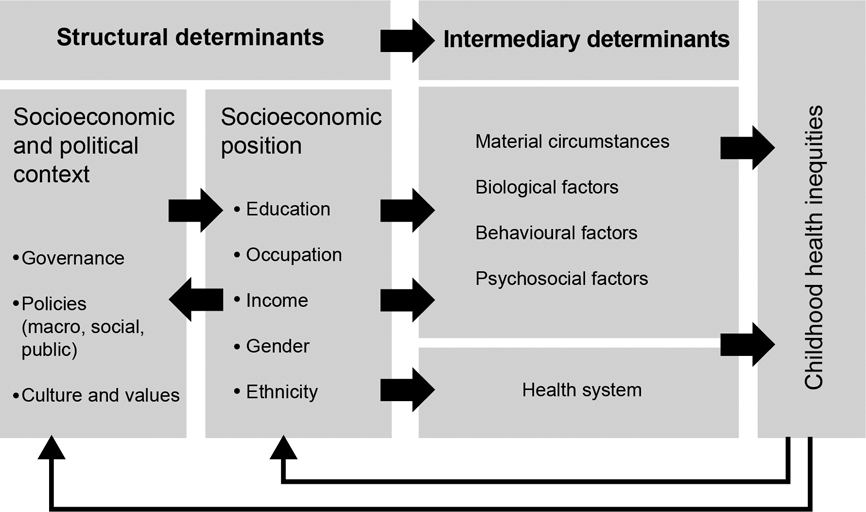
The framework of the Commission on Social Determinants of Health (CSDH) distinguishes between two kinds of health inequity determinants (Solar & Irwin, Reference Solar and Irwin2010). On the one hand, the framework includes those determinants that generate social stratification and determine individual socioeconomic position, and which are rooted in the socioeconomic and political context (structural determinants), and on the other hand those specific determinants of health status (intermediary determinants). The former operate indirectly on child health through their effect on the intermediary determinants (e.g. mother's education, household socioeconomic status), while the latter affect child health directly (e.g. nutritional habits, care before and during delivery, parent's behaviours).
Several studies have demonstrated the association between intermediary factors and child health (Wagstaff et al., Reference Wagstaff, Bustreo, Bryce and Claeson2004; Målqvist et al., Reference Målqvist, Hoa and Thomsen2012; Kim & Saada, Reference Kim and Saada2013). This study focuses on two categories of intermediary determinants: those linked directly to the health system and those intermediary determinants of child health related to the family's environment such as the behaviour of parents and parenting practices.
Although previous empirical research has investigated contextual effects on child health outcomes (mainly on mortality and nutrition) in developing countries (e.g. Sastry, Reference Sastry1996; Fotso & Kuate-Defo, Reference Fotso and Kuate-Defo2006; Linnemayr et al., Reference Linnemayr, Alderman and Ka2008; Luke & Xu, Reference Luke and Xu2011), few studies have considered the effect that structural determinants at the community level have on intermediary factors, especially on those factors linked to parenting style and child care that can influence child well-being. Some studies have included Colombia in comparative analyses of child health outcomes (Mcquestion, Reference Mcquestion2001; Larrea & Freire, Reference Larrea and Freire2002; Hatt & Waters, Reference Hatt and Waters2006), but previous studies on socioeconomic determinants of child health in the country are limited (Rosenzweig & Schultz, Reference Rosenzweig and Schultz1982; Flórez & Nupia, Reference Flórez and Nupia2001; Gaviria & Palau, Reference Gaviria and Palau2006; Tovar & García, Reference Tovar and García2007; Acosta, Reference Acosta2012; Attanasio et al., Reference Attanasio, Di Maro and Vera-Hernández2013). In fact, most of the previous work has covered the issue from the perspective of the individual, and little attention has been paid to the effect of the community context, thereby ignoring the multilevel nature of influences on health and, in some cases, the hierarchical structure of the data.
Colombia has made significant progress in child health in the last few decades and it is currently on track to meet the Millennium Development Goals (MDGs). Nearly 90% of the goals on global malnutrition, infant mortality rate and under-five mortality rate have been achieved. However, despite the progress, national averages mask huge territorial disparities. While some regions present figures similar to those of a developed country, others report indicators similar to those of a very poor African country. Some municipalities, for example, record no stunted children, whereas in others the prevalence of chronic malnutrition is greater than 50%. In this context, empirical research that enhances our understanding of the structural and the most immediate determinants of child health inequities, as well as the role played by the community socioeconomic context, and which contributes to designing, monitoring and tracking of public child care policies, is crucial in order to tackle territorial disparities in Colombia.
Osorio et al. (2012) determined that intermediary factors of child health can be represented in a global index, which in turn can be divided into independent components. The study provides evidence of the relationship between intermediary determinants of child health and place of residence in Colombia, finding a central–peripheral pattern. Considering the above results, this study contributes to filling the knowledge gap in the literature by exploring the association between structural determinants at the community level – such as community socioeconomic status and community education – and a composite index that quantitatively measures intermediary determinants of child health in Colombia. Furthermore, taking into account that community context can exert different influences on these intermediary factors, the index constructed is broken down into two sub-indices. While the first of these includes variables linked to the use of, and access to, the health system, the second groups together psychosocial and behavioural factors. The analysis proposed here, which focuses on composite indicators and communities below the regional and national levels, should enable not only the analysis of contextual disparities in key areas for child health in Colombia, but also lead to differential intervention strategies in order to reduce place-based health inequities (Coulton et al., Reference Coulton, Korbin and McDonell2009; Coulton & Fischer, Reference Coulton, Fischer, Kamerman, Phipps and Ben-Arieh2010).
Additionally, the use of multilevel statistical techniques to estimate contextual effects in health research is now widespread in the demographic literature (Rice & Jones, Reference Rice and Jones1997; Duncan et al., Reference Duncan, Jones and Moon1998; Diez Roux, Reference Diez Roux2000; Pickett & Pearl, Reference Pickett and Pearl2001). However, the majority of empirical studies use unweighted data even when the units present unequal selection probabilities. This failure to account for the design weights in multilevel models can lead to biased parameter estimates. In this study, the design weights and other complex survey design features (including clustering and stratification) are incorporated in the analysis, thereby minimizing biases.
In particular, this research focuses on answering the following questions: (i) What role do communities play in shaping intermediary determinants of child health? (ii) Do these roles vary when different categories of intermediary determinants are taken into account? (iii) Is there a significant variation in intermediary determinants of child health across communities? and (iv) What is the relative contribution of individual and family characteristics to intermediary determinants of child health?
Conceptual framework
To obtain a better understanding of the differences in health status, its determinants and consequences on health inequities, in 2005 the World Health Organization (WHO) set up the Commission on Social Determinants of Health (CSDH). The conceptual framework developed by the CSDH highlights the importance for policy-making of drawing a clear distinction between the social factors that influence health, on the one hand, and the social processes that determine the unequal distribution of health on the other, paying particular attention to the context and the structural mechanisms that generate or reinforce social stratification (Solar & Irwin, Reference Solar and Irwin2010).
The conceptual framework for childhood health inequities, adapted from the CSDH and shown in Fig. 1, includes two key components: structural and intermediary determinants. The framework shows how the causes of health inequities are rooted in the socioeconomic and political contexts, which give rise to a set of socioeconomic positions, whereby societies are stratified mainly according to income, education, occupation, gender and ethnicity. These socioeconomic positions in turn have an indirect effect on health status, operating through a set of specific intermediary determinants of health to shape health inequities (Solar & Irwin, Reference Solar and Irwin2010).
Conceptual framework of social determinants of child health.

The main intermediary determinants are: material circumstances, biological factors, behavioural factors, psychosocial factors and the health system. Material circumstances include living and working conditions and food availability in households; behavioural factors include differences in lifestyle, such as nutritional habits and physical activity; biological factors include genetic factors, as well as age and sex distribution; and psychosocial circumstances are linked to stressful events in the life course. Finally, the model includes the health system itself as a social determinant of health.
The intermediary determinants are the most immediate mechanisms via which socioeconomic position can influence child health inequities. Hence, their identification should contribute to the determination of intervention policies at this level, given the importance that these factors have in programmes aimed at enhancing maternal and child care.
Country context
Colombia comprises a capital district (Bogotá) and 32 departments, each of which is divided into municipalities. There are 1103 of these fundamental territorial entities of the political-administrative subdivision, each municipality having political, fiscal and administrative autonomy. With a Gross National Income (GNI) per capita of US$8711 (constant 2005 PPP US dollars) and a Gini index of 55.9, Colombia is an upper-middle income country, heterogeneous both in its geography and in the level of socioeconomic development of its departments and municipalities (UNDP, 2013). Approximately 34% of Colombians live in poverty and 11% in extreme poverty.
In the last few years reducing inequity among departments and care in early childhood have been two of the priorities of the Colombian Government. The regulatory interest is clearly wide-ranging: examples include the ratification of the Convention on the Rights of the Child (CRC) in 1991 and the Childhood and Adolescence Code – Act 1098 in 2006 and Act 1295 in 2009 – whose target is children under 6 years old and pregnant women from lower socioeconomic levels.
The targets derived from the MDGs are contained in the documents CONPES 091 of 2005 (Departamento Nacional de Planeación (DNP), 2005), CONPES 140 of 2011 (DNP, 2011a) and in the monitoring reports of the MDGs. The guidelines of Colombian child-oriented public policies are also reflected in the document CONPES 109, issued in 2007 (DNP, 2007), the National Plan on Children and Adolescence 2009–2019 (Ministerio de la Protección Social, 2009) and the current National Plan of Development 2010–2014 (DNP, 2011b). The guidelines for the use and distribution of resources for early childhood are gathered in CONPES Social 152 of 2012 (DNP, 2012).
The health care system in the country is based on a mixed regime: on one hand, provided by the state by means of an affiliation system that depends on the individual's socioeconomic status (subsidized regime), and on the other hand a private regime associated with the labour relationship for workers from the public and private sectors and for those retired or considered to be independent (contributory regime). Childhood health policies are unfocused and related to the parent's affiliation to one of the regimes. Likewise, there are centred policies that depend on institutions such as the ‘Instituto Colombiano de Bienestar Familiar’ (ICBF), through a community nursery programme called ‘Hogares Comunitarios de Bienestar’ (HCB) or the ‘Departamento para la Prosperidad Social’ by means of a conditional cash transfer programme called ‘Familias en Acción’. The most recent strategy designed by the Colombian Government is titled ‘De cero a siempre’. This strategy aims to co-ordinate both public and private institutions at the national and territorial level in order to promote the development of all Colombian children (0–6 years old), according to their age, context and living conditions.
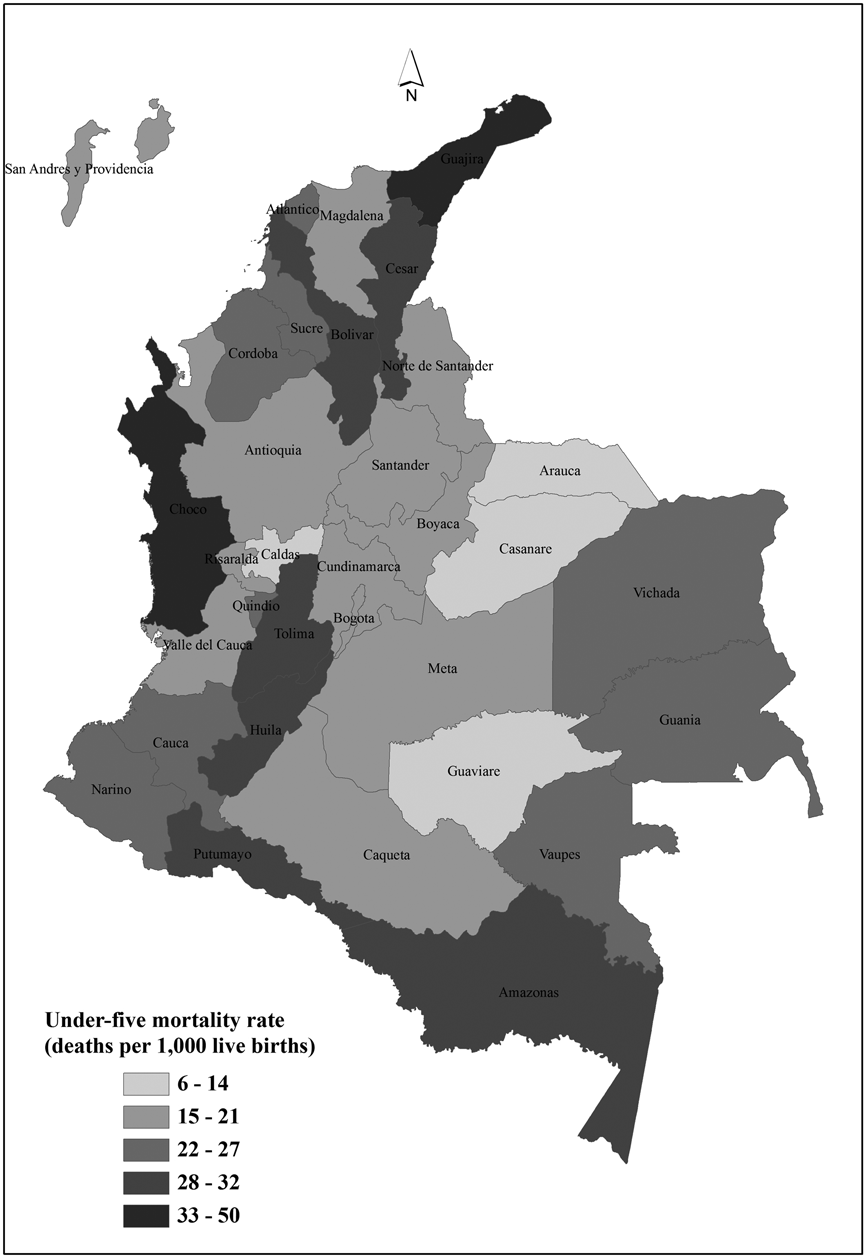
Colombia has made progress in child health indicators in the last decade. The under-five mortality rate (U5MR) has fallen from 24 in 2000 to 18 deaths per 1000 live births in 2011; births attended by a doctor have increased by 15% to 96% and immunization coverage rates have reached 85%. However, if the indicators within the country are analysed, the large disparities among regions are those that pose the real challenge. For instance, by department, the U5MR in 2010 ranged from 6 (Casanare) to 50 (La Guajira) (see Fig. 2).
Under-five mortality rate (U5MR) by Colombian departments (2010).
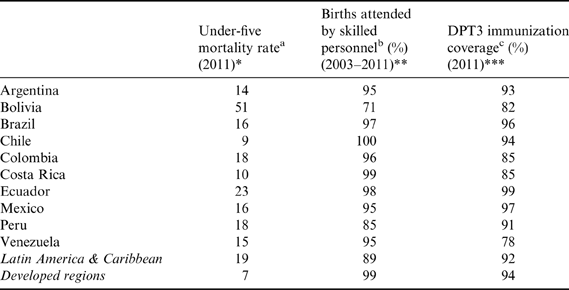
Table 1 shows child health indicators by selected Latin American and Caribbean (LAC) countries. Despite the advances of the last decade in child health in Colombia, the country still presents indicators below those of other regions in the world. In terms of the U5MR, for instance, Colombia falls short of the indicators of other LAC countries like Chile and countries of the developed regions, although, in relative terms, it is better than Bolivia and at a similar level to that of Peru. Colombia, with 96% of the deliveries attended by skilled health personnel, is 7 percentage points above the average of Latin America or the Caribbean; however, for vaccination coverage (85%), the country is below the region's average (92%) and still far from those of countries such as Ecuador, Mexico and Brazil, where the rates exceed 96%.
Child health indicators in selected Latin American and Caribbean (LAC) countries
a Probability of dying (per 1000) under age five years.
b Percentage of births attended by skilled health personnel (doctor, nurse or midwife).
c Percentage of children receiving three doses of DTP (diphtheria, pertussis and tetanus) vaccine.
Methods
Data
The data used in this analysis were drawn from the Colombian Demographic and Health Survey (DHS) conducted in 2010. Carried out every five years since 1990, the survey is nationally representative and covers the urban and rural areas of six regions, sixteen sub-regions and 33 departments (including Bogotá). The DHS sample was obtained by a stratified, multistage, cluster sampling design. The sample included around 51,000 households located in both urban and rural areas of 258 municipalities. Within municipalities, households with geographical proximity were grouped together to form clusters (primary sampling units) with an average of thirteen households. These sampling clusters were used as a proxy for community in this study.
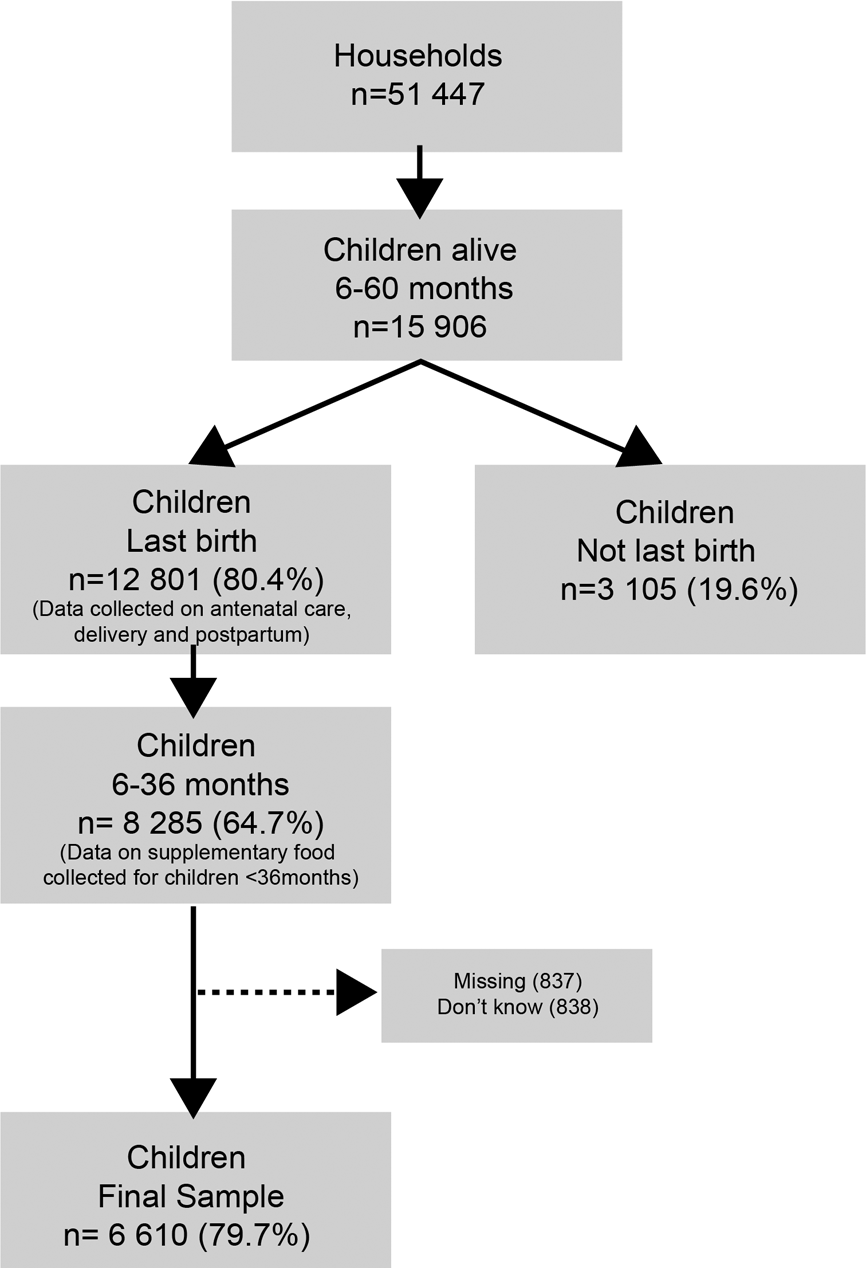
The sample selection process is shown in Fig. 3. The sample included a total of 15,906 children aged between 6 and 60 months who were alive at the time of the interview. Data on antenatal care, delivery conditions and postpartum were collected only for the last child born alive (n=12,801). In addition, data on supplementary food were collected only for children under 36 months of age, which reduced the sample to 8285 children. Finally, for all variables included in the study, responses of ‘don't know’ and ‘missing’ values were excluded without finding any significant differences between these cases and those included in the final sample. Thus, the final sample comprised 6610 living children aged between 6 and 36 months.
Flow chart for sample selection.
Dependent variables: intermediary determinants of early childhood health indices
The dependent variables consist of different composite indicators of intermediary determinants of early childhood health. Composite indicators have been proven to be efficient tools for analysing and formulating public policies, as well as for bench-marking country performances (Saltelli, Reference Saltelli2007). They are useful tools for simplifying complex or multidimensional phenomena and make it easier to measure, visualize, monitor and compare the trends of several distinct indicators over time and/or across geographic regions.
Given the discrete nature of the data, principal component analysis (PCA) using polychoric correlations (Olsson, Reference Olsson1979; Olsson et al., Reference Olsson, Drasgow and Dorans1982; Osorio et al., Reference Osorio, Bolance and Alcañiz2013) was employed in indices construction. The study uses polychoric PCA as opposed to the strategy proposed by Filmer & Pritchett (Reference Filmer and Pritchett2001), which breaks down the categorical variables into a set of dummy variables. The Filmer–Pritchett procedure does not perform well with ordinal data and the proportion of explained variance estimated by this method is underestimated (Kolenikov & Angeles, Reference Kolenikov and Angeles2009).
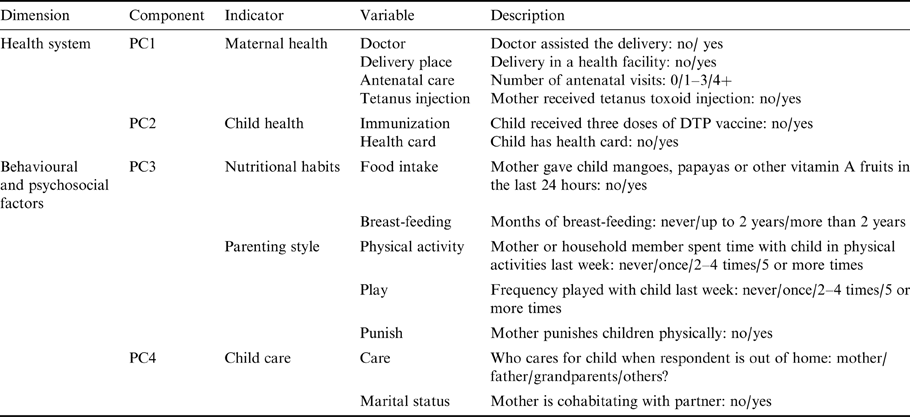
Based on Kaiser's criterion (Kaiser, Reference Kaiser1960), four principal components (PC1, PC2, PC3 and PC4) were selected. These four PCs represent variables related to maternal health (PC1), child immunization and access to the health system (PC2), nutritional habits and parenting style (PC3) and child care (PC4). An overall index was estimated using a weighted average of the components retained, taking into account the proportion of explained variance by each dimension. The dimensions, indicators and variables represented by each component are presented in Table 2.
Variables and dimensions represented in the intermediary determinants of early childhood health index
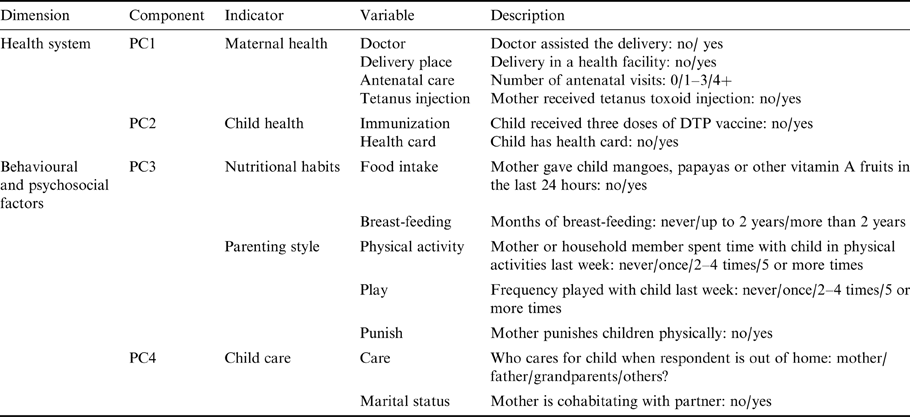
Additionally, in order to examine the influences that communities may have on different dimensions of the intermediary determinants, two sub-indices were used as dependent variables. The health system dimension is represented by aggregating PC1 and PC2, while PC3 and PC4 are combined into one sub-index representing the dimension of the behavioural and psychosocial factors. In order to simplify the interpretation of the results and without affecting their significance, the three indices were re-scaled to range from 0 to 1, where 1 represents the best health conditions of intermediary determinants and 0 the worst circumstances.
Independent variables
As background controls, child-specific variables (age, age squared, sex, birth order and the interval of preceding birth and the fraction of the child's life spent in a community nursery), mother's characteristics (age at first birth and mother's autonomy) and household composition (number of children under the age of five) were considered in the models. Mother's autonomy was represented by a composite indicator based on women's decisions on their own health care, large and daily household purchases, visits to family or relatives, food to be cooked, money husband earns, studying and having sexual intercourse.
Family socioeconomic characteristics included the mother's education and occupation, the father's education and the household's socioeconomic status (SES). The SES index was constructed based on the ownership of consumer durable goods (radio, TV, fridge, motorcycle and car/truck) and quality of housing (source of drinking water, type of toilet facility, floor and wall material and electricity). All of the composite indicators were computed using polychoric PCA.
Given the importance that communities have on this study, specific characteristics of the community socioeconomic context that might influence intermediary determinants of child health were tested. Community-level variables were calculated as averages or proportions by aggregating individual-level data and using information from the total of mothers included in the full sample, that is 53,521 women nested in 3983 communities, with an average of 13.4 women per community. Then, the community variables were added to the sub-sample analysed in this study.
In addition, in order to avoid an overlap of the measures between the two levels studied (family and community), the community-level variables were derived from non-self means or proportions. Non-self means is a method that assigns each woman a value representing the average of all the other women in her community, and therefore does not include her own value. Thus, the community variables would be representing the community's context or the nearest geographical context to the children and their families and not just the characteristics of the families included in the final sample considered in this study. Therefore, when including the data of all the women included in the survey, these averages or proportions are not a biased result and are measuring different characteristics to those of their families, which can provide additional information to the analysis of contextual effects.
Community maternal education was measured by the mean number of years of the mother's education in the community. The community's socioeconomic status was constructed as the mean level of the socioeconomic status index in the community. Community maternal employment was defined as the proportion of women currently working in the community. The influence of community child care programmes was assessed through the children's exposure to the community nursery programme (Hogares Comunitarios de Bienestar, HCB). This is one of the main government initiatives in Colombia in favour of early childhood. Each HCB benefits approximately 12–14 pre-school children, who receive care from one of the mothers in the community. Currently, there are nearly 80,000 HCBs in the country and about one million children from the poorest households participating in the programme (Attanasio et al., Reference Attanasio, Di Maro and Vera-Hernández2013). Finally, whether community is urban or rural was included.
Statistical analysis: multilevel models
The role played by communities on intermediary determinants of child health was examined using multilevel models. These models were used to take into account the hierarchical structure of the data and to explore variations between and within communities. When using hierarchical data, such as DHS data, individuals from the same cluster tend to be more similar to each other than individuals from different groups. Consequently, the assumption of independence of observations, on which standard statistical tests are based, is violated. Thus, if clustering is not considered, standard errors will be underestimated, confidence intervals will be too narrow and p-values will be too small, giving rise to spurious significances (Steele, Reference Steele2008).
Multilevel models are not only used to obtain statistically efficient estimations of the regression coefficients, but to analyse variables at different levels simultaneously (Hox, Reference Hox2002). That is, they are able to investigate the extent to which differences in intermediary determinants of child health are accounted for by contextual characteristics, such as the level of socioeconomic development of the community. Furthermore, estimating the variance at each level allows differentiation between the variation in child health that is due to differences at the community level and those that are the result of differences in family characteristics.
In this study, given that the number of children per mother and mothers per household is very small, children, mothers and households were considered as part of the same level, labelled ‘family’. Thus, two-level regression models were fitted with 6610 families at level 1, nested within 3023 communities at level 2. What it meant was an average of 2.2 families per community, with a minimum of 2 families in each community. Given the small number of families per community, it is important to point out the study of Theall et al. (Reference Theall, Scribner, Broyles and Yu2011) who, using a simulated analysis of real data, found that when the number of groups is large, neither fixed nor random effects of estimate parameters are affected by a small group size. Similar findings were reported by Mass & Hox (Reference Maas and Hox2005), who concluded that a large number of groups appear to be more important for unbiased estimates in multilevel analyses than a large number of individuals per group.
The study models had the following general specification:
 $$y_{ij} = \beta_0 + \sum^p_{k=1} \beta_kX_{kij} + \sum^q_{l=1} \beta_l Z_{lj} + (u_j + e_{ij}), i = 1 , \ldots , 6610, j = 1, \ldots 3023$$
, where yij is the score of the intermediary determinants of the early childhood health index for the ith child in the jth community; β 0 is the intercept parameter; Xkij, k=1, … p are the family-level covariates; Zlj, z=1, … q, are the community-level covariates; and eij and uj and are random errors at the family and community levels, respectively. These random errors are assumed to follow a normal distribution with mean zero and variances σ2e and σ2u.
Sample design: weighting and scaling in multilevel modelling
Like most of the samples from the DHS, the sample design of the Colombian DHS incorporates sampling weights in order to reduce the estimation bias due to unequal selection probabilities. However, as many authors have argued, the use of sampling weights in the context of multilevel models is not straightforward and should be treated with caution (Pfeffermann et al., Reference Pfeffermann, Skinner, Holmes and Goldstein1998; Asparouhov, Reference Asparouhov2004; Rabe-Hesketh & Skrondal, Reference Rabe-Hesketh and Skrondal2006). Multilevel models that incorporate sampling weights use pseudo-maximum likelihood estimation where weights enter into the function at different levels of the hierarchy. Hence, the sole inclusion of level-1 weights is insufficient. Moreover, in order for design weights to be properly incorporated, they must also be scaled (Carle, Reference Carle2009).
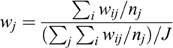
Despite this, weights and scale can be incorporated into the model with Stata 12 through the estimation command ‘xtmixed’. The Colombian DHS sample includes only an overall weighting variable for individual-level observations. Following Goldstein (Reference Goldstein1999), level-2 weights (wj) can be calculated from the individual-level weights (wjj) as:
 $$w_j = {\sum_i w_{ij} / n_j \over (\sum_j \sum_i w_{ij} / n_j) / J}$$
, where J is the total number of clusters. Given that the clusters' size is small, the ‘effective’ method is used for standardizing weights so that the level-1 weights sum to the effective cluster size (Carle, Reference Carle2009).
Results
Descriptive analysis
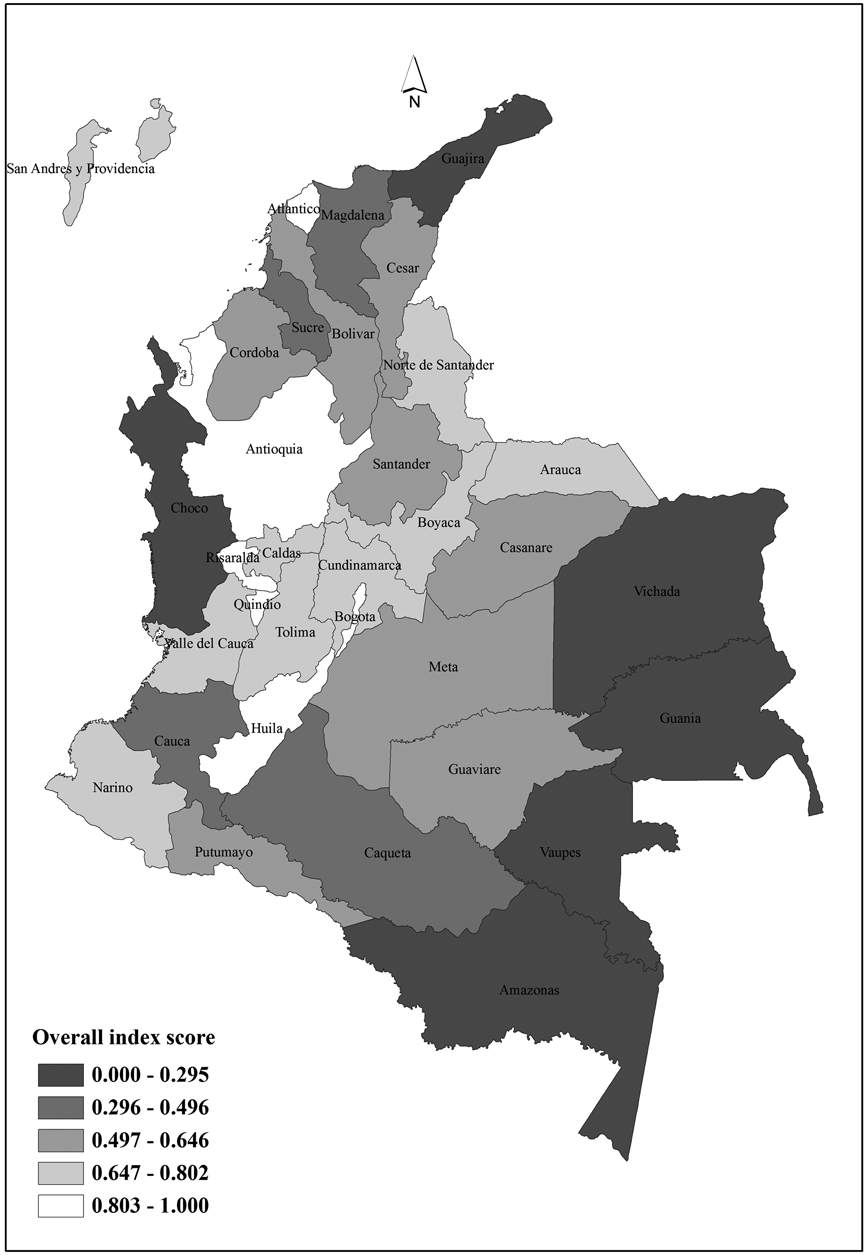
Figure 4 illustrates the overall index of intermediary determinants of early childhood health by Colombian departments. The map shows that the departments that perform best in relation to most of the specific determinants of early childhood health are located in the centre of the country. In contrast, the departments that perform worst are located in the peripheral region. The overall index shows evidence of a socioeconomic gradient in intermediary determinants of child health, i.e. the better the education and socioeconomic status, the higher the index score. For instance, the overall index is 30% higher among children born to parents with higher education than among those born to uneducated parents.
Intermediary determinants of early childhood health index by Colombian Departments.
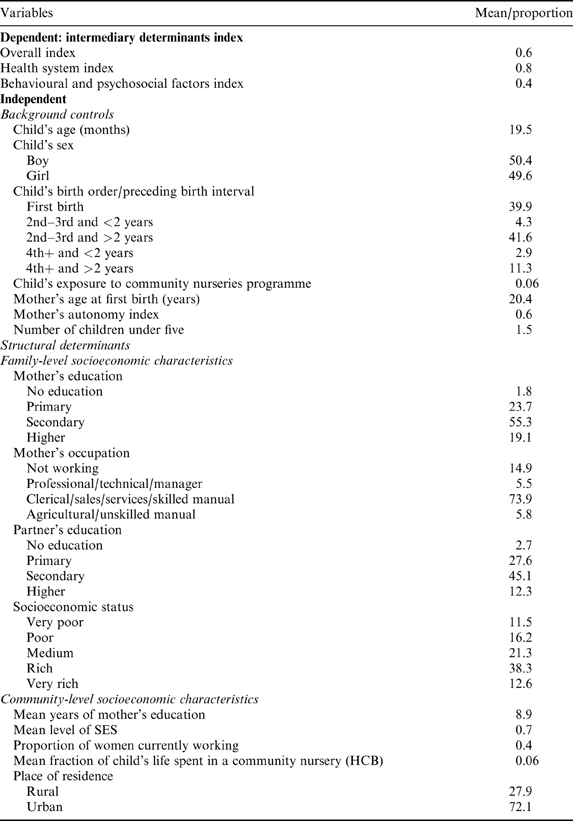
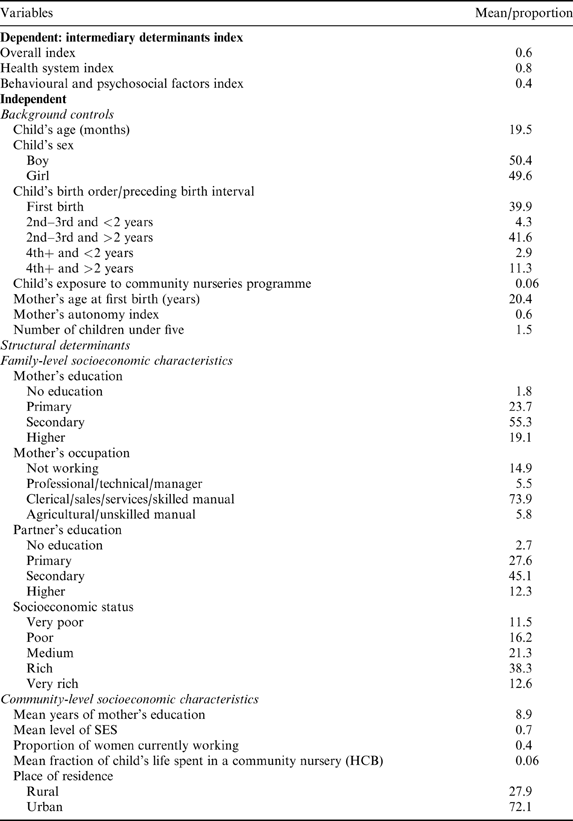
The sample characteristics are shown in Table 3. All descriptive statistics are weighted by sampling weights. The average age of children included in the sample is 20 months. They are almost evenly distributed between boys and girls. About 40% of the children do not have siblings and have been exposed for 6% of their lives to a community nursery. In terms of the family's socioeconomic characteristics, most children were born to mothers and fathers with secondary education and to mothers employed mainly in activities that require skilled labour. Furthermore, while about 28% of the children live in poor or very poor households, about 12% live in the richest households. The majority of children (72%) reside in urban areas.
Sample characteristics, Colombian DHS 2010 (N=6610)
Multilevel analysis
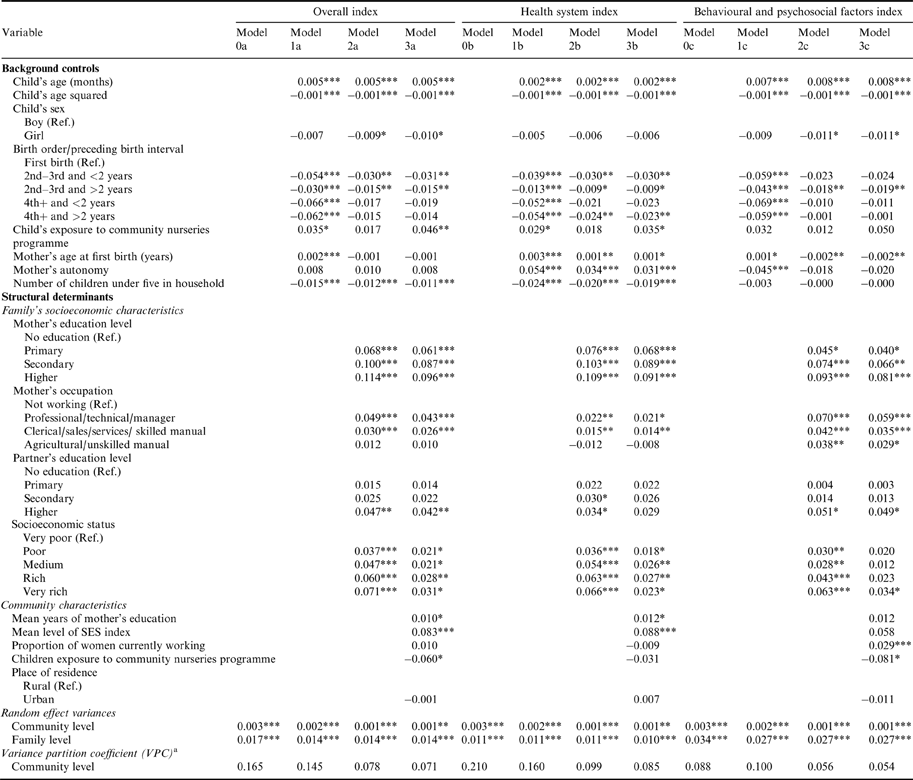
Table 4 shows the results of multilevel models for the overall index and the two sub-indices. Note that all indicators range from 0 to 1 and are interpreted positively; therefore, a positive regression coefficient can be interpreted as increasing the index score and, therefore, as better child well-being.
Weighted multilevel models for intermediary determinants of early childhood health indices (N=6610)
a Measures the proportion of total variance that is due to differences between communities.
*p<0.05; **p<0.01; ***p<0.001.
In order to explore the extent to which the between-community variation changes when individual, family and community characteristics are added, four sequential models were fitted. Model 0 (null model) included no explanatory variables; Model 1 incorporated background controls; Model 2 included the family's socioeconomic characteristics; and, finally, Model 3 accounted for community characteristics.
The overall index
When the overall index was controlled for by background controls (Model 1a), the findings showed that except for the child's sex and the mother's autonomy index, all coefficients were statistically significant. However, when the family's socioeconomic characteristics were added (Model 2a) the effect of higher birth orders (4th+), the child's exposure to the community nursery programme and the association with mother's age disappeared.
As expected, the mother's education and the household's socioeconomic status were strongly associated with intermediary determinants of child health. The mothers working in skilled sectors positively influenced the overall index performance compared with those who did not work. As for the partner's education, the coefficient for higher educational level was found to be statistically significant.
Finally, when controlling for community characteristics (Model 3a), few changes were observed in the background and socioeconomic variables. The most notable change was observed in the significance and magnitude of the wealth quintile coefficients. Generally, the significance of these was weaker and the effect was reduced by almost half. The community characteristics showed that children living in communities with higher levels of education and socioeconomic status have a higher index. In contrast, children living in communities with greater exposure to the community nursery programme present a lower score on the overall index.
The health system index
The results of the models for the health system dimension indicated that when background controls are considered (Model 1b), only the coefficient for the child's sex was not statistically significant. In contrast to the models of the overall index, the coefficient for the mother's autonomy was statistically significant in the case of the health system index.
With the introduction of the family's socioeconomic characteristics in Model 2b, the effects of background controls remained almost unaltered. The mother's education and occupation and the household's socioeconomic status (SES) were found to be strongly associated with the health system index. However, when the community's characteristics were included (Model 3b), the effect of the household wealth was not so great. In relation to the community variables, only the mean years of maternal education in the community and the mean level of SES were found to be associated with the health system index.
The behavioural and psychosocial factors index
In Model 1c the child's sex, the child's exposure to community nurseries and the number of children under the age of five in the household were not associated with the behavioural and psychosocial factors index. Nevertheless, when the family's socioeconomic characteristics were included in Model 2c, the sex of the child reached statistical significance. As in the other indices, the mother's education, the mother's occupation and the household's SES were associated with the behavioural and psychosocial dimensions. Finally, in Model 3c with the inclusion of the community characteristics, the effect of the household wealth practically disappeared. The community variables that were associated with the index were the proportion of women currently working in the community and the child's exposure to the HCB programme.
Comparing the health system and behavioural and psychosocial factor dimensions
Comparing Models 3b and 3c, the results indicated that the child's sex was only associated with the behavioural and psychosocial factors index. Girls performed worse than boys on the indicators of behavioural and psychosocial factors. On the other hand, the child's exposure to the HCB programme was only positively associated with the health system index.
In general, the child's age presented a curvilinear association with the intermediary determinants of child health. However, the effect was observed to be very small. There was a significant association between the mother's age at first birth and the two sub-indices. This showed that the older the mother, the better the performance of the intermediary factors related to the health system, but the worse the performance of the indicator of the psychosocial and behavioural factors. The mother's autonomy and the number of children under the age of five in the household, on the other hand, were only associated with the health system dimension.
In the case of the family's socioeconomic characteristics, the mother's education and occupation were significantly associated with the two sub-indices. However, in Model 3c the occupation effect was stronger and the educational effect was weaker than they were in Model 3b. In addition, the results suggest that the household's socioeconomic status is more closely associated with the health system than it is with the index of behavioural and psychosocial factors.
Regarding the community characteristics, the community maternal education and the community's SES were positively associated with the health system index. In the case of the index of behavioural and psychosocial factors, the results showed that while women's employment was positively associated with the index, the community's exposure to the HCB child care programme was negatively associated with the indicator. No significant differences by place of residence were observed.
Community effects
The last three rows in Table 4 present the variances (random effects) at the community and family levels, as well as the variance partition coefficient (VPC). The VPC identifies the proportion of total variance that is due to differences between communities. All estimated coefficients for the community-level variances were significant, indicating that there is some variance in the intermediary determinants of child health that can be attributed to the unobserved heterogeneity at the community level. A VPC at or above 2% is suggestive of a potential higher level effect and is worth examining in a multilevel framework (Theall et al., Reference Theall, Scribner, Broyles and Yu2011). In this study, the VPC for the overall index shows that 17% of the variability in this index is explained by community characteristics; however, when the health system dimension is taken into account, this variability rises to 21%. In the case of the behavioural and psychosocial dimension, the variability due to community characteristics is almost half that of the health system model.
When background controls are added to the models, the variability in the intermediary determinants attributable to between-community differences is reduced to approximately 15% in Models 1a and 1b. In contrast, in Model 1c this variability rises from 9% to 10%. In comparison to Models 1, when the family's socioeconomic variables are included (Models 2), the VPC is reduced by 45% in the models for the overall and behavioural and psychosocial factors indices, and by 38% for the health system index.
Finally, when the community characteristics are included (Models 3), the greatest reduction (down to 9%) in the VPC is observed in the health system index (14% change in the variance compared with that recorded in Model 2b). For the overall index, the variance is reduced by 9%, while for the index of the behavioural and psychosocial factors, the community effect remains almost constant. It seems that the community context matters more for intermediary determinants linked to the health system than those related to parenting style.
Discussion
This study explores individual-, family- and community-level characteristics associated with a composite index that quantitatively measures intermediary determinants of early childhood health. This is the first study that has attempted to operationalize the framework developed by the CSDH and it seeks to disentangle the pathways through which the family and the community's socioeconomic context influence more downstream determinants of child health in Colombia. Intermediary determinants are the more immediate mechanisms through which socioeconomic position impacts on child health inequities and, as such, their identification should serve to determine intervention policies at this level. Such intermediary factors encompass different dimensions, ranging from biological characteristics to the physical and psychosocial environment in which the child lives. Furthermore, the health system in its own right constitutes a significant determinant of child health inequities (Solar & Irwin, Reference Solar and Irwin2010).
In contrast to earlier studies, which have tended to focus largely on individual intermediary indicators, this study seeks to compile into a single composite index different dimensions of intermediary determinants of child health outcomes. Thus, looking beyond the intermediary factors of child health usually studied in the literature, including the use of maternal health facilities (Magadi et al., Reference Magadi, Madise and Rodrigues2000; Stephenson et al., Reference Stephenson, Baschieri, Clements and Hennink2006; Johnson et al., Reference Johnson, Padmadas and Brown2009; Ahmed et al., Reference Ahmed, Creanga, Gillespie and Tsui2010; Sagna & Sunil, Reference Sagna and Sunil2012), this study contributes to the literature by examining psychosocial and behavioural factors associated with child health. This approach based on the construction of a composite indicator can contribute to a better understanding and visualization of the differences in intermediary determinants of child health, to the extent that it should facilitate an overall perspective of the phenomenon while exploring its various dimensions. In doing so, this study has fitted weighted multilevel models for an overall index of intermediary determinants of child health and for the dimensions represented by two sub-indices: that of the health system and that of the behavioural and psychosocial factors.
The results demonstrate that intermediary factors of child health in Colombia are associated with individual characteristics as well as with family and community characteristics. The variables positively associated with the overall index include the child's exposure to the community nursery programme, the mother's education, the mother's occupation as a professional/technical/manager and/or in clerical/sales/services/skilled manual activities, a partner with a higher educational level, a household in higher economic quintiles and a community with higher levels of maternal education and higher mean levels of SES. In general, the results suggest that regardless of the dimension taken into account, the family's socioeconomic position, measured as the educational level of the mother and her partner, the mother's occupation and the household's SES, have a fundamental role in the mediation of child health outcomes.
The main purpose of this study was to determine the impact of the community context on different intermediary factors and the results are revealing in this respect. The effect of a household's SES is attenuated when community characteristics are added, indicating the importance that the level of community development may have in mediating individual and family characteristics. Similar results have been found in previous studies that examined the role of the community's SES (Fotso & Kuate-Defo, Reference Fotso and Kuate-Defo2005, Reference Fotso and Kuate-Defo2006). This result suggests that the physical and socioeconomic environment, and the facilities available in the residential communities, can substantially influence early childhood development (Irwin et al., Reference Irwin, Siddiqi and Clyde2007). Children from households with low SES, living in mixed communities in terms of socioeconomic conditions, generally present better levels of development than children from low-SES households who reside in poor communities (Kohen et al., Reference Kohen, Brooks-Gunn, Leventhal and Hertzman2002).
In the case of the health system indicator, the findings show that, in addition to the influence of socioeconomic characteristics, the mother's autonomy, measured in terms of her decisions regarding her own health, purchases, visits to family, cooking, studying and having sexual intercourse, has a positive effect on factors linked to child and maternal health care. These results are consistent with findings elsewhere examining the use of maternal health facilities (Stephenson et al., Reference Stephenson, Baschieri, Clements and Hennink2006; Ahmed et al., Reference Ahmed, Creanga, Gillespie and Tsui2010) and underline the importance of women's empowerment within the household, allowing them to have greater decision-making powers regarding both their own health and that of their children.
The positive association between the variables linked to maternal–child care and maternal education has been examined in previous studies (Elo, Reference Elo1992; Addai, Reference Addai2000; Sagna & Sunil, Reference Sagna and Sunil2012). The mother's education ensures better knowledge of, and enables greater access to, antenatal care, enhances woman's empowerment and is also associated with income level. However, the effect of the partner's education has been less widely explored in the literature. The results suggest that more educated partners can contribute to a better performance in the intermediary factors of child health, reflecting the direct or indirect influence that they might have on maternal and child care. Furthermore, the positive effect of community maternal education is consistent with the findings of other studies (Stephenson et al., Reference Stephenson, Baschieri, Clements and Hennink2006; Corsi et al., Reference Corsi, Chow, Lear, Rahman, Subramanian and Teo2011), suggesting that beyond the positive influence of the mother's education, there may be a positive externality in terms of community education that can help boost the performance of the intermediary factors of child health.
In terms of the index of behavioural and psychosocial factors, the results stress the importance of the mother's occupational role. While it is clear that parental education affects the style of parenting, some aspects of education are mediated by the type of occupation. Menagahan & Parcel (Reference Menagahan and Parcel1995) found that the parents' working conditions are linked to child outcomes. In particular, mothers with jobs requiring more complex activities are capable of providing home environments that are cognitively, emotionally and physically more suitable for child development (Whitbeck et al., Reference Whitbeck, Simons, Conger and Wickrama1997).
In addition, the results show that the household's SES is not strongly associated with the dimension of behavioural and psychosocial factors. This may be due to the fact that wealth can positively influence parenting style, but once a certain threshold is reached, additional income does not produce significant changes in the parents' behaviours (Hoff et al., Reference Hoff, Laursen, Tardif and Bornstein2002). In fact, too much wealth might have a negative psychosocial effect, especially if children spend more time watching TV or playing video games than interacting with parents and other siblings.
On the other hand, it is perhaps not surprising to find the negative effect of community exposure to the HCB programme. This programme targets mainly the poorest households, and so it is likely that this result simply captures the impact of a community's socioeconomic level. Nevertheless, further work is required in order to evaluate the programme and its impact on psychosocial factors.
As for community effects, the results are consistent with those of previous studies analysing the impact of the context on child health (Griffiths et al., Reference Griffiths, Madise, Whitworth and Matthews2004; Uthman, Reference Uthman2009). Although variations in intermediary determinants between communities can be explained above all in terms of family characteristics, the results indicate significant variation in determinants linked to the health system, even after controlling for individual, family and community characteristics. These results would appear to reflect that whilst the community context can exert a greater influence on intermediary factors linked directly to health, in the case of psychosocial factors and parental behaviour, the family context can be more important. This highlights the importance of distinguishing between community and family intervention programmes. However, it is worth noting that there are other community characteristics that are not accounted for in this study, including socially accepted behaviours and practices within the community that might affect a child's environment, as well as the conditions of violence and safety. Additionally, community access barriers to health facilities and nurseries can be important intermediary factors of child health.
It is clear, therefore, that the environments responsible for promoting healthy conditions for child development extend from the immediate context, i.e. the family, to the socioeconomic context of the communities, municipalities and departments. As the indicator of intermediary determinants of early childhood health reflects, maternal access to reproductive health services is fundamental, followed by child immunization and access to the health system, and parenting practices and behaviour that can ensure appropriate environments for child development.
Limitations
There are obvious limitations in this study. First, it is impossible to compare the results of the index constructed with data provided by previous Colombian DHSs due to the fact that the latter did not include all the psychosocial factors assessed here. It would clearly be useful to replicate this analysis, perhaps with data from other Latin American countries, but similar DHSs conducted in the region do not contain all the variables introduced in this study. Secondly, the significant between-community variation, even after controlling for individual, family and community characteristics, highlights the need for further research on the pathways through which communities influence intermediary factors of child health.
Policy implications
This study reports relevant findings regarding the role played by communities in the improvement of child health and, moreover, it highlights the need for policies to target these communities. As the results indicate, community maternal education is a factor that contributes to a better performance of intermediary determinants of child health. Although the Colombian government has adopted strategies to promote early childhood care in the community, access to such programmes is still riddled with inequalities. In this context, we recommend the promotion of maternal education in the community, expanding the coverage of such programmes as the Educational Support Units (UPA), for example, via public–private partnerships. This is a programme targeting primarily urban children attending community nurseries (HCB), as well as their respective community mothers. The programme seeks to add an educational component to the care and nutritional services. Therefore, the priority must be to ensure that these programmes reach the most vulnerable mothers, i.e. those living in the peripheral regions of the country.
More educated mothers not only have access to better job opportunities, which in turn generate higher household incomes, but they also suffer lower stress levels and so should be able to provide a more appropriate home environment for child development. However, the potentially negative impact on psychosocial factors of having a greater proportion of women working in the community highlights the importance of child care centres in the community that promote psychosocial factors, as well as training programmes for parents that promote good parenting practices.
A suitable and relatively accessible channel for providing information and educating families in the community is the media. One strategy would be to provide information and training via a mix of television, radio and illustrated magazines (with a large number of images and little supporting text), discussing: (i) maternal health-seeking behaviour during pregnancy, child birth and postpartum; (ii) the rights and benefits of social security affiliation; (iii) the services and programmes of the ‘Instituto Colombiano de Bienestar Familiar’ (ICBF) available in the community; and (iv) the importance of healthier nutritional habits, physical exercise and playing for child development.
In conclusion, this study provides evidence that the community socioeconomic context is a key component of child health in Colombia. However, the role played by the intermediary factors in child health may vary according to the category analysed of these determinants. It is essential that municipal and departmental governments involve local communities in the development, execution, monitoring and evaluation of childhood care programmes. Finally, questions related to parenting practices and psychosocial factors should be included in future DHSs, as such information would be extremely helpful for conducting analyses of child well-being, and consequently for a better design of child care policies.
Acknowledgments
The authors acknowledge support from the Spanish Ministry of Science FEDER grants, ECO201021787-C03-01 and ECO2008-01223, as well as support to Ana María Osorio from the Agència de Gestiò d'Ajuts Universitaris i de Recerca (AGAUR) (grant ECO/1689/2011) to undertake PhD research at the University of Southampton. Ana María Osorio was also supported by the Pontificia Universidad Javeriana, Cali-Colombia.