Introduction
Sexual disinhibition is recognized as one of the behavioral and psychological symptoms of dementia (BPSD) (Bird and Moniz-Cook, Reference Bird, Moniz-Cook, Woods and Clare2008). It can be a difficult, distressing and embarrassing behavior for carers, families and medical practitioners to manage. Patients who exhibit difficult behaviors associated with dementia have increased carer burden (Coen et al., Reference Coen, Swanwick, O'Boyle and Coadkley1997) and increased likelihood of entering residential care (Steele et al., Reference Steele, Rovner, Chase and Folstein1990). Inappropriate sexual behaviors have been rated by caregivers as the most difficult symptom of BPSD to manage (Onishi et al., Reference Onishi2006).
Inappropriate sexual behaviors have been defined as behaviors that are “inappropriate, disruptive and distressing and that impair the care of the patient in a given environment” (Black et al., Reference Black, Muralee and Tampi2005). Several authors have developed classifications of inappropriate sexual behaviors.
Inappropriate sexual behaviors have been divided into three types (Szasz, Reference Szasz1983).
1. Sex talk: using foul language that is not in keeping with a patient's premorbid personality;
2. Sexual acts: touching, grabbing, exposing or masturbating in public or private places; and
3. Implied sexual acts: openly reading pornographic material or requesting unnecessary genital care.
A recent study (de Medeiros et al., Reference de Medeiros, Rosenberg, Baker and Onyike2008) divided improper sexual behaviors into two types:
1. Intimacy seeking: normal behaviors that are misplaced in social context (kissing, hugging);
2. Disinhibited: rude and intrusive behaviors that would be considered inappropriate in most contexts (lewdness, fondling, exhibitionism).
The prevalence of inappropriate sexual behaviors varies widely (1.8%–25%) depending on the setting, being generally more common in hospital inpatients and less common in community-dwelling people. Inappropriate sexual behaviors were reported in 25% of those in an extended care unit (Szasz, Reference Szasz1983) and in 15% of those admitted to a geropsychiatric unit (de Medeiros et al., Reference de Medeiros, Rosenberg, Baker and Onyike2008). A Japanese study (Onishi et al., Reference Onishi2006) reported inappropriate sexual behaviors in 2.2% of residents in group homes and 2.8% of residents in nursing homes. It has been reported that 7.9% of those in residential care had inappropriate sexual behaviors (de Medeiros et al., Reference de Medeiros, Rosenberg, Baker and Onyike2008). A study that included subjects from the community, an inpatient psychiatric unit and a dementia behavior unit found an overall prevalence of 1.8% (Alagiakrishnan et al., Reference Alagiakrishnan2005). A study of 178 outpatients with Alzheimer's disease (AD) found that 7% had symptoms of sexual disinhibition (Burns et al., Reference Burns, Jacoby and Levy1990).
Inappropriate sexual behaviors in the elderly can occur in those with dementia, but also in those with other conditions including Parkinson's disease, brain injuries and brain lesions such as stroke or brain tumors. In one series of 39 geriatric patients (Lothstein et al., Reference Lothstein, Fogg-Waberski and Reynolds1997), who were evaluated for inappropriate sexual behavior, only 17 had dementia or cognitive impairment. In addition, the presence of dementia or cognitive impairment was not found to predict the type of sexually disinhibited behavior. Another case series of eight patients in nursing care facilities with inappropriate sexual behaviors described only one with dementia, one with Parkinson's disease and six with brain infarcts (Nagaratnam and Gayagay, Reference Nagaratnam and Gayagay2002).
Sexually inappropriate behaviors can be seen in mild cognitive impairment to severe dementia (Alagiakrishnan et al., Reference Alagiakrishnan2005). Several studies (Tsai et al., Reference Tsai, Hwang, Yang, Liu and Lirng1999; Alagiakrishnan et al., Reference Alagiakrishnan2005) have found that vascular dementia is most commonly associated with inappropriate sexual behaviors. One study (Lothstein et al., Reference Lothstein, Fogg-Waberski and Reynolds1997) found there was no link between type of dementia and behavior type. However, another case control study (de Medeiros et al., Reference de Medeiros, Rosenberg, Baker and Onyike2008) found that AD was associated with intimacy-seeking behaviors whilst non-AD dementias were associated with disinhibited behaviors.
There are many ethical concerns around assessment and treatment of sexually inappropriate behaviors, especially in the residential care setting. These include balancing a resident's need for sexual expression against the expectations and beliefs of carers and family members, which may include a lack of understanding that elderly people have sexual needs. Treatment of sexual behaviors, particularly with hormonal medications, in vulnerable cognitively impaired people, remains ethically contentious. Further problems can arise when two cognitively impaired residents engage in sexual contact. In this case, the individual's ability to consent is critical for residential care staff to determine if a relationship should be continued. Key questions have been developed for use in making this assessment (Lichtenberg and Strzepek, Reference Lichtenberg and Strzepek1990).
Both pharmacological treatments and non-pharmacological treatments have been reported to be effective in the literature but the evidence is limited to case reports and case series. Environmental approaches, such as clothing modification and distraction techniques have also been suggested (Hashmi et al., Reference Hashmi, Krady, Qayum and Grossberg2000). There are no randomized controlled trials for any treatment of sexual disinhibition in dementia. Many different drug classes are described as being efficacious, including antipsychotics, antidepressants, anticholinesterases, anti-epileptics, hormonal and non-hormonal anti-androgens and beta-blockers.
The wide spectrum of reportedly effective pharmacological agents reflects the complex interplay between endocrine factors, neurotransmitters and the central nervous system areas involved in sexual desire, arousal and orgasm. A review of the neurobiology of sexual function (Meston and Frolich, Reference Meston and Frohlich2000) explains how multiple hormones and neutrotransmitters influence sexual function and the areas of the brain involved. Hormones include androgens, estrogens, progesterone, prolactin, oxytocin, cortisol and pheromones, whilst the neurotransmitters involved include nitric oxide, serotonin, dopamine, epinephrine, norepinephrine, opioids, acetylcholine, histamine and γ-aminobutyric acid (GABA). Multiple anatomical regions of the brain also contribute to sexual function, including the brainstem, hypothalamus and forebrain.
Methods
A search of the literature was performed with the assistance of the clinical librarian using the Cochrane and Psychinfo databases and the search terms “sexual disinhibition”, “hypersexuality”, “inappropriate sexual behavior” and “dementia” in titles published prior to April 2009. No Cochrane reviews exist in this area although a protocol has been submitted concentrating on hormonal anti-androgens. Relevant articles were also sought from citations. Only articles describing new onset sexual disinhibition in the setting of dementia were included. Articles describing people with paraphilias only or deviant sexual behavior in people without dementia were excluded.
Results
Non-pharmacological approaches
There is only one case of a non-pharmacological therapy being effective in managing inappropriate sexual behavior in dementia (Tune and Rosenbery, Reference Tune and Rosenbery2008). This was a 68-year-old man with possible AD or frontotemporal dementia in residential care with a Mini-mental State Examination (MMSE) score of 12. This man became agitated and inappropriately touched staff and female residents. He had been isolated from female residents and unsuccessfully trialed multiple antipsychotics. These medications were noted to “slow him down” but had little effect on the problematic behaviors. He was given a stuffed toy replica of the pink panther. He was noted to fondle the pink panther inappropriately but was less intrusive with staff and other residents. This is the only case of a non-pharmacological therapy being effective in managing inappropriate sexual behavior in dementia.
There are no studies specifically addressing non-pharmacological interventions for sexually inappropriate behavior. General strategies for problematic behaviors seen in dementia have been studied which include those with inappropriate sexual behavior. One study (Bird et al., Reference Bird, Llewellyn-Jones, Smithers and Korten2002) utilized an intervention team including a nurse and clinical psychologist with access to an old age psychiatrist and geriatrician. The control group received usual care. The intervention group received an individualized plan following extensive assessment. History was gathered about the patients and their behaviors from carers, family, medical staff and the patients themselves. The circumstances of the behavior was analyzed in detail, including the distress caused to the patient or others and a risk assessment of whether the patient or others were in any danger. In the intervention group of 44 patients, 77% of the interventions were psychosocial in nature with only 9% being pharmacological. A reduction of 44% was seen in difficult behaviors. In the control group of 22 patients, the majority of interventions were pharmacological with only 9% being psychosocial. The control group had twice as many psychotropic medication changes, twice as many drug side-effects, and almost 25% of them spent time in specialist inpatient units, compared with only one patient in the intervention group.
Antipsychotics
There are case reports detailing effectiveness of haloperidol, olanzapine, quetiapine and zuclopenthixol. There are no published case reports describing use of risperidone.
Haloperidol was used to treat a 90-year-old man who had a past history of urosepsis and overflow incontinence, urinary tract infections and urinary strictures requiring dilatation (Rosenthal et al., Reference Rosenthal, Berkman, Shapira, Gil and Abramovitz2003). This man had inserted multiple foreign bodies into his urethra including a lipstick and the metal cover of an eyeliner pencil, in addition to masturbating in public whilst hospitalized. He was diagnosed with AD and had an MMSE score of 15/30. Haloperidol was commenced and increased to 1.5 mg, which reduced the inappropriate sexual behavior markedly. After three months the haloperidol was ceased due to concerns regarding extrapyramidal side-effects but the behaviors returned. The behaviors markedly decreased after reintroduction of haloperidol.
Zuclopenthixol, a typical antipsychotic, has been reported to be effective in one case (Series and Degano, Reference Series and Degano2005). An 83-year-old man in nursing home care with dementia and a history of aggression was approaching other residents and making sexual suggestions. He was hospitalized as these behaviors could not be managed by simple behavioral measures. Chlorpromazine was initially commenced followed by the short-acting zuclopenthixol acetate 50 mg intramuscularly. The longer acting depot form zuclopenthixol decanoate 50 mg intramuscularly was then continued monthly. The sexual behaviors declined over two months but extrapyramidal side-effects were noted. The nursing home did not feel able to continue this medication on ethical grounds and the problematic behaviors returned. This man was readmitted to hospital soon after with a chest infection and died soon afterwards.
Olanzapine was used to treat a 70-year-old man who was using sexually explicit language, inappropriately touching his wife in public, and forcing his wife to have sexual intercourse three to four times per night (Dhikav et al., Reference Dhikav, Anand and Aggarwal2007). He also made sexual advances towards other females and made indecent remarks. He had AD with an MMSE score of 16/30. Olanzapine 5mg daily was commenced and the sexual disinhibition was reduced.
One case report (MacKnight and Rojas-Fernandez, Reference MacKnight and Rojas-Fernandez2000) details use of quetiapine in an 85-year-old man with a history of several years cognitive decline and an MMSE score of 18/30, a stroke, parkinsonism and postural hypotension. He was requesting sexual relations with his wife who declined his advances. He then would masturbate to the point of self injury. He had tried paroxetine and medroxyprogesterone without effect. Quetiapine 25 mg was commenced and the behavior ceased and did not recur in the two months of follow-up.
The second case report (Prakash et al., Reference Prakash, Pathak, Munda and Bagati2009) in which quetiapine was used describes a 61-year-old woman with dementia with Lewy bodies with frontal lobe and extrapyramidal signs experiencing visual hallucinations. Her MMSE score was 9/30. She expressed sexual wishes towards her daughter-in-law and was inappropriately touching her. She had been trialed on other medications including levodopa and olanzapine without any changes in behavior. Quetiapine was commenced at 12.5 mg and titrated up to 75 mg in 11 days. Memantine was added at the seven-day point. The sexually inappropriate behaviors had ceased at seven days and improvements were sustained at one-month follow-up.
Antidepressants
Case reports suggest effectiveness of tricyclic antidepressant clomipramine and some selective serotonin reuptake inhibitors (SSRIs), including paroxetine and citalopram, in treating sexually inappropriate behavior in dementia. It is thought the mechanism of effect is in treating the obsessional component of these behaviors, and SSRIs have been reported to be effective in paraphilias not related to dementia.
One case report describes effectiveness using paroxetine (Stewart and Shin, Reference Stewart and Shin1997). A 69-year-old man had dementia against a background of long-term heavy alcohol use. He experienced behaviors including exposing himself in public, masturbating and requests for sexual favors. He had been hospitalized five times and was moved into an all-male nursing facility. He had tried many medications including haloperidol, benzodiazepines, lithium and thioridazine and nortriptyline in high doses without any effect. Within a week of commencing paroxetine at 20 mg per day, staff at his facility reported a 95% reduction in problem behaviors.
There are two case reports describing use of citalopram. The first (Tosto et al., Reference Tosto, Talarico, Lenzi and Bruno2008) describes a 55-year-old man with AD and a history of depression who had symptoms of hypersexuality making demands on his wife several times per day. He was already on anticholinesterase treatment but his hypersexual behaviors were unchanged. He was commenced on citalopram 40 mg per day and at 60 days follow-up, his behaviors had markedly decreased. This beneficial effect was sustained to 12 months. The second case report (Mania et al., Reference Mania, Evcimen and Mathews2006) describes a 55-year-old man with bipolar disorder on lithium with cognitive decline in the setting of Parkinson's disease. When admitted to hospital, he was taking multiple psychoactive medications including clozapine, aripiprazole, ziprasidone and olanzapine. Clozapine was continued and the others ceased. Lithium was commenced. This had had no effect on his inappropriate sexual remarks and inappropriate touching; no response had been noted to estrogen in the past. He admitted to obsessional sexual thoughts and compulsions. These reduced significantly after the introduction of citalopram.
Successful use of clomipramine has been reported in two cases (Leo and Kim, Reference Leo and Kim1995). The first case describes a 65-year-old man with cognitive impairment without any prior psychiatric illness who had been arrested for indecent exposure to young girls five times. He commenced clomipramine which was titrated to a dose of 150 mg daily. The patient reported less desire to expose himself and collateral informants reported no further inappropriate behaviors. The second case is a 75-year-old man with dementia who was masturbating in public and inappropriately touching hospital staff. He had not responded to behavioral interventions or thioridazine and buspirone. After clomipramine was commenced his problem behaviors ceased.
Anticholinesterases
Rivastigmine is the only anticholinestase reported to be of benefit in treating inappropriate sexual behaviors. Conversely, donepezil is reported to have caused inappropriate sexual behaviors in two women. There are no reports of galantamine being useful in this setting.
Rivastigmine has been reported in one case (Alagiakrishnan et al., Reference Alagiakrishnan, Sclater and Robertson2003) for treatment of sexually inappropriate behavior in dementia. A 72-year-old woman with mixed AD and vascular dementia and an MMSE of 16/30 was requesting intercourse or oral sex multiple times per day causing considerable stress for her husband. She commenced rivastigmine 1.5 mg twice per day and after four weeks her husband reported some improvement. The dose was increased to 3 mg twice daily and the sexual aggressiveness and agitation had reduced further at eight weeks.
Donepezil was found to cause compulsive sexual thoughts in two patients (Chemali, Reference Chemali2003). The first patient was an 81-year-old woman with mixed AD and vascular dementia. She reported after one week that she had obsessive sexual thoughts and the urge to have sexual intercourse frequently throughout the day. A reduction in the dose of donepezil was unsuccessful in alleviating these thoughts and the drug was ceased. There was no further occurrence of these thoughts at six-month follow-up. The second patient was a 72-year-old lady with mild cognitive impairment of amnestic type, and a past history of depression on citalopram. She similarly described compulsive sexual thoughts one week after commencing donepezil at 5 mg per day dose. Ceasing citalopram made no difference but after donepezil was ceased her distressing thoughts disappeared. The authors comment that anticholinesterases may directly stimulate the genitourinary system via increased acetylcholine availability.
Anti-convulsants
Both carbamazepine and gabapentin have been found in case reports to be useful in treating inappropriate sexual behavior in dementia. No case reports exist for valproate or pregabalin.
There is only one case report of carbamazepine being successfully used to treat inappropriate sexual behavior in dementia (Freymann et al., Reference Freymann, Michael, Dodel and Jessen2005). A 78-year-old man with dementia is described as masturbating and repeatedly touching his wife sexually. He had been previously treated with donepezil, galantamine and pipamperone without effect. He had an MMSE of 11/30 and was diagnosed with AD. Galantamine and pipamperone were ceased with some improvement and carbamazepine was commenced 14 days later at a dose of 200 mg daily. Within three weeks the sexual behaviors remitted by 90% as judged by the patient's wife. Rivastigmine was then commenced and tolerated at 9 mg per day. At six months the behavior was still controlled and no adverse side-effects reported.
Gabapentin has been described as effective treatment for inappropriate sexual behavior in dementia in a total of five cases (Miller, Reference Miller2001; Alkhalil et al., Reference Alkhalil, Hahar, Alkhalil, Zovrox and Lowenthal2003; Reference Alkhalil, Tanvir, Alkhalil and Lowenthal2004). The first case describes a 76-year-old man with AD who exposed himself and masturbated in public places in his nursing home and inappropriately touched female visitors. When his symptoms did not respond to quetiapine, he was started on gabapentin at 100 mg three times daily and titrated up to 900 mg in total daily. The sexual behaviors disappeared for the duration of the six-month follow-up. Alkhalil et al. (Reference Alkhalil, Hahar, Alkhalil, Zovrox and Lowenthal2003; Reference Alkhalil, Tanvir, Alkhalil and Lowenthal2004) briefly describe a further three cases, two with AD and one with vascular dementia, who did not respond to non-pharmacological measures but who showed improvement on 1800–2700 mg per day of gabapentin. One had complete resolution of the symptoms and the other two had reduction in symptoms to a level that was no longer deemed a problem in the care facility. Miller (Reference Miller2001) describes a 62-year-old man with dementia and sexually inappropriate behavior who responded to gabapentin at a dose of 300 mg three times per day.
Beta-blockers
Pindolol is reported as an effective treatment in one case report (Jensen, Reference Jensen1989), which describes a 75-year-old man with AD admitted to hospital with sexually inappropriate behaviors including verbal comments, inappropriate touching and self-exposure. He had trialed haloperidol without success and hydroxyzine, an antihistamine, was also commenced without any behavior modification. Pindolol was commenced at a dose of 5 mg daily and increased to 20 mg daily. A reduction in inappropriate sexual behaviors was noted on the second day of treatment and had completely resolved at two weeks. Haloperidol was added also for hallucinations and the timing of this was unclear.
Anti-androgens
Hormonal and non-hormonal anti-androgens have been used to treat sexual disinhibition in dementia. There are case reports describing hormonal anti-androgens such as medroxyprogesterone, cyproterone acetate, leuprolide and estrogen.
Medroxyprogesterone acetate has been reported as effective in 11 case reports (Cooper, Reference Cooper1987; Weiner et al., Reference Weiner, Denke, Williams and Guzman1992; Amadeo, Reference Amadeo1996; Light and Holroyd, Reference Light and Holroyd2006). All 11 cases describe men. The age range was between 68 and 86 years for seven of these patients; four cases did not include ages. Diagnoses included three of AD, two of vascular dementia, one of mixed AD and vascular dementia and five cases of dementia without further sub-categorization. MMSE scores were available for only four patients and ranged between 0 to 24 out of 30. Doses of medroxyprogesterone ranged from 200 mg administered intramuscularly every second week to 500 mg intramuscularly once a week. The positive response was noted within two weeks in nine of the eleven cases and not specified in the remaining two cases. None of the eleven patients had any side-effects requiring cessation of the medication.
In one series of four case reports (Cooper, Reference Cooper1987), the medroxyprogesterone acetate was ceased after one year with problematic sexual behaviors returning in only one patient. In the largest case series of five patients (Light and Holroyd, Reference Light and Holroyd2006), two patients ceased medroxyprogesterone acetate when their medical status changed so that sexually inappropriate behaviors were no longer a problem. Two other patients had their medication ceased due to changes in state regulations in the U.S.A. concerning pharmacological restraint. The authors of these case series point out that controversy exists around use of anti-androgens which does not exist for other treatments such as antipsychotics, which are less specific and may actually have a higher rate of side-effects when used for the same indication.
There are two case reports where cyproterone acetate was used to treat inappropriate sexual behaviors in dementia (Haussermann et al., Reference Haussermann, Goeker, Beier and Schroeder2003). The patients included a 79-year-old man with dementia related to Parkinson's disease and a background of bipolar disorder and a 74-year-old man with vascular dementia who had also had a significant head injury resulting in both subdural and intracerebral hemorrhages following a motor vehicle accident. Both were on multiple psychoactive medications including antipsychotics, antidepressants and mood stabilisers. Cyproterone acetate was commenced at a dose of 10 mg daily in both cases and the behaviors disappeared within days. A further case report (Nadal and Allgulander, Reference Nadal and Allgulander1993) describes a 49-year-old woman with dementia who was masturbating continuously in public areas. She had previously had antidepressants and antipsychotics without effect. Cyproterone acetate was commenced at 50 mg daily and titrated to 100 mg daily at three weeks. One month later the inappropriate sexual behaviors ceased and at five months the drug was withdrawn without further reports of inappropriate sexual behavior
Diethylstilbestrol has been described as a useful treatment in one case (Kyomen et al., Reference Kyomen, Nobel and Wei1991) of a 92-year-old man with AD and a past history of prostate cancer who demonstrated physical aggression and inappropriate sexual behaviors at his nursing home. He was started on diethylstilbestrol at 1 mg per day and this was increased to 1 mg twice daily without side-effects or increasing his prostate-specific antigen level. His physical behaviors were markedly reduced but his verbal abuse and loud singing continued. Estrogen was also found to be effective in 38 of 39 men with inappropriate sexual behaviors (Lothstein et al., Reference Lothstein, Fogg-Waberski and Reynolds1997) but only 17 of these had dementia.
Leuprolide, a gonadotropin-releasing hormone agonist, has been used successfully to treat inappropriate sexual behaviors in a patient with dementia and the Kluver-Bucy syndrome (Ott, Reference Ott1995). Typical features of this uncommon syndrome include placidity, hyperorality, hyperphagia and aberrant sexual behavior. This 43-year-old man with frontal dementia had a range of problematic behaviors including verbal and physical aggression in addition to sexual disinhibition. He had trialed tricyclic antidepressants, propranolol and chlorpromazine, which had some improvement in other behaviors but no effect on sexual disinhibition. He was started on leuprolide 7.5 mg intramuscularly monthly. After the third month he displayed no problematic sexual behaviors. Chlorpromazine was then withdrawn.
Non-hormonal anti-androgens (cimetidine, spironolactone and ketoconazole) were used in a case series of 20 patients to treat sexually inappropriate behavior in dementia (Wiseman et al., Reference Wiseman, McAuley, Freidenberg and Freidenberg2000). This group included 17 men and three women with a mean age of 73 years. They all had dementia and all exhibited hypersexual behaviors defined as overt acts associated with increased libido which could have verbal or physical components. Carers completed a behavior chart prior to commencing anti-androgens, describing the behavior, whether it was problematic and if medication was given to treat the behavior. Carers were asked to express improvement as a percentage and give an approximate time from commencement of anti-androgen treatment. Cimetidine was initiated first and was titrated until a response was reported or a side-effect prevented further increases in dosage. If cimetidine was ineffective or not tolerated, spironolactone or ketoconazole was initiated. Some of these patients remained on antipsychotics and antidepressants whilst on anti-androgen treatment. The range of dosages for cimetidine were 600–1600 mg daily, ketoconazole 100–200 mg daily and spironolactone 7 mg daily. Fourteen of the 20 patients responded to cimetidine alone, the other six responded to combinations of cimetidine, ketoconazole and spironolactone. A positive response was defined as carers describing the behaviors as manageable after the introduction of anti-androgens. Response time ranged between one and eight weeks.
A suggested approach to assessment of patients with inappropriate sexual behavior
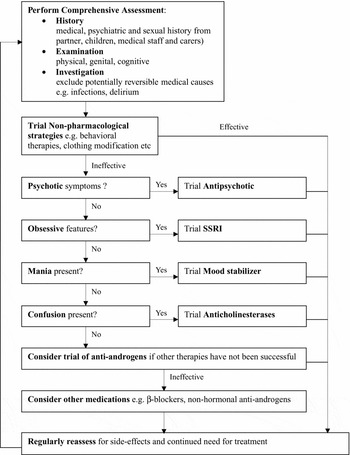
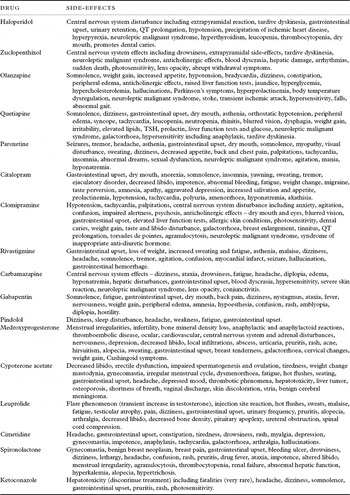
The approach to a patient with inappropriate sexual behavior in dementia requires a comprehensive assessment (Figure 1). A full medical history, including sexual history and collateral history from family members, should be taken (Srinivasan and Weinberg, Reference Srinivasan and Weinberg2006). Assessment should also focus on social history and prior relationships to put the problematic behavior in context. Medications reported to cause sexual disinhibition, such as benzodiazepines and levodopa, should be avoided (Bowers, Reference Bowers, van Woert and Davis1971). Examinations, including cognitive and neuropsychological assessments, are valuable for diagnosis of the underlying condition. Investigations can be useful in order to exclude other treatable causes of the behavior, including delirium, which may manifest as inappropriate sexual behavior. Brain imaging may reveal underlying brain lesions. It is also important to determine to whom the behavior is a problem and why, and whether the behavior is actually appropriate sexual expression or inappropriate sexual behavior. Following a comprehensive assessment, behavioral strategies tailored to the individual should be trialed prior to considering pharmacological interventions (Moak, Reference Moak2004). Side-effect profile may influence choice of pharmacological agent, and once treatment has commenced, regular assessment for side-effects should be undertaken (Table 1).
A suggested approach to managing inappropriate sexual behavior in dementia.

Drugs used for inappropriate sexual behaviour in dementia and their side-effects (MIMS Online)

Discussion
The management of inappropriate sexual behaviors in dementia can be very difficult. The evidence in the literature is limited to case studies, but many drug classes have been reported as effective in addition to non-pharmacological strategies. Most of the patients described in the case studies had trialed multiple medications before finding an effective agent. Many of the patients were on several psychoactive drugs at the same time, making it difficult to assess the contribution of each drug to the observed behavioral changes. Little attention has been given in the literature to non-pharmacological strategies, with only one case study reported. Case studies reporting effectiveness of a drug frequently mentioned that behavioral strategies had failed but, in general, these therapies were poorly described. More research in non-pharmacological approaches is required to avoid unnecessary use of medications which can have harmful side-effects.
There are no randomized placebo controlled trials to demonstrate that any of these medications are effective, and to what extent, in managing inappropriate sexual behaviors. There are also no trials comparing the effectiveness of different agents, so it is not known which agents are the most effective, or the response rates to treatment. There are differing opinions in the literature regarding first-line pharmacotherapies for inappropriate sexual behaviors. It has been suggested that choice of the initial agent may rely on other clinical features. The authors of one study (Ozkan et al., Reference Ozkan, Wilkins, Muralee and Tampi2008) suggest that anticholinesterases should be first-line therapy if confusion is present, antipsychotics for psychotic features, SSRIs for obsessive features, and mood stabilizers for mania. Some authors suggest that drugs including SSRIs, antipsychotics and mood stabilizers should be trialed prior to commencing hormonal anti-androgen therapy (Haddad and Benbow, Reference Haddad and Benbow1993; Levitsky and Owens, Reference Levitsky and Owens1999). Alternatively, others have recommended hormonal anti-androgens as first-line therapy (Cooper, Reference Cooper1987; Light and Holroyd, Reference Light and Holroyd2006). All of these approaches are based on expert opinion only and more research is needed to clarify the effectiveness of these medications.
This collection of case studies highlights that inappropriate sexual behaviors can be associated with a broad range of dementias and do occur in a diverse and complex group of patients. These patients frequently had additional psychiatric diagnoses or other conditions contributing to cognitive impairment; for example, subdural hemorrhage or longstanding alcohol abuse. The majority of these patients were men, although a small number of women were described. There appears to be an over-representation of younger men in their forties and fifties with dementia and inappropriate sexual behavior. These patients may have fewer comorbidities and better physical function than older patients, suggesting that inappropriate sexual behaviors may be more common or more difficult to manage in this group. It was interesting to note that anticholinesterases were reported to be both a useful treatment and a cause of compulsive sexual thoughts. More research is needed to clarify the role of anticholinesterases in the treatment of inappropriate sexual behaviors.
Conflict of interest
None.
Acknowledgments
I acknowledge the advice and support of my supervisors, Dr Eric Seal and Dr Tony Snell, and the assistance of Terry Harrison, Clinical Librarian, in the initial literature search.