Introduction
One of the best-known Holocaust stories is the life of Anne Frank. She was a Jewish refugee child who came to the Netherlands with her family from Germany shortly after Hitler took power. While her diary (Reference Frank, Frank and Pressler1991 [1947]) was saved, Anne Frank died in Bergen-Belsen in February 1945. Anne Frank and her family were some of the first Jews to escape Germany after January 1933. While many of them continued their journey to other countries, thousands were still living in the Netherlands when Nazi Germany invaded the country in May 1940. Among those Jewish refugees were unaccompanied children from Germany, Austria, and Poland who arrived after the Kristallnacht on November 9 and 10, 1938 in Germany and Austria. Most of these refugee children arrived in the Netherlands as a part of the so-called Kindertransport (Children’s Transport). Some came into the country through other channels, sometimes illegally. Little is known about their migration, settlement, and survival of the Holocaust. The aims of this study are twofold. First, we provide a detailed historical description of their arrival, settlement, and efforts to escape persecution based on the information collected on these refugee children. Second, we investigate whether different migration and settlement trajectories were associated with the risk of being deported to, and killed in, Nazi camps.
Tammes (Reference Tammes2007, Reference Tammes2017) found that German Jews living in the Netherlands during the Nazi occupation had a higher survival rate than native-born Jews. These studies also found that immigrant children had higher survival chances than native-born children. Given these findings, one might expect that survival rates among those Kindertransport refugee children were more favorable than those of adult immigrants or Dutch-born children. For this study, we collected life-history data covering the period 1941 to 1945, which enabled us to conduct a more detailed study on this immigrant group. These refugee children arrived without their parents and were placed in orphanages, refugee camps, or with foster parents; eventually some were reunited with their parents or relatives in the Netherlands. The living circumstances of some of those children might have reduced their opportunities to escape persecution, resulting in lower survival rates.
A mixed-method approach was used with the aim of providing a better understanding of the survival rates of refugee children. Our approach used a combination of qualitative and quantitative methods within a single study. The qualitative research gives us valuable insights by providing illustrative individual experiences of child refugees and facilitates the quantitative research by generating hypotheses for testing the impact of migration and settlement in the Netherlands on the risk of being deported and killed. To investigate the arrival, settlement, and survival of these refugee children we used various sources to collect relevant information on each child. Before we discuss the sources and method of analyses in more detail, we provide a historiography on the Jewish refugee children who came to the Netherlands.
Historiography
Because most of the archives of the Hilfsverein der Juden in Deutschland (Aid Organization of German Jews) in Berlin did not survive the war, it is not well known that European countries outside of Great Britain, such as the Netherlands, accepted Jewish refugee children from the Third Reich. While Moore (Reference Moore1986) published a detailed study on the impact of the arrival of refugees from Nazi Germany into the Netherlands in the 1930s, he did not explicitly focus on refugee children.
Whereas scholarly work on refugee children in the Netherlands is scarce, ego documents by surviving children have been published. After the early books by Jacov Lind (Heinz Landwirth) in 1969 and Frederic Zeller in Reference Zeller1989, it would take until 2002 for other ego documents to be published, such as Gerda Nothmann Luner’s story (Reference Nothmann Luner2002). These books, some of which are based on diaries, give insights into the memories and experiences of a wide variety of children. Furthermore, two key figures in the organization of support to the refugees in the Netherlands, Mrs. Truus Wijsmuller-Meijer (Reference Wijsmuller-Meijer1961) and Prof. David Cohen (Reference Cohen1955), wrote their memoires.
Whereas Berghuis (Reference Berghuis1990) published an overview of all governmental documents about the German refugees, some others wrote about the institutions where the refugee children were housed; the first one was published in 1987 about the Aliyah home in Loosdrecht (Brasz Reference Brasz1987). These books describe the stay of a certain group of children in a certain spot. Some books and articles have been written about the Jewish orphanages where some of the refugee children found shelter (e.g., Crone Reference Crone2005; Van Creveld Reference Creveld2004).
This study does not focus on particular individuals, subgroups, organizations, or institutions, but encompasses nearly all Kindertransport refugee children arriving in the Netherlands and follows them from their arrival onward. This allows us to provide a historical study of the migration trajectory and settlement of those refugee children in the Netherlands and to investigate the impact of migration and settlement trajectories on survival chances of refugee children.
Data Sources and Strategy of Data Analyses
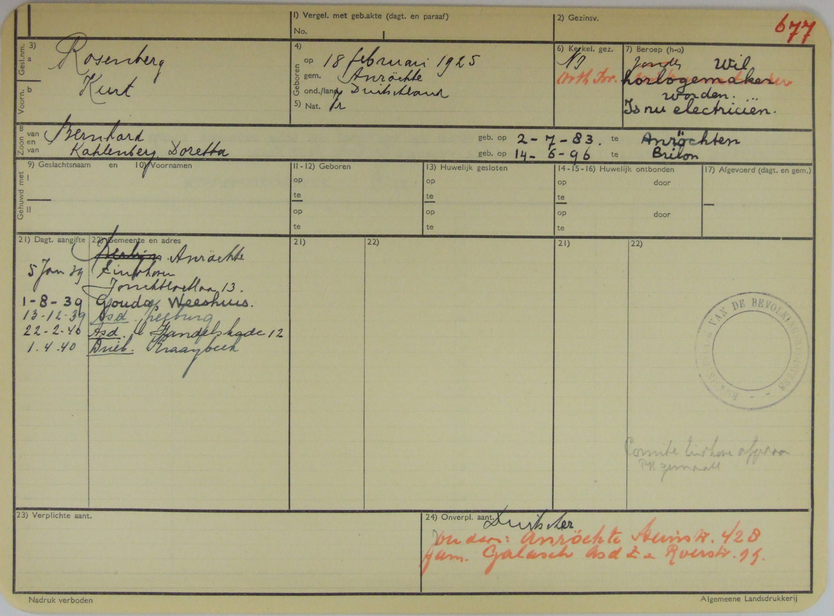
The nucleus of the database was built from the handwritten hulpformulieren Footnote 1 (help forms) as found in the Dutch National Archives (Ministry of Interior 2.04.58, inventory 130) (Figure 1). In December 1938, the minister of the interior set up a quite complex registration system for refugees. The refugees had to be registered at three different levels: at the administration of the refugee camps, on a municipality level, and on a state level at the Rijksinspectie der bevolkingsregisters (the State Inspection of the Registry). The information for all three would be provided by the administration offices at the refugee camps using the hulpformulier that looked identical to the persoonskaart (personal index card) except that they were white instead of pink or green. According to the system, the hulpformulieren would be sent on to the Rijksinspectie, from where they would be sent to the Municipality, which would in turn send them back to the Rijksinspectie. Each authority was to put a stamp on the hulpformulieren. The forms would then be kept either at the Rijksinspectie or at the Ministry of Internal Affairs (Bureau Armwezen [Bureau Almsfund]). This is a possible explanation for the fact that the collection, as it is now at the National Archives, is incomplete. A striking detail is that the cards were in no way treated the way the minister had ordered in his instructions of December 1938: in some cases, only two authorities put a stamp on the forms, in most cases there are no stamps at all.
Hulpformulier (Help Card) Kurt Rosenberg. Source: National Archives, Care of refugees from Germany, 1938–42, 2.04.58, inv. 130. The Hague, the Netherlands.

While gathering more information from both the Dutch National Archives and other sources, additional names were added to the database, thereby reducing potential selection bias in our study. Some of the names in the database might be of children who were on lists, possibly hoping to come to the Netherlands but who, in reality, never crossed the border. Other names never surfaced in official documents but appeared through cross-reference or were mentioned by other surviving refugee children. Nonetheless, the current database is almost certainly incomplete, as children were unknown to the official refugee children organizations because, for example, they crossed the border illegally, lived with their own family, and were never caught and thus not deported.
Still, this collection of about 1,800 names of refugee children is the most complete overview currently available. We will focus only on those children who were still in the Netherlands after the occupation of the Netherlands by Nazi Germany.
Information and Data Sources
Interviews
Thirty-three (former) refugees were interviewed by Keesing in the period between 2008 and 2013 in the Netherlands, Germany, England, Israel, the United States, and Canada. The audio recordings of all these interviews have been transcribed and thematically analyzed. Some other survivors could not be interviewed live but answered questions by e-mail or post.
Literature
Interviews have been complemented by available literature. About 20 children have written their autobiography in some form. Fredrick Zellers’s When Time Ran Out (1989) stands out as very well written, very accurate, and even quite funny. Some children kept a dairy, which they made available to Keesing. The personal letters that have surfaced provided a fantastic source. Not only the letters exchanged between a mother in Berlin and a foster mother in The Hague (The Eylenburg letters [Eylenburg Reference Eylenburg1939–41]) but also the letters written by siblings Marianne and Robert Weil to their mother in London, some letters from Gerda Klein’s mother in Vienna, and, last but not least, all the letters Hajo Meijer (Bielefeld, 1924) wrote to his parents between January 1939 and March 1943 (Meijer Reference Meijer2014).
Archive
Because those who survived could be interviewed or were able to write their (postwar) memoires, it is essential to collect information for those who perished from other sources to avoid or minimize information bias between victims and survivors. Though interviews and published studies provided information on some of the victims, archival research was the most obvious source to collect information. Unfortunately, the archives of the Hilfsverein der Juden in Deutschland and the archives of the Dutch Kinder-Comité have been destroyed. For this research, we retrieved documents from several archives. Most of the documents were found at the National Archives in The Hague (Ministry of Interior 2.04.58; Ministry of Justice 2.09.45). Some others were found at the NIOD, Institute for War, Holocaust and Genocide Studies in Amsterdam and some in local archives. Municipal registration lists of Jews retrieved and used by Croes and Tammes (Reference Croes and Tammes2004) provided further information on living place and with whom they were living. Most of the data on deportation and the fate of the children after deportation were found in the Joodsche Raad cartotheek (Jewish Council index cards) (Dutch Red Cross Archives, NL-HaNRK-2017).
Strategy of Data Analysis
We followed a mixed-method sequential exploratory strategy to analyze the data collected (Creswell Reference Creswell2009: 211–12). Jewish refugee children arriving in the Netherlands after the Kristallnacht escaped persecution by fleeing Nazi Germany. However, because Nazi Germany invaded the Netherlands in May 1940, these refugee children were threatened again. To survive the Holocaust, they needed opportunities in the Netherlands to escape Nazi persecution (Presser Reference Presser1965). After their arrival in the Netherlands, social and policy regulations determined where and with whom these refugee children lived. As human lives are embedded in social relationships (Elder Reference Elder1994), this interdependence with others might create risk and danger but could also offer support (Settersten Reference Settersten2015). The links to persons and institutions and the related living situation provide the context for this mixed-method research exploring opportunities and barriers for Jewish refugee children in the Netherlands to escape Nazi persecution. As Finkel (Reference Finkel2017) stated that Jews had to select a survival strategy, or sometimes several, decisions and choices were often made for these children such as their parents’ choice to put them on the Kindertransport to flee Nazi Germany. This study is about settlement and living situations of these refugee children in the Netherlands after the Nazi German invasion in 1940 and related survival strategies such as coping, evasion, and resistance (ibid.).
Qualitative research studied the collected information to provide a historical study of the migration trajectory and settlement of refugee children in the Netherlands by using illustrative individual experiences of child refugees and other historical key documents on immigrant policies. Using the findings from this qualitative study we formulated hypotheses that were tested using a quantitative approach. To conduct quantitative analyses, data were put into a database allowing statistical calculations in Stata. The quantitative analyses were mainly based on data from administrative sources such as the Jewish Council index cards, which provided information on each child in a systematic way. These data were suitable to conduct statistical analysis (e.g., Tammes Reference Tammes, Matthijs, Kok and Bras2012), and the evidence from these statistical analyses elaborates on, and extends, the historical case study.
Qualitative Research: A Historical Study
How the Refugee Children Came to the Netherlands
In response to the many German refugees resulting from the Nazi takeover in 1933, the Dutch government wanted to restrict immigration, if not completely stop it, as the economy was recovering from the downturn in the early 1930s, while it feared an increase in anti-Semitism due to the arrival of Jewish refugees (Cohen Reference Cohen1955: 2). Many measures were taken to make it difficult for refugees to enter the Netherlands. In May 1938, this process was completed and the Dutch eastern border was more or less closed. The events on November 9 and 10, 1938 in Germany and Austria, also known as the Kristallnacht, made it clear to the Jewish families still residing in the Third Reich that the situation in Nazi Germany would not get any better and that at least their children should flee as soon as possible. For many mothers, there was also a pure financial necessity because after the arrest and deportation of their spouses they often had no income and could not care for their children.
The Dutch government initially was reluctant to admit the Jewish refugee children sent to the Netherlands after the Kristallnacht. Yet it was decided, under pressure from public opinion and the Jewish organizations, to admit a limited number of refugees in November 1938. For younger children, an exception was easier to make because they would not end up in the labor market. But the Dutch government wanted to be a transmigration country only. Everything had to be done to let the admitted children (and adults) emigrate as soon as possible. In May 1940, almost 40 percent of the 1,800 known children that were admitted had traveled to another country. In most cases they went to England or the United States, but sometimes to Belgium or France because their parents had fled there in the meantime.
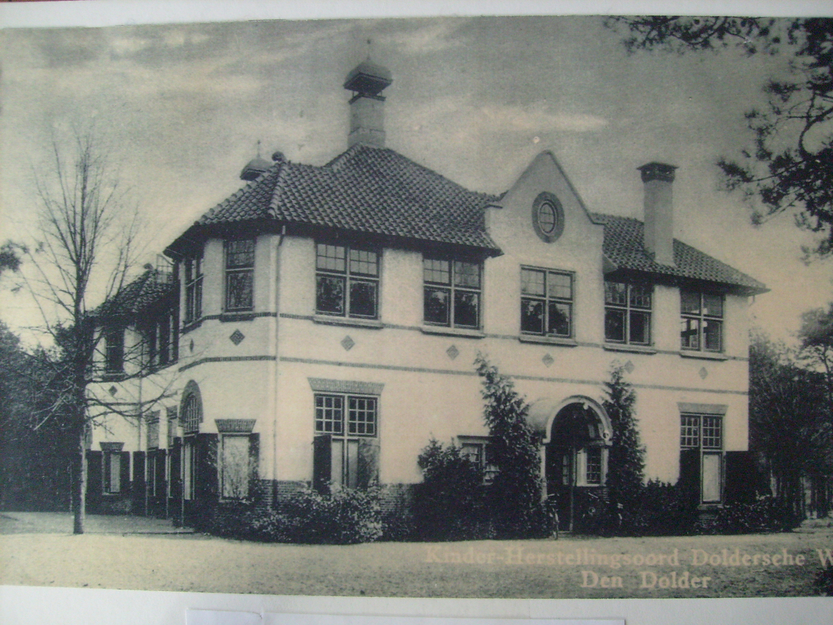
Many of the refugee children who came to the Netherlands were part of a Kindertransport. Most of these groups went to England, but others had the Netherlands as their final destination. The first two groups of refugee children arrived in the Netherlands on November 22, 1938. One group, of 23 children, was accommodated in the holiday house of the Utrecht orphanage in Den Dolder (Figure 2). The other group, of 12 children, was housed in the holiday home of the Rotterdam orphanage in Monster. Several Kindertransports followed, including two large groups in January and March 1939, consisting of 260 and 135 children, respectively. Sometimes, part of a group of children who were on their way to England remained a few days in the Netherlands.
Holiday House of Utrecht orphanage in Den Dolder. Source: Courtesy of Historische Vereniging Den Dolder, the Netherlands.

There were many children who came across the border illegally. Usually they walked over the border, but in some cases they came by bicycle, sometimes aided by smugglers. At the train station in Nijmegen, a Dutch city close to the German border, there was often someone from the refugee committee to collect children coming in from Germany (Zeller Reference Zeller1989: 163). The policy toward these “illegal” children was not clear. Sometimes they were sent back to Germany. Often, they got permission to stay in the Netherlands. The exact number of refugee children from the Third Reich who came to the Netherlands in the years just before the war and how many of them were sent back will never be established because some of them were never registered.
There were many family ties between the Netherlands and GermanyFootnote 2 . Moreover, there were many German refugees who had come to the Netherlands after 1933. Because the government wanted to make a gesture without spending any money, it was initially decided to grant permission only to children who had relatives in the Netherlands. These were usually uncles, aunts, or grandparents, sometimes an older brother or sister. However, despite numerous written requests by these relatives to have the children stay with them, this was not allowed. The relatives were kindly requested to provide a monthly payment of 50 Dutch guilders—an enormous amount in those days—as contribution to the “nursing costs” of the child. The government wanted the children in institutions because they thought they could monitor and stimulate emigration better that way. Here as well there was no consistent policy because some children did move in with relatives right away. However, most of the children went to institutions.
To begin with there were homes for refugee children in 13 cities spread across the country. Some homes were closed soon, for example because it was too cold, as many of the homes were built for use in the summer only. Other shelters were opened, and sometimes closed. Most children were transferred frequently. At the time of the German invasion on May 10, 1940, there was only a small number of homes specifically for refugee children in use. Refugee children also stayed in two Aliyah houses, the “work village” in the Wieringermeer and some children were included in the mainstream Jewish orphanages.
But in January 1939, it was discussed that the assignments to families would be better for children under 14 (and cheaper for the Dutch government) and preparations for this began right away. In June of that year the decision was finally made, and the execution was started immediately (Cohen Reference Cohen1955: 243). Several homes were closed during 1939 as a consequence of this decision.
Placement in Foster Care
The placement in foster families was a task the government took very seriously. Questionnaires that had to be filled in by the head of the family were drawn up. On this form were 15 questions about social prosperity, moral tone, and political direction. Question 9 for example reads: “Is the family aware of the great responsibility which it will take upon itself? Or is the offer more a spontaneous gesture, and will the spontaneity disappear or fade when the pressure of a permanent assignment with the family will last a long time?” Question 11 reads: “Is the family aware that the placement will include the complete care and nursing, schooling, training, care in case of illness etc., in short, that the burden is equal to having their own child?” Finally, question 14 reads: “What family ties exist between applicant and requested child?”
From this last question, it becomes clear that no distinction was made between the Dutch foster parents and the biological parents, who sometimes had managed to come to the Netherlands, and who reported to the authorities as “foster parents” because this was apparently the only way to have their own children live with them. They too had to answer questions 9 and 11. In some (often poignant) cases, the Dutch authorities believed it was better for a child not to live with his or her own parents. According to Prof D. Cohen, chairman of the “Special Committee for Jewish Interests,” approximately 700 refugee children were placed with Dutch foster families (ibid.: 246).
Placement in Dutch Households
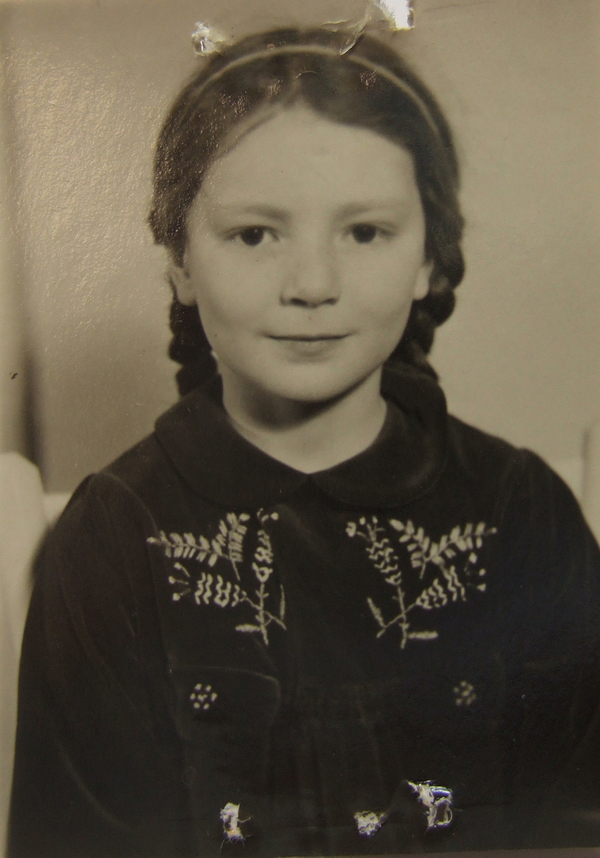
The Ministry of Interior thought the questionnaire alone was insufficient and therefore proposed a control commission in addition, consisting of a number of ladies of the “Council of Jewish Women,” who would visit all the children in foster families on a regular basis (ibid.: 244). In some cases, the placement in the foster home was not ideal. Recha Häusler (Figure 3) from Gelsenkirchen arrived illegally in Nijmegen in January 1939, along with her older brother. Recha had just turned nine when she was placed with two elderly ladies in the summer of 1939. While the two ladies were full of goodwill and surrounded Recha with lots of love, the girl was deeply unhappy. Her brother remembers that everything in the house smelled “old,” and that his sister seemed to become old very quickly. After two years of living with the elderly women, Recha had turned into a quiet and withdrawn girl. The ladies of the control commission noticed this eventually, and it was through them that she was transferred to the parents of her best friend in 1941. There Recha flourished and she could laugh and dance again (interview Haüsler 2009). Recha and her foster family were deported to Sobibor two years after this transfer, where they were killed on July 23, 1943.
Recha Häusler. Source: National Archives, The Hague, Care of Refugees from Germany, 1938–42, 2.04.58, inv. 130.

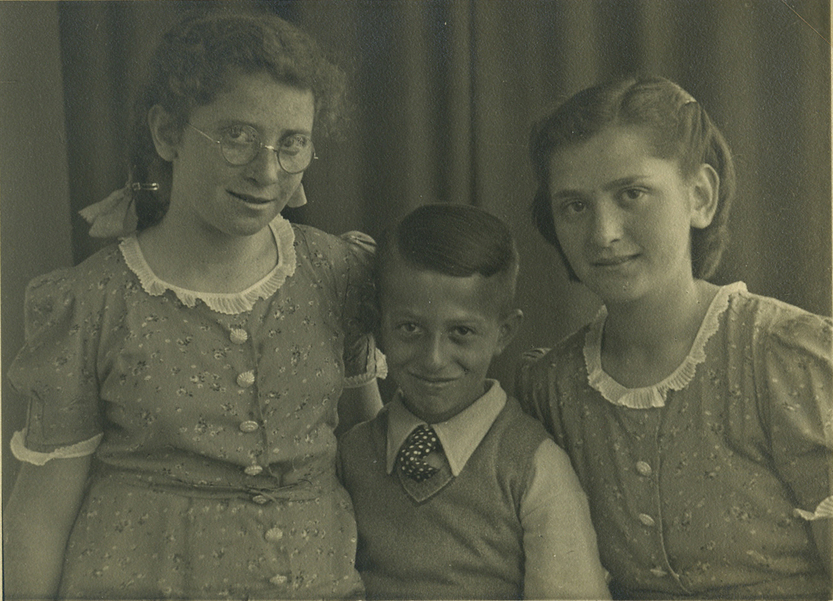
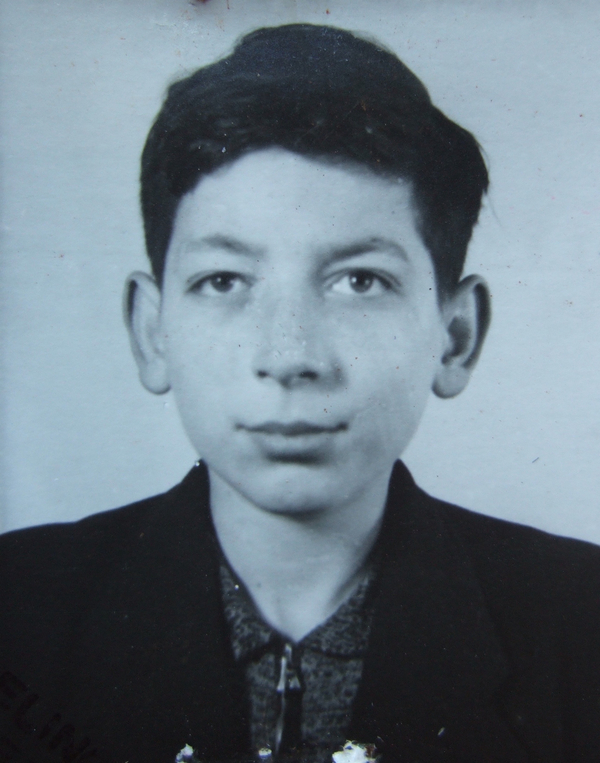
Horst Eichenwald (Figure 4) came to the Netherlands from his hometown Erwitte in January 1939. In the summer of 1939 he was placed with a family in Eindhoven. Initially he had problems with his foster parents: the seven-year-old boy suffered from frequent tantrums and was therefore also very difficult. It became better with time. Horst asked his foster mother if he could call her “Muttie,” and when she asked him why he had been so difficult in the beginning the answer was “Mich hat auch keiner geliebt [no one ever loved me]” (Municipal Archives The Hague, Archive Jewish Orphanage, 194, inv. nr. 52, Letter of Mrs. H. van Straten-Wallig of the “controlecommissie,” March 11, 1941). Horst was ultimately transferred to another foster family in Eindhoven. On June 8, 1943, Horst, his foster mother, and one foster sister were deported from Westerbork to Sobibor, where they were gassed immediately after arrival on June 11.
Horst Eichenwald with his foster sisters. Source: Private Collection of the late Martha Mozes.

These were exceptions to the rule: usually there was a good relationship between foster children and foster parents. Esther from Velbert was just eight when taken in by a family in The Hague. Both Esther and her foster family survived the war; her biological parents did not. Esther has always seen her foster parents as her real parents. Her foster mother died of old age in 2008 (interview Esther 2008). Judith from Berlin was somewhat older. She was nearly 11 when she came into the home of a family in Heemstede. She felt good there. After two years of hiding, she returned to this non-Jewish family, and a few years after the war, she even married one of their sons. Out of love, not out of gratitude, of that she is quite sure (interview Judith 2009).
A letter from the Committee for Special Jewish Interests to the Rotterdam Orphanage shows that although the placement of foster children went well in principle, there were several, especially Orthodox, children who could not be placed anywhere. There were not enough religious families who wanted to take a foster child, which is why the orphanage was asked if they could take a number of these orthodox children (Municipal Archive Rotterdam, archive NIG, 29, inv. nr. 860).
So far, no sources have been found suggesting that any authority paid the foster parents. But Jakov Lind writes in his book that “the Committee” paid for two other foster children who lived in his foster parents’ house (Lind Reference Lind1969: 83). Jakov was a Viennese refugee child (born in 1927) who survived the war by leaving his foster family during a raid in Amsterdam in 1943. During the Nazi occupation, he worked on river barges under a false Dutch identity.
As for the foster care placement in Dutch families, this can be called a success. The extensive procedure and careful control process made sure that the placement went well in most cases. However, all this caution also meant that some children eventually lived separated from their biological parents who were also living in the Netherlands. And that is, certainly because in many instances these were the final years for these children and their parents, a bitter conclusion.
After the Invasion
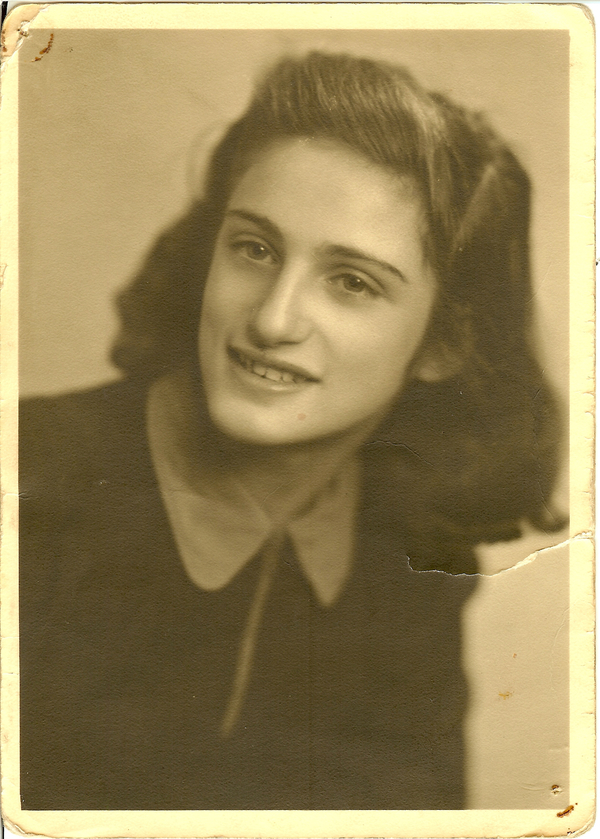
The invasion in May 1940 significantly altered the situation of the German refugee children residing in the Netherlands. Two of the remaining four homes for refugee children—where mainly older refugee children stayed—were evacuated by order of the Nazis. The children, who stayed in “Huize Kraaybeek” in Driebergen, and “Huis ten Vijver” in Scheveningen, were placed in foster families in The Hague and Amsterdam in utmost haste. This often did not go well. Marianne Weil (Mannheim, 1923—Auschwitz, 1942; Figure 5) came from “Huis ten Vijver” to a family in The Hague. The family used her to work in the household. Until 3 pm she had to help the maid, and then she did all the mending. After dinner Marianne did the dishes (Yad Vashem, file 824344, letter to her mother in London, September 3, 1940).
Marianne Weil. Source: Private Collection of Hannah and Oded Meyuchas, Jerusalem, Israel.

Ruth Stern (Bad Hersfeld, 1921) also lived with a foster family in The Hague right after the evacuation of “Huis ten Vijver.” Although Ruth was 19, she could not cook, and that was just what was expected of her: the family consisted of a poor widower with two children, and Ruth was considered to do the housekeeping (Phillips Reference Phillips2008: 45). In essence, she was treated more as an unpaid worker than as a foster daughter. This has much to do with the fact that these cases involved mostly older girls. And now, in the chaos after the invasion, there was no time to fill out questionnaires.
Because there were not enough foster families, many of the children were placed in the regular Jewish orphanages. Some others could now finally move in with their own families in the Netherlands. A blessing in disguise! Due to the changed circumstances after the occupation, many foster families were forced to give up their foster child. Many families lost their income or home and feared the future. These children were also mostly placed in the orphanages.
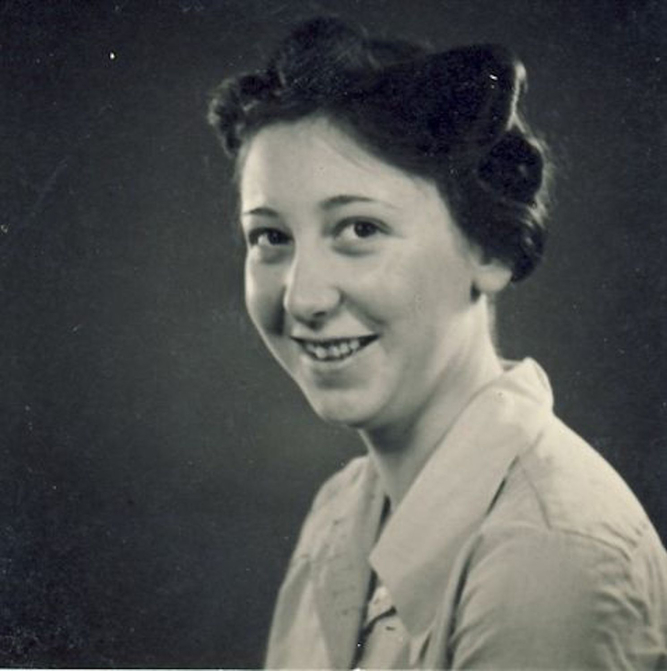
Arno Baruch (Figure 6), born in 1928 in Recklinghausen, came to live with a foster family in 1939. When he arrived from the Utrecht orphanage in Drachten he was physically not well. He was nervous and stuttered, was also constantly hungry and very thirsty. After some time this improved. He went to school with his foster brother and was taught how to skate in the cold winter of 1939–40. In August 1940, his foster parents could not take the responsibility for taking care of Arno any longer and brought him back to the orphanage in Utrecht. There he stayed until February 12, 1942. On that day, 22 pupils from the Utrecht orphanage were deported to Westerbork. Arno ended up in barrack 35, which served as an orphanage. His former foster parents also came to Westerbork in September 1943 and there his foster mother once again took care of Arno. It was she who helped him pack his bags when he was sent to Theresienstadt in February 1944. Arno was probably sent to Theresienstadt because his father was a bearer of the Iron Cross, a military decoration that many German Jews received for their merit in World War I. Arno’s parents had already been deported in October 1941 from Düsseldorf to the ghetto of Lodz, where his mother died in July 1942, and his father in February 1943. But Arno did not know that. After three months in Theresienstadt, Arno was deported to Auschwitz. Arno also never came back (e-mail Israels 2008).
Arno Baruch. Source: National Archives, Care of refugees from Germany, 1938–42, 2.04.58, inv. 130. The Hague, the Netherlands.

There were a few parents who preferred to let their child return to Germany after the invasion. The children now lived under the same Nazi regime as in the Third Reich. When the parents of Walter Eylenburg (born in 1929), for example, were summoned to go from Berlin to Theresienstadt they asked Walter’s foster parents in The Hague to send Walter back to Berlin so he could join them in Theresienstadt. His foster mother was torn between her desire to meet the parents’ request, on the one hand, and, on the other hand, her instinct to keep the boy with her. The foster father wrote a letter to the Dutch Red Cross in May 1946, in which he describes how Walter was taken by the SD from the foster parents’ house in The Hague in the night of August 5, 1943 and put on the train to Germany (Dutch Red Cross Archives, Collection persons’ files NL-HaNRK-2011, file number 3.666). Walter’s older sister, Erna, who lived in the home of a widower in Amsterdam, had already been deported on one of the first trains to Auschwitz in the summer of 1942. Walter probably traveled directly to Theresienstadt, from where more than one year later he was sent to Auschwitz with his parents. None of them survived. His foster mother survived the war. On her deathbed, she still talked about Walter (interview Wijsenbeek 2009).
Persecution
Between December 1942 and March 1943 all the children, staying in one of the orphanages or the “Boyshome” in Arnhem were collectively picked up and deported to the East through camp Westerbork. The children who were placed in foster care succeeded more often in going into hiding. In most cases, the foster parents arranged and paid for the hiding: the foster child would go into hiding with the rest of the foster family.
Of course, there were some exceptions. Charlotte Rechtschaffen (Duisburg, 1927) (Figure 7) had lived with a family in Roermond since late 1939. When the family decided in a panic to go into hiding in 1942 they did not take Charlotte with them but left her alone. Charlotte then stayed with a priest for a few days, but eventually ended up in concentration camp Vught near the city of ’s-Hertogenbosch (Den Bosch). It is not clear where Charlotte died. She was seen in Bergen-Belsen, but never returned (e-mail Van der Bruggen 2008).
Charlotte Rechtschaffen. Source: Private collection of J. Frencken/E. van Montfort-Frencken, Herten-Roermond, through H. van der Bruggen, Roermond, the Netherlands.

Kurt Falkenstein (Stadtlohn, 1930) was just lucky: after the occupation, he had moved in with his uncle and aunt in Haaksbergen. He was 10 years old. When his aunt’s family was taken from the house for deportation, a neighbor, who turned out to be involved in the resistance, claimed that Kurt was not part of the family, but belonged with her. Then she arranged a hiding place for him, where Kurt survived the war (interview Falkenstein 2009). His two older sisters who had also fled to the Netherlands and his parents did not survive.
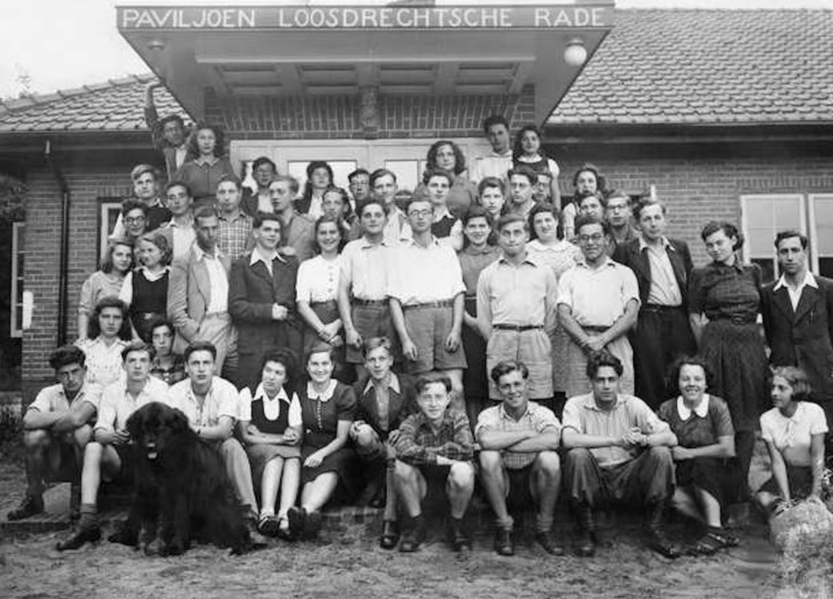
In August 1939, an Aliyah facility was opened in the “Pavillion” in Loosdrecht. Refugee children were trained to work the land and thus become a useful labor force in Palestine. This facility stayed open after the invasion. In August 1942, the leaders of the Pavillion heard that the Nazis were planning to round up everyone living there. They contacted Joop Westerweel, a teacher who got to know the refugee children when he worked for the Kees Boeke school in Bilthoven. He set up a team and made sure that by the day the Nazis came to the Pavillion, all 42 persons present were provided with a hiding address (Schippers Reference Schippers2015: 67). Later, the Westerweel group set up an escape route to Spain, thus helping many young people to arrive illegally in Palestine during the war. Of the 42 who disappeared in August 1942, 28 survived the war. Thirteen ended up being killed in a concentration camp; one died in an accident on his way to freedom.
While some refugee children survived by going into hiding, others survived the concentration camps. Some of the older children experienced a whole series of camps, Auschwitz often being one of them. Some of the younger children survived the horrors of Bergen-Belsen.
Historical Study: Factors That Might Have Impacted the Risk of Being Deported and Killed
Of the Jewish refugee children who still lived in the Netherlands in July 1942, about 74 percent were deported to Nazi camps and overall about 61 percent perished due to the Nazi occupationFootnote 3 . This victimization rate is lower than the Dutch national average of approximately 73 percent (Hirschfeld Reference Hirschfeld and Benz1991). However, refugee children differed in their chance of surviving Nazi persecution. This might have been related to their living situation and connections in the Netherlands.
Within the Netherlands, there were many small Jewish communities, especially in the rural border in the east part of the country such as the “Achterhoek” and the northeast such as Groningen/Ost-Friesland. In these areas, many families had relatives living on both sides of the Dutch-German border. Many of the refugee children came from Bundeslands bordering the Netherlands as cross-border connections made it easier for them to cross the border legally or illegally. Furthermore, at first the Dutch government only admitted children who had family in the Netherlands—though this didn’t mean children could move in with their family or relatives.
Initially, children were mostly housed in homes for refugee children or other shelters. However, from 1939 onward children were resettled in foster care as those homes and shelters were being closed. This accelerated after the invasion of Nazi Germany. As a result, some children were now finally placed with their family or relatives. As there were not enough foster parents, children were also housed in institutions such as Jewish orphanages. These differences in living situation might have impacted survival such as through evasion or coping (Finkel Reference Finkel2017). The former refers to trying to survive by hiding, fleeing, or through false identity and the latter to staying put and obeying rules while trying to improve one’s position, for example by receiving Sperre (temporary exemption of deportation) or acquiring important jobs or roles.
Refugee children living with (distant) family or foster parents might have had better opportunities to escape Nazi persecution through evasion. Although these relatives and foster parents were unsure whether they had legal rights or the approval of the parents to let these children go into hiding, they found hiding places themselves or through connections. Even after being deported to Nazi camps, foster parents and family members could sometimes take care of their children.
Though children in Jewish orphanages might have been living “locked up” in an institution, they were only threatened with deportation after 1942 and may have felt comfortable and safe. Therefore, these children might have followed, or were left with, the strategy of coping. This strategy might have been beneficial as children living in institutions were generally deported to Westerbork or Vught from the beginning of 1943 onward. This later arrival in transit camp Westerbork might have resulted in deportation to less deadly camps such as Bergen-Belsen or Theresienstadt. The Aliyah facility in Loosdrecht (Figure 8) might have been an exception as (late) adolescent children there got involved in the resistance through the Westerweel group, which might have increased their opportunities to escape persecution through falsified documents and/or hiding places. Furthermore, in a few cases relatives took their children out of orphanages, resulting in a different living situation and possibly a change in survival strategy.
Children in the Aliyah Facility in Loosdrecht. Source: First published in “De jeugdalijah van het Paviljoen Loosdrechtsche Rade” by Drs. Ineke Brasz and others, Hilversum, the Netherlands: Verloren, 1987.

Whether it was through coping, evasion, or a combination of these, it seems to have been important to stay in the Netherlands as long as possible because later deportation trains went to less deadly camps and subsequently led to a shorter stay in Nazi camps. Therefore, it might be important to split escaping Nazi persecution into reducing risk of deportation to camps outside the Netherlands and reducing chance of killed when deported.
Quantitative Research
Hypotheses
To explore the findings from the historical case study further, we generated hypotheses on the association between place of origin and living situation on the risk of deportation, and on the chance of survival—being alive in May 1945 after Nazi Germany surrendered. Besides this, we describe important confounding factors to adjust for in the multivariable analyses.
Predictor: Living Situation
Although some of the refugee children had family or relatives living in the Netherlands, many of these children lived (initially) separated from these relatives and were placed with foster parents or in institutions such as orphanages. To escape Nazi persecution one ultimately needed falsified documents, money, hiding places, and/or escape routes to nonoccupied countries. Children living in an institution were more restricted in their opportunities to hide, flee, or falsify identity. Our first living situation hypothesis is that refugee children who lived with their family or foster parents had a reduced risk of being deported than children who lived in an institution.
Many foster parents were Dutch natives and might have had better social resources and better knowledge of the social surrounding than recently fled parents or relatives. Our second living situation hypothesis is that refugee children who lived with their parents or relatives had a higher risk of being deported to Nazi camps than children living with foster parents. Besides this, both relatives and foster family members could have given support or protection within deportation and concentration camps. Our third living situation hypothesis is that refugee children who lived with (foster) parents or relatives had a higher chance of survival than children living in an institution.
Some children moved several times in 1941 and 1942. Moving between places might have reduced the building of social networks. The changing places hypothesis is that children who moved to another place had a higher risk of being deported to Nazi camps than children who had not moved to another place. However, moving from one living situation (e.g., family) to another (e.g., institution) might have resulted in using combined survival strategies that might have increased escaping Nazi persecution, especially when they moved from institution to foster parents. The changing living situation hypothesis is that refugee children whose living situation changed had a lower risk of being deported to Nazi camps.
Potential Confounding Factors
Some refugee children came from Bundeslands bordering the Netherlands while some others came from Bundeslands not bordering the Netherlands, while a small minority came from outside Germany, mostly Poland or Austria. Those who lived close to the Dutch border might have been more likely to have relatives or acquaintances living in the Netherlands thus impacting survival strategy. Therefore, we control in our analyses on deportation for place of origin.
Refugee children lived across all parts of the Netherlands, though many lived in Amsterdam because there were more Jewish orphanages, more foster parents, and a bigger Jewish community that could support them after arrival. Geography could have impacted persecution. The Netherlands was divided into seven Sicherheitspolizei (SiPo) regions by the Nazi occupier. In some of these SiPo regions the Nazi occupier was more active in arresting Jews and in some places the local Dutch police were more willing to arrest Jews (Croes & Tammes Reference Croes and Tammes2004). Therefore, we will control for SiPo regions in the analysis on deportation to keep constant on repressive capacity.
In the Netherlands, Jewish children younger than 15 did not need to have the identity card that was introduced in July 1941 for all Dutch citizens 15 years and older, which as of January 1942 was marked with a large black “J” for Jews (Herzberg Reference Herzberg1978 [1950]: 49). This might have provided younger refugee children with a better opportunity to go into hiding. Besides this, as (older) girls were more attractive to foster parents because they could do jobs in and around the household, their settlement trajectory might differ from boys, which might have impacted their opportunity to escape Nazi persecution. Some of the refugee children lived in refugee camp Westerbork before it was transferred into a transit camp and consequently their situation changed compared to those living in other institutions. We therefore control in our analysis on risk of being deported for age, gender, and living in Westerbork before the start of the deportations.
Not all refugee children who were deported were killed. Some other factors might have impacted survival. Refugee children who were deported at a later date had to spend less time in Nazi camps outside the Netherlands; they were also deported to other Nazi camps such as Bergen-Belsen or Theresienstadt, the destination of some of the later trains; the circumstances and survival in those camps were better than in camps such as Auschwitz or Sobibor (Presser Reference Presser1965, pt. 2: 407–501). Refugee children deported to a Nazi camp outside the Netherlands did not necessarily stay in that camp, especially in the final year of the war, when inmates were frequently moved to other camps. Moving between camps was either done in overcrowded trains or by foot, reducing survival chances. Furthermore, on arrival in concentration and extermination camps, young men were more likely to be selected by the Nazis to work than women and children (e.g., ibid.: 414, 426). Therefore, we control in our analysis on survival chance for date of deportation, the destination of the deportation train, being moved to another camp, gender, and age.
Statistical Analysis Methods
The gathered (administrative) data for 942 Jewish refugee children still living in the Netherlands in the beginning of 1941 on their living circumstances and persecution allowed us to use quantitative methods to test the generated hypotheses. There are two main outcomes for analysis, deportation, and death. We treat deportation as a time-to-event variable, namely that we have both an event (deported/not deported) and a time of deportation (month). Those children not deported are said to be censored at the end of the time of study. Deportation is modeled using a Cox proportional hazards model (Cox Reference Cox1972), which is the most commonly used approach for time-to-event variables. For each variable under examination we estimate a hazard ratio. A hazard ratio of 1 represents no effect of the variable being tested, below 1 means a protective effect, and above 1 means a harmful effect. For those deported children, we have an outcome of being killed by the Nazis or surviving. This is a binary outcome and is therefore modeled using logistic regression. We report odds ratios from this model, where once again a ratio of 1 means no effect of the tested variable, less than 1 implies a protective effect, and above 1 corresponds to a harmful effect.
We use 95 percent confidence intervals to provide evidence as to whether our sample results are likely to infer population effects for all children represented by this sample. We also report p-values, but do not use a stringent cutoff of 0.05 to determine a population effect. We use a strength of evidence approach (Sterne and Davey Smith Reference Sterne and Smith2001), whereby smaller p-values suggest stronger evidence for a population effect.
As nearly all Jews run the risk to be deported from July 1942 onward, when the systematic deportations started, we excluded refugee children deported before July 1942 due to razzias; thereby also reducing immortality-time bias (Suissa Reference Suissa2008). To analyze the impact of living situation on the chance of being deported from July 1942 onward, we further excluded children who migrated before July 1942, children who had died of natural causes, and those with missing values on exposures or confounding factors. This leaves 863 refugee children to be included in the analysis on chance of deportation. To test the impact of living situation on risk of death we focus only on the deported refugee children.
The Risk of Deportation from the Netherlands
The risk of deportation in our model runs from July 1942 when systematic deportations started and ended after the last train left in September 1944 (e.g., Hirschfeld Reference Hirschfeld and Benz1991). To investigate our hypotheses, Cox proportional hazards models (Cox Reference Cox1972) were used to determine the effect on the risk of deportation of (1) living in an institution compared with a family (2) living with relatives compared with foster parents (3) change in household situation (i.e., foster, family, or institutional living), and (4) change in living place (i.e., physical address). In each model, we included a clustering term where two or more children were from the same family, controlled for the potential confounding factors described in the preceding text and report the hazard ratio, 95 percent confidence interval, and p-value.
The Aliyah center in Loosdrecht was the final living place for 37 children included in our analysis, and these children had been in close connection with the Westerweel resistance group. This connection might have increased the opportunity to survive the Holocaust compared to children in other institutions. Therefore, we ran a sensitivity analysis without these 37 children.
Risk of Death for Deported Children
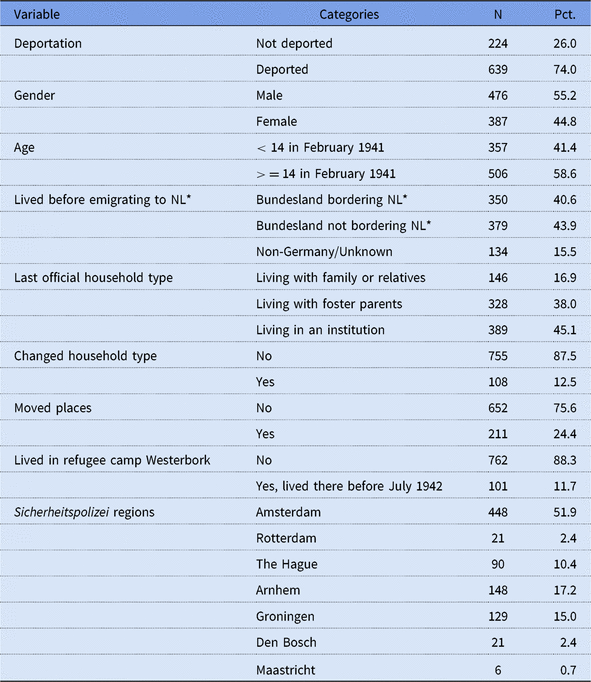
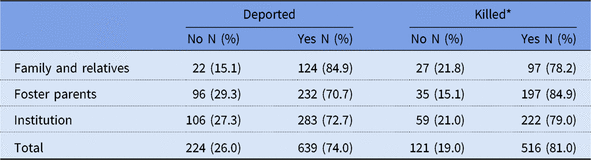
We used logistic regression among those who were deported to investigate the effect of living in an institution (compared with foster or family care) on the risk of being killed. In total 639 children were deported (table 1), though for 2 children we don’t know whether they were killed or had survived World War II resulting in 637 children to be included in this analysis; 81 percent of these children perished in Nazi camps (table 2). Here we tested our third living situation hypothesis by including a variable for whether the refugee lived with family or in an institution. In this analysis we controlled for confounders such as gender and age as those characteristics might be related to settlement trajectories within the Netherlands and also, for example, to selection processes within Nazi camps. We included a clustering term where two or more children were from the same family, and report the odds ratio, 95 percent confidence interval, and p-value.
Descriptive statistics of the refugee children included in the statistical analyses (N = 863)

* NL=the Netherlands.
Number and percentage deported and survived by household type (N = 863)

* After being deported to Nazi camps outside the Netherlands
As Nazi camp Sobibor was a killing camp only were nearly everyone was immediately killed on arrival, we run a sensitivity analysis without 159 refugee children deported to that camp.
Quantitative Results
Of the 863 children in our analysis on the chance of being deported 639 (74 percent) were deported from the Netherlands and 224 (26 percent) of the children were not deported from the Netherlands. A summary of the data available on these children is provided in table 1, 55 percent were boys and 41 percent was younger than 14 in February 1941. About 85 percent had migrated to the Netherlands from Germany, 41 percent from a Bundesland bordering the Netherlands, and 44 percent from a Bundesland not bordering the Netherlands, while the other 15 percent had migrated mainly from Austria. The last official household type for 17 percent was living with family or relatives, for 28 percent this was living with foster parents, and for 45 percent this was living in an institution. Most had not officially changed household type during 1941 and 1942, though 13 percent did. Also, most stayed in the same living place though 25 percent had moved official to another living place during 1941 and 1942. About 12 percent of the refugee children lived already in camp Westerbork before the systematic deportations started in July 1942. A majority had their last official address in the SiPo region Amsterdam.
Table 2 shows the number and percentages of children deported to Nazi camps outside the Netherlands and perished after being deported by household type. Children living with family and relatives show the highest percentage of being deported (85 percent). The percentage of deported children living with foster parents (71 percent) is close to that of children living in an institution (73 percent). Among the children deported 81 percent perished; those who had been living with foster parents showed the highest victimization rate; though only 5 percentage points higher than those living with family/relatives or in institutions.
Risk of Deportation
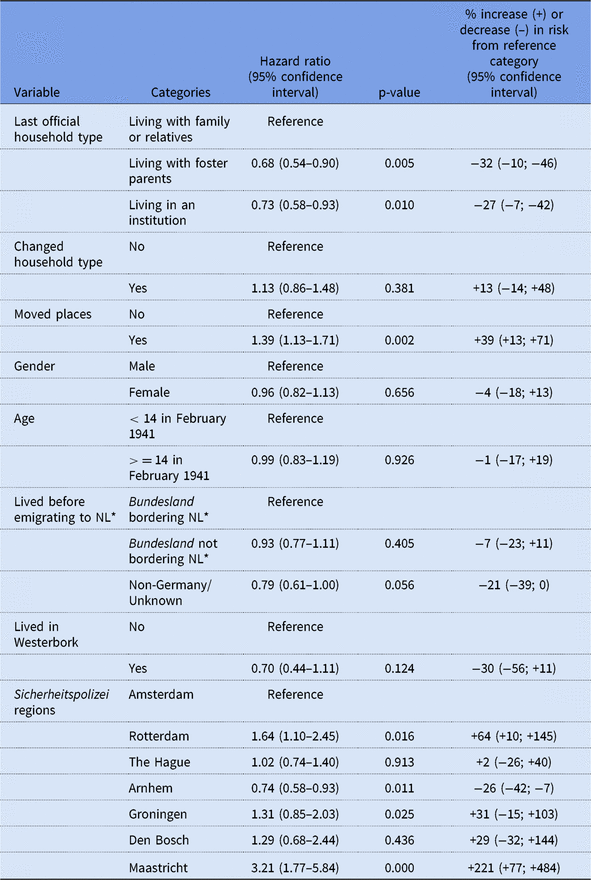
The results of a Cox regression are given in table 3. In this sample of data, children living in an institution had a 27 percent reduced risk (hazard ratio [HR] 0.73) of being deported compared to those living with family or relatives. A 95 percent confidence interval for this estimate suggests that in the population of all such children, the reduction in risk is likely to be between 7 percent and 42 percent (HR 0.73; 95% CI 0.58–0.93; p = 0.010); this result contradicts our first living situation hypothesis.
Estimates of hazard ratios from Cox regression model for the association between living situation and the risk of being deported from the Netherlands (N = 863)

Reference = reference category for comparison. *NL=the Netherlands.
Children living in an institution had the same risk to be deported as those who lived with foster parents (HR 1.05; 95% CI 0.85–1.29; p = 0.674) (not shown in table 3). Given the large p-value and the 95 percent confidence interval includes estimates of HR both below and above 1 (i.e., there could be either a protective/harmful effect); this result does not support our first living situation hypothesis. Children who lived with foster parents had a 32 percent reduced risk of being deported compared to those living with family or relatives (HR 0.68; 95% CI 0.54–0.90; p = 0.005); this result supports our second living situation hypothesis. Children who moved places had a 39 percent higher risk of being deported than those who hadn’t moved places (HR 1.39; 95% CI 1.13–1.71; p = 0.002); this result supports our changing places hypothesis. Children who changed household type had a similar risk to be deported as those who hadn’t changed household type (HR 1.13; 95% CI 0.86–1.48; p = 0.381); this result does not support our changing living situation hypothesis.
An additional analysis without 37 refugee children living at Loosdrecht’s Aliyah facility showed some evidence for a reduction of the risk of being deported for those in an institution compared to those living with family or relatives (HR 0.81; 95% CI 0.64–1.03; p = 0.084; N = 826); the direction of this result contradicts our first living situation hypothesis. This attenuation of the effect of institution on risk of deportation is due to the fact that only 35 percent of the 37 refugee children living at Loosdrecht’s Aliyah were deported compared to 73 percent of all children living in an institution (table 2). The additional analysis showed furthermore that children living in an institution in this analysis had the same risk to be deported as those who lived with foster parents (HR 1.19; 95% CI 0.96–1.48; p = 0.114; N = 826); this result does not differ from the result reported previously (not shown in table 3).
Risk of Death for Deported Children
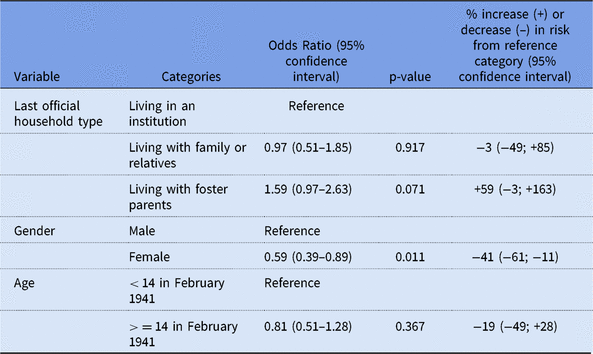
The results of a logistic regression are given in table 4. Children deported to Nazi camps outside the Netherlands from family or relative households had similar risk to be killed as those deported from institutions (OR 0.97; 95% CI 0.51–1.85; p = 0.917); this result does not support our third living situation hypothesis. There was some evidence to suggest that children deported from foster parents households had a higher risk to be killed than those deported from institutions (OR 1.59; 95% CI 0.97–2.63; p = 0.071); the confidence interval is wide here due to the fact that in this analysis fewer children are involved. With a smaller sample size, estimates are less precise. A sensitivity analysis without children deported to Sobibor (where nearly everyone was killed on arrival because this was a killing camp only) shows evidence suggesting that children deported from foster parents households had a higher risk to be killed than those deported from institutions (OR 2.03; 95% CI 1.17–3.53; p = 0.011; N = 478). These results contradict our third living situation hypothesis.
Estimates of odds ratios from logistic regression model for the association between living situation and risk of death for deported children (N = 637)

Reference = reference category for comparison
Conclusions and Discussion
Retrieving the names of children arriving into the Netherlands after the Kristallnacht, mostly through the Kindertransports, resulted in a unique overview of nearly all the Jewish refugee children. Adding life history information from several sources allowed us to reconstruct and investigate migration and settlement processes. The historical study showed that refugee children came from various parts of Germany; lived throughout over the Netherlands, though many in Amsterdam; and lived in household types such as their own family, foster parents, Jewish orphanages, and other institutions. Migration trajectories and changing regulations in 1939 and 1940 impacted refugee children’s settlement process. Differences in living place, living circumstances, and personal characteristics might have resulted in variation in the risk of being deported and/or killed. Adding information for 863 children still living in the Netherlands in July 1942 about deportation and victimization obtained from the Joodsche Raad cartotheek (Jewish Council index cards) allowed us to particularly test the impact of household type. Different household types might have resulted in differences in survival strategies such as coping, evasion, and resistance (Finkel Reference Finkel2017).
Statistical analyses confirmed that risk of deportation was not random but associated with migration and settlement factors. The results of those analyses showed that children living with family or relatives had a higher risk of being deported than those living with foster parents or in an institution; those living with foster parents had a similar risk to be deported than those living in an institution. Children in Jewish institutions might have been living “locked up” in an institution and were therefore left with the strategy of coping. This strategy might have been beneficial as children living in institutions were generally deported to Westerbork or Vught from the beginning of 1943 onward, while the systematic deportations in the Netherlands already begun in July 1942; especially after the summer of 1943 deportation trains went less frequent and to more “favorable camps” compared to Auschwitz such as Bergen-Belsen and Theresienstadt. Particularly children in Aliyah centers might have benefitted from this as some might have changed survival strategy such as those children in Loosdrecht who after July 1942 actively sought hiding places by contacting a resistance group. This indicates there might be a difference in effect on the risk of deportation between orphanages and other institutions such as Aliyah centers, as children living in such a center might have had better opportunities to change survival strategy.
Refugee children living with (distant) family or foster parents might have had better opportunities to escape Nazi persecution through evasion, trying to survive by hiding, fleeing, or through false identity. To do so one needed connections. Foster parents, nearly always natives, might have had better connections and knowledge of the social surrounding than family or relatives of refugee children. Changing household types, which only 12 percent did, and thereby maybe survival strategy had no impact on risk of being deported. Contrary, changing living place effected the risk to be deported negatively, as children lost contacts or lived too short to build contacts.
Although children deported to Nazi camps outside the Netherlands from family or relative households had similar risk to be killed as those deported from institutions, children deported from foster parents households had an increased risk of death after deportation compared to those deported from institutions. This might indicate an enduring effect of household type and could have impacted survival strategy “chosen” on arrival or when staying in a Nazi camp outside the Netherlands.
Furthermore, about 38 percent of the Jewish refugee children staying in the Netherlands in July 1942 survived the Nazi occupation. This survival rate is higher than the national Dutch average of 27 percent (Hirschfeld Reference Hirschfeld and Benz1991). However, a more appropriate comparison might be between Kindertransport children and native-born Jewish children and Jewish refugee children having arrived before the Kristallnacht, or between Kindertransport children and adult Jewish immigrants having arrived before and after the Kristallnacht. These comparisons might shed more light on the position of Jewish refugee children in the Netherlands and their survival.
A great deal of attention has recently been given to the arrival and settlement of Kindertransport children in England (e.g., Fast Reference Fast2011; Hammel and Lewkowisz Reference Hammel and Lewkowicz2012; Kushner Reference Kushner2006). Whereas England had not been occupied by Nazi Germany, refugee children living in the occupied Netherlands make a very special case. This Dutch case study provides insight on refugee children living under life-threatening situations. Studies using a similar approach might be conducted in other occupied countries as more individual life course data is becoming available and collected (e.g., Mercklé and Zalc Reference Mercklé, Zalc, Blanchard, Bühlmann and Gauthier2014; Zalc et al. Reference Zalc, Tal, Ivan and Mariot2012). Our study showed that the survival rate was higher among refugee children arriving after the Kristallnacht than the average survival rate among Jews in the Netherlands. Whereas Jews living in Belgium and France had a much higher survival rate, respectively 60 percent and 75 percent, than the Netherlands (27 percent), immigrants were overrepresented among the victims (Adler Reference Adler1987; Saerens Reference Saerens2000; Wetzel Reference Wetzel and Benz1991). However, it is unclear whether these are refugees arriving in Belgium and France after 1933 or after the Kristallnacht, or whether these are Jewish migrants arriving early twentieth century when those countries experienced an influx of Jewish immigrants mainly from Eastern European countries.
Acknowledgments
We would like to thank Raymund Schütz for his support in collecting data from the Dutch Red Cross Archives, The Hague.
Archival Sources
Dutch Red Cross Archives. Collection persons’ files NL-HaNRK-2011. The Hague, the Netherlands.*
Dutch Red Cross Archives, NL-HaNRK-2017, Joodsche Raad cartotheek (Jewish Council index cards). The Hague, the Netherlands.*
Municipal Archive Rotterdam, archive Nederlands Israëlitische Gemeente (NIG) (The Dutch Israelite Religious Community), 29. Rotterdam, the Netherlands.
Municipal Archives The Hague, Archive Jewish Orphanage, 194. The Hague, the Netherlands.
National Archives, Ministry of Interior 2.04.58: Zorg voor vluchtelingen uit Duitsland (care of German refugees). The Hague, the Netherlands.
National Archives, Ministry of Justice 2.09.45: Inventaris van de Rijksvreemdelingendienst en taakvoorgangers van het Ministerie van Justitie (Inventory of the National Aliens Office and task predecessors of the Ministry of Justice). The Hague, the Netherlands.
Yad Vashem Archives, Jerusalem, Israel.
*Those archives have recently been transferred to National Archives, The Hague, the Netherlands.
Interviews and Correspondence
Esther (fictitious name) (2008) Author interview by phone, December 10.
Falkenstein, Kurt (2009) Author interview, February 6.
Haüsler, Israël (2009) Author interview by phone, March 5.
Israels, Bert (2008) Author e-mail correspondence, December 6.
Judith (fictitious name) (2009) Author interview, January 19.
Van der Bruggen, Hein (2008) Author e-mail correspondence, June 10.
Wijsenbeek, Siep (2009) Author interview by phone, September 15.