Introduction
Initially, one of our first claims in this article would be that doing the archaeology of the contemporary past in the Middle East is absolutely a challenging affair. This is not only because of the domination of governmental archaeology, but also because the international archaeological community working in the region expects data related to ‘magnificent ancient civilisations’ in order to produce glorious histories (Trigger Reference Trigger2006) and modern versions of the Thousand and One Nights tales; collecting data in this context is done with the aim of producing extraordinary art and antique commodities. Conventional archaeology expects ‘the East’ to provide the backgrounds of a glorious ancient civilization of people who have lost the ability to study their magnificent past themselves. For this reason, there should be international ‘departments of Middle Eastern studies’ (Dezhamkhooy and Papoli-Yazdi Reference Dezhamkhooy and Papoli-Yazdi2018) to depict the history of these people who ‘are now living under tyrants and the developed industrial West must send allies and missionaries to them in order to export democracy to the region’ (Coyne Reference Coyne2008).
In spite of the tense and intricate conditions of the Middle East in the last two centuries, the dominant archaeological paradigm paradoxically dismantled the voices of independent archaeologists and historians claiming that contemporary history of the Middle East is worth studying. Unsurprisingly, discussing issues such as colonialism, discrimination, division of the Ottoman Empire and Qajar Iran, armed trafficking, and the dramatic change in people’s subsistence is appreciated neither by the governments of the region nor by the international authorities. Collectively, the contemporary context of the Middle East rejects any avant-garde and critical perspectives offered by archaeology and history (Dezhamkhooy, Papoli-Yazdi and Garazhian Reference Dezhamkhooy, Papoli-Yazdi, Garazhian, González Ruibal and Moshenska2014). Evidently, in the last century of Iranian history, there have been numerous examples of how scholars who are trying to narrate history from an avant-garde viewpoint or criticizing the official narrative have been under pressure. The very first journalists of the Constitutional Movement (1906–1911), Jahangir Khan and Malek al-Mutekalemin,Footnote 1 who were trying to reintroduce Iran’s ancient history, were brutally assassinated in Baq-e Shah (King’s Garden) on 23 June 1908. Only three decades later, the modern historian Ahmad Kasravi and his secretary, Haddadpour, were killed by Fadaiyan-e Eslam, an Islamist fundamentalist group who considered Kasravi’s historical doctrine to be against Islamic values.Footnote 2 Further, during the 2500th anniversary of Cyrus’ reign in 1974, tens of archaeology and history students who opposed the misuse of history and archaeological remains were arrested and archaeology professors were replaced by pro-government ones in order to avoid more demonstrations (Dezhamkhooy, Papoli-Yazdi and Garazhian Reference Dezhamkhooy, Papoli-Yazdi, Garazhian, González Ruibal and Moshenska2014).
The revolution of 1979 was not promising for avant-garde archaeologists and historians either. Ezzat al-Allah Negahban (see Negahban Reference Negahban2005), professor of archaeology and known as the first modern Iranian archaeologist, was wounded by several knife stabs just a year after the revolution, while some other professors such as Yousef Madjidzadeh, Gholam-Ali Shamlou and Masoud Golzari were fired in the 1980s. During the autumn of 1998, several assassinations took place which were later known as ‘chain assassinations’ (Cronin Reference Cronin2013). Among the victims killed before the autumn of 1998 were Ja’far Pouyandeh, Mohammad Mokhtari, Ahmad Tafazzoli and Akbar Sirjani, intellectuals and writers working on diverse narratives of history who argued for non-official, independent historical research.
Is doing avant-garde archaeology, including the archaeology of the contemporary past, safe in Iran? In the following paragraphs we will try to elucidate why the practice of this subfield is challenging and difficult. There are different versions of archaeology that focus on the contemporary world. A few are more aimed at politics of identity which can also be described as ‘soft politics’ (González-Ruibal Reference González-Ruibal2019, 56); others are more focused on the implications for the archaeological past (see Meskell Reference Meskell2002). Following a line developed by Marxist archaeologies (McGuire Reference McGuire2008), what the authors advocate for Iran is a politically and socially engaged archaeology: an archaeology which can actively intervene in dilemmas where the state monopoly and traditional ‘archaeology’s lack of reflexivity (on both a personal and disciplinary level) and anti-theoretical tendencies’ (Meskell Reference Meskell2002, 279) currently hardly leave any space for active engagement within the humanities and social sciences.
In his significant contribution An archaeology of the contemporary era, González-Ruibal (Reference González-Ruibal2019, 56) states that ‘the theme of politics runs throughout this entire book and is essential to the way I do archaeology. Thus a certain political standpoint (often unconscious) explains the topics we decide to study or not to study’. Hence archaeologies of the contemporary past have a conscious political nature. Considering the political nature of archaeology, McGuire (Reference McGuire2008, 33) tries to outline emancipatory archaeology(ies). According to him, political archaeologies have also been emancipatory: ‘Emancipatory praxis in archaeology seeks to recover memory and to confront the powerful with nonmythic histories of events placed firmly in time and space. Such histories reveal injustice rather than mythologizing or hiding it’. Significantly, he discusses contemporary projects such as the excavations of mass graves of the Spanish Civil War or the Club Atlético in Argentina to exemplify the case.
The archaeology of the contemporary past in Iran has dedicated its research to issues such as conflict (Papoli-Yazdi Reference Papoli-Yazdi2013), war (Musavi Sharghi Reference Musavi Sharghi2019), suppression of political opposition (Papoli-Yazdi et al. Reference Papoli-Yazdi, Garazhian, Dezhamkhooy, Naeemi and Massoudi2013; Dezhamkhooy and Massoudi Reference Dezhamkhooy and Massoudi2014) and demonstrations (Papoli-Yazdi et al. Reference Papoli-Yazdi, Garazhian, Dezhamkhooy, Naeemi and Massoudi2013). González-Ruibal (Reference González-Ruibal2019, 58) describes dissensus and disclosure as actions important in ensuring that the archaeology of the contemporary past takes politics seriously. As a consequence of these actions, contemporary archaeologists in Iran often encounter problems such as being fired or experiencing a permanent denial of publishing or permits, which usually arises from the content of their research and resistance against the state’s interests. Today, Iranian archaeologists have to obtain funding and fieldwork permits from governmental institutions. In this context, showing any (personal) sympathy for oppositional groups may be a reason for the government to force a scholar to abandon his or her research (Dezhamkhooy, Papoli-Yazdi and Garazhian Reference Dezhamkhooy, Papoli-Yazdi, Garazhian, González Ruibal and Moshenska2014, 54). There are few archaeologies in Iran, including the archaeology of the contemporary past, which can be considered ‘non-governmental’. Here the term ‘non-governmental’ indicates having an independent research agenda. In relation to the issues described here, this article wants to propose the emergence and growth of the archaeology of the contemporary past as a valuable alternative to official archaeology. Throughout our article, we will not only describe the emergence and development of this interdisciplinary focus, but also discuss the circumstances that put pressure on its agents as those who challenge the dominant ideology.
Genealogy of the archaeology of the contemporary past in Iran
Typically, Iranian archaeology has always been in the hands of two groups (both governmental): university professors and state institutions, respectively Pahlavi’s Centre for Archaeological Research and the Islamic Republic’s Iranian Cultural Heritage, Handicrafts and Tourism Organisation (ICHTO); both work under the 1931 Antiques Law (Mohammad Moradi Reference Mohammad Moradi2003; Tabasi and Ansari Reference Tabasi and Ansari2004, 259). According to the Antiques Law reissued in 1980–1981, only monuments and material dated up to the end of the Zand Dynasty (1750–1794), regardless of aesthetics and artistic quality and values, would be recognized as antiquities (Tabasi and Ansari Reference Tabasi and Ansari2004, 260) or national heritage. However, in 1973 an article was passed to register contemporary monuments with particular national or historical significance as national heritage. Unfortunately, after more than 40 years this regulation has not yet been the subject of amendment (ibid., 261).
The heritage of 19th-century antiquarianism in Iran emerged to establish and influence paradigms of archaeology. As noted above, even in 2019, the law referring to the conservation of material heritage and monuments is called the Antiques Law, reminding us that the 1800s paradigm of finding and exhibiting ‘antiques’ is still practised in the country, especially by governments.Footnote 3 According to a survey conducted by Dezhamkhooy, Papoli-Yazdi and Garazhian (Reference Dezhamkhooy, Papoli-Yazdi, Garazhian, González Ruibal and Moshenska2014), 80 per cent of the courses in Iranian archaeology departments are still based on the Lubbockian chronological framework (which is of little use for the establishment of a chronological framework for the Middle East) and the only interdisciplinary courses offered by these departments are zooarchaeology, archaeobotany and osteology.
Ironically, the 1960s–1980s were a period of change and reform in the West, for Western archaeology was gradually experiencing the appearance of new approaches in archaeology as a result of the revolution and the Iran–Iraq war. During this period, pre-Islamic archaeological sites and contemporary monuments were regarded as ‘negative’ heritage and threatened with damage by some extremists. As a consequence of the revolution, archaeological centres were all closed and foreign archaeologists left the country. A few months after the 1979 revolution, Sadegh Khalkhali, the revolutionary attorney of the Islamic Republic of Iran, and some fanatic civilians demolished Reza Shah’s funerary monument in Rey. At the same time, a growing interest in modern material culture gradually expanded in the Anglo-Saxon world, particularly in American archaeology. By the 1960s the archaeological world, influenced by larger intellectual and societal upheavals, was ripe for new endeavours that would transcend traditional culture history (Yu, Schmader and Enloe Reference Yu, Schmader and Enloe2015, 3). Notably, ‘New Archaeology’, now better known as processual archaeology (ibid.), advocated ethnographic methodology to study past societies. ‘It is now generally acknowledged that it was the strong interest in contemporary material cultures within the New Archaeology’s search for middle range theory … that led to the first formal publications on the archaeology of the contemporary world’ (Harrison and Breithoff Reference Harrison and Breithoff2017, 207). Lewis Binford, the key figure of processual archaeology, outlined ethnoarchaeology based on his fieldwork on the Nunamiut people in Alaska (Binford Reference Binford1978). Ethnoarchaeological research actually demonstrated the relevance and potential of archaeological methods to study contemporary societies. ‘Although it is not widely recognised, ethnoarchaeology has been central to the development of contemporary archaeology’ (Politis Reference Politis2015, 42). There was only one further step to be taken: ‘to study the present for its own sake. This occurred in the mid-1970s in the United States’ (González-Ruibal Reference González-Ruibal and Smith2014b, 1685). The American archaeologist William Rathje produced an influential work on modern material culture, excavating American domestic garbage in 1973. ‘From the outset, the primary goal of Garbage Project research was to demonstrate the utility of archaeological methods and theories for achieving a better understanding of issues of current public concern’ (Rathje Reference Rathje, Buchli and Lucas2001, 63). The publication of the edited volume Modern material culture. The archaeology of us by Gould and Schiffer (Reference Gould and Schiffer1981) made a pioneering contribution to the introduction of the archaeology of the contemporary world. However, González-Ruibal (Reference González-Ruibal and Smith2014b, 1685) states, ‘It can be argued that the archaeology of the contemporary past was reborn again in 2001 when the seminal book Archaeologies of the Contemporary Past was published’. Today, the archaeology of the contemporary past has been enriched with multiple innovative and creative subfields. According to the entry ‘Contemporary past, archaeology of the’, in the Encyclopedia of global archaeology (González-Ruibal Reference González-Ruibal and Smith2014b, 1685–1690), conflict (see Myers and Moshenska Reference Myers, Moshenska and Smith2014), everyday life (see Dezhamkhooy and Papoli-Yazdi Reference Dezhamkhooy and Papoli-Yazdi2010), dictatorships and human-rights violations (see Zarankin and Funari Reference Zarankin and Funari2008), industry, ruins and garbage can be cited as the current major research interests in the subfield.
‘The archaeology of the contemporary past, however, has not only developed in the Anglo-Saxon world. Often simultaneously, archaeologies of the present time have emerged in Argentina, Chile, Iran, Spain, France, and the Scandinavian countries’ (González-Ruibal Reference González-Ruibal and Smith2014b, 1685). It is worth noting that before the rise of the archaeology of the contemporary past as a theoretically and methodologically developed interdisciplinary field in Iran, some archaeologists had already developed a preliminary interest in modern material culture during the 1960s–1980s. Mehdi Rahbar (Reference Rahbar1976) wrote an article on slavery, in which he also discussed the recent past of Iran. Also noteworthy is that during the 1979 revolution and the subsequent war (1980–1988), some archaeologists tried to preserve archaeological sites, including contemporary monuments: for example, the efforts of Dr Yousef Kiani, the former chief of the Iran National Museum, deserve to be mentioned here. Further, Ja’far Mehrkian (Reference Mehrkian2014) tried to document and save the endangered Susa Museum and its material culture, the former camp of French missioner archaeologists in the 1890s; Nowruzzadeh Chegini (Reference Nowruzzadeh Cheginin.d.) documented the destruction of archaeological sites in order to build strongholds by both Iranian and Iraqi forces. Later in 2009 during a national conference on historical archaeology, where both authors were present, he admitted that he had not learned about contemporary archaeology at the time but, due to his commitment to archaeological sites, he determined to document the catastrophic condition of each archaeological site and report the details to the government. His attempts deserve to be recognized as the very first endeavour in war and battlefield archaeology in Iran. All these activities can predominantly be categorized as individual efforts conducted by engaged archaeologists when very few governmental institutes (such as the Research Center for Conservation of Cultural Heritage) were working to save archaeological sites during the critical years of war.
Methodologically, the rise of the archaeology of the contemporary past in Iran has taken almost the same track as in the Western world. It started with ethnoarchaeology and was later formulated as archaeology which can investigate the contemporary world through material culture. As González-Ruibal (Reference González-Ruibal2014a, p. xv) explains, ‘time and materiality define archaeology at large, but they are particularly important in an archaeology of the present that intends to be of consequence beyond its disciplinary boundaries’. The archaeology of the contemporary past in Iran was basically developed by a group of young students of the Department of Archaeology at the University of Tehran. The implementation of an ethnoarchaeology project in Bam after the earthquake in 2004 was considered groundbreaking as well as polemical at the time, as the Ph.D. students Omran Garazhian and Leila Papoli-Yazdi decided to study the disastrous layers of a modern city in contrast to the study of non-modern societies in orthodox ethnoarchaeology.
The path to the archaeology of the contemporary past has not always been smooth. From the very beginning it was contested by traditional archaeology. For instance, in 2005 at the University of Tehran during a national conference session on the ethnoarchaeology of Bam, the panel switched off the microphones during Leila and Maryam’s lecture, while one of the professors who later tried to break down the independence of the archaeology of the contemporary past warned the students not to consider this type of research as ‘archaeology’.
Concerns, issues and directions
Regardless of its recent nature and controversy, the archaeology of the contemporary past has developed rather fast in Iran. According to the themes and research interests of the subfield, one can imagine that contemporary archaeology has basically been developed to engage with modern dilemmas and issues that are deeply rooted in political and social circumstances such as capitalism, industrialization and colonialism (Papoli-Yazdi and Garazhian Reference Papoli-Yazdi, Garazhian and Aparicio Resco2017). The subfield in Iran has accepted this general agenda, though it has been adapted according to context and with particular barriers and limitations of working in the relative absence of a democracy. The practitioners have mainly concentrated on the early 20th century and beyond, when after the decline of the Qajar monarchy in 1925 and the introduction of the first modern state, new borders and the modernization of the country caused rapid transformations in political, economic, social and even environmental infrastructures. Although the achievements of this modernization are very visible, its dark side has been left uninvestigated archaeologically.
Today, despite a serious absence of financial and technological support, we can speak of the existence of an archaeology of the contemporary past in Iran. The main aim of this archaeology can be formulated as follows: to bring forward the contemporary past archaeologically through material culture by focusing on and taking into account different agents and social groups, usually the subaltern, and to reconsider the contemporary past as multiple, changing and contested. We believe that archaeology can and should raise awareness. In a nutshell, we are interested in tracing violence, conflict and tension in contemporary Iran, the theme which plays a key role in almost all of our projects. It is promising that some of our works have been considered innovative and have been discussed by scholars within the field (see González-Ruibal Reference González-Ruibal and Smith2014b, 1686; Reference González-Ruibal2019). Also noteworthy in this context is the emerging interest among students, which is encouraging as it would help to guarantee the future practice of the field in Iran. However, unfortunately, in many cases archaeology departments have refused to recognize the subfield and students scarcely receive financial and scholarly support.
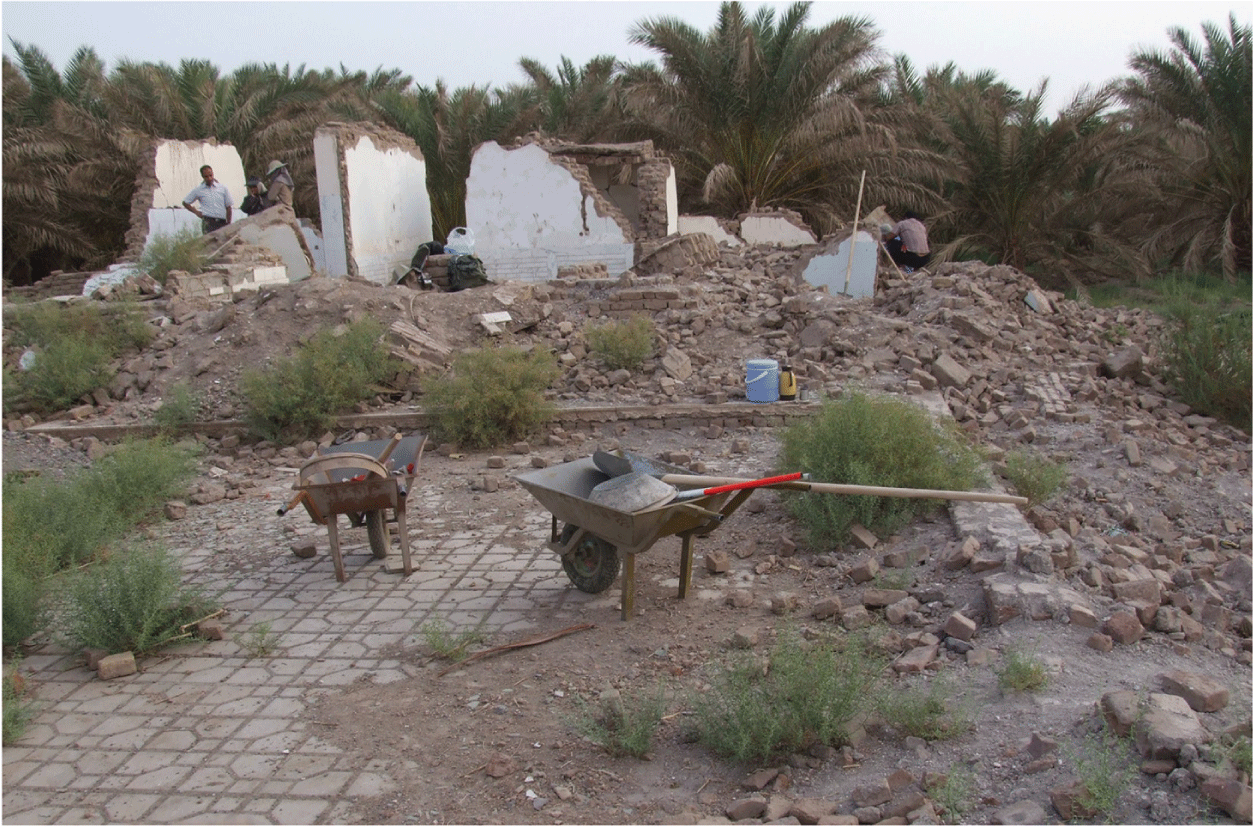
The field is also very dynamic and is in constant development, and it considers empathy an important archaeological strategy. In 2008, after five years of ethnoarchaeological projects in Bam, we changed our methodology to the archaeology of the contemporary past. We excavated six ruined houses in order to reconstruct the last moments of the lives of the earthquake victims. Five years of research and living in Bam made us different people. The people in Bam shared their sufferings with us and we were able to experience their pain and hardships. This strategy is important as ‘archaeology can also allow us to go deeper and in more detail into other people’s lives and reveal something of them’ (González-Ruibal Reference González-Ruibal and Smith2014b, 1686). In addition to our own change, the project successfully contributed to the newly emerging genre of everyday life in Bam. We learned through this experience that archaeology has the potential to narrate the suffering of an era. In this way, archaeology manages to keep alive something of those persons and has the power to become a poetical memory practice (ibid.). Excavating the six ruined houses in Bam (Figure 1) was our first experience of doing contemporary archaeology. The experience taught us that working in an everyday contemporary context was much more difficult than we had thought, also in practice. Data release, social commitment and ethical issues that we encountered carried heavy professional responsibilities. Further, we discovered how challenging working under dictatorship could be.
Hafezabadi house, Bam, 2008 (photograph by Mariam Naeemi).

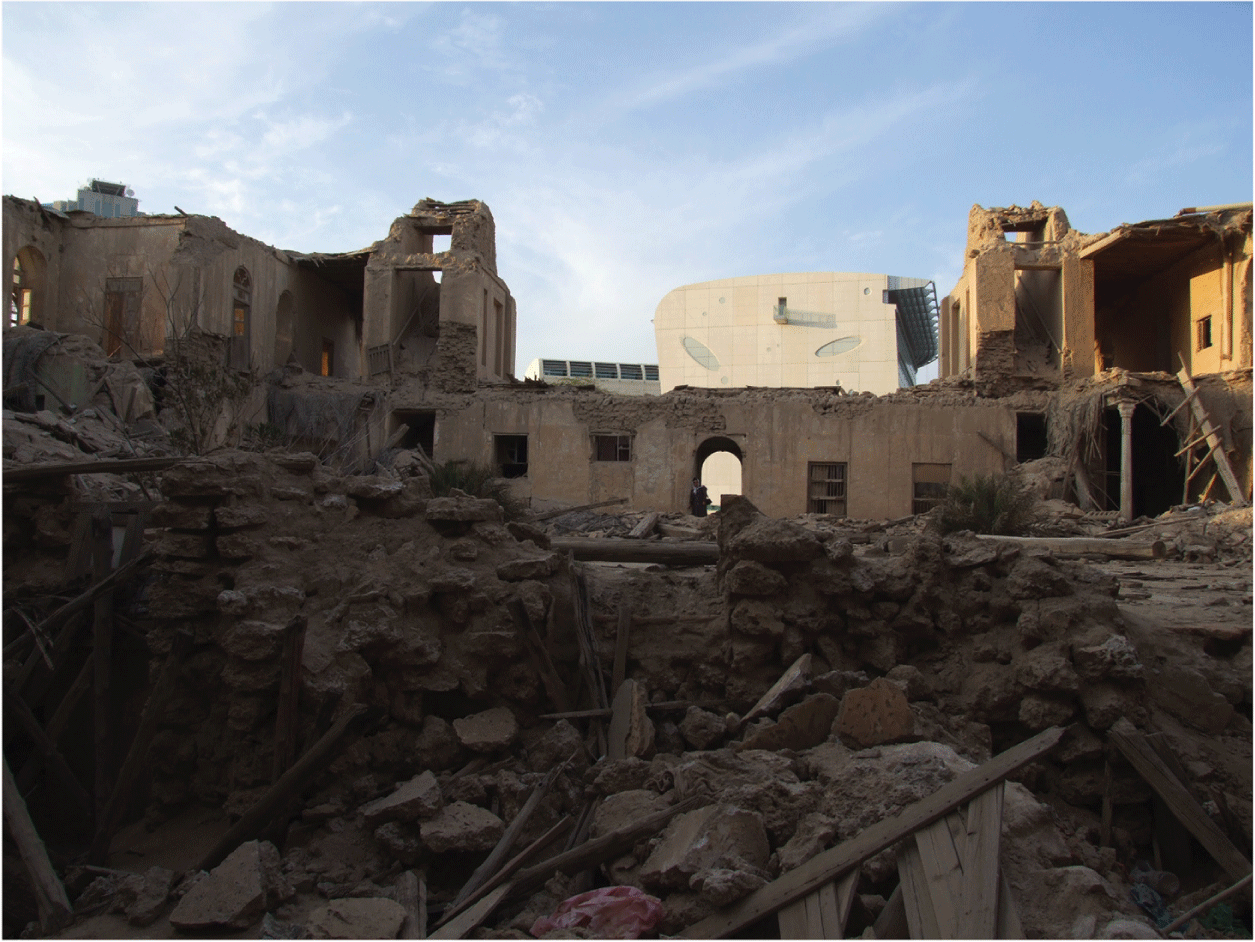
The monuments of Sheikh Khazal Khan Besides the study of everyday life, the investigation of oppositions, detention and confinement; the Iran–Iraq war; the Kuwait–Iraq war; garbology; land reforms; and women’s issues have all featured in our field projects. Conducting fieldwork on these subjects is notoriously challenging, and most of the projects have remained unfinished. As an example of these challenges, the excavation of Sheikh Khazal Khan’s palace and office in Kuwait demonstrates clearly how unstable and changing policy and conflict over contemporary material remains can bring contemporary projects to an end and negatively affect the preservation and restoration of contemporary sites. Sheikh Khazal’s constructions exhibit an interesting case in the emergence of the modern Middle East, with newly emerging nations and associated tensions. Invited by the Ministry of Culture of Kuwait in November 2008 to excavate a couple of ruined monuments built by Sheikh Khazal Khan (an Iranian Arab) in Kuwait (Figure 2), Leila and her colleague, Mariam Naeemi, accompanied by workers from Egypt, Pakistan, Tunisia and Iraq, excavated both sites within a couple of weeks. The excavation revealed the insistence of Khazal on applying an Iranian style rather than an Arabic one. Despite a successful fieldwork season, the project could not be finished for reasons unexplained; it may be related to the political tensions between Iran and Kuwait or to the vague role of Khazal as a British spy. Despite the confusion, today he is considered a hero for fans of pan-Arabism (Papoli-Yazdi Reference Papoli-Yazdi2013; Papoli-Yazdi and Naeemi Reference Papoli-Yazdi and Naeemi2012).
Gasr-al Ghanim, Khazal Khan’s house, Al-Kuwait, 2008 (photograph by Mariam Naeemi).

Building X Contemporary archaeology broadened its scope to cover the recent past of torture, disappearance and death (Haber Reference Haber, Funari, Zarankin and Salerno2009, 3). Discussing torture and detention in Francoist Spain, González-Ruibal (Reference González-Ruibal, Myers and Moshenska2011, 53) puts forward the necessity of the archaeological investigation of sites of torture, because ‘the materiality of the sites themselves has rarely been taken into consideration’. Obviously, archaeology can examine the very recent past of contemporary materialities themselves. This is also the case with the Iranian contemporary-archaeology project on Building X. Building X was actually the basement of the Faculty of Art and Architecture at the Bu-Ali Sina University in Hamedan, which we first entered in the autumn of 2009 and recognized its very strange structure. During the autumn and winter of 2009–2010, Omran, Leila and a number of their students spent most of the days in the basement. At the time, Leila wrote a letter to the rector of the university and he accepted our proposal to survey and excavate the basement (Papoli-Yazdi et al. Reference Papoli-Yazdi, Garazhian, Dezhamkhooy, Naeemi and Massoudi2013). The project was able to investigate the complete 30-metre corridor which ended in three dark rooms, each 4 × 4.5 metres. The corridor was locked with an old metal door leading to a ramp that was connected to the faculty yard. When we entered one of the dark rooms we found papers scattered on the floor documenting the arrest of a professor and a number of students during the 1970s before the 1979 revolution. Some local students managed to contact the arrested students, who by now had grown old. We asked them to use blindfolds and enter the building. Three individuals were able to remember the dark rooms which were used as interrogation rooms at the time. Difficulties also arose during this project. On 7 February 2010, an unknown person from the intelligence service called and threatened Leila: she was asked to return the documents or otherwise they would arrest the students. She gathered the students and asked them to read the papers in which we could find the traces of the professor who had been arrested in 1973 and disappeared forever. Then she gave back all the papers to the security service of the university. Needless to say, the excavation remained unfinished. Twenty days after the excavation of Building X, Omran and Leila received a letter stating that they had both been exiled to Neyshabour College in a small city close to Mashhad.
Resistance forms another important aspect of modern conflict. ‘In this respect the traditional operation of “archaeological uncovering” serves a different purpose in the recent past’ (Harrison and Breithoff Reference Harrison and Breithoff2017, 219). Yet one of the main contributions of this kind of archaeology might lie in interrogating domination and resistance through material culture (González-Ruibal Reference González-Ruibal, Myers and Moshenska2011, 64). The critical discussion of past domination, exploitation and resistance might lead archaeologists to present political action (Zarankin and Funari Reference Zarankin and Funari2008, 311). The study of resistance to dictatorship and totalitarianism has received much more attention in recent years. Archaeologists have explored populations and nations under dictatorship and documented the criminal strategies of these regimes (see Myers and Moshenska Reference Myers and Moshenska2011; Reference Myers, Moshenska and Smith2014; Zarankin and Funari Reference Zarankin and Funari2008) through the investigation of sites, materialities and objects. In this way archaeology has been able to reconstruct individual histories of people who resisted terror regimes, the micro-scale narratives which can display the life or the last hours of the life of reformists and people opposing dictatorial regimes.
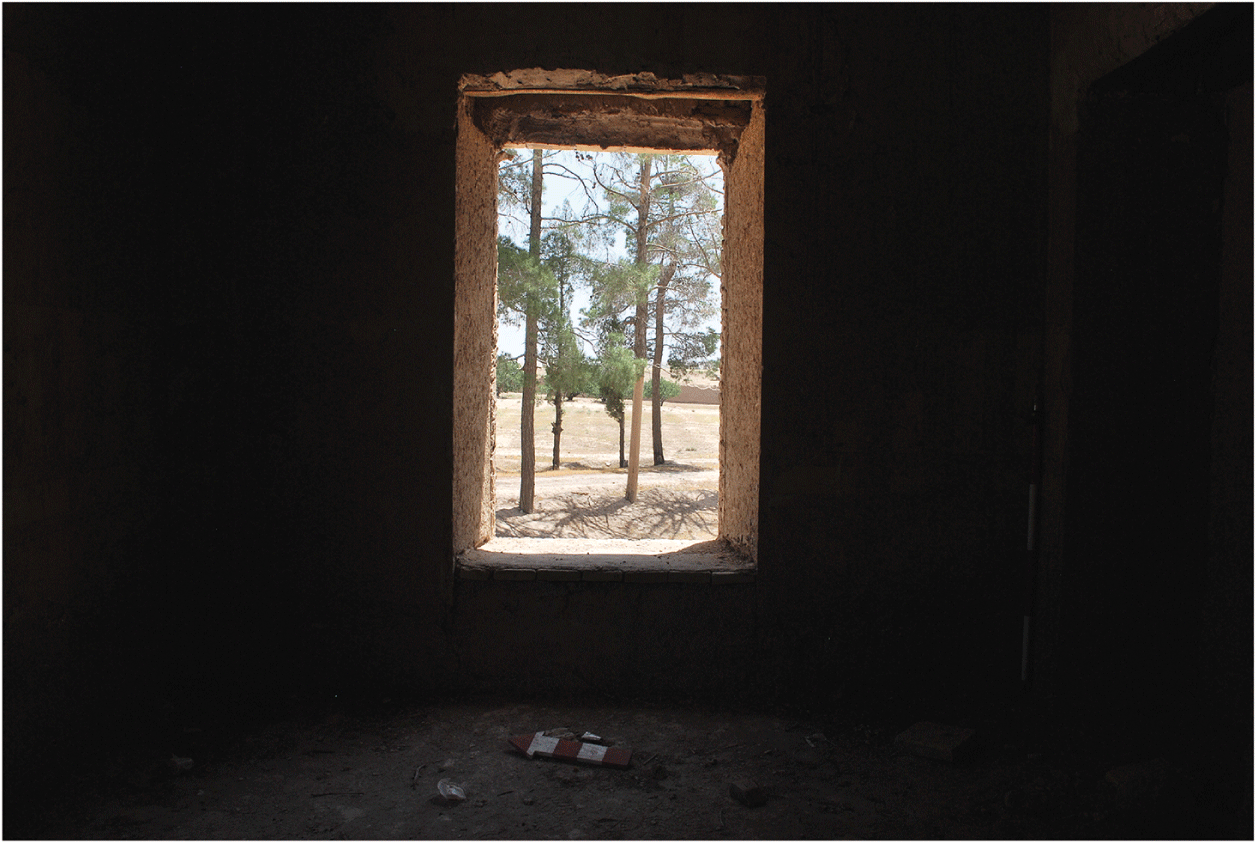
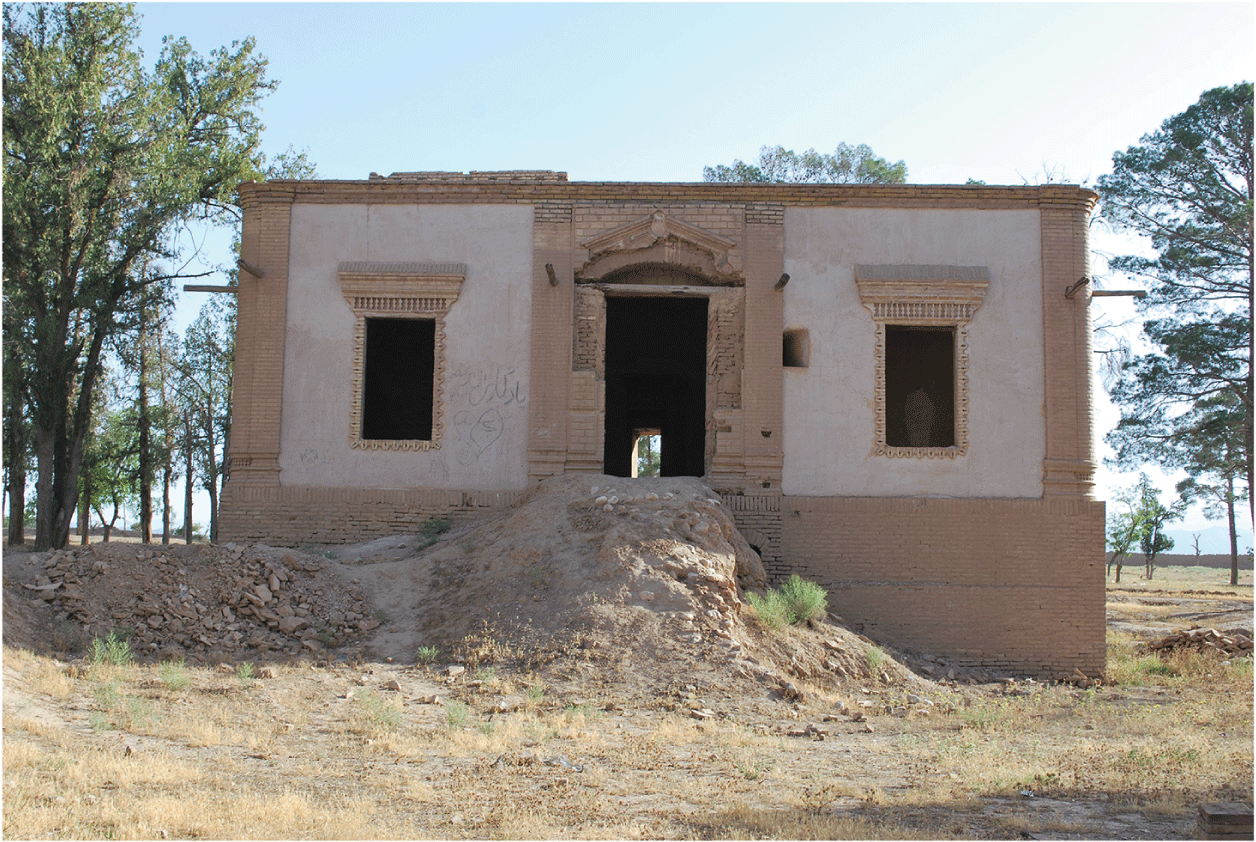
Neshat Garden Neshat Garden, a late Qajar/early Pahlavi site, is located in Taqi Abad-e Salar, Neyshabour, in north-eastern Iran (Papoli-Yazdi, Dezhamkhooy and Naimi Reference Papoli-Yazdi, Dezhamkhooy and Naimi2012). The site had been recorded in the National Monuments Index as a ‘historical garden’. The Iranian Cultural Heritage, Handicrafts and Tourism Organisation therefore defined Neshat as a regular garden (Dezhamkhooy and Massoudi Reference Dezhamkhooy and Massoudi2014, 592). One season of survey and one season of excavation in the spring and summer of 2011 challenged this basic view (Figures 3 and 4).
Bagh-e Neshat, central building, Neyshabour, 2011 (photograph by Mariam Naeemi).

Bagh-e Neshat, central building, Neyshabour, 2011 (photograph by Mariam Naeemi).

Originally, the founder and owner of the garden was an exiled intellectual named Salar Motamed-e Ganji, who assembled other exiled intellectuals and artists such as Kamal ol-Molk, the famous dissident painter of the Qajar court. As opponents of the Shah of Iran, Reza Shah Pahlavi (ruled 1925–1941), they gathered in this garden, and changed the traditional building to a production centre for firearms and a base for opposition to the national army. By excavating two buildings and the yard at this site, we discovered several kilns (which had been used to produce bullets), hidden doorways and major changes to the plan of the building carried out to reduce its visibility. We also found traces of wall paintings that were probably painted by Kamal ol-Molk. After the assassination of the young dissident officer Colonel Pesyan, the group had to reduce their activities. Finally, Salar Motamed was brutally killed by the Shah’s commanders in Mashhad while Kamal ol-Molk, who was old, remained alone until his death in the remote village of Hussain Abad, a village which was donated by Salar to the painter (Dezhamkhooy and Massoudi Reference Dezhamkhooy and Massoudi2014; Papoli-Yazdi et al. Reference Papoli-Yazdi, Garazhian, Dezhamkhooy, Naeemi and Massoudi2013).
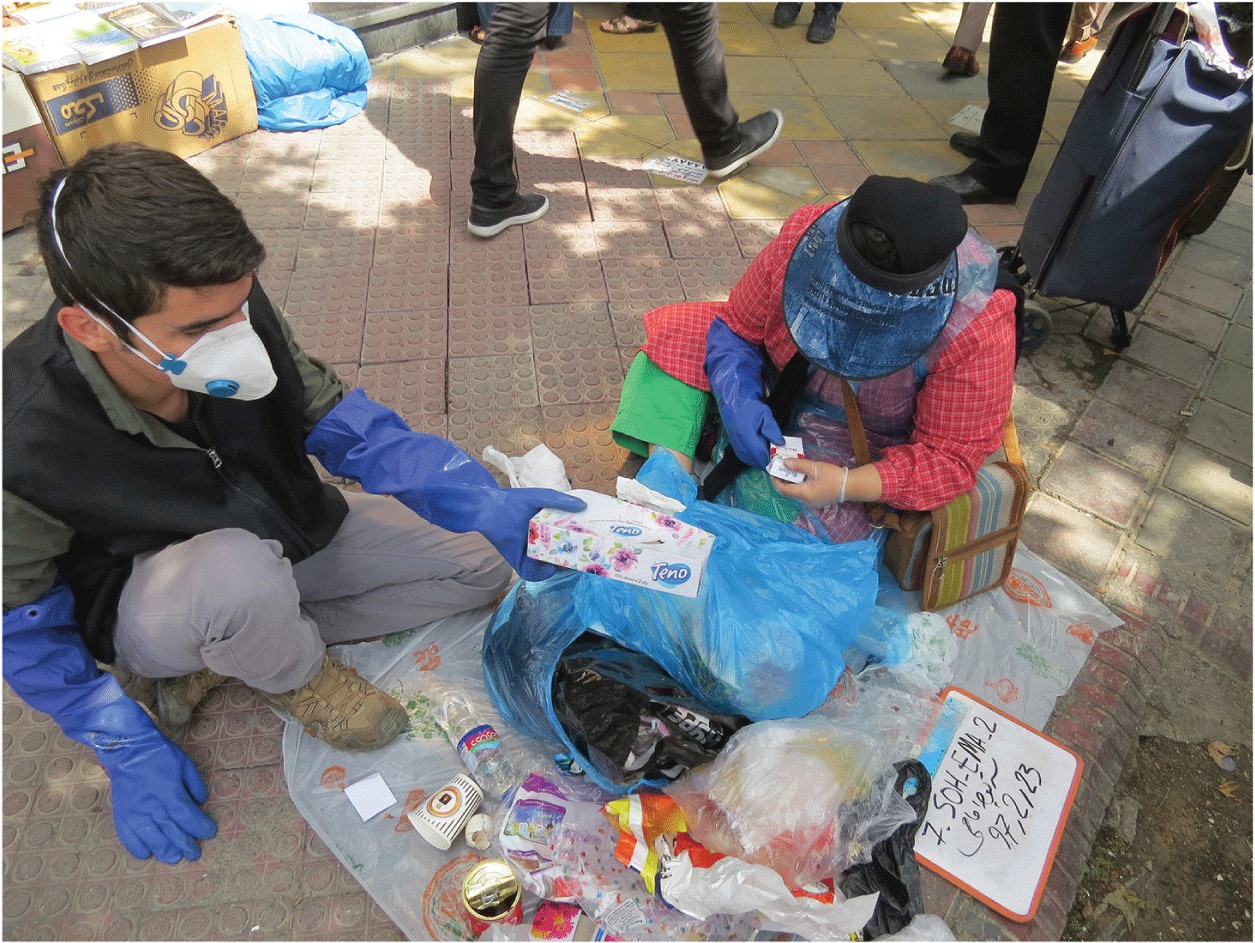
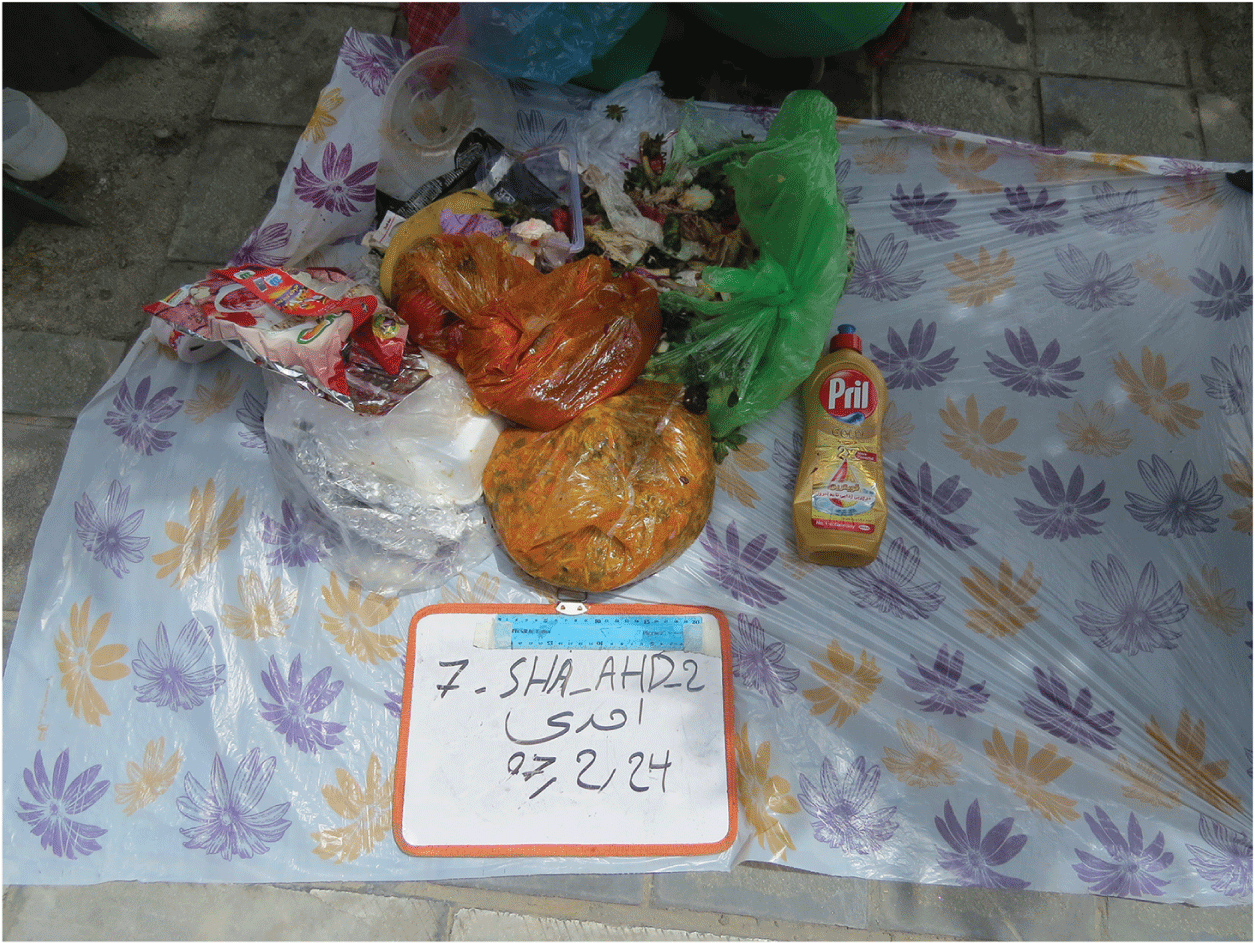
The garbage project Archaeology has the potential to be ‘democratic’, as it analyses things everybody produces (Zarankin and Funari Reference Zarankin and Funari2008, 311): these include material remains usually called ‘garbage’ (Rathje and McCarthy Reference Rathje, McCarthy and Dickens1982). In this context, archaeology gives researchers the opportunity to build a ‘history of the people without history’ (Wolf Reference Wolf1982). The garbage project was supported by Tehran Municipality and directed by Leila, Omran and Maryam. The team consisted of twelve members, including archaeologists and social-science students and graduates (Figures 5 and 6).
Garbage project, Tehran, 2018 (photograph by Masoumeh Hosseini).

Garbage project, Tehran, 2018 (photograph by Homayoun Khosh-Eghbal).

By the end of 2018, two phases of the project had been executed in two districts of Tehran, one in the south and the other in the west. During this nine-month project, 802 families from the lower and middle classes were studied. Their diet and changes in diet over time, and their recycling habits (at home), were studied. Students weighed, classified and documented all the garbage a family produced in a single day, in a week and over a couple of weeks. The families and shopkeepers in each district were interviewed in order to find out families’ consumption and recycling patterns. Those discarded objects can tell a story wildly different from the one reported by consumers (González-Ruibal Reference González-Ruibal and Smith2014b, 1691). Not only the evidence of poverty, but also the crime, drug use and prostitution in the southern districts of Tehran surprised us. In District 17 of Tehran, which is mostly populated by people of low-income status, the average amount of daily garbage for many families was around 600 grams, and only scarcely contained the remains of proteins and nutrient-dense foods. Although there are some works (see Bayat Reference Bayat1997) that discuss sociopolitical evidence and trajectories of poverty over the last half-century in Iran, we were actually the first and the only scholars investigating the materialities of cultural and social deprivation. The results were really heartbreaking, not only for us but also for the sociologists.
In their significant contribution, Buchli and Lucas (Reference Buchli, Lucas, Buchli and Lucas2001, 15) introduced the concept of the ‘absent present’. This would grow to be a complex concept, diversified by different conceptual, methodological and even temporal levels. Here we would like to emphasize one aspect of this absent present: the ignored, or the present without written or proper history. The present of the marginalized, the oppressed and minorities is usually invisible or absent in official histories:
What is clear is that the archaeological act, in addressing the absent present, addresses the silent and painful lacunae in our understanding of recent experience. As these case studies show, it almost invariably goes to the heart, or more accurately, the painful nerves and tensions of experience that would disrupt and/or challenge the dominant voices structuring our experiences (Buchli and Lucas Reference Buchli, Lucas, Buchli and Lucas2001, 15).
The politics of present representation: the state and the materialities of the contemporary era
In this section we would like to briefly clarify that there is always struggle over the contemporary past, its history and even its material culture. How could an independent archaeology demonstrate its legitimacy to study the contemporary world? How can it cope with the regime’s monopoly over the past? Generally, contemporary history in Iran has two custodians: the state and the departments of contemporary history. Because the production of modern and ancient history is usually supervised by governments, the official history is highly biased and, as a result, historians usually present very conventional narratives of the decline of the Pahlavi regime. There are several serious cases of falsification to note as well, of which the distortion of the narrative of the 1953 coup against Dr Mohammad Mosadeq (the former prime minister and national leader who opposed imperialism) is one of the most significant and most polemical examples. Narration is guided by the state and military authorities, who are the principle eligible narrators of the Islamic Revolution and the eight-year Iran–Iraq war.Footnote 4 National television, which has a governmental nature, releases such metanarratives on the war and revolution. Thus, regarding contemporary history, the regime emphasizes the 1970s and 1980s (Kamalipour and Snow Reference Kamalipour and Snow2004). Institutions such as Sepah-e Pasdaran (the right-wing military force), Setad-e Tafahos (the centre for excavating the bodies of the victims of the war), Bonyad-e Nashr-e Arzeshhay-e Defa-e Moqadas (the Foundation for Preservation and Publication of Holy Defence Values), and the Centre for the Islamic Revolution Documents permanently reproduce war (hi)stories as ideological capital (Kamalipour and Snow Reference Kamalipour and Snow2004). Beside all these, since 2017, ICHTO has also established a new research group for studying the material of ‘martyrdom and holy defence’, whose research, outputs and staff charts are obscure.
In a Lefebvrian sense, the sovereign state produces space (Lefebvre Reference Lefebvre, Brenner, Elden, Moore, Brenner and Elden2009). As Elden (Reference Elden2007) has meticulously scrutinized, space is political and there is a politics of space. In recent decades, especially during the 2000s, the government also conducted material strategies of the politics of space. Thereafter, some institutions have been founded to protect the ‘material heritage’ of the war, namely museums, monuments and religious centres. Battlefields, particularly in the south of Iran such as Shalamcheh, one of the principal sites of invasion by Saddam Hussein’s Iraq in the Iran–Iraq War, have been turned into the principal destinations of battlefield tours. It is noteworthy that during the war, the south-western and western borders were attacked and temporarily occupied by the Iraqi army. The western part has traditionally been resided in by the Sunni Kurds. Interestingly, the government has scarcely invested in the western battlefields, while particular areas in the south-west, mostly in Khuzestan province, have received government finance and attention to develop war tourism and monumental constructions. Surprisingly, Khorramshahr, the port which is mostly populated by Shia Arabs and was occupied and almost completely destroyed, is not really considered by the government; instead, Shalamcheh, an uninhabited area, is the main destination of war tourism. Hence it becomes clear that the metanarratives of state institutes produce others. The consequence of this is that some ethnic and religious groups are intentionally eliminated. Religious minorities, among others, are usually removed from the official narrative, as if the war had only destroyed the lives of Shia Fars, the group which, according to such a narrative, defended the country during the invasion.
Setad-e Tafahos is the main authority responsible for investigating the battlefields, for the excavation of mass graves and for the identification of anonymous and missing persons. The centre also organizes parades and reburial ceremonies. If a discovered body is anonymous, it will be buried in the monuments constructed specially for ‘anonymous martyrs’. Such monuments inscribe this metanarrative and dominant ideology not only on urban spaces and universities, but also more recently on the villages and landscapes and even on the mountains; they are shaped to manipulate the collective memory of the nation. The state considers the war a holy heritage and refers to it as the ‘holy defence’. Consequently, the families and relatives of the victims can scarcely pursue the destiny of their loved ones independently. Unsurprisingly, the regime intentionally considers the dead agents and ignores the living society and public opinion on the eight-year war. The contemporary past of Iranians is highly ideological and reduced to the revolution and war. As McGuire (Reference McGuire2008, 16) argues, we may direct our scholarship to produce knowledge that either reinforces or challenges the dominant ideologies of our times. What makes the interdisciplinary study of the contemporary past in Iran different from its practice in Western countries is its temporal scale. The investigation of violence is usually carried out years after the event. Normally, archaeologists study the data of violence in peace and with the support of democratic governments; however, Iranian archaeologists’ attempts to trace violence synchronically and in its everyday context have to be carried out within an oppressive present. This makes it extremely difficult to access data and investigate the material culture of violence. As a strategy of survival and also according to our professional experience in Iran, we therefore currently try to concentrate on the everyday archaeological remains of the late 19th to early 20th centuries. The study of everyday life and its materiality can make a significant contribution to our studies on oppression. Although initially we started out with the investigation of sites related to conflict and violence, we gradually recognized the subtle ways in which violence is imposed on quotidian life. After years of work we came to the conclusion that the everyday life of ordinary people deserves more archaeological consideration.
Conclusion
One of the first modern contemporary archaeology projects in the Middle East was conducted in Iraq. The project was conducted by the government of the United States, supported by its army (Pringle Reference Pringle2009). Conducted in the framework of forensic archaeology (Ferllini Reference Ferllini2007), the project investigated and excavated clandestine graves. Bush’s government was highly criticized by the public after the USA’s attack on Iraq and the encouragement of Saddam’s trial to justify the invasion and occupation of Iraq. Likewise, the excavation of a mass grave exhuming the victims of the Kurdish genocide ordered by Saddam could be considered another example of this legitimization. However, it should be stressed in this case that the members of the team, including anthropologists and archaeologists, cannot be fully condemned for the anti-humanitarian goals of the project. The project was under the direct supervision of the US army, who dismantled its independent nature, while the group of archaeologists and anthropologists tried to reconstruct the crime scene precisely, and gather proper evidence for the court. In the end, they handed over the bodies to the families in a respectful way. As Hamilakis (Reference Hamilakis2009, 39) discussed, the increasing collaboration of many archaeologists with the invading militaries and occupation authorities since 2003, especially within the US military, has laid the foundations for an emerging military–archaeology complex. However, although Bush’s government misused the project, it did show the potential of archaeological methodology to reveal modern dilemmas and anti-humanitarian vices such as massacre and genocide.
Since the introduction of modern political borders and nation states, the Middle East has been involved in many bloody conflicts and tensions. Most of the countries of the region are still under dictatorships that are interested in the instrumental use of history and material remains of the past (see Dezhamkhooy and Papoli-Yazdi Reference Dezhamkhooy and Papoli-Yazdi2018). The archaeology of the contemporary past in the Middle East is a field in need of further development and focus. It is vital that local archaeologists in the region learn about the methodology and theoretical frameworks of this interdisciplinary field. Unfortunately, no department, institute or research centre offers any courses in this discipline. The dominant conservative paradigm and the reluctance of many archaeologists to concern themselves with contemporary archaeology still undermine the development of the subfield. The antiquarian archaeology of the 19th century remains overwhelmingly practised in the region; annually, Western archaeologists in collaboration with national governments of the region spend millions of dollars on the archaeology of the Middle East (see Papoli-Yazdi and Garazhian Reference Papoli-Yazdi and Garazhian2012), particularly on prehistorical and early historical sites. This is highly problematic, as the archaeology which is interested in reproducing the mythical/colonial Middle East as the centre of civilization and ancestor of Western civilization (see Bernbeck Reference Bernbeck, Meskell and Preucel2008) structurally denies the relevance and significance of contemporary contexts. Some archaeologists, such as Pollock (Reference Pollock2003) and Hamilakis (Reference Hamilakis2005), suggest that archaeologists need to link their practice to larger social contexts in order to take a more nuanced and ethically responsible approach to the politics of the region and the media (McGuire Reference McGuire2008, 20), and this would be a very welcome development in the archaeology of the Middle East. Unfortunately, archaeology remains predominantly exploited by the nation states of the region to develop nationalism. Iran’s archaeology under the Pahlavis, Iraq’s under Saddam Hussein, and the Kurdistan region and Syria’s with its emphasis on Palmyra can be cited, among others, as examples of such nationalistic archaeologies (see Al-Manzali Reference Al-Manzali2016; Ozdoğan Reference Ozdoğan and Meskell1998).
During the last decade, members of GAP END, an organization of Iranian engaged archaeologists, have consistently pursued research projects in spite of the dismissal of most of the members, political pressures or financial problems. Whenever it was impossible to conduct field projects, the group shifted to library and archival data or to holding seminars and discussions in members’ houses. While our colleagues in many other countries cooperate with the support of governments, in Iran archaeology should preserve its independence to avoid official interference, in particular in the case of research dedicated to crime scenes, clandestine graves, massacre and genocide. Further, in our view, the archaeology of the contemporary past is more than a simple method, but also an ethical approach to life. Bourdieu (Reference Bourdieu1998) states that academia should remain an independent field, and act as a critic of the dominant order. However, the archaeology of the contemporary world is not merely a matter of dealing with modern material culture but also one of engagement, of active criticism and of scrutinizing ethics in the practice of archaeology. In their pioneer contribution, Rathje, Gould and Schiffer have properly described the archaeology of contemporary past as ‘the archaeology of us’ (Gould and Schiffer Reference Gould and Schiffer1981). The archaeology of us would help the voice of minorities, women, queers, oppressed groups and ordinary people to be heard. Indeed, what archaeologies of the contemporary past can offer are actually multiple narratives and readings of the past; this multiplicity can consider the interests and voices of different social groups and stakeholders.
Undoubtedly, in countries like Iran and maybe the whole Middle East, archaeologists who have dedicated their research to the study of the contemporary past (if, of course, any such archaeologists exist) should learn the methods of working in crime scenes and in particular the excavation methods of clandestine graves. Severe suppression of political opposition, especially the mass execution of Iranian political prisoners in the summer of 1988 and in 2009–2010, as well as the suppressed civil demonstrations of 1993 and 2017–2018, deserve archaeological attention (see Abrahamian Reference Abrahamian2003). The victims of 1988 were secretly executed and buried in mass graves. Also, during the student demonstrations on 9 July 1999, and later the Green Movement demonstrations in 2009, many people went missing.
Evidently, there is a lack of interest among Middle Eastern governments to develop an independent indigenous archaeology of the contemporary past. Needless to say, this issue seriously reduces the efficacy and scale of action of the subfield in the Middle East. And eventually detention centres, clandestine places of torture and prisons are significant sites which should be studied by archaeologists. However, these places are unfortunately still ‘forbidden territory’ for archaeologists.
Maryam Dezhamkhooy is an Alexander von Humboldt Foundation alumna and previous Assistant Professor of Archaeology at the University of Birjand, Iran. She is a historical archaeologist with a broad interest in theory. Since 2003 she has concentrated on the archaeology of the recent/contemporary past and has focused on the study of violence and conflicts, colonialism, nationalism, gender and sexuality. Her works on gender in Sasanian Iran can be cited as pioneer works in Iran.
Leila Papoli-Yazdi is a Guest Researcher at the Department of Historical Studies at Gothenburg University, an Alexander von Humboldt alumna, and a suspended Assistant Professor in Archaeology, since 2010, at the University of Neyshabour due to political issues. She is an archaeologist of the recent past who, since 2003, has concentrated on the disaster archaeology of Bam, a city located in south-eastern Iran which was dramatically damaged by an earthquake. Afterwards, she directed several projects in Pakistan, Kuwait and Iran. The main themes of all her projects are oppression, gender, colonialism and nationalism. Her works on political oppositions and nationalism from an archaeological viewpoint can be cited as pioneer works in Iran.