





Introduction
Food-borne zoonotic trematode-caused diseases pose major public health and veterinary challenges that are mainly associated with aquatic environments. Their complex 3-host life cycles require molluscs, many of which are freshwater snails, as first intermediate hosts, where the parasite undergoes asexual development and eventually produces free-living cercariae. These cercariae are present in the water and typically infect a second intermediate host, which may be a mollusc, fish or arthropod, or alternatively encyst on the surface of aquatic plants, where they develop into infective metacercariae. When the second intermediate host is consumed by a vertebrate definitive host (human, domestic or wild animals), the metacercariae excyst and develop into adults (sexually mature) which are found in different organs, including the liver, lungs and small intestine, depending on the trematode species (Hung et al. Reference Hung, Madsen and Fried2013; Madsen and Hung, Reference Madsen and Hung2014; Madsen et al. Reference Madsen, Nguyen, Lanza and Stauffer2022).
In Vietnam, hydropower development has accelerated rapidly since the early 2000s, particularly in the mountainous regions of the north. Although these reservoirs provide substantial economic and energy benefits, they simultaneously create extensive aquatic habitats that may facilitate the persistence and spread of zoonotic trematodes (Le et al. Reference Le, Nguyen, Van Hoang, Tran, Nguyen, Nguyen, Nguyen, Greiman, Stauffer, Madsen and Nguyen2025). Recent parasitological surveys have documented the presence of cercariae and metacercariae of multiple medically important trematode species in these areas, identifying hydropower reservoirs as emerging focal points for transmission (Phan et al. Reference Phan, Bui, Nguyen and Murrell2016; Dai et al. Reference Dai, Hong, Pak, Le, Choi, Na and Sohn2020; Nguyen et al. Reference Nguyen, Van, Ho, Tatonova and Madsen2021a,Reference Nguyen, Hoang, Dinh, Dorny, Losson, Bui and Lempereurb; Nguyen, Reference Nguyen2022; Le et al. Reference Le, Nguyen, Van Hoang, Tran, Nguyen, Nguyen, Nguyen, Greiman, Stauffer, Madsen and Nguyen2025).
The high prevalence and persistence of trematode infection in reservoir areas are likely driven by 2 interacting mechanisms. First, dam construction fundamentally alters hydrological regimes and creates suitable ecological conditions for vectors and intermediate hosts, facilitating the establishment and expansion of trematode transmission cycles (Patz et al. Reference Patz, Graczyk, Geller and Vittor2000; Ong et al. Reference Ong, Wang, Sithithaworn, Grundy-Warr and Pitaksakulrat2016; Le et al. Reference Le, Nguyen, Van Hoang, Tran, Nguyen, Nguyen, Nguyen, Greiman, Stauffer, Madsen and Nguyen2025). Second, entrenched behavioural practices, including the consumption of raw or undercooked aquatic products, inadequate livestock management and poor sanitation, further amplify transmission risk (Dang et al. Reference Dang, Yajima, Viet and Montresor2008; Phan et al. Reference Phan, Ersbøll, Do and Dalsgaard2011; Vinh et al. Reference Vinh, Phimpraphai, Tangkawattana, Smith, Kaewkes, Dung, Duong and Sripa2017; Tran et al. Reference Tran, Doan, Do, Nguyen, Hoang, Le, Hoang, Le, Le and Le2019; Nguyen et al. Reference Nguyen, Dermauw, Dahma, Bui, Le, Phi, Lempereur, Losson, Vandenberg, Do and Dorny2020, Reference Nguyen, Bui, Losson, Dahma, Nguyen, Nhu, Do, Dorny, Vandenberg and Dermauw2024).
Previous small-scale studies indicate that local communities surrounding hydropower reservoirs are highly dependent on fishing and aquaculture, and they consume locally sourced aquatic foods. When combined with limited public awareness of trematode transmission pathways, these practices may increase infection. Consequently, evaluations of the community knowledge, attitudes and practices (KAP) are essential for identifying behavioural drivers of infection and for guiding effective and targeted health interventions (Nguyen et al. Reference Nguyen, Seddaiu and Roggero2019, Reference Nguyen, Dermauw, Dahma, Bui, Le, Phi, Lempereur, Losson, Vandenberg, Do and Dorny2020; Phi et al. Reference Phi, Nguyen, Le, Do, Lenaerts, Losson, Vandenberg, Dorny, Van Gerven, Boere-Boonkamp and Bui2022, Reference Nguyen, Bui, Losson, Dahma, Nguyen, Nhu, Do, Dorny, Vandenberg and Dermauw2024).
Although hydropower reservoirs are increasingly recognized as novel ecological settings that facilitate trematode transmission, previous studies in Vietnam and neighbouring countries have typically addressed reservoir-associated trematode transmission, human infection or KAP in isolation (Phan et al. Reference Phan, Bui, Nguyen and Murrell2016; Vinh et al. Reference Vinh, Phimpraphai, Tangkawattana, Smith, Kaewkes, Dung, Duong and Sripa2017; Dai et al. Reference Dai, Hong, Pak, Le, Choi, Na and Sohn2020; Phi et al. Reference Phi, Nguyen, Le, Do, Lenaerts, Losson, Vandenberg, Dorny, Van Gerven, Boere-Boonkamp and Bui2022; Kaensa et al. Reference Kaensa, Charoensuk, Nakmai, Pinlaor, Suwannatrai, Laothong and Prakobwong2025). Consequently, the mechanisms through which hydropower-driven environmental change reshapes trematode ecology and intersects with human behaviour to influence transmission risk remain insufficiently understood. This study aimed to assess the KAP related to trematode infections among communities living in hydropower reservoir regions of northern Vietnam. Distinct from previous studies, this work describes concurrent community-level behavioural data and parasitological evidence of trematode transmission within the same reservoir systems, providing complementary insights into the behavioural and environmental context of infection risk. By adopting and integrating a One Health framework, this study moves beyond descriptive KAP surveys or standalone parasitological investigations and provides a holistic assessment of human–environment interactions in newly formed hydropower ecosystems. These findings contribute new empirical evidence to inform interdisciplinary and location-specific trematode control strategies in rapidly transforming reservoir landscapes.
Materials and methods
Study sites
The study was conducted in communities surrounding the Hoa Binh, Son La and Thac Ba reservoirs, which are located in the updated provincial administrative units of Phu Tho, Son La and Lao Cai provinces, respectively. Following Vietnam’s administrative reorganization in 2025, the former Hoa Binh province was merged into Phu Tho province, while the former Yen Bai province, where part of the Thac Ba Reservoir is located, was merged into Lao Cai province. Throughout this manuscript, the updated provincial names are used.
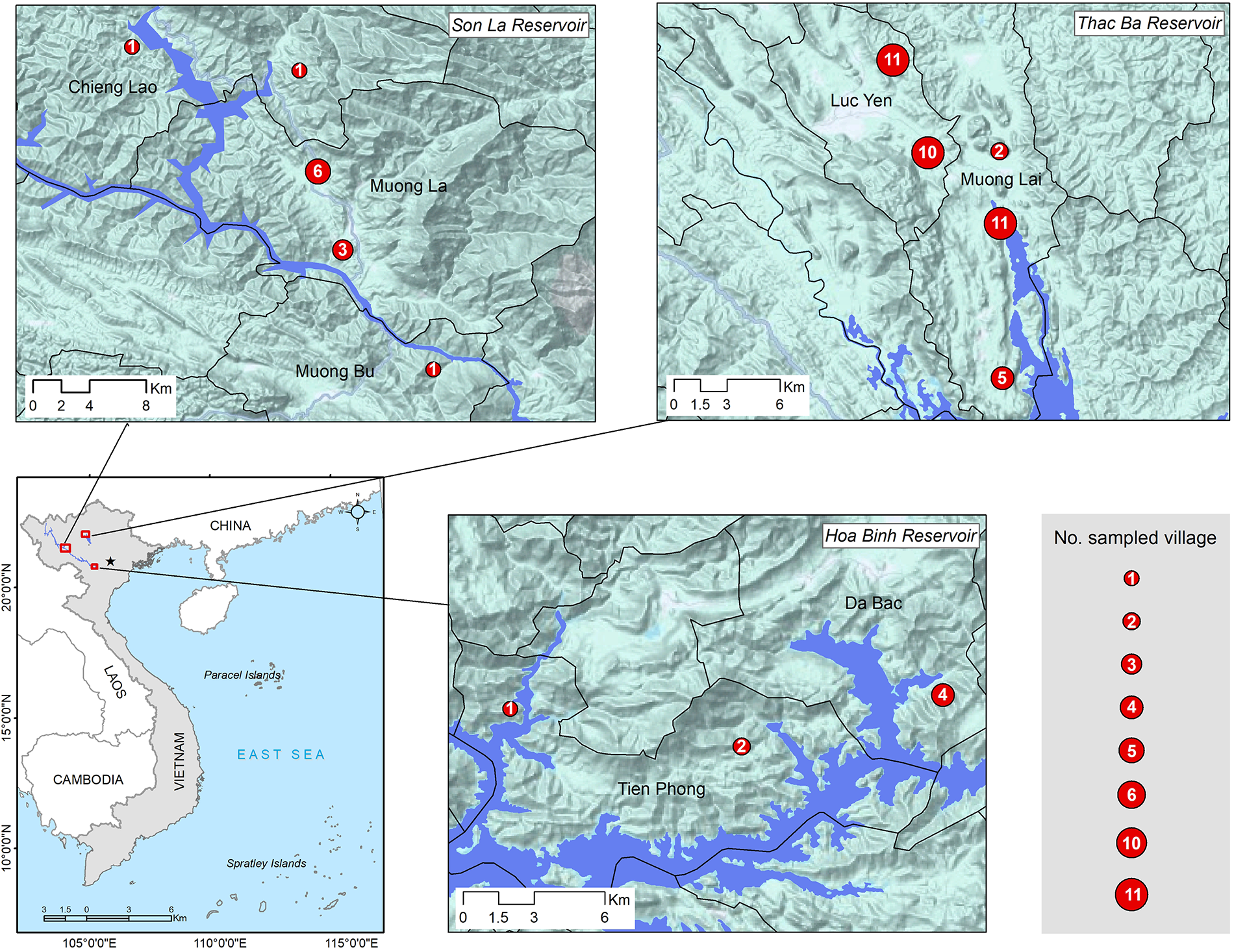
These reservoirs were selected to capture variation in reservoir age and hydrological settings across 2 of northern Vietnam’s largest river systems, the Red River and Da River. Differences in reservoir age, environmental conditions and intensity of human activity are likely to shape the patterns of trematode prevalence and diversity among intermediate and definitive hosts, including humans (Le et al. Reference Le, Nguyen, Van Hoang, Tran, Nguyen, Nguyen, Nguyen, Greiman, Stauffer, Madsen and Nguyen2025). In total, 58 villages representing 7 communes across 3 provinces adjacent to these reservoirs were included in the sampling design (Figure 1).
Study locations across 3 hydropower reservoir systems in northern Vietnam. Red symbols indicate surveyed communes where human parasitological sampling and household knowledge-attitudes-practices (KAP) interviews were conducted. Symbol size represents the number of sampled villages within each commune.

Figure 1 Long description
Three maps detail study locations across hydropower reservoir systems in northern Vietnam. The first map shows Son La Reservoir with red symbols marking communes: Muong La, Muong Bu and Chieng Yen. The second map depicts Thac Ba Reservoir, highlighting Luc Yen and Muong communes. The third map illustrates Hoa Binh Reservoir, indicating Da Bac and Tien Phong communes. Each red symbol represents surveyed communes, with symbol size indicating the number of sampled villages. A legend lists numbers from 1 to 11, corresponding to the number of sampled villages within each commune. The inset map provides a broader view of Vietnam, showing the location of these reservoirs relative to China and Cambodia, with the East Sea labeled. Scale bars are present on each map, indicating distances in kilometers.
Stool examination
Households within each commune were randomly selected from lists provided by local authorities. In each selected household, all family members aged 3 years or older were invited to participate. Health station staff distributed labelled plastic bags to participants aged ≥16 years and provided standard instructions for fecal sample collection and storage until retrieval the following day. For participants younger than 16 years, sample collection was assisted by parents or guardians. Each fecal sample was labelled with the participant’s name, age, address and date of collection. In total, 1500 labelled plastic bags were distributed to villagers.
At local health stations, human fecal samples were examined using the Kato–Katz thick smear technique. One smear was prepared per sample and analysed using a standard kit provided to the National Institute of Malariology, Parasitology and Entomology (NIMPE) by the World Health Organization. Smears were examined by light microscopy at 400× magnification for the presence of helminth eggs. Egg counts were calculated using the standard Kato–Katz conversion factor for approximately 41.7 mg of stool and expressed as eggs per gram (EPG) (WHO, 1994). Egg identification was based on morphological characteristics outlined by WHO (2003). Where morphological overlap limited species-level discrimination (e.g. hookworm eggs and trematode eggs), identification was restricted to morphotype or higher taxonomic grouping. All individuals diagnosed with helminth infection were treated free of charge.
Questionnaire and interview
A structured questionnaire was specifically designed for village residents to collect data on (i) personal demographics; (ii) ownership of domestic animals; (iii) animal management practices and implementation of biosafety measures; (iv) knowledge of parasitic diseases; and (v) attitudes and daily practices related to the prevention and control of parasitic diseases.
All heads of household were invited to participate in face-to-face interviews. Prior to participation, each interviewee was informed about the study objectives, data collection procedures and confidentiality of responses. Written informed consent was obtained from all adult participants before enrolment. For participants aged 3–15 years, written informed consent was obtained from their parents or legal guardians. In addition, verbal assent was sought from children aged 7–15 years before participation. All participant information was handled confidentially throughout the study. This process ensured that individuals, regardless of age, gender or education level, could freely express their KAP related to animal husbandry and parasitic disease prevention.
In-depth, face-to-face interviews were conducted at the participants’ homes. Each interview lasted approximately 30–45 min and was conducted by 1 primary interviewer, with 2 note-takers present, along with a representative from the local health station to provide translation when necessary. Participants were informed that they could ask questions at any time and were free to decline to answer any question.
Data analysis
Data from stool examinations and questionnaires were entered into Microsoft Excel, independently cross-checked by 2 researchers and analysed using STATA version 17 (StataCorp LLC, College Station, TX, USA).
Trematode egg counts (EPG) were dichotomized into binary variables (presence: EPG > 0; absence: EPG = 0). Participant age was categorized into 4 groups: children (<16 years), young adults (16–30 years), middle-aged adults (31–50 years) and older adults (>50 years). The occurrence of trematode infections in humans was analysed using mixed-effects logistic regression model (melogit) with province, gender and age group as fixed effects, and commune and village as random factors, both with random intercepts. Regression coefficients are reported as odds ratios with 95% confidence intervals (CIs). Infection intensity was analysed using the original EPG counts (including zero counts) in a mixed-effects negative binomial regression model (menbreg) with a log-link function, and with the same fixed and random factors as specified above for disease occurrence. Regression coefficients are reported as incidence rate ratios (IRRs) with 95% CIs.
Qualitative data obtained from interviews were validated through cross-comparison of notes recorded by 2 independent members of the research team. Only information relevant to the study objectives was retained and summarized in a data table created in Microsoft Excel.
For questionnaire data, responses were aggregated and summarized as proportions. Chi-square tests were used to compare KAP-related proportions, as variables were categorical. The assumptions of the Chi-square test were assessed, and when expected cell counts were small, category aggregation was applied as appropriate. Differences with p-values below 0.05 were considered statistically significant.
Results
Characteristics of the study participants
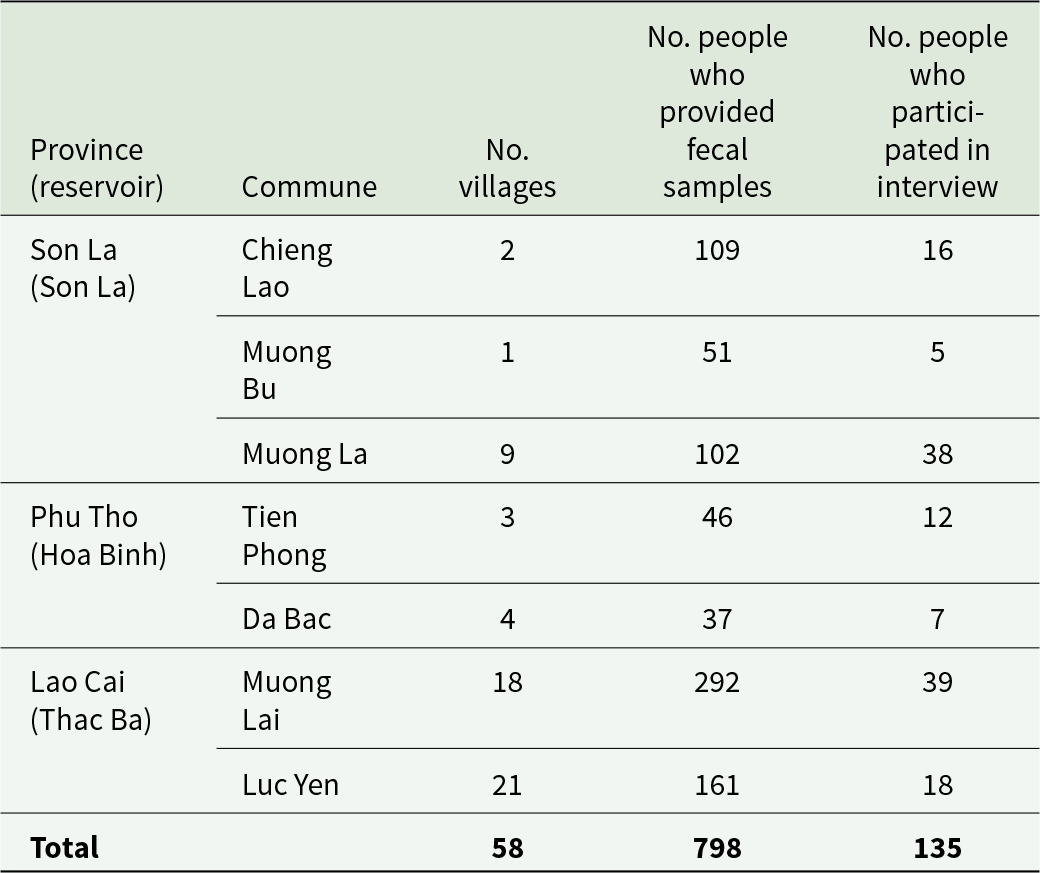
Of the 1500 individuals from 300 households invited to provide fecal samples, 798 (53.20%) participated. Additionally, 135 heads of household (45%) participated in the KAP interviews. Participants were drawn from 58 villages across 7 communes adjacent to the Son La, Hoa Binh and Thac Ba reservoirs. The largest proportion of interviewees originated from Son La (43.70%), followed by Lao Cai (42.22%) and Phu Tho (14.08%) provinces (Table 1).
Summary information of local people who participated in the study sites

Table 1 Long description
Participant counts are listed by province and reservoir, then by commune, including number of villages, people providing faecal samples, and people interviewed. Across all sites, 58 villages contributed 798 faecal samples and 135 interview participants. Lao Cai province had the largest contribution, led by Muong Lai with 18 villages, 292 samples, and 39 interviews, and Luc Yen with 21 villages, 161 samples, and 18 interviews. Son La province included Chieng Lao with 109 samples and 16 interviews, Muong Bu with 51 samples and 5 interviews, and Muong La with 102 samples and 38 interviews. Phu Tho province had smaller counts, with Tien Phong at 46 samples and 12 interviews and Da Bac at 37 samples and 7 interviews. Interview participation was consistently much lower than faecal sampling in every commune, so the two measures should not be treated as interchangeable.
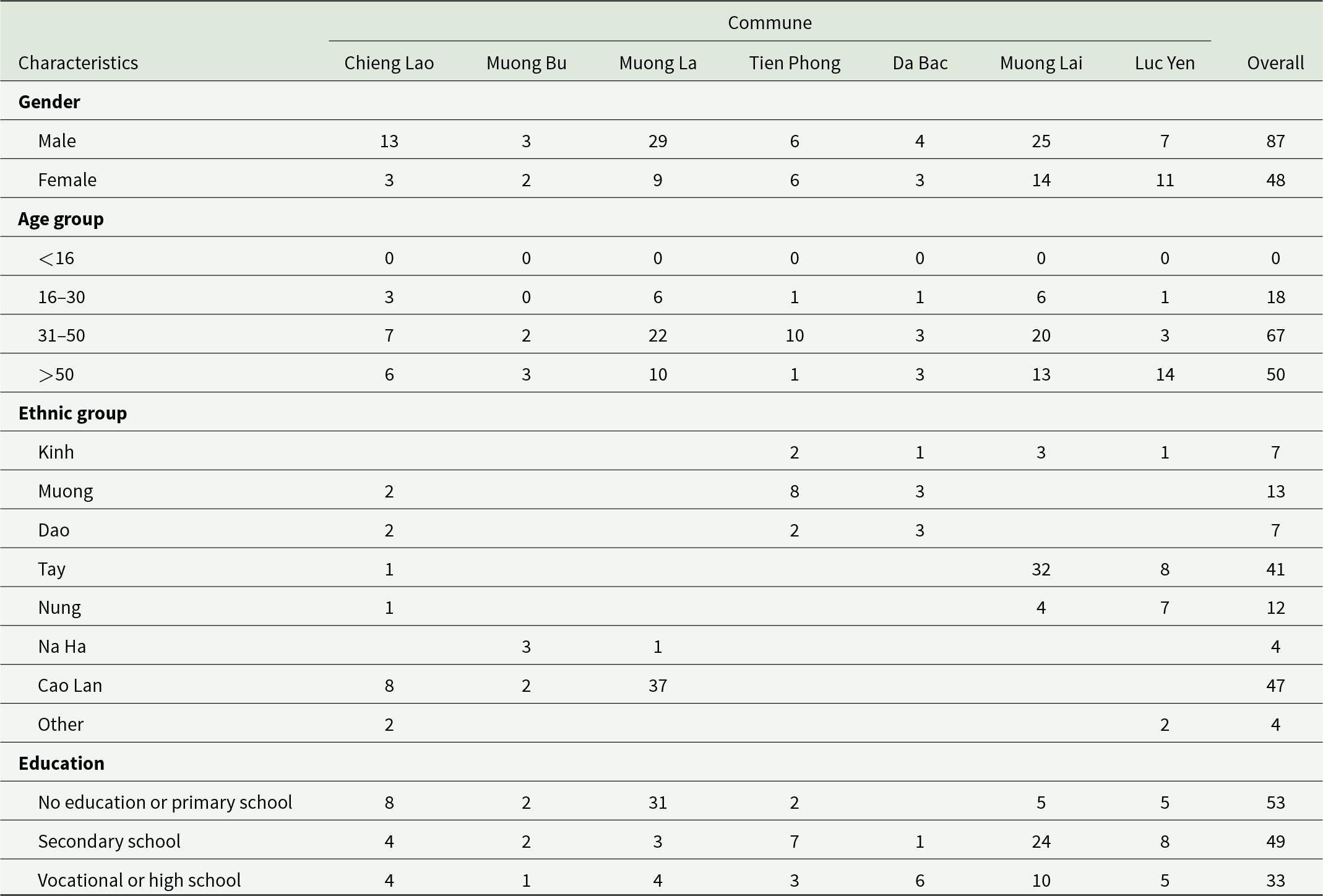
Among the 135 interviewees, females comprised approximately two-thirds of respondents. Most participants were middle-aged adults (49.63%) and older adults (37.04%). Nine ethnic groups were represented, with Cao Lan (34.81%), Tay (30.37%) and Muong (9.63%) being most common. Educational attainment was generally low, with 39.26% reporting only primary education or no formal schooling, even illiterate, while 24.44% finished vocational or high school. The majority of respondents (92.59%) identified farming as their primary occupation (Table 2).
Demographic characteristics of heads of household interviewed for the knowledge, attitudes and practices (KAP) survey related to animal husbandry and parasitic prevention

Table 2 Long description
Counts of heads of household interviewed are broken down by commune and overall for gender, age group, ethnic group, and education level. Overall, 87 respondents are male and 48 are female. Age is concentrated in 31 to 50 years with 67 people, followed by over 50 years with 50; there are 18 aged 16 to 30 and none under 16. The largest ethnic groups overall are Cao Lan with 47 and Tay with 41; smaller totals include Muong with 13, Nung with 12, Kinh and Dao with 7 each, and Na Ha, Other with 4 each. Ethnic composition varies by commune, for example Cao Lan is concentrated in Muong La with 37, while Tay is concentrated in Muong Lai with 32 and Luc Yen with 8. Education totals show 53 with no education or primary school, 49 with secondary school, and 33 with vocational or high school, with secondary school notably high in Muong Lai at 24. Values are raw counts rather than percentages, so comparisons reflect sample size differences across communes.
Helminth infection in humans
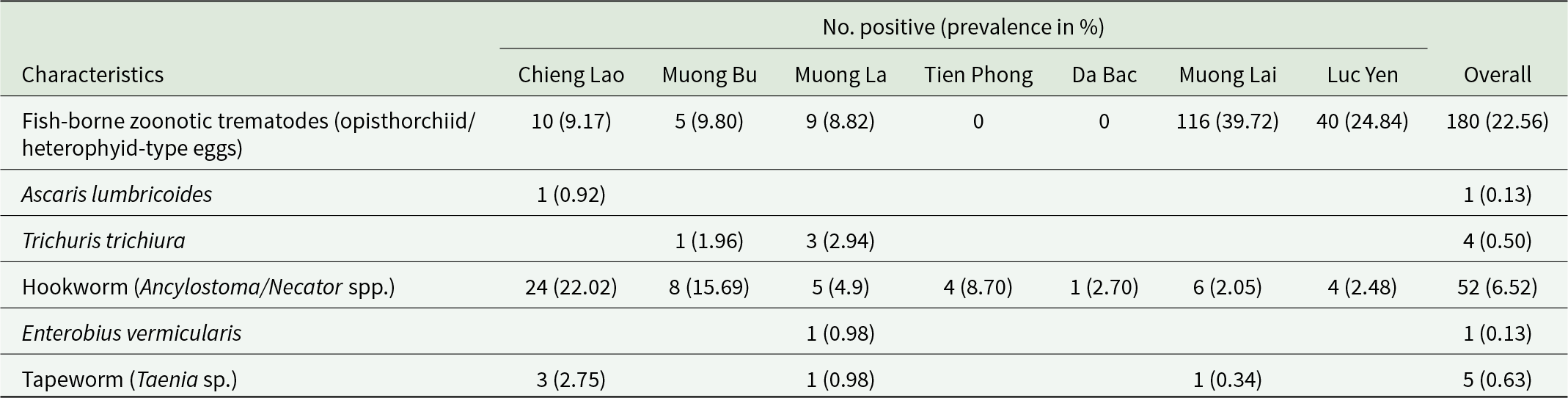
Overall, 29.57% of participants were infected with at least 1 helminth group. Fish-borne zoonotic trematodes (opisthorchiid/heterophyid-type eggs) were the dominant parasites, accounting for the majority of infections, while soil-transmitted nematodes were less common and tapeworms (Taenia sp.) were rare. Coinfection with multiple helminth groups was infrequent (Table 3).
Prevalence of helminth infections among human participants residing in the study communes

Table 3 Long description
Helminth infection positives and prevalence percentages are reported by commune and overall for six parasite groups. Fish-borne zoonotic trematode eggs were the most prevalent overall at 22.56 percent, with the highest commune prevalence in Muong Lai at 39.72 percent, followed by Luc Yen at 24.84 percent; Tien Phong and Da Bac reported zero for this group. Hookworm was the next most common infection overall at 6.52 percent, highest in Chieng Lao at 22.02 percent and Muong Bu at 15.69 percent, and lowest in Da Bac at 2.70 percent. Other infections were rare: Ascaris lumbricoides appeared only in Chieng Lao at 0.92 percent and 0.13 percent overall. Trichuris trichiura occurred in Muong Bu at 1.96 percent and Muong La at 2.94 percent, totaling 0.50 percent overall. Enterobius vermicularis was reported only in Muong La at 0.98 percent and 0.13 percent overall, while Taenia tapeworm was low across communes, totaling 0.63 percent overall with positives in Chieng Lao, Muong La, and Muong Lai. Blank cells likely indicate no positives reported for that commune and parasite group.
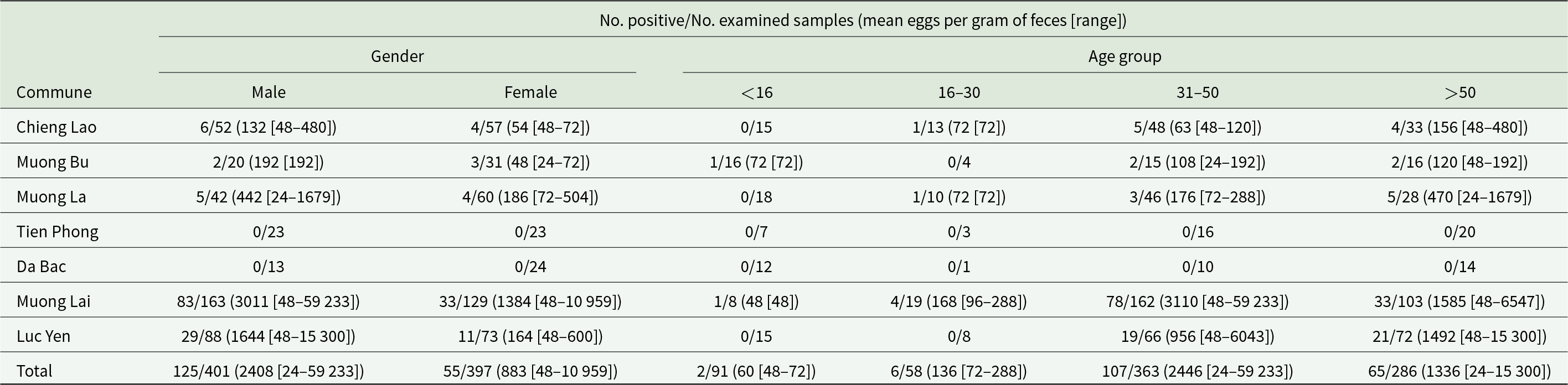
Soil-transmitted nematodes (Ascaris lumbricoides, Trichuris trichiura and Ancylostoma/Necator spp.) and pinworms (Enterobius vermicularis) showed a broader geographic distribution than trematodes. Hookworms (Ancylostoma/Necator spp.) were detected in all study communes, whereas A. lumbricoides, T. trichiura and E. vermicularis were restricted to communes in Son La reservoir area. In contrast, no fish-borne zoonotic trematode infections were detected among residents living near Hoa Binh reservoir (Table 4).
Summary of fish-borne zoonotic trematode infection prevalence and intensity by gender and age group in the studied communes

Table 4 Long description
Prevalence and infection intensity are reported by commune as number positive out of number examined, with mean eggs per gram of faeces and the observed range, split by gender and age group. Muong Lai shows the greatest burden: males 83 of 163 with mean 3,011 eggs per gram (range 48 to 59,233) and females 33 of 129 with mean 1,384 (48 to 10,959); by age, 31 to 50 years has 78 of 162 with mean 3,110, and over 50 years has 33 of 103 with mean 1,585. Luc Yen is also high, especially in older groups: 31 to 50 years has 19 of 66 with mean 956, and over 50 years has 21 of 72 with mean 1,492; males are 29 of 88 with mean 1,644 versus females 11 of 73 with mean 164. Muong La has moderate prevalence but high intensity among males (5 of 42 with mean 442, range 24 to 1,679) and over 50 years (5 of 28 with mean 470, range 24 to 1,679). Chieng Lao and Muong Bu show lower prevalence, with positives concentrated in adults and older adults; under 16 years is mostly zero except Muong Bu (1 of 16) and Muong Lai (1 of 8). Tien Phong and Da Bac report zero positives across all gender and age categories. Overall totals indicate higher prevalence and intensity in males (125 of 401; mean 2,408, range 24 to 59,233) than females (55 of 397; mean 883, range 48 to 10,959), and much higher prevalence in adults 31 to 50 years (107 of 363) and over 50 years (65 of 286) than under 16 years (2 of 91). Mean egg counts and ranges can be influenced by a few very high values, so intensity comparisons should be interpreted with that variability in mind.
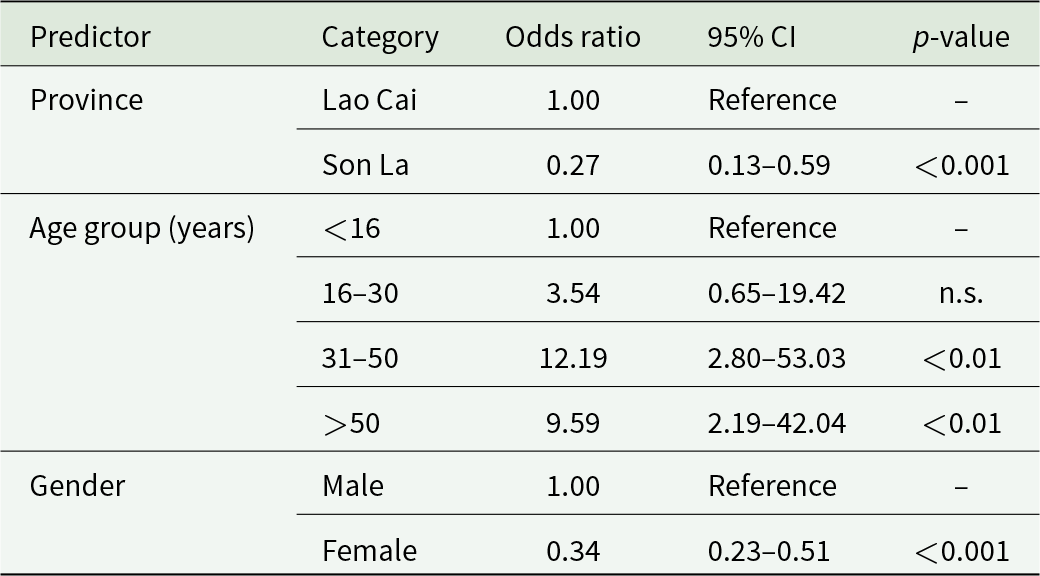
A mixed-effects logistic regression model with random intercepts for commune and village was used to assess factors associated with infection prevalence. The overall model is significant (p < 0.01), indicating that the fixed effects collectively contribute significantly to explaining infection prevalence. Trematode infection prevalence varied significantly by gender, age group and province (reservoirs) (Table 5). Because no infections with fish-borne zoonotic trematodes were detected in Hoa Binh, this reservoir was excluded from the statistical analysis and is only presented descriptively. The odds of infection were lower in Son La than in Lao Cai. Females had lower odds of infection than males (Table 5). Regarding age, the odds of infection were highest in the 2 oldest age groups, whereas the 2 younger age groups had significantly lower odds. Children aged <16 years had a lower prevalence than those aged 16–30 years; however, this difference was not statistically significant (Table 5). Significant residual clustering remained at the village and commune levels, and the mixed-effects model fit the data better than a standard logistic regression model (Likelihood Ratio test χ 2 = 8.84, p < 0.05).
Mixed-effects logistic regression model for fish-borne zoonotic trematode infection prevalence with individuals nested in villages

Table 5 Long description
Mixed-effects logistic regression results report odds ratios for fish-borne zoonotic trematode infection by province, age group, and gender, with reference categories for each predictor. Compared with Lao Cai, Son La had markedly lower odds, with an odds ratio of 0.27 and a 95 percent confidence interval from 0.13 to 0.59, with a p-value below 0.001. Compared with those under 16, ages 31 to 50 had much higher odds, odds ratio 12.19 with a 95 percent confidence interval from 2.80 to 53.03 and a p-value below 0.01. Those over 50 also had higher odds, odds ratio 9.59 with a 95 percent confidence interval from 2.19 to 42.04 and a p-value below 0.01. Ages 16 to 30 showed higher estimated odds, odds ratio 3.54, but the confidence interval from 0.65 to 19.42 includes values consistent with little or no difference and the p-value is not significant. Compared with males, females had substantially lower odds, odds ratio 0.34 with a 95 percent confidence interval from 0.23 to 0.51 and a p-value below 0.001. Confidence intervals are wide for some age groups, so the size of those effects is less precise even when statistically significant.
The mixed-effects model provided a significantly better fit than the standard logistic regression model without random effects (likelihood ratio test, p < 0.01), indicating significant between-village heterogeneity.
n.s., not significant.
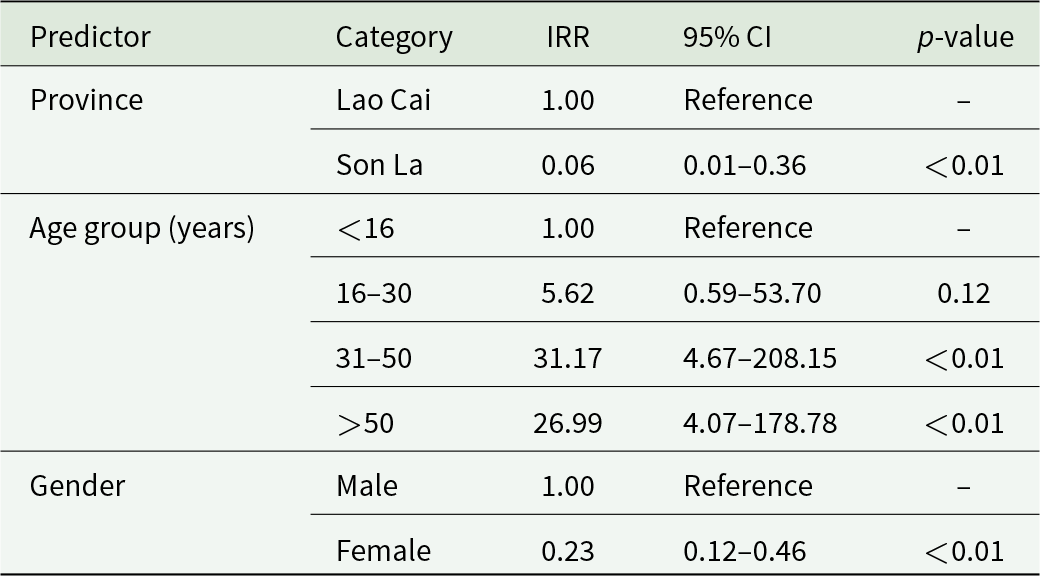
For intensity of infection, a mixed-effects negative binomial regression model with random intercepts for commune and village was used to assess factors associated with infection intensity (Table 6), and the model was significant (p < 0.01). A similar pattern to that observed for the odds of infection was found, i.e. egg counts were lower in females than in males, and participants from Son La had lower egg counts than those from Lao Cai. Participants aged <16 years had lower egg counts than those aged 16–30 years, although this difference was not statistically significant. Relative to the <16 years age group, participants aged 31–50 years and >50 years had significantly higher egg counts (Table 6). There were significant random effects at the village and commune levels, and a significant likelihood ratio test (p < 0.001) indicates important geographic clustering of infection intensity. Overdispersion was substantial (α ≈ 11.7), supporting the use of a negative binomial model.
Mixed-effects negative binomial regression model for infection intensity, with individuals nested in villages

Table 6 Long description
Mixed-effects negative binomial results report incidence rate ratios for infection intensity by province, age group, and gender, with Lao Cai, under 16 years, and male as reference groups. Compared with Lao Cai, Son La had far lower infection intensity, with an incidence rate ratio of 0.06 and a confidence interval from 0.01 to 0.36, and a p-value below 0.01. Relative to under 16 years, ages 16 to 30 showed higher intensity but was not statistically clear, with an incidence rate ratio of 5.62, a wide confidence interval from 0.59 to 53.70, and p-value 0.12. Ages 31 to 50 had much higher intensity, incidence rate ratio 31.17 with confidence interval 4.67 to 208.15 and p-value below 0.01, and over 50 was similarly elevated at 26.99 with confidence interval 4.07 to 178.78 and p-value below 0.01. Females had lower infection intensity than males, incidence rate ratio 0.23 with confidence interval 0.12 to 0.46 and p-value below 0.01. Confidence intervals for older age groups are wide, suggesting imprecision despite statistically strong evidence for higher intensity in those groups.
The mixed-model provided a significantly better fit than the standard negative binomial regression without random effects (likelihood ratio test, p < 0.001), indicating significant between-village heterogeneity.
Knowledge, attitude and practice
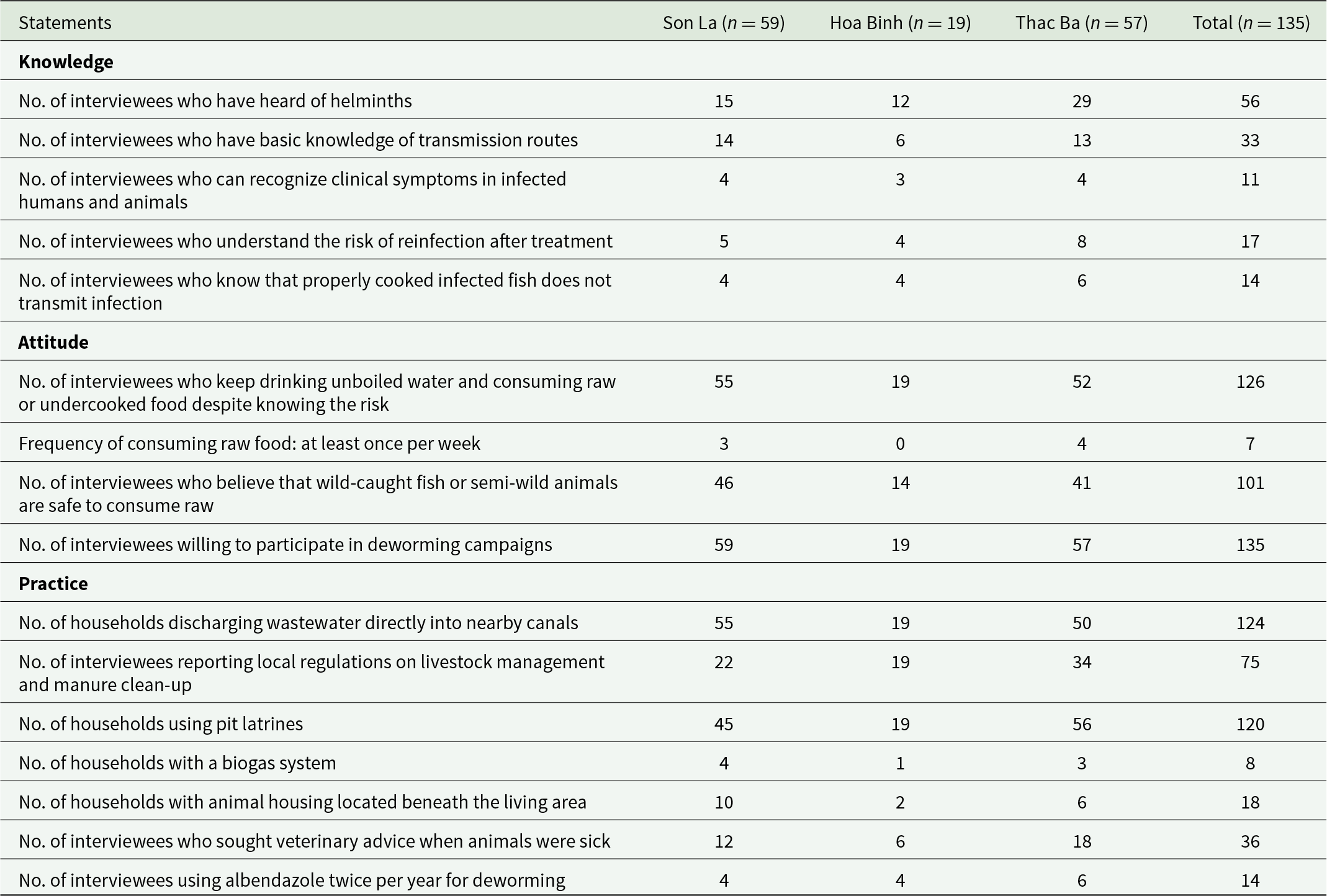
Overall awareness of helminths was limited. Only 41.48% of participants reported having heard of helminths or related animal diseases (e.g. tapeworm cysts, blue ear disease, pasteurellosis, avian flu). Understanding of transmission routes was poor, with only 24.44% correctly identifying modes of infection. Fewer than 13% could recognize clinical symptoms, understood the risk of reinfection or were aware of the protective effect of properly cooking infected fish. Knowledge levels differed significantly across education levels and age groups (p < 0.05), but not by sex or ethnicity (Table 7).
Summary of responses from the heads of household participating in the knowledge, attitudes and practices (KAP) survey on animal husbandry and parasitic disease prevention across 3 reservoir areas

Table 7 Long description
Counts of heads of household in three reservoir areas are grouped into knowledge, attitude, and practice indicators related to helminths and prevention. Knowledge was limited overall: 56 of 135 had heard of helminths, 33 knew transmission routes, 11 could recognize symptoms, 17 understood reinfection risk, and 14 knew properly cooked infected fish does not transmit infection. Risky attitudes were common: 126 of 135 continued drinking unboiled water or eating raw or undercooked foods despite knowing the risk, and 101 believed wild-caught fish or semi-wild animals were safe to eat raw. Raw food consumption at least weekly was reported by 7 of 135, with none in Hoa Binh. Willingness to join deworming campaigns was universal across sites, totaling 135 of 135. Practices showed frequent environmental exposure risks: 124 of 135 households discharged wastewater into nearby canals and 120 used pit latrines, while only 8 had a biogas system. Site patterns were broadly similar, with Thac Ba often having higher counts for awareness and veterinary advice seeking, while Hoa Binh frequently matched its full sample size on several items, reflecting its smaller group size. Because values are raw counts rather than percentages, comparisons should consider the different sample sizes in each area.
Despite prior health education, 93.33% of participants reported continued consumption of raw or undercooked foods. Most individuals consumed raw fish, meat and vegetables during ceremonial or seasonal events, while 5.19% reported frequent raw food consumption with minimal concern for infection. Approximately 75% believed that wild-caught or home-raised animals were safe to consume raw.
Sanitation infrastructure was limited. Only 8.15% of households had access to sewage systems, while the remaining households reported that their wastewater was commonly discharged into nearby canals (91.85%). Although most households used pit latrines (88.89%), biogas systems were rare (5.93%). Free-ranging livestock remained common, and 13.33% of households housed animals beneath living quarters. When animals became ill, 73.33% of interviewees practiced self-treatment without veterinary consultation. Only 10.37% administered anthelmintic treatment to themselves twice per year.
Discussion
This study provides evidence that hydropower reservoir ecosystems in northern Vietnam are consistent with sustained local transmission for food-borne trematodes. By integrating parasitological screening with community-based KAP assessments, our findings suggest that human infection patterns may be influenced by interactions between ecological changes and behavioural practices.
The high trematode prevalence observed in Thac Ba reservoir (24.84–39.72%) remains alarmingly elevated, though slightly lower than previous reports exceeding 47% (Thieu et al. Reference Thieu, Vinh, Nam, Dao and Dung2022). However, these comparisons should be interpreted cautiously because diagnostic methods differed. Thieu et al. (Reference Thieu, Vinh, Nam, Dao and Dung2022) used the formalin–ether concentration technique, whereas the present study relied on a single Kato–Katz smear per stool sample. Single-smear Kato–Katz has reduced sensitivity for detecting low-intensity infections and may underestimate prevalence and potentially distort observed intensity distributions, particularly in low-endemic settings (Qian et al. Reference Qian, Zhuang, Zhu, Deng, Li and Zhou2019). Differences in diagnostic sensitivity, together with variation in infection intensity and local transmission dynamics, may partly explain discrepancies in reported prevalence across studies. In contrast, no infections were detected among residents living near Hoa Binh reservoir, despite earlier reports of low-level transmission (De, Reference De2004). Several factors may account for this finding. First, differences in reservoir age may have influenced transmission dynamics. Hoa Binh reservoir, commissioned in 1988, is older than Son La reservoir (2012) but younger than Thac Ba reservoir (1971), and long-term ecological succession may have altered the suitability of habitats for snail intermediate hosts and the composition of fish communities involved in parasite transmission. Alternatively, longer-term public health interventions or changes in local practices may have reduced transmission around Hoa Binh (Nguyen et al. Reference Nguyen, Do, Greiman, Nguyen, Hoang, Phan, Pham-Duc and Madsen2022a). Finally, the absence of detected infections should be interpreted cautiously because the sample size from Hoa Binh was relatively small (n = 83) due to flooding, reducing the ability to detect low-prevalence infections. As ecological and malacological data were not collected in the present study, these explanations remain speculative and warrant further investigation. The intermediate prevalence in Son La reservoir (8.82–9.80%) aligns with recent detections of high infection burdens in snail and fish intermediate hosts in the same system (Bui et al. Reference Bui, Hoang and Pham2024; Le et al. Reference Le, Nguyen, Van Hoang, Tran, Nguyen, Nguyen, Nguyen, Greiman, Stauffer, Madsen and Nguyen2025). Collectively, these findings highlight pronounced spatial heterogeneity in reservoir-based transmission systems (Zheng et al. Reference Zheng, Zhu, Xia, Qian, Nguyen, Sripa, Sayasone, Khieu, Bergquist and Zhou2024, Reference Zheng, Zhu, Xia, Qian, Bergquist, Nguyen and Zhou2025). Beyond geographic variation, infection risk was further structured by demographic and behavioural factors. Adult males residing in specific reservoir-adjacent communes, particularly in Lao Cai, consistently exhibited both higher infection prevalence and greater infection intensity, identifying them as key high-risk groups. These combined spatial and demographic patterns highlight the focal nature of trematode transmission in hydropower reservoir communities and underscore the importance of localized ecological and behavioural contexts in shaping transmission risk.
Unlike soil-transmitted nematodes, which have declined substantially following improved sanitation, economic development and mass drug administration campaigns, fish-borne trematodes persist at high levels. This divergence reflects fundamental differences in transmission ecology. Soil-transmitted helminths respond effectively to sanitation infrastructure improvements and night-soil composting programmes (Nguyen et al. Reference Nguyen, Do, Greiman, Nguyen, Hoang, Phan, Pham-Duc and Madsen2022a). In contrast, trematode transmission remains tightly coupled to aquaculture systems, free-ranging livestock, informal food markets and deeply ingrained culinary practices (Madsen et al. Reference Madsen, Nguyen, Lanza and Stauffer2022).
A key finding of this study is the striking disconnect between awareness and behaviour. Although many respondents acknowledged infection risk, over 93% continued to consume raw food. Misconceptions that wild-caught or home-raised animals are inherently safe remain widespread. Moreover, the frequently asymptomatic nature of trematode infections further reduces perceived health risk and weakens behavioural change (Hung et al. Reference Hung, Madsen and Fried2013), particularly when effective post-infection treatments remain accessible (Lier et al. Reference Lier, Do, Johansen, Nguyen, Dalsgaard and Asfeldt2014).
Domestic animals may constitute an important reservoir. Self-treatment of livestock, low veterinary engagement and infrequent anthelmintic use may contribute to environmental contamination and sustain reinfection cycles (Nissen et al. Reference Nissen, Nguyen, Thamsborg, Dalsgaard and Johansen2014). Free-ranging husbandry may further amplify ecosystem-level transmission. These findings suggest that human-only intervention strategies may be insufficient (Hung et al. Reference Hung, Dung, Lan Anh, Van, Thanh, Ha, Hien and Canh2015; Nguyen et al. Reference Nguyen, Do, Greiman, Nguyen, Hoang, Phan, Pham-Duc and Madsen2022a).
Hydropower reservoir systems across Asia exhibit remarkably similar epidemiological profiles. High transmission intensities documented in China, Korea, Laos, Cambodia and Thailand reveal that dam-driven ecological restructuring consistently favours trematode propagation (Kim et al. Reference Kim, Kim, Lee and Park1987; Sithithaworn et al. Reference Sithithaworn, Sukavat, Vannachone, Sophonphong, Ben-Embarek, Petney and Andrews2006; Chai et al. Reference Chai, Sohn, Na, Yong, Eom, Yoon, Hoang, Jeoung and Socheat2014; Wang et al. Reference Wang, Wang, Gong, Yu, Zhang, Ren, Ma, Zhao, Zhang, Li and Li2022; Kaensa et al. Reference Kaensa, Charoensuk, Nakmai, Pinlaor, Suwannatrai, Laothong and Prakobwong2025). Dam construction may expand snail habitats, alter fish community structure and increase contact among humans, animals and aquatic hosts, which may contribute to transmission dynamics and potentially support sustained transmission networks (Le et al. Reference Le, Nguyen, Van Hoang, Tran, Nguyen, Nguyen, Nguyen, Greiman, Stauffer, Madsen and Nguyen2025).
Our findings strongly reinforce the necessity of a One Health control framework. Effective intervention must integrate coordinated mass drug administration for both humans and animals, livestock confinement, wastewater treatment, sanitation upgrades and culturally tailored education programmes. School-based behavioural interventions targeting children may offer a particularly effective entry point for long-term transmission reduction (Nguyen et al. Reference Nguyen, Do, Greiman, Nguyen, Hoang, Phan, Pham-Duc and Madsen2022a).
Several limitations should be noted. First, the KAP data were self-reported and collected from household heads; therefore, they may not fully represent the behaviours or exposures of all individual household members and may be subject to response bias. The presence of local health staff during interviews may also have introduced social desirability bias, although interviewers were trained to use non-judgmental language and emphasize confidentiality. In addition, KAP variables were not formally analysed as predictors of infection status or infection intensity. This limitation primarily reflects the study design and sample size, as the KAP data were collected at the household level, whereas parasitological outcomes were assessed at the individual level, thereby limiting statistical power for robust behavioural-infection modelling. Second, there was an imbalance in the gender and age group of respondents. This pattern largely reflects the availability of household members at the time of interviews, as women and older adults are more commonly present at home during daytime survey hours in these communities. Although this distribution may not fully represent the demographic structure of heads of household, the sample size within each gender and age group was sufficient for the analyses conducted. Additionally, the limited sample size from Hoa Binh reservoir reduced statistical power for inter-reservoir comparisons. This imbalance was largely due to unforeseen fieldwork constraints, particularly severe flooding during the sampling period, which limited distribution of sampling materials to 180 plastic bags and resulted in only 83 returned fecal samples, fewer than in the other reservoirs. While this limitation may introduce bias for between-reservoir comparisons, appropriate descriptive and comparative analytical approaches were applied, and results were interpreted with caution. Moreover, we did not have sufficient data to formally compare demographic characteristics between participants and non-participants, which may have introduced selection bias. Finally, because unique household identifiers were not available for all participants, clustering could not be addressed at the household level. Instead, within-village correlation was addressed using a village-level random intercept in the regression models for trematode infection occurrence and egg counts. The use of a single Kato–Katz thick smear per stool sample represents an important methodological limitation of this study. While this approach is widely used in field-based surveys, it is known to have reduced sensitivity for detecting light-intensity trematode infections and may underestimate prevalence and influence observed intensity distributions, particularly in low-endemic settings (Qian et al. Reference Qian, Zhuang, Zhu, Deng, Li and Zhou2019). Consequently, the prevalence of infection, particularly among individuals with low egg counts, may have been underestimated, and differences in infection intensity across groups should be interpreted with caution (Zhang et al. Reference Zhang, Luo, Liu, Wang, Chen, Xu, Xu, Wu, Tu, Wu, Zhang and Wu2009). Furthermore, trematode species identification in this study relied primarily on morphological characteristics. Although this approach is appropriate for broad taxonomic classification, it may limit species-level resolution, especially for small or morphologically similar trematodes occurring sympatrically in reservoir environments. Future studies integrating molecular diagnostic techniques, such as PCR-based assays, would improve etiological precision and allow more robust discrimination among closely related trematode species, thereby strengthening assessments of transmission patterns in hydropower reservoir settings (Nguyen et al. Reference Nguyen, Van, Ho, Tatonova and Madsen2021a, Reference Nguyen, Greiman, Hoang, Ngoc, Nguyen, Pham and Madsen2022b). Finally, seasonal variation in trematode transmission could not be evaluated due to the cross-sectional design. Future studies incorporating longitudinal surveillance and molecular epidemiology will be essential for resolving fine-scale transmission networks.
Conclusion
Hydropower reservoirs in northern Vietnam facilitate trematode transmission through ecological and behavioural pathways. Integrated One Health interventions addressing human behaviour, animal reservoirs and aquatic environmental contamination are recommended to reduce transmission and prevent reinfection. These findings have important implications for disease management in reservoir-affected regions across Southeast Asia. The prevalence and intensity of trematode infections were higher in men than in women and generally increased with age, with lowest infection levels observed in children (<16 years). Marked spatial heterogeneity was observed among reservoirs, with the highest infection levels in Thac Ba, intermediate levels in Son La and no infections detected in Hoa Binh during the study period.
Acknowledgements
We would like to thank the staff of the Preventive Medicine Department in Son La, Phu Tho and Lao Cai provinces, as well as the staff of the local health stations in Chieng Lao, Da Bac, Luc Yen, Muong Bu, Muong La, Muong Lai and Tien Phong communes, for their assistance with many aspects of this study. We greatly appreciate the reviewers, Professor John Ellis, Professor Xiao-Nong Zhou and Dr Alison Sage, for the valuable time they have taken to provide insightful comments and corrections. We are also grateful to the local residents in these communes for their participation. During the preparation of this work, the authors used OpenAI ChatGPT tool to improve the language and grammar. After using this tool, the authors reviewed and edited the content as needed and take full responsibility for the content of the publication.
Author contributions
B.N.N., H.M. and H.M.N.: conceived and designed the study. B.N.N., T.D.D., N.M.N., N.N.H., D.T.H., L.T.D., V.T.T., N.H.T.N., T.V.N., T.Q.N., T.V.N., N.N.C., P.N.D., H.V.H., H.V.N. and T.A.T.: conduct fieldwork and collected data. B.N.N., N.N.H., D.T.H., L.T.D., V.T.T., N.H.T.N., T.V.N., T.Q.N., T.V.N., N.N.C. and H.V.H.: fecal examination. T.D.D., P.N.D., H.V.H., N.M.N. and H.M.N.: questionnaire and interview. B.N.N., P.P.D., H.M., S.E.G. and H.M.N.: data analyses. B.N.N. and H.M.N.: writing – original draft. T.D.D., P.N.D., P.P.D., N.M.N., S.E.G., H.M. and H.M.N: reviewed and edited the manuscript. H.V.N. and H.M.N.: funding acquisition and project administration. All authors read and approved the final version of the manuscript.
Financial support
The work was supported by the Vietnam Academy of Science and Technology, grant numbers CBCLCA.07/26–28 and UQDTCB.06/25–27.
Competing interests
The authors declare that there are no conflicts of interest.
Ethical standards
This study was approved by the Science, Technology and Ethics committee of the National Institute of Malariology, Parasitology and Entomology (no. 706/QĐVSR, 28 June 2023), the Vietnamese Ministry of Health and the Vietnam Academy of Science and Technology (no. 1378/QD-VHL, 21 June).

 Open access

