Introduction
Once upon a time, studying coins was an excellent qualification for someone entering the (brand-new) field of archaeology. At least, this was the case for the Danish scholar Christian Jørgensen Thomsen (1788–1865). Because of his expertise in numismatics – coin studies – he was asked to catalogue the collections of the new National Museum at Copenhagen. This job eventually led to the revolutionary ordering of artefacts into three periods (Stone Age, Bronze Age, Iron Age), based on principles of typology and seriation, which Thomsen had learnt of and developed within his numismatic work (Klindt-Jensen Reference Klindt-Jensen1975, 49–57). In his famous Ledetraad til Nordisk Oldkyndighet he firmly stated, ‘Coins belong to the most interesting and important antiquities that have been transmitted to us from remote ages’ (Thomsen Reference Thomsen1836, 81; English edn Ellesmere 1848, 92).
Similarly, a heated debate among European historians in the 1930s regarding trade and cultural contacts between Arabs and Europeans during the Carolingian period could not be settled through the use of written sources alone. Only by the use of coin finds was the scholarly conflict solved (Bolin Reference Bolin1953). Bolin's works left a lasting contribution not only through their results but also because of his innovative theoretical and methodological framework, of which coins formed an essential part (Odén Reference Odén, Björk and Johansson2009).
In the formative period of archaeology and cultural history, the study of coins thus formed part of the development of new ideas and methods. Today the situation could not be more different. Archaeology has since been greatly influenced by the social and natural sciences. Rather than merely ordering and describing items of material culture, archaeology now attempts to understand the people and societies that created them. In doing so, archaeology has built its own theoretical and methodological framework. Numismatics no longer plays a part in this. It is considered to be a highly descriptive and specialized field of study, which mainly contributes to archaeological research on a very basic level: providing dates for excavated features. Ironically, this may in part be the result of Thomsen's opinions: ‘What especially distinguishes coins is that, generally speaking, they admit of being fixed and referred to a precise time with much greater accuracy and certainty than any other antiquarian objects’ (Thomsen Reference Thomsen1836, 81; Ellesmere 1848, 92–93). From the 19th century, the unique qualities and usefulness of coin studies were thus connected with classification, stylistic change and dating, and coins were accordingly used primarily in chronological and chorological studies.
Why numismatics did not develop alongside the discipline of archaeology is hard to discern. It might be related to the institutionalization of the field within museums and departments of (art) history. As a result, coins were mainly valued for their artistic and stylistic qualities and as illustrations of historical events, forming an interest for collectors to an extent not seen for other archaeological objects (except, perhaps, pieces of classical art). Today, coins found during excavations are normally dispatched to specialists, although nobody is likely to suggest the separation of other ‘stores of wealth’ like cloth, cowrie shells or pearls from the rest of an assemblage. We are convinced that this state of affairs is unsatisfactory. Coins are part of material culture, and they can and should be studied like any other archaeological object. However, if the integration of coins into the archaeological discourse is to move beyond questions pertaining to chronology and economy – and we believe it should – then there is a strong need to develop a new, theoretical and methodological framework focused on the archaeology of coins.
In this paper we suggest guidelines for such a framework and demonstrate its value through a number of case studies. We do not pretend to be the first to treat coins as archaeological objects, but studies that have done so have often focused on period-specific, highly specialized cases, and consequently are mainly read only by coin specialists. We feel there is a need for a more comprehensive and theoretically underpinned approach. Although the case studies rely on material published by others, the interlinking of the evidence and current theoretical debate is the result of our own interaction with the material. The case studies derive from periods and regions we are familiar with through our own work and are thus mainly drawn from classical and Medieval Europe. To be comprehensive and generally applicable, however, our discussion here is of a meta-character, not confined to a particular period or region, in the hope of generating debate from archaeologists in general.
One might wonder why we feel coins merit this special attention. If they are simply to be recognized as archaeological objects, then would it not suffice to realize this fact and move on? Coins do have certain characteristics that distinguish them from many other types of archaeological artefact (and these will be elaborated upon below), and as such they offer an additional perspective to the larger archaeological discourse.
Coins are both historical documents and archaeological objects. The production of coins in all societies is linked to some kind of authority – in most cases historically documented – while the consumption (use) of these same coins normally involves all levels of society, and can be traced archaeologically. Coins were produced across Asia, continental Europe, the Mediterranean basin and the British Isles in all periods of (proto)history, allowing for a broad geographical and chronological approach, and necessitating treatment from a historical-archaeological perspective.
Coins are also an interplay of image, text and materiality – each of which can be studied separately, but which combine to form more than the sum of their parts. Due to this interplay, coins are multi-disciplinary sources, and if weight is to be given to all their dimensions an interdisciplinary approach is necessary. Coins move within societies and form a link between the structures of a society and the agency of the individual. Thus the approach advocated will not only add to our understanding of the coins themselves, but also to our understanding of their contexts, their life histories, and the humans around them.
Coins and contexts
Coins were never minted, used, deposited, retrieved or studied in a vacuum. Every stage in the life cycle of a coin takes place within a context. Thus to discuss coins as archaeological objects is impossible without some initial notes on the contextual understanding of coins. Declaring the importance of a contextual approach in 2011 might seem like stating the obvious, but in the past coins were too often studied in isolation. The acknowledgement of a theoretical and methodological contextual trend is one thing, but its proper implementation needs to be instrumentalized and developed to gain a better understanding of coins. The concept of context is above all meant as an analytical tool. The definitions and categorizations proposed should not be interpreted as static, but as an attempt to increase awareness of the insight possible if coins are embedded in the larger world surrounding them.
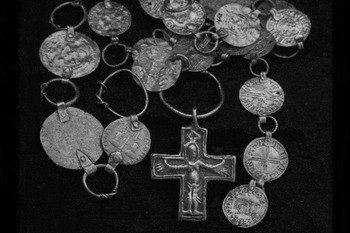
Context might be understood to refer to the various stages in the life of a coin, each of which can be studied. As the primary context we might identify the production phase of the coin; as a secondary context, its use; the tertiary context might be seen as the deposition or loss of the object and its integration into the archaeological record; while the subsequent retrieval of the coin (by excavation or otherwise) and its subjugation to antiquarian or scholarly investigation could be seen as the quaternary context (cf. Myrberg Reference Myrberg, von Kaenel and Kemmers2009, 157–59). To understand the object-coin in its primary, secondary and later contexts, further contextual aspects are to be observed. These are the temporal, geographical, functional, ideological and social characteristics of the society surrounding the object in its various phases of life (figure 1).
Crucifix pendant with chain made of coins. Crucifix and Anglo-Saxon, Byzantine and German coins may all originally have been included in the chain but the complete original sequence was not kept after the retrieval of the hoard. Sweden, Blekinge, Johannishus, SHM 3491. Photo Christer Åhlin, courtesy of Museum of National Antiquities, Stockholm, Sweden.

To place observed phenomena within a broader perspective, we must take into account the coin's historical and ideological characteristics at the time of minting (primary context), its use (secondary context) and deposition (tertiary context). The popular description ‘the head of a fool on the neck of an ass’, used to describe the countermarked Spanish coins issued in 1797 by the British king George III (Davies Reference Davies1996, 294), becomes meaningful to us only when we realize that the otherwise very popular king (seen on the small countermark portrait) was indeed a ‘fool’, known to be mentally ill with recurring fits of insanity, and that the Spanish king on the original coin was an ‘ass’ most likely because in 1795 he broke the coalition Spain and England were in against France. Likewise, the curious fact that all the modern Dutch coins embedded in the floor of a gallery in the newly opened Money Museum at Utrecht are showing their reverse to the visitor is only understood if one knows that the image of the Dutch queen is on the obverse, and that even in a secularized and egalitarian contemporary society, unwritten rules state that one should not tread on the sovereign's head.
Equally, the social world surrounding the object-coin has to be addressed. Understanding interactions between different people, and between people and objects, helps in comprehending the functions of coinage in a society. In the field of social anthropology this particular kind of context has been addressed by scholars like Parry and Bloch (Reference Parry and Bloch1989) and Appadurai (Reference Appadurai1986), who demonstrated that the meaning and value of objects is culturally specific. Although these studies focused mainly on contemporary non-Western societies, their concepts have been applied in order to understand the introduction of coinage in previously non-monetized societies such as Northern Gaul in the Roman period (Aarts Reference Aarts2005), archaic Greece (Seaford Reference Seaford2004) and medieval Scandinavia (Klackenberg Reference Klackenberg1992).
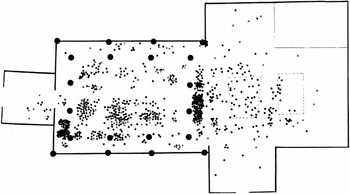
In addition to these, there is also the archaeological context of the coin, from which inferences on all the other contexts can potentially be made. The archaeological feature in which a coin is found fixes it chronologically (through its stratigraphy and associated finds) and spatially (in relation to other features on the site). Examining coins in their archaeological contexts shows which coins circulated together and for how long, how quickly coins spread after their emission, where and by whom coins were used, and in what way coins were deposited. Viewing coins as archaeological objects has been widely advocated, albeit with varying success. An early example is Petersson (Reference Petersson1948), who used coins to reconstruct ritual habits in a southern Scandinavian church, though his work had little influence on wider archaeological or numismatic debates. An explicit agenda, demonstrating the importance of coin finds for archaeologists, was set by Casey and Reece (Reference Casey and Reece1974). This publication was followed by one with similar intentions in 1989 (Clarke and Schia Reference Clarke and Schia1989). Especially in Iron Age numismatics this approach has been applied to obtain better insights into circulation patterns and processes (Haselgrove Reference Haselgrove1987). In Britain and Germany mainly quantitative studies dealing with the numerous coin finds from Roman sites have been published. Although one might think that the archaeology of coins is thus well-served and properly established, we feel it is not. On the contrary, coin-find publications are in most instances just that. The meticulous record of find contexts for each and every coin is used for site chronology and theories about economic prosperity, but the remaining potential of the information is untouched (figure 2).
Distribution map of coins found in Ringebu stave church, Norway. Dots mark medieval coins and crosses represent coins post-1537. After Berg (Reference Berg, Clarke and Schia1989, 80), used with permission of the author.

Coins as material culture and as historical archaeology
We would like to suggest two compatible approaches to the artefact category ‘coins’. The production of coins is in most cases linked to some kind of central authority, while the use of coins involves all levels of society. They are thus an excellent source not only for events and personas of the ‘big history’ preferred within the history discipline, but also for the ‘small histories’ increasingly studied within archaeology – which often give a different picture. For these reasons coins are a source to be analysed from a perspective of historical archaeology and material-culture studies.
‘Historical archaeology’ should here be understood as a theoretical and methodological standpoint, giving equal weight to historical and archaeological sources (cf. South Reference South1977, 190–99; Lightfoot Reference Lightfoot1995, 203–6; Deetz Reference Deetz1996; Andrén Reference Andrén1998, 4, 180–83). We do not use the concept to refer to a certain period of time. Likewise, ‘material-culture studies’ is here understood as a discourse focusing on certain research issues like the relation between humans and objects, patterns of consumption, agency and identity (e.g. Miller Reference Miller1998; Dant Reference Dant1999; Glassie Reference Glassie1999; Graves-Brown Reference Graves-Brown2000), not as the actual investigation of objects per se, nor as the more narrow definition used within sociology and anthropological studies, which mainly deal with contemporary sources (e.g. Rathje and Murphy Reference Rathje and Murphy2001). Historical archaeology and material-culture studies are well-established fields of archaeological research, but they rarely use coins – nor are these fields employed within coin studies even though the potential for such approaches is obvious.
Indeed, one of the characteristics of coins is that they are historical-archaeological sources: both historical evidence and archaeological objects. They were in most cases issued within a ‘historical’ society, in the sense of a society using a system of writing and known to us from written sources; or at least a ‘protohistoric’ society, not itself literate (or leaving behind such evidence), but known through written evidence from other areas. Thus much is known about the economic and other systems behind coinage, and there may be preserved epigraphic or textual evidence (e.g. issuing decrees) that reveals the intentions behind the issues, like the chosen standards or iconography. Yet the coins themselves mainly emerge through archaeological contexts, deposited through intentional or unintentional acts or processes like any other type of artefact, a process that often occurs in a different time and place than the historical context of origin.
Also, coins themselves embody the dimensions of a historic or textual source (text/inscriptions) as well as of an object (shape, material, colour and so on). These dimensions have parallel functions and strata of meaning which do not exclude but reinforce each other, even when they are not obviously speaking with a single voice. These two characteristics are linked by the picture, often an icon or a portrait representing the issuing authority. Coin iconography contains much information about the historical and ideological context of origin, and shows a glimpse of the pictorial world surrounding the historical individual. The presence of a text–object relation as well as an iconographical aspect is something unique to coins when compared to most other historical-archaeological sources.
Due to what could be called a ‘tyranny of text’ (Derrida Reference Derrida1978, 298; cf. Christophersen Reference Christophersen1992; Small Reference Small1995, 5–6; Papadopoulos Reference Papadopoulos1999, 381–87), the ‘textual’ qualities of coins were often given precedence, and the coins treated from a historical perspective. Yet sometimes the differences between the written sources concerning the coins and the actual objects are so considerable that it is hard to ascertain what one is looking at (or for). For example, Gotlandic coins were historically attested, but have only recently been conclusively matched with a certain (previously known, but unattributed) group of coins (Myrberg Reference Myrberg2008). Another case in point is the work of Hannestad (Reference Hannestad1988), who was the first to point out the systematic use of Roman coins as a medium of communication, using symbols and texts to convey messages to the inhabitants of the Roman Empire, allowing an insight into Roman propaganda which is not represented at all in the literary sources. These are but two examples of many. They demonstrate how archaeology may provide new information and complete or ‘correct’ known historical facts. They also point to the potential of coins, like other artefacts, to write a contrastive rather than a complementary history, enabling the search for the previously unknown through active use of the dissonances between historical and archaeological data, rather than stitching and smoothing them together (cf. Hall Reference Hall1999; Galloway Reference Galloway, Hall and Silliman2006; recent numismatic studies illustrating this point are e.g. Kemmers Reference Kemmers2006; Mäkeler Reference Mäkeler, Schäfke and Trier2010).
The ‘historical’ or ‘textual’ quality of coins might be approached in a very different way. An outstanding aspect of coins, compared to other archaeological objects, is the exceptionally secure dating of their primary context (production). The rapid and visible changes that the material undergoes are quite unique in (pre)historic terms. The shapes of bowls, jewellery and other objects, even the buildings and the landscape, all changed as well, but much more slowly and perhaps not even enough to be observed during one person's lifetime. Coins changed often and in several ways. ‘Straightforward’ dating should thus be studied in combination with the ‘complication’ of primary and secondary contexts, to provide further opportunities for complex research issues.
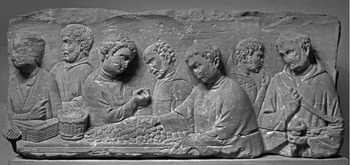
Monetary function is an essential aspect of coins, but not the only one. The visual/aesthetic aspect of coinage is apparent in the selections made when coins were transformed into jewellery, the contents of a hoard combined, and later in coin collections. The symbolic and social functions of coins, however, are closely connected with their role as monetary objects: with the fascination for metals, worth and economic possibilities and dependencies (figure 3). Literary metaphors referring to this are numerous (e.g. ‘The poor widow's offering’, Luke 21:1–4; ‘Render unto Caesar the things which are Caesar's . . .’, Matthew 22:21). The function of the coin as money or a store of value thus loads the object-coin with symbolic meanings and connotations, though the secondary uses (like offering, hoarding or making a necklace) in themselves may not be of a monetary or economic nature. These different, parallel dimensions are all essential. Coins were part of the material culture, carrying meaning in everyday life as well as in popular imagination. As a result they invite new ideas and concepts, which may be studied through the framework briefly outlined above. What follows are some examples of how coin studies may be integrated within these strands of archaeological debate.
Roman funerary relief, ca A.D. 240, Neumagen (Germany), thought to show the paying of rent by tenants. One of the few known images from the Roman period to show the actual handling of coins. Photo Th. Zühmer, courtesy of Rheinisches Landesmuseum Trier, Inv. NM 739 (K).

Re-membering coins: four themes of coin agency
Feeling If coins are to be useful instruments, they have to evoke trust - trust in their value, be it a ‘real’ metal value or an abstract one (as in contemporary society), and trust in the issuing authority, its honesty and its ability to guarantee the currency in crisis. ‘Trust’ is a feeling, based on predictability and understanding. This feeling may be evoked through visual recognition of the coin (image, colour, text), and by tactile recognition (weight, size, relief, imprints). These physical qualities of coins are thus more than basic; they are vital to the function of coins. Simply, we must feel for them.
This line of thought touches upon the relationship between ‘senses’ and ‘emotions’ and, further, on their relationship with ‘intellect and understanding’. There is much research being done on all these concepts in many fields (e.g. Merleau-Ponty Reference Merleau-Ponty1994; Tilley Reference Tilley1994; Houston and Taube Reference Houston and Taube2000; Tarlow Reference Tarlow2000; Hamilakis et al. Reference Hamilakis, Pluciennik and Tarlow2002; Mithen and Parsons Reference Mithen and Parsons2008; Renfrew et al. Reference Renfrew, Frith and Malafouris2009); we will just dwell on a few relevant points. The main point is the importance of the materiality of a coin, not only in the coin's being-an-object, but also in its being-a-concept and its being-a-subject.
Humans and objects are engaged in a continuous dialogue (cf. Burström Reference Burström1998; Shanks Reference Shanks1998; Olsen Reference Olsen2003). The object is essential to how human action is shaped; the materiality of the object is often a direct result of human action and intentions, but has a reciprocal effect on those very actions and intentions. The practical use of coins is very much a result of human intentions (from the system itself to the shape of the coin) but may have unintended effects and uses. The use of the coin evokes more than one type of feeling.
The physical impression through eyes or fingertips is the first individual contact with a coin. From there, the impression passes through a cultural filter, is interpreted, and is transformed into recognition and perhaps into further action. When meta-concepts like ideological or symbolic values are evoked, the pure physical shape of the coin becomes the most basic/passive and the most active/activating quality. An example of this process from impression to action is how the colour of coins might have been perceived and given meaning, be it ‘real’ or perceived colours.
In a study on offering sites in wet, low-lying parts of the landscape in the Oer-IJ area (north of Amsterdam, the Netherlands) several late (Roman) Iron Age sites were identified where coins, among other objects, had been deposited as offerings (Kok Reference Kok2008, 114, 158, 173–74). In that region and period, lying outside the borders of the Roman Empire, coins were a rarity. As a possible reason for including the coins in the offerings, the author points to the deities represented on them (ibid., 174). Since deities appear on most Roman coins if personifications are included in the category (as the author does), this is not a satisfying conclusion. Far more interesting are the author's remarks regarding the offerings of other ‘imported’ objects (such as Roman wheel-thrown pottery and tiles). Here she insists that their physical qualities (hard) and colour (bright red and silver/white) were important selection criteria, as these qualities added something to the offering that was not available locally. ‘Hard, red and white imported objects, such as stone, pottery, and (roof)tiles are placed in offering sites. In this way foreign materials with qualities, which are of importance in a local context, are incorporated into the landscape’ (Kok Reference Kok2008, 186). Although Kok is apparently unaware of it, this observation fits precisely with the coin evidence. Roman coins in an uncorroded condition are hard, bright red (copper), yellow (brass) or silver grey (silver). The coin finds from the offering sites in question diverge from the standard Roman settlement pattern, in that silver and brass coins are more common (Kok Reference Kok2008, 133, 174). Apparently, the nominal or size, i.e. the economic value, was here of less importance than the qualities of the colour and the material.
This curious fact should be related to what Kurke (Reference Kurke1999) calls the ‘language of metals’, referring to the superior role gold played within early Greek society, evident in several literary sources, notably Herodotus. Gold meant purity and durability of the soul, sovereignty and religious authority, and was part of an aristocratic discourse in which unminted gold and gift exchange was placed in symbolic opposition with silver and coins. In contrast with gold, silver was – particularly in Athens – connected with the people of the city and with trade (Kurke Reference Kurke1999, 42 ff., 50–53; 303 ff., 316). Kurke argues that as a result of these connotations between gold, aristocratic ideals and ‘embedded’ transactions, gold coins were avoided by the Greeks. The scarcity of Greek gold coins, accordingly, is to be explained as resulting not from a lack of the metal gold, but from the elitist identification with gold and with ‘non-coin exchange’, while silver stood in symbolic opposition to both these notions (Kurke Reference Kurke1999, 303–4). The Greeks simply felt uneasy about gold coins, and about gold used in this way. Silver was instead the appropriate metal for coins. In time, silver coins proved to be a good metaphor for the citizen himself – equating the qualities of the human and the coin through what they were not: not a slave, not barbarian, not a victim of a tyrant (the silver mines being in the possession of the city of Athens), not ‘over-wealthy’, not divine – ‘the coin's reassuring materiality reifies and guarantees a category defined by its exclusions’ (Kurke Reference Kurke1999, 316).
Interestingly, Kurke points to the fact that bronze coins were avoided as well, in her opinion because the metal was a mixture (‘impure’) and because the Greeks resisted making coinage purely a token (Kurke Reference Kurke1999, 305). The latter argument is odd; a bronze coin could well in theory have had an ‘essential’ value, as preferred by the Greeks.
We suggest that the resistance to bronze coins could just as well be the result of the ‘yellowness’ of the metal, making it subject to the same emotional reluctance as gold (thereby actually supporting Kurke's case in the instance of gold). When silver supplies were cut off in 413 B.C., the Athenians first turned to gold for a provisory issue, then to bronze. Both these issues were unique experiments, never repeated in Athenian coinage (Kurke Reference Kurke1999, 306).
Colour is thus an example of how the physical traits of an object may evoke further associations and connect the direct sensorial impression to feelings and emotions, learnt and shared within a cultural framework. This was most certainly the case in Iron Age Britain, where coin metals apparently were composed to maintain the right yellow-golden colour over time, though the metal content thus varied (Van Arsdell Reference Van Arsdell1989).
Colours may also have been an important feature of coin imagery, though the coins appear monochrome to us today. Reliefs and scratched patterns may have given quite a different idea to the coin user, familiar with a certain heraldic figure, mediated through a cross-modal way of representing colour. Heraldry (coats of arms) is a common feature on medieval coins and has a long tradition of interlacing textures, colours, elements and patterns within an elaborate system of symbolism which includes both icons and surfaces. The symbols and patterns on the coins will have been as familiar to the fingertip of a regular user as today's coin iconography is to us, and evoked colours, concepts and feelings to his or her brain in a quick and subconscious process (Myrberg Reference Myrberg, Fahlander and Kjellström2010).
While the case of the Oer-IJ offering sites mentioned above is a positive indication of how coins may be selected for certain uses because of their colour or metal, Kurke's case of the Greek eschewal of gold coins is negative evidence for the same phenomenon. In both cases it is difficult to draw a neat line between ‘ideological’ and ‘symbolic’ motives behind the selection – but both cases are connected more to feelings than to what we would call an economic rationale. Thus the material features of a coin not only distinguish it as an object, different from other objects. These features also are intimately connected to the coin's inherent values and to the concepts it is part of, to the coin's role as an agent in the cultural system and in artefact–human interplay. Coins are not only bestowed with intentional values from the issuer, but, through their own physical qualities, interact with us and make us feel for them.
Belonging On 1 January 2002 the inhabitants of twelve EU countries changed from their traditional national currencies to a common European currency, the euro. The reaction varied from calm acceptance to feelings of great unease. Not only did everyone have to readjust their subconscious ‘feel’ for prices, standards and purchasing power; it was also felt that a part of national identity had been given away (Marques Reference Marques2007, 394; Przybyszewski and Tyszka Reference Przybyszewski and Tyszka2007, 357).
From the first introduction of coins, their two sides were employed as a medium of display. The motifs chosen for coin iconography and text can thus often be placed in a historical context and are frequently understood as referring to aspects of local, regional, tribal or national identity. This aspect of coinage has received much attention in numismatic studies, especially in those devoted to the classical period. A number of papers in the edited volume on coins and identity by Howgego, Heuchert and Burnett (Reference Howgego, Heuchert and Burnett2005) draw attention to the fact that many cities in the eastern Roman provinces displayed local myths or buildings on the reverse of their coins, while on the obverse the ruling Roman emperor was portrayed. This can be understood as an expression of civic pride and an assertion of the city's distinct identity despite its incorporation into the larger Roman Empire. Zanker (Reference Zanker1987) showed how in the formative stage of this same empire, its first emperor Augustus used coins (along with other media) to stress the rebirth of a golden age, legitimizing his position as supreme ruler, and simultaneously creating an imperial identity. A recent example of the link between coinage and identity is offered by Klüßendorf (Reference Klüßendorf and Cunz2007). In his discussion of the Deutsche Mark, the currency of the former Federal Republic of Germany, and its counterpart in the German Democratic Republic (officially also named Deutsche Mark, but colloquially known as Ostmark), Klüßendorf argues that the economically successful western currency was seen as a pars pro toto for the identity of the entire country, just as the iconography on the eastern currency desperately tried to maintain the image of socialistic bliss.
Although the relationship between coins and identity seems to be a well-investigated topic, two aspects deserve further attention. First of all, focus is usually placed on the authority issuing the coins, who is assumed to make certain claims or statements, not on the effects this aspect of coinage would have had on the users. Second, the identity aspect of coinage is usually understood to be a passive reflection of a certain state of affairs, not an agent in the creation of common ground or distinctiveness from others. Yet this idea is fundamental in current thought on identity and ethnicity (Barth Reference Barth and Barth1969; Hodder Reference Hodder1982; Jones Reference Jones1997; Insoll Reference Insoll2007). Identity can only emerge through distinguishing oneself, or one's social group, from others. When group identity is expressed (through coinage or other means) it also stresses the group's ‘not belonging’ to other groups.
A positive exception is the work of John Papadopoulos, discussing how the earliest Greek (Akhaian) silver coinages in southern Italy render a fictitious past to represent a collective identity in a colonial setting: ‘images – specifically those on coins – are not simple residues of social behaviour or interaction, but are active agents in shaping identities and communities’ (Papadopoulos Reference Papadopoulos2002, 24). Building on the idea that coins not only reflect identity, but actively contribute in creating it, other coin-using societies could be studied from this perspective. Take, for example, the Roman imperial coinage system. Far more than any other expression of imperial identity (statues, inscriptions, temples for the emperor cult and so on), coins permeated every corner of the empire and reached all levels of society. As such, coins, with images conveying the symbols of romanitas, could have been instrumental in creating a common ground for the extremely heterogeneous population of the empire.
Studying the effect of coins on their users in regard to their sense of identity or (not) belonging, or how coin users employed coins to make statements about who they were (or were not), are equally promising paths to explore. As noted, current opinion holds that ethnicity is (subconsciously) constructed by a group of people to show why and how they are different from others. Ethnic labelling by outsiders is based on the same principles; it originates in observed differences (justified or not) between groups. As the criteria in both instances are largely subjective, and often related to abstract concepts that do not necessarily leave traces in the archaeological record, ethnicity or group identity cannot easily be uncovered by archaeologists. On the other hand, coins are objects that often clearly state where they originated and who was responsible for their creation. Thus the way people used coins may reveal how they interacted with the institutions ‘behind’ the coinage. The objects are embedded in an ideological and social context, which sets a framework for the practices and connotations accompanying coin use.
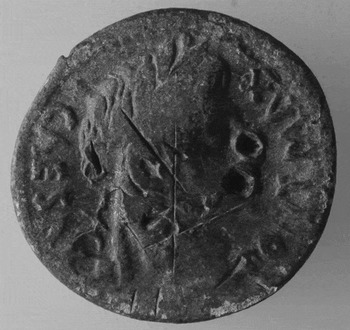
The battlefield of Kalkriese, the supposed location of the Clades Variana where three Roman legions were ambushed by Germanic troops and defeated in A.D. 9, may serve as an example to illustrate this particular aspect. Scattered all over the battlefield numerous Roman stray coins were found, thought to belong to the deceased Roman soldiers. A large number of the Roman bronze coins, notably the so-called ‘Lugdunum altar’-type as, show deliberately applied cuts and piercings (figure 4). Berger suggests that the marks were applied by individual Roman soldiers to express their unhappiness with their ruler (Berger Reference Berger1996, 55). Yet, assuming that coins can be used to express ‘not-belonging’, we should consider the possibility that the victors consciously defaced the symbols of their enemies. After all, the ‘Lugdunum altar’ as portrays the Roman emperor Augustus, with the altar of the Three Gauls in Lyon depicted on the reverse. That altar was a powerful symbol for the subjugation of conquered people, being the place where once a year representatives of the former Gallic peoples had to pay allegiance to the cult of Roma et Augustus. Defacing the coins and leaving them on the battlefield could be interpreted as an expression by the Germanic troops of who they were definitely not.
Lugdunum altar-as (ø 35 mm),7–3 B.C., copper, from the battlefield at Kalkriese, showing deliberate cuts and piercings. Site 13/8/105, number 3400, photo courtesy of Museum and Park Kalkriese.

Returning to the anecdote on the euro coin scepticism, we now have a framework for understanding the uneasiness felt at its introduction. Coins can be powerful agents in structuring identity and can provide a sense of belonging (or not). A detailed look at the iconography chosen for the various euro coins is quite revealing in this regard (Zäch Reference Zäch2005, 1430–32). As such the object-coin transcends its economic value. In archaeological research, coins might be one of the most tangible objects available to study negotiations with identity.
Acting Ultimately, coinage is about people and societies. From a broader perspective, two basic questions are ‘what do people do with coins?’ and ‘what do coins do with people?’ Coinage is an instrument to achieve certain goals, but, at the same time, using this instrument has an effect on the user. In societal discourse the corrupting effects of money are a familiar motif (from Aristotle's Politeia to Dickens's A Christmas carol to Disney's Uncle Scrooge), but there is more to it than that. In coin studies, when attention is paid to the actual uses of coinage in past societies, research questions usually focus on the nature of coins as a means of payment in a market economy (Haselgrove Reference Haselgrove1987, 17–23, for a critique). It will by now be apparent that this is only one particular aspect of coinage. The ways in which coins can become active agents in their own right has received little focus.
A notable exception is the discussion on the role of coinage in the formative stage of the Greek polis (city state): the simultaneous introduction of coinage and development of the polis (Athens being the example par excellence). Scholars have argued that coinage was tightly interwoven with the emergence of the polis system, each influencing the other. From a situation in which justice and prosperity were controlled by the gods, the very concept of coinage implied a shift in authority in these domains to the polis. Coinage thus led to changes in social relations, both between people and between mortals and their gods (von Reden Reference Von Reden1995, 175). An often-voiced comment is that these arguments were deducted from a close reading of the historical sources, and that they do not engage with the objects themselves (Kroll Reference Kroll1997, 175). We will therefore continue our argument by examining coins as both the subject and the object of actions, and in particular examine two aspects: the use of coins to make statements, and coins that end up outside their primary context of production and use, thus becoming a motor of change.
As discussed above, the texts, images and material of coins are associated with authorities – secular or divine – and embody connotations of value, trust and identity. In this capacity the users of coins are able to make statements about these authorities through a particular use or through non-use of the objects. The absence of Frankish coins in 9th-century A.D. southern Scandinavia, despite clear archaeological evidence for contacts between these two spheres, might be understood in such a way. Crucial for the acceptance of coins as objects of value within the Frankish sphere was the link, through iconography, with the Christian faith. This very aspect may have led to the non-use of these coins in northern society, as this religious concept held no legitimacy there (Kilger Reference Kilger and Skre2008, 272–79). From this perspective it could be fruitful to reconsider other attested encounters between different regimes of value, for example between Iron Age Gaul and the Roman world. The continued use (not minting) of local coins in inner Gaul long after the conquest of this area was traditionally explained by postulating a lack of interest by Roman authorities in something as mundane as small change, or as a failure of the imperial logistic infrastructure to supply far-off regions with sufficient cash (Nash Reference Nash, Carson and Kraay1978). But it could equally be understood as a deliberate non-use of imperial currency by indigenous society. On a different level the often-observed practice of making pendants out of coins could be understood as the appropriation of the inherent qualities of the very object for the benefit of the individual who wore the pendant.
Coins which travel outside their primary regime of value and enter another can become actors in their own right. The silver dirhams, minted under the Caliphate in the Middle East, made a massive and sudden appearance in 9th-century A.D. Nordic Europe. Their presence seems to have triggered the demise of the Viking-period valuation system and, as a consequence, the disappearance of trading sites that were crucial in this system. In Nordic society, the value of silver ingots and rings was rooted in their indivisibility and wholeness. These objects were of fixed weight and were calibrated, ultimately, against Merovingian and Carolingian gold and silver coins. Within the dirham system, however, it was not that weight was calibrated against coins, but the other way round. Coins (and other objects of silver) could be cut up to reach the desired amount of silver. Dirhams reached the north not as payment or currency, but as objects of trade, sometimes already in a cut-up state. This readiness to break up objects of value may be considered a prerequisite for the widespread phenomenon of hacksilver, and this, by extension led to the collapse of the indigenous system of value (Kilger Reference Kilger and Skre2008, 301–20).
This example concerns coins which physically travel a long geographical distance, but one might equally consider ‘travel’ through time. Particularly well known in this respect are Roman coins found in early medieval graves, a phenomenon that can be observed in almost all territories that were once part of the Roman Empire (White Reference White1988; Martin Reference Martin1991). While often referred to as ‘heirlooms’, without any further comment, the active role played by these coins in constituting social memories in early Anglo-Saxon society was recently demonstrated (Eckardt and Williams Reference Eckardt, Williams and Williams2003). These coins were incidentally (?) dug up in abandoned Roman settlements in the early medieval period. Consequently, they had no known biography for the people who found them, but nevertheless showed intriguing letters and pictures which could be imbued with possibly apotropaic qualities. Mainly found in graves of females and children, these ‘objects without a past’ (Eckardt and Williams Reference Eckardt, Williams and Williams2003, 165) shaped and created the memory of the deceased in a society in its formative phase.
Creating Over differing time, spaces, and contexts, coins were used for depositions of different types, like ritual hoarding and offerings in sanctuaries or in the landscape. Though the phenomenon is widespread, the precise reasons for using coins in this way may vary. Here we will argue that a major reason for this recurrent depositional practice is the creative, generative and transformative aspects of coins and coin production. These connotations make coins suitable for offering practices of different types.
Clusters of coins at the entrances of sanctuaries and enclosures are a common feature of Iron Age ritual sites. Presumably, such clusters were linked to rites of passage and the transit between profane and sacred areas. Examples may be found in sanctuaries in Germany (Martberg), France (Bennecourt, Villeneuve-au-Chatelôt) and Britain (Hayling Island, Harlow) (Wigg-Wolf Reference Wigg-Wolf, Haselgrove and Wigg-Wolf2005, 377; cf. Haselgrove Reference Haselgrove, Haselgrove and Wigg-Wolf2005). A coin's transformative and transitional powers are also at the core of the concept of ‘Charon's penny’, the coin put in the mouth of a deceased person to facilitate the passage from the realms of the living to those of the dead. Such a coin is known to have been used in numerous contexts, from ancient Greece to 19th-century Sweden (Gräslund Reference Gräslund1965; Morris Reference Morris1992, 105–6; Ekengren Reference Ekengren2009, 178–90).
Another type of deposit is foundational, like coins in ditches, postholes and pits in several of the temples mentioned above, a practice known from many times and places. It is well known in Scandinavia, where in historic times coins (mainly silver and copper) were often placed under a threshold, a posthole or a mast to provide riches and luck for a new-built house or ship. During medieval times, small hoards or deposits were sometimes placed in the foundation of a church or bricked into the wall of the chancel (Myrberg Reference Myrberg2008, 50). Perhaps those Viking-age silver hoards which apparently were deposited within a building or under its floorboards (Östergren Reference Östergren1989) represent a similar ‘foundational’ conception of welfare and regeneration for the future.
The foundation of a city or estate is an important event and has throughout history and prehistory been performed through various rituals, often including the marking out of boundaries through ploughing, burning or riding around the area with torches (Creighton Reference Creighton2000, 209–10; Bertell Reference Bertell2003, 204–5). Creighton has suggested that such rituals may even be shown on some British Late Iron Age coins, issues that may be connected to the inauguration of important British centres like Silchester. Perhaps these, and other Iron Age coins showing items of the cult, were issued only once to be distributed as kinds of ritual celebratory gifts or donativa (cf. Creighton Reference Creighton2000, 193, 205, 211).
Less intentionally distributed than donativa were the coins found in later times by farmers and others, often while working the field, forming the origin of legends about finding a hidden treasure. Such hoards may be of silver, like those from the Late Iron Age or medieval period in northern Europe and Scandinavia, but also of gold, like the Celtic examples found in the area stretching from Hungary to southern Germany (Nick Reference Nick, Haselgrove and Wigg-Wolf2005). These gold coins were called Regenbogenschüsselchen, ‘rainbow cups’, and popular belief held that they had fallen from heaven, bringing heavenly luck and protection from fever and sickness. These farming discoveries may well have added to the idea that coins were fertilizing and regenerative (recall here the figure of the cornucopia, overflowing with sweets, fruits or coins, and a common symbol on Greek and Roman coins), but the concept itself appears to have originated much earlier.
Indeed, there is a close association between coins and seed: ‘grains’ being the building blocks of monetary systems from antiquity onwards. The keration, seed of the carob tree, was the basic weight and counting unit used in the classical world, and the cornerstone of the solidus system (cf. ‘carat’, still used to refer to the fineness of gold). In a Germanic context, the keration was changed to a grain of barley, which became the counting unit (‘Troy grain’), and from there it spread to European systems of money and estimation of metal fineness (Grierson Reference Grierson1960, 251–54). Like bread, coins must be baked with good grain, and the same expression (Schrot und Korn in German) is used to specify this for bread and coins alike (Kilger Reference Kilger and Skre2008, 264–67, 274). The guarantee of the quality of coins was the minting ruler or issuing authority. Again, we see a connection between bread and coins, in that one important duty of the (sacred) ruler or (medieval) king was to redistribute the annual harvest and other goods like booty after a raid (Hed Jakobsson Reference Hed Jakobsson1999, 40; Kilger Reference Kilger and Skre2008, 272–73). This was also the duty of the Roman emperor, who had to ensure the supply of grain to the people of Rome. Numerous Roman coins display themes related to Annona, the personification of the grain supply, often connecting her to the emperor through the genitive case Augusti (Rickman Reference Rickman1980). The ability to provide bread for the people was important to distinguish the leader as able, justified and sacred.
The responsibility of Scandinavian kings and rulers to guarantee ár ok friðr, ‘fecundity and peace’, was conceptually connected to the furthering of crops and valuables (Hed Jakobsson Reference Hed Jakobsson1999, 40 ff., 48). As discussed by Aarts and Roymans (Reference Aarts, Roymans, van Heesch and Heeren2009), the minting of coins itself was part of a long-term cycle of exchange of crucial importance for the reproduction of society, and in antiquity often took place in a temple or religious site like the temple of Juno Moneta in Rome. Protected by the gods, coins were issued at these central places, perhaps during religious festivals and as part of a recreational exchange within the society (Aarts and Roymans Reference Aarts, Roymans, van Heesch and Heeren2009, 10). It is more than likely that such events involved the elite and rulers, perhaps in leading roles.
Several scholars have explored how sacral kingship in various cultural contexts was closely connected with metalworking like smelting and forging, and how smiths had strong regenerative roles in mythology (Burström Reference Burström1990; Herbert Reference Herbert1993; Budd and Taylor Reference Budd and Taylor1995; Hosler Reference Hosler1995; Hed Jakobsson Reference Hed Jakobsson1999; Gansum Reference Gansum2004). In a society without written manuals, strong ritualization was a means to remember complex sequences of action, but the ritualization surrounding smelting and forging apparently went far beyond ‘practical’ uses. The smelting process itself generates sexual and fertility associations (see examples in Herbert Reference Herbert1993; Barndon Reference Barndon2004; Haaland Reference Haaland2004) and may connect past and future through a forging process using human bones (Gansum Reference Gansum2004). These examples largely deal with the processing of iron, but can also relate to all processing of metal (Budd and Taylor Reference Budd and Taylor1995; Hosler Reference Hosler1995).
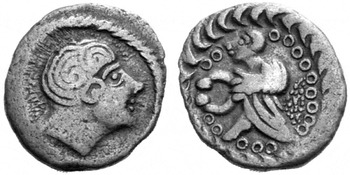
The ritual use of metals is underlined by the end products. Western Mexican pre-Columbian metallurgists produced alloys with no other ‘practical’ use than to achieve the proper golden colour, or to produce bells with a certain sound, meant to be used in ritual. The sound of these bells constituted the sacred space where rituals could take place (Hosler Reference Hosler1995, 100–1, 107). As noted above, a similar aim for the proper yellow-golden colour may have existed among the Celtic Iron Age people in Britain, who composed a similar alloy for two types of object: gold coins and torcs, perhaps creating the one out of the other (Creighton Reference Creighton2000, 38–41). The torc is one of the most typical cult and status indicators of the Celtic Iron Age, depicted on various occasions as belonging to a ‘barbarian’ leader or to a kind of shaman. Torcs are also depicted on Iron Age coins (e.g. Creighton Reference Creighton2000, 46, figure 2.6, 109, figure 4.7) and are often found hoarded with them (Fitzpatrick Reference Fitzpatrick, Haselgrove and Wigg-Wolf2005; Nick Reference Nick, Haselgrove and Wigg-Wolf2005), again underlining their close relationship (see figure 5). Coins in this instance form part of a cultic act, again connected with lordship, mystical knowledge and transformations.
Silver quinar (ø 17 mm) of the Nauheimer type, origin in the Wetterau region (Germany), showing person holding torc on reverse, 100–50 B.C. Photo courtesy of Auktionshaus Rauch, Vienna.

This list of examples from different times and places should not give the impression of universalistic claims as to the precise nature, reasons and meanings behind specific events or coins. What we want to demonstrate is that in all the instances mentioned, coins actively shape and contribute to the societies they are part of, and are in turn shaped by them. None of these themes can be fully explored here, but our aim is to suggest some directions in which scholarship could be developed further. For now, we hope to have created and generated interest in the many issues which may take numismatic material beyond chronology and economy studies.
A numismatic homecoming
This article grew out of our dissatisfaction with the ways coins are treated within our disciplines, both of us working within the fields of archaeology and numismatics. Coins as sources seem to have ended up as a ‘numismatic privilege’, confined to research issues defined within that discipline and mainly focusing on the historical origins of the objects. The treatment of research issues on a level beyond questions of dating and debasement seems to have become an ‘archaeologist's privilege’. While the archaeological discipline has changed enormously since Thomsen's day, the coins have largely remained where he put them. We believe it is time to re-member the numismatic evidence back into the archaeological family.
To achieve this, coin evidence – and numismatists – must reap the benefits of current archaeological theory and come up with fresh research issues. Archaeologists should also stop separating coins from other archaeological material and stop allowing it to be mystified by ‘specialists’. We acknowledge that coins are being used in archaeological studies, but also note that only rarely are their specific qualities given any importance at all in the interpretations. On both sides, the syntheses need (1) to be made, and (2) to take fuller advantage of both fields of expertise in regard to both the material and the larger theory-based research questions, in a better and closer multi-disciplinary environment where people actually communicate. Consequently, our argument is applicable to a much wider range of archaeological evidence than simply coins.