Non-alcoholic fatty liver disease (NAFLD), a major global health challenge, encompasses a broad pathological spectrum ranging from simple steatosis to steatohepatitis with varying degrees of fibrosis and cirrhosis(Reference Petäjä and Yki-Järvinen1,Reference Chalasani, Younossi and Lavine2) . Infiltration of fat inside the liver cells resembles an alcohol-induced liver injury, which is not caused by alcohol abuse(Reference Than and Newsome3). Globally, NAFLD affects approximately 25 % of the general population(Reference Anderson, Howe and Jones4). In Iran, prevalence rates are notably higher, with 36·9 % of adults and 42 % of obese children affected(Reference Hassanipour, Amini-Salehi and Joukar5).
The three major risk factors mentioned in the pathogenesis of NAFLD are systemic inflammation, excessive free radical accumulation and disruption of antioxidant balance, leading to augmented lipid peroxidation in cell membranes(Reference Martín-Fernández, Arroyo and Carnicero6). Chronic liver disruption results from the destruction of the oxidant and antioxidant defense system. Oxidative stress, driven by free radical overproduction, exacerbates NAFLD progression through multiple mechanisms: mitochondrial dysfunction in fatty acid oxidation, enhanced lipid peroxidation and subsequent inflammation-mediated hepatocellular damage(Reference Hong, Chen and Li7).
Diet-derived natural antioxidants with free radical scavenging properties such as Se, Zn and vitamins A, C and E have a major role in the modulation of oxidative stress and antioxidant homeostasis(Reference Rives, Fougerat and Ellero-Simatos8,Reference Musazadeh, Zarezadeh and Ghalichi9) . While previous studies have demonstrated the efficiency of isolated antioxidant supplements (vitamins A and C) on oxidative and inflammatory disorders(Reference Ivancovsky-Wajcman, Fliss-Isakov and Salomone10), the complete antioxidant potential of a diet reflects the synergistic interactions among its components(Reference Sohouli, Fatahi and Sayyari11,Reference Dabbaghi Varnousfaderani, Musazadeh and Ghalichi12) . Moreover, significant gaps remain in our understanding of the complex interactions and cumulative effects of antioxidants in whole foods.
Diet plays a crucial role in managing the complications of NAFLD, including disorders in blood lipid levels, hepatic enzymes and glycaemic control indices. A well-balanced and antioxidant-rich diet can help improve lipid profiles and hepatic enzymes and maintain optimal blood glucose levels, reduce the risk of further complications and promote overall health in NAFLD(Reference Musazadeh, Zarezadeh and Ghalichi9,Reference Berná and Romero-Gomez13) . Previous studies have assessed dietary antioxidant intake via indices such as dietary total antioxidant capacity and dietary antioxidant index(Reference Sohouli, Fatahi and Sayyari11,Reference Vahid, Rahmani and Hekmatdoost14) . The dietary antioxidant quality score (DAQS) is another tool for assessing the total antioxidant potency of a diet(Reference Rivas, Romero and Mariscal-Arcas15). In fact, DAQS assesses the synergetic effects of major dietary antioxidants such as Se, Zn, β-carotene and vitamins C, A and E(Reference Shahinfar, Shahavandi and Jibril16,Reference Musazadeh, Keramati and Ghalichi17) . The daily nutrient intake of these antioxidants is compared with the daily recommended intake.(Reference Rivas, Romero and Mariscal-Arcas15,Reference Tur, Serra-Majem and Romaguera18) . Previous studies showed significant associations between DAQS and chronic disorders. One study claimed a protective effect for DAQS and the odds of obtaining CVD(Reference Keshani, Jalali and Johari19). Another study showed an inverse association between DAQS and dietary phytochemical index in patients who were candidates for coronary artery bypass grafting surgery(Reference Abbasalizad Farhangi and Najafi20). A case–control study demonstrated that higher dietary total antioxidant capacity was associated with reduced odds of NAFLD in adults(Reference Sohouli, Fatahi and Sayyari11).
Administering diets with high antioxidant capacity should be emphasised in nutritional interventions for NAFLD prevention. Considering the lack of convincing evidence on the association between dietary antioxidant quality and liver dysfunction, the present propensity score–matched (PSM) case–control study aimed to investigate the possible association between DAQS and odds of NAFLD in a large population of the PERSIAN Azar cohort study.
Materials and Methods
Participants
This case–control study was conducted based on the data from the Azar cohort study, which is part of the Prospective Epidemiological Research Studies in Iran (the PERSIAN Cohort Study)(Reference Poustchi, Eghtesad and Kamangar21). More details of this study have been reported previously(Reference Farhang, Faramarzi and Amini Sani22). NAFLD cases, aged 35–70 years, were included, and those with dietary intake less than 800 kcal or more than 5000 kcal were excluded. NAFLD cases were required to have a physician-documented diagnosis of NAFLD. Propensity score matching was used based on age, gender and BMI, which is a matching procedure in medical research to reduce the impact of selection bias in comparison to a non-randomised control using observational data(Reference Rosenbaum and Rubin23). The study protocol was confirmed by the Ethics Committee of Maragheh University of Medical Sciences (IR.MARAGHEHPHC.REC.1403·017).
Demographic characteristics, anthropometric factors, non-alcoholic fatty liver disease components and blood sampling
Demographic characteristics consisting of gender, physical activity (low, medium, high), education (illiterate, primary school, diploma, university) level, wealth score index (1 (poorest), 2, 3, 4, 5 (richest)) and past medical history (diabetes, hypertension, CVD) were gathered. Using National Institutes of Health guidelines, anthropometric factors, including weight, height, waist circumference and waist:hip ratio, were measured, and BMI (classified as normal, overweight, obese) was calculated based on kg/m2. Following a 12-h overnight fasting, blood samples were collected. Serum levels of alkaline phosphatase, aspartate aminotransferase, alanine aminotransferase, γ-glutamyl transpeptidase, fasting blood sugar, TAG, total cholesterol and HDL were measured using enzymatic methods. Friedewald’s formula was used for calculating LDL(Reference Poustchi, Eghtesad and Kamangar21).
Dietary assessment and dietary antioxidant quality score calculation
Dietary intake was assessed using a semi-quantitative 130-item FFQ. Items were categorised into ten major food groups: bread and cereals, beans, meat and its products, milk and dairy products, vegetables, fruits, oils, oil seeds and butter, sweets and miscellaneous. The frequency of consumption of each food group was based on times per day, times per week, times per month, times per year and months per year. The daily intake of total energy, carbohydrate, protein, fat, thiamine, riboflavin, niacin, vitamin B6, folate, vitamin B12, vitamin E, vitamin A, vitamin C, Se, Fe, Ca, Mg and Zn was analysed using the US Department of Agriculture table of nutrient retention(Reference Eghtesad, Hekmatdoost and Faramarzi24,Reference Eghtesad, Masoudi and Sharafkhah25) . The DAQS was evaluated based on the daily dietary intake of vitamin E, vitamin A, vitamin C, Se and Zn compared with the daily recommended intake. This comparison was performed for each of the five mentioned nutrients, and the following values were assigned: 0 if the intake was < 2/3 of the daily recommended intake and 1 if the intake was > 2/3 of the daily recommended intake. The total DAQS was calculated by adding the scores of the five antioxidant nutrients, with a range of 0 (very poor quality) to 5 (high quality)(Reference Tur, Serra-Majem and Romaguera18). To examine the association between DAQS and NAFLD, the DAQS was divided into two percentiles: percentile 1:0 < DAQS ≤ 3 and percentile 2:4 ≤ DAQS ≤ 5.
Statistical analysis
Patients in the NAFLD and non-NAFLD groups were matched using the propensity score method as described by Rosenbaum and Rubin(Reference Rosenbaum and Rubin23). The propensity score of each individual was calculated based on the covariates of age, sex and BMI. Descriptive statistics including skewness and kurtosis indices were used to check the normality of data. Quantitative data with normal and non-normal distributions are presented as mean (sd) and median with interquartile range, respectively. Also, qualitative variables are revealed as frequency (percentage). Quantitative comparisons between groups were performed using either the independent t test or Mann–Whitney U test, as appropriate, while categorical variables were compared using the χ 2 test. Logistic regression analyses were performed after adjusting for physical activity, wealth score index and energy intake, with results presented as OR and 95 % CI. Also, the percentage of bias reduction after matching and the average treatment effect were measured. Two-tailed P-value ≤ 0·05 was considered significant.
Propensity score matching was performed by STATA 16.0 (Stata Corporation) using a 1:2 ratio with nearest-neighbour matching without replacement, matching NAFLD patients to non-NAFLD subjects, individually. This method consists of a random case–control subject order, by selecting the first case subject and finding the control subject with the closest propensity score, in order to minimise the effects of selection bias. Both subjects were then removed from consideration for matching, and the next case subject was selected. If a case subject was not matched to any control subject, then the case subject was discarded.
Results
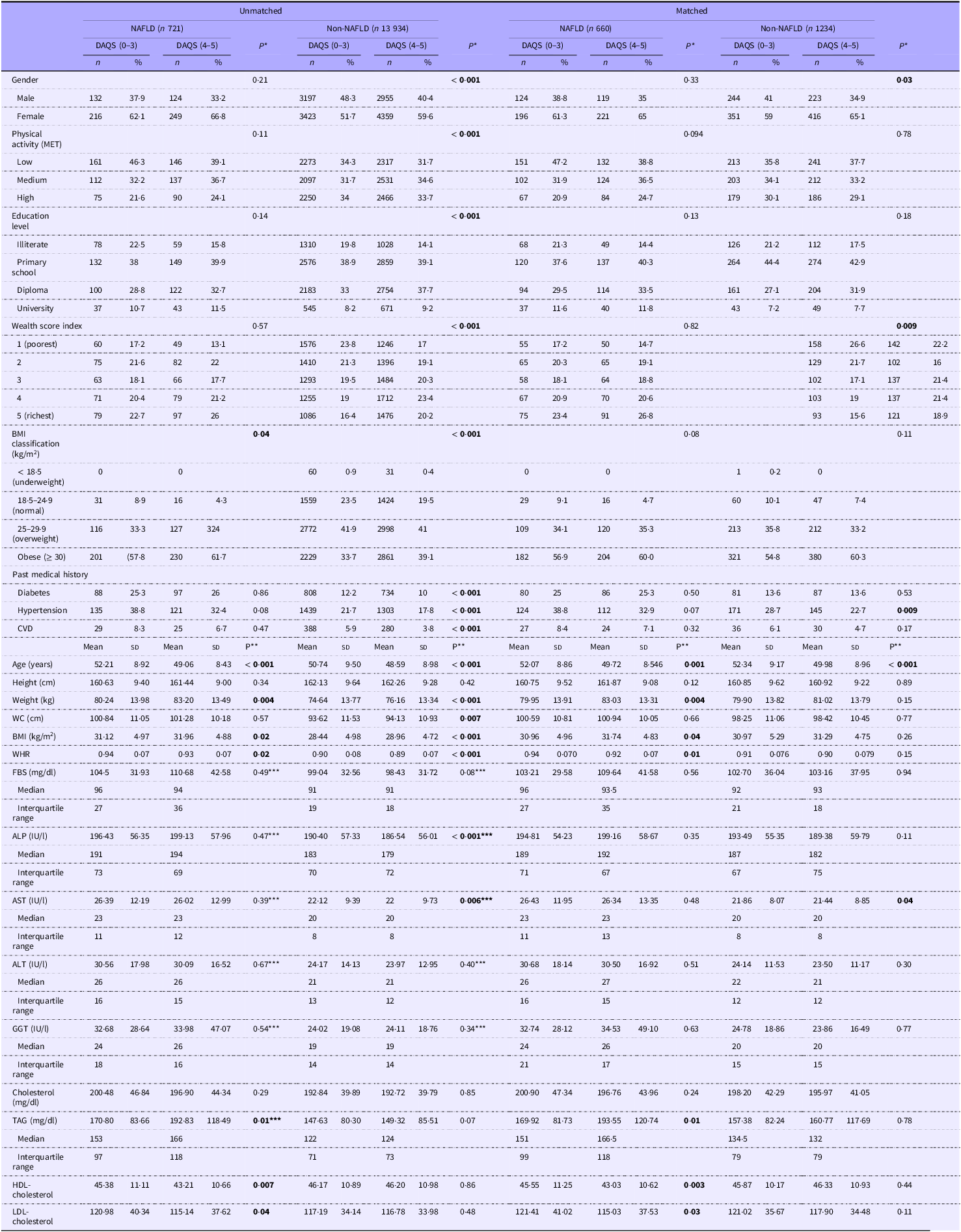
During the post-PSM analysis, participants who were not matched to the nearest-neighbour matching algorithm adjusted for sex, age and BMI were excluded. Thus, the total sample size dropped to 2358, with unmatched cases excluded, while analyses were accomplished for both matched and unmatched groups. Performing PSM analysis both prior to and following matching, based on age, gender and BMI, indicated 74·7, 84·8 and 98·5 % reduction bias, respectively (P < 0·05). Participants’ characteristics, anthropometrics, biochemical parameters and physical activity level based on DAQS percentiles and according to matched and unmatched NAFLD and control cases are illustrated in Table 1. In the unmatched category, a total of 721 participants (37·9 % men; 63·1 % women) in the NAFLD group and 13 934 participants (33·2 % men; 66·8 % women) in the non-NAFLD group were included. In the matched category, a total of 660 participants (36·9 % men; 63·15 % women) in the NAFLD group and 1234 participants (37·95 % men; 62·5 % women) in the non-NAFLD group were enrolled. Findings indicated significant differences in age, weight, BMI, waist:hip ratio, TAG, HDL-cholesterol and LDL-cholesterol in both matched and unmatched NAFLD cases. Nevertheless, there were no significant differences observed in higher DAQS, compared with lower DAQS for gender, physical activity, education level, wealth score index, past medical history, waist circumference, fasting blood sugar, alkaline phosphatase, aspartate aminotransferase, alanine aminotransferase, γ-glutamyl transpeptidase and total cholesterol in both matched and unmatched NAFLD cases.
Baseline characteristics of participants by NAFLD before and after propensity score matching (Numbers and percentages; mean values and standard deviations)

NAFLD, non-alcoholic fatty liver disease; DAQS, dietary antioxidant quality score; MET, metabolic equivalents; WC, waist circumference; WHR, waist:hip ratio; FBS, fasting blood sugar; ALP, alkaline phosphatase; AST, aspartate aminotransferase; ALT, alanine aminotransferase; GGT, γ-glutamyl transpeptidase; T, tertiles.
Subjects in the first tertile of DAQS (0–3); second tertile (4–5).
P-value less than 0·05 was considered significant and exhibited boldface in the table. Values are based on mean (sd) or reported percentage.
*P: Chi square, **P: independent t test.
***P: Mann–Whitney U test.
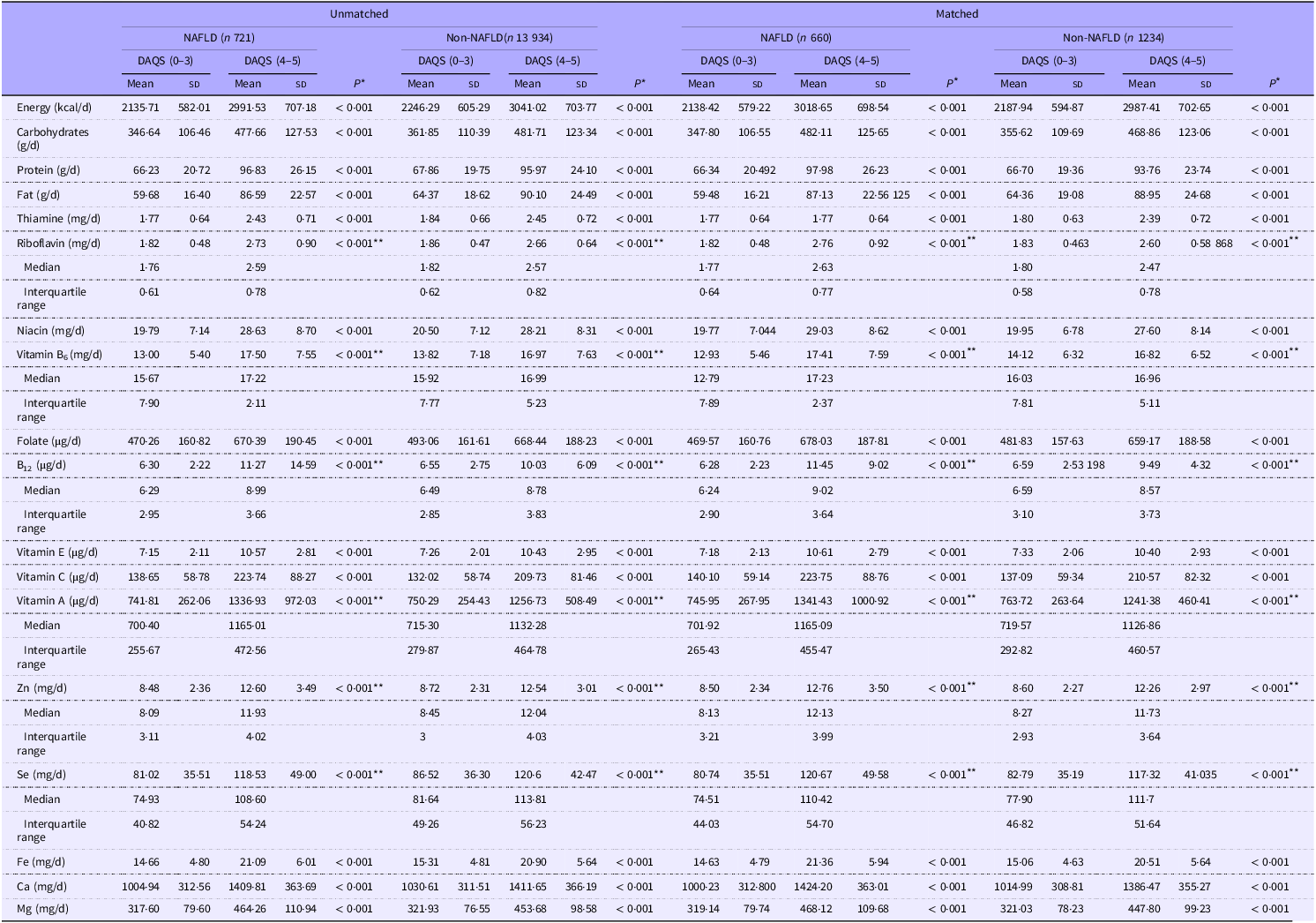
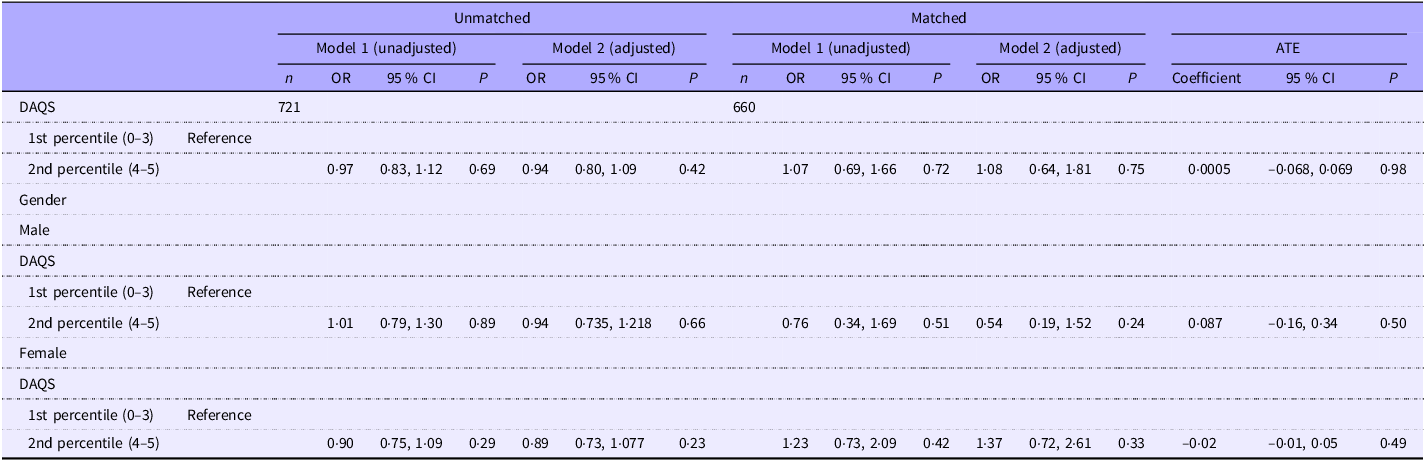
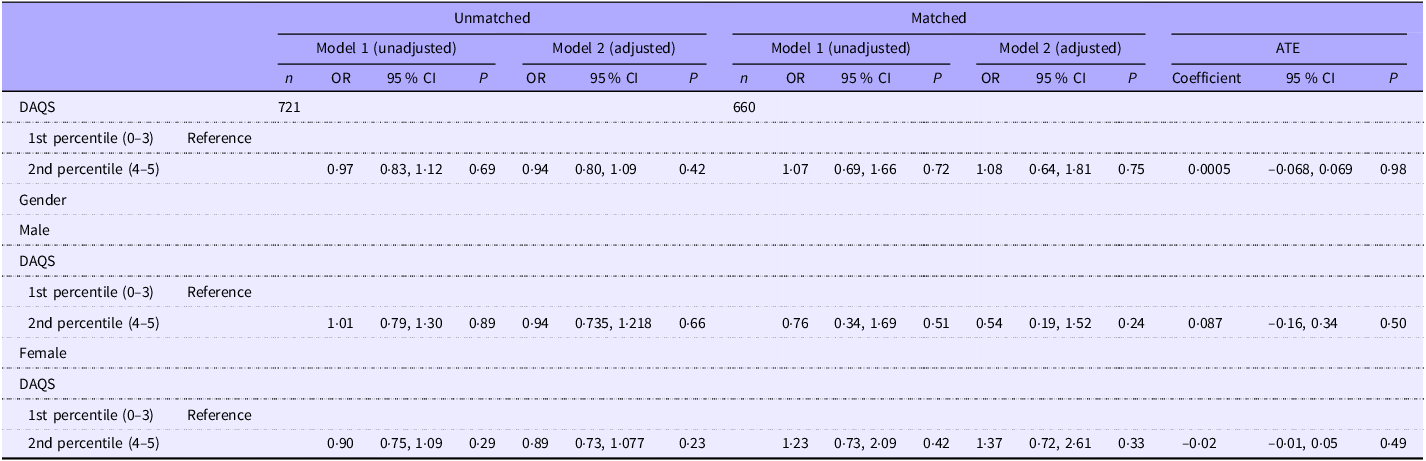
Table 2 represents the dietary intake of study participants by DAQS percentiles, based on matched and unmatched groups. According to findings, significant differences in dietary intake were observed between higher and lower DAQS in both NAFLD and non-NAFLD cases (P < 0·05). Assessing the correlation between DAQS and NAFLD before and after propensity score matching, based on multivariate logistic regression, revealed no significant associations (model 1). Results remained constant after adjusting for physical activity, wealth score index and energy (model 2) (Table 3). Assessing the average treatment effect of DAQS percentiles based on gender revealed no significant association between DAQS and NAFLD as well.
Dietary intake of study participants by NAFLD before and after propensity score matching (Mean values and standard deviations; median values and interquartile ranges)

NAFLD, non-alcoholic fatty liver disease; DAQS, dietary antioxidant quality score.
* P: independent t test.
** P: Mann–Whitney U test.
Multivariate logistic regression for the correlation between DAQS and NAFLD before and after propensity score matching (Odds ratios and 95 % confidence intervals)
DAQS, dietary antioxidant quality score; NAFLD, non-alcoholic fatty liver disease; ATE, average treatment effect.
Model 1: unadjusted.
Model 2: adjusted for physical activity, wealth score index and energy.
Discussion
The present case–control study investigated the association between DAQS and metabolic parameters including anthropometric indices, hepatic enzymes, lipid profiles and fasting blood sugar in both matched and unmatched NAFLD patients. Findings provided valuable insights into how DAQS influenced metabolic health in this population. Despite the absence of significant findings in the overall analysis, the results prompted a deeper exploration into the underlying mechanisms and comparison with analogous studies. While the primary analysis failed to establish a substantial correlation between DAQS and NAFLD, intricate adjusting models unveiled noteworthy associations warranting further deliberation. In fact, it highlighted the complex interplay between dietary antioxidant quality, dietary intake, physical activity, education level, wealth score, baseline characteristics, lipid profile and hepatic biomarkers among NAFLD patients. This complexity is attributed to the multifactorial mechanisms, such as genetic, epigenetic and environmental background involved, beyond dietary constituents(Reference Wajsbrot, Leite and Salles26). Findings indicated significant differences in weight, BMI, waist:hip ratio, TAG, HDL-cholesterol and LDL-cholesterol level between percentiles of DAQS in NAFLD patients. These findings may be explained by higher dietary and antioxidant intake, since improved antioxidant quality was correlated with higher energy intake, followed by weight and BMI increase(Reference Yki-Järvinen, Luukkonen and Hodson27). The overall antioxidant potential of a diet, as measured by DAQS, might not fully capture the subtle effects of individual components that could beneficially influence lipid profile(Reference MacDonald, Saunders and Longmuir28). Furthermore, due to NAFLD’s complex manifestations and impaired hepatic enzyme function, the efficiency of dietary antioxidants on biochemical markers may be disrupted, potentially diminishing their beneficial effects on liver function(Reference Wajsbrot, Leite and Salles26). Findings indicate the necessity of adopting a high-quality dietary pattern focused on consuming low-energy and antioxidant-rich foods that boost antioxidant intake without providing excess energy. Supporting these statements, most participants were overweight or obese, with higher DAQS and energy intake, which did not necessarily resemble improved biochemical homeostasis. Obesity, as a complex metabolic disorder, is associated with increased inflammatory markers that promote chronic low-grade inflammation and increase the secretion of pro-inflammatory cytokines(Reference Khanna, Khanna and Khanna29). In addition, both human and animal studies have confirmed reduced lipid oxidation in insulin-sensitive organs, leading to lipid accumulation and insulin resistance(Reference Van Den Hoek, Teusink and Voshol30). Although NAFLD cases showed higher DAQS, the antioxidant capacity of antioxidants such as Se, Zn, β-carotene, vitamin C, vitamin A and vitamin E is overwhelmed by obesity-related chronic inflammation. Hence, a balanced diet emphasising diverse antioxidant sources is crucial for improving hepatic function in NAFLD patients. These null associations may also be due to the cross-sectional design of this study, since patients may have already modified their dietary intake based on medical advice following diagnosis prior to entering the study.
Previous research has yielded interesting findings regarding dietary antioxidant quality. In accordance with our results, other studies on Iranian adults found no significant association between DAQS and metabolic syndrome(Reference Shahavandi, Shahinfar and Payande31). Another study on healthy obese adults showed that participants in the highest DAQS tertile had lower diastolic blood pressure, while no significant correlations were mentioned in the case of glucose hemostasis, lipid profile and systolic blood pressure(Reference Nikrad, Shakarami and Tousi32). In contrast to our findings, previous studies have demonstrated inverse associations between DAQS and chronic diseases(Reference Keshani, Jalali and Johari19,Reference Abbasalizad Farhangi and Najafi20,Reference Aghajani, Wong and Azimi33) . Notably, the association between DAQS and NAFLD based on PSM had not been examined before our investigation. However, one case–control study mentioned that individuals in the highest tertile of dietary total antioxidant capacity had lower odds of NAFLD, compared with those in the lowest tertile(Reference Sohouli, Fatahi and Sayyari11). Another study indicated that higher intakes of vitamins A and D were associated with reduced NAFLD risk(Reference Lotfi, Saneei and Hekmatdost34). Studies using dietary antioxidant index have demonstrated inverse associations with NAFLD prevalence(Reference Vahid, Rahmani and Hekmatdoost14). Collectively, these findings suggest a complex relationship between dietary antioxidant potential and systemic inflammation, implying that dietary effects on cardiovascular and hepatic disorders may vary depending on (1) specific antioxidant nutrients evaluated, (2) baseline health status and (3) overall lifestyle and dietary patterns. In this study, higher DAQS were observed among NAFLD patients and controls, reflecting their prior antioxidant-rich dietary pattern. However, it is important to note that antioxidant content assessment (using DAQS, dietary antioxidant index or dietary total antioxidant capacity) relies on FFQ, which is subject to recall bias(Reference Archer, Marlow and Lavie35). Furthermore, the accuracy of these measures depends on multiple factors, including the comprehensiveness of FFQ items, interviewers’ proficiency in assessing food consumption frequency and participants’ memory and reporting accuracy.
The cornerstone of the findings of our study was the significantly lower LDL-cholesterol level in participants with high DAQS, despite elevated TAG and reduced HDL-cholesterol levels. These contradictory findings likely reflect the complex dyslipidaemia dimension of NAFLD, variation in total fat intake and differences in the types of dietary fats consumed. Given that our study population consisted primarily of overweight and obese individuals, it remains challenging to attribute lipid profile variations solely to dietary antioxidant quality.
The present study has manifold strengths. First, we conducted a case–control study using data from the well-designed Azar cohort study. Subsequently, the data accuracy of the Azar cohort study has been confirmed through the predefined and validated research protocols and questionnaires implied. Moreover, detailed demographic, clinical, biochemical and lifestyle variables have enabled robust covariate adjustments. Second, we employed a 1:2 ratio propensity score matching method (PSM based on age, sex and BMI) to minimise the selection bias and balance covariates between groups. Third, we performed univariate logistic regression analyses both before and after matching. Furthermore, the large sample size enhanced result accuracy and provided sufficient statistical power to detect significant associations. Evaluating the quality of antioxidants consumed compared with the RDA. The limitations of the present research must be noted as well; the most notable limitation was the case–control methodology of the study and limited cause-and-effect relationship assessment. Furthermore, NAFLD diagnosis was self-reported, based on participants’ prior diagnosis before entering the study. Dietary intake and DAQS were assessed and calculated via FFQ, which are subject to recall bias and memory-dependent reporting inaccuracies. In fact, it would have been superior if serum antioxidant biomarkers were measured and compared with DAQS and NAFLD severity, which is more efficient(Reference Prentice, Mossavar-Rahmani and Huang36). Nevertheless, due to the prohibitive cost, logistical complexity and high participant burden associated with collecting and analysing biomarker data from the large population studied, we used self-reported FFQ data.
For future directions and implications for clinical practice, it is encouraged to focus on the profound influence of diet quality and metabolic health and factors that modify these relationships. Comparing the results of prior research and the findings of the present study underlines the need for prospective studies on NAFLD occurrence, which not only boosts the dietary quality of the diet but also emphasises measuring serum antioxidant biomarkers and their relationship with dietary antioxidants in NAFLD cases.
Conclusion
The findings of the present PSM case–control study offer worthy concepts regarding the relationship between dietary antioxidant quality and demographic, anthropometric characteristics and the dietary and biochemical aspects of NAFLD. Despite null associations between DAQS and NAFLD, the detailed comparisons and significant associations between BMI, waist:hip ratio, TAG, HDL-cholesterol and LDL-cholesterol level and DAQS among matched and unmatched groups demand further attention. Hence, for future perspectives, we call for in-depth, prospective studies that explore the connections between dietary and serum antioxidant intake before and after diagnosis and biochemical indices. These approaches may efficiently clarify the underlying mechanisms.
Acknowledgements
The authors are grateful for the financial support of Maragheh University of Medical Sciences (ethics code: IR.MARAGHEHPHC.REC.1403.014). They appreciate the contribution by the investigators and the staff of the Azar cohort study and the support of the Liver and Gastrointestinal Diseases Research Center (grant no. 700/108 on 14 March 2016), Tabriz University of Medical Sciences.
This research received no specific grant from any funding agencies.
F. G. H. was responsible for drafting the manuscript, data interpretation, editing and writing the manuscript and critical revision of the manuscript for important intellectual content. E. F. was responsible for data acquisition, data interpretation, editing and rewriting. N. G. was responsible for data acquisition, data interpretation and analysis. M. H. S. was responsible for drafting the manuscript, study concept and design. All authors reviewed and approved the final manuscript.
The authors have no conflicts of interest to declare.
The datasets used and/or analysed during this study are available from the corresponding author upon reasonable request.