Filmed history, especially when broken up into televisual segments, is very much in vogue in the Middle East and has been now for three decades. Popularity with local viewers can be marked by the frequency with which successful historical dramatic serials (Arabic: musalsalat, sing. musalsal) have been extended over multiple viewing seasons and the degree to which they have spawned imitations. Popularity with a wider global audience is underscored by the extent to which the brashest, boldest serials have been marketed, dubbed or subtitled, to reach viewers in Latin America, South and Southeast Asia, and the Euro-American west.
Not all of the blockbuster hits, to be sure, are historicals. The vast majority remain social dramas and quite a few have strong comic elements or are comedies outright. Many can still be viewed through a critical lens as “dramas of nationhood” that explore fundamental issues of personal identity and civic culture. The primary intended audience is, as Lila Abu-Lughod has argued for her focus, the Egyptians, the national citizen. Television writ large “may be one of the richest and most intriguing technologies of nation building in Egypt, because it works at both the cultural and sociopolitical levels, and it weaves its magic through pleasures and subliminal framings.”Footnote 1 This is particularly true for dramatic serials, the most popular of which cut across class lines. Her assessment, written in an era when satellite television was just emerging as a globalizing medium, still rings true: “the vast majority of the [then] 69 million Egyptians leading such different lives—business tycoons and tenant farmers, stars, peddlers and professors—still tend to watch more or less the same television serials every evening. This is especially true during the month of Ramadan, when people avidly watch some of the most captivating serials broadcast each year.”Footnote 2
How much has changed in ensuing years needs deeper theoretical and ethnographic study. Ramadan remains the “do or die television season that shapes production, programming and acquisition trends for the entire year,” the season, fluctuating through the year according to the Muslim lunar calendar, in which the reputations of writers, directors, actors, and channels “are made, remade or unmade.”Footnote 3 Kraidy and Khalil observe that people still tend to watch national television stations during prime time—for Ramadan this means after sunset prayer and breaking the fast—with shows that “appeal to a sense of community.”Footnote 4 Nonetheless, global receivership of satellite channels and the quick online posting of many programs, sometimes by the channels themselves, have surely changed viewing patterns and dramatically transformed the nature of the televisual romance with the holy month. Abu-Lughod recognized that Egyptian productions, emanating from Hollywood on the Nile, had a special trans-Arab reach. Even so, she argued for the primacy of these productions as national dramas. That cultural dominance shifted precipitously at the start of a new century with the growing popularity of Syrian dramas, and then even more with the Turkish invasion, a cultural onslaught that continues to overwhelm the defenses of many local industries in and beyond the Middle East.
In this essay I look back to the relatively simpler, more contained world that Abu-Lughod's work evoked. My focus is the 1990s, a decade in which historical dramas became a mainstay of creative production and viewer attraction. The 1990s arguably marked a moment in Egyptian television when the country turned its attention increasingly (although never monolithically) toward historical serials as a means of recreating and reinterpreting modern Egyptian history. In sharp contradistinction to theological dramas about the early days of Islam presented most often in flowery (or stodgy) classical Arabic, these historicals featured the colloquial register. Popular scriptwriters, Mahfouz Abd al-Rahman and Osama Anwar Okasha in particular, set a high bar with sprawling multi-year Ramadan series that covered Egypt's past from the nineteenth century into the contemporary era, rewriting public history, appeasing skeptical academics, and making history fashionable. Biographical dramas, initially of artists, but later politicians, kings, and preachers would follow. Success perhaps ultimately produced a degree of stagnation, but for a decade new stars were born who teamed with veteran players to fashion a number of indelible historical images, showcasing consecutive eras when Egypt still was the cultural center of the Arab world.
Watching Television
The study of television dramas is still relatively new, especially when compared to other mass mediated popular culture in the Middle East.Footnote 5 This is partly due to the earlier lure of the big screen, although even film studies are fairly recent. It is also arguably due to the attraction of social media and online programming, much of it designed to evade state monitoring and censorship, as a field of study.Footnote 6 Despite its dynamism as a cultural outlet, in the region, especially in the present context, television seems to have been left behind. There are numerous catalogs and encyclopedias of Egyptian and Arab film and film stars, but no comprehensive guides to television productions. Internet databases, whether global (IMDb) or more regionally focused (elcinema.com) provide spotty coverage at best and are not reliable for such basic information as number of episodes or dates broadcast. Publications produced by the Egyptian Radio and Television Union (ERTU) are generally geared for in-house consumption and rarely cataloged.
Ironically, it is now easier than ever to monitor television as an academic viewer. Those of us who began following television in the late 1980s and 1990s operated in a far different broadcast medium. Presence on the ground was a prerequisite. In Dramas of Nationhood, Lila Abu-Lughod refers to a particular serial that her informants highlighted, but confesses that she had not been present to view it.Footnote 7 Her work, as well as that of Walter Armbrust and some of my own, was clearly guided by a degree of serendipity; we wrote about what we had been fortunate to find on television during our various research trips.Footnote 8 There was always, as Armbrust has noted with wry nostalgia, the persistent struggle to match printed television guides with broadcast reality.Footnote 9 Moreover, while classic movies and comedy plays were rebroadcast with frequency, dramatic serials were never rerun; once aired they seemingly vanished into the vaults of state television. With the advent of home video players certain popular dramas were formatted and rented/sold in downtown Cairo video stores and many of us taped fervently. Currently it is much easier to find serials reproduced, legally or pirated, on DVD—most often taken from Gulf satellite broadcasts—and some have been uploaded onto YouTube and other Internet sites. Those watching current serials, especially the most popular, whether from Turkey, Israel or the Arab world can access them via Netflix, Amazon or Google Play.
Of course there are other hurdles. Prior to the late 1980s most television serials ran on consecutive days for seven to nine days.Footnote 10 The dominant family viewing experience during Ramadan, at least for Egypt, was the annual Fawazir Ramadan (Ramadan Riddles, sing. fazzura), the “lavish ‘main event’ of Ramadan,” a month-long variety show, hosted by a popular entertainer, that focused on a recurring theme. Armbrust notes that the fawazir was by the mid-1990s “semi-moribund. . . lost in an ever larger sea of holiday programming.”Footnote 11 That sea became dominated by dramatic serials. In a major programming shift, Ramadan serials expanded to fill up the entire month and some soon ran into the three-day ʿEid holiday or beyond. For television studies scholars, let alone viewers, this constitutes a massive time commitment, far more so than film viewing, even with the advent of home video recording. “Binge viewing” may be the only way to catch up.Footnote 12
This is compounded when we want to chart viewer response. The best studies of viewership are ethnographic, rooted in watching and/or discussing programming with an audience, whether movies in a theater or television programs in household or public venues.Footnote 13 Television shows, which initially ran in particular time slots on particular days, now stay alive for individual viewers via self-controlled screenings or streaming on private portable devices. For many this may complement rather than replace mass audience viewing at scheduled time slots. To that extent what Armbrust has called “synchronizing watches,” the communal ritual of sitting down to watch the prime time show that everyone will then discuss, at home and in the streets, whether a variety show or dramatic serial, and without parallel viewing, texting, or social media posting, may in some respects be a thing of the past.
The 1990s Golden Age
This period, starting from the late 1980s through the 1990s, is what I will consider for our purposes the “golden age” of Egyptian historical drama. Egyptians will of course recall the popular dramas of the 1960s, the first decade of television, and 1970s. Everyone has his or her own favorites. What I want to highlight in the 1990s and into the early 2000s when Syria and others moved in to strip Egypt of its cultural monopoly are the historical dramas, especially the multi-season dramas that looked back on Egypt's past, often with a revisionist gaze.
The era I focus on sits at the cusp of a major transformation in media transmission, the onset of regional satellite television. Terrestrial television in the 1990s in Egypt consisted of five channels, the two national stations (the second of which featured English and French language broadcasts, including popular American, British and Australian dramas and comedies) and three channels directed at provincial audiences. By the mid-1990s viewers in Cairo might access these local channels, although reception was often spotty and programming was rarely, if ever competitive. The Egyptian Satellite Channel, the first in the Arab world, launched in 1990 aimed initially at Egyptian troops fighting in Iraq and countering Iraqi state propaganda. Egypt launched its own satellite, NILESAT, in 1998, which inaugurated six channels. For general terrestrial viewers, the major breakthrough was the advent of Nile TV International in October 1994, a satellite channel oriented toward young, urban multilingual professionals (and very attractive to foreign expatriates), but not requiring a satellite dish or special subscription. In 2001 the first privately owned channel won licensing rights from the state.Footnote 14
The 1990s also marked the second decade of Hosni Mubarak's thirty-year reign. Promises of political reform—achievements such as open party elections and a privatized free press should not be discounted—had begun to atrophy. Insurgent religious forces embarked upon a widespread campaign of political violence, targeting tourists, highly placed government officials, and hostile public intellectuals. Secular oriented intellectuals, whether aligned with Nasserist state socialism or Sadatist neo-liberalism, increasingly leaned toward acceptance of state repression to forestall a likely Islamist electoral victory. The Muslim Brothers—deemed legal and now having been allowed a far greater degree of access to formal political life via elections and print media, but ever suspicious of establishment politics—found themselves caught between the pull of more radical groups, for whom they often painstakingly tried to apologize, and the state. Many Egyptians, whatever their social and cultural orientation found themselves trapped between diametrically opposed slogans— “Islam is the Solution” (Muslim Brothers) and “Islam is not Terrorism” (State)—and all too often caught in the crossfire of state and anti-state violence.
The challenges facing officials who oversaw state media included the struggle to control what programming entered Egyptian airwaves as well as to hold the line against political and cultural currents that contested official civic culture. As Abu-Lughod recalled:
The 1990s signify a particularly complex political moment in Egypt's national history when the hegemony of one vision, of which state media was to be an instrument, was seriously eroding. Particular changes were set in motion in the 1970s that unfolded especially starkly over the course of the 1990s, making Islamism and globalization, to use the short-hands of local political discourse, serious competitors for the developmentalism that was integral to the earlier pedagogical moment.Footnote 15
In general the state held firm, especially with regard to culture wars with Islamism. Depictions of Islamist characters in film and in television dramas lacked nuance and displayed no sociological understanding.Footnote 16 Depictions of normative piety through the following decade remained few and far between.Footnote 17
Even with these critical caveats, the 1990s remain culturally significant for television production, perhaps in part because these were the last years that Egyptian families sat down to watch the same programs together, perhaps because with the decline of the film industry television dramas became a special vehicle for the maintenance of some of Egypt's great actors, and the roles of a lifetime for many established and upcoming stars who had far less access to the big screen. Some of them found great sustenance in the arrival of historical dramas. These dramas opened discussions of history, including breaking longstanding taboos of treating historical characters, especially recent political leaders, and depicting those eras not simply as stages for family dramas, or social criticism cloaked in domestic sagas—one of the most famous was called al-ʿAila (The Family 1994) —but as full-fledged historical explorations.Footnote 18
The pivotal point in many ways was a television project on the 1956 Suez Crisis that evolved into a full-fledged movie and eventually—after a delayed release—broke box office records. Nasser 56 (1996, dir. Muhammad Fadil) was to be one of a series of hour-long television dramatizations of Egyptian historical luminaries, each to feature Ahmad Zaki, one of the leading actors of his generation. As the project grew it became a showpiece for the new media production center located near 6th of October City in the desert west of Cairo. The film was featured in television ads for upcoming ERTU projects during the 1995 Ramadan season, but it sat on the shelf for nearly a year, despite rave reviews from critics and viewers at a special preview screening to open the Cairo Television Festival in July 1995.Footnote 19
The project had apparently fulfilled state production sector aims—reenactment of a moment of supreme civic solidarity—but the depiction of Nasser, who had never before been portrayed, as an abstemious, charismatic man of the people ultimately reflected poorly on the current leader, causing officials in high office to pause. Eventually the film could not be shelved, became a surprise hit—a black and white semi-documentary without much action—and both captured and infused the historical bug that had been growing on television. The 1980s had been a decade of published memoirs and recollections, many of which had cracked the official history of the origins and unfolding of the Nasser era.Footnote 20 Serious movies had taken apart the false hopes—and promises—of the 1973 war and highlighted the hypocrisies of Sadat's “open door” liberalism.Footnote 21 Now popular culture melded with history.
Halawni Gate – How Will History Judge Us?
In Egypt, especially on television, the scriptwriter is often as important, if not more important, than the director. Two eminent scriptwriters fueled the historical 1990s. The first, Osama Anwar Okasha, usually steals top billing. Layali al-Hilmiyya (Hilmiya Nights), named for a once prosperous neighborhood adjacent to medieval Cairo and considered by many the most popular drama ever, ran for five years (1988–92). It covered six decades of modern Egyptian history, straddling the old regime and carrying through into Sadat's 1970s. Okasha, who had “studied sociology in college, written literature, and then realized he could reach more people through television,” died in 2004 after a string of historical hits, none as path-breaking as Hilmiya.Footnote 22 While wowing audiences the drama also inspired lively, at times heated debate for its sympathetic portrayal of an old-era aristocrat, its non-demonic portrayal of Muslim Brothers, and its positive depiction of the Nasser years relative to those that followed.Footnote 23 It made a star of Yehia al-Fakharani, a trained surgeon turned actor, who blossomed in the 1990s after playing the central character, the ill-fated pasha, Salim al-Badri.Footnote 24
The other star scenarist was Mahfouz Abd al-Rahman, the creative force behind Nasser 56. By the mid-1990s Abd al-Rahman had established a reputation for penning historical dramas; his first in the mid-70s was about Salman al-Farsi, the companion of the Prophet Muhammad and first Persian convert to Islam. By his own account, “I have written about dozens of historical figures from ʿAmru al-Qays to Baybars, from Qutuz to al-Mutanabbi and Sulayman al-Halabi. In drawing close to each of these characters I have always entered into a dispute with them, primarily because we are bound by our own era and circumstances.”Footnote 25 By the early 1990s he was moving into the modern period, particularly the nineteenth century. Just before Nasser 56, he had gained prominence with a sprawling treatment of the digging of the Suez Canal and the social impact upon Egypt's peasantry. Bawabat al-Halawani (Halawani Gate) was the smash hit of the 1994 Ramadan season, and went through two later seasons, in 1996 and 2001. Over three seasons it ran for 95 episodes.Footnote 26
Whereas in Okasha's dramas historical events serve as backdrop to a complement of fictional characters, for Abd al-Rahman historical characters are central to the narrative. They come to life through invented words and dramatically contrived plot twists; the dramatic characterizations arguably help shape a popular understanding, for better or worse, of their place in regional and global history. At the same time, Egyptian historians credit Abd al-Rahman with having done his homework in archives and have approved of his credentials as a Cairo University history graduate in the 1950s who studied under Muhammad Anis, a giant in the field.Footnote 27
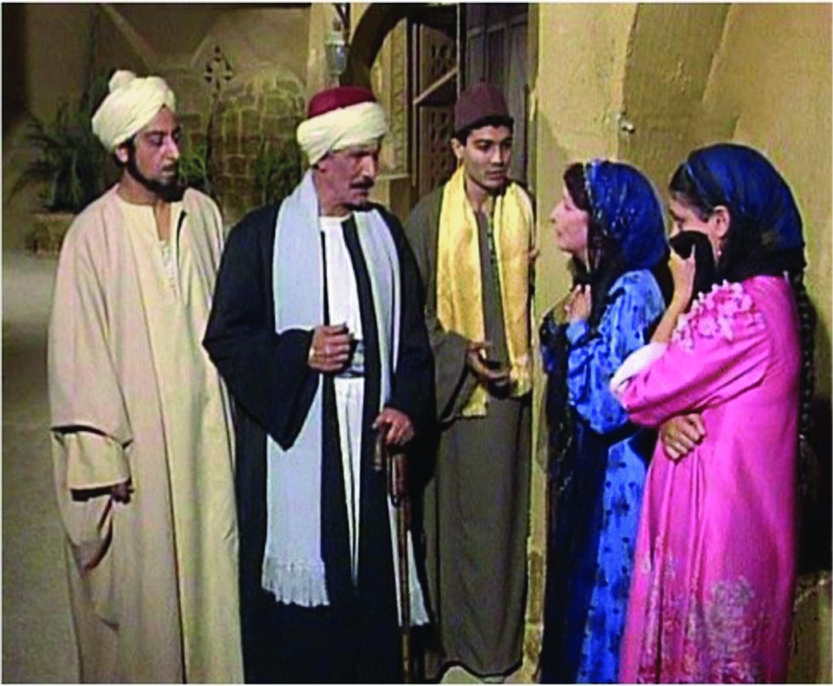
Abd al-Rahman's narrative account of the late nineteenth century provides a challenging revisionist depiction of the foundational era of Egyptian nationalism. Bawabat al-Halawani commences in 1859–60 with the first roundup of Egyptian peasants to begin digging the waterway. The setting is a hamlet, known colloquially as “al-Farama” that is run by the Halawani clan, near the soon-to-be constructed city of Port Said. The series starts symbolically with the abduction of Asila, a young local girl, daughter of the village chief, Shalash al-Halawani, by Iftikhar Hanum, wife of Mukhtar Bey al-Kashif, the chief engineer of the Canal project and the first season's primary villain. The first season is rooted in the trials and tribulations of the Halawani clan: the bereaved Shalash and his inconsolable wife, Maryam, and Shalash's two brothers, Salama, who winds up in Cairo and resists returning to the village, and the much younger Hamza, who is conscripted, at Mukhtar Bey's initiative, into the Egyptian army [Figure 1]. Hamza is first posted to guard the palace of the beautiful Ashraqat Hanum, who is initially intrigued by the peasant as an anthropological specimen, but soon falls in love with him.Footnote 28 Amidst a blooming mutual attraction Hamza is dispatched to Mexico in the ill-fated 1861 expedition by Napoleon III to support Maximilian, the Holy Roman Emperor, against the independence movement led by Benito Juarez.
The Halawani clan: Shalash, the patriarch, his wife, Maryam, brothers Salama and Hamza, and his neice, Hafsa.

Much will follow over the course of the initial season's twenty-four episodes, especially as the scenes shift increasingly to Maser al-Mahrousa (Cairo) and the court of the soon-to-be Khedive Ismaʿil (r. 1863–79; Ismaʿil becomes Khedive in episode 12; his predecessor, Saʿid Pasha, never appears). Other primary historical figures are Shahin Pasha, commander of the Egyptian army; Ismaʿil Siddiq, Ismaʿil's trusted half-brother, here a secondary villain; canal designer Ferdinand De Lesseps; the great nineteenth-century bard, Abduh al-Hamuli, and his protégé, Almaz (although here she is scripted as the kidnapped country girl Asila).Footnote 29
Most striking is the characterization of Ismaʿil, who is here treated as a progressive-minded Egyptian nationalist rather than the “speculator. . . inordinately greedy of wealth, he seems to have looked upon his inheritance and the absolute power now placed in his hands, not as a public trust, but as the means above all things else of aggrandizing his public fortune.”Footnote 30 This is a major piece of historical revisionism, not quite a return to the historiography of the monarchical era in which “the protagonists. . . will be the members of the dynasty” and the “main theme will be Egypt's transition to a modern nation-state.”Footnote 31 Historians during the troubled constitutional monarchy (1922–53) debated Ismaʿil's financial astuteness, balancing his vision versus his compulsive spending. Abd al-Rahman al-Rafiʿi, whose career carried over into the Nasser revolution, characterized the “Ismail era” as “the Mixed Courts, the influence of Egypt's foreign inhabitants, debts, and finally, Western interference in Egypt's political and financial matters.”Footnote 32
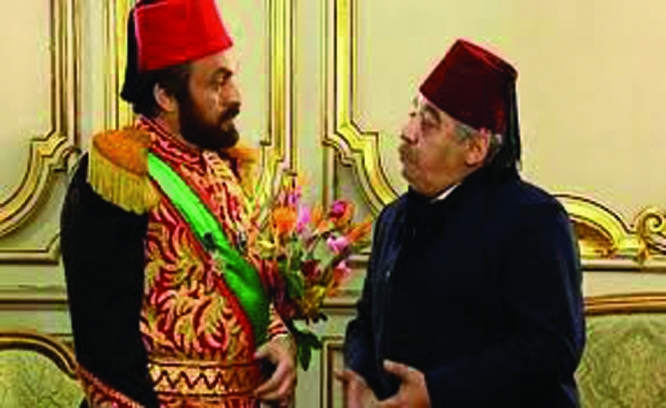
In the post-monarchical Nasser era, Ismaʿil was more often depicted as a spendthrift whose reckless behavior opened the doors to British colonialism. In the 1962 melodrama Almaz wa Abduh al-Hamuli (Almaz and Abduh al-Hamuli, dir. Hilmi Rafla) the Khedive, clearly modeled on the deposed Farouk (r. 1937–52), is a serial groper and voyeur with insidious designs on Almaz. Conversely, in Bawabat al-Halawani, the Khedive appreciates her artistry, but is otherwise preoccupied, primarily by affairs of state and his written role as the voice of westernization and modernization within nationalist parameters [Figure 2]. His first order of business is to assert Egyptian control over the canal project, which means reining in de Lesseps and marginalizing local scoundrels, the fictional Mukhtar al-Kashif and the historical Ismaʿil Siddiq, the director of finance (mufattish).
Khedive Ismaʿil, the enlightened ruler, with Nubar Pasha.

This is a post-Nasserist reading in which the scenarist promotes secular modernism, couched within a critique of imperialism, for which Ismaʿil is portrayed to be outmatched by European power and, ultimately, ill-served by his scheming half-brother.Footnote 33 The first season ends with the opening of the Suez Canal in November 1869, an event that is depicted through artistic renderings rather than potentially expensive re-staging. This reminds contemporary viewers of the relatively simple production quality of most Egyptian serials from this time. Great attention to detail was paid to costuming and many scenes were filmed inside Abdin Palace (completed 1863–74), at the time the new royal residence. Nonetheless, the camera work is rudimentary, relying on a minimum of angles, close-ups and distance shots. The sound varies greatly between outdoor shooting (primarily the Canal company tents), the cavernous palace, and studio sets.
Things changed plot-wise during the show's second season. For one, the script became dominated by historical figures, both primary and secondary characters. We are introduced to modernizing reformers Rifaʿa al-Tahtawi, ʿAli Mubarak, and Yaqub Sanʿu; nationalist agitators Ahmad ʿUrabi and Sami al-Barudi; the wily pro-European minister, Nubar Pasha; the Khedive's sons Tewfik and Husayn Kamil; and the Queen Mother (season 3 will introduce the radical cleric Jamal al-Din al-Afghani). The complicated romance of Abduh al-Hamuli and Almaz/Asila provided a bridge between historical characters and the Halawani clan and those who swirl around them in Cairo and Port Said. There are, of course, a plethora of subplots, some of which carry through the entire season, while others vanish, often unexpectedly.
In seasons 2 and 3 the Khedive becomes a more complex character. Mahfuz Abd al-Rahman has testified that he went into the project with a very (classical) negative view of Ismaʿil, but came to see him as admirable, the real founder of modern Egypt. But in season 2 he appears distracted with personal affairs, including his own infatuation with a beautiful temptress. He is dominated by his mother, the Valide Pasha, who arrives with her retinue and a more imperial worldview from Istanbul. He continues to espouse nationalism and westernization, but seems less in touch with global events and court intrigue. He is surprised to learn of the French defeat in the Franco-Prussian War (1870–71) and later, in season 3, of the forced abdication of the Ottoman Sultan ʿAbdülaziz (r. 1861–76).
Questions of succession are in the air, even before the Khedive has lost the support of his European backers because his sons are mutually jealous. His half-brother, Ismaʿil Siddiq, is ever angling for greater power (history tells us he will not survive the mid-1870s) and Nubar Pasha, Ismaʿil's “worst counsellor and evil genius,” works with Ferdinand de Lesseps to consolidate European control over the Suez Canal.Footnote 34 Ismaʿil, to his credit, has the intuition to sense base flattery from de Lesseps and manages to navigate between nationalist and pro-European factions in his own palace.
Season 3 is dominated, directly and indirectly, by the deepening control of European powers over Egypt's finances and the insincere endeavors by Ismaʿil Siddiq to play the nationalist card. In Istanbul a sultan is forced to abdicate (Sultan ʿAbdülaziz giving way to Murad V in 1876). Khedive Ismaʿil survives, although we know it will be for only a few short years. In the final episode Ismaʿil Siddiq is finally brought low, slapped by one of the royal princes for insubordination and lured into captivity with the active participation—following the historical record—of his half-brother, the Khedive.
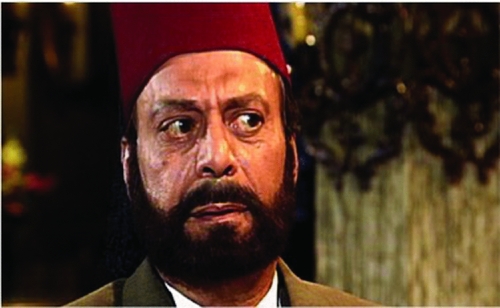
Ismaʿil Siddiq's culpability has been viewed differently by various accounts. Wilfred Scawen Blunt, a contemporary chronicler, understood him to be a “too faithful servant” who had singular knowledge of the Khedive's financial mismanagement and who thus became a “scapegoat” done in by his old friend in an “act of treachery.”Footnote 35 Robert Hunter, who read the archives, agrees that Siddiq “was a man who knew too much, someone therefore to be feared, a man for whom a public trial could lead to embarrassing exposures of the khedive's own wrongdoings.” Yet he accuses him of massive personal corruption and suggests that the Khedive bent under European pressure to turn against his “favorite minister,” who may well have been blackmailing his master [Figure 3].Footnote 36
Ismaʿil Siddiq, the Khedive's half-brother – villain or victim?

To the very end Khedive Ismaʿil remains philosophical. As Tewfik reads him the royal decree charging Ismaʿil Siddiq with treason, he suddenly asks his son if he has ever thought about how history will judge them. “History, of course not,” Tewfik laughs, betraying embarrassment. Ismaʿil tells him he will be a good ruler one day, but underscores that he should keep in mind how they will be remembered. “The worst thing,” he reflects, “is for a ruler to ask what history will say when he knows that history will not speak kindly.” Life has changed for the Halawani clan as well. When the family matriarch, Maryam, lost in sorrowful dreams, expresses a desire to return to the family estate, she is reminded that a new city, Port Said, has sprung up, filled with foreigners speaking foreign languages and wearing foreign costumes.
“Great upon Great”
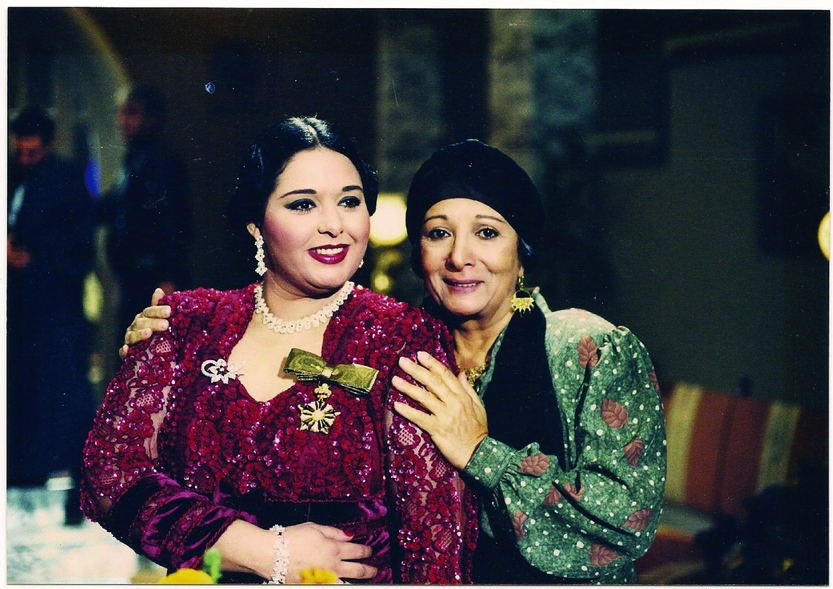
Mahfouz Abd al-Rahman followed up his successful two-season run of Bawabat al-Halawani (in addition to the highly successful Nasser 56) with perhaps an even bigger score, the thirty-seven episode bio-drama Umm Kulthum, based on the life and six-decade career of the towering figure in twentieth-century Arab music, which aired during Ramadan 1999. The series featured a rich cast, many of whom had roles in Halawani: Ahmad Ratib (Salama al-Halawani) played the maestro Muhammad al-Qasabgi; Hasan Hosni (Sharif al-Kashif) played Um Kulthum's father, Shaykh Ibrahim; Samira Abd al-Aziz (Maryam al-Halawani) played her mother [Figure 4].
Umm Kulthum (Sabrine) and her mother (Samira Abd al-Aziz).

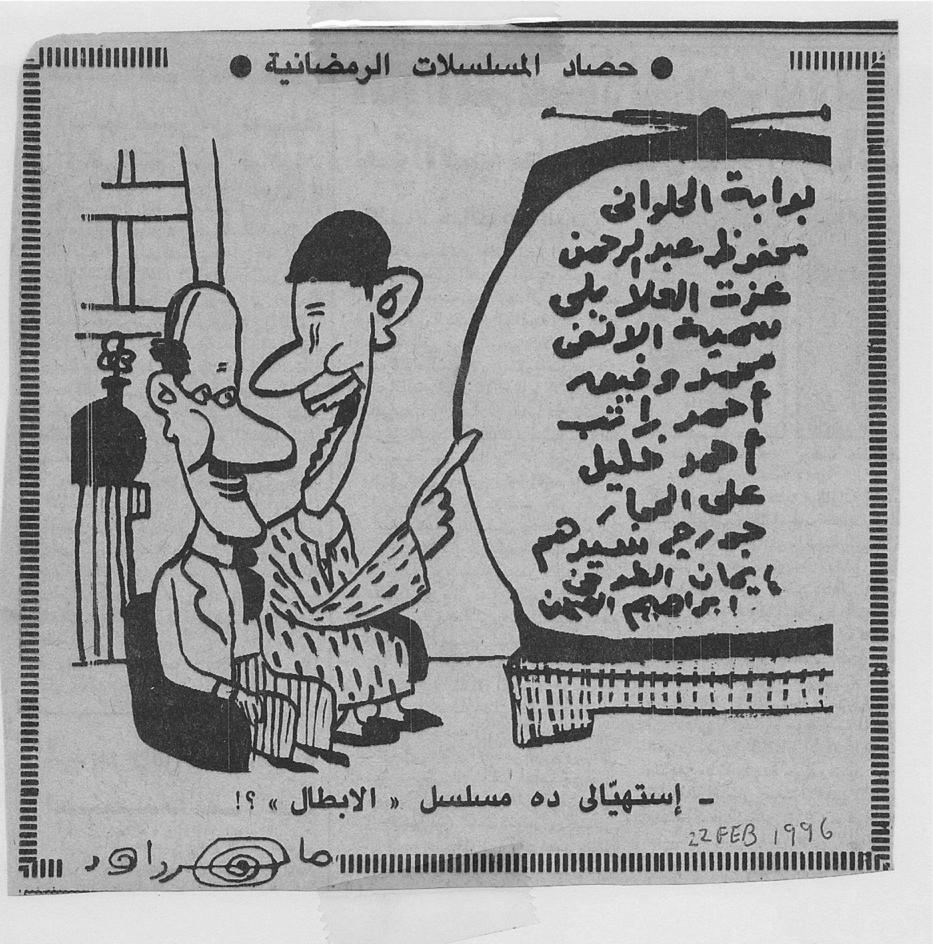
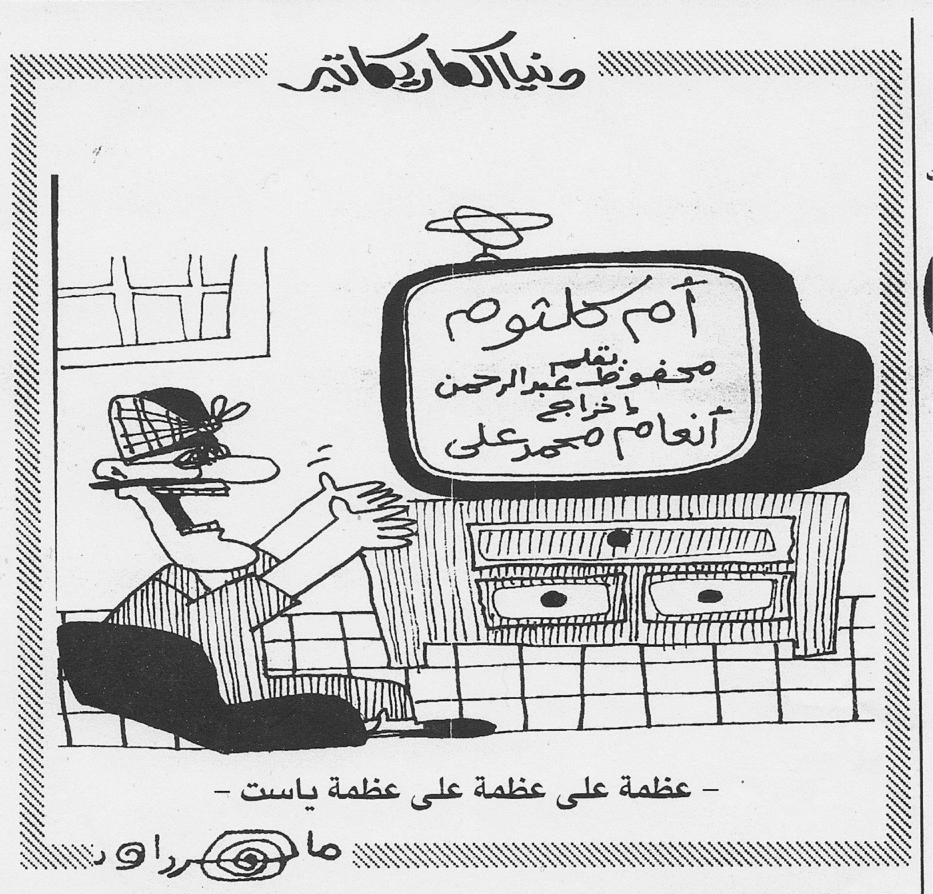
Umm Kulthum was a major cultural event, bringing Egyptians face to face with some of their greatest cultural icons: musicians, poets, writers, journalists, and politicians. As with Bawabat al-Halawani, there were long musical interludes. The scenes were those imagined by the scenarist, but now there were few, if any, imagined characters. Some took issue with characterizations and the way certain relationships were charted. The characterization of Umm Kulthum (played to acclaim by Sabrine) was noted by some as being overly sweet, not confronting the personality of the powerful diva, a woman who negotiated her own contracts, dictated co-stars in her films, and was a demanding taskmaster to her musicians. But Mahfouz Abd al-Rahman became a sensation. In a cartoon in al-Ahram from February 1996, a viewer points to a television screen that displays the series title for Halawani along with Abd al-Rahman and leading cast members and notes to his friend that the serial should be called “The Heroes” (al-Abtal) [Figure 5]. In a follow-up from October 2000 penned by the same artist, another appreciative viewer scans the name of the scenarist and director (Inʿam Muhammad Ali) of Umm Kulthum and shouts, invoking the singer's epithet, “Greatness on greatness on greatness, o Lady” (ya Sitt) [Figure 6].Footnote 37
Applauding the scenarist and stars of Bawabat al-Halawani.

Applauding the scenarist and director of Umm Kulthum.

The series started a veritable flood of biographical serials—Abd al-Halim Hafiz (2006), Asmahan (2008), and Layla Murad (2009) from the arts, King Farouk (2007) and Gamal Abd al-Nasser (2008) from politics. In some cases, as with Halim, the television serial appeared contemporaneous with big screen productions.Footnote 38 Other countries followed suit; in 2012, Lebanese television featured a controversial biographical drama, al-Sharoura (The Blackbird) about the still living diva Sabah. Sabah, who died in November 2014, read and approved the script, but several others threatened to sue.
Success bred repetition, which bred stagnation. This is a personal critical judgment. By the mid-2000s, I postulate, the freshness wore off and the only real charm lay in the casting of relative look-alikes and debates over who—which actor or actress—better captured historical figures who now appeared in these multiple series. The series were watched and discussed by millions. But the communitas of limited viewing options had given way to a new era, for many, with enormous choice. The Egyptian film industry was in marked decline and television producers had yet to wake up to the fact that foreign, albeit initially Arab productions, later Turkish productions—serials with much higher production quality, as well as fresher scripts—dominated viewer attention, certainly outside Egypt. The DVD racks in shops abroad were not full of Egyptian productions.Footnote 39 The most viewed, and apparently purchased, has been the Syrian production Bab al-Hara (2006–), situated in a popular Damascus quarter, starting in the 1930s (reminiscent of Layali al-Hilmiyya). It has run for nine seasons and some 270 episodes and continues production even as Syria's civil war rages. Turkish dramas, not yet the historical sagas but rather middle-class soap operas, soon competed in many non-Egyptian locales. The exceptions were comedy series, where Egyptians still reigned supreme—the wacky Ayyiza atgawaz (I Want to Get Married, 2010–), featuring Hind Sabri as a young professional woman who cannot find a suitable mate, and al-Bab fil-bab (Next Door, 2011–12), a take-off of the American sitcom Everybody Loves Raymond (1996–2005, CBS). When the Syrian civil war erupted in 2011 the Turkish invasion, already underway, picked up steam; it was fueled enormously by the lavish historical dramas Muhteşem Yüzyıl (Magnificent Century, 2011–14) and Diriliş: Ertuğrul (The Resurrection/Revival: Ertuğrul, 2014–) that looked back to epic conflicts and the royal extravagance of pre-modern eras.
Revival
Egyptian television productions have not remained stagnant. Recent serials, especially new historical dramas, demonstrate a boost in production quality that far surpasses, even renders quaint, the look of the “golden age” dramas that I recall above. What they represent culturally, politically, ideologically will take time to process, especially as Egypt has gone through revolution and counter-revolution. Al-Gamaʿa (The Organization, 2007), a narrative of the Muslim Brotherhood's foundation and descent into Egyptian politics, showed a clear secular bias. The show reappeared in its second incarnation in 2017, four Ramadans after the deposition of the democratically elected Brotherhood-led government in late June 2013. Harat al-Yahud (The Jewish Quarter, 2015) reflects a revived interest in Egypt's pre-1952 multi-cultural-ethnic-religious social fabric, but has been criticized as poor history, particularly in its treatment of the Muslim Brotherhood.Footnote 40 At least for now, the hegemony of televisual dramatic discourse described so aptly by Abu-Lughod through the latter years of Mubarak's rule, and increasingly by others as “illiberal” liberalism, seems to have been restored.Footnote 41
The media scene in Egypt remains very much in flux. The two years following Mubarak's ouster—and especially the year of democracy—will be looked back upon as chaotic, marked by reckless creativity and cautious sycophancy across the board, from news commentary to political satire to television drama.Footnote 42 We may be stuck with the sycophancy, but time—and history—will tell. In the meantime, texts like Harat al-Yahud, despite taking advantage of the opportunity to blame the exodus of Egypt's Jews on a villainous Brotherhood, may further important discussion about what Egypt lost when its foreign minorities left en masse during the 1950s and 1960s. This is a discussion that had been opened by scholars, print novelists, and documentary filmmakers in particular. There is nothing, however, like a heavily watched television drama to make people sit up, take notice, and commence debate.