Introduction
Developmental origins of health and disease (DOHaD) hypothesis states that maternal nutrition during critical periods of development can alter chronic disease risk during adulthood.Reference Fleming, Velazquez and Eckert 1 Several retrospective studies indicated evidence of this phenomenon in humans.Reference Lumey, Stein, Kahn and Romijn 2 , Reference Koupil, Shestov and Sparén 3 Due to difficulties of obtaining data and eliminating other environmental factors in retrospective epidemiological studies, the DOHaD hypothesis has received strong support from studies of small animal species.Reference McMullen and Mostyn 4 These studies have provided a large amount of evidence to show that a specific or global nutritional insult during gestation exerts long-term programming effects in offspring of rodents and can result in cardiovascular disease, type-2 diabetes, dyslipidaemia and obesity in adulthood.Reference Smith and Ryckman 5
In most experimental models considering the potential for maternal nutrition to programme later disease risk, the protein restriction model has been used.Reference Langley-Evans 6 Larger animal species, for instance, sheep, were also used as a model for maternal low-protein diets.Reference Dunford, Sinclair and Kwong 7 , Reference Lloyd, Foster, Rhodes, Rhind and Gardner 8 These studies have demonstrated that low-protein diet during early life contributes to the development of chronic diseases through several mechanisms.Reference Dumortier, Blondeau and Duvillié 9 – Reference Jia, Cong and Li 11 Maternal low-protein diet during gestation and/or lactation have shown to alter the postnatal β-cell growth and differentiation in the rat offspring.Reference Rodríguez-Trejo, Ortiz-López and Zambrano 12 Impaired antioxidant capacity and arterial hypertension was shown to be present in adult offspring fed a protein-restricted diet during gestation and lactation.Reference de Brito Alves, de Oliveira and Ferreira 13 In addition, appetite changes and dysregulation of peripheral signals towards a phenotype of obesity and metabolic syndrome were observed in rodents that were fed a low-protein diets during pregnancy.Reference Han, Li, Li, Kitlinska and Zukowska 14 Furthermore, altered hepatic lipid metabolism and cholesterol transport have also been observed in a model of maternal protein restriction.Reference Qasem, Cherala and D’mello 15 While there is extensive data on programming effects of maternal low protein on fetal development, the influence of protein quality on fetal development and subsequent adult non-communicable disease risk is yet to be explored.
One emerging explanation for the link between early life nutrition and subsequent phenotypes is that maternal nutrition influences epigenetic markers and therefore gene expression.Reference Desai, Jellyman and Ross 16 A large body of evidence has shown that animal models of protein restriction during fetal life may have an altered epigenome and may be susceptible to disease development due to permanent modifications in tissue architecture, dietary response and age-related challenges.Reference Lillycrop and Burdge 17 DNA methylation, which is mainly established in early life, may suggest a causal link between maternal protein intake and offspring’s gene expression.Reference Zeng, Gu, Liu and Huang 18 Lillycrop et al.,Reference Lillycrop, Slater-Jefferies and Hanson 19 reported that altered epigenetic regulation and metabolic phenotype of offspring exposed to protein-restricted diet during gestation is likely due to decreased DNMT1 expression. In addition, common and differential target specificities of DNMT3a and DNMT3b were shown during cell development in the mouse.Reference Kato, Kaneda and Hata 20
The quality of dietary protein is a crucial determinant of growth and development.Reference Rutherfurd, Fanning, Miller and Moughan 21 To date, few studies have investigated the effect of low-quality protein diets during pregnancy and lactation.Reference Bozzini, Champin, Alippi and Bozzini 22 , Reference Alippi, Picasso, Huygens, Bozzini and Bozzini 23 Alippi et al.,Reference Alippi, Picasso, Huygens, Bozzini and Bozzini 23 showed that a low-quality protein diet, which includes wheat gluten as the source of protein, can be effective in altering growth. Wheat gluten is now accepted as a low-quality protein source since its protein efficiency ratio, biological value and digestibility are considerably low when compared with a high-quality protein source such as, casein.Reference Hoffman and Falvo 24 It is important to note that protein content of certain underdeveloped and developing countries diets is commonly based on vegetable sources such as wheat gluten.Reference Gilani, Cockell and Sepehr 25
The present study utilized animals from the study previously reported by Kabasakal Cetin et al.,Reference Kabasakal Cetin, Dasgin, Gülec, Onbasilar and Akyol 26 which showed altered plasma amino acid profiles of weaning offspring that were fed a low-quality protein diet during gestation and lactation without a significant change in growth parameters. Therefore, the current study investigated the hypothesis that whether maternal low-quality protein diet during gestation and lactation exert programming effects on metabolic parameters in adult offspring. The study also aimed to establish whether the hepatic expression of methyltransferases are sensitive to maternal low-quality protein feeding during pregnancy and lactation.
Method
Animals and diet
This paper describes a study which utilized offspring aged 5 months that had been subject to either maternal low-quality protein diet (20% wheat gluten) or a standard commercial chow diet (20% casein) during gestation and lactation. The full experiment which generated the offspring has been previously published.Reference Kabasakal Cetin, Dasgin, Gülec, Onbasilar and Akyol 26
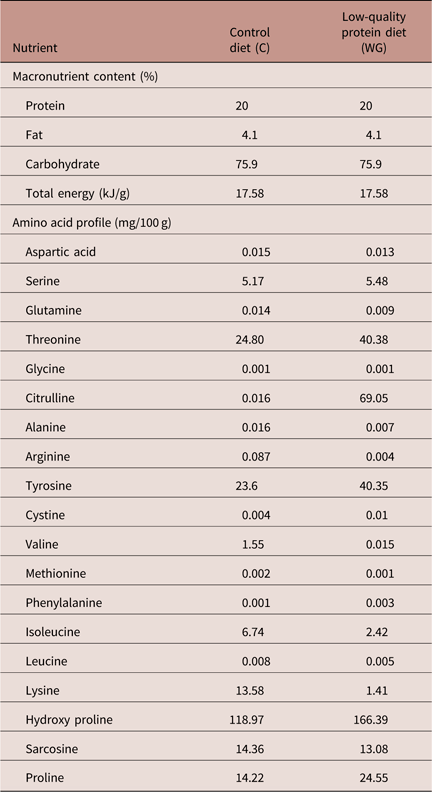
The experiments were performed under the license from the Ethics Committee of Hacettepe University, Ankara, Turkey, number: 2014/17. All animals were housed individually in plastic cages and subjected to a 12 h light–dark cycle at a temperature of 20–22°C and 45% humidity. The animals were housed on wood shavings and had ad libitum access to food and water. Following 1 week of habituation, Virgin female Wistar rats (aged 11 weeks) were paired with Wistar stud males and mating was confirmed by the appearance of a semen plug. Pregnant animals were then randomly allocated to be fed, either a control chow diet with 20% casein (C; n=6) or an experimental diet with 20% wheat gluten (WG; n=7) throughout gestation and lactation, as previously described by Kabasakal Cetin et al. Diets were isocaloric and consisted of 20% protein, 4.1% fat and 75.9% carbohydrates without supplementation of sulphur-containing amino acids (MBD, Kocaeli, Turkey) (Table 1). Amino acid concentration of these diets were determined at an external laboratory (Argea Technology) with high-performance liquid chromatography.Reference Aristoy and Toldra 27 , Reference Antoine, Wei, Littell and Marshall 28 All animals were weighed daily. At birth, litters were culled to four pups per litter. Following lactation, one male and one female offspring from both WG and control groups were fed by a standard commercial chow diet (20% casein) until 20 weeks of age. At the age of 20 weeks all offspring were culled following an 18-h fast.
Nutritional and amino acid composition of the diets

Plasma analyses
Blood samples were collected into heparinized capillary tubes and stored on ice until centrifuged in a haematocrit centrifuge. Plasma was collected and stored at −80°C until for further analysis. Plasma amino acid analyses were performed using a GC amino acid kit (EZ:faast; Phenomenex, Torrance, CA, USA).Reference Badawy, Morgan and Turner 29 Total plasma cholesterol and total triglycerides were assayed using commercially available kits (Hangzhou Eastbiopharm Co. Ltd, Yile Road, China). Plasma insulin and glucose concentrations were determined using an ELISA kit as follows, respectively (Hangzhou Eastbiopharm Co. Ltd), following the manufacturer’s instructions. Plasma leptin level was also analysed using a commercially available kit (Biovendor, Czech Republic). Plasma albumin and homocysteine concentrations were determined using ELISA kits as follows, respectively (Cloud-Clone Corp., Houston, TX, USA and Cusabio, China). The homoeostasis model assessment-insulin resistance (HOMA-IR) index was calculated from fasting plasma glucose and insulin concentrations according to the following equation: insulin (mU/ml)×glucose (mg/l)/405.
Determination of messenger RNA (mRNA) expression
Total RNA was extracted from liver tissue samples using The PureLink® RNA Mini Kits (Thermo Fisher Scientific, Waltham, MA, USA) according to the manufacturer’s protocol. Quantity of RNA samples was evaluated using Qubit Fluorometer. Total RNA was reverse transcribed using High-Capacity cDNA Reverse Transcription Kit (PN 4368813; Thermo Fisher Scientific) according to manufacturer’s instructions. Complementary DNA (cDNA) was analysed in a 96-well plate assay format using Applied Biosystems 7500 Fast Real-Time PCR System. All polymerase chain reactions were performed in 20 µl of solution containing 1 µl of 20× TaqMan® Gene Expression Assay, 10 µl 2× TaqMan® Gene Expression Master Mix, 4 µl cDNA template (50 ng) and 5 µl RNase-free water. The following Applied Biosystems inventoried assays with probes (Assay ID in parentheses) were used: DNMT1 (rn00709664_m1), DNMT3a (rn01027162_g1), DNMT3b (rn01536418_g1) and GAPDH (rn01775763_g1) for endogenous control of the gene expression analysis. The results were analysed using the DataAssist™ Software and the comparative CT (ΔΔCT) method were used for calculating relative quantitation of gene expression.Reference Livak and Schmittgen 30
Statistical analyses
All data were analysed using the Statistical Package for Social Sciences (version 16; SPSS Inc., Chicago, IL, USA). The effect of gestational diet on fetal outcomes was assessed using a general linear model analysis of variance (fixed factors, maternal diet and sex). Where longitudinal data were available (weekly body weights or energy intake), a repeated-measures analysis was used. Values are expressed as mean values with their standard errors. P<0.05 was considered statistically significant.
Results
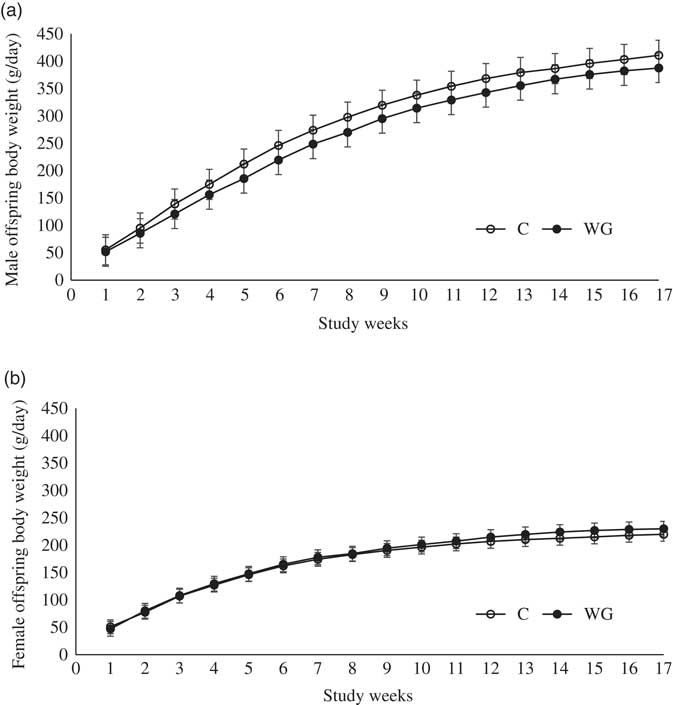
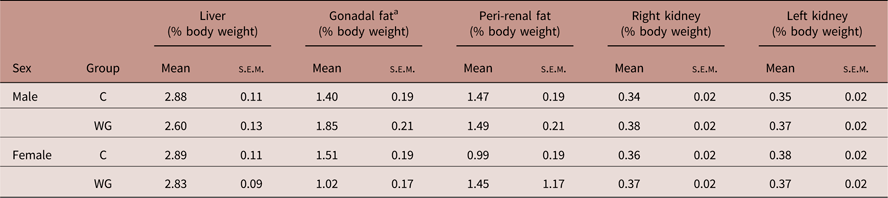
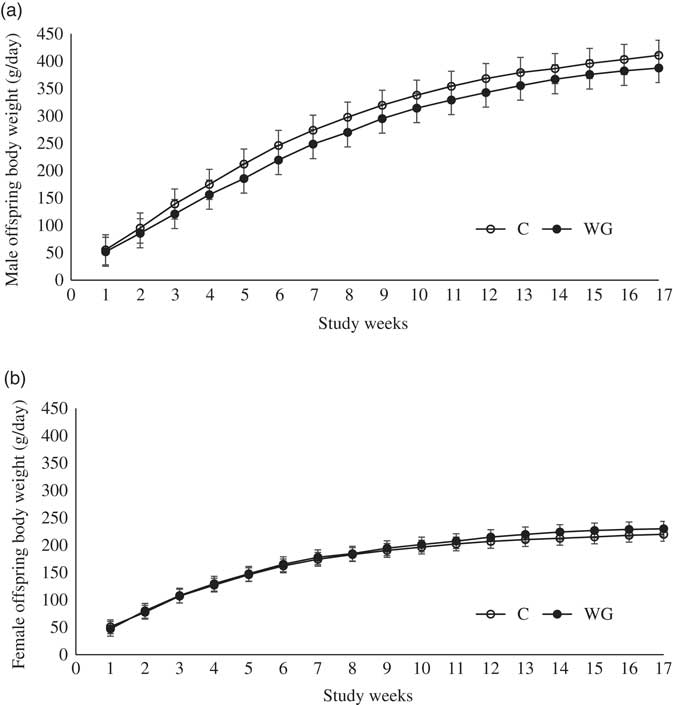
Body weights of male and female offspring did not vary significantly at the start of the post-weaning period (C, male: 55.35±7.82, female: 51.03±7.82; W, male: 51.83±8.57, female: 47.21±6.77) (Fig. 1). Offspring weight gain was significantly influenced by maternal diet (P<0.001), sex (P<0.001) and study weeks (P<0.001). In addition, a significant interaction between maternal diet and sex indicated that male offspring of WG group had significantly lower body weight when compared with controls, whereas female offspring of WG group had significantly higher body weight when compared with C (P<0.001) (C, male: 285.26±1.90, female: 170.606±1.89; W, male: 263.94±2.08, female: 175.77±1.64). Body weight of female WG offspring was increased from the beginning of the week 11 (Fig. 1a). Study weeks and sex also exhibited a significant interaction (P<0.001). No effects on offspring’s organ weight at 20 weeks of age were observed across groups (Table 2). Fetal exposure to low-quality protein diet was only associated with increased gonadal fat in WG males and reduced gonadal fat in WG females when compared with controls (effect of sex of the animal and maternal diet interaction, P=0.023).
Body weights of offspring during post-weaning period. Values are means for n 5–8, with their standard errors represented by vertical bars. (a) Body weight of male offspring during post-weaning period. (b) Body weight of female offspring during post-weaning period. Analysis of variance indicated that body weight was significantly influenced by maternal diet (P<0.001), sex (P<0.001), study weeks (P<0.001) and interaction of maternal diet and sex (P<0.001). C, rats fed the control diet during pregnancy; WG, rats fed the low-quality protein diet (wheat gluten) during pregnancy. All animals had control diet (20% casein) during post-weaning period.
Organ weight of offspring at the end of the study (mean values with their standard errors, n 6–7)

C, control group; WG, low-quality protein group.
C rats fed the control diet (20% casein) during pregnancy and WG rats fed the low-quality protein diet (20% wheat gluten) during pregnancy. All animals had control diet (20% casein) during post-weaning period.
a Analysis of variance indicated that gonadal fat was significantly influenced by the interaction of sex and maternal diet (P=0.023).
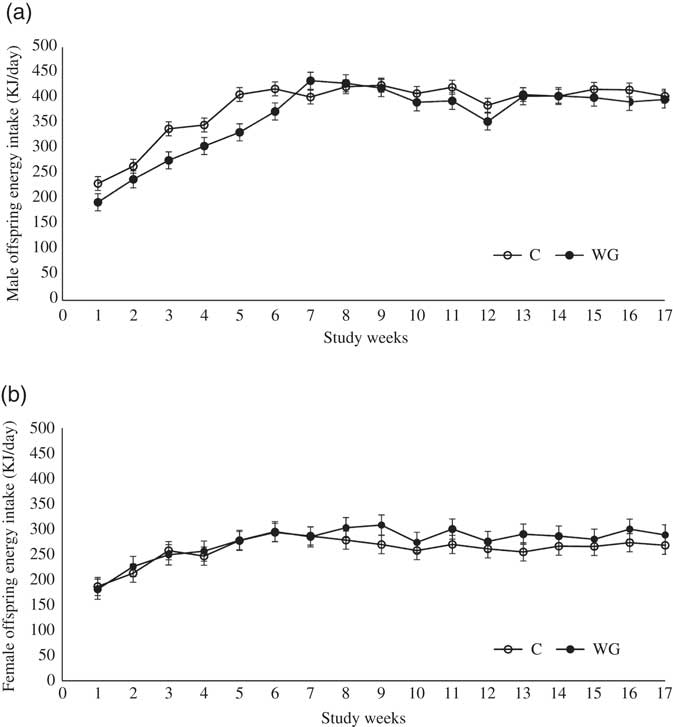
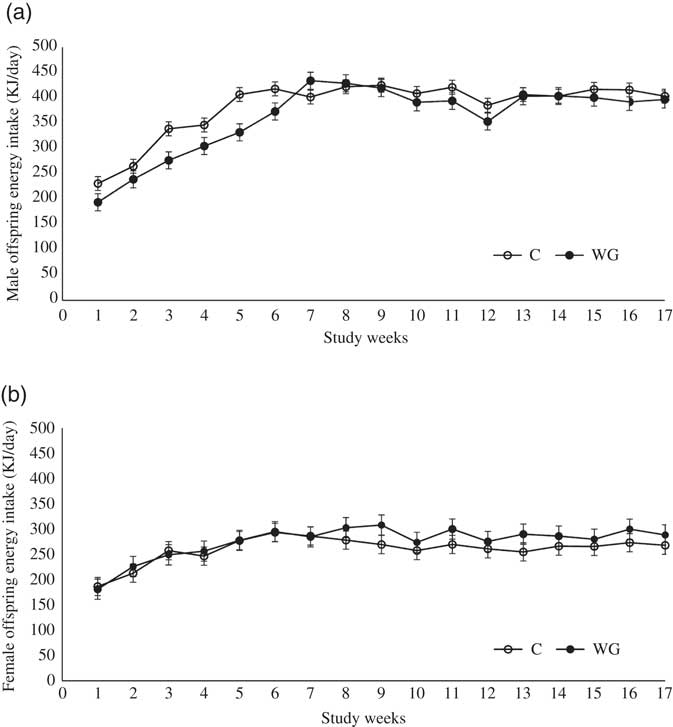
Figure 2 shows the energy intake of rats during post-weaning period. Male offspring consumed significantly higher amounts of energy throughout the study period (effect of sex of the animal, P<0.001). Maternal diet did not exert a significant effect on energy intake of male and female offspring of either group. A significant interaction between maternal diet and sex exhibited that male offspring of WG group consumed significantly lower amount of energy when compared with C, whereas female offspring of WG group consumed significantly higher amount of energy when compared with C (P<0.001) (C, male: 383.09±4.44, female: 260.36±4.45; W, male: 360.81±4.86, female: 275.12±3.84). These effects remained when body weight was entered into analyses as a covariate.
Energy intakes of offspring during post-weaning period. Values are means for n 5–8, with their standard errors represented by vertical bars. (a) Energy intake of male offspring during post-weaning period. (b) Energy intake of female offspring during post-weaning period. Analysis of variance indicated that energy intake was significantly influenced by sex (P<0.001), study weeks (P<0.001) and interaction of maternal diet and sex (P<0.001). C, rats fed the control diet during pregnancy; WG, rats fed the low-quality protein diet (wheat gluten) during pregnancy. All animals had control diet (20% casein) during post-weaning period.
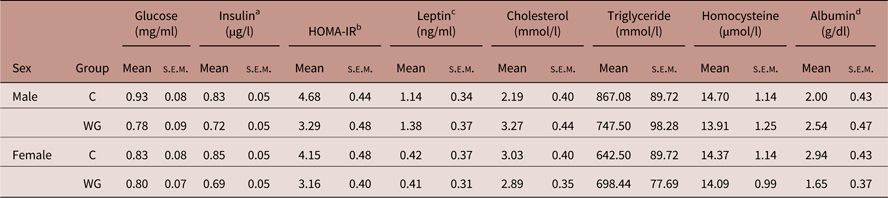
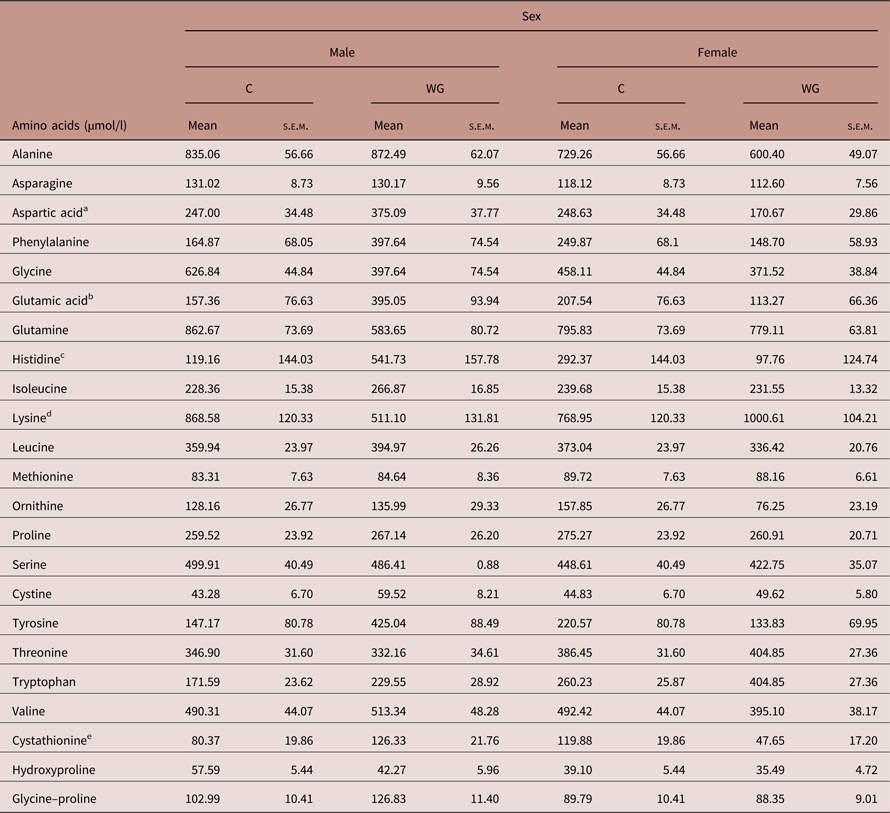
Plasma fasting glucose, cholesterol, triglyceride and homocysteine concentrations were not significantly influenced by maternal diet (Table 3). Both male and female WG offspring had significantly lower fasting insulin concentrations when compared with controls (effect of maternal diet, P=0.016). This was reflected in HOMA-IR values as both male and female offspring of the WG group had significantly lower HOMA-IR when compared with control offspring group (effect of maternal diet, P=0.016). Leptin concentration was significantly higher in both control and WG male offspring (effect of sex of the animal, P=0.024). Plasma albumin concentration displayed a significant interaction between sex and maternal diet which indicated that male WG offspring having higher levels of plasma albumin, whereas female WG offspring had lower levels when compared with controls (P=0.046). Plasma aspartic acid (P=0.007), glutamic acid (P=0.041), histidine (P=0.043) and cystathionine (P=0.007) was significantly increased in male WG offspring and decreased in female WG offspring, whereas lysine (P=0.022) was significantly increased in female WG offspring and decreased in male WG offspring (effect of sex of the animal and maternal diet interaction) (Table 4).
Plasma metabolite concentrations in adult offspring (mean values with their standard errors, n 6–7)

HOMA-IR, homoeostatic model assessment for insulin resistance; C, control group; WG, low-quality protein group.
C rats fed the control diet (20% casein) during pregnancy and WG rats fed the low-quality protein diet (20% wheat gluten) during pregnancy. All animals had control diet (20% casein) during post-weaning period.
a Analysis of variance (ANOVA) indicated that plasma insulin level was significantly influenced by maternal diet (P=0.016).
b ANOVA indicated that plasma HOMA-IR level was significantly influenced by maternal diet (P=0.016).
c ANOVA indicated that plasma leptin level was significantly influenced by sex of the animals (P=0.024).
d ANOVA indicated that plasma albumin level was significantly influenced by the interaction of sex and maternal diet (P=0.046).
Plasma amino acid concentrations in adult offspring (mean values with their standard errors, n 6–7)

C, control group; WG, low-quality protein group.
C rats fed the control diet (20% casein) during pregnancy and WG rats fed the low-quality protein diet (20% wheat gluten) during pregnancy. All animals had control diet (20% casein) during post-weaning period.
a Analysis of variance (ANOVA) indicated that plasma aspartic acid level was significantly influenced by the interaction between maternal diet and sex (P=0.007).
b ANOVA indicated that plasma glutamic acid level was significantly influenced by the interaction between maternal diet and sex (P=0.041).
c ANOVA indicated that plasma histidine level was significantly influenced by the interaction between maternal diet and sex (P=0.043).
d ANOVA indicated that plasma lysine level was significantly influenced by the interaction between maternal diet and sex (P=0.022).
e ANOVA indicated that plasma cystathionine level was significantly influenced by the interaction between maternal diet and sex (P=0.007).
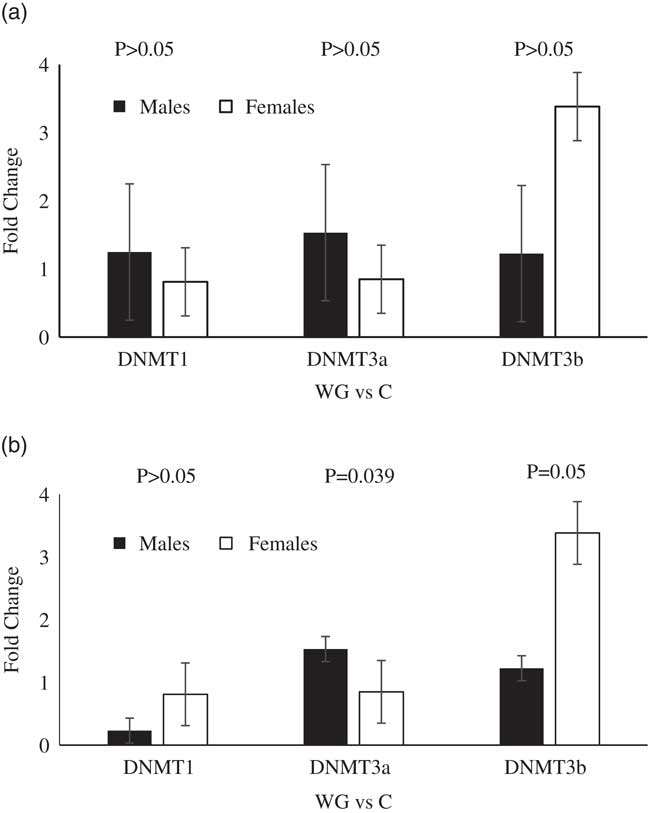
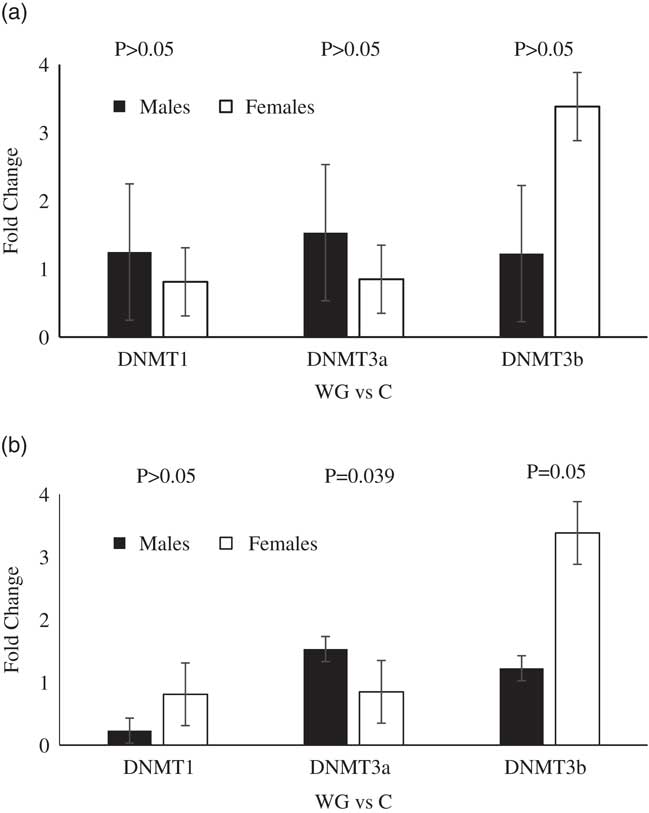
To investigate the basis of epigenetic regulation in animals exposed to low-quality protein diet during gestation and lactation, mRNA expression of DNMT1, DNMT3a and DNMT3b were examined in the liver at the ages of 3 weeks and 20 weeks. At 3 weeks of age, there was no effect of maternal diet or sex upon the expression of DNMT1, DNMT3a and DNMT3b (Fig. 3). However, at the age of 20 weeks, gene expression of DNMT3a (P=0.039) and DNMT3b (P=0.05) were significantly upregulated in WG offspring in both sexes, relative to control group (Fig. 3). DNMT3a showed 0.4-fold difference in male WG offspring and 0.95-fold difference in female WG offspring. The expression of DNMT3b exhibited 0.5-fold difference in male and 0.8-fold difference in female offspring of WG. Gene expression of DNMT1 was not altered by maternal diet or sex at the age of 20 weeks.
Fold change differences in gene expression of DNMT1, DNMT3a and DNMT3b in male and female liver at the age of 3 weeks (a) and 20 weeks (b) using quantitative real-time polymerase chain reaction. Values are means for n 5–8, with their mean±maximum- and minimum-fold changes between maternal diets according to litter sex. (a) Fold change differences in gene expression of DNMT1, DNMT3a and DNMT3b in male and female liver were not influenced by maternal diet (P>0.05), sex (P>0.05) or interaction of maternal diet and sex at the age of 3 weeks (P>0.05). (b) Fold change differences in gene expression of DNMT1 in male and female liver were not influenced by maternal diet (P>0.05), sex (P>0.05) or interaction of maternal diet and sex at the age of 20 weeks (P>0.05). Fold change differences in gene expression of DNMT3a (P=0.039) and DNMT3b (P=0.05) in male and female liver were significantly influenced by maternal diet at the age of 20 weeks. C, rats fed the control diet during pregnancy; WG, rats fed the low-quality protein diet (wheat gluten) during pregnancy. All animals had control diet (20% casein) during post-weaning period.
Discussion
The aim of the present study was to determine whether early life exposure to maternal low-quality protein diet had an impact upon metabolic homoeostasis in young adult rats. Several animal studies support the hypothesis that there may be metabolic programming implications for offspring exposed to maternal low-protein diets.Reference Langley-Evans 6 The basis for the current study was the observation that the protein quality of a diet can be a significant determinant of the bioavailability of dietary protein.Reference Sarwar Gilani, Wu Xiao and Cockell 31 Our previous study reported a novel set of data which showed that plasma methionine, glutamine and lysine were significantly lower and aspartic acid, ornithine and glycine–proline were significantly higher without an effect on birth weight in 3-week-old offspring exposed to maternal low-quality protein diet during gestation and lactation.Reference Kabasakal Cetin, Dasgin, Gülec, Onbasilar and Akyol 26 The metabolic phenotype that is related to the progression of chronic diseases is still largely unknown, but recent studies have introduced the hypothesis, that insufficiency in essential amino acids during critical periods of growth may limit certain metabolic set-points essential for maintained a healthy growth and organ developmental trajectory.Reference Lee, Tsui and Wang 32 , Reference Uauy, Suri, Ghosh, Kurpad and Rosenberg 33
One of the most apparent postnatal effects of offspring exposed to maternal low-protein diets is altered body weight. Several studies exhibited lower body weights in experimental groups when compared with control group’s catch-up growth in some cases.Reference da Silva Aragão, Guzmán-Quevedo, Pérez-García, Manhães-de-Castro and Bolaños-Jiménez 34 – Reference Qasem, Li, Tang, Pontiggia and D’mello 36 In a study investigating the effects of maternal protein source on offspring development, offspring exposed to maternal soya protein diet showed higher body weight when compared with maternal casein diet offspring.Reference Jahan-Mihan, Smith and Anderson 37 The present study is based on the two observations that the effects of maternal low-quality protein diet on offspring growth were sex dependent and that low-quality protein diet based on wheat gluten increased female offspring’s body weight. Despite this outcome, gonadal fat was observed to be significantly increased in male WG offspring, whereas significantly decreased in female WG offspring of up to 32%. In addition, energy intake records also showed hyperphagia in female WG offspring but not in male WG offspring. Therefore, lower energy intake accompanied with lower body weight but increased gonadal fat may indicate an alteration in adipose tissue metabolism in male WG offspring. Conversely, hyperphagia accompanied with increased body weight but decreased gonadal fat may also suggest an altered energy metabolism in female WG offspring. The sex-specific effects of maternal low-protein diets on fat distribution, growth and food intake has been shown previously.Reference Zambrano, Bautista and Deás 38 , Reference Bellinger, Sculley and Langley-Evans 39 In this context, isocaloric low-quality protein diets may exert similar effects on offspring’s energy metabolism but it has not yet been fully explored within the current model.
In the present study, maternal low-quality protein diet had little impact upon circulating cholesterol and triglyceride. Similar postnatal findings was shown in previous studies, which have used maternal low-protein diets during pregnancy and lactation.Reference Qasem, Cherala and D’mello 15 , Reference Qasem, Li and Tang 40 However, evidence of hyperlipidaemia was also observed in experiments using similar protocols.Reference Sohi, Marchand, Revesz, Arany and Hardy 41 Recently, Won et al.Reference Won, Han and Kwon 42 showed that maternal diet composed of soya protein isolate may alter epigenetic regulation of liver lipid metabolism and energy homoeostasis in adult offspring. The main difference in plasma metabolites of the present study was that greater insulin sensitivity, as evidenced by the lower baseline insulin level and HOMA-IR in WG offspring. Similar observations have been made in the offspring of rats fed a low-protein diet during pregnancy. The apparent early sensitivity to insulin observed in younger offspring gives way to the progression of insulin resistance in adult offspring.Reference Erhuma, Salter, Sculley, Langley-Evans and Bennett 43 Further studies are needed to clarify age-related progression of hyperlipidaemia and insulin resistance in adult offspring after maternal consumption of wheat gluten or other low-quality protein diets.
AIN93 diets recommend supplementation of l-cystine to provide an adequate intake of amino acids and maximum rate of growth.Reference Reeves, Nielsen and Fahey 44 The diets in the current study were not supplemented with sulphur amino acids in order to understand the possible adverse effects of wheat gluten alone. In addition, previous studies indicated that 20% casein was sufficient to induce the required growth parameters in rats.Reference Hoffman and Falvo 24 , Reference Gilani, Cockell and Sepehr 25 Despite the fact that wheat gluten contained only half the methionine of casein in the current study, cystine content of wheat gluten was higher than casein-based diets. This may explain the similar plasma homocysteine concentrations in both groups.
What is not clear from these outcomes is whether maternal low-quality protein diets initiates the programmed phenotypes similar to models of maternal low protein or whether other aspects of maternal low-quality protein diets, for example, deficiency of specific essential amino acids may drive the fetal responses. The role of adequate amounts of essential amino acids in protein synthesis is well documented but the significant role of specific amino acids on development through various mechanisms have also been shown.Reference Teodoro, Vianna and Torres-Leal 45 , Reference Bourdon, Parnet and Nowak 46 In comparison, amino acid composition of wheat gluten contain only half the alanine, methionine, isoleucine and leucine of casein (Table 1). In addition, large differences also exist for arginine, valine and lysine. Moreover, in the current study, levels of plasma aspartic acid, glutamic acid, histidine and cystathione also altered. Lysine is the growth-limiting amino acid in wheat gluten.Reference Shimomura, Matsui and Hamano 47 Protein modifications take place on lysine residues during post-translational stages.Reference Jimenez-Morales, Adamian and Shi 48 , Reference You, Nie, Sun, Zheng and Yang 49 Although this reflection may imply certain differences in metabolic processes of WG offspring, it is not known whether this is the effect of one deficient amino acid or combined effects of deficient alanine, methionine, isoleucine, leucine, arginine, valine and lysine intake during gestation and lactation. The current study provides a solid basis of further work to be carried out to explore altered protienous and metabolic fluctuations.
Of the limited amount of published data that have considered the impact of protein on DNA methylation, there is evidence that indicates involvement of specific amino acids.Reference Mattocks, Mentch and Shneyder 50 – Reference Ji, Wu and Dai 52 DNMT1 was shown to be the principal methyltransferase, whereas DNMT3a and DNMT3b were shown to be largely expressed in embryonic cells.Reference Kolodkin and Auger 53 Previous studies in rats have reported different expressions of DNMTs in offspring as a result of maternal low-protein diets.Reference Lillycrop, Slater-Jefferies and Hanson 19 , Reference Gong, Pan and Chen 54 For instance, Lillycrop et al., reported a reduction in DNMT1 and no change in DNMT3a and DNMT3b, whereas Gong et al., reported increase in DNMT1 and DNMT3a. These differences may be explained, by age difference between the offspring that were exposed to maternal low-protein diets, as current study also showed different level of significance among 3 weeks and 20 weeks old offspring. In addition, gene expression of DNMT3a and DNMT3b, but not DNMT1, was influenced by low-quality protein diet, indicating the potential involvement of DNA methylation in fetal programming by maternal protein source in our study. Since undernutrition generally correlates with decreased methyl donor availability and DNMT requires S-adenosyl methionine for activation, methyl donors from low-quality protein diets may also be contributing to DNMT3a and DNMT3b activity through altered S-adenosyl methionine expression.Reference Zhang 55 Although methionine and homocysteine levels in WG offspring did not exhibit a significant difference in the current study, our previously published study showed lower levels of methionine in weaning WG offspring.Reference Kabasakal Cetin, Dasgin, Gülec, Onbasilar and Akyol 26 Therefore, a potentially altered, one carbon metabolism associated with maternal low-quality protein diet and altered amino acid concentrations may suggest a possible mechanism by which, epigenetic changes, are affected, in turn causing alterations in gene expression of DNMTs. In addition, methylation status of the specific genes related to physiological outcomes of the current study is also a subject of interest.
Interestingly, plasma amino acid and growth parameters exhibited sex-specific effects in the current study. Several studies in a variety of fetal programming experiments reported sex-specific outcomes.Reference Aiken and Ozanne 56 It is suggested that the different pattern of hormonal development between the two sexes could be responsible for the outcomes. Genetic, transcriptional and morphological differences in patterns of development and differences in timing of development were also suggested to give rise to sex-specific effects.Reference Aiken and Ozanne 56 Although the exact mechanisms of these differences remain elusive, one study demonstrated the altered placental methylation pattern response to dietary modulation during pregnancy between sexes.Reference Gallou-Kabani, Gabory and Tost 57 The proteomic differences during blastocyst stages could also contribute to differences in growth patterns and developmental insults.Reference Aiken and Ozanne 56 The fetal environment encountered with limited amounts of essential amino acids, as occurs in low-quality protein diet, may also affect these processes adversely. Hence, maternal low-quality protein diet during gestation and lactation could lead to adversely altered amino acid pool and consequently, permanently altered metabolism despite weaning on a normal diet in both sexes.
In conclusion, this is the first study to show that maternal isocaloric diets made up of on wheat gluten or casein can differentially influence growth, plasma fasting insulin, circulating amino acids and expression of hepatic DNMTs in adult offspring. The low-quality protein within diet used in the present study was wheat gluten. It is important to note, that wheat gluten is still a prevalent protein source in underdeveloped and developing countries. Deficiencies due to essential amino acid intakes in pregnant women’s diets may exert adverse pregnancy outcomes and predispose offspring to future metabolic disease risk.
Acknowledgement
None.
Financial Support
This work was supported by the Scientific and Technological Research Council of Turkey (TUBITAK) (grant number 114S812); and Scientific Research Projects Coordination Unit of Hacettepe University (grant number THD-2016-10497).
Conflicts of Interest
None.
Ethical Standards
The authors assert that all procedures contributing to this work comply with the ethical standards of the relevant national guides on the care and use of laboratory animals (rats) and has been approved by the institutional committee (Hacettepe University, number: 2014/17).