The person-oriented approach to research in the social and behavioral sciences, which can be traced back to Block (Reference Block1978) proceeds under the assumption that, instead of being universal, development and structure of human behavior are unique to individuals or groups of individuals. Considering the small portions of variability that aggregate-level empirical studies often explain, the person-oriented approach has gained considerable momentum since the publication of the original works by Bergman, Magnusson, and collaborators (e.g., Bergman & Magnusson, Reference Bergman and Magnusson1997; Bergman, Magnusson, & El-Khouri, Reference Bergman, Magnusson and El-Khouri2003; Bergman, von Eye, & Magnusson, Reference Bergman, von Eye, Magnusson, Cicchetti and Cohen2006; von Eye & Bergman, Reference von Eye and Bergman2003; von Eye & Bogat, Reference von Eye and Bogat2006; von Eye, Bogat, & Rhodes, Reference von Eye, Bogat and Rhodes2006).
The person-oriented and ideographic approaches (Molenaar, Reference Molenaar2004; Molenaar & Campbell, Reference Molenaar and Campbell2009; cf. von Eye, Reference von Eye2004a) share the perspective that standard aggregation can lead to distortions or, in the worst case, statements that do not apply to anybody (for empirical examples, see von Eye & Bergman, Reference von Eye and Bergman2003). In this commentary we focus on psychology, specifically developmental psychopathology, as the reference fields of development and application of the person-oriented approach (for a discussion of the person-oriented approach in community psychology see Bogat, Reference Bogat2009; the person-oriented approach in personality was discussed by von Eye & Bergman, Reference von Eye and Bergman2009). However, it should be emphasized that psychology is not alone in the quest for person-oriented research and application. To give just one example, in medical research, the term “personalized therapy” has been introduced. The main goal of such therapy is that patients be treated as individuals instead of “members of a population” (Hayden, Reference Hayden2009; Webb & Cherba, Reference Webb, Cherba and Krawetz2009). For example, the promise of personalized cancer therapy is that “genetic glitches” that are associated with cancer can be diagnosed only at the level of the individual, and that the course of therapy must be determined based on such knowledge. Based on the genetic profile of a patient, this course can vary substantially from the course of therapy for other patients who suffer, at the surface, from the same disease.
From a data analytic perspective, the view that routine aggregation may not help explain sufficient amounts of variance is shared by the protagonists of methods for the analysis of intensive data. The authors note that “the average may be highly atypical” (Walls & Schafer, Reference Walls and Schafer2006, p. xiv) and thus, we may add, not overly useful.Footnote 1
In their Keynote Article, Sterba and Bauer (Reference Sterba and Bauer2010 [this issue]) note that the person-oriented approach has two components, as can be expressed in the equation person-oriented approach = person-oriented theory + person-oriented methods. This is an interesting decomposition. It can be used to separately describe the development of theoretical and methodological elements of the person-oriented approach. Sterba and Bauer also note that the theoretical elements of the person-oriented approach have experienced more thorough development than the methodological elements. To remedy this imbalance, the authors make the fundamental contribution that they discuss existing methods of data analysis with the goals of determining (a) whether and which of the tenets of the person-oriented approach can be tested using these methods and (b) which assumptions must be made when testing hypotheses that are compatible with the tenets.
There can be no doubt that such a discussion was overdue. Earlier discussions (see, e.g., Bergman et al., Reference Bergman, Magnusson and El-Khouri2003) are presented as dated, because both methods of analysis and theory of the person-oriented approach have been developed at a rapid pace. Sterba and Bauer (Reference Sterba and Bauer2010) do a brilliant job of discussing available statistical methods, mostly from the modeling domain. Based on this discussion, this Commentary seeks to take the next step by discussing the theory of person orientation, the relationship of person orientation to other approaches in psychology, and methods of data analysis not touched upon by Sterba and Bauer. Instead of critiquing the excellent Keynote by Sterba and Bauer, we hope the result of this contribution will be a multifaceted description of the person-oriented approach. If we take the Keynote Article by Sterba and Bauer and this Commentary (as well as those of the other discussants) together, this description result in a more complete rendering of the current state of the person-oriented approach, in both its theoretical and its methodological implications.
We initially take a look at theoretical elements of the person-oriented approach and then review methods not discussed in Sterba and Bauer's Keynote. Finally, we relate the person-oriented approach to other approaches of psychology, specifically, differential psychology.
Theoretical Elements of the Person-Oriented Approach
The original six tenets of the person-oriented approach (see, e.g., Bergman, Reference Bergman2001; Bergman & Magnusson, Reference Bergman and Magnusson1997; von Eye & Bergman, Reference von Eye and Bergman2003) can be briefly restated as follows:
1. Structure and dynamics of behavior are at least partly specific to the individual; Sterba and Bauer (Reference Sterba and Bauer2010, their table 1) call this tenet the individual–specificity principle.
2. Because of the complexity of behavior, many factors and their interrelations need to be taken into account; Sterba and Bauer (Reference Sterba and Bauer2010, their table 1) call this tenet the complex-interaction principle.
3. There is lawfulness and structure to intraindividual constancy and change as well as interindividual differences in constancy and change; Sterba and Bauer (Reference Sterba and Bauer2010, their table 1) call this tenet the interindividual-differences/intraindividual-change principle.
4. Processes develop in a lawful way and can be described as patterns of the involved factors; Sterba and Bauer (Reference Sterba and Bauer2010, their table 1) call this tenet the pattern-summary principle.
5. The meaning of the involved factors is defined by the interactions among these factors; Sterba and Bauer (Reference Sterba and Bauer2010, their table 1) call this tenet the holism principle.
6. Some patterns occur more frequently, some others less frequently than expected based on theory or prior knowledge. (Note that, with reference to the method of configural frequency analysis [CFA] that will be discussed later, in this Commentary this formulation proposed by von Eye and Bogat [2006] differs slightly from the formulation proposed by Bergman and Magnusson [1997] and von Eye and Bergman [2003].) Sterba and Bauer (their table 1 in the Keynote) call this tenet the pattern-parsimony principle. Two additional tenets have been proposed by Bogat (Reference Bogat2009) to develop the environmental components of person-oriented research and to guide research in community psychology. The additional tenets suggest conditioning statements on specific environments (Bogat's second tenet), and on individuals and their environments (Bogat's eighth tenet). In the following sections, we discuss the reformulation of tenet 6 and the concept of dimensional identity.
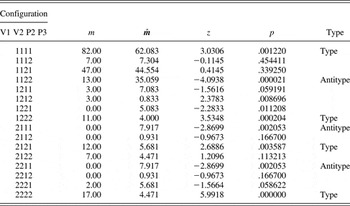
Table 1.Prediction configural frequency analysis of the predictors of severe violence at Time 1 (V1) and Time 2 (V2) and the criteria for posttraumatic stress disorder at Time 2 (P2) and Time 3 (P3)
Reformulating tenet 6: Expectancies
The six original tenets have been discussed in detail in the literature and by Sterba and Bauer (Reference Sterba and Bauer2010). Therefore, there is no need to repeat this discussion here. However, it may be useful to point attention to two new aspects of the theory of the person-oriented approach. The first aspect appears in the reformulation of the sixth tenet above (von Eye & Bogat, Reference von Eye and Bogat2006). In its original formulation, the sixth tenet stated that, in principle, the number of different patterns is infinite, but that, at a more global level, a small number of patterns will be observed more frequently, and most others will be observed either rarely or not at all. The reformulation of this tenet introduces expected numbers of patterns. These expectancies can be based on a number of arguments, including, for example, population statistics (“American colleges train more female students than one would expect based on the gender distribution in this age bracket”) or model assumptions (“more children with exposure to domestic violence than expected can be predicted to show signs of negative adaptation”; see Martinez-Torteya, Bogat, von Eye, & Levendosky, Reference Martinez-Torteya, Bogat, von Eye and Levendosky2009). Expected frequencies or expected rates of events allow one to test hypotheses concerning the observed frequencies of these events. We consider this a very important step in the development of person-oriented methodology. This step leads us away from the emphasis on predominantly descriptive statements that was state of the art in 2003 (Bergman et al., Reference Bergman, Magnusson and El-Khouri2003, p. 45), and that was deplored by Sterba and Bauer (Reference Sterba and Bauer2010). We illustrate this issue below.
The concept of dimensional identity
The second theoretical development to be discussed here concerns the concept of dimensional identity that was introduced as an integral part of person-oriented theory by von Eye and Bergman (Reference von Eye and Bergman2003). Related to the concept of factor invariance (also called factorial invariance), the authors state that a set of variables can be defined as displaying dimensional identity if the interrelations among the variables in this set remain unchanged across the levels or categories of other variables. In addition, it is required that the scales used to quantify variables be commensurate and have the same meaning across levels of other variables such as time, space, population, subpopulation, and combinations of these (see Schmidt, Reference Schmidt1977). The term unchanged implies lack of differences as assessed by, for instance, statistical significance tests that can be used to compare parameters. If dimensional identity exists, variable-centered data analysis at an aggregate level can be justified. In the context of aggregating curves from group data, this concept has already been discussed by Estes (Reference Estes1956). In the context of developmental systems theory, this concept has been discussed by Molenaar (Reference Molenaar2004; Molenaar & Campbell, Reference Molenaar and Campbell2009).
To illustrate the concept of dimensional identity, consider the Rasch model's (Reference Rasch1960) sampling independence (Loevinger, Reference Loevinger1965). One of the main goals of classical test theory involves the construction of a test that, based on the estimation of its item parameters, is optimal in its validity. In contrast, using the Rasch model, one aims at creating items whose difficulty satisfies prespecified conditions. For example, for speed tests, one constructs items with equal difficulty. For power tests, one constructs items with increasing difficulty. In addition to item parameters, ability parameters are estimated for each testee. This estimation presupposes that all items conform to the Rasch model. In the test construction phase, items that do not conform to the Rasch model are removed from the item pool. Specifically, those items are removed that interactFootnote 2 with ability. These are items that differ in difficulty depending on test takers' abilities.
One aspect that is important, from the perspective of person-oriented research, is that two reasons for violations of the Rasch model could possibly considered, but, in many applications, only one is. These are model violations caused by items and model violations caused by individuals. In the process of instrument construction, practically always items are eliminated if they are the cause of poor model fit. Individuals are practically never removed, in particular, if they are assumed to be members of the target population. Rare reasons for removing individuals include situations in which odd circumstances for erratic response patterns are known.
From the perspective of person-oriented research, this practice may seem debatable. There can be no doubt that the result of this practice has desirable aspects. The result is an instrument that conforms to the Rasch model, and individuals can be compared in their abilities even if different items are administered. In addition, sum scores are interpretable, and parameter estimation will not depend on the sample drawn from the target population. This last characteristic is known as the Rasch model's parameters' sampling independence. On the downside is that unique characteristics of individuals or groups of individuals are suppressed. Only shared characteristics are considered. The possible membership of individuals in other populations or subpopulations is not even considered. That is, the assumption that the target population is homogeneous remains unchallenged, in standard applications of the Rasch model, even if individuals make instrument construction difficult.
Naturally, this assumption is somewhat unrealistic. Therefore, the so-called mixed Rasch model was developed (Rost, Reference Rost1991; von Davier & Rost, Reference von Davier, Rost, Fischer and Molenaar1995). This model performs the processes of quantification and classification simultaneously. More specifically, this model allows the researcher to view samples as mixtures from two or more populations. These populations are identified, and parameters are determined separately for each subpopulation. Consider the standard Rasch model,
where i is the subscript for items, v is the subscript for individuals, θ is the person parameter (ability), σ is the item difficulty parameter, and p(X vi = 1) is the probability that person v receives score 1 on Item i. If the logistic item function applies to each item, but the parameters of this function are specific to classes (subpopulations), that is, differ across the classes under study, the mixed Rasch model results:
where g labels the classes. Here, one has to assume that the groups are exhaustive and disjunct. Other models have been developed that, for instance, allow one to take time into account.
The message from this example is that, even if a statistical model applies, parameters may vary across subgroups and populations. These subgroups are either known a priori or need to be identified. Rost's mixed Rasch model can be applied in tandem with latent class analysis to identify such subgroups. Matters turn more complicated if either the statistical or the substantive model under study (or both) does not apply across populations. As Rost notes (Reference Rost1996, p. 170), if individuals from different populations differ in the strategy they apply to solve items, an assessment instrument may contain Rasch-homogeneous items, but interpretation and comparison of scores is valid only within the groups that employ the same strategy.
This applies accordingly when the structure and characteristics of an instrument were established using factor analytic methods. Consider, for example, the well-known Child Behavior Checklist (Achenbach, Reference Achenbach1991). The structure of this instrument was established to have eight factors, in a specific US-American population of predominantly Caucasian youth. This instrument has been shown to have different factorial structures in US African American youths and in Jamaican youths (Lambert, Essau, Schmitt, & Samms-Vaughan, Reference Lambert, Essau, Schmitt and Samms-Vaughan2007) as well as in other populations (Heubeck, Reference Heubeck2000). Therefore, a comparison of youth across cultures based on their Child Behavior Checklist scores may be invalid.
What do we learn from these two examples? There are at least three implications.
1. Regardles of the statistical method used to establish an instrument or a model, the population for which it is supposed to be valid needs very careful delineation.
2. Even if a population is carefully delineated, there may still be members of this population for which a model or instrument does not apply.
3. If there is a chance that a sample reflects a mixture of populations, the resulting model parameters may describe none of the original populations, and the model or instrument may end up being useless, capturing minuscule portions of variance, even if it fits well.
However, the implications of the concepts of dimensional identity go farther. Fitting a model or developing an instrument for an aggregate of individuals presupposes that each element of the model, each variable, is meaningful for each member of the aggregate. The term “meaningful” can be defined, as in Noble (Reference Noble1952), by its association structure. Alternatively, it can also be defined as by Nesselroade, Gerstorf, Hardy, and Ram (Reference Nesselroade, Gerstorf, Hardy and Ram2007) by existence versus nonexistence or observability versus nonobservability of behaviors in individuals. As Nesselroade et al. (Reference Nesselroade, Gerstorf, Hardy and Ram2007) showed, superordinate or latent variables can still be defined when particular variables are not observed for particular individuals, as long as the behavioral domain is the same across all individuals in a population. In the discussion by Sterba and Bauer (Reference Sterba and Bauer2010), this proposition is not discussed. It is assumed that all variables in a study are equally meaningful and observable for everybody in a sample or population.
The concept of dimensional identity goes farther in that this assumption is considered debatable. Von Eye (Reference von Eye2009) related the concept of dimensional identity to the concept of universals in psychology. Universals are concepts that apply to everybody in a population or behaviors that can be observed in everybody. Concepts and behaviors that are not universal may also exist in individuals or subpopulations. If this is the case, we are in a situation that is similar to the one described above. Focusing on Rasch-homogeneous items, focusing exclusively on shared variance, or when establishing the reliability of instruments, focusing on items that are responded to consistently over time can lead to meaningful results. However, it may very well be that unique responses are selected out, and the price is a narrow concept that fails to capture the richness and breadth of the behavior being assessed. It may be that the shared variance is the smaller portion of the explainable variance. It may also be that developing behavior is labeled as “stable” because change-sensitive items have been eliminated from an item pool because respondents gave different (yet correct) answers the second time they were presented with an item.
Sterba and Bauer rightfully and concisely discuss the problem of using taxometric methods to create groups that, as von Eye and Bergman (Reference von Eye and Bergman2003) worried, may not exist. Creating such groups, as problematic as it may be, presupposes that all variables are meaningful for every case to be classified. Based on the present discussion of dimensional identity, this may not be the case. If this is not the case, there is a second reason to worry about the results of taxometric efforts, as well as the results of modeling, group comparisons, and construction of instruments, to name just a few. This reason is that groups may be created that reflect the possibility that dimensional identity does not apply. It should be noted that this second reason to worry can be present whenever comparisons among individuals or groups are made, when population parameters for just one group are estimated, or even when just one individual is described over time.
Methods of Analysis for Person-Oriented Research
Earlier we discussed theoretical elements of the person-oriented approach. In this section, we discuss methods for the analysis of patterns. We focus on methods that are applied to patterns that result from cross-classifying categorical variables. These patterns are defined by the categories of the variables that span the cross-classification.
According to Goodman (Reference Goodman1984), cross-classifications of two or more variables can be analyzed with the goals of making statements about the association structure of these variables, the dependency structure, or the joint distribution. All these goals are typical of aggregate-level research, that is, research that results in statements about variables but not people. However, from the perspective of person-oriented research, the goal is to make statements about individuals or homogeneous groups of individuals. This can be achieved with CFA (Lienert & Krauth, Reference Lienert and Krauth1975; von Eye, Reference von Eye2002; von Eye & Gutiérrez Peña, Reference von Eye and Gutiérrez Peña2004).
The following paragraphs focus on CFA. Other methods are certainly of interest, but they have found no application (yet) in the context of person-oriented research. One example of such a method is known as the comparative method (Caramani, Reference Caramani2009). This method focuses on variation in categorical data, and creates statements of comparison using methods of Boolean algebra. Another method is that of symbolic data analysis (Billard & Diday, Reference Billard and Diday2006). This method allows one to create statements similar to the ones made with standard statistical methods such as regression analysis or principal component analysis. However, data are not represented by single parameters but by lists, intervals, ranges, or distributions. Both of these methods have enormous potential for person-oriented research. However, this potential still needs to be developed.
In what Bergman et al. (Reference Bergman, Magnusson and El-Khouri2003, p. 60) call the classification phase of person-oriented research, groups of homogeneous individuals are specified (if possible). These can be groups that result from hybrid cluster analysis (as discussed by Sterba & Bauer, Reference Sterba and Bauer2010; cf. Mun, von Eye, Bates, & Vaschillo, Reference Mun, von Eye, Bates and Vaschillo2008), groups that meet the ergodicity criteria discussed by Molenaar (Reference Molenaar2004; Molenaar & Campbell, Reference Molenaar and Campbell2009), or groups that naturally exist. Each of these groups can be described as exhibiting a particular pattern of characteristics. This pattern is given by the indices of the cells that the individuals occupy.
The main difference that distinguishes CFA from such methods as log-linear modeling or logistic regression is that it allows one to test hypotheses concerning individual cells or groups of cells of cross-classifications. Therefore, dimensional identity needs to exist only for the categories of the cells in which the individuals are located that are being examined.
Consider a cross-classification with R cells that is spanned by two or more variables. In exploratory CFA, each of these cells is examined. The goal of analysis is to determine whether a cell constitutes a CFA type, that is, contains more cases than expected, or a CFA antitype, that is, contains fewer cases than expected.
Let m r be the observed frequency for cell r, and m r* the frequency that is expected for this cell, under some base model. The null hypothesis used in CFA is H 0: E[m r] = m r*, or, in other words, that cell r does not constitute a type or an antitype, where m r* is the expected frequency under the base model. If a cell constitutes a type, this null hypothesis is rejected because
Accordingly, the null hypothesis that cell r does not constitute an antitype is rejected because
The interpretation of CFA types and antitypes depends on a number of factors, the most important of which is the CFA base model. Base models are probability models that specify the expected probability distribution of the table under study. CFA base models share the characteristic that only variable relationships are taken into account that are not of interest to the researchers. Thus, violations of a base model suggest that those variable relationships exist that are of interest (for more detail on base models, see von Eye, Reference von Eye2004b; von Eye, Mair, & Mun, Reference von Eye, Mair and Munin press).
As was noted above, CFA results describe individual cells or small groups of cells. The pattern of categories that is used to label a cell is called the configuration. To give an example of CFA and its interpretation, consider the case of prediction CFA (P-CFA; Heilmann, Lienert, & Maly, Reference Heilmann, Lienert and Maly1979; von Eye, Mair, & Bogat, Reference von Eye, Mair and Bogat2005; von Eye, Mun, & Bogat, Reference von Eye, Mun and Bogat2010). The base model of P-CFA has the following characteristics:
1. it takes into account the main effects of all variables that span the table under study,
2. it takes into account all possible interactions among the predictors and is thus saturated in the predictors,
3. it takes into account all possible interactions among the criterion variables and is thus saturated in the criterion variables, and
4. it proposes independence among predictors and criterion variables.
CFA types and antitypes can, therefore, emerge only if relationships exist that link predictors and criteria. Unlike in standard regression logit models, which relate variables to each other, the relationships examined in P-CFA manifest at the level of configurations, that is, individual cells. One implication of the focus on individual cells that is of central importance to person-oriented research is that CFA results typically suggests that effects exist in particular configurations, but not in others.
To illustrate, consider the three predictors P1, P2, and P3 and the two criterion variables C1 and C2. The log-linear base model that has the characteristics listed above is the following:
The first row of this equation contains the model constant, λ, and the main effects of all variables. The first four terms in the second row represent the three two-way interactions and the sole three-way interaction among the predictors. The last term in the second row represents the two-way interaction between the two criterion variables. If this model is rejected, one or more of the following interactions must existFootnote 3: [P1, C1], [P1, C2], [P2, C1], [P2, C2], [P3, C1], [P3, C2],[P1, P2, C1], [P1, P2, C2], [P1, P3, C1], [P1, P3, C2], [P2, P3, C1], [P2, P3, C2], [P1, P2, P3, C1], [P1, P2, P3, C2], [P1, C1, C2], [P2, C1, C2], [P3, C1, C2], [P1, P2, C1, C2], [P1, P3, C1, C2], [P2, P3, C1, C2], and [P1, P2, P3, C1, C2]. Each of these interactions relates predictor and criterion variables to each other. The main effects and the interactions that involve only predictor or only criterion variables, which are all of interest, can therefore not be a reason for prediction types and antitypes to emerge.
Data example
The following example uses data from a project on intimate partner violence (Levendosky, Bogat, Davidson, & von Eye, 2000; see http://www.msu.edu/~mis). Two hundred four women responded yearly to questions concerning the frequency with which they suffered violence from intimate partners in the year before the interview, and to a questionnaire that was administered to assess the degree to which they showed symptoms of posttraumatic stress disorder (PTSD; scale for battered women; Saunders, Reference Saunders1994) in response to this violence. For the following application of P-CFA, we use information about severe violence from Time 1 (V1) and Time 2 (V2) and PTSD from Time 2 (P2) and Time 3 (P3). Both violence variables were coded as 1 = did not experience severe violence, and 2 = did experience severe violence. The two PTSD variables were coded as 1 = PTSD symptoms below the clinical cutoff and 2 = above the clinical cutoff. The V1 × V2 × P2 × P3 cross-classification is analyzed under the P-CFA base model
For P-CFA, we use the normal approximation of the binomial test along with the Holland–Copenhaver (Reference Holland and Copenhaver1987) procedure of α protection.
For the P-CFA base model, we calculate the LR-X 2 = 114.51 (df = 9; p < .01). The model is thus rejected, and we expect types and antitypes to emerge. P-CFA results are given in Table 1. P-CFA resulted in four types and three antitypes, which can be interpreted as follows. Type 1 1 1 1 describes those 82 women who did not suffer severe violence during the 1-year periods before the first and the second interviews, and for which it can be predicted that they show PTSD symptoms below the clinical level during the years before the second and third interviews. Type 1 2 2 2 describes those 11 women who did not suffer severe violence during the year before the first but during the year before the second interviews, and for which it can be predicted that they show PTSD clinical level symptoms during the years before the second and third interviews. The third type, 2 1 2 1, suggests that, for 12 women, short-term effects of severe violence exist. These are the women for which it can be predicted that violence during the year before the first interview results in above cutoff symptoms of PTSD, and no severe violence during the year before the second interview results in below cutoff symptoms of PTSD. The last type, constituted of Configuration 2 2 2 2, complements the first. Consistent suffering of severe violence results in consistent, above cutoff PTSD symptoms in the immediately following years.
The first antitype, constituted of Configuration 1 1 2 2 suggests that it can be predicted that above cutoff PTSD symptoms are particularly unlikely if a woman is not a victim of severe violence in the years prior to the two interviews. Note that 13 women did show this pattern. We conclude that, for these women, severe violence is not the main cause for their PTSD symptoms. The second antitype, found in cell 2 1 1 1, suggests that it is particularly unlikely that a woman suffers severe violence in the year before the first but not the second interviews, and responds with below cutoff levels of PTSD symptoms throughout. Not a single respondent showed this pattern. The third antitype, 2 2 1 1, complements the first. It shows that it can be predicted that severe violence during the years prior to the first and the second interviews will not be responded with below cutoff levels of PTSD symptoms. No respondent showed this pattern.
What can we learn from this application of P-CFA? Several implications stand out.
1. As the example in Table 1 illustrates, cross-classifications usually contain a limited number of types and antitypes. In the rare case in which all configurations constitute types and antitypes, person-oriented and variable-oriented analyses converge in their results. In the case in which no type or antitype results, the CFA base model fits and the effects under study may not exist.
2. The configurations that do not constitute types or antitypes suggest that, locally, the base model fits. Types and antitypes indicate where the base model is contradicted locally. From this characteristic of CFA results, we can conclude that the results that relate variables to each other such that the entire range of categories or the entire range of admissible scores is included may only be partially correct. There may be sectors of the data space in which there is no relationship.
3. The existence of dimensional identity needs to be verified for individual cells instead of groups of variables. This may be impossible to do if a configuration is displayed by as few as two or three individuals.
Concerning the testability of the tenets (principles) of the person-oriented approach, we are in a more comfortable situation than one might conclude from table 2 in Sterba and Bauer's (Reference Sterba and Bauer2010) Keynote Article. From this table, we could conclude that the tenets are not simultaneously testable. From the discussion here, we conclude the following: using CFA,
1. The individual-specificity principle is testable. The configurations represent patterns of function or development that are unique to the individuals in the corresponding cells of the cross-classification. Interestingly, this number can be as small as one (if there is only one case in a cell) or zero (in the case of antitypes). As noted before, the interpretation of types and antitypes as reflecting particular effects (such as predicting a criterion configuration from a predictor configuration as in Table 1) depends on the choice and specification of an appropriate base model.
2. The complex-interaction principle is testable. Each type and antitype represents a complex interaction, in two ways. First, it shows that the variables that span the cross-classification interact (types and antitypes that reflect only main effects can exist, but they are rare, and will result only from zero order CFA, which uses the null model for a base model). The tools of functional CFA (von Eye & Mair, Reference von Eye and Mair2008a) can be used to determine which effects are carried by the types and antitypes in a table. Naturally, the complexity of interactions increases with the number of variables. Second, each type and antitype shows that an interaction at the level of category patterns exists, in a particular sector of the data space, that is, locally. This increases the complexity of interpretation of interactions as it becomes configuration specific.
3. The interindividual-differences/intraindividual-change principle is testable. A large number of CFA models for longitudinal designs (von Eye, Reference von Eye2002) exist. One of the more recent CFA models for longitudinal designs allows researchers to relate multiple series of scores to each other (von Eye et al., in press). Given the right data, this model can be applied to individuals or small groups of individuals. It describes intraindividual change. In addition, this model can be extended to allow multiple group (or multiple individuals) comparisons. In CFA applications, all this occurs at the level of configurations.
4. The pattern-summary principle is testable. As soon as types or antitypes emerge, one can conclude that the process under study is carried by, or manifests in these outlandish cells. In the cells that do not constitute types or antitypes, the process may not exist. If there are no types or antitypes in a table, the process may not exist as specified at all.
5. The holism principle is partially testable. For each type and antitype, the interaction among the involved factors can be described, if the cell contains a large enough sample of cases. If the number of cases in a cell is too small, the interaction may not be describable any more.
6. The pattern-parsimony principle is partially testable. In the context of CFA, it needs to be defined what exactly this principle means. Using such methods as LCA, the principle can be seen as confirmed if the number of classes is small. In CFA, the number of configurations equals the number of cells in a table. This number is not necessarily small. If the number of types and antitypes is small, the parsimony principle may be considered confirmed. However, what decision will researchers make about this principle if cells that do not constitute types or antitypes contain large numbers of cases? For these cases, the base model holds. If these configurations and their cases are not considered patterns of interest, confirmation of the principle depends on the number of types and antitypes, and cutoffs must be established. If, however, these configurations are considered patterns of interest, then the principle may not be testable because, then, the number of patterns only depends on the number of variables that span a table and the number of categories of these variables.
In sum, CFA is a method that allows researchers to consider most or all of the principles of person-oriented research, including the dimensional-identity principle. Most CFA models are log-linear. Therefore, complementary application of person-oriented and variable-oriented methods of analysis to the same data seems natural. For instance, variable-oriented methods can be used to determine which effect at the level of variable is carried by the types and antitypes in a table (von Eye & Mair, Reference von Eye and Mair2008a, Reference von Eye and Mair2008b).
Person-Oriented Versus Differential Psychology
In this section, we ask whether person-oriented research brings anything new to the already plentiful table of psychology. Researchers seem to think that yes, it does. Otherwise, the discussion presented here and the increasing number of articles in which results of person-oriented research are being reported would not be interesting and would make little or no contribution to the development of psychology as a field. The psychological subdiscipline with which to compare the person-oriented approach is differential psychology, a field connected with the names of Galton and Stern at its beginnings and with Nesselroade (Reference Nesselroade2002) more recently. According to Stern (Reference Stern1911), general psychology aims at generating statements that are valid for every member of a population. Differences from general trends are considered random or errors. In contrast, differential psychology is concerned with interindividual differences. These differences are considered worthy of study instead of getting subsumed under randomness. Stern notes that differential psychology has also a general goal. This goal is to identify the formal laws of variability.
Thus far, the person-oriented approach and differential psychology are siblings, almost twins, and the person-oriented approach adds nothing much to the discussion. However, placing individuals on different points of scales presupposes dimensional identity. Person-oriented research goes farther than differential psychology in that it does not make the assumption that development and behavior are universal or that the structure of development and behavior are unchanged over individuals or groups of individuals. In the context of differential psychology, individual characteristics and differences can be taken into account. Consider, for example, item-response theory models. These models allow one to include elements of person fit, that is, elements that describe the differences of individuals to the rest of the sample (e.g., Glas & Meijer, Reference Glas and Meijer2003). This effort, however, again presupposes that all individuals can be placed on the same scale. Following the person-oriented approach, this may not always be a realistic presupposition.
Because of this fundamental difference between differential psychology and the person-oriented approach, we conclude that the latter represents the next step in the development of theories that take into account that individuals can be qualitatively different from each other in addition to their quantitative differences. Using the tools of statistics, one can create a situation in which it looks like a scale is valid for everybody. As was discussed above, this can be done by only looking at the shared variance, no matter how small it may be. Based on the concept of dimensional identity, however, we anticipate that not everybody can be described using every behavioral variable. A welcome side effect of this consideration is that the portion of variance that a model accounts for is typically considerably larger in person-oriented studies than in variable-oriented studies because only those variables are used that are valid for the individual or everybody in the groups that are being studied.
To give an example of this side effect, we refer to a study by von Eye and Bogat (Reference von Eye, Bogat, Ittel, Stecher, Merkens and Zinnecker2007). The authors used an analysis of variance to analyze alcohol consumption in 3,463 adolescents (for details about the sample, see von Eye et al., Reference von Eye, Bogat and Rhodes2006). Most of the between- and the within-groups effects were significant, but the portions of variance that the analysis of variance model explained were very small. The largest effect size was measured for the race effect. It explained 3.6% of the variance. Adopting person-oriented perspective, the authors also considered marijuana use of the same adolescents. The portions of explained variance increased dramatically. For example, the within-groups effects now explained about 25% of the variance. This is still not an extremely high portion of variance, but higher than before, by a factor of 7.5.
Discussion
Based on Sterba and Bauer's (Reference Sterba and Bauer2010) discussion of methodological aspects of tenets of the person-oriented approach, we focused on the implications of the new tenet of dimensional identity. In addition, we discussed implications of application of methods that make statements about subgroups of samples or populations only, specifically the application of CFA. Four implications stand out.
First, the effects of interest can meaningfully be expressed as existing only in subgroups of a sample or population only. CFA types and antitypes exhibit these effects. Configurations that constitute neither types nor antitypes do not contain the effects of interest.
Second, applying methods of analysis that result in statements about groups of individuals instead of entire samples or populations makes the assumption of dimensional identity less strong. All one has to assume (or make plausible) is that dimensional identity exists within the subpopulations that exhibit the effects of interest, for example, the CFA types and antitypes.
Third, the person-oriented approach can be seen as the next step in the development of Differential Psychology. This step takes dimensional identity (or the possible lack of it) into account.
Fourth, by restricting statements to individuals or subpopulations instead of focusing only on shared variance, at the level of variables, the portion of variance explained in these subpopulations and the validity of statements about these subpopulations can be dramatically increased. This side effect has the potential of having major implications for the development of treatment strategies or interventions, in general.
In sum, the driving motive behind the person-oriented approach is that statements are more accurate, valid, and explain more variance when generalizations are made only when dimensional identity is established. The theorems of ergodicity (see Molenaar & Campbell, Reference Molenaar and Campbell2009) can be used to approach aspects dimensional identity. CFA can be used to arrive at statements that, at the level of variables, validly describe fewer cases than intended but, at the level of configurations, validly describe those cases for which the targeted effects exist.





 You have
Access
The person-oriented approach to research in the social and behavioral sciences, which can be traced back to Block (Reference Block1978) proceeds under the assumption that, instead of being universal, development and structure of human behavior are unique to individuals or groups of individuals. Considering the small portions of variability that aggregate-level empirical studies often explain, the person-oriented approach has gained considerable momentum since the publication of the original works by Bergman, Magnusson, and collaborators (e.g., Bergman & Magnusson, Reference Bergman and Magnusson1997; Bergman, Magnusson, & El-Khouri, Reference Bergman, Magnusson and El-Khouri2003; Bergman, von Eye, & Magnusson, Reference Bergman, von Eye, Magnusson, Cicchetti and Cohen2006; von Eye & Bergman, Reference von Eye and Bergman2003; von Eye & Bogat, Reference von Eye and Bogat2006; von Eye, Bogat, & Rhodes, Reference von Eye, Bogat and Rhodes2006).
The person-oriented and ideographic approaches (Molenaar, Reference Molenaar2004; Molenaar & Campbell, Reference Molenaar and Campbell2009; cf. von Eye, Reference von Eye2004a) share the perspective that standard aggregation can lead to distortions or, in the worst case, statements that do not apply to anybody (for empirical examples, see von Eye & Bergman, Reference von Eye and Bergman2003). In this commentary we focus on psychology, specifically developmental psychopathology, as the reference fields of development and application of the person-oriented approach (for a discussion of the person-oriented approach in community psychology see Bogat, Reference Bogat2009; the person-oriented approach in personality was discussed by von Eye & Bergman, Reference von Eye and Bergman2009). However, it should be emphasized that psychology is not alone in the quest for person-oriented research and application. To give just one example, in medical research, the term “personalized therapy” has been introduced. The main goal of such therapy is that patients be treated as individuals instead of “members of a population” (Hayden, Reference Hayden2009; Webb & Cherba, Reference Webb, Cherba and Krawetz2009). For example, the promise of personalized cancer therapy is that “genetic glitches” that are associated with cancer can be diagnosed only at the level of the individual, and that the course of therapy must be determined based on such knowledge. Based on the genetic profile of a patient, this course can vary substantially from the course of therapy for other patients who suffer, at the surface, from the same disease.
From a data analytic perspective, the view that routine aggregation may not help explain sufficient amounts of variance is shared by the protagonists of methods for the analysis of intensive data. The authors note that “the average may be highly atypical” (Walls & Schafer, Reference Walls and Schafer2006, p. xiv) and thus, we may add, not overly useful.Footnote 1
In their Keynote Article, Sterba and Bauer (Reference Sterba and Bauer2010 [this issue]) note that the person-oriented approach has two components, as can be expressed in the equation person-oriented approach = person-oriented theory + person-oriented methods. This is an interesting decomposition. It can be used to separately describe the development of theoretical and methodological elements of the person-oriented approach. Sterba and Bauer also note that the theoretical elements of the person-oriented approach have experienced more thorough development than the methodological elements. To remedy this imbalance, the authors make the fundamental contribution that they discuss existing methods of data analysis with the goals of determining (a) whether and which of the tenets of the person-oriented approach can be tested using these methods and (b) which assumptions must be made when testing hypotheses that are compatible with the tenets.
There can be no doubt that such a discussion was overdue. Earlier discussions (see, e.g., Bergman et al., Reference Bergman, Magnusson and El-Khouri2003) are presented as dated, because both methods of analysis and theory of the person-oriented approach have been developed at a rapid pace. Sterba and Bauer (Reference Sterba and Bauer2010) do a brilliant job of discussing available statistical methods, mostly from the modeling domain. Based on this discussion, this Commentary seeks to take the next step by discussing the theory of person orientation, the relationship of person orientation to other approaches in psychology, and methods of data analysis not touched upon by Sterba and Bauer. Instead of critiquing the excellent Keynote by Sterba and Bauer, we hope the result of this contribution will be a multifaceted description of the person-oriented approach. If we take the Keynote Article by Sterba and Bauer and this Commentary (as well as those of the other discussants) together, this description result in a more complete rendering of the current state of the person-oriented approach, in both its theoretical and its methodological implications.
We initially take a look at theoretical elements of the person-oriented approach and then review methods not discussed in Sterba and Bauer's Keynote. Finally, we relate the person-oriented approach to other approaches of psychology, specifically, differential psychology.
Theoretical Elements of the Person-Oriented Approach
The original six tenets of the person-oriented approach (see, e.g., Bergman, Reference Bergman2001; Bergman & Magnusson, Reference Bergman and Magnusson1997; von Eye & Bergman, Reference von Eye and Bergman2003) can be briefly restated as follows:
1. Structure and dynamics of behavior are at least partly specific to the individual; Sterba and Bauer (Reference Sterba and Bauer2010, their table 1) call this tenet the individual–specificity principle.
2. Because of the complexity of behavior, many factors and their interrelations need to be taken into account; Sterba and Bauer (Reference Sterba and Bauer2010, their table 1) call this tenet the complex-interaction principle.
3. There is lawfulness and structure to intraindividual constancy and change as well as interindividual differences in constancy and change; Sterba and Bauer (Reference Sterba and Bauer2010, their table 1) call this tenet the interindividual-differences/intraindividual-change principle.
4. Processes develop in a lawful way and can be described as patterns of the involved factors; Sterba and Bauer (Reference Sterba and Bauer2010, their table 1) call this tenet the pattern-summary principle.
5. The meaning of the involved factors is defined by the interactions among these factors; Sterba and Bauer (Reference Sterba and Bauer2010, their table 1) call this tenet the holism principle.
6. Some patterns occur more frequently, some others less frequently than expected based on theory or prior knowledge. (Note that, with reference to the method of configural frequency analysis [CFA] that will be discussed later, in this Commentary this formulation proposed by von Eye and Bogat [2006] differs slightly from the formulation proposed by Bergman and Magnusson [1997] and von Eye and Bergman [2003].) Sterba and Bauer (their table 1 in the Keynote) call this tenet the pattern-parsimony principle. Two additional tenets have been proposed by Bogat (Reference Bogat2009) to develop the environmental components of person-oriented research and to guide research in community psychology. The additional tenets suggest conditioning statements on specific environments (Bogat's second tenet), and on individuals and their environments (Bogat's eighth tenet). In the following sections, we discuss the reformulation of tenet 6 and the concept of dimensional identity.
Prediction configural frequency analysis of the predictors of severe violence at Time 1 (V1) and Time 2 (V2) and the criteria for posttraumatic stress disorder at Time 2 (P2) and Time 3 (P3)
Reformulating tenet 6: Expectancies
The six original tenets have been discussed in detail in the literature and by Sterba and Bauer (Reference Sterba and Bauer2010). Therefore, there is no need to repeat this discussion here. However, it may be useful to point attention to two new aspects of the theory of the person-oriented approach. The first aspect appears in the reformulation of the sixth tenet above (von Eye & Bogat, Reference von Eye and Bogat2006). In its original formulation, the sixth tenet stated that, in principle, the number of different patterns is infinite, but that, at a more global level, a small number of patterns will be observed more frequently, and most others will be observed either rarely or not at all. The reformulation of this tenet introduces expected numbers of patterns. These expectancies can be based on a number of arguments, including, for example, population statistics (“American colleges train more female students than one would expect based on the gender distribution in this age bracket”) or model assumptions (“more children with exposure to domestic violence than expected can be predicted to show signs of negative adaptation”; see Martinez-Torteya, Bogat, von Eye, & Levendosky, Reference Martinez-Torteya, Bogat, von Eye and Levendosky2009). Expected frequencies or expected rates of events allow one to test hypotheses concerning the observed frequencies of these events. We consider this a very important step in the development of person-oriented methodology. This step leads us away from the emphasis on predominantly descriptive statements that was state of the art in 2003 (Bergman et al., Reference Bergman, Magnusson and El-Khouri2003, p. 45), and that was deplored by Sterba and Bauer (Reference Sterba and Bauer2010). We illustrate this issue below.
The concept of dimensional identity
The second theoretical development to be discussed here concerns the concept of dimensional identity that was introduced as an integral part of person-oriented theory by von Eye and Bergman (Reference von Eye and Bergman2003). Related to the concept of factor invariance (also called factorial invariance), the authors state that a set of variables can be defined as displaying dimensional identity if the interrelations among the variables in this set remain unchanged across the levels or categories of other variables. In addition, it is required that the scales used to quantify variables be commensurate and have the same meaning across levels of other variables such as time, space, population, subpopulation, and combinations of these (see Schmidt, Reference Schmidt1977). The term unchanged implies lack of differences as assessed by, for instance, statistical significance tests that can be used to compare parameters. If dimensional identity exists, variable-centered data analysis at an aggregate level can be justified. In the context of aggregating curves from group data, this concept has already been discussed by Estes (Reference Estes1956). In the context of developmental systems theory, this concept has been discussed by Molenaar (Reference Molenaar2004; Molenaar & Campbell, Reference Molenaar and Campbell2009).
To illustrate the concept of dimensional identity, consider the Rasch model's (Reference Rasch1960) sampling independence (Loevinger, Reference Loevinger1965). One of the main goals of classical test theory involves the construction of a test that, based on the estimation of its item parameters, is optimal in its validity. In contrast, using the Rasch model, one aims at creating items whose difficulty satisfies prespecified conditions. For example, for speed tests, one constructs items with equal difficulty. For power tests, one constructs items with increasing difficulty. In addition to item parameters, ability parameters are estimated for each testee. This estimation presupposes that all items conform to the Rasch model. In the test construction phase, items that do not conform to the Rasch model are removed from the item pool. Specifically, those items are removed that interactFootnote 2 with ability. These are items that differ in difficulty depending on test takers' abilities.
One aspect that is important, from the perspective of person-oriented research, is that two reasons for violations of the Rasch model could possibly considered, but, in many applications, only one is. These are model violations caused by items and model violations caused by individuals. In the process of instrument construction, practically always items are eliminated if they are the cause of poor model fit. Individuals are practically never removed, in particular, if they are assumed to be members of the target population. Rare reasons for removing individuals include situations in which odd circumstances for erratic response patterns are known.
From the perspective of person-oriented research, this practice may seem debatable. There can be no doubt that the result of this practice has desirable aspects. The result is an instrument that conforms to the Rasch model, and individuals can be compared in their abilities even if different items are administered. In addition, sum scores are interpretable, and parameter estimation will not depend on the sample drawn from the target population. This last characteristic is known as the Rasch model's parameters' sampling independence. On the downside is that unique characteristics of individuals or groups of individuals are suppressed. Only shared characteristics are considered. The possible membership of individuals in other populations or subpopulations is not even considered. That is, the assumption that the target population is homogeneous remains unchallenged, in standard applications of the Rasch model, even if individuals make instrument construction difficult.
Naturally, this assumption is somewhat unrealistic. Therefore, the so-called mixed Rasch model was developed (Rost, Reference Rost1991; von Davier & Rost, Reference von Davier, Rost, Fischer and Molenaar1995). This model performs the processes of quantification and classification simultaneously. More specifically, this model allows the researcher to view samples as mixtures from two or more populations. These populations are identified, and parameters are determined separately for each subpopulation. Consider the standard Rasch model,
where i is the subscript for items, v is the subscript for individuals, θ is the person parameter (ability), σ is the item difficulty parameter, and p(X vi = 1) is the probability that person v receives score 1 on Item i. If the logistic item function applies to each item, but the parameters of this function are specific to classes (subpopulations), that is, differ across the classes under study, the mixed Rasch model results:
where g labels the classes. Here, one has to assume that the groups are exhaustive and disjunct. Other models have been developed that, for instance, allow one to take time into account.
The message from this example is that, even if a statistical model applies, parameters may vary across subgroups and populations. These subgroups are either known a priori or need to be identified. Rost's mixed Rasch model can be applied in tandem with latent class analysis to identify such subgroups. Matters turn more complicated if either the statistical or the substantive model under study (or both) does not apply across populations. As Rost notes (Reference Rost1996, p. 170), if individuals from different populations differ in the strategy they apply to solve items, an assessment instrument may contain Rasch-homogeneous items, but interpretation and comparison of scores is valid only within the groups that employ the same strategy.
This applies accordingly when the structure and characteristics of an instrument were established using factor analytic methods. Consider, for example, the well-known Child Behavior Checklist (Achenbach, Reference Achenbach1991). The structure of this instrument was established to have eight factors, in a specific US-American population of predominantly Caucasian youth. This instrument has been shown to have different factorial structures in US African American youths and in Jamaican youths (Lambert, Essau, Schmitt, & Samms-Vaughan, Reference Lambert, Essau, Schmitt and Samms-Vaughan2007) as well as in other populations (Heubeck, Reference Heubeck2000). Therefore, a comparison of youth across cultures based on their Child Behavior Checklist scores may be invalid.
What do we learn from these two examples? There are at least three implications.
1. Regardles of the statistical method used to establish an instrument or a model, the population for which it is supposed to be valid needs very careful delineation.
2. Even if a population is carefully delineated, there may still be members of this population for which a model or instrument does not apply.
3. If there is a chance that a sample reflects a mixture of populations, the resulting model parameters may describe none of the original populations, and the model or instrument may end up being useless, capturing minuscule portions of variance, even if it fits well.
However, the implications of the concepts of dimensional identity go farther. Fitting a model or developing an instrument for an aggregate of individuals presupposes that each element of the model, each variable, is meaningful for each member of the aggregate. The term “meaningful” can be defined, as in Noble (Reference Noble1952), by its association structure. Alternatively, it can also be defined as by Nesselroade, Gerstorf, Hardy, and Ram (Reference Nesselroade, Gerstorf, Hardy and Ram2007) by existence versus nonexistence or observability versus nonobservability of behaviors in individuals. As Nesselroade et al. (Reference Nesselroade, Gerstorf, Hardy and Ram2007) showed, superordinate or latent variables can still be defined when particular variables are not observed for particular individuals, as long as the behavioral domain is the same across all individuals in a population. In the discussion by Sterba and Bauer (Reference Sterba and Bauer2010), this proposition is not discussed. It is assumed that all variables in a study are equally meaningful and observable for everybody in a sample or population.
The concept of dimensional identity goes farther in that this assumption is considered debatable. Von Eye (Reference von Eye2009) related the concept of dimensional identity to the concept of universals in psychology. Universals are concepts that apply to everybody in a population or behaviors that can be observed in everybody. Concepts and behaviors that are not universal may also exist in individuals or subpopulations. If this is the case, we are in a situation that is similar to the one described above. Focusing on Rasch-homogeneous items, focusing exclusively on shared variance, or when establishing the reliability of instruments, focusing on items that are responded to consistently over time can lead to meaningful results. However, it may very well be that unique responses are selected out, and the price is a narrow concept that fails to capture the richness and breadth of the behavior being assessed. It may be that the shared variance is the smaller portion of the explainable variance. It may also be that developing behavior is labeled as “stable” because change-sensitive items have been eliminated from an item pool because respondents gave different (yet correct) answers the second time they were presented with an item.
Sterba and Bauer rightfully and concisely discuss the problem of using taxometric methods to create groups that, as von Eye and Bergman (Reference von Eye and Bergman2003) worried, may not exist. Creating such groups, as problematic as it may be, presupposes that all variables are meaningful for every case to be classified. Based on the present discussion of dimensional identity, this may not be the case. If this is not the case, there is a second reason to worry about the results of taxometric efforts, as well as the results of modeling, group comparisons, and construction of instruments, to name just a few. This reason is that groups may be created that reflect the possibility that dimensional identity does not apply. It should be noted that this second reason to worry can be present whenever comparisons among individuals or groups are made, when population parameters for just one group are estimated, or even when just one individual is described over time.
Methods of Analysis for Person-Oriented Research
Earlier we discussed theoretical elements of the person-oriented approach. In this section, we discuss methods for the analysis of patterns. We focus on methods that are applied to patterns that result from cross-classifying categorical variables. These patterns are defined by the categories of the variables that span the cross-classification.
According to Goodman (Reference Goodman1984), cross-classifications of two or more variables can be analyzed with the goals of making statements about the association structure of these variables, the dependency structure, or the joint distribution. All these goals are typical of aggregate-level research, that is, research that results in statements about variables but not people. However, from the perspective of person-oriented research, the goal is to make statements about individuals or homogeneous groups of individuals. This can be achieved with CFA (Lienert & Krauth, Reference Lienert and Krauth1975; von Eye, Reference von Eye2002; von Eye & Gutiérrez Peña, Reference von Eye and Gutiérrez Peña2004).
The following paragraphs focus on CFA. Other methods are certainly of interest, but they have found no application (yet) in the context of person-oriented research. One example of such a method is known as the comparative method (Caramani, Reference Caramani2009). This method focuses on variation in categorical data, and creates statements of comparison using methods of Boolean algebra. Another method is that of symbolic data analysis (Billard & Diday, Reference Billard and Diday2006). This method allows one to create statements similar to the ones made with standard statistical methods such as regression analysis or principal component analysis. However, data are not represented by single parameters but by lists, intervals, ranges, or distributions. Both of these methods have enormous potential for person-oriented research. However, this potential still needs to be developed.
In what Bergman et al. (Reference Bergman, Magnusson and El-Khouri2003, p. 60) call the classification phase of person-oriented research, groups of homogeneous individuals are specified (if possible). These can be groups that result from hybrid cluster analysis (as discussed by Sterba & Bauer, Reference Sterba and Bauer2010; cf. Mun, von Eye, Bates, & Vaschillo, Reference Mun, von Eye, Bates and Vaschillo2008), groups that meet the ergodicity criteria discussed by Molenaar (Reference Molenaar2004; Molenaar & Campbell, Reference Molenaar and Campbell2009), or groups that naturally exist. Each of these groups can be described as exhibiting a particular pattern of characteristics. This pattern is given by the indices of the cells that the individuals occupy.
The main difference that distinguishes CFA from such methods as log-linear modeling or logistic regression is that it allows one to test hypotheses concerning individual cells or groups of cells of cross-classifications. Therefore, dimensional identity needs to exist only for the categories of the cells in which the individuals are located that are being examined.
Consider a cross-classification with R cells that is spanned by two or more variables. In exploratory CFA, each of these cells is examined. The goal of analysis is to determine whether a cell constitutes a CFA type, that is, contains more cases than expected, or a CFA antitype, that is, contains fewer cases than expected.
Let m r be the observed frequency for cell r, and m r* the frequency that is expected for this cell, under some base model. The null hypothesis used in CFA is H 0: E[m r] = m r*, or, in other words, that cell r does not constitute a type or an antitype, where m r* is the expected frequency under the base model. If a cell constitutes a type, this null hypothesis is rejected because
Accordingly, the null hypothesis that cell r does not constitute an antitype is rejected because
The interpretation of CFA types and antitypes depends on a number of factors, the most important of which is the CFA base model. Base models are probability models that specify the expected probability distribution of the table under study. CFA base models share the characteristic that only variable relationships are taken into account that are not of interest to the researchers. Thus, violations of a base model suggest that those variable relationships exist that are of interest (for more detail on base models, see von Eye, Reference von Eye2004b; von Eye, Mair, & Mun, Reference von Eye, Mair and Munin press).
As was noted above, CFA results describe individual cells or small groups of cells. The pattern of categories that is used to label a cell is called the configuration. To give an example of CFA and its interpretation, consider the case of prediction CFA (P-CFA; Heilmann, Lienert, & Maly, Reference Heilmann, Lienert and Maly1979; von Eye, Mair, & Bogat, Reference von Eye, Mair and Bogat2005; von Eye, Mun, & Bogat, Reference von Eye, Mun and Bogat2010). The base model of P-CFA has the following characteristics:
1. it takes into account the main effects of all variables that span the table under study,
2. it takes into account all possible interactions among the predictors and is thus saturated in the predictors,
3. it takes into account all possible interactions among the criterion variables and is thus saturated in the criterion variables, and
4. it proposes independence among predictors and criterion variables.
CFA types and antitypes can, therefore, emerge only if relationships exist that link predictors and criteria. Unlike in standard regression logit models, which relate variables to each other, the relationships examined in P-CFA manifest at the level of configurations, that is, individual cells. One implication of the focus on individual cells that is of central importance to person-oriented research is that CFA results typically suggests that effects exist in particular configurations, but not in others.
To illustrate, consider the three predictors P1, P2, and P3 and the two criterion variables C1 and C2. The log-linear base model that has the characteristics listed above is the following:
The first row of this equation contains the model constant, λ, and the main effects of all variables. The first four terms in the second row represent the three two-way interactions and the sole three-way interaction among the predictors. The last term in the second row represents the two-way interaction between the two criterion variables. If this model is rejected, one or more of the following interactions must existFootnote 3: [P1, C1], [P1, C2], [P2, C1], [P2, C2], [P3, C1], [P3, C2],[P1, P2, C1], [P1, P2, C2], [P1, P3, C1], [P1, P3, C2], [P2, P3, C1], [P2, P3, C2], [P1, P2, P3, C1], [P1, P2, P3, C2], [P1, C1, C2], [P2, C1, C2], [P3, C1, C2], [P1, P2, C1, C2], [P1, P3, C1, C2], [P2, P3, C1, C2], and [P1, P2, P3, C1, C2]. Each of these interactions relates predictor and criterion variables to each other. The main effects and the interactions that involve only predictor or only criterion variables, which are all of interest, can therefore not be a reason for prediction types and antitypes to emerge.
Data example
The following example uses data from a project on intimate partner violence (Levendosky, Bogat, Davidson, & von Eye, 2000; see http://www.msu.edu/~mis). Two hundred four women responded yearly to questions concerning the frequency with which they suffered violence from intimate partners in the year before the interview, and to a questionnaire that was administered to assess the degree to which they showed symptoms of posttraumatic stress disorder (PTSD; scale for battered women; Saunders, Reference Saunders1994) in response to this violence. For the following application of P-CFA, we use information about severe violence from Time 1 (V1) and Time 2 (V2) and PTSD from Time 2 (P2) and Time 3 (P3). Both violence variables were coded as 1 = did not experience severe violence, and 2 = did experience severe violence. The two PTSD variables were coded as 1 = PTSD symptoms below the clinical cutoff and 2 = above the clinical cutoff. The V1 × V2 × P2 × P3 cross-classification is analyzed under the P-CFA base model
For P-CFA, we use the normal approximation of the binomial test along with the Holland–Copenhaver (Reference Holland and Copenhaver1987) procedure of α protection.
For the P-CFA base model, we calculate the LR-X 2 = 114.51 (df = 9; p < .01). The model is thus rejected, and we expect types and antitypes to emerge. P-CFA results are given in Table 1. P-CFA resulted in four types and three antitypes, which can be interpreted as follows. Type 1 1 1 1 describes those 82 women who did not suffer severe violence during the 1-year periods before the first and the second interviews, and for which it can be predicted that they show PTSD symptoms below the clinical level during the years before the second and third interviews. Type 1 2 2 2 describes those 11 women who did not suffer severe violence during the year before the first but during the year before the second interviews, and for which it can be predicted that they show PTSD clinical level symptoms during the years before the second and third interviews. The third type, 2 1 2 1, suggests that, for 12 women, short-term effects of severe violence exist. These are the women for which it can be predicted that violence during the year before the first interview results in above cutoff symptoms of PTSD, and no severe violence during the year before the second interview results in below cutoff symptoms of PTSD. The last type, constituted of Configuration 2 2 2 2, complements the first. Consistent suffering of severe violence results in consistent, above cutoff PTSD symptoms in the immediately following years.
The first antitype, constituted of Configuration 1 1 2 2 suggests that it can be predicted that above cutoff PTSD symptoms are particularly unlikely if a woman is not a victim of severe violence in the years prior to the two interviews. Note that 13 women did show this pattern. We conclude that, for these women, severe violence is not the main cause for their PTSD symptoms. The second antitype, found in cell 2 1 1 1, suggests that it is particularly unlikely that a woman suffers severe violence in the year before the first but not the second interviews, and responds with below cutoff levels of PTSD symptoms throughout. Not a single respondent showed this pattern. The third antitype, 2 2 1 1, complements the first. It shows that it can be predicted that severe violence during the years prior to the first and the second interviews will not be responded with below cutoff levels of PTSD symptoms. No respondent showed this pattern.
What can we learn from this application of P-CFA? Several implications stand out.
1. As the example in Table 1 illustrates, cross-classifications usually contain a limited number of types and antitypes. In the rare case in which all configurations constitute types and antitypes, person-oriented and variable-oriented analyses converge in their results. In the case in which no type or antitype results, the CFA base model fits and the effects under study may not exist.
2. The configurations that do not constitute types or antitypes suggest that, locally, the base model fits. Types and antitypes indicate where the base model is contradicted locally. From this characteristic of CFA results, we can conclude that the results that relate variables to each other such that the entire range of categories or the entire range of admissible scores is included may only be partially correct. There may be sectors of the data space in which there is no relationship.
3. The existence of dimensional identity needs to be verified for individual cells instead of groups of variables. This may be impossible to do if a configuration is displayed by as few as two or three individuals.
Concerning the testability of the tenets (principles) of the person-oriented approach, we are in a more comfortable situation than one might conclude from table 2 in Sterba and Bauer's (Reference Sterba and Bauer2010) Keynote Article. From this table, we could conclude that the tenets are not simultaneously testable. From the discussion here, we conclude the following: using CFA,
1. The individual-specificity principle is testable. The configurations represent patterns of function or development that are unique to the individuals in the corresponding cells of the cross-classification. Interestingly, this number can be as small as one (if there is only one case in a cell) or zero (in the case of antitypes). As noted before, the interpretation of types and antitypes as reflecting particular effects (such as predicting a criterion configuration from a predictor configuration as in Table 1) depends on the choice and specification of an appropriate base model.
2. The complex-interaction principle is testable. Each type and antitype represents a complex interaction, in two ways. First, it shows that the variables that span the cross-classification interact (types and antitypes that reflect only main effects can exist, but they are rare, and will result only from zero order CFA, which uses the null model for a base model). The tools of functional CFA (von Eye & Mair, Reference von Eye and Mair2008a) can be used to determine which effects are carried by the types and antitypes in a table. Naturally, the complexity of interactions increases with the number of variables. Second, each type and antitype shows that an interaction at the level of category patterns exists, in a particular sector of the data space, that is, locally. This increases the complexity of interpretation of interactions as it becomes configuration specific.
3. The interindividual-differences/intraindividual-change principle is testable. A large number of CFA models for longitudinal designs (von Eye, Reference von Eye2002) exist. One of the more recent CFA models for longitudinal designs allows researchers to relate multiple series of scores to each other (von Eye et al., in press). Given the right data, this model can be applied to individuals or small groups of individuals. It describes intraindividual change. In addition, this model can be extended to allow multiple group (or multiple individuals) comparisons. In CFA applications, all this occurs at the level of configurations.
4. The pattern-summary principle is testable. As soon as types or antitypes emerge, one can conclude that the process under study is carried by, or manifests in these outlandish cells. In the cells that do not constitute types or antitypes, the process may not exist. If there are no types or antitypes in a table, the process may not exist as specified at all.
5. The holism principle is partially testable. For each type and antitype, the interaction among the involved factors can be described, if the cell contains a large enough sample of cases. If the number of cases in a cell is too small, the interaction may not be describable any more.
6. The pattern-parsimony principle is partially testable. In the context of CFA, it needs to be defined what exactly this principle means. Using such methods as LCA, the principle can be seen as confirmed if the number of classes is small. In CFA, the number of configurations equals the number of cells in a table. This number is not necessarily small. If the number of types and antitypes is small, the parsimony principle may be considered confirmed. However, what decision will researchers make about this principle if cells that do not constitute types or antitypes contain large numbers of cases? For these cases, the base model holds. If these configurations and their cases are not considered patterns of interest, confirmation of the principle depends on the number of types and antitypes, and cutoffs must be established. If, however, these configurations are considered patterns of interest, then the principle may not be testable because, then, the number of patterns only depends on the number of variables that span a table and the number of categories of these variables.
In sum, CFA is a method that allows researchers to consider most or all of the principles of person-oriented research, including the dimensional-identity principle. Most CFA models are log-linear. Therefore, complementary application of person-oriented and variable-oriented methods of analysis to the same data seems natural. For instance, variable-oriented methods can be used to determine which effect at the level of variable is carried by the types and antitypes in a table (von Eye & Mair, Reference von Eye and Mair2008a, Reference von Eye and Mair2008b).
Person-Oriented Versus Differential Psychology
In this section, we ask whether person-oriented research brings anything new to the already plentiful table of psychology. Researchers seem to think that yes, it does. Otherwise, the discussion presented here and the increasing number of articles in which results of person-oriented research are being reported would not be interesting and would make little or no contribution to the development of psychology as a field. The psychological subdiscipline with which to compare the person-oriented approach is differential psychology, a field connected with the names of Galton and Stern at its beginnings and with Nesselroade (Reference Nesselroade2002) more recently. According to Stern (Reference Stern1911), general psychology aims at generating statements that are valid for every member of a population. Differences from general trends are considered random or errors. In contrast, differential psychology is concerned with interindividual differences. These differences are considered worthy of study instead of getting subsumed under randomness. Stern notes that differential psychology has also a general goal. This goal is to identify the formal laws of variability.
Thus far, the person-oriented approach and differential psychology are siblings, almost twins, and the person-oriented approach adds nothing much to the discussion. However, placing individuals on different points of scales presupposes dimensional identity. Person-oriented research goes farther than differential psychology in that it does not make the assumption that development and behavior are universal or that the structure of development and behavior are unchanged over individuals or groups of individuals. In the context of differential psychology, individual characteristics and differences can be taken into account. Consider, for example, item-response theory models. These models allow one to include elements of person fit, that is, elements that describe the differences of individuals to the rest of the sample (e.g., Glas & Meijer, Reference Glas and Meijer2003). This effort, however, again presupposes that all individuals can be placed on the same scale. Following the person-oriented approach, this may not always be a realistic presupposition.
Because of this fundamental difference between differential psychology and the person-oriented approach, we conclude that the latter represents the next step in the development of theories that take into account that individuals can be qualitatively different from each other in addition to their quantitative differences. Using the tools of statistics, one can create a situation in which it looks like a scale is valid for everybody. As was discussed above, this can be done by only looking at the shared variance, no matter how small it may be. Based on the concept of dimensional identity, however, we anticipate that not everybody can be described using every behavioral variable. A welcome side effect of this consideration is that the portion of variance that a model accounts for is typically considerably larger in person-oriented studies than in variable-oriented studies because only those variables are used that are valid for the individual or everybody in the groups that are being studied.
To give an example of this side effect, we refer to a study by von Eye and Bogat (Reference von Eye, Bogat, Ittel, Stecher, Merkens and Zinnecker2007). The authors used an analysis of variance to analyze alcohol consumption in 3,463 adolescents (for details about the sample, see von Eye et al., Reference von Eye, Bogat and Rhodes2006). Most of the between- and the within-groups effects were significant, but the portions of variance that the analysis of variance model explained were very small. The largest effect size was measured for the race effect. It explained 3.6% of the variance. Adopting person-oriented perspective, the authors also considered marijuana use of the same adolescents. The portions of explained variance increased dramatically. For example, the within-groups effects now explained about 25% of the variance. This is still not an extremely high portion of variance, but higher than before, by a factor of 7.5.
Discussion
Based on Sterba and Bauer's (Reference Sterba and Bauer2010) discussion of methodological aspects of tenets of the person-oriented approach, we focused on the implications of the new tenet of dimensional identity. In addition, we discussed implications of application of methods that make statements about subgroups of samples or populations only, specifically the application of CFA. Four implications stand out.
First, the effects of interest can meaningfully be expressed as existing only in subgroups of a sample or population only. CFA types and antitypes exhibit these effects. Configurations that constitute neither types nor antitypes do not contain the effects of interest.
Second, applying methods of analysis that result in statements about groups of individuals instead of entire samples or populations makes the assumption of dimensional identity less strong. All one has to assume (or make plausible) is that dimensional identity exists within the subpopulations that exhibit the effects of interest, for example, the CFA types and antitypes.
Third, the person-oriented approach can be seen as the next step in the development of Differential Psychology. This step takes dimensional identity (or the possible lack of it) into account.
Fourth, by restricting statements to individuals or subpopulations instead of focusing only on shared variance, at the level of variables, the portion of variance explained in these subpopulations and the validity of statements about these subpopulations can be dramatically increased. This side effect has the potential of having major implications for the development of treatment strategies or interventions, in general.
In sum, the driving motive behind the person-oriented approach is that statements are more accurate, valid, and explain more variance when generalizations are made only when dimensional identity is established. The theorems of ergodicity (see Molenaar & Campbell, Reference Molenaar and Campbell2009) can be used to approach aspects dimensional identity. CFA can be used to arrive at statements that, at the level of variables, validly describe fewer cases than intended but, at the level of configurations, validly describe those cases for which the targeted effects exist.