Introduction
Health care facilities in armed conflicts are safeguarded by international humanitarian law, particularly the Four Geneva Conventions of 1949. The Geneva Conventions are important international agreements designed to alleviate the severity of armed conflicts by establishing essential guidelines. These accords safeguard individuals not actively involved in combat, such as civilians, medical personnel, and humanitarian workers, as well as those incapacitated and no longer able to engage in battle, including the wounded, sick, shipwrecked troops, and prisoners of war. 1 Unfortunately, recent conflicts have revealed that these laws have been seriously disregarded, and health facilities have been targeted. Therefore, it is crucial to consider additional security measures for health care facilities during times of armed conflict. Access to vital resources, such as water, electricity, medicine, shelter, security, and essential medical equipment, is paramount in providing proper care for the sick and injured.
Physicians, nurses, and medical personnel play a key role in providing medical care to those affected by armed conflicts. They treat physical injuries and illnesses while also addressing mental health effects. Physicians advocate for human rights, document the health consequences of human rights violations, raise awareness, and support preventive efforts.Reference Schmidt and Schmidt 2 The conflicts in Ukraine and Palestine have resulted in significant tolls on health care systems and access to medical care. The purpose of this article is to review the impact of armed conflicts in Palestine and Ukraine on health care facilities and to propose improving health care resilience. Drawing lessons from historical experiences, the article will discuss the challenges faced by health care facilities during times of war. Key topics include the essential infrastructure required for functioning health care systems, the protection of health care facilities, the physical preparedness of hospitals, and the availability of alternative sources for water and electricity.
The Impact of Armed Conflicts in Ukraine
Russia’s large-scale armed attack and invasion of Ukraine began on February 24, 2022, marking the most significant armed conflict in Europe since World War II.Reference Tin, Barten and Granholm 3 According to the Office of the United Nations High Commissioner for Human Rights (OHCHR) report, between February 2022 and August 2024, at least 11.743 civilians, including 641 children, lost their lives due to the conflict, and 24.614 civilians were injured. 4 The Russian invasion of Ukraine includes numerous instances of assaults on health care professionals.Reference Gostin and Rubenstein 5 The World Health Organization (WHO) has confirmed that nearly 2000 attacks on health care facilities, including hospitals, health care workers, and patients, have occurred in Ukraine to date. 6 Ambulances have been subjected to gunfire and obstruction. Numerous hospitals have faced indiscriminate attacks.Reference Schmeitz, Barten and van Barneveld 7 , Reference Jasani, Alfalasi and Cavaliere 8 According to the Ukrainian Ministry of Health, since the beginning of the war, more than 100 civilian health professionals have been killed while providing health care services, 876 pharmacies and 1877 health care facilities have been damaged or destroyed. At least 1 in every 5 ambulances was damaged. 9
In addition to the immediate impacts involving injuries, fatalities, and the devastation of health care facilities, there are broader disruptions affecting regular health care services, maternal and child health, intricate care for individuals with conditions such as cancer or requiring kidney dialysis, and the uncontrolled proliferation of infectious diseases, including but not limited to COVID-19, tuberculosis, and HIV (Human Immunodeficiency Virus).Reference Gostin and Rubenstein 5 According to WHO, 8% of households do not have access to primary health care facilities. Only 20% of households are able to access medicines as needed. Breaking the cold chain of vaccines due to power outages caused by damage to the energy infrastructure may lead to an increase in infectious diseases. In addition, an increase in infectious diseases is expected due to infrastructure problems in heating, water, and food supply. Mental disorders are also an important problem in the country where the war has been ongoing for over 3 years. 6
The International Criminal Court has launched an investigation into allegations of war crimes and crimes against humanity due to the targeting of innocent individuals and civilian infrastructure, including universities and cultural centers, in the Ukrainian war.Reference Bobok 10 The Lancet–SIGHT Commission condemned Russian attacks on civilians and civilian infrastructure in Ukraine, including health workers and hospitals. It specifically expressed that the indiscriminate use of weaponry violated international humanitarian law at that time and had resulted in catastrophic health impacts, particularly affecting children, elderly, and disabled persons. Additionally, the Commission noted that these actions had caused long-lasting social and economic disruptions.Reference Yamey, Arya and Bhutta 11
The Impact of Armed Conflicts in Palestine
There have been disturbing incidents related to the health system in Palestine for many years. Since 2007, restrictions on movement imposed by Israel have severely impacted the living conditions of 1.9 million Palestinians in Gaza. 12 Israeli military operations, the separation barrier, and physical obstructions caused delays in access to medical care, resulting in more than 300 deaths. Between 2000 and 2008, 99 medical personnel were documented as injured or killed. Additionally, almost half of the 122 health facilities in Gaza, Palestine, were damaged due to shelling during the 2008 siege, underscoring attacks on medical facilities.Reference Rubenstein and Bittle 13 Hamas launched a large-scale attack on Israel in October 2023. In response to the attacks, Israeli forces declared a complete siege on Gaza, causing the severance of access to water and electricity. Communication systems have been severely affected. 14 According to the Ministry of Health in Gaza, as of July 16, 2025, 58,573 people have been killed, including 17,921 children (30.6%), 9,497 women (16.2%), and 4,307 elderly (7.4%). Additionally, 139,607 people have been injured. 15 According to the United Nations Relief and Works Agency for Palestine Refugees in the Near East (UNRWA) Situation report, almost 1.9 million people (90% of Gaza) have been displaced across the Gaza Strip since October 2023. 16
Since October 7, 2023, according to WHO, the health care system in Gaza has suffered severely, with 735 attacks on health care resulting in 125 health facilities affected, including 34 hospitals damaged, and 188 ambulances impacted. These attacks have led to 917 deaths and 1,411 injuries among health workers and patients. As of June 30, 2025, only 18 of Gaza’s 36 hospitals (50%) are partially functional, and 63 out of 163 (39%) primary health care centers (PHCs) remain operational. Widespread damage, fuel shortages, and access constraints continue to disrupt health care services across all 5 governorates. 17 Al-Shifa Hospital, once the largest and most important hospital in Gaza, lies in ruins after the latest siege. The hospital, which had been repeatedly targeted during the Israeli-Palestinian conflict since the early 2000s, had suffered heavy damage during the 2008 blockade. However, the recent conflict, particularly the intense fighting since October 2023, has left Al-Shifa Hospital completely unusable. 18
Dr. Ayadil Saparbekov, head of the WHO’s health emergencies team in the occupied Palestinian territories, told a press conference in Geneva that around 1,000 health workers had been killed since October 7, 2023. 19 An estimated 1,000 patients with kidney failure are at imminent risk due to a lack of dialysis consumables, and over 2,000 cancer patients are experiencing interruptions in life-saving treatment. Moreover, more than 50,000 pregnant and postpartum women are in urgent need of reproductive health services, including antenatal and postnatal care. The persistent shortages of medical supplies, fuel, and staff have critically undermined the health system’s ability to provide adequate care. 17
Suggestions on Improving Health Care Resilience
Disaster Preparedness Plans of Health Care Facilities
Disaster preparedness involves a continuous and sustainable process that encompasses activities like pre-disaster planning, training, conducting exercises, establishing early warning systems, stockpiling emergency aid materials, and informing and raising public awareness.Reference Koçak and Kaplan Serin 20 Hospital plans primarily focus on managing an influx of patients resulting from emergencies occurring outside the hospital, without directly impacting its service capabilities. Internal disasters (such as power failures, fires) refer to incidents that disrupt routine services within the medical facility, regardless of their association with external or community-wide events.Reference Aghababian, Lewis and Gans 21 , Reference Puryear and Gnugnoli 22
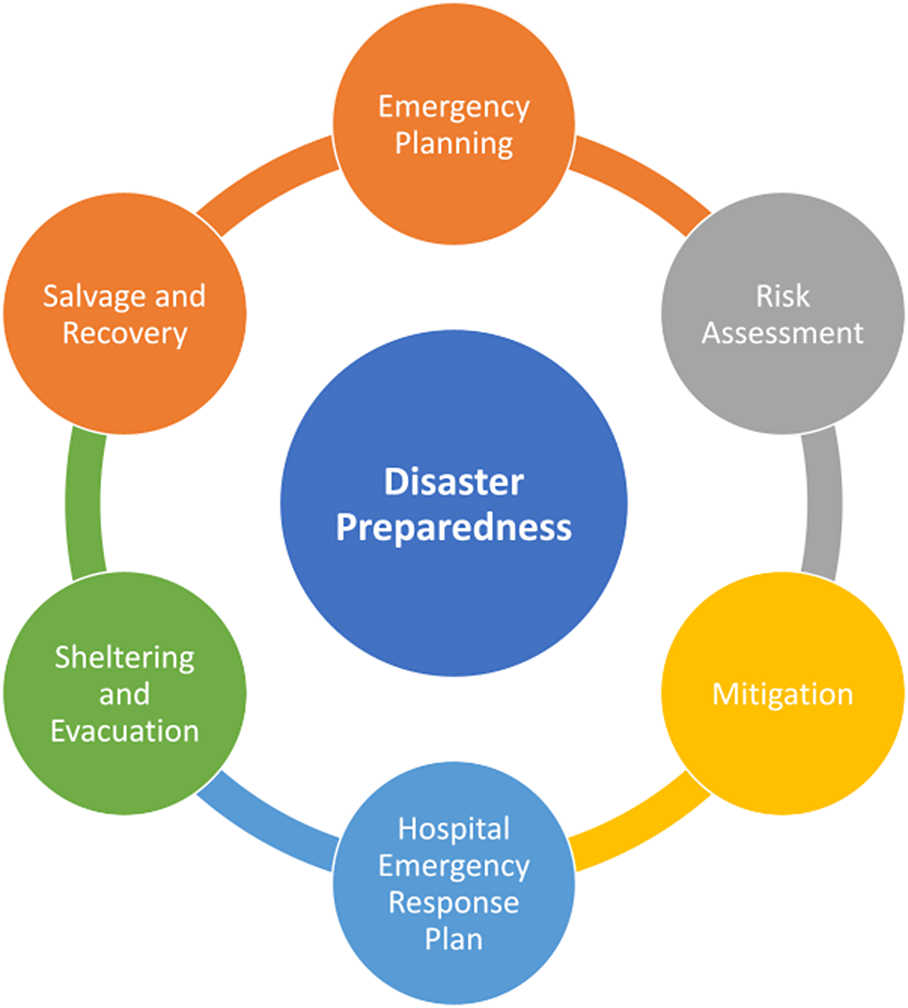
Disaster preparedness for health care facilities consists of 3 main stages: emergency planning, response, and salvage and recovery (Figure 1).Reference Puryear and Gnugnoli 22 Firstly, in the Emergency Planning stage, efforts focus on preventing and managing disasters domestically and internationally to minimize loss of life and financial impact. This includes planning for care, evacuation, and environmental response standards. The United Nations (UN)’s Sendai Framework, introduced in 2015, emphasizes the reduction of disaster risks and the strengthening of global resilience. 23 Risk assessment at the emergency planning stage identifies high-priority areas and vulnerabilities, guiding mitigation efforts. 24 The Hospital Safety Index, developed by WHO and PAHO (Pan-American Health Organization), is an important proactive tool that is widely used to assess the preparedness of health care facilities before disasters, anticipating and mitigating potential challenges. 24 Mitigation is an investment in facilities or regions aimed at minimizing the impact of disasters as identified through risk assessments.Reference Luna 25
Disaster preparedness for healthcare facilities.

Key aspects of preparedness involve forming a response team with clearly defined leaders, roles, and responsibilities, as well as creating a written Emergency Response Plan that outlines strategies, procedures, and leadership roles for effective implementation in the event of a disaster. This plan should address both facility-level and regional/national planning. 26 , 27 The plan should be disseminated and rehearsed among stakeholders. To avoid congestion and confusion during evacuation, predetermined routes for personnel and patients should be established, and potential relocation areas, such as army reserve buildings or neighboring hospitals, should be identified in advance. Medical personnel should be tasked with triaging and classifying patients before relocation upon notification of evacuation.Reference Aghababian, Lewis and Gans 21
According to the United Nations High Commissioner for Refugees (UNHCR), during the first weeks of Russia’s invasion in February 2022, more than 5 million Ukrainians fled the country. 28 As of May 2025, UNHCR has recorded a staggering 5.6 million refugees from Ukraine worldwide, along with an estimated 3.76 million internally displaced people within Ukraine, highlighting the dire impact of the conflict. 29 This massive outflow of people will inevitably lead to a significant shortage of medical personnel. Therefore, it becomes of vital importance to train inexperienced residents and medical students, as they will be the main driving force in providing primary care services and specialists in primary medical care, to be prepared to work with migrants who may not have accessible patient records.Reference Aghababian, Lewis and Gans 21
Moreover, based on lessons learned from the Ukrainian war, it can be assumed that PHC is of utmost importance during times of conflict. The PHC system in Ukraine has demonstrated remarkable resilience and adaptability in the face of dual challenges posed by the COVID-19 pandemic and the war. By developing resilient and adaptable PHC systems, countries can better respond to emergencies, effectively allocate resources, and provide essential health services. 30
In terms of coordinating relief efforts during times of war, the impacts can be classified into 3 primary categories: significant population displacements, disruption of health care systems, and economic deterioration. 31 Humanitarian organizations work diligently to address the urgent needs arising from these circumstances. The Red Cross, UN agencies, and non-governmental organizations, in collaboration with local teams, play a crucial yet often unrecognized role in delivering essential relief services, including both curative and preventive medical care, food aid, water supplies, and shelter. The Salvage and Recovery phase occurs after initial response, working to return the facility or area to normal function. This phase is essential for situations like ongoing wartime environments or prolonged epidemics that hinder recovery for extended periods.
Dependable Power Sources in Challenging Situations
In health care facilities, ensuring a stable electricity supply is crucial, particularly for the reliable functioning of laboratory devices. Additionally, drugstores requiring refrigeration to store medication should be maintained in low-temperature conditions, as well as critical medical equipment such as ventilators, ultrasound machines, and defibrillators. Additionally, access to the internet is crucial for health care professionals to access information, communicate effectively, and deliver telemedicine services. To address potential power instability, various techniques can be employed, including electric generators, multi-solar collectors and photovoltaic systems, batteries, steam systems, wind energy, biomass, and hydropower (Figure 2). Electric generators, commonly used in off-grid and health care facilities, have low upfront costs; however, they also have disadvantages, including increased fuel costs, unstable supply, noise, and emissions. Photovoltaic systems are eco-friendly, but their limitations include intermittent supply, complex installation, specialized expertise requirements, and high upfront costs. Photovoltaic systems harness solar energy, offering an environmentally friendly, standalone solution. However, limitations include an intermittent energy supply, the complexity of installation, the need for expertise in case of damage or broken parts, and high upfront costs that may overshadow its advantages. Batteries play a crucial role in electricity storage and typically require minimal maintenance.Reference Schmidt and Schmidt 2 , Reference Al-Rawi, Bicer and Al-Ghamdi 32
Dependable Power Sources in Challenging Situations.

The critical issue of power outages was vividly observed in Gaza and Ukraine, underlining the universal impact on health care systems. The Israeli siege of Gaza has caused a serious humanitarian situation, cutting off essential supplies like food, fuel, water, and medical resources. Surgeries in Gaza have had to be illuminated by flashlights, with limited or no anesthesia. More than a third of hospitals in the city became inoperable, and due to Israel’s constant bombing, health care professionals were no longer able to operate for a while. 33 Shortages of essential fuel, vital for patient survival, were faced. Tragically, premature babies have already died at Gaza’s Al-Shifa Hospital due to the neonatal intensive care unit losing power.Reference Tin, Barten and Granholm 3 4 – 36 During the Russian attacks, surgeons at the Heart Institute in Kiev, Ukraine, faced a similar situation when the lights suddenly went out during a delicate heart surgery. While generators were activated to ensure that life support equipment remained operational, nurses and surgical assistants illuminated the operating table with flashlights. 37 These harrowing scenarios exemplify the devastating impact of power outages on medical facilities and highlight the urgent need for constant and reliable power supplies to secure patient care in challenging conditions such as war.
In disaster response planning, effective communication is a recognized challenge for hospitals. To address potential failures, hospitals need redundancy in both internal and external communication systems. This involves using tools like 800-MHz radios, dedicated trunk lines, 2-way communication for units and essential personnel, mobile Communication-on-Wheels, and access to amateur radio operators (Figure 2). In extreme situations, resorting to runners for physical message delivery serves as a last resort.Reference Chaffee, Oster and Ciottone 38
Physical Protection of Health Care Facilities in Times of War
In times of war, additional security measures must be taken for every health facility. Physical protection may include explosion protection for windows, bomb shelters in the building, and sandbags to cover windows; the use of pressure-resistant doors and windows in hospital buildings, and the use of seismic isolators, and locating the hospital in neutral territory and away from military buildings.Reference Clements, Casani, Clements and Casani 39 Other key elements of a physical security plan include enabling rapid lockdown for perimeter security protection in case of emergencies; providing training and drills for hospital staff on lockdown procedures; ensuring that hospital leadership is familiar with the triggers for executing a lockdown; and having a plan for supplementing security staff in disaster scenarios (Figure 3).Reference Chaffee, Oster and Ciottone 38
Physical protection of healthcare facilities.

Providing shelter is a crucial factor in the initial stages of a disaster that is vital to ensure the survival, safety, and well-being of the affected population. Beyond immediate security concerns, housing also plays an important role in preserving individual dignity and facilitating the healing process. In cases where the displaced population cannot return to their original residences, temporary planned camps offer an alternative solution.Reference Pothiawala 40 During Israel’s siege of Gaza, amidst bomb attacks on neighborhoods and refugee camps in Gaza, many Palestinian families have sought unexpected shelter in the common areas of hospitals. Seeking safety, they set up temporary homes in hospital corridors, parking lots, and courtyards—areas usually reserved for medical care and protected under international humanitarian law. 41 The challenges faced by health care facilities emphasize the importance of investing in shelters that can withstand adversity. The resilience of hospitals during unforeseen events is paramount, and implementing these types of shelters is crucial for preserving medical services and protecting patients and health care professionals. In addition to physical protection measures, the development of underground hospitals has emerged as a crucial aspect of health care resilience in conflict zones. For example, in Haifa, Israel, the Rambam Health Care Campus has converted its underground parking garage into a fully functioning, fortified hospital, demonstrating the adaptability and innovation required to ensure continued access to health care in the face of threats. This 3-story facility, spanning over 20,000 square meters, can accommodate more than 2,000 patients, providing essential medical services without disruption. 42
Moreover, as observed in Ukraine and Gaza, a significant number of ambulances have been targeted during wars.Reference Jasani, Alfalasi and Cavaliere 8 , 14 In response, it is crucial to implement measures to enhance the resilience of ambulances and develop design and storage solutions to protect these critical health assets. Ambulances are tangible assets owned by the community and serve as critical infrastructure, providing value and support during times of crisis. By enhancing ambulance facilities, including personnel, equipment, and protocols, the resilience of emergency management can be significantly improved, ultimately saving lives and minimizing the impact of war-related emergencies.Reference Trucco, Petrenj, Kozine, Walls, Revie and Bedford 43
Preparedness for Chemical, Biological, Radiological, or Nuclear Emergencies
Throughout history, chemical, biological, radiological, or nuclear (CBRN) weapons have been employed, with recent examples including warfare. 44
White phosphorus, a chemical agent, is an extremely flammable substance that, when exposed to air, produces high-intensity flames reaching temperatures up to 1499°F. When it encounters civilians, it can cause deep burns that penetrate down to the bone. International law prohibits its use in populated areas. Reports from Ukraine allege that Russian forces have been employing phosphorus bombs in various regions of the country. 45 Human Rights Watch accused Israel of utilizing white phosphorus munitions in its ongoing military activities in Gaza. 46 Adequate hospital preparedness and resource availability are crucial for handling emergencies related to CBRN incidents, demanding specific skills and capabilities for an effective response.Reference Olivieri, Ingrassia and Della Corte 47 The assessment of hospitals’ readiness for CBRN emergencies can be conducted using tools like the ThreatIdentification and Emergency Response (TIER) assessment tool or the CBRN Emergency Plan Checklist, which evaluates hospital preparedness and response performance in such scenarios.Reference Olivieri, Ingrassia and Della Corte 47 , 48
Digital Health Technologies in Disaster Response
Digital health technologies (DHTs) play a crucial role in disaster response and are recognized for their potential in health care adaptation and mitigation. These technologies offer improved access to health care, reduced inefficiencies, cost reduction, and enhanced portability of patient information.Reference Lokmic-Tomkins, Bhandari and Bain 49 The National Health Service (NHS) App, an example of digital health technologies, has been used as an e-health service in the United Kingdom.Reference KC, Tewolde and Laverty 50 Connecting Ontario is used in Canada, allowing health care professionals to access personal health data. 51 In Australia, My Health Record is used as digital health technology. 52 An exemplary DHT in Türkiye, e-Nabiz, serves as a personal health record accessible through the internet and mobile devices.Reference Köksal and Akgül 53 Between 2017 and 2020, systemic changes and steps toward digitalizing health care services were implemented in Ukraine. As a result of these steps, e-health is used in Ukraine.Reference Malakhov 54 This system allows the data of patients examined in different health institutions to be transferred to a common database. To ensure the confidentiality of personal data and prevent potential data leakage, the e-health system has been developed with quality and security in mind, adhering to international standards and considering the advantages and disadvantages of other DHTs. During the COVID-19 pandemic, e-health technology enabled people to access health services without the risk of infection. In addition, a pilot project on teleconsultation was implemented in Ukraine to provide remote medical care to wounded soldiers and civilians in areas of active conflict. Within the scope of this project, doctors received video consultancy from an expert doctor. Teleconsultations and triage have been widely provided in primary care and by specialists since the onset of the pandemic. The well-established e-system of registration, e-referral, and e-prescription in the PHC has been instrumental in following the gate-keeping role of the family doctor. This system has proven immensely helpful, facilitating care for individuals who have migrated from different parts of the country, seeking refuge from the war.Reference Myronova 55 Implementing DHT programs can greatly benefit disaster-prone countries by ensuring uninterrupted access to health care information, improving preparedness and response, and ultimately enhancing health care outcomes for affected individuals and communities.Reference Köksal and Akgül 53 However, their effective use in conflict settings is often hindered by fundamental challenges such as a lack of internet connectivity, unstable electricity supply, and damaged digital infrastructure, which may limit their operational reach and sustainability.
Water Supply Plan
Ensuring access to safe water sources is crucial, as recent wars have demonstrated targeting and destruction of water supplies, regarded as a violation of international humanitarian law. In the case of the Russia-Ukraine conflict, experts believe the water supply has been cut off, and Russia has continued to target power and water infrastructure, causing shortages. 56 The Kakhovka dam, situated in southern Ukraine, has suffered significant destruction, resulting in a massive release of water and causing concerns over extensive flooding downstream along the Dnipro river. 57 Similarly, in the Israeli siege of Gaza, a complete siege was ordered, leading to restricted access to resources. 58 These actions highlight the significance of safeguarding essential resources for civilian populations during conflicts. Health care facilities must create an Emergency Water Supply Plan to effectively handle and recover from complete or partial disruptions in their regular water supply, as water supply failures can significantly impact patient safety, quality of care, and facility operations. Facilities should identify alternative on-site water sources (e.g., wells, storage tanks), define critical water needs (such as for dialysis or sterilization), and establish agreements with external suppliers for emergency delivery, as recommended by the Centers for Disease Control and Prevention. 59
Adequate Food and Material Stockpiles
The 1948 Universal Declaration of Human Rights highlights the fundamental principle that every individual has the right to a sufficient standard of living that ensures their health and well-being, as well as that of their family. This encompasses access to essential provisions such as food, clothing, housing, medical care, and necessary social services. Upholding these fundamental rights is paramount to promoting a just and equitable society, where individuals are protected and supported in their pursuit of a dignified and secure life. 60 Despite this declaration, adequate food and material stockpiles are critical in the context of wars and disasters, as evidenced by recent conflicts in Gaza and Ukraine, which experienced challenges regarding food and health materials. In response, hospitals need to be prepared. Achieving food security during disaster response requires proactive measures in preparedness. This encompasses risk assessment, contingency planning, stockpiling necessary equipment, food, and supplies, establishment of emergency services and standby arrangements, effective communication and information management, and coordination among various involved agencies. FEMA (Food Safety: A Recipe for National Preparedness) offers general guidelines on preparedness, including stockpiling nonperishable food, water, and power. It is vital to store emergency supplies, practice proper hygiene, ensure sanitation, and follow appropriate food handling and preparation techniques to ensure the availability of safe food and water in challenging circumstances. 41 , 61
Discussion
Attacks on, destruction of, or looting medical facilities, as well as utilizing them for military purposes, obstructing access to medical care, targeting ambulances, and acts of threats, intimidation, and violence against health workers in their pursuit of fulfilling their ethical responsibilities to patients. All of these actions violate the Geneva Conventions, prevailing customary international law, and multiple provisions within international human rights treaties, including the International Covenant on Civil and Political Rights and the International Covenant on Economic, Social and Cultural Rights. 62 – 67 To address health care insecurity in areas of conflict, key steps must be taken. Firstly, the health care community needs to acknowledge and openly discuss the issue while providing better training for workers in conflict zones. Additionally, adherence to international humanitarian and human rights laws is crucial, with armed forces and police requiring improved training in these areas.Reference Coupland 68
According to a systematic review of human rights reports spanning from 1989 to 2008, a multitude of conflicts, encompassing regions such as Kosovo, Nepal, Israel, Palestine, Iraq, and Colombia, have witnessed documented violations against medical functions. It became evident that attacks on medical functions are used to target civilians, demoralize the populace, gain a military advantage, and disregard the ethical duty of health professionals. It seems like the same devastating pattern has persisted over the past 2 decades. To address this issue, the WHO should take the lead in comprehensively documenting these violations, while countries and the medical community must enhance compliance, protection, and accountability. Promoting adherence to international law and demanding compliance are essential in ensuring the well-being of health care workers and the protection of medical functions during times of conflict. Physical protection of health care facilities is paramount in times of war. To improve health care resilience in times of war, several strategies can be implemented. Firstly, comprehensive disaster preparedness plans for hospitals are necessary, encompassing pre-disaster planning, training, early warning systems, and stockpiling emergency aid materials. These plans should address both external and internal disasters, including measures for evacuations, communication systems, and coordination with humanitarian organizations.
Limitation
The article’s limitations stem from the rapidly evolving situation, which results in daily changes in casualty statistics, making it difficult to determine the exact number of deaths and attacks. Furthermore, the unavailability of accurate data poses challenges in understanding the true extent of the situation in Ukraine and Palestine.
Conclusion
Despite the prohibition of attacks on medical functions, armed conflicts continue to demonstrate assaults on patients, medical personnel, facilities, and transports, resulting in loss of access to medical services, deterioration of population health, spread of communicable disease, and misuse of medical facilities and emblems. The absence of effective strategies, compliance mechanisms, and accountability measures, as well as limited reporting of violations, exacerbates this problem. To address the lack of enforcement, international monitoring and documentation efforts must be strengthened, and compliance should be tied to diplomatic pressure, sanctions, or conditional aid. Enhancing transparency through independent reporting can also increase global accountability. The situation in both regions highlights the urgent need for immediate attention and international support to protect health care infrastructure, ensure access to medical care and essential resources, and hold those responsible for attacks on health care accountable. By learning from the experiences in Palestine and Ukraine, strategies can be developed and implemented to enhance health care resilience and mitigate the devastating impact of armed conflicts on health care systems and the well-being of affected populations.
Acknowledgments
We would like to express our sincere gratitude to Duygu Ayhan Başer, Assoc. Prof. Dr., a family medicine specialist, and Orhan Dogan, Prof. Dr., civil engineer, for their invaluable supports and valuable feedback on our scientific article.
Competing Interests
The authors have no competing interests to declare that are relevant to the content of this article.
Funding Statement
The authors did not receive support from any organization for the submitted work.