Introduction
Organizational learning has occupied considerable attention from academicians in the last decade due to its vigorous effects on organizational outcomes, such as performance (Chien & Tsai, Reference Chien and Tsai2012), organizational change (Lee & Klassen, Reference Lee and Klassen2016), creativity (Lozano, Reference Lozano2014), innovation (Chiva, Ghauri, & Alegre, Reference Chiva, Ghauri and Alegre2014), agility (Bahrami, Kiani, Montazeralfaraj, Zadeh, & Zadeh, Reference Bahrami, Kiani, Montazeralfaraj, Zadeh and Zadeh2016), effectiveness (Albrecht, Bakker, Gruman, Macey, & Saks, Reference Albrecht, Bakker, Gruman, Macey and Saks2015), commitment (Islam, Ahmed, & Ahmad, Reference Islam, Ahmed and Ahmad2015), product development (Adams, Day, & Dougherty, Reference Adams, Day and Dougherty1998), and sustainability (Lozano, Reference Lozano2014). Similarly, the contemporary literature is overshadowed with the organizational level predictors of organizational learning, such as knowledge processes (Imran, Ilyas, & Fatima, Reference Imran, Ilyas and Fatima2017), social capital (Golmoradi & Ardabili, Reference Golmoradi and Ardabili2016), leadership styles (Gong, Huang, & Farh, Reference Gong, Huang and Farh2009), information technology (Brandi & Iannone, Reference Brandi and Iannone2015), culture (Islam, Ahmed, & Ahmad, Reference Islam, Ahmed and Ahmad2015), intelligence (Bahrami et al., Reference Bahrami, Kiani, Montazeralfaraj, Zadeh and Zadeh2016), training (Aragón, Jiménez, & Valle, Reference Aragón, Jiménez and Valle2014), and social media (Dabbagh & Kitsantas, Reference Dabbagh and Kitsantas2012). Particularly, in the extant literature, majority of the researchers seem to be interested in finding out the positive antecedents of organizational learning (Imran, Ilyas, & Fatima, Reference Imran, Ilyas and Fatima2017; Qi & Chau, Reference Qi and Chau2017). However, the negative precursors have been largely neglected (Kalkstein, Kleiman, Wakslak, Liberman, & Trope, Reference Kalkstein, Kleiman, Wakslak, Liberman and Trope2016). Hence, the existing literature in the field is mainly focused upon organization-wide antecedents of learning (Golmoradi & Ardabili, Reference Golmoradi and Ardabili2016; Lozano, Reference Lozano2014), where the individual level factors are entailed to be investigated for the betterment of organizations (Gong, Huang, & Farh, Reference Gong, Huang and Farh2009).
The tenants of social exchange theory (Emerson, Reference Emerson1976) proposed that employees reciprocate the pleasant behaviors by positive outcomes, and vice versa. Learning is based on social interactions that can be affected by interpersonal relationships and mistreatments in the workplace. The notion underlying this supposition is that mistreatments in the workplace play a key role in producing negative behaviors, that can affect the employee- and organization-related outcomes, based on negative social exchanges (Chung, Reference Chung2018; Erkutlu & Chafra, Reference Erkutlu and Chafra2016; Gkorezis & Bellou, Reference Gkorezis and Bellou2016; Williams & Nida, Reference Williams and Nida2011). In this respect, workplace ostracism has been a widely discussed phenomenon, both in theory and practice, which has detrimental effects on various physical-, mental-, and organizational-related outcomes (Guiping, Reference Guiping2016; Jahanzeb & Fatima, Reference Jahanzeb and Fatima2017; Williams, Reference Williams2012). Workplace ostracism means being socially excluded, neglected, ignored, and isolated by individual, group, and community at organizational settings (Robinson, O'Reilly, & Wang, Reference Robinson, O'Reilly and Wang2013). There are numerous harmful effects of workplace ostracism on individual, group, and organizational level outcomes, including interpersonal deviance (Jahanzeb & Fatima, Reference Jahanzeb and Fatima2017), intension to quit (Lustgraaf, Reference Lustgraaf2015), employee silence (Fatima, Ilyas, Rehman, & Imran, Reference Fatima, Ilyas, Rehman and Imran2017), emotional exhaustion (Jahanzeb & Fatima, Reference Jahanzeb and Fatima2017), aggression (Masters, Reference Masters1986), anti-social behavior (Legate, DeHaan, Weinstein, & Ryan, Reference Legate, DeHaan, Weinstein and Ryan2013), disinclination to voice opinions (Masters, Reference Masters1986), low self-esteem (Ferris, Lian, Brown, & Morrison, Reference Ferris, Lian, Brown and Morrison2015), and low performance (Warburton, Williams, & Cairns, Reference Warburton, Williams and Cairns2006). Zhao, Xia, He, Sheard, and Wan (Reference Zhao, Xia, He, Sheard and Wan2016) have brought attention to the role of workplace ostracism in knowledge hiding. Gkorezis and Bellou (Reference Gkorezis and Bellou2016) examined the relationship between ostracism and information exchange with the help of self-serving behavior. Knowledge sharing and information exchange form the foundation of organizational learning (Yang, Reference Yang2007), but ostracism can potentially become an impediment to it. Nevertheless, the existing empirical research lacks in investigating about the link between workplace ostracism and organizational learning, regardless of the fact that organizational learning plays an important role in attaining organizational success. Hence, the current study is an endeavor to investigate one of the negative antecedents of organizational learning, ostracism, which prevails in the workplace, but failed to attain the due attention of researchers.
Kim (Reference Kim2004) argued that individual level factors may possibly influence upon group and organizational level factors. Our claim is that when social relationships are based on ostracism in the workplace, they disrupt social ties, trustworthiness, and reciprocity arising from interpersonal associations (Putnam, Reference Putnam2001). This, in turn, has an ultimate impact on intra-organizational learning (Carmeli, Brueller, & Dutton, Reference Carmeli, Brueller and Dutton2009).
This study aims to clarify the ostracism and learning relationship by characterizing employee silence as an important mediator. It has also been indicated by scholars that relationships at workplace have an impact on speaking-up behaviors (Okuyama et al., Reference Okuyama, Wagner and Bijnen2014). Employee silence, at the workplace, as a result of social exclusion, is usually the first factor that is acknowledged by the academicians and researchers (Fatima et al., Reference Fatima, Ilyas, Rehman and Imran2017; Jahanzeb & Fatima, Reference Jahanzeb and Fatima2017; Robinson, O'Reilly, & Wang, Reference Robinson, O'Reilly and Wang2013; Steinbauer, Renn, Chen, & Rhew, Reference Steinbauer, Renn, Chen and Rhew2018). Drawing on the ‘spiral of silence theory’ (Noelle-Neumann, Reference Noelle-Neumann1974), researchers proposed that ostracized people are largely engaged in silence due to the fear of experiencing further isolation, which in turn restraint them to share information and knowledge with others. On the other hand, practice of ostracism in an organization creates a perception of negative exchanges among employees, and so they reciprocate by withholding important knowledge and information from each other, which reduces their motives for learning at the workplace.
With increasing incidents of workplace ostracism coupled with its negative outcomes, the management literature has raised an important question: ‘how to minimize the possible detrimental effects of workplace ostracism’ (Robinson, O'Reilly, & Wang, Reference Robinson, O'Reilly and Wang2013: 204). To address this question, the existing literature suggests some indicators that can buffer the harmful effects of ostracism on organizational outcomes, such as perceived justice (Lustgraaf, Reference Lustgraaf2015), psychological distance (Erkutlu & Chafra, Reference Erkutlu and Chafra2016), need threat (Jamieson, Harkins, & Williams, Reference Jamieson, Harkins and Williams2010), control deprivation (Warburton, Williams, & Cairns, Reference Warburton, Williams and Cairns2006), and ethical leadership (Yang & Wei, Reference Yang and Wei2017). Similarly, ‘emotional regulation theory’ (Grandey, Reference Grandey2000) suggested that injurious effects of social emotions and unpleasant events can be controlled through suppression, which needs careful inhibition of an explicit thought. Emotional suppression refers to state where one can control emotions to build a positive public image (Spokas, Luterek, & Heimberg, Reference Spokas, Luterek and Heimberg2009). Despite its usefulness for ostracized employees to effectively manage their emotions and form more tolerable and socially acceptable reactions in the workplace, the current literature is very limited regarding the role of emotional suppression on ostracism and organizational learning outcomes. To fill the underlying gap, this study proposes emotional suppression as a moderator between workplace ostracism and organizational learning. Hence, the essence of the study lies within a question that whether the ostracized employees, having high emotional suppression capabilities, manage to contribute toward organizational learning?
At first, the study focuses on developing the relationship between workplace ostracism and organizational learning. It is this particular focus which provides the direction for examining the mediating effect of employee silence on workplace ostracism and organizational learning. There are a number of reasons which justify this particular focus of the study. First, the earlier research has scarcely focused upon the linkage between workplace ostracism, employee silence, and organizational learning. Second, the previous literature suggests the link between workplace ostracism and employee silence (Fatima et al., Reference Fatima, Ilyas, Rehman and Imran2017; Jahanzeb & Fatima, Reference Jahanzeb and Fatima2017). Similarly, the effect of employee silence on organizational learning has been established in the previous research (Knoll & van Dick, Reference Knoll and van Dick2013; Morrison, Reference Morrison2014). Therefore, examining the mediating effect of employee silence on both workplace ostracism and organizational learning makes it an interesting case to study. Last but not least, this study recognizes emotional suppression, as a potential buffering mechanism, practiced by the employees, to reduce the negative outcomes of workplace ostracism.
Theoretical Base and Hypotheses Development
In general, ostracism is defined as ‘ignoring and excluding an individual or group by another individual or group’ (Williams, Reference Williams2007a: 4). Workplace ostracism refers to the acts of ignoring and omission of socially expected attitudes by an individual or group targeted toward another individual or groups in organizational settings (Robinson, O'Reilly, & Wang, Reference Robinson, O'Reilly and Wang2013). Existing studies have termed ostracism as social exclusion (Legate et al., Reference Legate, DeHaan, Weinstein and Ryan2013), isolation (Masters, Reference Masters1986), rejection (Warburton, Williams, & Cairns, Reference Warburton, Williams and Cairns2006), social death (Williams, Reference Williams2007b), and abandonment (Alexander, Reference Alexander1986). Those, who experience ostracism at the workplace, view it negatively, which results in several anti-social behaviors, such as anger (Chow, Tiedens, & Govan, Reference Chow, Tiedens and Govan2008), silence (Fatima et al., Reference Fatima, Ilyas, Rehman and Imran2017), deviance (Jahanzeb & Fatima, Reference Jahanzeb and Fatima2017), exit (Masters, Reference Masters1986), aggression (Poon, Teng, Wong, & Chen, Reference Poon, Teng, Wong and Chen2016), and burnout (Qian, Yang, Wang, Huang, & Song, Reference Qian, Yang, Wang, Huang and Song2017). It has been noted that ostracized employees remain full of depression, anxiety, and distress (Legate et al., Reference Legate, DeHaan, Weinstein and Ryan2013). Many researchers have empirically investigated the anti-social outcomes of ostracism (Al-Atwi, Reference Al-Atwi2017; Chung & Yang, Reference Chung and Yang2017; Guiping, Reference Guiping2016). Hence, workplace ostracism reduces favorable outcomes in organizations, such as high performance (Lustenberger & Jagacinski, Reference Lustenberger and Jagacinski2010; Wu et al., Reference Wu, Qu, Zhang, Hao, Tang, Zhao and Si2018), information exchange (Gkorezis & Bellou, Reference Gkorezis and Bellou2016; Poon et al., Reference Poon, Teng, Wong and Chen2016), and motivation (Zhao et al., Reference Zhao, Xia, He, Sheard and Wan2016). Recently, the relationship of workplace ostracism has been examined with knowledge hiding Zhao et al. (Reference Zhao, Xia, He, Sheard and Wan2016) and low information exchange (Gkorezis and Bellou, Reference Gkorezis and Bellou2016). These studies suggested that workplace ostracism is an interpersonal phenomenon, so instead of focusing upon the attitudinal and behavioral outcomes, the researchers should focus upon interpersonal-, social-, and group-based impacts of ostracism. McCarthy, Trougakos, and Cheng (Reference McCarthy, Trougakos and Cheng2016) further explained the importance of social relations and argued that healthy interpersonal relationships are necessary to generate favorable organizational outcomes. One such outcome is organizational learning. Crossan, Lane, and White (Reference Crossan, Lane and White1999) defined the concept of learning as ‘the process of change in individual and shared thought and action, which is affected by and embedded in the institutions of the organization’ (p. 524). Furthermore, organizational learning is the process of creation, retention, sharing, and transfer of knowledge (Levitt & March, Reference Levitt and March1988). An ample amount of research is available that developed the positive link between good interpersonal relationships and learning capability of the firms (Brandi & Elkjaer, Reference Brandi and Elkjaer2011; Dabbagh & Kitsantas, Reference Dabbagh and Kitsantas2012; Kalkstein et al., Reference Kalkstein, Kleiman, Wakslak, Liberman and Trope2016). Learning occurs in environments which promote inclusion, communication, and collaboration (Sveiby & Simons, Reference Sveiby and Simons2002). The pervasiveness of ostracism damages interpersonal relationship at the workplace and reduces the levels of communication, interaction, and collective working (Balliet & Ferris, Reference Balliet and Ferris2013), and so potentially impact the organizational learning capability adversely. Social constructionist notion states that learning takes place in a social context where employees collectively create, share, and utilize knowledge by conversations and interactions (Brown & Duguid, Reference Brown and Duguid2001). This is because when people feel isolated or excluded, they are likely to withhold information (Fatima et al., Reference Fatima, Ilyas, Rehman and Imran2017; Gkorezis & Bellou, Reference Gkorezis and Bellou2016) and avoid knowledge sharing, which are detrimental for organizational learning (Yang, Reference Yang2007). Other subtle mistreatments, such as workplace incivility, have also been linked to low knowledge sharing intentions (Moosakhani, Hajizadeh, Eyni, & Sarfarazi, Reference Moosakhani, Hajizadeh, Eyni and Sarfarazi2012). Similarly, overt behaviors such as workplace bullying result into poor knowledge sharing (Holten, Robert Hancock, Persson, Marie Hansen, & Høgh, Reference Holten, Robert Hancock, Persson, Marie Hansen and Høgh2016) and hampers learning (Yang, Reference Yang2007). Therefore, workplace ostracism is not only detrimental for individuals, but also it reduces the overall motivation of ostracized employees to contribute toward organizational effectiveness because of the lower sense of organizational identification (Wu, Liu, Kwan, & Lee, Reference Wu, Liu, Kwan and Lee2016). For example, employees that do not identify with organizations have lower level of learning orientation (Chughtai & Buckley, Reference Chughtai and Buckley2010). In view of the above discussion based on the contemporary literature, workplace ostracism seems to be associated with organizational learning. Thus, the first hypothesis of the current study is postulated as:
Hypothesis 1
Workplace ostracism is negatively associated with organizational learning.
Given the importance of ostracism in the workplace, researchers were interested in developing the intervening relationships to investigate the transmitting effects of workplace ostracism and organizational outcomes, such as self-esteem, meaningful existence, work engagement, and organizational identification (Fatima et al., Reference Fatima, Ilyas, Rehman and Imran2017; Leung, Wu, Chen, & Young, Reference Leung, Wu, Chen and Young2011; Wu et al., Reference Wu, Liu, Kwan and Lee2016). Apart from these emotional and behavioral variables, employee silence has captured research attention, as an outcome of workplace ostracism, in the contemporary literature (Ciarocco, Sommer, & Baumeister, Reference Ciarocco, Sommer and Baumeister2001; Fatima et al., Reference Fatima, Ilyas, Rehman and Imran2017; Jahanzeb & Fatima, Reference Jahanzeb and Fatima2017; Williams, Reference Williams2001), and so it can be considered as one of the predictors of organizational learning (Fatima et al., Reference Fatima, Ilyas, Rehman and Imran2017). According to Williams (Reference Williams2001), ostracized individuals in organizational settings are most likely to withhold information. Moreover, the indication of the presence of ostracism at the workplace has been linked to employee silence (Fatima et al., Reference Fatima, Ilyas, Rehman and Imran2017; Jahanzeb and Fatima, Reference Jahanzeb and Fatima2017; Wu, Yim, Kwan, and Zhang, Reference Wu, Yim, Kwan and Zhang2012). Similarly, other constructs, such as workplace bullying, have been linked to employee silence (Rai & Agarwal, Reference Rai and Agarwal2018). Knoll and van Dick (Reference Knoll and van Dick2013) explained employee silence as a multi-dimensional construct with four distinct dimensions, acquiescent, quiescent, pro-social, and opportunistic silence. However, the purview of this paper is limited to the notion of employee silence as a single construct, which is defined as the ‘absence of behavior and condition where employees withhold information with them’ (p. 12).
Previously, the link of employee silence has been tested with organizational outcomes, such as success (Beheshtifar, Borhani, & Moghadam, Reference Beheshtifar, Borhani and Moghadam2012), organizational citizenship behavior (Çınar, Karcıoğlu, & Alioğulları, Reference Çınar, Karcıoğlu and Alioğulları2013), innovation (Gambarotto & Cammozzo, Reference Gambarotto and Cammozzo2010), organizational change (Morrison and Milliken, Reference Morrison and Milliken2000), and performance (Whiteside and Barclay, Reference Whiteside and Barclay2013). Nevertheless, only a few researchers have identified its link to organizational learning (Blackman & Sadler-Smith, Reference Blackman and Sadler-Smith2009). For example, it is argued that in addition to individual cognitive factors that contribute toward learning, organizations need active participation and interaction (Jacobs & Coghlan, Reference Jacobs and Coghlan2005), which indicates that employee silence has a negative effect on organizational learning motives. Similarly, Yeloglu, Fidanboy, Serpoush, and Öztürk (Reference Yeloglu, Fidanboy, Serpoush and Öztürk2016) found out that silent employees withhold their information, suggestions, and experiences which cause a negative impact on organizational learning. However, despite being an important construct, employee silence in the workplace and its link with organizational learning have empirically remained under-researched areas.
Therefore, considering the above argument, we take employee silence as a mediator and propose that workplace ostracism creates employee silence which in turn reduces the overall level of learning in an organization. There are other realizations, for proposing employees silence as a mediator, as well. First, the relationships between ostracism and silence, and silence and organizational outcomes have previously been validated in the studies (Beheshtifar, Borhani, and Moghadam, Reference Beheshtifar, Borhani and Moghadam2012; Fatima et al., Reference Fatima, Ilyas, Rehman and Imran2017). Second, it is a general perception that ostracized employees usually withhold organizational information, and ultimately this behavior can affect the overall learning chain of an organization (Yeloglu et al., Reference Yeloglu, Fidanboy, Serpoush and Öztürk2016). According to social exchange theory, employees exchange resources with those who treat them well and offer them resources (Emerson, Reference Emerson1976). However, being ostracized, employees are deprived of resources such as information, support, and needed possessions for their work. Thus, they reciprocate by withholding useful information in the form of silence, and by reducing their contribution to organizational learning. Last but not least, according to the spiral of silence theory (Noelle-Neumann, Reference Noelle-Neumann1974), employee silence is appeared to be an outcome of social exclusion which consequently reduces the overall learning capability of an organization. Thus, in view of the above argument, the second hypothesis is formed as:
Hypothesis 2
Employee silence mediates the relationship between workplace ostracism and organizational learning.
Here it is important to understand that even though employee silence may mediate the relationship between workplace ostracism and organizational learning, this relationship may not be positive. For example, as previously suggested, an ostracized employee, who remains silent, may be detrimental for organizational learning.
In this regard, multiple attempts have been initiated by researchers to buffer the detrimental effect of ostracism in the workplace, and so they have suggested various individual and organizational level concepts that have been applied to reduce the damaging effect of ostracism, namely, self-esteem (Ferris et al., Reference Ferris, Lian, Brown and Morrison2015), need threat (Jamieson, Harkins, & Williams, Reference Jamieson, Harkins and Williams2010), perceived justice (Lustgraaf, Reference Lustgraaf2015), self-determination (Qian et al., Reference Qian, Yang, Wang, Huang and Song2017), political skills (Wu et al., Reference Wu, Yim, Kwan and Zhang2012), and proactive personality (Zhao, Peng, & Sheard, Reference Zhao, Peng and Sheard2013). However, for the matter of this paper, we have moved beyond these boundary conditions, and introduced the role of emotional suppression as a moderator of the relationship between workplace ostracism and organizational learning. Chiang (Reference Chiang2012) defined the term emotional suppression as ‘an effort to protect the self’ (p. 9). Employees use the suppression strategy to protect themselves from the anti-socials acts of their co-workers (Gross & Levenson, Reference Gross and Levenson1993; Rogier, Garofalo, & Velotti, Reference Rogier, Garofalo and Velotti2017). In line with the ironic process theory (Wegner, Reference Wegner1994), it can be hypothesized that individuals facing ostracism withhold their negative emotions using the suppression strategy and protect themselves from the detrimental effects generated by ostracism. It is conceived from the available literature that emotional suppression is vital to reduce the negativity in the workplace (Bae, Lee, & Oh, Reference Bae, Lee and Oh2011; Liverant, Brown, Barlow, & Roemer, Reference Liverant, Brown, Barlow and Roemer2008; Yamasaki, Sasaki, Uchida, & Katsuma, Reference Yamasaki, Sasaki, Uchida and Katsuma2011).
At the workplace, self-control traits are required to enhance the positive outcomes even under stressful conditions (Spokas, Luterek, & Heimberg, Reference Spokas, Luterek and Heimberg2009; Su et al., Reference Su, Lee, Park, Soto, Chang, Zamboanga and Hurley2015). In their recent study, Mohiyeddini, Opacka-Juffry, and Gross (Reference Mohiyeddini, Opacka-Juffry and Gross2014) have evinced emotional suppression as a moderator between stress and concentrations. Emotional suppression is a self-regulation strategy that helps to make the uncomfortable situations manageable (Grandey, Reference Grandey2000). The ability to effectively regulate ones’ emotions helps in shaping the responses to interpersonal mistreatments such as bullying (Topçu, Reference Topçu2014). This conception is based on the theory of self-regulation in which employees manage their emotions in response to unfavorable circumstances to shape their behavior that is acceptable and socially tolerable (Grandey, Reference Grandey2000; Vohs & Baumeister, Reference Vohs and Baumeister2016). Thus, we argue that ostracized employees who possess proficient ability to regulate their emotions may not engage in silence. Instead, they may possibly be able to manage, their negative thoughts resulting from ostracism, well. This may not only lead them to share the valuable organizational information with each other, but also to contribute toward overall organizational learning. Moreover, even when such employees become silent as a result of ostracism, they are still able to engage themselves into the organizational learning pursuits with regard to knowledge creation and usage. This argument may be supported with the evidence from the contemporary literature according to which ostracism, silence, and emotions have been interlinked and affect the individual and organizational level outcomes (Ciarocco, Sommer, & Baumeister, Reference Ciarocco, Sommer and Baumeister2001; Sommer, Williams, Ciarocco, & Baumeister, Reference Sommer, Williams, Ciarocco and Baumeister2001; Warburton, Williams, & Cairns, Reference Warburton, Williams and Cairns2006). Further, ‘social learning theory’ (Bandura, Reference Bandura1977) proposed that undesirable behaviors, which are experienced by the employees at the workplace, affect their learning paradigms. Such behaviors may also affect their ability to deal with their social connections. Hence, with regard to ‘ironic process theory’ (Wegner, Reference Wegner1994), ostracized employees use emotional suppression to respond to their social connections in the normal pattern.
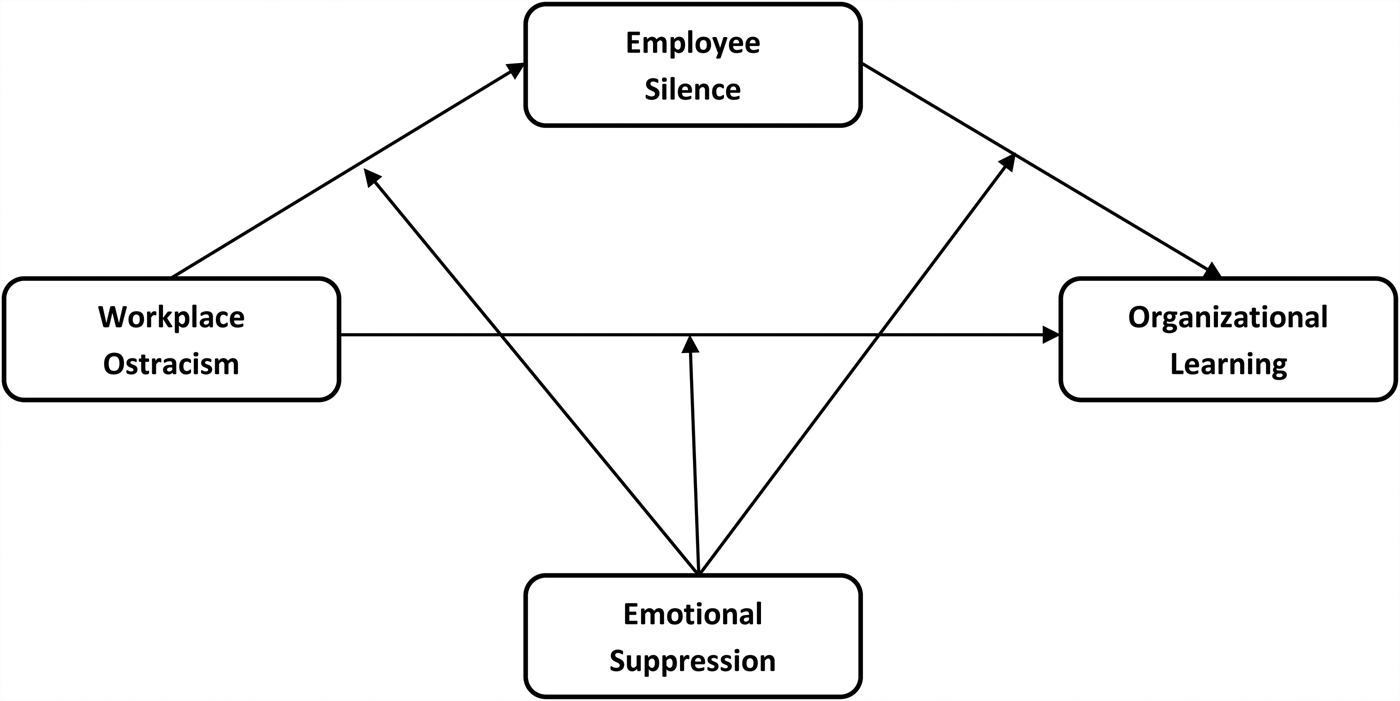
In view of the underlying discussion, we propose emotional suppression as a moderator between the following relationships:
• Ostracism and silence
• Silence and learning
• Ostracism and learning
Other reason to suggest emotional suppression as a moderator between these relationships is the simple notion that ostracized employees who hold greater emotional suppression competencies may have low tendency to engage themselves in the silence. Therefore, they may be able to contribute toward organizational learning.
These arguments led us to the development of our third, fourth, and fifth hypotheses:
Hypothesis 3
Emotional suppression moderates the relationship between workplace ostracism and employee silence.
Hypothesis 4
Emotional suppression moderates the relationship between employee silence and organizational learning.
Hypothesis 5
Emotional suppression moderates the relationship between workplace ostracism and organizational learning.
Research framework
Figure 1 depicts the framework of the current study based on the aforementioned literature.
Regression coefficients.

Methodology
Research context, population, and sample
The study lies within the boundaries of positivism, with the application of deductive reasoning, which seems to be an appropriate design for such studies (Creswell, Reference Creswell2013). The context of the study is the financial industry of Bahawalpur Division, Punjab, Pakistan. Among the service sectors of Pakistan, the financial industry, comprising banks, insurance, brokerage, and leasing, has been rapidly growing, gaining huge share and penetrating niche markets (Ahmed & Ahsan, Reference Ahmed and Ahsan2011). Knowledge sharing and organizational learning are crucial phenomena for the employees working at banks (Froehlich, Segers, & Van den Bossche, Reference Froehlich, Segers and Van den Bossche2014). Moreover, it is important to mention that Pakistan is a collectivist nation where ostracism may have more detrimental consequences; for example, instead of displaying aggression or verbal responses, employees in such cultures usually respond by silence (Wu et al., Reference Wu, Liu, Kwan and Lee2016).
The financial industry operating at Bahawalpur Division, Punjab, Pakistan is composed of three districts: Bahawalpur, Rahim Yar Khan, and Bahawalnagar. Hence, our target population was obtained from these three districts. The target population included the employees, at the financial industry, pursuing the officer and above officer ranks (or cadres). Accordingly, this target population resulted into creating the unit of analysis for this study. The reason behind selecting this sampling unit is that such employees are not only considered to possess adequate information, but also they are possibly involved in the decision making at the work settings. Hence, the Human Resource Departments of various organizations within the financial industry were contacted to obtain the number and information about the employees who fulfilled our sampling needs. In total, a list of 25,000 employees was obtained that fulfilled the sampling criteria. With a unknown population frame and sensitivity of the underlying information, it was suitable to use convenience sampling techniques to select the respondents (Farrokhi & Mahmoudi-Hamidabad, Reference Farrokhi and Mahmoudi-Hamidabad2012). We have used two-waved temporal research design to collect data from the respondents (e.g., officer and above officer cadre of employees), with a time lag of 8 weeks to avoid common-method-variance bias (Podsakoff, MacKenzie, Lee, & Podsakoff, Reference Podsakoff, MacKenzie, Lee and Podsakoff2003). The appropriateness of the time lag is necessary to cater the unbiased data as in case of the time lag being too short, ‘it may impact the response at next stage,’ and in case it is too long, ‘there is always a danger that a causal effect will dissipate over time if researcher waits too long to measure it’ (Chaffee, Reference Chaffee1972). Therefore, a selection of 8 weeks' time lag was made for the purpose of this research (Zhao, Peng, & Sheard, Reference Zhao, Peng and Sheard2013; Zhao et al., Reference Zhao, Xia, He, Sheard and Wan2016).
At spell one, self-reported questionnaires were distributed among 380 respondents who were found through the application of the sample size formula proposed by Krejcie and Morgan (Reference Krejcie and Morgan1970). The formula is also suitable as per criterion, rendered by Kline (Reference Kline2006), 5:1 (five respondents for each item of the questionnaire), which has been used in the previous studies as well (Fatima et al., Reference Fatima, Ilyas, Rehman and Imran2017; Gkorezis and Bellou, Reference Gkorezis and Bellou2016; Jones, Carter-Sowell, Kelly, and Williams, Reference Jones, Carter-Sowell, Kelly and Williams2009; Zhao et al., Reference Zhao, Xia, He, Sheard and Wan2016). The respondents were requested to provide responses regarding workplace ostracism, employee silence, emotional suppression, and their demographics. After continuous follow-ups, we were able to receive only 224 responses (58.95% response rate), out of which 11 responses contained more than 15% missing values. These responses were excluded as per criterion set by Hair (Reference Hair2010). Thus, 213 responses were received at spell one, and the same respondents were requested again to provide their valuable estimation about organizational learning at spell two of the data collection (after 8 weeks). At spell two, out of 213 respondents, 166 responses were received. However, as four responses were filled with missing values, they were excluded from the analysis. Finally, 162 valid responses (42.68% response rate) were used for the analysis. The respondents had the mean age of 31 years (SD = 7.49), and majority of them were male (61%). On average, the respondents had 7.61 years of experience (SD = 6.19) in the financial industry, and their minimum academic qualification was a Bachelor's degree.
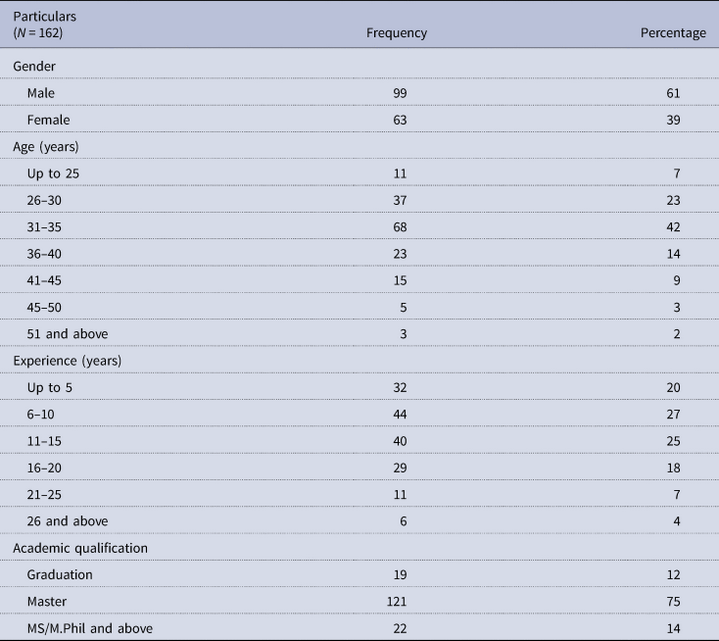
Moreover, these participants of the survey were serving at the functional positions in their respective organizations (e.g., relationship manager, credit analyst, operations manager, head commercial & SME, regional managers, area manager, sales manager, sales representatives, business development manager, branch manager, and cash manager). The demographics of the respondents are presented in Table 1.
Demographic profile of the respondents

Measures and instrument development
In an empirical research, development of an instrument requires proper attention for it to be relevant with the results of the research (Creswell, Reference Creswell2013). The relevant scales have been adapted using the Delphi method to ensure the reliability, validity, and effectiveness of the instrument for this study. To execute the process of instrument development, the services of six experts (e.g., two from academia and four from the financial industry) were acquired to review the appropriateness of each instrument's item based on the exposition of this research. This team of experts interacted with each other, four times, with 1 week interval between each meeting, and formed two comprehensive questionnaires. The first questionnaire contained 19 items related to workplace ostracism, employee silence, and emotional suppression while the second questionnaire comprised 13 items related to organizational learning. The detail of the scales is as below.
Workplace ostracism
To operationalize the workplace ostracism, we have reviewed the existing literature in the context of service sector organizations. The scale used for examining the workplace ostracism was extracted from Ferris, Brown, Berry, and Lian (Reference Ferris, Brown, Berry and Lian2008). It is a 5-point Likert scale (from 5 = strongly agree to 1 = strongly disagree), which was applied on 10 items. Moreover, the scale's reliability had a value of α = 0.88. It not only surpassed the acceptability criteria (Nunnally, Reference Nunnally1967) but also this value was consistent with the results of existing research, reporting reliability estimates ranging from 0.70 to 0.90, for this scale (Fatima et al., Reference Fatima, Ilyas, Rehman and Imran2017; Robinson, O'Reilly, & Wang, Reference Robinson, O'Reilly and Wang2013; Wu et al., Reference Wu, Yim, Kwan and Zhang2012). A few examples from 10 items are ‘Others ignored you at work’ and ‘Others at work treated you as if you weren't there.’
Employee silence
A good amount of research exists that has defined silence as a single construct (Dedahanov, Lee, & Rhee, Reference Dedahanov, Lee and Rhee2016; Vakola & Bouradas, Reference Vakola and Bouradas2005). Likewise, a recent investigation has adopted this conception to cater the concept of employee silence (Duan, Bao, Huang, & Brinsfield, Reference Duan, Bao, Huang and Brinsfield2018), which suits the nature of the current study. Accordingly, a 5-item scale, measured at a 5-point Likert scale (from 5 = strongly agree to 1 = strongly disagree), which was developed by Vakola and Bouradas (Reference Vakola and Bouradas2005), had mainly been utilized. The internal reliability of this scale, was measured as α = 0.81, which is complied with the guidelines of Nunnally (Reference Nunnally1967). Some examples from five items are ‘How often do you express your disagreements to your managers regarding company issues?’ and ‘How often do you express your disagreements to your managers regarding your job?’
Organizational learning
In the contemporary literature, organizational learning has been measured on the basis of different dimensions and levels (Aragón, Jiménez, and Valle, Reference Aragón, Jiménez and Valle2014; Golmoradi and Ardabili, Reference Golmoradi and Ardabili2016). In this regard, we adopted a 13 item scale for this research, which is validated by Qi and Chau (Reference Qi and Chau2017) at a 5-point Likert scale (from 5 = strongly agree to 1 = strongly disagree). The reliability value of the scale, was α = 0.89, which indicated an acceptable value as it being in line with the values of reliability coefficient in the previous studies (Aragón, Jiménez, & Valle, Reference Aragón, Jiménez and Valle2014; Bahrami et al., Reference Bahrami, Kiani, Montazeralfaraj, Zadeh and Zadeh2016). A couple of examples from 13 items to measure the construct, organizational learning, are ‘Employees of our company attend fairs and exhibitions regularly’ and ‘Employees share knowledge and experiences by talking to each other.’
Emotional suppression
A 4-item scale, which was developed and validated by Gross and John (Reference Gross and John2003), had been used in this study at a 5-point Likert scale (from 5 = strongly agree to 1 = strongly disagree), having a suitable reliability value, of the scale, α = 0.76. Some examples from a 4-item scale are ‘I control my emotions by not expressing them’ and ‘I keep my emotions to myself.’
Control variables
After a careful consideration, three variables were selected as control variables for the study (i.e., age, education level, and experience of respondents). These variables have been conceived as the predictors of organizational learning (Aragón, Jiménez, & Valle, Reference Aragón, Jiménez and Valle2014; Brandi & Elkjaer, Reference Brandi and Elkjaer2011) in the previous studies, and have the ability to cause variations in the results regarding workplace ostracism (Chung & Yang, Reference Chung and Yang2017). Therefore, it was the need of the study to comprise these variables as control variables.
Confirmatory factor analysis
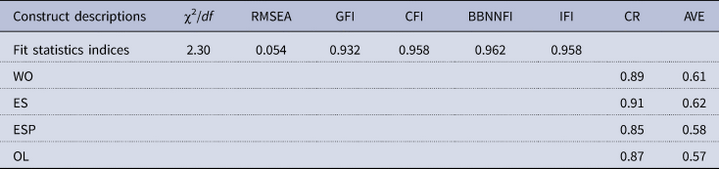
The results of confirmatory factor analysis (CFA) described in Table 1 are indicating a required goodness of fit indices (χ2 = 367.345, df = 160; RMSEA = 0.054; GFI = 0.932; CFI = 0.958; BBNNFI = 0.962; IFI = 0.958). These results are well above the acceptable range defined by Kline (Reference Kline2006). Moreover, following the guidelines of Bagozzi and Yi (Reference Bagozzi and Yi1988), the composite reliability (CR) index was calculated to confirm the reliability of the measures used. In doing so, based on the recommendations of Fornell and Larcker (Reference Fornell and Larcker1981), the average variance extracted (AVE) index was calculated to ensure the reliability position of the measures, which represented the values within an acceptable range, CR > 0.6 and AVE > 0.5 (see Table 2; Bagozzi and Yi, Reference Bagozzi and Yi1988).
CFA and scale reliability

Acceptable range of indices χ2/df < 3.0, GFI-CFI-BBNNFI-IFI > 0.90, RMSEA < 0.08.
CR = composite reliability; AVE = average variance extracted; WO = workplace ostracism; ES = employee silence; ESP = emotional suppression; OL = organizational learning.
Results
Preliminary analysis
It is very essential to test the normality of the data before executing the regression analysis. If not done, the results can be misleading. Similarly, there are other prerequisites to the regression analysis as well. We conducted skewness and kurtosis test to certify the normality of the data. The data outdid the threshold set by Hair (Reference Hair2010), as the values of the skewness and kurtosis test are between −1 and +1. Moreover, the plotting of these values in graph resulted in a straight line which further confirms the normality of the data. Furthermore, the standardized residuals centrality to zero with a linear relationship guaranteed that there is no element of heteroscedasticity in the data while the results of tolerance and variance inflation factor (VIF) is also within the acceptable ranges (i.e., tolerance is 0.39 and VIF is 2.13) (Kline, Reference Kline2006). With the analysis of heteroscedasticity, tolerance, and VIF, it can be revealed that there is no existence of multi-collinearity in the data. To confirm the non-existence of auto-correlation, the Durbin–Watson test has been executed and the results showed that there is no prevalence of auto-correlation in the data. Hence, the results of aforesaid prerequisite analyses allowed us to execute the regression analysis with full confidence.
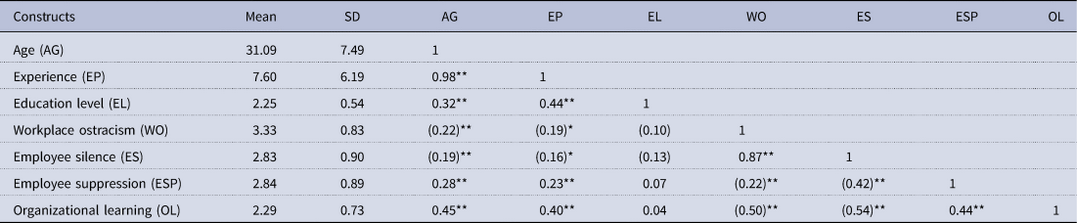
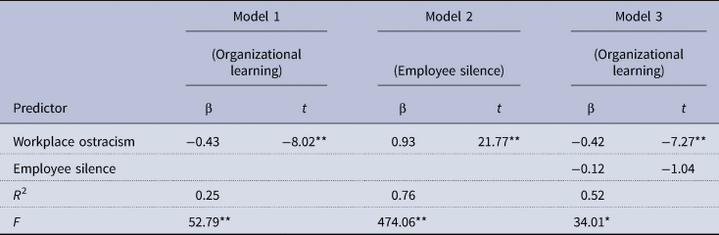
The results of correlation analysis are shown in Table 3 which signify an existence of moderate relationships among all the constructs except for the correlation between workplace ostracism and employee silence. To test the main hypotheses, hierarchal regression and Hayes (Reference Hayes2017) process macro approach was applied. The results of hierarchal regression supported Hypothesis 1 (β = −0.42, t = −7.27, p < .05) that workplace ostracism has negative effects on organizational learning (see Table 3). This indicates that workplace mistreatments damage learning capability of the firms and promotes the culture of knowledge hoarding. The study findings also supported Hypothesis 2 and indicated that employee silence fully mediates the relationship between workplace ostracism and organizational learning (see Figure 1).
Correlation coefficient

*p < .05, ** < .01.
Hypotheses testing
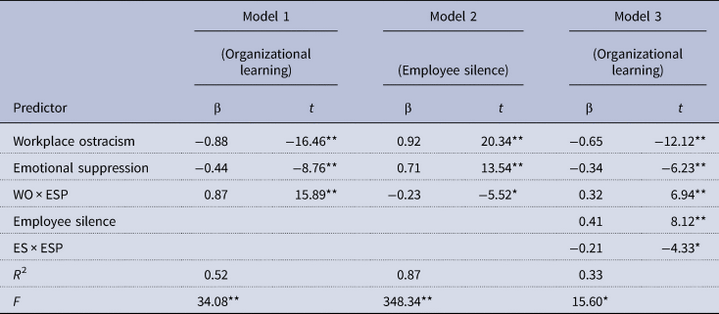
We expected that employee silence mediates the relationship between workplace ostracism and organizational learning. To test this mediated relationship, Preacher and Hayes's (Reference Preacher and Hayes2004) technique was executed at 5,000 bootstrapping, and the statistical results showed that there were significant and positive effects of workplace ostracism on employee silence (path-a; β = 0.93, t = 21.77, p < .05) while there were negative effects of employee silence on organizational learning (path-b; β = −0.43, t = −8.02, p < .05). Further, the comparison of the output of path-c (direct; β = −0.42, t = −7.27, p < .05), and path-c′ (indirect; β = −0.12, t = −1.04, p = .30), elaborated the fact that employee silence fully mediates the relationship between workplace ostracism and organizational learning (see Table 4). This means that when workplace ostracism occurs, it leads the employees to exercise silence, which, in turn, has adverse impacts on organizational learning. To test the moderating effects of employee suppression in the above stated relationships, the terms of interaction were defined by using the guidelines of Aiken, West, and Reno (Reference Aiken, West and Reno1991), and the results indicated that employee suppression not only weakens the relationship between workplace ostracism and employee silence (Hypothesis 3 supported; ΔR 2 = 0.07, p < .05), but also it weakens the relationship between workplace ostracism and organizational learning (Hypothesis 5 supported; ΔR 2 = 0.06, p < .05). However, the moderation results between employee silence and organizational learning remained insignificant (Hypothesis 4 not supported; ΔR 2 = 0.001, p = .71), which indicates that when the employees are at a silent mode, they withhold information. And so, in such a situation, emotional suppression, which is practiced by these employees, stops to play a positive role in inducing learning at the workplace, especially when the silence of the employees takes a chronic turn.
Testing the indirect effect of workplace ostracism on organizational learning

Note: Each column is a regression model that predicts the criterion at the top of the column.
*p < .05, **p < .01, N = 162, bootstrapping at 5,000.
To further strengthen the validity of the results, Hayes (Reference Hayes2017) process analysis was performed to analyze the moderated mediation effect. Table 5 depicts the statistical results of the moderated mediation effect of emotional suppression and employee silence on the relationship between workplace ostracism and organizational learning using 5,000 bootstrapping at 95% confidence interval. In this regard, at the first level, employee silence has been defined as the outcome variable, and results showed that workplace ostracism and emotional suppression (with interacting effect) has, altogether, resulted into 87% variation in employee silence (R 2 = 0.87, f = 384.34, p < .05). Further, it has been found that the presence of high emotional suppression within employees narrows down the existing relationship between workplace ostracism and employee silence (ΔR 2 = 0.07, SE = 0.04, p < .05). At the second level, organizational learning has been nominated as the outcome variable, and the combined effect was investigated using workplace ostracism, employee silence, emotional suppression, and two interaction terms (i.e., WO × ESP and ES × ESP) as independent variables. Collectively, the discussed variables caused 33% variation in organizational learning (R 2 = 0.33, F = 15.60, p < .05). The combined interaction results present that emotional suppression plays a key role in reducing the harmful effects of workplace ostracism on employee silence (ΔR 2 = 0.07, SE = 0.20, p < .05) and organizational learning (ΔR 2 = 0.03, SE = 0.09, p < .05). At the third level, direct effect was investigated with low and high values of emotional suppression, and it was found that workplace ostracism impacts organizational learning at the high level of emotional suppression (effect = −0.83, SE = 0.15, p < .05) than at the low values (effect = 0.71, SE = 0.31, p < .05). The final results of the process analysis were about indirect effects. These results seem to be coherent with the earlier results, using Preacher and Hayes (Reference Preacher and Hayes2004) guidelines. For example, the indirect effects are significant at the high level of emotional suppression (effect = −0.24, SE = 0.18, p < .05), but remain insignificant at the high values of emotional suppression (effect = −0.02, SE = 0.03).
Testing the moderated mediation effect of workplace ostracism on organizational learning

Note: The β values are standardized coefficients, thus they can be compared to determine the relative strength of different variables in the model.
*p < .05, **p < .01, N = 162, bootstrapping at 5,000.
Discussion
The mainstream research on the subject paid attention to the factors that promote learning and knowledge sharing, and only a few researchers have investigated the factors that undermine them (Kim, Lee, & Yun, Reference Kim, Lee and Yun2016). In contrast to the previous research on the factors that promote organizational learning (Argote, Reference Argote2012), we have focused attention on the elements that could have a negative impact on it. Taking on social exchange theory and emotional regulation perspectives, this empirical investigation focused on investigating the direct effect of workplace ostracism on organizational learning, as well as the mediating role of employee silence. We also examined the interactive effect of emotional suppression, direct and indirect, on workplace ostracism and organizational learning. Based on the contemporary literature, five hypotheses were drafted to test the exposition of this study.
The first hypothesis was about direct relationship between workplace ostracism and organizational learning, and the results revealed a negative relationship between them. Personal interactions are deemed to be one of the important ways to share knowledge and learn from each other (Gillies & Ashman, Reference Gillies, Ashman, Gillies and Ashman2003). Ghosh, Reio and Bang (Reference Ghosh, Reio and Bang2013) indicated that workplace mistreatments can have a negative impact on socialization-based learning. This notion has its roots within social exchange theory (Emerson, Reference Emerson1976) which states that employees exchange resources with those who treat them well, and offer them with resources in exchange. However, being ostracized, employees are deprived of resources, such as information, support, and needed possessions to carry out their work activities, and so, in return they reciprocate by reducing their contribution toward organizational learning. This may be further elaborated with the idea that learning is based upon social interactions, which can be affected, positively or negatively, by interpersonal relationships. Ostracism deprives the employees of social connections and opportunity of knowledge sharing due to their lack of personal interactions (Williams, Reference Williams and Zanna2009). Hence, a lack of knowledge sharing based on social relations undermines the overall learning in organizations (Yang, Reference Yang2007).
To further clarify the ostracism and learning relationship, this study has included silence as a mediating mechanism. In this regard, the results support the second hypothesis that employee silence fully mediates the relationship between workplace ostracism and organizational learning. For example, the results are supported by the spiral of silence perspective, indicating that fear of isolation cause silence. Hence, it is indicated in the current study that workplace ostracism induces employee silence, which is in line with the findings of contemporary empirical studies (Fatima et al., Reference Fatima, Ilyas, Rehman and Imran2017; Sommer et al., Reference Sommer, Williams, Ciarocco and Baumeister2001). This hypothesis is also governed by the social exchange perspective (Blau, Reference Blau1964) as it is noted that the individuals who receive pleasant treatment in organizations reciprocate it with positive organizational behaviors, and vice versa (Li & Tian, Reference Li and Tian2016). The ostracized employees consider ostracism as an unfair treatment. In an exchange to this mistreatment, they become silent, and so they end up not sharing important suggestions and information with the other employees. This hinders their contribution toward the overall organizational learning motives. Moving beyond the assertions of Jahanzeb and Fatima (Reference Jahanzeb and Fatima2017), who supported the mediating role of defensive silence with regard to workplace ostracism and the interpersonal deviance relationship, we imply that employee silence is also linked to the detrimental organizational level outcomes (Panahi, Veiseh, Divkhar, and Kamari, Reference Panahi, Veiseh, Divkhar and Kamari2012). Thus, we argue that silent employees fail to contribute toward organizational learning. The rationale behind is that silence causes hoarding of information and reduces information exchange among organizational members. As a result, the organizational learning, which is mainly based upon knowledge sharing behaviors, faces a decline (Yang, Reference Yang2007).
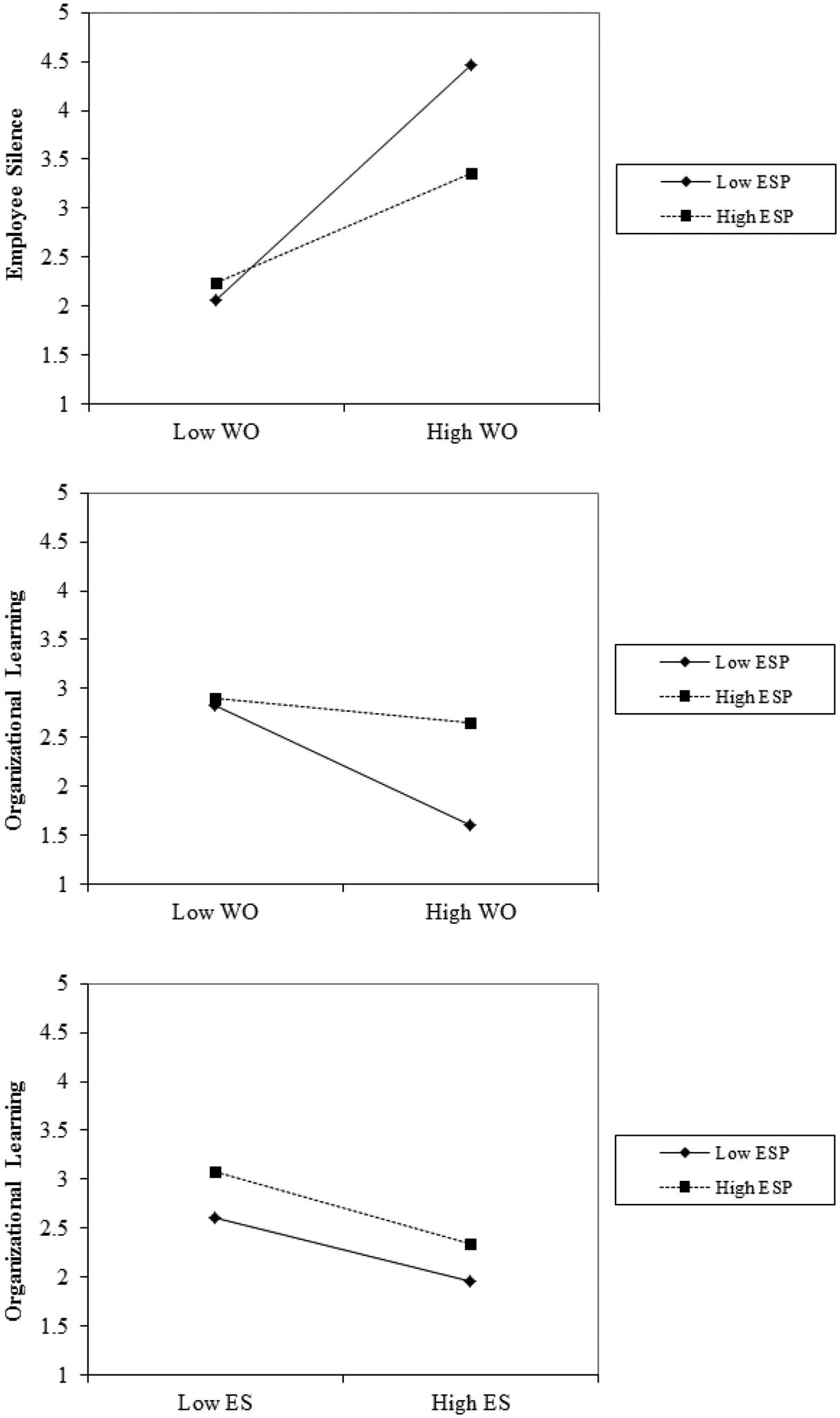
Finally, we proposed an interacting effect of emotional suppression on the relationships between workplace ostracism and employee silence, and workplace ostracism and organizational learning. Our results indicated a negative interactional impact of emotional suppression on the association of workplace ostracism and silence, and so they suggest that the employees, who are able to suppress their emotions, have lower tendency to indulge in the silence, even after experiencing ostracism at the workplace. These results are supported by emotional regulation theory (Grandey, Reference Grandey2000). Additionally, they support the theoretical stance which considers the importance of emotional suppression as a key in controlling emotional harmfulness (Wegner, Reference Wegner1994). Moreover, ostracism triggers negative emotions, such as anger, sadness, worthlessness, and depression (Robinson, O'Reilly, & Wang, Reference Robinson, O'Reilly and Wang2013), which not only cause the employees to be silent (Fatima et al., Reference Fatima, Ilyas, Rehman and Imran2017), but also reduce organizational performance (Robinson, O'Reilly, & Wang, Reference Robinson, O'Reilly and Wang2013). The employees who have the potential to regulate these negative emotions are able to buffer themselves from contributing the adverse impacts of these emotions, as they can manage to speak-up about organizational issues, suggestions, and opinions, and so they are able to contribute toward organizational learning. This shows that emotional suppression is essential to control the emotional distress during the time of mistreatment at the workplace; therefore, it can be used to generate positive outcomes (Campbell-Sills, Barlow, Brown, & Hofmann, Reference Campbell-Sills, Barlow, Brown and Hofmann2006; Spokas, Luterek, & Heimberg, Reference Spokas, Luterek and Heimberg2009) for organizations. On the other hand, moderating effect of emotional suppression, in the relationship between employee silence and organizational learning, remained insignificant. This can be explained in light of the argument that emotional suppression acts as a buffer if the employee has an excess to the resources; however, it can cause reduced task focus, in otherwise case (Richards & Gross, Reference Richards and Gross2000). When ostracism persists longer, it causes resource depletion. Consequently, the employees withdraw and become silent. Silent individuals have low social and emotional resources and it is difficult for them to regulate their emotions by suppression. Therefore, they are unlikely to buffer themselves from contributing the adverse impact of their silence on organizational learning by suppressing their emotions (Wallace, Edwards, Shull, & Finch, Reference Wallace, Edwards, Shull and Finch2009) (Figure 2).
Moderation effect.

Theoretical Contributions and Managerial Implications
The current study contributes to the existing knowledge in following ways. First, findings of this research extends the workplace ostracism literature by building on social exchange theory, and introduced diminishing organizational learning as its adverse, but pragmatic, effect. This may be seen as a contrast to much quested psychological consequences (Robinson, O'Reilly, & Wang, Reference Robinson, O'Reilly and Wang2013) exhibit in the previous studies. Hence, it has contributed toward the scantly sought after outcomes, such as knowledge, organizational learning, and mistreatment (Kim, Lee, & Yun, Reference Kim, Lee and Yun2016). Second, it has opened-up a black box by linking workplace ostracism and organizational learning, which explained that silence induced by ostracized employees is one of the factors that reduce organizational learning. In addition to the mediating role of silence in overt mistreatments, such as bullying, and workplace outcomes (Rai & Agarwal, Reference Rai and Agarwal2018), we have proposed that subtle mistreatments also provoke employee silence, and that in-turn has an impact on organizational outcomes. Employee silence is understood as absence of behavior, which was previously thought as a subtle form of employee reaction to workplace mistreatments (Morrison & Milliken, Reference Morrison and Milliken2000). But the current study has shed light upon the importance of understanding silence as a precursor of deteriorating the overall organizational learning which is acquired through personal interactions. Third, the current study moved beyond the previously studied buffers of external social support (Fiset, Al Hajj, & Vongas, Reference Fiset, Al Hajj and Vongas2017), political skill, ingratiation (Wu et al., Reference Wu, Yim, Kwan and Zhang2012), job self-determination, and time orientation (Qian et al., Reference Qian, Yang, Wang, Huang and Song2017). For example, it has introduced the role of emotional suppression as a buffering mechanism in reducing the negative outcomes of ostracism. Similarly, it has increased the understanding that how employees' emotional regulations can enable them to reduce the negative outcomes of stressful events (Bono & Vey, Reference Bono and Vey2005).
In addition, this quantitative inquiry suggests implications, for practice, as well. First, it shows that the management should keenly focus on the relationship among employees. In doing so, the management should keep the regular checks upon the employees, not only to promote the inclusive environment for them all, but also to avoid the incidents of their maltreatments toward each other. Similarly, workplace ostracism can be reduced by improving the job design, and making it more team oriented and interdependent. Therefore, organizations should redefine the work procedures, and make them of interdependent nature, so that employees may collaborate with each other. In this regard, the culture of quality relationships should also be endorsed through encouraging informal gatherings and interaction. In case of the new recruitments, it should be the fundamental responsibility of the Human Resource managers to hire the candidates who are experts in emotional intelligence and regulation, so that even when the new recruits face the adverse situations at the workplace (e.g., ostracism), their emotions do not impact their work performance. Likewise, the recruitment processes should be designed to assess the personality traits, such as neuroticism and introversion, which limit good social interactions (Wu, Wei, & Hui, Reference Wu, Wei and Hui2011). Moreover, the employees should be given training regarding social interactions, in which the negative consequences of exclusion should be highlighted along with the elaboration of the methods to cope with it. This will not only create an awareness regarding the development of an inclusive environment at the workplace, but also show the path of re-inclusion into the group to the victims of ostracism. As for the existing employees, training can be an effective tool to develop the controlling mechanisms (i.e., emotional suppression), to buffer the injurious effects of workplace ostracism. Additionally, management should keep an active track of the social life in organizations. The 360-degree appraisal system may be useful in this regard as it may assist the management to identify and sort the cases of exclusion before they become chronic and start to affect the organizational outcomes (Gkorezis & Bellou, Reference Gkorezis and Bellou2016). With regard to reducing the employee silence, organizations should promote employees' voice and link it to contingent incentives. Hence, employees should be encouraged to give suggestions and opinions in meetings and discussions. Also, employees should be provided with the facility of psychological counseling, in case they face any sort of mistreatments. Anonymous support help lines should be developed where employees can report their complaints and concerns without any fear (Rai & Agarwal, Reference Rai and Agarwal2018). Furthermore, coaching should be offered, and employees should be assisted in feeling safe, and supported in expressing their views and contributing to organizational learning (Duan et al., Reference Duan, Bao, Huang and Brinsfield2018). Communities of practice should be developed which may not only improve the social interactions, but also encourage the employees to voice their opinions and take part in organizational learning initiatives (Wasko, Faraj, & Teigland, Reference Wasko, Faraj and Teigland2004). This may further result into team orientation and reduction in the occurrences of ostracism faced by the employees at the work settings.
Conclusion
Drawing on social exchange theory, this research draws attention to the detrimental effects of workplace ostracism on organizational learning. It has been exhibited that workplace ostracism causes the employees to exercise silence. Hence, the employees start to dissocialize and withhold information from each other, which diminishes the overall organizational learning motives. Building on the emotional regulation theory, the silent employees, who experience ostracism at the workplace, but possess the ability to suppress their emotions, are likely to overcome the adverse effects of ostracism. And so, they manage to contribute toward the fulfillment of organizational learning initiatives. However, once the employees become chronically ostracized and silent, even their emotional suppression efforts do not help to reduce the negative impacts of workplace ostracism on organizational learning.
Limitations and Future Research Directions
Despite of various theoretical and practical implications, current study has some inherent limitations that must be kept in mind while generalizing the results. First, geographical scope of the study is limited only to financial sector of one division which is composed of three districts in southern Punjab, Pakistan. Therefore, the results may be generalized where context similarity exists, particularly in the context of developing countries. Second, we only considered workplace ostracism as a predictor of diminishing organizational learning while the other mistreatments, such as bullying, incivility, abuse, politics, cronyism, and injustice, have not been considered. This leaves the room for future studies in the area. Third, self-reported responses have been obtained using questionnaires which may raise the issue of common-method bias. However, we observed the time lag of 8 weeks between the responses, which were collected at two different occasions, from the respective participants, to evade common-method bias. Fourth, the results of this study may possibly be affected by the inherent limitation of the survey method, that is, the uncertainty regarding the assurance of the true insight of the respondents about the phenomena under study (Madsen, Miller, & John, Reference Madsen, Miller and John2005). Fifth, as the items contain information that is relating to human personality and societal concerns, hence there is a likelihood of socially desirable bias. Finally, the time-lagged nature of the study caused a lower response rate in the subsequent stage of the data collection, and so reduced the sample size. In particular, the response rate was 42.68% which was less than other organizational studies in this area (Fatima et al., Reference Fatima, Ilyas, Rehman and Imran2017; Jahanzeb & Fatima, Reference Jahanzeb and Fatima2017).
Regardless of the limitations, this research sets the basis for future research in the field of organizational behavior, particularly in the context of interpersonal relations. For example, in this regard, first, the study indicates other forms of mistreatments at the workplace that may have an impact on organizational learning, such as bullying, incivility, abuse, politics, cronyism, and injustice. Therefore, the future studies may explore the relationships between these stated constructs, based on alternative theoretical conceptions, such as conservation of resources (Halbesleben, Neveu, Paustian-Underdahl, & Westman, Reference Halbesleben, Neveu, Paustian-Underdahl and Westman2014), that may emphasize upon the resource depletion nature of ostracism. Moreover, these concepts may be investigated along with the workplace ostracism, to reach at a comprehensive solution. Second, current inquiry used convenience sampling technique to select the respondents which has some underlying limitations, such as under or over representation of a particular group or organization. In future, random sampling techniques may be employed for more rigorous findings. Furthermore, future research may focus on keeping track at the exact occurrences of the events of mistreatments and collect the data immediately after their occurrences, for more comprehensive results. Third, there is a room to conduct such research using longitudinal data. Fourth, although the current study observed employee silence playing the role of a mediator in the relationship between workplace ostracism and organizational learning, future research may explore other possible variables that have the potential to mediate the stated relationship (i.e., meaningful existence, organizational commitment, self-esteem, and voice). Similarly, future investigation may consider some other factors that have the potential to moderate the relationship between workplace ostracism and organizational learning (i.e., perceived justice, emotional reactivity, and management cooperation). Last but not least, previously researchers ignored the sources of workplace ostracism, though nature of the source is an important aspect to measure the intensity of respondents' reactions. Therefore, it may be useful to compare and contrast the effects of various sources of workplace ostracism (i.e., coworker ostracism, supervisor ostracism, and subordinate ostracism) in the future studies.