Introduction
From about 3500 or 3000 b.c. until early in our own era, first and lastly in southern Iraq but once across the entire Middle East, many records were written in cuneiform scripts (Finkel and Taylor Reference Finkel and Taylor2015). The signs were cut or impressed on various objects, but especially on round or oblong tablets made of clay, or “cuneiform tablets”. Over a million tablets or fragments have emerged from excavations of one kind or another, and are now scattered among collections in Iran, Iraq, Syria, Turkey and the rest of the world.
How these tablets should be evaluated and treated, during and after excavation, has long been a subject of debate. In 2002, during the Nimrud conference at the British Museum, Christopher Walker stated that I myself had once (actually about 1975) written a paper on the treatment of tablets in the field, which the then editor of the Journal of Cuneiform Studies had declined to publish because “he did not believe that Assyriologists could be trusted to carry out the procedures as advocated without serious risk to the tablets” (Walker Reference Walker and Curtis2008: 256). There are at least two questions here, whether the procedures were desirable and whether the treatment of tablets in the field should be entrusted to Assyriologists. Walker suggested that I should disinter that paper, which was entitled “Inscribed tablets as archaeological artefacts”, on the grounds that a record of my experience of fieldwork in Iraq might be valuable, but I can only locate notes for it, which probably means that my own copy was lent and never returned. The paper has anyway been superseded in large part by studies such as those of Jesper Eidem (Reference Eidem and Werr2002) and Jon Taylor (Reference Taylor, Radner and Robson2011).
The present paper, put together instead, began as a presentation at a British Museum seminar on the treatment of cuneiform tablets in March 2015, organised by Irving Finkel and Jon Taylor. Because I had had many opportunities, while employed at the museum during 1975–2000, to speak with visiting epigraphists, to look through obscure books and documents, and to handle and inspect hundreds of tablets, especially those in the K Collection, this paper is different from the previous one, and longer. It discusses some issues relating to tablets that still merit further thought, and it provides some of the background of which anyone wishing to excavate, clean and/or conserve tablets should be aware.
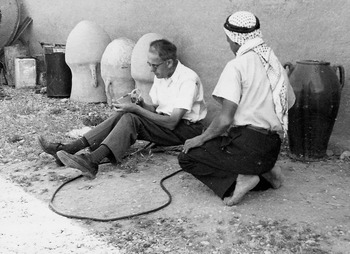
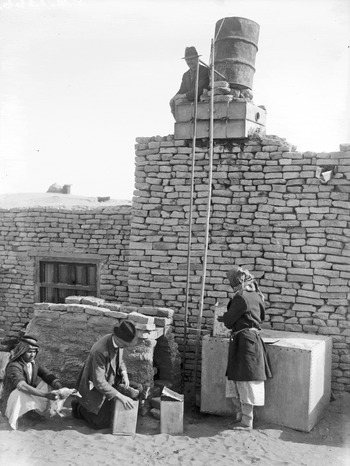
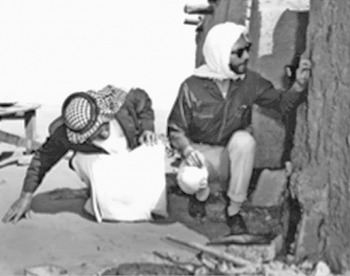
In addition, much has been forgotten or ignored about the modern history of cuneiform tablets because, rightly or wrongly, it has not seemed significant. I therefore made a few email enquiries, and was immediately provided with such a generous range of items of information, not readily available but again potentially useful to others who may find themselves involved with tablets in the future, that I have incorporated much of that here too. Accordingly I should like to acknowledge the help of the following friends and colleagues: Gojko Barjamovic, Bob Biggs, Caroline Cartwright, Paul Collins, Irving Finkel, Grant Frame, Mac Gibson, David Hawkins, Birger Helgestad, Hermann Hunger, Mogens Trolle Larsen, Maynard Maidman, Paolo Matthiae, Cécile Michel, Olof Pedersén, Nicholas Postgate, Andreas Schachner, Matt Stolper, Jon Taylor, Aage Westenholz, Christopher Walker, others such as Douglas Kennedy who taught me about tablets in the past, and everyone to whom I listened during the 2015 seminar in London. I am further indebted to John Mallowan for permission to use his classic photograph, probably taken by Agatha (Christie) Mallowan, of an epigraphist at work on site, Fig. 1.
Cyril Gadd cleaning a tablet outside the Nimrud dig-house, with pottery stored against the wall, 1952; compressed air comes from a pump probably operated by Abd al-Khalaf al-Angud of Sherqat. Photograph probably by Agatha (Christie) Mallowan. Courtesy John Mallowan Collection

Tablets as historical sources
The principal academic value of a tablet for modern students manifestly resides in the cuneiform text on its surface; that is why it has been kept. Europeans had first become interested in cuneiform inscriptions, either cut on stone above ground at Persepolis or impressed on bricks of fired clay at or near Baghdad, in the seventeenth century. Later a few burnt tablets emerged from Babylon, occasionally described at the time as “love letters”; now they are recognised as business documents belonging to the Kasr archive, much more of which was excavated after 1900 by Robert Koldewey (Stolper Reference Stolper and Roth2007). Excellent accounts of the kinds of cuneiform document known up to 1850 are provided by Henry Layard (Reference Layard1849: II, 185–88: 1853: 344–47); then in that year Layard himself discovered, in or close to the place where it had been abandoned in antiquity, the core of the huge K Collection of tablets, named after the mound of Kuyunjik (or Kouyunjik) at Nineveh in what is now northern Iraq.
A large collection of them is already deposited in the British Museum. We cannot overrate their value. They furnish us with materials for the complete decipherment of the cuneiform character, for restoring the language and history of Assyria, and for inquiring into the customs, sciences, and, we may perhaps even add, literature of its people. (Layard Reference Layard1853: 347)
This ambitious claim, written when the decipherment was in its infancy, has been justified. Ancient scribes and others decided what information should be recorded, on tablets, board-books and other media; much was intentionally discarded (e.g. Millard Reference Millard, Bienkowski, Mee and Slate2005), and practices changed over time. Yet those clay tablets that do still survive, from Kuyunjik and elsewhere, constitute our principal source for early Middle Eastern history.
The types of tablet available to historians have also been subject to random factors: the sites that happen to have been dug, the buildings that happen to have been found, the historical events that resulted in the survival of cuneiform records, the physical conditions affecting their preservation, and the circumstances of excavation, dispersal and access to collections. In 1873 the Daily Telegraph newspaper in London promoted itself by funding an expedition to find a single lost tablet fragment describing the Biblical Deluge (Smith Reference Smith1875: 100), and a piece roughly like the one sought was indeed found; all later British Museum expeditions to Nineveh had the prime purpose of finding more tablets. That targeted quest was exceptional, however. In the later nineteenth century vast numbers of tablets were excavated in Iraq, but the work was not methodical and grew out of chance discoveries in the Babylon region around 1870.
The presence of a few Europeans at Baghdad and Basra had long ensured a modest demand for the ancient objects that were scattered on the surface all over the country. What happened around 1870 is that some of the people who were following the traditional trade of mining Neo-Babylonian ruins for fine bricks encountered so many inscribed tablets, notably the Egibi archive, that it became worthwhile to excavate specifically for them (Reade Reference Reade and Leichty1986a: xiv–xvii; Panayotov and Wunsch Reference Panayotov, Wunsch and Geller2014). A regular market developed. Local merchants such as Yusuf Shemtob sold the tablets not only in Baghdad but also, through agents and then independent dealers such as Elias Géjou, in the major cities of Europe. The new discoveries attracted purchasers in Biblical and academic circles. The commercial search for tablets expanded to meet demand, and so did the supply itself; there were even a few fakes. It became important to keep sources of supply secret. Official French, British, German, US and Ottoman archaeological expeditions before the First World War found yet more tablets.
The results were phenomenal. For instance, at Telloh—“mound of tablets”—in the province of Basra, Ernest de Sarzec and local people in his absence excavated archives dating from the late third millennium, and there were more from Drehem near Nippur. Virtually nothing had been known of this period from previous discoveries in Assyria and the Babylon region. A flavour of the situation that developed is provided in correspondence between the British epigraphists Claude H.W. Johns and Theophilus G. Pinches. The former played an active role at the beginning of the twentieth century in identifying incoming tablets for dealers and in acting as middleman. A letter from him, dated 24.1.1906 (kindly provided by I.L. Finkel from the Pinches archive), states:
I frequently have tablets sent to me for sale by Géjou, he seems to have an unlimited stock of Telloh tablets and very little else. He seems to want three or four shillings a piece for them, but they are not at all interesting as a rule. It is an untold pity that the great find of de Sarzec was broken up. There is no hope now of getting together the information they once afforded. Thousands have been broken up for concrete I am told. Those that reach Constantinople are perishing from the damp, falling into earth again.
With this wealth of material, some institutions and individuals bought tablets almost indiscriminately, as more or less random lots (e.g. Foster Reference Foster, Collins and Michalowski2013: 128). Among the more fastidious museum curators was Wallis Budge, who was head of the relevant department of the British Museum during 1894–1924. He regarded condition and legibility as critical in deciding which tablets merited a place in the collection (e.g. Reade Reference Reade and Leichty1986a: xxvi). He impressed the museum authorities, and continued to buy with great success. Johns (Reference Johns1911: 5–7) in contrast had the academic aim of establishing sound ancient chronologies. So he looked for tablets dated in different years, in order to identify sequences, like successive editions of books or strikings of coins. These discoveries were not spectacular, and he had difficulty persuading institutions to buy tablets he wished to publish (letter of 8.5.1911, in author's possession).
The situation was complicated by Ottoman regulations and laws covering the ownership and export of antiquities (e.g. Shaw Reference Shaw2003). Western disdain and the nature of Ottoman provincial administration ensured that decrees emanating from Constantinople were a nuisance rather than an obstacle to the trade, especially since the value of tablets was hard to define and clearly did not reside in the raw material, but there were some consequences. It was desirable to sell tablets on as briskly as possible, and sometimes to destroy them to avoid incrimination. Accessible records of the trade are scarce, but volumes of official correspondence in the British Museum (now in the Department of the Middle East), especially those from the 1890s, hold many letters from Baghdad dealers, ranging from informative to bizarre: several addressed to Budge, who was on friendly terms with some of the families, plead in vain for special treatment because tablets had been acquired to raise cash for marriage dowries.
The process of selecting tablets for acquisition was liable, as an incidental effect, to separate fragments that really belonged together, creating split archives, “long-distance joins”, and additional puzzles for future epigraphists (e.g. Veenhof Reference Veenhof and Veenhof1986: 34–35). This accounts for innumerable isolated groups. Their relationships are now in the long process of being put back together through projects such as the Cuneiform Digital Library Initiative (http://cdli.ucla.edu). However, “the history of artifact acquisition is not well documented in CDLI” (website, 5.2.2016), as the site is mainly concerned with the textual content of tablets rather than their recent vicissitudes.
Tablets from unofficial excavations were distributed in different directions both through the market and more casually, e.g. “it seems that he just took some tablets from Baghdad as a souvenir” (Panayotov and Wunsch Reference Panayotov, Wunsch and Geller2014: 199). Those from official excavations mostly went to established institutions such as museums where they were relatively secure (although not always widely known and/or accessible), and to university departments that could use them for reference or teaching, but sometimes they went to all kinds of people who had made financial or practical contributions to the work or were otherwise interested. Cuneiform tablets were thus liable to be treated not as unique records but as typical examples of a genre, much like minor uninscribed artefacts. Kelly (Reference Kelly2011: 21), in connection with some Larsa tablets in the Weingreen Museum in Dublin, gives a far-reaching discussion of all such matters. Finds from some of the contemporary excavations in Egypt were dispersed in comparable ways.
Records of these informal kinds of distribution are scattered and confusing. For instance there is one tablet, an important letter from Ashurbanipal to a ruler of Dilmun, that was found during Layard's 1850 excavations at Kuyunjik and was apparently one of a number belonging to Mrs Charlotte Rolland who had helped on the dig. She gave it to [Sir] Reginald St Johnson (1881–1950) when he was a small boy, and he showed it about 1906 to the Assyriologist R. Campbell Thompson, who transliterated it. In August 1910 St Johnston presented the tablet (and a bronze armlet or pair of armlets from the same source) to the museum of Cheltenham College, but later mistakenly told Campbell Thompson that he had given the tablet to the museum in the Falkland Isles (letter, 7.2.1934; copy in author's possession); this was wrongly repeated by Reade (Reference Reade2000: 421). Campbell Thompson (and Mallowan Reference Campbell Thompson and Mallowan1933: 103–04) published the transliteration in the Liverpool Annals of Archaeology and Anthropology, stating that the tablet had been destroyed “in a public museum … owing to an unfortunate accident to the building itself”. Really it was still in Cheltenham, where it remained until the school museum closed. It was transferred to the Merseyside Museum in 1976 and received the number 1976.159.312; it was illustrated, somewhat the worse for wear and not yet identified, on the CDLI website (accessed 4.2.2016). Christine Leighton (pers. comm., 4.2.2016), archivist of Cheltenham College, provided the details of St Johnson's original gift of the tablet and of the surprisingly apt transfer to Liverpool, the place of its original publication; Irving Finkel confirmed the identification.
There must be hundreds of similar stories. Pamela Guest, a cousin of mine, once told me how in the 1920s she had visited an excavation run by a Frenchman somewhere near Baghdad. She was not just a casual tourist, as her brother and host was the botanist Evan, and Lady Layard had been an aunt. Pamela was duly given three small pots, which resided at the bottom of a display cabinet in her cottage at Inkpen, Wiltshire. We concluded the site had been Kish, and she later presented her pots to the Ashmolean Museum, Oxford (1972.37–38; 1975.309). Max Mallowan, who contributed to the expenses of his own excavations, retained a collection of items that now belong to the National Trust and are displayed at Greenway, his Devon home. There are also tablets or fragments in the Carsten Niebuhr Institute in Copenhagen, partly published by Fales (Reference Fales1987), which must derive from Mallowan's work at Nimrud. They do not seem to be included in the field catalogues, but these anyway were never comprehensive, with commonplace items omitted at the director's discretion (Reade Reference Reade2002a: 203). Since Jørgen Læssøe of Copenhagen was a valued member of the Nimrud team in the 1956–58 seasons, he presumably had these pieces as samples for reference and teaching. That is the most recent example known to me of tablets being dispersed in this way from an official excavation, though many archives have been excavated irregularly since the 1990s and dispersed through the market. Such factors ensure that, for every known group of tablets, an unknown quantity of associated or relevant evidence is liable to remain out of sight. Tablets differ from most collectible antiquities, however, in that they often carry within themselves irrefutable evidence of their origin.
Other more fundamental considerations affecting the completeness of cuneiform archives as historical sources are that ancient oral traditions and knowledge are bound to be underrepresented in the written sources, and that systems such as urban and rural economies, and networks of communities with shared interests, may have been operating independently, with some remaining entirely detached and having no use for scribes and literacy. Also, many cuneiform texts were written in wax or resin on writing-boards, while a range of other perishable materials were surely employed (as in Yemen) for recording systems in cities in regions bordering western Asia, but except in Egypt the documents are missing. Historical hypotheses derived from the written evidence have to allow for uncertainties that cannot be measured neatly.
Tablets as archaeological artefacts
Tablets from excavations are archaeological artefacts, with basic characteristics like dimensions, shape, surface features and provenance, but there have been divergent views on their status. “The study of tablets as artefacts has a long but fitful history. Many questions have yet to be formulated, let alone answered” (Taylor Reference Taylor, Radner and Robson2011: 5). They have been treated as the responsibility of archaeologist or epigraphist, conservator or curator: different attitudes have led to confusion. Thus archaeologists will normally wish to keep a record of items which are excavated together from a single context, but these details may not concern all other specialists. Epigraphists can have their own specialised concerns, and may even study a text without regard for its colophon or context. Museum curators have been known to amalgamate groups of objects such as beads made of a particular shape or material, or fragments of glass of a particular colour, discarding archaeological associations, and they have done the same to clay tablets. Inscribed artefacts made of stone and metal are usually accepted as ordinary objects deserving standard treatment and are safer from neglect, but inscribed artefacts of clay can be segregated in a class of their own.
Thus, in the 1860s, thousands of K Collection tablet fragments from successive excavations had not yet received museum numbers. Layard did not keep thorough records of tablet provenances, but most of those sent by him were certainly found in one area of the South-West Palace at Nineveh, whereas others were found later in the North Palace. The boxes in which they were stored should have included some information about their date of arrival and consequently about their provenance. George Smith, however, the young epigraphist working on the collection, sorted the fragments according to the content of the texts (Smith Reference Smith1875: 13); information about the provenances of tablets found before 1870 is largely lost as a result, and could not be included in the first K Collection catalogue (Bezold Reference Bezold1889–99). A similar problem arose in the Iraq Museum in the 1980s, after an entire library of scholarly texts had been excavated at Sippar (e.g. Al-Rawi and George Reference Al-Rawi and George1990: 149). The question was whether the individual tablets should be recorded and classified by their findspot, as was originally done by the archaeologists in the field, or by their subject-matter, which only became known once epigraphists were reading the texts.
The preparation of Carl Bezold's catalogue took some ten years longer than originally expected, partly because additional tablets were found in store (Budge Reference Budge1925: 161–62). Then more tablets from Kuyunjik reached the British Museum, and some previously uncatalogued fragments were recognised as deserving study. Two supplementary volumes of the K Collection were published (King Reference King1914; Lambert and Millard Reference Lambert and Millard1966), both of which included all the provenance information that was readily available. Then in 1975, as best described by Rykle Borger (Reference Borger1991: 44–45), yet more boxes of unpublished tablet fragments from successive excavations in different areas of Kuyunjik emerged from storage. Edmond Sollberger, the epigraphist who was then responsible for the collection, decided to have them all fired in the museum before they were numbered and catalogued; during this process the groups of fragments, whose dates of arrival had previously been known, came to be mixed together, so that any information on provenance was lost. Also, once fired, the fragments no longer had their original distinctive range of colours, ranging from whitish to dark brown, and were roughly the same uniform reddish brown. Yet colour, like other typological features such as the likely size and proportions of the tablet to which a fragment once belonged, its location at top, bottom, left, right or centre of a tablet, the width of columns of text, prominent scribal habits or idiosyncrasies, and the condition and complementarities of broken backs and edges, can greatly facilitate the identification of related fragments, as it can in any collection of smashed archaeological material (e.g. Crawford Reference Crawford and Bateman1966: 10; Reade Reference Reade1975). Then the artefacts can be reconstructed quickly and economically, all the more so if the person involved has no special knowledge and is therefore undistracted by interesting features such as, in the case of cuneiform tablets, tempting scraps of text. This saves epigraphists the labour of trawling repeatedly through miniscule fragments or published transliterations in search of phrases they recognise.
Later, when the redoubtable Wilfred Lambert was listing all these new fragments for the third supplementary catalogue of the K Collection (Lambert Reference Lambert1992), he was amused and dismayed to find that a few tablet fragments, to which K numbers had just been assigned, did not retain any traces of cuneiform at all. He firmly omitted these items from his catalogue, and insisted that their K numbers should be removed and allocated to inscribed fragments instead. It was not particularly probable that any of these rejected plain fragments would make a significant contribution to the restoration of a text, by providing a physical join between inscribed fragments, but it does occasionally happen. Even a fragment with no original exterior surface at all has been the vital matrix to which other inscribed fragments could be attached, and I have known this to be the only way of establishing the relationship between substantial portions of text. Archaeologists are liable to discard plain ceramic sherds, sometimes too hastily, but they are unlikely to ignore in this manner parts of other artefacts that lack specific superficial features, unless there is some practical reason to do so. One day these and other relevant K Collection fragments may be numbered and photographed, and an epigraphist can present a brief paper with their details, as a fourth supplementary catalogue; there will be a chance of joins with other pieces once images of the entire collection are available on line.
There have been comparable vagaries in other contexts. “The sand is emptied out of the bowl onto the wire net, which acts as a sieve, so that there is no chance of losing even the most minute fragment” (Delougaz Reference Delougaz1933: 53), because “not infrequently the humblest fragment may turn out to be a key element in the reconstruction of some important document” (Sollberger Reference Sollberger1965: ix). Yet others have dismissed such things as “waste” (Wallis Budge, cf. Reade Reference Reade and Leichty1986a: xxvi) or as “virtually useless epigraphically” (Saggs Reference Saggs1968: 156). I once heard an epigraphist with field experience express astonishment on seeing three large pieces of tablet joined together to form a single whole. This raised the question whether he was aware of the methods by which obvious physical joins between broken tablet fragments can be identified, and whether he had appreciated the scope for joins among fragments on which he had worked previously. On another occasion I was myself reconstructing some six or seven tablets from freshly excavated fragments on one tray, only to discover, when I went to fetch the remaining fragments of the same tablets from two other trays in the next room, that an epigraphist had decided they were superfluous; he had therefore dropped them into the ladies’ latrine. Walker (Reference Walker and Curtis2008: 255) has described how, at Isin and Warka in the 1960s, archaeologists and epigraphists hardly communicated at all about the contents of tablets that were being excavated, cleaned and read on site. The archaeologists learnt about them through letters from colleagues at home.
Gibson (Reference Gibson1972) addressed the division that had developed, between archaeological and epigraphical disciplines, in relation to ancient Kish, and discussed what might be gained by integrating the two sources of information. At Tell al Rimah the tablets and seal-impressions excavated in position in the Old Babylonian palace illustrated an intricate relationship between architectural and political evolution (Oates Reference Oates, Dalley, Walker and David Hawkins1976: xii–xiii); their interpretation was not straightforward, as maintenance and alterations can result in earlier documents overlying later ones, and any failure to observe and coordinate the archaeological evidence correctly would have turned the sequence of local rulers upside down.
Since the 1970s there have been so many good examples of integrating different categories of evidence that it would be invidious to cite any as exceptional, but epigraphy and archaeology still usually reside in separate university departments. I was once discouraged from initiating interdisciplinary cooperation within a university, on the grounds that archaeology was self-sufficient. As recently as 1998, the Rencontre Assyriologique Internationale, the annual meeting established in 1950 at which epigraphists and archaeologists together presented their recent work on the ancient Near East, was joined on the conference circuit by an independent biennial International Congress on the Archaeology of the Ancient Near East. While both disciplines evolve and expand in complicated ways, as described for the Neo-Assyrian period by Fales (Reference Fales2015), it remains the case that the segregation of cuneiform tablets from associated data devalues both. In 2015 two separate colloquia, in Bern and Cambridge,Footnote 1 were held to discuss the problems of maintaining communication among specialists.
Tablet clay sources
Although textual content and archaeological context are nearly always the most significant features of a tablet or fragment, there is additional information, environmental and geographical, that can be extracted from its physical constituents and characteristics. The earliest writing as we recognise it developed in an alluvial flood-plain. People living there were familiar with local resources, including clays out of which they shaped bricks, plaster, pottery, toys and so forth (e.g. Plenderleith Reference Plenderleith1956: 319). Raw clay dissolves in water, it breaks easily, and it cracks in the sun, although temper such as straw can help hold it together, but it is free, it is malleable when fresh but hard when dry, and it is obviously the material on to which the earliest cuneiform signs are likely to have been scratched or impressed. So it was the prime candidate for tablets holding cuneiform records. The chemistry and the practical characteristics of clay and clay tablets are described by Taylor (Reference Taylor, Radner and Robson2011: 5–12).
Another candidate was gypsum paste, used in the late fourth millennium at Uruk (e.g. Reade Reference Reade and Hrouda1992: 178), while Heuzey (Reference Heuzey and de Sarzec1912: 442) alludes to Old Akkadian tablets found at Telloh that were made of clay apparently mixed with a bituminous substance, but all such alternatives required additional preparation. Naturally “clay” prevailed, but this term, as generally used nowadays to describe the material of tablets and some other objects, covers many varieties, variously coloured and with or without deliberate or random visible or invisible inclusions and irregularities such as sand, earth and grit.
Some unfired clay tablets from southern Iraq look clean, but others are dirty. Species of plant have been identified from charcoal flecks in the clay, presumably the remains of fuel, and there are traces of molluscs such as snails “whose preferred habitat is in streams, rivers or irrigation canals”, which suggests that these tablets were made at least in part from unprocessed alluvial clay (Cartwright and Taylor Reference Cartwright and Taylor2011: 69–72). It has been hoped that microscopic traces of pollen in unfired and low-fired clay vessels can help to reconstruct ancient environments (e.g. Yi-Feng Yao et al. Reference Yi-Feng, Li, Jiang, Ferguson, Hueber, Ghosh, Bera and Li2012), but Cartwright at the British Museum 2015 seminar urged caution when attempting to interpret pollen present in clay tablets as a direct reflection of the floral environment at the time a tablet was written. She writes (17.3.2015):
Pollen may arrive at a location, including in a clay tablet, through a variety of mechanisms such as water, wind and insect transport. Given clays are likely to form in an alluvial environment, there may be an inbuilt bias towards water-borne pollen grains of undefined ages deriving from plants of aquatic habitats. Different trees and shrubs produce varying quantities of pollen, thus introducing further complications for interpretation of this category of proxy evidence. Pollen grains and spores may become incorporated into clays when they are being formed, thus introducing a further level of chronological and provenance uncertainty.
It can be sensible, as mentioned by Dowman (Reference Dowman1970: 122), to keep samples of clay from tablets before they are fired or otherwise transmuted by conservation, but one need not expect too much of the analysis.
Outside southern Iraq, Blackman (Reference Blackman, Rova and Weiss2003) identified some of the clays present in cuneiform documents and sealings found at Tell Leilan, and distinguished different wadi systems in north-eastern Syria from which they derived. Analysis has made possible the identification of source areas, in Cyprus and western Syria, for the clays of royal letters sent to Egypt and found at Tell el-Amarna (Goren et al. Reference Goren, Finkelstein and Na'aman2002). Cumulative evidence is needed for identifications like this, to avoid mistakes due to the likelihood that, in many offices, the clay of discarded documents was reused for new ones. Taylor (Reference Taylor, Radner and Robson2011: 21–23) cites many examples of recycling. Walker (pers. comm., 5.10.2015) recalls how at Isin he handled lumps of clay, incorporating occasional cuneiform signs, that plainly consisted of discarded tablets crumpled together and sometimes reused as mortar in walls or flooring.
Scribes must have learnt, as part of their training, where they could conveniently get clay of suitable quality, and how they should prepare it for the manufacture of tablets. Doubtless they had their own favourite sources, and probably had different grades of clay or blank tablet to hand, perhaps all taken from a single source but cleaned with varying degrees of thoroughness. Maidman (Reference Maidman, Owen and Wilhelm1999: 26) contrasted the different qualities of clay and calligraphy displayed in two contemporary archives at second-millennium Nuzi. Wiseman (Reference Wiseman1968: 175) noted that a few Middle Assyrian tablets with official contents found at Rimah were “written in a skilled hand on a fine reddish clay”, unlike tablets from the same context which dealt with commercial matters. This implies that the Rimah scribes writing official tablets had deliberately chosen finer clay or prepared the clay better, while private legal contracts were made more casually. On the other hand Hilprecht (Reference Hilprecht1903: 409), describing the fifth-century Murashu business tablets from Nippur, noted “the great care with which they had been made, the exceptionally pure and soft clay chosen”. Biggs (Reference Biggs1974: 23), at third-millennium Tell Abu Salabikh, speculated that a fragment marked with a textile impression might have derived from “a scribe's supply of damp clay wrapped in cloth to preserve its moisture”, but scribes also improvised. There is a diverse range of clays in letters that had been sent from a distance to Assyrian kings: one royal command was written on a tablet “of coarse clay containing tiny stones” (Saggs Reference Saggs2001: 3), presumably taken from a stream or some such source by a scribe who could find nothing better. There is more evidence of this nature scattered in publications (Taylor Reference Taylor, Radner and Robson2011: 6–7).
The K Collection consists partly of administrative records, drafts, letters, private contracts and so on, and partly of so-called library tablets. The library texts are notable for the high quality of their material. Bezold who catalogued much of the collection is clearly referring to these when he says:
The tablets vary in colour from deep black to a bright red, and the clay of which they are made has all the appearance of having been carefully chosen, thoroughly cleaned from sand and grit, and well kneaded. Special care must have been bestowed upon the selection of the material. (Bezold Reference Bezold1889–99: V, xv–xvi)
Walker (pers. comm., 17.8.2016) was told by David Kanikanian, who came of a family of Mosul potters, that each year they would go to the flood-plain between the Tigris and the walls of Nineveh when the spring floods subsided, and extract fresh clay ready for the wheel. An alternative is that the clean reddish or reddish brown clay of K Collection tablets, on the basis of its colour, density and texture, was not fresh but ancient alluvial material, taken from deep clay pits or from exposed or recently eroded geological strata that were accessible throughout the year. This may have been first suggested by Campbell Thompson (Reference Campbell Thompson and Hutchinson1929: 126, 134). Beside the Khosr stream, close to Nineveh, there is:
a gorge, one side of which is a steep and often sheer bluff some 120 feet high, of good red marl from which the Assyrian librarians probably obtained their clay… The greater part [of the Nineveh tablets] were written on a reddish clay, which must have come from near the Ajilah dam, and although we have not tested this in the fire, it is to be assumed that it would keep its colour. As a rule the Kouyunjik tablets are baked.
This question of baking is discussed further below.
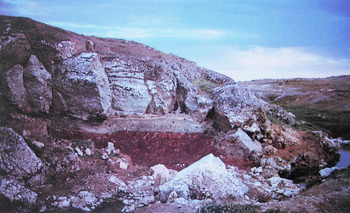
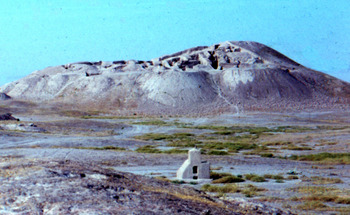
Similarly at Wadi Taya, south-east of Tel ′Afar on the edge of the Middle Tigris region, a layer of alabaster or gypsum (the so-called Mosul marble commonly used for Assyrian sculptures) can be seen resting on a layer of fine grey clay, which is itself above a thicker layer of fine reddish clay, which is itself above several layers of limestone, Fig. 2 (Reade Reference Reade and Veenhof1986b: 218; Reference Reade1998: 25, fig. 16 in colour). The reddish clay is distinctive, it appears similar to that used in K Collection tablets, and its quality, at least on superficial inspection, is outstanding. In the 1880s a farmer at Nineveh, who had excavated some tablets and broken them up for fear of the Ottoman authorities, even claimed that “the dust was good for his land” (Budge, 8.5.1889, Middle East Department, Reports, 1887–89). Nuha al-Radhi kindly fired a sample of the Taya clay together with some pottery of her own in her electric kiln in Baghdad, to test whether it might have been used for third-millennium stoneware vessels; she was unimpressed because it melted to a pale grey-green and stuck to the wall, but I am unsure how high the temperature had been.
Outcrop with grey and red clays stratified below gypsum rock at Wadi Taya, Tel ′Afar. Author's photograph, 1973

Similar-looking clays were used for many of the Old Babylonian and Middle Assyrian tablets excavated at Rimah. Lumps of such clay were also commonly found on the Rimah excavations, and skilled workmen would recognise and describe them as “tablet clay”, but they were not discarded tablets like those handled by Walker at Isin. Rather they had been part of the mudbrick walls of structures that had once been built with clean material from clay pits. The same or comparable layers of clay must have been exposed and accessible in places throughout the region in antiquity, and been available for use by scribes.
The finest varieties of clay could have been traded further afield, to areas like Babylonia without equivalent resources: there are a few fine late Babylonian tablets of unusual content, apparently from Borsippa (e.g. BM 94043–93064), which are made of a clay different from that of many local commercial tablets. Similarly, the clay for file copies of royal letters written inside Egypt and found at Amarna was not the local Nile clay commonly used for pottery but was derived from the Esna shale formation much further upstream (Goren et al. Reference Goren, Finkelstein and Na'aman2002: 197). This would demonstrate the long-distance movement of clay as a raw material, at least inside Egypt, if it were certain that the clay was not reused and that the Egyptian king was not himself located upstream at the times the letters were drafted. The possible long-distance movement of clay as a raw material or commodity, added to the possibility that scribes sometimes carried small quantities of favourite clay with them, does not discredit the identification of geographical sources for the clay of tablets like the Amarna letters, but it does mean that such evidence needs careful assessment.
For instance, some of the Amarna letters come from the king of Alashiya. One of these (EA 34 = BM E 29789 in the British Museum) is made of dense clay, pale greenish-brown in colour, whose high quality, apparent to the naked eye, immediately suggests a clean geological rather than recent origin.Footnote 2 It has been identified as marl from the Pakhna formation in Cyprus, as has the clay of two other such letters. This strongly supports the old proposal that Alashiya was located on Cyprus (Goren et al. Reference Goren, Finkelstein and Na'aman2002: 198–99). Goren et al. add cautiously that “the literal similarity in names between Alashiya and present-day Alassa [a village in south-western Cyprus with suitable geology and a prominent ancient site of the right period] may be noted”. On the other hand, while the map provided by Goren et al. shows that this clay is not now available at Enkomi on the eastern coast of Cyprus, which is the island's most imposing site of this period, it does also show that the Pakhna formation is exposed on the surface a mere 20 km south-west of Enkomi, and there may have been more exposures closer to Enkomi in the past. Fine clay intended for diplomatic correspondence could easily have been brought to the capital of Alashiya from a modest distance, and the identification of a Pakhna formation source for the clay of these letters therefore fails to disprove the other old proposal that Enkomi was itself the capital in question. Similarly, the clay of a letter sent from the king of Mitanni in north-eastern Syria (EA 26 = BM E 29794) may well be identifiable as associated with a particular wadi system, just as the Leilan material has been, but an association like this could not on its own identify the location of the Mitannian capital city, probably but not certainly Fakhariya near Ra's al-’Ain. A letter sent by the king of Karduniash or Babylonia (EA 9 = BM E 29785) appears to be made, as one might have expected, of clean but probably less informative pale brown alluvial clay.
Tablet manufacture and treatment
Taylor (Reference Taylor, Radner and Robson2011: 7–12) has collected many examples of manufacturing processes. For instance, Biggs (Reference Biggs1974: 22) reported excavating at least two kinds of tablet of unfired clay at Abu Salabikh. A few with a distinctive script had been “made in one piece”, but most had “a core of clay which is smoothed in a somewhat irregular fashion”, with a surface layer of “fine clay, normally about 1.4 cm. thick. This surface layer separates very easily from the core”. Nearly 2000 years later, Babylonian letters found at Nimrud “often have a surface layer of higher quality clay over a core; examples of this also occur with the Assyrian tablets, although less commonly” (Saggs Reference Saggs2001: 2–3). Still later the Cyrus Cylinder from Babylon (c. 635 b.c.), although of fired rather than unfired clay, resembled the Abu Salabikh tablets in having “a slip of finer material wrapped around an inner core of cruder nature” (Finkel Reference Finkel and Finkel2013: 11). It would be possible, and possibly constructive, to create a universal typology of the development of methods used to manufacture cuneiform tablets, defined by time and place, to join traditional criteria like script, language, function and shape.
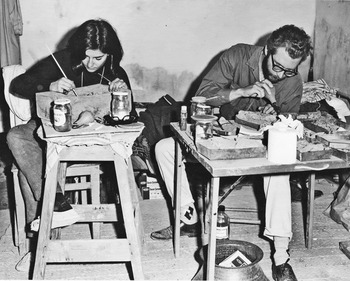
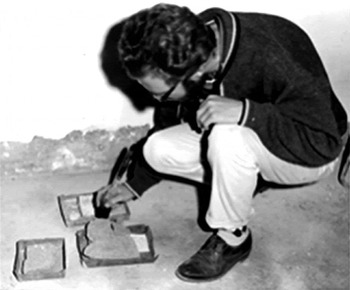
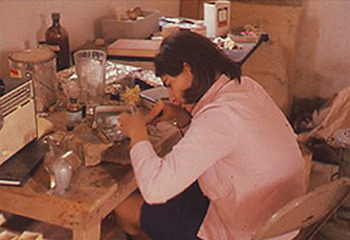
The way in which a tablet was made may also affect its state of preservation in the ground, but this is an area in which no generalisations are valid. Conditions can vary unpredictably. The first tablets found at Rimah in northern Iraq, a jarful of unfired business documents, were very friable and “badly encrusted with salts from the topsoil in which they had been lying and will require treatment before they can be read” (Oates Reference Oates1965: 75; Wiseman Reference Wiseman1968: 186–87); under Læssøe's direction, we even cut through half-melted tablets in order to expose complete ones, before they could dry into one solid lump. Such an unpleasant kind of problem would normally be associated with the salinated areas of southern Iraq, where comments on the extreme fragility of tablets re-echo through the generations, from Loftus (Reference Loftus1857: 221) and Rassam (Reference Rassam1897: 406), through Hilprecht (Reference Hilprecht1903: 415–16) and Delougaz (Reference Delougaz1933: 39–42), to Crawford (Reference Crawford and Bateman1966: 1–2) and Biggs (Reference Biggs1974: 19–20). Many give good detailed advice on how to excavate tablets, based on experience but liable to contradict equally good advice given by those such as Liz Dowman (Reference Dowman1970: 122, see below), who have excavated tablets in different conditions. A further question is whether cleaning is best done by an epigraphist (as recommended by Delougaz), by a conservator (as assumed by Dowman), or by someone else. In practice there are no rules, except that the best qualifications include versatility, as shown by Biggs’ comment (loc. cit.) about Selma al-Radhi [subsequently restorer of the Amiriya complex in Yemen, and joint recipient of the 2007 Aga Khan Award for Architecture]: her “extensive experience in field conservation of the Nimrud ivories had given her skills and patience for the very tedious work on the tablets. Together we developed the techniques which enabled us to treat the tablets safely”, Fig. 3.
Selma al-Radhi and Robert Biggs gluing Abu Salabikh tablets after firing at Nippur, 1965. Photograph: McGuire Gibson

One might suppose that water would be one of the worst possible substances to use for cleaning water-soluble clay tablets, but even this can be done. Although Isin is in the south, Walker (pers. comm., 5.10.2015) cleaned unfired tablets there whose exterior surface was in such a satisfactory state that he was able to use a special tool for wetting the dirt embedded in cuneiform signs and removing it without any apparent danger to the tablets at all. It seems possible that these Isin tablets had a “skin”. This is another feature, besides heating or firing (discussed below), that may reflect the treatment of a cuneiform tablet after it had been inscribed.
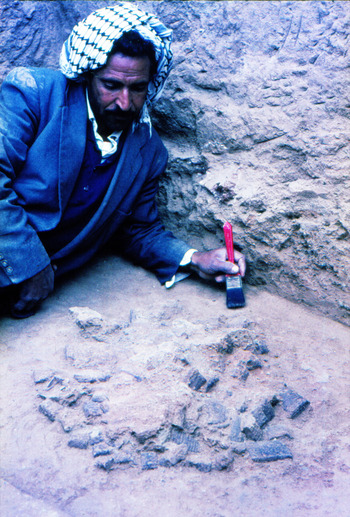
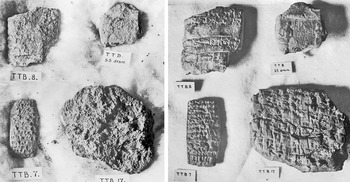
Many of the Old Babylonian tablets at Rimah (Dalley et al. Reference Dalley, Walker and Hawkins1976) had a comparable feature. These tablets had been buried under masses of mudbrick when the building holding them was demolished, and they were generally in excellent condition apart from breaks, Fig. 4. I handled many in the field and they all appeared, so far as I recall though I have not found a statement to this effect, unfired at the time of excavation. Their exterior surface tended to form an exiguous layer, firmer, browner and darker in colour than the softer sometimes reddish interior. This is the kind of tablet of which Dowman (Reference Dowman1970: 122), who was present at some of the Rimah excavations, wrote:
the worst of the dirt should always be removed as soon as possible after excavation before it has time to dry out; if it were left the greater stresses required to displace it when dry could well destroy the surface of the tablet. Some people consider that it is better to remove all the dirt while it is damp and on a tablet in good condition it does not matter much one way or the other; however it is usually preferable to allow the fine dirt adhering to the surface to dry out for a day or two after which it can be gently picked off with a needle and detached relatively easily from the fine “skin” of the tablet or, if loose enough, be brushed off with a soft brush (a hard one will scratch the surface).
I do not know another reference to a layer of “skin” on tablets. Perhaps its formation resulted from some habitual act such as greasing or handling in antiquity, if not from a chemical process underground at the interface of earth and clay.
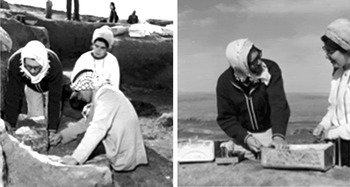
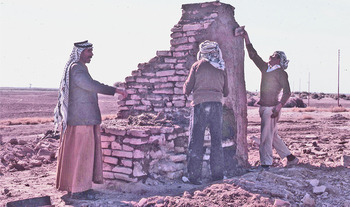
Daulah al-Talab al-Angud of Sherqat excavating Old Babylonian tablets at Rimah, 1967; they had probably been stored in a bag or basket. Photograph: J.D. Hawkins

Fired or unfired: tablets
Once a clay tablet had been inscribed, it must have been allowed to dry, so that the inscription became stable. The water removed during drying in this way was not chemically bound to the clay. Drying could have been achieved in various ways, with or without exposure to a source of heat such as the sun. Some tablets, however, were deliberately fired or heated into or beyond the variable range of temperatures, between 350° and 750° C, during which, among other changes, water that is chemically bound to the clay, sometimes called “combined” or “chemical” water, is removed. Once the “combined water” has gone, the malleable clay has been transformed irreversibly to rigid terracotta. Both operations, however, the drying and the firing, can be left incomplete, so that between clay and terracotta there lie an infinite number of intermediate stages of desiccation. Potters sometimes use the term “leather-hard” for one of these stages, but this is too precise for use with tablets.
The tablets were then stored, hidden, discarded or trashed in various ways in antiquity, and were buried for thousands of years, exposed to different temperatures, humidities, salinities and so on. An unfired tablet usually becomes damp in the soil; it may be permeated by soluble salts from the groundwater, and salts may crystallise on its surface as a more or less solid layer. After excavation a tablet again dries and the clay hardens. If the tablet is made of high-quality clay and is not badly affected by salt or a damp atmosphere, it may remain solid; otherwise residual salts in the clay may migrate to the surface and cause fresh damage. Tablets also travel after excavation, from site to store, and they are then kept in conditions that may or may not be stable and generate further changes.
So there is often no clear answer to the seemingly elementary question as to whether or not a tablet is made of unfired clay, fired clay, or something in between the two. If a tablet does turn out to have been heated, it may not be known whether this happened in antiquity or in modern times. Wiseman and Black (Reference Wiseman and Black1996: 8) state in their Nimrud Nabu Temple catalogue:
The information “not baked”, “partly baked” or “kiln-baked” is taken from the excavation records but was noted there only for tablets from the sixth season (1955) with excavation numbers from 4357 to 4405/1–80. After excavation, some tablets were baked at the site (“kiln-baked”); others have since been baked for conservation purposes.
It would be helpful if more publications of tablets included passages like this, but that is easier said than done, and there is no established terminology.
Also, some available descriptions are more convincing than others. For example, here is a description of the very first tablets excavated at Ras Shamra by Schaeffer (Reference Schaeffer1929: 295):
Nous trouvions une grande tablette en terre cuite couverte de caractères cunéiformes qui fut bientôt suivi d'autres … Les tablettes, recuite par l'incendie, étaient très friables et il fallut employer de minutieuses précautions pour les sauver… Après un lent séchage à l'ombre de la tente, elles regagnaient une certaine solidité qui permettait leur transport.
If this is correct, tablets that had been fired twice in antiquity, first deliberately and secondly when the building housing them was burnt, were very friable but became stronger once dry; this sounds much more like the behaviour of tablets that had not originally been fired. A simple explanation for Schaeffer's account is that he was not yet familiar with cuneiform tablets, and automatically assumed, when he suddenly found some, that they had been deliberately fired.
The problem goes back to the start of cuneiform studies. Thus some tablets from Warka, which William Loftus excavated in 1850, were described by him as “unbaked”, but as “baked” by Henry Rawlinson, who saw them soon afterwards in Baghdad (Loftus Reference Loftus1857: 221–22). Harold Plenderleith (Reference Plenderleith1956: 319), who was familiar with the British Museum collection, described the situation as follows: “there are thus three types of material presented for conservation — baked clay, unbaked clay, and clay that has been inadequately baked”. The term “inadequate” implies failure, like “half-baked”, a judgement we are not entitled to make since the condition could have been created intentionally. Organ (Reference Organ1961: 52), in discussing the conservation of the same collection, states that the material of the tablets was “usually sun-dried clay, only the less ephemeral literature having been hardened by heating strongly”, which suggests an understandable reluctance to define the term “heating strongly”. Both Plenderleith and Organ may have been thinking especially of the K Collection library tablets, which are particularly troublesome in this regard. Reade (Reference Reade and Veenhof1986b: 218–19) may be too simplistic in describing them as either “deliberately baked or not”. Taylor (Reference Taylor, Radner and Robson2011: 16) may be too emphatic in stating that “only rarely in antiquity were tablets baked”. Even if only “a handful of Neo-Babylonian colophons and documents attest the practice” in writing, the tablets themselves tell a more complicated story.
A general criterion for determining whether an inscribed clay object is likely to have been deliberately fired in antiquity is its original function. In Iraq, through prehistoric and historical periods in both south and north, there had been a long tradition of making containers and other objects of fired clay, and the advantages of this material were familiar. Fittings such as bricks and tiles designed for use on exposed exteriors or in internal spaces vulnerable to water were naturally fired when possible. In major government buildings they were commonly stamped or impressed with details of royal names and titles or achievements. Nails, knobs, cones and other visible commemorative features were fired. Another kind of inscribed object is the permanent memorial record, deposited inside brickwork, and these too were fired (Taylor Reference Taylor, Radner and Robson2011: 25). The original practice of using stone for hidden memorial records was ultimately superseded by the use of fired clay, which could more easily accommodate much longer inscriptions. Some of these longer records were shaped as tablets, but there were also round and polygonal cylinders, hollow or solid, especially in the seventh and sixth centuries b.c. Other types of inscribed object of fired clay include things that had to be worn or regularly moved, such as amulets.
A convenient though not infallible method of seeing whether an inscribed object is likely to have been fired is through the presence or absence of temper in the clay. For instance, in the K Collection, there are very many fragments covered with historical records written in smallish script. Some do derive from tablets (e.g. Grayson and Novotny Reference Grayson and Novotny2014: 5–8), but many others, though superficially resembling fragments of tablet, can really be identified as fragments of memorial cylinders instead. While some cylinders may have been stored in the Nineveh libraries, as does seem to have happened in the Nabu Temple at Nimrud (Wiseman and Black Reference Wiseman and Black1996: 4–5), they could all in practice have come from inside the walls of buildings or from the scriptoria where they were prepared. Many of the actual cylinders were made and fired like ordinary ceramic vessels, having internal wheel or coil marks, but even small fragments tend to be distinct in contour, thickness and fabric, and with ample traces of organic temper such as fine chopped straw which was mixed with the clay and vaporised during firing in the kiln. Voids left by temper are visible in broken surfaces, and often also on outer surfaces, although a fine slip covering most external irregularities was added before the scribe wrote the text (e.g. Taylor Reference Taylor, Radner and Robson2011: 26, fig. 1.9). This deliberate organic temper can normally be distinguished from the occasional traces of organic material that are liable to be present in the clay of any tablet by mistake. If deliberate temper, like that present in a memorial cylinder, is visible in a fragment of some other kind of inscribed object, its presence will normally imply that the object was fired. This is most obvious in something like a fragment of brick. There are no safe rules, however, because some of the very earliest known of all inscribed bricks, those from Tell Brak stamped with the name of Naram-Sin of Agade, are said to be unfired sun-dried mudbricks (Mallowan Reference Mallowan1947: 66).
Furthermore, some fine terracotta vessels were made with very little visible temper, and so were some fired tablets. A good example of the latter is K 3751, which is in the K Collection but was excavated at Nimrud, and which is identified by its text as commemorating the foundation of the palace of Tiglath-pileser III about 730 b.c. (Tadmor and Yamada Reference Tadmor and Yamada2011: 115–25). It was probably once placed or designed to be placed somewhere inside the structure of the palace, and taken to the Nabu Temple afterwards, when the palace was dismantled. What survives is half of a tablet, 24 cm wide and up to 4 cm thick; the whole must originally have been at least 40 cm high. It has a compact pale pinkish brown body with a greenish brown surface; some fine organic material in the body has left a few voids, surely representing impurities rather than temper. A small patch of inscribed surface has flaked away, but there is no reason to suppose that the tablet had been damaged by fire in a burning building. This tablet was manifestly fired in antiquity, just as its original function would have suggested. Some red clay stuck firmly to some broken internal surfaces suggests that it may also have been heated since, perhaps in the British Museum for cleaning, but it was not fired there to a high temperature, since it retains a nineteenth-century ink label which would have been destroyed by very intense heat. So that is one tablet, even without unmistakable temper, that had been deliberately fired in antiquity. Therefore, the absence of visible temper in a tablet does not demonstrate that it was not fired in antiquity.
Firing, which conferred durability on foundation documents like K 3751, may reflect the original status and function of other kinds of tablet too. They became strong enough to take repeated handling, like hardback rather than paperback books. Thus at Warka, in an archive of mainly unfired documents, the title-deeds recording purchases are recorded as having been fired (Hunger Reference Hunger1970: 197; Veenhof Reference Veenhof and Veenhof1986: 1): these were proofs of ownership, and had long-term value. At Sultantepe (Gurney Reference Gurney1952) most of the tablets may derive from a scribal school, and are said to have been unfired. One of them, in contrast, a mathematical table of reciprocals, was fired. An obvious reason would be that it was not an ephemeral exercise tablet and that it needed to be strong enough to tolerate regular use.
Many Middle Assyrian literary tablets were unquestionably fired in antiquity like K 3751, having a characteristic whitish surface. The firing could have been done straightforwardly for long-term use and reference, just as a colophon or a handle may unequivocally confirm a tablet's significance or canonical status, but there could have been other motives too. An example in the K Collection (Rm 376: Lambert Reference Lambert, Güterbock and Jacobsen1965) is an incantation tablet found at Nimrud (according to the original museum record, not at Nineveh). It relates to difficult childbirths, and could have been carried by the doctor attending a patient. While one might have expected a capable doctor to recite the text from memory, a tablet might have given him greater authority. Some other tablets were perhaps fired because they needed to be handled often or read at ceremonies. Examples of fired tablets which might have had a ceremonial purpose include the Middle Assyrian Tukulti-Ninurta Epic (Lambert Reference Lambert1957: BM 121033), which came from the Ishtar Temple at Nineveh, the Neo-Assyrian “letter to god” (Louvre AO 5372: Oppenheim Reference Oppenheim1960: 143), and the Khorsabad king-list (Lambert Reference Lambert1957: 39).
The question whether a tablet was fired in antiquity may be relevant to its status. For instance, one piece that was built into the base of a wall at Rimah, which I personally regarded in 1968 as a school exercise tablet of unfired clay, resembling others found in a earlier Old Babylonian level a few feet away, was inscribed with a brief “foundation inscription” text, incorporating a royal name and the name of a city. If the tablet was a school exercise, then it has no authority as evidence for the ancient name of Rimah itself. It was published, however, as being made of “baked clay” (Oates Reference Oates1970: 4; Walker Reference Walker1970: 27); if this is correct, it probably was an authentic memorial document, which raises the question whether the name on the tablet was that of ancient Rimah or of a different city nearby, and, if the latter, how the tablet came to be buried where it was. Its original condition—fired or unfired—could no longer be checked once it had been fired in a modern kiln (Sollberger Reference Sollberger, Dalley, Walker and Hawkins1976: v).
Lambert (Reference Lambert, Güterbock and Jacobsen1965: 283) explained the striking colour of the fired Middle Assyrian tablets as follows:
Tablets baked to about 650°centigrade have a red colour …, a temperature reaching about 750° yields a whitish colour, and if still more heat is applied tablets are ruined because vitrification and a greenish colour result. The chief difference between ancient and modern firing is that the electric kiln supplies continuous heat for any length of time while ancient fuel burnt out quickly. Since the Babylonians and Assyrians had no large supply of wood for burning, such things as dry reeds and palm fronds were commonly used. Thus the Middle Assyrian scribes had their tablets baked to the highest safe temperature, but the maximum was reached for only the shortest period, as the fuel was quickly expended. The extreme heat in consequence affected only the outer surface; the inner parts of the tablets are of other colours.
This account stands out as a sensible attempt to ascertain what really happened, but omits to mention the availability of animal dung as a fuel: the marsh Arabs of southern Iraq were using dung patties to fire pottery in the 1970–80s (Ochsenschlager Reference Ochsenschlager2004: 119–21). Most tablets can also be fired safely far above 750°C, to judge by the maximum temperature of 1600° recommended by Delougaz (Reference Delougaz1933: 52). It is also evident from the quality of their products that Assyrian potters were capable of controlling kilns very efficiently, and scribes must have had access to comparable skills. The latter certainly demonstrated the ability to fire tablets so that they became terracotta, and they must also have been able theoretically either to heat them to an intermediate temperature at which, without becoming fully fired terracotta, they became much more durable than unfired clay, or to desiccate them, perhaps by “heating strongly” in the phrase offered by Organ (Reference Organ1961: 52), in which case they became somewhat more durable than they would have been if simply left to dry. This would create the three types of material observed by Plenderleith (Reference Plenderleith1956: 319), and would conform with the conclusions reached independently, at Knossos on the far western edge of the tablet world, by Sir Arthur Evans (Reference Evans1935: 592–93).
All the library tablets of the K Collection must once have fallen somewhere on this spectrum. These tablets derive from at least four places — the South-West and North Palaces, and the Ishtar and Nabu Temples (Reade Reference Reade2000: 421–27; Reference Reade2005: 382); a few hundred can be identified archaeologically as coming from specific places, but most of the provenances were confused, first in antiquity, and then by archaeologists, epigraphists and museum curators as outlined above. Some tablets belonged, or had once belonged, to private scribal collections; some have Middle Assyrian, or Neo-Assyrian, or Babylonian characteristics, and so on; some may have been waiting to be transcribed or updated, some may have been superseded or rejected, some that bore palace or temple colophons were probably final fair copies. While a good proportion of the fragments have been classified by traditional Assyriological methods into distinct and significant groups, and this work continues, they could also be classified by correlating physical characteristics. Identification of more Ishtar Temple texts, which tend to be early, “might help in our grasp of Assyrian intellectual history if the project were of interest to a philologist” (Reade Reference Reade2005: 382), and there are equivalent potentialities with the palace tablets too. One of the physical characteristics would be whether the tablets were deliberately fired in antiquity.
Layard, who found a high proportion of the K Collection, described one very small group (actually letters sent from elsewhere) as made of “dark unbaked clay”, which demonstrates his awareness of this kind of material (Layard Reference Layard1849: II, 124). Mostly his tablets were “baked” (Layard Reference Layard1853: 344–47), which is probably a generalization, referring to the bulk of the library texts. His colleague Hormuzd Rassam, who continued the excavations, repeatedly describes the Nineveh tablets as “terracottas”, a term he must have learnt from Layard. It was also used by Smith (Reference Smith1875: 13), who referred to the “many boxes full of fragments of terracotta tablets” which had reached the British Museum by 1855 from Layard and others. Bezold stated that “in no collection from any other site are the tablets so well shaped and so well baked” (Bezold Reference Bezold1889–89: V, xv–xvi). But the tablets were largely excavated from buildings that had been destroyed by fire, and there are indeed some among them (e.g. K 5967) that had been not only fired but partly vitrified and/or distorted by intense heat. There must be plenty that were heated to a significant temperature during these fires, without reaching vitrification. Moreover there is the confusing factor that the clays available in the Middle Tigris region can have, even when they are unfired, a reddish colour resembling the colour of fired terracotta, cf. Fig. 2. What prospect is there of knowing what the library tablets looked like before the conflagrations?
Nearly all the library tablets found in the Nabu Temple at Nimrud, slightly earlier than or roughly contemporary with those from Kuyunjik, do seem to have been left unfired (Wiseman and Black Reference Wiseman and Black1996). Similarly, at Sultantepe, soon after excavation:
the tablets were drying out well, and it was possible to brush off the accumulations of earth from many of them without damage. Others, however, resisted this superficial treatment and will have to be baked before an epigraphist can begin to work on them. (Gurney Reference Gurney1952: 25)
The natural conclusion might seem to be that the Kuyunjik Neo-Assyrian library tablets should also have been left unfired, as may indeed have happened with the tablets of the Nineveh Nabu Temple library, but there is the possibility that a different policy was followed with the king's collections.
It is not merely that the early excavators and epigraphists never seem worried about the condition of the main groups of Nineveh library tablets, except for the presence of salty encrustation on the surface, and nearly always describe them as terracotta. Plainly the exact conditions of burial varied, and some were undoubtedly burnt in the palaces, but an alternative explanation for the excellent preservation of so many K Collection library tablets could be that some of them were deliberately fired, as was indeed done to the Middle Assyrian pieces, and that others were strengthened by deliberate heating in antiquity.
How far can this hypothesis be tested? The K Collection tablets are liable to have such complicated pasts that each of them has to be assessed separately. Much of the evidence for the state of these tablets at the time of excavation has been or may have been damaged or destroyed, especially by cleaning, before 1920 by heating to 150° C and/or the application of hydrochloric acid, and since 1955 by heating to 700 or 750° C and more acid. Some, such as K 9785 + 15900 + 16810, consist of joining fragments that are now of different colours. Features that do frequently survive, however, and that may conceivably help to decide this issue once all the associated evidence has been accumulated, are the so-called “drying holes” in the sides of tablets; these are discussed below.
There are comparable questions over the original condition of tablets found at the major Anatolian sites, Boghazköy and Kültepe; Schachner (pers. comm. 24.2.2015) confirms that they will have been hardened in secondary fires which destroyed buildings there, but it remains unclear whether any may have been deliberately hardened beforehand. Similarly, Paolo Matthiae (pers. comm., 24.2.2015) confirms that most of the Mardikh tablets were in good condition, and he therefore did not have them fired after excavation; these were not burnt, but their condition before burial is less easy to ascertain.
Another major collection of administrative tablets was excavated at Persepolis in the 1930s by the Oriental Institute of the University of Chicago. Matt Stolper (pers. comm., 23.2.2015) remarks that Albert Olmstead [celebrated historian of the Persian Empire] could not resist the irony in the idea that Alexander the Great, by burning Persepolis, fired the tablets there and so saved them. In reality, however, these tablets had not been fired in antiquity. Some were fired in modern times, probably in the 1970s at the University's Midway Studios.
“Drying holes”
Both narrow sides of the fired Tiglath-pileser III foundation tablet discussed above (K 3751) are penetrated by several deep round holes, c. 0.3 cm in diameter. Holes of this nature in the sides of tablets were possibly introduced during the Middle Assyrian period (Walker Reference Walker and Behrens1989: 11). They are present in many library tablets in the K Collection, although many other such tablets of similar dimensions in the same collection do not possess them.
The holes were presumably created by inserting rods into the damp clay while tablets were being formed, before they were inscribed. As Guinan et al. (Reference Guinan, Oller and Ormsby1976: 45) may have been the first to suggest in print, holes penetrating the damp clay could have facilitated the safe slow heating and cooling of a tablet, providing outlets for water vapour to escape during the process of drying and heating up to and above 100° C. Afterwards, as noted by Finkel (pers. comm.), if thin rods of organic material were used to make the holes, they would have disappeared during heating or firing. If the tablet was being fired at 350° C and more, the holes would have facilitated the escape of the “combined water” too. Therefore Assyriologists usually call them “firing holes”, which is at first sight an appropriate term; Taylor (Reference Taylor, Radner and Robson2011: 15–16) has suggested that “drying holes” may be preferable. While it is undeniable that these holes would have facilitated drying, it is slightly surprising, if this was indeed their prime purpose, that they are not larger and more numerous, and that they are not found more consistently on tablets of similar size and apparent status.
A complication is that there are holes of another kind for which the same name, “drying hole”, has been used less aptly. These other holes were impressed not into the sides but into the front and back surfaces of tablets after or during the process of inscription (e.g. K 3751); their diameter tends to be less, e.g. 0.1–0.2 cm. There are plenty of tablets with holes in these surfaces but not in their sides (e.g. K 47, 50, 160, 3121). Sometimes these holes in the surfaces are impressed deeply and symmetrically, but they still only tend to be placed in areas that are otherwise blank, or in the spaces between columns or lines of text (e.g. K 39: Taylor Reference Taylor, Radner and Robson2011: 17, fig. 1.6); yet they can also be inside a cuneiform sign. Such arrangements of holes in the faces of tablets would not have been efficient in facilitating the escape of water vapour.
Commonly, when there are these holes in the surfaces of tablets, they are arranged not symmetrically but in patterns that are irregular yet, as Taylor says, “not entirely random”. Finkel has drawn my attention to an early example of such superficial patterning on a Middle Babylonian tablet where the surface is marked by many small depressions that are ovoid rather than circular (Jeyes Reference Jeyes, George and Finkel2000: 373, fig. 4). On K Collection tablets, it sometimes looks as if the holes had a decorative or other specific purpose, or were intended to denote that the tablet was a fine final canonical version. A tablet from the Nabu Temple at Nimrud, however, which has similar holes, also has numerous erasures, and is described as “probably scribal practice” (Wiseman and Black Reference Wiseman and Black1996: 26, no. 171).
It seems possible that simple typology, defining the size, shape, subject-matter, script and text of tablets, and grouping physical sets of tablets with shared characteristics, would lead to the identification of patterns explaining the presence of one or both of the types of “drying hole”. The published catalogues and databases do not yet include all these kinds of information which might in turn clarify how far, if at all, the tablets were deliberately fired in antiquity, and how the tablet libraries were organised.
Fired or unfired: objects other than tablets
The problem of distinguishing between fired and unfired clay also arises with objects other than inscribed tablets, and can influence how they are treated. Even the standard compendium of ancient Mesopotamian materials fails to draw a systematic distinction between fired, unfired and partly fired clay objects (Moorey Reference Moorey1994: 163), and plenty of them are described differently by different authorities. The problem is exacerbated by the fact that the word “terracotta”, among English-speakers unfamiliar with Italian, has apparently acquired two meanings, referring not only to fired clay but to objects such as clay figurines generally. I once found a number of figurines stored together as “terracottas”, and a programme of desalination by soaking in distilled water was in progress. It seemed provident to remove the unfired figurines to a separate drawer, but they soon returned to their previous position.
If an item of unfired clay is identified as terracotta and treated with water in order to clean it or to remove salts, then sooner or later it begins to unexpectedly melt. I have occasionally seen this happen to small recently excavated objects in Iraq. The same process may have initiated the change in appearance of a remarkable head, which had been purchased by the British Museum from the dealer Géjou as “terracotta” in 1926 (BM 118062: Reade Reference Reade2002b: 155, figs. 24–25). A rubber-stamp on the old file-card covering this piece records it as having been fired in the museum, presumably after it had begun to melt when soaked. The stamp is undated, but the firing, which must have happened before 1975, may have been responsible for flaking of the surface that continued subsequently.
There is a celebrated painted clay head in the same museum (BM 122934), which appears as “ceramic” or “fired” both in a 2008 exhibition catalogue from the Metropolitan Museum of Art (Aruz et al. Reference Aruz, Benzel and Evans2008: 23) and on the British Museum website (20.2.2015). I too once regarded it as fired; later, after close inspection, I described it as very fine unfired clay, but it may, while clearly not fired, have been hardened in antiquity by exposure to heat (Reade Reference Reade1991: 2; Reference Reade2002b: 161). This head was excavated at Ur, where many artefacts are badly affected by salts, although not apparently this one. Its surface also retains ample paint, vulnerable in any case and probably soluble in water, so that it unlike the Géjou head may be safe from inadvertent soaking and/or firing. The same applies to five painted and inscribed magical dog figurines from Nineveh (BM 30001–05). The manufacture of figurines like this from unfired clay is prescribed in ritual texts, so their material is plain, but these five were still described ambiguously as “clay” in a catalogue (Curtis and Reade Reference Curtis and Reade1995: 116–17) and as “fired clay” on the museum website (10.3.2015). Another kind of painted magical figurine excavated at Nineveh in 1989–90 has been described as “lightly-fired pale buff clay” (Pickworth Reference Pickworth2005: 305); unfired Assyrian figurines do look lightly fired, as clay dries hard, but they were made by hand and buried promptly. There may be many other clay objects in museums which are at risk of being mistaken for terracottas. Even when an object is indeed made of terracotta, it can be at risk of losing traces of paint that are only visible in unobtrusive recesses.
The organic residues that sometimes survive on and inside clay are also vulnerable to well-intentioned cleaning: for instance, small ceramic bottles, excavated complete from graves, have sometimes been known to release a faint smell of perfume during desalination by soaking in water. Ancient texts include many references to ritual anointing; if traces of this kind of process survive in or on clay foundation documents that were once anointed, they too might easily be washed away.
Treatment of tablets in the British Museum, 1850–1855: John Doubleday, immersion techniques, and the first attempts at firing
Between 1850 and 1910 the British Museum acquired innumerable tablets, complete and broken. They came mainly from northern and southern Iraq, both through official excavations and through purchase. Most of the numbered pieces are now stored individually in glass-topped cardboard boxes lined with a soft material, which was originally cotton-wool but is now mainly plastazote, a polyethylene foam. The systematic boxing of tablets was introduced in 1883 according to Wallis Budge (Reference Budge1925: 156–57), who joined the museum staff in that year and became Head of Department ten years later. This method of storage facilitates access, protects the tablets from casual damage, provides a degree of environmental stability, and has been adopted elsewhere, but it does not address problems of cleaning and conservation. All tablets that arrived in London had already displayed a certain resilience, by even surviving the journey. Some of the acquisitions seem to have been trouble-free: thus the Amarna tablets from Egypt, which are unfired, were at least clean enough to be partly legible soon after they had been found, and all those that I have inspected appear solid and stable. With some other groups there were difficulties.
Already, soon after the first serious excavations of tablets in what is now Iraq, a general difference was observed between those from northern and those from southern sites. Layard (Reference Layard1853: 564) wrote that the southern Warka tablets are:
less well preserved than the more ancient documents in the same material, discovered in the Assyrian ruins [Nineveh], and many of them have crumbled away. This is owing to the nitrous nature of the soil covering the remains in Babylonia, and perhaps also of the clay out of which these objects, as well as the pottery of the country, was made. It throws out a kind of white efflorescence, and gradually falls to pieces.
Layard is referring to tablets that have been buried in alluvial areas of Babylonia without good drainage and that are liable, unless protected by special factors, to suffer from the same notorious salination as the soil around them. He adds hopefully that:
the inscribed tablets … have been partly restored by the same process as the ivories from Nimroud, now in the British Museum. They have been boiled in a glutinous substance, which has penetrated into the very heart of the clay, and is expected to prevent its further decay.
Possibly the word “glutinous” here was a mistake for “gelatinous”. Assyrian ivories were indeed successfully boiled in gelatine at that time, and an erratum slip in an earlier book by Layard (Reference Layard1849: I, after p. xxxi; II, 9) corrects glutinous to gelatinous with reference to the treatment of ivory. Sir John Herschel, however, when consulted about a comparable problem with exfoliating Egyptian stelas in 1847, had recommended soaking in distilled water followed, if necessary, by varnishing with a waterproof resin that would “dry with a certain cohesion or glutinousness” (Reade Reference Reade and Curtis2008: 18–19). So efforts at conservation then involved both glutinous and gelatinous substances.
Budge gives a very full and vivid account of the museum's first attempts at the conservation of tablets. For events before the 1870s he must have relied on hearsay, such as the reminiscences of Samuel Birch. Budge had a habit of embroidering the truth (Reade Reference Reade and Ismail2011: 454–57), but his account is supported by occasional official records and is broadly convincing.
The tablets [which arrived during 1850–1855] were tied up loosely in native reed baskets and placed in boxes without further packing. All were covered with a thick coating of dust and earth, which was easily removed by careful brushing; but there were many hundreds with large patches of a crystalline deposit adhering to their surfaces, and these rendered it impossible to see the inscriptions beneath them. The tablets from Nineveh were … made of baked clay, but many of those that came from Warka, Sankara and other sites in Lower Babylonia had only been sun-dried. Many of the latter also had patches of a crystalline deposit adhering to them; and when an attempt was made to remove them, the tablet crumbled in the hand, leaving the deposit intact. Sometimes the patches of crystals came away from the tablets easily; but portions of the surfaces of the tablets came away with them, and the inscriptions were mutilated. Many of the unbaked tablets had broken as they were being taken from the ground, and those that were removed in an entire state often cracked and broke into fragments, or crumbled into dust. None of the officials in the British Museum knew what steps should be taken to remove the crystalline deposit from the tablets, or how to prevent them from crumbling into dust, and no expert assistance was to be had; for no cleaner or repairer of antiquities had any experience in such work. Mr Doubleday, the repairer employed by the Trustees [the governing body of the museum] at that time, made various suggestions and was allowed to treat some of the tablets, but the results were disastrous. He attempted to bake the unbaked Babylonian tablets, being convinced that he could make them as hard as the baked tablets from Nineveh; but the result of his ‘firing the tablet’ was that the whole surface of both sides of each tablet flaked off and fell into dust, and the inscriptions were lost for ever. Then he made attempts to consolidate the tablets by immersing them in specially prepared preservative solutions; but these too were unsuccessful; for the tablets disintegrated, and lay in heaps on the bottom of the vessel. At length Birch stopped the experiments, and nothing further was done in the way of cleaning the tablets for three or four years—in fact, not until after the death of Mr Doubleday [on 25 January, 1856]. (Budge Reference Budge1925: 147–49)
John Doubleday was a capable man, best known for repairing the Portland Vase, and his experiments will have been more thoughtful than this account implies. Even if not yet successful, they anticipate the techniques that did later develop and that were obliged to confront not one problem but two. The tablets had to be cleaned, so that they were legible, and they had to be conserved, so that they were stable, but the two problems invited different approaches.
One of Doubleday's “preservative” solutions must have corresponded to the saturation with gelatine or gluten mentioned by Layard. This itself was surely a dead end, but there have been more recent experiments with saturation. One method that Doubleday could well have tried was immersion in hydrochloric acid. Because it dissolves calcium carbonate, this substance often reappears in the history of attempts at tablet cleaning and conservation. It was to be one of the first techniques recorded by Friedrich Rathgen (Reference Rathgen1898: 72–73), Director of the Chemical Laboratory of the Royal Museums of Berlin who became the father of archaeological conservation (Berlin Museum website: Lebenslauf Rathgens). He treated three tablets in this way (Berlin, VA 1048, 1050, 2315); he describes them as already fired, though two of them are a type of Ur III text normally described as unfired, which suggests that he had as much trouble with this issue as everyone else. Anyway he soaked them in hydrochloric acid and washed them in distilled water, and they were clean. However, tablets are liable to contain a range of insoluble salts, whose reactions to acids vary. Soaking was not a treatment Rathgen later recommended for unfired tablets.
Similarly Elisabeth Packard (Reference Packard1939) of the Walters Art Gallery, Baltimore, records:
a method of cleaning a Babylonian tablet by immersion in a diluted solution of hydrochloric acid… The calcium carbonate deposit is dissolved and the other kinds of incrustation are brushed off. The loose fragments of the inscription are attached with a polyvinyl acetate solution and the impregnation of the tablet by polyvinyl acetate concludes the work.
We are not told the long-term results. On the other hand when Harry Saggs, at Rimah in 1965, tried placing encrusted fragments of unfired tablet clay in different concentrations of acid, probably both hydrochloric and nitric, he was dissatisfied by the results; the only effect that I observed, after a week or two, was the loss of a few scraps of clay; much of the Rimah encrustation was probably calcium sulphate (gypsum).
Packard also impregnated her tablet with polyvinyl acetate. While it is notorious that consolidants and other substances with unpredictable aging characteristics can store up trouble for artefacts, it is doubtful whether tablets have been significantly damaged in this way. The discussion continues, and the efficacy of ethyl silicate, that has been suggested for the treatment of tablets at the Musée du Louvre, was one of the themes discussed during the British Museum 2015 seminar on tablet conservation.
Since Herschel had identified salts as the cause of a long-term problem with the limestone Egyptian stelas, although this related to exfoliation rather than crystalline deposits or visible efflorescence, and had recommended their immersion in distilled water, perhaps Doubleday also tried this procedure with tablets. The fact that the soaking of hard dry clay would eventually result in disintegration will not have been as obvious as may be supposed, especially given the problems discussed above in distinguishing between unfired clay, partly fired clay, and terracotta. Even Flinders Petrie, an experienced archaeologist, in writing on the conservation of small antiquities, was to claim that “any sort of material may be soaked” in water to remove salt: “bronzes, stone, pottery, clothing, ivory, wood, painted objects, and even unbaked clay, and paper squeezes” (Petrie Reference Petrie1888: 88). Rathgen (Reference Rathgen1898: 72) was to remark that Petrie's method was impossible.
Doubleday's attempts to conserve tablets by firing them were prescient. If tablets disintegrated in the process, this may have been because the temperature was raised or lowered too rapidly. In the twentieth century firing became standard practice.
Treatment of tablets in the British Museum, 1860–1895: Robert Ready and Sons, and the secret Ready process
Among the frequent visitors to the Departments of Antiquities at this time was Albert Way … Hearing of the difficulty about cleaning the tablets, he told [Augustus Wallaston] Franks that he was sure that a cleaner and repairer of antiquities employed by him could do what was wanted, and asked him to let him bring his protégé to the Museum to look at the tablets. This cleaner and repairer was Robert Cooper Walpole Ready (1811–1903), and as he unaided solved all the difficulties in connection with the cleaning and preservation of the tablets, it will be well to put on record a few facts about this remarkable man… (Budge Reference Budge1925: 149)
Ready was duly employed by the Museum in July 1859 as a part-time “repairer”. After various other work he:
took in hand several fragments of the baked clay tablets from Kuyunjik … and by some means, which he did not divulge, he brought them back clean, with every character legible. He also cleaned successfully many unbaked Babylonian tablets, and found the way to remove from them the patches of hard crystalline deposit without damaging the inscriptions. (Budge Reference Budge1925: 152)
Ready's most notable success in this respect was in 1872 when he cleaned the Kuyunjik tablet K 3375. One face of this, giving the Babylonian version of the Deluge, had been largely “covered with a thick whitish lime-like deposit” (Budge Reference Budge1925: 152), probably with a substantial gypsum component. Deposits of this appearance are common on ceramics excavated in northern Iraq, and are very inconvenient until one discovers that they readily crumble and flake away after a year or so in storage there, exposed to the area's extreme fluctuations of humidity and temperature. The crumbling presumably results from differential expansion and contraction. Ready could easily have devised a simple procedure on these lines, both heating and cooling the tablets, although it does not seem to feature among conservation practices in modern handbooks. Alternatively Ready may have heated the tablets more strongly, as the museum did afterwards with a sand-bath process. After this treatment he could have used fine tools, brushes and hydrochloric acid for final cleaning as necessary.
In keeping his methods secret, unlike Petrie, Ready was following a long-established tradition among skilled craftsmen, and he duly passed his skills on to his sons one of whom, Talbot Ready:
each month repaired a certain number of tablets, and cleaned others, and repaired bronzes, etc. When he left the Museum, I think in 1884, no steps were taken to replace his services to this Dept, and from that time, the arrears of work have steadily increased until at the present moment some thousands of tablets want cleaning, stopping[?], and repairing. Mr Augustus Ready has from time to time cleaned tablets which were urgently needed for the use of students, but speaking generally the effects of the services rendered by him to this Dept in a year are unappreciable… it seems to me that someone ought to be taught to help him to clean tablets. (Budge, 3.10.1894; Middle East Department, Reports 1890–96)
The urgency probably resulted from the decision in 1886 to publish a catalogue of the entire K Collection, when the:
work was much delayed because many of the tablets … were illegible on account of the deposit which filled up the characters. The difficulty of getting the tablets cleaned was overcome a year or two later, when the officials of the Department found a means of cleaning them for themselves; and from that time the work has been carried out in a systematic manner, to the great advantage of all students. (Budge Reference Budge1925: 155–56)
The British Museum sand-bath process, 1895–1915
The official British Museum method of cleaning involved heating tablets in a sand-bath. This was a substantial structure: “at the quarterly inspection of the fire apparatus, &c, on 9th April, Captain Simonds examined and approved the building recently constructed on the Museum premises by the Office of Works to serve as a sand-bath for the cleaning and preservation of Assyrian tablets” (Trustees’ Minutes, 11 May 1895). Details of the cleaning process recommended must have been in a report sent by Sir William Flower, then Director of the British Museum (Natural History), presumably written by Lazarus Fletcher, Keeper of the Museum's Mineralogical Department and perhaps still kept somewhere in the museum archives.
Budge accordingly reported to the Trustees on 25.9.1895 (Middle East Department, Reports 1890–96):
During the last four months frequent use has been made of the sand-bath which was built for the purpose of cleaning Assyrian and Babylonian tablets in the early part of this year. The tablets of which the cleaning has been attempted are of three kinds: 1. Baked Assyrian tablets [plainly meaning items from the K Collection]. 2. Baked Babylonian tablets. 3. Sundried Babylonian tablets. The methods which have been employed in cleaning tablets are two: 1—with dilute hydrochloric acid, and 2—with sand heated to about 300 degrees Fahrenheit [about 150° C]; only the latter has been employed in the Dept during the last four months, and the results have not always been successful. The directions given by Sir W. Flower have been most carefully followed, and it has been found that when tablets coated with gypsum are inserted for a time in sand heated to 300 degrees Fahrenheit, a great deal of the corrosion can be brushed off. Much, however, remains embedded in the hollows of the cuneiform characters, and to dislodge it fully the brush must be applied with considerable force. This treatment Mr Budge fears to apply to unbaked tablets of any description.
In former years large numbers of tablets, both Assyrian and Babylonian, have been cleaned by a careful use of dilute hydrochloric acid [surely one of the Ready techniques], and a careful examination of the tablets which have been cleaned by this means convinces Mr Budge that they have suffered no injury, for any lingering traces of acid have been neutralised by ammonia. Mr Budge asks for permission to use acid in cases where brushing is, in his opinion, dangerous to the tablet.
A supplementary letter of 1 October 1895 from Fletcher stated that “the deposit on the tablets is not wholly gypsum and is not therefore completely removed by heat and brushing. He therefore thinks that acid, as proposed by Mr Budge, must be used”.
On 23.3.1896 Budge reported on the results of experiments made in the cleaning of Babylonian tablets by use of both the hot sand-bath and hydrochloric acid, and recommended the continuance of this practice in preference to brushing. He does not seem to specify which tablets were being cleaned or how they were chosen for cleaning; it must have been partly in response to demand from visiting epigraphists, but there may also have been a more systematic arrangement. We then have statistics for the number of tablets cleaned each year, with related information (in the printed British Museum Returns, annual reports to Parliament): e.g. 102 cleaned in the year ending March 1896, but 400 in 1896–97; 369 in 1899–1900; and 280 in 1909–10. In 1913–14 114 tablets were cleaned but 3052 were brushed, presumably to remove efflorescence that had been observed. There were 183 tablets cleaned in 1914–15, and 100 in 1915–16, but by 1917 the museum was being severely affected by wartime measures, and the prospect of air-raids prompted the removal of some of the collections to a place of greater safety.
On 12.1.1918 (Trustees’ Minutes) Budge requested “further help in the packing of Assyrian tablets for removal” and the Trustees sanctioned the employment of “Mr E. T. Steele, who has been regularly employed to write labels etc in the various departments” at a rate of 10 shillings a day. By April instructions were being issued for staff on patrol in a nearby underground tunnel belonging to the Post Office. A hygrometer was to be installed, and electric radiators were to be placed anywhere that signs of dampness were observed. There are long lists of numbered boxes that were sent to storage from what was then the Department of Egyptian and Assyrian Antiquities; many probably contained tablets. I have not noticed any reference to tablets deteriorating because of damp in this period, but other museum objects suffered considerably, which led to the creation of the museum's Research Laboratory (Wilson Reference Wilson2002: 213). The process of bringing the tablet collection back to the Department after the war lasted into 1920–21, and the programme of regular cleaning must have lapsed.
The Arab hot ash process, c. 1870–1900
The treatment of tablets by heat, invented by Doubleday and refined by Ready and others at the British Museum, was independently developed by an unidentified Arab in southern Iraq, there not in order to clean tablets but to consolidate them. The principle was the same, but there was no exact temperature control.
In the 1870s people living in and around Babylon knew that inscribed tablets had a commercial value, and it became worthwhile to excavate and sell them through dealers such as Yusuf Shemtob, but condition was a problem. For instance Hormuzd Rassam, who had been deputed to get more tablets for the British Museum, reported in December 1880 that:
the workmen come upon inscribed tablets almost daily. Unfortunately all the inscriptions found are on unbaked clay, which get very much damaged as soon as they are exposed to the air. We have lately found a very large tablet of this description … which has already been very much damaged; and my fear is that if it is sent to England in its present state, not a sign of the inscription would remain on it by the time it reaches the British Museum. There is an Arab amongst our workmen here who had been in the habit of finding these kind of unbaked clay tablets and who had tried, with success, to preserve them by baking in hot ashes. I am going to get him to try one or two fragments before me, and if I find his process prove successful I will have the large tablet baked in the same way before I send it home. (quoted by Reade Reference Reade and Leichty1986a: xxi)
Soon afterwards, at the nearby site of Abu Habba (Sippar), Rassam “discovered in different chambers a large number of inscribed clay tablets; but, unfortunately, they were not baked as those found in Assyria; and the clay of which they were made had become so friable that as soon as they were exposed to the air they crumbled to pieces. I found that the only way to preserve them was to have them baked, which we did with success; but I regret to say a great number were destroyed by the removal, as they were heaped up one upon another, and stuck together” (Rassam Reference Rassam1897: 406). According to another description (Rassam to Layard, 28.2.1881: British Library, Layard papers, kindly copied by Alexandra Fletcher):
In another chamber we discovered about 500 pieces of inscribed clay tablets some whole and some broken, but as these were unbaked, and I feared that if I sent them home in the state they were found most of them would get destroyed on the way, I had them burnt and now they look quite as good as those we found already baked. There are two men amongst our workmen at Babylon who have been accustomed to bake all the unburnt clay tablets which they used to find in their Babylonian diggings.
Budge, reporting on his own first visit to Abu Habba in 1888, wrote that in one mound “were ruins of hundreds of small chambers, and in all of them unbaked tablets were found … The natives heated hundreds of these in the fire in order to harden them, but the result was that the hardened surface separated itself from the body of the tablet, and broke into pieces” (Budge Reference Budge1920: I, 316). The British Museum holds thousands of tablets and fragments with a brownish grey or black surface colour that must have resulted from what we may call the hot ash process. The museum website has a good coloured illustration of this kind of effect on a tablet from Babylonia (Rm 714: Reade Reference Reade2002b: 154, figs. 19–20); this tablet has on one side the image of a pig in relief, darkened and well preserved except where an attempt to clean the stomach has exposed some high-quality unfired clay.
An alternative account of attempting to conserve tablets in southern Iraq comes from the brilliant scholar Hermann Hilprecht (Reference Hilprecht1903: 415–16), who was at Nippur during some of the 1889–1900 excavations of the University of Pennsylvania:
As most of the tablets discovered were unbaked or baked insufficiently, they not only are badly broken and chipped everywhere, but they have suffered exceedingly from the humidity of the soil in which they lay. In many cases the salts of nitre contained in the clay had crystallized and caused the gradual disintegration of complete documents, or at least, the flaking off of the inscribed surfaces. Frequently they crumbled to dust immediately after their discovery or soon afterwards, on their way from Nuffar to Constantinople. The often advised baking of such tablets was not only useless, but proved repeatedly even most damaging, as it accelerated the process of dissolution and hardened the dirt, filling the cuneiform characters to such a degree that it could not be removed later. Thus far, none of the means generally recommended has proved an effective preservative for tablets doomed to destruction long before they are discovered.
As the Nippur team included, at least in 1889, “thirty two trained workmen from Jumjuma [Babylon] and another village near El-Birs [Borsippa]” (Hilprecht Reference Hilprecht1903: 303), who will have been accustomed to excavating tablets for sale, it is likely that they contributed their experience of the hot ash process.
An incidental effect of this method of conservation, combined sometimes with open storage on museum shelves, is the likelihood that the smoke from the hot ash will have left further deposits of calcium carbonate and other substances in or on the clay of some or all of the tablets treated in this way. General air pollution, especially coal smoke, may also have left measurable traces: certainly a few obscure objects, acquired by the British Museum in the nineteenth century and not cleaned until the 1970s, retained then a distinctive thin layer of greasy soot, and even a faint sweetish smell, reminiscent of London before the 1956 Clean Air Act. Pollution like this, and comparable phenomena, need to be allowed for in the course of studies or analyses of types of tablet clay.
Friedrich Rathgen and the introduction of high-temperature firing in Europe and the US, 1900–1935
Meanwhile another method of treating cuneiform tablets was being developed by Friedrich Rathgen in Berlin. The first published description of his work may be a museum book on conservation (Rathgen Reference Rathgen1898: 72–73). Rathgen probably knew from epigraphists about the Arab and British attempts to clean tablets by heating them, and proceeded to undertake his own experiments and publish his results. After his initial work with hydrochloric acid noted above, Rathgen (Reference Rathgen1903; Reference Rathgen1904), like Doubleday in the 1850s but with greater success, tried the more drastic step of transforming unfired and poorly fired tablets from clay to terracotta. He did this by heating them in a kiln to 600° C or more, far higher than the temperatures then approved for the British Museum sand-bath.
Rathgen's process is summarised by Mark Gilberg (Reference Gilberg1987: 112). First the tablets were baked “in a muffle furnace heated by bunsen burners”, the temperature being regulated “through the use of Seger Cones placed inside the furnace where they could be seen through the observation aperture”. This removed much of the surface encrustation, and the tablets were then soaked in water, with the long-term aim of preventing future efflorescence and surface damage. Rathgen's technique was the first to integrate the processes of cleaning, in order to make the tablets legible, and conservation, in order to keep them permanently stable.
During this period tablets were coming to Berlin from extensive German excavations at Babylon and Ashur, and Rathgen was responsible for firing many of them. I am indebted to Olof Pedersén (pers. comm., 23.2.2015) for this information and to Hermann Hunger (pers. comm., 17.3.2015) for the reminder of how often scholars working on Ashur texts remark that cleaning and firing has enabled them to read more than the first editor.
Elsewhere in Germany, as it then was, there is an allusion (Anon. 1913) to the firing of 400 Old Babylonian clay tablets belonging to the Strasbourg University library. An electric kiln was used. It is not stated whether Rathgen's recommendations on firing temperature were followed. There are probably further records of what else was being done to tablets in various institutions before the First World War. The absence of records would not mean that nothing was happening. At any rate the idea that tablets should be fired or refired to a high temperature was spreading.
Meanwhile in the US substantial numbers of cuneiform tablets were being bought by individuals and institutions. Probably the majority were in fair condition and remained so, since the dealers will have looked after them as best they could, and the purchasers will have preferred the better-looking pieces. The most substantial collection was at the University of Pennsylvania (Penn) Museum, Philadelphia. This comprised many tablets excavated by the successive expeditions to Nippur, in addition to those that had been purchased, and I am indebted to Aage Westenholz (pers. comm., 16.3.2015) for further information on Hilprecht's activities there. In 1906 Hilprecht was in charge of the collection, and made what seems to have been his second experiment in firing tablets, but he then decided that the process changed their appearance to an intolerable degree. So that experiment presumably involved firing at a high temperature, on the lines recommended by Rathgen. Hilprecht instead had glass-topped boxes made for the tablets, as at the British Museum, which it was hoped would preserve them well enough.
Probably the first use of a high-temperature kiln to fire tablets in England was at Oxford. Henry Field (Reference Field1929: 7) states, with reference to the excavations in Mound W at Kish in 1923–24:
Numerous tablets bearing syllabaries and religious texts were uncovered; but since most of the tablets were unbaked, they were nearly always in a fragmentary condition, and had to be excavated with the greatest care and skill. Professor Langdon used a solution of celluloid as a preservative for the broken fragments of tablets, which were dried and brushed before shipment to the Ashmolean Museum at Oxford, where they were baked and cleaned.
Paul Collins, writing from the Ashmolean (pers. comm., 24.2.2015), points out that this may have been regular practice with tablets from Kish, as in 1923 the museum workshop was “fitted with a gas muffle-oven, to enable the baking of clay tablets and other salt-corrupted objects” (Hogarth Reference Hogarth1923: 2), but the firing temperature is unknown. More recent records show that nearly every tablet in the Ashmolean collection was fired to 700° C between 1978 and 1980”.
Rathgen's final recommendations on the treatment of cuneiform tablets were published in the third edition of his book, Die Konservierung von Altertumsfunden (Rathgen Reference Rathgen1926: 89–103). He still recommended firing to 600° C in most circumstances, or to a maximum of 950° C or 1050° C if tablets were particularly difficult to clean. Once fired, tablets were to be soaked to remove residual salts, and surfaces could be cleaned with hydrochloric acid.
Soon afterwards, in the US in 1926–27, Dr Ettalene M. Grice was making her first attempts to use a “specially constructed electric furnace” for firing the tablets of the Babylonian Collection of Yale University (Parkinson Reference Parkinson1950: 6). She died in 1927, but Parkinson adds that the “work was continued by Professor R.P. Dougherty, and, since 1933, by Professor Stephens, who has made various refinements in the procedure”. The maximum temperature that Stephens quoted to Parkinson was 1400°F, i.e. 760° C, but the latter himself preferred a maximum of about 850°C. There were also various ideas about the best methods of soaking to desalinate the tablets. In view of the timing, and of Grice's position at Yale, it seems highly probable that this tablet firing project began as another initiative of the dynamic Albert Clay (Foster Reference Foster and Holloway2006: 65–68; Reference Foster, Collins and Michalowski2013), inspired by knowledge of Rathgen's work.
Harold Plenderleith's Reference Plenderleith1934 book, The Preservation of Antiquities, referred to Rathgen (Reference Rathgen1926) for its description of how to conserve tablets. Plenderleith worked at the British Museum during 1924–59, but I have not heard of tablets being fired there in the interwar period.
Rathgen remained in charge of his laboratory in Berlin until retirement in 1927. In 1930, according to Joachim Oelsner (Westenholz, pers. comm., 16.3.2015), those Nippur tablets forming Hilprecht's personal collection, which had become the Hilprecht-Sammlung at Jena after his death in 1925, were fired in Berlin (though apparently not desalinated). Given the friendly relations between Germany and Turkey, Rathgen's laboratory was presumably also the model for a new one, complete with facilities for drying, firing and soaking tablets, that was established in the Istanbul Museum in 1935 (Kraus Reference Kraus1947: 97–119). Firing began there in the autumn of 1937, and by November 1946 about 60,000 out of the 75,000 tablets and fragments in the collection (from Adab, Ashur, Boghazköy, Kültepe, Kish, Telloh, Drehem, Abu Habba, Fara, Jokha and Warka) had been treated. At some stage a kiln was also established in Ankara, as that is where the Sultantepe tablets were fired in 1953 (Gurney and Finkelstein Reference Gurney and Finkelstein1957: iv).
Leonard Woolley and the treatment of tablets at Ur, 1919–1934
In 1919 the British Museum initiated fresh excavations at Ur in southern Iraq, which duly produced tablets. Hall (Reference Hall1930: 150, 164–65, 173) refers to finding both baked and unbaked varieties in the first season, but he clearly had no time to treat them in the field. Then in 1922 Leonard Woolley began work there, on behalf of the joint expedition of the British Museum and the University of Pennsylvania Museum. Woolley, who could well have seen the British Museum sand-bath in operation before the First World War and may have heard of Rathgen's work, described his own method of conserving tablets in one of his reports home (15.1.1923), preserved in the central archive of the British Museum. I am indebted to Birger Helgestad for an extract and for drawing my attention to the photographs in Figs. 5 and 8:
Tablets continue to turn up in considerable numbers. These are almost without exception of unbaked clay, and after their long burial in damp soil impregnated with salts they are generally in a lamentable state, difficult to distinguish from the surrounding earth and more difficult to extract from it,— though in this respect our workmen have developed an unexpected and gratifying skill. It is dangerous to handle and impossible to clean them, as the clay is soft while damp and powdery when dry, and they would certainly decompose if left to themselves. I have therefore adopted a means of dealing with them more elaborate, I imagine, than has before been attempted in the field, but amply justified by its results. The tablets, as found, are packed in tins in dry sand and baked in an improvised kiln heated by fuel oil. The majority can, after this baking, be brushed clean and left; if necessary they are treated with hydrochloric acid. Those which were badly flaked or disintegrated by salt action are, after careful cleaning, joined together and solidified with celluloid solution. I send photographs of four tablets, taken at random, before and after treatment; that labeled T.T.B. 17 illustrates the action of organic salts in an aggravated form, the others are normal examples.
An alternative account derives from a visitor:
This was an exciting time once more in Ur of the Chaldees, for under the floor of the Temple of Nabonidus they had discovered the old house of the archives. Its roof was flattened right down, but beneath were stores of clay tablets, records of every kind of transaction of that day. As they were made of soft unbaked clay it was immensely difficult to get them out without injuring them, and only special Arab workers were permitted to attempt it. These lay prostrate on their faces, flat on the ground, using a small penknife, and, with their eyes screwed down close to their work, they looked like a crowd of myopic bookworms. Every now and then one would signify a trophy recovered, when the Pennsylvanian expert, Dr Legrand [sic: actually Legrain], would carry it off and lay it gently on sand in a small tin can, to be baked immediately and deciphered at once. (Grenfell c. Reference Grenfell1929: 116).
Tablets before and after firing and cleaning at Ur, 1923 (Woolley Reference Woolley1937: pl. XXXIa–b). Photographs: the Joint Expedition.

The procedure was much the same 41 years later at Abu Salabikh; Figs. 6–7.
Khalifa Muhammad(?) of Sherqat completing excavation of Abu Salabikh tablets, ready for removal by Robert Biggs and Diane E. Taylor, 1965. Photograph: McGuire Gibson

Robert Biggs inspecting Abu Salabikh tablets after firing, 1965. Photograph: McGuire Gibson

There are further details in a popular book first published in 1930 (Woolley Reference Woolley1937: 93–94, pls. 29–31):
At Ur any lumps of clay looking like tablets are lifted from the ground still encased in their covering of earth, and are packed in metal boxes filled with clean sand; after they have been left for a few days to give the clay a chance to dry, the boxes are put into a rough-and-ready kiln until the kilns are red-hot and the clay is turned to terracotta. Then the tablets are taken out; their colour may have altered, which matters little, but they are hard and strong…
Woolley was apparently not concerned about desalination.
Woolley's oil-fired kiln was probably the first of its kind specifically constructed for firing tablets at an archaeological site. Soon afterwards, however, he was indebted to “Mr. Bruce, of the Iraq railways, who when my little homemade oven proved inadequate to the task undertook the firing of all tablets found” (Woolley Reference Woolley1925: 392). Whatever it was that Bruce did, a photograph from the 1928–29 season shows what has by now become an oven of considerable character, with its supply of oil coming from a barrel perched on the roof overlooking it, Fig. 8. André Parrot (Reference Parrot1953: 88), who must have visited many sites during his own work in Iraq in 1930–34, if not earlier, refers in one breath to the use of a four au mazout, an oil-fired kiln, both at Ur and at Tell Asmar, the Diyala site being dug by the Chicago Oriental Institute.
“Baking clay tablets at Ur [1928–29 season]. The tins are being put in a furnace heated by vaporised oil from the reservoir on the house roof” (Woolley Reference Woolley1937: pl. XXX). Photograph: the Joint Expedition

The temperature reached in the kilns at Ur must have varied. Although Woolley wrote of turning tablets to terracotta, Ur tablets now in the British Museum include some from the 1929–30 season, with museum numbers in the range BM 128926–128961. They looked, at least on inspection in March 2015, as if they might still be in the state in which they had arrived, softer than terracotta, with grey-black surface colours much like those of tablets from Babylonia brought back by Rassam or purchased in the 1870s–1890s. Many will have been fired to a higher temperature more recently, but some of those at the University Museum may still be in the state in which they left the site, as Erle Leichty has remarked that tablets from Ur were the only ones in the collection that had not yet been fired when the kiln used for this purpose since the 1970s fell off a crane and broke a few years ago.
Woolley also gave a description of his recording system for tablets. He did this after some of them had been published, to his manifest annoyance, with no record of their provenance, and he wished to emphasise that he himself had not been responsible for the omission.
The tablets could not be given catalogue numbers [excavation U numbers] until they had been cleaned, which nearly always meant until they had been baked; field notes on the houses therefore could generally record only the fact of their discovery, their whereabouts in the building and the approximate number in the hoard or room. For each isolated tablet, or for each hoard, the site symbol, the house number and the room number were written on a paper which was kept with the specimen or specimens, and for baking the same details were incised on pot-sherds placed with the specimens in the sand-box; when the baked tablet had been cleaned its catalogue number was inscribed on it and the information on the potsherd was copied on to the catalogue card. (Woolley and Mallowan Reference Woolley and Mallowan1976: xviii)
So Woolley was fully conscious of the importance, not only of keeping adequate records of tablets in the first place but of keeping the records safe. Delougaz (Reference Delougaz1933: 42–53) also emphasises the importance of provenance records. Crawford (Reference Crawford and Bateman1966: 1–2) was well aware of their vulnerability: “it is so easy to lose a slip of paper or return a tablet to the wrong box or shelf”. This has been a persistent problem, and firing is only one of the ways of losing tablet numbers: thus the 1959.1117 group of tablets acquired by the British Museum from the widow of Chauncy Winckworth were presumably from the Ur 1930–31 season (Winstone Reference Winstone1990: 185–87), but even this is not certain unless confirmed by publication of their contents.
The high-temperature firing of tablets in the field, 1927–1949
The next kiln specifically designed to fire tablets at a high temperature in the field was the one constructed for Edward Chiera in December 1927 at Nuzi (the Yorghan Tepe complex, including ancient Gasur). It was a “very elaborate and big crude oil burning oven”, built from ancient bricks (Richard Starr Reference Starr, Owen and Wilhelm1996: 24–26; Lacheman and Maidman Reference Lacheman and Maidman1989: frontispiece). The Nuzi expedition was a joint project of Harvard University and the American Schools of Oriental Research. As noted above, there was already a kiln at Yale, and the third edition of Rathgen's book, Die Konservierung von Altertumsfunden, had just appeared, recommending high-temperature firing. Probably Chiera got the idea directly or indirectly from Rathgen or Woolley. He does not seem to have soaked the tablets after firing.
Many tablets had already appeared on the market from Nuzi before 1900 (Gadd Reference Gadd1926: 49–52). They had probably not been fired in antiquity but were in reasonable condition, and Chiera did not fire the tablets he himself excavated during his first official season in 1925. The condition of particular groups of tablets, however, must have depended as always on circumstantial factors, which made the existence of the kiln convenient. As described by R. Starr (Reference Starr, Owen and Wilhelm1996: 25–26), the tablets:
were made of ordinary clay dried in the sun and perfectly capable of standing all the handling that private documents, accounts, and records would get. But when we dig them out of the ground they are damp and extremely fragile; in fact they often come out badly broken, so some means must be found to put them in permanent form. Consequently we bake them; thus they become small inscribed bricks and almost indestructible.
On the other hand another group found in 1927 consisted of “over 800 tablets almost all in perfect condition”.
The Nuzi kiln was used to fire tablets on site during all the seasons from 1927 till 1931. Dorothy Starr (Reference Starr, Owen and Wilhelm1996: 174–77) gives very full details of the process, as operated in 1930. She also mentions that “the modern pottery of this region will not stand up under the intense heat”, and how:
in the early days, when the technique of our fiery furnace was being investigated, one batch of tablets had been completely melted, along with the surrounding jars, and fused with the embedding sand. That took considerable heat. But nowadays we knew better, and the fire was carefully regulated and constantly watched by the faithful Fathulla.
Overheating is an unavoidable danger with kilns; much of the 1989 archive from the North-West Palace at Nimrud was lost in this way (Muayyad Damerji, pers. comm., 12.3.2002; Ali Yaseen Reference Ali Yaseen and Curtis2008).
D. Starr mentions a “tiny window of glass” set into the door of the kiln, but she does not seem to mention the use of cones, as employed by Rathgen; these were surely not available in the market in Baghdad but could have been specially imported. While she does not say how Fathulla was enabled to judge the internal temperature, we may imagine a system comparable with the one later described by Vaughn Crawford (Reference Crawford and Bateman1966: 6) for measuring the temperature at Nippur, Fig. 9:
At the final stage the flame will be shooting out the top of the metal pipe. It is best to arrive at this stage after dark when one can observe the flames easily. When the temperature has become high enough, the carbon which covered the inside of the glass over the peephole will burn off affording a clear view of the bowls, now almost white hot, on the inside of the oven. As soon as the glass is clear enough to see the bowls inside the oven, shut the fire off. This burning off of the carbon on the glass was the only pyrometer used on the three Nippur ovens.
Firing at Nippur, 1965. Robert Biggs checks whether the glass in the peephole is beginning to clear, while Muhammad Jodah checks whether the flame needs fuel. Photograph: McGuire Gibson

.
Remarkably, the person who has come to be widely regarded, at least in the English-speaking world, as the pioneer of the conservation of tablets by firing was not Hormuzd Rassam's unnamed Arab workman, nor Rassam himself, nor Hilprecht, Woolley, Bruce or Chiera, all of whom had heated or fired tablets in the field before 1930, let alone Doubleday, Ready, Budge, Rathgen, Grice and Dougherty who had heated or fired tablets in museums, but Pinhas Delougaz, who had been an assistant on the excavations at Nuzi in 1928–29. He must have seen tablets being fired there, and in 1930–31 he constructed a kiln for the same purpose at Tell Asmar. The critical step taken by Delougaz was to publish a pamphlet about the subject which was written in English and became the standard work of reference (Delougaz Reference Delougaz1933). According to Crawford (Reference Crawford and Bateman1966: 1):
The first big step forward in processing clay tablets in the field came during the excavations of the Oriental Institute of the University of Chicago in the Diyala region near Baghdad some thirty years ago. The technique suggested then was the use of a simple furnace for the baking of inscribed clay tablets on the site of the excavation itself soon after they were unearthed. All American expeditions working in the Near East since that time have continued along the lines set forth by Delougaz.
Delougaz's pamphlet included clear illustrations and detailed practical instructions on the excavation, conservation and recording of tablets, on the construction and operation of the kiln itself, and on final cleaning so that the tablets should be legible. He advocated the measurement of temperature by the use of cones, like Rathgen, but the firing of tablets at 1500–1600° C, a temperature much higher than Rathgen's. He adds, however, that “when baking valuable tablets it is better not to reach the highest temperature”; this implies the recognition of some risk, without specifying how he assessed value. Delougaz describes his procedures, which do not include soaking after firing, almost as if they were his own invention. The one group of people he does credit are the British troops who are said to have devised the method of combustion used in these kilns, by dropping water on to hot crude oil
Parrot (Reference Parrot1953: 88), who worked at Mari in Syria and began finding substantial numbers of tablets in 1935, also fired them to a high temperature. His arrangement was “plus simple” than the ones he had seen at Ur and Asmar, but was still claimed to give excellent results. The tablets were placed flat in petrol cans, in layers separated by sand. The cans were placed in a quadrangular furnace made of ancient bricks, with brushwood as the fuel in a hearth underneath. The fire was kept going for several hours. The tablets had been soft, but after cooling they were now hard as stone, “dures comme la pierre”, ready to travel safely from Syria to France. Parrot too does not mention desalination, which was probably not a pressing requirement. According to Lamia Al-Gailani Werr (pers. comm., 2015), Muhammad Ali Mustafa, when he was digging at Tell Harmal and Tell al-Dhiba’i on the edge of Baghdad during 1945–49, would also pack tablets in petrol cans with sand and fire them at the site. The fuel is unspecified, but the procedure sounds similar to Parrot's.
I am grateful to Cécile Michel (pers. comm., 23.2.2015) for summarizing what later happened to the Mari tablets. They travelled first to the Louvre, then to a Loire chateau during the Second World War, then back to the Louvre, then to the basement of the Collège de France before moving to Rue Geoffroy Lannier and Rue de la Perle, before being sent back to Damascus some years ago. Also, during the 1980s, the Mari team proceeded to firing (by arrangement with the Sèvres porcelain factory), cleaning, joining and marking the tablets, as well as to systematic photographic coverage using the procedures introduced by David Owen. The Sèvres firing implies that some of Parrot's tablets still needed treatment.
The treatment of tablets in the field, 1949–80
The illustrations published by Delougaz of the Tell Asmar kiln provided a convenient model after Penn and Chicago resumed excavations at Nippur in 1948. Originally, as Mac Gibson writes (pers. comm., 23.2.2015, 29.9.2015, 8.2.2016), the men operating the kiln and providing continuity were Abdullah Sultan, who was major domo of the Nippur dig-house, and a Sherqati who had worked as a boy in the Tell Asmar dig-house. There was a succession of epigraphists—Jacobsen, Steele, Goetze, Crawford, Biggs. In 1964–65 Muhammad Jodah, a local man from the hamlet nearest to Nippur, worked for months with Biggs and became an expert in tablet firing, assisting other epigraphists who came later. Crawford (Reference Crawford and Bateman1966: 2–7, pls. I–IV) eventually revised the Delougaz system and published his own recommendations for kiln construction and organisation, again with detailed practical instructions and illustrations. He did not have a pyrometer, but measured by appearance, as quoted above. “At Nippur tablets fired for the correct amount of time and at the right temperature came out of the sand pink in colour. Underfired tablets were a dirty grey; overfired tablets white or green” (Crawford Reference Crawford and Bateman1966: 6–7). In the 1970s Gibson at last introduced the practice, when there was sufficient time, of desalinating tablets by soaking after firing, before final repairs; this required distilled water, only obtainable from Baghdad, and it could not be done as thoroughly as desired.
Up to 1966 there had been three successive kilns at Nippur. Bob Biggs himself added to and refined the Crawford firing procedure (pers. comm., 25.2.2015, 29.9.2015). Tablets were also taken from Abu Salabikh for firing at Nippur in 1963 and 1965; in 1965 Biggs built a second kiln (near the old Shergati house and storage sheds) so that he could fire every day. In 1977 another new kiln was built near the Nippur dig-house, Fig. 10, where tablets and impressions were fired every season until foreign archaeological work in Iraq was halted after Saddam's invasion of Kuwait in 1990. Biggs also built a kiln at al-Hiba where he baked tablets and sealings in 1968–69 and 1970–71.
Construction of a new tablet kiln at Nippur, 1977. From left to right: Jabbar Nasr, expedition driver; Abda Sada Abid, a local pickman later promoted to foreman; professional builder applying mud plaster. Photograph: McGuire Gibson

Crawford (Reference Crawford and Bateman1966: 7–9, pls. V–VII) advised that, after baking, cleaning should be continued by use of a sand-blasting gun, a method invented on site in 1951–52 by Harry Whitney, rather than by traditional tools such as a brush and sharp tool. Crawford illustrates the gun being used by Albrecht Goetze, and Gibson tells me that it continued to be used at Nippur until the early 1970s, but it was not greatly needed because there was not that much surface salt to remove. Both Crawford in 1963 and Biggs in 1965 used the sand-blaster on some of the Abu Salabikh tablets, which were more thickly encrusted with salt deposits, and Biggs again used it on some of the tablets and sealings at al-Hiba. At Nippur the gun was “attached to the type of automobile tyre pump which uses the auto engine as its source of power”, but at al-Hiba it was “hooked up to the motor of one of the motorboats that were our connections to the town of Shatra” (Biggs, pers. comm., 29.9.2015).
The Germans expedition to Warka, in contrast, fired tablets not at the site but in an electric kiln at their Institute in Baghdad. This at least is where Hermann Hunger recalls firing tablets in 1969 (pers. comm., 17.3.2015), and the same kiln was used to fire some Nuzi tablets belonging to the Iraq Museum.
Max Mallowan renewed British excavations at Nimrud in 1949, and in due course began to find tablets. As described by David and Joan Oates (Reference Oates and Oates2001: 195), one or both of whom were present during all the 1952–62 seasons:
by far the majority of cuneiform tablets at Nimrud have survived in their original unbaked state. These are often crumbly, and full of salt, and are not easy to excavate even with the techniques of modern archaeology. The surfaces, moreover, are often damaged and extremely difficult to clean without causing further loss.
The British therefore built a kiln at Nimrud in 1952. The design was improvised by the dig architect, John Reid, for Cyril Gadd, the British Museum epigraphist who had just visited Nippur and seen the kiln there (Mallowan Reference Mallowan1977: 282–83). No technical description seems available, but it was on the eastern side of the dig-house; the chimney had to be rebuilt before it would draw properly. Agatha Mallowan wrote a ballad, doggerel but informative, about the first successful firing. One verse goes: “At dawn the Young Epigraphist/ Obediently did rise,/ Broke down the door and sorted out/ Tablets of every size/ Holding a pocket-handkerchief/ Before his smoke-grimed eyes”. In 1962 the kiln was no longer in use, and tablets from later excavations went to the Iraq Museum for firing.
Gadd also saw Whitney's sand-blasting device in use at Nippur in 1952. “This clearly inspired [him] to adopt a similar sand-spraying method which he later demonstrated in a film taken by Agatha Christie [Mallowan]” (McCall Reference McCall and Curtis2008: 68), cf. Fig. 1. Similarly, Walker (Reference Walker and Curtis2008: 256) has “heard people like Harry Saggs telling me of their weird and wonderful experiences with the sand-blaster used to clean the tablets” at Nimrud. Plenderleith (Reference Plenderleith1956: 321–23) recorded soon afterwards that:
the old-fashioned methods of surface cleaning such as picking with a needle or treating the baked tablets with hydrochloric acid are now out of date for routine purposes, although they may still be useful on occasion. These methods have been largely superseded by the sand-blasting technique… A useful portable form of the apparatus has been devised in the British Museum laboratory.
He illustrates the apparatus, and it is presumably one made at Gadd's request as a variant of the Nippur model and taken to Nimrud, but I have not encountered any further record of its use either there or in the British Museum itself. The method may have been discarded because of the need for power and compressed air, and because poor control could easily have caused irreparable damage.
The young epigraphist of Agatha's Nimrud ballad was Saggs, who came to Rimah in 1965 and built another kiln in open ground north of the temple, Fig. 11. I listened to long discussions of its design, which was based on the Nimrud or Nippur kiln although no drawings of either were available, but a high wind blew up during the first experimental firing, the test clay was vitrified, and this kiln was never used again. There was a plan to fire some of the Rimah tablets at the University Museum (Oates Reference Oates1965: 75), but it seems that ultimately they were all fired and cleaned at the British Museum or at the Iraq Museum (Sollberger Reference Sollberger, Dalley, Walker and Hawkins1976: v). The Iraq Museum facilities for treating tablets were fully described by Ali Al-Naqshbandi (Reference Al-Naqshbandi1973). He was using a maximum temperature of 1380° F, or about 750° C, together with the customary cleaning and soaking procedures involving water, hydrochloric acid and a wooden tool.
Abandoned tablet kiln at Rimah, 1967, with the Old Babylonian temple mound and ziggurrat beyond. Photograph: J.D. Hawkins

Al-Naqshbandi adds that tablets were impregnated at the end with a solution of nitrocellulose (cellulose nitrate); this is unlikely to have penetrated deeply but will have helped consolidate and protect the surface. There are miscellaneous other records of the glues, adhesives or consolidants used on tablets in the final stage of conservation in the field, Fig. 12. In the nineteenth century there was shellac (Budge Reference Budge1925: 160), and since 1920 there seem to have been about five substances employed, whose identity is partly hidden behind brand-names. Woolley used “celluloid solution” at Ur in 1923 (see above), and Field (Reference Field1929: 7) mentions the use of celluloid at Kish. Leach and Tait (Reference Leach, Tait, Nicholson and Shaw2000: 245) refer back to Lucas (Reference Lucas1932: 132), who cites a “dilute solution of celluloid” used to strengthen Egyptian papyrus; they conclude that Lucas very probably meant “cellulose nitrate adhesive”, and the same must have been the case at Ur and Kish. Delougaz (Reference Delougaz1933: 54–55) equally recommends a solution of celluloid, which was “easily obtained from waste photographic films, by placing them in hot water and then scraping off the gelatin with a knife”; alternatively it was “easily procurable ready for use under various names (e.g. Ambroid)”. Delougaz also explains how to prepare and apply it. Among other substances whose use on tablets is mentioned in reports of the period, paraffin wax and plaster of Paris are perennials, while in the 1930s we have spermaceti wax from whales (Parrot Reference Parrot1953: 89) and polyvinyl acetate or PVA (Packard Reference Packard1939). In the 1940s there is Vinyl Seal (Parkinson Reference Parkinson1950), in the 1950s and 1960s “a nitrocellulose adhesive such as Durofix” (Plenderleith Reference Plenderleith1956: 323) or “acetone-solvent glues such as Duco Cement or Ambroid” (Crawford Reference Crawford and Bateman1966: 10), i.e. still cellulose nitrate, and polyvinyl acetate again (Dowman Reference Dowman1970: 65–68, 123), which is what we used as a consolidant for general use at Nimrud, Rimah and Taya in the 1960–70s. As an adhesive at Rimah and Taya we preferred the HMG brand of cellulose nitrate; the tablets did not require consolidation.
Selma al-Radhi completing work on Abu Salabikh tablets at Nippur, 1965. Photograph: McGuire Gibson

While this paper does not continue the story of tablet treatment in the field beyond the 1970s, it is desirable to make a single exception. The comprehensive account (Roaf Reference Roaf and Radner2004) of the excavation and firing of the entire contents of a jar of Middle Assyrian tablets found in 2000 at Giricano on the Upper Tigris should be required reading for anyone expecting to excavate tablets in future.
The treatment of tablets at the University of Pennsylvania Museum and the British Museum, 1945–80
Parkinson (Reference Parkinson1950) describes the treatment of tablets at the University Museum. His paper is an impressive piece of work, outlining in three concise pages the procedures for firing tablets to his own preferred temperature of 850° C, together with his ideas on the chemistry of desalination—almost fifty years before the same theme was addressed by Thickett and Brookes (Reference Thickett and Brookes1998). Parkinson's study should have been a major contribution to understanding how tablets should or could be conserved, but instead there was yet another break in the transmission of knowledge and experience. His kiln “was quite tiny, and held only a few tablets at a time” (Guinan et al. Reference Guinan, Oller and Ormsby1976: 43), so that the amount of work he could do was limited, and he published his paper in The Museum News, a journal that is now difficult even to identify. I obtained a copy by the good offices of Grant Frame at the University Museum (20.3.2015), which had published it, but he tells me of at least three other US journals of the same name—from the Brooklyn Museum, the American Association of Museums (Washington), and a museum at the University of South Dakota.
So the introduction in 1955 of a new firing programme for tablets at the British Museum was almost a fresh departure. The principle was straightforward, as enunciated by Plenderleith, still head of the Research Laboratory, which supervised the installation, in his standard book on conservation (Plenderleith Reference Plenderleith1956: 320–21). “As it is impossible to judge by inspection what heat treatment a cuneiform tablet has been given in antiquity, the first requirement is a controlled rebaking of the old tablet in order to convert it into brick”. He had cited Rathgen (Reference Rathgen1926) in his own 1934 book, and Gadd must have told him about the Nippur kiln in 1952, but the only reference Plenderleith makes to previous work in his own brief account of the new British Museum programme, where tablets were fired to 750° C, is to Delougaz (Reference Delougaz1933); he regarded the latter's advocacy of a final heating temperature as high as 1,500–1,600° C as “unnecessary and undesirable”.
The background to the new British Museum programme is that, during the Second World War (1939–45), many museum items were again stored away from the site (Wilson Reference Wilson2002: 249–51). I have not located a list of which items were removed, but some of the departmental archives have suffered water damage, which I was once told happened at this time, and tablets must have travelled too. This accords with what is said in the obituary of Cyril Bateman, Senior Conservation Officer in the department (Walker Reference Walker2011): “part of the tablet collection had deteriorated and had to be written off as a result of poor wartime storage conditions”. The term “written off” is odd, as some tablets classified in this category, that are still kept in store, suffer from severe but hardly terminal salt efflorescence. Bateman, who was responsible for handling the collections and must have been well aware of such issues, “came up with the idea of baking tablets to strengthen them and soaking them in water to remove the damaging salts”. The ultimate intention was apparently to fire the entire collection which now included, besides the nineteenth-century tablets, many from excavations at Ur and other sites dug in the interwar period.
The procedure now introduced at the British Museum was described in great detail by Robert Organ (1961). An existing bathroom was converted to a workroom; the very fact that this change was approved, at considerable inconvenience to female staff and visitors, indicates how much importance was attached to the project (British Museum Trustees Minutes, 10.7.1954). The tablets were baked to 750° C, which was thought to be just above the minimum required to ensure conversion of the clay to terracotta, with the least possible alteration in clay colour, followed by soaking and/or brushing to remove recalcitrant salts. There is no mention of the sand-blaster. Bateman (Reference Bateman and Bateman1966) repeats much of this information, giving 700° C as the temperature at which the kiln should be switched off, and adds further practical guidance on procedures. The original aim was to treat 10,000 tablets a year; the total after five years, limited by other demands on the operator's time, turned out to be 14,000. A few years later, according to Bateman (Reference Bateman and Bateman1966: 12), the “small workshop is now set up on factory lines which enables one technician to deal with as many as 5,000 tablets a year”. Sollberger (Reference Sollberger1965: ix), with regard to one publication of Ur texts, states: “Mr Bateman has fired and treated the nails and tablets with his usual skill, often turning a shapeless lump of clay into a beautiful cuneiform text”. The firing of tablets at the museum continued in this way for many years, in the capable hands of Ken Uprichard and others.
Conclusions and prospects
Layard's initial optimism over the importance of clay tablets inscribed in cuneiform as artefacts of historic importance was more than justified by experience. There have been persistent differences of opinion, however, about how to treat them. It is broadly the case that archaeologists like their tablets recorded, epigraphists like them legible, and conservators like them stable; collectors and curators have any number of likes and dislikes. The priorities are not contradictory, but they are divergent. Insistence on specialised agenda, without proper communication, has periodically resulted in a failure to see the wood for the trees.
For a long time it remained customary to distinguish between archaeological and epigraphic studies as if they were independent fields of study, and to treat cuneiform tablets as if they were plates in a book rather than artefacts in their own right. There are innumerable examples of primary publications of tablets, where the handwriting and identity of the ancient scribe may be significant, but all we can recognise is the style and identity of the modern copyist; where legal contracts were once guaranteed with seal-impressions, but the cuneiform is published without the seal-impressions, or the seal-impressions without the cuneiform; where the cuneiform is translated in a code only comprehensible to specialists; where the shape of the copy is different from the shape of the tablet; where we are not told the colour of the clay and whether it was fired in antiquity; and so on and so forth. These features were common up to the mid-twentieth century, and in some circles some of them persist. They can be understandable, but they mean that the publications are inadequate, and that someone else will have to look at the tablets again.
On the other hand, if tablets are treated as artefacts, if analytic and typological studies are devoted to their materials, methods of manufacture, ownership, usage, provenance and other elementary characteristics, and if these results are integrated with the results of reading the texts, then more of the information embodied in the tablets becomes available to everyone. Problems are diminished or eliminated, and specialists in distinct fields communicate in sometimes unexpectedly constructive ways. Nowadays this is widely but still not universally accepted.
The physical treatment of tablets has followed a peculiar trajectory, with the independent evolution of several processes, pioneered by John Doubleday at the British Museum before 1855. The priority was to make tablets legible, and perhaps to strengthen them. Robert Ready, who was active in the British Museum from 1859 on, was the first person able to do this reliably, almost certainly applying heat in some way, followed by hydrochloric acid. A process that involved heating tablets in hot ash, so that they were fit for travel and sale, was invented by an anonymous Arab in the Babylon region in the 1860s or 70s. A comparable system of heating tablets in a sand-bath to a temperature of 150° C, as recommended by British Museum scientists, was officially adopted there during 1895–1915.
A more drastic process was developed, through a series of experiments beginning in the 1890s, by Friedrich Rathgen of the Royal Museums in Berlin. His purpose was not merely cleaning or consolidation but long-term conservation. He heated tablets in a kiln to various temperatures, eventually settling on 600° C as the best; this transformed clay to terracotta. He then used hydrochloric acid to clean the tablets, and soaked them in distilled water to remove residual salts. Rathgen expounded his method in a series of publications in German. The final edition of his major book, Die Konservierung von Altertumsfunden, appeared in 1926.
Similar methods, presumably based on Rathgen's though this is not usually acknowledged, were adopted at Oxford (1923), Yale (1926), Istanbul (1935), the University Museum, Philadelphia (before 1950), the British Museum (1955), the Iraq Museum (1973), and doubtless elsewhere, perhaps including Strasbourg (1913). In the field high-temperature firing for freshly excavated tablets was introduced by Woolley at Ur (probably in or soon after 1922, certainly before 1930), and was practised at Nuzi (from 1927), Asmar (from 1930), Mari (from 1935), Harmal and Dhiba'i (from about 1945), Nippur (from 1949), Nimrud (from 1952), and al-Hiba (from 1968). However, tablets in the field were not soaked to remove salts until Gibson introduced this practice at Nippur in the 1970s. Another Nippur innovation (1951) was the use of a sand-blaster, instead of traditional tools like pins and brushes, for final cleaning of the surface of tablets, but this was not adopted as extensively as once expected.
By 1970 there was a broad consensus about what should be done with most cuneiform tablets, whether on excavations or in museums. Unless they were in excellent condition or were already fired, they should be fired. Archaeologists, epigraphists, conservators and curators were generally content, and the fact that firing turned a soft vulnerable lump of clay irreversibly into stable terracotta was regarded as positive and advantageous. Nowadays this would still be widely accepted. There is also, however, the alternative view that all conservation practices should be reversible, and that the firing of an unfired tablet, transforming an original artefact into a souvenir of itself, is not merely mistaken but wrong.
One theme briefly mentioned above has been the publication of cuneiform tablets, which has had as chequered a history as their conservation. The most appropriate methods of printing and publication have been discussed interminably, but the advent of processes like three-dimensional printing will hopefully render many of the discussions obsolete.
This paper has described some of what has happened with tablets up to about the year 1980. It does not pretend to be complete, as a proper study of the subject could fill a long book. That would entail checking innumerable other sources relating to the manufacture, use, burial, storage, excavation, dispersal and publication of cuneiform tablets. There also exist published and unpublished descriptions of the treatment of tablets at various archaeological sites and museums, which might add significantly to the information collected here. There seems to be less information than might be expected, however, as on the whole it has not been customary, at least for those studying the ancient Middle East, to describe their ideas and practical procedures in any great detail. We have the same experiences over and over again, and are repeatedly reinventing the wheel.