Introduction
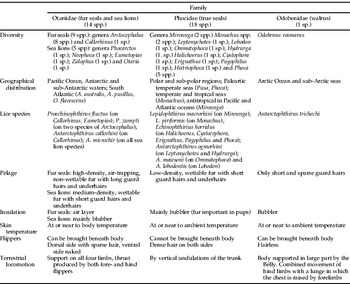
Lice (order Phthiraptera) are the only insects that have become obligate and permanent parasites throughout their entire life cycles, living as ectoparasites on the host's surface (Kim, Reference Kim1985; Bush et al., Reference Bush, Fernández, Esch and Seed2001). Among the sucking lice (Anoplura), the family Echinophthiriidae is the only family whose species have adapted to survive on pinnipeds (Durden & Musser, Reference Durden and Musser1994), a mammalian group that includes fur seals and sea lions (Otariidae), walruses (Odobenidae) and true seals (Phocidae); table 1 summarises the main differences among pinniped families. Currently, the Echinophthiriidae consist of 12 species distributed in five genera (table 1): Proechinophthirus include two species infesting fur seals and sea lions, whereas species of Lepidophthirus (two species) and Echinophthirius (monotypic) occur in true seals. Antarctophthirus is the most diversified and less host-specific genus, with six recognised species infecting fur seals (A. callorhini), sea lions (A. microchir), walruses (A. trichechi) and Antarctic true seals (A. lobodontis, A. ogmorhini and A. mawsoni). A further species of echinophthiriid, Latagophthirus rauschi, has been described from river otters, Lontra canadensis, in North America (Kim, Reference Kim1985).
Features of the three families of Pinnipedia concerning diversity, geographical distribution, lice fauna and biological traits that could influence habitat selection by lice (Kim, Reference Kim1985; Durden & Musser, Reference Durden and Musser1994; Berta et al., Reference Berta, Berta, Sumich and Kovacs2006; Mostmant Liwanag, Reference Mostman Liwanag2008 and references therein).

Echinophthiriids have developed unique morphological adaptations to cope with the amphibious lifestyle of their hosts. All species possess (i) tibia-tarsi of second and third pairs of legs strongly adapted to apprehension; (ii) a membranous abdomen that could increase the efficiency of gas exchange, particularly underwater; and (iii) abdominal spiracles with a sophisticated closing device that apparently preserves atmospheric air and prevents flooding during the host's immersions (Kim, Reference Kim1975). Other adaptations, however, seem to have evolved as a specific response to the different insulation mechanisms of their hosts. Fur seals have developed a dense long-haired fur that creates a layer of trapped air when the animal is submerged (table 1). This insulation mechanism generates a virtually ‘terrestrial’ environment for species of Proechinophthirus, e.g. Proechinophthirus fluctus on northern fur seals and Callorhinus ursinus (Kim, Reference Kim1975). However, sea lions, true seals and walruses rely more on blubber for insulation and have a less dense and wettable pelage (table 1). Accordingly, echinophthiriids infesting these pinnipeds are exposed to truly aquatic conditions, and this apparently results in further morphological adaptations. In species of Antarctophthirus, Lepidophthirus and Echinophthirius, spines have been modified into scales that cover the whole body surface and may serve as a plastron or as a protective surface for their very thin cuticle (Hinton, Reference Hinton and Cheng1976; Murray, Reference Murray and Cheng1976; Mehlhorn et al., Reference Mehlhorn, Mehlhorn and Plötz2002).
Differences between pinnipeds, specifically between non-wettable (fur seals) and wettable (other pinnipeds), also seem to influence the life history strategies of their lice. It has been suggested that Proechinophthirus fluctus and Antarctophthirus callorhini, which infect the northern fur seal (Callorhinus ursinus), a host species with a non-wettable pelage (see table 1), are able to reproduce when the host is both on land and at sea (Kim, Reference Kim1975). However, at least three lice species (Lepidoththirus macrorhini, Antarctophthirus ogmorhini and A. microchir) that infect pinnipeds with a wettable pelage (table 1) are believed to reproduce only when the host is ashore for a relatively long period. According to experimental demonstrations, the reason for this is that the eggs of echinopththiriids (and those of other anoplurans) cannot survive underwater (see Murray, Reference Murray1960, Reference Murray and Cheng1976 and 1987 for details). Therefore, the number of generations per year in lice species from pinnipeds with wettable pelages would be constrained by the duration of haul-out periods by their hosts (Murray & Nicholls, Reference Murray and Nicholls1965; Murray et al., Reference Murray, Smith and Soucek1965; Aznar et al., Reference Aznar, Leonardi, Berón-Vera, Vales, Ameghino, Raga and Crespo2009). An interesting question is whether these selective pressures could also influence microhabitat selection, i.e. whether louse species experiencing aquatic conditions would carefully select oviposition sites because they would need to ‘speed up’ egg development given the time constraint for reproduction.
Pinnipeds also exhibit different mechanisms of terrestrial locomotion (table 1) that are reflected in the structure and morphology of their limbs (King, Reference King1983; Berta, Reference Berta, Berta, Sumich and Kovacs2006). Flippers of true seals (Phocidae) are hairy and are not used in terrestrial locomotion; flippers of walruses (Odobenidae) are hairless and are partially implied in locomotion; and flippers of sea lions and fur seals (Otariidae) have sparse hair only on the dorsal side and are primarily involved in locomotion (table 1). These differences of structure and performance of flippers could also have an impact on the microhabitat that lice select for feeding and oviposition. In particular, lice require hairs to which they glue their eggs (Murray, Reference Murray1987); thus, they might avoid sites with strong physical disturbances (e.g. the sole of flippers in otariids).
Additionally, pinnipeds live not only in polar regions but also in temperate and subtropical waters (table 1). In fact, species of Echinophthiriidae are likely subjected to the greatest variations in climatic conditions among all sucking lice (see Durden & Musser, Reference Durden and Musser1994). Temperature is considered the most crucial factor affecting activity and reproduction of lice, and hair fibres of the pelage can dampen, but not eliminate, the impact of atmospheric temperature on the host's skin (Murray, Reference Murray1987). Accordingly, different strategies in microhabitat selection by echinophthiriids can be expected in response to specific temperature gradients provided by their pinniped hosts.
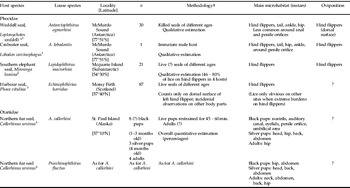
Available studies on microhabitat selection by echinophthiriids deal with four species that infest true seals (three from polar-sub polar regions and one from a cold-temperate region), and two species that infest the northern fur seals in a cold region (table 2). Although these studies are largely qualitative and/or based on small sample sizes, they show two broad patterns of microhabitat selection. First, the four echinophthiriid species infesting true seals tend to concentrate mainly on the host's hind flippers, whereas the two species infecting the fur seal have broad distributions that change with the age of the host; however, hind flippers are not the preferred microhabitat for any species (table 2). Second, regardless of their taxonomic position, at least the three species infesting true seals from polar and sub polar regions also use hind flippers as the oviposition site (no data are available for the species infecting fur seals, see table 2). Murray & Nicholls (Reference Murray and Nicholls1965) and Murray et al. (Reference Murray, Smith and Soucek1965) suggested that hind flippers are highly vascularised areas that would represent a food-rich habitat and are also a place for heat dissipation, thus providing a suitable range of temperature for the development of eggs and activity of larval instars under polar conditions.
Studies on microhabitat selection by lice of the family Echinophthiriidae during the reproductive period of their pinniped hosts on land. Microhabitats are represented in fig. 1.

* Sources: 1Murray et al., 1965a; 2Murray et al., 1965b; 3Thompson et al., 1998; 4Kim, Reference Kim1972 (see also Kim, Reference Kim1975).
† The method of host examination, when described, was a visual scrutiny of naked areas and the combing of pelage against its natural lie using forceps.
In this study, we investigate patterns of microhabitat selection by Antarctophthirus microchir on the South American sea lion, Otaria flavescens, in Patagonia. Because of the methodological difficulties with working with adult seals, we focus on pups, the key age group in the population dynamic of the species (Aznar et al., Reference Aznar, Leonardi, Berón-Vera, Vales, Ameghino, Raga and Crespo2009). In addition, we provide, for the first time in echinophthiriids research, specific data on the microhabitat distribution of each developmental stage, from egg to adult (table 2). This host-parasite association is appealing for the three reasons discussed above: (i) The pelage of South American sea lions becomes wet during immersions (table 1), and pups are the only age group that stays continuously on land for a long enough period (just 1 month) to allow successful reproduction of lice (Aznar et al., Reference Aznar, Leonardi, Berón-Vera, Vales, Ameghino, Raga and Crespo2009). Thus, the question of predicting microhabitat selection in a species with such a tight reproductive schedule arises (see above). (ii) Like other otariids, sea lions have flippers that are used in locomotion (table 1); the question, however, is to what extent A. microchir would use flippers as a microhabitat for feeding or oviposition. (iii) South American sea lions reproduce during the austral summer, when temperatures can reach up to 38°C. These climatic conditions are in sharp contrast to those described in previous studies for other echinophthiriids (table 2), thus raising the question on the role of air temperature on microhabitat selection by A. microchir.
Materials and methods
Data collection
In Patagonia, South American sea lions reproduce during the austral summer, beginning by mid-December and ending in February. This study was conducted during January of 2009 in the sea lion rookery of Punta León, Chubut Province, Argentina (43°47′S, 64°30′W). Punta León is a Provincial Scientific Reserve located 10 km south of Punta Ninfas, on the southern side of the mouth of Golfo Nuevo. The sea lion rookery is on an open pebble beach that spreads over 7 km of coastline and is limited by 50–100-m high cliffs. Average air temperatures in January are about 20°C, with maximum temperatures sometimes reaching 38°C (Yorio et al., Reference Yorio, Bertellotti and Quintana1995).
Sampling of lice
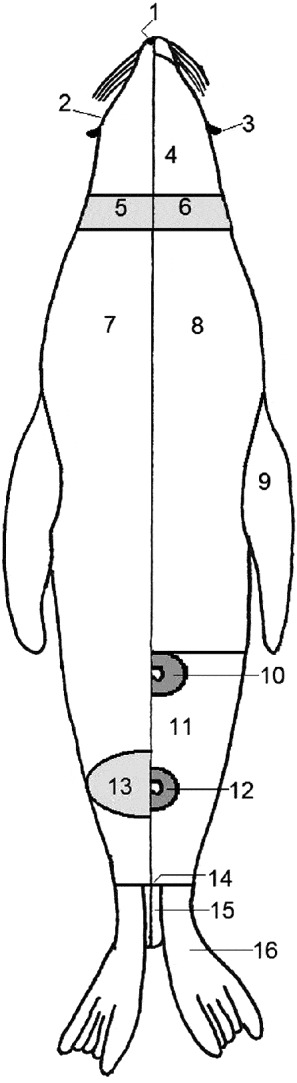
A total of a 25 South American sea lion pups were examined for lice. Three body microhabitats were defined for sampling: (i) hind flippers, (ii) back and (iii) belly. To make our results comparable to those from previous studies, the following equivalencies have to be made (fig. 1): ‘hind flippers’ include hind flippers, tail and ankle; ‘back’ includes hip and back, but not neck; ‘belly’ includes belly, chest, anus, umbilical area, and penile orifice (in males). The neck, head, and fore flippers were not examined because these were the points of restraint. The head, in particular, had to be restrained all of the time to avoid injury to researchers. Only opportunistic examination of ears, eyes and nostrils could be performed. To collect lice, each pup was restrained by two people while a third person (the same one in all collections to minimise biases) combed the pelage with fine-tooth combs of the type used for treating human pediculosis, collecting samples from each microhabitat separately (see details in Aznar et al., Reference Aznar, Leonardi, Berón-Vera, Vales, Ameghino, Raga and Crespo2009). The mean manipulation time was 4′15″±37″ (n=25). Manipulation included measuring, weighing, tagging and combing the pup. Combing took about half of the entire manipulation time and stopped when no more lice were collected. Once pups were released, their mothers readily accepted and nursed them, and all manipulated pups survived the study period.
Diagrammatic view of the external surface of a pinniped showing the microhabitats defined for echinophthiriids. 1, nostrils; 2, eyelids; 3, auditory canal; 4, head; 5, dorsal neck; 6, ventral neck; 7, back; 8, chest; 9, fore flippers; 10, umbilical area; 11, belly; 12, penial orifice; 13, hip; 14, anal orifice; 15, tail; 16, hind flippers.

Lice from each microhabitat and each individual pup (see below) and the comb were put in a Ziploc bag with 96% (v/v) ethanol. Lice were classified into nymphal stages, and male and female adults following Leonardi et al. (Reference Leonardi, Crespo, Raga and Fernández2009). The reproductive status of females (ovigerous, non-ovigerous) was also recorded according to whether eggs could be observed by transparency.
Microhabitat characterisation
Under field conditions, the following microhabitat measurements were taken on eight dry pups that were randomly selected to determine the differences in temperature among microhabitats. Temperatures were taken in sequence and randomly with an infrared thermometer (TFA Flash3 31.1114 Infrared-thermometer, measuring range –33°C to 250°C; accuracy 2% or 2°C) at the following sites: (i) surface of the back, at the tip of the hairs, (ii) back skin, (iii) belly surface (hairs are too short to make a distinction between surface and skin levels) and (iv) hind flippers. Each measurement was taken twice between 12:00 am and 14:00 pm, i.e. at the time of maximum solar radiation. Air temperature, relative humidity and substrate temperature were also recorded with a weather station (model Skywatch ATMOS, Mod.06. GEOS 11. WSC-888).
Samples of hair from the back and the belly were randomly selected and collected from 20 pups. These sites were chosen because the ventral side of the hind flippers has no hair, and hairs of the dorsal side of the hind flippers are too short to be collected without harming the pup. The length and thickness of each individual hair was measured under a stereomicroscope (at 80×).
Statistical analyses
Infestation parameters were estimated following Rózsa et al. (Reference Rózsa, Reiczigel and Majoros2000). Seven population categories were considered, namely: eggs, nymphs 1–3, males, non-ovigerous females and ovigerous females. Prevalence was defined as the frequency of occurrence, expressed as a percentage, of a given population category in the total population or on specific microhabitats (e.g. belly). Sterne's exact method, which is based on the binomial distribution, was used to set 95% confidence intervals (CIs) for prevalence (Reiczigel, Reference Reiczigel2003). Mean abundance was defined as the mean number of individuals of a population category per host or microhabitat in the total sample of hosts. Raw abundance data were strongly non-normal for all population categories, and normality could not be achieved after usual transformations (Shapiro-Wilks tests, P≪0.05). Therefore, to set 95% CIs of mean abundances, we used a bootstrap procedure with 20,000 replications (see Rózsa et al., Reference Rózsa, Reiczigel and Majoros2000 for details).
Of the three body microhabitats that were defined for sampling, lice appeared only on the back and belly (see Results). Statistically significant differences of abundance of each population category between these microhabitats were investigated with non-parametric Wilcoxon tests for paired observations (Conover, Reference Conover1999).
Data on the length and diameter of hairs from back and belly followed normal distributions. Hairs were assumed to be collected from different hosts; and, therefore, Student's t-tests for independent samples were used to compare hair length and diameter. Data on temperature, however, were not normal; therefore, a nonparametric Friedman test for related samples was used to look for significant differences in temperature between the dorsal surface, dorsal skin, ventral surface and flippers. A post hoc comparison (Conover, Reference Conover1999) was used to determine the pattern of significant differences in temperature between sites.
Infestation parameters and their CIs were obtained with the free software Quantitative Parasitology v.3 (Reiczigel & Rózsa, Reference Reiczigel and Rózsa2005). The remaining analyses were carried out with SPSS v. 17 (SPSS Inc., Chicago, Illinois, USA). Statistical significance was set at P<0.05.
Results
All but one of the pups were infested with A. microchir. Prevalence (95% CI) was, therefore, 96.0% (80.4–99.7). A total of 449 lice were collected, with a mean abundance (95% CI) of 18.0 (12.6–29.0) lice per host.
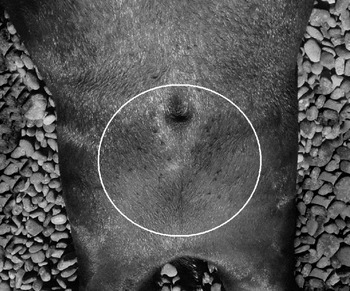
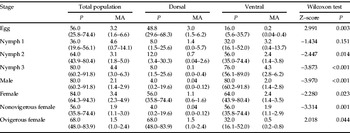
Lice were readily visible on pups with the naked eye, particularly on the ventral side, where hairs were shorter (see below), and were more or less spread on the surface and not in close aggregations (e.g. around the navel or the anus) (fig. 2). No lice or eggs were found on dorsal or ventral hind flippers. Prevalence and mean numbers of each developmental stage per host (mean abundance) in the total population and on the dorsal and ventral surfaces of pups are shown in table 3. A contrasting pattern was found: the prevalence and mean abundance of eggs and ovigerous females were higher on the dorsal vs. the ventral surface, whereas the opposite pattern was found in the case of nymphs 1–3, males and non-ovigerous females. All differences were statistically significant except in the case of nymph 1 (table 3).
Photograph of Antarctophthirus microchir on the belly of a South American sea lion pup (Otaria flavescens).

Prevalence (P) and mean abundance (MA), with 95% confidence interval in parentheses, of different developmental stages of the louse Antarctophthirus microchir in the total population, and on the dorsal and ventral surfaces of 24 pups of South American sea lion, Otaria flavescens from Patagonia. Values of Wilcoxon tests comparing abundances between dorsal and ventral surfaces of each stage are also provided (P–value >0.05 not significant).

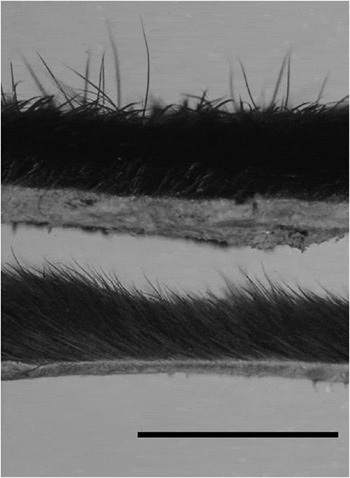
A quick perusal of the ventral and dorsal surfaces of a pup's pelt clearly indicated differences of pelage between both sides (fig. 3). Samples of hairs obtained randomly from pups confirmed that hairs were significantly longer and thicker on the dorsal than on the ventral surface: mean length (±SD) was 12.0±1.5 vs. 10.2±1.8 mm (t=4.599, df=19, P<0.001), and mean width was 6.3±1.0 vs. 4.8±1.3 μm (t=3.485, df=19, P=0.001), respectively.
Photograph of the dorsal (superior) and ventral (inferior) hair from a South American sea lion pup, displaying the differences in length and density (bar=10 mm).

Data on temperatures taken of air, substratum and pup body areas are shown in table 4. The temperature of the substratum was higher than that of the pelage and was closer to that recorded on the dorsal surface of pups. The Friedman test revealed overall differences in temperatures between the dorsal surface, dorsal skin, ventral surface and flippers (Chi squared=16.35, 3 df=8, P=0.001). However, the post hoc comparison indicated only significant differences between the dorsal surface and any other sites (P<0.05) (table 4).
Mean, variance and range of temperature measurements in air, substratum, and different body parts of pups of South American sea lion, Otaria flavescens, in Punta León, Patagonia. Environmental relative humidity (RH) is also provided.

Discussion
Results from this study indicate three clear patterns in the microhabitat selection by A. microchir in pups of South American sea lion: (i) no lice or eggs occur on the hind flippers; (ii) eggs and ovigerous females are more abundant on the dorsal side of the body; and (iii) nymphs, males and non-ovigerous females are more abundant on the ventral side. No previous study on echinophthiriids reported specific microhabitat data for different developmental stages (table 2). However, to interpret these patterns, several methodological caveats must be stressed at the outset. First, we lack quantitative data about lice distribution on the neck, head and fore flippers of pups because these were points of restraint. However, a congeneric echinophthiriid species, A. callorhini, was frequently reported on eyelids, auditory canals and nostrils of northern sea lions (table 2). We consider it unlikely that nymphs or adults were overlooked on any of the restraining points, particularly on bare areas, because lice were visible with the naked eye (fig. 2), but we cannot rule out that oviposition occurred there.
Second, previous studies on microhabitat selection of echinophthiriids have benefited from long periods (e.g. 45–60 min) of examination of wild pups or dead, captive or restrained adult seals (Murray & Nicholls, Reference Murray and Nicholls1965; Murray et al., Reference Murray, Smith and Soucek1965; Kim, Reference Kim1972, Reference Kim1975). However, in this study, the handling time of pups had to be very short (less than 5 min), and, therefore, an attempt to collect their whole lice population could not be made. Combing of pelage was used as an alternative technique to obtain abundance indices. This methodology has proven useful to study the population dynamics of A. microchir (Aznar et al., Reference Aznar, Leonardi, Berón-Vera, Vales, Ameghino, Raga and Crespo2009). It is also considered reliable for the goals of the present study because comb inter-teeth width is narrow enough (300 μm) to minimise differential sampling of developmental stages (mean length and width of the smallest nymphal instars are 980 and 450 μm, respectively, and mean egg length is 930 μm: see Leonardi et al., Reference Leonardi, Crespo, Raga and Fernández2009). Even so, we avoided direct statistical comparison between abundances of different developmental stages. Combing was also more difficult on the back because the pelage is denser and longer than on the belly. However, we tried to maintain an equal sampling effort by combing each microhabitat until no more lice or eggs were collected. The fact that the most difficult stages to collect (nymphs 1 and eggs) were more abundant on the back suggests that the basic distribution patterns are not confounded by a differential sampling effort between microhabitats.
A third caveat is that lice sampling was always carried out during the period of highest solar radiation. This ensured repetitive sampling conditions given our modest host sample size, but it cannot be ruled out that lice change position on the body throughout the day depending on variations in temperature or other factors. For instance, Murray (Reference Murray1987) reported that, under polar conditions in Antarctica, A. ogmorhini were restricted to areas on Weddell seals used in heat dissipation (table 2). However, in some of these seals that were transported and kept in the New York Aquarium at 14°C, lice were observed to spread over the whole body.
Finally, inferences about microhabitat selection by A. microchir are restricted to pups. Whether or not patterns may change in older hosts is unknown. Kim (Reference Kim1972) reported differences of distribution of A. callorhini between 3-month-old pups and older individuals of northern fur seal (table 2), but this author acknowledged that no definite explanation could be offered to account for these differences. In any event, host sample sizes were small and thus prone to sampling error.
A comparison of egg abundance between microhabitats suggests that females of A. microchir select the back of pups as the main oviposition site. This interpretation is consistent with the significantly higher abundance of ovigerous females on the back than on the belly. Interestingly, nymphs 1 were also relatively abundant on the back compared to latter developmental stages, during which populations were significantly concentrated on the belly. Regardless of whether nymphs 1 also prefer the belly, their numbers on the back could be higher simply because that is where they emerge from the eggs. The oviposition pattern in A. microchir contrasts with what has been reported in lice from true seals, i.e. that hind flippers are the optimal microhabitat for oviposition (table 2). In both Lepidophthirus macrorhini from the Southern elephant seals and A. ogmorhini from Weddell seals, female lice appear to select areas that are used in heat dissipation (Murray & Nicholls, Reference Murray and Nicholls1965; Murray et al., Reference Murray, Smith and Soucek1965). For instance, in elephant seals, when the air temperature was just 1.8°C, the skin temperature of the body was 1–6°C, but the temperature of the flippers was 29–32°C. Accordingly, flippers provided an optimum range of temperature for egg development. More generally, skin temperature is known to strongly influence oviposition behaviour of all lice (Murray, Reference Murray1955, Reference Murray1957a,b,c,d, 1960, 1987; Murray & Nicholls, Reference Murray and Nicholls1965; Murray et al., Reference Murray, Smith and Soucek1965). However, in pups of South American sea lions, we found little difference in temperature between the flippers, the back (at the level of skin) and the belly. Variances of temperature measurement were relatively large compared to air temperature (table 4), possibly because pups exhibited some differences in the degree of wetness (see below). Still, the data does not appear to suggest fundamental differences in temperature between microhabitats.
Another key factor constraining oviposition of sucking lice is the presence of hair and hair thickness (Murray, Reference Murray1957d, Reference Murray1987): if the hair is too wide to be held by the gonopod, no eggs are laid. Hairs were significantly longer and thicker on the back than on the belly of sea lion pups. In addition, pups had no hair on the ventral side of hind flippers (table 1); and, on the dorsal side, hair was sparse, short and possibly thinner than hair on the back, but morphometric data could not be taken. Because females of A. microchir glued their eggs preferentially to the wide hair on the back, hair thickness is most likely not a factor explaining microhabitat preferences for oviposition.
Relative humidity (RH) could also be a key factor influencing oviposition. In the Phthiraptera, morphogenesis may proceed over a wide range of RH, but extremely high humidity (e.g. by pelage soaking) strongly affects egg hatching (Murray, Reference Murray1987, and references therein). For instance, Mougabure Cueto et al. (Reference Mougabure Cueto, Zerba and Picollo2006) recently confirmed that the eggs of the head louse, Pediculus humanus, hatched at negligible levels at RH close to 100%. In the echinophthiriid L. macrorhini, Murray & Nicholls (Reference Murray and Nicholls1965) experimentally demonstrated that eggs failed to hatch when submerged in seawater. In the case of A. microchir, preliminary data indicate that no eggs can hatch when submerged in seawater for 24 h within a range of 0–35°C (Leonardi et al., unpublished data). The lethal effect of high humidity on eggs is one of the most defining features of the life cycle of echinophthiriids. Apparently, these lice are adaptable (e.g. to extreme cold conditions); but, as far as we know, they can only reproduce under aerial conditions (Aznar et al., Reference Aznar, Leonardi, Berón-Vera, Vales, Ameghino, Raga and Crespo2009, and reference therein).
In Punta Leon, sea lion pups may become wet twice a day as a consequence of tidal cycles, but the chances for soaking may vary depending on ambient temperature. In warm days, animals are more exposed to seawater because they remain near the tide line (Campagna & Le Boeuf, Reference Campagna and Le Boeuf1988); whereas, at night or on cooler days, they are far from it. Regardless, many of the pups that we captured for this and other studies over the years were soaked (Leonardi, personal observation). The backs of the pups obviously dry faster than the ventral side, particularly during sunlight exposure. Moreover, the belly, because of its permanent contact with the substratum, exhibits high RH for many hours. Therefore, the hypothesis that should be investigated in the future is whether or not ovigerous females of A. microchir select the microhabitat that minimises mortality due to pelage soaking.
Nymphs 2 and 3, non-ovigerous females and males of A. microchir were significantly more abundant on the ventral side of pups during the period of highest solar radiation. Temperature has been involved as a key factor in the restricted distribution of other echinophthiriids from true seals (Murray & Nicholls, Reference Murray and Nicholls1965; Murray et al., Reference Murray, Smith and Soucek1965; table 2); but, as noted above, we found no evidence that skin temperature differs between hind flippers, backs and bellies of pups. The absence of lice on hind flippers is consistent with the major role of these structures in locomotion and posture in eared seals (table 1), i.e. lice on these unprotected surfaces could readily be exposed to mechanical abrasion.
However, the preference of most lice for the ventral side on the pup's body is more puzzling. Experimental data have shown that plumage or pelage hardly buffer against low ambient humidity (Murray, Reference Murray1987; Moyer et al., Reference Moyer, Brown and Clayton2002). Therefore, the question is whether the arid conditions (average RH=28%) to which sea lion pups are exposed at Punta León have an impact on their lice. Echinophthiriids are characterised by a fine cuticle, probably as an adaptation to breathe underwater (Mehlhorn et al., Reference Mehlhorn, Mehlhorn and Plötz2002), and so a combination of high air temperature and low humidity might induce rapid desiccation. If this is the case, the presumably higher humidity on the belly could represent an advantage for A. microchir. Note, however, that low humidity could also have little effect on a blood-feeding ectoparasite, given the high water content of its diet (Moyer et al., Reference Moyer, Brown and Clayton2002).
In summary, the present study suggests that microhabitat selection by an echinophthiriid from eared seals differs among instars, and patterns of microhabitat use differ from those described for both eared and true seals. In a hot and dry environment, periodic soaking of pups due to tidal cycles could play a role in explaining microhabitat selection by lice; however, a great deal of further data are necessary to substantiate this hypothesis in the future. Regardless, echinophthiriids are a fascinating example of the capacity of some parasitic insects to adapt to a wide variety of ecological scenarios.
Acknowledgements
The authors thank M. Degrati, N.A. García, G. Giardino, M.F. Grandi, M.J. Klaich, A. Mandiola and L. Silva for their invaluable assistance with fieldwork. Two anonymous reviewers provided invaluable insights that dramatically enhanced this manuscript. We are very grateful to our colleagues of the Laboratorio de Mamíferos Marinos (CENPAT). This study was funded by the BBVA Project ‘Estudio de las amenazas para la conservación de mamíferos marinos de Patagonia’ and the Zoo d'Amneville, France. Institutional and logistic support was given by Centro Nacional Patagónico (CONICET, Argentina) under permits of the Secretaría de Áreas Protegidas y Turismo and the Dirección de Fauna y Flora Silvestre, Chubut Province (Argentina). At the time this paper was written, M.S. Leonardi and D.G. Vales were supported by a PhD fellowship from Consejo Nacional de Investigaciones Científicas y Técnicas of Argentina. M.S. Leonardi is grateful to the Ministerio de Ciencia, Tecnología e Innovación Productiva Nación for the promotion of the scientific Argentinean programme and the support to public education.