
Introduction
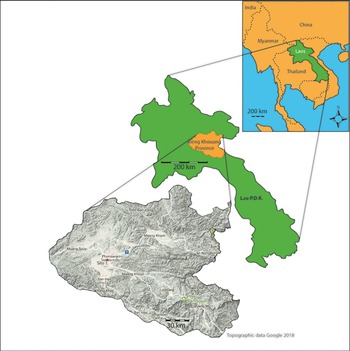
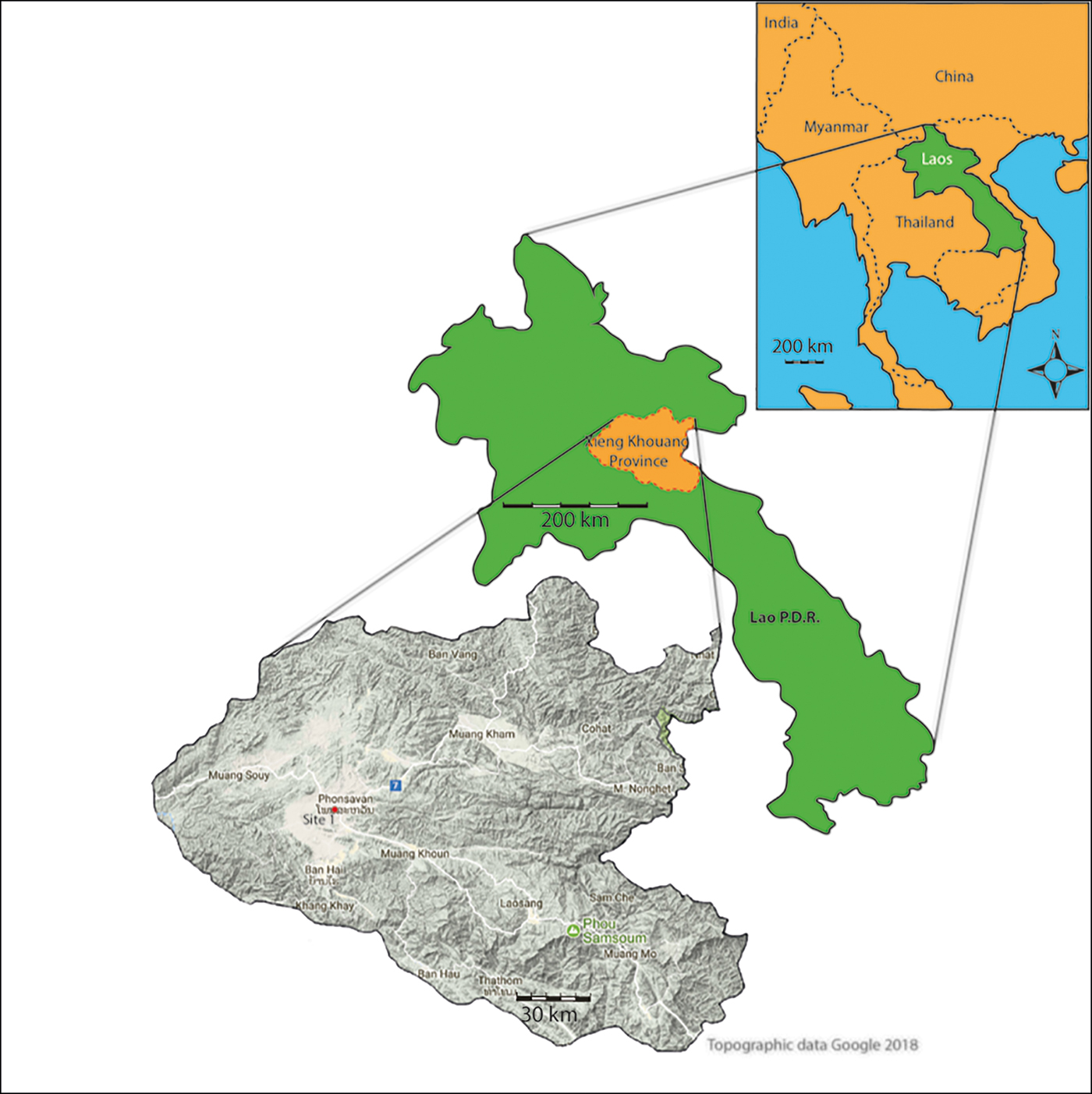
The megalithic jar sites of northern Laos, comprising groups of large, hollowed, oblong stone vessels, boulders and carved discs, have long inspired fascination (Figure 1). The ‘Plain of Jars’—a name based on the location of three of the best-known sites (sites 1, 2 and 3)—is situated in a broad plain in Xieng Khouang Province of Laos. The name, however, is a misnomer, as many jar sites are also known outside this plain, mostly in mountainous locations (O'Reilly et al. Reference O'Reilly, Shewan, Van Den Bergh, Luangaphay and Luangkoth2018). The jar sites vary in size, each hosting between one and 400 jars. So far, over 79 megalithic jar sites have been catalogued (Van Den Bergh & Luangaphay Reference Van Den Bergh and Luangaphay2008; Genovese Reference Genovese2015; Shewan & O'Reilly Reference Shewan and O'Reilly2019). While a further 26 jar sites in Xieng Khouang Province were reported by Van Den Bergh and Luangaphay (Reference Van Den Bergh and Luangaphay2008), these are yet to be geolocated, and other sites mentioned by Colani (Shewan & O'Reilly Reference Shewan and O'Reilly2019) also remain unlocated. Thus, there are potentially 118 megalithic jar sites in northern Laos (O'Reilly et al. Reference O'Reilly, Shewan, Van Den Bergh, Luangaphay and Luangkoth2018), and the recent discovery of several new jar sites (Khamphoumy Reference Khamphoumy2013; Genovese pers. comm.) suggest that many more may yet be identified.
Map showing the research area (figure by Plain of Jars Research Project 2016, with topographic data from Google Reference O'Reilly, Shewan, Van Den Bergh, Luangaphay and Luangkoth2018).
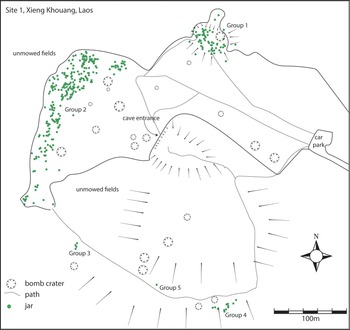
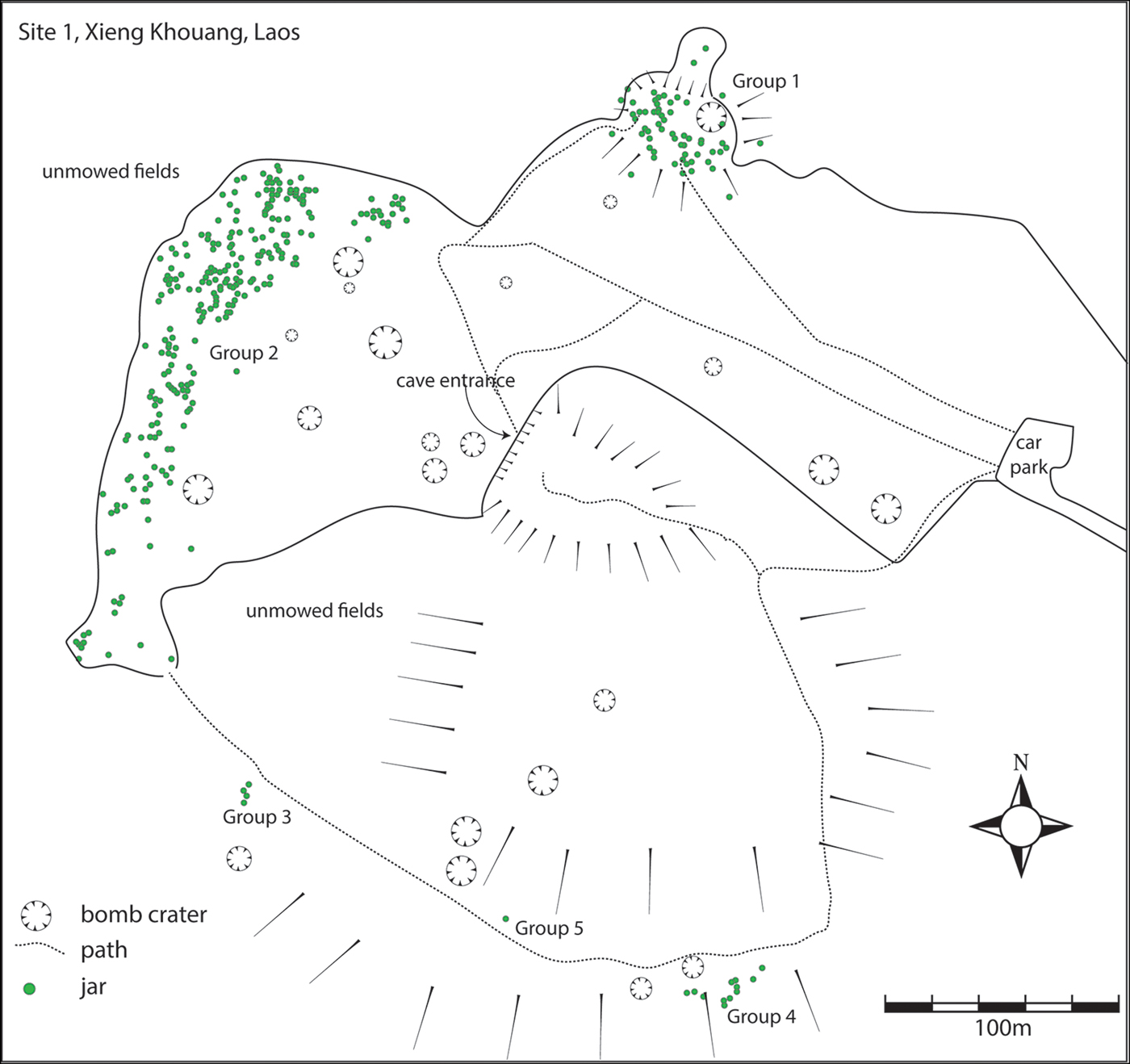
Although several early visitors noted the megaliths of Laos, it was not until the 1930s that any significant research was undertaken. Recently, a Lao-Australian team commenced a new research programme at one of the largest megalithic jar sites of Laos—site 1. This comprises five groups of jars, including discs and boulders, abutting a limestone cave (Figures 2 & S1, in the online supplementary material (OSM)). A lack of modern archaeological research prohibits a clear understanding of the culture that created the megalithic sites of Laos. There is, for example, little knowledge of their dates—evidence that may inform our understanding of contexts such as migration and trade. Similarly, studies of the human remains might inform us about the health of the individuals buried at these megalithic sites and the demographic structure of the wider community. The research project at site 1 therefore aimed to document the jars, map their distribution and undertake excavations to determine the nature of the archaeological deposits associated with them. The research comprises bioarchaeological, geochronological and isotopic analysis to 1) ascertain the date of the archaeological deposits; 2) investigate the mortuary population through analyses of health, demography and burial treatment; and 3) gain a greater understanding of the regional interactions represented by the archaeological material. This article presents the findings of these excavations and discusses the wider implications of the research.
Plan view of site 1 showing jar groups and limestone cave (figure by Plain of Jars Research Project 2016).
Previous research
Colani led the first archaeological mission to study the megalithic jars. Although her efforts focused on Ban Ang—now known as site 1—she also excavated several other megalithic sites in Xieng Khouang province (Colani Reference Colani1935; Shewan & O'Reilly Reference Shewan and O'Reilly2019). At site 1, Colani excavated around several of the megaliths and inside the limestone cave that dominates the site. She concluded that the latter was a crematorium based on the presence of burned human bone, and hypothesised that the jars were used to hold the cremated remains of the dead.
Colani reported a range of material culture recovered from her excavations, including glass and carnelian beads, ceramic vessels and sherds, spindle whorls, ceramic ear-discs, jewellery and iron, bronze and ground stone objects (Shewan & O'Reilly Reference Shewan and O'Reilly2019). She also reports finding ‘grave goods’ and pottery when excavating around and under siliceous quartz breccia boulders. Nitta's (Reference Nitta1996) excavation and mapping of site 1 in 1994 revealed unburned human bones and teeth around two stone jars, along with iron knives and glass beads. Nitta also reports finding pits, one of which contained an incised ceramic jar covered by a flat stone, inside which were found fragments of human bone and three teeth. While offering no detailed interpretation of these pits, Nitta (Reference Nitta1996: 17) suggests that the pit and jar burials date to the late first millennium AD.
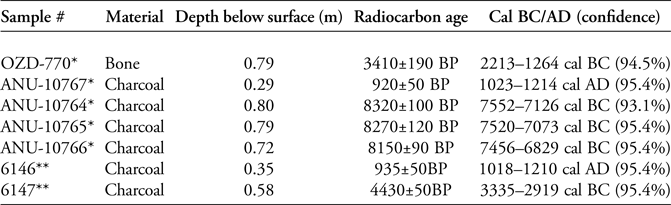
Three excavations conducted by Sayavongkhamdy in 1996 (Sayavongkhamdy & Bellwood Reference Sayavongkhamdy and Bellwood2000) revealed 11 burial contexts, some of which were associated with limestone blocks, and the presence of chipped sandstone ‘pavements’. The human remains comprised teeth, long bones and two skulls (Table 1).
Dates reported in Sayavongkhamdy (Reference Sayavongkhamdyn.d.)* and Van Den Bergh (Reference Van Den Berghn.d.)** for site 1.

The material culture recovered included stone pendants, ceramics, iron bangles, knives, glass, carnelian and nephrite beads, ochre, miniature vessels, mortars, ceramic spindle whorls and ear discs, bronze bells and spirals, a ground stone pestle and a stone disc (Sayavongkhamdy Reference Sayavongkhamdyn.d.). Sayavongkhamdy also excavated around the quartz breccia boulders and discovered a number of 0.6m-tall ceramic vessels, although none contained bone or ash. In 2004, artefacts were recovered during the clearance of unexploded ordnance at site 1, including two ceramic mortuary vessels similar to those found previously. Van Den Bergh (pers. comm.) also identified burial assemblages adjacent to quartz breccia boulders comprising ceramic sherds, pieces of burned clay, stone artefacts, charcoal and human bone. The ceramic assemblage comprised thick coarse-ware sherds with incised designs.
2016 excavations
In 2016, a Lao-Australian team undertook archaeological research at site 1 as the first phase of a five-year project (O'Reilly & Shewan Reference O'Reilly and Shewan2016; Shewan et al. Reference Shewan, O'Reilly and Luangkhoth2016). The research involved excavation, mapping and drone photography, and documentation of the megaliths (384 jars, 16 sandstone discs and 308 siliceous quartz breccia boulders).
Methods
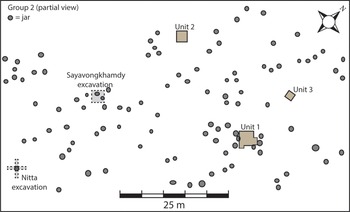
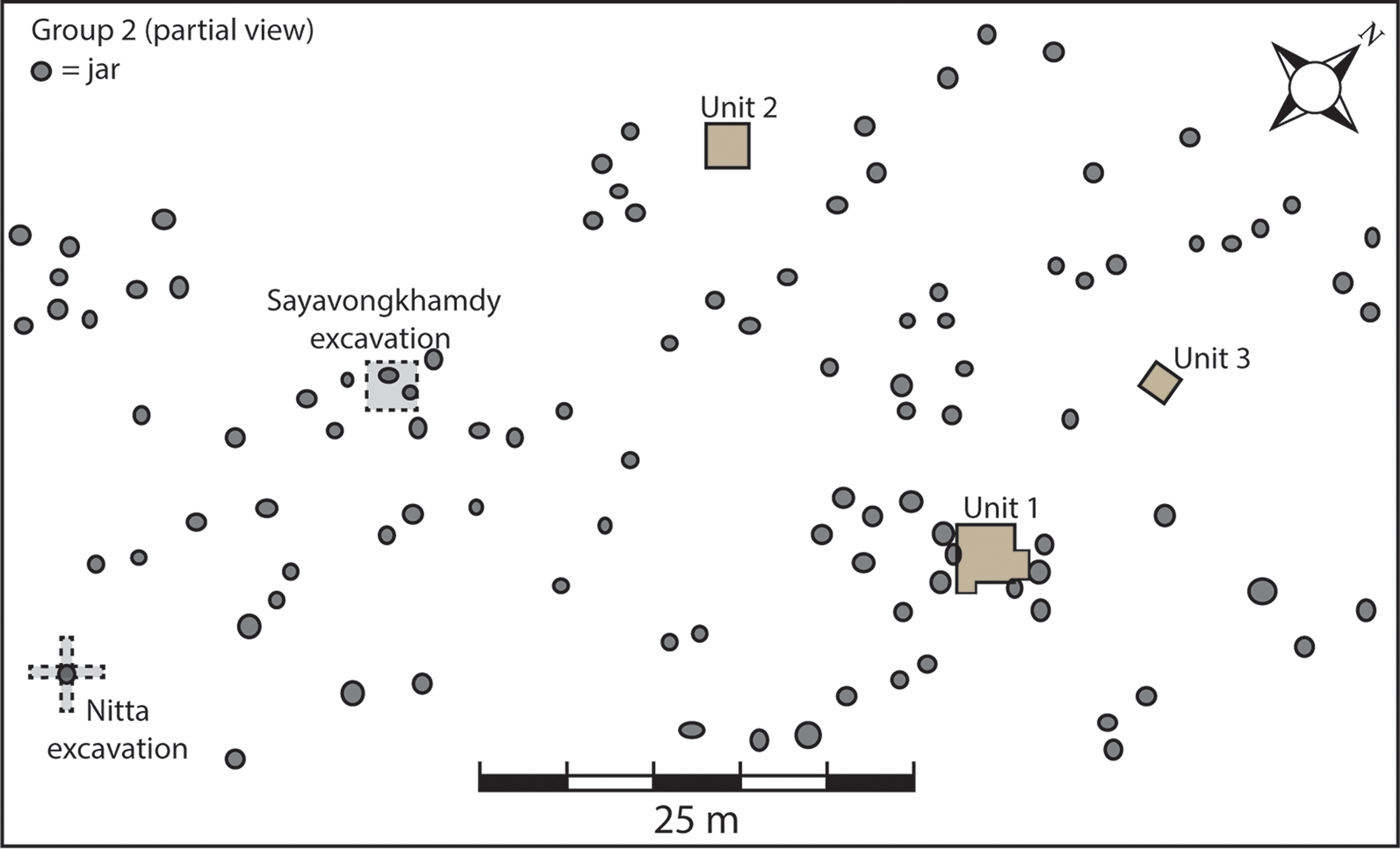
Three excavation units were opened, all located on the broad, flat area to the north of the limestone cave within jar group 2 (Figure 3). Excavations were undertaken using arbitrary 100mm spits and established archaeological recording methods. The human remains recovered were analysed using standard techniques. The estimation of age-at-death of the infant and child remains (<15 years of age) prioritises the development of the dentition (Moorrees et al. Reference Moorrees, Fanning and Hunt1963a & Reference Moorrees, Fanning and Huntb), followed by skeletal development (Scheuer & Black Reference Scheuer and Black2000). A foetus is defined as being younger than 37 weeks’ gestation, neonates from 37 weeks in utero until younger than one month after birth, and the infant age group as from birth to less than one year of age (Halcrow et al. Reference Halcrow, Tayles, Elliot, Han, Betsinger and Scott2017). A multifactorial approach is used to estimate the age-at-death of adults, although the poor preservation of the remains may influence accuracy. Standard measures include observations of late-fusing epiphyses and dental attrition (Buikstra & Ubelaker Reference Buikstra and Ubelaker1994). The estimation of sex for adults is based on standard morphological observations of the cranium, in the absence of pelves (Buikstra & Ubelaker Reference Buikstra and Ubelaker1994). Sex estimation is not attempted for infants and children.
Map showing the location of excavation units 1, 2 and 3; dotted lines represent past excavations nearby (figure by Plain of Jars Research Project 2016).
Results
Unit 1
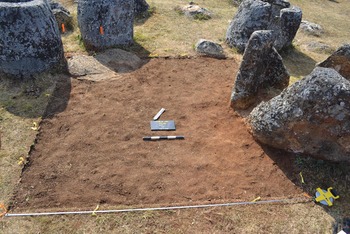
A 3 × 3m unit was located between a number of jars, incorporating a large sandstone disc (Figure 4), and in the vicinity of some quartz breccia boulders.
Unit 1 after the removal of the grass, showing megalithic jars and other features; extensions to this area were excavated later (figure by Plain of Jars Research Project 2016).
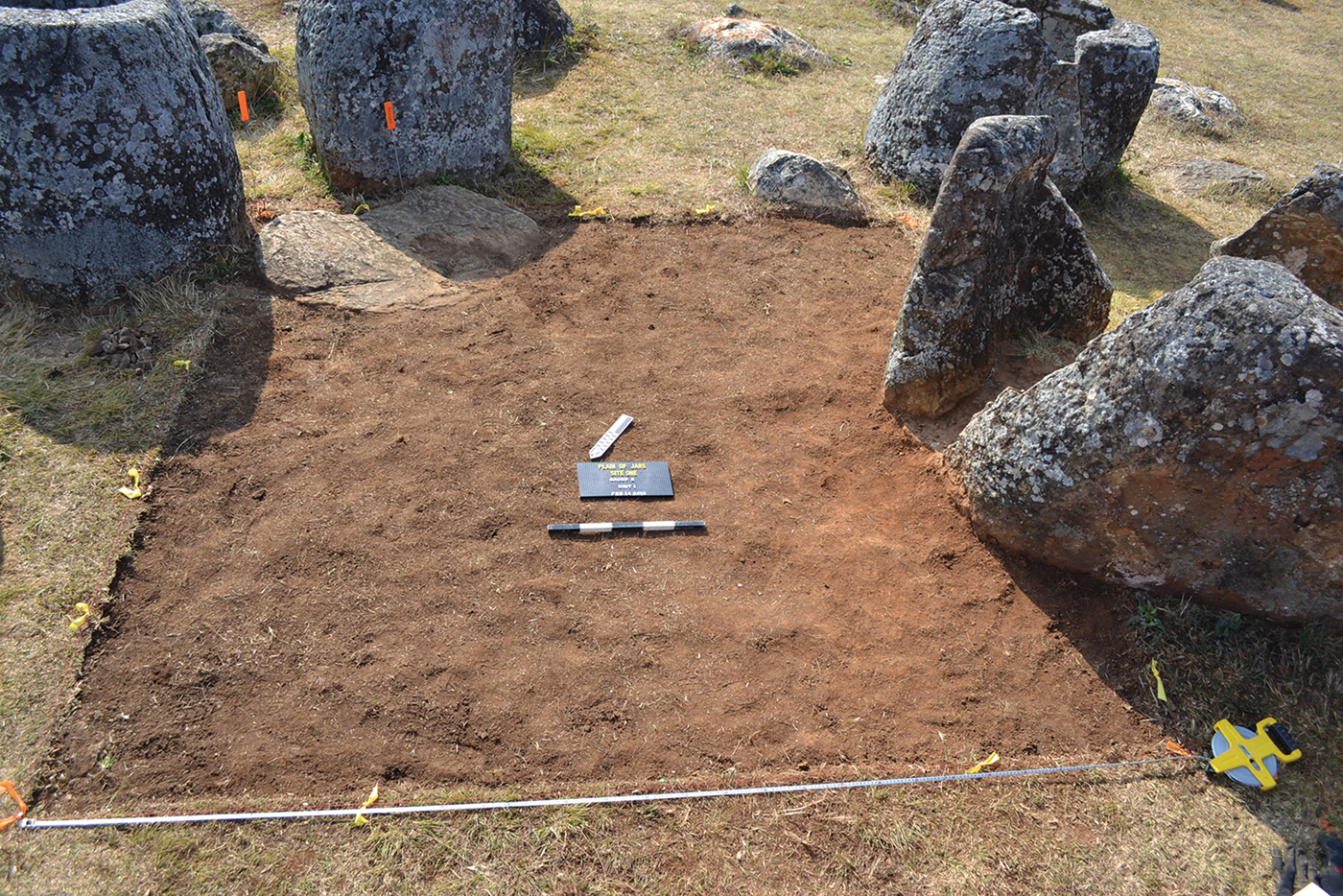
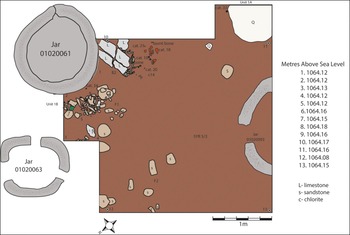
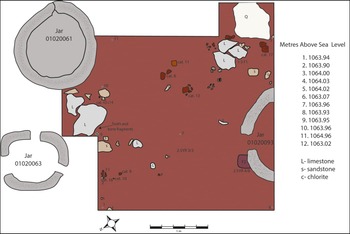
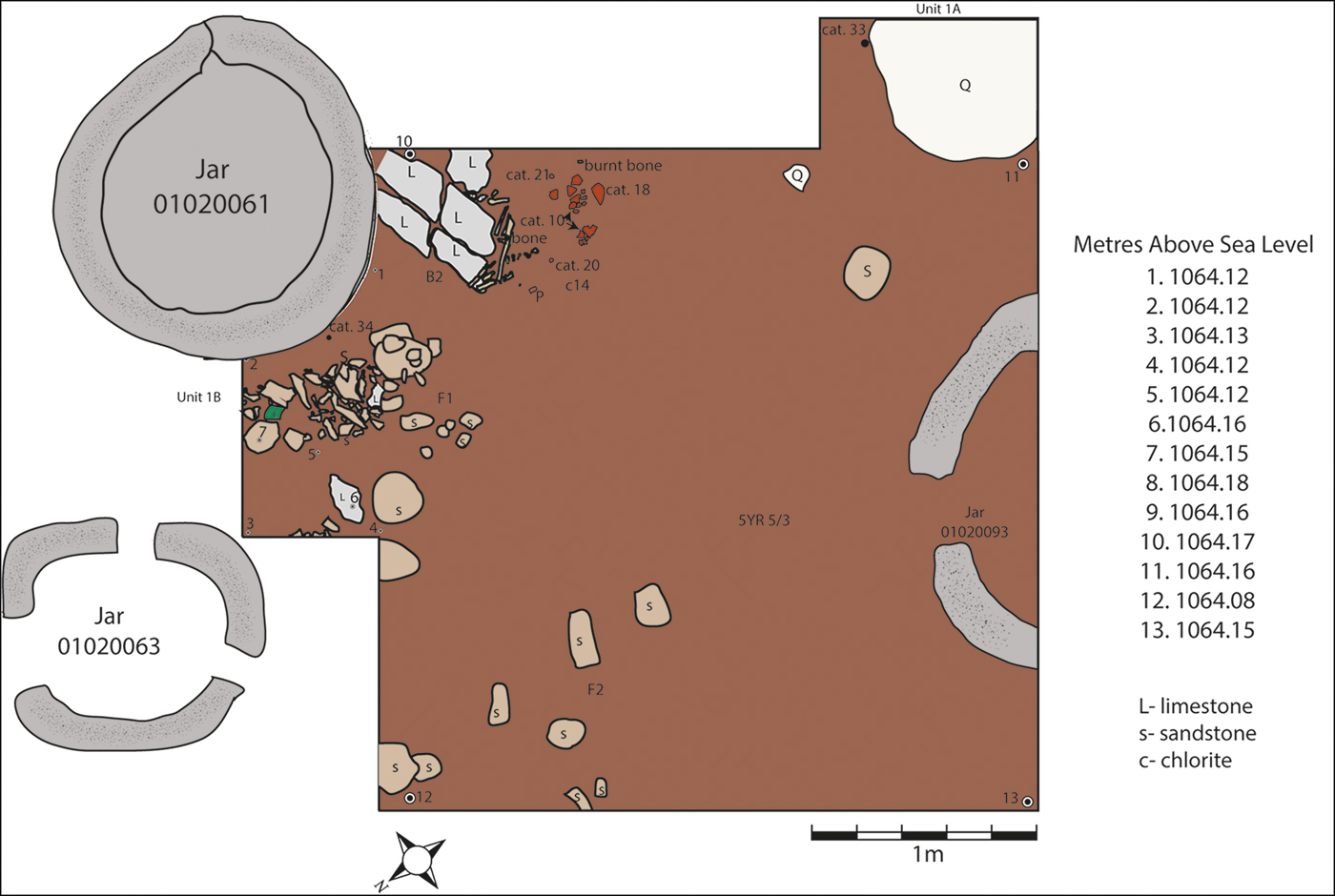
Excavation revealed a number of features, including ‘pavements’ of sandstone chips found approximately 0.2m below the surface, and limestone blocks. In some instances, human remains, such as burial 1 (which was accompanied by a spindle whorl), were found in association with these limestone features (Figure S2). Burial 2, which comprised human remains, a ceramic ear disc, whetstone fragments, ceramic sherds (Figure S3) and an agate bead (Figure S4), was found placed upon limestone blocks, which lay beneath a sandstone disc (Figures 4–5). Approximately 0.3m below the surface and close to one of the megalithic jars, a chlorite pendant (Figure S5), a hammerstone and a miniature ceramic jar with incised decoration (Figure S6) were found placed on a limestone block. At approximately 0.4m below the surface, 196 ceramic sherds (Figure 6), a ceramic vessel (similar to that shown in Figure S6), and a whetstone fragment were found.
Map illustrating features mentioned in the text in unit 1 at level 1:2 (figure by Plain of Jars Research Project 2016).
Map illustrating features mentioned in the text in unit 1 at level 1:4 (figure by Plain of Jars Research Project 2016).
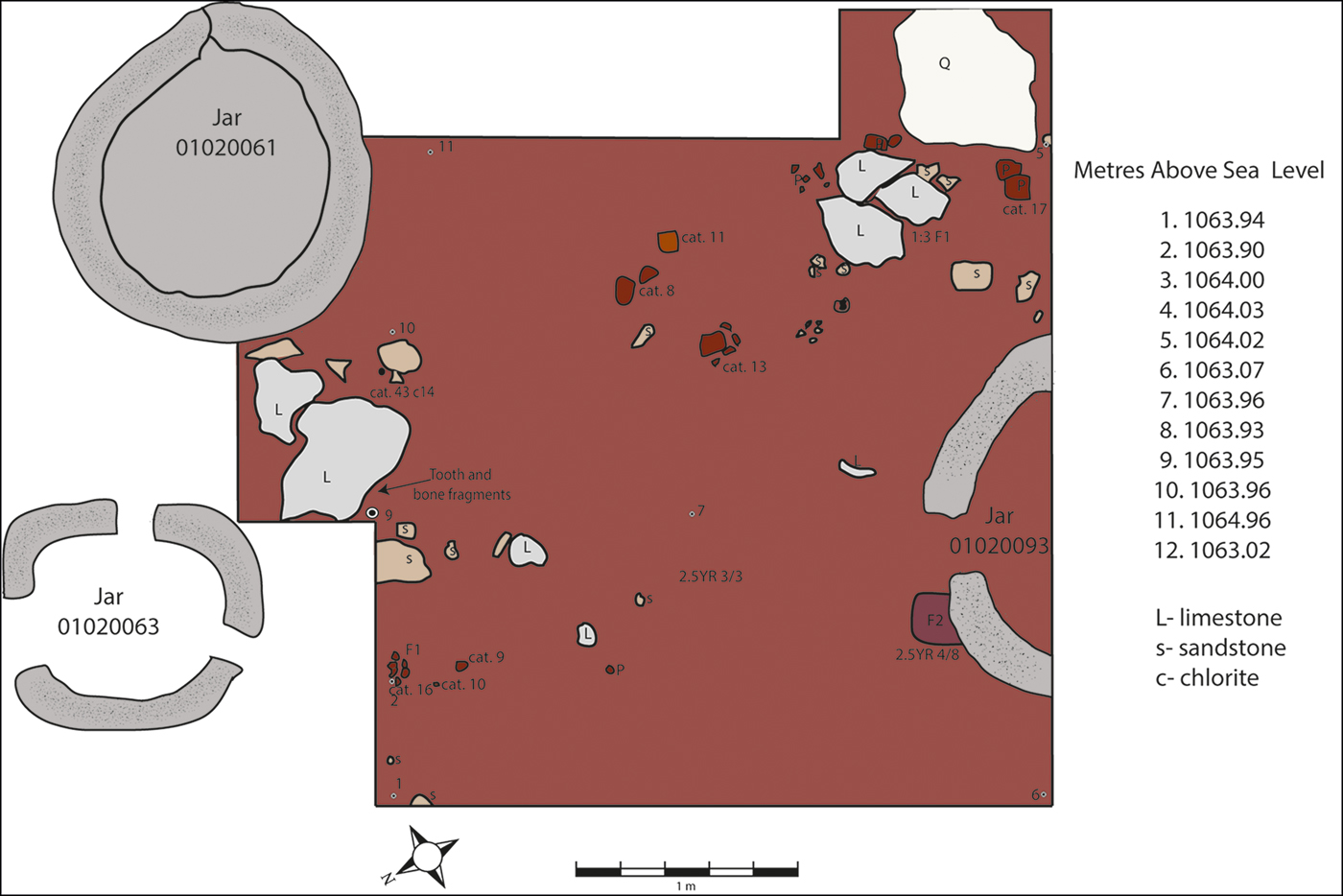
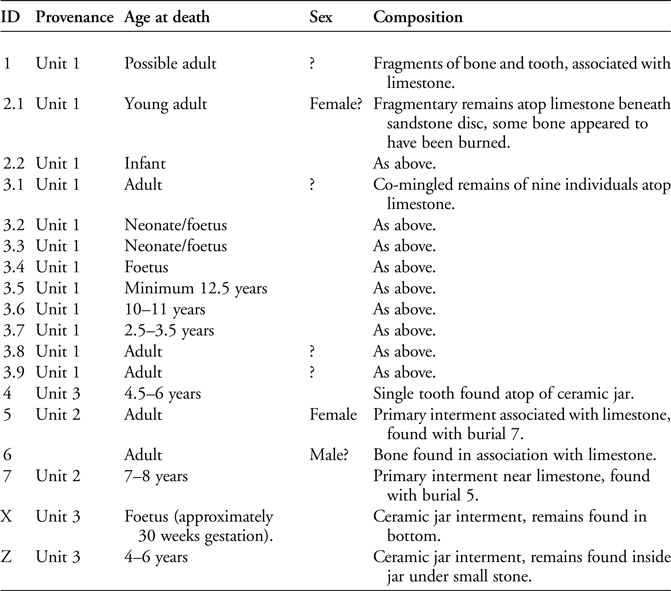
At approximately 0.5m below the surface, another pavement of quartz and sandstone chips (>150 pieces, 20–30mm in size) was encountered, beneath which lay a limestone boulder. Human bone and teeth (burial 3—a secondary burial comprising multiple individuals—see Table 2) were found resting both on top of and beneath the boulder, along with some iron fragments, an iron band and one carnelian (see Figure S7) and one glass bead. The soil below 0.6m contained no archaeological features or material culture. A 0.9m-deep exploratory sondage confirmed there was no further evidence for human activity in this area.
Human remains and associated burial numbers from site 1.

Unit 2
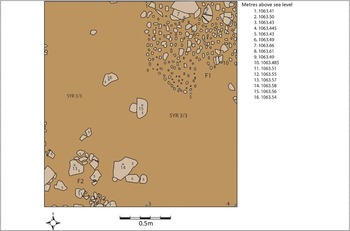
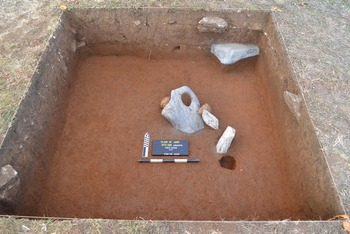
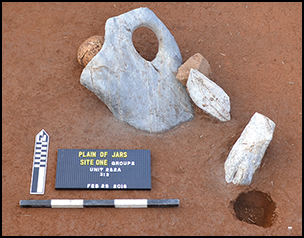
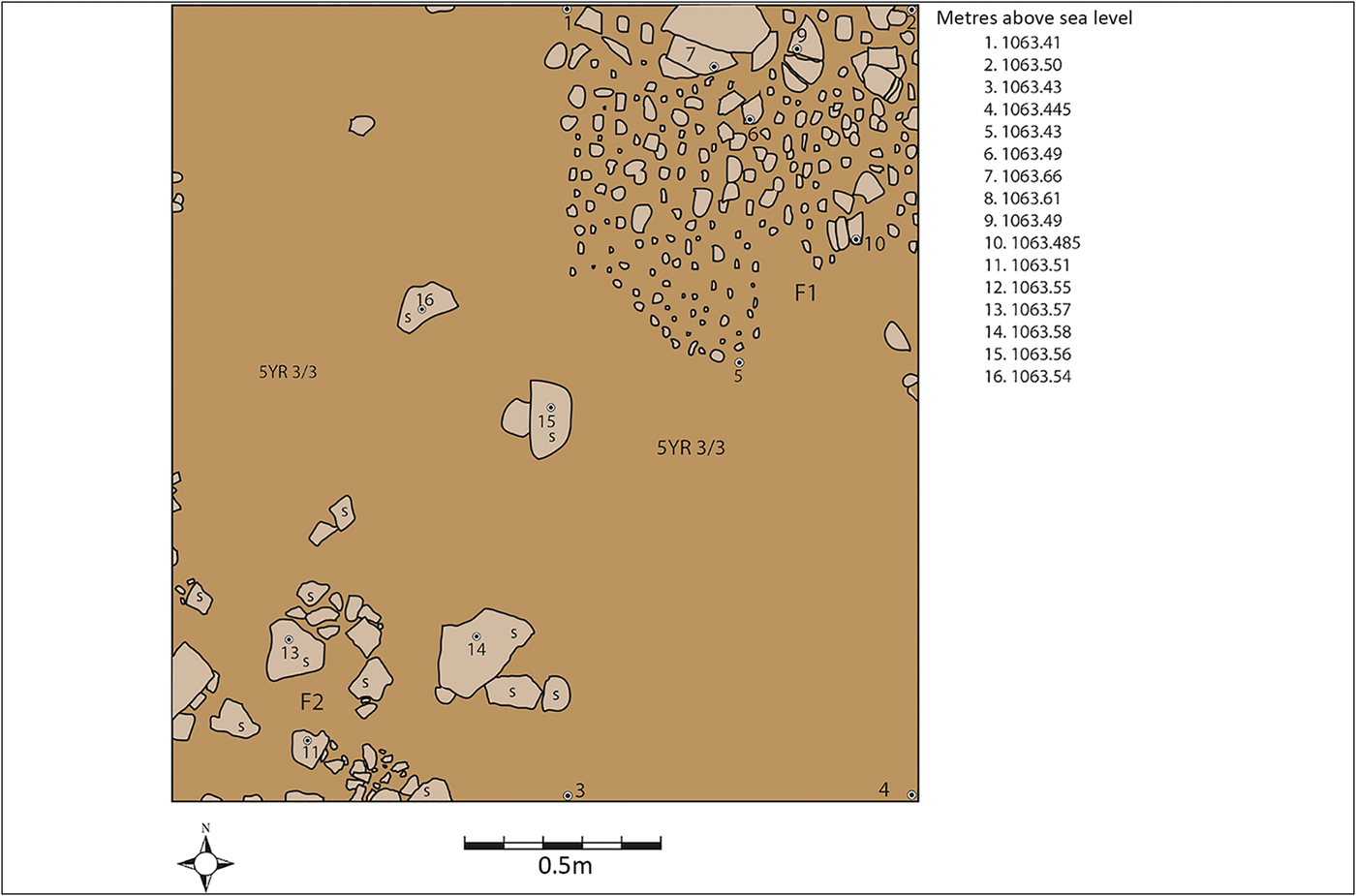
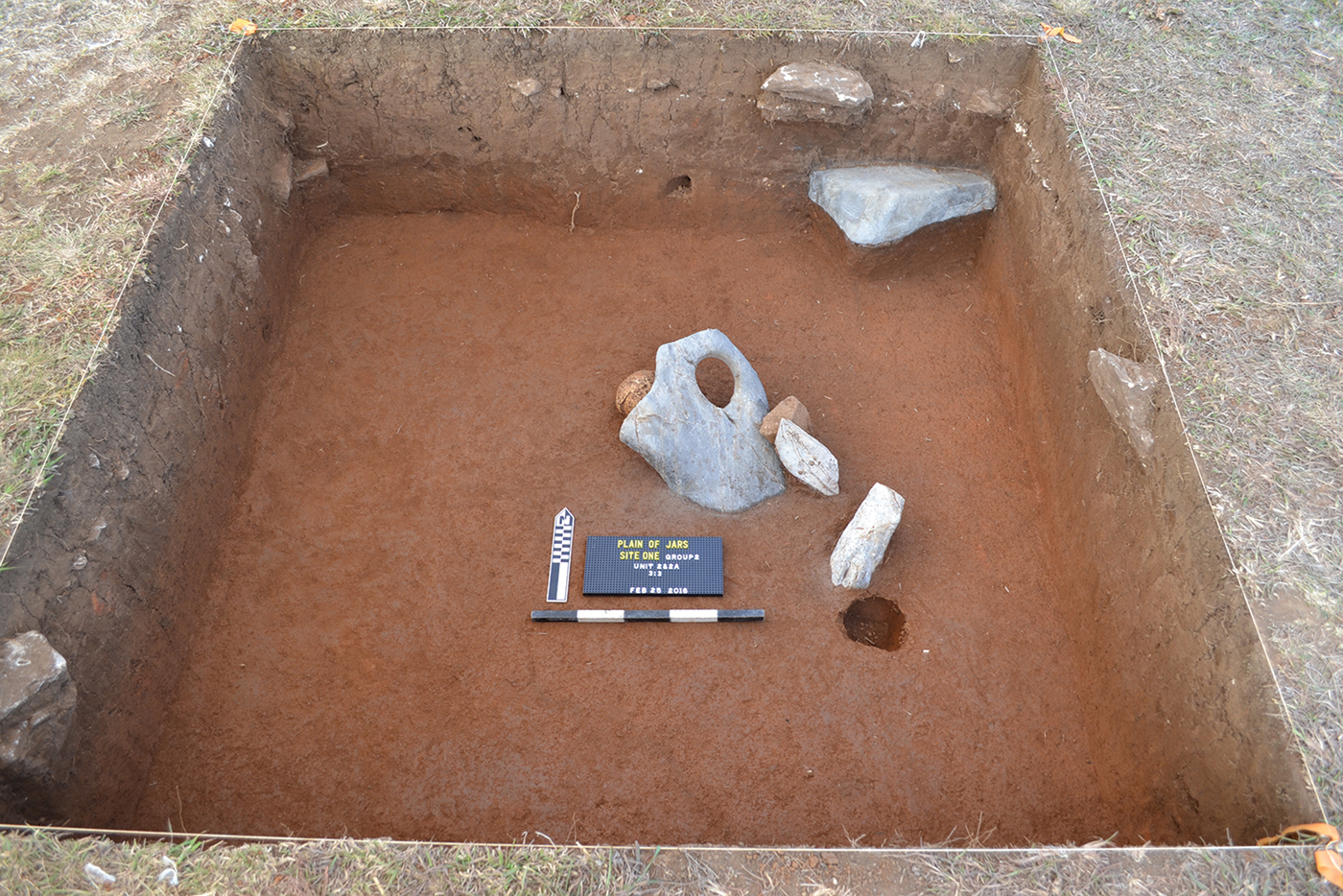
A second unit measuring 2 × 1m was opened following the identification of a subsurface anomaly detected during a ground-penetrating radar survey. In the top 0.2m, a sandstone chip ‘pavement’ was revealed (Figure 7). In the centre of the unit at a depth of approximately 0.3m, the upper surfaces of two limestone blocks were found, along with a ceramic vessel (similar to that shown in Figure S6) and sherds. A hammerstone was recovered from elsewhere in the unit, also at around 0.3m depth. Another limestone block was uncovered at 0.5m below the surface, and ceramics, charcoal and stone fragments were found nearby. The top of a human skull (burial 5) was exposed in the middle of the unit, at approximately 0.6m below the surface. The skull was located immediately beneath a roughly triangular limestone slab, with a perforation (Figure 8) positioned over the anterior aspect of the skull.
Map of unit 2 illustrating the pavement of sandstone chips (figure by Plain of Jars Research Project 2016).
Photograph of burials 5/7 showing the position of perforated limestone slab (figure by Plain of Jars Research Project 2016).
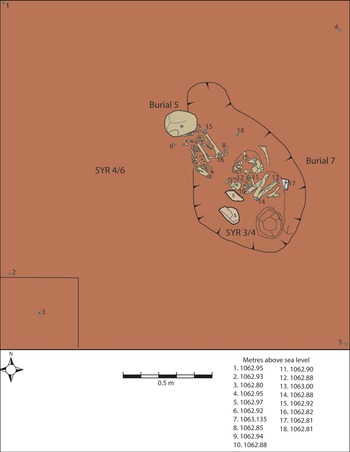
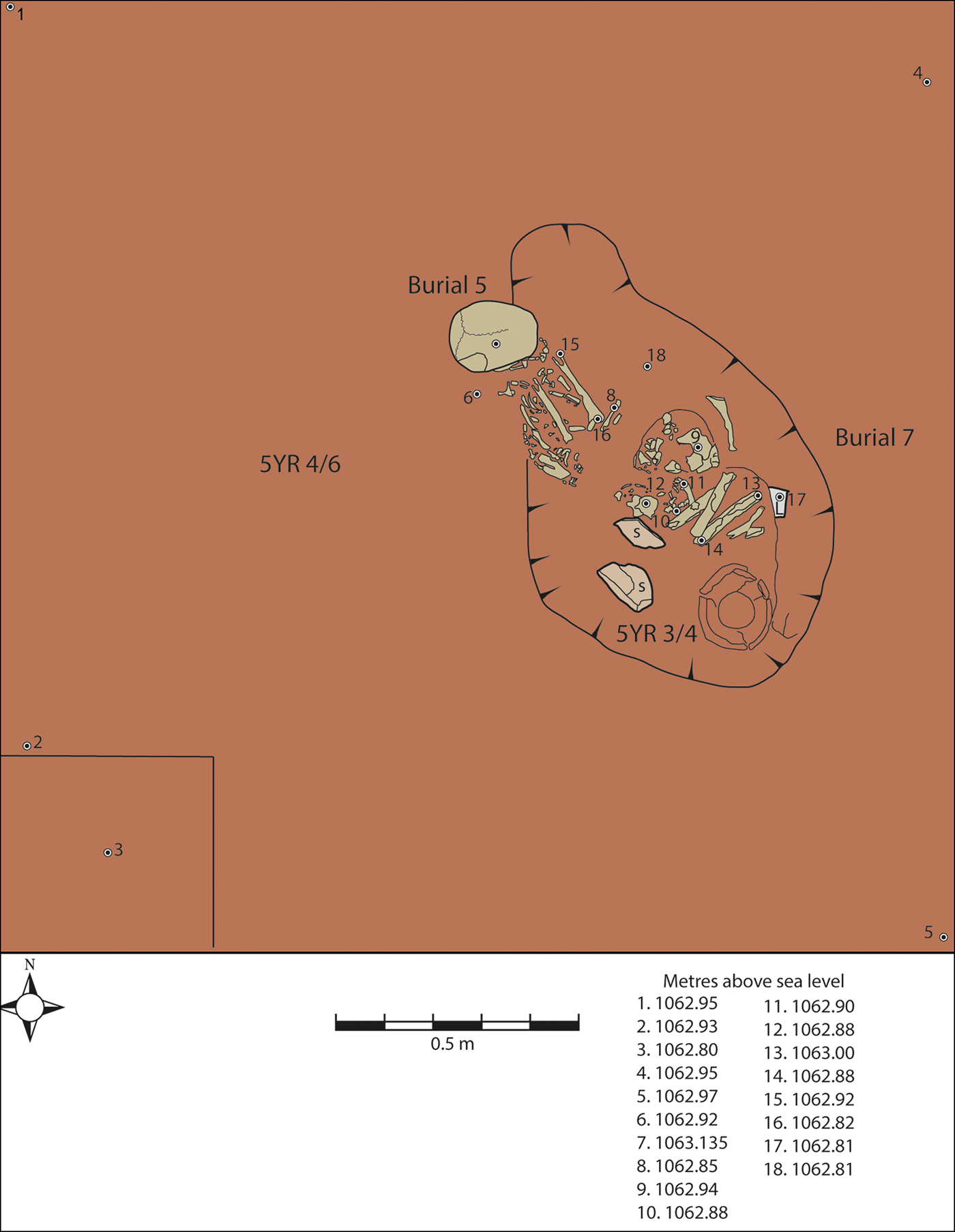
Excavation around burial 5 (a primary burial) revealed another mandible, some loose teeth and cranial fragments (burial 7) situated on top of the fragmentary post-cranial remains of burial 5 (Figure 9). The soil matrix around burials 5 and 7 was devoid of artefacts, except for some ceramic sherds.
Map of unit 2 illustrating burial context 5/7 (figure by Plain of Jars Research Project 2016).
Unit 3
The third unit (2 × 2m) was selected based on the presence of a unique stone disc, approximately 0.78m in diameter, which had a protrusion in the centre on either side. A sandstone-chip pavement and ceramic sherds were located in the first 0.2m below the surface. Beneath the disc, at a depth of approximately 50mm, was a limestone block, approximately 60 ceramic sherds and a sandstone whetstone. Nearby, a ceramic vessel was exposed.
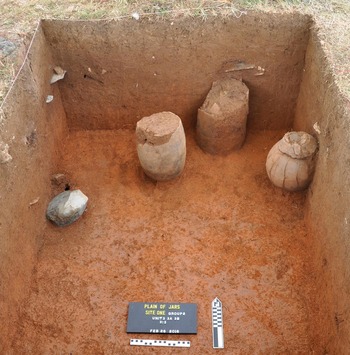
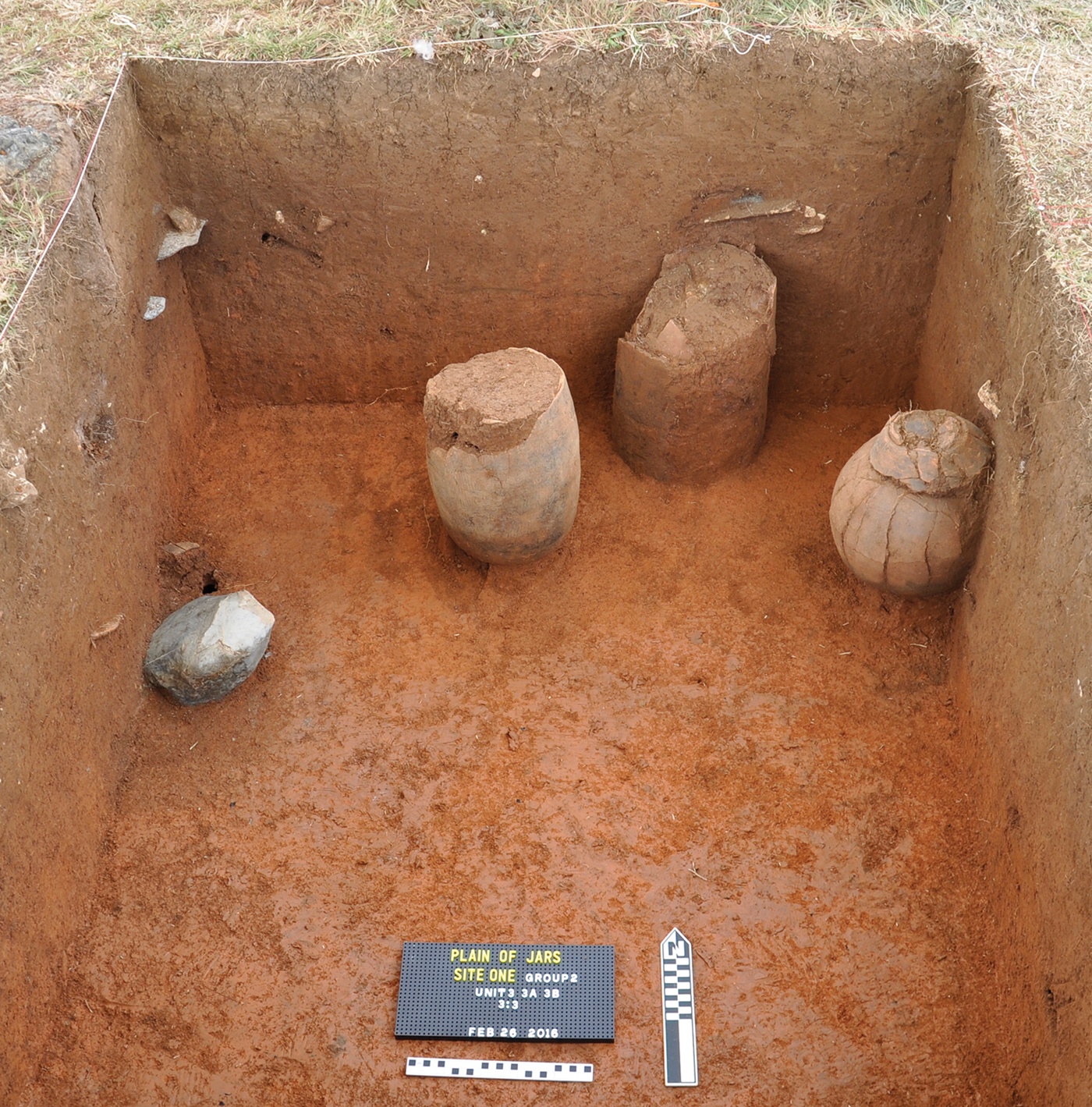
Human bone (burial 6) was discovered below one of the limestone blocks, at approximately 0.4m below the surface. To the west of the limestone block, an upright ceramic vessel (Figure 10) was discovered with a human tooth placed on top of it (burial 4). A third ceramic vessel—a globular pot capped with a ceramic dish—was uncovered in the east baulk of the excavation area. The removal of the vessel along the northern baulk revealed another ceramic vessel situated behind the former. This latter vessel was placed directly beneath a huge quartz breccia boulder. Two of the three excavated jars contained human remains.
Photograph of ceramic mortuary vessels in situ in unit 3; another was discovered in the north baulk (figure by Plain of Jars Research Project 2016).
At 0.6m below the surface, two large limestone blocks were uncovered, one above the other. Fragments of human teeth and bone (burial 6) were found beneath the lower stone. Ceramic sherds and a small bronze tube were found within the burial feature. No material culture was encountered below 0.7m.
Human remains
The excavations reveal a range of interment styles, some of which have not been documented previously at the site (Table 2). These comprise the secondary burial of human bone (in unit 1), secondary burial of human remains in ceramic vessels (in unit 3) and, for the first time, a primary burial of two individuals (in unit 2). Burials identified within ceramic vessels during the post-excavation analysis were given alphabetic assignations in the laboratory.
In total, 18 individuals were identified from the three units. The demographic analysis of the mortuary population demonstrates that the cemetery was used for all ages—including foetuses—and both sexes. A high percentage (11/18, 61 per cent) of individuals were infants and children, with almost half of these dying at the foetal stage or in early infancy. The D0-14/D ratio of 0.61 suggests that fertility was high (McFadden & Oxenham Reference McFadden and Oxenham2017), as is often typical of a growing population. We acknowledge the intrinsic issues of estimating demographic aspects from a small skeletal sample taken from a small part of a wider cemetery. Given that very poor preservation of skeletal remains usually results in an underrepresentation of infants, however, the high proportion of this group at site 1 further supports the accuracy of this mortality profile. The high infant and foetal mortality (5/18 or 27.8 per cent) may also suggest that ill health and/or malnutrition was an issue for this population (Lewis Reference Lewis2007; Halcrow & Tayles Reference Halcrow, Tayles, Agarwal and Glencross2011; Halcrow et al. Reference Halcrow, Tayles, Elliot, Han, Betsinger and Scott2017). Four individuals exhibit dental enamel hypoplasia, an indicator of growth disruption possibly due to malnutrition or disease (Domett pers. comm.). The poor bone preservation limits further palaeopathological analysis.
Dating
Thirty-two charcoal samples were selected from various contexts for radiocarbon dating. While the dates obtained span from c. 8200 BC–AD 1200, the majority of samples taken from around the jars in group 2 have returned dates indicating that the activity here occurred between the tenth and thirteenth centuries AD. These results, however, should be considered in the context of several attendant complexities—not least the ongoing debate concerning the efficacy of using charcoal recovered from burial contexts to date associated skeletal material (Higham et al. Reference Higham, Barton, Turney, Barker, Ramsey and Brock2009; Higham pers. comm.). It should also be noted that there are several anomalous dates (e.g. burial 6), and that older dates have been reported from previous analyses completed by Sayavongkhamdy (Reference Sayavongkhamdyn.d.) and Van Den Bergh (Reference Van Den Berghn.d.).
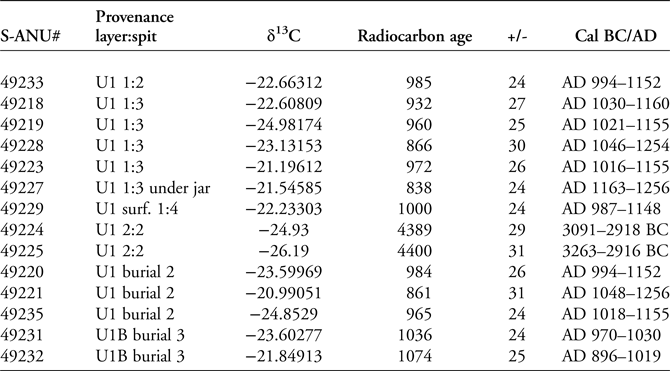
In unit 1, the first samples were taken from approximately 0.2m below the surface. These have returned dates of between the ninth and twelfth centuries AD (see Table 3). Four samples were taken from 0.1m deeper, returning dates of between the eleventh and thirteenth centuries. One sample, taken from beneath one of the megalithic jars, has returned a date of 838±24 (OxA-1163–1256 AD at 95.4% confidence; date modelled in OxCal v.4.2 IntCal 13 calibration curve (Bronk Ramsey Reference Bronk Ramsey2009; Reimer et al. Reference Reimer2013)), thus providing a terminus post quem for the jar immediately above this context. Another sample from approximately 0.4m below the surface gives a date ranging from 1000±24 (OxA 987–1148 AD at 95.4% confidence). Three dates were obtained from charcoal found in the context of burial 2, placed under the large sandstone disc. The dates range from the tenth to mid thirteenth centuries AD (see Table 2). Finally, two samples taken from the context of burial 3 have returned dates of 1036±24 (OxA-970-1030 AD at 95.4%) and 1074±25 (OxA-896-1019 AD at 95.4% confidence), respectively.
Radiocarbon results for samples in unit 1 at site 1, Plain of Jars. All with a confidence at 94.5% (Fallon et al. Reference Fallon, Fifield and Chappell2010). Modelled in OxCal v.4.2 IntCal 13 calibration curve (Bronk Ramsey Reference Bronk Ramsey2009; Reimer et al. Reference Reimer2013).

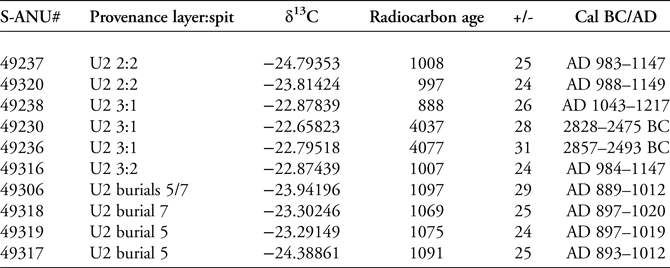
Ten charcoal samples were collected from unit 2 for radiocarbon dating. Two samples have returned dates falling between the ninth and mid twelfth centuries AD (Table 4). Samples from deeper in the stratigraphy have returned dates from the tenth to twelfth centuries AD, with two potentially anomalous dates. Charcoal from the mortuary context (burials 5 and 7) has returned four dates of between the late ninth and early eleventh centuries AD.
Radiocarbon results for samples in unit 2 at site 1, Plain of Jars. Dates modelled in OxCal v.4.2 IntCal13 calibration curve, all with a confidence at 94.5% (Bronk Ramsey Reference Bronk Ramsey2009; Fallon et al. Reference Fallon, Fifield and Chappell2010; Reimer et al. Reference Reimer2013).

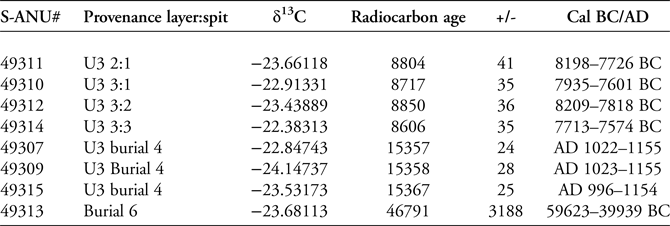
Unit 3 yielded three viable charcoal samples, all taken from the context within which burial 4 was found. Two of these dates are nearly identical, falling between the early eleventh and mid twelfth centuries AD; one has a slightly early range in the late tenth century AD (see Table 5). Some of the very early dates are probably anomalous.
Radiocarbon results for samples in unit 3 at site 1. Dates modelled in OxCal v.4.2 IntCal13 calibration curve, all with a confidence at 94.5% (Bronk Ramsey Reference Bronk Ramsey2009; Fallon et al. Reference Fallon, Fifield and Chappell2010; Reimer et al. Reference Reimer2013).

Discussion
The range of mortuary practices discovered at the megalithic sites of Laos are distinct from other archaeological contexts in Southeast Asia. Although burial of the dead within ceramic vessels is known from a range of sites in Mainland and Island Southeast Asia (see Galipaud et al. Reference Galipaud, Kinaston, Halcrow, Foster, Harris, Simanjuntak, Javelle and Buckley2016; Bulbeck Reference Bulbeck, Piper, Matsumura and Bulbeck2017), the use of large stone jars is only known from Sulawesi and outside the region, at Assam, north-east India (Kirleis et al. Reference Kirleis, Müller, Kortemeier, Behling, Soeghondo, Bonatz, Reinecke and Tjoa-Bonatz2012; Thakuria Reference Thakuria, Jamir and Hazarika2014). It should, however, be noted that the use of the megaliths for mortuary purposes in Sulawesi and Assam is unconfirmed, and is tenuous for the Laos jars. The Iron Age burials of Southeast Asia more commonly comprise extended interments with a range of grave goods, including semi-precious stones and glass beads, ceramics, bronze and iron objects and faunal remains (Higham & Kijngam Reference Higham and Kijngam2013; O'Reilly & Shewan Reference O'Reilly and Shewan2015).
Our excavations at site 1 confirm aspects of mortuary behaviour reported by past researchers (Nitta Reference Nitta1996; Sayavongkhamdy & Bellwood Reference Sayavongkhamdy and Bellwood2000; Shewan & O'Reilly Reference Shewan and O'Reilly2019; Sayavongkhamdy Reference Sayavongkhamdyn.d.). Similarities also can be seen in the discovery of sandstone ‘pavements’ around the megalithic jars, the presence of secondary burials found in association with limestone blocks and the presence of interments placed inside ceramic vessels. Our excavations have also yielded some artefacts reported by past excavations, including a chlorite pendant (see Figure S5), small ceramic vessels (see Figure S6), ceramic sherds, ear discs, spindle whorls (Figure S2) and beads of glass and carnelian (Figure S7).
The dates recovered from the mortuary contexts are of particular interest, as the megalithic sites in Laos are often considered to date to the Southeast Asian Iron Age (c. 500 BC–AD 500)—a date based predominantly on the material culture found around the megaliths (Higham Reference Higham2002; Lewis et al. Reference Lewis, White, Bouasisengpaseuth and Tan2013; Shewan & O'Reilly Reference Shewan and O'Reilly2019). Nitta (Reference Nitta1996: 17) was of the opinion that site 1 dated to the late first to early second millennia AD. Radiocarbon samples obtained deeper in the stratigraphy—unsurprisingly—have returned older dates (see Table 1). Sayavongkhamdy recorded a layer of charcoal at a depth of approximately 0.7–0.8m below the surface and hypothesised a major burning event at the site. A similar layer of charcoal at the same depth was encountered in our unit 1.
In reviewing all of the dates from the most recent and previous excavations, some inconsistencies remain unresolved. Van Den Bergh (Reference Van Den Berghn.d.) excavated two ceramic burial jars at site 1 with associated charcoal samples dated to 3140–2910 BC. Conversely, most of the carbon samples taken from around the ceramic jars excavated from site 1 in 2016 have returned dates in the eleventh and twelfth centuries AD. Another date that may be anomalous comes from a fragment of human skull retrieved by Sayavongkhamdy at 0.79m below the surface, which returned a date of 2280–1264 BC. This depth accords with a possible burning activity at the site, noted above.
The dating of the placement of the megalithic jars is clearly an issue of research interest, and an intensified dating programme is scheduled for future seasons in an effort to address the incongruities. It remains difficult to confirm whether the mortuary assemblages found near the megalithic jars are contemporaneous with them. While it is possible that the recovered primary and secondary burials post-date the megaliths, it is equally possible that the jars themselves represent a further medium for the disposal of the dead, as Colani reported finding human remains and glass beads in some of the jars (Shewan & O'Reilly Reference Shewan and O'Reilly2019). A carbon sample retrieved from beneath one of the stone jars in unit 1 (see above) provides a date that, barring disturbance or bioturbation, could provide a terminus post quem for the placement of this jar. If the date is correct, it would indicate that the megalithic jars are broadly contemporaneous with, or slightly later than, the secondary burials and the primary interments. The latest dates seem to indicate that the mortuary activity around the jars took place between the ninth and thirteenth centuries AD. This was a dynamic period in Southeast Asia, when the Khmer Empire (c. AD 802–1431) was at the height of its power, and the Lavo (c. AD 450–1388) and Sukhothai kingdoms (c. thirteenth century AD) in Thailand were ascendant. In neighbouring Vietnam, the Ngô (c. AD 939–967), Đinh (c. AD 968–980), Early Lê (c. AD 980–1009), Lý (c. AD 1009–1225) and Early Trần dynasties (c. AD 1225–1400) were established during these centuries. The dates reported here also overlap with presumed population movements in the region, with Tai peoples migrating from Gaungxi in China between the eighth and tenth centuries AD (Blust Reference Blust and Adams1994; Hartmann Reference Hartmann1998; Pittayaporn Reference Pittayaporn2014).
Long-distance international trading networks were well established by this time, and the exchange of ceramics—especially highly valued glazed ceramics—are found in all of the previously mentioned cultures. Glazed ceramics, however, are notably absent from the mortuary contexts at site 1. This may suggest that the people who interred their dead around the jars were not part of, or were ancillary to, these regional exchange networks. While the relative paucity of material culture may further support this supposition, the considerable disturbance of the site may also provide an explanation. It is, however, possible that the mortuary traditions represented at site 1 did not include the interment of exotic goods—a practice frequently observed at other sites in the region, at least during the Southeast Asian Iron Age, where large quantities of semi-precious stones and bronze and iron artefacts were often included (Reinecke et al. Reference Reinecke, Vin and Seng2009; Schlosser et al. Reference Schlosser, Reinecke, Schwab, Pernicka, Seng and Vin2012; Higham & Kijngam Reference Higham and Kijngam2013; O'Reilly Reference O'Reilly2014; O'Reilly & Shewan Reference O'Reilly and Shewan2015). Alternatively, the later mortuary practices represented at site 1 may have changed.
The number of individuals represented in an area of only approximately 15m2 is remarkable. The 2016 excavations revealed 1.2 individuals per square metre. Extrapolated across the entire area around the jars (approximately 6900m2) there could, potentially, be 8280 burials present at site 1, all interred within a limited chronological window of approximately 200 years. Thus, it seems that there may have been a substantial population living within the vicinity of the megalithic jar site, although evidence for occupation sites has yet to be discovered.
Conclusion
The 2016 excavations at site 1 expand our understanding of mortuary activity at the Plain of Jars through the discovery of primary interments—a previously undocumented type of disposal—and identification of the relatively young age of many of the deceased, with over 60 per cent of the mortuary population being less than 15 years of age. Extrapolating from the number of individuals recovered from a modest area of excavation, the mortuary population of the whole site may number in the thousands.
The recent excavations have exposed a material culture assemblage similar to that found during previous research at site 1, including miniature ceramic ‘jars’, pendants, ear discs, ceramics, glass and carnelian beads. Similarities with previously excavated jar sites were noted in terms of mortuary practice, with secondary burials being revealed both as small collections or groupings of human remains and human remains placed inside ceramic vessels, and the use of chipped-stone ‘pavements’ to cover some of the burials. The recent excavations also confirm that the boulders found at site 1 served to demarcate subsurface interments, as did the carved sandstone discs. It is apparent that this mortuary activity, at least in the areas excavated at site 1, took place between the ninth and thirteenth centuries AD. This does not necessarily date the megaliths at the site, but the carbon sample from beneath one of the jars indicates that it may have been set in place after c. AD 1163–1256. While mortuary use of the site is now firmly established, the specific purpose of the megalithic jars remains unresolved. Future research planned for the site may eventually lead to a conclusive answer.
Acknowledgements
The authors wish to thank the Australian Research Council for funding support and the Lao government for their support and cooperation. Thanks also to Gina Palefsky for assistance with skeletal analysis, and to Jamie Speer of GBG Australia. Shewan and O'Reilly were equal first authors on this paper.
Supplementary material
To view supplementary material for this article, please visit https://doi.org/10.15184/aqy.2019.102