





Introduction
Suicide remains a major global public health concern, and early intervention targeting suicide-related vulnerability is critical. Beyond the act itself, proximal indicators – suicidal ideation, hopelessness, psychological pain, and demoralization – have been identified as core components of this vulnerability (Qiu et al. Reference Qiu, Klonsky and Klein2017; Ribeiro et al. Reference Ribeiro, Huang and Fox2018; Costanza et al. Reference Costanza, Vasileios and Ambrosetti2022; Thomás et al. Reference Thomás, Ciara and Laura2024; Salami et al. Reference Salami, Khan and Yusuf2025). Rather than as an isolated event, suicide is now understood as the outcome of a progressive process in which depressive symptoms, hopelessness, loss of meaning, and existential emptiness accumulate over time (Steger et al. Reference Steger, Oishi and Kashdan2009; Zhang and Li Reference Zhang and Li2013; Steger Reference Steger, Slade, Oades and Jarden2017; Ribeiro et al. Reference Ribeiro, Huang and Fox2018).
South Korea continues to report one of the highest suicide rates among OECD countries – 23.2 per 100,000, more than double the OECD average of 10.5 (Korean Statistical Information Service [KOSIS] 2024). Rates of this magnitude are unlikely to be explained by psychiatric symptoms alone, pointing to the contribution of existential vulnerabilities such as loss of meaning, hopelessness, and demoralization, which have been repeatedly identified as core mechanisms underlying suicide risk (Qiu et al. Reference Qiu, Klonsky and Klein2017; Ribeiro et al. Reference Ribeiro, Huang and Fox2018; Costanza et al. Reference Costanza, Vasileios and Ambrosetti2022).
Existing suicide prevention efforts have largely targeted symptom- and function-based risk factors – depression, anxiety, impulsivity, and cognitive distortions – through approaches such as cognitive behavioral therapy and dialectical behavior therapy (Jager-Hyman et al. Reference Jager-Hyman, Cunningham and Wenzel2014; da Silva et al. Reference da Silva, Malloy-Diniz and Garcia2018; Mann et al. Reference Mann, Michel and Auerbach2021). Although these approaches reduce certain components of risk, they engage less directly with the existential dimensions of suffering – loss of meaning, existential hopelessness, and a diminished sense of purpose. Because suicide-related vulnerability is closely tied to perceived meaninglessness (Fu et al. Reference Fu, Wang and Wang2023; Guo et al. Reference Guo, Yang and He2024; Kyron et al. Reference Kyron, Page and Chen2026), symptom-focused intervention alone may be insufficient.
Against this backdrop, logotherapy and related meaning-based interventions have emerged as promising alternatives. Rooted in Frankl’s (Reference Frankl1963) existential framework, these interventions aim to alleviate emotional distress and address existential emptiness (Wong Reference Wong and Wong2013).
Empirical studies report that meaning-based interventions improve existential outcomes and reduce emotional and suicide-related variables (Breitbart et al. Reference Breitbart, Rosenfeld and Gibson2010, Reference Breitbart, Pessin and Rosenfeld2018; van der Spek et al. Reference van der Spek, Vos and van Uden-Kraan2017; Sun et al. Reference Sun, Hung and Yao2021, Reference Sun, Chiu and Yao2022). Recent systematic reviews and meta-analyses likewise report significant improvements in spiritual and emotional outcomes and reductions in hopelessness and desire for death (Sun et al. Reference Sun, Tian and Peng2024; Relawati et al. Reference Relawati, Rochmawati and Primanda2025). However, these studies have largely focused on oncology populations, and the outcomes examined have emphasized primarily existential adaptation and general quality of life rather than suicide-specific variables.
Although suicide-related outcomes, such as hopelessness and desire for death, have been included in some studies (Breitbart et al. Reference Breitbart, Rosenfeld and Gibson2010, Reference Breitbart, Pessin and Rosenfeld2018; Rosenfeld et al. Reference Rosenfeld, Cham and Pessin2018; Sun et al. Reference Sun, Chiu and Yao2022), they have often been treated as secondary outcomes, limiting their clinical relevance to suicide prevention. Moreover, the effects of meaning-based interventions remain heterogeneous due to variations in populations, intervention types, outcome measures, and study designs, and integrative analyses that systematically account for this heterogeneity are lacking. Importantly, prior research has primarily evaluated intervention effectiveness on the basis of changes in individual outcome variables, with limited attention to the underlying mechanisms through which these effects occur.
This review aimed to systematically examine the effects of meaning-based interventions on suicide-related vulnerability, focusing on outcome patterns, domain differences, comparator effects, and underlying mechanisms (direct, indirect, and mediated pathways).
Methods
Study design
We conducted a systematic review to examine the effects and characteristics of meaning-based interventions on suicide-related vulnerability and explore the underlying mechanisms. The review followed the Preferred Reporting Items for Systematic Reviews and Meta-Analyses (PRISMA) 2020 guidelines, and a PRISMA checklist is provided as Supplementary Material 1.
Eligibility criteria
Selection followed the PRISMA guidelines. The selection of studies was guided by the PICO-SD framework (Participants, Intervention, Comparisons, Outcomes, and Study Design), and studies meeting the predefined inclusion and exclusion criteria were identified systematically.
Participants. Studies involving adult populations, domestic and international, experiencing suicide-related vulnerability – including suicidal ideation, suicide risk, hopelessness, demoralization, and psychological pain – were included.
Interventions. Eligible studies examined meaning-based interventions, including logotherapy, meaning-centered psychotherapy, and other meaning-based approaches, delivered either as standalone or combined interventions.
Comparisons. Comparator conditions included no intervention, usual care, or alternative interventions, such as supportive psychotherapy or counseling.
Outcomes. Studies were eligible if they reported suicide-related outcomes, including suicidal ideation, suicide risk, hopelessness, demoralization, or psychological pain. Emotional variables, such as depression, were also extracted and analyzed as secondary outcomes.
Study design. Experimental and quasi-experimental studies were included, including randomized controlled trials (RCTs), nonrandomized controlled studies, and pre–post designs. Secondary analyses of RCT data examining intervention mechanisms were also included.
Eligibility was restricted to peer-reviewed studies published in English or Korean through April 2026.
Exclusion criteria comprised (1) observational or correlational studies without an intervention; (2) qualitative studies, case studies, or narrative reports; (3) review articles, systematic reviews, meta-analyses, or study protocols; (4) studies that did not report suicide-related outcomes; (5) studies that focused solely on general meaning in life or well-being and did not include any explicitly measured suicide-related outcomes (e.g., hopelessness, demoralization, suicidal ideation, desire for death, or hastened death); (6) studies involving populations not aligned with the study purpose (e.g., health-care provider training or general student populations); (7) non-peer-reviewed publications, including dissertations, conference abstracts, and books; and (8) duplicate studies or studies lacking sufficient data for analysis.
Search strategy and study selection
A systematic literature search was performed to identify studies of meaning-based interventions for suicide-related vulnerability: suicidal ideation, suicide risk, hopelessness, demoralization, or psychological pain. Eligibility was restricted to peer-reviewed articles published from database inception to April 2026.
The search was performed between March 1 and April 20, 2026, across 6 electronic databases. Korean databases included the Research Information Sharing Service (RISS) and the Korean Studies Information Service System (KISS), whereas international databases included PubMed, Web of Science, CINAHL, and PsycINFO.
Search terms were developed based on Medical Subject Headings and relevant keywords related to meaning-based interventions, suicide-related outcomes, and intervention study designs. Boolean operators (AND, OR) were used to combine search terms, and irrelevant publication types such as “protocol,” “systematic review,” and “meta-analysis” were excluded with the NOT operator. For Korean databases, equivalent terms (e.g., “suicide,” “logotherapy,” “program,” and “effect”) were applied. The detailed search strategy for PubMed is provided in Supplementary Material 2.
Study selection followed a 2-step screening procedure: titles and abstracts were first screened to remove duplicates and clearly ineligible studies, after which full-text articles were assessed against the predefined inclusion and exclusion criteria. Studies were excluded if they did not involve meaning-based interventions, did not report suicide-related outcomes, or were nonintervention studies, qualitative studies, or review articles. Studies lacking sufficient data for analysis were also excluded.
All screening and selection were performed independently by 2 reviewers and repeated twice; discrepancies were resolved through discussion and consensus following reevaluation of the full-text articles.
Quality assessment
Methodological quality was assessed with the Cochrane Risk of Bias 2 (ROB2) tool for RCTs and with the Risk of Bias Assessment Tool for Nonrandomized Studies (ROBANS) for the remaining studies, including secondary analyses of RCT data (Kim et al. Reference Kim, Park and Lee2013; Sterne et al. Reference Sterne, Savović and Page2019).
Two reviewers conducted the quality assessment independently. Any discrepancies were resolved through discussion and consensus following re-examination of the full-text articles.
The ROB2 tool evaluates 5 domains of bias: that arising from the randomization process, deviations from intended interventions, missing outcome data, measurement of outcomes, and selection of the reported results. Each domain was rated as “low risk,” “some concerns,” or “high risk.”
The ROBANS tool assesses 6 domains: selection of participants, confounding variables, measurement of intervention, blinding of outcome assessment, incomplete outcome data, and selective reporting. Each domain was rated as “low risk,” “unclear risk,” or “high risk.”
The overall risk of bias for each study was determined by synthesizing the domain-level assessments. The quality assessment results were considered in interpreting the findings. Outcomes were synthesized using a domain-based classification framework, categorizing variables into existential, emotional, and suicide-related domains.
Results
Study selection
Database searches identified 1,053 records (PubMed, n = 150; Web of Science, n = 3; CINAHL, n = 121; PsycINFO, n = 433; RISS, n = 201; KISS, n = 145); after removal of 203 duplicates, 850 records remained for initial screening.
Title and abstract screening excluded 792 records, leaving 58 articles for full-text review; of these, 48 were excluded against the predefined eligibility criteria, and 10 were included in the final synthesis (Figure 1).
PRISMA flow diagram of the study selection process.

Figure 1 Long description
The study selection process via databases and registers begins with ′Identification′ where records are identified from databases like PubMed, PsycINFO and others, totaling 1503 records. Records removed before screening are 203 due to duplicates. In the ′Screening′ phase, 850 records are screened, with 792 excluded for reasons such as non-meaning-based intervention and non-peer-reviewed articles. 58 reports are sought for retrieval, with none not retrieved. ′Eligibility′ involves assessing 58 reports, excluding 48 for reasons like unclear intervention and no suicide outcomes reported. Finally, ′Included′ shows 10 studies included in the review.
Study characteristics
The included studies were published between 2010 and 2023. Nine of the 10 studies were conducted in oncology populations, mainly among patients with advanced cancer or cancer survivors, and 1 study focused on patients with depression. Seven studies were RCTs, 2 were quasi-experimental studies, and 1 was a secondary analysis of randomized trial data.
Interventions were grounded in meaning-based approaches, including meaning-centered psychotherapy, logotherapy, and Meaning and Purpose therapy. They were delivered in either group or individual formats, with most protocols comprising brief, structured interventions. Outcome measures varied across studies and covered existential, emotional, and suicide-related domains. The general characteristics of the included studies are summarized in Table 1.
General characteristics of included studies (N = 10)

Table 1 Long description
Columns list study, country, population, design, intervention, format and duration, sample size, and outcome measures. Countries include the USA in five studies, Taiwan in two, and the Netherlands, Spain, and Australia in one each. Populations include advanced cancer patients in six studies, cancer survivors in one, advanced cancer in palliative care in one, breast and gynecologic cancer patients in one, and patients with depression in one. Designs include four RCTs, two pilot RCTs, one feasibility RCT, two quasi-experimental studies, and one secondary analysis using RCT data. Interventions include meaning-centered group psychotherapy in three studies, meaning-centered group psychotherapy for cancer survivors in one, individual meaning-centered psychotherapy in two, individual meaning-centered psychotherapy in palliative care in one, meaning and purpose therapy in one, and logotherapy in two. Formats and durations are group with eight sessions for four studies, individual with seven sessions for two studies, individual with three sessions for one study, individual over twelve weeks for three studies, and one group entry described as RCT data. Sample sizes are 90, 120, 253, 170, 218, 321, 51, 107, 61, and 86. Outcome measures across studies include spiritual well-being, meaning, quality of life, anxiety, depression, hopelessness, desire for death or hastened death, distress, demoralization, symptom burden or symptom-related distress, physical symptom distress, optimism or pessimism, psychological well-being, posttraumatic growth, life attitudes, dysphoria, disheartenment, helplessness, sense of failure, and suicidal ideation.
IMCP = Individual Meaning-Centered Psychotherapy; IMCP-PC = Individual Meaning-Centered Psychotherapy in Palliative Care; MaP = Meaning and Purpose Therapy; MCGP = Meaning-Centered Group Psychotherapy; MCGP-CS = Meaning-Centered Group Psychotherapy for Cancer Survivors; QoL = quality of life; SWB = spiritual well-being.
Quality assessment
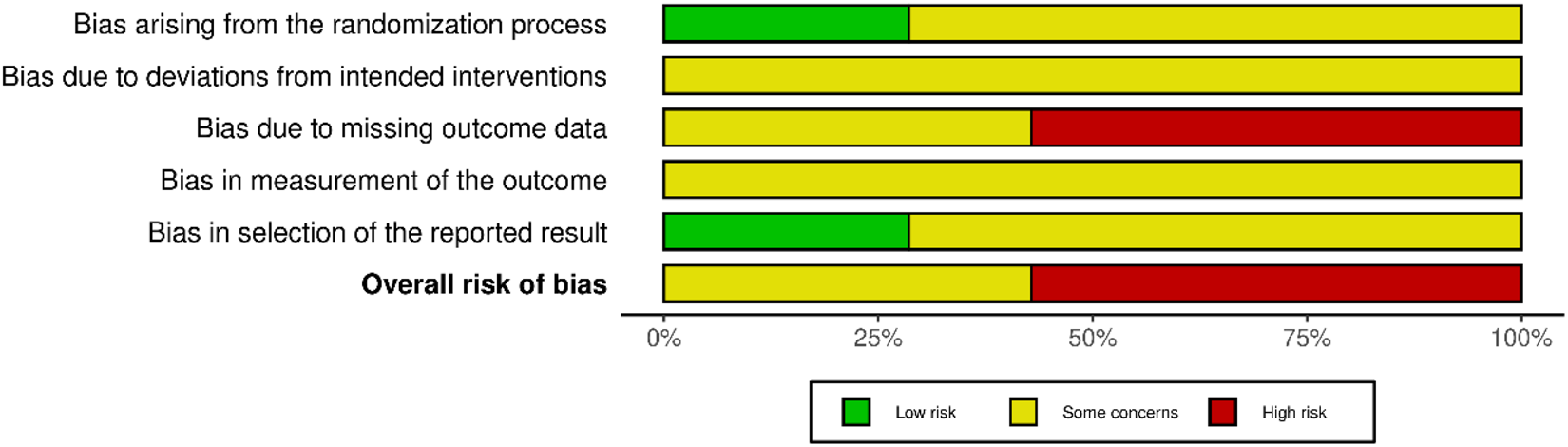
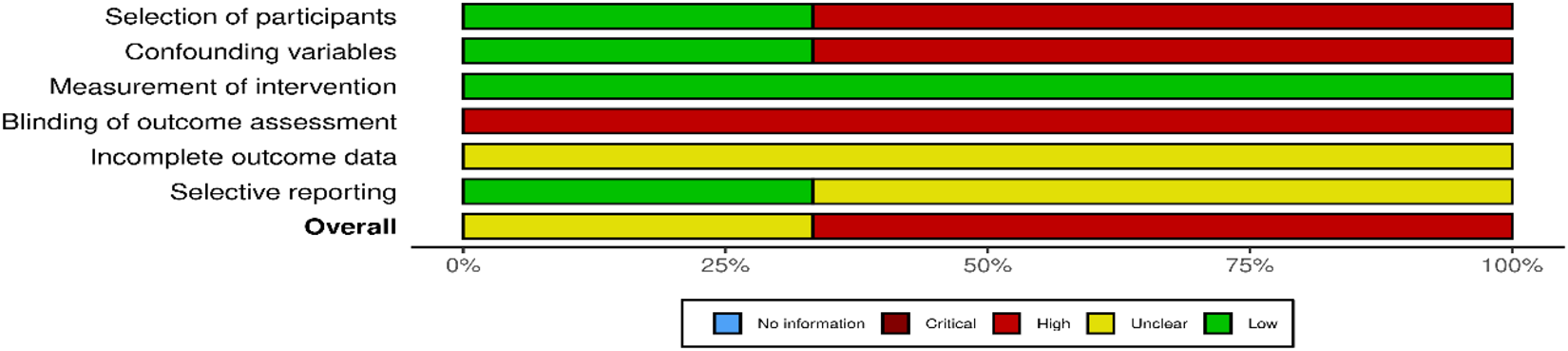
Methodological quality varied across studies. Among the RCTs, the main concerns were deviations from intended interventions, missing outcome data, and reliance on self-report measures. Nonrandomized studies showed a greater risk of bias, particularly in participant selection, confounding, and outcome assessment. Detailed domain-level judgments are presented in Table 2 and Figures 2 and 3.
Summary of risk of bias for randomized controlled trials assessed using ROB2.

Summary of risk of bias for nonrandomized studies assessed using ROBANS.

Risk of bias assessment of included studies using ROB2 and ROBANS (N = 10)

Table 2 Long description
Risk of bias ratings are listed by study across domain columns D1 through D5 for randomized controlled trials and D1 through D6 for non-randomized studies, plus an Overall column. For randomized controlled trials, Breitbart et al. 2010 has D1 some concerns, D2 some concerns, D3 high, D4 some concerns, D5 some concerns, overall high. Breitbart et al. 2012 matches the same pattern and overall high. Breitbart et al. 2015 has some concerns in D1 through D5 and overall some concerns. van der Spek et al. 2017 has D1 low, D2 some concerns, D3 some concerns, D4 some concerns, D5 low, overall some concerns. Breitbart et al. 2018 has some concerns in D1 through D5 and overall some concerns. Fraguell-Hernando et al. 2020 has D1 some concerns, D2 some concerns, D3 high, D4 some concerns, D5 some concerns, overall high. Kissane et al. 2023 has D1 low, D2 some concerns, D3 high, D4 some concerns, D5 low, overall high. For non-randomized studies, Rosenfeld et al. 2018 has D1 low, D2 low, D3 low, D4 high, D5 unclear, D6 low, overall unclear. Sun et al. 2021 has D1 high, D2 high, D3 low, D4 high, D5 unclear, D6 unclear, overall high. Sun et al. 2022 matches Sun et al. 2021 across all domains and overall high.
Randomized controlled trials were assessed using ROB2, and nonrandomized studies were assessed using ROBANS.
ROB2 ratings are classified as low risk, some concerns, or high risk; ROBANS ratings are classified as low risk, unclear risk, or high risk.
ROB2 domains: D1, bias arising from the randomization process; D2, deviations from intended interventions; D3, missing outcome data; D4, measurement of the outcome; and D5, selection of the reported result.
ROBANS domains: D1, selection of participants; D2, confounding variables; D3, measurement of intervention; D4, blinding of outcome assessment; D5, incomplete outcome data; and D6, selective reporting.
Differential effects of meaning-based interventions across outcome domains
Outcome variables were grouped into 3 conceptually distinct domains: existential, emotional, and suicide-related.
The existential domain comprised variables relating to meaning and existential adaptation: meaning in life, spiritual well-being (SWB), quality of life, purpose in life, posttraumatic growth, and attitudes toward life.
The emotional domain comprised variables reflecting affective responses: depression, anxiety, psychological distress, and symptom-related distress.
The suicide-related domain comprised variables directly associated with suicide-related vulnerability: hopelessness, demoralization and its subdomains, suicidal ideation, and desire for death or hastened death. Depression was deliberately excluded from this domain: although depression is a well-established risk factor for suicide, it was conceptualized as a broader emotional state rather than as a proximal indicator of suicide-related vulnerability.
Existential outcomes
Most studies reported significant improvements in existential outcomes after meaning-based interventions. Breitbart et al. (Reference Breitbart, Rosenfeld and Gibson2010, Reference Breitbart, Poppito and Rosenfeld2012, Reference Breitbart, Rosenfeld and Pessin2015, Reference Breitbart, Pessin and Rosenfeld2018) consistently reported gains in meaning in life, SWB, and quality of life, and van der Spek et al. (Reference van der Spek, Vos and van Uden-Kraan2017) reported parallel increases in meaning, purpose, and psychological well-being. Although posttraumatic growth did not change significantly in that study, the overall pattern of findings remained positive.
In addition, Rosenfeld et al. (Reference Rosenfeld, Cham and Pessin2018) reported significant increases in meaning and peace, and Kissane et al. (Reference Kissane, Bobevski and Appleton2023) found significant improvements in posttraumatic growth, attitudes toward life, and SWB. Across these studies, even when individual variables did not reach significance, the overall pattern showed consistent improvement within the existential domain, supporting a domain-level classification of significant effects.
Some studies assessed only a narrow set of existential variables – for example, Sun et al. (Reference Sun, Hung and Yao2021, Reference Sun, Chiu and Yao2022) reported significant improvements in meaning in life. In such cases, the observed changes were treated as representative of existential outcomes within the measured scope and were classified as significant effects at the domain level. Fraguell-Hernando et al. (Reference Fraguell-Hernando, Limonero and Gil2020) did not report existential outcomes and were excluded from this domain-level analysis.
Emotional outcomes
Effects on emotional outcomes were mixed, with partial effects being the most frequently observed pattern at the domain level. Some studies reported consistent reductions across multiple emotional variables, indicating significant effects. For example, Fraguell-Hernando et al. (Reference Fraguell-Hernando, Limonero and Gil2020) reported reductions in anxiety, depression, and emotional distress, and van der Spek et al. (Reference van der Spek, Vos and van Uden-Kraan2017) reported decreases in both depression and distress – patterns that indicate overall improvement within the emotional domain.
In many studies, however, results across emotional variables were inconsistent, producing partial effects: Breitbart et al. (Reference Breitbart, Rosenfeld and Gibson2010, Reference Breitbart, Poppito and Rosenfeld2012, Reference Breitbart, Rosenfeld and Pessin2015, Reference Breitbart, Pessin and Rosenfeld2018) reported reductions in some emotional variables but not others, and Sun et al. (Reference Sun, Hung and Yao2021) observed decreases in certain emotional outcomes, whereas distress did not change significantly. Improvements within the emotional domain therefore tended to occur selectively rather than uniformly across variables.
Where only a single emotional variable was assessed – for instance, Sun et al. (Reference Sun, Chiu and Yao2022) measured depression alone and reported a significant reduction – the change was classified as a significant effect at the domain level within the measured scope. By contrast, Kissane et al. (Reference Kissane, Bobevski and Appleton2023) reported no significant change in either depression or anxiety, indicating a nonsignificant effect within the emotional domain.
Across studies, the effects on emotional outcomes were not consistently observed. While some studies demonstrated broad reductions, the predominant pattern was partial improvement, with effects varying according to the specific variables assessed.
Suicide-related outcomes
Several studies showed consistent improvements across multiple suicide-related variables: Breitbart et al. (Reference Breitbart, Rosenfeld and Pessin2015) reported reductions in both hopelessness and desire for hastened death, whereas Rosenfeld et al. (Reference Rosenfeld, Cham and Pessin2018) reported significant decreases in hopelessness and desire for death. van der Spek et al. (Reference van der Spek, Vos and van Uden-Kraan2017) likewise reported reductions in both helplessness and hopelessness dimension of mental adjustment to cancer, indicating a consistent pattern of improvement within the suicide-related domain.
Additional studies reinforced this pattern: Sun et al. (Reference Sun, Hung and Yao2021) reported decreases in demoralization-related subdomains, including helplessness and sense of failure, and Sun et al. (Reference Sun, Chiu and Yao2022) reported significant reductions in both suicidal ideation and hopelessness, indicating significant effects at the domain level. Fraguell-Hernando et al. (Reference Fraguell-Hernando, Limonero and Gil2020) reported a reduction in demoralization, and in studies in which only a single suicide-related variable was assessed, consistent improvement within that variable was considered indicative of a significant domain-level effect. For instance, Breitbart et al. (Reference Breitbart, Pessin and Rosenfeld2018) reported a significant reduction in desire for hastened death; despite the limited range of outcomes assessed, this was interpreted as a meaningful improvement within the domain.
Some studies, however, showed mixed findings across suicide-related variables, producing partial effects: Breitbart et al. (Reference Breitbart, Rosenfeld and Gibson2010) reported a reduction in desire for death but no significant change in hopelessness, indicating selective improvement within the domain. Other studies reported nonsignificant effects: Breitbart et al. (Reference Breitbart, Poppito and Rosenfeld2012) found no significant change in hopelessness, and Kissane et al. (Reference Kissane, Bobevski and Appleton2023) reported no significant improvement in demoralization.
On the suicide-related domain specifically, meaning-based interventions showed a relatively consistent and robust impact relative to other domains. While some heterogeneity was observed across studies, particularly in cases with mixed results, the predominant pattern was a significant reduction in suicide-related vulnerability.
Mechanistic implications
Most studies demonstrated patterns consistent with indirect pathways, in which improvements in existential variables co-occurred with reductions in emotional and suicide-related outcomes. Limited evidence also pointed to direct-like and mediated effects.
One study reported reductions in emotional or suicide-related outcomes without corresponding changes in existential variables, suggesting potential direct-effect. This pattern was identified in Fraguell-Hernando et al. (Reference Fraguell-Hernando, Limonero and Gil2020).
By contrast, the majority of studies demonstrated concurrent improvements in existential variables alongside reductions in emotional and suicide-related outcomes, indicating indirect effects. This pattern was consistently observed across multiple studies, including Breitbart et al. (Reference Breitbart, Rosenfeld and Gibson2010, Reference Breitbart, Poppito and Rosenfeld2012, Reference Breitbart, Rosenfeld and Pessin2015, Reference Breitbart, Pessin and Rosenfeld2018), van der Spek et al. (Reference van der Spek, Vos and van Uden-Kraan2017), Kissane et al. (Reference Kissane, Bobevski and Appleton2023), and Sun et al. (Reference Sun, Hung and Yao2021, Reference Sun, Chiu and Yao2022).
Mediated effects were identified in Rosenfeld et al. (Reference Rosenfeld, Cham and Pessin2018), where improvements in meaning and peace were found to mediate reductions in emotional distress and suicide-related outcomes.
Overall, these patterns indicate variability in the relationships among outcome domains across the included studies. An integrated summary of outcome patterns, comparator effects, and mechanistic implications is presented in Table 3.
Effect patterns and mechanistic implications of meaning-based interventions across included studies (N = 10)

Table 3 Long description
Rows list 10 studies and columns report existential outcomes, emotional outcomes, suicide-related outcomes, and a mechanistic implication. Breitbart 2010 reports significant increases in meaning and spiritual well-being, partial reductions in anxiety with depression not significant, and partial reductions in desire for death with hopelessness not significant, with mechanistic implication, indirect. Breitbart 2012 reports significant increases in meaning, spiritual well-being, and quality of life, partial reductions in symptom-related distress and symptom burden with anxiety and depression not significant, hopelessness not significant, and indirect. Breitbart 2015 reports significant increases in spiritual well-being and quality of life, partial reductions in depression and physical symptom distress with anxiety not significant, significant reductions in hopelessness and desire for hastened death, and indirect. Breitbart 2018 reports significant increases in meaning, spiritual well-being, and quality of life, partial reductions in anxiety with depression not significant, significant reduction in desire for hastened death, and indirect. Van der Spek 2017 reports significant increases in meaning, purpose, and psychological well-being with posttraumatic growth not significant, significant reductions in depression and distress, significant reductions in helplessness and hopelessness, and indirect. Rosenfeld 2018 reports significant increases in meaning and peace with mediation noted, significant reduction in depression with mediation noted, significant reductions in hopelessness and desire for death with mediation noted, and mechanistic implication, mediated. Fraguell-Hernando 2020 reports existential outcomes not reported, significant reductions in anxiety, depression, and emotional distress, significant reduction in demoralization, and direct. Kissane 2023 reports significant increases in posttraumatic growth, life attitudes, and spiritual well-being, depression and anxiety not significant, demoralization not significant, and indirect. Sun 2021 reports significant increase in meaning, partial reductions in dysphoria and disheartenment with distress not reported, significant reductions in demoralization-related subdomains helplessness and sense of failure, and indirect. Sun 2022 reports significant increase in meaning, significant reduction in depression, significant reductions in hopelessness and suicidal ideation, and indirect.
SWB = spiritual well-being; QoL = quality of life.
↑ indicates improvement; ↓ indicates reduction; NS, not significant; NR, not reported.
Effects were classified as significant when outcomes within a domain showed a consistent pattern of improvement across the assessed variables; as partial when findings showed mixed or selective effects, and nonsignificant (NS) when no meaningful changes were observed.
Where only a single variable was assessed within a domain, classification was based on that variable as the full extent of the domain measured in the study.
Mechanistic implications (direct, indirect, and mediated) were interpreted separately based on cross-domain patterns: indirect (existential changes co-occurred with emotional or suicide-related changes); direct (without existential changes); and mediated (reported mediation analyses).
Discussion
Predominant effects on existential outcomes
The most salient finding is that meaning-based interventions produced more consistent and robust effects on existential outcomes – meaning in life, SWB, and quality of life – than on emotional symptoms. Across most included studies, significant improvements were observed at the domain level for existential outcomes – a pattern that contrasts with the partial effects observed in the emotional domain and the generally significant but heterogeneous effects observed in the suicide-related domain. These findings indicate that meaning-based interventions operate primarily by inducing change at the existential level, rather than by directly targeting symptom reduction.
This pattern is consistent with prior research: previous systematic reviews and meta-analyses in oncology populations have reported that logotherapy significantly improves SWB, psychological health, and quality of life (Sun et al. Reference Sun, Tian and Peng2024), and that meaning-centered interventions effectively enhance SWB and quality of life (Relawati et al. Reference Relawati, Rochmawati and Primanda2025). The present review extends these findings by demonstrating that the effects on existential outcomes are not confined to individual variables but are consistently observed at the domain level.
The composition of existential outcomes varied across studies: some focused on a single construct such as meaning in life (Sun et al. Reference Sun, Hung and Yao2021, Reference Sun, Chiu and Yao2022), whereas others assessed a broader panel of existential variables, including SWB, quality of life, purpose, and posttraumatic growth (Breitbart et al. Reference Breitbart, Rosenfeld and Gibson2010, Reference Breitbart, Poppito and Rosenfeld2012; van der Spek et al. Reference van der Spek, Vos and van Uden-Kraan2017; Kissane et al. Reference Kissane, Bobevski and Appleton2023). Although specific variables sometimes failed to reach statistical significance (e.g., posttraumatic growth in van der Spek et al. Reference van der Spek, Vos and van Uden-Kraan2017), the overall direction of change remained positive within the range of variables assessed in each study.
Variations in statistical significance across individual variables should therefore not be read solely as selective effects but rather as a function of differences in measurement scope across studies. Where consistent improvement is observed within the measured range of existential variables, the effect can therefore be meaningfully interpreted at the domain level – an approach consistent with the domain-based classification adopted here, which weighs both within-variable consistency and the overall pattern across the domain rather than relying solely on individual significance tests.
Theoretically, these findings align with the core principles of logotherapy. Frankl (Reference Frankl1963) argued that psychological suffering is fundamentally tied to the loss of meaning and that the restoration of meaning is the central process of existential adaptation. Breitbart et al. (Reference Breitbart, Rosenfeld and Pessin2015) similarly argued that meaning-centered psychotherapy facilitates the reinterpretation of suffering by enhancing SWB and meaning in life. The present findings provide empirical support for these positions and suggest that meaning-based interventions exert their primary effects through change in existential dimensions.
These findings warrant cautious interpretation: some existential-domain variables (e.g., quality of life) overlap partially with emotional constructs, and the domain classification used here rests on a conceptual rather than empirical framework. Findings should therefore be read as domain-level patterns reflecting the direction and consistency of change across measured variables, rather than as strictly distinct categories based on individual significance tests.
Selective effects on emotional and suicide-related outcomes
In contrast to the consistent existential-domain effects, the effects of meaning-based interventions on emotional and suicide-related outcomes were less uniform: emotional outcomes most frequently showed partial effects at the domain level, whereas suicide-related outcomes generally showed significant reductions, with some studies reporting limited or nonsignificant effects. Effects on the emotional and suicide-related domains were therefore not uniform but varied selectively with the specific variables assessed.
Two factors help explain the selective effects. First, the outcome variables themselves are conceptually heterogeneous: emotional and suicide-related outcomes are multidimensional constructs capturing different levels of psychological vulnerability. Depression and anxiety capture affective responses; distress reflects broader psychological suffering; hopelessness reflects cognitive distortions about future expectations; demoralization encompasses existential distress and loss of meaning; and suicidal ideation marks a proximal indicator of suicide risk. Such conceptual differences mean that, even within a single intervention, responses can vary across outcome variables.
Second, measurement approaches differ across studies. Some employed broad indicators such as emotional distress or symptom-related distress, whereas others focused on specific symptom-based measures such as depression or anxiety. In the suicide-related domain, different constructs were similarly assessed selectively across studies, and this variability in measurement scope may shape the consistency of observed effects at the domain level. When only a single variable was assessed, changes in that variable were more readily read as representative of domain-level effects within the measured scope.
Together, these findings indicate that meaning-based interventions do not produce uniform reductions across emotional and suicide-related outcomes. Rather, their effects appear to be selective, depending on both the conceptual nature of the variables and the scope of measurement. This pattern is conceptually consistent with the indirect pathways identified in the mechanistic analysis, suggesting that changes in existential factors may differentially influence downstream emotional and suicide-related outcomes.
Mechanistic interpretation: A multi-pathway model
The present findings suggest that the mechanisms underlying meaning-based interventions are best understood within a multi-pathway framework in which direct, indirect, and mediated pathways coexist. Importantly, these mechanistic interpretations are exploratory, being based on patterns of co-occurring changes across outcome variables, rather than on formal causal or mediation analyses, and should therefore be interpreted with caution.
One study reported reductions in emotional or suicide-related outcomes without reported changes in existential variables (Fraguell-Hernando et al. Reference Fraguell-Hernando, Limonero and Gil2020). Although this pattern is consistent with a direct-like pathway, the absence of measured existential outcomes in this study precludes a definitive claim of a direct effect.
In contrast, the majority of studies demonstrated concurrent improvements in existential variables alongside reductions in emotional and suicide-related outcomes (Breitbart et al. Reference Breitbart, Rosenfeld and Gibson2010, Reference Breitbart, Poppito and Rosenfeld2012, Reference Breitbart, Rosenfeld and Pessin2015; van der Spek et al. Reference van der Spek, Vos and van Uden-Kraan2017, Reference Breitbart, Pessin and Rosenfeld2018; Sun et al. Reference Sun, Hung and Yao2021, Reference Sun, Chiu and Yao2022). This pattern is consistent with an indirect pathway, suggesting that meaning-based interventions may exert their effects through changes in existential factors that are associated with downstream improvements in emotional and suicide-related outcomes. This pattern was not uniform across studies, however: Kissane et al. (Reference Kissane, Bobevski and Appleton2023) reported improvements in existential outcomes without corresponding changes in emotional or suicide-related variables, indicating that indirect pathways do not operate uniformly across outcome domains.
Evidence of mediated pathways was identified in Rosenfeld et al. (Reference Rosenfeld, Cham and Pessin2018), where improvements in meaning and peace were found to mediate reductions in emotional distress and suicide-related outcomes. Although the evidence base is small, this finding provides preliminary empirical support for a mediating role in the mechanisms underlying meaning-based interventions.
These findings suggest that meaning-based interventions are characterized by a multi-pathway structure, with indirect pathways centered on existential change appearing to play the leading role, alongside more limited direct-like and mediated contributions. The co-occurrence of improvements in existential, emotional, and suicide-related outcomes represents a key cross-study pattern, reinforcing the importance of existential change as a candidate core mechanism.
Future research should test these pathways directly through mediation analyses and longitudinal designs to clarify the relationships among existential, emotional, and suicide-related outcomes.
Clinical implications
The findings support a potential role for meaning-based interventions as a component of suicide prevention strategies. These interventions appear to operate not by directly reducing emotional symptoms such as depression or anxiety but by inducing change in meaning in life and existential adaptation. Through these processes, they may influence core components of suicide-related vulnerability: hopelessness, demoralization, and a sense of meaninglessness. This mechanism sets meaning-based interventions apart from traditional symptom-focused treatments and supports a reconceptualization of suicide risk as an existential crisis involving loss of meaning rather than solely an emotional disturbance.
As reported above, the effects of meaning-based interventions were not uniform across outcome variables but varied with the domain and the characteristics of the specific measures used. Whereas consistent effects were observed in existential outcomes, emotional outcomes showed partial effects, and suicide-related outcomes generally showed significant reductions with some variability across studies. Intervention effects therefore appear to depend on both the psychological profile of the target population and the nature of the outcome variables, and future intervention designs should adopt a more tailored approach that considers individual risk levels and specific vulnerability profiles.
Several research priorities follow. First, because existing studies have largely focused on suicidal ideation and related vulnerability indicators, future research should incorporate direct behavioral outcomes – most importantly, suicide attempts – to more fully evaluate the clinical impact of these interventions. Second, further studies are needed to clarify the mechanisms underlying meaning-based interventions, ideally through formal mediation analyses. The indirect pathways identified here were inferred from co-occurring changes across variables, and future work should test directly whether changes in existential factors causally influence emotional and suicide-related outcomes. Third, longitudinal designs are needed to assess the sustainability and temporal dynamics of intervention effects, with research designs capable of distinguishing direct, indirect, and mediated pathways – such as structural equation modeling or longitudinal mediation analyses – most appropriate for rigorously examining the proposed multi-pathway model.
Finally, because most included studies were conducted in specific clinical populations – particularly oncology settings – future research should be extended to more diverse populations, including different age groups and community-based samples. Such efforts are needed to enhance the generalizability of findings and to integrate meaning-based interventions as a core component of broader suicide prevention frameworks.
Limitations
Several limitations warrant consideration. First, most included studies were conducted among patients with advanced cancer, which may limit the generalizability of the findings to other high-risk populations or community settings. Caution is therefore warranted when applying these findings beyond oncology and palliative care contexts.
Second, relatively few studies assessed direct behavioral outcomes such as suicide attempts; most studies focused on suicidal ideation or related vulnerability indicators. The findings therefore provide limited evidence on the direct impact of meaning-based interventions on actual suicidal behavior.
Third, substantial heterogeneity was observed across intervention types, participant characteristics, outcome variables, and measurement instruments, limiting direct cross-study comparison and the drawing of fully integrated conclusions about intervention effects.
Finally, no meta-analysis was conducted. Given the considerable heterogeneity across interventions, populations, outcomes, and measurement tools, a quantitative synthesis of effect sizes was deemed inappropriate. Instead, a narrative synthesis was used.
Conclusion
This review synthesized the effects of meaning-based interventions on suicide-related vulnerability across outcome domains and underlying mechanisms. These interventions showed the most consistent and robust effects in the existential domain, while emotional and suicide-related outcomes demonstrated more heterogeneous patterns, with generally significant reductions observed in suicide-related variables.
Findings suggest that meaning-based interventions operate through a multi-pathway structure, with indirect pathways involving existential change most consistently observed, alongside limited evidence of direct-like and mediated effects. Overall, these interventions appear to reduce suicide-related vulnerability by strengthening existential resources rather than by directly targeting symptoms, particularly in addressing core vulnerabilities such as hopelessness, demoralization, and loss of meaning.
Several limitations qualify these contributions: most included studies were conducted in oncology populations, which limits generalizability; few studies examined direct behavioral outcomes such as suicide attempts; and substantial heterogeneity across interventions, populations, and outcome measures precluded quantitative synthesis.
Nevertheless, the review provides evidence supporting both the effectiveness and the conceptual framework of meaning-based interventions. Future research should adopt longitudinal and mediation-based designs to clarify causal pathways and to extend meaning-based approaches across diverse populations; integrating existential dimensions into suicide prevention strategies represents a promising direction for advancing intervention effectiveness.
Supplementary material
The supplementary material for this article can be found at https://doi.org/10.1017/S1478951526103599
Data availability statement
Data are available upon reasonable request.
Acknowledgments
None.
Funding
This research received no specific grant from any funding agency, commercial or not-for-profit sectors.
Competing interests
The authors declare none.
Ethical approval
Because the review analyzed only previously published data and involved no direct contact with human participants or access to identifiable personal information, the study was exempt from Institutional Review Board (IRB) review.




 Open access

