Introduction
From 1945 to today, the Fascist period has cast a long, but indeterminate, shadow over Italian culture and politics. Although Fascism is fundamental to the identity of republican Italy as an anti-Fascist state, public memories are hazy, selective and unreliable (Corner Reference Corner2005, 176; Ventresca Reference Ventresca2006, 200; Fogu Reference Fogu2006, 67). While the ventennio dominates Italian historiography, it occupies an ambiguous position in Italy’s collective consciousness. Fascism is often called upon in political debates, but as a rhetorical trope rather than as a historical reality. There are gaps in the historical record where memories of Fascist repression and violence have been erased through a process of ‘removal’ (‘rimozione’, Pavone Reference Pavone2000, 21). Italians also remember Fascism in different ways depending on their local contexts, personal circumstances and political sympathies. As such, the Fascist period is an absent presence in Italy, as its memory is alive, but distorted, fragmented and obscured. These divided memories continue to fracture the nation (Foot Reference Foot2009).
There is no shared national narrative of Fascism and little consensus as to what it means for Italy today (Pavone Reference Pavone2000, 37; Fogu Reference Fogu2006, 149–150; Samuels Reference Samuels2015, 115). Divisions have been compounded, from the 1990s, by a tendency to revise history in a way that rehabilitates Mussolini’s regime (Tranfaglia Reference Tranfaglia1996, 98–99; Corner Reference Corner2002; Reference Corner2005; Battini Reference Battini2003, 1–8; Mammone Reference Mammone2006; Ventresca Reference Ventresca2006, 195; see, for example, De Felice Reference De Felice1995). Revisionism emerged when the end of the Cold War, the collapse of the Italian Communist Party and the fall of Italy’s first republic broke the anti-fascist coalition that had dominated Italian politics since the end of the Second World War (Luzzatto Reference Luzzatto2004, 8; Mammone Reference Mammone2006, 217; Fogu Reference Fogu2006, 161–167). The crisis of anti-Fascism facilitated the rise of right-wing parties, such as Forza Italia and Lega Nord. It also played into the hands of those who discredited the Resistance as the moral basis of the republic and recast Fascism as a patriotic force (Foot Reference Foot2009, 155). Using politicised notions of national reconciliation, revisionists equated the actions of Fascists and anti-Fascists and presented a reassuring and exculpatory image of Fascism, which emphasised consensus instead of coercion and drew on the myth of italiani brava gente (Corner Reference Corner2002, 357; Corner Reference Corner2005, 177–179; Fogu Reference Fogu2006, 147). While revisionism helped to normalise Fascism as an integral part of national history, it also contributed to attempts to relativise Fascist crimes. Around the same time as the ‘post-fascist’ party Alleanza Nazionale entered Silvio Berlusconi’s coalition government in 1994, the historical narrative was being distorted to restore Mussolini’s reputation through books, films and TV programmes that presented a nostalgic image of the Fascist period (Bosworth and Dogliani Reference Bosworth and Dogliani2001, 7; Foot Reference Foot2009, 122; Gundle Reference Gundle2013, 247–254). The situation was not helped by the fact that, on the left, an idealised view of the Resistance hampered discussions of its limits or relevance (Foot Reference Foot2009, 153–155).
In the months prior to his death in 2015, Christopher Duggan was preparing a major collaborative project on the ‘Legacies of Fascism’, which was intended to ‘examine the variety of channels through which ideas, images and memories of the regime, both in Italy and its colonies/occupied territories, have been relayed, interpreted, filtered and suppressed’.Footnote 1 The project was to address the transmission of memories of Fascism through a number of vehicles, including ‘parties and political institutions; literature, art, film, photography and television; buildings and monuments; the Church; family memories and traditions; local initiatives; museums’. Its methodology was to be multidisciplinary, comparative and transnational. Duggan acknowledged that the project had ‘considerable implications for contemporary society’, particularly in terms of the ways in which ‘perceptions and memories of Fascism continue to influence the culture and practices of liberalism and democracy’. The proposal was timely given the politicisation of Fascist history to serve current imperatives (Battini Reference Battini2003, xii; Fogu Reference Fogu2006). Although it is impossible to know what results the project would have yielded, the proposal offers a glimpse of what could have been.
This article picks up on one potential line of inquiry in Duggan’s proposal. The project identified a wide range of channels through which legacies of the regime could be passed to future generations – some of which have received more attention than others. For instance, historians have looked at the impact of Fascism on the state, but they have largely neglected the mark left on Italian cities (Pavone Reference Pavone1995; Carter and Martin Reference Carter and Martin2017, 338–340). Much can be gained by studying the Fascist legacy through architecture, as the dictatorship sought to change the Italian mindset by means of urban space. There is an extensive literature on the regime’s urban inventions, but relatively little has been written on their lasting impact on Italy’s physical and mental landscapes.Footnote 2 Instead of illustrating structural continuity in the law or bureaucracy, architecture offers concrete evidence of cultural continuity (Dondi Reference Dondi2001, 141). It presents an opportunity to tap into a popular memory of Fascism, and to explore Italian mentalities through the spaces of everyday life (Ventresca Reference Ventresca2006, 204).
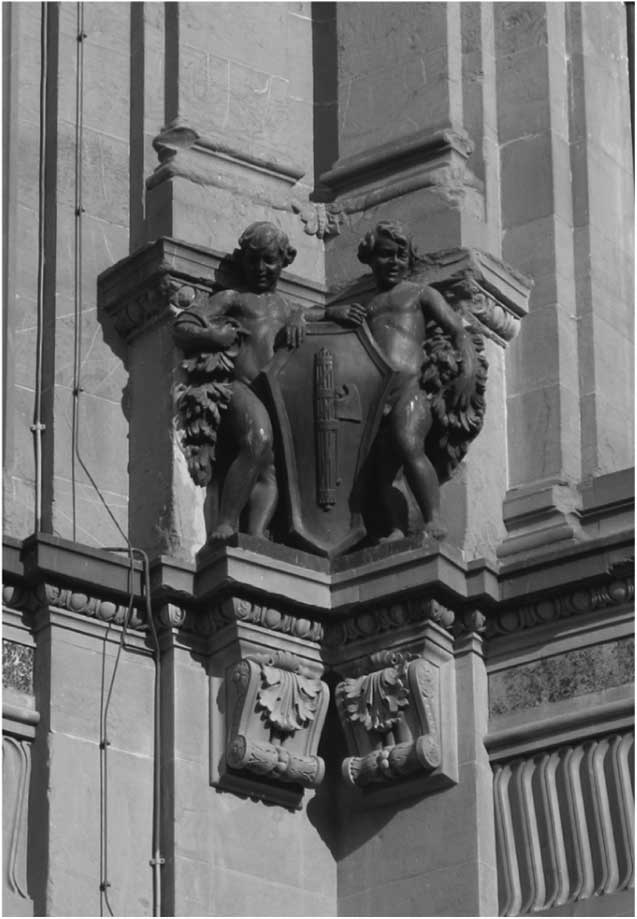
Traces of the Fascist regime are everywhere in Italy in the form of large urban projects, individual buildings, monuments and street names (Figures 1–2). Their enduring presence shows how it was not possible to shake free from the past or, to use Benedetto Croce’s expression, to close the Fascist ‘parenthesis’ as if nothing had happened (Dondi Reference Dondi2001, 144). While Fascist history is evidenced in Italian cities, its position in Italian culture is less obvious in that a ‘collective amnesia’ envelopes some aspects of the Fascist period (Dondi Reference Dondi2001, 150; Petrusewicz Reference Petrusewicz2004; Mammone Reference Mammone2006, 215). In effect, the survival of physical traces contrasts with the absence of public memories. The architecture of Fascism is a ‘difficult heritage’ – not only because memories of the regime are painful and divisive, but also because Fascism is at odds with the values of today’s democracy (Macdonald Reference Macdonald2009, 4; Samuels Reference Samuels2015, 111–114). Yet Fascist remains ‘are rarely understood in exclusively negative terms’, but rather elicit a variety of responses (Samuels Reference Samuels2015, 114).
Fasces and Fascist dating at the Theatre of Marcellus in Rome (author’s photograph, 2017)

Fasces at the National Library in Florence (author’s photograph, 2016)

This article aims to explore how Italy has dealt with the physical remains of the dictatorship, from Mussolini’s overthrow in July 1943 until the present day, as an expression of Italian attitudes to the Fascist past. It uses architecture as a barometer for fluctuating approaches to the Fascist legacy, and examines debates about material remains as vehicles for discussions about Fascism. To this end, the article has three parts that deal with (1) what happened to the architecture of the Fascist regime, (2) why it happened and (3) a case study that illustrates recent debates around Fascist architecture. The main contention is that the processes through which buildings were preserved, altered or destroyed after the fall of Fascism is akin to the manner in which public memories were selected, revised or erased. In other words, architectural heritage mirrors the selections, omissions and revisions in the historical narrative. The intention is to look at the mechanisms through which memories of Fascism have passed from one generation to the next. Thus, the question is not whether Italians dealt with Fascism in the ‘right way’, but to show how they responded in a way that suited Italy.
The limits of defascistisation
It is well known that the process of ‘defascistisation’ in Italy was irregular and incomplete, and that a degree of continuity survived between the Fascist and republican states (Pavone Reference Pavone1995, 70–159). After Mussolini’s fall in July 1943, there was little opportunity for renewal before the armistice of 8 September brought the invasion of Italy from the north and south. After liberation, the effects of 20 years of authoritarian rule, followed by a global war, a civil war and foreign military occupation, made it hard to implement any meaningful agenda of defascistisation. There was a sense that the memory of Fascism was too divisive and best forgotten. Plans to prosecute Fascist crimes and to purge public bureaucracy were soon abandoned on the grounds that they would destabilise the state and hinder the transition to democracy (Roy Domenico Reference Roy Domenico1991; Pavone Reference Pavone1995, 139–146; Dondi Reference Dondi2001, 143–144; Battini Reference Battini2003, 20–71; Ventresca Reference Ventresca2006, 196). To mark the birth of the Italian republic in June 1946, the communist leader and Minister of Justice, Palmiro Togliatti, granted an amnesty to all but the most prominent Fascists as part of a strategy of pacification (Franzinelli Reference Franzinelli2016). As a result, the civil service, judiciary and political establishment maintained high levels of socio-political continuity (Roy Domenico Reference Roy Domenico1991, 225–226; Pavone Reference Pavone1995, 70–159). To avoid international pressure, some Italians attempted to shift the blame onto the Germans by arguing that Fascism was not as ‘bad’ as National Socialism, and that Italy was itself a victim of Nazi-Fascism. They claimed that either Mussolini was solely responsible, or that all Italians were equally culpable, thus turning ‘collective guilt’ into ‘collective absolution’ (Corner Reference Corner2002, 325; Petrusewicz Reference Petrusewicz2004, 269; also, Corner Reference Corner2005, 179–180). Ultimately, defascistisation was hampered by the ambivalence of the Allies and by an Italian desire to return to normality (Roy Domenico Reference Roy Domenico1991, 19–29). However, papering over the cracks of a divided nation may have weakened the moral foundations of the republic.
There was no specific policy of ‘defascistisation’ to eliminate traces of the dictatorship from Italian cities. The Ministry of Education proposed to create a commission to remove Fascist monuments in July 1944, but nothing came of it (Arthurs Reference Arthurs2014, 289; Carter and Martin Reference Carter and Martin2017, 346–347). Without national guidelines, local authorities intervened in a haphazard fashion on a case-by-case basis. Change occurred over time, and sometimes resulted from natural senescence or the need for restoration. There was little public discussion about how to treat the material remains of Fascism. Thus, preservation happened in the same patchy way in which memories were (or were not) transmitted to future generations.
Faced with the question of what to do with buildings and monuments of the regime, the Italians were presented with three main options: to destroy, neglect or reuse. The first option, destruction, was often the result of spontaneous attacks after regime change (Foot Reference Foot2009, 69; Arthurs Reference Arthurs2012, 287–288; Storchi Reference Storchi2013, 202). There were three main waves of destruction: the first in the few hours between Mussolini’s overthrow on 25 July 1943 and Badoglio’s crackdown; the second after the armistice of 8 September; and the third at end of the war in 1945, which was cut short when the Allies occupied major Fascist sites. Destruction was reserved for the most obvious Fascist symbols, such as fasces and representations of the Duce (Carter and Martin Reference Carter and Martin2017, 345). For example, at the Littoriale (now Renato Dall’Ara) stadium in Bologna, a bronze statue of Mussolini on horseback was ‘decapitated’ on 26 July 1943 in a kind of ritual murder (Foot Reference Foot2009, 70; Storchi Reference Storchi2013, 201–206). Through a symbolic process of ‘recycling’, the statue was melted down in 1947 and re-cast as monuments to murdered partisans. It was a natural consequence of ‘Mussolinism’, or the cult that identified Fascism with Mussolini’s body, that statues of the dictator would be destroyed (Gallerano Reference Gallerano1988, 317–319; Luzzatto Reference Luzzatto2011; Arthurs Reference Arthurs2014, 287). Overall, destruction was limited to a few high-profile monuments and much was preserved.
Many buildings were simply neglected; as for example, the Casa delle Armi, or fencing school, which is part of Rome’s Foro Mussolini (now Italico) (Figure 3). Neglect might have been calculated or deliberate, and might have embodied a wilful forgetting of the Fascist past (MacDonald Reference Macdonald2006; Reference Macdonald2009; Samuels Reference Samuels2015, 118). It could also have resulted from economic necessity and have been ideologically neutral. Clearly, after the war, Italy lacked the funds to maintain the regime’s costly flagship projects and many buildings were no longer useful.
Neglected architecture at the Casa delle Armi or fencing school (Luigi Moretti, 1933–1936) in the Foro Mussolini (now Italico) in Rome (author’s photograph, 2017)

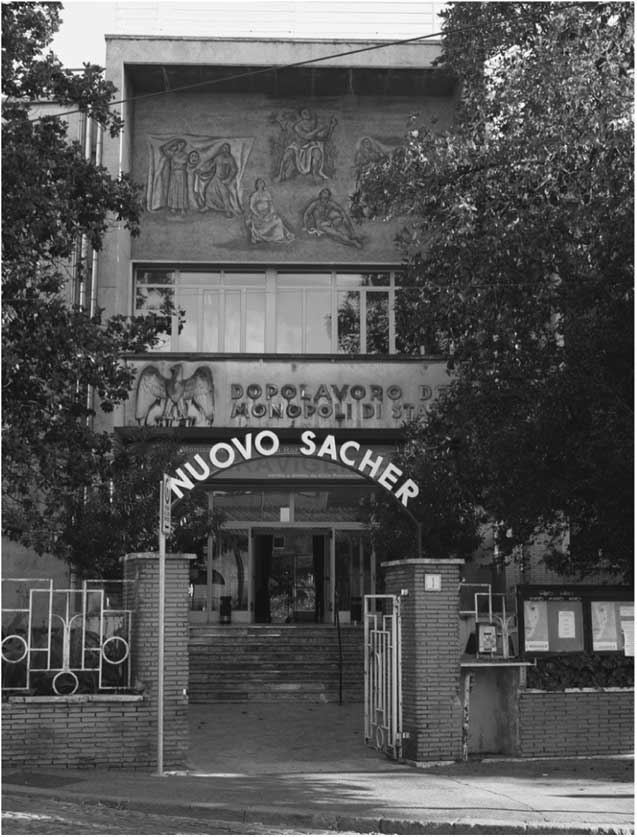
The most common response was the third option, that is, to reuse or recycle buildings of the regime (Maulsby Reference Maulsby2014, 28–29; Hökerberg Reference Hökerberg2017, 770–771). Reuse might be consistent where buildings were re-employed in a way that was in line with their intended purpose, as in the case of the train stations in Florence, Milan and other Italian cities. It might also be subversive, as when an ‘adult’ cinema occupies a hostel for invalids of war, as in Casa del Mutilato di Guerra in Naples. Of course, consistency and subversion are not alternatives. For example, the ossuary of Redipuglia in Friuli, which was built in 1935–1938 to house fallen soldiers of the First World War, is now used as a military monument to house ceremonies to commemorate the dead. Equally, it was employed by Pope Francis in 2014 as a monument to peace, despite its militarist symbolism. There is also a middle ground between consistency and subversion, where a building is repurposed, but references to its original function are kept, as in Rome’s Trastevere district where a social club of the Fascist state was reused as a cinema (Figure 4). Even when Fascist symbols remain, there may be an implicit defascistisation in the appropriation of architecture created by the dictatorship (Maulsby Reference Maulsby2014, 31; Samuels Reference Samuels2015, 119; Carter and Martin Reference Carter and Martin2017, 347). In any case, reuse may have more to do with satisfying practical needs, than mastering the past (Samuels Reference Samuels2015, 121).
Social club of Dopolavoro dei Monopoli di Stato, now a cinema, in Rome’s Trastevere district. Note the preservation of Fascist-era decoration, including the eagle and mosaics (author’s photograph, 2015)

When buildings were reused, the process of recycling often brought changes to the structure (Maulsby Reference Maulsby2014, 29). Frequently, the fasces, as the Fascist symbols par excellence, were chiselled from façades leaving ghostly outlines, which might be compared to the ‘gaps’ in the historical record (Petrusewicz Reference Petrusewicz2004; Foot Reference Foot2009, 84). In some cases, entire fasces were removed through a form of ‘mutilation’ (Macdonald Reference Macdonald2009, 52). In others, only the lictor’s axe, as the symbol of power and violence, was removed from the bundle of rods, through a process that has been described as ‘castration’ (Benton Reference Benton1999, 218). Such acts of iconoclasm attest to a belief in the power of symbols. In this sense, defascistisation has a quasi-religious character in its aim to purify a site and consecrate it to a new ‘religion’ (Gentile Reference Gentile2007, 257).
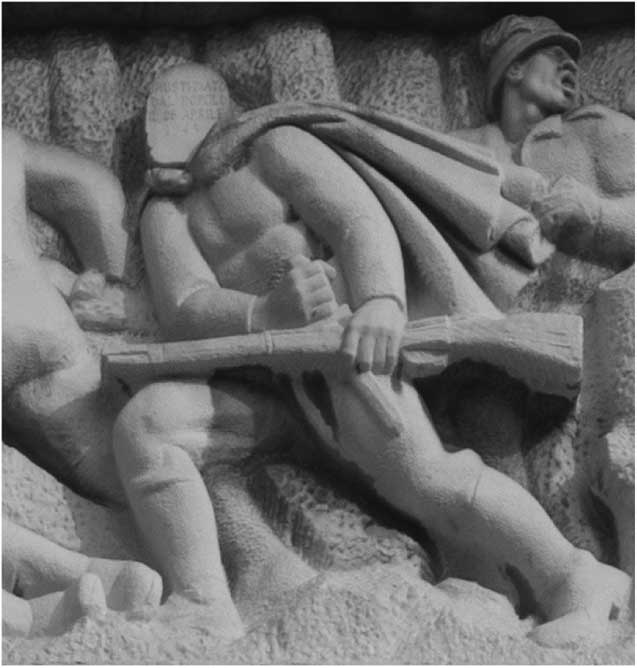
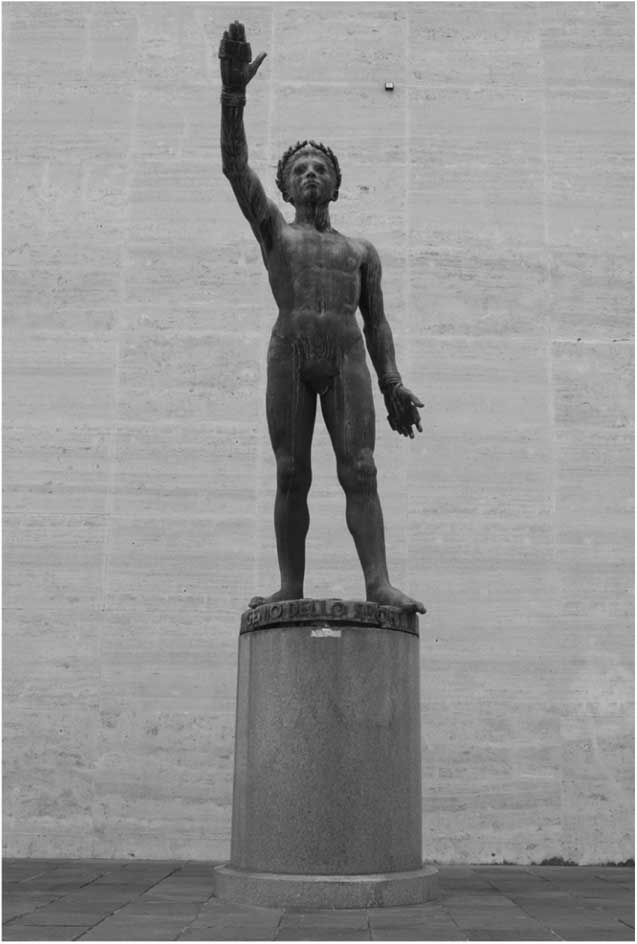
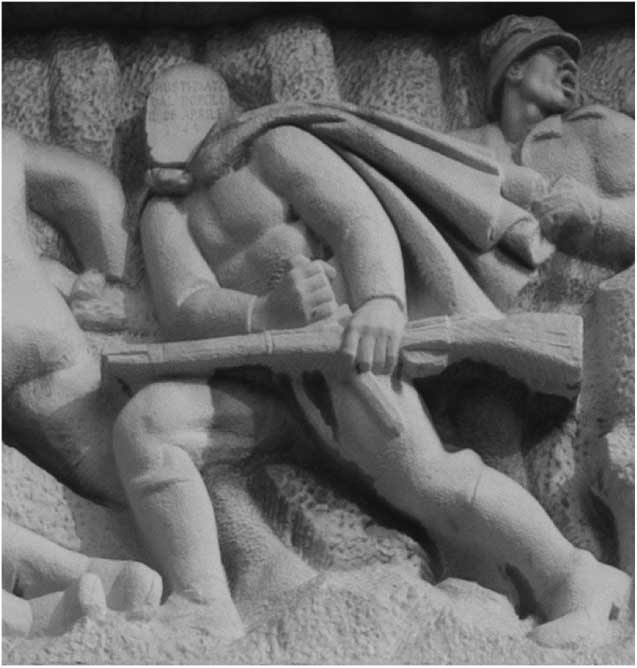
There were also more complex forms of erasure, as can be seen in the Arch of Victory that stands opposite Brignole station in Genoa, and which commemorates fallen soldiers of the First World War (Malone Reference Malone2017). The monument is decorated with bas-relief scenes that represent Italian soldiers fighting, praying and dying on the frontlines. In one of the tableaux, the Duce is depicted as a ‘superman’, or the most muscular among the fighting soldiers. In a symbolic act of capital punishment, his image has been defaced and inscribed with ‘executed by the people 28 April 1945’ (Figure 5). Again, this shows how Mussolini’s image was seen to represent the regime. As well as erasures, there were additions, as in the case of a statue in the Roman area of EUR, which was renamed from ‘Genius of Fascism’ to ‘Genius of Sport’ with the adding of an ancient Roman boxing glove to disguise the Roman salute (Gentile Reference Gentile2007, 190–191; Kallis Reference Kallis2014, 261; Carter and Martin Reference Carter and Martin2017, 350) Figure 6. Although this alteration might seem purely cosmetic, it is also subversive in the way it undermines the statue’s symbolic power.
Detail of Arch of Victory in Genoa, showing where the figure of Mussolini has been defaced and inscribed with ‘executed by the people 28 April 1945’ (author’s photograph, 2015)
‘Genius of Fascism’, now ‘Sport’, in EUR, Rome. Note the addition of boxing gloves to disguise the Fascist salute (author’s photograph, 2017)

A cheap and easy way to change the character of Fascist sites was by renaming monuments, streets and piazzas (Ladd Reference Ladd1997, 208; Kallis Reference Kallis2014, 259; Hökerberg Reference Hökerberg2017, 766). This process rests on a form of nominative determinism, or a belief that changing a name alters the meaning of a place. New names often belonged to opponents or victims of Fascism, and were chosen for a sense of vindication. For example in Rome, Lictor Bridge (Ponte Littorio) was renamed after the socialist Giacomo Matteotti to mark the place where he was kidnapped by Fascists and brought to his death in 1924 – although the Lictor’s fasces are still visible today (Figure 7). Equally, in Florence, the Giovanni Berta stadium, named after a Fascist squadrista killed by communists in 1921, became the stadio comunale (later Artemio Franchi). After the war, the stadium was chosen as the location for a shrine to commemorate the ‘martyrs’ of Campo di Marte, five young men who were executed by the militia of the Italian Social Republic in 1944.
Fasces on the Lictor Bridge, renamed Matteotti, in Rome (author’s photograph, 2016)

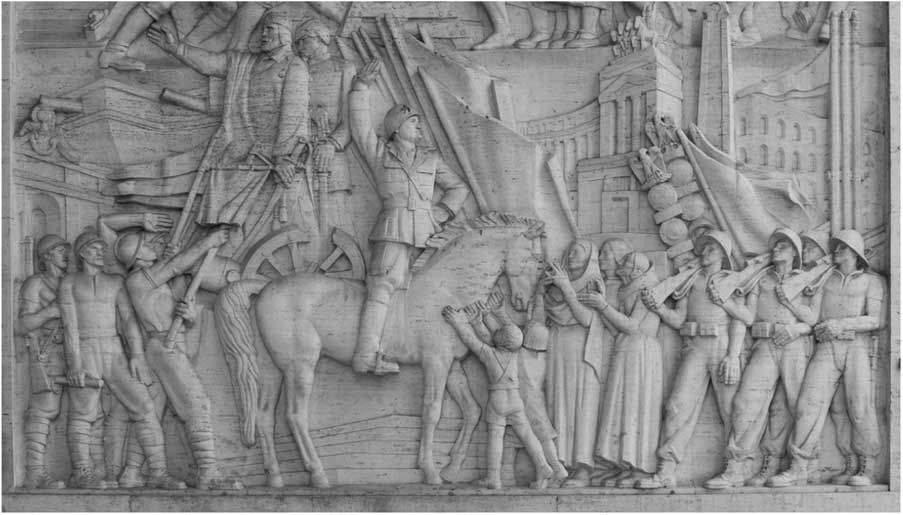
Through mechanisms of destruction, neglect and recycling, the ‘Fascist layer’ of Italian cities was altered, but it was not erased, and much survives across Italy in terms of art and architecture (Figure 8). The presence of remains might seem at odds with the absence of Fascism in some areas of public discourse, but the survival of remnants and the disappearance of memories were both part of a difficult transition from dictatorship to democracy. What is significant is that memories of Fascism have not been completely forgotten, nor have Fascist sites been kept intact. Rather, Fascist symbols were excised and altered in the same patchy and random way in which memories were selected and distorted. In this sense, architecture reflected, and supported, the transmission of memories to future generations through a selective process of remembering. Interventions into the built environment show that, alongside a tendency towards ‘collective amnesia’, there were limited efforts to tackle the past (Ventresca Reference Ventresca2006, 189–190).
Bas-relief representing Mussolini on horseback on the exterior of the Palazzo degli Uffici in EUR, Rome (author’s photograph, 2017)
The survival of Fascist remains in Italy is in marked contrast to the situation in Germany, where much more was demolished by bombing or post-war intervention (Ladd Reference Ladd1997; Rosenfeld Reference Rosenfeld2000; MacDonald Reference Macdonald2006 and Reference Macdonald2009; Rosenfeld and Jaskot Reference Rosenfeld and Jaskot2008). Whereas the Allies tolerated, and even encouraged, the preservation of Fascist symbols in Italy, they sought to eliminate any trace of National Socialism in Germany (Arthurs Reference Arthurs2014, 289; Carter and Martin Reference Carter and Martin2017, 345). Like the Italians, the German authorities struggled to deal with the heritage of the dictatorship. Faced with the same options of whether to destroy, reuse or neglect buildings, they opted more often for destruction, until the late 1980s, when they started to ‘neutralise’ sites through explanatory information or the creation of visitors’ centres. This approach is exemplified in the ‘Topography of Terror’ exhibition in Berlin, which was erected in 2010 next to the Ministry of Finance (formerly, Aviation) built in 1935–1936 (Ladd Reference Ladd1997, 154–167). Similarly, in 1992, a documentation centre was created to provide historical details at Prora, a seaside resort built in 1936–1939 by the Nazi leisure organisation Kraft durch Freude (Strength through Joy). Thus, in recent decades, Germany has embraced ‘critical preservation’, that is, preservation supplemented by educational material, which is intended to contextualise, transform and ‘desacralise’ sites (Hökerberg Reference Hökerberg2017). Recent policies reflect efforts to integrate the memory of National Socialism into the history of reunited Germany. By comparison, this urge to come to terms with the past has been felt less strongly in Italy, which may be a sign of an incomplete transition to democracy, or simply of less of a need to overcome the past (Samuels Reference Samuels2015, 115). In Italy, the norm is ‘uncritical preservation’, which allows Fascist sites to blend into the urban landscape without contextualisation (Carter and Martin Reference Carter and Martin2017, 354). However, there are exceptions, such as the permanent exhibition on Fascist and Nazi history that opened in 2014 in the Monument to Victory (1928) in Bolzano – a monument that was contentious not only for its Fascist origins, but also for its anti-German rhetoric, which offended a local German-speaking population (Hökerberg Reference Hökerberg2017). In general, Germany has tended towards destruction or isolation, whereas Italy has opted for preservation and reuse. The issue is not which approach is better, but how each suits a different national context.
Reasons for survival
There are a number of reasons why so much survives in Italy from the Fascist period – reasons which have to do with economics, politics, aesthetics and the national heritage. Undoubtedly, economic factors were key in the preservation of buildings. A vast portion of Italy’s infrastructure was built under Fascism, including railway stations, ports, post offices, police headquarters, banks, schools, and buildings of local and national government. In post-war Italy, the nation’s limited financial resources were largely invested in reconstruction rather than demolition. Thus, major institutions continued to occupy buildings that were created under the regime, offering striking symbols of the ‘continuity of the state’ (Pavone Reference Pavone1995, 70–159); as at the courthouse or Palazzo di Giustizia (1932) in Milan and the provincial headquarters (1934) in Naples (Figure 9). Fascist decoration was often embedded into the structure of these buildings and hard to remove (Carter and Martin Reference Carter and Martin2017, 347).
Decoration on the Palazzo della Provincia (headquarters of provincial government) in Naples, representing fascist values such as family, religion, labour and sport (author’s photograph, 2012)

As ideological imperatives can also be hidden behind practical excuses, a political perspective yields a different view on the preservation of Fascist remains. Some observers see the survival of Fascist symbols as symptomatic of lingering Fascist tendencies (Arthurs Reference Arthurs2010; Reference Arthurs2014; Page 2014). They view the lack of damnatio memoriae as proof of Italy’s reluctance to engage with the legacy of Fascism. On the other hand, one could argue that preservation is more useful than demolition to the spread of democratic values because it maintains reminders of the past.Footnote 3 Others take the opposite position, claiming that the architecture of Fascism lost its political value with the fall of Mussolini’s regime (Gundle Reference Gundle2013, 251; Maulsby Reference Maulsby2014, 29, 32–33). In this light, the capacity of buildings to express political meanings is dependent on the power of its original creators. One might ask, then, whether commuters notice the fasces in the atrium of Milan’s central station (1925–1931), or whether tourists headed from Via del Corso to the Ara Pacis in Rome read the Fascist inscription in Piazza Augusto Imperatore (Figure 10).
Building of 1938–1940 in Piazza Augusto Imperatore, near the Ara Pacis and Mausoleum of Augustus in Rome, with Fascist inscriptions, bas-reliefs and mosaics (author’s photograph, 2014)

In any case, the distracted acknowledgements of passers-by contrast with the weighty polemics that have erupted around Fascist sites. One example of this is the square of the Ara Pacis by the Tiber in Rome, which was created after the foundation of the empire in 1936 to act as a showcase for Fascist ideals of romanità (‘romanness’). The regime cleared the area around the ancient Mausoleum of Emperor Augustus (c. 28 BCE) and reconstructed nearby the Augustan Ara Pacis (9 BCE), or Altar of Peace, celebrating the establishment of the ancient Roman empire, which was excavated at a short distance on the other side of the Tiber (Seabrook Reference Seabrook2005; Arthurs Reference Arthurs2010, 114–115; 2012, 155; Kallis Reference Kallis2011; Reference Kallis2014, 99–105). The Augustan monuments were framed by buildings of the late 1930s whose decoration celebrated the glory of the Fascist Empire, and turned the site into a stage set for Mussolini’s imperial ambitions. The aim was to present Fascism as heir to Imperial Rome, and Mussolini as a successor to the Emperor Augustus (Nelis Reference Nelis2007, 405–407; Kallis Reference Kallis2011, 811; Arthurs Reference Arthurs2012, 119, 131–134). In the early 1990s, Rome’s centre-left civic government launched a project to demolish the pavilion of 1938, which contained the Ara Pacis, on the grounds that it was in poor condition, and to build in its place a museum to be designed by the American architect Richard Meier – perhaps with the intention to ‘recode’ the symbolism of the site. The proposal to replace the Fascist-era pavilion with a building by a foreign architect provoked an outcry, particularly among critics on the right who saw the demolition as a rejection of the Fascist legacy.Footnote 4 When elected Prime Minister in 2001, Silvio Berlusconi halted the project as a concession to his far-right coalition partners, and ordered the restoration of the decorations on the Fascist-era buildings surrounding the piazza (Kallis Reference Kallis2014, 260). In an inscription embedded in one of the buildings at the corner of the piazza, ‘Mussolini’ had been abbreviated to ‘Musso’ (‘donkey’) after 1943, but was returned to its original state around 2001 (Figure 10; Centre for the Study of Ancient Documents 1999; Arthurs Reference Arthurs2014, 283).Footnote 5
When the museum was eventually completed in 2006 under the left-wing mayor Walter Veltroni, its inauguration was disrupted by protestors associated with the neo-fascist Movimento Sociale Fiamma Tricolore (La Repubblica 21 and 22 April 2006). Completion did not put an end to the controversy. On his election as mayor of Rome in 2008, Gianni Alemanno of the ‘post-Fascist’ Alleanza Nazionale promised to destroy the new museum and to restore the piazza to the state in which it had existed under Fascism (Corriere della Sera 8 March 2008; La Repubblica 12 May 2008). Alemanno’s supporters argued that the modernist style of Meier’s new museum clashed with the stripped classicism of the Fascist-era buildings, and depleted the aesthetic integrity of the piazza (Evangelisti Reference Evangelisti2008). When asked in an interview for the Sunday Times in 2008 whether he saw anything positive in the Fascist legacy, Alemanno claimed that ‘fascism was fundamental to modernising Italy’ and that architecture was ‘part of the modernisation process and gave importance to Italy’s cultural identity’ (Follain Reference Follain2008). It is interesting that Alemanno saw modern architecture as an acceptable part of the Fascist legacy, perhaps because of its association with progress and artistic freedom. Yet the vehemence of the controversy surrounding the Ara Pacis suggests that politics trumped aesthetic considerations, and that Fascist sites were still politically powerful, whether used to celebrate or repudiate Fascism (Arthurs Reference Arthurs2010, 115).
That said, aesthetics has also been a major influence on preservation. For decades after the war, architects and historians ignored or denigrated Fascist-era architecture, until the 1980s brought calls to judge architects on their merits, rather than their politics (Zevi Reference Zevi1950; Ciucci Reference Ciucci1982; Reference Ciucci1989; Maulsby Reference Maulsby2014, 33). It was perhaps a sign of the passage of time that appeals for architecture to be evaluated on aesthetic terms coincided with apolitical representations of Fascism in popular culture (Arthurs Reference Arthurs2010, 124; Arthurs Reference Arthurs2014, 283; Mammone Reference Mammone2006). As a result, critics now recognise the ventennio as one of the most innovative and successful periods in Italian architecture, and praise Fascist projects in a way that would be unthinkable for Nazi architecture in Germany (Samuels Reference Samuels2015). The breadth of Fascist aesthetics, which ranges from monumental neoclassicism to cutting-edge modernism, facilitated its reappraisal. Modernist buildings, whose abstract symbolism was less obviously Fascist, could be more easily disassociated from politics (Nicoloso Reference Nicoloso2012, 15–19; Pieri Reference Pieri2013, 233–234). Critical opinion has been less favourable towards traditional art and architecture, with the exception of classical decorations that could be appreciated for their antique appearance (Carter and Martin Reference Carter and Martin2017, 359). One example of a building that was preserved largely on aesthetic grounds is the Palazzo della Civiltà Italiana (Palace of Italian Civilisation) in Rome, which marries a stripped classicism with modernist influences. Originally, the Palazzo was part of a complex of monumental buildings built for the universal exposition, called E42, which was planned for the twentieth anniversary of the Fascist regime in 1942, but later cancelled due to the war. The renamed EUR formed the basis for a new district of Rome. The Palazzo, also known as the square colosseum, was created to house an exhibition on the ‘primacy’ of the Italian race and civilisation, but, since 2013, it has accommodated the headquarters of the luxury fashion label Fendi (Figure 11; Etlin Reference Etlin1991, 484–485; Gentile Reference Gentile2007, 188–190; Hatherley Reference Hatherley2015; Kirchgaessner Reference Kirchgaessner2015).
Palazzo della Civiltà Italiana (Palace of Italian Civilisation), now headquarters of Fendi, in Rome’s EUR district (author’s photograph, 2017)

When Fendi moved in, its chief executive Pietro Beccari echoed a rhetoric of romanità when he stated: ‘We are proud to give back to our city, Rome, and to the whole world, the Palace of Italian Civilisation, symbol of our Roman roots and of the continuing dialogue between tradition and modernity, values that have always been dear to Fendi’ (Pamphili Reference Pamphili2015; Fiorentino Reference Fiorentino2015; Luperini Reference Luperini2015).Footnote 6 Beccari rejected criticisms that Fendi was ignoring associations with Fascism on the grounds that: ‘This building is beyond a discussion of politics. It is aesthetics. It is a masterpiece of architecture … For Italians and Romans, it is completely de-loaded, empty of any significance … We never saw it through the lens of Fascism’ (Kirchgaessner Reference Kirchgaessner2015). His statement shows that, in order to justify preservation on aesthetics grounds, buildings have to be stripped of their political content. In other words, aestheticisation demands depoliticisation, or the mental separation of Fascist remains from the regime itself (Samuels Reference Samuels2015, 122).
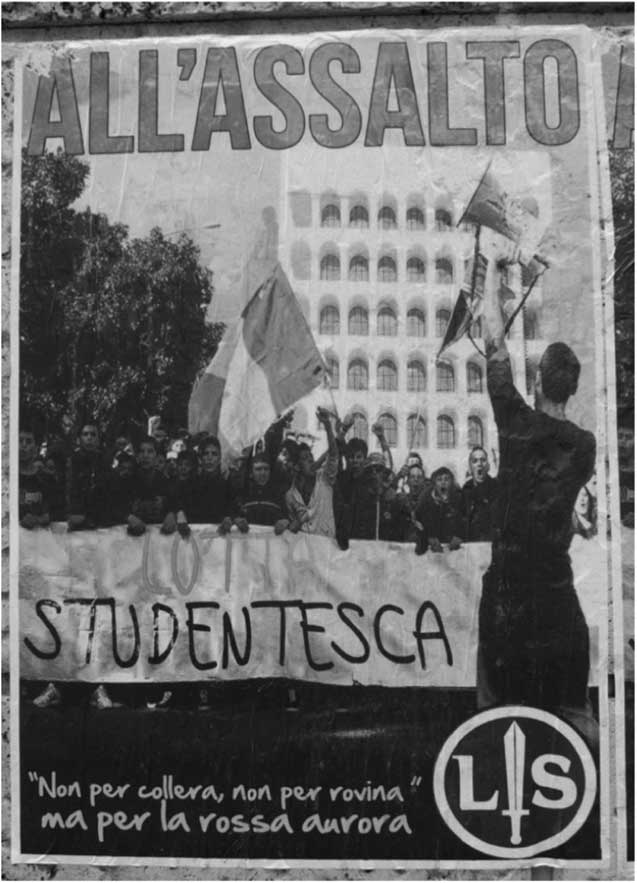
The issue is whether it is possible to depoliticise architecture that has strong ties with the Fascist dictatorship. In 2013, the year in which the Palazzo della Civiltà Italiana was leased to Fendi, the building appeared on posters of Lotta Studentesca, the youth wing of the far-right group Forza Nuova, which is represented by the Fascist symbol of the dagger (Figure 12). Thus, it is perhaps disingenuous to think that buildings with a strong connection to Fascism can be stripped of all political associations and adopted as heritage sites. Perhaps as a form of poetic justice, the Palazzo was also used in posters that advertised the LGBTQ parade of Roma Pride in 2016, with the slogan ‘those who do not settle, fight’ (Figure 13). Whatever the motivations for choosing a Fascist monument to represent Roma Pride, the choice can be interpreted as a subversive act of appropriation. Initially, Fendi threatened to sue the parade’s organisers for ‘inappropriate use’ of the building, but the firm eventually backed down (Kirchgaessner Reference Kirchgaessner2016; Cillis and Venuti Reference Cillis and Venuti2016). In any case, the fact that the Palazzo is deployed across the political divide shows how Fascist architecture is still a powerful symbol.
Poster of far-right student group, Lotta Studentesca, showing the Palazzo della Civiltà Italiana (author’s photograph 2013)

Poster for Roma Pride, showing the Palazzo della Civiltà Italiana (online source, 2016)

Another reason for the survival of Fascist-era architecture is a growing recognition of its importance within Italy’s heritage (Maulsby Reference Maulsby2014, 33–34). Since the 1990s, buildings of the ventennio have been gradually accepted as part of the national patrimony. While this might reflect current trends to re-evaluate Fascism in a more positive light, it is also a sign that enough time has passed for architecture to be judged without ideological bias. The 1990s saw a growing appreciation of interwar modernism, which brought about the restoration of three flagship projects of the regime in Rome: EUR, Foro Mussolini and La Sapienza University. It is emblematic of changing attitudes that the Ministry of Culture (Ministero dei beni e delle attività culturali e del turismo) has recently listed a number of Fascist buildings. Exemplified by the former headquarters of the Fascist youth organisation, Gioventù Italia del Littorio (GIL), nine buildings have been listed across Italy – of which eight since 1995.Footnote 7 The ninth is a building of 1933–1936 designed by Luigi Moretti in Rome’s Trastevere district, which was listed in 1984 and restored in 2013–2015 for its value as a modernist masterpiece (D’Albergo Reference D’Albergo2017a). This case also shows how restoration is not enough to create a heritage site. Without a plan for access or re-use, the former GIL headquarters has been empty since its restoration. In April 2017, the neo-Fascist group Forza Nuova occupied the building in protest against its neglect, showing how ‘uncritical preservation’ leaves sites open to political appropriation (D’Albergo Reference D’Albergo2017b; Di Corrado Reference Di Corrado2017).
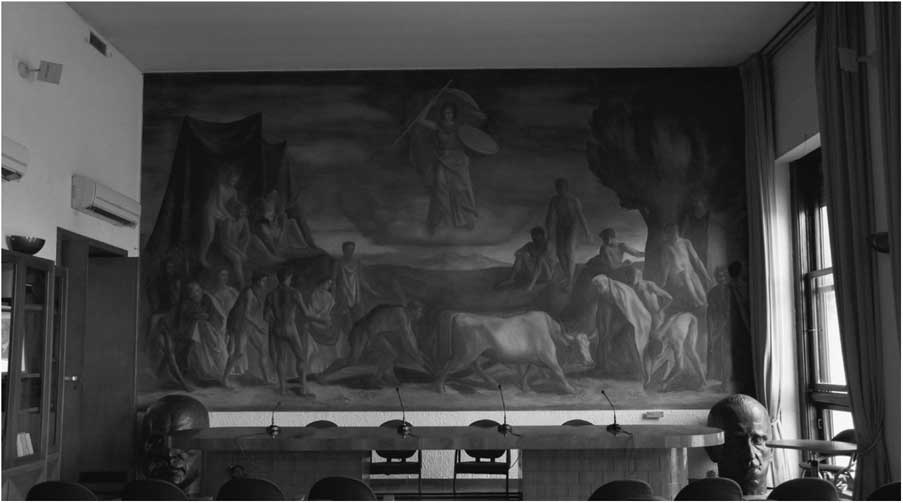
Another former GIL building, in Forlì, was restored in 2009–2011 and later used to accommodate two exhibitions on Fascist architecture curated by ATRIUM, an association that is dedicated to the cultural heritage of European totalitarian regimes.Footnote 8 Inspired by democratic principles, ATRIUM is intended to encourage the preservation of architecture created by dictatorships, while ‘maintaining a critical and ethical repudiation’ of totalitarianism.Footnote 9 With the institutional support of the Council of Europe, ATRIUM aims to promote an appreciation of architecture both for its quality and its historical value – which illustrates the dual role of aesthetics and heritage in the valorisation of Fascist buildings. The city council of Mussolini’s birthplace of Predappio, at a short distance from Forlì, is a member of ATRIUM and its controversial proposal to establish a museum of Fascism in a former Fascist party headquarters might be seen as part of the same process of ‘heritagisation’ that converts Fascist buildings into heritage sites. While it is useful to acknowledge the historical importance of the ventennio, it is worth asking whether preservation implies any valorisation or legitimation of the regime. After all, concerns for Fascist heritage emerged at the same time as attempts to rehabilitate Fascism in public discourse (Pieri Reference Pieri2013, 236). Meanwhile, in an office building in Rome’s EUR, the busts of Mussolini and Victor Emanuel III were restored to their position in a boardroom (Figure 14).
Busts of Mussolini and Victor Emmanuel III in a boardroom within the Palazzo degli Uffizi in EUR, Rome (author’s photograph, 2014)

Recent debates
The third part of this article takes a more concrete approach and explores recent debates about the economic, political, aesthetic and heritage issues surrounding Fascist sites. From the 1990s, Fascist architecture has sparked a number of controversies in the Italian media, which have acted as conduits for discussions about the meaning of Fascism in contemporary Italy. It is significant that, over 70 years after Mussolini’s death, Fascism is still the subject of debates – perhaps even more so than in the early post-war period. It is also interesting that polemics about Fascist-era buildings gained traction, from the 1990s, at the same time as calls to protect the regime’s heritage and to revise the history of Fascism. On one hand, efforts to preserve the art of the ventennio might indicate a willingness to confront the past and to overcome Fascist/anti-Fascist dichotomies. On the other, revisionism might support the resurgence of the far right, the entry into government of politicians with neo-Fascist backgrounds, and ongoing conflicts between (post-)Fascist and anti-Fascist forces. Essentially, both tendencies responded to the weakening grip of anti-Fascism over Italian culture.
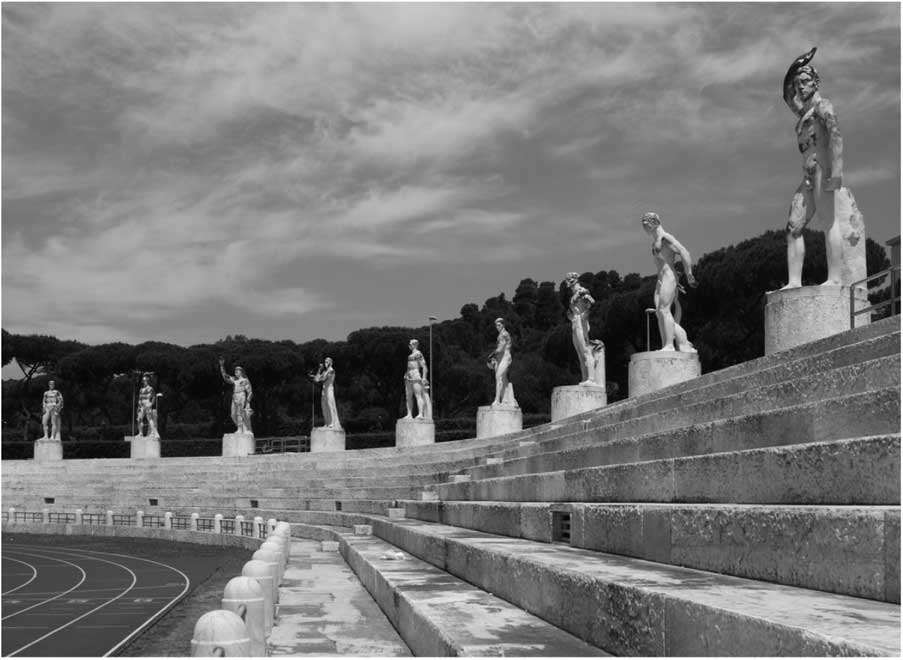
The vast sports complex of Foro Mussolini in Rome is a significant example of the neglect and reuse of Fascist sites. Built in 1928–1938 under the direction of the architect Luigi Moretti as a training ground for the Fascist youth organisation, Opera Nazionale Balilla (later GIL), the Foro serves today as Rome’s main athletics centre and as the headquarters of the Italian Olympic Committee (Figure 15; Greco and Santuccio Reference Greco and Santuccio1991; Gentile Reference Gentile2007, 99–106; Masia et al. Reference Masia, Matteoni, Mei and Beck Peccoz2007). The largest of the regime’s interventions into the Roman cityscape, it comprised a number of different sports facilities, including an elliptical running track encircled by statues of muscular male nudes (Figure 16). The main entrance was marked by an obelisk inscribed with ‘Mussolini dux’, and led to a vast square called Piazzale dell’Impero, which was decorated with mosaics depicting scenes from mythology, antiquity, sport and Fascist life (Figure 17; D’Amelio Reference D’Amelio2009). Architecturally, the Foro reflects an interplay between tradition and modernity, in that its main buildings are in a classical style, whereas its secondary buildings embody the sparse aesthetic of modernism. Under Fascism, sport was more than just leisure, as it was meant to shape the minds and bodies of future generations, to cultivate the race, and to prepare for war (Greco and Santuccio Reference Greco and Santuccio1991, 83–84). As a showcase for Fascist ideals of fitness and beauty, the Foro was a concrete expression of the regime’s plans for ‘the future legions of Fascist Italy’ (Figure 18).Footnote 10
Academy of Physical Education, now headquarters of the Italian Olympic committee, at Foro Mussolini (renamed Italico), in Rome (author’s photograph, 2015)

Stadio de’ Marmi in the Foro Mussolini, now Italico, in Rome (author’s photograph, 2015)
Obelisk inscribed with ‘Mussolini Dux’ at the Foro Mussolini, now Italico, Rome (author’s photograph, 2017)

Statue of balilla (member of Fascist youth group) at the Foro Mussolini/Italico, Rome (author’s photograph, 2017)

As ‘the greatest experiment of state education in history’, the Foro was thought of as ‘a monument that … would perpetuate across the ages the memory of the new Fascist civilisation’ (Santuccio Reference Santuccio2005, 149; Gentile Reference Gentile2007, 99; Carter and Martin Reference Carter and Martin2017, 342). Contemporaries stressed that it was not a utilitarian complex, but an ‘affirmation of the imperialist will of Fascism’ (quote in Gentile Reference Gentile2007, 104). In this respect, the Foro can be compared to the Nuremberg rally grounds as a stage for ceremonies, a showpiece for foreign dignitaries, and a symbol of the regime (Pooley Reference Pooley2013, 213; Carter and Martin Reference Carter and Martin2017, 342).
After 1943, the Foro escaped destruction because it was designated as a rest centre for Allied military personnel. In fact, American soldiers reportedly stopped Romans from demolishing the Foro’s obelisk (Caporilli and Simeoni Reference Caporilli and Simeoni1990, 265; Gentile Reference Gentile2007, 257). Following the departure of the Allies, the mosaics, paintings and inscriptions were restored to host the 1960 Olympics, but the Foro came under attack from leftist members of parliament, who demanded the erasure of Fascist symbols, and used their continued existence to accuse the Christian Democrat government of complacency towards Fascism (Vidotto Reference Vidotto2004, 113–114; Arthurs Reference Arthurs2014, 290; Martin Reference Martin2017, 68). The government agreed to remove some of the Fascist decoration, but the removal works were hampered by neo-Fascists, backed by the Movimento Sociale Italiano, who staged protests, planted bombs, and distributed leaflets with the slogan ‘history must not be erased’ (‘La storia non si cancella’, La Stampa 11 August 1960; see also Arthurs Reference Arthurs2014, 290). Eventually, the government gave in to pressure from the extreme right and adopted a compromise. Only two of the most inflammatory inscriptions were erased, and three dates were added to the marble blocks in the Piazzale dell’Impero to mark the overthrow of the Fascist regime (1943), the creation of the Italian Republic (1946) and the Italian Constitution (1948). Thus, rather than erasing the Fascist past, the authorities updated the original historical timeline with the unintended effect of suggesting a continuation of the state through Fascism (Martin Reference Martin2017, 69).
After gaining the status of a protected site, the Foro underwent a second, more extensive, restoration for the Football Championships of 1990 (Carter and Martin Reference Carter and Martin2017, 252). The Foro’s administration published a collection of essays with the aim of refuting criticisms of the restoration. While one author rejects any connection between Fascism and the architecture of the Foro, another welcomes the reappraisal of Fascist architecture, ‘whether it is because of fashion, or because time has given a sense of perspective’ (Caporilli and Simenoni Reference Caporilli and Simeoni1990, 7 and 57). In the same publication, an expert in architectural restoration condemns the ‘shameful conditions’ of the Foro as the result of ‘the neglect, or even obtuse criminalisation, of art from the “ventennio”’ (Caporilli and Simenoni Reference Caporilli and Simeoni1990, 309). These comments mark a growing appreciation of the Foro’s value as a heritage site.
Around this time, an unusual alliance emerged between two groups with different agendas (Arthurs Reference Arthurs2010, 122). In one group, there were those who supported preservation of the Foro on artistic grounds, such as Italia Nostra, a major association for the protection of Italian heritage.Footnote 11 In the other, there were those on the far-right who denounced the Foro’s disrepair, and called for its restoration as a homage to Mussolini.Footnote 12 Thus, calls for preservation stemmed both from a recognition of artistic value and from far-right politics, as historical preservationists and neo-Fascists adopted kindred positions. Despite their common concerns, the two groups were at opposite ends of the political spectrum, as efforts to preserve Fascist sites generally came from anti-Fascists who hoped that preservation would help Italians to come to terms with the past. For a post-Communist left, heritage offered a chance to understand the Fascist legacy. Preservation was meant to help depolarise the political system, build a shared system of values and set anti-Fascism on a stronger footing. For instance, as Nick Carter and Simon Martin (Reference Martin2017, 352–353) have shown, forces on the left drove the restoration in 1997–2000 of a mural called The Apotheosis of Fascism in the Foro’s Academy of Physical Education. The mural, representing Mussolini and his leaders in the mode of Christ and his disciples, had previously been covered, but leftist politicians and civil servants held that its exposure would serve as a reminder to future generations (Pooley Reference Pooley2013, 125; Carter and Martin Reference Carter and Martin2017, 356). The restoration was overseen by the then Minister of Culture Walter Veltroni, formerly a Communist deputy and centre-left mayor of Rome, who in an interview in 2013 said that ‘To condemn [Fascism] we need to understand, historicise and rationalise it, not remove it’ (La Stampa 23 March 2013, quoted in Carter and Martin Reference Carter and Martin2017, 353). This illustrates how restoration originated from anti-Fascist efforts to combat revisionism and to renew democratic values. Equally, the project to establish a museum of Fascism in Predappio is being led by the centre-left mayor Giorgio Frassineti, formerly of the PCI. Whatever the intentions of such initiatives, the lack of critical preservation can give rise to misunderstanding and misappropriation (Vidotto Reference Vidotto2004, 121; Arthurs Reference Arthurs2010, 124–125; Carter and Martin Reference Carter and Martin2017, 355; Hökerberg Reference Hökerberg2017, 771).
A case in point is that, in April 2015, the Foro was again at the centre of debates that followed an off-the-cuff remark made by the then President of the Chamber of Deputies, Laura Boldrini, at a ceremony to celebrate the seventieth anniversary of Liberation. A former partisan suggested to President Boldrini that ‘we should do something to cleanse fascism, which is coming back, from all the streets of Italy’ and proposed to demolish the Foro’s obelisk (see Figure 16).Footnote 13 Boldrini answered that ‘at least it is time to remove the writing’, referring to the inscription ‘Mussolini dux’. While Boldrini’s statement might appear unremarkable, it caused uproar in the Italian media. Most of the political establishment, on both left and right, came out against the idea of removing the inscription. Interestingly, this represented a change in position from similar debates in 1960. On the left of the political spectrum, the president of the Democratic Party (PD), Matteo Orfini, stated that: ‘We are an anti-fascist country …[and] we have no need to erase our memory’, thus claiming anti-fascism as an antidote to any threat posed by Fascist monuments (La Repubblica 17 and 18 April 2015). In turn, the leader of the Moderates, Giacomo Portas, asked: ‘The ventennio is dead and buried, what does it matter now?’ (Il Messaggero 17 April 2015). Meanwhile, on the right, Senator Andrea Augello of the Nuovo Centrodestra, who had been a member of the neo-Fascist Movimento Sociale Italiano and of the post-Fascist Alleanza Nazionale, stressed that the buildings are no longer to be considered as propaganda, but as architecture (Il Tempo 18 April 2015) – a statement that supports a de-politicised view of architecture. Similarly, a representative for Forza Italia, Dario Rossin, mobilised arguments in defence of ‘the artistic and architectural patrimony’ (Corriere della Sera 17 April 2015). If, as Augello claimed, the buildings of Foro Mussolini no longer hold any political value, how can we explain public reactions to President Boldrini’s statement? Boldrini was attacked in both print and social media, with right-wing newspapers describing her as a ‘red fury’ (‘furia rossa’, Valenza Reference Valenza2015; Il Tempo 17 April 2015; Sabatini Reference Sabatini2015). Responses included a campaign on Facebook to take selfies in front of the obelisk on 25 April, the anniversary of Italy’s Liberation, which used as a hashtag the slogan adopted by neo-Fascist groups in 1960, ‘history must not be erased’ (‘La storia non si cancella’). This suggests that, in broad terms, the position of the right has not changed between 1960 and 2015, while opinions on the left have shifted in favour of preservation.
This episode illustrates the difficulties surrounding the architectural legacy of Fascism. The question is whether such debates reveal surviving Fascist mentalities, or whether Fascism is being appropriated to serve new political forces. Another issue is whether such debates are symptomatic of a crisis in the Italian polity, or of a healthy effort to tackle the past. In any case, these sites are flashpoints for conflict, and political instruments deployed on both sides of an ideological debate. Fascist-era sites are being used as weapons in political struggles, rather than as sources for national reconciliation or meaningful introspection.
Conclusion
Christopher Duggan proposed to explore the legacies of Fascism, and the manner in which memories of the regime were passed to later generations. That proposal had the potential to shed light on the marks left by Fascism on politics and culture in present-day Italy. Its timing was apt, as it emerged when history was being distorted to serve current political interests. The project identified a broad range of sources through which to study the ‘afterlife’ of Fascism. One source lies in architecture that perpetuates memories in the places of everyday life. In the spirit of Duggan’s unfinished project, this article has examined attitudes towards Fascist remains, as expressive of different ways in which the past has, or has not, been integrated into public memory. Three approaches characterise how Italy has dealt with the architectural legacy of Fascism: destruction, neglect and recycling, of which the latter has been the most common. As a result, much survives from the ventennio, as buildings are preserved on economic, political, aesthetic or heritage grounds. The ubiquity of physical traces contrasts with the concealment of Fascism in some areas of Italian life, but both suggest the existence of a basic urge to forget. In many ways, the processes whereby buildings are destroyed, ignored or altered mirror how memories are shaped by each generation. The processes of selection and manipulation are always rooted in contemporary politics. Even when buildings are preserved for aesthetic reasons, evidence suggests that architecture is not been completely aestheticised or depoliticised. On the contrary, recent debates surrounding the preservation of Italy’s Fascist heritage show how both left and right instrumentalise architecture, or use it to push their own agendas. This article identifies a shift in attitudes towards the architecture of Fascism that first emerged in the 1990s. Whereas, in the post-war period, a ‘collective amnesia’ supported the neglect or reuse of Fascist sites, over the last two decades, calls for preservation have arisen from forces that try in different ways to harness the public memory of Fascism. Perhaps, in the future, Fascist sites might become the subject of critical preservation and public education, but for now, they are caught up in the political battles of today.
Acknowledgements
I wish to thank Paolo Heywood and John Pollard for reading drafts of this article, and Patrick Leech and Jaap Talsma for providing crucial information. I am indebted to the editor of Modern Italy, Mark Seymour, and to the anonymous reviewers, for their helpful suggestions. I am also grateful for the useful comments offered by members of the audience at the 2016 ASMI conference, ‘The Force of History’, in response to the presentation that preceded this article.
Note on contributor
Hannah Malone is a historian of modern Italy interested in issues relating to architecture, politics and death. As a Humboldt Fellow at the Free University in Berlin, she is currently writing a book on Italy’s Fascist ossuaries of the First World War. Her first monograph, Architecture, Death and Nationhood: Italy’s Monumental Cemeteries of the Nineteenth Century, was recently published by Routledge.