Malonyl-CoA, a product of acetyl-CoA carboxylase is a metabolic intermediate in lipogenic tissues that include liver and adipose tissue, where it is involved in the de novo fatty acid synthesis and elongation.Reference Liu, Tan and Han1 Cytosolic malonyl-CoA acts as a key regulator of mitochondrial fatty acid β-oxidation in cardiac and skeletal muscle by inhibiting carnitine palmitoyltransferase 1(CPT1), thus malonyl-CoA maintains the balance between lipid and glycogen metabolism.Reference Liu, Tan and Han1 Malonyl-CoA decarboxylase (MLYCD, E.C.4.1.1.9), a 55-kDa enzyme catalyses the conversion of malonyl-CoA to acetyl-CoA and carbon dioxide, thus providing a route for disposal of malonyl-CoA from mitochondria and peroxisomes, whereas in the cytosol, the malonyl-CoA pool is regulated by the balance of MLYCD and acetyl-CoA carboxylase activities.Reference Liu, Tan and Han1 Earlier studies demonstrated that malonyl-CoA could substantially inhibit the other isoforms of CPT, CPT1B in the heartReference Chapel-Crespo, Gavrilov and Sowa2 and CPT1C in the brain MLYCD is encoded by the gene MLYCD localised on chromosome 16q24. Human MLYCD deficiency (OMIM 248,360) also known as malonic aciduria is a rare autosomal recessively inherited inborn error of fatty acid metabolism that is characterised by cardiomyopathy, seizures, hypoglycaemia, mental retardation, developmental delay, and in some cases neonatal death. Earlier studies have provided compelling evidence that malonyl Co-A allosterically binds to CPT1 thereby inhibiting it and subsequently leading to the non-transfer of long-chain fatty acids into the mitochondria. This finding strongly suggests that the interaction of malonyl CoA and CPT1 is a central element of fuel cross-talk signalling for various tissues like skeletal muscle, liver, and heart.Reference Liu, Tan and Han1,Reference Chapel-Crespo, Gavrilov and Sowa2 Although an enormous amount of work has been done to elucidate the key roles that MLYCD plays in lipid and carbohydrates metabolism, its pathogenesis, metabolic function, and subcellular localisation still remain obscure. So far, 34 cases with different MLYCD gene defects comprising point mutations, stop codons, and frameshift mutations have been reported in the literature.Reference Lee, Ko, Song, Song and Park3 Here, we describe the follow-up of a patient affected by malonic aciduria upon neonatal onset. Molecular analysis showed novel homozygous mutations in the MLYCD gene. Our findings expand the number of reported cases and add a novel variant to the repertoire of MLYCD mutations.
Case report
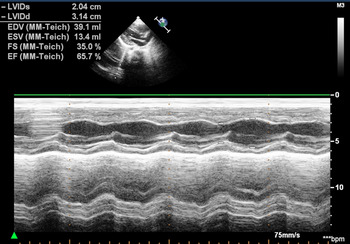
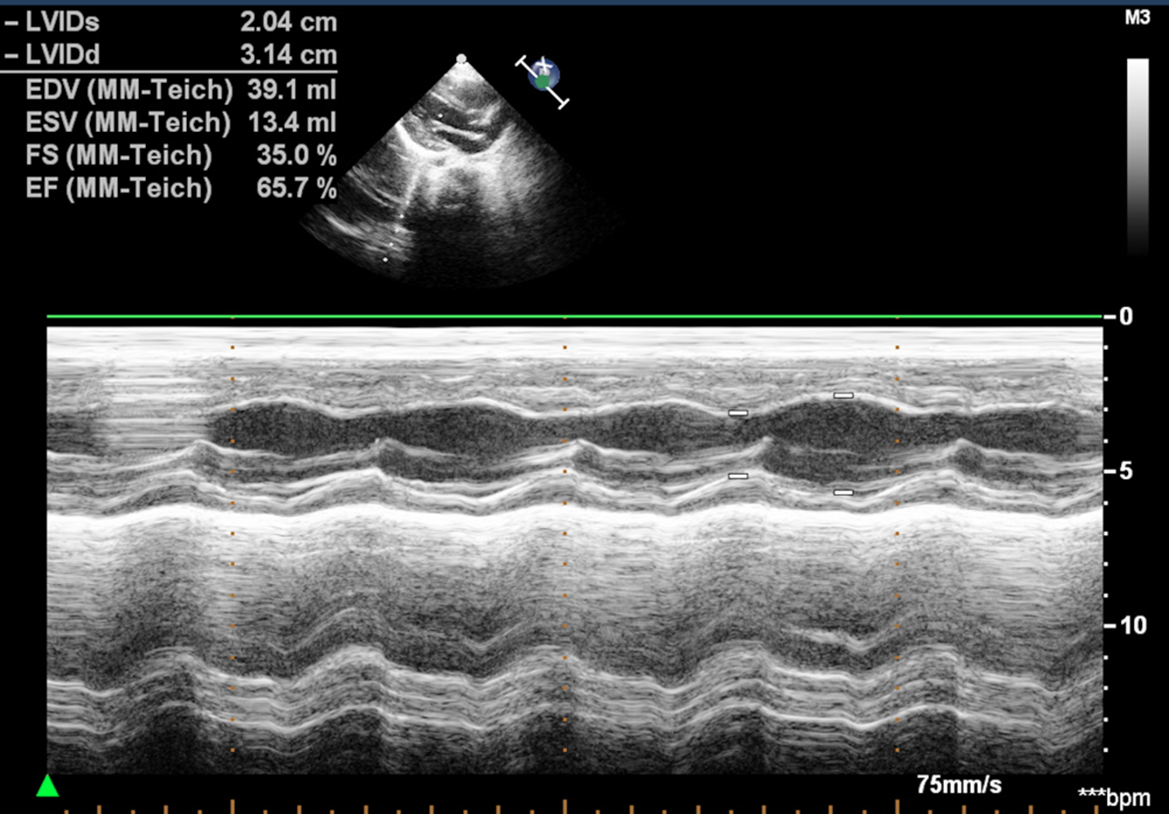
Our 14-month-old patient is the son of healthy consanguineous Turkish parents who was born at 39 weeks by C-section due to breech presentation. Family history shows one healthy boy and an early miscarriage. Birth weight was 3750 g (height 50 cm and head circumference 35 cm) with Apgar score of 10. Neonatally, the baby had feeding difficulties, failure to thrive, and somnolence on day 10. He was hospitalised in the neonatal ICU owing to tachypnoea, failure to thrive, and cardiac murmur at that time. Alanine aminotransferases were 25 U/L and aspartate aminotransferases were 38 IU/L normal. His cardiomegaly was progressed and enapril, digoxin, and furosemide were initiated for the management of congestive heart failure based on imaging findings of left ventricular non-compaction with depressed systolic function and a calculated left ventricular ejection fraction of 32%. His abdominal ultrasonography revealed hepatosteatosis. Tandem mass analysis was normal. Urinary organic acids screening showed increased excretion of malonic acid (471 mmol/mol creatinine; reference <20 mmol/mol creatinine) and methylmalonic acid (281 mmol/mol creatinine; reference <5 mmol/mol creatinine) and dicarboxylic aciduria. At that time, his biochemical test results revealed elevated levels of homocysteine 17.1 µmol/L (nv: 3.3–8.3) and vitamin B12 level of 138 ng/L (nv: 211–911). Vitamin B12 replacement was done. When he was 14 months old, development was delayed, accompanied by mild hypotonia. His height was 79 cm, weight 10.3 kg, head circumference 45.5 cm. He was non-dysmorphic. This 14-month-old boy was suspected of having MCD deficiency based upon marked elevation of malonic acid. Whole-exome sequencing revealed a novel homozygote missense mutation (NM_012213.3:c.175A > T (p.Lys59Ter)) of the MLYCD gene at exon 1 and (NM_007374.3):c.422A > G (p.His141Arg) homozygote novel missense mutation of the SIX6 gene. This result confirmed the diagnosis of MLYCD. In humans and other species, SIX6 variants were reported to cause congenital eye malformations. His ophthalmological evaluation was normal. We prescribed a minimal long-chain triglycerides diet supplemented with medium-chain triglycerides oil and essential fatty acids from walnut oil. Carnitine was commenced at 100 mg/kg/day. His cardiac function improved with a ventricular ejection fraction of 65% after 1 month of specific therapy for MLYCD (Fig 1).
The echocardiographic findings of our patient with malonyl coenzyme A decarboxylase deficiency after treatment.
Discussion
Dilated cardiomyopathy) can be the consequence of clearly defined external aetiologic factors, such as viral infections, toxins, drugs, and genetic metabolic disorders. At least 30–40% of cases have a prevalent genetic origin, and in the remaining part, genetics may still play an important role. DCM is the most common form of childhood cardiomyopathy and the most frequent reason for cardiac transplantation. With the expansion of clinical genetic testing, genetic causes of DCM have been increasingly identified. Metabolic screening for the differential diagnosis of childhood DCM is recommended to rule out rare, but treatable reasons for inherited metabolic disorders as malonic aciduria.Reference Jammal Addin, Young, McCarrison and Hunter4
Malonic aciduria (OMIM 248,360), or malonyl coenzyme A decarboxylase deficiency, is a rare autosomal recessive inborn error of fatty acid metabolism characterised by developmental delay, excretion of excess malonic and methylmalonic acids in urine, metabolic acidosis, hypoglycaemia, seizure disorder, and cardiomyopathy. Increased malonyl-CoA levels potently inhibit long-chain carnitine acyltransferases. It has been demonstrated that malonic aciduria is due to deficiency of malonyl-CoA decarboxylase that catalyses the decarboxylation of malonyl-CoA to acetyl-CoA.Reference Polinati, Valanne and Tyni5 Malonyl-CoA represents the first committed step in fatty acid biosynthesis and serves as an important regulatory role through inhibition of carnitine palmitoyltransferase-I.Reference Peng, Wu, Zhou, Zhong and Yin6 Accumulation of malonyl-CoA caused by MCD deficiency prevents entry of cytoplasmic acyl-CoA into mitochondria and peroxisomes by inhibiting CPT-I, thus decreasing β-oxidation of fatty acids and thus decrease β-oxidation of fatty acids in both mitochondria and peroxisomes. MLYCD has a tissue-specific expression patternReference Prada, Jefferies and Grenier7 with the highest message levels in heart muscle, skeletal muscle, brain, small intestine, liver, kidney, and pancreas. MLYCD is routinely screened for in 50% of NBS state programmes; malonyl carnitine (C3-DC) measurement is possible and will allow neonatal diagnosis of patients with MCD deficiency.Reference Baertling, Mayatepek and Thimm8
Nearly 50 different molecular mutations in the MLYCD gene have been identified so far according to the ClinVar database. These mutations are generally deletions, frameshift, and nonsense mutations that seriously alter the protein structure. We also detected a novel nonsense mutation in the 1st exon of the MLYCD gene.Reference Lee, Ko, Song, Song and Park3
A recent report suggests that cardiomyopathy occurs in approximately 40% of cases and the phenotypic similarity with fatty acid oxidation defects is highlighted by other authors. Biochemically, it is characterised by elevated urinary excretion of malonic and methylmalonic acids and raised malonylcarnitine in blood. MCD catalyses the conversion of malonyl-CoA to acetyl-CoA and regulates the intracellular concentration of malonyl-CoA. As malonyl-CoA inhibits carnitine palmitoyltransferase 1, MCD indirectly inhibits mitochondrial fatty acid oxidation.Reference Lee, Ko, Song, Song and Park3,Reference Xue, Peng and Zhou9,Reference Ersoy, Akyol, Ceylaner and Çakır Biçer10 We observed the improvement in cardiac function, as shown by serial echocardiography, following the introduction of a dietary therapy and L-carnitine. The diet is similarly high in carbohydrates. Several children have been treated with a low-fat, high-MCT, and high-carbohydrate diet with improvement in the clinical condition when the diet was modified before significant disease symptoms. Our findings also expand the number of reported cases and provide additional information towards the MLCYD mutation database.
Acknowledgements
None.
Financial support
None.
Conflicts of interest
Authors declare that they have no conflict of interest.
Ethical standards
Informed consent was obtained from the family of the patient included in the study.