INTRODUCTION
Intersex individuals that possess both male and female characteristics are frequently reported among crustaceans, including branchiopods (Bowen & Hanson, Reference Bowen and Hanson1962; Mitchell, Reference Mitchell2001), copepods (Gusmão & McKinnon, Reference Gusmão and McKinnon2009), isopods (Rigaud & Juchault, Reference Rigaud and Juchault1998) and amphipods (Kelly et al., Reference Kelly, Hatcher and Dunn2004; Yang et al., Reference Yang, Short, Kille and Ford2011). In decapod crustaceans, intersexuality has been reported in hermit crabs (Turra, Reference Turra2004; Fantucci et al., Reference Fantucci, Biagi and Mantelatto2007), lobsters (Farmer, Reference Farmer1972), crabs (Johnson & Otto, Reference Johnson and Otto1981; Zou & Fingerman, Reference Zou and Fingerman2000), crayfish (Curtis & Jones, Reference Curtis and Jones1995; Sagi et al., Reference Sagi, Khalaila, Barki, Hulata and Karplus1996; Rudolph, Reference Rudolph2002) and mud shrimps (Tucker, Reference Tucker1930; Tunberg, Reference Tunberg1986; Pinn et al., Reference Pinn, Atkinson and Rogerson2001).
Causes of intersex that have been suggested include incomplete feminization by cytoplasmic parasites in isopods (Juchault et al., Reference Juchault, Louis, Martin and Noulin1991; Rigaud & Juchault, Reference Rigaud and Juchault1998) and amphipods (Kelly et al., Reference Kelly, Hatcher and Dunn2004), and variation in androgenic gland development in crayfish (Sagi et al., Reference Sagi, Khalaila, Barki, Hulata and Karplus1996; Rudolph et al., Reference Rudolph, Verdi and Tapia2001) and fiddler crab (Zou & Fingerman, Reference Zou and Fingerman2000). Pollutants have also been increasingly reported to cause sexual disruption in copepods (Moore & Stevenson, Reference Moore and Stevenson1991), freshwater crabs (Takahashi et al., Reference Takahashi, Araki, Nomura, Koga and Arizono2000; Ayaki et al., Reference Ayaki, Kawauchino, Nishimura, Ishibashi and Arizono2005) and several other crustaceans (Depledge & Billinghurst, Reference Depledge and Billinghurst1999; Olmstead & LeBlanc, Reference Olmstead and LeBlanc2007). Hence, the manifestation of intersex individuals is a potential biomarker of environmental endocrine or other forms of sexual disruption (LeBlanc, Reference LeBlanc2007). However, given the number of other factors that may cause intersex, there is a need to ascertain whether the real aetiological factor is an environmental pollutant. Ford (Reference Ford2012) argued that more field-based studies should be conducted to test whether these abnormalities are occurring in the wild against background population variability, and whether intersex individuals are products of transitional phases normal in the life history of sequential hermaphrodites (i.e. protandric or protogynous species). Furthermore, parasitic infections may elicit feminizing and demasculinizing effects (Tucker, Reference Tucker1930; Reinhard, Reference Reinhard1956). Therefore, in a given field population with intersex individuals, the interactions between pollution, intersex and parasitism need to be clarified.
Intersex has only recently been reported in the burrow-inhabiting gonochoristic thalassinidean, Upogebia major (Nanri et al., Reference Nanri, Fukushige, Ubaldo, Kang, Masunari, Takada, Hatakeyama and Saigusa2011). Some males have either a single or a pair of pleopods on the first abdominal segment that are normally only found on females, but retain other normal male characters (i.e. gonopore position, chela size, testes). Upogebia major is widely distributed in Japan and intersex is rare, except in Kasaoka Inlet, Seto Inland Sea where the advancing contamination of sediments in the area is a concern (Fukue et al., Reference Fukue, Sato, Morinobu, Souji and Yamasaki2003). Thus, pollution may be a possible influencing factor particular to this habitat, which may lead to the emergence of intersex.
On the other hand, U. major is also a definitive host of the branchial epicaridean Gyge ovalis (formerly Metabopyrus ovalis) (Shino, Reference Shiino1939; Markham, Reference Markham, Kensley and Brusca2001; Itani, Reference Itani and Tamaki2004; An et al., Reference An, Williams and Yu2009). Some of these parasites can partially or completely castrate and modify the external secondary sex characters of their decapod crustacean hosts (i.e. chela size reduction), especially in the male (Reinhard, Reference Reinhard1956; O'Brien & Van Wyk, Reference O'Brien, Van Wyk and Wenner1985; Dumbauld et al., Reference Dumbauld, Chapman, Torchin and Kuris2011). Males with first pleopods were reported to be very rare in congeneric Upogebia deltaura (Tunberg, Reference Tunberg1986) and Upogebia stellata (Pinn et al., Reference Pinn, Atkinson and Rogerson2001), but were common in at least one population of Upogebia pusilla in which infection by an epicaridean, Gyge branchialis, was widespread (Tucker, Reference Tucker1930). In U. major, the prevalence of bopyrid infection, effects of the parasite on host sexual development and reproduction, and their relation to intersex are unknown.
Thus, we focused on the population of U. major in Kasaoka previously found by Nanri et al. (Reference Nanri, Fukushige, Ubaldo, Kang, Masunari, Takada, Hatakeyama and Saigusa2011) to have a relatively high proportion of intersex males, and we sought to understand the factors particular to this habitat that could lead to intersex. We examined the prevalence of G. ovalis and tested whether hosts were more likely to be intersex, whether intersex incidence co-varied with infection prevalence according to host life history (i.e. body size) and, finally, whether both phenomena varied with tidal level.
MATERIALS AND METHODS
Sample collection
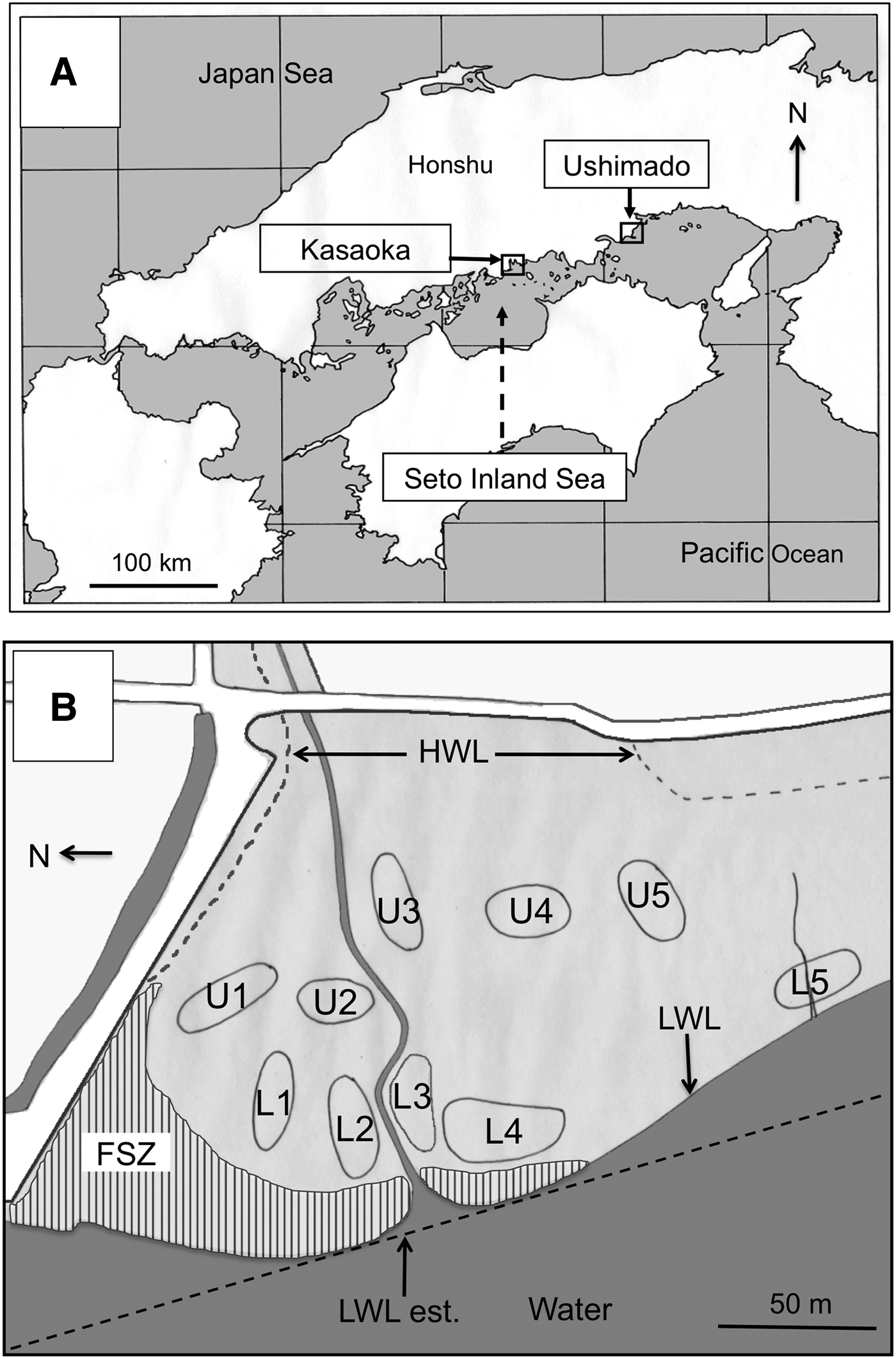
Upogebia major specimens were collected from a mud flat area in Kasaoka Inlet (34°28′33″N 133°31′43″E), Okayama Prefecture, along the Seto Inland Sea of Japan (Figure 1A, B). Sampling occurred twice per month during periods of the lowest low tides, from late November 2011 through to April 2012 concurrent with the breeding period in U. major. Samples were taken from five stations in the lower (L1–L5), and five stations in the upper (U1–U5) intertidal zones (Figure 1B). The relative position of each station was estimated from its perpendicular distance from the low water line (LWLest; Figure 1B). We estimated the LWLest of the advancing tidal edge using the image overlay feature in Google Earth (v.6.2.2.7373; build date 6/25/2012) and the distance of each station at right angles from LWLest using ImageJ software (Rasband, Reference Rasband1997–2012).
Study area maps: (A) sampling sites of Upogebia major in the Seto Inland Sea, Japan; (B) Kasaoka Inlet, lower tidal zone (L1–L5) and upper tidal zone (U1–U5) sampling locations. Areas in stripes indicate fine sediment zones (FSZ); HWL, high water line; LWL, low water line.

Within a 10 m radius of each station, two to three holes of about 2 m in diameter were excavated to 80 cm depth in order to sample all sizes of the mud shrimp. Larger specimens were collected by hand and smaller specimens were sampled using a 2 × 2 mm fine wire mesh. Specimens were transported to the laboratory, inspected individually, and stored in −30°C deep freezer.
Some normal specimens and some with morphological abnormalities (i.e. abnormal pleopods, cuticular lesions and deletions) from the first two collections were placed inside artificial U-shaped PVC burrows submerged in rectangular polyethylene tanks 2 m long × 1 m wide × 0.3 m deep with aerated and flowing seawater. For three months, these specimens were checked twice a week for ecdysis, exuviae were collected and newly ecdysed mud shrimp were re-examined for changes in the external morphology, especially those individuals with abnormalities.
Shrimp morphology and parasites
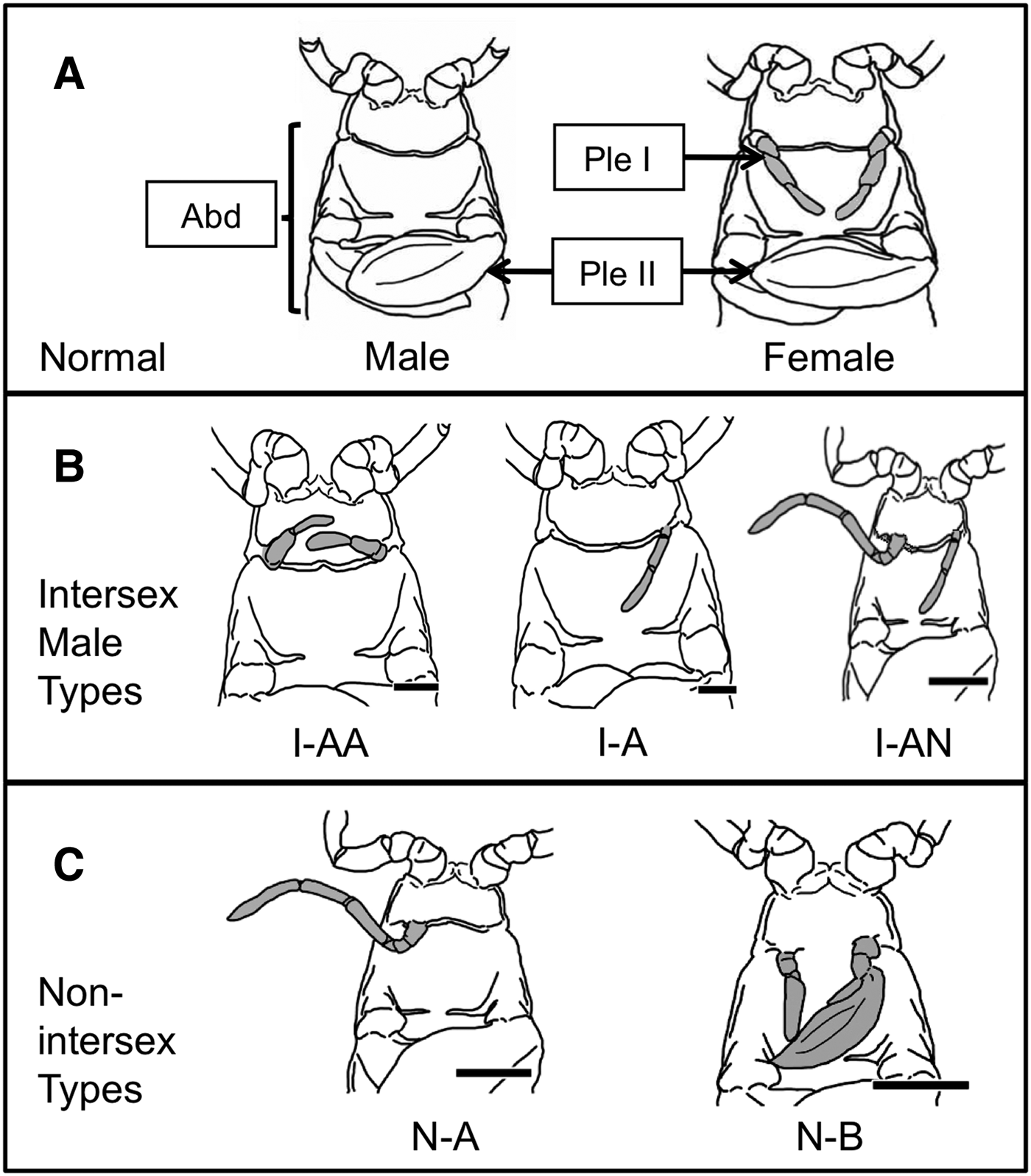
Specimens were classified as male or female on the basis of: (1) the presence of the first pair of pleopods (Ple I) in normal females and its absence in the normal male (Figure 2A); (2) the gonopores located at the base of the fifth and third coxae, respectively, in males and in females; and (3) the sexually dimorphic characteristics of the chela. In males, a row of knobs line the outer side of the dactylus while 2–3 distinct ridges can be found on its inner surface. In contrast, females have an almost smooth dactyl on both inner and outer surfaces.
Classification of pleopod disorders with reference to a normal male and female: (A) normal: Abd, abdomen; Ple I, first pleopod; Ple II, second pleopod; (B) intersex types: Type I-AA, males with first pleopods like normal females; Type I-A, single pleopod on either side; Type I-AN, pleopod and an appendage that resembles the pereopod; (C) non-intersex types: Type N-A, with appendage similar to pereopods; Type N-B, appendage similar to pleopods 2–5. Scale bars: 5 mm.
Total length (TL) from the tip of the rostrum to the edge of the tail fan was measured by a digital caliper (accuracy of 0.1 mm). Propodus width (PW) was measured at the widest part of the propodus. Ple I lengths of intersex males and normal females were measured for comparisons of normal female and intersex male Ple I growth. We did not find newly settled males and females lacking Ple I. Supplementary data on the size at which Ple I normally appears were therefore derived from small females collected from Ushimado, Kinkai Bay, 60 km north-east of Kasaoka (Figure 1A).
The gill chambers of each specimen were checked for the parasite, which was identified as the epicaridean, Gyge ovalis. Infected individuals were externally marked by a swollen branchiostegite on the occupied gill chamber. In five males and five females, the gill chambers were empty but distended, as in other infected specimens, and castration in different degrees was evident. Thus, we elected to include these individuals under the infected group in the analysis. Other abnormalities in the external morphology were noted such as blackened cuticular lesions, deletions in the cuticular ridge of the ventral junction of the first and second abdominal segments (CRDs), and the presence or absence of the Ple I and other abnormal appendages.
Analysis
Data analysis was carried out in R version 2.15.0 (R Development Core Team, 2008). A main effects generalized linear model (GLM) with binomial error distribution was used to test the significance of the following predictors for the categorical response variable, intersex: TL for body size, parasite infection (GO) and LWLest distance. We only realized the significance of CRDs when we noted that they were retained after shrimp moulted in aquaria even amongst non-intersex individuals. Specimens used for observation in aquaria could not be rechecked, thus we constructed models from two data sets. Model 1 included all data (N = 1623), but without CRD as predictor due to missing values, while Model 2 included only specimens wherein CRDs were thoroughly checked (N = 1289). We selected the final models using the Akaike information criterion (AIC) value.
Relationships between body measurements were analysed using linear model and correlation test functions. Differences in the incidence of parasite infection between sexes, as well as the size distribution of males between the upper tidal zone (UTZ) and lower tidal zone (LTZ), were tested using the Kolmogorov–Smirnov test. We pooled the data from all five stations each for the LTZ and UTZ due to insufficient numbers of parasitized specimens in some of the sampling stations. We used a two-sample χ2-test to compare the proportion of intersex individuals between infected (GO+) and uninfected (GO−) males within the same zone (UTZ or LTZ), and between GO+ or GO− of different zones. Finally, we used relative risk analysis to compare the likelihood of developing intersex and CRD relative to tidal zone location.
RESULTS
Intersex and other morphological abnormalities
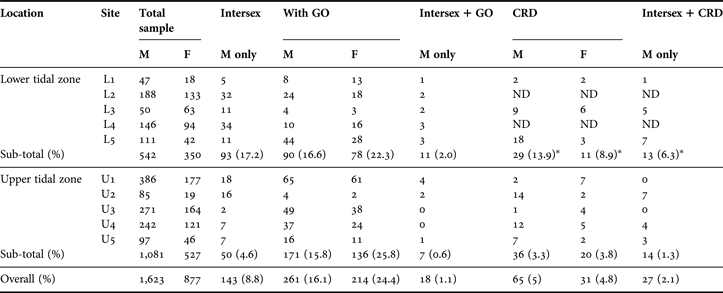
We collected 1623 males and 877 females from Kasaoka Inlet (Table 1). Males were 2.1 and 1.5 times the number of females in the upper and lower tidal zones, respectively. All females and 91.2% of males were normal (non-intersex) (Figure 2A). Intersex males made up the remaining 8.8% (N = 143) of the total male sample. Out of 8.8%, 5.4% (N = 87) had Ple I on one side (Type I-A), 3.3% (N = 54) had a complete pair of Ple I (Type I-AA), and 0.1% (N = 2) had a single Ple I with a contralateral side bearing an appendage that resembled the walking legs (Type I-AN) (Figure 2B). Two males were non-intersex but had abnormal growths instead of Ple I: one had an appendage with segmentation similar to walking legs (Type N-A), while the other had an appendage that was broad and flat like the second to fifth swimming pleopods (Type N-B) (Figure 2C).
Upogebia major from Kasaoka Inlet from November 2011 to April 2012, with the prevalence of infection by Gyge ovalis and the morphological abnormalities observed.
M, males; F, females; ND, no data; CRD, cuticular ridge deletion; GO, infected by Gyge ovalis. *, percentage based on only sampling events where CRD was checked.
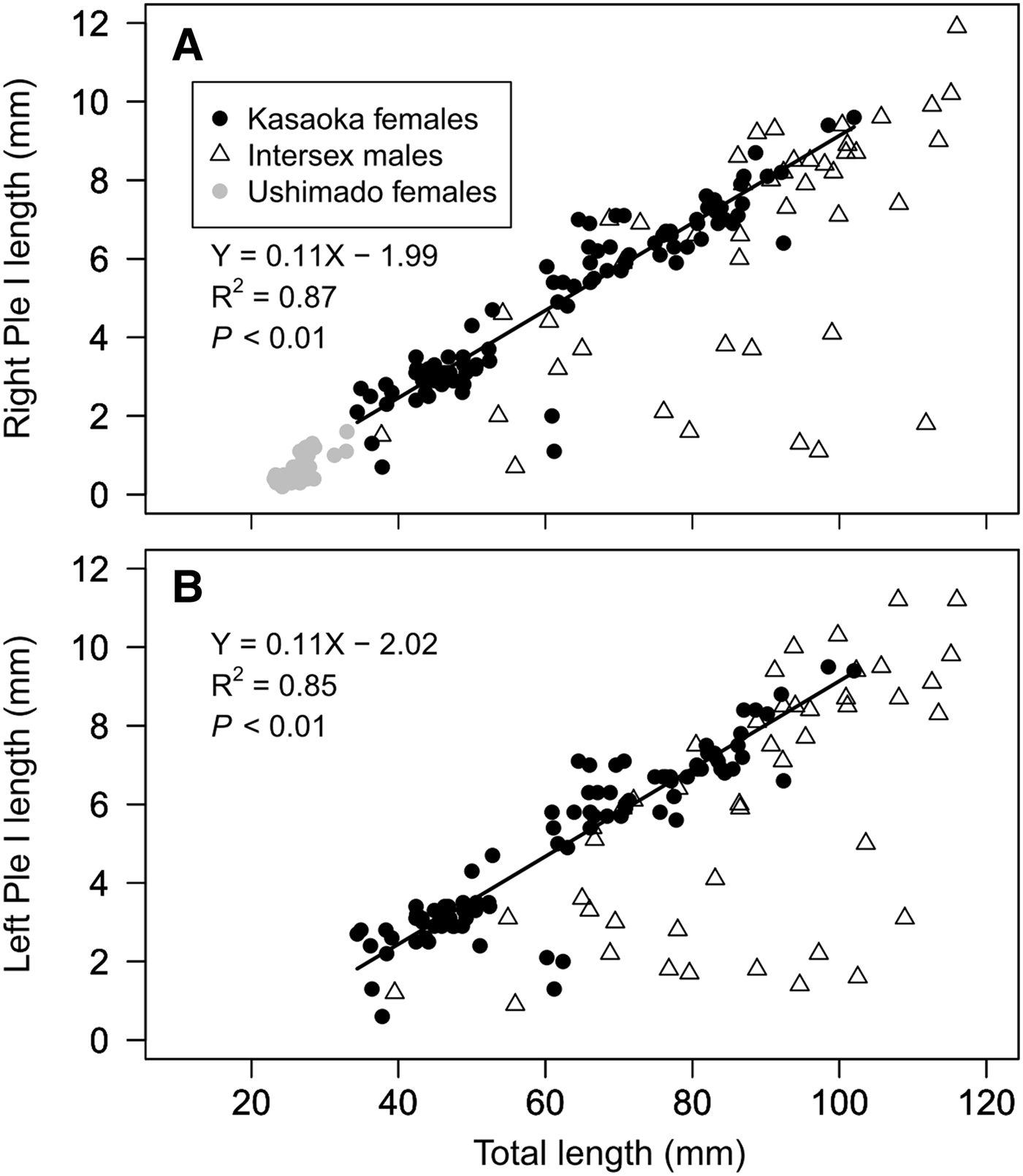
Ple I in normal females first appeared at 20–23 mm TL and growth was bilaterally symmetrical (Figure 3A, B). Ple I length was positively correlated with TL on both the right (Pearson's r = 0.94, df = 89, P < 0.001) and the left (Pearson's r = 0.92, df = 89, P < 0.001). In intersex males, the length of the abnormal Ple I showed only moderately positive correlation with TL and Ple I were markedly more variable in length when compared to females of similar body size. Intersex males did not bear ovigerous setae even in the breeding season. Male gonopores were in their usual position at the coxae of the fifth walking legs; gonads appeared to be indistinct from normal males. Abnormal Ple I were consistently retained after each ecdysis in intersex specimens kept in aquaria.
Comparison of allometric growth relationships between total length (TL) and length of the right (A) and left (B) first pleopod (Ple I length) in normal females and intersex males. Measurements from small specimens of Ushimado are shown in grey dots (in A). Regression equations, R 2 values and P values (Ho: a = 0) are also shown.
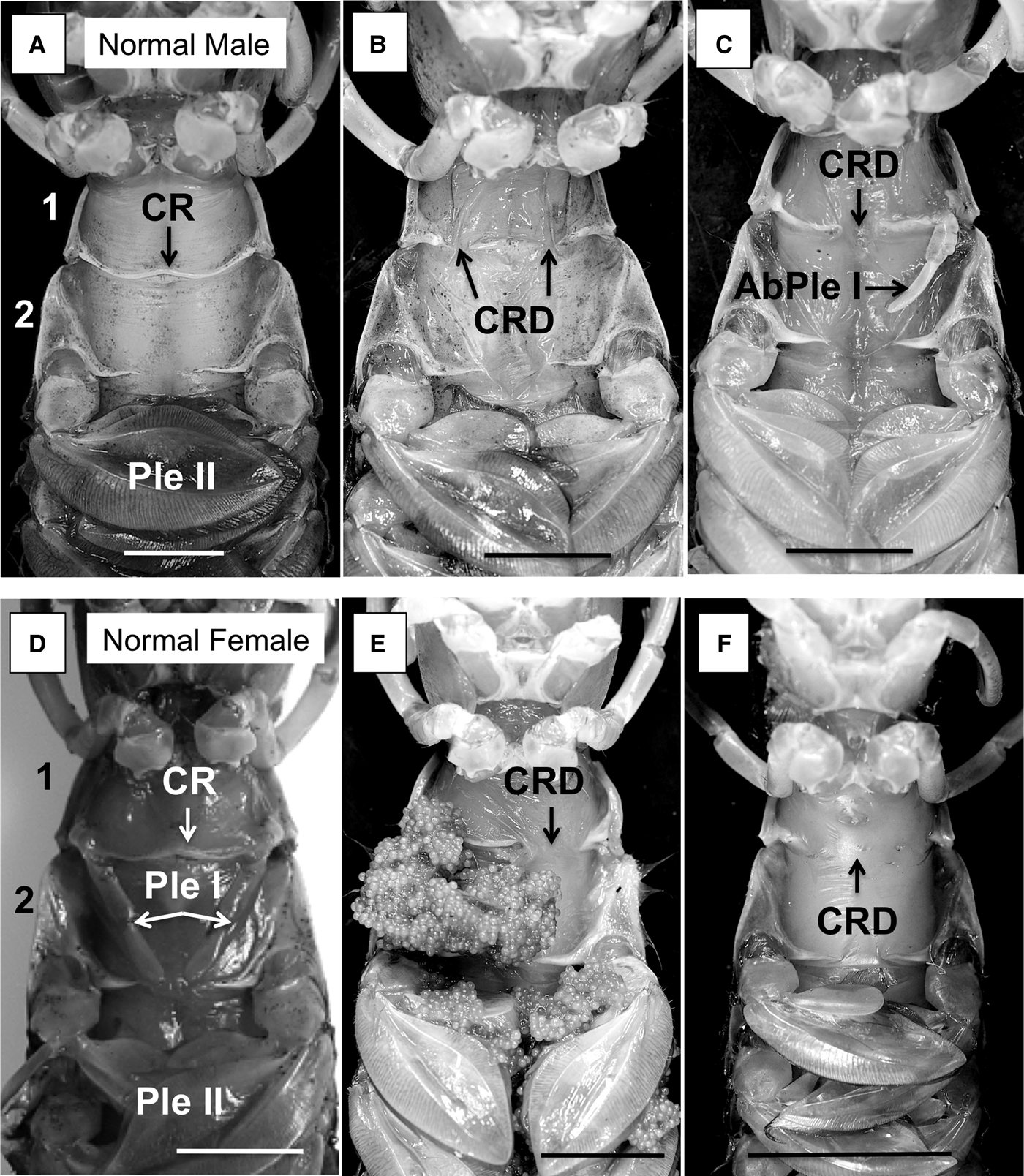
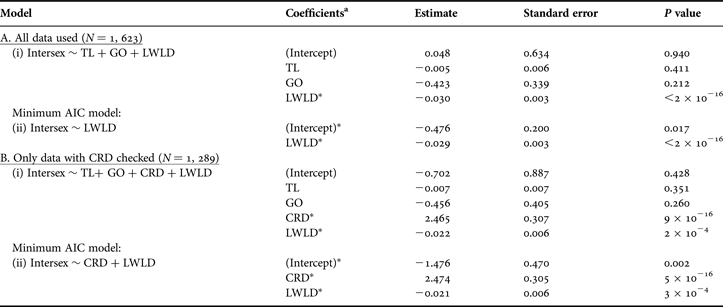
Cuticular ridge deletions (CRD) were found in both sexes. In normal specimens, a continuous cuticular ridge is present ventrally in the junction of the first and second abdominal segments in both sexes (Figure 4A, D). We found that 5.0% of males and 4.8% of females had discontinuities or deletions in this structure. In males with CRD, breaks were partial and intermittent (Figure 4B) and often appeared with the abnormal Ple I (Figure 4C). The presence of CRD was significantly correlated with intersex (GLM, N = 1289, P < 0.05; Table 2). Intersex CRD males were 35.1% (27 out of 77) of all intersex males and 41.5% (27 out of 65) of all males with CRD in the sample set where all specimens were checked for CRD (see Table 1). Female CRD was associated with loss of the Ple I on one side when deletion was partial (Figure 4E), or on both sides when the deletion was extensive (Figure 4F). Individuals with cuticular damages and black patches on the exoskeleton, as well as missing or injured Ple I, were relatively common, but these damages were repaired after one or two moult cycles. In contrast, CRDs were consistently retained even after several moult cycles.
Ventral view of male (A–C) and female (D–F) abdomen showing intact cuticular ridge (CR), and deletions (CRD): (A) normal male: 1, first abdominal segment; 2, second abdominal segment; Ple II, second pleopod; (B) male with CRD in two points; (C) male with both CRD and abnormal first pleopod (AbPle I); (D) normal female; (E) gravid female with CRD on one side; (F) female with extensive CRD. Scale bars: 10 mm.
Main effects generalized linear model (GLM) results of predictors of intersex in male Upogebia major.
TL, total length (mm); GO, Gyge ovalis infection; LWLD, low water line distance (m); CRD, cuticular ridge deletion; AIC, Akaike information criterion. a*, significant at P < 0.05.
Relationships with host size
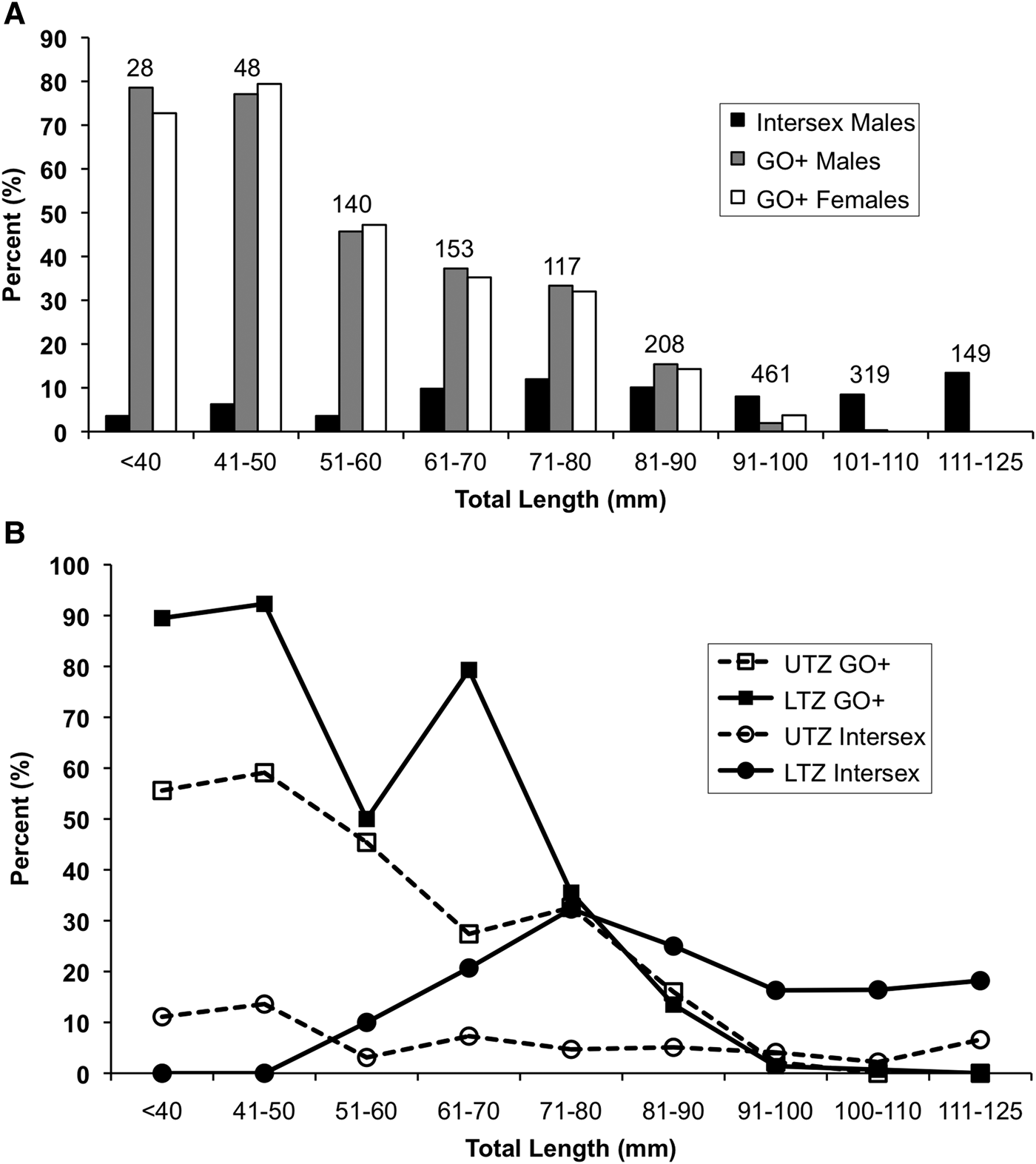
Infection by Gyge ovalis was lower in male Upogebia major (16.1%) than among females (24.4%) (Table 1). However, when controlled for host size, no significant difference in the infection rates between sexes was apparent (Kolmogorov–Smirnov test, P = 0.41) (Figure 5A). The incidence of parasitic infection peaked at 70–80% in both sexes in specimens with TL < 50 mm (Figure 5A) and incidence of infection decreased among larger shrimp to 0.2% (N = 468) in males with TL > 100 mm, and all females (N = 156) of the same size group were parasite-free. Infected large males had female-sized chelae, but denticulation of the dactylus remained characteristically male. Infected females of reproductive size did not bear ovigerous setae and lacked yolk in their ovaries. One ovigerous female that had fewer eggs than normal had a deformed but empty right gill branchiostegite.
Incidence of intersex and parasites: (A) incidence (%) of intersex males, and Gyge ovalis prevalence (GO+) in both sexes with total length (TL). Numbers above bars indicate the number of males per size-class; (B) incidence of intersex (circles) and infection (squares) in the upper tidal zone (UTZ, broken line and open symbols) and lower tidal zone (LTZ, solid lines and symbols) according to TL.
Intersex males ranged from 35.0 to 123.0 mm in TL and in contrast to the incidence of infection, intersex appeared in all host size groups (Figure 5A, heavily-shaded bars). Size-class relative frequency of intersex males ranged from 3.6 to 13.4%, but overall, TL was not a significant predictor of intersex (GLM, N = 1623, P = 0.714; Table 2). In addition, being host to G. ovalis was not a significant predictor of intersexuality (GLM, N = 1623, P = 0.212; Table 2). Intersex males made up only 6.9% (18 out of 261) of infected males, and infected males comprised only 12.6% (18 out of 143) of all intersex males (Table 1).
Relationships with tidal level
In Kasaoka U. major can be found from the upper to the lower intertidal area, spanning about 150 m at the widest point of the tidal flat perpendicular to the shore (Figure 1B). Large males were more frequent in the LTZ than the UTZ (Kolmogorov–Smirnov test, P < 0.01). Thus, comparisons of intersex and infection incidence in males between the tidal zones were made according to TL (Figure 5B). Although male infections decreased with larger host size for both UTZ and LTZ, infection rates in LTZ (89.5–92.3%) were almost twice that of the UTZ (55.6–59.1%) in the smallest males (TL < 50 mm). On the other hand, among males with TL < 50 mm, 11.1–13.6% of the UTZ males were intersex, but none were found in the LTZ. However, intersex frequencies were higher in the LTZ (10.0–32.3%) compared to the UTZ (2.2–7.3%) among males with TL > 50 mm.
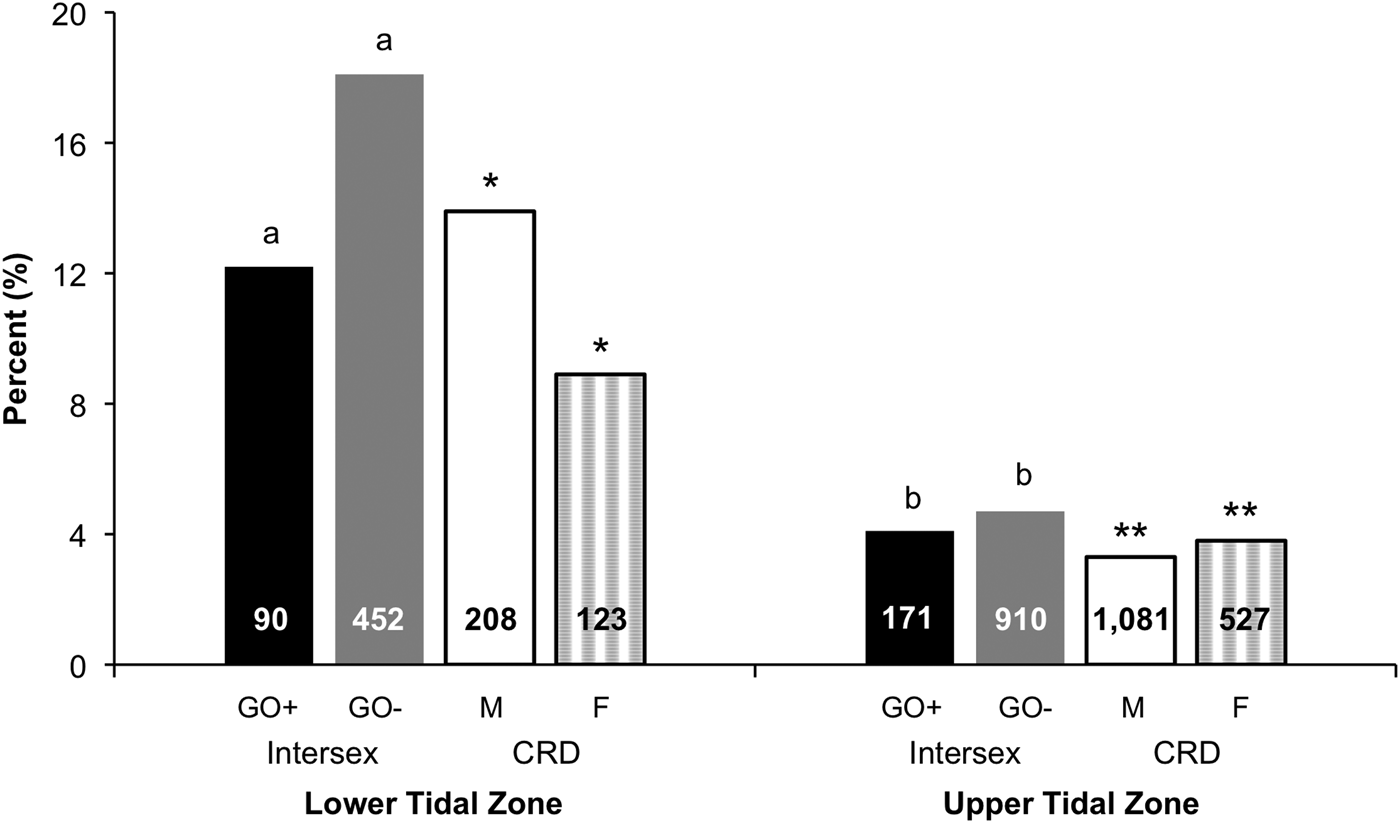
Mud shrimp size (TL) and infections were not significant predictors of intersex males (see Table 2), but infections were negatively correlated with host size (Figure 5). We therefore compared the incidence of intersex between the UTZ and LTZ by separately analysing parasitized and unparasitized groups (Figure 6).
Frequencies of infected and uninfected intersex males and cuticular ridge deletions (CRD) of males and females by tidal zone. GO + , infected; GO−, uninfected; M, male; F, female. Different alphabets (intersex), or number of asterisks (CRD) indicate significantly different values.
Within the LTZ, intersex occurred in 11 out of 90 (12.2%) parasitized males (GO+), compared to 82 out of 452 (18.1%) parasite-free males (GO−); the difference was not statistically significant (χ2-test, P = 0.23). In the UTZ, 4.1% (7 out of 171) of GO+ males were intersex and not so different from 4.7% (43 out of 910) of intersex GO− males (χ2-test, P = 0.87). The proportion of intersex males was, however, significantly greater in both GO+ (χ2-test, P = 0.03) and GO− (χ2-test, P < 0.01) males in the LTZ compared to those in the UTZ. When compared to mud shrimp in the UTZ, those in the LTZ were 3 (relative risk analysis, 95% CI = 1.2, 7.4, P = 0.02) and 3.8 times (relative risk analysis, 95% CI = 2.7, 5.5, P < 0.01) more likely to develop intersexuality, for GO+ and GO− groups, respectively.
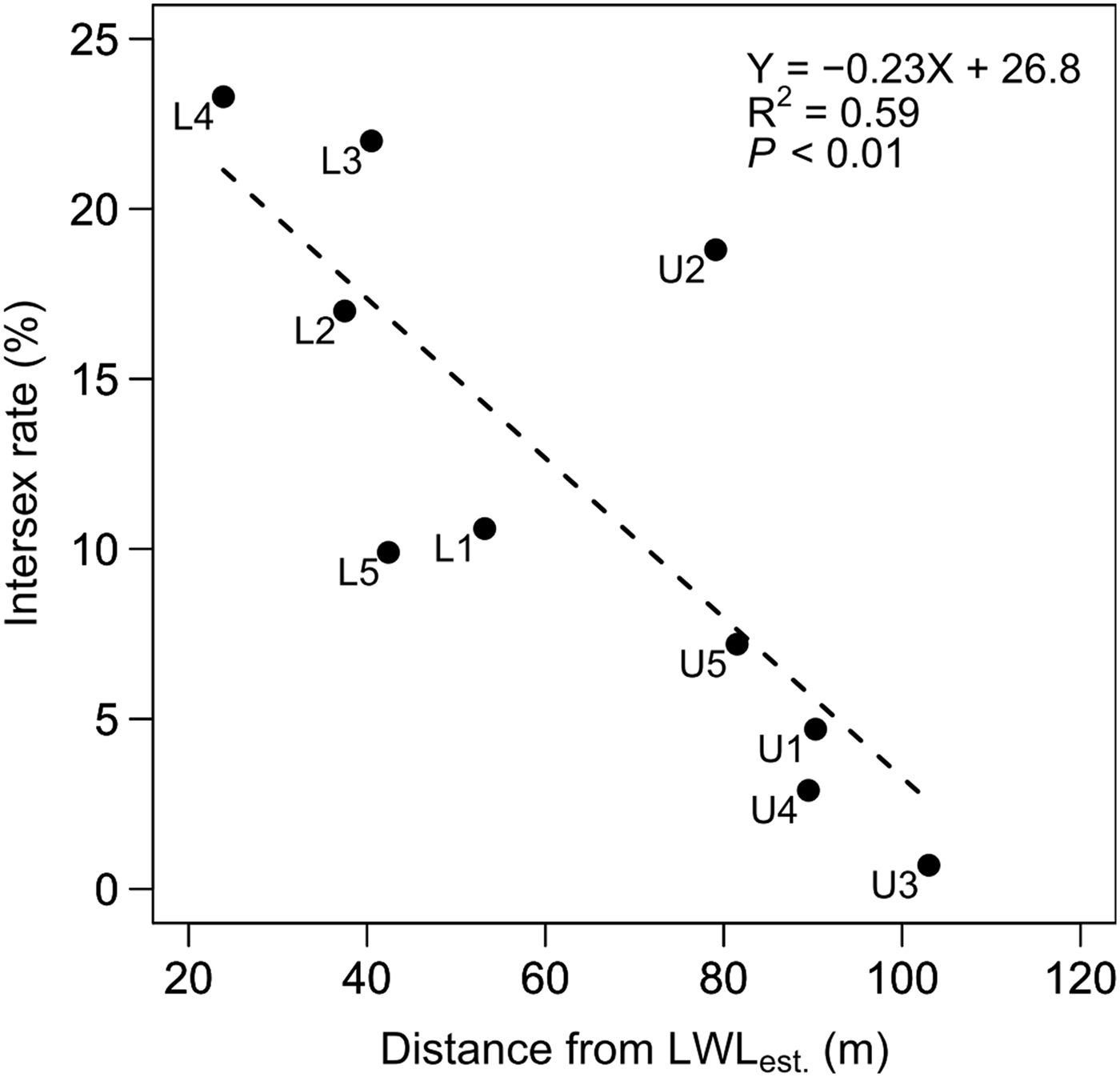
On the other hand, CRD was not only a significant overall predictor of intersex males (Table 2), but also varied with tidal level similar to intersex (Figure 6). Thirty-six out of 1081 (3.3%) UTZ males had CRD compared to 13.9% (29 out of 208) of the LTZ male sample (χ2-test, P < 0.01). The LTZ males were 4.3 times more likely to have CRD than those in the UTZ (relative risk analysis, 95% CI = 2.7, 6.9, P < 0.01). The proportion of females with CRD was significantly higher at 8.9% (11 out of 123) in the LTZ compared to 3.8% (20 out of 527) in the UTZ (χ2-test, P = 0.03). The CRD rates were not significantly different between males and females in both the LTZ (χ2-test, P = 0.24) and the UTZ (χ2-test, P = 0.74). We found that the rate of intersex increased as distance from the LWLest decreased (Figure 7), independent of parasite infection and TL.
Intersex prevalence and tidal level relative to distance from the estimated low water line (LWLest). Regression equation, R 2 value and P value (Ho: a = 0) are also shown.
DISCUSSION
Nanri et al. (Reference Nanri, Fukushige, Ubaldo, Kang, Masunari, Takada, Hatakeyama and Saigusa2011) reported a significantly higher proportion of intersex Upogebia major in Kasaoka Inlet than elsewhere in the Seto Inland Sea, Japan. We confirmed similar occurrence rates of intersex, but also found other morphological abnormalities and a relatively high prevalence of the branchial bopyrid isopod parasite Gyge ovalis in this population (Table 1). We explored the relationship between intersex and parasite prevalence, time and the onset of intersex and parasitization, and finally whether tidal level was a factor in either condition.
Relationship between intersex and parasitization
Tucker (Reference Tucker1930) argued that the appearance of the female-like Ple I in male U. pusilla, in addition to the ‘feminization’ of the chela, was an inversion of sex characters resulting from early infestation by Gyge branchialis. Although lacking quantitative treatment of the degree of association between parasitic and intersex incidence, they were implied to co-occur in the majority of cases. We found no significant association between the parasite and Ple I in males (Table 2); however, infected males had reduced PW and castration of infected females appeared to be complete (i.e. undeveloped ovaries, absence of ovigerous setae) similar to U. pusilla. Prevalence of G. ovalis was similar in both sexes (Figure 5A). Intersex males made up 8.8% of the total males (see Table 1). Contrary to our expectation, parasite infection was not significantly correlated to intersex (GLM; Table 2), and only 12.6% of all intersex males were parasitized. Further, there was no significant difference between the 6.9% of parasitized males displaying intersex characteristics and 9.2% of unparasitized intersex males.
In contrast to infection, CRD often co-occurred with, and was a significant predictor of, intersex (Tables 1 & 2). The mechanism that links CRD and intersex is unknown, but the rate at which they occur together in the same specimen may suggest common factors leading to the development of both intersex and CRD. The CRDs occur on the same region of the abdomen where female-like Ple I appear (Figure 4), and, like intersex, also are more common in the lower tidal zones (Figure 6).
Timing of parasitization and intersex
Whereas epicaridean infection and higher prevalence in adult host decapods have also been described (Smith et al., Reference Smith, Chapman and Dumbauld2008; Conner & Bauer, Reference Conner and Bauer2010; Repetto & Griffen, Reference Repetto and Griffen2012), a prevailing observation is that infection is most successful in young hosts when frequency of ecdysis is high and the cuticles and branchiostegite are soft and can accommodate the fast growth of the parasite (Tucker, Reference Tucker1930; Pike, Reference Pike1960). Some hosts become increasingly resistant to the infective cryptoniscus with age (Anderson, Reference Anderson1990). Consistent with these past findings, the smallest specimens of U. major (TL < 50 mm) had the highest prevalence of G. ovalis at 73–79% (Figure 5). Infections decreased to <1% in hosts with TL >100 mm in both sexes. At least two possible factors causing this decreasing trend are possible, and each may not preclude the other. They are: (1) increased mortality in infected specimens; and (2) parasite loss over the course of host growth and ecdysis. Our data cannot distinguish the relative contributions of each factor. However, in studies of the strategies used by epicaridean parasites to cope with host ecdysis, loss of the epicaridean parasite has also been documented (Anderson, Reference Anderson1990; Cash & Bauer, Reference Cash and Bauer1993). Likewise, we found at least ten specimens with recently vacated gill chambers, and a few more that seemed to be in various states of recovery from gill infection.
A high rate of early infection followed by recovery may explain how a majority (87.4%) of intersex males were parasite-free. This is consistent with our observations that while Ple I are likely permanent once they appear (Figure 3A, B), the castration effects of the parasite may be reversible. Males with parasites removed gradually regained normal male chela proportions (Ubaldo, Nanri & Saigusa, personal observation), and an ovigerous female with fewer than normal eggs showed clear signs of recent infection. Hence, a male in which growth of Ple I was triggered by early infection, the parasite was eventually lost, and gonads and chela recovered, would appear normal in all respects other than the presence of the Ple I. Interestingly, while infection occurs almost exclusively in small hosts (Figure 5A), intersex may appear at almost any size of U. major (Figure 3A, B). Thus, even if early infection caused intersex, the appearance of the Ple I may not be concurrent with infection. Moreover, it is plausible, given the 93.1% of infected non-intersex males, that the effective period of infection that can trigger intersex development may be restricted to a limited period in very small males. In a similar host and parasite pair investigated by Repetto & Griffen (Reference Repetto and Griffen2012), Upogebia pugettensis and Orthione griffenis, the latter only infected large hosts and no male secondary sex character modifications were observed.
The controls for Ple I development are unknown. In females however, Ple I buds normally appear around TL = 20 mm (Figure 3A) and infection, when it happens earlier or around this period, might interfere with normal development in the males.
Tidal level variations in infection and intersex
The infective stage of epicarideans, the cryptoniscus, is pelagic (Beck, Reference Beck1980; Boyko & Williams, Reference Boyko, Williams, Martin, Crandall and Felder2009). Naturally, U. major in the lower tidal areas that are immersed for longer periods would also experience greater exposure to settling cryptoniscans, and a corresponding higher risk for infection. Infection prevalence was higher in LTZ males (Figure 5B) as we expected, in contrast to the findings of Repetto & Griffen (Reference Repetto and Griffen2012), where tidal height had no effect on the prevalence of O. griffenis in U. pugettensis. Consistent with the early infection hypothesis of intersex, a greater portion of small males infected in the LTZ would then result in a higher incidence of intersex among males that occupy the LTZ (Figures 5B, 6, 7).
However, the presence of trait-altering pollutants should not be disregarded. Fine sediments accumulate in less turbulent zones in Kasaoka Inlet, such as near breakwaters and in lower tidal areas below the lower limits of U. major distribution (fine sediment zone, Figure 1B). These zones are often reservoirs of organic and hydrophobic contaminants that adhere to fine particles (Harkey et al., Reference Harkey, Lydy, Kukkonen and Landrum1994; Lee et al., Reference Lee, Kim, Chang and Moon2006). Weis & Kim (Reference Weis and Kim1988) found that the organotin tributyltin (TBT), which has been shown to associate with fine sediments (Langston & Pope, Reference Langston and Pope1995), elicited deformed regenerated limbs in the fiddler crab. Itow et al. (Reference Itow, Loveland and Botton1998) reported abnormal eye embryos in horseshoe crabs exposed to organotin. We found in preliminary surveys high levels of TBT in the FSZ (Figure 1B) surrounding the U. major habitat (Ubaldo & Saigusa, unpublished data).
Upogebia major mainly feed by pumping overlying water into their Y- or U-shaped burrows and filtering suspended particles with the ‘basket’ formed by the setal structures of the first and second pereopods and the maxillipeds (Mukai & Koike, Reference Mukai and Koike1984). Upogebiids selectively ingest the smaller particles (Dworschak, Reference Dworschak1987; Pinn et al., Reference Pinn, Atkinson and Rogerson1998). Moreover, U. major burrows also function as traps for organic matter, portions of which are incorporated into burrow walls (Kinoshita et al., Reference Kinoshita, Wada, Kogure and Furota2003). Thus, their proximity to contaminated fine sediments and the longer periods of submersion (i.e. longer time for filter feeding) place U. major in the LTZ where greater exposure to sediment-bound contaminants is likely. These factors may lead to higher rates of intersex and CRD in U. major of the LTZ (Figures 6 & 7).
Whether differences in rates of early infection, exposure to sediment-bound pollutant, or the additive effect of both factors have resulted in the variation of intersex incidence between upper and lower tidal areas remains unclear. On the other hand, there is little evidence for sex change in U. major. Hence, differential mortality and dispersal between the sexes might result to the overall preponderance of males (i.e. male:female = 1.9:1; Table 1) in addition to the effects of parasite and pollution.
ACKNOWLEDGEMENTS
We are indebted to Satoshi Nishikawa and Toru Kutsuna for their help with fieldwork and sample collection. We also thank Nobufumi Masunari and the Okayama Prefectural Technology Center for Agriculture, Forestry and Fisheries, Research Institute for Fisheries Science in Ushimado for allowing us the use of their facility for the experiment.
FINANCIAL SUPPORT
This study was supported by a grant from the Long-range Research Initiative (LRI) provided by the Japan Chemical Industry Association, Japan (2004–2008) and EXTEND 2010 (Extended Tasks on Endocrine Disruption) by the Ministry of Environment, Japan.