
Introduction
Archaeobotanical research has focused predominantly on evidence for farming economies, with much less attention paid to the question of how hunter-gatherers obtained and maintained plant foods. Yet some ‘complex’ hunter-gatherers were able to supply sufficient food to support densely occupied settlements (e.g. Sassaman Reference Sassaman2004; Habu Reference Habu2008; Arnold et al. Reference Arnold, Sunell, Nigra, Bishop, Jones and Bongers2016). Further, while agriculture developed in many parts of the world to secure a more reliable supply of food (Larson et al. Reference Larson2014), earlier traditions of hunting, foraging, fishing and low-intensity forest management often continued to supplement food supplies—sometimes to a significant extent—even following the emergence of agriculture.
Tree nuts have been a reliable, long-term resource for many hunter-gatherer groups worldwide, as exemplified by the Japanese Jōmon tradition of exploiting acorns and other plants (Koyama Reference Koyama1978; Kawashima Reference Kawashima2016). Similarly, in the Yangtze Valley of China, acorns and other wild plant resources were used extensively before the development of rice agriculture (Fuller & Qin Reference Fuller and Qin2010; Gao Reference Gao2017). Although the archaeological evidence for ancient plant foods at hunter-gather sites generally is sparse across the world, compared with that from farming sites, targeted archaeobotanical analysis can provide more information than is often assumed.
Southern China is a crucial region for investigating ancient hunter-gatherer subsistence practices that persisted as recently as 5000–4000 cal BP (Zhang & Hung Reference Zhang and Hung2010, Reference Zhang and Hung2012; Yang et al. Reference Yang, Wang, Zhuang, Li, Ma, Ma, Cui, Wei and Fuller2017), despite the contemporaneous expansion and intensity of rice and millet farming in neighbouring areas (Deng et al. Reference Deng, Hung, Fan, Huang and Lu2018). Some of the hunter-gatherer sites in southern China comprise large settlements with formal residential areas and cemeteries (Hung et al. Reference Hung, Zhang, Matsumura, Li, Matsumura, Hung, Li and Shinoda2017), suggesting the presence of reliable local food supplies and resources, notably pre-dating the adoption of cereal agriculture. At Zengpiyan Cave, and similar cave sites in this region, other early cultural developments dating back to at least 10 000 cal BP include ceramics and polished stone tools (Institute of Archaeology, Chinese Academy of Social Sciences et al. 2003).
Until recently, the collection of archaeobotanical evidence from hunter-gatherer sites in southern China has been problematic, predominantly due to two issues, both also relevant to other regions of the world:
1) Fragments of seeds, nutshells and other materials in the matrix of sedimentary layers are not necessarily culturally derived, as they could have been deposited naturally, either during layer formation or having infiltrated downwards at a later date.
2) In situ finds often display modification through cracking, burning and other processing, and thus present particular challenges for taphonomic and taxonomic studies.
The research presented here has applied standard methods concentrating on the identification of preserved plant macro-remains that may have provided food security for the inhabitants of complex hunter-gatherer sites in southern China, noting that prior studies had neglected these plant remains. The new results indicate the intensive use of Canarium nuts dating from at least 9000 cal BP. Additionally, contextual evidence suggests that by 4500 cal BP, Canarium nuts had become important in ritual practices.
Globally, the Canarium genus includes 78 species, found in both the Asia-Pacific region and in Africa (Leenhouts Reference Leenhouts1959; Weeks Reference Weeks2009). Several ethnographic and archaeological examples have been documented within the Asia-Pacific regional distribution (Li Reference Li2016; Ellen Reference Ellenin press), and at least six species of Canarium have been described as domesticated—at least in their modern forms (Leenhouts Reference Leenhouts1959; Yen Reference Yen, Cox and Banack1991, Reference Yen1993, Reference Yen, Stevens, Bourke and Evans1996). Today, various Canarium nut species contribute to local food supplies and other aspects of social life, including pili (Canarium ovatum Engl.) in the Philippines and galip (Canarium indicum) in Papua New Guinea (Yen Reference Yen1974; Bourke Reference Bourke, Stevens, Bourke and Evans1996; Weeks Reference Weeks2009). Ellen (Reference Ellenin press) details the use of Canarium in subsistence and ritual practices among the Nuaulu group in Maluku, Indonesia.
Study region and sites
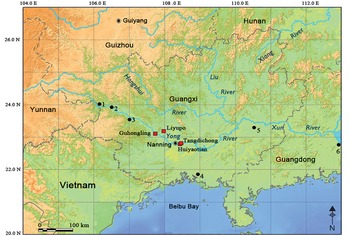
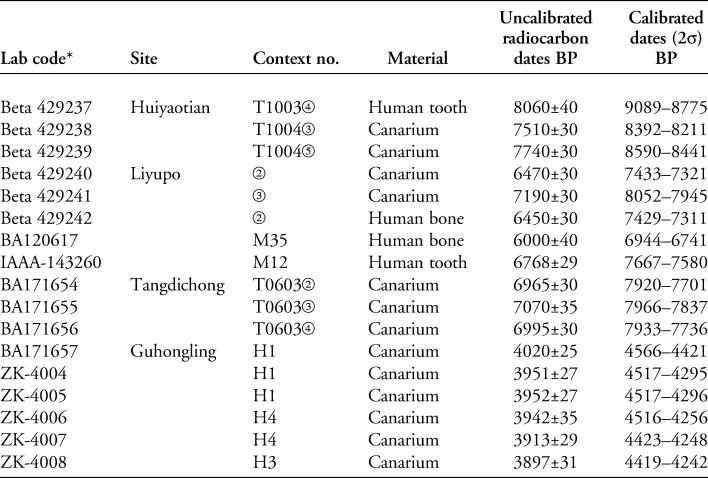
The systematic flotation and identification of plant macro-remains were conducted at four sites in the Yong River Valley, a main tributary of the Pearl River in southern China (Figure 1). The sites of Huiyaotian, Liyupo, Tangdichong and Guhongling in Guangxi Province cover the period from c. 9000–4500 cal BP (Table 1). This range coincides with the locally named Shell Midden period (9000–5000 cal BP) and the initial centuries of the Large Stone Shovel (Dashichan) period, dated to 5000–4000 cal BP (Li Reference Li2011).
Study region, showing the four newly examined sites in this study (Guhongling, Liyupo, Tangdichong and Huiyaotian in Guangxi Province) and other sites with reported Canarium nuts in southern China: 1) Baida; 2) Gexinqiao; 3) Lilao; 4) Duliao; 5) Shijiaoshan; 6) Guye (locations 1–5 are in Guangxi Province, location 6 is in Guangdong Province) (base map converted by QGIS 3.8.3, http://www.qgis.org/ from free data at http://www.gscloud.cn/).

AMS radiocarbon dating results from Huiyaotian, Liyupo, Tangdichong and Guhongling. All dates are calibrated by OxCal v4.2.4 (Bronk Ramsey Reference Bronk-Ramsey2013), using the IntCal13 atmospheric curve (Reimer et al. Reference Reimer2013).

* Beta = Beta Analytic Testing Laboratory; BA = National Key Laboratory for Radiocarbon Dating at Peking University, China; ZK = Radiocarbon Dating Laboratory at the Institute of Archaeology, Chinese Academy of Social Sciences, China; IAAA = Institute of Accelerator Analysis Ltd, Japan (see Hung et al. Reference Hung, Zhang, Matsumura, Li, Matsumura, Hung, Li and Shinoda2017; Li et al. Reference Li, Hung, Huang, Matsumura, Matsumura, Hung, Li and Shinoda2017a & Reference Li, Hung, Huang, Matsumura, Matsumura, Hung, Li and Shinodab for Huiyaotian and Liyupo).
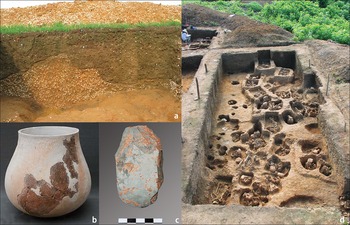
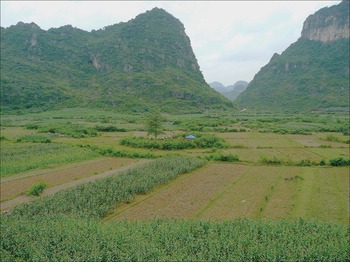
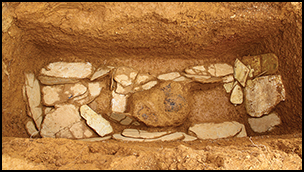
Three of the four study sites—Huiyaotian (22.79°N, 108.43°E) (Figure 2), Liyupo (23.18°N, 107.97°E) (Figure 3) and Tangdichong (22.81°N, 108.47°E)—have yielded evidence for occupation dating from 9000–7000 cal BP (Table 1). The stratigraphy of these sites comprises dense deposits of mollusc shells (Figure 2a), with variable quantities of cord-marked pottery and polished stone tools (Figure 2b–c). These three sites have also yielded burials of individuals placed in various flexed or squatting positions (Hung et al. Reference Hung, Zhang, Matsumura, Li, Matsumura, Hung, Li and Shinoda2017; Li et al. Reference Li, Hung, Huang, Matsumura, Matsumura, Hung, Li and Shinoda2017a & Reference Li, Hung, Huang, Matsumura, Matsumura, Hung, Li and Shinodab) (Figure 2d).
Representative archaeological findings at Huiyaotian: a) shell midden deposit; b) cord-marked pottery; c) stone axe; d) small area of the cemetery during the 2006 excavation (photographs by Z. Li).

The archaeological excavation and surrounding landscape at Liyupo in May 2008 (photograph by Y. Huang).

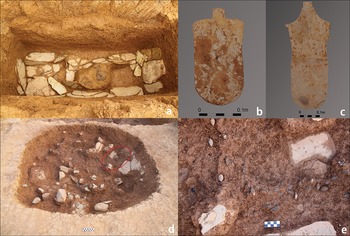
The fourth site, Guhongling (23.11°N, 107.73°E), dates to c. 4500–4400 cal BP (Table 1). Typical of this period, the site features three sacrificial pits (Figure 4a & d–e) containing diagnostic ‘large stone shovels’ (dashichan) (Figure 4b–c). These objects were found in extraordinary abundance (several dozens), notably without any evidence for use-wear.
Representative archaeological findings from Guhongling: a) a sacrificial pit with numerous unused, large stone shovels; b–c) examples of large stone shovels; d) a sacrificial pit (red oval marks the location of Canarium nuts); e) close-up view of the Canarium nuts within the sacrificial pit shown in Figure 4d (photographs by Z. Li).

Plant macro-remains
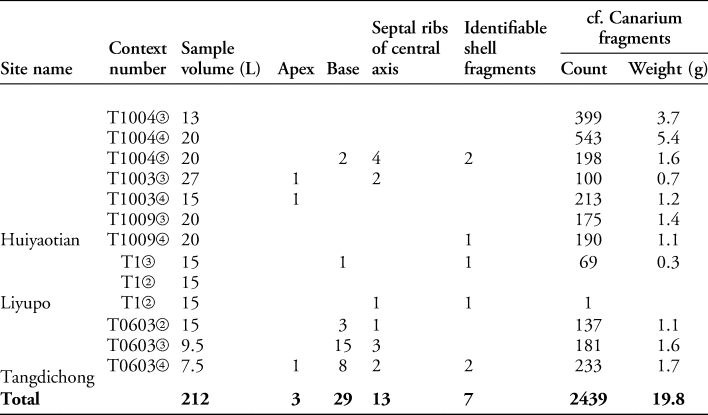
The plant macro-remains were retrieved using systematic on-site sample collection and flotation at the sites of Huiyaotian, Liyupo and Tangdichong in 2017 and as hand-selected samples at Guhongling in 2011. Table 2 provides details of the flotation samples. Regardless of quantification, the verified presence of specific plant taxa was most important to the present study, which confirms over 4000 years of the cultural use of Canarium nuts in southern China.
Different parts of Canarium endocarps from the shell middens at Huiyaotian, Liyupo and Tangdichong.

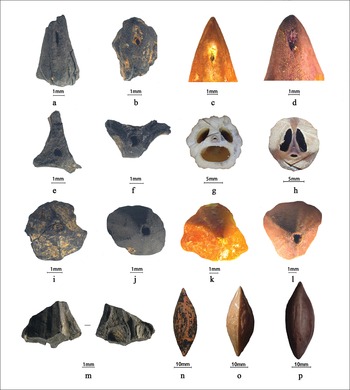
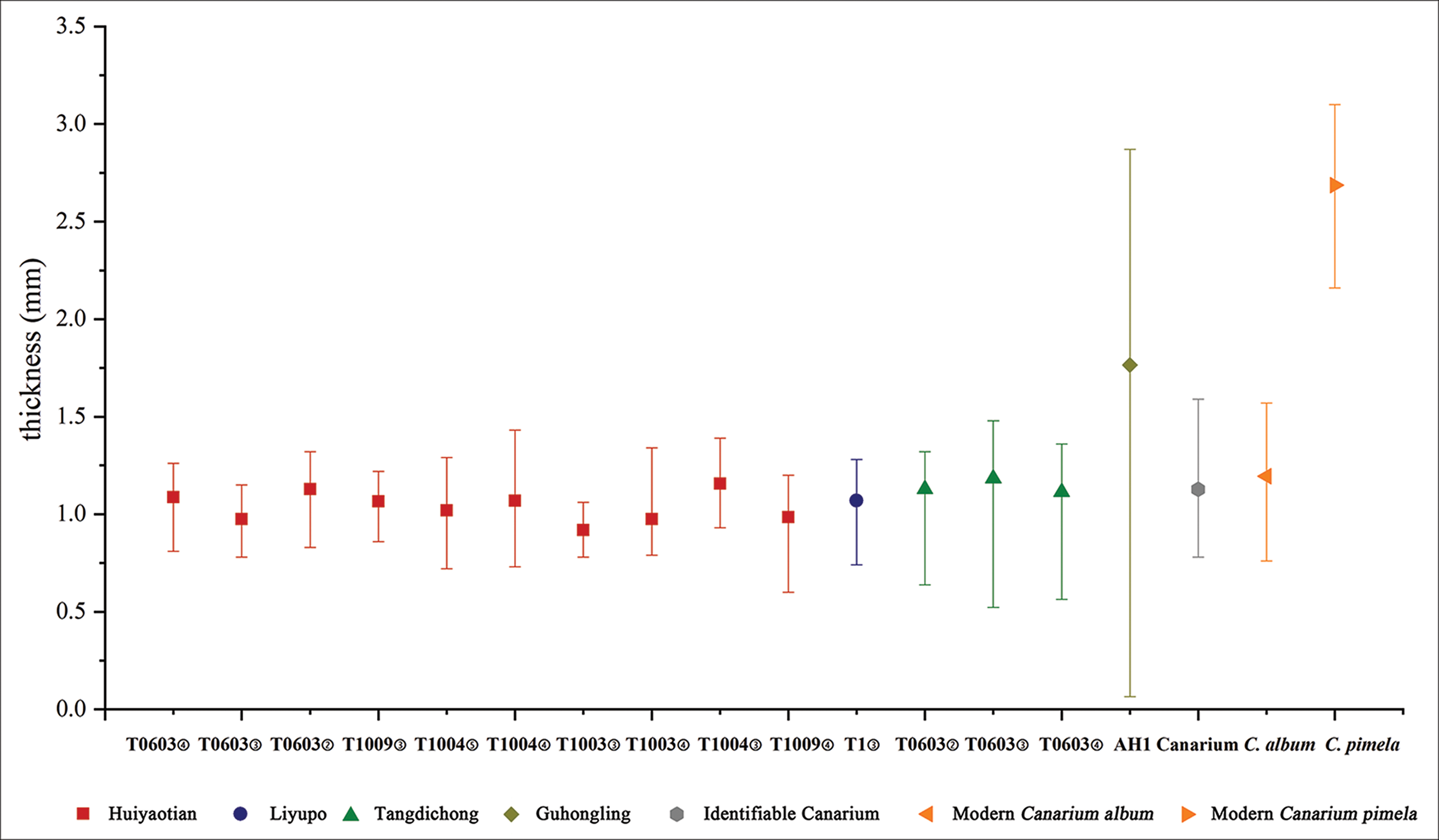
Sample flotation at Huiyaotian, Liyupo and Tangdichong revealed large quantities of well-preserved plant remains, mostly identified as nutshell fragments, but no evidence of domestic crops, such as rice or millet. The absence of domestic crops in macro-plant remains is consistent with our phytolith studies at the same sites. Of the 2491 fragments of nutshell from all three sites inclusively, 52 (about 2 per cent) were sufficiently large to permit confident identification as different species of Canarium, a large genus of tropical Asian and African trees, including four apexes, 28 bases and 15 central axes (Figure 5). Most of the remaining nutshell fragments (approximately 98 per cent; n = 2439) exhibit smooth surfaces without diagnostic characteristics. Of these 2439 smooth-surfaced fragments, 96 (approximately 4 per cent) were randomly selected and their thickness measured for comparison with 15 confidently identified ancient Canarium nutshell fragments. The majority of specimens from Huiyaotian, Liyupo and Tangdichong, which cluster around 1–1.2mm in thickness, show the closest match with modern reference collections of Canarium album. In terms of anatomical shape, however, the base parts and attachment scars of the archaeological fragments are more similar to modern Canarium pimela (Figure 5i–l). The occasional presence of well-preserved weed seeds suggests the infiltration of material from historical or modern deposits, as most of them are not charred.
Canarium fragments from the studied sites, and modern Canarium nuts from China: a–d) apex of Canarium endocarp with apertures (a: Tangdichong T0603④; b: Huiyaotian T1003③; c: modern Canarium album; d: modern Canarium pimela); e–h) septal ribs of central axis (e: Tangdichong T0603③; f: Huiyaotian T1004⑤; g: cross section of modern Canarium album; h: cross section of modern Canarium pimela); i–l) base of Canarium endocarp (i: Huiyaotian T1004⑤; j: Tangdichong T0603④; k: modern Canarium album; l: modern Canarium pimela); m) Tangdichong T0603④; n) Canarium cf. album from H1 of Guhongling; o) modern Canarium album; p) modern Canarium pimela (photographs by Z. Deng).

At Guhongling, the three sacrificial pits yielded abundant remains of Canarium nutshells; pit 1 alone contained more than 40 whole Canarium kernels, nearly all of which match the morphology of Canarium album (Figure 5n). Thickness measurements of 25 selected pieces revealed a diverse range from 0.1–2.8mm, thus suggesting less attention to the selection and sorting of individual nuts in the sacrificial pits of Guhongling than in the contexts of food debris at shell midden sites of Huiyaotian, Liyupo and Tangdichong (see Figure 6).
Distribution of shell thickness of all Canarium nut samples from all studied sites (figure created from original data and produced by Z. Deng).

Canarium nuts as a food resource in southern China
The results from these four sites indicate a long-lasting tradition of tree-nut exploitation in southern China, beginning with hunter-gatherers from at least 9000 cal BP, and continuing through to 4500–4400 cal BP in contexts probably associated with the earliest rice and millet farming communities. While the use of Canarium nuts, in particular, persisted in southern China, cereal farming had emerged as early as 8000–9000 cal BP farther to the north in China, such as along the Yangtze and Yellow River Valleys (Fuller et al. Reference Fuller, Qin, Zheng, Zhao, Chen, Hosoya and Sun2009; Lu et al. Reference Lu, Zhang, Liu, Wu, Li, Zhou, Ye, Zhang, Zhang and Yang2009; Deng et al. Reference Deng, Qin, Gao, Weisskopf, Zhang and Fuller2015; Gao Reference Gao2017), eventually spreading to most parts of southern China by c. 5000–4000 cal BP (Zhang & Hung Reference Zhang and Hung2010; Deng et al. Reference Deng, Hung, Fan, Huang and Lu2018).
The systematic identification of Canarium from the case-study sites presented here adds to a growing list of previously reported examples (Figure 1). Charred Canarium nuts are described, for example, at Gexinqiao in Baise, Guangxi, dating to 6000–5500 cal BP (Guangxi Provincial Institute of Cultural Relics and Archaeology 2012). At Guye in Guangdong, large quantities of Canarium were found, along with acorns and evidence of other fruits, and directly dated to 5700–4900 cal BP (Yang et al. Reference Yang, Wang, Zhuang, Li, Ma, Ma, Cui, Wei and Fuller2017). At Duliao in Qinzhou, Guangxi, abundant Canarium fragments were discovered in 1978, in association with a deposit dated to c. 4700–4400 cal. BP (Yu & Fang Reference Yu and Fang1982).
The chronological range of this evidence suggests that Canarium nuts were used across a variety of environmental and social contexts in southern China. The precise roles of Canarium, however, probably changed over the millennia in response to increasing population densities and the growing influence of rice and millet farming in neighbouring regions. By 9000–7000 cal BP, for example, settlement sites in southern China demonstrate evidence of sedentary residential village structures (Fu et al. Reference Fu, Li, Li, Zhang and Chen1998; Zhang & Hung Reference Zhang and Hung2012), signifying the need for, and reliable supply of, food from defined geographic catchments. Thereafter, by 4500–4000 cal BP, Canarium nuts were being used in ritual activities involving sacrificial pits, possibly overlapping chronologically with the initial spread of rice and millet farming into southern China (Zhang & Hung Reference Zhang and Hung2010; Yang et al. Reference Yang, Wang, Zhuang, Li, Ma, Ma, Cui, Wei and Fuller2017, Reference Yang, Chen, Ma, Li, Hung, Zhang, Jin, Liu, Zhou and Fu2018).
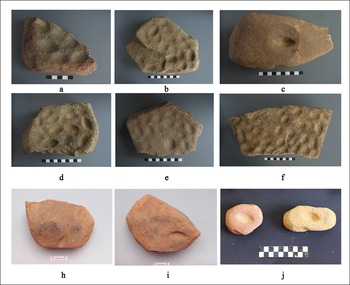
The new evidence for Canarium nuts presented here may allow for re-evaluation of other archaeological evidence related to nut processing, storage and other social activities. Many stones found at these complex hunter-gatherer sites have Canarium-shaped pitted surfaces, which strongly indicate that they were used as anvils. These tool types have been found at Guhongling (as part of the present study) and at other sites with confirmed evidence of Canarium use, such as Gexinqiao (Figure 7; Guangxi Provincial Institute of Cultural Relics and Archaeology 2012). The typically Canarium-shaped depressions on these anvil stones are, in association with an abundance of Canarium nut fragments at several sites, suggestive of their use for cracking Canarium nuts, although verification using experimental studies and residue analysis is needed. Moreover, numerous other hunter-gatherer sites across southern China have yielded these anvil tools, suggesting wider use of Canarium, although archaeobotanical research has yet to be performed at these sites.
Stone anvils with nut-shaped depressions from Guangxi: a–f) from Gexinqiao; h–j) from Guhongling (photographs by Guangxi Provincial Institute of Cultural Relics and Archaeology & Z. Li).

While Canarium nuts formed a substantial part of the hunter-gatherer diet, they could not have formed the only plant-based nutrition. Canarium nuts provide useful fats, proteins and vitamins, but they offer fewer carbohydrates than could be obtained from other ‘staples’ (Evans Reference Evans1993; Nevenimo et al. Reference Nevenimo, Moxon, Wemin, Johnston, Bunt and Leakey2007). Starchy foods, such as roots, tubers and sago palms, probably contributed substantially to carbohydrate intake (Yang et al. Reference Yang, Barton, Wan, Li, Ma, Li, Zhang and Wei2013). Furthermore, animals undoubtedly provided the most reliable source of protein, especially given the large quantities of molluscs deposited in the shell middens (Lu Reference Lu2011).
Canarium and ritual associations in southern China
Beyond their exploitation as food, Canarium nuts were also often used in ritual practices, such as being ‘sacrificed’, along with large stone shovels (dashichan), in ritual pits. At sites such as Guhongling, for example, Canarium nuts had been burned and sprinkled over the sacrifice pits. More than 150 similar dashichan sites have been reported in southern China and northern Vietnam (He Reference He2007; Li Reference Li2011), where the dashichan are usually interpreted as representing labour-intensive ceremonial artefacts without any obvious practical purpose. Nearly 100 of these objects were recovered from three sacrificial pits at Guhongling, and more than 530 were excavated from the Dalongtan site in Guangxi Province (Guangxi Provincial Institute of Cultural Relics and Archaeology 1982; Xie et al. Reference Xie, Huang, Li, Gan and Lu2015). Many other dashichan sites have yielded large quantities of associated Canarium nuts.
The apparent ritual use of Canarium c. 4500–4400 cal BP probably coincided with broader developments in the hunter-gatherer societies of southern China, within the orbit of increasing roles of rice agriculture around that time. Currently, the earliest direct evidence for rice agriculture in the Lingnan region of southern China (south of the Nanling Mountains) comes from the sites of Shixia and Laoyuan in Guangdong Province. Here, charred rice grains have been dated directly to 4347–4090 and 4419–4246 cal BP, respectively (Yang et al. Reference Yang, Wang, Zhuang, Li, Ma, Ma, Cui, Wei and Fuller2017, Reference Yang, Chen, Ma, Li, Hung, Zhang, Jin, Liu, Zhou and Fu2018). No clear evidence for early agriculture has yet been uncovered at contemporaneous ritual sites farther southward in the Yong River Valley of Guangxi Province, although the dating in neighbouring areas would suggest at least the awareness of rice agriculture.
The emergence of the new traditions in the use of Canarium, not only for subsistence but also for ceremonial functions, may reflect changes in social and economic practices linked with the adoption of farming. People continued to consume Canarium nuts during the initial onset of rice and millet farming, using traditional processing techniques, as indicated by the presence of stone anvils at Guhongling (Figure 7). The role of Canarium nuts in southern China then declined as rice farming became fully established. Later, as seen in evidence from Han Dynasty sites, they were consumed only for their fruit flesh (Zhao Reference Zhao and Zhao2010).
The diminishing role of Canarium characterises the broader transformation in subsistence strategies, which relied less on forest management and the gathering of wild plants. Newly introduced rice and millet farming created demands for land and labour, and changed perceptions of the environment. These demands competed with Canarium traditions, particularly in the overlap of preferred habitats along river valleys and on hillsides up to 1300m asl, and in the coincidental timing of cereal and Canarium harvesting, which both occurred around October. Additionally, the dispersal of rice and millet cultivation into southern China was, in part, probably introduced directly by East Asian immigrant farmers from regions farther to the north (Hung et al. Reference Hung, Zhang, Matsumura, Li, Matsumura, Hung, Li and Shinoda2017; Matsumura et al. Reference Matsumura2019); these incoming practices were probably poorly adapted to accommodate and sustain the existing use of Canarium and other wild resources of the south.
Cross-regional traditions of Canarium use
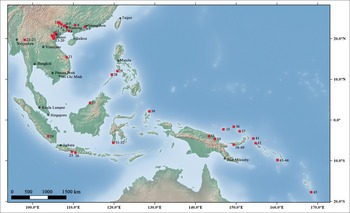
Cross-regional archaeological evidence indicates a widespread tradition of Canarium use among late prehistoric hunter-gatherer groups in southern China and at other contemporaneous sites in the Asia-Pacific region (Figure 8). The oldest presence of Canarium in Papua New Guinea is claimed to be 14 000 cal BP, at Seraba (Yen Reference Yen1993). Canarium use could extend as far back as 13 000 cal BP, as suggested for Daeo Cave 2 in Morotai Island of eastern Indonesia’s Maluku Islands (Bellwood Reference Bellwood and Bellwood2019). At a number of sites in Vietnam, Canarium remains have been reported as old as 12 000 cal BP (Nguyen Reference Nguyen2008a & Reference Nguyenb; Li Reference Li2016). Several other instances potentially dating to c. 11 000 cal BP have been discovered at, for example, Spirit Cave in Thailand, Pamwak Cave in Papua New Guinea, Kilu Cave in Buka in the Solomon Islands, Niah Cave in Borneo, Ulu Leang in Sulawesi and Ille Cave in Palawan in the Philippines (Gorman Reference Gorman1970; Glover Reference Glover1977a & Reference Gloverb; Wickler & Spriggs Reference Wickler and Spriggs1988; Wickler Reference Wickler1990; Fredericksen et al. Reference Fredericksen, Spriggs and Ambrose1993; Paz Reference Paz2005; Lewis et al. Reference Lewis2008; Barker et al. Reference Barker, Lloyd-Smith, Barton, Cole, Hunt, Piper, Rabett, Paz and Szabό2011). Many of these early sites show the same patterns of using Canarium by cracking the nuts, and whole or fragmentary anvil-like stones have been described. Beyond the Asia-Pacific region, Canarium finds of broadly assigned Pleistocene or Early Holocene ages have been reported for African sites (D'Andrea et al. Reference D'Andrea, Klee and Casey2001; Neumann et al. Reference Neumann, Bostoen, Höhn, Kahlheber, Ngomanda and Tchiengué2012).
Representative archaeological sites, with reported Canarium remains in the Asia-Pacific region: 1) Baida; 2) Gexinqiao; 3) Lilao; 4) Guhongling; 5) Liyupo; 6–7) Huiyaotian & Tangdichong; 8) Duliao; 9) Shijiaoshan; 10) Guye; 11) Dong Dau; 12) Den Citadel; 13–20) Con Moong Cave, Du Sang, Xom Trai, Hang Doi, Hang Muoi, Mai Da Dieu, Con Co Ngua & Hang Trống; 21) Bau Du; 22–23) Spirit Cave & Banyan Valley Cave; 24) Gua Harimau; 25) Braholo Cave; 26) Song Keplek; 27) Niah Cave; 28) Ille Cave; 29) Bubog-1; 30) Daeo Cave 2; 31–32. Ulu Leang & Leang Burung 1; 33) Seraba; 34) Dongan; 35) Talepakemalai; 36) Pamwak Cave; 37) Panakiwuk Cave; 38–40) Makekur, Apalo & Maklo; 41) Nissan; 42) Kilu Cave; 43–44) Vatuluma Posovi & Vatuluma Tavuro; 45) Ifo (after Maloney Reference Maloney1996; Li Reference Li2016, with updates from Tran et al. Reference Tran, Nguyen and Vu1970; Matthews & Gosden Reference Matthews and Gosden1997; Simanjuntak & Asikin Reference Simanjuntak and Asikin2004; Abdullah & Paeni Reference Abdullah and Paeni2015; Simanjuntak Reference Simanjuntak2016; Nguyen Reference Nguyen2017; Rabett et al. Reference Rabett2017; Nguyen et al. Reference Nguyen2018; Oxenham et al. Reference Oxenham2018; Bellwood Reference Bellwood and Bellwood2019; Pawlik et al. Reference Pawlik, Crozier, Fuentes, Wood and Piper2019, and personal communications from T. Simanjuntak, A.A. Oktaviana & H. Sofian, for Gua Harimau) (base map converted by QGIS 3.8.3, http://www.qgis.org/ from free data at http://www.naturalearthdata.com/).

Many hunter-gatherer groups across the Asia-Pacific region integrated Canarium into their diet, although the precise role varied between groups, as well as over time. By 4500–4400 cal BP in southern China, Canarium had declined as a food source as rice and millet farming intensified. Concurrently, however, Canarium nuts began to feature in sacrificial pit offerings. Thereafter, Canarium continued to be an important part of both subsistence and ritual practices in other parts of the Asia-Pacific region, where cereal farming developed either much later or not at all.
Although the ritual roles of Canarium are difficult to ascertain from archaeological contexts, ethnographic observations offer parallels. Ellen's (Reference Ellenin press) detailed example from Maluku in Indonesia documents how people use Canarium in ceremonies involving feasting, ancestral offerings, rites of passage and sacred house construction. In this example, the Nuaulu people of Maluku were not rice farmers, instead maintaining swidden gardens with yams, taro and sago palms. Canarium was important as a foodstuff in general, but its potential ritual significance should not be overlooked.
Conclusion
This study confirms the use of Canarium by hunter-gatherers in southern China by at least 9000 cal BP, as part of a much broader range of Canarium exploitation among populations across the Asia-Pacific region. With minimal investment in forest management required, Canarium contributed significantly to food security over a wide geographic range and an extended time period, before being used in ritual offerings and other ceremonies during later periods. While these traditions eventually declined in places such as southern China as populations adopted rice and millet farming, they persisted—with modifications—in other areas, where people continued to rely on foraging, fishing, forest management and forms of swidden gardening. The current findings suggest the potential for at least four new research directions:
1) Exploration can proceed on the full geographic extent and time depth of Canarium use, based on systematic on-site sampling and laboratory identifications.
2) Although the remains of Canarium nuts may not have survived at every site, their probable use could be inferred through the use-wear and residue analysis of pitted-surface anvil stones, and perhaps through studies of other processing artefacts that have not yet been recognised.
3) Models could be developed for identifying the uses of Canarium nuts as dietary sources, ritual offerings or other functional categories through the formal definition of diagnostic site-specific material signatures.
4) Further refinement of chronologies may reveal more detailed aspects of the long-term continuity vs transformation of Canarium use.
In a global perspective, targeted research will be required to examine the roles of tree fruits and nuts in hunter-gatherer communities, and especially among ‘complex’ hunter-gatherers residing in high-density settlements. Canarium was a key resource for both nutrition and ritual life across a remarkable range of the Asia-Pacific region, and, conceivably, other tree nuts, such as acorns, may have fulfilled similar functions in contributing to complex hunter-gatherer population densities and social structures in different regions. While no single food resource could support an entire population, tree nuts—including Canarium—offered advantages, requiring minimal investment in local forest management and processing technologies, as well as the possibility of multi-seasonal storage. Continued research may clarify how tree nuts and similar foods combined with other factors to support dense populations without necessarily relying on high-intensity agricultural land-use.
Acknowledgements
For funding this research, Zhenhua Deng and Houyuan Lu thank the National Natural Science Foundation of China (grants 41602186, 41872027 & 41830322) and the Strategic Priority Research Program of Chinese Academy of Sciences (grant XDB26000000); Hsiao-chun Hung thanks the Australian Research Council (DP 110101097 and DP140100384).