Symptoms of anxiety and associated anxiety disorders are commonly reported as the most prevalent childhood mental health problem (Beesdo, Knappe, & Pine, Reference Beesdo, Knappe and Pine2009; Merikangas et al., Reference Merikangas, He, Burstein, Swanson, Avenevoli, Cui and Swendsen2010). Various aspects of maternal mood (anxiety, depression, and pregnancy-specific anxiety) and subjective stress (distress in response to daily stress) during pregnancy have been linked to child anxiety symptomatology (internalizing and/or anxiety symptom measures) in childhood through to young adulthood (e.g., Capron et al., Reference Capron, Glover, Pearson, Evans, O'Connor, Stein and Ramchandani2015; Davis & Sandman, Reference Davis and Sandman2012; O'Donnell, Glover, Barker, & O'Connor, Reference O'Donnell, Glover, Barker and O'Connor2014; Park et al., Reference Park, Kim, Kim, Shin, Yoo, Lee and Cho2014; Rice et al., Reference Rice, Harold, Boivin, van den Bree, Hay and Thapar2010; van den Bergh & Marcoen, Reference van den Bergh and Marcoen2004). It has been proposed that these types of prenatal maternal stress (PNMS) may “program” the fetus by disrupting development of the fetal hypothalamic–pituitary–adrenal (HPA) axis, altering the human stress response (Davis, Glynn, Waffarn, & Sandman, Reference Davis, Glynn, Waffarn and Sandman2011; Glover, O'Connor, & O'Donnell, Reference Glover, O'Connor and O'Donnell2010; Gluckman & Hanson, Reference Gluckman and Hanson2006), which is known to be associated with anxiety symptoms throughout development (Faravelli et al., Reference Faravelli, Lo Sauro, Godini, Lelli, Benni, Pietrini and Ricca2012; Nelemans, Hale, Branje, Hawk, & Meeus, Reference Nelemans, Hale, Branje, Hawk and Meeus2014).
Fetal neurophysiological alterations are thought to be moderated by fetal sex (Glover & Hill, Reference Glover and Hill2012) and/or by the timing of the stressor as it coincides with critical developmental windows in pregnancy (Sandman & Davis, Reference Sandman and Davis2012; Weinstock, Reference Weinstock2008). However, results regarding how fetal sex and timing of stress in pregnancy affect child anxiety are mixed (Davis & Sandman, Reference Davis and Sandman2012; O'Connor, Heron, Golding, & Glover, Reference O'Connor, Heron, Golding and Glover2003; O'Donnell et al., Reference O'Donnell, Glover, Barker and O'Connor2014; van den Bergh & Marcoen, Reference van den Bergh and Marcoen2004). Effects may occur due to PNMS occurring during middle (e.g., Davis & Sandman, Reference Davis and Sandman2012; van den Bergh & Marcoen, Reference van den Bergh and Marcoen2004) or late gestation (e.g., O'Donnell et al., Reference O'Donnell, Glover, Barker and O'Connor2014). Current finding report an increased impact on girls (e.g., de Bruijn, van Bakel, & van Baar, Reference de Bruijn, van Bakel and van Baar2009) or boys (e.g., Gerardin et al., Reference Gerardin, Wendland, Bodeau, Galin, Bialobos, Tordjman and Cohen2011), while some have failed to provide evidence of varying effects on anxiety symptomatology across sexes (e.g., Barker, Jaffee, Uher, & Maughan, Reference Barker, Jaffee, Uher and Maughan2011; van den Bergh & Marcoen, Reference van den Bergh and Marcoen2004).
Understanding the causal mechanisms underlying the transference of PNMS to the fetus is hindered by limitations inherent to human PNMS research (Lewis, Relton, Zammit, & Smith, Reference Lewis, Relton, Zammit and Smith2013). For example, the heritability of anxiety symptomatology between mother and child may be a confound, given that negative life events may not be independent of the parents’ personality or psychopathology (Huizink, Mulder, & Buitelaar, Reference Huizink, Mulder and Buitelaar2004; Laplante et al., Reference Laplante, Barr, Brunet, Galbaud du Fort, Meaney, Saucier and King2004) and anxiety symptomatology is, in part, heritable (Middeldorp et al., Reference Middeldorp, Wesseldijk, Hudziak, Verhulst, Lindauer and Dieleman2016). Studies that have utilized designs that attempt to overcome these limitations by, for example, comparing the relative strengths of prenatal and postnatal distress variants of the mother and father with childhood outcomes (Capron et al., Reference Capron, Glover, Pearson, Evans, O'Connor, Stein and Ramchandani2015; O'Donnell et al., Reference O'Donnell, Glover, Barker and O'Connor2014) or by examining prenatal distress effects utilizing prenatal cross fostering designs (Rice et al., Reference Rice, Harold, Boivin, van den Bree, Hay and Thapar2010) are limited, and findings are mixed. Furthermore, maternal mood and stress may commence prior to conception and continue postnatally on into later development. Thus, the critical period(s) of fetal neurodevelopmental vulnerability associated with childhood anxiety outcomes cannot be assessed rigorously with these types of pregnancy stressors (Kingsbury et al., Reference Kingsbury, Weeks, Mackinnon, Evans, Mahedy, Dykxhoorn and Colman2016).
The investigation of effects of independent stressors, such as human-made and natural disasters, is one way in which the effect of stressful life events during pregnancy on child development has been disentangled from long-standing personality factors (Huizink et al., Reference Huizink, Mulder and Buitelaar2004). Epidemiological research examining the effects of the Chernobyl accident of 1986 found that higher levels of maternal objective hardship (e.g., days without electrical power and days in emergency shelters) as a result of the disaster were associated with increased adolescent depressive, but not anxiety, symptoms, compared to an unexposed control group. However, maternal subjective stress (emotional reaction) was not assessed in that study (Huizink et al., Reference Huizink, Dick, Sihvola, Pulkkinen, Rose and Kaprio2007). In contrast, Project Ice Storm found effects for disaster-related PNMS on childhood internalizing behaviors (King, Dancause, Turcotte-Tremblay, Veru, & Laplante, Reference King, Dancause, Turcotte-Tremblay, Veru and Laplante2012). Controlling for the level of objective hardship due to exposure to the severe 1998 Quebec ice storm during pregnancy, as well as postnatal and concurrent maternal mood, subjective stress in response to the disaster was associated with increased internalizing behaviors in children aged 4 to 11.5 years. At 4 years, greater objective hardship due to the disaster during pregnancy predicted an increased severity of internalizing behaviors, but only when mothers’ subjective stress was low; when subjective stress was high, internalizing symptoms were more severe, and objective hardship had no further effect on child internalizing symptoms. The contrasting findings suggest further investigation of the potential unique and additive effects of both objective and subjective aspects of PNMS on varying measures of anxiety symptomatology due to disaster exposure is warranted.
The interactive roles of varying types of disaster-related PNMS with specific anxiety symptoms, and multiple informants (i.e., teacher and maternal report) of internalizing behaviors, within the same cohort are yet to be examined. Understanding whether disaster-related PNMS affects internalizing behaviors, or anxiety symptoms more specifically, will help improve the specificity of etiological models. Further, research using different independent stressors is needed in order to examine the generalizability of findings across disaster types.
In January 2011, the state of Queensland, Australia, experienced a flood that saw 78% of the state declared a disaster zone. The floods inundated 29,000 homes and businesses, 2.5 million people were affected, and 33 people were killed (Queensland Floods Commission of Inquiry, 2012). The current study aims to investigate the extent to which varying types of disaster-related PNMS (objective hardship, subjective stress, and cognitive appraisal of the event) explain variance in childhood anxiety symptomatology at 4 years, as assessed by mothers and caregivers/teachers, moderated by timing of exposure and child sex, and controlling for maternal mood, within a cohort of pregnant women exposed to the Queensland, Australia, 2011 floods.
Specifically, we hypothesized that children whose mothers experienced higher levels of flood-related PNMS (objective hardship and/or subjective stress and/or negative cognitive appraisal of the floods) in pregnancy would exhibit greater anxiety symptoms and internalizing behaviors. Similar associations were predicted regardless of reporter (mother or caregiver/teacher). Further, based on previous disaster-related PNMS research (King et al., Reference King, Dancause, Turcotte-Tremblay, Veru and Laplante2012), we hypothesized that subjective stress may moderate the relationship between objective hardship and childhood anxiety outcomes, such that objective hardship would increase child anxiety symptomatology across outcomes, but only at low levels of subjective distress.
We predicted that the hypothesized relationships of PNMS with child anxiety symptoms would be moderated by sex and/or timing of exposure to the flood during gestation. However, due to mixed findings across the literature, no specific hypotheses were proposed and analyses were exploratory.
Method
Participants
The present study is part of the Queensland Flood Study (QF2011; King et al., Reference King, Kildea, Austin, Brunet, Cobham, Dawson and Ping2015), a prospective longitudinal study examining the effects of flood-related PNMS on birth outcomes and development across childhood. Between April 2011 and January 2012, women were recruited into the study if they were English speaking, 18 years of age or older, and were pregnant during the flood (January 10, 2011). The current study excluded infants with birthweights under 2500 g and premature infants born earlier than 36 weeks gestation (n = 2). The QF2011 Study has received ethical approval from Mater Research Institute (1844M) and the University of Queensland (2013001236). All mothers provided written informed consent.
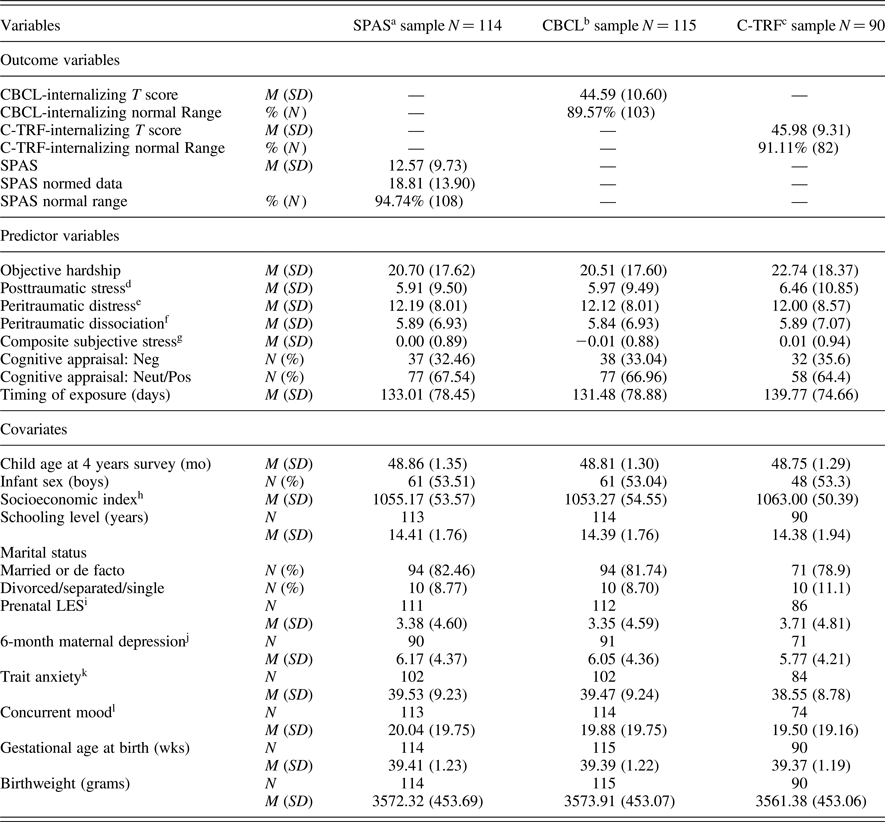
At recruitment and/or 12 months postflood, 230 women completed questionnaires about their demographics, flood experiences, and mental health. Maternal reports of child anxiety symptomatology at 4 years were available for 117 participants on the Spence Preschool Anxiety Scale (SPAS; Spence, Rapee, McDonald, & Ingram, Reference Spence, Rapee, McDonald and Ingram2001) and for 118 participants on the internalizing subscale of the Child Behavior Check List (CBCL; Achenbach & Rescorla, Reference Achenbach and Rescorla2001). A total of 92 preschool mother–child dyads returned teacher reports of children's internalizing behaviors (C-TRF; Achenbach & Rescorla, Reference Achenbach and Rescorla2001), 75 of which also had maternal reports of internalizing behavior at 4 years. After eligibility exclusions, the final analyses included N = 115 reports for CBCL, N = 114 for SPAS, and N = 90 for C-TRF. The demographic data for each of the three scales (maternal and teacher reports) are described in Table 1. Analyses revealed no differences in the demographic and psychological characteristics between the mothers returning maternal, maternal and teacher, or teacher-only reports.
Cohort descriptive statistics for the outcome, predictor variables, and covariates
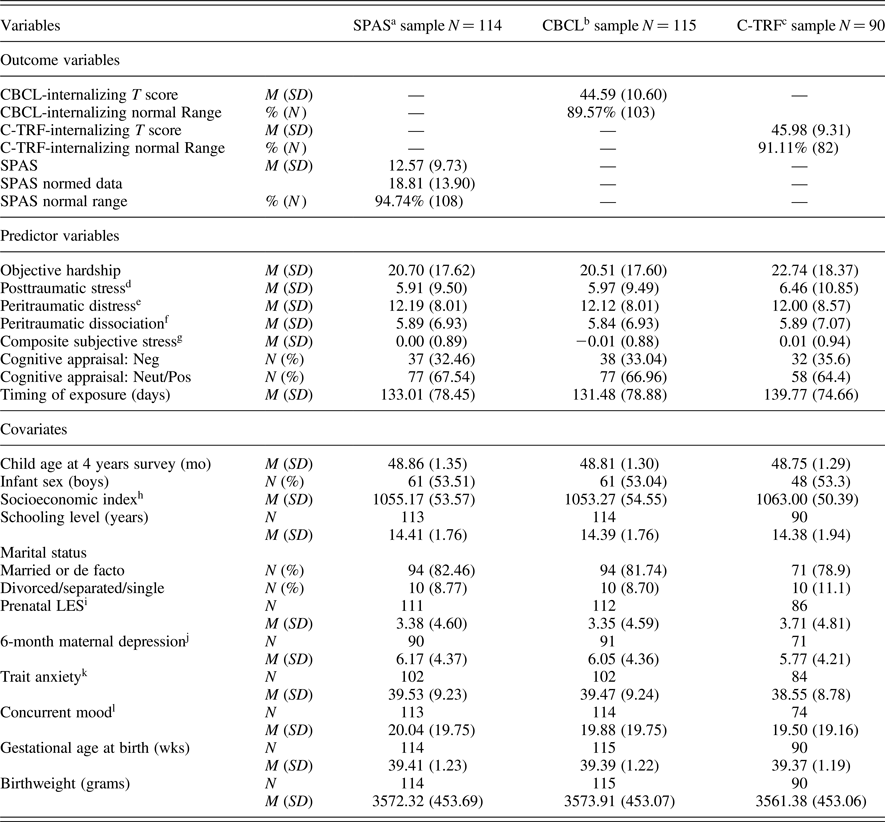
aSPAS, Spence Preschool Anxiety Scale; bCBCL, Child Behavior Checklist; cC-TRF, Caregiver-Teacher Report Form; dImpact of Event Scale—Revised; ePeritraumatic Distress Inventory; fPeritraumatic Dissociative Experiences Questionnaire; gComposite Score for Mothers’ Subjective Stress; hSocio-Economic Indexes for Areas; iAbsolute impact Life Events Scale; jDepression: 6-month Edinburgh Postnatal Depression Scale; kSTAI-Trait Anxiety Scale at 30 months; lDepression, anxiety, stress composite score at 4 years.
Note: Untransformed scores are used for the measures of maternal stress. SPAS, Spence Preschool Anxiety Scale; CBCL, Child Behavior Checklist; C-TRF, Caregiver–Teacher Report Form. LES, Life Experiences Survey.
Measures
Prenatal maternal stress
For more details regarding the measures used, refer to King et al. (Reference King, Kildea, Austin, Brunet, Cobham, Dawson and Ping2015) and previous QF2011 publications (Moss et al., Reference Moss, Simcock, Cobham, Kildea, Elgbeili, Laplante and Dubow2017; Simcock, Kildea, et al., Reference Simcock, Kildea, Elgbeili, Laplante, Stapleton, Cobham and King2016).
Mothers’ objective hardship to the floods was estimated using the Queensland Flood Objective Stress Scale. This survey was adapted from previous disaster studies measures (Brock et al., Reference Brock, O'Hara, Hart, McCabe, Williamson, Laplante and Kaslow2014; Laplante et al., Reference Laplante, Barr, Brunet, Galbaud du Fort, Meaney, Saucier and King2004) in order to obtain factual information relevant to the severity of maternal hardship from this specific natural disaster. Queensland Flood Objective Stress Scale assesses four dimensions of flood-related hardship: threat (e.g., “Were you physically hurt because of the flood?”), loss (e.g., “… please estimate the total value of all material loss and damage experienced because of the flood.”), scope (e.g., “To what extent was your immediate community changed because of the flooding?”), and change (e.g., “How many times were you required to change homes because of the flood?”). The research team weighted responses for each item. Each dimension was weighted equally, given that theoretically, each should be similarly predictive, and scored between 0 (no impact) and 50 (extreme impact). Thus, the measure has a maximum overall score of 200, with higher scores indicating increased hardship. Because the distribution was positively skewed, a natural log transformation was conducted to normalize the data.
A single item tool was designed to assess the mother's cognitive appraisal of the overall event. Mothers responded to the question “If you think about all of the consequences of the 2011 Queensland flood on you and your household, would you say the flood has been …?” Women rated their appraisal of the event on a 5-point scale from very negative (–2) to very positive (+2). Due to the narrow range of responses on this scale, the variable was dichotomized into negative/very negative (0) and there were no consequences/positive/very positive (1).
Mothers completed three measures of subjective stress related to the flood, and each measure used a 5-point rating scale: 0 (not at all true) to 4 (extremely true). Posttraumatic stress (PTS) symptoms in reaction to the flood were assessed using the Impact of Event Scale—Revised (IES-R; Weiss & Marmar, Reference Weiss and Marmar1997). The 22-item IES-R assesses the severity of symptoms including intrusive thoughts, hyperarousal, and avoidance during the preceding days. The IES-R has demonstrated psychometric properties (Creamer, Bell, & Failla, Reference Creamer, Bell and Failla2003; Weiss & Marmar, Reference Weiss and Marmar1997). Peritraumatic measures asked the women to recall how they had felt at the time of the floods. The Peritraumatic Distress Inventory (PDI-Q; Brunet et al., Reference Brunet, Weiss, Metzler, Best, Neylan, Rogers and Marmar2001) is a 13-item scale asking participants to retrospectively report and rate emotional and physical reactions that they experienced during and immediately following a traumatic experience. The 10-item Peritraumatic Dissociative Experiences Questionnaire (PDEQ; Marmar, Weiss, & Metzler, Reference Marmar, Weiss, Metzler, Wilson and Keane1997) measures peritraumatic dissociative reactions to a specific trauma. Both measures are internally consistent (Brunet et al., Reference Brunet, Weiss, Metzler, Best, Neylan, Rogers and Marmar2001). The PDI is predictive of PTSD (Guardia et al., Reference Guardia, Brunet, Duhamel, Ducrocq, Demarty and Vaiva2013).
Total scores from all three measures of subjective stress were used to compute a COmposite Score for Mothers’ Subjective Stress (COSMOSS) via principal component analysis (PCA). This was done in order to reduce the number of variables in the regression analyses conducted. The PCA-derived algorithm was: COSMOSS = (0.358 × IESR) + (0.397 × PDI) + (0.387 × PDEQ). The PCA resulted in one factor that accounted for 76.68% of the overall subjective stress variance.
Child anxiety symptomatology
At 4 years, mothers reported on their child's internalizing behavior using the Child Behavior Checklist 1½ –5 years (CBCL/1½−5; Achenbach & Rescorla, Reference Achenbach and Rescorla2001). Daycare providers and kindergarten teachers rated the children's behavior using the Caregiver–Teacher Report Form (C-TRF; Achenbach & Rescorla, Reference Achenbach and Rescorla2001). The C-TRF has identical items, scales, scoring, and subsequent cutoff scores as the CBCL. Data from the internalizing scale (emotionally reactive, anxious/depressed, somatic complaints, and withdrawn subscales) of the CBCL (CBCL-internalizing) and the C-TRF (C-TRF internalizing) are reported here. Mothers and teachers rated how true statements regarding the child's behavior in the previous 2 months were, 0 = not true, 1 = somewhat or sometimes true, and 2 = very true or often true. A CBCL-internalizing total T score (M = 50, SD = 10) was calculated as the sum of the responses to the 36 statements. Established standardized cutoff scores classify children as within normal (T ≤ 59), borderline (T ≥ 60 but ≤ 63), and clinical ranges (T ≥ 64; Achenbach & Rescorla, Reference Achenbach and Rescorla2001). The CBCL-internalizing scale is routinely used as a measure of child anxiety (Lowry-Webster, Barrett, & Lock, Reference Lowry-Webster, Barrett and Lock2003; Petty et al., Reference Petty, Rosenbaum, Hirshfeld-Becker, Henin, Hubley, Lacasse and Biederman2008). Both the CBCL and the C-TRF demonstrate strong psychometric properties (Janssens & Deboutte, Reference Janssens and Deboutte2009).
The 34-item SPAS (Spence et al., Reference Spence, Rapee, McDonald and Ingram2001) provides an overall parent/caregiver-report measure of anxiety symptomatology as well as six childhood anxiety subscales designed to map onto DSM-IV criteria for anxiety diagnoses: generalized anxiety, social anxiety, obsessive compulsive disorder, physical injury fear, and separation anxiety. The first 28 items ask parents to report the frequency at which an item is true for their child: 1 (not at all) to 5 (very often true). The remaining items relate to other traumatic events the child may have experienced, but are not scored. The overall total score of anxiety symptoms, Items 1–28, for each participant was calculated and used for the analyses. Established cutoff scores classify children as within the normal (total score ≤ 33) and elevated (total score ≥ 34) symptom range. Maternal report on the internalizing summary score of the CBCL has been found to correlate highly with the SPAS total anxiety score, indicating good construct validity (r = .55–.59, r = .68 Nauta et al., Reference Nauta, Scholing, Rapee, Abbott, Spence and Waters2004; Spence et al., Reference Spence, Rapee, McDonald and Ingram2001).
Covariates
To account for factors known to affect maternal stress and child development, maternal socioeconomic status (SES), education, income, and marital status were measured at recruitment. SES was estimated using the Socio-Economic Indexes for Areas scores based on Australian Bureau of Statistics census data regarding postcode (M = 100, SD = 50; higher scores indicate a more socially advantaged status). Infant birth weight and gestational age were collected from medical records at birth.
Major life events, excluding the 2011 flood, during pregnancy were assessed at recruitment and/or 12 months postflood using a modified version of the Life Experiences Survey (Sarason, Johnson, & Siegel, Reference Sarason, Johnson and Siegel1978). Respondents indicated whether they had experienced the event during pregnancy, and rated its impact on a 7-point Likert scale ranging from –3 (extremely negative) to +3 (extremely positive). For this study, the sum of the absolute impact ratings for events across pregnancy score was used.
To assess postnatal maternal mental health, the Edinburgh Postnatal Depression Scale (EPDS; Cox, Holden, & Sagovsky, Reference Cox, Holden and Sagovsky1987) was administered at 6 months postpartum. The EPDS is a 10-item questionnaire employing a 4-point Likert scale, which assesses depressive and anxious symptoms. To control for the effect of genetic heritability of anxious personality traits from mother to child, and the ongoing effects of postnatal mood on child development, women completed the trait scale of the State-Trait Anxiety Inventory (STAI; Spielberger, Gorsuch, Lushene, Vagg, & Jacobs, Reference Spielberger, Gorsuch, Lushene, Vagg and Jacobs1983) at 30 months postpartum. The STAI trait scale is a 20-item scale, which asks participants to report on a 4-point Likert scale how they generally feel. Maternal mood can bias mothers’ reports of their children's behavior (Ferdinand et al., Reference Ferdinand, Huizink, Ormel, Verhulst, van der Toorn and Utens2010; Najman et al., Reference Najman, Williams, Nikles, Spence, Bor, O'Callaghan and Shuttlewood2001) and alter modeling of behavior and parenting styles (Wei & Kendall, Reference Wei and Kendall2014). Therefore, mothers also completed the short-form of the Depression Anxiety and Stress Scales (DASS; Lovibond & Lovibond, Reference Lovibond and Lovibond1995) when their children were 4 years of age. The questionnaire asks mothers to endorse the extent to which they experienced a range of symptoms across the last 7 days using a 4-point scale on three subscales: depression, anxiety, and stress. A composite measure (addition of all DASS subscales) was used as an indicator of overall maternal mood. All three maternal mental health variables (EPDS, STAI, and DASS) were included as continuous covariates.
Statistical analysis
Analyses were performed using SPSS Version 23. First, we conducted attrition analyses comparing mother–child dyads who completed the 4-year survey to those who did not. Second, missing data were imputed using expectation–maximization (Schafer, Graham, & West, Reference Schafer, Graham and West2002) techniques. Cross-period correlations were calculated, and scores for flood-related variables were finalized by integrating ratings provided at recruitment and/or 12 months postflood using regression (King et al., Reference King, Kildea, Austin, Brunet, Cobham, Dawson and Ping2015).
Descriptive analyses were performed for all outcomes, predictor variables, and covariates. Three outliers on the child anxiety symptom outcome variable (SPAS) were winsorized in order to reduce their influence (Field, Reference Field2013). Residual statistics and curvilinear effects of PNMS variables were examined, ensuring all assumptions of the models were met. Second, bivariate Spearman ρ correlation coefficients were obtained for all pairs of dependent, covariate, and predictor variables. Third, hierarchical linear regression analyses were conducted for each of the three outcome variables: CBCL, C-TRF, and SPAS. The model for the regressions was the same for each outcome variable assessed: objective hardship was entered first, followed by the composite score for subjective stress, and then cognitive appraisal. Next, infant sex was entered, followed by timing of exposure to the event during gestation. Covariates (based on significant bivariate correlations) were added to the model in steps; these varied for each outcome. Due to the relatively small sample, covariates forced into the equation that were nonsignificant in the final model were trimmed, and analyses rerun.
We conducted a series of moderation analyses using PROCESS macro (Hayes, Reference Hayes2013) in order to explore the potential interactive effects of child sex or timing of flood exposure during gestation for objective hardship, cognitive appraisal, and subjective stress reactions on each measure of child anxiety symptomatology. In addition, we examined the interactive effects of subjective distress, cognitive appraisal, and objective hardship. To adjust for the number of moderation analyses, Bonferroni was used to correct the interaction terms’ p values.
Results
Attrition analyses
Independent samples t tests showed that eligible participants with (N = 119) and without (N = 111) 4-year maternal report data (CBCL and/or SPAS) did not vary on any of the flood variables. However, responding mothers were more likely to have completed more years of schooling (M = 14.37 years, SD = 1.75 vs. M = 13.53 years, SD = 2.11), t (212.25) = 3.27, p = .001, and experienced the floods later in gestation (M = 131.43 days [18.78 weeks], SD = 77.59 days [9.50 weeks], vs. M = 100.37 days [14.34 weeks], SD = 66.50 [11.08 weeks]), t (226.41) = 3.266, p = .001.
Maternal stress
Across both participant groups (maternal and teacher report), all four PNMS maternal stress variables were correlated (rs ranging from .318 to .630, p < .001), indicating that all measures were related yet assessed different aspects of the maternal stress response. The composite stress score was moderately correlated with objective hardship in both samples (r = .531 to .566, p < .001). In addition, a negative cognitive appraisal of the event was significantly correlated with higher levels of COSMOSS (rs ranging from –.383 to –.410, p < .001) and objective hardship (rs ranging from –.589 to –.607, p < .001) in both samples, and with each of the individual maternal stress measures.
Child anxiety symptomatology
As expected, both of the maternal measures of child anxiety symptoms (CBCL-internalizing and SPAS) were significantly correlated (r = .61, p < .001). Maternal report of specific anxiety symptoms (SPAS) showed a low correlation with the teacher report of internalizing behaviors (r = .27, p < .001). Maternal and teacher reports of internalizing behavior were not significantly associated. Descriptive statistics indicated that the vast majority of children in the present study experienced anxiety symptomology that placed them within the normal range for their age (see Table 1), with no differences in sex for any outcome measured (data not shown).
Associations between PNMS and child anxiety symptoms
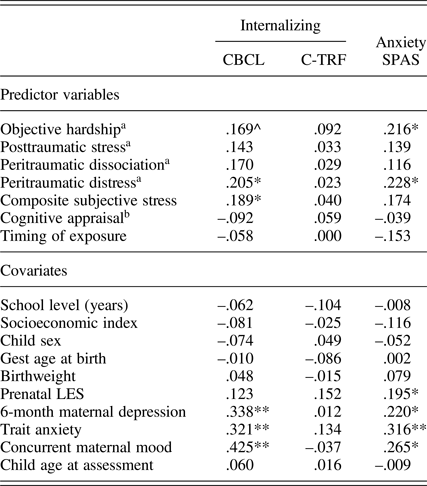
Bivariate correlations between children's anxiety symptom scores (SPAS), the predictor variables, and covariates are shown in Table 2. Of the PNMS measures, objective flood exposure and peritraumatic distress (PDI) were correlated with child anxiety symptoms: higher levels of PNMS were associated with increased anxiety symptoms. As other significant life events during pregnancy, postnatal depression, trait anxiety, and concurrent maternal mood were all positively associated with specific anxiety scores, they were included as covariates in the initial regression model. Timing of exposure to the floods was curvillinearly associated with outcome scores, and therefore a quadratic variable was created and included as a predictor in the initial regression.
Correlations between outcome scores and predictor variables and covariates
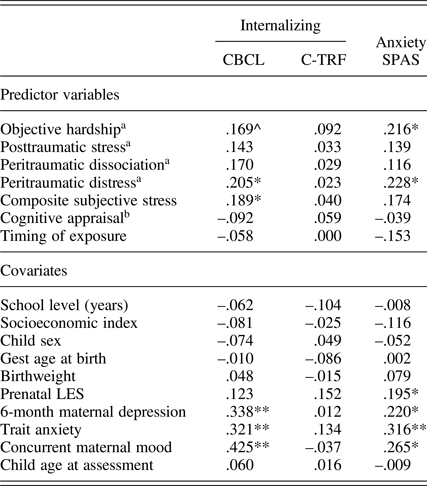
Note: CBCL, Child Behavior Checklist; C-TRF, Caregiver–Teacher Report Form. SPAS, Spence Preschool Anxiety Scale. LES, Life Experiences Survey. aLog transformed scores used in correlation. bCoding for cognitive appraisal: 0 = negative/very negative; 1 = neutral/ positive/very positive. *p < .05. **p < .001. ^p = .051–.99.
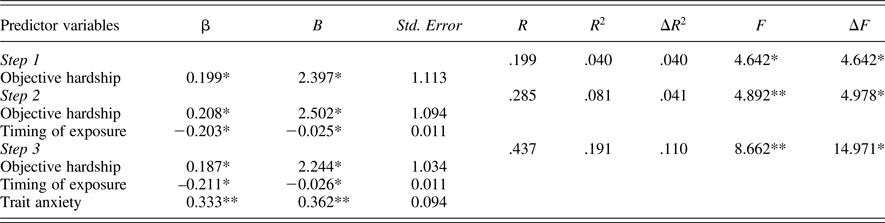
After initial regression analyses were run, only STAI-trait was a significant covariate, with higher maternal trait anxiety predictive of greater child anxiety symptoms (p < .001). The quadratic timing of exposure variable was no longer significant and was therefore removed from the regression. Upon examination of LOESS curve and quadratic graphs, we determined that the quadratic effect was not due to outliers and that the effect was linear and not quadratic when adjusting for the other predictors. See Table 3 for results of the trimmed regression model.
Summary of hierarchical regression analyses trimmed of all nonsignificant variables for anxiety symptoms
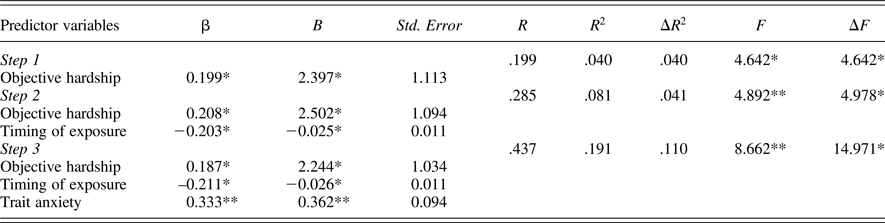
*p < .05. **p < .001.
Final regression analyses identified objective hardship as a significant predictor of SPAS scores (explaining 4% of the variance) with an increase in objective hardship associated with an increase in SPAS scores. Timing of exposure during gestation significantly predicted SPAS such that increased SPAS scores were observed for children of mothers exposed to the flood earlier in pregnancy (explaining an additional 4.1% of variance). Finally, anxiety symptoms were greater for children of mothers with greater trait anxiety (an additional of 11% variance). The final model accounted for 19.1% of the variance in child anxiety at 4 years (p < .001).
Moderation analyses using trimmed regression models revealed no significant interactions between sex or timing of flood exposure and any of the flood-related variables. PNMS variables did not interact to explain variance in SPAS scores.
Associations between PNMS and mother-reported child internalizing behaviors
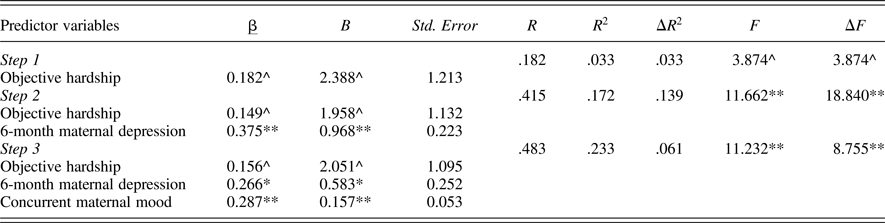
Bivariate correlations showed that peritraumatic distress as well as composite subjective stress (COSMOSS) were significantly positively associated with CBCL-internalizing scores (see Table 2). This indicates an association between higher maternal ratings of internalizing behaviors and higher maternal stress measures. Increases in maternal postnatal depression at 6 months, trait anxiety, and concurrent mood at 4 years were significantly associated with increases in child CBCL-internalizing scores and thus were included as covariates in the initial regression model. As objective hardship was curvillinearly related to CBCL-internalizing scores, such that CBCL scores were lower when participants had experienced greater or less objective hardship, we included a quadratic variable in the initial regression at the same step as the linear objective hardship variable. We examined the LOESS curve and quadratic graphs, and determined that the quadratic effect was not due to outliers. The effect was linear and not quadratic, given that the quadratic variable was nonsignificant when adjusting for the other predictors in the final model. The quadratic variable was thus removed, along with other nonsignificant covariates. In the final model, only 6-month postnatal maternal depression and 4-year concurrent maternal mood (DASS) were included. See Table 4 for stepped results of the trimmed regression model.
Summary of hierarchical regression analyses trimmed of all nonsignificant variables for internalizing symptoms
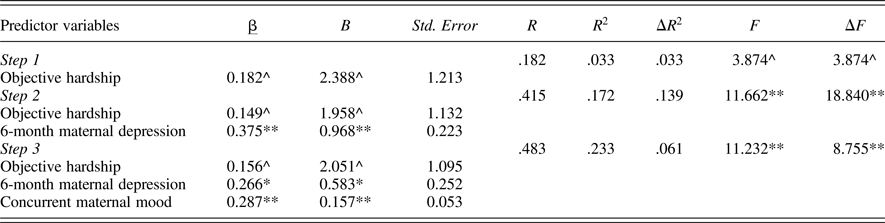
*p < .05. **p < .001. ^p = .051–.99.
Final regression analyses identified objective flood exposure as a borderline-significant predictor of CBCL-internalizing scores (explaining 3.3% of variance) with higher maternal objective hardship associated with higher CBCL-internalizing scores. Higher maternal postnatal depression and concurrent mood also accounted for additional significant variance in the outcome (13.9% and 6.1%, respectively), with higher scores on both maternal mood states indicative of greater child internalizing scores. The final model accounted for 23.3% of the variance in child anxiety at 4 years (p = .004). Moderation analyses using trimmed models revealed no significant interactions between sex or timing of flood exposure and any of the flood-related variables in relation to CBCL-internalizing scores.
Associations between PNMS and caregiver- or teacher-reported child internalizing behaviors
Bivariate correlations showed no significant correlations between C-TRF internalizing scores and any flood-related variables or covariates. Hierarchical regression models showed no significant predictors associated with the child's C-TRF internalizing scores. Moderation analyses showed no significant interactions of sex or timing of exposure with any of the PNMS variables on C-TRF internalizing scores, nor did any of the PNMS variables interact to predict the outcome.
Discussion
To the best of our knowledge, this prospective, longitudinal study is the first to propose a direct link from maternal hardship due to a natural disaster during pregnancy to increased child anxiety symptomatology at 4 years. Findings were established for maternal (CBCL-internalizing and SPAS measures) but not for teacher reports (C-TRF internalizing) of child symptoms. In addition, exposure to disaster earlier in pregnancy, regardless of the severity of stress, was associated with increased child anxiety symptoms (SPAS). Findings were established independent of a mother's cognitive appraisal of the stressor and her subjective response to the event as well as relevant covariates. Moderating effects of child sex or timing of exposure were not found, nor did we find interactive effects between the various types of PNMS investigated.
The discrepancy between findings based on maternal and teacher reports is consistent with previous PNMS literature (Leis, Heron, Stuart, & Mendelson, Reference Leis, Heron, Stuart and Mendelson2014) and is common in the broader literature (Rescorla et al., Reference Rescorla, Bochicchio, Achenbach, Ivanova, Almqvist, Begovac and Verhulst2014). Discrepancies across informants are thought to be the result of differences in child behavior due to varying interactions and social settings (Achenbach, McConaughy, & Howell, Reference Achenbach, McConaughy, Howell and Masters1987). Maternal measures of internalizing behaviors and anxiety symptomatology are widely used in the literature and have been found to have good convergent validity with observational reports (Edwards, Rapee, Kennedy, & Spence, Reference Edwards, Rapee, Kennedy and Spence2010; Mian, Carter, Pine, Wakschlag, & Briggs-Gowan, Reference Mian, Carter, Pine, Wakschlag and Briggs-Gowan2015). Potential maternal reporter bias was accounted for by controlling for concurrent maternal mood (Najman et al., Reference Najman, Williams, Nikles, Spence, Bor, O'Callaghan and Shuttlewood2001).
In the current study, objective hardship accounted for greater variance in specific anxiety symptoms compared to internalizing behaviors (4% and 3.3%, respectively). This suggests that PNMS may play a more significant role in the development of specific anxiety symptoms. However, anxiety symptoms are only beginning to be expressed independently of other internalizing behaviors at 4 years of age, making differentiation of specific anxiety symptoms from other affective symptoms difficult (Spence et al., Reference Spence, Rapee, McDonald and Ingram2001). By continuing to follow the development of the QF2011 cohort, we will be able to more fully understand whether objective hardship PNMS affects internalizing behaviors and symptoms indicative of affective and anxiety diagnoses more broadly, or specific anxiety symptoms, later in development. Overall, our results suggest that greater objective hardship during pregnancy is a predictor of greater child anxiety symptomatology development.
Objective hardship and childhood anxiety symptomatology
The current study supports previous findings showing child developmental alterations due to objective hardship to independent stressors (Dancause, Veru, Andersen, Laplante, & King, Reference Dancause, Veru, Andersen, Laplante and King2013; Laplante et al., Reference Laplante, Barr, Brunet, Galbaud du Fort, Meaney, Saucier and King2004; Laplante, Brunet, Schmitz, Ciampi, & King, Reference Laplante, Brunet, Schmitz, Ciampi and King2008; Liu, Dancause, Elgbeili, Laplante, & King, Reference Liu, Dancause, Elgbeili, Laplante and King2016; Simcock et al., Reference Simcock, Elgbeili, Laplante, Kildea, Cobham, Stapelton and King2017). While our research provides support for the fetal programming hypothesis for anxiety symptoms, the biological mechanism(s) through which objective hardship impacts the intrauterine environment and, thus, fetal development are still unknown.
Maternal transference of objective hardship or exposure to the fetus may occur through a single pathway or combination of pathways. Research suggests that maternal cortisol may be one mechanism through which HPA axis development is affected (Charil, Laplante, Vaillancourt, & King, Reference Charil, Laplante, Vaillancourt and King2010; Davis et al., Reference Davis, Glynn, Waffarn and Sandman2011). Further, studies show that physiological stress markers and maternal psychological reports of stress are independent predictors of child development, including child anxiety (Davis & Sandman, Reference Davis and Sandman2012; Dipietro, Reference Dipietro2012; Glover, Reference Glover2014). Objective hardship alone may lead to maternal cortisol alterations, as mothers’ physiological changes could occur without maternal awareness of psychological stress.
Alternatively, it could be that maternal pregnancy behaviors are altered in response to increased objective hardship, resulting in changes in the fetal intrauterine environment (Monk, Georgieff, & Osterholm, Reference Monk, Georgieff and Osterholm2013). Within our QF2011 cohort, more negative maternal diet changes during pregnancy as a consequence of the flood mediated effects of increased objective hardship leading to increased head circumference for gestational age and head sparing phenomenon (Dancause et al., Reference Dancause, Mutran, Elgbeili, Laplante, Kildea, Stapleton and King2016). Research suggests that poor maternal nutrition in utero may alter fetal HPA axis development in animals (see Gluckman & Hanson, Reference Gluckman and Hanson2006, for a review) as well as human depressive symptoms (Brown, Susser, Lin, Neugebauer, & Gorman, Reference Brown, Susser, Lin, Neugebauer and Gorman1995; Brown, van Os, Driessens, Hoek, & Susser, Reference Brown, van Os, Driessens, Hoek and Susser2000) and externalizing behaviors (Jacka et al., Reference Jacka, Ystrom, Brantsaeter, Karevold, Roth, Haugen and Berk2013). Alternatively, increased strenuous activity due to the floods (e.g., sand-bagging and removing property from houses), captured in our measure of objective hardship, may have led to changes in the intrauterine environment via decreased blood flow to the uterus (Szymanski & Satin, Reference Szymanski and Satin2012). The more a woman's property was within the flood zone, the more physically demanding her preparation and recovery activities may have been, due to increased risk of property loss and damage.
Further, the specific alterations to fetal development due to objective hardship are still unknown. Objective hardship has been associated with child epigenetic alterations (Cao, Laplante, Brunet, Ciampi, & King, Reference Cao, Laplante, Brunet, Ciampi and King2014) and variability in fetal heart rate and suppression of motor activity (Dipietro, Reference Dipietro2012). Furthermore, epigenetic changes have been found to mediate effects of objective hardship, but not subjective stress, on children's body mass index and adiposity as well as child immune states (Cao-Lei et al., Reference Cao-Lei, Dancause, Elgbeili, Massart, Szyf, Liu and King2015, Reference Cao-Lei, Veru, Elgbeili, Szyf, Laplante and King2016). Researchers hypothesize that fetal response is potentially due to perceptual detection of changes in the intrauterine milieu (Dipietro, Reference Dipietro2012). Such research supports our finding of differential long-term effects of varying types of PNMS on child outcomes and supports the need for investigation of each aspect of PNMS within the same cohort. The current findings reveal several possible future avenues of research with regard to the mechanisms underlying effects of objective hardship as a result of independent stressors.
Subjective stress
In the current study, we found no unique or additive effects of subjective distress or cognitive appraisal on any outcome measured. In contrast, previous literature suggests an association between types of maternal mood, as well as stress, during pregnancy and measures of child anxiety symptomatology (e.g., Park et al., Reference Park, Kim, Kim, Shin, Yoo, Lee and Cho2014; van den Bergh & Marcoen, Reference van den Bergh and Marcoen2004). Direct comparison to such studies suggests a broad risk phenotype of PNMS on anxiety symptomatology; however, varying aspects of PNMS (i.e., long-standing anxiety vs. subjective stress in response to an independent stressor vs. objective hardship) may operate under different biological mechanisms (Dancause et al., Reference Dancause, Laplante, Fraser, Brunet, Ciampi, Schmitz and King2012), leading to varying outcomes (Liu et al., Reference Liu, Dancause, Elgbeili, Laplante and King2016). Still, discrepant results across studies highlight the importance of accounting for maternal trait anxiety, postnatal maternal mood, and the timing and extent of exposure to a stressor experienced in studies investigating PNMS effects (King et al., Reference King, Dancause, Turcotte-Tremblay, Veru and Laplante2012). Our results, in this instance, suggest that it is an environmental effect, regardless of a mother's subjective distress, that leads directly to greater anxiety symptomatology in the child.
Disaster studies
We report a unique effect of objective hardship, such that increases in both child internalizing and anxiety symptoms were associated with increased maternal objective hardship, regardless of a mother's subjective distress or cognitive appraisal of the event. This is in contrast to previous disaster research (Huizink et al., Reference Huizink, Dick, Sihvola, Pulkkinen, Rose and Kaprio2007; King et al., Reference King, Dancause, Turcotte-Tremblay, Veru and Laplante2012), suggesting that the stress experience (maternal and fetal) may depend on the nature of the disaster, leading to differential outcomes during development.
Technological and human-made disasters have been found to elicit higher rates of immediate and ongoing posttraumatic symptoms over the following 12 months, as well as other mental health consequences, compared to natural disasters (Havenaar, Bromet, & Cwikel, Reference Havenaar, Bromet and Cwikel2002; Neria, Nandi, & Galea, Reference Neria, Nandi and Galea2008). This could be due to various factors, including the stigmatization of persons, due to their experience (e.g., radiation exposure) by those within the new community within which people relocate from the disaster (Bromet, Havenaar, & Guey, Reference Bromet, Havenaar and Guey2011). Huizink et al. (Reference Huizink, Dick, Sihvola, Pulkkinen, Rose and Kaprio2007) found no difference in adolescent anxiety outcomes of pregnant women exposed to the Chernobyl accident and a nonexposed control group (women pregnant in the year prior to or after the accident). It is possible that the control group experienced either one or a combination of the following: (a) radiation effects; (b) postnatal programming effects of ongoing maternal mood (Apter-Levi et al., Reference Apter-Levi, Pratt, Vakart, Feldman, Zagoory-Sharon and Feldman2016) and family adversity (Ramchandani, Richter, Norris, & Stein, Reference Ramchandani, Richter, Norris and Stein2010); or (c) prenatal programming, due to persisting maternal PTS symptoms associated with technological disasters. Thus, developmental alterations may have occurred prior to assessment at age 14 years in both groups, confounding results. As neither the extent of exposure nor subjective distress of the mothers in reaction to the stressor were measured, further understanding of the role of fetal programming in this study is compromised (Huizink et al., Reference Huizink, Dick, Sihvola, Pulkkinen, Rose and Kaprio2007).
In contrast to the current findings, Project Ice Storm researchers found an association whereby subjective PTS symptoms due to the storm were associated with greater internalizing behavior in children, in addition to an interactive effect of subjective and objective PNMS (King et al., Reference King, Dancause, Turcotte-Tremblay, Veru and Laplante2012). Due to the different objective hardship measures used across these studies, adapted to each type of natural disaster, the findings cannot be directly compared. However, it is possible that elements of an ice storm experience are more subjectively distressing than the experience of flooding (e.g., the extended loss of power during a winter disaster compared to a summer event). Research does suggest that peri- and posttraumatic symptom severity is lowest after experiencing flooding compared to other natural disasters (e.g., fire or earthquake; Grimm, Hulse, Preiss, & Schmidt, Reference Grimm, Hulse, Preiss and Schmidt2012). The percentage of women in our recruited cohort with scores suggestive of PTS disorder diagnoses (IES-R scores greater than or equal to 33; N = 230; 4.8%) was almost half that in Project Ice Storm's cohort (N = 222; 8.6%; unpublished data from authors). It is possible that the lack of higher PTS symptoms in QF2011 compared to Project Ice Storm makes it difficult for the current study to detect the effects at the higher end of the PTS spectrum, thus compromising our understanding of the role of subjective stress in response to objective hardship of a disaster.
Sex and timing effects
Consistent with previous literature suggesting mixed or null findings (Barker et al., Reference Barker, Jaffee, Uher and Maughan2011; Davis & Sandman, Reference Davis and Sandman2012; O'Connor, Heron, Golding, Beveridge, & Glover, Reference O'Connor, Heron, Golding, Beveridge and Glover2002; O'Donnell et al., Reference O'Donnell, Glover, Barker and O'Connor2014; van den Bergh & Marcoen, Reference van den Bergh and Marcoen2004), we found no moderating effect of timing of exposure to the floods or child sex on any of our hypothesized PNMS associations. Our small sample size may have affected our power to detect significant moderating effects, although other QF2011 analyses with similar sample sizes have been able to detect interactions with respect to infant motor development (Moss et al., Reference Moss, Simcock, Cobham, Kildea, Elgbeili, Laplante and Dubow2017; Simcock, Kildea, et al., Reference Simcock, Kildea, Elgbeili, Laplante, Stapleton, Cobham and King2016). Alternatively, it is possible that PNMS effects may depend on a combination of sex and timing rather than acting as unique moderators, an avenue for future research (de Bruijn et al., Reference de Bruijn, van Bakel and van Baar2009). It is also possible that sex, and even timing, effects could emerge at later ages.
Earlier exposure to the stressor during gestation predicted increased anxiety symptoms, but not internalizing behaviors, when controlling for maternal level of exposure. Due to the active growth of the brain during early gestation, biological processes associated with anxiety symptoms in ascendance (e.g., differentiation of the amygdala; Lupien, McEwen, Gunnar, & Heim, Reference Lupien, McEwen, Gunnar and Heim2009; Welberg & Seckl, Reference Welberg and Seckl2001) could have been affected via indirect impact of exposure (e.g., media coverage, other family involvement, and community recovery involvement). Across PNMS cohorts, timing of the flood in pregnancy, regardless of severity and/or subjective stress, has been associated with alterations in toddler stress reactivity (Yong Ping et al., Reference Yong Ping, Laplante, Elgbeili, Hillerer, Brunet, O'Hara and King2015), birth weight (Hilmert, Kvasnicka-Gates, Teoh, Bresin, & Fiebiger, Reference Hilmert, Kvasnicka-Gates, Teoh, Bresin and Fiebiger2016), and infant personal–social skills (Simcock, Laplante, et al., Reference Simcock, Laplante, Elgbeili, Kildea, Cobham, Stapleton and King2016).
Alternatively, the current timing effect could be attributed to seasonal birth effects: women exposed early in pregnancy to the floods birthed children in the following spring. Research suggests an increased prevalence of emotional behavioral disorders, including broader internalizing problems (Greer, Reference Greer2005; Polizzi, Martin, & Dombrowski, Reference Polizzi, Martin and Dombrowski2007), as well as behavioral inhibition (a predictor of anxiety; Gortmaker, Kagan, Caspi, & Silva, Reference Gortmaker, Kagan, Caspi and Silva1997) and specific anxiety symptoms (Greer, Reference Greer2005; Parker & Neilson, Reference Parker and Neilson1976) associated with spring births. Fetal central nervous system development is thought to be negatively affected due to the increase in influenza and maternal ill health during winter months, when mothers of spring babies are pregnant (Cagnacci, Pansini, Bacchi-Modena, Volpe, & Emilia-Romagna Operative Group for Menopause, Reference Cagnacci, Pansini, Bacchi-Modena and Volpe2006; Laplante, Brunet, & King, Reference Laplante, Brunet and King2016). While both explanations are plausible, direct assessment of maternal ill health, and the mechanisms that may be involved in the transmission of exposure to a disaster (i.e., maternal/fetal blood and placentas) resulting in specific anxiety symptoms, are needed to clarify our finding.
Limitations
There are a number of limitations to our study, and results should be interpreted in light of these. The dyads recruited were from a relatively homogenous high SES, well-educated sample, and hence our findings may not be generalizable to other populations. Further research using a larger sample, from a more socially diverse cohort, is needed. While the majority of children in this sample did not experience clinically severe symptoms, our results indicate that even when social and socioeconomic conditions are favorable, objective hardship can impact childhood anxiety symptomatology in the form of altered behavior. As noted, continued tracking of QF2011 participants may assist further in examining the clinical significance of these findings.
As with most prospective longitudinal studies, the QF2011 project has experienced attrition since recruitment. In this sample, participants were more educated than nonresponders and experienced the floods later in gestation; however, there were no differences between responders and nonresponders of the 4-year surveys on any PNMS variables or other predictive measures of anxiety symptomatology considered, indicating such differences did not impact results.
Conclusions, implications, and future research
The current findings suggest that increased maternal exposure to an independent stressor during pregnancy alone can have a programming effect on childhood anxiety above and beyond maternal psychosocial factors. These findings highlight the need for PNMS research to investigate each variant of PNMS within the same cohort in order to understand the relative role of each aspect on child development. Given the long-term personal and societal costs of anxiety disorders (Almond & Healey, Reference Almond and Healey2003; Conrod & Stewart, Reference Conrod and Stewart2008; Woodward & Fergusson, Reference Woodward and Fergusson2001), the results underscore the importance for greater clinical understanding and consideration of prenatal neurobehavioral development. As our results differed from previous natural disaster studies (Huizink et al., Reference Huizink, Dick, Sihvola, Pulkkinen, Rose and Kaprio2007; King et al., Reference King, Dancause, Turcotte-Tremblay, Veru and Laplante2012), we suggest that future research account for the nature of the disaster. These findings raise potential future research questions as to the underlying maternal and fetal mechanisms involved in the association between objective PNMS and childhood anxiety symptomatology. Future studies should consider the role of established predictors of anxiety symptomatology, namely, temperamental dimensions (e.g., attention regulation and fear; Gartstein, Putnam, & Rothbart, Reference Gartstein, Putnam and Rothbart2012; Muris & Ollendick, Reference Muris and Ollendick2005), that have been shown to be associated with PNMS (Bergman, Sarkar, O'Connor, Modi, & Glover, Reference Bergman, Sarkar, O'Connor, Modi and Glover2007; Huizink et al., Reference Huizink, De Medina, Mulder, Visser and Buitelaar2002) and the role of parenting styles during a child's development involved in the development and maintenance of anxiety symptoms (Ollendick & Grills, Reference Ollendick and Grills2016). Knowledge of the additive effects of predictors of anxiety will assist with clinical intervention following in utero exposure to PNMS.