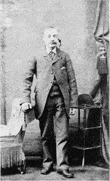
Irish Nationalism, Photography, and Industrialization
NATION, NATIONALITY, AND NATIONALISM, as Benedict Anderson proposes, “have all proved difficult to define let alone analyse” (12). However, while identifying the difficulty in qualifying what national identity is, his proposal suggests that it is “an imagined political identity” in which “the members of even the smallest nation will never know most of their fellow members, meet them, or even hear of them, yet in the minds of each lives the image of their community” (14). This formulation had a major impact on subsequent critical studies of nationalism and its formation. This text is also significant because it clearly identifies the way in which the growth of national identity was dependent on the mass distribution of information, made possible during the industrial revolution and the early Victorian period. The new industrial bourgeoisie, Anderson explains, came “to visualise in a general way the existence of thousands and thousands like themselves through print-language.” As a result, “in world-historical terms bourgeoisies were the first classes to achieve solidarities on an essentially imagined basis” (74).
This revelation has led critical studies on the emergence of Irish nationalism during the early nineteenth century to consider how dependent it was on mass-produced and distributed information. David Lloyd concludes, “nationalism is inconceivable except as a product of modernity” (1) while Joep Leerssen's study on the emergence of a popular conception of the past constructed in various literary forms explains how it was “unlike its eighteenth century precursor, patriotism” because nationalism “relie[d] crucially on an awareness that Ireland is distinct and distinctive, culturally individuated and discrete” (4).
The role literary representations played in the construction of an Irish identity during this formative period has received much critical attention. A number of texts, such as Leerssen, explain how this emergent nationalist discourse (in common with discourses in Britain and across much of Europe) was primarily designed to construct an exclusive/inclusive perception of nation.
However, because Ireland was colonized by Britain during this formative moment the history of such discourses is slightly more complicated than other parts of Europe as discourses of power, more commonly associated with Victorian colonial and imperialist culture, are also present. Edward Said explains how imperialized nations during this period were constructed not only in and through discourse “narrations” but also through “the power to narrate, or to block other narratives from forming and emerging” (Culture xiii). In Ireland this power to construct or block such narrations is in some respects unique. This is because Ireland's relatively developed economic and industrial position (in contrast to most imperialized nations during this period) allows narrations to be constructed and widely circulated from within two “opposed” positions and interests. For instance Leerssen's study explains how in popular Irish historical texts a “Gaelic-oriented cultural and historical self-image takes shape which is quite literally central to the Irish drive for self-determination” (4). A number of other studies identify the rise of British “narrations” which aimed to construct the Irish within imperialist discourses of power.1
See Lewis; P. Curtis; Liz Curtis.
This article will consider these two sets of discourses that have quite different objectives, despite the fact that both originated in the nineteenth century with the common aim of constructing a sense of Irishness. This article does not concern itself with literary representation, as has been the tradition, but rather with the earliest form of modern mass-produced visual and mechanical information – the photograph. In this respect this article attempts to add a new dimension to the history of the visual construction of an Irish national identity, a history that until now has concentrated on the moving image2
See Rockett, Gibbons, and Hill; Pettitt; McLoone, Irish Film.
or television.
3 See McLoone, ed.; Kelly and O'Connor.
This turn to photography is, I believe, crucial for two reasons. Firstly, photography was the process that fully facilitated the mass production and circulation of cheap pictorial representations. Initially, as is the case here, artists and later trades men took direct gelatin copies from the surface of the daguerreotype to produce lithographs. The later refinement of Fox Talbot's negative process allowed unlimited reproductions to be made from an original negative, removing this intermediate process. It was this removal of a human artistic intervention that came to establish the photograph as different than the pictorial representations that proceeded it. The chemical and mechanical action of the photograph allowed it to function as an authentic trace of reality. As Barthes notes “the denotation of the drawing is less pure than that of the photograph” (43). These two factors, as noted by Benjamin, allowed “the technique of reproduction” to “essentially reach a new stage” (221). The second point is that because photography was establishing itself in Ireland during the 1840s it develops not after, as is the case with the moving image, but in tandem with those first cultural constructions of an imagined identity of Irishness.
Photography in the form of the daguerreotype was invented in 1839 by Louis Daguerre, a French maker of dioramas. In Ireland, England, and across Europe photographic portraiture quickly became its major commercial use. It is estimated that during this period more than ninety percent of daguerreotypes were portraits (Tagg, Burden 43). Significantly a number of critically informed studies on the emergence of photography across Britain, Europe, and America have revealed the powerful role this new process played in the organization of social identities. Such studies have shown how early photography was revered as a mechanical and thus objective means of documentation, and was quickly utilized for the mass production and distribution of discourses on difference. These discourses not only worked to classify others in terms of race,4
gender,
5 class,
6 See Tagg, Burden; Sekula.
and disability,
7 but also to form a cohesive sense of self for the rising middle class.
8 See Linkman; Tagg, Burden; Hamilton and Hargreaves.
John Pultz explains how, as a mechanical process, the photograph complemented both the self-perception of the rising middle class as modern and “machine like.” Ideologically, it was also, “the perfect Enlightenment tool, functioning like human sight to offer empirical knowledge mechanically, objectively without thought or emotion” (9).
Commercial photography in both England and Ireland began in the early 1840s. In 1841, the industrialist entrepreneur, Richard Beard, purchased a patent that restricted the setting up of daguerreotype studios in England, Wales, and “Her Majesty's Colonies and Plantations Abroad.” It is now generally accepted that this sole ownership severely restricted the development of photography in these areas (Bernard and Heathcote 313–29). However, because the patent did not extend to Ireland (or Scotland) by the mid to late 1840s a number of Irish cities, while still industrially underdeveloped in comparison to their counterparts in England, already had daguerreotype businesses in operation.
Photography in Ireland developed quickly and Chandler and Walsh note that starting in 1840 instruction in the art of daguerreotype was available at the Dublin Mechanical Institute (4). In Dublin the first commercial studio, opened in the Rotunda in Upper Sackville Street in October 1841, almost certainly set up by Beard to expand his business into the Irish market (6) but sold to a French man by the name of Dubreui in 1842. Over the next four years a limited number of studios opened in Dublin and in common with studios across Europe these businesses catered to the rising demand for daguerreotype portraits from the Dublin middle class. However, because studios in Ireland were not restricted by Beard's patent, competition for a relatively small upper class clientele was fierce, resulting in early price wars waged in the Dublin press. Chandler and Walsh (9) note how a price war between the two main Dublin photographers in 1845 resulted in one going out of business. In this respect any new business setting up in Dublin was forced to seek out new markets in a manner slightly different from comparable practices in England and Wales. One of these new businesses became the commercial production of “curiosities.” In England it was the demise of Beard's patent and the introduction of a new type of photograph, the carte de visite, that allowed “the growth of an important retail trade in photographs of the notable and notorious figures of the day” (Linkman 36).
In Ireland this pressure on commercial photography to expand into new markets is significant because it takes place at the very same moment that Irish nationalism as both a popular cultural identity and a political movement begins to emerge and take shape, and it is this convergence that is to be investigated here.
The First Nationalist Hero: O'Connell and Photography
THE FIRST MODERN FORM of organized Irish nationalism is usually cited as the movement led by Daniel O'Connell. A detailed explanation of this movement is beyond the remit of this article. However, to summarize, O'Connell is generally seen as a reformist rather than a revolutionary. His initial goal was to have Catholics admitted into the British parliament, which was achieved in April 1829 with the Catholic Emancipation Act. His movement was widely perceived as representing the aspirations of the growing middle-classes who, far from wanting any revolutionary change, called for a liberalization of the relationship between Britain and Ireland through the reinstatement of an Irish parliament.
The period of the mid to late 1840s is generally accepted as a turbulent moment in the establishment of secure capitalist relationships of power across Europe in the face of revolutionary insurrection and opposition from many quarters. In Ireland the British government's handling of the Great Famine fuelled the growth of more revolutionary opposition to British rule, and Irish nationalist movements began to emerge that placed themselves in direct opposition to the reformist politics of O'Connell and his movement. This was exacerbated when, in 1846, O'Connell made a verbal rejection of violence a prerequisite for membership into his organization, the Loyal National Repeal Association. In response, a small group of middle class intellectuals left to form a more revolutionary organization, calling themselves The Young Irelanders. As these different forms of Irish nationalism begin to emerge and vie for dominant position, the newly invented process of photography was quickly employed to distribute information about them.
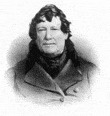
The first photographic image directly related to the rising nationalist movement in Ireland is a daguerreotype of Daniel O'Connell and it is significant that this image gained its commercial value precisely at the moment that these more radical forms of Irish nationalism began to gain popular ground in the late 1840s. It is most probable that Richard Beard9
In the mid 1840s Beard begun to experience increasing competition and investigated new markets. Recognizing the rise of public curiosity in the rich, famous, and different, Beard began to sell photographic images. This interest in purchasing photographs of those who could afford to have their images taken probably originates from the practice of displaying daguerreotypes in shop windows as a means of promotion.
took the portrait of O'Connell in his studio at the Polytechnic Institute in London earlier in March 1844 (Chandler and Walsh vii). However it was not until O'Connell's death in 1847 that this image was made available for widespread public sale as a lithographic copy. Using Irish dealers, adverts were placed in journals associated with the rising nationalist movement in Ireland and America – the
Nation, the
Pilot, and the
Kerry Examiner. On March 19, 1847, the
Nation ran the following advert: “Portrait of Daniel O'Connell ESQ. Daguerreotype copies of an inimitable daguerreotype of the late Liberator with which is presented gratuitously a lithograph portrait of a large size by an eminent artist” (vii). Moreover, as was the practice of the day, the image could also be adapted for lockets, brooches, or rings and hand colored for a considerable price. The lithograph was a traditional head and shoulders shot of O'Connell (
Figure 1).
Richard Beard (?), Daniel O'Connell, 1844. Lithograph from daguerreotype. Courtesy of the National Library of Ireland.
This image is now held in the archive of the National Library of Ireland and catalogued as a likeness of O'Connell. However, in order to begin to understand the social significance of this image it is necessary to consider its place within the rising discourses on Irish nationalism during this period. Here my approach to such historical photographs draws upon the work of John Tagg who argues that “[H]istories are not backdrops to set off the performance of images. They are scored into the paltry paper signs in what they do and do not do, in what they encompass and exclude, in the ways they open on to or resist a repertoire of uses in which they can be meaningful and productive. Photographs are never ‘evidence’ of history; they are themselves the historical” (Burden 65).
This lithograph of O'Connell was probably the first commercial representation of a known Irish nationalist leader and I would argue that its commercial success was bound up with the desire of the purchaser to buy into the identity that it represents. Tagg explains how, during this period, photographic portraits of the bourgeoisie met two significant desires. Principally it was a “sign whose purpose [was] both the description of an individual and the inscription of social identity” (37). This image is a daguerreotype taken by a highly respected photographer who also photographed the British Royal family. The visual description is recognized as O'Connell – highlighting bourgeois individualism, respectability, and masculine heroism, while the wider social identity is, I would propose, a respectable and anti-violent Irish national identity. The high price of such a memento would undoubtedly have restricted it to the rising liberal middle-classes. In this photograph O'Connell's dress, dignified pose, and stern features all contribute to how the audience/purchaser was to read not only O'Connell, but also the movement he stood for. Linkman explains how such photographic conventions of pose in this period functioned to confirm that “well bred people did not indulge in any public expression of emotion, and a serious expression suggested you took yourself seriously and encourage others to do likewise” while “a calm expression also implied self-control” (43). In this context it could be argued that the expressionless pose of O'Connell here not only signifies his personal control over emotion as a member of the civilized upper class, but also the superior and respectable position of the type of Irish nationalism his movement represented. This could be mobilized to set him and his movement apart from the emerging revolutionary groups, such as the Young Irelanders, whose use of violence (emotion) was taken as an indication of their lack of self-control. Furthermore such conventions also helped to initiate a discourse, particularly evident in cartoons (see L. P. Curtis), that attempted to explain the violent actions of Irish nationalism with pseudo-Darwinian discourses on the Irish as less civilized and thus unable to control their violent animal instincts.
Here we can see that a historically located reading of this photograph can reveal how it was contributing to public debates on how the nationalist struggle for self-determination in Ireland was to be understood. The photograph represents O'Connell as a hero and the particular social identity of Irishness, bought into by the purchaser, was one of passive middle-class male respectability. It is worth noting that another daguerreotype of O'Connell was also in commercial circulation during this period. However this image, taken by the French photographer Dueril, does not seem to have been as popular. This was, I would suggest, because it had been taken of O'Connell while he was being held in Richmond Bridewell Jail (Chandler and Walsh vii) and thus signified active criminality.
We can also witness the emergence of a gender-based discourse in this photograph. During this period, modern forms of communication were closely associated with new technology and the outside masculine world of communication and politics. This photograph of a modern male nationalist leader was also implicated in laying the roots for the heavily gender-based perception of Irishness that was to fully emerge in the latter part of the nineteenth century. Photography was employed as a modern form of mass communication, thus visually connecting Irish nationalism to the outside world of politics. Such meanings operated in sharp contrast to emergent ideologies on correct femininity that began to construct femininity as both traditional and natural, set in the morally superior space of the home and the family.
To summarize, this daguerreotype, and the hundreds of lithographic copies produced from it, were read by the purchaser and viewer within the constraints of the social and cultural conventions of the period. These worked to construct O'Connell and the movement he represented as innately superior, civilized, respectable, and unemotional (anti-violent), a national identity that could literally be bought into by the wealthy purchaser.
Significantly, at the very same historical moment, another series of photographs of nationalist leaders was also being put into public circulation. However, these have a set of slightly different meanings. In 1849, a similar series of head and shoulder daguerreotypes of a number of the leaders from The Young Irelanders were produced and commercially sold. This movement, as already noted, had a different position on challenging British rule in Ireland. O'Sullivan explains that “the Young Irelanders were a small group of Irish intellectuals who were inspired by the outbreak of revolution in France in 1848 and demoralised by O'Connell's compromise of the Repeal Issue and the British ministry's handling of the Irish famine to take Ireland into revolution” (x). Significantly, while still being a movement led by a small group of middle-class intellectuals, its base of support began to widen. Brendan O'Cathaoir's study confirms how the movement's “call to arms” for Irish people to rise up in revolution became increasingly directed at the poor rural and new small urban working classes.
The Young Irelanders and Photography
AS THE USES of photography moved into a cheaper, less exclusive market the respectability attached to it began to diminish. In 1845 a Professor Leon Gluckman opened a new photographic studio on the top floor of Lower Sackville Street in a respectable area of Dublin. Gluckman quickly made his mark on the photographic market in Dublin. He advertised daguerreotype portraits at 12 shillings and six pence rather than the normal one guinea (Chandler and Walsh 9). Gluckman's commercial experimentation allowed him to recognize the potential of this more widespread opposition to British rule in Ireland.10
Importantly this movement was one in which Irish nationalism was not exclusive to Catholicism as was the case with O'Connell and its antisectarian nature no doubt made it more threatening to the British State.
In 1848 when the main organizers of the Young Irelanders were arrested and sentenced to death,
11 However, the British Government was fearful that their execution would make them martyrs (O'Cathaoir 104) and instead they were deported.
Gluckman seems to have obtained unprecedented permission to make and sell daguerreotypes of William Smith O'Brien and Thomas Francis Meagher, among others, while they were held in various jails (vii).
Because it was too expensive to reproduce daguerreotypes widely, Gluckman commissioned a well-known artist, Henry O'Neil, to make lithographic studies of the images for less affluent clients. These were mass-produced for public sale and, as was the usual practice of the day, these lithographs of nationalist celebrities were displayed in shop windows and advertised for public sale alongside other celebrities of the period. Thus these new, nationalist leaders began to slip down the social scale of representation to take their place alongside other celebrities or curiosities.
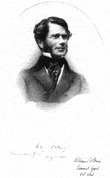
These lithographs, then, took the photographic discourse of nationalism into new areas. Their availability as a cheaper form, plus their display in shop windows began to shift their visibility from the educated middle class of O'Connell into the rural and urban lower-middle class and even in terms of viewing the images (in shop windows) the new urban working classes. Gluckman, among others, primarily sold head and shoulder lithographic copies of the individual men (Figure 2). In many respects these carry similar meanings to the O'Connell image and could also be inscribed with personalized autographs at an additional price (Chandler and Walsh vii).
Leon Gluckman, William Smith O'Brien, 1848. Lithograph from daguerreotype. Courtesy of the National Library of Ireland.
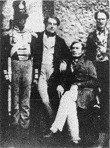
Also of interest is the existence of a number of albumen print copies from a lost daguerreotype photograph taken at the same time of William Smith O'Brien and Francis Meagher (Figure 3). This is not the traditional head and shoulders shot but rather a group photograph of the two men in prison, staged with the jailer and a guarding soldier. Who took it is unclear but as we can see, Gluckman's published lithograph portrait of O'Brien (Figure 2), is almost identical in pose to the group photograph so it seems highly likely that it was Gluckman who originally took this photograph. This photograph carries some quite different meanings to the head and shoulder pose. In this photograph O'Brien and Meagher are criminalized – set in the prison location with signs to indicate this: the jailer, the key, the soldier. It is a quite unusual composition for the period and has similarities to the slightly later work of Roger Fenton who photographed the Crimean War in 1855 and is often cited as the first photojournalist. In this photograph Gluckman has employed various visual devices in an attempt to construct a narrative connected to a recent event. However, this visual story of the arrest and punishment of the Irish rebels is complicated by other codes and conventions at work within the photograph. There are a number of signs in it that work against the criminalization of Irish nationalism. For instance, both men are given social status over the soldier and the jailer through a number of visual devices. They are posed center frame with the jailer in the background. O'Brien is sitting in a dignified pose while Meagher stands behind him. Linkman explains that during this period the “full length and standing pose … carried connotations of class and high social status” (Linkman 51). Both men are given individuality by wearing their own middle-class clothes while the soldier is denied individuality (indicating a lower class position) by being posed in his uniform. O'Brien's social status is further confirmed by the fact that he is sitting signaling his superiority.
Leon Gluckman (?), Thomas Francis Meagher and William Smith O'Brien in prison with soldier and jailer, 1848. Albumen print from daguerreotype. Courtesy of Kilmainham Gaol and Museum, Dublin.
Here once again an underlying, hidden message begins to set up Irish nationalism as primarily a masculine concern. During this period the established conventions of portrait photography made sure women were posed in a dignified manner connected with emergent perceptions of respectable and passive femininity, while “men, by contrast, are allowed greater assurance and assertiveness, crossed legs, elbows at angles” (Linkman 46). This is the pose of both O'Brien and Meagher. However, in this photograph the message of middle class male respectability is not quite as straightforward as that in the photograph of O'Connell. This is because the location in prison along with other visual clues, such as the jailer's key and the soldier's military uniform, begin to introduce the idea of this nationalist movement as a military threat and the men's actions as criminal. (While this staged shot does not appear to have been popular, what it did reveal was Gluckman's foresight in understanding emerging photographic conventions. Another version of this photograph exists. However, this is a fake taken in the 1860s and probably sold after the death of O'Brien. In this photograph the visual devices that Gluckman included are now overemphasized. In the fake the jailer is placed center frame and the key is much larger.)
In this photograph we can see two sets of signs, one that signified the respectable leader and hero, the other the common criminal. These paved the way for two styles of photography which, as I hope to reveal, were both implicated in the construction of Irish nationalism during the mid Victorian period. The expensive head and shoulders shots, as well as the unconscious conventions employed in Gluckman's staged journalistic shot, all begin to visually separate the educated leaders as heroic individuals from the base of Irish nationalism that was shifting towards the rural and urban poor. Significantly Gluckman's practices may also have encouraged the use of photography in a prison context, a practice that, as we shall see, became central to the widespread criminalization of Irish nationalism. In this respect the Young Irelanders and their accompanying photographic representations can be interpreted as a transition from the class respectability of O'Connell to the unrespectability of the next organized display of opposition to British rule in Ireland – the violent Fenian uprising of the urban and rural poor in 1867. Gluckman's early recognition of the rising public interest in photographic representations of nationalists seems to have proved profitable. In 1850 he moved to much larger premises at Upper Sackville Street.
During the 1850s, photography underwent a number of technical developments. In 1851 Frederick Scott Archer developed the wet plate collodian process that soon overtook the slow and cumbersome daguerreotype. Public interest and knowledge of photography increased as a result of a number of key public events. In London, the Great Exhibition of 1851 promoted a number of different types of commercial photography including tourism, tableaux, curiosities, and landscape. In Ireland a smaller version of the Great Exhibition was held on Leinster Lawn. This exhibition, which included the work of Gluckman, also promoted different types of photography.
However, it was not until 1854, when a photographer from France, Disderi, patented a new process (which allowed for several small negatives on one plate) that the real potential of photography as a means of mass communication was fully realized. This process revolutionized the commercial distribution of photography by introducing a small post card size print commonly called a carte de visite. Photographic images could now be mass-produced for a small cost. From 1850 to 1860 approximately twelve photographers practiced in Dublin; whereas from 1860 to 1870 this number increased to over sixty (Chandler and Walsh 28). Photography proliferated and significantly changed not only the status of photographic portraiture, by opening it up to the masses, but also its potential uses. In Ireland once again the developmental history of photography is slightly more advanced than that of England and these changes facilitated a quite different use of photography during the Fenian Rising of 1867.
The Fenian Crisis of 1867
IN 1856 James Stephens, one of the exiled Young Irelanders, returned to Ireland and founded a new organization, the Irish Republican Brotherhood (IRB), though they were more commonly known as the Fenians, a name taken from a mythical legendary warrior band, Na Fianna. This organization utilized new print technology to facilitate the creation of a more widespread imagined identity of Irishness, one that was closely connected to opposition to British rule. Furthermore, through the use of such technology this could now be extended beyond the actual confines of a country. In 1863 Stephens started the weekly paper the Irish People. John O'Leary came back from London to edit it and O'Donovan Rossa was business manager while John O'Mahony headed an American branch of the Fenian movement. Interest and commitment to Irish nationalism was widespread and the Fenians recruited widely from both within the American and British armies,12
A John Devoy was responsible for “seducing the militia and other British Soldiers from their loyalty to the Queen” (Kee 21).
where the Irish population had grown substantially through emigration. Between the years 1863 and 1864, numbers within the movement were to increase particularly from within “the urban and rural poor” (Kee 23). This nationalist movement's connection to revolutionary politics and its growing support from within the urban and rural poor, meant that Irish nationalism was, for the first time, seriously perceived as a threat to English rule in Ireland. One study estimates that between 1864 and 1865 there were up to 80,000 Fenians operating in Ireland and Britain (Moody 23). Furthermore, it was also feared that a revolution in Ireland would impact on English civil unrest. Large numbers of Irish emigrants now lived in the major industrialized cities. Swift and Gilley note how “the Irish population rose from 291,000 in 1841 to 520,000 in 1851” and “by 1861 the Irish represented 5% of the total population of London” (1). In England the press both responded to and constructed this fear of Fenianism. Kee notes how by September 1865 there was “talk of Fenians everywhere” (23) in the Irish and English press. In England the Fenian's failed attempt to blow up Clerkenwell Prison in London (resulting in the killing of several civilians) fuelled this fear.
Towards the end of 1865 the British Government moved to quash the movement. It closed the offices of their paper, the Irish People, and arrested all the staff. Stephens was arrested two months later but escaped back to London with the infamous Colonel Kelly. Stephens went on to America while Kelly stayed on in London and control of the movement in Ireland was handed over to John Devoy. Further action was taken in February 1866 when the British Government suspended Habeas Corpus which allowed for the widespread arrest of suspected Fenians. During 1866 and 1867 hundreds of men were arrested and held without trial in Irish jails.
Photography and Control, Ireland, and the Fenians
A CRITICAL INVESTIGATION of the official and institutional uses of photography during the mid to late Victorian period has been pioneered in the work of John Tagg. His approach draws upon the theories of Foucault, Gramsci, and Althusser, all of whom were concerned with theorizing the formation of power within this emerging industrial (capitalist) state. Tagg explains how during this period of social unrest, the pressing problem for capitalist industrial relations was how to “train and mobilize a diverse work force while instilling docility and practices of social obedience within the dangerously large urban concentration which advance industrialization necessitated” (Photography and the Growth 11). In Ireland this pressing problem was exacerbated by the rise of a revolutionary nationalist movement that was no longer based in the liberal middle class but within the urban and rural poor. However the solution was the same. This has been identified by theorists such as Foucault as the creation of a constellation of new institutions (medical, educational, scientific, religious, and judicial) that could intervene with and control working-class life. These institutions offered an illusion of neutrality by mobilizing various scientific discourses from which they could appear to be removed from the sites of power, politics, and the government.
As photography's economic base shifted away from the middle class towards the working class, its status changed in two ways. The photographer shifted from “artist to tradesperson” (Linkman 36) while the camera's recording powers moved away from the honorific to a means of identification and control. Tagg notes how photography quickly became implicated in these new institutions and this “spreading network of power” and confirms that “[I]t is into the workings of these institutions that we must pursue photography if we are to understand the power that began to accrue to it in the later half on the nineteenth century” (Burden 66). This is also the case with photographs of Irish nationalists.
Because of Ireland's slightly different photographic history, criminal photography was installed in the Irish prison system earlier than in Britain. Little has been published on this history and I am indebted here to a currently unpublished thesis by Dr. Pedar Slattery for much of the following factual information. He explains how prison photography in Ireland begins not with the Fenians but with ordinary convicts. It was pioneered by three men: John Letaigne (Inspector General of Prisons), Patrick Joseph Murray (Registrar of Habitual Criminals), and Sir Walter Crofton, a man who held the then relatively modern view that convicts were redeemable through strict methods of treatment. He saw photography as a crucial part of the establishment of a professional prison records system that could classify and grade the prisoner, promoting it as part of a package in the Intermediate Prisons. Here prisoners could be prepared for release into a trade or into farming and photography would be employed as a means of surveillance of the prisoner on release. From as early as 1857 he proposed that “photographic likenesses of convicts” should be taken (Slattery 224–28). While none of these early records have survived, evidence does exist of such uses of criminal photography from the 1860s onwards.
In 1863 when the Select Committee on Prison Discipline sat, the role of photography was discussed. Crofton, now retired, gave evidence and extolled the power of photography as a means of surveillance and control and explained how in Ireland every man who entered the convict prison was photographed and, if convicted a second time, the photograph was sent to the Head of Police. Astutely he also recognized the internalized power the photographic image could hold over the individual who knew he could now be identified (Slattery 231). The Committee recommended the extension of photography to prisoners in English jails.
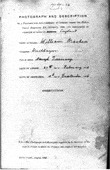
Because photography and criminalization already had a quite well-established relationship in Ireland prior to the Fenian Rising of 1867, it is not surprising that Crofton contacted Lord Nass in 1867 with a six-point plan on how photography could be used as a surveillance device in the Fenian Crisis (Slattery 234). Lord Nass passed this on to the Prison Office – with an appended question: “what has been done about photographing Fenian prisoners?” A reply explained that while convicted Fenians could be photographed as ordinary criminals, they had no authority to photograph the hundreds of untried political prisoners arrested under the Habeas Corpus Suspension Act. Until then it seems photographs were only taken of Fenian prisoners when they were released on the condition that they leave Ireland, usually for America. This condition is printed on surviving discharge papers although in some cases England or Australia has been added by hand (Figure 4). These papers and photographs were sent to the Under Secretary and circulated across various powerful sites, the Home Office, the Irish Constabulary and Dublin police, English prisons, the Irish Office in London (Slattery 235). This practice was initially employed to track that individual to make sure he did not break the conditions of his release by returning to Ireland or England. However, quite quickly the power of the photograph as a means of identification was recognized. In January 1868 Lord Mayo requested “photographs of every Fenian prisoner to be sent to the Irish Office” (F.F. 2019R). In Kilmainham Gaol, the Deputy Governor, Mr. Flewitt, who received an extra payment of ten pound, undertook this task (F.F. 2019R). Flewitt also employed photography for other purposes; for instance, he not only sent photographs of the infamous Col. Kelly to England, America, and the Irish Office, but also copies of incriminating political cartoons from the Weekly News and photographic copies of Col. Kelly's handwriting as “true specimens” (F.F. 2019R). This distribution of visual information also came from British jails to Ireland. In December 1867, Whitehall sent the Dublin police photographs of four Fenians. A reply in January 1868 remarked that these men were “perfect strangers” but with an added note that the photographs would be put in the photograph book for future reference (F.F. 118R).13
The potential of photography as a means of identification was quickly realized in preference to long hand written descriptions. A letter in 1864 gives a lengthy description of O'Donovan Rossa which was clearly much less helpful than a single photographic image (F.F. 60).
During the height of the Fenian Crisis responsibility for photographing the Fenians, as noted above, moved from the commercial High Street photographer who had been employed to come into the prison,
14 This is quite important, as prior to this moment the relationship between commercial interests in the criminal as a curiosity had meant that convict photographs taken by outside commercial photographers had in some cases found their way into public sale. Slattery records how one photographer wrote to the governor of Mountjoy complaining about another commercial photographer explaining that “copies of the negatives of the prisoner photographs were in circulation through the city” (228).
to a prison employee. This change allowed prison photography to develop as a particular genre in which its standing as an objective, official document would not be confused with the genre conventions of commercial portraiture. During the early period, as already noted, untried Fenians could still refuse to be photographed. However in 1867 the Irish Government requested that the Prison Office supply photographs of all untried prisoners “who are now or at any time have been in custody under [IG's] [Excellency] warrant.” Over the next few weeks letters chart this process. On January 9, 1868 a total of 374 photographs and descriptive particulars of untried prisoners were sent to Dublin Castle. On the 15th the Prison Office forwarded to the Under Secretary further descriptive particular and photographs of 35 additional untried prisoners (F.F. 407R) and on January 20th an additional 115 were sent with the comment “the whole is now complete” (F.F. 550R). Thus by the late 1860s a vast body of official information had been collected on those individuals identified as Fenians.
15 It is acknowledged that many of these men were not Fenians and many denied being so.
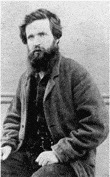
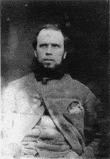
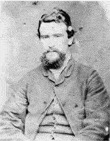
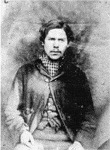
These were officially titled the Fenian Files and are now held in the Public Records Office in Dublin. While the County prisons were also processing hundreds of prisoners arrested under the Habeas Corpus Suspension Act and in some cases these prisoners were photographed, the majority of photographs held in the Fenian Papers are from the Dublin prisons, Kilmainham and Mountjoy. The archive is made up of hundreds of discharge papers. These contain descriptive information (on the original convict style form with the word convict scribbled out) such as name, age, status, occupation, as well as recording where the prisoner was going upon release. The majority also include a cheaply produced
carte de visite of a head and shoulder or upper body shot, although a few are a full body shot which, I would speculate, were taken by outside commercial photographers who had continued with the commercial portrait conventions of the period (
Figures 5 to
8).
Discharge paper for William Bracken, 1866. Issued by the Prison Office, Dublin. Courtesy of the National Archives, Dublin [F.P. 27].
Francis Barry, aged 27, discharged from Dublin prison, 1867. Carte-de-visite photograph. Courtesy National Archives, Dublin [F.P. 12].
Thomas Barry, aged 20, discharged from Dublin prison. Undated carte-de-visite photograph. Courtesy of the National Archives, Dublin [F.P. 16].
Thomas Barry, aged 29, discharged from Dublin prison. Undated carte-de-visite photograph. Courtesy of the National Archives, Dublin [F.P. 14].
William Bracken, aged 25, discharged from Dublin prison, 1866. Carte-de-visite photograph. Courtesy of the National Archives, Dublin [F.P. 27].
The expensive and self-produced daguerreotypes of O'Connell and the Young Irelanders were part of an earlier honorific tradition of photographic portraiture, signifying the right of these individuals to promote themselves as heroes of a heroic cause. In sharp contrast, the photographic representations of the unknown individuals named as Fenians were controlled by the British State and distributed across a set of new and powerful institutions. They have a very different set of meanings and effects. For as Tagg has noted on the emergence of this type of photographic portrait during the mid-nineteenth century, “the political axis of representation” had now been “entirely reversed. It was no longer a privilege to be pictured but the burden of a new class of the surveilled” (59).
The invention of photography could facilitate a power over the criminal individual that was unimaginable before. This is because the indexical nature of photography means that a photograph is truly connected to the person it depicts. For indeed beyond the stylistic codes of pose, lighting, dress, etc., the process of making a photograph traces the visual differences of people. However, this relationship to individuality is complex because while, on the one hand, it confirms it through the person's undeniable difference to everyone else, on the other, individuality is lost as the image comes to represent the person and has discursive power about him and upon him beyond his control. In this sense a photograph allows you to say, “I know you, I have seen you before,” without ever having met the person. In the context of Irish nationalism and its history of resistance this shift was particularly significant. This is because anonymity and secrecy had been central to previous forms of resistance to British rule in Ireland. Secret societies had existed for centuries, the most well known being the Ribbon Society formed in 1826 where members knew each other only through the wearing of a ribbon (Kee 3). Indeed in the records, accompanying these photographs, the crime of Ribbon Man is often cited as the reason for arrest and deportation. There is no doubt that the prisoners' knowledge of the photograph's ability to capture the signs of the individual challenged this powerful tradition of anonymity. In real terms the photographs also severely restricted the movement of Fenians. For instance Kee notes how Stephens, a well-known Fenian, operated under many different aliases, Power, Watson, Kelly, Wright, Daly (21). Photographs dispersed across a range of institutions made the continuation of such practices almost impossible.
However, while the Fenian photographs clearly hold power over the individual by tracing what made him different than everyone else, they were also implicated in the construction of a discourse of sameness. Placed together, and named as the Fenian Papers, they began to construct a vast body of official information on this group of people. Alan Sekula's research on the early uses of photography in the American penal system reveals how the “truth” value of the photographic process merged with theories of physiognomy and phrenology that “shared the belief that the surface of the body, and especially the face and head, bore the outward signs of inner character.” This gave it the power to “perform a role derived, … from the imperative of medical and anatomical illustration” (347). Thus “prison photography was used to both establish and delimit the terrain of the other, to define both the generalized look – the typology – and the contingent instance of deviance and social pathology” (345). Sekula also illustrates how the construction of a working class criminal type functioned to displace the root problems of crime away from poverty onto biological class deviancy. This is also the case with criminal photography in both Britain and Ireland during this period. However, because the group of “criminals” here is connected to a nationalist movement, Irish nationalism, this classification is not just one about criminal behavior but also Irish national or racial behavior. McClintock's study on imperialist discourses during this period explains how the term race was sometimes used “to denote biological ethnicity or sub-group within nationalist belonging; the English race say compared with the Irish race.” She notes that while the skin color of the Irish proved problematic for the “pseudo-Darwinian imperial discourses of this period, the popular assumption after the 1860s was that certain physical and cultural features of the Irish marked them as a race of ‘Celtic Calibans’ quite distinct from Anglo Saxons” (52). The significance of this period in constructing a “distinctive Irish stereotype” is confirmed by L. P. Curtis who explains how the 1860s served “as a pivotal point in this alteration of the stereotype” which he explains served to secure “the conviction in England and Scotland that the Irish were inherently inferior and quite unfit to manage their own affairs” (29). I would propose that the “official information,” and in particular the photographs, held within the Fenian Papers were implicated in this racial construction. (Indeed it is probably possible to plot how a particular style of beard recorded in these photographs emerges as a sign of Irishness in Victorian caricatures of the Fenians.)
The photographs of ordinary Fenians, distributed across a number of powerful sites, could construct a visual difference in a manner that was taken as impartial, scientific, and objective. The photograph could verify the difference of Irish people in a factual manner that was mobilized to explain their rising opposition to British rule (indeed as L. Curtis has pointed out, it is one that is still employed to explain nationalist violence in contemporary times). These photographs depict the rural and urban Irish poor in a strange style of dress; they look like ruffians with an unsmiling and blank confrontational stare, messy hair, and dirty faces. In cultural terms, for the middle- and upper-class Victorian viewer, such signs signified a threat to social and cultural stability in a number of ways. Their longish unkempt hair signified both a lack of bodily control and disrespect for the social conventions of middle-class culture. Their tattered clothes identify their class origins. The cheap style of photography which was rapidly becoming associated with those other deviants of Victorian society – the rural poor, the working classes in particular women, and other races – had the effect of connecting the Fenian movement and Irishness with rising fears over the disruption of the natural social order by these deviant groups of people. Finally, their dirtiness also signified on a number of complex levels in which the dirt and contagion of their class (the Great Unwashed) merged with dominant racist discourses on blackness (the unclothed and uncivilized).16
Such signs are repeated over and over in these photographic images and they began to construct a set of signs that come to stand not only for the Fenians but also in this context the Irish race as a whole. (In this respect the common use of the term “Fenian” in contemporary Northern Ireland as an insult implying an inferiority of race reveals its historical roots.) As Sekula has noted, it is through this repeated set of signs held in the photograph archive that “individual peculiarities disappear and the common humanity of a low type is all that is left” (370). Here we can see how the collection of such information during this period carries a complex set of apparently contradictory messages. The photograph of the individual attached to the case file functions to displace the root cause of violent opposition by focusing on an individual case history. On the other hand, once all the files and their photographs are placed together, they work to construction a group identity used to explain the opposition to British rule by signifying the group's sameness as a deviant low type.
It is during the 1860s that battles over the representations of Irish nationalism can be seen to be taking place within the mass production and circulation of photographs. The movement itself continued to employ photography to promote its cause – one source of such representations. Supporters could still purchase photographs of the middle-class leaders from shops and through newspapers (although such practices had to be curtailed once the Habeas Corpus Suspension Act was introduced when you could be arrested for possession of photographs and convicted as a Fenian [Slattery 97]). These photographic representations continued with the honorific tradition previously established in the photographs of O'Connell and the Young Irelanders. Another photographic representation originates from within the powerful institutions of the state. There is also an interesting relationship between these two types of photographs. In December 1865 the Nation advertised photographs of the state prisoners (those arrested when the Irish People was closed). These included not only leading Fenians such as O'Donovan Rossa but also the spy or informer Pierce Nagle (Slattery 96). Nagle was not a well-known Fenian and it is unlikely that a promotional carte would have existed of him. It is therefore possible that the photograph offered for sale originated from elsewhere, perhaps from within the Prison Board.17
This points to the possibility that Prison Board photographs may have also found their way into public sale and may well have been purchased by supporters of the cause. I hope to return to this in future research. Here is could be argued that they facilitated what Foucault has referred to as a reverse discourse (101) in which their criminal imagery was read differently.
Furthermore, slightly later practices reveal a direct cross over when promotional
cartes were purchased from the Dublin photographers' shops for the police files. This is the case with a photograph of Bob Kelly, “the assassin” (
Figure 9), whose photograph is recorded as having been purchased from a Dublin shop (F.F. 246). Here the two discourses get mixed up and the state's use of promotional photography for identification purposes serves once again to highlight, even in the archive, the difference between the middle-class leader and the common criminal.
Bob Kelly, “the assassin,” issued by A. Lesage, Lower Sackville Street, Dublin. Undated carte-de-visite photograph. Courtesy of the National Archives, Dublin [F.P. 246].
To conclude, then, in the early-and mid-Victorian period two styles or types of photography can be seen to emerge which were implicated in the construction of an Irish identity during its most formative moment. Both are concerned to construct an identity of Irishness that is being imagined in relation to Britishness and British rule in Ireland. However, while both types of photographs appear on the surface to have quite different objectives – one used to identify the subject with a positive, one a negative – the role they actually played in the construction of a shared identity of Irishness is far from straightforward. The mass production of commercial images of Fenian leaders from within the movement allowed the individual to identify with and indeed buy into a subject position premised on respectable Irish opposition to British rule. However, as I have revealed, the subject position of Irishness on offer here was heavily coded to be both middle class and male. The other use of photography that emanates from the state was employed to capture and construct Irishness in order to act repressively upon it. If we are to fully understand how photography was implicated in the construction of a common and shared Irish identity during the Victorian period it is not just the self-produced promotional images that we need to consider, but also those produced and controlled by the British state. It is difficult to establish how widely these state-produced photographs were circulated beyond the official institutions and organizations I have outlined above. In order to appreciate the role they may have played in the formation of a shared identity of Irishness they need to be seen as part of a more widespread institutional discourse on criminality, class, and racial/ethnic difference. Here the objective recording of facial differences became connected to other theories on natural difference promoted through the new sciences of Physiognomy and Anthropology. Importantly, as has been identified in a number of studies,18
See Tagg; Ryan; Gilman; Hamilton and Hargreaves; Mclintock; Said.
these persuasive and powerful discourses soon spread beyond the institutional environment into areas of popular culture and entertainment. In the Irish context L. P. Curtis, as already mentioned, explains how these institutional discourses began to influence representations of the Irish rebel in English comic weeklies and cites the 1860s as the key moment in which, “Paddy began to look like the off spring of a liaison between a gorilla father and a prognathous Irish mother; in short, more like a monster than a man” (37). This shift in popular visual depictions of the Irish is also identified by Fintan Cullen in his reading of Ford Madox Brown's painting
Work 1852–63 (139–41). Cowling's study on how Victorian artists draw upon these anthropological findings acknowledges that the Irish as a “type so distinctive was bound to interest the modern-life artists” (128). In this respect during the 1860s and into the 70s, visual signs that seem to identify the Irish and British as essentially different moved beyond the institutions into popular representations. While the Fenian photographs may not in themselves have had a popular circulation, their standing as a scientific and objective record of the Irish nationalist criminal facilitated, as I have suggested above, the emergence of other more popular discourses that aimed to construct the Irish as essentially visually different. Taking this into account it may be possible to argue that these state-produced photographs were equally implicated in the construction of a shared identity of Irishness. While the photographs of the nationalist leaders promoted a rather exclusive discourse of middle-class, male heroism and individualism, the state-produced photographs facilitated the construction of a discourse of sameness that came to signify the nationalist (Irish) criminal/revolutionary. Somewhat ironically, in the following years, it was this very discourse on the essential sameness or uniqueness of being Irish that was to become the rationale for the much broader and widespread movement of cultural nationalism in Ireland that came to define a shared Irish cultural identity. In this article I hope to have shown how a critical investigation of very early Victorian photographs of Irish nationalists reveals a complex relationship between two different styles of photography. These appear on the surface to be in direct contrast to one another, but in fact their meanings were intertwined in a manner, I would suggest, that allowed both to contribute to the formation of an identity of Irishness.