





Introduction
Epidemiological and experimental evidence supports the developmental origins of health and disease (DOHaD) framework, Reference Gluckman and Hanson1,Reference Silveira, Portella, Goldani and Barbieri2 in which prenatal nutritional adversity can lead to long-lasting metabolic alterations across the life course. Reference Hales and Barker3 Individuals exposed to impaired fetal growth or prenatal undernutrition show increased risk of central adiposity, insulin resistance, and glucose intolerance in adolescence and adulthood, Reference Meng, Lv and Yu4,Reference Basu, Epure and Rios-Leyvraz5 particularly when later-life environments are energy rich. These observations are mirrored in animal models of gestational undernutrition, including maternal protein restriction paradigms that reliably induce persistent changes in adiposity, insulin signaling, and glucose homeostasis in offspring. Reference Alejandro, Jo and Akhaphong6,Reference Claycombe, Uthus, Roemmich, Johnson and Johnson7 This body of work highlights prenatal nutrition as a critical determinant of metabolic programming and provides a strong rationale for investigating postnatal factors that may modify or buffer these programmed effects. In this framework, gestational nutritional insults experienced by the mother (F0) can program offspring (F1) metabolic and behavioral outcomes.
Adverse prenatal environments, including intrauterine growth restriction (IUGR), have been associated with long-term alterations in offspring (F1) metabolic and behavioral outcomes. Beyond cardiometabolic risk, these exposures are linked to persistent changes in feeding behavior and reward responsivity. Reference Portella, Kajantie and Hovi8–Reference Scudine, Castelo, Hoppe, Portella and Silveira11 In human cohorts, IUGR and related markers of prenatal adversity have been associated with differences in food preference and reward-related behaviors, Reference Dalle Molle, de Mendonca Filho and Minuzzi12 including stronger preference for carbohydrate and fat-rich foods, Reference Barbieri, Portella and Silveira13,Reference Bischoff, Portella and Paquet14 altered impulsivity toward palatable rewards, Reference Silveira, Agranonik and Faras15 and heightened hedonic responses to sweet taste early in life, Reference Ayres, Agranonik, Portella, Filion, Johnston and Silveira16 with similar findings reported across multiple populations. Reference Gómez Aristizábal, Confortin and Carneiro17–Reference Boone-Heinonen, Weeks, Sturza, Miller, Lumeng and Bauer19 Converging evidence from experimental models indicates that these behavioral phenotypes are underpinned by alterations in central nervous system pathways involved in stress regulation and reward processing, including dopaminergic signaling and opioid systems, Reference Dalle Molle, Laureano and Alves20–Reference Laureano, Alves and Miguel23 which are also relevant to human outcomes. Reference Barth, Arcego and de Mendonca Filho24–Reference Bischoff, Pokhvisneva and Leger27 Consistent with these findings, animal models of maternal protein restriction have been shown to alter offspring (F1) feeding behavior and reward-related neural pathways, supporting the relevance of this model for investigating neurobehavioral aspects of developmental programming. Reference Vucetic, Totoki and Schoch28,Reference Bellinger, Lilley and Langley-Evans29 These findings highlight fetal growth restriction as a broader developmental programming phenotype affecting stress and reward pathways across the life course and raise the question of whether early postnatal factors may further modulate these outcomes.
While previous work has primarily focused on offspring (F1) outcomes following prenatal adversity, less attention has been given to how such exposures may also shape maternal (F0) adaptations during the postnatal period. Early postnatal environments have been proposed as potential modifiers of developmental programming effects initiated in utero, through both nutritional pathways (e.g., lactational physiology during early lactation, including milk production and composition) and behavioral pathways (e.g. maternal caregiving behaviors during the early postnatal period, particularly the first days of life). Neonatal handling provides a well-established experimental model to examine how brief early-life perturbations in maternal–infant interaction influence these processes. This manipulation involves short daily separations during the neonatal period and reliably increases maternal caregiving behaviors upon reunion, including licking and grooming (LG), Reference Liu, Diorio and Tannenbaum30–Reference de Sá Couto-Pereira, Ferreira and Lampert32 while also inducing persistent changes in dams’ behavior and physiology. Reference Silveira, Benetti and Portella33 Given the close relationship between maternal care and lactational physiology during early life, neonatal handling may also influence maternal metabolic and lactational adaptations that shape the early nutritional environment of the offspring (F1). In addition to its effects on maternal behavior, neonatal handling has been associated with long-term changes in offspring stress responsivity and resilience to both acute and chronic stressors, Reference Meaney, Aitken, Viau, Sharma and Sarrieau34–Reference Silveira, Portella and da Silva Benetti36 and may buffer adverse metabolic outcomes. Reference Benetti, Silveira and Portella35,Reference Silveira, da Silva Benetti and Ayres37 Consistent with this framework, human studies indicate that postnatal caregiving context can moderate associations between fetal growth restriction and later offspring eating-related behaviors, supporting the broader relevance of early postnatal environments as modifiers of prenatal programming effects on offspring. Reference Escobar, O’Donnell and Colalillo38
Despite evidence that neonatal handling modifies maternal care and confers long-term benefits for offspring, it remains unclear whether this early postnatal manipulation can alter maternal (F0) behavioral and metabolic adaptations programmed by gestational undernutrition. Gestational protein restriction may shape the maternal phenotype during early lactation, including caregiving behavior, milk composition, and endocrine factors involved in lactogenesis, potentially influencing the early postnatal environment experienced by the litter. Therefore, the objective of this study was to test whether neonatal handling can modify maternal (F0) behavioral and metabolic adaptations induced by gestational undernutrition, with potential implications for the early environment experienced by the offspring (F1). We hypothesized that neonatal handling, by increasing maternal care, would partially counteract the effects of maternal protein restriction on lactational outcomes and maternal physiology, resulting in improved maternal behavior and milk composition.
Experimental procedures
Subjects and maternal diet
All animal procedures were approved by the Institutional Ethical Committee of the Hospital de Clínicas de Porto Alegre (GPPG/HCPA – UFRGS, Project # 09-332) and performed according to national (Brazilian Law # 11.794, 2008) and international (Directive 86/609/EEC) guidelines for research involving animals. All efforts were made to minimize animal suffering and reduce the number of animals used in the study. Experiments were realized in climate-controlled rooms within our animal research facility (Unidade de Experimentação Animal/HCPA).
Primiparous Wistar rats (FEPPS, Porto Alegre, RS, Brazil) of approximately 80 days old were single-housed in transparent home cages made of Plexiglas (65 × 25 × 15 cm) with the floor covered with sawdust and maintained in a controlled environment: dark/light cycle (lights on between 09:00 h and 19:00 h), temperature of 22 ± 2°C, cage cleaned once a week, food and water provided ad libitum. Estrous cycle was determined daily by vaginal smearing, and females were placed with males only when receptive (proestrous). Gestation was confirmed at day 1 by sperm-positive vaginal smears. On gestation day 1, dams were randomly allocated to one of the two dietary groups: (C) control standard chow (22% protein, 60% carbohydrate, and 4% fat, 3.64 kcal/g) or (LP) low protein (8% protein, 74% carbohydrate, and 4% fat, 3.64 kcal/g; PragSoluções, São Paulo, Brazil). A preweighed amount of food was offered, and the consumption of these diets was measured in the first 24 and 72 h, then afterward at 72-h intervals until day 6 of lactation. Gestational body weight gain was recorded weekly using a scale accurate to 0.01g (Marte®, Canoas, Brazil). These two groups of diets were later subdivided in those handled or nonhandled during the neonatal period (see below). After birth, all litters were maintained intact except for handling procedure times, carried out between 11:15 h and 12:00 h. The researcher changed gloves between manipulations of each litter to avoid the spread of any kind of odor from nest to nest. In the present study, litters were not culled to prevent any other type of manipulation except that from handling procedure. A total of 37 dams were included, with 8–10 dams per treatment group (litter size mean 9.6 (95% CI 8.7–10.6 pups/litter/group). Litter sizes were comparable across treatment groups (p = .960).
Maternal care
Maternal behavior was assessed in all dams and evaluated based on the protocol described by Champagne et al. (2003). The day of birth was considered as day 0. From postnatal day 1 to 6, the behavior of each dam-litter pair was observed daily. Observations were performed at regular times (cycles): three times during the light phase (10:00, 13:00, and 17:00 h) and twice during the dark phase (07:00 and 20:00 h). In each observation cycle, maternal behavior was monitored and registered every 3 min, for 72 min, reaching a total number of 25 observations per cycle (125 observations per day) for each dam in the 6 days of observation.
Dam’s behavior was observed live by previously trained researchers. The maternal behaviors registered were the following: (1) mother off the nest, (2) mother licking-grooming (LG) any pup, (3) nursing pups in an arched-back posture, and (4) mother in contact with pups. The frequency of each behavior per cycle was determined and registered into a databank, which was later submitted to a quality control verification. Mother LG was scored to assess the quality of maternal care, by quantifying the frequency of pup-directed maternal behavior. Considering that pup-directed care of high intensity (represented by increased frequency of LG) directly impacts on the dam’s metabolism, Reference de Sá Couto-Pereira, Ferreira and Lampert32,Reference Silveira, Benetti and Portella33,Reference Reis, Jacobs, Menegotto, Silveira and Lucion39 our study focused mainly on this parameter to investigate the effects of maternal care.
Neonatal handling
Nonhandled group: Pups were left undisturbed with the dam until weaning. Routine cage cleaning was suspended during this period.
Handled group: This procedure was carried out as described previously. Reference Silveira, Benetti and Portella33,Reference Benetti, Silveira and Portella35–Reference Silveira, da Silva Benetti and Ayres37 The dam was gently pulled to one side of the cage, and the pups were removed from their home cage and placed into clean cages lined with clean paper towels. The cages were then placed in an incubator set to maintain an ambient temperature of 30°C–32°C. After 10 min, pups were returned to their dams. This procedure was performed once daily from day 1 to 6 following birth, every day after the 10 am maternal observation period. The duration of 10 min was selected based on established protocols demonstrating that brief daily separations reliably increase maternal caregiving behavior without inducing prolonged stress responses. Reference de Sá Couto-Pereira, Ferreira and Lampert32,Reference Silveira, Benetti and Portella33,Reference Benetti, Silveira and Portella35–Reference Silveira, da Silva Benetti and Ayres37
Regular cage cleaning by the animal facility staff was also not allowed during this period for handled group, to avoid undesirable manipulations. The researcher carefully monitored for dirty cages and cleaned them when necessary.
Milk extraction and blood collection
Milk extraction was performed once on postnatal day 6 following completion of the neonatal handling protocol, to assess lactational outcomes after exposure to the early postnatal manipulation. On postnatal day 6, dams were separated from their litters and left undisturbed for 4 h before milk extraction to store the milk produced. At the moment of the separation, the pups were weighed and killed by decapitation, being their serum samples collected, frozen at minus 80°C, and analyzed in a separate study. Then, four hours later, dams were weighed and anesthetized i.p. with a mixture of ketamine and xylazine (80 mg/kg of body weight, Syntec, Hortolândia, SP, Brazil and 8 mg/kg of body weight, Vetbrands, Paulínia, SP, Brazil; respectively) and injected i.p. with 1 mL of oxytocin (Eurofarma, São Paulo, SP, Brazil; 5 IU/mL) to stimulate milk ejection. Fifteen minutes later, milk was collected manually in glass capillary tubes. Samples were stored and frozen at minus 80°C for nutrient analysis. Immediately after milk collection, dams were killed by decapitation, and trunk blood was collected into glass tubes for maternal hormone determination. Serum was separated into microtubes and frozen at minus 20°C until the day of analysis.
Milk macronutrient composition and maternal hormones (serum corticosterone, insulin, and prolactin levels)
Milk macronutrient composition was assessed by measuring carbohydrate, protein, and triglyceride concentrations. Total milk carbohydrates were determined using a phenol-sulfuric acid assay in a microplate format, according to Dubois’ method (1952) (revised in Reference Masuko, Minami, Iwasaki, Majima, Nishimura and Lee40 ). The milk protein concentration was quantified using a bicinchoninic acid protein assay kit (Pierce Biotechnology, Rockford, IL, USA). Milk fat content was estimated by measuring triglycerides concentration using a colorimetric commercial kit (Bio Liquid, Pinhais, PR, Brazil; intra-assay coefficient of variation: 1.6%–2.8%; inter-assay coefficient of variation: 3.4%–3.8%; sensitivity: not informed by the manufacturer).
Maternal serum corticosterone, insulin, and prolactin levels were measured with commercial ELISA kits (Corticosterone: Enzo Life Science, Ann Arbor, MI, USA; intra-assay coefficient of variation: 6.6%–8.4%; inter-assay coefficient of variation: 7.8%–13.1%; sensitivity: 26.99 ng/mL. Insulin: Millipore, St Charles, MO, USA; intra-assay coefficient of variation: 0.92%–8.35%; inter-assay coefficient of variation: 6.03%–17.9%; sensitivity: 0.2 ng/mL. Prolactin: SPI-Bio, Montigny le Bretonneux, France; intra-assay coefficient of variation: 10.0%–11.5%; inter-assay coefficient of variation: 13.4%–19.3%; sensitivity: 1ng /mL).
Statistical analysis
Data were expressed as mean ± standard error of the mean (S.E.M). Insulin levels were log-transformed to achieve normality. Differences in pup body weight on postnatal day 6 (PND6) were analyzed using a linear mixed-effects model as a function of sex, diet and neonatal group, adjusted by litter size and considering the dam as a random effect. Maternal body weight at PND6, maternal care (total LG), milk composition, and maternal hormone levels were analyzed using two-way ANOVA, with maternal diet and neonatal handling as fixed factors. A multivariate analysis of variance (MANOVA) was conducted to examine the effects of maternal diet and neonatal handling on LG frequency across the different observation periods (7 am, 10 am, 1 pm, 5 pm, and 8 pm) from postnatal day 1 to 6. For maternal hormone analyses, maternal care (LG score) was included as a covariate. Maternal caloric intake and gestational weight gain were analyzed using repeated measures ANOVA, with maternal diet and time as factors. When appropriate, the Greenhouse–Geisser correction was applied to account for violations of sphericity. Post hoc comparisons were performed using Dunnett’s test when indicated. Statistical significance was set at p < .05.
Results
Consumption and body weight gain during gestation
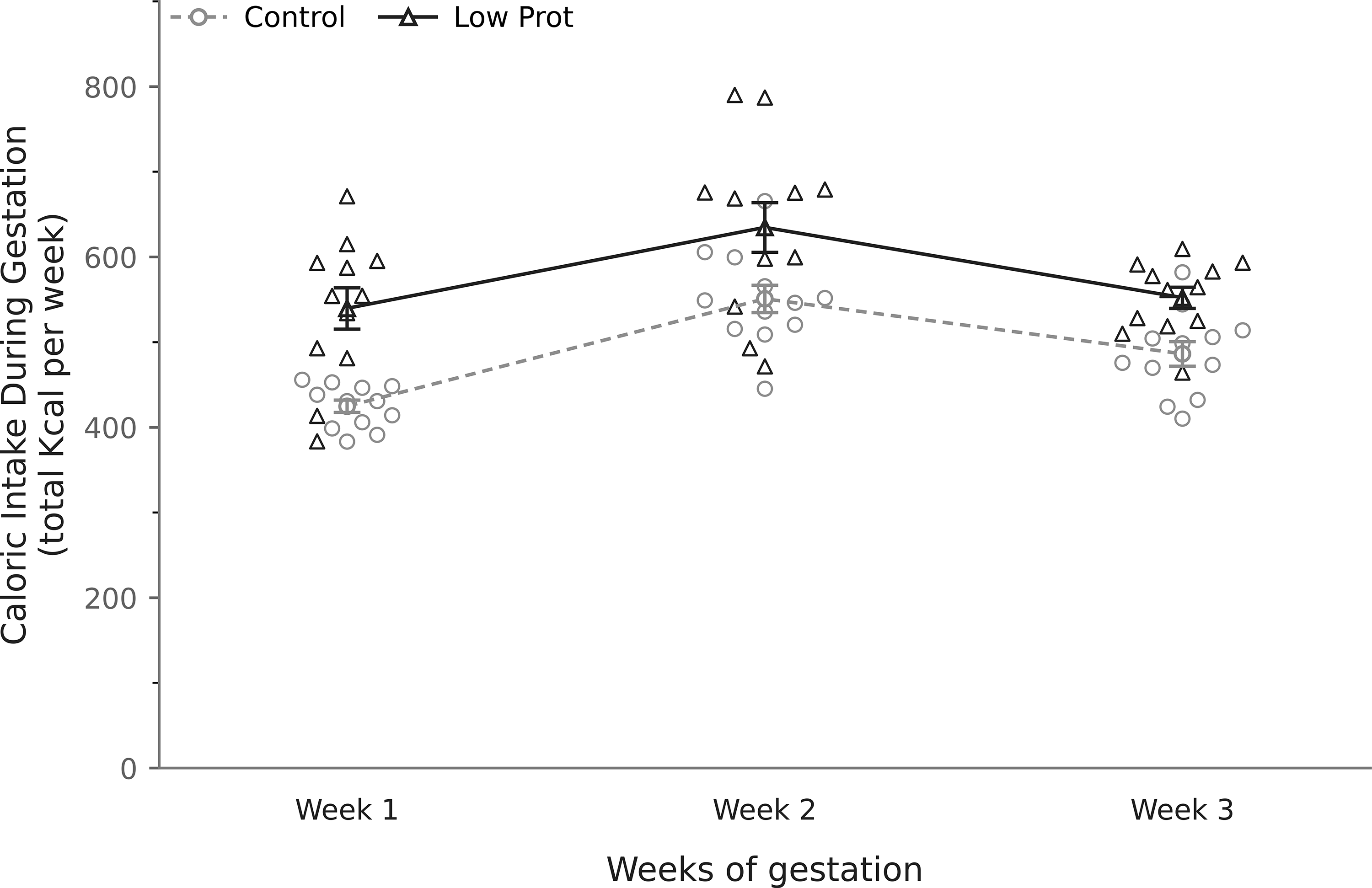
A total of 37 dams were included in the study, with 8–10 dams per treatment group. Litter size was comparable across groups (litter size mean 9.6 (95% CI 8.7–10.6 pups/litter/group, p = .960). Maternal food intake varied in all groups over the course of gestation (effect of time p < .001). Dams fed the low-protein diet consumed more food than control dams (p = .001; Fig. 1), despite both diets being isoenergetic in terms of content per gram.
Weekly food consumption per animal in dams exposed to control or low protein diet over three weeks of gestation. Data are expressed as mean ± S.E.M. N = 18 dams/group. Caloric intake varied in all groups as the time passed by (repeated measures ANOVA, effect of time, F (1.62, 58.27) = 43.55, p < .001, ηp2 = .55; no time × diet interaction effect, p = .143). Dams exposed to low protein diet consumed more calories than control dams during gestation (repeated measures ANOVA, main effect of maternal diet, F (1, 35) = 12.68, p = .001, ηp2 = .27).

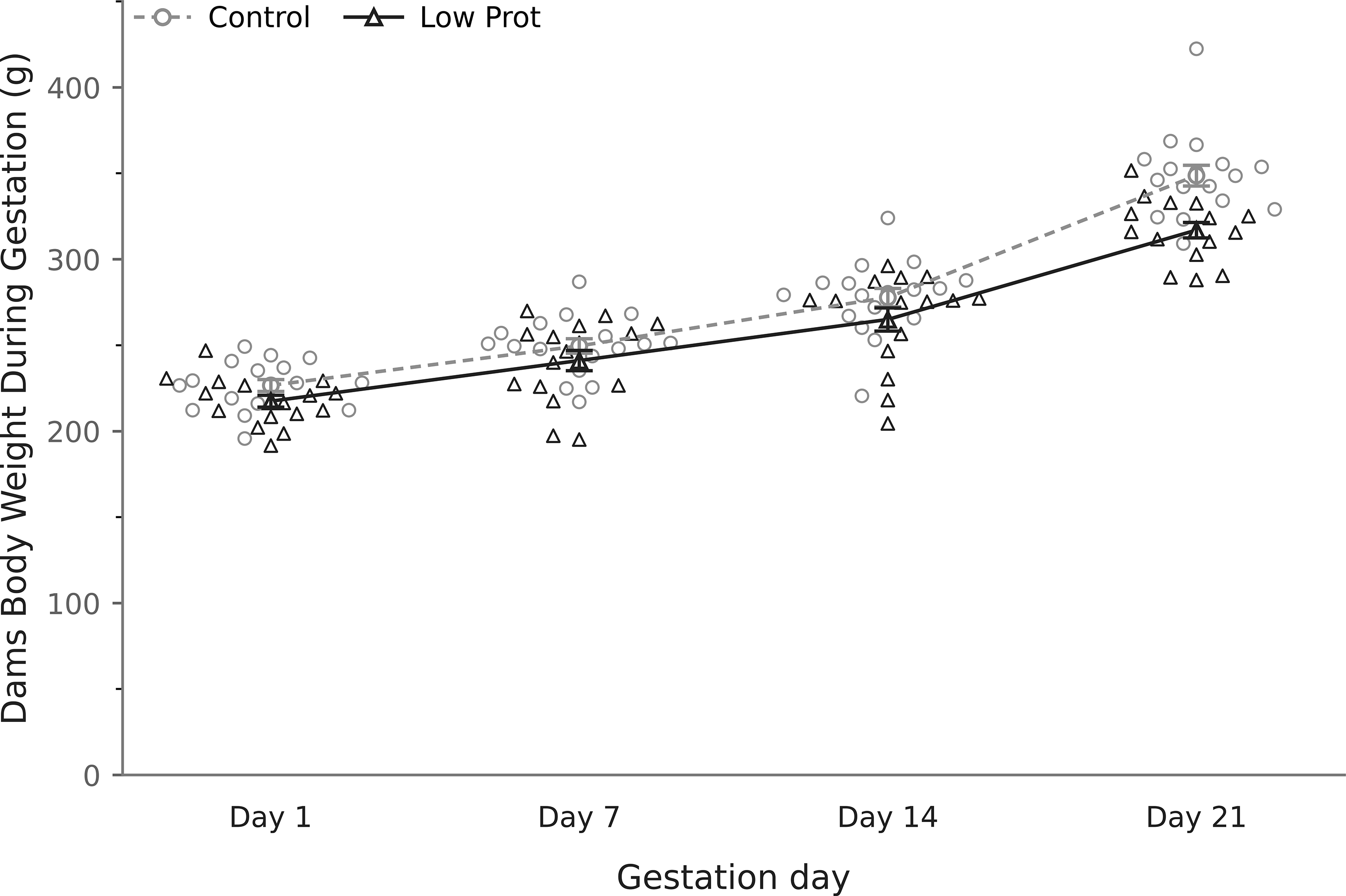
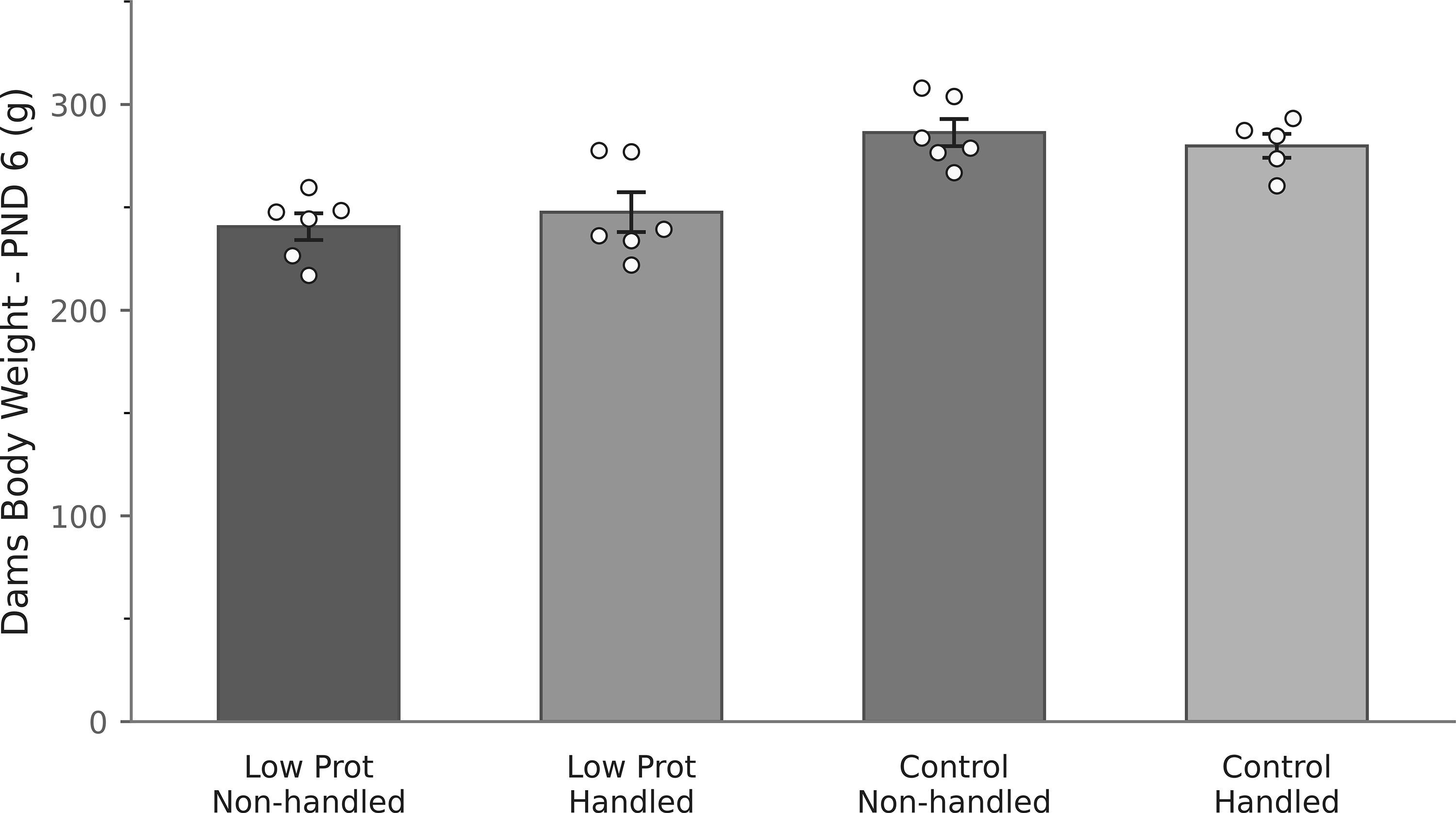
All dams gained weight over gestation (p < .001). There was an interaction between time and diet in which control dams gained more weight than low-protein diet dams over time (p = .010) (Fig. 2). On postnatal day 6, dams exposed to the low-protein diet during gestation and early lactation had lower body weight compared to control dams (p < .001; Fig. 3), with no effect of neonatal handling and no interaction between diet and neonatal group.
Body weight gain during gestation in dams fed control or low protein diet. Data are expressed as mean ± S.E.M. N = 18 dams/group. There was an interaction effect between time and diet (repeated measures ANOVA adjusted by litter size, F (3, 87) = 5.97, p = .001, ηp2 = .17), in which control dams gained more body weight than low-protein diet exposed dams over time. Both groups gained weight as time passed by (repeated measures ANOVA, main effect of time adjusted by litter size, F (3, 87) = 15.11, p < .001, ηp2 = .34).

Body weight on postnatal day 6 (PND 6) in dams fed control or low protein diet during gestation and handled vs non-handled in the first 6 days of lactation. Data are expressed as mean ± S.E.M. N = 5–6 dams/group/diet. Dams exposed to low protein diet weighed less than dams in eating control diet (two-way ANOVA, effect of maternal diet, F (1, 20) = 28.01, p < .001, ηp2 = .58). There was no effect of neonatal handling on the dam’s body weight, and no interaction between diet and neonatal group.

There was a significant litter size × diet interaction on pup body weight (p = .009), indicating that the association between litter size and pup body weight differed according to maternal diet group (Fig. 4). Litter size was statistically significantly associated with pup body weight (p = .037). There were no main effects of diet, neonatal handling or sex on pup body weight, and no other interactions.
Male and female pups body weight on PND 6 from dams exposed to control or low protein diet during gestation and handled/non-handled in the first 6 days of lactation. A) Males; B) females. Data are expressed as mean ± S.E.M. N = 16–38 pups/sex/group. A linear mixed-effects model was conducted to examine pup body weight at PND6 as a function of sex, maternal diet, neonatal handling, and litter size, with dam included as a random intercept to account for litter-related clustering. Litter size was significantly associated with pup body weight, F (1, 12.08) = 5.48, p = .037. There was a significant diet × litter size interaction, F (1, 12.35) = 9.41, p = .009, indicating that the relationship between litter size and pup body weight differed according to maternal diet group. No other interactions were significant.

Maternal behavior
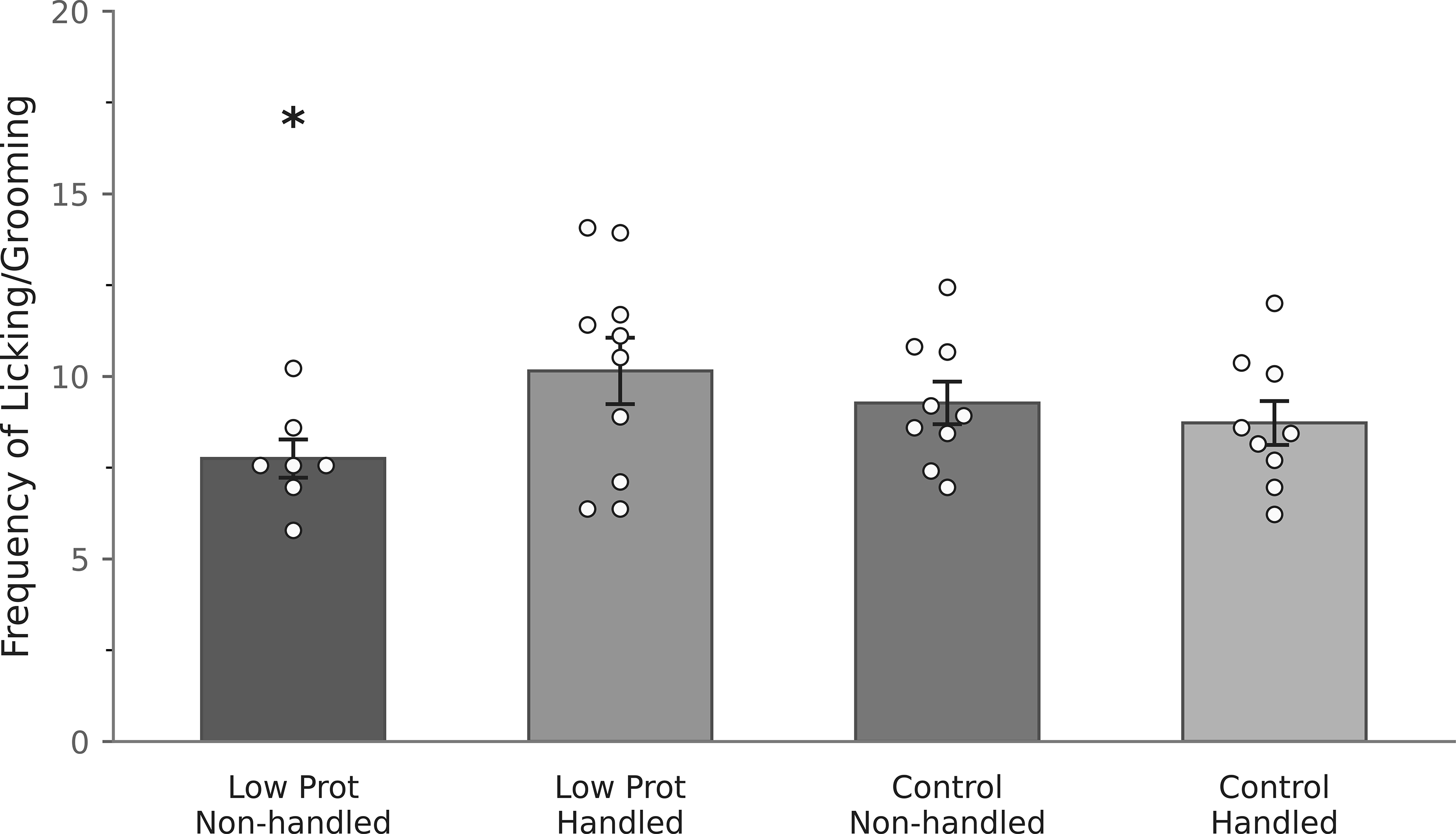
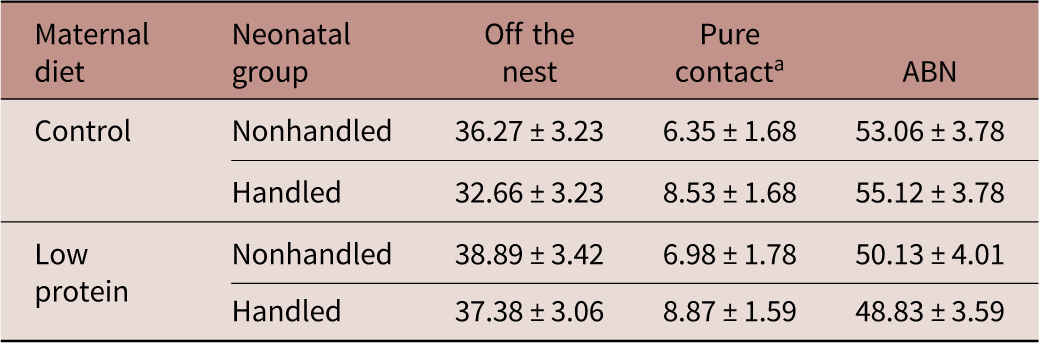
Maternal licking/grooming (LG) behavior across the full observation period was analyzed using maternal diet and neonatal handling as factors. There were no significant main effects of diet or handling. However, there was a significant diet × handling interaction, in which handling increased LG behavior specifically in low-protein dams, whereas handling had minimal effects in control dams (p = .048; Fig. 5). The interaction observed in the overall LG score appeared to be primarily driven by differences during the 7 am observation period, where the strongest group differences were detected (Table 1). Other components of maternal behavior were not affected by maternal diet or neonatal environment (Table 2).
Maternal care from PND 1 to PND 6. Data are expressed as mean ± S.E.M. N = 7–10 dams/group. Neonatal handling increased the frequency of LG in dams fed low protein diet in comparison to those fed control diet during gestation and in the first week of lactation (two-way ANOVA, interaction between maternal diet and neonatal handling, F (1, 31) = 4.26, p = .048, ηp2 = .12). *Significantly lower than low protein handled group (Dunnett’s multiple range test, p = .033).

Average licking/grooming (LG) behavior according to the maternal observation timepoint during the first 6 days of life

Table 1. Long description
A table comparing average licking/grooming (LG) behavior based on maternal diet and neonatal handling times. The table has 4 rows and 6 columns. Column headers are 7 am, 10 am, 1 pm, 5 pm, and 8 pm. Row labels are Control Nonhandled, Control Handled, Low protein Nonhandled, and Low protein Handled. Row 1: Control Nonhandled, 6.84 ± 1.04, 12.44 ± 1.58, 9.07 ± 1.02, 9.78 ± 1.36, 8.19 ± 1.32. Row 2: Control Handled, 6.74 ± 1.04, 10.00 ± 1.58, 10.13 ± 1.02, 9.07 ± 1.36, 7.59 ± 1.32. Row 3: Low protein Nonhandled, 5.85 ± 1.18, 8.19 ± 1.79, 8.69 ± 1.15, 9.14 ± 1.54, 7.20 ± 1.50. Row 4: Low protein Handled, 10.53 ± 0.99*, 9.60 ± 1.50, 10.64 ± 0.97, 10.72 ± 1.29, 9.18 ± 1.26.
Maternal licking/grooming (LG) behavior was assessed five times daily (7 am, 10 am, 1 pm, 5 pm, and 8 pm) from postnatal day 1 to 6. A multivariate analysis of variance (MANOVA) was conducted to examine the effects of maternal diet and neonatal handling on LG frequency across observation periods. There was a significant diet × handling interaction at 7 am, F(1, 31) = 5.08, p = .031, ηp2 = .14, indicating that the effect of handling on LG behavior differed according to maternal diet group. Post hoc examination of estimated marginal means suggested that handling increased LG behavior primarily in low-protein dams. No significant effects were observed at the remaining observation periods (10 am, 1 pm, 5 pm, or 8 pm).
Maternal care from PND1 to PND6

Table 2. Long description
A table with four rows and five columns comparing maternal diet and neonatal handling effects on maternal licking/grooming behavior. The columns are labeled Control, Low protein, and the rows are labeled Nonhandled and Handled. The data includes values for Off the nest, Pure contact, and ABN. Row 1: Control Nonhandled, 36.27 ± 3.23, 6.35 ± 1.68, 53.06 ± 3.78. Row 2: Control Handled, 32.66 ± 3.23, 8.53 ± 1.68, 55.12 ± 3.78. Row 3: Low protein Nonhandled, 38.89 ± 3.42, 6.98 ± 1.78, 50.13 ± 4.01. Row 4: Low protein Handled, 37.38 ± 3.06, 8.87 ± 1.59, 48.83 ± 3.59.
ABN, arched back nursing.
Data are shown as mean ± standard error of the mean. N = 7–10 dams/group. There was no difference between the groups (two-way ANOVA, for maternal diet and neonatal handling, p > .05).
a Percent of time spent in contact without nursing and without licking/grooming (LG).
Milk composition
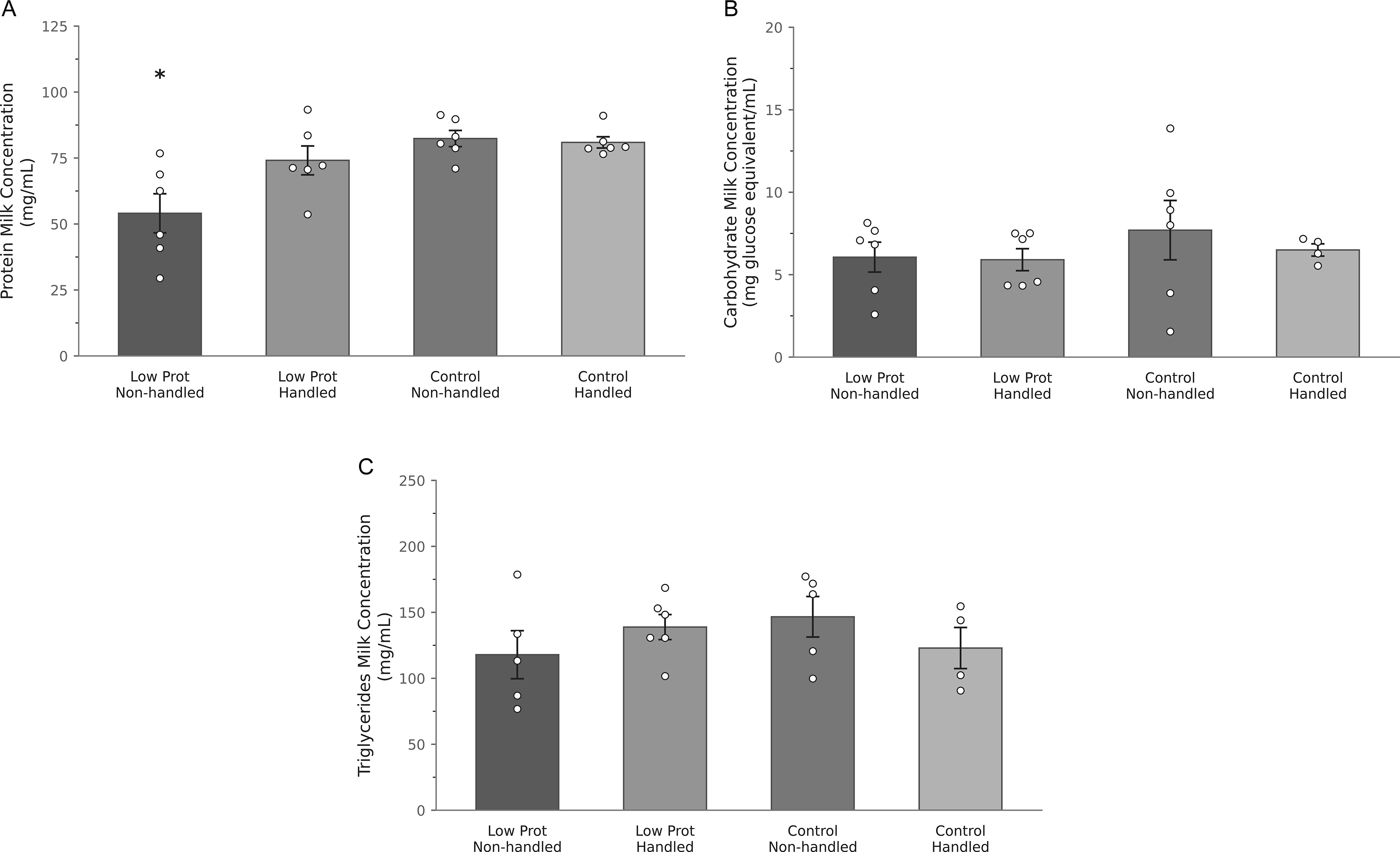
Maternal exposure to the low-protein diet during the perinatal period reduced milk protein content (p = .004). Neonatal handling modified this effect, increasing milk protein concentration in low-protein dams (interaction p = .043). Milk carbohydrate concentrations were not affected by maternal diet or neonatal handling (p > .05). Similarly, milk fat content, estimated by triglyceride levels, did not differ between groups (p > .05; Figs. 6A–6C).
Milk composition. Data are expressed as mean ± S.E.M. A) Protein concentration in maternal milk. N = 6 samples/group. Maternal exposure to low protein diet during gestation and in the first week of lactation decreased milk protein content (Two-Way ANOVA, effect of maternal diet, F (1, 20) = 12.50, p = .002). However, neonatal handling induced an increase in milk protein concentration only in the low protein diet group (Two-Way ANOVA, interaction between maternal diet and neonatal handling, F (1, 20) = 4.68, p = .043, ηp2 = .19). *Different from all the other groups by post hoc examination of estimated marginal means. B) Carbohydrates in milk. N = 4–6 samples/group. There was no difference in milk carbohydrate amount between maternal diet and neonatal groups (Two-Way ANOVA, p > .05). C) Fat (triglycerides) concentration in milk. N = 5–6 samples/group. Triglyceride concentration in maternal milk did not differ between the groups (Two-Way ANOVA, p > .05 for maternal diet and neonatal handling).

Maternal hormones related to milk composition
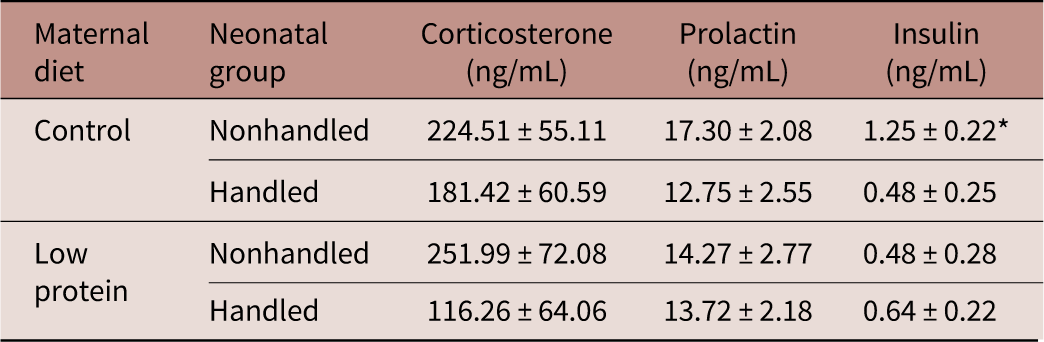
Serum corticosterone, prolactin, and insulin levels were measured on postnatal day 6. No significant effects of maternal diet or neonatal handling were observed for corticosterone or prolactin levels (p > .05). In contrast, insulin levels showed a significant interaction between maternal diet and neonatal handling (p = .013). In control dams, neonatal handling reduced insulin levels, whereas in low-protein dams insulin levels were already low and were not further altered by handling, indicating that the effect of neonatal handling on insulin levels depended on maternal diet. No main effects of maternal diet or neonatal handling alone were detected. These results are summarized in Table 3.
Maternal serum hormones on PND6

Table 3. Long description
The table presents data on maternal serum hormones on postnatal day 6, focusing on corticosterone, prolactin, and insulin levels. It has four rows and five columns. The columns are labeled ‘Maternal diet’, ‘Neonatal group’, ‘Corticosterone (ng/mL)’, ‘Prolactin (ng/mL)’, and ‘Insulin (ng/mL)’. The rows are labeled ‘Control Nonhandled’, ‘Control Handled’, ‘Low protein Nonhandled’, and ‘Low protein Handled’. Row 1: Control Nonhandled, Corticosterone 224.51 ± 55.11, Prolactin 17.30 ± 2.08, Insulin 1.25 ± 0.22. Row 2: Control Handled, Corticosterone 181.42 ± 60.59, Prolactin 12.75 ± 2.55, Insulin 0.48 ± 0.25. Row 3: Low protein Nonhandled, Corticosterone 251.99 ± 72.08, Prolactin 14.27 ± 2.77, Insulin 0.48 ± 0.28. Row 4: Low protein Handled, Corticosterone 116.26 ± 64.06, Prolactin 13.72 ± 2.18, Insulin 0.64 ± 0.22. The table shows the interaction between maternal diet and neonatal handling on hormone levels.
Data are shown as mean ± standard error of the mean. N = 4–6 samples/group. LG score was used as a covariate for all the analyses. Corticosterone and prolactin serum levels did not differ between the groups (two-way ANOVA, for maternal diet and neonatal handling, p > .05). In control dams, neonatal handling reduced insulin levels, whereas in low-protein dams insulin levels were already low and were not further altered by handling, indicating that the effect of neonatal handling on insulin levels depended on maternal diet (two-way ANOVA, interaction between maternal diet and handling, F(1, 15) = 7.897; p = .013).
* Post hoc examination of estimated marginal means, significantly different from all other groups.
Discussion
The present study examined whether neonatal handling, an early postnatal manipulation, can modify maternal behavioral and metabolic adaptations to gestational protein restriction. The main findings are that maternal protein restriction increased maternal food intake without affecting gestational weight gain, reduced maternal body weight by postnatal day 6, was associated with lower offspring body weight for a given litter size, and altered milk protein content. Neonatal handling increased maternal caregiving behavior in low-protein dams and modified milk protein concentration, while also interacting with maternal diet to influence insulin levels.
Maternal food intake increased across gestation and was higher in dams exposed to the low-protein diet, despite both diets being isoenergetic. This likely reflects a compensatory increase in food consumption to meet protein requirements rather than increased caloric intake per se, a phenomenon described in response to dietary protein restriction. Reference Pezeshki and Chelikani41,Reference Pezeshki, Zapata, Singh, Yee and Chelikani42 Despite these differences in intake, gestational weight gain was actually lower in dams receiving the protein restriction diet, suggesting that macronutrient composition rather than total energy intake plays a key role in shaping maternal metabolic adaptations.
By postnatal day 6, dams exposed to the low-protein diet had lower body weight, indicating that the dietary manipulation influenced maternal phenotype during early lactation. These findings are consistent with previous studies showing that maternal protein restriction alters maternal metabolic adaptations during late gestation and lactation. Reference Moretto, Ballen and Gonçalves43
Relatively little research has examined how maternal nutritional status during gestation and lactation shapes mother–pup interactions, despite the central role of maternal care in early-life programming. Reference Liu, Diorio and Tannenbaum30,Reference Francis, Champagne, Liu and Meaney44 Existing studies suggest that maternal dietary manipulations can alter maternal behavior, although the direction and magnitude of effects vary across protocols and nutritional exposures. Reference Purcell, Sun, Pass, Power, Moran and Tamashiro45–Reference Batista, Veronesi, Ribeiro, Giusti-Paiva and Vilela47 In the present study, maternal diet interacted with neonatal handling to influence maternal caregiving, with neonatal handling increasing licking and grooming frequency specifically in dams exposed to a low-protein diet. Notably, although neonatal handling has classically been associated with transient increases in maternal licking/grooming behavior following dam–pup reunion, Reference Pryce, Bettschen and Feldon31,Reference de Sá Couto-Pereira, Ferreira and Lampert32 we did not observe a clear increase in maternal care during the observation period immediately following the daily handling procedure. Because neonatal handling occurred between the 10 am and 1 pm observation periods, the 1 pm observations were expected to capture potential reunion-associated increases in licking/grooming behavior. However, no clear increase was detected at this timepoint. Instead, the effects of neonatal handling on maternal behavior appeared to be more prominent in low-protein dams and were particularly evident during the 7 am observation period. It is possible that transient reunion-associated maternal responses occurred outside the predefined observation windows.
Consistent with our hypotheses, maternal dietary intake during gestation and early lactation influenced milk nutrient content. Maternal diet is widely recognized to affect milk composition across species, with both quantitative and qualitative changes reported depending on nutrient availability and maternal physiological state. Reference Adhikari, Kudla, Nyakayiru and Brouwer-Brolsma48–Reference Bautista, Bautista and Montaño50 Here we focused on quantitative macronutrient concentrations and found that dams fed a low-protein diet during gestation and the first week of lactation produced milk with reduced protein content, whereas milk carbohydrate and fat concentrations (estimated through triglycerides measurement) were not altered. Our findings align with reports of reduced milk protein under maternal protein restriction, Reference Bautista, Bautista and Montaño50 although other studies have not detected significant changes in milk protein content following dietary protein restriction. Reference Martin Agnoux, Antignac and Boquien51 Differences across studies likely reflect variation in the severity and timing of protein restriction, the lactational stage at sampling, and methodological differences in milk collection and nutrient quantification. Together, these results support the view that prenatal and early postnatal nutritional environments can shape the early nutritional milieu experienced by the offspring, with potential downstream implications for developmental programming.
We provide evidence that early postnatal experience can modify maternal lactational adaptations to gestational undernutrition. Specifically, neonatal handling reversed the low-protein diet–associated reduction in milk protein concentration, increasing milk protein levels in dams exposed to protein restriction during gestation and early lactation. This finding extends the neonatal handling literature beyond offspring outcomes by suggesting that postnatal manipulations of maternal–infant interaction can influence maternal metabolic and lactational physiology during a period of high developmental and nutritional demand. Given that gestation and early postnatal life represent sensitive windows for growth and neurodevelopment, even modest shifts in the early nutritional milieu, such as altered milk protein availability, may have meaningful implications for developmental programming.
Neonatal handling has long been recognized to shape offspring stress responsivity, neurobehavioral development, and metabolic outcomes across the life course. Reference Meaney, Aitken, Viau, Sharma and Sarrieau34–Reference Silveira, da Silva Benetti and Ayres37,Reference Colman, Laureano and Reis52 Our results further align with previous work indicating that neonatal handling can also influence maternal physiology, including postpartum metabolic adaptations that persist beyond the early lactation period. Reference de Sá Couto-Pereira, Ferreira and Lampert32,Reference Silveira, Benetti and Portella33,Reference Reis, Jacobs, Menegotto, Silveira and Lucion39 Together, these observations support a developmental origins framework in which early postnatal environments can buffer (or modulate) maternal phenotypes shaped by prenatal nutritional adversity, thereby modifying the early-life conditions experienced by the offspring. Consistent with this broader concept, human research similarly suggests that caregiving context can moderate associations between fetal growth restriction and later offspring eating-related behaviors. Reference Escobar, O’Donnell and Colalillo38
One potential explanation for the handling-associated normalization of milk protein content is modulation of lactogenic endocrine signaling. Milk protein synthesis is classically regulated by the coordinated actions of prolactin, glucocorticoids, and insulin, which together promote mammary epithelial differentiation and stimulate expression of milk protein genes, including caseins. Reference Juergens, Stockdale, Topper and Elias53–Reference Devinoy, Houdebine and Delouis55 Insulin, in particular, plays an important role in mammary gland development and lactation, and experimental models of pancreatic insulin deficiency show impaired milk production that can be rescued with insulin replacement (review in Reference Cohick56 ). Research supports a direct role for insulin signaling in regulating milk protein gene expression and casein synthesis in mammary tissue. Reference Menzies, Lefèvre, Macmillan and Nicholas57 To assess whether endocrine differences could account for our findings, we measured maternal circulating prolactin, corticosterone, and insulin. Hormone measurements were obtained following induction of anesthesia, which may influence circulating levels and limit interpretation of absolute values. However, as all groups were sampled under identical conditions, the observed differences are considered to reflect relative effects of the experimental manipulations. While prolactin and corticosterone did not differ between groups, we observed an interaction between maternal diet and neonatal handling on maternal insulin levels. Specifically, the neonatal handling procedure reduced insulin levels in control dams but did not further alter insulin levels in low-protein dams, in which insulin concentrations were already low. These findings are consistent with the possibility that gestational protein restriction constrains the metabolic responsiveness of dams to early postnatal environmental modulation. Although the functional significance of these maternal insulin differences remains uncertain, they add to growing evidence that insulin participates in diverse developmental processes beyond glucose homeostasis. Recent work suggests that prenatal adversity alters insulin responsiveness within the developing brain, highlighting insulin signaling as a potentially important mediator of developmental programming across multiple tissues. Reference Laureano, Alves and Miguel23,Reference Alberry, Barth and Batra58,Reference Miguel, Barth and Batra59
In the present study, gestational protein restriction altered maternal lactational physiology and reduced offspring body weight, while neonatal handling increased maternal care and normalized milk protein content in nutritionally restricted dams. These findings suggest that aspects of the maternal phenotype programmed by prenatal undernutrition, including milk composition, retain plasticity in response to early postnatal experience. Interestingly, emerging human evidence supports the idea that variation in milk composition may reflect adaptive maternal responses to infant vulnerability. Recent work has shown that mothers of infants with lower visual fixation abilities produce milk with higher protein content, consistent with the possibility that lactational biology may dynamically respond to offspring developmental needs. Reference Bernardi, Lucion and Dalle Mole60 These observations support a developmental origins framework in which early postnatal environments can buffer maternal phenotypes shaped by prenatal nutritional adversity. Such plasticity may represent an important pathway through which early interventions buffer the consequences of prenatal adversity and promote more favorable developmental outcomes.
Acknowledgements
None.
Financial support
This study was supported by CNPq, Capes, and FIPE/HCPA (Project # 09-332).
Competing interests
None.



 Open access

