Background
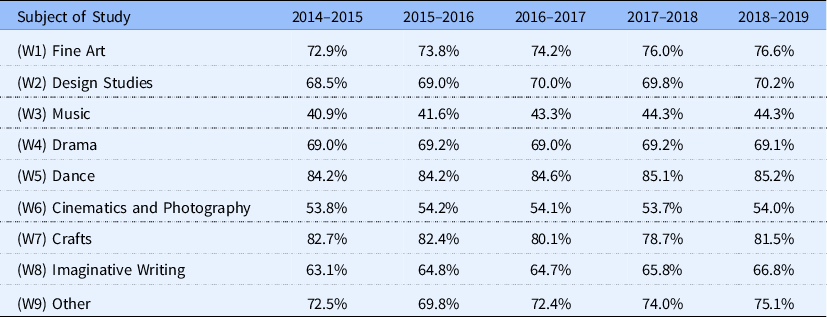
Gender representation within music education is a controversial topic within the UK. It is well known that women are much less likely to study STEM subjects than men and – conversely – that women are much more likely to study non-STEM subjects than men (Hewitt, Reference HEWITT2020). Music could, therefore, be considered an exception as there are a high proportion of male students studying the subject: between the 2014–2015 academic year and the 2018–2019 academic year, the gender demographics of all “Creative arts & design” subjects shifted from 63.4% female to 64.8% female (HESA, 2020d). In the same period, the gender demographics of “Music” subjects showed a male bias, moving from 40.9% female during the 2014–2015 academic year to 44.3% female during the 2018–2019 academic year. In fact, within the “Creative Arts and Design” category identified by the Higher Education Statistics Agency (HESA), Music is the only subject of study to have a male-majority population during any year between 2014 and 2019. All other subjects in this category have a female-majority population at this level of study (Table 1).
Female Population on Subjects within the (H) Creative Arts & Design Category between 2014 and 2019 (HESA, 2020e)

Some investigations into the underlying causes and effects of the gender demographics within music education have already been conducted. Green (Reference GREEN1997) examines historical issues surrounding music and gender, with a particular focus on how social pressures have acted to limit women’s autonomy and influence within the world of music. For example, Green highlights one consequence of inequalities within access to music education: throughout much of the last thousand years, women were denied access to resources of contemporary compositional practices. This led them to “fall behind contemporary developments from the 14th century until the 20th century … [in which context] we can understand why it is that Hildegard was probably the last supposedly innovative woman composer for some eight hundred years.” (Green, Reference GREEN1997, pp. 89–91).
Scharff (Reference SCHARFF2019) examines the modern relationship between music and gender within feminist theory frameworks. Focusing on the classical music industry, Scharff draws in part upon music education data. For example, Scharff identifies women were historically over-represented at conservatoires but – in recent years – men have been more successful than women in applying for conservatoire places in the UK (Scharff, Reference SCHARFF2019, pp. 44–46). However, whilst Scharff’s work offers an essential, nuanced depiction of gender within the classical music profession, their depiction of the education focuses specifically on the conservatoire pathway into the professional music industry. This is likely because a significant portion of those working within the classical music performance industry will have undertaken some level of conservatoire study. Nonetheless, conservatoires only cater to a very small proportion of the overall music student population in the UK: it is hard to know from Scharff’s work the extent to which trends within the conservatoires can be extrapolated to other areas of higher music education (HME).
Some attempts have been made to offer more holistic approaches to these examinations of gender and music education. One report compiled by Bain (Reference BAIN2019) used data from HESA to attempt briefly to identify gender inequalities across the broader context of HME. Whilst Bain does not fully establish the methodology of their specific (re)categorisations in the published report, the numbers present some concerns. For example, Bain identifies that only 14.45% of those studying composition degrees are female: as they put it, “the impact of genderisation of music can be seen” (Bain, Reference BAIN2019). Born and Devine (Reference BORN and DEVINE2015) also take a holistic view, categorising contemporary HME into two meta-categories of “traditional music” and “music technology” degrees. Using data gathered from HESA and UCAS, they depict a clearly gendered divide between these two categorisations which may, in turn, be part of a feedback loop “whereby existing ideologies of gender and technology … are being reinforced or even amplified through music in HE.”
This research aims to further contextualise the HME demographic data available through HESA to build further upon these existing examinations of gender in HME. Data at the individual course level have been requested directly from higher education institutions under the Freedom of Information Act (FOIA). Most higher education institutions within the UK provided data on student gender on each “music-related” course offered at their institution. Categorisation has then been reconstructed from this granular data, forming six major categories of undergraduate study. Alongside offering a more thorough understanding of engagement within music education, this process also helps to establish the limitations of data available to researchers interested in analysing gender in higher education, and thereby justify recommendations surrounding how data gathering and processing methods could be improved further to benefit research into inequality within music education.
Issues in HESA data
It is important to recognise that there are weaknesses in the data surrounding higher education student populations available to researchers. HESA provides three levels of categorisation: a field, a subject and a specific topic of study, each of which is assigned a code. At the time this research began in 2019, HESA was using a hierarchical system of letters and number to categorise courses. Some of these codes have already been used in this paper, such as the field “(H) Creative Arts & Design” and the subject “(W3) Music”. “(W3) Music” is the expected code of interest for researchers investigating gender demographics within music. Within this subject code, 37 topics of study are identified by HESA which includes topics familiar to those working or studying within the field of music such as “(W380) Composition” and “(W310) Musicianship/Performance Studies” and “(W330) Jazz.”Footnote 1
This four-digit categorisation is known as the Joint Academic Classification System (JACS)Footnote 2 and was replaced in 2020 by the “Higher Education Classification of Subjects” (HECoS). HECoS uses a similar system but provides six-digit numeric codes rather than four-digit alphanumeric codes (e.g., “(W380) Composition” was remapped to “100695: Composition”). HECoS also utilises a hierarchical system to facilitate the grouping of subjects and topics. Specifically, the Common Aggregation Hierarchy (CAH) was developed to provide “standard groupings” (HESA, 2020b). Mapping between JACS-4 and HECoS was distributed to institutions to allow them to recategorise their courses into this new system (HESA, 2017a).
There are a number of differences between the two systems of categorisation. However, as pertains to the topic of this research, any differences between the two systems are essentially immaterial. Succinctly, whilst HECoS increases the number of categories which courses can be sorted into, it fails to improve the categorisation and reporting processes themselves. As a result, both systems share the same weaknesses and limitations when examining music courses: (1) course codes are allocated by the course provider with very little oversight or external moderation; (2) the specifics of subject classifications are not always clear and (3) courses can only have a limited number of course codes, which creates conflicts for universities offering modular courses that cover areas addressed by many course codes.
Two key examples drawn from the new system of categorisation – which was intended in part to address these issues – used by HESA demonstrate how problems can arise from this system. First, a common academic debate within the music community may not have been sufficiently considered in HESA’s categorisations. HESA provides alternate definitions for popular music performance (“performance in the genre of music classified as popular music”) and music performance (“the mastering of musical instruments and performing art”) (HESA, 2020b). These definitions seem to imply to some extent both that “popular music” is not art, and that mastering musical instruments is not required to perform within the genre of “popular music”. Is there a risk that universities may choose to avoid classifying their courses as “popular music performance” in favour of a broader classification bereft of these potentially problematic implications? Given the widespread academic disagreement within the music community surrounding these matters, especially in an era of increasing awareness of problems emerging from dividing music by genre, it seems likely.
Similar concerns also exist throughout many HECoS definitions: “100841: Popular Music” requires the music studied to be “accessible to the general public and disseminated by one or more of the mass media” (HESA, 2020a). In what ways do the works of Mozart not fit this definition? They are available to the general public, and they are disseminated through multiple avenues of mass media distribution such as Spotify, YouTube, TV and radio channels, and advertised within newspapers and magazines. Songs by Mozart have even topped charts at various points in the last few decades. Should a course that covers composers similar in historical relevance to Mozart classify themselves as “Popular Music”? It is a facetious concern, but one that exposes a more general ambiguity within HESA definitions.Footnote 3 .
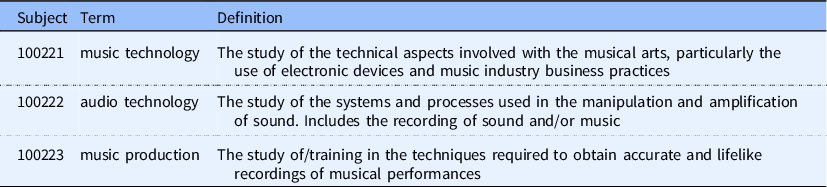
Secondly, we should consider the differentiation made in the HECoS system between music technology, music production and audio technology (Table 2). Succinctly, what are the differences implied between these topics by course code definitions? For example, the inclusion of “accurate and lifelike recordings” as an essential element of “music production” may raise questions. Is it still “music production” when working with non-acoustic instruments such as electric guitars and drum machines; what would be a “lifelike” sound created using these non-acoustic instruments? How “accurate” are musical performances which are created through the combination of multiple takes and then technologically altered and edited? Is this still “music production”? Whilst these may seem like semantic debates, they have some importance. Universities providing similar courses may categorise them differently and therefore challenge the accuracy of depictions of HME within statistical data in the UK.
Extracted from “The Higher Education Classification of Subjects (HECoS) Vocabulary” (HESA, 2020a)

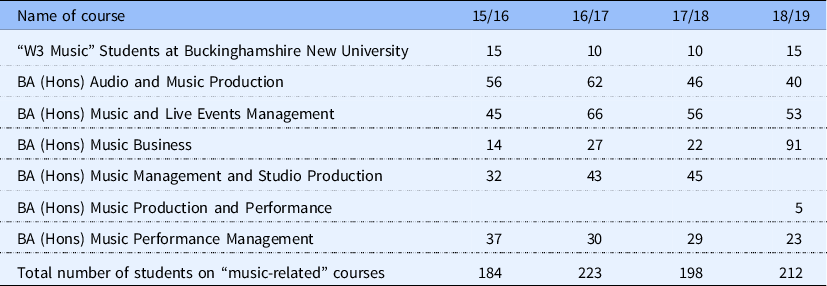
The overall effect on representations of gender within HESA data is impossible to determine. However, there are clearly issues in existing data which may have resulted, at least in part, from these complications. As an illustrative example, we can compare data gathered from Buckinghamshire New University during this project to data published by HESA on Buckinghamshire New University. HESA reports that Buckinghamshire New University had only 10–15 students classified as “W3 Music” students on years within the data. Concurrently, the university reports around 200 students on “music-related” courses (Table 3).
Comparison of Student Populations Reported by the Buckinghamshire New University in HESA Data on “W3 Music” Courses (HESA, 2020c) and Data on “Music-Related” Courses in Response to FOIA Requests. Courses with and without Foundation Years have been combined for clarity. The top row should approximate a total of all courses which were classified under “W3 Music”

This discrepancy reveals that the university must currently classify courses they named as “music-related” in response to FOIA as belonging to a category other than “(W3) Music” when reporting to HESA. Directly related “(W3) Music” subject codes – e.g., “(W374) Music Production” and “(W375) Music Management” – are not used. It is likely that the university prefers to use other closely related course codes (e.g., “J931 – Music Recording”) which are outside of the “(W3) Music” category. For researchers working to examine music education through HESA data, situations such as these should be considered especially problematic as specific bodies of students studying music-related topics may be excluded from analyses of HESA data.
The third major issue within HESA data is perhaps more easily observable and less easily accounted for: only a limited number of codes can be selected for any specific course. JACS typically allowed the assignment of only one or two codes to each courseFootnote 4 whilst HECoS assigns courses a maximum of five codes. However, whilst the maximum has been increased under the new HECoS system, guidelines state that “good subject coding is economical. The number of codes…should always be minimised in the interests of providing succinct information for intended users.” For higher education qualifications, it is suggested that more than three codes should be considered “exceptional” (HESA, 2017b).
These limitations present yet another challenge to providers of music courses: most universities teach a broad music course with modules touching on many different areas of music. Many courses permit students to select modules from across a broad range of topics (e.g., composition, performance, music technology, music history, contemporary music) and study them in any combination to complete the required credits for the course. To reflect the diversity of content on the course, many universities opt to use the generalised “(W300 Music)” code, rather than elect to use a more specific subject code. This is likely to continue under the new HECoS system; HESA recommends that these “(W300) Music” courses are remapped to “100070: Music” (HESA, 2020b).
This is not a trivial issue. Around 60% of music students in the UK were categorised as “(W300) Music” students in 2020. The students on these courses pursue a frustratingly broad selection of unrelated course content. One student may combine popular music performance and music technology, whilst another student may combine history of music and music analysis. Both students could be classified as HECoS “100070: Music” or JACS “(W300) Music.” It would be impossible to distinguish between them at all in HESA data: it is not possible for researchers to determine specific trends within HESA data.
Methodology
Given issues with HESA course categorisations, HESA data may be of questionable usefulness to granular analysis of gender demographics within music-related subjects. To examine demographics of specific sub-topics of music whilst avoiding these issues, an analysis of course names was conducted instead. Unfortunately, HESA does not verify data about course title; therefore, universities were approached directly under FOIA to source data. To meet the legal requirements of “reasonable request” that protects institutions from burdensome data requests, the request was made for “the gender demographics for any courses taught by, or in collaboration with, the administrative department responsible for teaching Music at each university (e.g., Department of Music; School of Music and Media; Music Conservatoire) since 2015.“Footnote 5 Data received in replies to these requests were then supplemented by direct examination of university websites to find ancillary contextual information which helped guide the categorisation of courses utilised within this paper: e.g., did all courses with the title “Music” contain the same subject content?
However, not all universities had a specific department for the teaching of music-related subjects. The historically low interest in Music-related subjects has led to the subject being taught in interdisciplinary departments that cover other related areas – e.g., Media; Sound; Performing Arts; Creative Arts; Arts; Humanities – and therefore additional non-music-related courses will sometimes have been unavoidably included in these requests (e.g. “Stage Acting” or “Film-making”). These courses were filtered out before analysis.
Seventy-four universities provided data on 2,291 undergraduate music-related courses between 2014–2015 and 2019–2020.Footnote 6 The majority of music-related degrees from the period are included in this data set. Courses were filtered into different subject areas based on their title. Each subject area combined multiple keyword searches of course titles.Footnote 7 Six major areas were identified for undergraduate course analysis. There were a substantial number of joint-honours music degrees, which were omitted from the analysis for two reasons. Firstly, each of these courses had very low student numbers. This meant that it became difficult to draw conclusions with any confidence after the anonymisation process for the data set was complete. Secondly, it was difficult to find information on what areas of music were taught to what degree within joint-honours music degrees. This provides us with six areas for analysis in this paper:
-
1. Generic Music Degrees
-
2. Music and Technology
-
3. Music and Business
-
4. Popular MusicFootnote 8
-
5. Music and Theatre
-
6. Major Conservatoire CoursesFootnote 9
Not all universities were able to provide course-level population data: e.g., Newcastle University stated student gender was an optional field on their student record and were therefore unable to provide any confirmed data; two universities had concerns about privacy and could not provide granular data; some courses were aggregated within the data. These courses and/or universities were omitted from data analyses.
Data on students that did not identify either ‘male’ or ‘female’ were omitted by most universities due to concerns surrounding the validity of the data and the potential statistical errors which could have occurred had this data been included. Similarly, transgender populations cannot be discussed using this data due to the methods used by universities to collect data on the gender of students; information on issues in data surrounding transgender and nonbinary students can be found in Appendix A.Footnote 10
Finally, to protect the privacy of students, exact populations under 5 students were typically not provided. Indefinite numbers indicated as “under 5 students” are taken to mean “3” throughout this document. As a result, gender demographics of courses with low student populations may be misrepresented to some extent. However, these changes would have no significant effect on data for courses with more than 30 students. Data are presented throughout each analysis in two ways: (1) for all courses within the data and (2) courses which were reported with more than 30 students. There were 2291 undergraduate courses within the dataset, of which 678 had at least 30 students.
Some universities provided proportional data in response to the data request. Population data was standardised by calculating the proportional data for all courses. This proportional data was then used to categorise courses as having one of the following five gender distributions:
-
1. LM: Large Male Majority (0%–40% Female, 60%+ Male)
-
2. SM: Small Male Majority (40%–45% Female, 55%–60% Male)
-
3. E: Equal/Gender Neutral (45%–55% Female, 45%–55% Male)
-
4. SF: Small Female Majority (55%–60% Female, 40%–45% Male)
-
5. LF: Large Female Majority (60%+ Female, 0%–40% Male)
Analysis
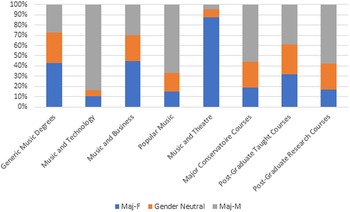
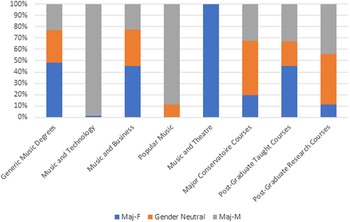
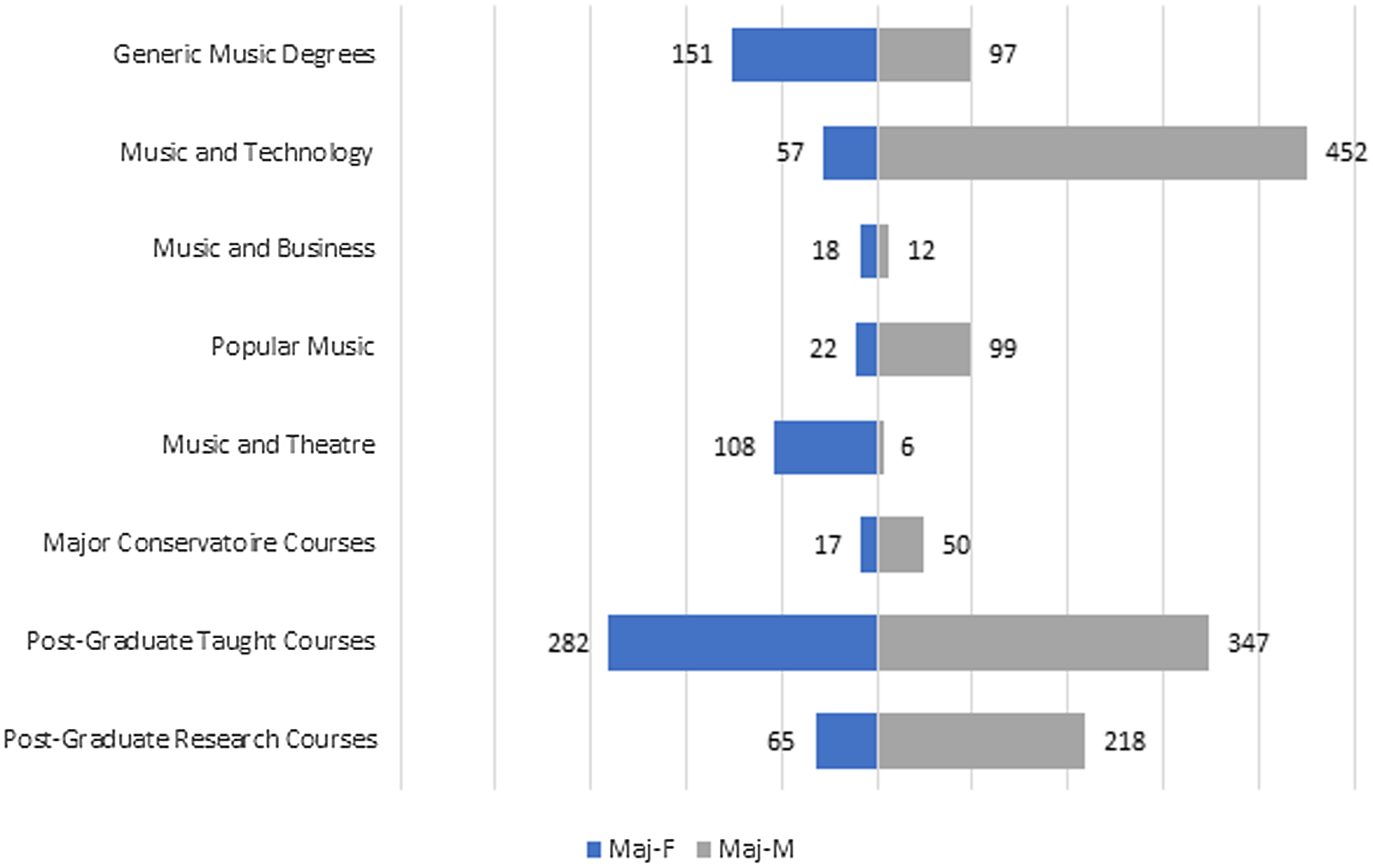
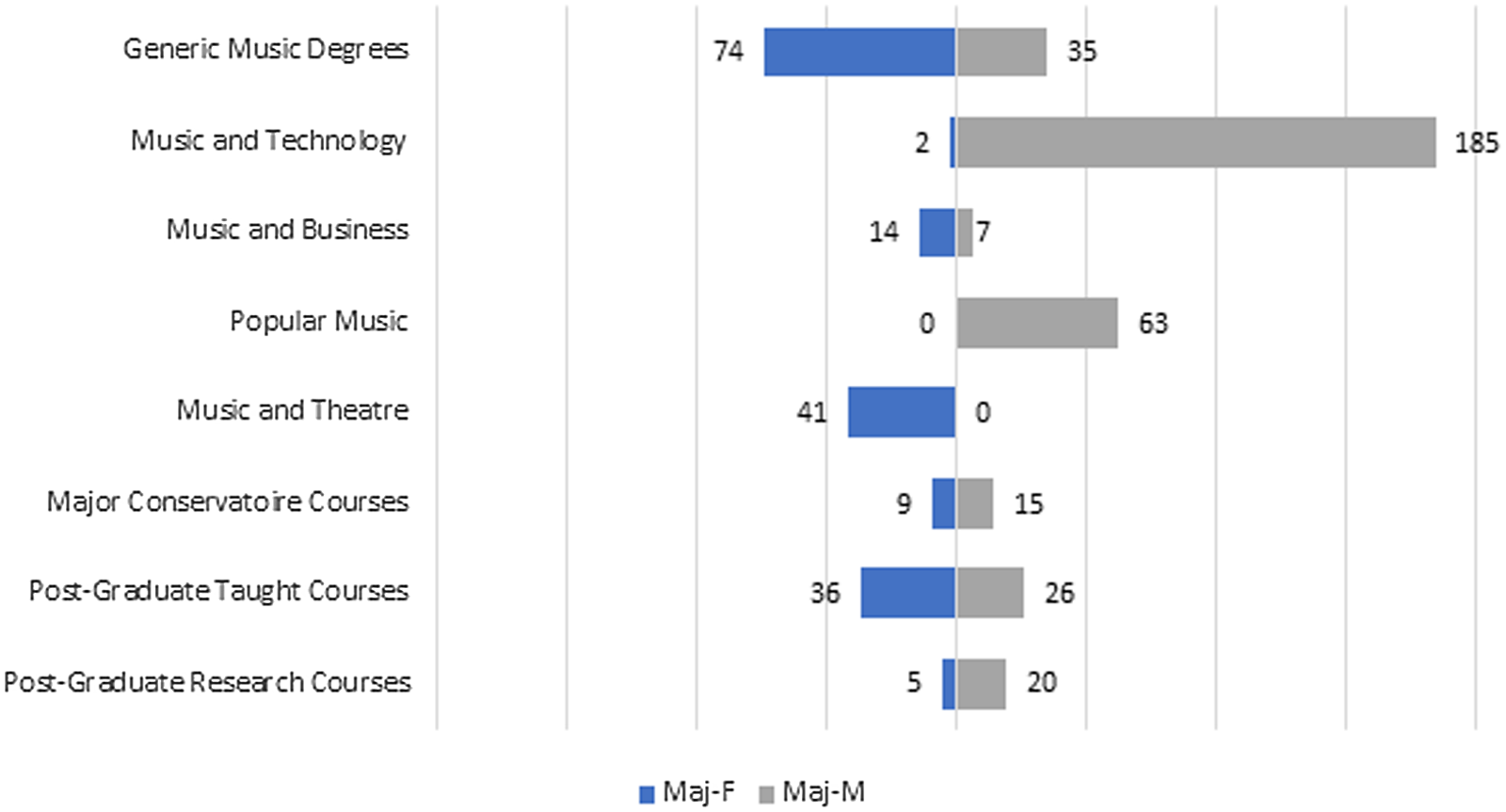
A comparison of gender demographics of courses organised by category clearly demonstrates differences in the gender representation between specific categories of course (Figures 1 and 2). A visualisation of how course categorisations lead to significant differences in the number of male-majority or female-majority student populations (Figures 3 and 4) also helps to demonstrate these differences.
Proportion of HME courses with female-majority, gender neutral or male-majority student populations categorised by course content.

Proportion of HME courses with n > 30 students with female-majority, gender neutral or male-majority student populations categorised by course content.

Gender demographics of HME courses categorised by course content.

Gender demographics of HME courses with n > 30 students categorised by course content.

Each of these key areas will now be explored. The data and surrounding discussion are presented area-by-area to collate relevant information and facilitate future reference to any specific area of interest. Within each category, the categorisation criteria will be provided, followed by data surrounding the gender distribution on courses within the category. This will then be briefly contextualised with some of the specific challenges faced within each area.
Generic music degrees
Defining a ‘generic music degree’ is difficult as the term encompasses a wide selection of predominantly academic degrees. Rather like arguments over the exact definition of popular music, the argument of what areas of music are considered ‘suitable’ for ‘serious examination’ has been part of academic discourse for several thousand years, with some arguing for a broad church in which all music is accepted, and others arguing for the exclusion of specific fields.
The definition used for this data analysis is one that is predominantly inclusive. It is meant that generic degrees are ones which attempt to broaden a student’s understanding of many areas of music. Courses which appear to address one specific topic have been removed: e.g., courses have been removed from this category if their course title includes phrases such as “popular music”, “music technology”, “performance”, or “journalism.” As a result, the courses in this category are diverse and include courses with great variety in course content. However, they broadly share some or all of the following common features:
-
1. They are designed to include students with different approaches and interests within the field of music, rather than focusing on one specific approach or one specific area of interest,
-
2. They offer some form of undergraduate dissertation as an assessment option in the final year of the course
-
3. They include an academic approach to music, demonstrated through the submission of written coursework or completion of written exams,
-
4. They include a wide variety of modules and topics relating to music which students can often choose between,
-
5. They cover many areas of specific interest to the university but permit students to pursue their own interests within those options,
-
6. Applying to the course requires some form of academic qualification in Music, e.g., an A-level in Music.
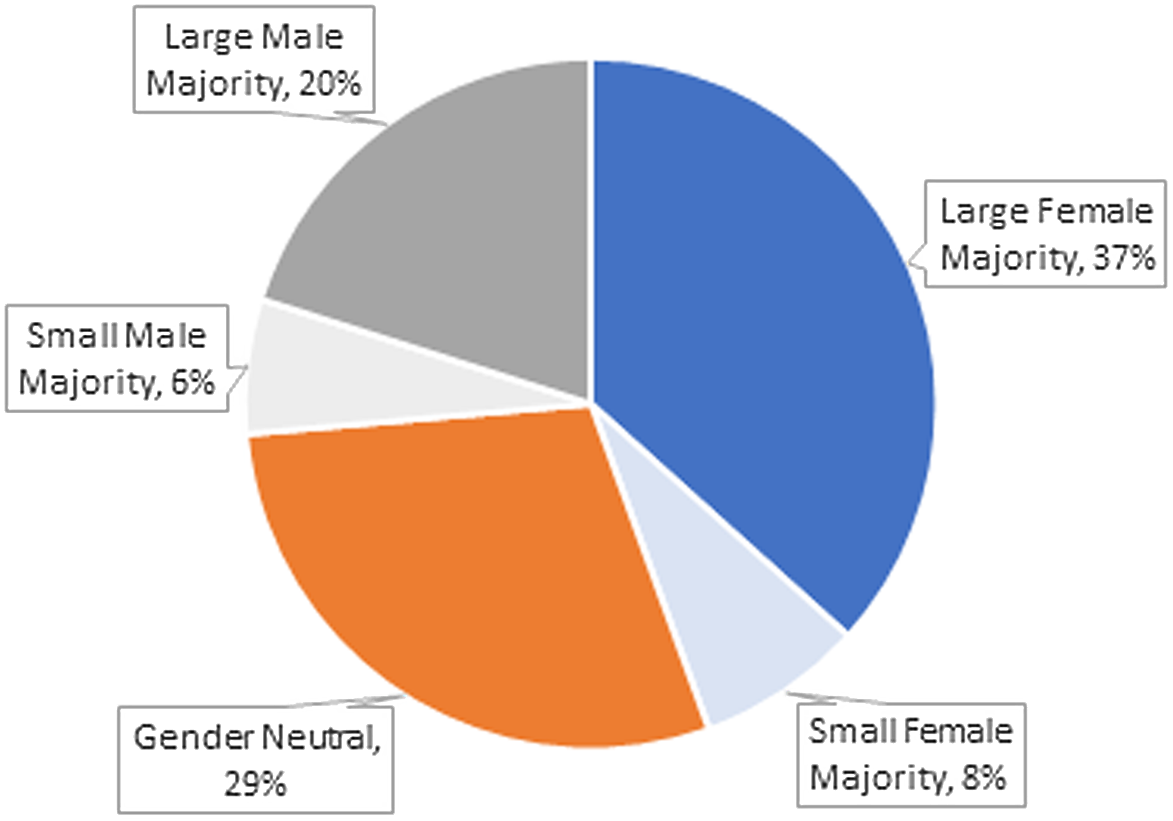
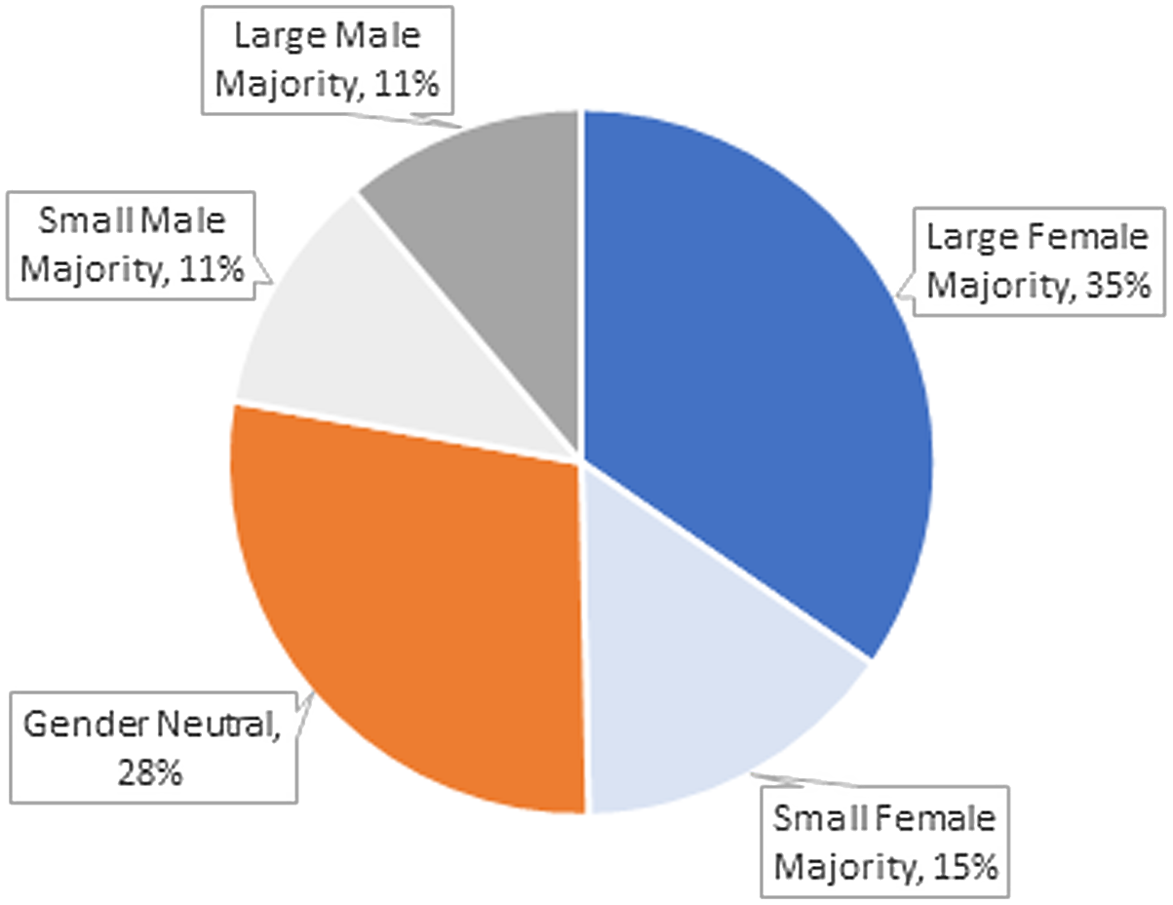
The analysis of gender demographics within these generic courses reveals that more courses were female-majority than gender-neutral or male-majority. 398 courses exist in this category across the data set: 177 have majority female populations, 116 are gender-neutral and 105 have majority male populations. Significantly more course populations were 60%+ female population than 60%+ male (Figure 5).
Gender demographics of generic music courses.

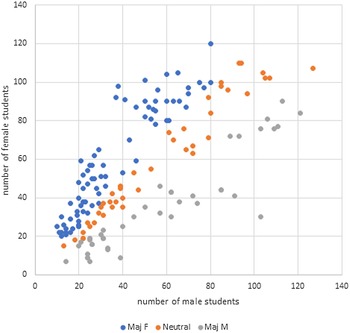
If you exclude courses for which population size is unknown or in which there are less than 30 students reported, then 135 courses remain. Within this sample size, a slightly more significant bias towards female-majority courses can be observed. 50% of courses have a female majority population (Figure 6). This can also be seen when the number of male students is plotted against the number of female students for each course (Figure 7).
Gender demographics of generic music courses with n > 30 students.

Gender demographics of generic music courses with n > 30 students plotted as number of male students against number of female students.

This suggests that women may be slightly more prevalent in courses that offer a broad academic approach to the field of music. However, the implications of this are more difficult to establish. Many of the courses within this category are offered at institutions which are considered ‘top universities’ for music – e.g., Oxford, Cambridge, Durham, Manchester, Edinburgh. Women are known to score more highly on standardised tests such as A-levels, which are highly valued by these universities. Therefore, they may be some pressures on gender demographics in this category relating to pre-university education pathways.
Whilst this may explain some of the correlation, there may also be something specific to this approach to music education that may encourage women to apply to a broader music course. For example, women often face specific challenges to pursuing performance: could a woman who has faced such challenges to their role as a “performer” be more likely to pursue performance through a course within this category which offers a more holistic approach to music and does not just focus on “performance”? Whilst some work has investigated correlations between gender and motivations to study music (Hallam et al., Reference HALLAM, CREECH, VARVARIGOU and PAPAGEORGI2020; McPherson et al., Reference MCPHERSON2015), little work has been done to examine the comparative motivations between those on generic music degrees and those studying music degrees which focus on a specific sub-topic. Qualitative work on the motivations of students on these generic music courses should be undertaken to better understand the gender bias expressed in this data.
Music and technology
The issue of what courses combine “music” and “technology” has already briefly been touched on in the introduction in relationship to issues in HESA data. This also posed difficulties for universities responding to the request and when processing the data received from universities. For example, University of West London offers a course in “Sound Engineering.” This course permits students to include elements of music production (both in the context of live concerts and in the context of studio music production) but is not focused solely on music production. A key question is raised as a result: to what extent should a course pertain specifically to music before it is included in this categorisation? Whilst there are many possible approaches, the categorisation used within this paper grouped courses that share some, or all, of these factors:
-
1. The use of software such as Digital Audio Workstations (DAWs) to create, record and/or alter musical performances
-
2. Training in the use of audio equipment (e.g., mixing desks, amplifiers, microphones, speakers) as part of musical performances
-
3. A focus on music practices facilitated by or requiring electronic/digital elements such as ‘DJ-ing’ or electronic music production.
-
4. The design, composition, recording and/or implementation of music in contexts such as interactive media, cinema, television, radio or other similar non-live formats.
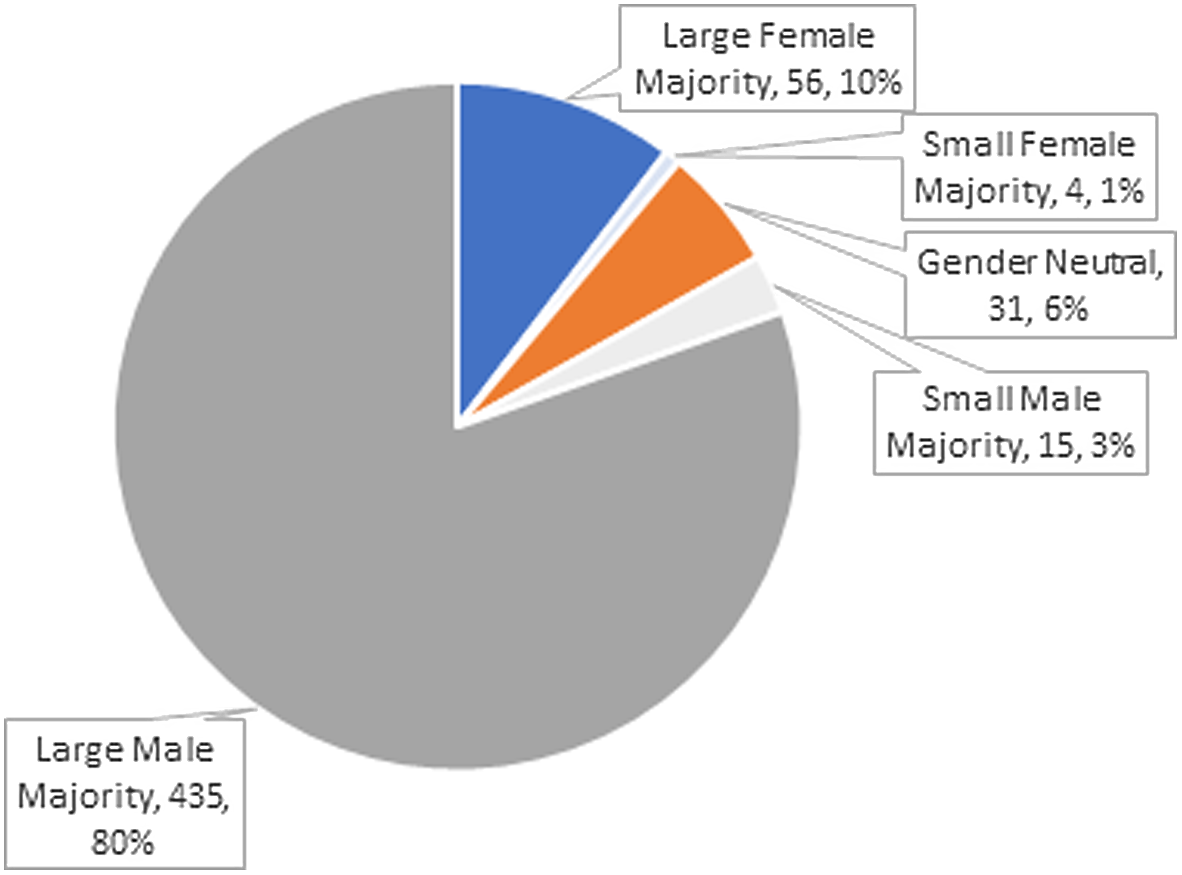
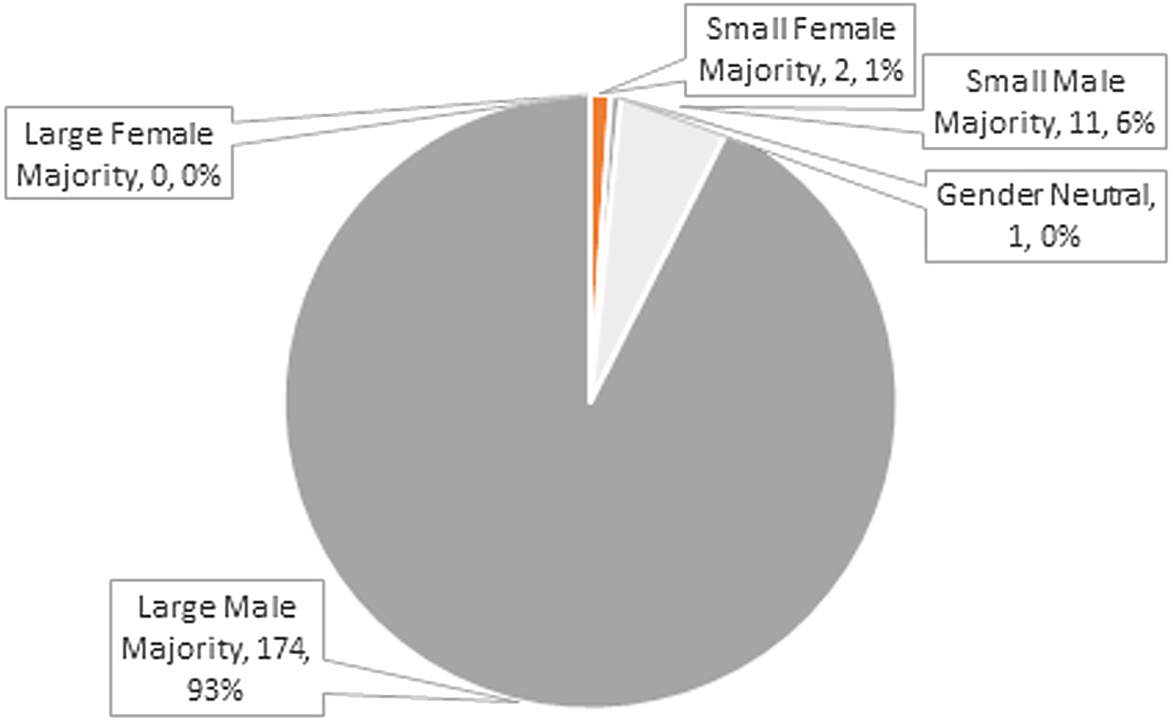
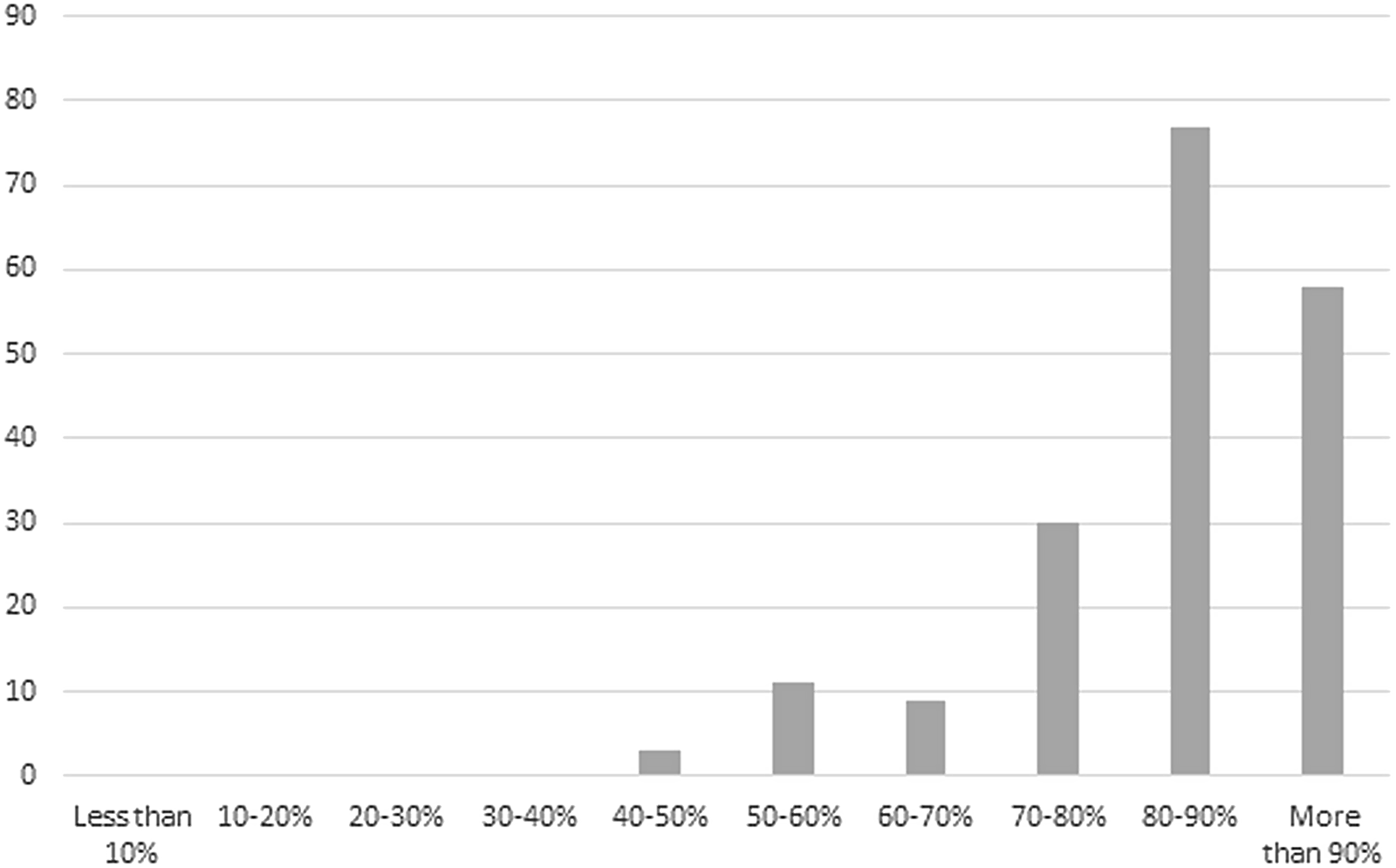
That this category is therefore (by far) the largest specific category. 541 course populations were identified. Of these populations, 60 were majority-female, 31 were gender neutral and 450 were majority-male (Figure 8). This is perhaps cause for concern, and a concern that is only exacerbated when examining larger courses: of 188 course populations with at least 30 students, only 2 had a female majority whilst 185 had a male majority. 98.2% of courses that combine music and technology were male majority. 92.4% of these courses were at least 60% male (Figure 9). Further, the vast majority of course populations with more than 30 students are at least 70% male (Figure 10).
Gender demographics of courses combining music and technology.

Gender demographics of courses combining music and technology with n > 30 students.

Male representation on courses combining music and technology between 2014 and 2020 with n > 30 students.

It is well-known that there are many obstacles and barriers to engaging in subjects that require the use of technology or are aimed at developing expertise in using technology (Webster, Reference WEBSTER2012). Concerns surrounding how these barriers – and the teaching of these subjects – may intersect with gender have been raised by other academics (Armstrong, Reference ARMSTRONG2013; Born & Devine, Reference BORN and DEVINE2015; Comber et al., Reference COMBER, HARGREAVES and COLLEY1993). It is therefore unsurprising that courses combining music and technology have predominantly male majority populations. However, the extent to which this continues to be overwhelmingly so may be considered concerning.
Music and business
Courses included within this category across the dataset, covering a wide variety of topics including “Music Business,” “Music Management”, “Artist Management”, “Entertainment Management”, “Artist Development” and “Music Promotion.” There were only 40 courses that combined business and music.
The majority of courses (31) represented within the data maintained a student population of at least 30 students across the timespan. Only 7 of the 31 course populations were male-majority, whilst 14 were female-majority. Of these 14 female-majority course populations, 12 were at least 60% female-majority, including the three largest course populations within the dataset.
Further analysis would be required to develop a better understanding of this information: is this relationship between music, business and gender represented across a broader data set? If so, are there specific intersections between music and business which appeal to specific genders more so than others? And, if there are specific intersections, how does this relate to gender demographics within the broader music industry? Perhaps this population of predominantly female music business students could be one factor contributing to the gender inequality in workers aged 16–24 in the music industry identified in the 2018 Diversity in Music Report, which reported a +10.7% increase from 54.6% women to 65.3% women in this age group between 2016 and 2018 (UK Music, 2018). However, the limitations of the data in the current data set means that it is not possible to substantiate any specific conclusions. Further study is required into the demographics of those positioning themselves at the intersection of music and business.
Popular music
Issues in the definition of “Popular Music” have already been discussed in this paper. It is therefore difficult to know whether all courses that address ‘popular music’ content have been included in this analysis. For the purposes of this analysis, the courses examined in this section are those which include “popular music” in the course title. Course titles with diminutions such as “pop music” and functionally synonymous phrases such as “music in popular culture” are also included. Courses which additionally included an indication in their title that they were specifically “popular music performance” courses have also been included for analysis.
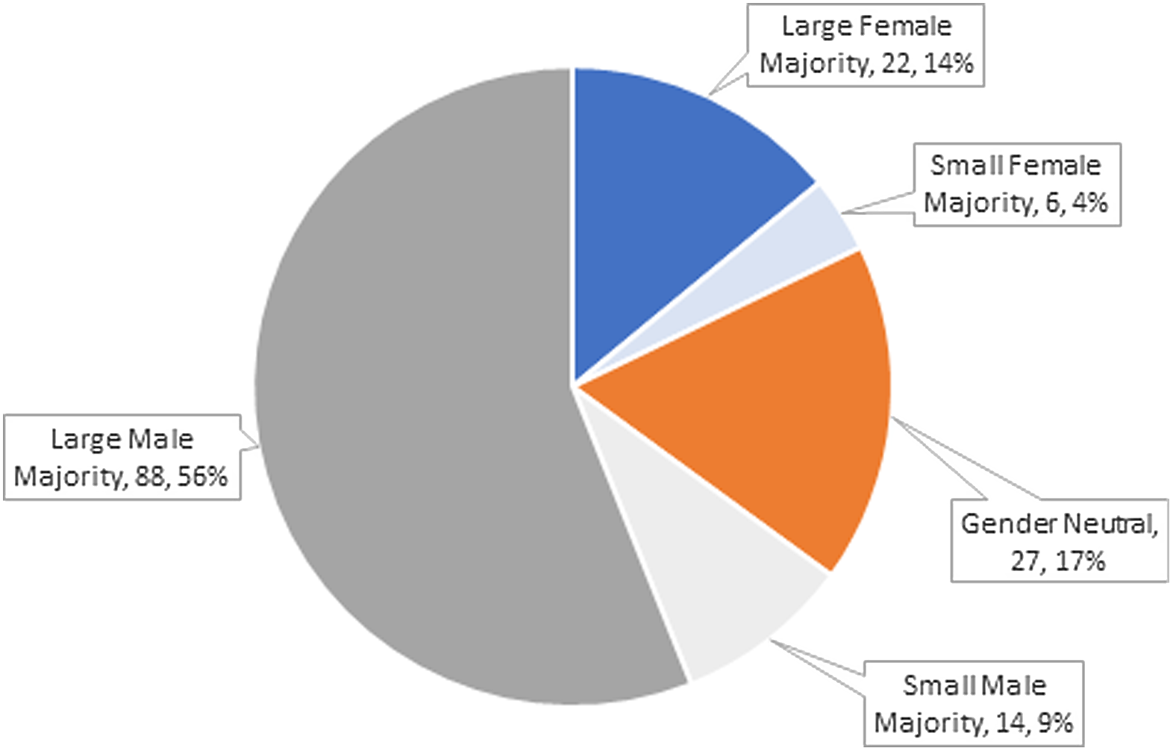
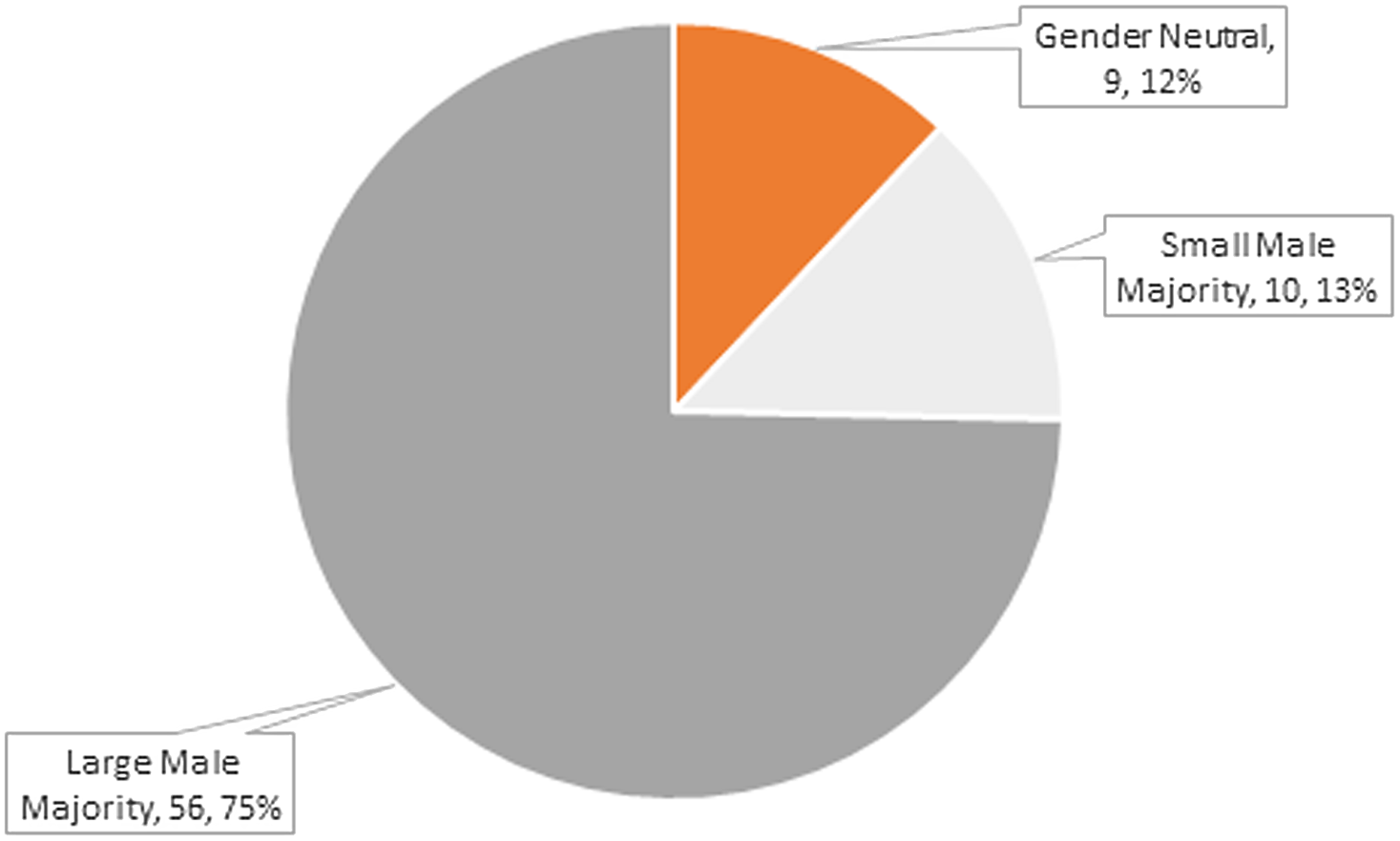
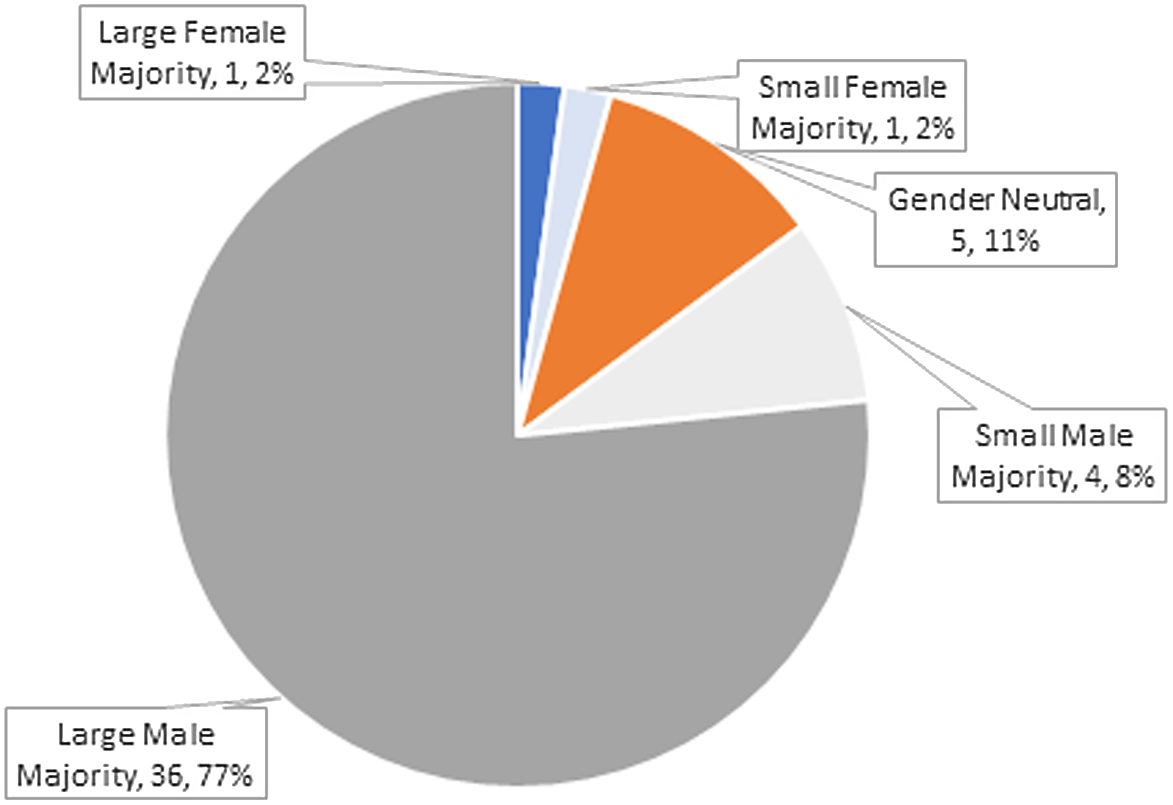
157 popular music courses were identified, of which 28 were female majority, 27 were gender neutral and 102 were male majority (Figure 11). Of 75 popular music courses with n > 30 students, 66 were male majority (Figure 12). Also identified were 47 popular music performance courses, of which 2 were female majority, 5 were gender neutral and 40 were male majority (Figure 13). Of the 17 popular music performance courses with n > 30 students identified, all but one were significantly male majority. Succinctly, popular music is studied predominantly by men.
Gender demographics of popular music courses.

Gender demographics of popular music courses with n > 30 students.

Gender demographics of popular music performance courses.

This data reflects existing observations of popular music as having a historically problematic relationship with gender, especially within education (Bennett, Reference BENNETT2017; Björck, Reference BJÖRCK2011; Green, Reference GREEN2002; MacDonald et al., Reference MACDONALD, HARGREAVES and MIELL2002; McClary, Reference MCCLARY1991; Whiteley, Reference WHITELEY1997). Relationships between popular music and music technology are also well known, which may explain some of the similarities in gender demographics between the two areas of study.
Music and theatre
Courses which combine music and theatre predominantly those referred to as “musical theatre” degrees, or some variation thereof (e.g., University of Chichester refers to it as the “Triple Threat” degree). Some courses will include music performance skills such as the teaching of an instrument, and some courses include areas outside of performance for either music, drama or theatre (e.g., stage management, history of music/stage, others). However, the predominant content of courses in this category is courses which combine the three elements of music theatre: singing, acting and dancing.
Based on responses to FOIA requests, Musical Theatre seems to be envisaged as a ‘drama’ subject in higher education – perhaps as performances of music theatre are typically couched in a specifically dramatic context (e.g., a stage or a theatre). Indeed, there were no examples of musical theatre courses taught by a Music department. All courses were taught by Drama departments, or by a department that combined the ‘performing arts.’ An ancillary question could be raised, therefore: why does HESA places “Musical Theatre” in the “Music” category, rather than the “Drama” category? It is not completely clear. However, as this paper focused predominantly on music departments, it should be noted that data surrounding musical theatre should be taken only as indicative.
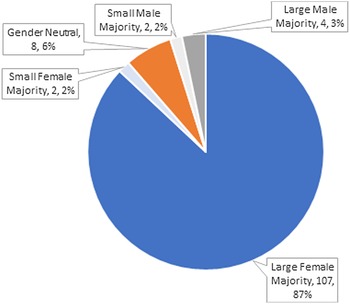
Of the 123 course populations in the data set, 109 were female majority, 8 were gender neutral and only 6 were male majority (Figure 14). To some extent this should be expected: the connected areas of dance and drama are both identified in HESA data as being predominantly female in the general university population: 85.2% female and 69.1% female, respectively, in the 2018–2019 academic year (HESA, 2020e).
Gender demographics of courses combining music and drama.

It should also be noted that only 41 course populations in this dataset had more than 30 students. 39 of these were female-majority, suggesting further support for a hypothesis that the combination of music and drama is an area more attractive to female students. This is problematic in the context of studies of the broader industry. For example, Tuckett’s reports provide evidence that “gender parity still has not been reached [in the theatre industry]” where men are significantly over-represented in many areas (Tuckett, Reference TUCKETT2019a, Reference TUCKETT2019b). That a significant majority of university students in this area are female suggests endemic issues and systemic obstacles for women hoping to pursue a career at the intersection of music and drama.
Major conservatoire courses
This category included courses offered by the music conservatoires based within the UK, which have been listed in endnote 9. Conservatoires already provide a high level of transparency in their data: e.g., demographics of students at major conservatoires in the UK are available in some greater depth directly from Conservatoires UK Admissions Service (CUKAS).Footnote 11 Recent areas of research surrounding music conservatoires include demographics of those studying specific instruments (Sergeant & Himonides, Reference SERGEANT and HIMONIDES2019), analyses of differences between pathways within conservatoire education (de Boise, Reference DE BOISE2019), demographic representation within professional orchestras (Cox & Kilshaw, Reference COX and KILSHAW2021; Doeser, Reference DOESER2016) and the experiences of specific populations within conservatoire education (Caizley, Reference CAIZLEY2020; Ginther, Reference GINTHER2015; Valenzuela et al., Reference VALENZUELA, CODINA and PESTANA2020; etc.).
Most music conservatoires publish regular equality and diversity reports, which typically include sections specifically on gender. Therefore, the FOIA data set generated for this article does not necessarily reveal much new information directly relating to conservatoires. Rather, the FOIA data set reiterates existing knowledge: conservatoire performance courses are predominantly gender-neutral, excepting Jazz Music courses which are predominantly male-majority. Composition and Conducting are primarily studied by men, whilst Musical Theatre predominantly attracts women.
Whilst the apparent gender neutrality of conservatoires at the highest level may be of interest, it should be emphasised that gender neutrality at the course level does not indicate entirely that gender gaps have been narrowed within specific sub-areas of music performance. For example, some studies have shown that there is a significant relationship between gender and instrument choice (Conway, Reference CONWAY2000; Graham, Reference GRAHAM2005; Hallam et al., Reference HALLAM, ROGERS and CREECH2008) and conservatoire students seem to show commensurate gendering (Sergeant & Himonides, Reference SERGEANT and HIMONIDES2019).
One area that this study did reveal is that some other universities offer degrees that may have some similarities to conservatoire-style courses. For example, the music department at University of Chichester, branded as the Chichester Conservatoire, offers a variety of specific “performance” degrees which share many features of conservatoire courses: an audition-focused application process, a focus on performance skills, and the training in performance as ‘art.’ Further context for those studying the landscape of performance in higher education could be provided if universities offering performance courses provided commensurate data on their students: e.g., popularity of instruments, acceptance rates for each instrument, demographics.
Conclusions and further research
Data obtained through FOIA requests confirms that student gender on music-related courses changes with relation to the specific area of music being studied. Courses combining technology and music and courses on popular music both have predominantly male majority populations, whilst generic music courses and music theatre both have predominantly female majority populations. Implications on the design and delivery of initiatives aimed to broaden access and de-exclude specific populations are therefore clear: we cannot assume a ‘one-size-fits-all’ approach to identifying excluded populations and must consider carefully both the typical populations interested in what we are offering and how we are presenting the content of the course to prospective students. The analysis within this paper may also provide further support for the hypothesised demographic polarisation happening within music education identified within earlier research (Born & Devine, Reference BORN and DEVINE2015) as most of the major areas of interest throughout this paper have some evidence of gender polarisation.
This paper also offers insights into the impact that this demographic polarisation may have on broader understandings of HME. One of the largest categories of specific study within the FOIA dataset was those combining music and technology. This was also the most gender-polarised area, with many of the largest courses having a 90%+ male population. This category has a correspondingly disproportionate impact on annual data. For example, the FOIA dataset identifies 3,861 undergraduate students of subjects combining music and technology in 2018–2019. Of these, 3,157 students (81.8%) were male. In pragmatic terms, this means that ∼18% of all students identified in 2018–2019 FOIA data are male students specifically studying music technology FOIA. We can examine the impact this might have by excluding students studying music and technology from a broad dataset analysis.
Around 9,500 male students are identified within approximately 18,500 students contained within music-related courses in 2018–2019 FOIA data (50.7%). However, only around 6,400 male students remain within the approximately 15,000 students (43.3%) not studying music technology during the 2018–2019 academic year. This suggests that the male bias within student populations studying degrees combining music and technology can significantly alter the presentation of the data for the overall field of music. Data analyses which do not separate these courses from other courses may, therefore, significantly over-represent male students.
This calculation is not intended to be conclusive: it does not include information from all universities, as not all universities replied to the data request; numbers used within the calculation are approximations; these universities may have significantly male-majority courses outside of the music and technology category; the calculation may include courses not within HESA’s “Music” subject field, as the categorisations used by HESA have a fundamentally different methodology; the calculation may be biased by the inclusion of predominantly female areas such as Music Theatre. Rather, this is an indicative calculation that suggests broader concerns that must be addressed when analysing data on HME.
This calculation provides some evidence for concerns surrounding the impact of HESA course codes on HESA data, particularly as it relates to the presentation of gender in HME. Further analysis of HESA data would reveal whether this evidence represents broader issues: it may be possible that categorisations used by HESA mask some of the underlying issues of inclusivity and diversity within HME. This concerns may be unavoidable when using HESA data as a result of the issues within their current methodology for gathering and processing data.
It is concerning that no sub-field of music explored within this paper is accurately represented by the top-level data publicly distributed by HESA: no music-related subject has any close relationship to the overall presentation of gender within HESA’s publicly available data. Whilst this should be expected to some degree, there is a correspondingly pragmatic concern: if HESA data does not accurately represent HME then interested parties may not be able to contextualise diversity and access initiatives in a precise way. More accurate data would assist future research and work into access, diversity, and inclusivity. It is also important to highlight that these issues must be considered in future analyses, as extensive changes to the methodology of gathering and categorising data on higher education courses would not be able to rectify historic issues in data already gathered.
Some changes to HESA’s methodology should be considered in order to address emerging issues. Principally, HESA categorisations for music-related subjects require further examination. The limitations of the current categories need to be more fully understood so that future examinations of historic data can be fully informed. This would likely include auditing music-related courses and their associated codes across the UK: how many courses are incorrectly categorised? How many courses are misrepresented or misidentified within HESA data? The process of categorisation should also be re-examined: can clearer guidance on what courses qualify for which category be provided to universities to help prevent mis-categorisation? How does HESA envisage handling courses which encompass many topics, such as is the case within a large proportion of music degrees?
The granular course-level approach used within this paper offers one immediate solution to the underlying issue of mis-categorisation. Therefore, universities should be encouraged to make their course-level data public as a matter of course, to allow for researchers to investigate inequality without allowing demographic biases within one area of music education to affect the broader depiction of representation. Some universities, such as Cambridge and Oxford, already publish some course-level data publicly each year, and this transparency should be adopted more broadly.
It should be admitted that an ideal solution for fixing the underlying issues in categorising music courses is not necessarily clear, especially given a continued trend across all levels of music education to unify teaching of all aspects of music under one qualification title (e.g., AQA integrate “Music Technology” within their “Music” A-level course). This trend will pose issues for those wishing to examine music education in this critical period. In the longer term, it seems likely that an even greater degree of granularity may be required – e.g., “what proportion of female students elected to pursue optional modules in Composition during their degree?” However, further increasing the granularity poses other challenge as more context is required to understand this data fully (e.g., universities may not be willing to share detailed information about course content: sharing data with commercial competitors may be unpalatable to administrators; there are more privacy concerns in granular data; etc.).
New approaches to gathering and analysing music education data will need to be found as music education continues to develop contemporary holistic approaches to teaching the subject matter: researchers must remain conscious of the possible effects of their methodology when analysing HME data to ensure that these new approaches avoid implicit bias. In particular, methods for differentiating between modular courses categorised within HESA data releases on general music codes need to be developed.
Consideration should also be given to the specific challenges faced in studying postgraduate music education. Statistical data will struggle to address this area due to the limited number of students pursuing music education beyond the undergraduate level: after the data anonymisation process, it is likely that little useful information can be released to researchers. This is a key area for further qualitative study, as it is clear that quantitative data analysis will struggle to provide nuanced insights into the topic.
This paper only identifies the gender gaps present within areas of HME and does not aim to provide a novel explanation for their existence. The research may also allow for further identification of the underlying factors that lead to these gender gaps, developing on those explored by Green (Reference GREEN1997), Armstrong (Reference ARMSTRONG2013), Born and Devine (Reference BORN and DEVINE2015), Scharff (Reference SCHARFF2019) and others. It should be noted that there are other areas of interest not engaged with throughout this article which are also of importance, such as social inequality (see: BULL, Reference BULL2019). Further research would be needed to develop gender data presented within this paper on intersectional axes.
One specific area which may illuminate obstacles and allow the structuring of such research into intersectional inequalities in music education may be an analysis of entry requirements to HME courses. Observations made during research for this paper suggested that generic music courses predominantly require higher attainment in formal qualifications as part of their criteria for applicants than other courses. An examination of entry requirements to HME may reveal more information about barriers that potential students may face across multiple demographic axes.
For example, one area of particular interest would be to uncover the extent to which the same gender gaps exist across different music-related pre-university courses (including GCSEs, A-levels and other Level 3 Qualifications). For example, do gender inequalities between qualifications combining music and technology and other music qualifications exist at other levels? It seems likely and could explain some of the gender discrepancy in higher education. However, this data is not readily available for many areas of the UK: in response to an enquiry, the Department for Education stated that their available data does not distinguish between Music and Music Technology for either GCSEs or A levels. Collaboration with bodies such as UCAS or direct engagement with secondary schools throughout the UK will be required to further develop an investigation into these areas. Other relevant institutions such as the Associated Board of the Royal School of Music (ABRSM) do not currently publish the demographic data of their examinees: something which has been requested in other investigations of relationships between gender and music (e.g., Bain, Reference BAIN2019) but which has not yet come to fruition. As per these earlier investigations, it is likely that a full understanding of the differences between fields of music with regards to the gender of those engaging with them will require some level of engagement from examination boards and educational bodies.
Such a study would also permit for a better understanding of how these requirements – and other requirements listed by universities – act as an obstacle to accessing HME: e.g., courses which have a formal requirement of an ABRSM exam may bias towards candidates of specific demographics if candidates for ABRSM exams are disproportionately distributed. This would be of interest not only on the basis of gender, but also on other demographic qualifiers, such as ethnicity, socio-economic status, and sexuality.
Supplementary material
For supplementary material accompanying this paper visit https://doi.org/10.1017/S0265051722000249