I. “Finding Luther”: An Introduction
One of the most remarkable by-products of the massive investments in infrastructure and architecture in decaying historic central German towns after the collapse of communism was the birth of “Luther archaeology.” The State Office for Heritage Management and Archaeology of Saxony-Anhalt accompanied the glut of diggings and demolitions carried out in connection with the infrastructure and construction measures after the political transition with rescue excavations aiming to uncover, record, and salvage as much information as possible from these towns’ disappearing “underground archive.” Excavations in the towns of Eisleben, Mansfeld, and Wittenberg, where Martin Luther spent his life and would transform world history, and more particularly in the very sites the reformer resided and worked, revealed such a wealth of new and unexpected information about the lifestyle of the reformer, his family, and his close associates that the term “Luther archaeology” was coined to sum up the results of the excavations and their analysis.
The reason that the results of Luther archaeology are becoming widely appreciated as a crucial new source to evaluate the life and environment of Luther is the fact that, despite the reformer's great popularity and the reams of paper that have been devoted to his biography, little or nothing was known that was verifiable about Martin Luther's family background and childhood. His daily life as a theology professor and family man in Wittenberg remained equally obscure, as did the domestic material culture that accompanied his entire life span.Footnote 1
Luther archaeology is focused on three towns that now lie in the state of Saxony-AnhaltFootnote 2 : Eisleben, where Luther was born and died; Mansfeld, where he spent his childhood; and the university town and princely residence Wittenberg, where he would spend more than thirty years, first as a monk, then as a professor, and finally as the leader of the Reformation. His birth and death place in Eisleben (each a museum since 1693 and 1863, respectively), his parents’ home in Mansfeld (a museum since 1885), and his residence in Wittenberg (a museum since 1655, significantly expanded in 1877) have attracted visitors since the reformer's death and were maintained and gradually turned into or rebuilt as publicly accessible memorials in the seventeenth to nineteenth centuries. This not only singles them out as examples of the earliest museums dedicated to a single person in Europe, but also clearly as sites of a memorial cult and pilgrimage, both of which Luther so roundly condemned and proscribed. An important side effect of their dedication as memorials was the preservation of the architectural and archaeological substance so intimately associated with the reformer's life. And it was in these sites that excavations revealing Luther's material cultural legacy began.
The earliest of these excavations began in 2002 in Mansfeld, when rescue excavations accompanying the thorough renewal of the town's streets revealed foundations of the medieval town's buildings, including a substantial structure in the vacant lot next to the humble house that has traditionally been designated as Luther's parents’, that is Hans Luder's,Footnote 3 home.Footnote 4 These excavations, architectural surveys, and the accompanying archival work now make it clear that the Luders lived in an extensive and prestigious residence spanning what are now three residential plots.Footnote 5 In 2003, excavations inside the lot revealed a building pit, which had been filled with debris and a wealth of material (discussed below) that can be intimately associated with the Luder family. Further excavations have taken place on the site of the “Goldener Ring” public house, a completely preserved late medieval pub just across the road from the Luder residence which was demolished in 1963.Footnote 6 Well-preserved late fifteenth-century beer and wine glasses recovered from the site help augment the badly fragmented assemblage from the pit in the Luder property.
In Wittenberg, which has not surprisingly emerged as the hub of research into the material culture of the Reformation, excavations in the garden area at the back of the Luther House, which took place in 2004, proved to be particularly fruitful. They revealed an astonishing wealth of objects from the first half of the sixteenth century, many clearly associated with Martin Luther, his family, and their tenants. These results will be discussed in detail below, in addition to a cursory introduction to the wealth of further excavations in other places throughout Wittenberg, among them properties of Luther's associates and printers.
Finally, in Eisleben, excavations along the Lutherstraße in 2005 and 2006 revealed the foundations of the original house where Luther was born and which was destroyed during the fire that devastated Eisleben's Saint Peter's quarter, a suburban craftsmen's neighborhood, in 1689.Footnote 7 The excavations revealed that Luther was born in a very modest house and that its reconstruction as a grand patrician's residence in 1689 was a reflex of Luther's veneration rather than of historical realities. A pipe clay figure of a swan, one of Luther's heraldic symbolsFootnote 8 , excavated from the grounds of a neighbor's house makes it likely that pious Protestants were being plied with cheap souvenirs just like their Catholic forebears at saints’ reliquary shrines.Footnote 9
Synthetic accounts of Luther archaeology emerged in 2008 in the framework of the State of Saxony-Anhalt's central exhibition “Fundsache Luther – Archäologen auf den Spuren des Reformators” (“Finding Luther – Archaeologists on the Reformer's Trail”) at the State Museum of Prehistory Halle (Saale).Footnote 10 A comprehensive program to publish and analyze the abundance of evidence, not only from the excavations but also accompanying architectural, archival, and scientific research, was carried out from 2010 to 2015.Footnote 11 Our exhibition project “Here I Stand,” in the run up to the 500th anniversary of Luther's publication of his Ninety-Five Theses, has once again provided a forum for cutting edge research.Footnote 12 In this article, we would like to introduce you to new facets of Martin Luther's life by giving you insights into the two vital excavations that lie at the heart of Luther archaeology.
II. Excavations in Luther's Parents’ Home in Mansfeld: The Testimony of Bones, Seeds, and Sequins
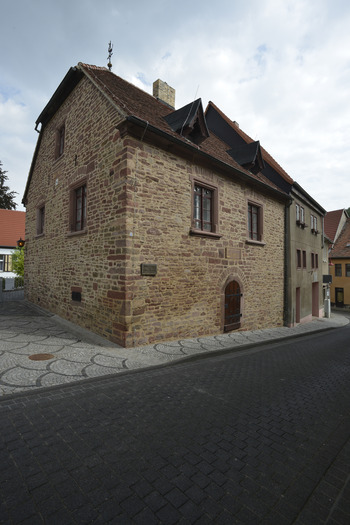
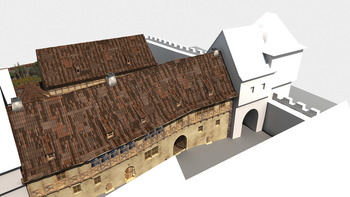
In order to understand the enormous impact that the excavations in Luther's parents’ home have had on the perception of Martin's youth and the social position of his family,Footnote 13 it is worth rehearsing the widely held view, championed by the reformer himself in his table talks, that his father, Hans Luder, began his career in Mansfeld as a hands-on miner of poor peasant descent and his mother brought home firewood on her back.Footnote 14 Mounting archival evidence has shown that Hans Luder was in fact a highly successful mine and smelting operator in Mansfeld's burgeoning late fifteenth-century copper Klondike, and that he came there not as a miner but as an investor.Footnote 15 Nonetheless, many, including authoritative scholars, have still clung to Luther's homespun, rags-to-riches story, which shows God's hand guiding the Luders and their gifted son Martin to deserved prosperity. This narrative had been given additional weight as it seemed to reflect the humble realities of the Luders’ frugal Mansfeld house (fig. 1). Yet, through new evidence, this identification has also been called into question. Architectural surveys and archival research inspired by and supplementing the excavations have revealed that not only the vacant lot next to the “Luther House” but also one building beyond had been conjoined by Martin's father, Hans Luder, to form a coherent, ostentatious residential structure with a wide gate leading into a courtyard flanked by outbuildings (fig. 2). This is a far cry from the humble cottage-like segment of this once-grand building thought to have been the Luders’ house since the nineteenth century.Footnote 16 In 1807, the Napoleonic authorities of Jérôme Bonaparte's short-lived Kingdom of Westphalia, aiming to secure their grip on the ore-rich Mansfeld Land, had levelled the central tract of the Luther house and built their neoclassical mairie (French city hall) on the foundations of its back buildings, clearly intending to occupy this crucial site of Protestant German memory and thus demonstrate the sweeping nature of their secular revolution.Footnote 17 The scanty remains of the Luders’ once proud building passed to different owners and only the remaining southern wing retained its connection to Luther in popular memory.Footnote 18
Present day photo of the Luder home (Luther's parents’ home), Mansfeld: Photo by Marc Ritchie, 2015, State Office for Heritage Management and Archaeology Saxony-Anhalt, Halle (Saale).

Digital reconstruction of the Luder home, Mansfeld, around the year 1500: Digitale Archäologie, Freiburg im Breisgau.

Further information about the Luders was provided by a construction pit uncovered in the midst of the middle tract which was dug around the turn of the sixteenth century during work on the cellar and refilled suddenly with an unusually rich assemblage of artifacts, including remains of rich textiles and even a quantity of small denominated coins.Footnote 19 Perhaps, as the excavators propose, this was done in reaction to plague epidemics known to have ravaged Mansfeld during the turn of the sixteenth century and to have cost the Luders two sons in 1506. A standard reaction to plague at the time was to destroy, burn, or bury all household effects related to a plague-stricken household. This is what scholars presume happened here.Footnote 20 But perhaps less dramatic events, such as a wedding feast, might also account for the surprisingly valuable finds in this building-turned-refuse-pit. Be this as it may, the insights that these multidisciplinary analyses of this rubbish provide for understanding the ambience of Luther's youth are hard to overestimate.Footnote 21
Dining with the Luders
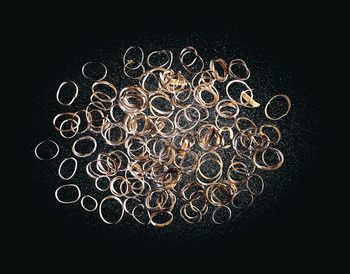
One can begin with the testimony of the over 7,000 animal bones as well as archaeobotanical remains. Meat loomed large in the family menu. An analysis of the animal bones shows pork making up 60 percent of the domestic mammal consumption, followed by mutton (sheep or goats) with about 30 percent, and 10 percent beef. Domestic fowl dominated meat consumption, weighing in with 2,000 bones (fig. 3). Remarkably, geese top the menu, followed by young chickens, and occasionally ducks and pigeons. That the Luders preferred and could afford high quality meat is shown by the fact that most of the bones come from young animals, above all, tender pork from young pigs.Footnote 22 The large number of tiny bones from songbirds suggests that they were a remarkable, if ubiquitous, feature of the Luders’ diet. This reflects a widespread late medieval practice of trapping birds with nets and glue, which was a typical pursuit of boys. It is thus likely that these birds, predominantly robins and chaffinches, but also song thrush, common whitethroat, and yellowhammer, were being caught by members of the Luder household, quite probably including young Martin. Corroborating evidence for this comes from a number of finished bird calls and carving waste whittled from goose bones in the pit.Footnote 23 In contrast to song birds, larger birds were considered game and hunting them was reserved for the nobility. Remarkably, a blackcock bone was recovered from the pit, which can only mean that the Luders had received game as presents from the lords of the castle which towered over the town, the counts of Mansfeld, with whom Hans Luder is known to have had intensive business dealings. Footnote 24
House fowl bones from the excavated pit at the Luder home, Mansfeld: Photo by Juraj Lipták, State Office for Heritage Management and Archaeology Saxony-Anhalt, Halle (Saale).

As a pious family, the Luders embraced the lengthy fasting periods, up to 140 days a year, including all Fridays, required by the church.Footnote 25 Large numbers of tiny fish bones from the pit characterize the appropriate meat-free menus. Fresh water fish, particularly from rivers and streams, were hard to catch and thus expensive; nonetheless, various members of the carp family, but also pike, zander, perch, and eel, ended up on the Luder family's table.Footnote 26
By the fifteenth century, vast fishing fleets, an industrialized curing industry on the Baltic and Atlantic coasts, and highly efficient distribution mechanisms meant that salt herring, cod (stockfisch), and place were in plentiful supply and affordable, even in central Germany. They were obviously part of the Luders’ menu.Footnote 27 Like the mammals, the fish bones show the Luders to be a prosperous family, eating from a well-provisioned, diversely stocked larder.
Between Food, Healing, and Sorcery: Plant Remains from Margarethe Luder's Kitchen
Microscopically small botanical remains, sieved out of the soil from the pit, while seemingly unspectacular, have given further, and sometimes unexpected, insights into young Martin's lifeways.Footnote 28 Obviously grains, mainly rye, were a cornerstone of the Luders’ diet.Footnote 29 Seed remains show that a wide range of local fruits and nuts, some cultivated, but others obviously gathered from the wild, including plums and damson plums, sloe berries, elder berries, raspberries, wild strawberries, and hazelnuts, were also being eaten.Footnote 30 Next to this homely fare, grapes, probably dried as raisins, and certainly figs, which were not native to central Germany, were luxurious imports.Footnote 31 More unusual finds include plants which played a role in medicinal remedies, but also in witchcraft, in which Martin and his mother firmly believed.Footnote 32 These include poppy seeds and dill, which could both find use as seasonings and medicine. Black henbane is more exclusively medicinal and in Luther's day it was known both for its use as an analgesic and sedative but also as a potent hallucinogen. Saint John's Wort was and is still used as an ingredient in medicine but was also burnt in Saint John's fire to ward off misfortune and disease. The interface between domestic medicine, superstition, and witchcraft in the late medieval period was fluid and it is interesting to see evidence for this in the Luders’ larder.
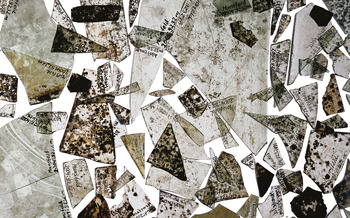
Another indicator of the high social standing of Hans Luder and his family, unsuspected at first glance, is the circa 200 fragments of window glass which were discovered in the refuse pit (fig. 4). Around 1500, glass was being mouth blown in makeshift kilns deep in the forests of central Germany by semi nomadic craftsmen. Only a few specialist glass houses had the capacity to make flat window glass panes, which had to be cut out of large, handblown cylinders and flattened on iron trays. Window glass was thus an expensive luxury at the time and, unlike the Luders, most town dwellers sealed their windows with translucent parchment or mosaics of thick crown glass, spending their winters in unrelenting gloom.Footnote 33 In the Luder household, daylight shining in the rooms even in the wintertime would have had a deeper meaning. On the one hand, light was considered synonymous with virtue and purity, but on the other, well-lit rooms were a prerequisite to reading and writing which was, of course, a cornerstone of Martin's later development.
Window glass shards from the excavated pit at the Luder home, Mansfeld: Photo by Juraj Lipták, State Office for Heritage Management and Archaeology Saxony-Anhalt, Halle (Saale).

A Woman's World
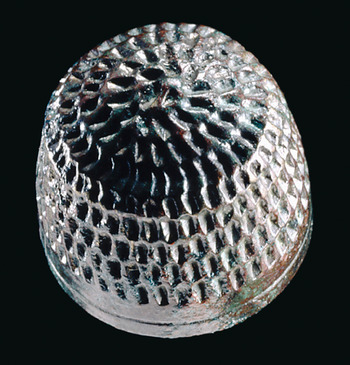
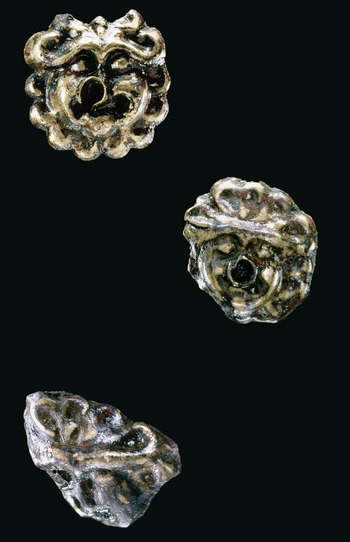
The only surviving image of Margerethe Luder, Lucas Cranach's portrait of 1527,Footnote 34 shows her as a dowdily dressed, care-worn old woman, and Luther and Melanchthon both dwell on her industriousness, piety, strict morals, and frugality.Footnote 35 While the fact that she was born to a well-to-do burgher family and was married to one of the most prosperous businessmen in Mansfeld has long been known, it is left unspoken in many written accounts.Footnote 36 Her wealthy background is, however, clearly reflected in the remains of female finery that have survived from the refuse pit. Accessories of fancy costume stand in clear contrast to the traditional image of pious frugality championed by Luther himself in later life. Some of the costumes the women of the house wore may have been homemade, or at least repaired in the house, as a sewing needle, a thimble (fig. 5), and scissors survived in the pit.Footnote 37 Much of what was found, however, must have been made by seamstresses catering to Mansfeld's upper classes. Of the over 300 clothing accessories which have survived the centuries of decay in the pit, many are pins, hook and eye closures, and aglets, which were a must for closing and lacing the elaborate laced, open-fronted gowns to expose the fancy chemise beneath it.Footnote 38 There is an unusual amount of stamped brass jingle jangles and sewed on rosettes and spangles meant to liven up clothing particularly for festive occasions.Footnote 39 In particular, brides’ crowns, exotic-looking headdresses made of wire festooned with flowers, were given a sprinkling of spangles and jingle jangles, letting the bride sparkle like a queen.Footnote 40 Small grotesque masks, known as mascarons, which were punched out of brass sheet, deserve special attention (fig. 6).Footnote 41 With wild, shaggy hair or manes, googly eyes, puffed up cheeks, bulbous noses, and leering mouths, they are both hideous and fun. Besides adding pizzazz to formal finery, these little grotesques illustrate the all-pervading influence of humanism at the turn of the sixteenth century. Grotesque is a word used to describe a bevy of fanciful monsters which were inspired by, and named after, the startling discovery of Emperor Nero's buried party palace, the “Domus Aurea,” at the end of the fifteenth century, whose underground vaults seemed like vast grottos, hence the name. These underground halls were decorated with gaudy frescoes littered with Gorgons’ heads and other grotesque masks. This new world of ancient Roman fantasy electrified humanist-minded Renaissance architects and artists who were looking for ways to express the luxury and exuberance of their age while paying respect to the artistic achievements of classical antiquity. They proceeded to apply grotesque motifs to the Italian palazzi, and soon northern nobles and house-proud burghers were encrusting their castles and homes with the same droll motifs. The fashion quickly spread to other media. Ludicrous masks and fanciful monsters could be found entangled in flowery foliage on anything from ceiling panels and furniture to stove tiles, and particularly the title pages of the books pouring out of the booming publishing industry, assuring a vast distribution of this new fashion. Not surprisingly, jewelers were also quick to embrace this fanciful world of whimsical masks, and they began to enliven jewelry and clothing mounts with miniaturized grotesque motifs. The shaggy wild faces preserved here, while clearly primarily decorative, would also have evoked the world of the legendary and shaggy “wild men,” uncivilized figures of fun who represented a raucous otherworld to the prim and orderly realities of late medieval domestic life. It is a remarkable tribute to the fast-paced communication networks, fuelled by the printing press, that, within a few decades, the decor of Nero's golden palace could be found jingling on the party dresses of the women of a businessman's family in the Saxon provinces.
Thimble from the excavated pit at the Luder home, Mansfeld: Photo by Juraj Lipták, State Office for Heritage Management and Archaeology Saxony-Anhalt, Halle (Saale).

Grotesque mask clothing appliques from the excavated pit at the Luder home, Mansfeld: Photo by Juraj Lipták, State Office for Heritage Management and Archaeology Saxony-Anhalt, Halle (Saale).

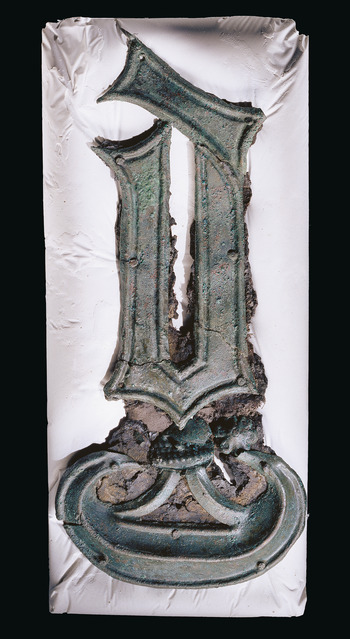
Further evidence for luxurious women's costumes is provided by an eighteen-centimeter cast bronze mount in the form of a gothic capital D, which originally decorated the tip of a leather belt (fig. 7). Long belts were typical for courtly fashion in the late fifteenth century and gathered a lady's dress under her breasts, passing through an ornate buckle and swept downwards with the decorated tip dangling just above the floor. Obviously, a woman wearing such an accessory was, on the one hand, imitating courtly fashion but, on the other, showing herself to be literate. This was no commonplace in medieval society, where schooling was almost entirely reserved for boys. During the fifteenth century, however, the burghers in prosperous towns were teaching their daughters to read and write on a regular basis, allowing them to participate more fully in public life. The success of the Reformation was also due to the fact that women were exposed to and could respond to the printed word. In many cases, letters mounted or embroidered on women's costumes spelled their names, and the fact that Martin had a sister called Dorothy gives this find a very personal note.Footnote 42
Belt mount in the shape of a Gothic D from the excavated pit at the Luder home, Mansfeld: Photo by Juraj Lipták, State Office for Heritage Management and Archaeology Saxony-Anhalt, Halle (Saale).

Children's Toys: Between Raucous Fun and Piety
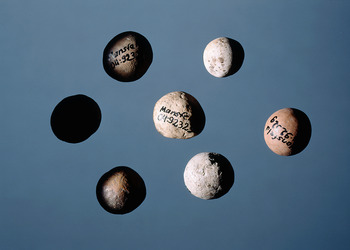
Finds that can be directly related to the sphere of childhood play a special role in the analysis of the Luder household's refuse.Footnote 43 Toys are a clear example: seven clay marbles, which were obviously handmade, are likely to have been formed by the children of the Luder home (fig. 8).Footnote 44 Children would roll them between their palms and toss them into the hearth. After they cooled down, they were used in a golf-like game, with players snapping the marbles into a tiny hole. A phalange/finger bone of a cow, filled with lead to ensure stability, was used in a rustic form of bowling.Footnote 45 A chain of phalanges was lined up against a wall and another bone hurled against it, knocking down as many finger bones as possible. Both the marble games and bowling with cattle phalange pins are shown in Pieter Bruegel the Elder's masterpiece Children's Games from 1560,Footnote 46 which shows a townscape teeming with children playing all manner of games in the squares and streets. Other toys found in the refuse include the trigger of a miniature crossbow and a bird-shaped whistle which would warble when filled with water and blown into.Footnote 47 Obviously, it is tempting to think that young Martin may have played with some or all of these toys.
Handmade marbles from the excavated pit at the Luder home, Mansfeld: Photo by Juraj Lipták, State Office for Heritage Management and Archaeology Saxony-Anhalt, Halle (Saale).

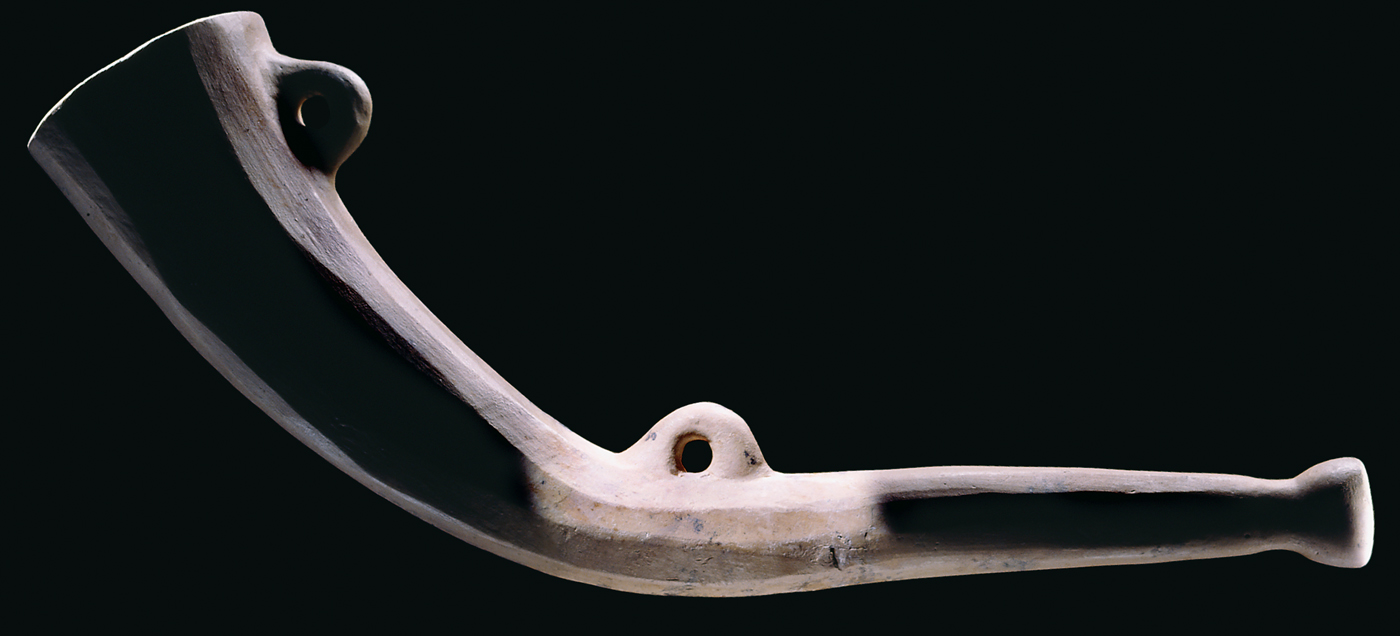
Another object, possibly used as a toy, the fragment of an Aachhorn, a horn made of unglazed clay (fig. 9), has a pious background.Footnote 48 It was originally a memento of a pilgrimage to Aachen/Aix-la-Chapelle in the west of Germany. The town's cathedral, which once served as Charlemagne's palace chapel, still holds what was then considered to be the most important collection of textile relics in Christendom: the Virgin Mary's dress, baby Jesus’ diapers, Jesus’ loin cloth, and the kerchief used at the decapitation of John the Baptist. Fervent pilgrims crossed vast distances to see these holiest of garments, whose amassed sacred power could grant atonement and indulgence even when serious crimes were involved.Footnote 49 The horns themselves were mass-produced in west German potteries and sold in the thousands in market stands that crowded around the platform in the town's main square where the relics were shown. Contemporary sources describe the frenzied agitation of the pilgrims when the holy garments were shown, incoherent pleas for God's grace and mercy, followed by a deafening roar when the seething throngs all blurted into their freshly bought Aachhorns. Fragments of the virtually indestructible Aachhorns are regularly found in medieval excavations from London to Prague. They seem to have not only been pure mementoes, such as the pilgrims’ badges, but also found secular use as signal horns and children's trumpets. It is interesting to note that Martin Luther, who would later in life reject the saving power of relics and the pilgrimages associated with them, came from a family which had a keepsake from one of Europe's main pilgrimage centers.
Fragment of an Aachhorn from the excavated pit at the Luder home, Mansfeld: Photo by Juraj Lipták, State Office for Heritage Management and Archaeology Saxony-Anhalt, Halle (Saale).

Destructive Heat
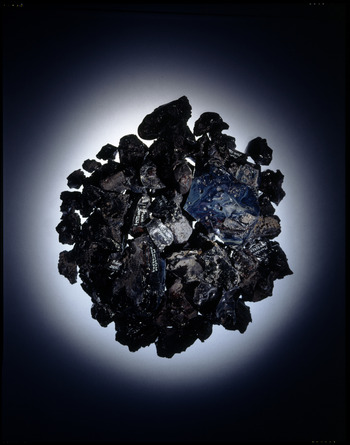
Finally, it is worth mentioning two highly unspectacular, yet very significant, categories of finds: glassy copper slag (fig. 10)Footnote 50 and deformed rusty nails,Footnote 51 which abounded in the Luders’ refuse pit. Their significance can only be appreciated in the context of the relentless impact that the copper mines and refineries, which Hans Luder was so intensely involved in, were having on the environment.Footnote 52 The masses of wood that were needed to shore up the mining shafts and build the mines’ and refineries’ buildings were paled by the massive amounts of wood and charcoal that were needed to feed the ravenous fires of the smelting kilns. This was, of course, compounded by the daily needs of households looking for fuel to heat their homes and cook their food. It would take another century before coal would replace wood in industrial fires. We must imagine the Mansfeld mining field, which began just to the west of the town, looking very similar to the central panel of Hans Hesse's “Mining Altar” painted for the town church of the Saxon mining town of Annaberg in 1524.Footnote 53 It shows an apocalyptic industrial landscape, dotted with molehill like pingen shafts surmounted by rings of tips and makeshift lean-tos, housing workshops, and kilns, virtually denuded of vegetation. Not surprisingly, sixteenth-century views of Mansfeld and its castle show it before a backdrop of once thickly wooded hills covered in grass and bushes.Footnote 54 Under these conditions, firewood, which was plentiful in most regions, quickly became an expensive commodity. Perhaps the most drastic way of coping with this problem was harnessing the heat of slags from the refining kilns. Up until the early twentieth century, glowing slags were collected at the end of the working day in central European mining districts and carried home in specially made water soaked leather bags where they would still be hot enough to bring water to boil. As a smelting master, Hans Luder would have had ample access to the glowing hot refuse of his copper refineries and masses of glassy slag, crackled and splintered by contact with cold water, were found in the refuse pit of his home. Interestingly, they were found together with a further symptom of wood shortage, large amounts of bent and twisted rusty nails from recycled wooden constructions chopped up for firing in the family's hearth and stoves.
Slag from the excavated pit at the Luder home, Mansfeld: Photo by Juraj Lipták, State Office for Heritage Management and Archaeology Saxony-Anhalt, Halle (Saale).

There is, however, an important subtext which underlies the description of the finds made in Hans Luder's house. Martin Luther was born and spent his youth in a fluid social environment. His father represented the increasingly educated and self-confident entrepreneur class whose rapid economic and social ascendance in the proto-industrial mining regions was exploding the ridged confines of medieval hierarchies and thus calling God-given patterns of authority and privilege into question.Footnote 55 This is underscored by the peasant born Hans Luder's ostentatious residence and the omnipresence of luxury items in its garbage. Furthermore, these findings also show that this precarious situation also extended to the physical environment in which Martin spent his youth. Far from being a bucolic paradise bearing the immutable stamp of God's creation, Mansfeld's countryside was rapidly being degraded by manmade technology and industry to the brink of ecological crisis.Footnote 56
But there is also a more intimate aspect to these finds from Luther's family's home which allows us to make such a thick description of young Martin's childhood environment. While the surviving historical accounts show us young Martin as a diligent school boy singing in Mansfeld's grand church's choir, it is archaeology that allows us to envisage a boy playing raucous games in the dusty family courtyard, dancing with his fancily dressed sisters at roaring family feasts, and taking his evening bath in water heated by sizzling slagFootnote 57 .
III. Finding Family Luther: Excavations in the Luther House's Garden
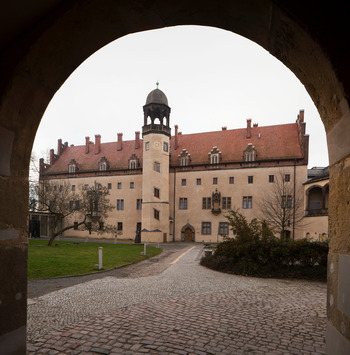
A whirlwind career saw Brother Martin arriving in Wittenberg as a simple Augustinian monk and student in 1508 and being buried there as the de facto leader of northern European Christendom in 1546. But throughout, he would live in the same house (fig. 11), the residential tract of the “Blackfriars’ Abbey” (Schwarzes Kloster) built by his Augustinian order and, from 1503 on, serving as the representative headquarters of the newly founded Wittenberg University,Footnote 58 which incorporated walls of a former hospice and the medieval city defenses. Next to the prince elector's palace at the opposite end of town, it was the largest residence in Wittenberg. Initially, Martin Luther would have called a simple cell his home; later, as university professor and district vicar, he would have enjoyed larger quarters. When he returned to Wittenberg after hiding in the Wartburg in 1522, he moved into the abandoned and partly desolate building, which he would later compare to a building site. Ten years later, the prince elector, who, with Luther's approbation, was seizing the church's vast properties,Footnote 59 presented Martin Luther, who had married the escaped nun Katharina von Bora, the cloister and its estate as their own. There they would live until Martin's death in 1546 with their five children, a series of servants and dependents, ten to twenty student boarders, and a varying number of overnight guests. In fact, the Luthers, in particular Katharina, were running a complex and remarkably successful lodging and publishing business.Footnote 60 After the reformer's death, the family fortune eroded and, in 1564, the university bought and extensively renovated the building.Footnote 61
Present day photo of the Luthers’ House, Wittenberg: Photo by Marc Ritchie, 2016, State Office for Heritage Management and Archaeology Saxony-Anhalt, Halle (Saale).

In 2004–2005, a rescue excavation took place in the cramped space of the Luther House's garden in preparation for major renovations, which included sinking the garden's surface in order to create access to the cellar vaults. This excavation took place under enormous time pressure and the details of it have only been published in sketchy preliminary reports.Footnote 62 The schematic reports indicate that the excavations revealed a series of structures that had been built into the hollow of the defunct medieval town moat belonging to the newly founded cloister, including the foundations of a razed annex labeled as the “laundry” on historical plans. This tower-like structure, which included a latrine and heating facilities, is thought to have housed the abbot's chambers, followed by Luther's study. Archaeologists suggest that it was the site of Luther's crucial tower experience.Footnote 63 The circa 50,000 finds from this dig date from the Bronze Age up to the eighteenth century. Of these, circa 40,000 can be archaeologically dated to the first half of the sixteenth century, that is, the time during which the Luther family lived in the building. A small coin hoard, whose latest members from the upper layers of the fill were struck in 1562/1563, indicates that the rubbish deposition may have pinnacled during the renovations after the house was sold in 1564.Footnote 64 The reasons for this rapid infilling are related to the erection of Wittenberg's post-medieval defenses adjacent to Luther's house, which had reduced Luther's garden to a dark dank courtyard. This was alleviated by raising the floor level by filling it with layers of rubbish. Afterward, a trickle of trash continued, which is typical for times without civic garbage removal.
Expensive Taste and Industrious Students: Finds from Luther's Unique Household
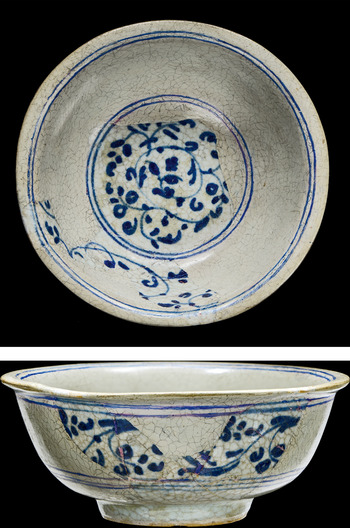
The finds from the garden that can be confidently attributed to the Luther period serve to illustrate and elaborate what we know about Luther's unique family life. We know, for instance, that Martin Luther appreciated and collected precious goblets and glasses, some of which have survived in various collections as real and alleged contact relics of the reformer.Footnote 65 Luther's collection is likely to have been seen as a celebration of his paradigmatic reform of the mass, giving all believers access to mass wine proffered in precious chalices.Footnote 66 At the same time, it was also a domestic paraphrase of sacred collections such as the Wittenberg or Halle Heiltum amassed by Saxony's prince elector and archbishop, which abounded in sacred precious vessels.Footnote 67 It is against this background that a series of remarkable finds can be contextualized. They include shards of Venetian “latticino goblets,” superbly crafted “Murano” glasses embellished with milky white filigree, found among the backyard rubbish. Other fragments of precious vessels that were, no doubt, donated by wealthy devotees include a polychrome south German ewer, an elegant cup of Venetian faienceFootnote 68 (fig. 12), and, remarkably, the neck of a precious polychrome faience jug from Ottoman Iznik, which Luther possibly knew was ancient Nicaea.Footnote 69 This would be particularly fitting as he had institutionalized the use of the Nicene Creed, promulgated in the town's basilica in a.d. 323, in Protestant liturgy.
Cup of Venetian faience from Luther's house in Wittenberg: Photos by Juraj Lipták, State Office for Heritage Management and Archaeology Saxony-Anhalt, Halle (Saale).

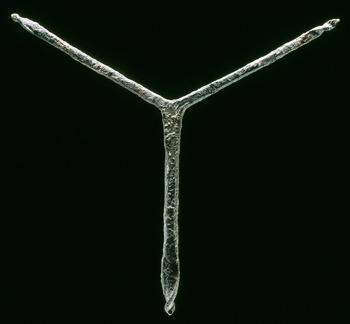
A find that may have a direct relationship to the reformer is a three-armed woodworker's hand drill (fig. 13).Footnote 70 While this find may, at first, seem inauspicious, it gains context by the fact that Luther had decided to take up carpentry and turning and had ordered woodworking tools from an old Nuremberg acquaintance, Wenceslas Link, in 1527. In this letter, he outrageously claimed he was doing so as there were no skilled craftsmen to be found among the barbarians (in Wittenberg).Footnote 71 This was, of course, nonsense. Wittenberg was teeming with excellent craftsmen.Footnote 72 His decision is far more likely to reflect his enhanced status as undisputed leader of the Reformation. Like many powerful men of his time, he was emulating Europe's supreme leaders, such as Philip the Good of Burgundy and the Holy Roman Emperor Maximilian I, who were engaging in craft activities such as locksmithing, metal forging, and wood turning.Footnote 73 On the one hand, being a craftsman symbolized and demonstrated these leaders’ humbleness as well as their mastery over the elements. Perhaps more importantly, however, was the fact that Jesus was a carpenter, and thus, to master a craft was also to mirror the life not only of Christ but also of his foster father, Joseph, who was revered by the mighty as the personification of humility.Footnote 74 It is said that Luther's protector, Prince Elector Frederick the Wise, piously emulated his Savior by making crossbows, crossbow darts, and rosaries himself and presenting them as regal gifts to his colleagues and followers.Footnote 75 The ingenious three-armed hand drill from Luther's garden could very well have been made in a blacksmith's shop in Nuremberg. Perhaps it was even sent to Luther by Wenceslas so that his friend could piously emulate the carpenter from Nazareth.
Woodworker's hand drill from Luther's house in Wittenberg: Photo by Juraj Lipták, State Office for Heritage Management and Archaeology Saxony-Anhalt, Halle (Saale).

A series of other finds that uniquely represent the Luthers’ remarkable household, which doubled as the scriptorium of the Reformation, are the many writing utensils which were recovered by the archaeologists. Of course, the quills used to write the reams of text which Luther and his followers were producing have all decayed;Footnote 76 not so the many bone handles of penknives used to sharpen them.Footnote 77 A more remarkable find category are the many fragments of green glazed pottery inkstands, of which two have been reconstructed.Footnote 78 These multicomponent artifacts include the inkwell itself and a small bowl for the fine sand used to soak up excess ink and stop smearing when the writer's sleeve inevitably brushed the freshly written page, as well as an oval tub to hold the quills. All are mounted onto a broad circular twenty-to-twenty-five-centimeter-wide disk with a crenelated rim to keep things from tipping, spilling, dripping, and making a mess. Many fragments of such writing sets survived from the rubbish tip in Luther's garden. Some may well have been used by the reformer himself. They were made by local potters and sold in the market place for a pittance; interestingly, very few have been found in excavations outside the Luther House.Footnote 79 Another testimonial to the almost frenzied consultation of scripture, concordances, dictionaries, and commentaries that must have accompanied the prodigious literary output of Luther's household are the many book fittings and clasps which would have regularly become loosened and fallen off the crumbling leather covers. In many cases when books were rebound, the fittings would have wandered into the rubbish with the tattered remains of the binding.Footnote 80
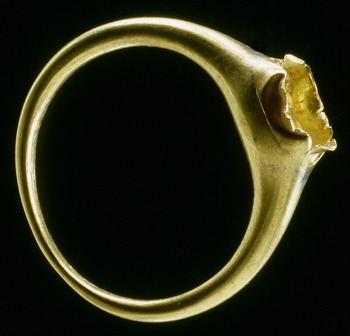
Finally, before considering the domestic iconography which characterized the material culture of the Luther household, it is worth reflecting on finds which can be associated with Katharina Luther. Obviously, the wealth of kitchen pottery and tableware, as well as food remains, can be loosely assonated with Katharina, who was feeding a mass of paying guests and visiting acolytes on a daily basis.Footnote 81 A very personal find, which may reflect a remarkable anecdote preserved in Luther's correspondence, is a golden ring which originally sported a “cabochon” gem mounted in a claw-like serrated setting (fig. 14).Footnote 82 This is a strange find to make among the rubble in Luther's garden and, if it came from Luther's household, it must have graced the finger of a distinguished lady, most probably Katharina Luther herself. She is shown wearing an all but identical ring with a blue stone in Cranach's portrait of her in 1526.Footnote 83 It is very tempting to relate this find to a small domestic drama related by Martin Luther to a onetime ally, the theologian Wolfgang Capito from Strasbourg, who was trying to resolve the escalating disputes between Luther and the western European reformers.Footnote 84 A golden ring Capito had given to Katharina/Käthe (Kathy) during negotiations on the Wittenberg Concord in 1536 had gone missing, and as an aggravated Luther wrote on July 9, 1537, “I never saw her (Käthe) so vexed than she was when she found out that it had been stolen, or (as she constantly accused herself) that she herself had lost it from carelessness.” He finally advised Capito to abstain from such lavish gift giving to his wife in the future in order to prevent similar disappointments, and besides, Christ's blessing was enough wealth for both of them.Footnote 85
Golden finger ring from Luther's house in Wittenberg: Photo by Juraj Lipták, State Office for Heritage Management and Archaeology Saxony-Anhalt, Halle (Saale).

Obviously, there is more to this episode than an exceptional, somewhat jealous flare-up in what was universally considered to have been a harmonious and successful marriage. On the one hand, it reflects the personal nature of the discord between Luther's central/north European Reformation and the much more radical western European paths to reform, which by that time had already sown a ruinous schism within the reformed movement and would continue to do so. On the other, it shows Martin and Katharina enjoying the status of a princely pair, receiving lavish personal gifts in order to facilitate diplomacy.Footnote 86
These are just a few selected highlights from the vast physical archive documenting the material culture of Luther's household. While the objects tell stories which harmonize with written accounts of Luther's household, they also go much further as they allow us to be very concrete about the unique physical ambience, oscillating between patrician lifestyle and scholarly diligence, in which Luther and his family led their lives.
Stove Tiles from Luther's Garden: Toward an Iconography of Luther's Household
Perhaps one of the jarring aspects of images of late medieval and Reformation interiors are the long bare walls of private quarters, but also rooms with representational and public character.Footnote 87 Occasionally there are single small paintings of the Savior or Mary meant for personal devotion. In scholars’ households, surprisingly small bookshelves make an appearance, as well as straps which could hold anything from papers to flowers against the drab wall's surface. These frugally decorated domestic spaces stood in absolute contrast to the avalanche of imagery that confronted the worshippers in sacred spaces, which were encrusted with multilayered figurated palimpsests of holy images. It was only in the seventeenth century that pictures of all kinds began to clutter the living room walls of burghers, assiduously imitating the art chambers of the nobility.Footnote 88 There was, however, a remarkable exception that stood out against this almost ascetic approach to domestic decor: large, free-standing tiled stoves whose glazed tiles had been figurated with molded reliefs since the fourteenth century. These stoves were imposing, at times more than two meters tall, made up of a rectangular lower stove holding the firing chamber, or stokehole, surmounted by an upright drum or box shaped upper stove in which the hot smoke and gasses would meander before entering the chimney, heating up the tiles. While doing so, even an intermittently fired stove would radiate warmth all day.Footnote 89 These upright elements became the focus of decoration, particularly on their tops, which could be accentuated with a band of figured tiles surmounted by elaborately molded cornices and crenellations. In some cases, the whole upper stove was encrusted with figurated tiling.Footnote 90
Even though they were lavishly decorated, these stoves were treated as expendable. When tiles cracked under the fierce heat of the fire, they were torn out and replaced, on average once every twenty to forty years. Thus, stove tile fragments can be found in almost any hole dug into the soil of a medieval town in central Europe, and archaeologists, supported by art historians, use them as a resource to judge the aesthetic and iconographic ambience of those responsible for the rubbish they excavate and to analyze the changes in domestic imagery through time.Footnote 91
In Wittenberg, the tilers responsible for these elaborately decorated stoves worked out of nearby Bad Schmiedeberg which lay twenty-five kilometers southwest of the town in the midst of the thickly forested Dübener Heide. Excavations have revealed both wasters and models for Wittenberg tiles in late medieval and Renaissance workshop yards.Footnote 92 Stove tiles from their workshops abound in the Luther House's refuse; 4,000 fragments of stove tiles were recovered (making up 10 percent of all finds),Footnote 93 deriving from the many stoves that kept not only the family but also the many guests and boarders warm during the pinnacle period of the Little Ice Age's rough winters.Footnote 94
Analyzing the iconography of these tiles is particularly interesting against the background of Martin Luther's ambivalently supportive attitude toward images: “Now I say this to keep the conscience free from mischievous laws and fictitious sins, and not because I would defend images. Nor would I condemn those who have destroyed them, especially those who destroy divine and idolatrous images. But images for memorial and witness, such as crucifixes and images of saints, are to be tolerated.”Footnote 95 This led to the modification of religious figurative iconographies in central Europe, in contrast to the whole scale rejection of religious figuration in the west.Footnote 96 Seen against this background, the domestic iconography of Martin Luther's house is obviously highly interesting as his followers, who hung on his every word, would clearly have noted his iconographic choices, particularly of religious topics, carefully and as these would have inspired their emulation.
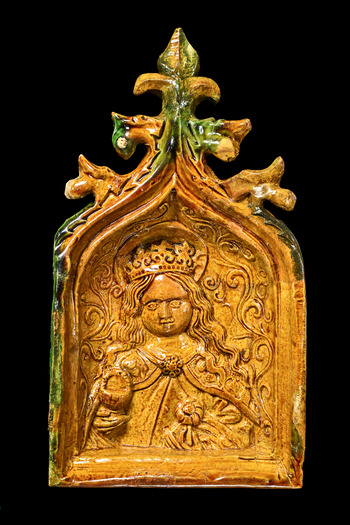
It is interesting to note that the residential tract of the “Black Cloister” (Wittenberg's newly founded Augustinian monastery), which Martin Luther entered as a monk in 1512 and which was given to him as a residence by the prince elector in 1532, contained at least one representative Erfurt-type late gothic stoveFootnote 97 which was probably disassembled during the period of Luther's residence.Footnote 98 Most of the fragments discovered in the excavations are very small, but the surviving images all show busts of saints and their attributes cast in high relief in a niche with a gable crowned with sprigs of gothic florals. An almost complete example depicts one of the “Virgines Capitales,” Saint Dorothy of Caesarea, set against a tendril-decorated background, imitating the ubiquitous cloth of honor, holding her basket and flower attributes (fig. 15).Footnote 99 Other surviving “niche tile” fragments from this series show Saint Margaret of Antioch with her dragon, Saint Anne, and other, mainly female, saints. A knight in armor may show Saint George or Saint Maurice. These ornate tiles would have been lined up in one or more registers on the upper oven. Both orange and green tiles were combined, which would have given the stove an eye-catching polychrome aspect. Finds from refuse pits of a tiler's workshop in nearby Bad Schmiedeberg show the local pedigree of the stove and further fragments of these high quality tiles found in Wittenberg show that wealthy burghers in the town also heated their sitting room with such ostentatious stoves.Footnote 100 These registers of high relief busts clearly imitate the iconography of late gothic carved altars, which showed rows of saints in elaborately framed niches.Footnote 101 In the case of Wittenberg's Augustinian Monastery, this ostentations stove, which was probably installed shortly after the cloister was founded, would have been the focus of the devotions of resident monks and their guests. In domestic contexts, stoves of this type must be seen in connection with the intense private piety, which is a hallmark of urban elite religiosity on the eve of the Reformation.Footnote 102 After Luther's Reformation, the oven may well have become a redundant reminder of an unloved past and, in what may have been a minor act of iconoclasm, it was thoroughly demolished and its splintered tiles thrown onto the back yard rubbish tip.
Late gothic stove tile with depiction of Saint Dorothy from Luther's house in Wittenberg: Photo by Juraj Lipták, State Office for Heritage Management and Archaeology Saxony-Anhalt, Halle (Saale).

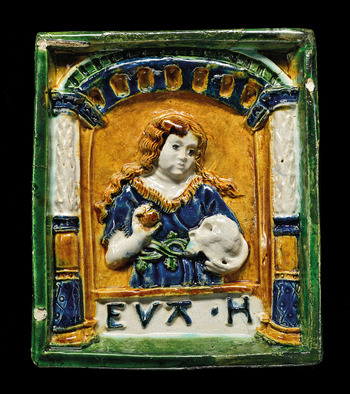
A worthy successor to this stove was a richly decorated polychrome, and thus expensive, ostentatious stove, crowned with a cornice emblazoned with Saxon heraldry and surmounted by arches featuring putti and classicized figures holding goblets and encrusted with a complex figurative program.Footnote 103 The best preserved tile shows the bust of a colorfully dressed young woman, which is strangely inscribed with the name “Eve” and an enigmatic “H” framed by an elaborate renaissance arch (fig. 16). It was part of the decor of the prestigious stove, which included portraits of Biblical rulers, coats of arms, and a sculptured crest.Footnote 104 Fragments inscribed with the year 1536 date the construction of this representative stove, which must have featured prominently in Luther's household.
Polychrome stove tile with depiction of “Eve” from Luther's house in Wittenberg: Photo by Juraj Lipták, State Office for Heritage Management and Archaeology Saxony-Anhalt, Halle (Saale).

While in some cases, the origins of the motifs on these polychrome oven tiles are obscure, the well-preserved tile showing Eve cradling Adam's skull and clutching the golden appleFootnote 105 is copied almost exactly from the print “Twelve Women of the Old Testament” made by the prolific Nuremberg woodcutter and printer Erhard Schön (1491–1592) around 1530.Footnote 106 In fact, it is its mirror image, as it was traced directly onto the mold. The juxtaposition of Eve, the apple, and her husband's skull would have evoked complex conflated reactions in the eyes of this tile's beholders. On one side, by succumbing to temptation, Eve has subjected mankind to the dominion of death, but on the other hand, Adam's skull will also come to lie beneath Jesus’s cross and be washed clean of sin by the Savior's blood. Other badly fragmented tiles closely copy Schön's depiction of the tyrants Adonibeseck (Adoni-Besek) and Ebimalech (Abimelech) from his series of the twelve cruel tyrants of the Old Testament, first published in 1531.Footnote 107 Both image series, which illustrated poems by the enormously popular Nuremberg author Hans Sachs, may have been mounted in parallel registers, complementarily contrasting each other. Negative exempla such as these evil Old Testament rulers have their place on prestigious objects as an admonition to the mighty. Interestingly, identical stove tiles were found in the palace of one of Luther's most powerful opponents, the embattled Cardinal Albrecht of Brandenburg, in Halle.Footnote 108 It seems likely that both leaders chose a non-divisive Old Testament iconography for their ostentatious stoves during the lull in Protestant-Catholic antagonism after the Diet of Augsburg in 1530.Footnote 109
Washing Away Your Sins: Figurated Wall Fountains in Wittenberg
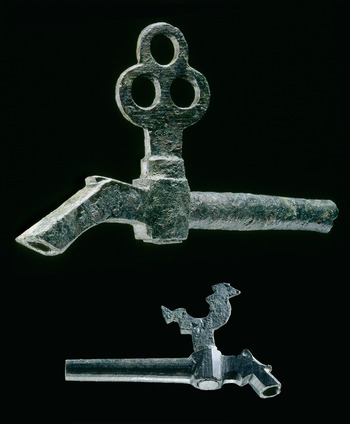
Besides the stove tiles, the second most common bearer of iconography in Luther's household were green glazed hanging lavabos, or wall fountains, made of pottery.Footnote 110 Fragments of twenty-two such objects were found during excavations in the Luther House's garden. They have a box shaped cistern which could hold one to two liters of water. When in use, the tap hole at the bottom was fitted with a small cast bronze spigot (fig. 17). The fronts of these fountains were elaborately decorated and their removable lids had the shape of pitched roofs. Two lateral hooks were used to fix them onto parallel pegs on the wall or oven. In the latter case, of course, warm water would pour out of the spigot. At festive occasions, this water could even be scented. With a bowl lying beneath them, these fountains were used for hand washing before and after meals, but they could also be used for other practical purposes, in the Luther household, for instance, to mix ink when writing.
Bronze spigot for a wall fountain from Luther's house in Wittenberg: Photo by Juraj Lipták, State Office for Heritage Management and Archaeology Saxony-Anhalt, Halle (Saale).

The almost universal absence of running water in domestic households led medieval Europeans to develop various solutions for performing hygienically and ritually required ablutions. In the fifteenth century, pitchers or fancifully molded aquamaniles were gradually being replaced by stationary hanging sheet metal lavabos and, of course, the more affordable examples made of glazed pottery. Inspired by cultivated Italian lifestyles, wall fountains became increasingly popular in late medieval southern Germany and were introduced to Saxony by the early sixteenth century.
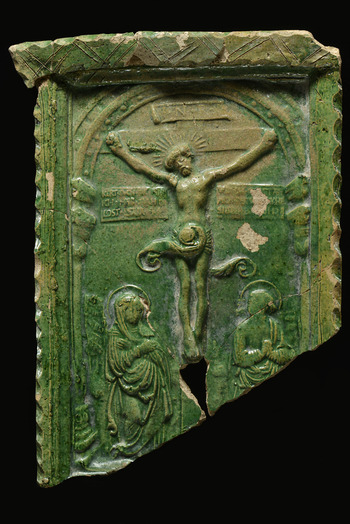
Made by the same tilers who were producing stove tiles, these water fountains could also be richly decorated. Interestingly, however, while the stove tiles are illustrated with a wide range of motifs, all the lavabos found to date in Wittenberg were decorated with a religious, and clearly Protestant, iconography focused on the crucifixion. Lavabos with decipherable decor from the Luther House's garden include a carefully crafted example that shows the Savior in his death throes framed by columns and an embossed classicized arch (fig. 18).Footnote 111 In a strictly symmetrical composition, Jesus's animated loincloth curls above the heads of his distraught mother looking up to him at the left and Saint John the Evangelist looking toward the Virgin at the right. Clearly the moment being shown is when the dying Christ calls to his mother, saying “woman, here is your son,” and to his beloved disciple, “here is your mother” (John 19:26–27). While the sign bearing the mocking INRI (Iesus Nazarenus Rex Iudaeorum) fixed to the top of the cross is easily read, the panels to the right and left of the Savior, which quote scripture in Luther's German, are all but illegible. This is due to the fact that the fountain's matrix had been molded from an older tile, blurring not only the script but also the protagonists’ faces. An important part of the fountain's imagery involves its missing bottom, which would have shown Adam's skull at the base of the cross, just above the tap hole. Of course, this iconography is ideally suited for a water fountain in Luther's household. On the one hand, the person washing his or her hands was confronted with the image of the blood of the martyred savior washing Adam's bones free of sin and could sense the saving power of baptism running through his or her hands. On the other hand, in cases where ink was being mixed, the metaphor of water hallowed by Christ's martyrdom would be enmeshed in the sacred mission of translating and disseminating God's word.
Front of a wall fountain with crucifixion scene from Luther's house in Wittenberg: Photo by Juraj Lipták, State Office for Heritage Management and Archaeology Saxony-Anhalt, Halle (Saale).

The style and iconography of this piece combines pre-Reformation formulae, such as the hieratic symmetrical structure of the composition, and the presence of the standing Madonna and apostle, replete with halos, as seen in late fifteenth-century broadsheets, such as those of Albrecht Dürer and Martin Schongauer.Footnote 112 Christ's writhing, billowing loincloth, evoking the vortex of spiritual tension at the passion of Christ, is a fifteenth-century Flemish invention, but was employed by both the elder and the younger Cranach.Footnote 113 Yet it is the panels emblazoned with scripture that clearly show the Reformation pedigree of the piece.
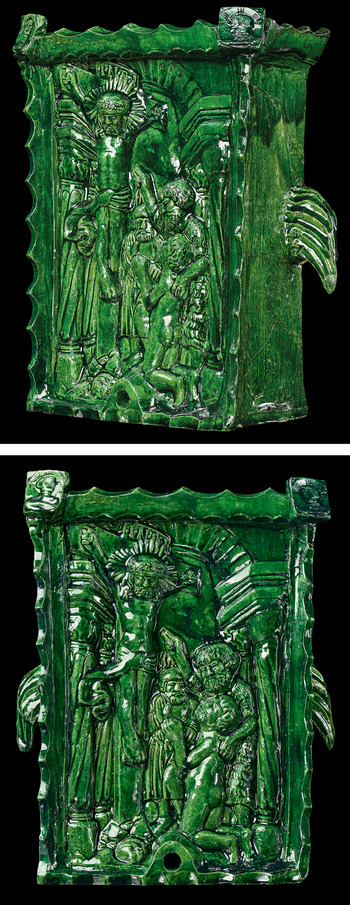
The best-preserved example of a wall fountain from Luther's house's garden is uncompromisingly Protestant in its iconography.Footnote 114 It shows a crowded scene framed by two slightly squint double pilasters spanned by a roughly sketched scalloped vault which is all but obliterated by the figures of the scene it encloses (fig. 19). To the left, Christ is crucified. His radiant halo partially obscures the INRI inscription on a parchment nailed over his head. Adam's skull emerges from the earth heap at the foot of the cross and will be sprinkled with the Savior's blood. Three figures are pressed between the cross and the right-hand pilaster. A nude kneeling youth (a sinner) gazes at the crucified Christ, holding up his folded hands in prayer. John the Baptist, a bearded man in a hirsute cloak, looks down on him with his left hand resting on the youth's shoulder and the right pointing to Christ. In the background, a second draped male, an Old Testament prophet, witnesses the scene and holds up his hand in admonition. Identical compositions are known from Lower Saxony, but also Nuremberg, where they were used on stove tiles, which are interestingly mirrored.Footnote 115 The repeated use of matrixes derived from casts of finished tiles is the cause not only of the mirroring but, in the case of our fountain, the fuzzy modeling and crude touching up of the architectural frame. This composition is an abbreviated version of Cranach's Gotha variant of Law and Grace.Footnote 116 The complex imagery of this family of paintings and prints was developed by Lucas Cranach the Elder, presumably in close cooperation with Martin Luther and Philip Melanchthon, in 1528/1529. The reduction of the rich array of Law and Grace motifs to the sinner kneeling before the Baptist conflates it, as is fitting for a water fountain, with baptismal imagery.Footnote 117 Clearly this and other water fountains adorned with images related to the Passion of Christ also reflect a leitmotif of Protestant doctrine: that images once characteristic for public sacred space and ritual processes reserved for clergy were removed to the domestic setting. In this case, it involves the domestication of the fonts of holy water, sanctified by the priest. Sacramental agency was thus shifted from the clergy to the believer. In the case of the water fountains, the confrontation of the believer with the iconography of Christ's agony could evoke the bond of grace between sinner and Savior and thus hallow the water flowing into her or his hands.
Wall fountain with Law and Grace motif from Luther's house in Wittenberg: Photo by Juraj Lipták, State Office for Heritage Management and Archaeology Saxony-Anhalt, Halle (Saale).

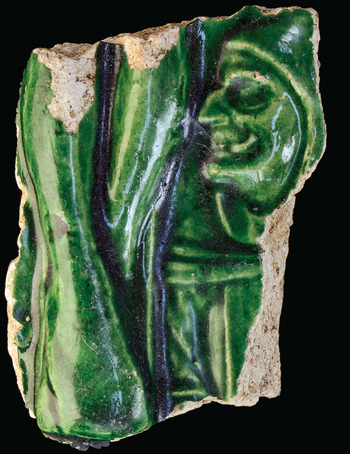
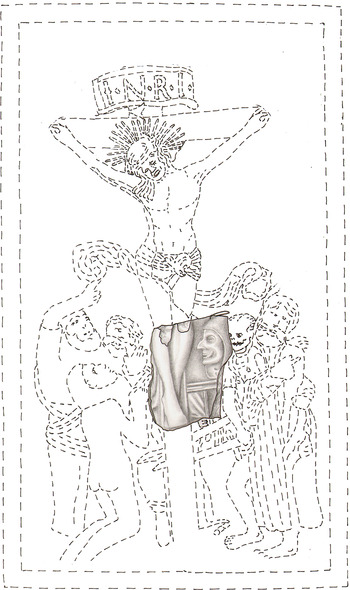
A small but disturbing fragment of a green glazed wall fountain found in the Luther House's garden shows the crossed feet of the crucified Savior on the cross next to the profile of a leering head with hawk beak nose, deeply sunk eyes, and lips pulled back to jeer (fig. 20).Footnote 118 The fact that the complete scene cast in the same mold survives in Nuremberg allows us to reconstruct the scene exactly (fig. 21). We thus know that the peaked hood on the hideous head in the tile fragment is part of a complicated costume with puffy arms, shoulder straps, and what seems to be an apron covering the figure's upper body. As in the case of the above-mentioned wall fountain, a specific variant of Cranach's Law and Grace is shown, with Christ flanked on his right by the kneeling sinner; an Old Testament prophet, probably Moses; and a gesticulating John the Baptist. On (the evil) left-hand side, demonic louts are crowded, hurling insults at the martyred savior. This latter detail, which Cranach never painted, is shown on late medieval altars and inevitably includes a mocking Jew.Footnote 119 Our figure, with his pointed hood, clearly is denoted as Jewish, his complicated costume may even show him to be a temple priest (Caiaphas?). In medieval imagery, Jews are only distinguished from Gentiles by the badges and headgear they were forced to wear or devilish attributes, such as horns and tails. Influenced by humanism, Renaissance artists increasingly focused on what they saw as typical facial physiognomies, capturing expressions of emotion but also including grossly stereotypic renderings of the features of social outcasts like criminals, beggars, Turks, and Jews. Thus, this hideous face, which was meant to toughly vilify a Jewish witness to the crucifixion, can be seen in the context of the emergence of viciously anti-Semitic caricatures and tropes which haunt us to this day.Footnote 120 It is a disturbing thought that Martin Luther may have washed his hands with and watered his ink from this divisive fountain.Footnote 121
Fragment of a wall fountain from Luther's house in Wittenberg: Photo by Juraj Lipták, State Office for Heritage Management and Archaeology Saxony-Anhalt, Halle (Saale).

Fragment of a wall fountain with caricature of a Jew within a reconstruction drawing based on a tile from the Germanisches Nationalmuseum Nürnberg: Drawing by K. Brüning, State Office for Heritage Management and Archaeology Saxony-Anhalt.

IV. Luther Archaeology Beyond Luther: The Excavation of Early Protestant Wittenberg
Luther archaeology extends well beyond Luther's residences, and we will only be able to touch on some of the new results from the numerous excavations (over 100 in the last two decades) in the town center of Luther's Wittenberg and the results of the accompanying research.
Words and Music: Excavated Printing Type from Wittenberg
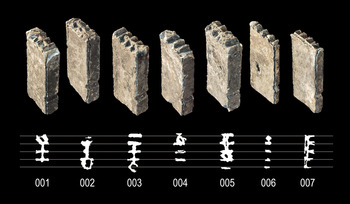
There would have been no Reformation without the printing press. Luther not only gained immediate international fame/notoriety through the print media, but they also made Wittenberg, once a sleepy university town, into one of Europe's main printing centers due to the avalanche of books, pamphlets, and polemics he and his acolytes were producing.Footnote 122 All this activity has left its archaeological fingerprint. Around 3,000 pieces of lead type have been found in Wittenberg so far,Footnote 123 and careful study has shown that many can be assigned to specific printers and their workshop properties.Footnote 124 The most remarkable of the finds of this type are music notes found in the confines of the dissolved Franciscan abbey—these are the only examples of music type discovered in an archaeological context in Europe—which can be assigned to the workshop of Georg Rhau, who was printing Lutheran hymnals between 1538 and 1571 (fig. 22).Footnote 125 The innovation, which involved using a single type to print all the lines of the staff together with the appropriate notes or annotations, seems to have reached Wittenberg from Nuremberg, where it was used since 1534. Thus, this find, on the one hand, demonstrates that cutting-edge technology was being used to propagate the Reformation and, on the other, the fact that this printer's workshop was one of many inside the walls of the abandoned Franciscan abbey exemplifies the fate of Saxony's once proud monasteries after the Reformation.
Printing type for musical notation: Image by Daniel Berger, State Office for Heritage Management and Archaeology Saxony-Anhalt, Halle (Saale).

The Cranachs’ Tiles: Attributes of Patrician Rank
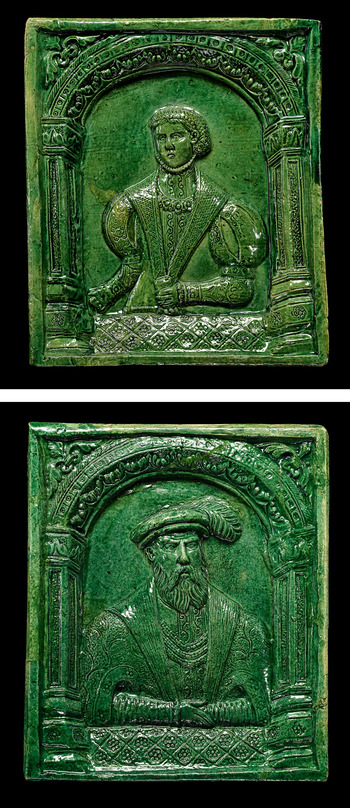
The dissemination of imagery was arguably as crucial to the success of the Reformation as that of the word, and the Lutheran message was ingeniously molded into images by Luther's friend and ally Lucas Cranach the Elder. Careful archival research has revealed a number of properties in Wittenberg which were owned or used by the various members of the Cranach family, some of which have been excavated.Footnote 126 This allows us to spotlight aspects of their daily lives and compare them both with the archaeological evidence from the Luthers’ household, but also less wealthy households. The property “Markt 4” on the south side of Wittenberg's central market square was Lucas Cranach the Elder's residence between circa 1512 and 1518 and was purchased by his son in law Caspar Pfreundt in 1550.Footnote 127 The Cranachs’ high social status is shown by the fact that remains of polychrome oven tiles, analogous to those found in Luther's garden and the courtyard of the prince elector's palace, were also found here.Footnote 128 Some are from as early as 1500, showing that Cranach could afford to buy a high-status residence at the beginning of his Wittenberg period.Footnote 129 Others were installed by his son-in-law, showing the continuity of domestic ostentation within the habitus of this family.Footnote 130 This is also shown by polychrome floor tiles that otherwise were only found in a second patrician burgher's residence and in the prince's palace.Footnote 131 A similar sign of conspicuous consumption can be seen in the “Schloßstraße 1,” which was owned by the Cranachs since the beginning of the Reformation in 1517.Footnote 132 Oven tiles recovered from its courtyard come from a stove which was constructed exactly like the stove that warmed the dignitaries in Wittenberg's town hall, underscoring the family's claim to social prominence.Footnote 133 Combining archival and archaeological research has also revealed comparable results for the property on the corner of Neustraße and Mittelstraße which belonged to the family from 1521 to 1541.Footnote 134 Complex iconographies on a prestigious stove from this house show high quality portraits of rulers ranging from Judith, who was epitomizing just tyrannicide, and thus rebellion against the Emperor,Footnote 135 to Duke Philip I of Pomerania and his wife Mary of Saxony, who championed Lutheranism on the Baltic coast (fig. 23).Footnote 136 They were molded after Lucas Cranach the Younger's engravings in Johan Agricola's True Portraits of various highly esteemed Princes and Gentlemen, which had been printed in 1562. Clearly, in the case of this stove, Cranach's images were being used by a house of proud Wittenberg burghers not only to manifest their status, but also to make a stalwart and clearly recognizable commitment to Protestantism during the crisis years of the Reformation after Emperor Charles V's rout of their champion at the Battle of Mühlberg.Footnote 137
Stove tiles with portraits of Philip I of Pomerania and his wife Mary of Saxony: Photos by Juraj Lipták, State Office for Heritage Management and Archaeology Saxony-Anhalt, Halle (Saale).

Reformation and Scholarship: Alchemy and Anatomy in Wittenberg
Printers were not the only group using the abandoned Franciscan abbey. Other tenants included members of Wittenberg's large scholarly community.
Excavations revealed a large refuse pit between the defunct abbey church and its vestry, filled with remarkable objects, including a large mass of glass shards.Footnote 138 They were painstakingly restored, revealing that they mainly belonged to alembics and cucurbits, the Renaissance alchemists’ typical laboratory glasses (fig. 24).Footnote 139 Chemical analyses of adhering powdery crusts showed that they were mainly compounds of antimony and mercury, potent poisons then used as medicine. Given the large number of these glasses, it seems likely that these ‘remedies’ were even being exported.Footnote 140 Preliminary dates for this unique assemblage range from the early sixteenthFootnote 141 to the early seventeenth centuries.Footnote 142 Sixteenth-century Wittenberg had a strong tradition of alchemy. It is worth mentioning that Dr. Faustus (who is seen today as the archetypical alchemist) was connected to Wittenberg by authors writing at the close of the sixteenth century, that he is mentioned in Luther's table talks, and that he is said to have been acquainted with Melanchthon.Footnote 143 Moreover, Paul Luther, the reformer's son who practiced medicine, also dabbled in alchemy.Footnote 144
Implements from an alchemist's laboratory in Wittenberg: Photos by Juraj Lipták, State Office for Heritage Management and Archaeology Saxony-Anhalt, Halle (Saale).

Archeological traces of another branch of the sciences were found among the bones of the more than 400 burials which were found in and around the abbey church. In one grave, an isolated skull was found under the skeleton of a thirty-five-to-forty-five-year-old man.Footnote 145 Anthropological analyses revealed that the skull had been cut off a dead body and sawn into segments. These injuries correspond to the practice of early sixteenth-century medical dons who would use the body parts of executed criminals—he was probably hanged—for anatomical research and teaching.Footnote 146 In a second burial, a skeleton of a circa twenty-one-to-twenty-four-year-old woman was uncovered with a missing head, which was then found buried deeper in a pottery vessel. It had been sliced off the body with a sharp blade between the fourth and fifth vertebra, a typical sign of decapitation. Her postcranial skeleton showed signs of wear through continual hard manual work and it seems likely that, as so often happened, she was a poverty-stricken outsider who had faced execution and her body was given to the anatomist's disposal.Footnote 147 It is highly probable that these remarkable finds from the first half of the sixteenth century can be connected to the first autopsies ever recorded in the Wittenberg University, the first done by Augustin Schurff, Luther's and Melanchthon's doctor, on a criminal's head on July 19, 1526, and the second by the anatomist Caspar Lindemann, a relative of Martin Luther, on September 23, 1534, on the head of a maid convicted of infanticide.Footnote 148 These finds illustrate the innovative and vibrant nature of a university aspiring to scholarly excellence under the guidance of Luther and particularly Melanchthon, over and above their own theological focus. These finds are also a tribute to the ethical sensibilities of these early medical teachers, that they did not simply discard the skulls after dissection but buried them in hallowed ground.
V. Conclusion
Luther archaeology offers us new, fresh, and sometimes unexpected insights into the daily life of Martin Luther and the world in which he lived without the bias implicit in the written sources. In Mansfeld, we see his youth within the context of an economically thriving family, living in comfortable circumstances in the dynamic social, economic, and ecological setting of Saxony's late medieval mining Klondike. We catch up with him in Wittenberg as head of the Reformation and a family. Together with Katharina, we see him aspiring, on the one hand, to a pinnacle position in society and, on the other, managing and mastering the enormous scholarly output which would be the basis of the Reformation's lasting success. The domestic iconography of his residence, as manifested by oven tiles and water fountains, reflects the impact of the ideology of the Reformation and his need to make manifest his social achievements.
Twenty years of intensive and coordinated archaeological, archival, and art historical research in Wittenberg have not only made it a hub of post medieval archaeological research in central Germany but also allowed us to sketch the daily lives of Luther's associates and capture aspects of the intellectual atmosphere of the then-capital city of the Reformation.
It is the interdisciplinary nature of our research to date which has made Luther archaeology an exciting new component of Reformation studies and led to the results playing an important role in the exhibitions of the “Here I Stand” consortium which commemorated the 500th anniversary of Martin Luther publishing his theses in Minneapolis, New York, and Atlanta from October 2016 to January 2017.