Natural disasters are catastrophic events that are caused by meteorological, geophysical, and hydrological origins. Reference Xu, Wang and Shen1 Examples of meteorological disasters are cyclones, lightning, heat waves, cold spells, and hailstorms. Earthquakes, volcanic eruptions, landslides, and subsidence are termed as geophysical disasters. Floods and storm surges will happen due to disasters that are originated from extreme hydrological events.
Natural disasters result in fatalities, infrastructure damage, and social-environmental disruptions. Reference Sorokin and Horowitz2 Public health implications after natural disasters are physical trauma, food shortages, increased malnutrition, damages to health establishments, disturbance in water supply systems, and infectious disease outbreaks. During natural disasters, substantial population displacement, as well as exacerbate synergic risk factors, will influence the disease transmission process and consequently trigger the infectious disease outbreaks. Reference Kouadio, Aljunid and Kamigaki3 In recent times, the importance of correlating natural disasters with public health has gained importance. Reference Noji4 Infectious diseases due to airborne, foodborne, and waterborne will usually occur during the post-impact phase of natural disasters. Availability of clean drinking water, food, and normal sanitation will be at stakes not only during the disaster period, but also during post-disaster episodes. Reference Gray5‐Reference Keim7
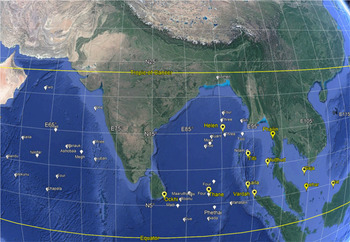
The tropical climatic zone lies between the latitudes 30°N and 30°S, and a complex phenomenon is responsible for cyclone formation. Shultz et al. have described the phenomenon and dynamics of tropical cyclones. Reference Shultz, Russell and Espinel8 The frequency of cyclone formation is more at the western side of the Atlantic, Pacific, and Indian Oceans (IO). A tropical cyclone is referred to as a hurricane in the North Atlantic as well as the Northeast Pacific Oceans and as a typhoon in the Northwest Pacific Ocean. A weather phenomenon that is a rapidly rotating storm system characterized by a low-pressure center, a closed low-level atmospheric circulation, strong wind gales, and a coiled arrangement of thunderstorms that triggers heavy rainfall is treated as a tropical cyclone. Reference Newton, David, Booker and Byers9‐Reference Barry and Chorley10 Works done by Emanuel concluded that, in recent times, the magnitude of destructiveness due to tropical disturbances has increased. Reference Emanuel11 Elsner et al. reported that tropical cyclones are getting stronger in recent years for the North Atlantic and northern IO. Reference Elsner, Kossin and Jagger12 Singh et al. observed that, in recent years, there is an increasing frequency of cyclone occurrence over the IO region. Reference Singh, Khan and Rahmand13 The majority of cyclones in India have their origin in the northern IO region, and this subcontinent is the worst affected region in the world, having a share of 7516 km of coastline. States situated in the East Coast of India like Orissa, Andhra Pradesh, and Tamil Nadu are very much exposed to the cyclones. 14 Figure 1 shows the origin of serial tropical cyclones that occurred in the IO region during 2010 and 2018.
Origin of Tropical Cyclones (TC) Occurring From 2010 Until 2018 in the Northern Indian Ocean Region. (Yellow Color Markers Represent Severe and Very Severe TCs That Made Landfall on the Indian Subcontinent.)

The practice of open defecation is prevalent in countries like India. Reference Ambesh and Ambesh15 Open defecation enables the pathogens to transmit through the fecal-oral route. Cook et al. mentioned that infections transmitted by the fecal-oral route pose a risk in the short-to-intermediate term after the cyclonic event. Reference Cook, Watson and van Buynder16 The increase in the probability of diseases due to vector-borne and rodent-borne during cyclones have been witnessed by some researchers. Reference Kouadio, Aljunid and Kamigaki3,Reference Watson, Connolly and Gayer17
Interventions in the area of sanitation envisage the promotion of community health by providing a hygienic environment and breaking the cycles of disease spread. Reference Kumar, Kar and Jain18 Swachh Bharat Mission (SBM), also known as Clean India Mission, is the pro-sanitation intervention launched in 2014 by the Government of India (GoI) to accelerate efforts to achieve universal sanitation coverage. The chief objectives under this mission include the elimination of open defecation, utilization of modern and scientific methods for waste management, influence of behavioral change regarding healthy sanitation practices, and generating of awareness about sanitation and its linkage with public health. 19 This intervention is a community-led and people-oriented program in which the effectiveness is predicated upon generating demand for the construction and sustained use of toilets by all household members. The program has been bolstered with adequate implementation capacities in terms of trained personnel, financial incentives, and systematic operational procedures for planning and monitoring. 19
In this article, we have compiled an inventory of disease outbreaks that occurred during various phases of tropical cyclones from 2010 to 2018. An analysis has been done on this inventory to check for the pattern of disease outbreaks before and after the GoI’s ambitious pro-sanitation intervention.
METHODS
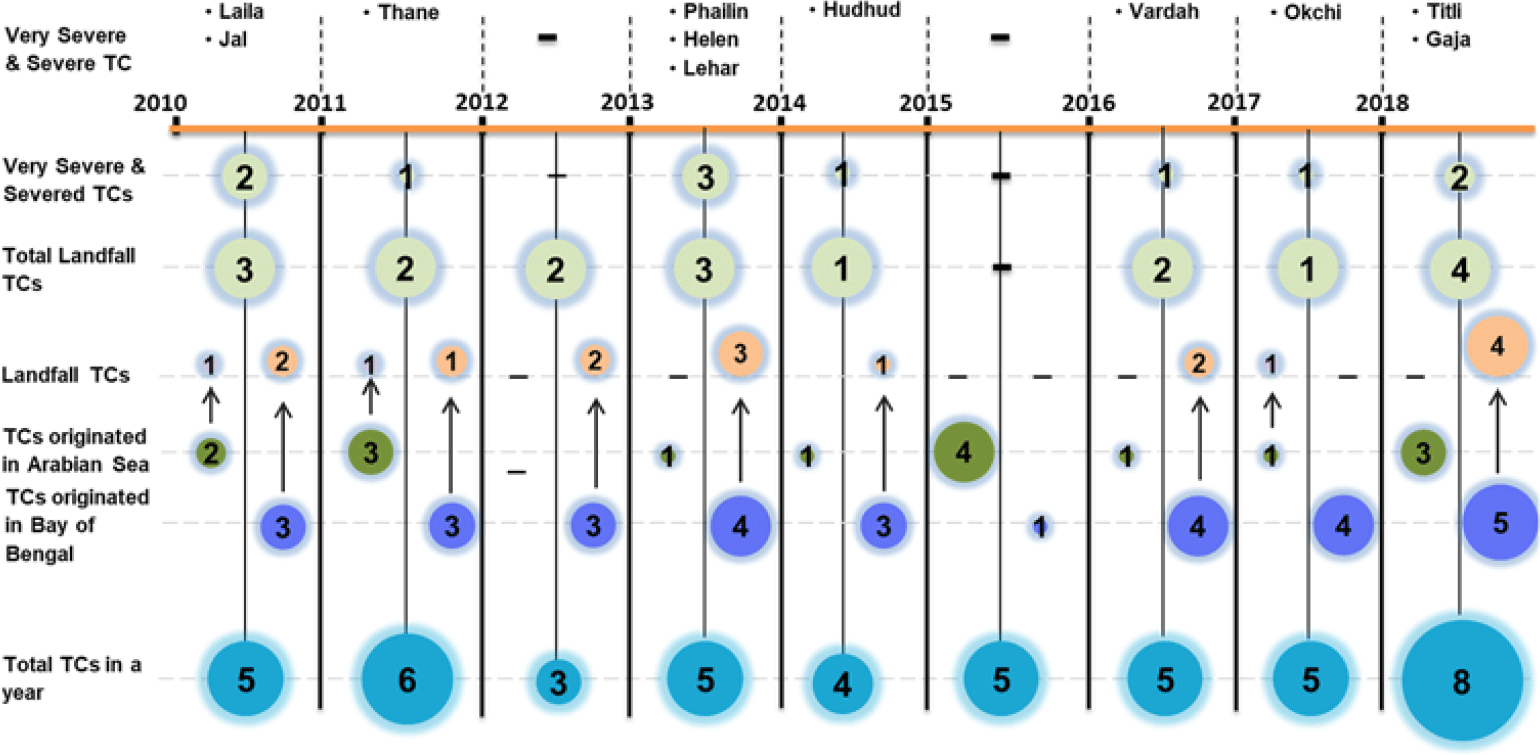
The India Meteorological Department (IMD) is responsible for meteorological observations, weather forecasting, and seismology in India and South Asian countries. 20 IMD receives the satellite data from imaging systems and atmospheric sounder sensors of Kalpana-1, INSAT–3D, and INSAT-3DR in multi-mission mode configuration and synthesize the meteorological data using sophisticated processing system. 20‐Reference Joseph21 Mitra et al. in their submission mentioned the mechanism to retrieve cloud information from INSAT series of data. Reference Mitra, Parihar and Peshin22 Inventory of disease outbreaks generated through this study is for Cyclones Jal, Laila, Thane, Helen, Phailin, Hudhud, Vardah, Ockhi, Titli, and Gaja. All of these cyclones have occurred from 2010 to 2018 and are categorized as severe cyclonic storms (SCS) to very severe cyclonic storms (VSCS). Figure 2 represents the chronology of these tropical cyclones.
Chronology of Serial Tropical Cyclones Occurring in the Northern Indian Ocean Region From 2010 to 2018.

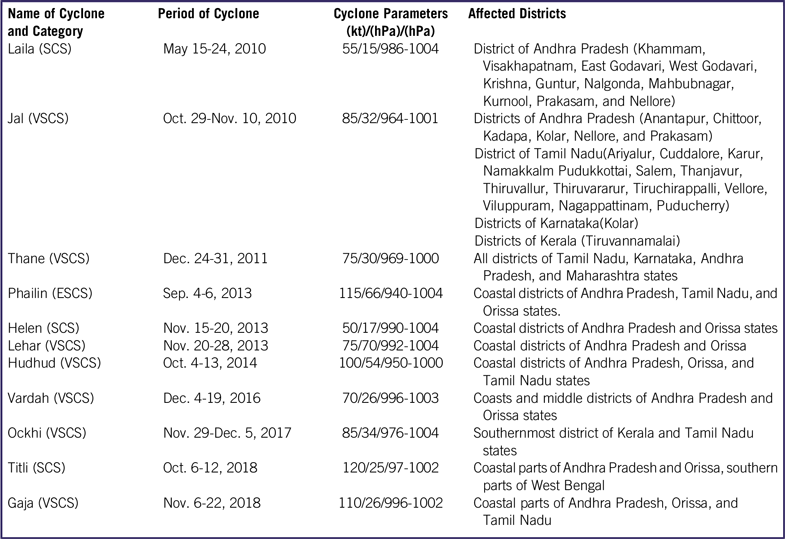
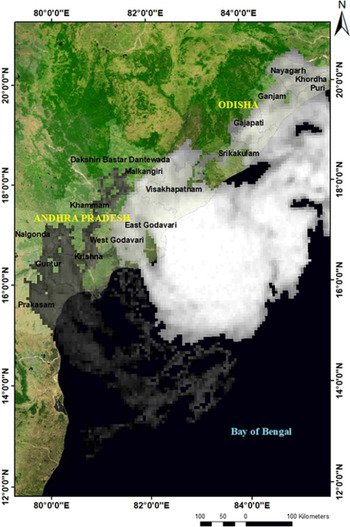
In order to demarcate the cyclone-affected districts, cloud data have been retrieved from Very High Resolution Radiometer data of Indian meteorological satellites. Data from Kalpana-1 satellite has been used for the cyclones that occurred from 2010 to 2013. With the availability of advanced sensor data of INSAT 3D satellite from 2013 onward, cloud data for the remaining cyclones were taken from this sensor. These tropical cyclones have a duration of 3 to 16 days from the day they formed, track traveling from Bay of Bengal (BoB) or Arabian Sea to landfall on Indian landmass, and finally weakening of the cyclone. Cloud retrieval for all cyclones was done during its full intensity. Information available from the cyclone bulletins was highly useful to retrieve the specifications of the cyclones. In this study, the cyclonic bulletins available from the website hosted by Regional Specialized Meteorological Centre for Tropical Cyclones over North Indian Ocean have been used. 23 Table 1 represents the list of cyclones with their details and affected districts. Figure 3 represents the districts that are affected due to Cyclone Hudhud.
Characteristics of Tropical Cyclones (TC) Landfilled in India From 2010 to 2018

ESCS = extreme severe cyclonic storm; SCS = severe cyclonic storm; VSCS = very severe cyclonic storm.
Cyclone parameters: maximum sustained surface wind (kt), maximum pressure drop (hPa), and range of estimated central pressure (hPa).
Data From INSAT-3D Showing the Cyclonic Cloud of Hudhud During October 11, 2014 Over the Coast of Andhra Pradesh. (The Cumulonimbus Cloud of Hudhud Is Seen as a White Patch Over Bay of Bengal and Coastal Districts of Andhra Pradesh.)

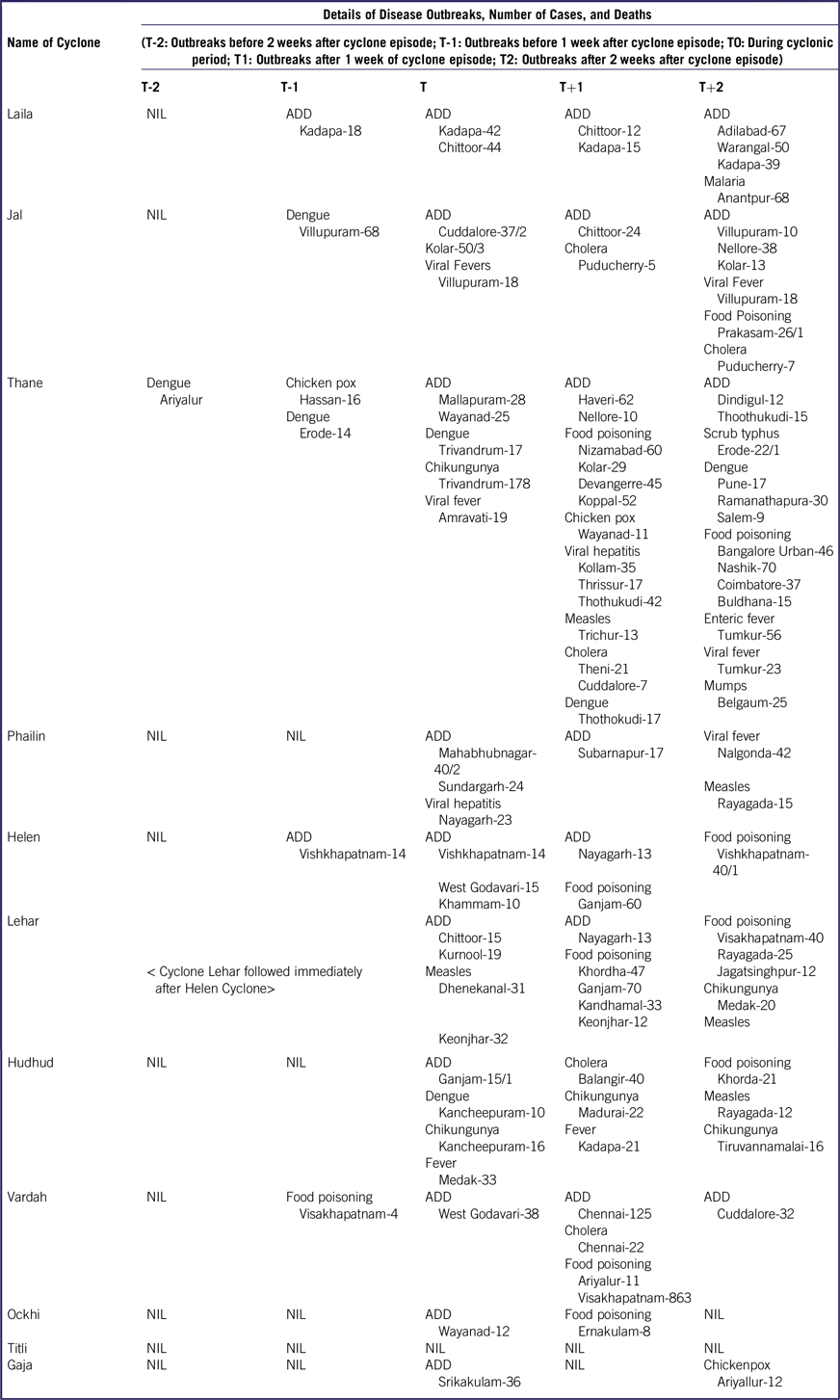
Once the identification of affected-by-cyclones was completed, then the disease outbreaks during the cyclonic episode were gathered from national level Integrated Disease Surveillance Program (IDSP) weekly outbreak reports. 24 Further exploration on reported outbreaks has been done on the publications available in MEDLINE and PubMed, and district level electronic editions of news portals. Reference Fredrick, Ponnaiah and Murhekar25 Outbreaks reported by district level news portals were very well documented in the IDSP weekly reports, along with the number of cases, deaths, and pathogenic causative details about the outbreak. Table 2 summarizes the inventory of disease outbreaks that occurred during all of the severe cyclones from 2010 to 2018.
Inventory of Disease Outbreaks That Occurred During Severe Tropical Cyclones in India (2010–2018)

ADD = acute diarrheal disease.
RESULTS
It is inferred from the chronology of tropical cyclones that Indian landmass is susceptible to an encounter with at least 1 VSCS or an SCS in a biennium. Most of the tropical cyclones that made landfall in India have originated from BoB origin.
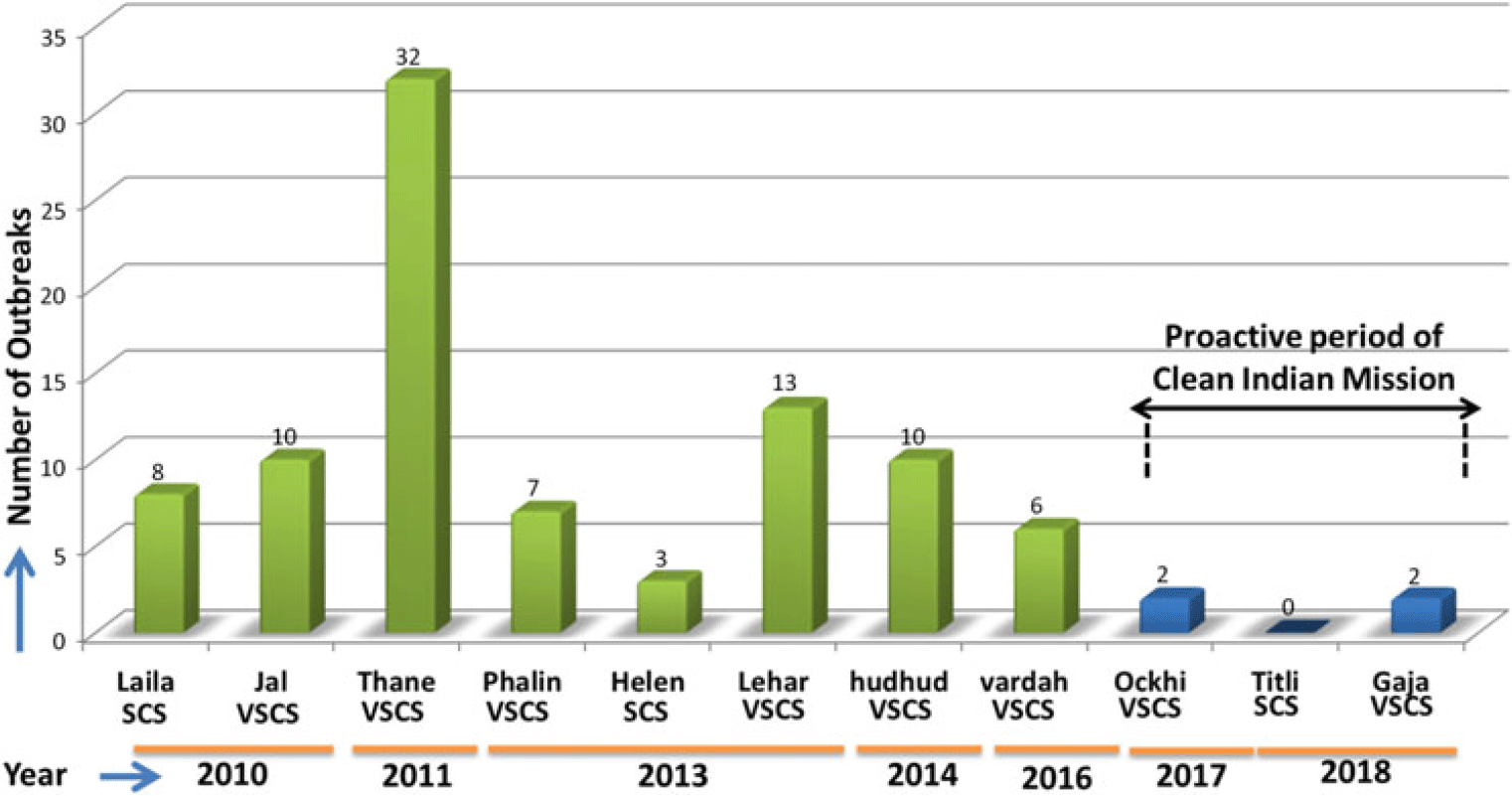
Figure 4 represents a bar chart showing the number of outbreaks (acute diarrheal disease [ADD], vector-borne disease, food poisoning, etc.) with respect to the tropical cyclones from 2010 to 2018.
Bar Chart Representing the Number of Outbreaks (Acute Diarrheal Disease, Vector Borne Disease, Food Poisoning, and so on) With Respect to the Tropical Cyclones From 2010 to 2018.

The following inferences are made from the inventory of the disease outbreaks with respect to the cyclonic events from 2010 to 2018.
-
1. ADD outbreaks rank at the top as the mostly occurred infectious disease during and after the cyclonic episodes. ADD outbreaks have persisted even after the second week of cyclonic phenomena.
-
2. Outbreaks due to vector-borne diseases like malaria, dengue, and Chikungunya were seen occurring in the districts that are in the periphery of the cyclone cloud.
-
3. Outbreaks due to viral fever, enteric fever, measles, food poisoning, and cholera were observed during the first and second week of cyclonic episodes.
-
4. Cyclones like Ockhi and Gaja were classified as VSCS, but minimal outbreaks were observed during their respective episodes.
-
5. Cyclones like Titli, Okchi, and Gaja fall in the proactive period of Clean India Mission, and, during these cyclonic events, there are very few or no outbreaks recorded.
DISCUSSION
Earlier researchers have successfully correlated the relationship between pathogenic transmitted outbreaks with cyclonic events. Reference Fredrick, Ponnaiah and Murhekar25‐Reference Pal, Khuntia and Samal29 Shultz et al. reported that infectious diseases are prime contributors to the public health consequences associated with tropical cyclones – along with storm-related mortality, injury, psychosocial effects, displacement and homelessness, damage to the health care infrastructure, disruption of public health services, transformation of ecosystems, social dislocation, loss of jobs and livelihood, and economic crisis. Reference Shultz, Russell and Espinel8
Watson et al. mentioned that the risk factors for the outbreaks after disasters are associated primarily due to the density of crowd, humidity, and flood conditions. Reference Watson, Gayer and Connolly30 The availability of drinkable water, pro-sanitation facilities, the crowd density and its underlying health status, and the availability of health care services will all interact within the context of the local disease ecology to influence the risk for communicable diseases. In countries like India, accessibility of potable water can be a difficult thing in rural areas during natural disasters like cyclones. Contaminated water increases the probability of fecal-oral route transmitted pathogens as they are root causatives for diarrheal disease outbreaks. Cyclones may trigger flood-like events, and, in turn, floods can induce water contamination. Epidemics associated with Vibrio cholerae and enterotoxigenic Escherichia coli will occur due to water contamination. The results obtained from this study confirmed that the ADD outbreaks were prominent during the phenomenon of cyclones.
Cyclones and floods will play a pivotal role in mosquito breeding sites and vector-borne disease transmissions. Preliminary evidence suggests that 1 to 2 dry months followed by heavy rainfall, possibly like a cyclone, increase the likelihood of vector-borne outbreaks. 31 Watson et al. mentioned that, while initial flooding may wash away existing mosquito-breeding sites, later, the stalled water due to heavy downpour may create new breeding sites. Reference Watson, Gayer and Connolly30 The intensity of vector-borne disease transmission depends on the species type, its population, and post-cyclonic environment. Raharimalala et al., while establishing a potential relationship between malaria and cyclones, reported that malaria outbreaks in flood zones are a regular phenomenon if not protected with an anti-malaria program. Reference Raharimalala, Rabarijaona and Randrianarivelojosia32 Alas, certain times, cyclones will hamper the anti-malaria programs. Myint et al., while correlating dengue with Cyclone Nargis, mentioned that dengue is a major vector-borne disease endemic in the cyclone-affected area. Reference Myint, Kaewkungwal and Singhasivanon33 Dengue transmission is influenced by meteorological conditions, including rainfall and humidity, and often exhibits strong seasonality. Reference Watson, Gayer and Connolly30 The risk for dengue outbreaks is also influenced by humans’ exposure to urban-adapted Aedes aegypti mosquitoes during the post-cyclonic periods. Reference Wai, Htun and Oo34 Chikungunya is an arthropod-borne disease transmitted by Aedes mosquitoes, characterized by febrile arthralgia and responsible for devastating outbreaks. Reference Leparc-Goffart, Nougairede and Cassadou35 Palaniyandi reported that similar to dengue, the occurrence of Chikungunya is high in the areas prone to cyclones. Reference Palaniyandi36 Defective rainwater harvesting structures play a prominent role in establishing the breeding habitats near the vicinity of human settlements.
Measles is an infectious disease caused by Morbillivirus, and the disease is generally transmitted by the airborne route. Reference Shrivastava, Shrivastava and Ramasamy37 High crowd conditions situations in cyclone relief camps encourage the conditions for measles transmission from human to human. Reference Mallik, Mandal and Ghosh38
Food poisoning, also called foodborne disease, is caused by eating contaminated food. Infectious organisms like bacteria, viruses, protozoan, helminths, and toxins are responsible for poisoning. 39 Contamination occurs due to incorrect handling of food at various processing stages like growing, cooking, packaging, shipping, and also during storing. Food poisoning symptoms, which can start within hours of eating contaminated food, often include nausea, vomiting or diarrhea. The pathogenic organisms transmitted through contaminated foods in India are Staphylococcus aureus, Vibrio species, Salmonella species, E. coli, Yersinia enterocolitica, and Norwalk-like virus. From the disease outbreaks inventory mentioned in Table 2, food poisoning outbreaks have occurred during most of the cyclonic events.
The intensity of a tropical cyclone is measured in terms of minimum sea level pressure or maximum low-level winds speeds and is often used to estimate the damage potential of the cyclones. Reference Landsea40 At the same time, different areas of tropical cyclones will initiate different settings for influencing the public health. The inner core of a cyclone, which has a spread of approximately 100 km ground radius, contains the strongest winds and heaviest rainfall rates. Reference Weatherford and Gray41 The changes that occur in the inner core are independent with those of the outer core. The outer core is always cooler than its core, and it is responsible for the dynamics of the overall tropical cyclone that influences the moisture, temperature, and humidity levels of the impact area. Investigations done by Schulman and Kilbourne concluded that a strong correlation exists between the infections rates of influenza virus with relative humidity levels. Reference Schulman and Kilbourne42
The intensity of outbreaks depends on various factors that include hygienic practices of people, types of resources available, innovative and appropriate technologies according to the requirement of the community, socioeconomic development of the country, cultural factors related to environmental sanitation, political commitment, capacity building of the concerned sectors, social factors including behavioral pattern of the community, legislative measures adopted, and others. Reference Kumar, Kar and Jain18 Under the Clean India Mission, the GoI has significantly contributed to uplift the sanitation at community and individual household level. More than 0.54 million villages and 585 districts have been declared with Open Defecation Free status due to the course of the Clean India Mission. Over 90 million toilets have been built across rural India so far, taking the national rural sanitation coverage up from 39% in 2014 to over 98% by 2018. 43 This progress has been independently verified by a large scale third-party National Annual Rural Sanitation Survey 2017–18 under the World Bank-supported project across 90 000 households in over 6000 villages, which found the rural toilet usage to be 93.4 percent. 43 The Clean India Mission has successfully changed the habits and attitudes toward sanitation and hygiene. 44 The program has contributed to motivate the communities to construct and use the toilets. The designs of toilets that are climate proof and resilient to disasters such as cyclones and floods were also main contributors for the success of this mission. Most importantly, the sanitation provisions in the cyclone relief camps may have regulated and controlled the occurrence of infectious disease transmission during the disaster period. 45,46
The National River Conservation Plan (NRCP) is another intervention instigated by the GoI with an objective to improve the water quality of the major rivers in the country through the implementation of pollution abatement schemes. The major activities included in NRCP are interception and diversion of raw sewage flowing into the rivers along with sewage treatment plants for treating the diverted sewage. 47 The implementation of NRCP is acting as a catalyst in controlling the water pollution due to untreated sewerages. The launch of Atal Mission for Rejuvenation and Urban Transformation (AMRUT) with an aim to provide basic civic amenities like water supply, sewerage, and urban transport has improved the quality of life for cities. 48 The National Cyclone Risk Mitigation (NCRM) project initiated by the Indian government is another strategic intervention through which the effects of tropical cyclones are combated effectively using the hazard risk mitigation approach. All of the recent interventions like SBM, NRCP, AMRUT, and NCRM effectively helped in decreasing the outbreaks following the disasters like cyclones and floods. 49
CONCLUSION
Inventory of disease outbreaks during the episodes of natural disasters is a primary input to the risk assessment maps. In this article, we present an inventory of disease outbreaks that occurred during various phases of cyclonic events between 2010 and 2018. Outbreak inventories will help in understanding and assessing the location’s susceptibility to the infections and draw a systematic evaluation of a place that is prone to endemic diseases, epidemic diseases, and living conditions.
In countries like India, cyclone shelters or relief camps are often filled with crowds crammed in small rooms during the disaster times in which pathogens like viruses and bacteria can be passed from one person to another very quickly. Clean India Mission has provided the much needed sanitation provisions in the cyclone relief camps with adequate room to store food, availability of medicines, and clean drinking water. Public awareness campaigns are an integral part of Clean India Mission and have encouraged the habits of public to promote sanitation practices. Recent interventions like Clean India Mission and others have reduced the risk factors for morbidity and mortality of disease outbreaks due to tropical cyclones. The practice of open defecation has reduced significantly with the help of more independent household latrines and community level toilets. This, in turn, has reduced the infectious diseases due to fecal pollution.
Acknowledgments
Deep gratitude is expressed by the authors to Dr Kuldeep Singh, Dean (Academics), AIIMS, Jodhpur, India; and Shri Santanu Chowdhury, Director, National Remote Sensing Centre, Hyderabad, India, for their valuable guidance and for providing facilities to carry out this work.