INTRODUCTION
Toxoplasma gondii is a worldwide protozoan parasite that infects humans and a large variety of animal species. Felids, particularly domestic cats (Felis catus), are the only hosts that excrete the oocysts that infect intermediate hosts (Dubey and Beattie, Reference Dubey and Beattie1988). The life-cycle of the parasite includes intermediate hosts such as small mammals and birds, which complete the life-cycle when they are eaten by cats. Besides predation, cats can be contaminated by vertical transmission or by ingesting oocysts. Vertical transmission, however, appears to be rare in laboratory and natural conditions (Dubey and Hoover, Reference Dubey and Hoover1977; Afonso et al. Reference Afonso, Thulliez and Gilot-Fromont2006) and oocysts are less infectious than tissue cysts in cats (Dubey, Reference Dubey2006). Predation is therefore the major cause of infection in cat populations and differences in prevalence between domestic and stray cats are closely correlated with dietary levels of hunting (Tenter et al. Reference Tenter, Heckeroth and Weiss2000).
In cats that have access to prey the levels of infection should depend on the levels of infection in prey. Cats are opportunistic predators that can rapidly adapt their diet to prey availability (Turner and Bateson, Reference Turner and Bateson2000). The variability of prevalence in cats should thus also depend on the variability of infection in prey. Not all prey species have identical susceptibility (Gustafsson et al. Reference Gustafsson, Uggla and Jarplid1997; Sedlak et al. Reference Sedlak, Literak, Pavlasek and Benak2001). Prey species also vary in exposure, because of the level of oocyst contamination in their habitat or differences in home-range size or energy requirements. Finally, infection accumulates with age, so that old individuals are more often infected than younger ones. Because life expectancy, home-range size and energy requirements are related to body size (Degen et al. Reference Degen, Kam, Khokhlova, Krasnov and Barraclough1998; Speakman, Reference Speakman2005; Ottaviani et al. Reference Ottaviani, Cairns, Oliverio and Boitani2006), body size may represent a good indicator of species risk.
The aim of this study was to provide information on T. gondii infection risk in feral cats according to their diet. We tested the prediction that cats exploiting different prey species would have different levels of T. gondii seroprevalence using data from a cat population living on the Kerguelen archipelago, one of the rare populations where cats survive exclusively through predation. We expected to find that seroprevalence in cats would vary between sites, according to availability of prey species.
MATERIALS AND METHODS
Body mass and prevalence in rodents and lagomorphs
We searched for reported T. gondii prevalence in rodent and lagomorph species, including studies with sample sizes of at least 30 individuals captured in non-anthropized environments. We used a linear model to describe the relationship between body mass and antibody prevalence and, to ensure linearity, we used the natural logarithm of body mass and the arcsine square root of prevalence values (Sokal and Rohlf, Reference Sokal and Rohlf1981). Because species are not independent, but are linked by phylogenetic history, we used the method of phylogenetically independent contrasts to correlate the two variables, taking into account non-independence of data (Felsenstein, Reference Felsenstein1985). We constructed a phylogenetic tree with data from Conroy and Cook (Reference Conroy and Cook2000), Huchon and Douzery (Reference Huchon and Douzery2001), Michaux et al. (Reference Michaux, Chevet, Filippucci and Macholan2002), Durish et al. (Reference Durish, Halcomb, Kilpatrick and Bradley2004), Steppan et al. (Reference Steppan, Adkins and Anderson2004), and Robinson and Matthee (Reference Robinson and Matthee2005), with all branch lengths set to 1. We first calculated the Pearson's correlation coefficient without contrasts then calculated the Pearson's correlation on contrasts with the ape package of the R 2.0.1 software (R Development Core Team, 2005).
Study area and population
The Kerguelen archipelago (49°20′S, 70°20′E) in the Southern Indian Ocean consists of 1 main large island partly covered by an icecap and about 300 small islands over a total surface area of 7200 km2. The climate is characterized by high precipitation (mean 783 mm per year), low temperatures (mean annual temperature 4·8–11·9°C, Météo France, Port aux Français) and windy conditions. Cats live at very low densities (1–3 cats/km2; Say et al. Reference Say, Gaillard and Pontier2002a) and are mainly solitary (Say et al. Reference Say, Devillard, Natoli and Pontier2002b).
Samples were collected from feral cats at 4 sites on the main island: (1) the French naval station, Port aux Français (PAF), (2) the farming settlement of Port Couvreux (PC), (3) the Norwegian whaling station of Port Jeanne d'Arc (PJDA), and (4) Cape Ratmanoff (RAT) on the Courbet Peninsula. Pair-wise distances between sites range from 20 to 140 km and the 4 groups of cats appear to be genetically different and spatially independent (Pontier et al. Reference Pontier, Say, Devillard and Bonhomme2005).
Rabbits (Oryctolagus cuniculus) are the most common prey consumed by cats at PAF, PC, and PJDA (about 90%), whereas in RAT, rabbits, mice (Mus musculus) and birds (Pterodroma lessonii, Pachyptila desolata, and Procellaria aequinoctialis) are all consumed (about 30% each; Pontier et al. Reference Pontier, Say, Debias, Bried and Thioulouse2002).
Cats were trapped between October 1994 and November 2004, using baited-traps. Captured cats were anaesthetized, weighed and sexed, and blood samples collected by jugular puncture. Cats were permanently marked at first capture with subcutaneous transponders. Age was estimated based on general appearance, body size, tooth development and marks from previous captures. Cats aged less than 1 year were aged by months, while age of adults was estimated in years (Pascal and Castanet, Reference Pascal and Castanet1978). Blood samples were centrifuged and stored at −20°C, sera were diluted 2-fold starting at 1:20 and tested for anti-T. gondii IgG antibodies using the modified agglutination test (Dubey and Desmonts, Reference Dubey and Desmonts1987).
Prevalence
We took 404 blood samples from 276 cats, with 74 cats captured several times (up to 4 captures per individual) and randomly selected 1 sample for each of the 276 individual cats. We then estimated seroprevalence as the proportion of cats having an antibody titre ⩾1:40 (Afonso et al. Reference Afonso, Thulliez and Gilot-Fromont2006).
Variables associated with antibody prevalence
We used logistic regression to relate the logit of the probability of being seropositive to predictor variables of site, year, cat sex and cat age. Comparisons were performed using the Akaike Information Criterion (AIC) since the model with the lowest AIC represents the best compromise between residual deviance and number of parameters (Burnham and Anderson, Reference Burnham, Anderson, McCullough and Barrett1992). After taking into account the effect of age as a continuous variable, we then tested the effect of each variable (site, year and sex) with two-way interactions. We first included all variables and interactions that tended to influence antibody prevalence (using a Likelihood Ratio Test (LRT), P<0·2) and then simplified the model using a backward approach. We retained the model with the lowest AIC and when AIC values of two models differed by less than 2, we selected the most parsimonious model. Coefficients in the final model were estimated by calculating adjusted odds-ratios and 95% confidence intervals to measure the strength of association between each variable and serological status. Overall fit of the final logistic equation was assessed using the Hosmer-Le Cessie test (Hosmer et al. Reference Hosmer, Hosmer, Le Cessie and Lemeshow1997). All statistical procedures were performed using the R 2.0.1 software.
Estimation of the probability of infection
Assuming that incidence did not vary with time, we used age-specific prevalences to estimate the probability of a cat consuming an infected prey during 1 month (p). We considered that at age A (in months), the probability of being seronegative was the cross-product of the probabilities of encountering no infected prey (1−p) for A months. The probability of having antibodies at age A was thus P(A)=1− (1−p)A. Using this relationship, we estimated p using maximum likelihood. For each age class, the age A was the median age of captured cats. Because prevalence differed between sites (see Results section), we performed separate estimates for RAT and other sites.
RESULTS
Body mass and seroprevalence of T. gondii in rodents and lagomorphs
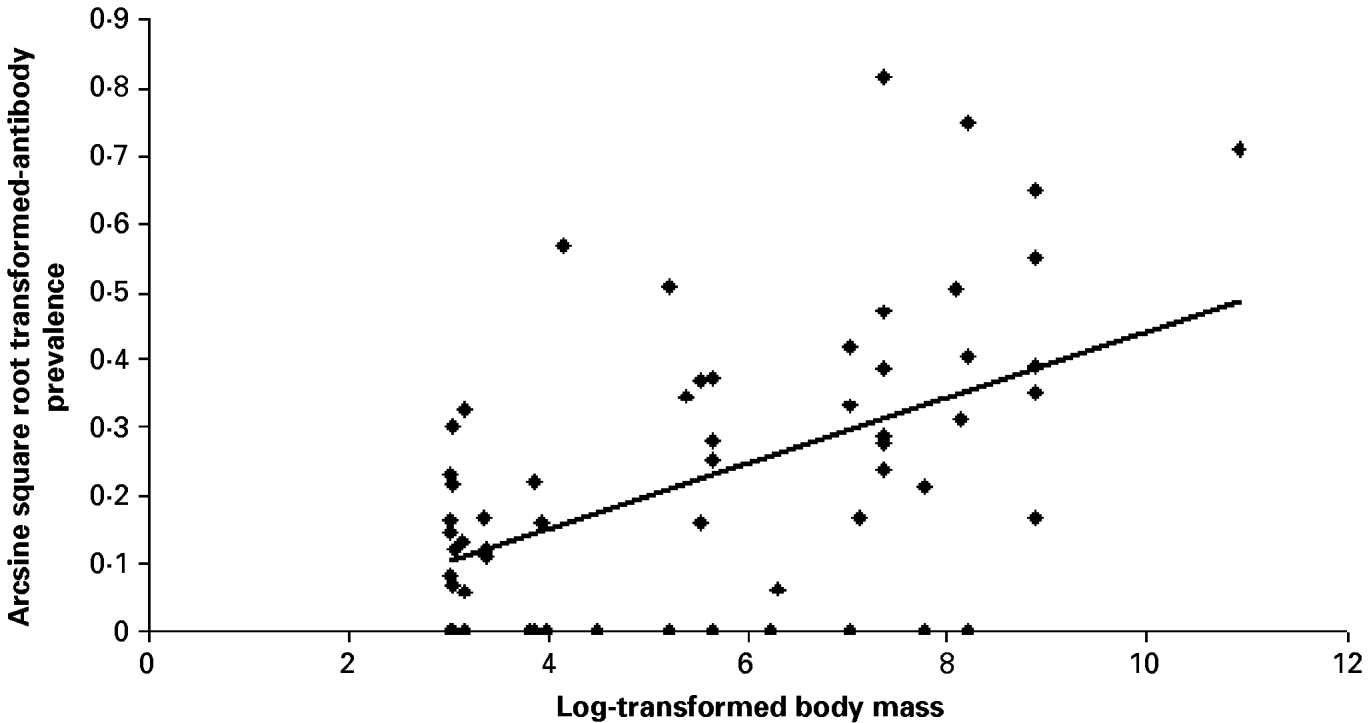
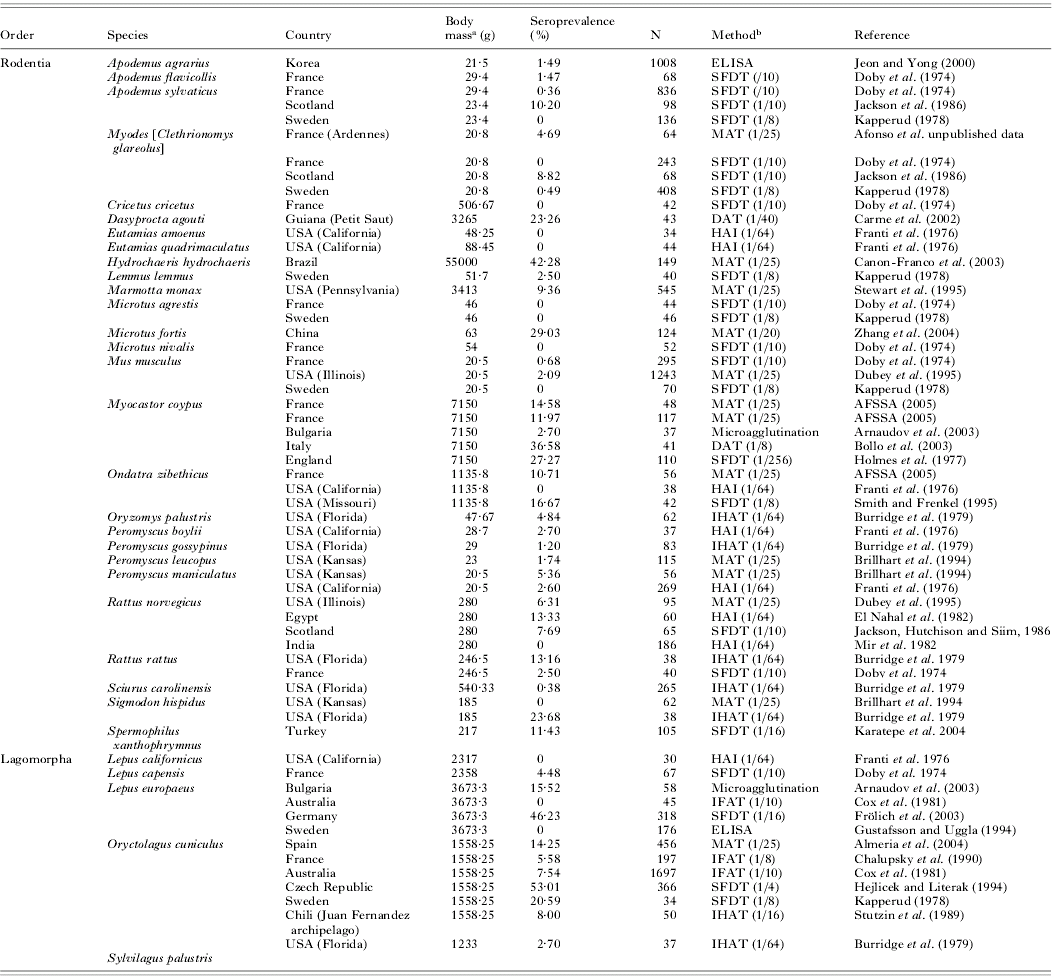
A positive linear relationship was detected between body mass and T. gondii seroprevalence (Table 1, Fig. 1) with the largest species having the highest prevalences (R2=0·25, P<0·001). After taking into account the phylogenetic relationships among species, prevalence was still positively related to body mass (R2=0·18, P=0·010).
Linear relationship between antibody prevalence for Toxoplasma gondii (arcsine square root-transformed) and body mass (log-transformed) in rodents and lagomorphs (data from Table 1). Each point represents the mean of at least 30 individuals captured in non-anthropized environments.

Mean prevalence of Toxoplasma gondii antibodies and body mass of various rodents and lagomorphs
(Threshold of the serological tests is indicated in parentheses when specified by the authors.)

a Data from Ernest (Reference Ernest2003).
b CIA, carbon immunoassay; DAT, direct agglutination test; ELISA, enzyme-linked immunosorbent assay; IFAT, indirect immunofluorescent antibody test; IHAT, indirect haemagglutination test; MAT, modified agglutination test; HAI, microtiter indirect agglutination test; SFDT, Sabin-Feldman dye test.
Prevalence
Of the 276 trapped cats, 103 were females and 173 were males. Approximately 36% (98/276) of cats were less than 1 year of age, and the median age was 1 year. In total, 151 cats were trapped at PAF, 23 at PC, 44 at PJDA and 58 at RAT.
Of the 276 cats tested, 141 had antibody titres of at least 40. Overall prevalence was thus 51·09% (95% CI: 45·22–56·93). Seroprevalence was 54·30% (95% CI: 46·35–62·04) at PAF, 60·87% (95% CI: 40·79–77·84) at PC, 54·55% (95% CI: 40·07–68·29) at PJDA, and 36·21% (95%IC: 25·05–49·07) at RAT.
Cats at the sites with the same diet (essentially rabbits at PAF, PC and PJDA) had similar T. gondii prevalences (Chi-2 test, P=0·838), while RAT cats had a significantly lower prevalence. We thus grouped sites according to cat diet and analysed RAT separately from OTHER sites (PAF, PC and PJDA combined).
Variables associated with antibody prevalence
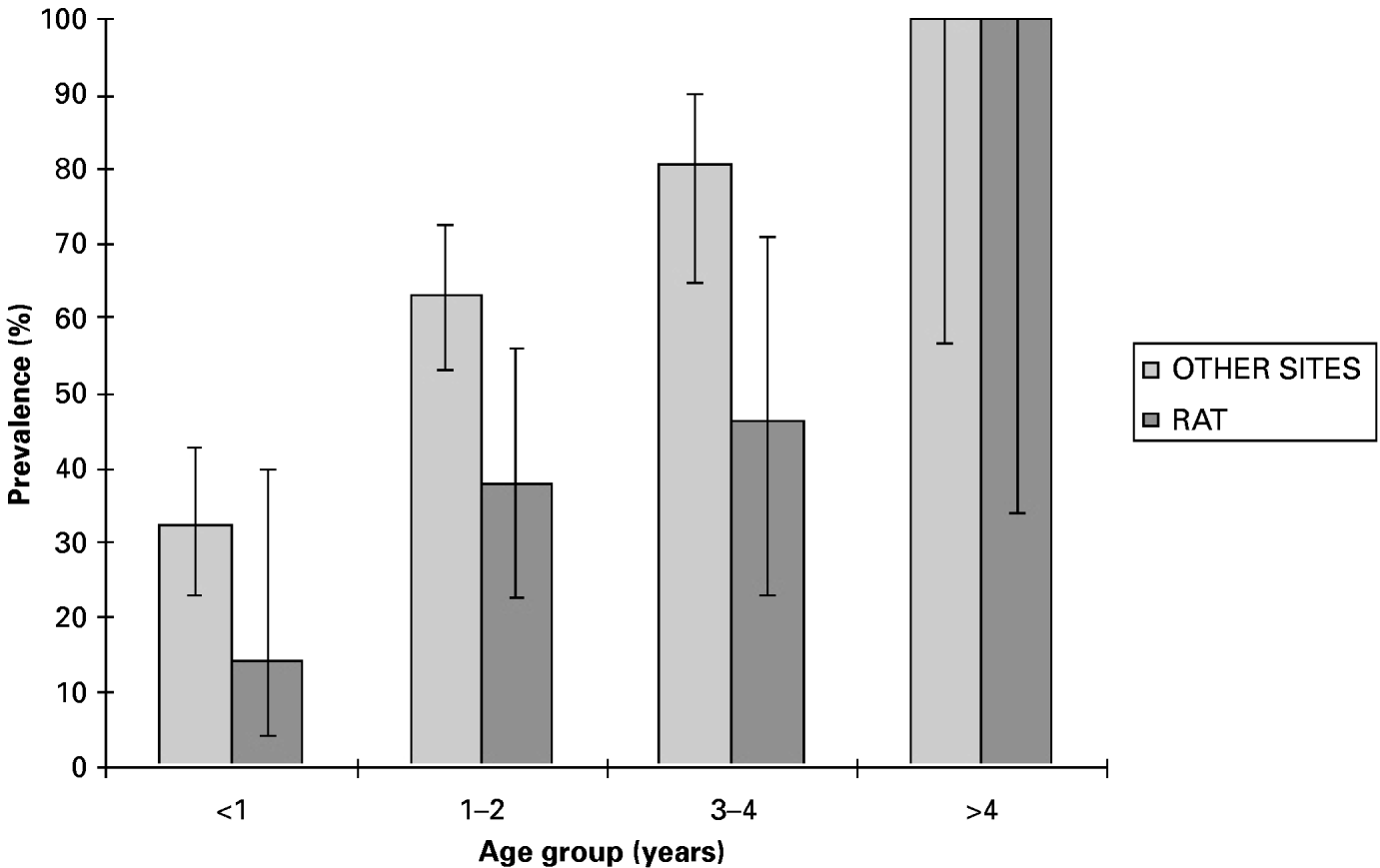
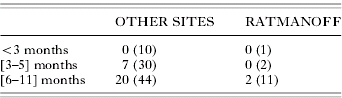
T. gondii seropositivity was related linearly to age (LRT, P<0·001). Cats had a 2·43 times increased risk of acquiring toxoplasmosis for each year of life (95% CI: 1·77–3·33). In accordance with the hypothesis that vertical transmission is rare, none of the 11 individuals aged less than 3 months was positive (Table 2), while all cats of at least 4 years of age carried antibodies (Fig. 2).
Observed seroprevalence of Toxoplasma gondii in Kerguelen cats for 4 age classes. RAT=Ratmanoff.

Number of cats captured at less than 1 year of age and seropositivity for Toxoplasma gondii in Kerguelen sites
(Numbers in parentheses indicate sample sizes.)

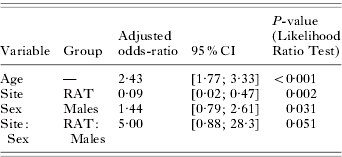
After taking into account the effect of age, cats from RAT were less often seropositive than at OTHER sites (Table 3, LRT, P=0·002; odds-ratio of OTHER sites compared to RAT: 11·11, 95% CI: 2·13–50). Males were more often infected than females (LRT, P=0·031), and this difference was more pronounced in RAT, where males had a 5·00 times greater chance of having antibodies (95% CI: 0·88–28·3) than females. The interaction between site and sex was included in the model with the lowest AIC (332·76 versus 337·23 without the interaction), although the LRT was only close to significance (LRT, P=0·051). The variable year was not retained in the final model (LRT, P=0·284). The Hosmer-LeCessie goodness-of-fit test showed a good fit of the final selected model (P=0·935).
Estimation of the infection probability
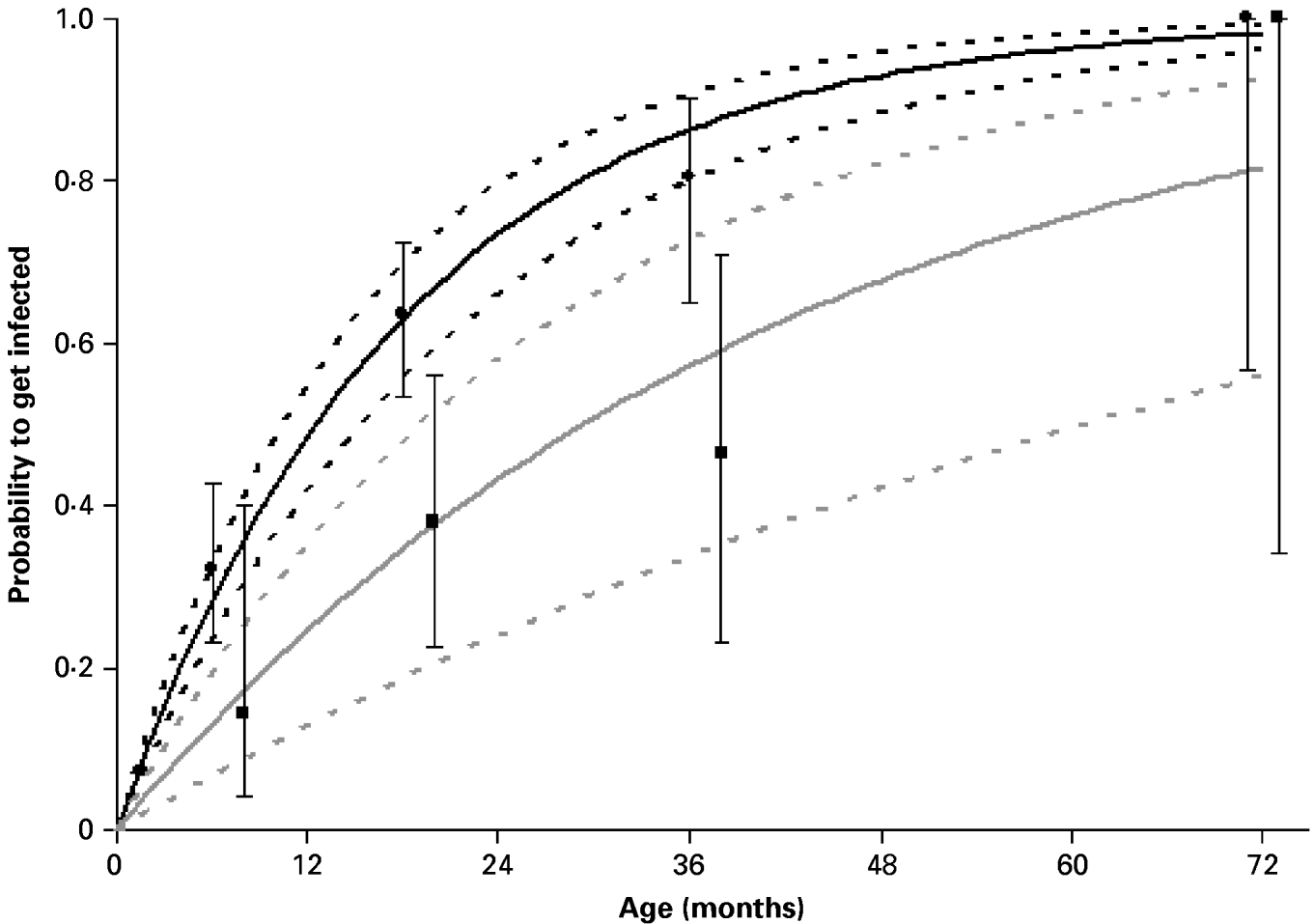
Using maximum likelihood, the probability of infection for 1 month (p) was estimated to be 0·023 (95% IC: 0·011–0·035) at RAT and 0·054 (0·044–0·064) in OTHER sites. These estimates provided accurate predictions of the age-prevalence relationship in both sites (Fig. 3).
Predicted relationship between age and seroprevalence at RATMANOFF (grey line) and OTHER sites (black line). Solid lines represent the mean prediction and broken lines represent the 95% confidence interval limits. Points represent the observed prevalence values for each age class, with confidence intervals drawn as whiskers: square points for RATMANOFF values and circular points for OTHER values. Prevalences are indicated for the median age observed at capture and are slightly displaced for better visualization.

DISCUSSION
We found that T. gondii seroprevalence in rodents and lagomorphs was correlated to body mass, with large species being more often positive than small ones. Because we compared seroprevalences estimated with various serological methods at various thresholds the variance in the relationship could be partially explained by differences in sensitivity, specificity and predictive values between tests.
Since prevalence of infection accumulates with age, large species that have longer life expectancies are likely to be more at risk than small ones. Several non-exhaustive factors could also modulate seroprevalence: susceptibility, home-range size and energy requirements. Susceptibility of hosts is variable and several species have been reported to be particularly susceptible to the parasite (Lepus timidus, Gustafsson et al. Reference Gustafsson, Uggla and Jarplid1997; Sigmodon hispidus, Chinchilla et al. Reference Chinchilla, Guerrero, Reyes and Abrahams1996). Also, small rodents could be very susceptible and might die soon after ingestion of the parasite leading to biases in the estimation of seroprevalence. Large species have high energy requirements and extended home ranges come in contact with large surface areas of contaminated resources (such as vegetation and soil). As a consequence of the direct relationship between body mass and seroprevalence in prey species, knowledge of the availability of different-sized prey should allow prediction of the infection risk of cats in specific habitats.
In Kerguelen feral cats, we observed a high seroprevalence (51·09%) compared to a dense urban cat population where predation is uncommon (18·6%, Afonso et al. Reference Afonso, Thulliez and Gilot-Fromont2006). In accordance with our hypothesis, the levels of infection were higher in sites where rabbits were the most commonly consumed prey item compared to sites where the diet included mice and birds as well as rabbits. Although genetic variability of the cat population is low, genetic differences can be detected among the 4 sites (Pontier et al. Reference Pontier, Say, Devillard and Bonhomme2005), thus it is not possible to exclude the likelihood that cats from RAT are less susceptible than cats from OTHER sites. Cats from RAT also consume birds, but the low seroprevalence at RAT gave no indication that birds represent a major source of toxoplasmosis. More information on seroprevalence in different species of birds would help to define the role of birds as intermediate hosts of T. gondii. Studying prey species on Kerguelen, however, would raise practical difficulties. Although Kerguelen cats are exclusively predators, their risk of infection is relatively low (0·023 to 0·054 per month) and so seroprevalence in prey species is likely to be very low. The sampling effort required to determine prey seroprevalence on Kerguelen would thus be extremely extensive. A study of other populations of predatory cats could help to confirm our hypothesis.
Variables associated with seropositivity for Toxoplasma gondii in Kerguelen cats
(RAT=Ratmanoff.)

As expected, antibody prevalence was related to age, due to the accumulation of infection with age. Males were more often infected than females. Because adult males are larger and heavier than females, they are expected to consume more prey items (Niewold, Reference Niewold, Turner and Bateson1986; Turner and Bateson, Reference Turner and Bateson2000) and to be more often exposed to infection. The difference between sexes was more pronounced in RAT, where several prey species were available. Diet may differ between males and females and it has been shown elsewhere that males tend to feed on lagomorphs, carcasses of large mammals and birds, whereas females prey mainly on small mammals (Niewold, Reference Niewold, Turner and Bateson1986 in the Netherlands; Jones and Coman, Reference Jones and Coman1981 in Australia). Liberg (Reference Liberg1982) found that free-roaming males were more efficient at hunting voles (Microtus and Arvicola) and rabbits than females. Males may be more exposed to toxoplasmosis than females on Kerguelen, due to difference in their diets.
Toxoplasma gondii prevalence in cat populations is generally related to prey availability yet studies on cats rarely take into account the ecology of prey species. Our literature review suggested that different prey species represent unequal infection risks for predators. In addition, our study showed that different diets of Kerguelen cats led to different levels of infection. Because prey availability differs according to the environment, it is thus necessary to examine both predator habitat and diet in order to fully understand the spatial variability of T. gondii infection.
The authors thank all those who participated in the field and laboratory investigations, L. Say and S. Devillard for help with statistical analyses and useful comments on an earlier version of the manuscript and D. Aubert for providing references. The authors also sincerely thank W. King and an anonymous referee for improving the English, and for helpful comments. This work was supported by the French Institut Paul-Emile Victor (IPEV, program 279), the Agence Française de Sécurité Sanitaire de l'Environnement et du Travail (AFSSET), the Grünenthal France Laboratory, the Région Champagne-Ardenne and the Communauté de Communes de l'Argonne Ardennaise.