Implications
Results from the current study suggest supplementing piglets with a mannan-rich fraction (MRF) may be one nutritional strategy to improve intestinal microbiota and intestinal architecture. Supplementing diets with MRF increased abundance of beneficial commensal bacteria Clostridium, known butyrate producers, and Paraprevotella, a core intestinal bacteria of growing pigs. Mannan-rich fraction supplementation was associated with reduced abundance of a potentially pathogenic bacterium, Campylobacter. Data from this study suggest that piglets supplemented with MRF had improvements in intestinal homeostasis that may lessen mucosal disruption of piglets typically observed at weaning.
Introduction
Early weaning of piglets, between postnatal day (PND) 18 to 28, allows for quick and efficient re-breeding of sows. However, stress of abrupt weaning characteristically results in piglets to go off feed and water causing structural and functional instability of the gut microbiota (dysbiosis). This subsequently leads to a loss of structural and functional integrity of the intestine characterized by villus atrophy and crypt hyperplasia (Lallès et al., Reference Lallès, Boudry, Favier, Le Floc’h, Luron, Montagne, Oswald, Pié, Piel and Sève2004). Together the intestinal damage and microbial dysbiosis are driving factors predisposing animals to pathogenic infections, post-weaning diarrhea and reduced growth (Hopwood and Hampson, Reference Hopwood and Hampson2003). Historically, antibiotics have been used either prophylactically or sub-therapeutically in feed to promote growth. However, increasing public health concerns regarding development of antibiotic-resistance pathogens has led to reduced use and subsequent ban of antibiotics in some countries. Therefore, development of nutritional management strategies to prevent microbial dysbiosis and improve gastrointestinal structure and function during the critical window post-weaning is fundamental in maintaining animal performance.
Including nutritional additives in animal diets, such as yeast-derived mannan-oligosaccharides or MRFs, have recently gained popularity in the livestock industry and have been shown to improve animal performance in both pigs (Miguel et al., Reference Miguel, Rodriguez-Zas and Pettigrew2004) and poultry (Hooge et al., Reference Hooge, Kiers and Connolly2013). Several mechanisms for yeast-derived mannan-oligosaccharides have been proposed: acting as a fermentative substrate, pathogen inhibition, immune-modulation and improvement of intestinal integrity (Halas and Nochta, Reference Halas and Nochta2012). Recent studies have shown supplementing mannan-oligosaccharides or MRFs can reduce Campylobacter colonization in chickens (Corrigan et al., Reference Corrigan, Corcionivoschi and Murphy2017), Salmonella prevalence and shedding (Andrés-Barranco et al., Reference Andrés-Barranco, Vico, Grilló and Mainar-Jaime2015), and Enterobacteria in pigs (Castillo et al., Reference Castillo, Martín-Orúe, Taylor-Pickard, Pérez and Gasa2008). However, it is becoming increasingly evident that gut microbiota exists within a dynamic and complex community and it is the function of the community as a whole that confer health benefits to the host. Therefore, the role MRFs play in overall microbial community structure and modulation of the immune system in pigs must be elucidated. Therefore, the objective of this study was to determine the effects of supplementing a piglet diet with yeast-derived MRF (ActigenTM; Alltech Inc., Nicholasville, KY, USA) on piglet performance, cecal microbial structure, jejunal morphology and jejunal gene expression.
Material and methods
Animal use was approved by the Animal Care and Use Committee of the University of Alberta and pigs were handled according to guidelines set by the Canadian Council on Animal Care (CCAC, 2009).
Animals and diets
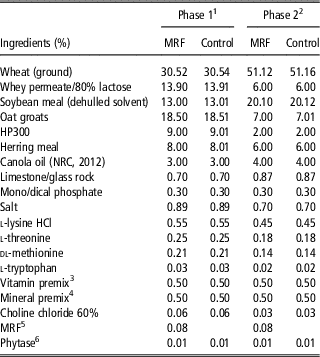
The animal study was conducted at the Swine Research and Technology Centre of the University of Alberta (Edmonton, AB, Canada). A total of ten litters of piglets (n=106 piglets, ranging 9 to 12 piglets/litter, Duroc × Large White/Landrace F2; Hypor, Regina, SK, Canada) were utilized. Litters (n=5/treatment) were randomly assigned to receive phase 1 creep feed, supplemented with or without a yeast cell wall-based product containing a MRF (mannan, 12%; crude fat, 1.85%; CP, 33.5%; total ash, 6.78%) at company recommended inclusion rate 800 mg/kg (Table 1) from PND 7 until weaning at PND 21. Diets were formulated to exceed requirements for weanling pigs, and were fed in a pelleted form ad libitum (National Research Council (NRC), 2012). Pigs and feed were weighed weekly to determine average daily feed intake (ADFI), average daily gain (ADG) from PND 7 to 42, and to calculate feed to gain ratio (F : G) from PND 21 to 42 per treatment. At weaning (PND 21), a total of four piglets per litter (n=20/treatment) were selected based on average litter weight and were moved into a new pen in the nursery (male and female, 1 : 1). From PND 21 to 28, the selected piglets were offered ad libitum access to water and continued on with their respective phase 1 diets (n=20 piglets/treatment). Pens (1.1 m×1.5 m) were equipped with self-feeders with 4-feeding spaces (model N4-424; Crystal Spring, MB, Canada), nipple drinkers, polyvinyl chloride partitions and plastic deck flooring for the entire experimental period. The nursery was kept under negative pressure ventilation at ~29°C with a 12-h photoperiod. From PND 22 to 41 the incidence and severity of diarrhea was recorded using a fecal consistency scoring system from 1 to 8. Fecal consistency was scored as follows, 1=hard and dry, 2=firm and pliable with segmented appearance, 3=moist surface and log like, 4=very moist with distinct log shape, 5=very moist and present in piles, 6=watery and occurring in piles, 7=very watery with no texture and occurring in puddle, 8=very watery with little to no color. Scores of 6 and above were considered to be diarrhea.
Composition of the experimental diets with or without mannan-rich fraction (MRF) fed to piglets from postnatal day (PND) 7 through 42, as fed basis

1 Phase 1 diets fed PND 7 to 28.
2 Phase 2 diets fed PND 29 to 42.
3 Provided per kilogram of diet: vitamin A, 8250 IU; vitamin D3, 825 IU; vitamin E, 40 IU; niacin, 35 mg; d-pantothenic acid, 15 mg; riboflavin, 5 mg; menadione, 4 mg; folic acid, 2 mg; thiamine, 1 mg; d-biotin, 0.2 mg; and vitamin B12, 0.025 mg.
4 Provided per kilogram of diet: Zn, 125 mg as ZnSO4; Fe, 75 mg as FeSO4; Cu, 50 mg as CuSO4; Mn, 25 mg as MnSO4; I, 0.5 mg as Ca(IO3)2; and Se, 0.1 mg as Na2SeO3.
5 Actigen™.
6 Quantum®Blue, AB Vista.
Sampling
On PND 28, two piglets per pen (n=10/treatment; male and female, 1 : 1) were euthanized by captive bolt. Pigs were placed in dorsal recumbency, a midline abdominal incision was made and intestinal segments were clamped and dissected from the mesentery. Cecal digesta samples were collected as a sub-sample from total cecal digesta and snap frozen in liquid N2 and stored at −80°C for microbial analysis. Two 3×3 cm sections of jejunum, 20 cm distal to the ligament of Treitz, were sampled per animal, washed in 1× phosphate buffered saline and either fixed in 10% formalin at room temperature, or snap frozen. On PND 28, the remaining piglets (n=10/treatment) were switched onto phase 2 of the respective test diets to meet nutrient requirements (Table 1) and fed ad libitum until PND 42. On PND 42, piglets were euthanized by captive bolt for collection of cecal digesta and jejunal tissue as described above.
DNA extraction and 16S ribosomal RNA sequencing
Total DNA from cecal digesta was extracted using QIAamp DNA Mini Stool Kit (Qiagen Inc., Valencia, CA, USA) following manufacturer’s instructions, with the addition of a bead-beating step (FastPrep instrument; MP Biomedicals, Solon, OH, USA). Deoxyribonucleic acid concentration was determined using Quant-iT™ PicoGreen® dsDNA Assay Kit (Thermo Fisher Scientific, Waltham, MA, USA). DNA (5 ng/μl) was amplified targeting V3 to V4 regions of the bacterial 16S ribosomal RNA (rRNA) gene with universal primers using KAPA HiFidelity Hot Start Polymerase (Kapa Biosystems Inc., Wilmington, MA, USA). Polymerase chain reaction cycling conditions were as follows: 5 min at 95°C, 25 cycles of 20 s at 98°C, 15 s at 55°C, 1 m at 72°C, hold at 4°C. Subsequently, PCR products were purified using AMPure XP beads (Beckman Coulter Inc., Mississauga, ON, Canada), then dual indices and Illumina sequencing adapters were attached using Nextera XT Index Kit (Illumina Inc., Victoria, BC, Canada). Cycling conditions were 5 min at 95°C, 10 cycles of 20 s 98°C, 15 s 55°C, 1 min 72°C, hold at 4°C. Polymerase chain reaction products were purified and diluted to 4 nM. Aliquots of the 4 nM products were pooled, size-selected, denatured with NaOH, diluted to 4 pM in Illumina HT1 buffer, spiked with 20 PhiX, and heat denatured at 96°C for 2 min before loading. A MiSeq 600 cycle v3 kit was used to sequence each sample (Illumina MiSeq). Nextera adapter sequences were used for run trimming.
Sequence data processing
Sequence data were analyzed using QIIME (MacQIIME 1.9.1 OS10.10) (Caporaso et al., Reference Caporaso, Kuczynski, Stombaugh, Bittinger, Bushman and Bostello2010). PANDAseq was used for quality filtering to discard sequences with a Q score of under 30 and to assemble paired end reads into contigs with miscalled or uncalled bases discarded (Masella et al., Reference Masella, Bartram, Truszkowski, Brown and Neufeld2012). Resulting sequences were cleared of chimeras and singletons using UCHIME and UPARSE workflows and were subsequently clustered into operational taxonomic units having>97% similarity with USEARCH (Edgar et al., Reference Edgar, Haas, Clemente, Quince and Knight2011; Edgar, Reference Edgar2013). Taxonomy was assigned using QIIME default setting, Ribosomal Database Project classifier V2 (Wang et al., Reference Wang, Garrity, Tiedje and Cole2007). Alpha and beta-diversity estimations were conducted using the QIIME workflow core_diversity_analysis.py (Navas-Molina et al., Reference Navas-Molina, Peralta-Sánchez, González, McMurdie, Vázquez-Baeza, Xu, Ursell, Lauber, Zhou, Song, Huntly, Ackermann, Berg-Lyons, Holmes, Caporaso and Knight2013). Briefly, alpha diversity was estimated using Inverse Simpson and Shannon indices. Differences in microbial communities between groups were investigated using the Bray Curtis dissimilarity. The analysis of similarities (ANOSIM) was used on the Bray Curtis dissimilarity.
Histology analysis
Two transverse jejunum sections per pig were stained with hematoxylin-eosin and analyzed with the use of a Nikon image analyser. Twenty well-oriented villi and crypts were identified and measured. Villus height was considered as the distance between the crypt mouth and villi tip. Crypt depth was defined as the infolding between two villi.
RNA extraction and microarray analysis
Jejunal tissues were homogenized by cryogenic grinding and RNA was subsequently isolated using Qiagen RNAeasy mini kit (Qiagen, Valencia, CA, USA). Ribonucleic acid quality and quantity were assed using an Agilent TapeStation (Agilent Technologies Inc., Santa Clara, CA, USA) with quality cutoff at RNA integrity number value of>7. Labeled complementary RNA (cRNA) was made according to manufacturer’s instructions for the GeneChip Expression 3’ Amplification One-Cycle Target Labeling Kit (Affymetrix, Santa Clara, CA, USA). Resulting cRNA yield was determined using an Agilent 2100 Bioanalyzer (Agilent Technologies Inc., Santa Clara, CA, USA). Another quality control check was performed after cRNA fragmentation using a bioanalyzer to ensure proper fragmentation had occurred before array hybridization. Labeled cRNA was hybridized with Affymetrix Porcine Genome arrays for 16 h at 45°C (https://www.thermofisher.com/order/catalog/product/900624), followed by washing, streptavidin-phycoerthrin staining, and scanning in a GeneChip Scanner 3000 7G (Affymetrix). Gene expression data were obtained for the 10 pigs from the non-supplemented diets and nine pigs from the MRF supplemented group due to RNA degradation during cRNA production.
Microarray data processing
Transcriptome Analysis Console software (Affymetrix) was used to qualify and normalize microarray data and to perform gene expression and statistical analysis. Signal intensities of probes were analyzed using an Affymetrix MAS5 algorithm scaled to a mean signal intensity of 500. Using the Affymetrix algorithm, probe sets with low signal intensity were labeled as absent and excluded from downstream analysis. Percentage of genes expressed on the Porcine Genome Array was calculated using the number of probe sets labeled ‘Present’ or ‘Marginal’ based on the applied algorithm. Subsequently a t-test was used to identify differentially expressed probe sets. Genes were deemed changed if they differed from the control (P<0.05) and had a signal intensity fold change >1.2. Genes not meeting criteria were excluded from the analysis. Pathway, network and function of differentially expressed genes were analyzed using Ingenuity Pathways Analysis (IPA) software (Ingenuity Systems Inc., Redwood City, CA, USA). Genes were mapped to their corresponding genes in Ingenuity Knowledge Base and based on cited relationships, were classified according to canonical pathways and biological functions.
Statistics
Data are presented as means ± pooled SEM. Growth performance data were analyzed as a repeated measures using PROC MIXED of SAS (University Edition; SAS Institute Inc., Cary, NC, USA) with pen as the experimental unit. Jejunal villus height, crypt depth and ratio were analyzed using PROC MIXED with individual animal as the experimental unit. Models included the random effect of litter. Initial birth weight was tested as a covariate and was included in the case of ADG, as it was significant and improved the fit of the model. Fecal consistency scores were averaged by day and analyzed as repeated measures using PROC GLIMMIX with the Gaussian distribution and identity link function options. Shapiro–Wilk’s test was used to assess normality. Non-normally distributed sequence data were analyzed using Kruskall–Wallis rank sum test. The level of statistical significance was set at P<0.05 with a trend defined as P⩾0.05<0.10.
Results
Growth performance
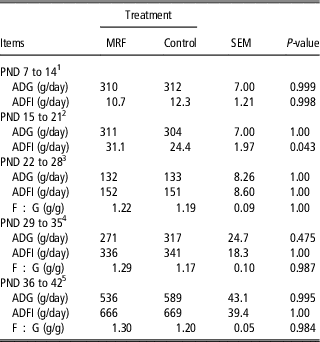
All piglets readily consumed feed and remained healthy throughout the experiment. Overall there was no effect of supplementing piglets with MRF on ADG, and F : G ratio throughout the experiment (Table 2; P >0.05). However, between PND 14 to 21 pigs supplemented with MRF had greater ADFI than those fed control (P<0.05). The average overall fecal consistency scores were 4.0±0.3 for piglets supplemented with MRF and 3.9±0.3 for those fed control diet and did not differ between treatments (P=0.323) with no interaction between day and treatment observed (P=0.716).
Growth performance of piglets fed diets with or without mannan-rich fraction (MRF) from postnatal day (PND) 7 to 42

SEM=pooled standard error of the mean; ADG=average daily gain; ADFI=average daily feed intake; F : G=feed to gain ratio.
For ADG and ADFI a week effect was observed (P<0.001). No interactions between diet and week was observed for ADG or F : G (P>0.05). A diet by week interaction was observed for ADFI (P=0.022).
1 PND 7 to 14, n=51 pigs/MRF; n=55 pigs/control (n=5 pens/treatment).
2 PND 15 to 21, n=51 pigs/MRF; n=55 pigs/control (n=5 pens/treatment).
3 PND 22 to 28, n=20 pigs/treatment (n=5 pens/treatment).
4 PND 29 to 35, n=10 pigs/treatment (n=5 pens/treatment).
5 PND 36 to 42, n=10 pigs/treatment (n=5 pens/treatment).
Cecal digesta microbial structure
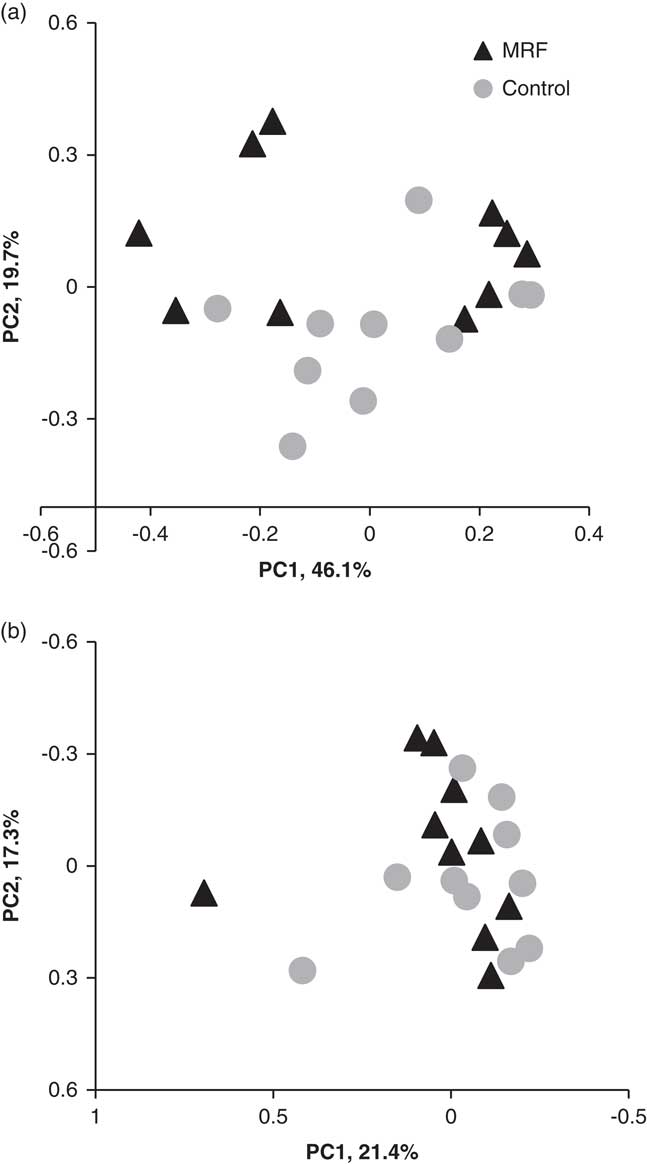
On PND 28 in cecal digesta of piglets supplemented with or without MRF the average number of reads per sample was ~50 000 with a total of 1 000 000 reads. Data were rarefied to 3000 reads per sample. No changes in species richness or evenness, measured using the Inverse Simpson and Shannon index, were observed on PND 28 in cecal digesta of piglets supplemented with MRF (Supplemental Table S1). However, overall microbial community structure tended to cluster distinctly between pigs fed diets with or without MRF (Figure 1a, P=0.076; ANOSIM). Differing microbial community structure was mainly due to pigs consuming MRF having increased (P<0.05) relative abundance of genera from Paraprevotella, and reduced (P<0.05) relative abundance of Prevotella and Sutterella (Supplemental Table S2). Interestingly, pigs fed MRF tended (P<0.10) to have reduced relative abundance of Campylobacter and Akkermansia on PND 28.
Principal Coordinates Analysis ordination plots displaying community structure in cecal digesta of pigs consuming diets with and without mannan-rich fraction (MRF) only tended to differ on postnatal day (PND) 28 cecal digesta as determined through Bray–Curtis dissimilarity: (a) microbial community structure tended to differ in pigs supplemented MRF on PND 28 in cecal digesta (P=0.076; analysis of similarities (ANOSIM)). (b) Microbial community structure between pigs consuming diets with and without MRF did not differ on PND 42 in cecal digesta (P>0.814; ANOSIM).

In cecal digesta of piglets on PND 42 samples had on average 34 545 reads with a total of 690 900. Data were rarefied to 2500 reads per sample. On PND 42 in cecal digesta, no changes in species richness or evenness were observed (Supplemental Table S1) or overall microbial community structure (Figure 1b). Piglets consuming MRF supplemented diets had increased (P<0.05) relative abundance of Clostridiaceae and Clostridium, and tended to have greater (P<0.10) Mitsuokella. Mannan-rich fractions supplemented piglets had reduced (P<0.05) relative abundance of Coprococcus, an unclassified genus of Lachnospiraceae, Roseburia, and tended to have reduced (P<0.01) Oscillospira and Tremblayales (Supplemental Table S3).
Jejunual morphology
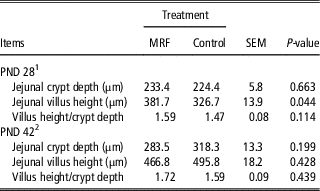
There was no effect of supplementing MRF on piglet jejunal crypt depth on PND 28 and PND 42 (Table 3; P>0.05). However, on PND 28 jejunal villus height was longer (P<0.05) in piglets fed diets supplemented with MRF in comparison to control. The increase in villus height was no longer observed on PND 42 (P>0.05).
Jejunal morphology of piglets fed diets with or without mannan-rich fraction (MRF) from postnatal day (PND) 7 to 42

SEM=pooled standard error of the mean.
Results presented as mean ± SEM.
1 PND 28, n=10 pigs/treatment.
2 PND 42, n=10 pigs/treatment.
Jejunal gene expression in piglets on postnatal day 28
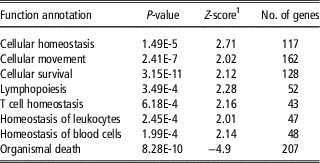
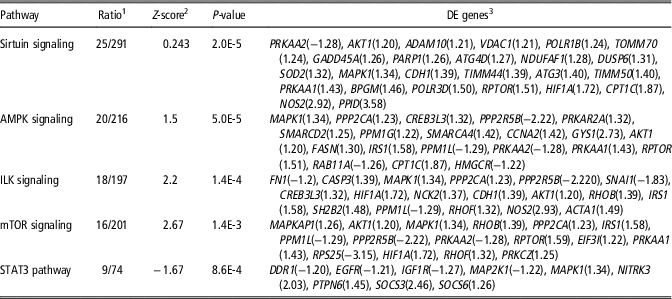
Hierarchical clustering used to analyze the 19 Porcine GeneChips resulted in distinct separation between those supplemented with MRF in comparison to control indicating an overall effect of diet on jejunal gene expression on PND 28 (Supplemental Figure S1). Jejunal gene expression was only determined on PND 28 when detectable changes in morphology were observed. By PND 42 there were no longer distinguishable effects of MRF supplementation on jejunal architecture or overall cecal microbial structure. Of ~23 000 probe sets on the Porcine GeneChip, ~63% were identified as expressed in the jejunum tissue, resulting in a total of 1378 (P<0.05; 851 up-regulated and 527 down-regulated) differentially expressed genes in piglets supplemented with MRF relative to the control. Ingenuity Pathways Analysis software was used to explore major well-defined molecular pathways and biological functions significantly affected by MRF supplementation. Of the 1378 genes identified as having differential expression, 734 were annotated within IPA (537 upregulated; 197 down regulated). Top biological function and canonical pathways altered by MRF inclusion were based on the number of differentially expressed genes, P-value, and Z-score. The top biological functions for MRF supplementation in piglets on PND 28 with a positive predicted activation score included cellular homeostasis, cellular movement, cellular survival, lymphopoiesis, T-cell homeostasis, homeostasis of leukocytes and blood cell homeostasis (Table 4). Significantly enriched pathways included predicted activated pathways: Sirtuin signaling, adenosine monophosphate-activated protein kinase (AMPK) signaling, integrin-linked kinase (ILK) signaling, mammalian target of rapamycin (mTOR) signaling, and predicted inhibited pathway signal transducer and activator of transcription (STAT3) signaling (Table 5).
Top biological functions in jejunal tissue of piglets fed diets with mannan-rich fraction (MRF) on postnatal day 28

Results are expressed as piglets fed diets supplemented with MRF relative to control.
1 Activation (Z-score > 2) or inhibition (Z-score<−2).
n=10 pigs/control; n=9 pigs/MRF.
Selected canonical pathways in jejunum tissue of piglets fed diets supplemented with mannan-rich fraction (MRF) on postnatal day 28

AMPK=adenosine monophosphate-activated protein kinase; ILK=integrin-linked kinase; mTOR=mammalian target of rapamycin; STAT3=signal transducer and activator of transcription (STAT) 3.
1 Ratio between DE genes/total genes in pathway.
2 Activation (Z-score >2) or inhibition (Z-score<−2).
3 DE=differentially expressed genes with their respective fold change relative to control.
n=10 pigs/control; n=9 pigs/MRF.
Discussion
The current study aimed to evaluate the effect of supplementing a MRF, Actigen™, on growth performance, jejunal morphology, cecal microbial profiles and jejunal gene expression in weaned piglets.
Growth performance
Supplementing piglets with a MRF did not affect overall growth performance of piglets. However, a small increase in ADFI was observed in pigs supplemented with MRF between PND 14 and 21, which may indicate a MRF increased palatability and acceptance of creep feed. Previous studies have observed improvements in ADG by 4.12% and F : G ratios by 2.29% in piglets supplemented with Bio-Mos, a first generation mannan-oligosaccharide product (Miguel et al., Reference Miguel, Rodriguez-Zas and Pettigrew2004). Evidence in poultry demonstrates that dietary inclusion of MRF only modestly improves ADG and F : G ratio by 3.34% and 1.84%, respectively (Hooge et al., Reference Hooge, Kiers and Connolly2013). Performance benefits of MRF may be age dependent, as MRF supplementation in grower-finisher pigs has shown to improve growth performance, dressing percentage and results in heavier carcass weights when compared to other in feed growth promoters (Edwards et al., Reference Edwards, Edwards, Millard and Kocher2014).
Cecal microbial structure
During the weaning transition, reducing potential pathogenic bacteria is a potential mechanism to reduce diarrheal diseases. Campylobacter coli is a common commensal found in the pig gastrointestinal tract (Harvey et al., Reference Harvey, Young, Ziprin, Hume, Genovese, Anderson, Drolesky, Stanker and Nisbet1999); however, Campylobacter is responsible for up to 15% of diarrhea outbreaks in piglets (Burrough et al., Reference Burrough, Terhorst, Sahin and Zhang2013). The observed 44% reduction in cecal Campylobacter abundance in MRF supplemented pigs on PND 28 is an important finding, with very few bacteria required to cause diarrheal disease. However, during this study there were no differences observed in fecal scores, a measure of diarrhea incidence, between those pigs fed diets with or without MRF. Two mannan-oligosaccharide fractions have been previously shown to reduce Campylobacter in 35-day-old broilers, indicating a potential mechanism of MRF against their colonization (Corrigan et al., Reference Corrigan, Corcionivoschi and Murphy2017). Increased abundance of genera from the family Paraprevotella in MRF-supplemented pigs may suggest a more mature microbiota, as Paraprevotella is known to increase abundance as pigs mature (Chen et al., Reference Chen, Xu, Chen, Fang, Zhao and Chen2017). Increased cecal Clostridiaceae and Clostridium abundance in MRF supplemented piglets on PND 42 may also be beneficial, as members are known to produce butyrate supporting proper gut function (Louis and Flint, Reference Louis and Flint2009). Ideally, jejunal microbial structure would have been characterized; however, due to low DNA concentrations it was not possible to generate quality data for interpretation. Nevertheless, understanding how distal intestinal microbial populations are altered with MRF supplementation still provides valuable information. The effects of MRF supplementation on microbial structure are more pronounced on PND 28 v. 42. This suggests MRF may work by shifting piglet microbiota to a more mature structure in the early post-weaning period, preventing some of the microbial disruption typically associated with weaning.
Jejunal morphology and gene expression
Increased villus height in the jejunum on PND 28 of pigs supplemented with MRF may be advantageous as villi height directly affects surface area and is linearly related to nutrient absorption capabilities (Pluske et al., Reference Pluske, Thompson, Atwood, Bird, Williams and Hartmann1996). In agreement, supplementing broilers with mannan-oligosaccharides has previously shown to improve villus height (Wang et al., Reference Wang, Li, Han, Guo, Zhang and D’Ica2016). Our gene expression results from the jejunum reflect the observed improvement in intestinal structure. A known mode of action of mannan supplementation is immune-modulation, since mannans are recognized by the host’s immune system through toll-like receptors (Barreto-Bergter and Figueiredo, Reference Barreto-Bergter and Figueiredo2014). In agreement with the predicted activated lymphopoiesis in the current data set, supplementing dogs with mannan-oligosaccharides increased proportion of lymphocytes (% of total white blood cells) and may suggest an enhanced immune capacity (Swanson et al., Reference Swanson, Grieshop, Flickinger, Bauer, Healy, Dawson, Merchen and Fahey2002). Previously, supplementing mannan-oligosaccharides (0.25 to 0.4%) to nursery pigs improved immune functions by reducing tumor necrosis factor α and increasing interleukin (IL)-10 synthesis in alveolar macrophages challenged with endotoxin ex vivo (Che et al., Reference Che, Johnson, Kelley, Dawson, Moran and Pettigrew2012). Furthermore, supplementing live yeast (3.00 g/kg) to piglets has shown to increase serum concentrations of immunoglobulin A, IL-2 and IL-6, as well as increase proliferation of T-lymphocytes; both studies furthering the evidence for the immune-modulatory action of yeast-derived MRF (Jiang et al., Reference Jiang, Wei, Wang, Zhu, Hu, Zheng, Chen, Hu, Wang, Ma and Yang2015).
The enriched biological pathways in the current study suggest MRF may have directly influenced the development and function of the jejunum. Activation of sirtuin proteins (Sirt1 to Sirt7), NAD+ dependent protein deacetylases, attenuate inflammation through reductions of NF-κB and inflammatory cytokine production and are important for restoring cellular homeostasis during microbial interactions, suggesting a potential anti-inflammatory function for MRF (Horio et al., Reference Horio, Hayashi, Kuno and Kunimoto2011; Caruso et al., Reference Caruso, Marafini, Franze, Stolfi, Zorzi, Monteleone, Caprioli, Colantoni, Sarra, Sedda, Biancone, Sileri, Sica, MacDonald, Pallone and Monteleone2014). Activation of AMPK can enhance gut barrier function through increased goblet cell numbers, mucus secretion, cell turnover, increased nutrient transporters and suppressed inflammation, which has been previously reviewed in detail (Sun and Zhu, Reference Sun and Zhu2017). Short chain fatty acids, butyrate in particular, stimulates AMPK (Peng et al., Reference Peng, Li, Green, Holzman and Lin2009), suggesting the predicted activation of AMPK signaling in MRF supplemented piglets may be a result of increased Clostridiaceae, members being known butyrate producers (Louis and Flint, Reference Louis and Flint2009).
In support of findings from the current study, ILK signaling was previously found to be a top canonical pathway in piglets suckling from sows supplemented with MRF (Graugnard et al., Reference Graugnard, Samuel, Xiao, Spagnler and Brennan2015). The ILK pathway is related to differentiation and proliferation of the intestinal epithelium, with integrins crucial for the migration of epithelial cells along the crypt-villus axis (Kaemmerer et al., Reference Kaemmerer, Kuhn, Schneider, Clahsen, Jeon, Klaus, Andruszkow, Härer, Ernst, Schipers, Wagner and Gassler2015; Patterson and Watson, Reference Patterson and Watson2017). Activation of the ILK signaling pathway is corroborated by the improved villus height in supplemented piglets. Although no changes in growth performance were observed in the current study, mTOR signaling was among the predicted activated canonical pathways, and is a major regulator of protein synthesis and growth. Mannan-oligosaccharide and MRF supplementation is often met with improved growth performance and activation of mTOR pathways may be one mechanistic reason for such a response (Miguel et al., Reference Miguel, Rodriguez-Zas and Pettigrew2004; Hooge et al., Reference Hooge, Kiers and Connolly2013). In the current study, the predicted inhibited pathway, STAT3, may indicate proper regulation of cellular response to stress in those pigs supplemented with MRF. STAT3 regulates cellular stress responses and apoptosis, with prolonged activation contributing to chronic inflammatory diseases (Pickert et al., Reference Pickert, Neufert, Leppkes, Zheng, Wittkopf, Warntjen, Lehr, Hirth, Weigmann, Wirtz, Ouyang, Neurath and Becker2009).
Conclusions
Supplementing creep and nursery feed with Actigen™, a yeast-derived MRF, maintained piglet growth performance, positively modified microbial structure in cecal digesta, increased jejunal villus height and altered jejunal gene expression patterns on PND 28 resulting in enriched beneficial pathways including: cellular development and homeostasis, immune-modulation, and protein synthesis. Evidence from this data suggests that animals supplemented with MRF pre-weaning and early post-weaning showed a reduction in pathogen colonization in the cecum and benefited the pig by maintaining intestinal homeostasis through complex interactions between epithelial and immune cells in the jejunum.
Acknowledgements
The authors thank Alltech, Mitacs, Genome Canada and Genome Alberta for funding this research. J.M.F. is supported by a National Sciences and Engineering Research Council fellowship. B.P.W. is supported by the Canada Research Chairs Program.
Declaration of interest
The authors declare a potential conflicts of interest as members are employed by Alltech Inc. (source of funding).
Ethics statement
Animal use was pre-approved by the Animal Care and Use Committee for Livestock at the University of Alberta and was conducted according to the guidelines of the CCAC (2009).
Software and data repository resources
None of the data were deposited in an official repository.
Supplementary materials
To view supplementary material for this article, please visit https://doi.org/10.1017/S1751731118003361