Introduction
Diquat (DQ) has been widely used in agriculture as a bipyridyl contact herbicide in China, where the production of paraquat has been explicitly prohibited. With the aggravation of life pressure, the incidence of acute DQ poisoning has been increasing year by year, and there is no effective detoxification drug for it in clinical practice. It is known that DQ is highly toxic and can cause systemic multi-organ damage by exposure and oral administration. Notably, DQ is absorbed and excreted mainly through the kidney, which is the target organ of damage. Studies have shown that most patients with acute DQ poisoning will develop acute kidney injury (AKI), and complications following kidney injury can lead to further exacerbation of the condition, resulting in a worse prognosis. Reference Xing, Chu and Han1 Neutrophil gelatinase-associated lipocalin (NGAL) is an early biomarker reflecting AKI, Reference Banai, Rozenfeld and Levit2 and lactic acid (Lac) is an independent risk factor for death in patients with severe AKI, Reference Xiong, Zhang and She3 but the correlation between NGAL and Lac and the condition of patients with DQ poisoning has not been reported. In view of the few clinical studies on AKI, this study aims to investigate the value of Lac and NGAL in the assessment of the condition and prognosis of patients with DQ poisoning, in order to provide valuable clinical guidance.
Data and Methods
Study Design
A prospective study was conducted to analyze 79 patients with moderate to severe DQ poisoning combined with AKI admitted to Harrison International Peace Hospital (Hengshui, China) from January 2019 through February 2023. The changes of Lac, NGAL, cystatin C (CysC), and serum creatinine (Scr) levels in the three groups of patients with different poisoning degrees were observed. The changes of Lac, NGAL, CysC, and Scr levels in AKI group and non-acute kidney injury (NAKI) group were observed. The changes of Lac, NGAL, CysC, and Scr levels in patients with different grades of AKI, and the changes of Lac, NGAL, CysC, and Scr levels in the survival group and the non-survival group, were analyzed. The survival of patients at 28 days was recorded, and the correlation between Lac and NGAL and renal function grading in patients with DQ poisoning was analyzed. The predictive value and prognostic value of Lac, NGAL, and their combination for AKI in patients with DQ poisoning were evaluated using receiver operator characteristic (ROC) curves.
General Information
The age of 79 patients ranged from 40 to 70 years, with a mean of 52.6 (SD = 15.9) years old, including 46 males and 33 females. The diagnostic criteria for DQ poisoning were referred to the Expert Consensus on the Diagnosis, Treatment, and Therapy of Acute Diquat Poisoning, Reference Meng, Sun and Liu4 and the 2012 Kidney Disease: Improving Global Outcomes (KDIGO; Brussels, Belgium)-AKI diagnostic criteria were used for AKI diagnosis. Reference Khwaja5 Inclusion criteria included a clear history of oral DQ and survival time of more than two days after admission. Patients who refused hemoperfusion (HP) therapy; patients with previous severe cardiopulmonary, hepatic, and renal disease; and patients with pregnancy, malignancy, and other poisoning were excluded. Among them, four cases were missing completely at random, with an incidence of 5.06%. The study was approved by the ethics committee of Harrison International Peace Hospital Affiliated to Hebei Medical University (No. 2019-1-014), and informed consent was obtained from the patients’ families.
Grouping
According to the severity of the disease, 79 patients of DQ poisoning were divided into mild poisoning (10 cases), moderate to severe poisoning (49 cases), and fulminant poisoning (20 cases). According to the KDIGO-AKI criteria, patients were divided into AKI group (60 cases) and NAKI group (19 cases). Patients in the AKI group were divided into 15 cases of AKI Grade I, 24 cases of AKI Grade II, and 21 cases of AKI Grade III. According to their prognosis, patients were divided into survival group (51 cases) and non-survival group (28 cases).
Treatment Methods
After admission, all patients were given gastric lavage, catharsis, fluid infusion, diuresis, vitamin C, and other medications according to the Expert Consensus on the Diagnosis, Treatment, and Therapy of Acute Diquat Poisoning, and all patients were given continuous HP treatment within two hours of admission. Toxicological tests were performed every two hours after the start of HP until no DQ components were detected in blood and urine. Patients with Scr 1.5- to 1.9-times the basal value or ≥ 0.3mg/dL (≥ 26.5μmol/L) or urine output < 0.5mL/(kg•h) were treated with continuous veno-venous hemofiltration (CVVH) and symptomatic supportive therapy.
Detection Methods
A total of 15mL of venous blood was taken from all patients after admission and NGAL was detected by enzyme-linked immunoassay (Shenzhen Micropoint Biotechnology Co., Ltd.; Shenzhen, China). After 1mL of arterial blood was taken, Lac (normal value 1-2mmol/L) were detected by a blood gas analyzer (i-STAT System, Abbott Laboratories; Chicago, Illinois USA), and CysC and Scr were detected by an automatic biochemistry analyzer (Hitachi; Tokyo, Japan).
Statistical Analysis
SPSS 23.0 software (IBM Corp.; Armonk, New York USA) was applied to analyze the data, and the measurement data were expressed as mean (standard deviation [SD]). The comparisons between the two groups were analyzed by t-test, and F test was used for comparisons between multiple groups. The χ2 test was used for rate comparison. Kaplan-Meier survival curves were plotted, and Log Rank test was used to compare the differences in survival rates. Correlation analysis was performed using Spearson correlation analysis. The ROC curves were used to evaluate the predictive value of the occurrence of AKI and prognosis in patients with DQ poisoning. The test level was α = 0.05, and P < .05 was considered statistically significant.
Results
Comparison of Clinical Indices of Patients in the Mild Poisoning Group, Moderate to Severe Poisoning Group, and Fulminant Poisoning Group
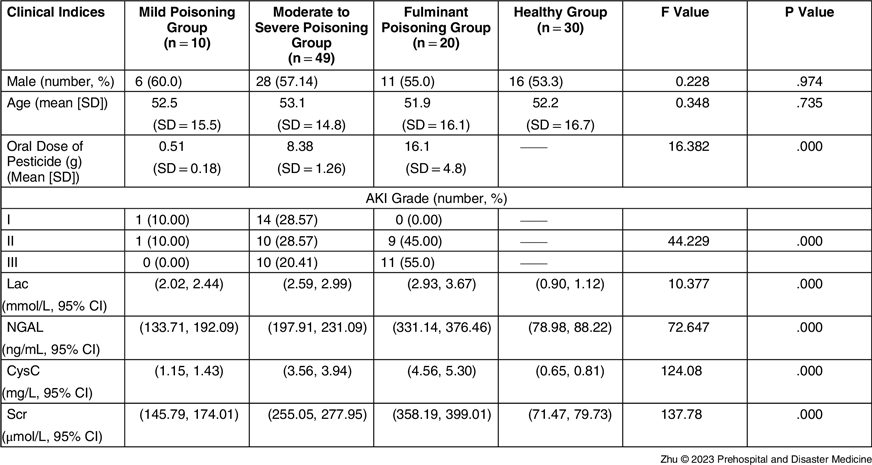
Compared with the healthy group, there were no significant differences in the proportion of males and age of patients in the three groups (P > .05). The differences in doses of oral DQ, AKI grade, Lac, NGAL, CysC, and Scr were statistically significant (P < .05; Table 1).
Comparison of Clinical Data among Three Groups at Admission

Abbreviations: AKI, acute kidney injury; Lac, lactic acid; NGAL, neutrophil gelatinase-associated lipocalin; CysC, cystatin C; Scr, serum creatinine.
Comparison of Observation Index Levels in AKI and NAKI Groups
The levels of Lac, NGAL, CysC, and Scr were higher in the AKI group than in the NAKI group, and the differences were statistically significant (P < .05; Table 2).
Comparison of Observation Index Levels in AKI and NAKI Groups (95% confidence interval)

Abbreviations: AKI, acute kidney injury; NAKI, non-acute kidney injury; Lac, lactic acid; NGAL, neutrophil gelatinase-associated lipocalin; CysC, cystatin C; Scr, serum creatinine.
Comparison of Observation Index Levels in Patients with Different AKI Grades
The levels of Lac, NGAL, CysC, and Scr in AKI Grade I patients were lower than those in AKI Grade II and AKI Grade III and AKI Grade II was lower than AKI Grade III, and the differences were statistically significant (P < .05; Table 3). The Lac, NGAL, CysC, and Scr levels gradually increased with the aggravation of AKI grading.
Comparison of Observation Index Levels in Patients with Different AKI Grades (95% confidence interval)

Abbreviations: AKI, acute kidney injury; Lac, lactic acid; NGAL, neutrophil gelatinase-associated lipocalin; CysC, cystatin C; Scr, serum creatinine.
Comparison of Observation Index Levels in the Surviving and Non-Surviving Groups
The Lac, NGAL, CysC, and Scr levels in the survivor group were significantly lower than those in the non-survivor group, and the differences were all statistically significant (P < .05; Table 4).
Comparison of Observation Index Levels in the Surviving and Non-Surviving Groups (95% confidence interval)

Abbreviations: Lac, lactic acid; NGAL, neutrophil gelatinase-associated lipocalin; CysC, cystatin C; Scr, serum creatinine.
Correlation between Blood Lac and NGAL Levels and AKI Classification in Patients with DQ Poisoning
The higher the admission blood Lac and NGAL levels of acute DQ patients, the higher the AKI grading of the patients. Correlation analysis suggested a positive correlation between blood Lac and NGAL levels and AKI grading of DQ poisoning patients (r = 0.752, 0.836; P = .000, .000).
Analysis of the Predictive Ability of Lac, NGAL, and their Combination on AKI in Patients with Acute DQ Poisoning
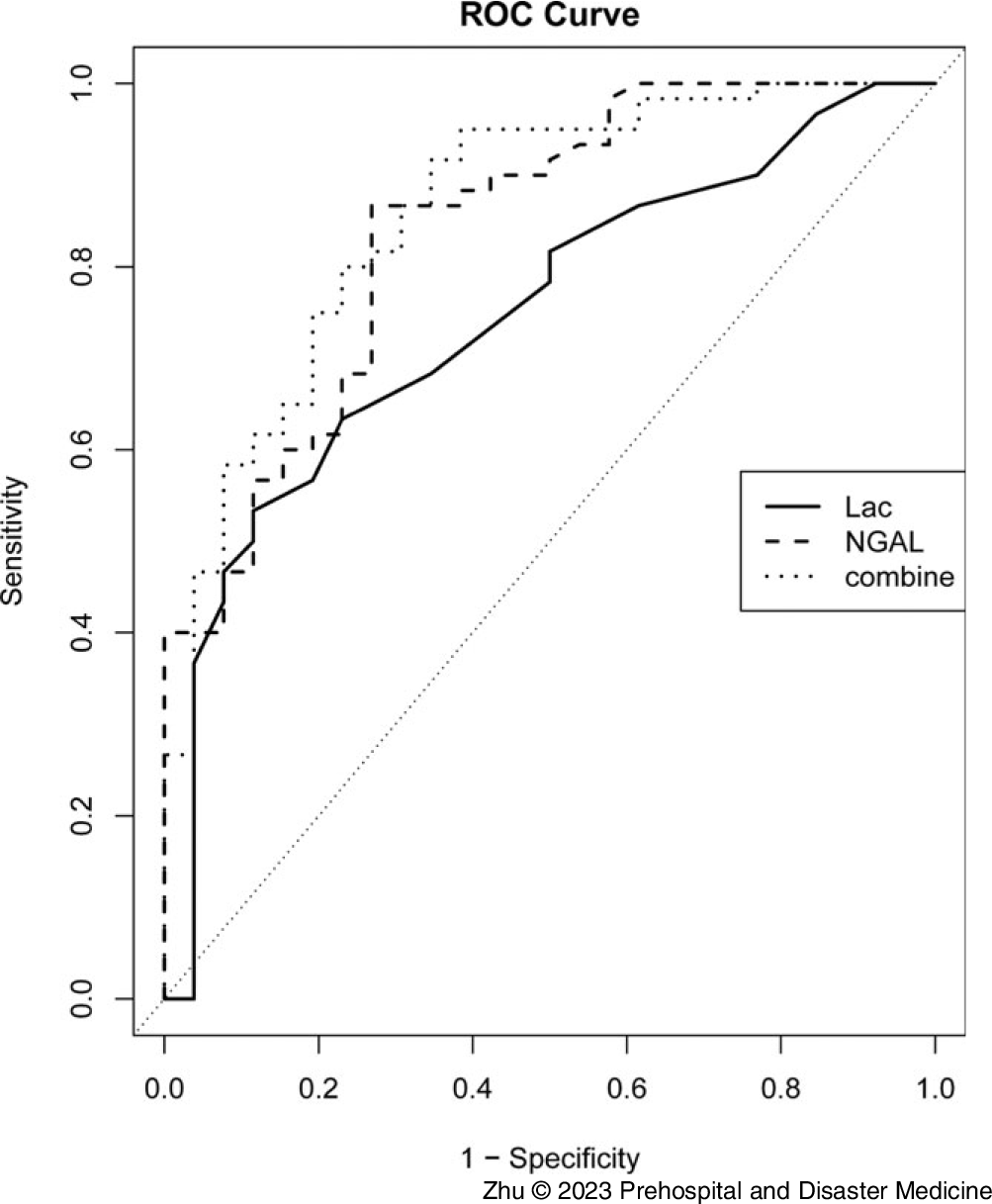
Based on the optimal threshold, the combined Lac-NGAL test index (Lac ≥ 2.65mmol/L and NGAL ≥ 202.63ng/mL) was calculated (Table 5). The ROC curves were plotted, and area under curve (AUC) values were 0.746, 0.841, and 0.860, respectively (Figure 1). Therefore, the combined Lac-NGAL test was more valuable for predicting AKI.
Analysis of the Predictive Ability of Lac, NGAL, and their Combination on AKI in Patients with Acute DQ Poisoning

Abbreviations: AUC, area under curve; Lac, lactic acid; NGAL, neutrophil gelatinase-associated lipocalin; AKI, acute kidney injury; DQ, diquat.
ROC Curves of Lac, NGAL, and their Combination on AKI in Patients with Acute DQ Poisoning.
Abbreviations: ROC, receiver operator characteristic; Lac, lactic acid; NGAL, neutrophil gelatinase-associated lipocalin; AKI, acute kidney injury; DQ, diquat.

Analysis of the Prognostic Assessment Ability of Lac, NGAL, and their Combination in Patients with DQ Poisoning
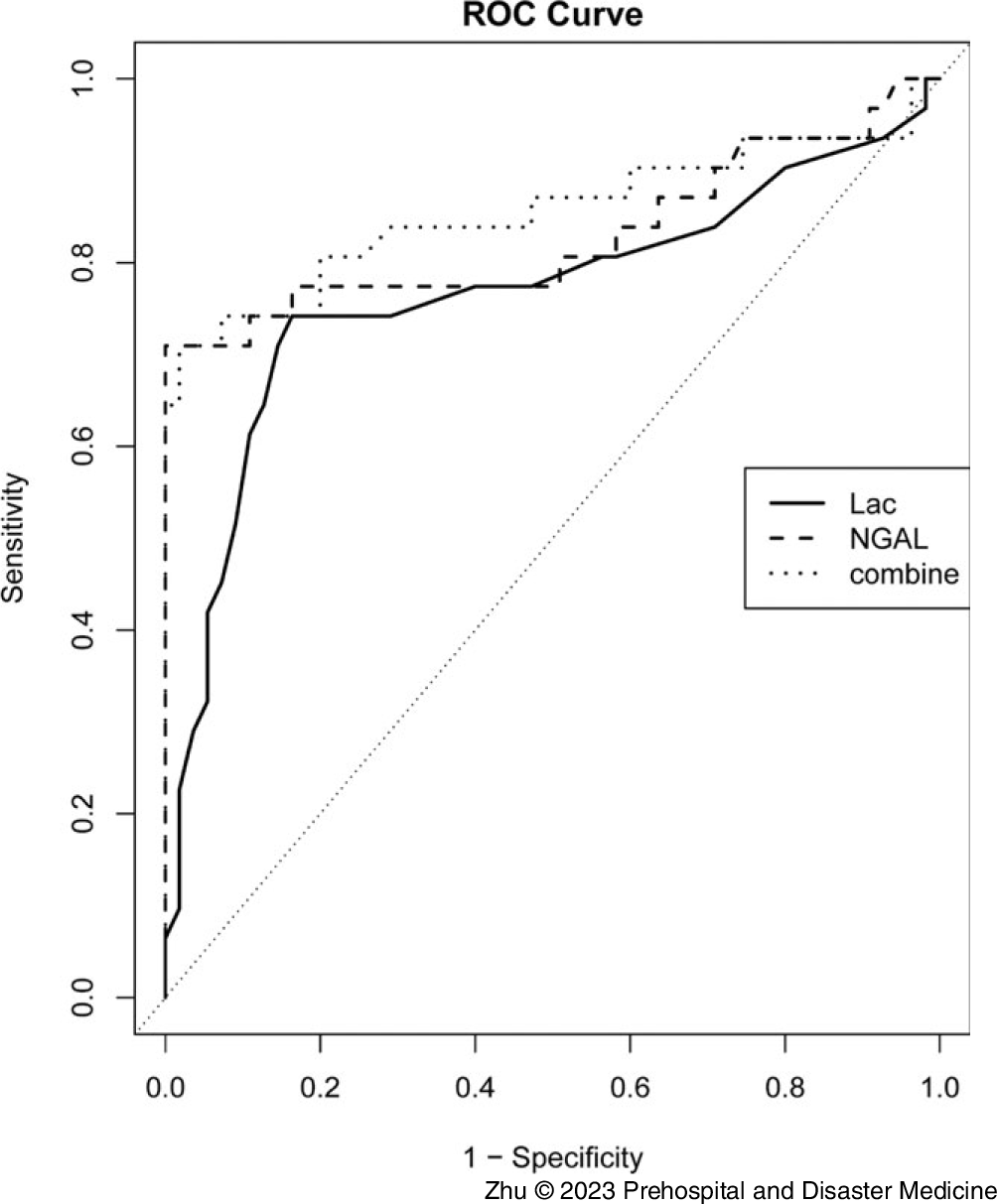
The best cut off values of Lac and NGAL for predicting the risk of death at 28 days were 3.25mmol/L and 294.08ng/mL, with sensitivities of 0.742 and 0.774 and specificities of 0.836 and 0.855, respectively (Table 6). The AUC of the combination of the two was the largest (0.854), which was better than that of the single index, with sensitivities and specificities of 0.810 and 0.882, respectively (Figure 2).
Predictive Value of Lac, NGAL, and their Combination on the Risk of Death in Patients with DQ Poisoning

Abbreviations: AUC, area under curve; Lac, lactic acid; NGAL, neutrophil gelatinase-associated lipocalin; DQ, diquat.
ROC Curves of Predictive Value of Lac, NGAL, and their Combination on the Risk of Death in Patients with DQ Poisoning.
Abbreviations: ROC, receiver operator characteristic; Lac, lactic acid; NGAL, neutrophil gelatinase-associated lipocalin; DQ, diquat

Discussion
Acute kidney injury is a syndrome of acute renal function decline caused by a variety of reasons, and is one of the common complications in critically ill patients. Reference Albuquerque and Meneses6 It is proposed for AKI to prevent progression of DQ patients to renal failure and improve the prognosis of patients through early identification and intervention. Notably, DQ is a fast-acting non-selective bipyridyl herbicide with a structure similar to paraquat. Reference Dai, Liu and Xu7 Currently, it is widely used in agricultural production as an alternative to paraquat. The incidence of exposure to or accidental or oral ingestion of DQ is also gradually increasing, so DQ poisoning has become another problem for emergency medical personnel after paraquat poisoning. Severe paraquat poisoning can lead to acute respiratory distress syndrome, multiple organ dysfunction syndrome, and patients mostly die from respiratory failure. Oral administration of DQ into the body results in oral mucosal ulcers, nausea, vomiting, skin mucosa and nail damage, coma, hepatic and renal impairment, pulmonary edema, intracranial hemorrhage, or cerebral infarction, but renal injury is the most common. Reference Yu, Wang and Jian8 Clinical treatment mainly involves protecting the kidneys, maintaining the kidneys themselves, and enhancing the renal metabolic function to facilitate the clearance of toxins and reduce the occurrence of AKI. However, the success rate of treatment is low. The current unit has investigated the effect of continuous HP and intermittent HP on the clearance of DQ, and the results showed that continuous HP is more effective in clearing inflammatory mediators and other aspects. Reference Weizhan Wang and Xu9 Therefore, continuous HP was adopted for treatment in this study.
Dosage, urinary DQ concentration, Scr, and Acute Physiology and Chronic Health Evaluation (APACHE) II score are risk factors for death in acute DQ poisoning, and APACHE II score can help clinicians to more accurately predict the prognosis of patients with DQ poisoning. Reference Wang and Zhao10 Therefore, Scr is still one of the clinical monitoring indicators for the diagnosis of AKI, but the increase of Scr level lacks synchronization with the degree of renal impairment and is not sensitive enough. Reference Wiersema, Jukarainen and Eck11 With the deepening of clinical research, investigators are committed to exploring more accurate markers for assessing the degree of AKI. It has been found that NGAL, a secretory protein identified in neutrophils in 1993, Reference Kjeldsen, Johnsen and Sengeløv12 has a high correlation with AKI. Under physiological conditions, NGAL exists in renal tubular epithelial cells at a low level, and it is highly expressed in ischemic or nephrotoxic AKI. Reference Khawaja, Jafri and Siddiqui13 Notably, NGAL is considered a clinical biomarker for identifying AKI, and it can be used as an early biomarker to detect AKI in critically ill patients with sepsis in the intensive care unit in order to initiate potentially beneficial therapy before irreversible renal injury occurs. Recent studies have shown that NGAL is an independent risk factor for AKI in elderly patients and can be used to evaluate the prognosis of DQ. Reference Nguyen Duy, Dao Bui Quy and Ho Viet Le14,Reference Hongna Qi and Xiao15 In this study, the blood NGAL levels of patients with AKI caused by DQ poisoning were significantly higher than those of healthy subjects on admission and increased with the aggravation of AKI, and the correlation analysis suggested that there was a positive correlation between the serum NGAL level and AKI grade. Furthermore, NGAL levels in the non-survival group were significantly higher than those in the survival group, suggesting that NGAL can determine the degree of organ function damage in patients and thus guide clinical treatment. In addition, ROC curves showed that the optimal thresholds of NGAL for predicting AKI and death were 202.63ng/mL and 294.08ng/mL, respectively, with the highest sensitivity and specificity. Therefore, NGAL can be used to evaluate the condition and prognosis of AKI patients caused by DQ poisoning.
Patients with DQ poisoning may have obvious renal tubular epithelial cell damage, and the severity of renal damage may range from the appearance of proteinuria to acute renal failure, Reference Meng, Sun and Liu4 but the specific mechanism is unclear. Lac reflects the body’s microcirculatory perfusion, measures whether the body is hypoxic and whether renal blood flow is abundant, and is extremely sensitive to tissue ischemia. Studies have shown that ischemia and hypoxia predispose to AKI, suggesting that high Lac may be closely related to the development of AKI. Reference Caslin, Abebayehu and Abdul Qayum16 Gong, et al found that elevated Lac was an independent risk factor for the development of sepsis-associated AKI and death. Reference Chunlei Gong and Tang17 When Lac ≥ 2.75mmol/L, the risk of AKI in patients with sepsis increased 1.772-fold; when Lac ≥ 5.95mmol/L, the risk of in-hospital death in septic AKI patients increased 1.511-fold. Patients with DQ poisoning, especially those with severe and fulminant poisoning, have severe organ damage and rapidly changing conditions. Therefore, there is a clinical need for rapid, highly sensitive, and specific indicators to help assess the severity of the disease and determine the prognosis. In this study, it was found that Lac levels in DQ poisoned patients were higher than those in healthy controls and increased with the aggravation of AKI, and correlation analysis suggested that Lac levels were positively correlated with AKI grade. In addition, the Lac level of AKI group was higher than that of NAKI group, and the Lac level of non-survival group was higher than that of survival group, so Lac can be used as an evaluation index to determine the occurrence of AKI in patients with DQ poisoning. The results of this study showed that Lac and NGAL have diagnostic and prognostic value for AKI and death due to DQ poisoning (AUC values up to 0.860 and 0.854, respectively), and the value of combined detection is higher, suggesting that early combined detection of Lac and NGAL can be one of the effective tools for clinical diagnosis and prognosis of AKI caused by DQ poisoning.
Limitations
It is worth noting that this study, as a single-center study, has some limitations, with a limited number of cases, which may lead to biased results. Therefore, further confirmation is needed in terms of sample size, multicenter clinical studies, and basic medicine in the future.
Conclusion
Levels of Lac and NGAL can indicate the appearance of AKI earlier and gradually increase with the aggravation of AKI, and are positively correlated with AKI grade. The combined detection of Lac and NGAL can be used for early assessment, prognosis, and treatment guidance. As stated, this study, as a single-center study, has some limitations, with a limited number of cases, which may lead to biased results. Therefore, further confirmation is needed in terms of sample size, multicenter clinical studies, and basic medicine in the future.
Conflicts of interest/funding
There are no conflicts of interest to declare. This project was supported by grants from Science and Technology Research and Development Program of Health Commission of Hebei Province (No. 20200404).