Research, theory, and practice have all shown that parental behavior and attitudes are interlinked with and have consequences for children's behavior and attitudes throughout their lifetimes. Marriage, perhaps the most significant of all adult relationships, is a crucial societal institution. Thus, to the extent that marriage is beneficial for the individuals in it, their offspring, and communities (Cherlin, Reference Cherlin2009; Ribar, Reference Ribar2015; Waite & Gallagher, Reference Waite and Gallagher2001), studying marriage is an essential task for social scientists seeking greater understanding of children's development and well-being (Brown, Reference Brown2010; Fincham, Reference Fincham1998).
A large body of literature has established persistent links between parental marital status and outcomes among their offspring (Amato, Reference Amato2010), even across generations (Amato & Cheadle, Reference Amato and Cheadle2005), despite modest disagreements in regard to outcomes during the preschool years (Foster & Kalil, Reference Foster and Kalil2007; Ryan & Claessens, Reference Ryan and Claessens2012). In particular, divorce matters for how children fare socially, emotionally, and academically (Amato & James, Reference Amato and James2010), as well as in their future relationships (Dronkers & Harkonen, Reference Dronkers and Harkonen2008). Overall, children living in stable two-parent families tend to fare better than otherwise similar children in other family structures (McLanahan & Sanderfur, Reference McLanahan and Sanderfur1994; McLanahan, Tach, & Schneider, Reference McLanahan, Tach and Schneider2013). Thus, a reasonable conclusion from the existing literature is that parental marital status has implications for children's well-being in both the short and long term, although the exact nature and duration of such effects is not always consistent or clear (McLanahan et al., Reference McLanahan, Tach and Schneider2013).
Of course, how the dynamics inside the parental relationship influence long-term outcomes for children (Goldberg & Carlson, Reference Goldberg and Carlson2014) matter greatly as well. Fortunately, significant effort has been expended in this regard, with a deep and impressive literature showing links between the quality of parents’ marriages – interparental conflict in particular – and a variety of behavioral, academic, and social outcomes for children (Camisasca, Miragoli, Di Blasio, & Grych, Reference Camisasca, Miragoli, Di Blasio and Grych2017; Cummings & Davies, Reference Cummings and Davies2010; Davies, Coe, Hentges, Sturge-Apple, & van der Kloet, Reference Davies, Coe, Hentges, Sturge-Apple and van der Kloet2018; DeBoard-Lucas, Fosco, Raynor, & Grych, Reference DeBoard-Lucas, Fosco, Raynor and Grych2010; Harold, Elam, Lewis, Rice, & Thapar, Reference Harold, Elam, Lewis, Rice and Thapar2012; Shaw, Hyde, & Brennan, Reference Shaw, Hyde and Brennan2012; Shelton & Harold, Reference Shelton and Harold2008; Sitnick et al., Reference Sitnick, Shaw, Weaver, Shelleby, Choe, Reuben and Taraban2017).
The task of linking maritalFootnote 1 dynamics with subsequent child outcomes, while fruitful, has nonetheless proven a difficult one, for both theoretical and methodological reasons. For instance, many studies have employed cross-sectional data that preclude causal inference and thus extrapolations about changes over time. In other instances, studies were longitudinal but covered comparatively short time periods of several months to a few years. A key step forward, therefore, would be examining how marital quality and child well-being covary over many years, particularly those from childhood to mid-adolescence – years crucial to development. In addition, many studies examine a single outcome or perhaps two (e.g., internalizing or externalizing behaviors). While depth is valuable, it can make it difficult to assess breadth, due to methodological differences across studies. For instance, if one study found that marital quality and externalizing behavior were linked and another found no relationship between marital quality and child health, it is difficult to assess whether the differences were due to sampling differences or a substantive lack of relationship between marital quality and the second outcome. One way of meaningfully examining this possibility is to examine a wide variety of child outcomes in the same study. Similarly, many previous studies have employed a single indicator of marital quality such as marital conflict. While dimensions of marital quality such as marital happiness, communication, and conflict, are empirically correlated, they are conceptually distinct. While high-conflict marriages tend to have lower happiness, for instance, this is not uniformly true; studies that examine how multiple dimensions of marital quality vary with child well-being may be best suited to help assess the breadth of the link between marital quality and child well-being. In addition, many studies have disproportionately focused on large numbers of white, middle-class individuals who are often highly educated and enjoy relative economic prosperity. This fact, juxtaposed against today's rapidly changing demographic reality, suggests a need for greater inclusion and diversity along socioeconomic, racial–ethnic, and educational lines.
In the present study, we therefore take a broad view of the relationship between parental marital quality and child well-being by examining the connections between developmental trajectories of multiple dimensions of marital quality and a battery of child well-being outcomes assessed when participating children were 5–14 years old. We build upon previous research (James, Reference James2015b) documenting multiple dimensions of marital quality (marital happiness, marital communication, and marital conflict) in a nationally representative sample and examine how these intersect with changes and trajectories in multiple dimensions of child well-being (internalizing and externalizing problems, physical health, the quality of the home environment, and standardized math and vocabulary scores) across a full decade of children's academic, psychosocial, and physical/mental welfare.
Theoretical Perspectives Regarding Marital Quality and the Well-being of Children
We draw upon several prominent theories to understand why parental marital quality over time should be linked to changes in child well-being between the ages 5–14. We begin with family systems theory, which postulates families are an interconnected structure and that systematic shifts and dynamics in one part of the family, such as the parental relationship will influence others, like the well-being of their children. This idea has been called family spillover theory, wherein good marital relationships “spill over” into better parent–child relationships (Buehler & Gerard, Reference Buehler and Gerard2002), and promote greater investment of resources into children.
Theories from a variety of disciplines shed additional light on likely child outcomes. Theories of family structure, for example, have shown that that children living with their stably married, biological parents generally report the highest levels of child well-being, substantially due to differences in the amount of financial and time investments. Resident parents are more likely to devote resources to their children than nonresident parents because they are not diluting resources across multiple familial responsibilities. Although it may logically follow that such benefits should also extend to children living with cohabiting parents, research has shown that cohabitation is not necessarily viewed as equal to marriage by many cohabitors (Manning & Smock, Reference Manning and Smock2005). In part due to lower levels of relational and financial commitment, children of cohabiting parents, even if biological, often report lower levels of child well-being (Ryan, Reference Ryan2012), suggesting that living with married parents is protective of child well-being.
Beyond merely living with married parents, we may also gain insight about the role of marital quality in child well-being through symbolic interaction theory, which claims that one's subjective interpretation of an object, situation, or concept plays an important role in one's reaction to it (Blumer, Reference Blumer1969). Consequently, those who experience and interpret marriage as a permanent, lifelong relationship may be more committed to working out problems with their spouse, potentially leading to less conflict and greater tranquility in the home over time, each of which have been linked to improvements in child well-being (Gerard, Krishnakumar, & Buehler, Reference Gerard, Krishnakumar and Buehler2006). In addition, if children learn helpful problem-solving and social interaction skills from their parents (Amato & Deboer, Reference Amato and Deboer2001; Finger, Eiden, Edwards, Leonard, & Kachadourian, Reference Finger, Eiden, Edwards, Leonard and Kachadourian2010), this may translate into greater levels of well-being by equipping children with the relationship skills necessary to be successful across a variety of academic and psychosocial domains. In addition, relationship turbulence theory (Solomon & Knobloch, Reference Solomon and Knobloch2001) emphasizes that uncertainty often leads to stress in romantic relationships. To the extent that high marital quality (whether high happiness or communication or low conflict overt time) decreases relationship uncertainty, stress and relationship conflict may decline, leading to greater investments in children and an improved home environment (Bradley, Caldwell, Rock, Hamrick, & Harris, Reference Bradley, Caldwell, Rock, Hamrick and Harris1988). This would only increase as partners become more interdependent and committed to one another, thereby potentially widening the gap between children whose parents have high- versus low-quality marriages.
Measuring Marital Quality
Approaches to measuring marital quality span three perspectives. The first is marital adjustment, which orders marriages along a single continuum by identifying factors that differentiate troubled and highly functioning marriages (Spanier, Reference Spanier1976). Next is global evaluation, which holds that partner's subjective evaluations via overall happiness or satisfaction are most reliable with other dimensions, such as conflict or communication, said to be indicators of the overall relationship satisfaction. Each perspective, marital adjustment and global evaluation, is limited, however. For instance, marital adjustment precludes disentangling positive and negative dimensions of marital quality (Johnson, White, Edwards, & Booth, Reference Johnson, White, Edwards and Booth1986) because it relies on a single ordering. Conversely, global evaluation, does not measure behavioral and evaluative components that undergird the dynamism of long-term romantic relationships. Our third approach conceptualizes marital quality as a multidimensional construct that views marital quality as a set of empirically correlated but conceptually distinct traits, attitudes, and behaviors. Researchers employing this perspective tap multiple, separately measured dimensions of marital quality (Amato, Booth, Johnson, & Rogers, Reference Amato, Booth, Johnson and Rogers2007). This perspective allows us to gain many of the benefits from global evaluation (by including marital happiness) and marital adjustment (by including subjective evaluations such as communication and conflict) while mitigating potent limitations.
In addition to these measurement perspectives, there are two major statistical methodological perspectives in examining different trajectories of relationship dynamics. The first approach, variable-centered, examines changes in certain constructs (in this case, marital quality) over time and what factors may predict these changes. This approach has been criticized by many scholars emphasizing that this approach lacks acknowledgment of individuals’ unique characteristics and life circumstances (Block, Reference Block1971; Laursen & Hoff, Reference Laursen and Hoff2006). These and other scholars suggest a person-centered approach, focusing on individuals (Laursen & Hoff, Reference Laursen and Hoff2006; von Eye & Bogat, Reference von Eye and Bogat2006). This approach involves first grouping individuals who share similar personal traits into homogenous groups and then examining the trajectories of these groups. This approach allows scholars to identify complex interactions that may be otherwise unexplored by the variable-centered method (Bergman & Trost, Reference Bergman and Trost2006).
Previous research utilizing these measurement and statistical methodologies has noted the existence of different trajectories for marital happiness, communication, and conflict, influenced by demographic characteristics (i.e., race, premarital cohabitation, socioeconomic status [SES]) and predicting marital stability (James, Reference James2015b). The James (Reference James2015b) study provided partial evidence for both the “continual decline” and “U-curve” patterns of marital quality identified by previous research, asserting that while these trajectories may apply to the happiness and communication aspects of marital quality, conflict follows a different pattern and experiences a steady decline 10–15 years into marriage. Understanding the value of global measurement and the person-centered approach, we thus seek to expand on this study by examining how these trajectories may influence child well-being throughout childhood and adolescence.
Prior Studies of Marital Quality and Child Well-being
That marital quality and child outcomes are linked comes as no surprise. For one, literature and theory have long established the importance of marriage for socializing children and reproducing social norms and mores (Amato et al., Reference Amato, Booth, Johnson and Rogers2007). Due to space constraints, we restrict this section to general trends in the literature linking marital quality to child outcomes rather than a systematic review of all 18 (three marital quality × six child well-being) possible marital quality/child well-being combinations, although we do provide a brief overview for each child outcome below. Perhaps the most studied dimension of marital quality is marital conflict, which has often been linked to harm in children and adolescents both in relatively small community-based samples and large national datasets (Amato et al., Reference Amato, Booth, Johnson and Rogers2007; Cui & Conger, Reference Cui and Conger2008; Gerard et al., Reference Gerard, Krishnakumar and Buehler2006). This research has shown that conflict often leads to negative parenting practices, including inconsistent and harsh discipline, reduced levels of parental involvement, and more frequent parent–adolescent conflict and hostility.
Relatedly, parental conflict often also means parents are less likely to read to children, play with them, praise them, and spend time with them. Such parenting practices can, in turn, lead to greater internalizing and externalizing problems in children (Galambos, Barker, & Almeida, Reference Galambos, Barker and Almeida2003). The stress generated in such situations then cycles, as internalizing and externalizing problems generate additional stress within the marriage (Nelson et al., Reference Nelson, O'Brien, Blankson, Calkins, Keane, Biehle and Keane2009). Similarly, children whose parents manage conflict by engaging in aggressive or contemptuous behaviors toward their spouse may view dominance and intimidation as appropriate strategies for resolving conflict, thereby informing the development of children's externalizing problems (Fine & Harvey, Reference Fine and Harvey2006).
Marital conflict and contempt understandably undermine the satisfaction and happiness of marital partners, which also have implications for child outcomes (Malinen et al., Reference Malinen, Kinnunen, Tolvanen, Rönkä, Wierda-Boer and Gerris2010). Dissatisfied mothers are more likely to use more permissive parenting, which has been linked to a host of negative psychological, social, and academic outcomes (Gauvain, Perez, & Beebe, Reference Gauvain, Perez, Beebe, Larzelere, Morris and Harrist2013). Moreover, marital conflict among parents has been shown to have long-term effects on the behavior of offspring well into adulthood, with young adults who experienced parental divorce reporting less positive marital attitudes and a weaker commitment to their current romantic relationships, which are in turn linked to lower relationship quality (Cui & Fincham, Reference Cui and Fincham2010).
Reliable evidence regarding the impact of marital quality, outside of marital conflict, is less established and often only follows children over limited periods of time or studies children disproportionately from white, middle-class families (Amato & Cheadle, Reference Amato and Cheadle2008; Gottman, Reference Gottman1993; Troxel & Matthews, Reference Troxel and Matthews2004b) or fails to capture the theoretical richness of examining how trajectories (i.e., multiple time points of marital quality) of parental marital quality over the life course are linked to child well-being (James, Reference James2015b, Reference James2015a). However, available research regarding marital happiness has established that dissatisfied mothers are more likely to use more permissive parenting, which has been linked to a host of negative psychological, social, and academic outcomes (Gauvain et al., Reference Gauvain, Perez, Beebe, Larzelere, Morris and Harrist2013). Parental happiness has also been associated with overall parent–child relationship quality (Malinen et al., Reference Malinen, Kinnunen, Tolvanen, Rönkä, Wierda-Boer and Gerris2010), which is a prominent predictor of child well-being. Similarly, available studies that have examined the influence of marital communication on child outcomes have noted that parents who struggle with communication may provide fewer cognitive resources to their children who may then struggle to develop various cognitive skills (Deal, Halverson, & Wampler, Reference Deal, Halverson and Wampler1989). Thus, although research regarding the influence of marital happiness and communication on child outcomes may be sparse, there is reason to believe these aspects of marital quality may significantly influence child well-being.
For perspective, we review below how the marital relationship is linked to each child outcome we study. To begin with, child and adolescent tendencies toward internalizing and externalizing problems constitute one of the major foci in developmental psychology, with evidence suggesting that parenting efforts and styles (e.g., harsh parenting) influence the extent to which children manifest such problems over time (Erath, El-Sheikh, & Cummings, Reference Erath, El-Sheikh and Cummings2009). If increased internalizing and externalizing problems create stress in the parental relationship, such effects may not be unidirectional (Graber & Sontag, Reference Graber, Sontag, Lerner and Steinberg2009), and many of the adjustment problems commonly seen in children of divorced parents can also be observed among children whose parents have a strained or conflictual marriage (Kelly, Reference Kelly2000). Accordingly, various aspects of marital quality are likely as important as marital dissolution as a predictor of children's well-being.
Previous research has also identified marital conflict as a risk for detrimental changes in children's health, specifically via changes in parenting practices and emotional dysregulation/insecurity (Troxel & Matthews, Reference Troxel and Matthews2004a). High parental conflict and unsupportive relationships have been linked to poor child physical health in a variety of circumstances, such as lower medical care, poor nutrition, and greater stress. These issues may be due in part to biobehavioral mechanisms (e.g., the body's stress regulation systems, substance abuse) (Repetti, Taylor, & Seeman, Reference Repetti, Taylor and Seeman2002).
The quality of a child's home environment is also diminished with increased parental conflict. While quality of home life is quite nuanced, the HOME survey (Caldwell, Reference Caldwell1967) has adequately captured multiple aspects involved within this construct – providing information regarding the social, emotional, and cognitive support available to the child within their everyday living environment – and has been used across many studies throughout the years (Bradley et al., Reference Bradley, Caldwell, Brisby, Magee, Whiteside and Rock1992). The HOME-Short Form scale used here has been linked to child development and well-being across a variety of studies and disciplines, including a study that found mothers with higher marital quality afforded their children better overall home environments (Mott, Reference Mott2004). Accordingly, the HOME survey is used as a measure of choice in this study.
A growing literature has examined the link between math achievement scores and family stability, with mixed results. Although there is evidence for a cross-sectional relationship between the two (Aughinbaugh, Pierret, & Rothstein, Reference Aughinbaugh, Pierret and Rothstein2005), results from models using more sophisticated methods suggest this link may be due to family transitions children experience (particularly divorce) and poverty (Burnett & Farkas, Reference Burnett and Farkas2009). Our models control for both parental divorce and income in order to better isolate the potential effect of marital quality on academic achievement in math (assessed with the Peabody Individual Achievement Test; PIAT Math). We also consider the Peabody Picture Vocabulary Test (PPVT-R), which is a well-known test of a child's cognitive abilities. Although this test has been the subject of a large amount of research, only a very limited amount has explicitly focused on its links to marital outcomes. In particular, Ryan (Reference Ryan2012) found that being born in marriage translated into higher vocabulary scores for children but these differences were accounted for by factors selecting people into marriage.
With these notions in mind, in the current study we examine how developmental trajectories of marital quality are linked to child well-being between the ages of 5 through 14 in a nationally representative sample of children of baby boomer women. These data are the most recent data available for studying the long-term influence of marital quality over more than 30 years of marriage and 10 years of childhood. In so doing, we expand the literature linking marriage and child well-being by demonstrating how multiple dimensions of marital quality over the life course are associated with how a child's home environment and physical, academic, and psychosocial well-being change over time, leading to better methodological and theoretical sophistication in our understanding. We seek to strengthen the literature by examining a large, longitudinal, national sample that constitutes statistically powerful analyses; comprising a more holistic approach by examining multiple constructs of marital quality; and utilizing sophisticated statistical methodology.
The Current Study
Based on prior literature and theory, this paper asks a key question: Do parental marital quality trajectories over the life course influence children's psychosocial, academic, home environment, and health outcomes, net of alternative explanations? To answer the question, we draw upon nationally representative data from the National Longitudinal Survey of Youth-1979 (NLSY79) and Children of the NLSY79 and replicate latent class growth analyses to estimate trajectories of marital quality over the life course of married women in the NLSY79 (replicating James, Reference James2015b) and multilevel linear regression models to estimate the relationship between belonging to a trajectory of high versus low marital quality and the well-being of the children of that particular marriage.
Beyond the more general question of marital quality and child well-being, we also discuss three key questions that clarify methodological, conceptual, and theoretical debates in prior research. First, does the relationship between marital quality and child well-being depend on the dimension of marital quality studied? We consider whether the pattern of child well-being observed depends on marital happiness, communication, or conflict. Second and relatedly, does the relationship between marital quality and child well-being depend on the dimension of child well-being studied? Do we see similar patterns across physical, academic, psychosocial, and home environment outcomes? Third, how do these differences, if any, change across time? Furthermore, do the associations between dimensions of marital happiness, communication, and conflict change across time? Are there gender differences in these changes across time? Do the differences between children in high versus low parental marital quality trajectories change over time? In addition, how consistent is the observed relationship across dimensions of parental marital quality?
Method
Participants
Data come from the NLSY79 cohort and the Children of the NLSY79 cohort (U.S. Department of Labor-Bureau of Labor Statistics, 2019). The NLSY79 interviewed and followed a nationally representative sample of 12,686 men and women on issues such as labor market behavior, educational experiences, union formation history, and family background. Unfortunately, the NLSY79 did not ask questions about marital quality until 1992, 13 years after the beginning of the study. These questions were then repeated every two years. We therefore have biennial data on marital quality from 1992–2012 for 2,277 married women in the NLSY79 who had children (we used the 2012 data to ensure comparability with the James (Reference James2015b) paper). Unfortunately, the NLSY79 did not collect marital quality from male respondents, so only the perspectives of female respondents can be considered here. Because we employed publicly available data, the research project is exempt from IRB scrutiny.
The Children of the NLSY follows the children of these women. In all, we have information on 5,067 children, although the number of children we have information on depends on the outcome, since the outcomes were assessed when children were of eligible ages. Given the synthetic cohort approach (see James, Reference James2015b), we have information on 5,067 for child internalizing problems, 5,052 for child externalizing problems, 3,528 on child health, 4,973 for HOME environment, 4,818 children's math scores, and 4,313 for children's vocabulary scores.
Dependent variables
Child well-being is treated as a multidimensional construct in this paper. In-depth discussions regarding scoring and norming procedures, along with specific items used in the scales, can be found on the Children of the NLSY79 website (U.S. Department of Labor-Bureau of Labor Statistics, 2019). Due to space constraints, we provide only a brief overview of the procedures involved in administering child well-being assessments over the several decades the NLSY79 has been in the field.
Child internalizing/externalizing
Both of these scales are components of the Behavior Problems Index (Peterson & Zill, Reference Peterson and Zill1986), designed to measure frequency, range, and type of problems encountered between ages 5–14. We use the internal score trichotomous items here. Interviewers changed the questions asked depending on the child's age. The questions asked the primary caregiver, typically mothers, whether children exhibited specific behaviors in the previous three months using the scale 1 = often true, 2 = sometimes true, and 3 = not true. Both externalizing and internalizing scales were recoded so that higher scores indicated higher levels of internalizing/externalizing behavior. Example items for internalizing include “Is withdrawn, does not get involved with others”, “feels worthless or inferior”, and “feels/complains no one loves him/her”. Examples for externalizing include “argues too much”, “has strong temper and loses it easily”, and “is disobedient at home”. Internalizing scores were based on 10 items for children age 4–11 and 6 items for children 12 and older. Externalizing included 18 items for children age 5 while 6–11-year-old children were asked 20 items and children over 12 answered 19. No alpha scores are available as the scores had already been computed (and the alpha presumably found to be high). These data have been extensively used by researchers across many disciplines. Readers are directed to the NLSY79 Children and Youth website for additional information (U.S. Department of Labor-Bureau of Labor Statistics, 2019). The theoretical range on both internalizing and externalizing varied from 0 to 20 (the max depended on age) for internalizing and 0 to 38 (age dependent) for externalizing.
Child health
Mothers were asked to rate their child's physical health on a scale ranging from 1 “poor” to 4 “excellent”.
HOME environment
The total raw score for the HOME scale (Bradley et al., Reference Bradley, Caldwell, Brisby, Magee, Whiteside and Rock1992) was used, measuring a variety of child needs such as parental involvement, discipline, safety, and emotional responsiveness. Questions were changed according to age (0–2, 3–5, 6–9, and 10–14), with sample items for the first few years of life including “Mother caresses or kisses child at least once during visit” and “Child's play environment appears safe and free of hazards”. Additional details for scoring, norming, and age-adjusting the respective scales and variables are available at the NLS website (U.S. Department of Labor-Bureau of Labor Statistics, 2019). The HOME scale has been used extensively in child development research and related fields (Mott, Reference Mott2004). The theoretical maximum was between 275 and 300, depending on age.
Child mathematics/vocabulary scores
The total raw scores of the PIAT Math and PPVT-R were used for the math and vocabulary tests, respectively. Both tests examined a child's attainment in the subject matter as taught in mainstream education and consisted of 84 (math) and 175 (vocabulary, plus corresponding image plates) questions. The vocabulary test was also administered in Spanish between 1988 through 2000 for a small number of children. Again, specific alpha reliability scores were unavailable because we downloaded the scores after they had been computed. See the NLSY79 Children and Youth website for additional information (U.S. Department of Labor-Bureau of Labor Statistics, 2019). The theoretical range on these goes from 0 to the number of questions asked, namely 84 (math) and 175 (vocabulary).
Independent variables
We conceptualized marital quality as a multidimensional construct of empirically correlated measures of marital happiness, communication, and conflict. Happiness was measured on a three-point scale from 1 not too happy to 3 very happy. Communication asked respondents how often, from 1 less than once a month to 4 almost every day, they laughed, talked about the day, or calmly discussed something with their spouse. Conflict was measured by asking how often, varying from 1 never to 4 often, respondents argued with their spouse about chores, children, money, affection, religion, leisure, drinking, other women, and relatives. Responses to all questions were coded to indicate higher levels of each measure. Items for communication and conflict were combined using an additive index and standardized to enable comparisons across dimensions. Alphas were in the high .70 s and low .80 s across all waves.
The primary independent variable in the analyses is the marital quality trajectory (quantified in terms of marital happiness, marital communication, and marital conflict, respectively) of the parents. To estimate these, we replicated the latent class growth analyses described in James (Reference James2015b). Consequently, we have 2 (low/rebound and high decline) for happiness and communication, respectively, over the life course and 3 (low, moderate, and high) for conflict. Details on the estimation procedures are available from the original article. Entropy values for each of these latent class growth analyses varied between .86 and .91.
To assure the robustness of the links between trajectories of parental marital quality and child well-being from ages 5–14, we include a battery of sociodemographic controls, including mother's years of education, family income in $10,000 increments, dichotomous variables for race (Hispanic vs. non-Black, non-Hispanic [overwhelmingly white] and Black vs. non-Black, non-Hispanic), whether the child's parents divorced before age 14, biological sex (1 = female), and age and age-square terms (to account for possible nonlinearity across age).
Prior research has identified many other variables that represent potential controls as well but these were not available in the data. It should be noted, however, that the influence of this omission on the results is likely modest because nearly all of these omitted variables are likely to be correlated with these sociodemographic control variables; whatever influence the omitted variables are likely to have on the outcomes is mitigated thereby. We do not, however, claim perfect model specification; our claim is that these demographic controls are very likely sufficient for estimating the best, least-unbiased estimate of the relationship between parental marital quality trajectory and child well-being outcomes.
Analytical Approach
After estimating the latent class trajectories following James’ (Reference James2015b) trajectories of happiness, communication, and conflict dimensions of marital quality, rather than assume perfect categorization into each class, we assigned each woman to each marital quality trajectory and modeled the uncertainty of that classification. Thus, for each trajectory, we created a separate row of data per class per respondent – two rows per observation for happiness and communication and three for conflict, as conflict had three classes – and included a weight variable that represented the probability of being assigned to each class such that the weights for all rows for each respondent summed to 1. We then clustered by respondent to account for the non-independence of observations (Galovan et al., Reference Galovan, Carroll, Schramm, Zuluaga, McKenna, Leonhardt and Bradbury2019). Thus, the scores for each class represent not just scores from respondents who were most likely in that class but data from any respondent who had any likelihood of being in that class. Due to space constraints, we omit further discussion of the latent class estimation. Additional information is available upon request. We then estimated the following multilevel linear regression equation for each child well-being outcome.

where ξit is given by the following equation:

That is, each child well-being outcome is modeled as a function of an individual-level intercept (αi) and coefficients estimating the association between each outcome and each respective parental marital quality trajectory membership, represented as dummy variables comparing the specified trajectory to the reference trajectory. In addition, we include the sociodemographic controls mentioned earlier, measures of the other dimensions of marital quality (e.g., in models predicting happiness, we also controlled for communication and conflict), and an error term comprised two components, where ζi is a time-constant or permanent error component that varies between individuals and ɛit is a transitory error component that varies both within and between individuals. This represents the effects of time nested within individuals as well as any other error. The two errors are assumed to be independent, normally distributed, with a mean of 0. Stated differently, we estimate effects on the basis of subject-level sampling error (ζj) plus other sources of error (ξit). Note also that b stands for the estimated parameters, i indexes individuals, and t marks time periods; variables with subscript i vary between individuals and variables with subscript t vary within individuals. In keeping with prior research on the topic (James, Reference James2015b, Reference James2015a), we employ a synthetic cohort model to minimize missingness across the covariance matrix estimated for child well-being outcomes.
Results
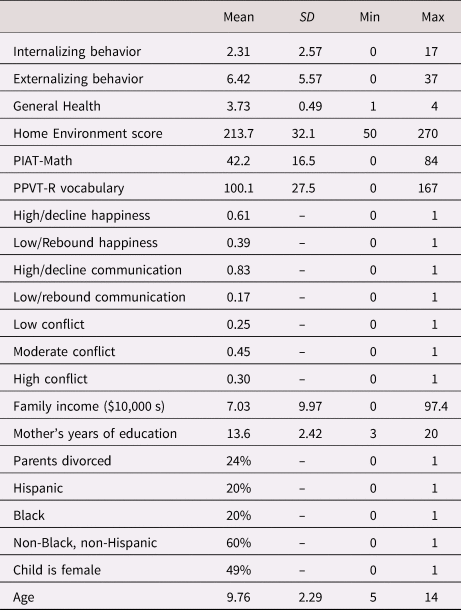
Table 1 presents descriptive statistics for all variables included in the model. Note that these are the overall means, standard deviations, and ranges for the variables assessed between ages 5 and 14. All dependent variables were assessed for those in each age range and varied over time, along with all other time-varying covariates. On average, there was comparatively little internalizing behavior (M = 2.31 on a 0–17 scale) with modest amounts of externalizing problems (M = 6.42 on a 0–37 scale). The difference in standard deviations, however, is quite striking, as there was relatively little (SD = 2.57) but substantial (SD = 5.57) for internalizing and externalizing, respectively. Mother-rated child health was quite high; the average standardized test scores were comparable to national norms. Of course, these differences should be taken in light of the skewed nature of several of the variables (e.g., internalizing behavior, general health).
Mean, standard deviation, and range for all variable in the analysis, NLSY79 & children of the NLSY79

Note. Peabody Individual Achievement Test = PIAT Math; Peabody Picture Vocabulary Test = PPVT-R
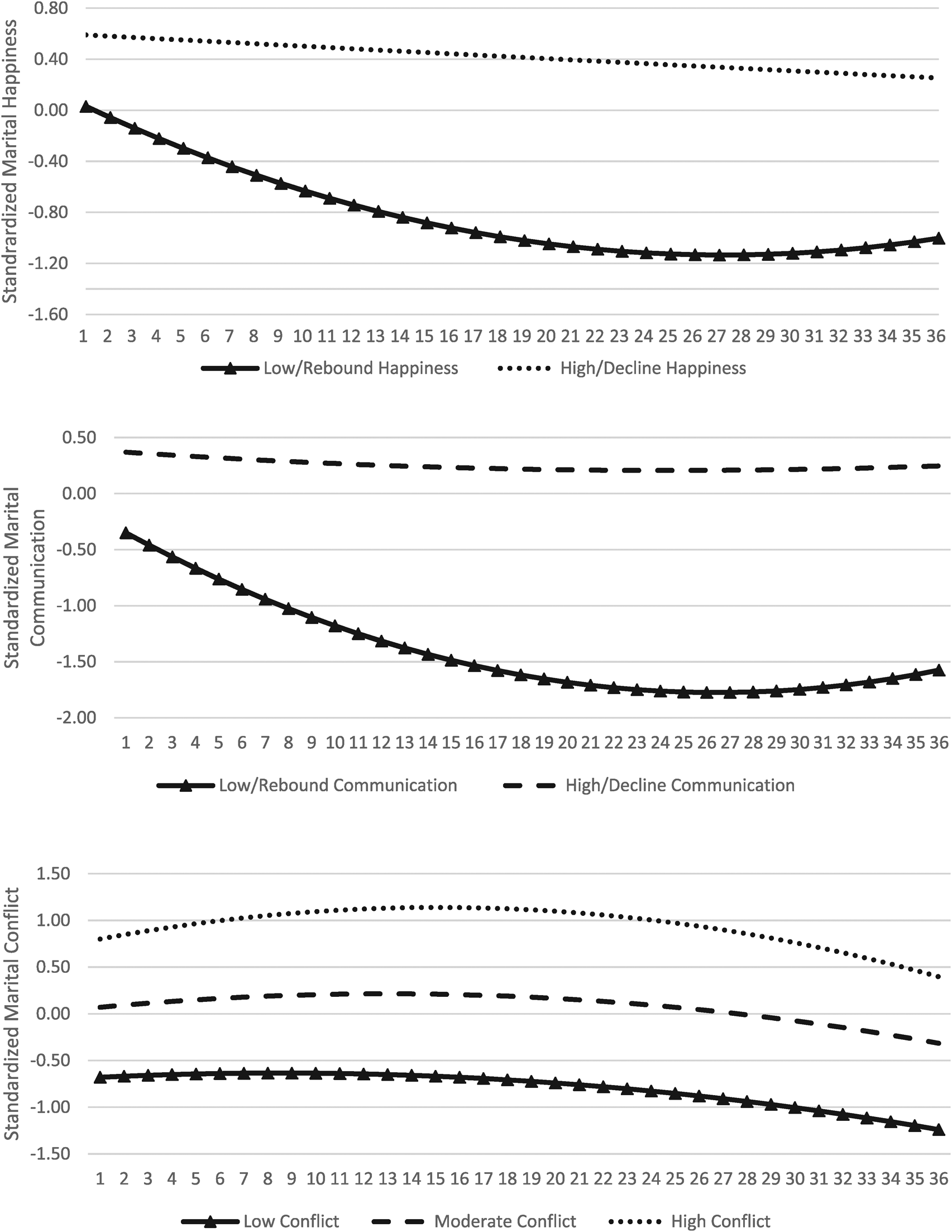
The distribution of trajectory membership, replicated from James (Reference James2015b) of maternal marital quality, repeated individually for each dimension of marital quality (happiness, communication, and conflict) is shown as well; Figure 1 is provided for easy visual interpretation. Sixty-one percent of mothers were in the high/decline happiness group, 39% in the low/rebound happiness group. The corresponding percentages for communication were 83% and 17%. For conflict, mothers were split across low (25%), moderate (45%), and high (30%) trajectories. Note that these numbers differ slightly from James (Reference James2015b) due to the exclusion of childless married women. In terms of demographics, the children's mothers had, on average, some college (13.6 years of education), 24% of them experienced parental divorce prior to their 15th birthday, and children were disproportionately Black and Hispanic (20% of children in each group). This is due to a combination of higher fertility rates among these groups and the design effect of the survey.
Trajectories of standardized marital happiness, communication, and conflict from overall growth curve (LGC) and latent class growth analyses, N = 2,277, NLSY-1979. Reproduced from (James, Reference James2015b).

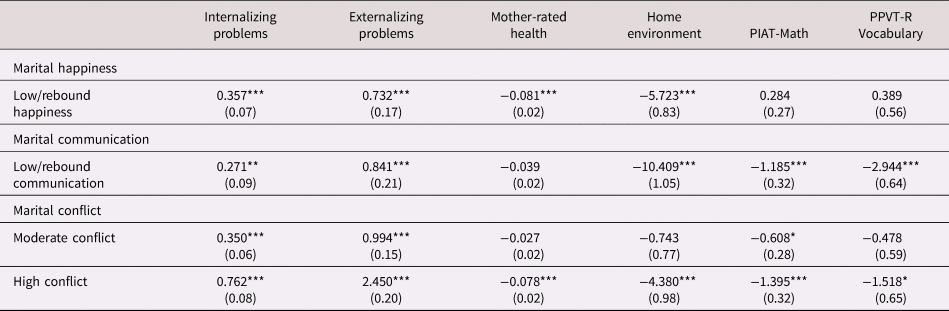
Table 2 presents the unstandardized regression results of the multilevel linear model estimated using membership in trajectories of marital happiness (reference group = low/rebound happiness), marital communication (reference group = low/rebound communication), and marital conflict (reference group = low conflict), as the primary independent variable, respectively. Overall, the results (in linear b coefficient form) suggested that children whose mothers experienced poorer marital quality trajectories across the life course reported lower levels of child well-being, with modest effect sizes, signifying that there is a link between parental marital quality trajectories, rather than merely levels. Generally, children whose mothers were on the low/rebound trajectory for happiness and communication reported higher internalizing and externalizing problems (both happiness and communication), lower mother-rated health (happiness only), a poorer quality home environment (both happiness and communication), and worse scores on standardized math and vocabulary tests (communication only) than children whose mothers’ trajectory was characterized by high/declining marital quality, net of controls for family income, mother's education, parental divorce, race, age, child gender, and the other marital quality measures. Similar results were found for conflict, where children whose parents reported moderate and high conflict levels across the life course reported lower child well-being than children with low conflict parents.
Parental trajectories of marital happiness and child well-being from age 5–14. National Longitudinal Survey of Youth (NLSY79) and Children of the NLSY79.

Note. Peabody Individual Achievement Test = PIAT Math; Peabody Picture Vocabulary Test = PPVT-R. Standard errors in parentheses. Coefficients for low/moderate conflict are significantly different for math and internalizing/externalizing problems. All models control for income, maternal education, parental divorce, race-ethnicity, sex, age, and the other dimensions of marital quality (e.g., models for happiness also include controls for communication and conflict). * p < .05, ** p < .01, *** p < .001
Although the difference between children whose parents reported higher versus lower marital quality levels was consistently significant across marital happiness, communication, and conflict, the size of the difference varied somewhat based on the child well-being outcome and the measure of marital quality employed. For instance, the difference is about 5 points on the HOME scale for happiness and conflict (high vs. low) but nearly 10 for communication. Children whose parents’ marriage was characterized as high in conflict were strikingly different from their low conflict counterparts, with larger differences between those two groups for internalizing, externalizing, and mother-rated health than differences observed for either happiness or communication. In contrast, the results suggested that differences in marital communication trajectories were particularly salient for standardized test scores, as children with parents in the low/rebound trajectory group scored, on average 2.9 (vocabulary) and 1.18 (math) points lower than their otherwise comparable peers in the high/decline group, compared to differences of typically less than half that size for the other marital quality dimensions of happiness and conflict.
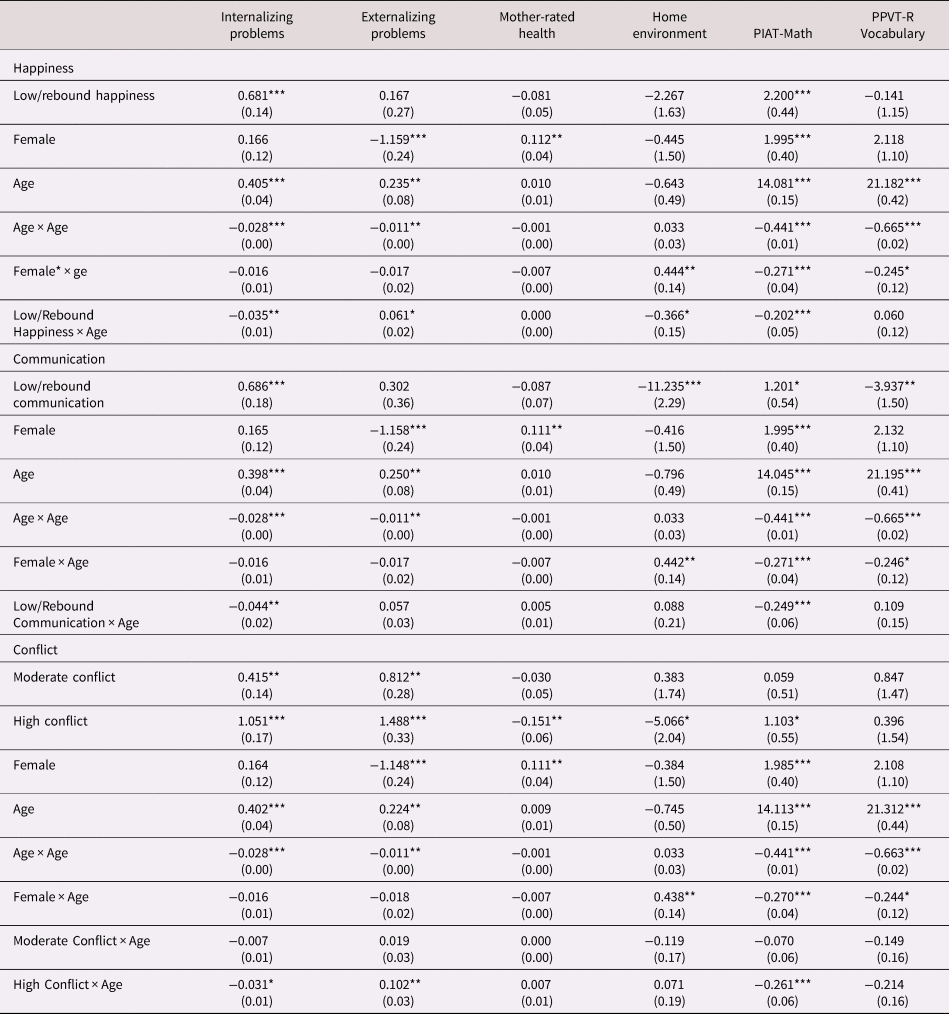
Given these differences across outcomes and between groups, we next examined how these observed differences in marital quality trajectory membership groups changed between the ages 5 to 14. Table 3 presents the results of interaction terms between parental trajectories of happiness (top panel), communication (middle panel), and conflict (bottom panel). Here the question is rather simple: do the observed differences seen in Table 2 change over the observed age range?
Interactions between parental trajectories of marital happiness, communication, and conflict, respectively, and gender, and child age on child well-being from age 5–14. National Longitudinal Survey of Youth (NLSY79) and Children of the NLSY79.

Note. Peabody Individual Achievement Test = PIAT Math; Peabody Picture Vocabulary Test = PPVT-R. Standard errors in parentheses. Coefficients for low/moderate conflict are significantly different for math and internalizing/externalizing problems. All models include controls for parental income, maternal education, divorce, race-ethnicity, and the other dimensions of marital quality (e.g., models for happiness also include controls for communication and conflict). * p < .05, ** p < .01, *** p < .001
There was little to suggest that previously observed differences between children of mothers on high versus low marital quality trajectories change between the ages of 5–14 in terms of mother-rated health, the HOME scale (the interaction was significant for happiness but not the other two marital quality dimensions, so we omit further discussion), or vocabulary scores. However, results suggested that for internalizing problems, externalizing problems, and PIAT-Math scores, the answer was affirmative when comparing high/decline versus low/rebound happiness and communication and high versus low conflict trajectories. To ease interpretation, Figure 2 provides a graphical representation of the relationship between each of these three child well-being outcomes and all dimensions of marital quality, based on predicted values obtained from the interactive model.
Marital quality trajectories and changes in children's internalizing, externalizing, and math scores between ages 5–14.

The results suggested that internalizing differences between children with mothers on the high/decline versus low/rebound happiness and communication and high versus low conflict trajectories (panel 1 of Figure 2) shrink between the ages of 5–14. That is, 5-year-old children whose mothers are on low marital quality trajectories experienced sharper declines in internalizing behaviors by age 14 than their peers of mothers with higher marital quality. For instance, for happiness, the gap between the two groups (first column of first panel in Figure 2) at age 5 is .51, indicating that low/rebound children reported, on average .51 more internalizing problems; the difference shrunk by 63% to .19. Communication and conflict (high vs. low) saw reductions of 85 and 31 percent, respectively.
Differences in externalizing, in contrast, actually grew over time between the groups. This was mostly due to increased externalizing behavior across early childhood and early adolescence by children whose mothers had marriages characterized by poor marital quality across the life course; externalizing behaviors remained constant by comparison for those in the higher marital quality groups. At age 5, for instance, children with mothers in the high/decline happiness group reported .47 points less externalizing behavior; this gap grew to 1.02 by age 14. We observed a similar pattern for communication and high versus low conflict.
The differences in math achievement scores over time between children of high versus low marital quality mothers were even more stark than those observed for internalizing and externalizing behaviors (where children with higher marital quality mothers consistently reported higher levels of overall well-being between ages 5–14). Although the differences were not significant, children of mothers on the low/rebound happiness trajectory reported math scores 1.19 points higher than their high/rebound happiness trajectory counterparts at age 5. Over time, however, children with parents on the high/rebound happiness trajectory moved ahead. By age 14, children with mothers in the high/rebound happiness trajectory scored .62 points higher on the same test, a significant difference. We observed similar results for communication and conflict, where the differences observed at age 5 favoring low/rebound children over high/decline children reversed.
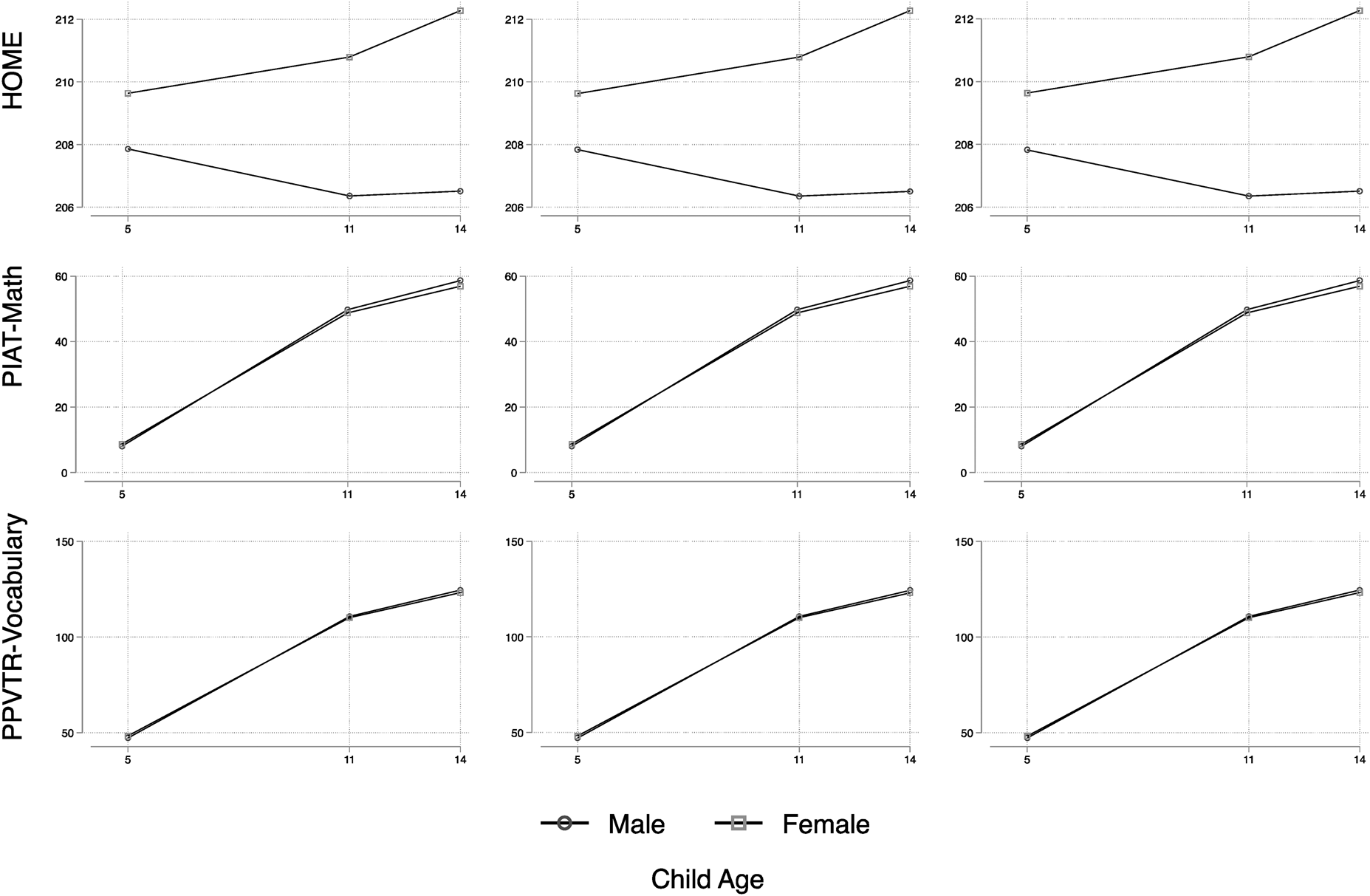
We next explored gender differences in child well-being across time. A consistent, striking pattern emerged. Figure 3 provides an accompanying graphical representation. Whereas we observed no difference between boys and girls on internalizing problems, females reported consistently fewer externalizing problems (b = 1.488, p < .001 for conflict) and had slightly better mother-rated health (b = .151, p < .001 for conflict) throughout the observed time period. These differences did not change over time, as indicated by the nonsignificant Gender × Age interaction terms.
Gender and changes in children's home environment, Peabody Individual Achievement Test (PIAT Math), and Peabody Picture Vocabulary Test (PPVT-R) vocabulary scores between ages 5–14.).

In contrast, the story for the children/adolescents’ HOME environment and standardized test scores showed remarkable changes over time, depicted graphically in Figure 3. Predicted changes in the HOME scores moved in opposite directions for boys and girls. At age 5, the gap in HOME score was about two points across all three dimensions of marital quality. By age 14, however, this gap had nearly tripled in size to about a six-point advantage, on average, for girls. For standardized test scores, we saw the opposite pattern, where the initial advantage favoring girls in both math and vocabulary scores disappeared over time and actually reversed to favor boys by age 14. A similar pattern emerged for vocabulary, although the difference was less stark (though still statistically significant).
Discussion
This article addressed a key question in the literature: how are parental marital quality and child well-being linked across the life course? Given the shifting centrality of marriage as an institution of our society, it seemed relevant to assess how dynamics within marriage influence child well-being, rather than compare children of married parents to children of cohabiting/divorced/single parents, as if marriage were itself a monolithic construct. To assess this, we used nationally representative data from the NLSY79 and Children of the NLSY79 to examine how trajectories of marital quality, rather than marital quality at a single or even a handful of time points, across the life course are associated with child well-being between the ages of 5 and 14.
Our results showed that children whose mothers were on higher marital quality trajectories, whether in terms of greater marital happiness, more communication, or less conflict, reported fewer internalizing and externalizing behaviors, higher mother-rated health, superior home environments, and better standardized math and vocabulary scores than those whose mothers were on trajectories characterized by lower marital quality. Because these outcomes span multiple dimensions of child well-being, the consistency of these results suggests that the link between parental marital quality and child well-being is robust and has important implications for children's developmental and well-being outcomes, at least through early adolescence, even after accounting for important sociodemographic controls and alternative explanations. Importantly, these differences were moderate in size, and this is good news. Larger differences likely would have manifested themselves in a variety of potentially catastrophic outcomes. It is also worth noting that differences of these sizes have deservedly fueled greater attention. We wish to underline such calls to attention here.
More specifically, we looked at several questions within our broader research question regarding links between marital quality and child well-being. We asked whether the relationship(s) between child well-being and trajectories of marital quality depends on the particular dimension of marital quality (happiness, communication, conflict) or child well-being (internalizing, externalizing, mother-rated health, the home environment, and standardized math and vocabulary scores).
Specifically, it is crucial to know whether links observed in previous studies, sometimes using cross-sectional or longitudinal data over a comparatively short time span (e.g., <5 years), that employ a single dimension of marital quality (e.g., marital conflict) or child well-being (e.g., internalizing) are symptoms of a larger, more nuanced and deeper link between marital dynamics and how well children fare, or are merely one-off instances of the uncontroversial idea that parents, as the primary socializers of children, influence children's behavior via a variety of different mechanisms, many of which have nothing to do with the parental marital relationship itself. This is a key question because much previous work on this topic focuses on a single marital quality dimension or a particular indicator of child well-being. Although there are certainly important exceptions to this, a failure to examine the relationship between trajectories of parental marital quality and child well-being over the life course from a perspective that not only acknowledges but explicitly accounts for the multidimensionality of both marital quality and child well-being can easily impede researchers’ ability to situate their findings within the broader scope of interdisciplinary research on child well-being. This is an essential task if we are to understand children and alter their lived experiences.
Our results, outlined above, suggested that links between trajectories of marital quality and child well-being persist across dimensions of marital quality and child well-being, suggesting an enduring link between the two that is symptomatic of a crucial link that influences the welfare of the next generation. To the extent that marriage persists in its current status as the modal family status for children, these differences are likely to persist well into the next generation.
Although we found a large amount of consistency across dimensions of marital quality and particular child well-being outcomes, suggesting that our measures together constituted a real, extensive, and consistent examination of the topic, we also found important variation within and between dimensions of marital quality and child well-being. For instance, we found that being on a trajectory characterized by high levels of marital conflict was associated with child well-being. This was also the case for levels of marital happiness and marital communication, although the links were not always consistent in size. For example, the influence of consistently poor marital communication on the child's home environment was greater than consistently low marital happiness or high conflict. It may be that parental emphasis over the long term on open, positive communication fosters an environment rich in both cognitive stimulation and emotional support (Deal et al., Reference Deal, Halverson and Wampler1989), ultimately resulting in better child well-being and more stable family dynamics. Another possibility is that parents’ communication skills are transferable, meaning parents with poor marital communication skills also communicate poorly with their children, which may lead to poorer child outcomes. Similarly, children with mothers on the high conflict trajectory appeared to be quite prone to externalizing problems, with effects that were almost twice the size of those seen for either marital happiness or communication. Yet another example of this important variation was found in differences among standardized test scores. Poor communication seemed particularly salient in reducing math and vocabulary test scores, suggesting, again, the importance of marital communication, likely the least frequently studied dimension of marital quality in prior literature. It is also important to note, however, that variation in standardized test scores may in part be related to child gender, as girls may develop cognitive skills prior to boys, who then catch up later (Wolf & Gow, Reference Wolf and Gow1986).
In addition to key questions about links between marital quality and child well-being and whether such links persist across multiple dimensions, we also sought to explore whether these differences persisted across time and, if so, how. While results showed that children whose parents had consistently poor marital quality over the life course report poorer child well-being than children of parents in consistently higher-quality marriages, these differences remained stable from 5–14 for mother-rated health, the home environment, and vocabulary scores. However, initial differences in internalizing problems between children of parents with high versus low marital quality narrowed. In contrast, the gap between these two groups increased for externalizing problems and math scores, over time. Thus, for three of six child well-being dimensions analyzed, differences observed at age 5 remained stubbornly in place, at least through early adolescence, and for externalizing and math scores, the gaps increased, perhaps suggesting yet another mechanism by which childhood is increasingly becoming a place of significant and widening inequality, both familial and otherwise (McLanahan, Reference McLanahan2004).
Similarly, we confirmed previous studies (Benbow & Stanley, Reference Benbow and Stanley1980; Miner & Clarke-Stewart, Reference Miner and Clarke-Stewart2008; Sammons, Reference Sammons1995) showing changing gender differences in child well-being over time, particularly for standardized math and vocabulary scores. Between ages 5 and 14, boys gain, on average, more than two points more than girls on math (2.44 points) and vocabulary (2.15). Interestingly, the opposite is true for the home environment, where initial differences at age 5 are statistically significant but somewhat muted. By age 14, mothers of girls report much richer home environments than mothers of their male counterparts. Reasons behind this are somewhat perplexing but point to the importance of future studies that can articulate the mechanisms driving these gaps.
Previous work has suggested that there is heterogeneity within marital quality dynamics (James, Reference James2015b) and we show here that this heterogeneity has consequences for child well-being across the life course for a variety of social, psychological, academic, and health outcomes. Because we found links between child well-being and the quality of parents’ marriages, this article holds an additional, important implication: variation within marriage may be just as important as variation between marriage and other marital statuses/family structures. Comparisons of child well-being between family structures (married, cohabiting, single, etc.) likely obscure differences within marriage. The implications of this are clear: such comparisons may conceal as much light as they reveal. Differences in child well-being within family structures themselves may be as important as differences between family structures. This indicates the need for a more nuanced approach to examining differences and trends in child well-being over time, rather than continuing with the somewhat facile practice of including marital status when examining such trends.
Some could argue, given the moderate amount of consistency of the results across dimensions of marital quality, that we should combine the three dimensions of marital quality into one scale. However, this would be conceptually and methodologically problematic (Amato et al., Reference Amato, Booth, Johnson and Rogers2007). Conceptually, we see differences across the dimensions, suggesting that there is unique predictive power in examining each dimension. Further, there is good theoretical reason to treat dimensions of marital quality as conceptually distinct but empirically correlated constructs, as combining them into one scale would obscure distinctions between them, meaning one would no longer be able to specify the relationship between well-being outcomes of interest and happiness, for example. Nor would one know if changes in one dimension (conflict, for example) are driving changes in the outcomes studied or if it was communication or happiness instead. Methodologically, the three dimensions are moderately, though not strongly, correlated (r = .47 (happiness and communication), −.39 (happiness and conflict), and −.24 (communication and conflict); ps < .001), suggesting that each dimension taps into a common construct of marital quality but also brings unique information that would be lost if we combined the three dimensions into one construct.
It is also worth noting that, although who enters into marriage is becoming increasingly selective, scholars must still attend to differences in child well-being within marriage. We ignore variation within marriage at our own peril, as more children live with married parents than in any other arrangement. Treating marriage as a monolithic construct when comparing children of married parents to cohabiting ones, for example, betrays important variation within marriage itself, especially in terms of the quality of the parents’ marriage. Future studies could also compare marital quality levels within different family structures to further distinguish between relationship quality and family structure effects.
In answering these questions, this paper makes substantive methodological and theoretical contributions to the literature. First, by employing a large dataset, the NLSY79 cohort and Children of the NLSY, the analyses are founded upon a very large sample of marriages and children, essential for detecting differences that we do not expect to be exceptionally large in magnitude. This is in stark contrast to the vast majority of studies on the topic, which have often been overly reliant on geographically constrained, homogenous, and often cross-sectional (or at least temporally limited over just a few years) (Karney & Bradbury, Reference Karney and Bradbury2020). The large statistical power allows for more sophisticated analyses and more sensitive tests of hypotheses derived from prior literature and theory. Second, the richness and diversity of the data means we can include key demographic controls that represent potential alternative explanations of the relationships between parental marital quality and child well-being. Many prior studies have not included the same extensive set of controls, often because the sample used was not itself sufficiently diverse to detect differences (i.e., samples consisting largely of white, middle-class parents and children). Third, we use multiple indicators of child well-being and marital quality, making this paper one of the most expansive treatments on the topic to date, as well as a more complete conceptualization of marital quality and child well-being than many previous studies. Finally, the richness of the data allows us to look at several decades of marriage and a full decade of children's lives, maximizing the developmental perspective utilized in this research. Many previous papers have tied marital quality at a single point in time to a given child well-being outcome. However, few, if any, have had the richness of data to not only examine a variety of child well-being measures, as we do here, but to also tie these to marital quality across the life course over a nearly four-decade period.
This paper is not without its limitations. For instance, the field of longitudinal data analysis currently wrestles with issues of measurement invariance, which asks whether the same construct is measured the same across time (or groups). While formal tests of invariance are beyond the scope of this paper, the NLSY79 cohorts made efforts to mitigate measurement invariance by shifting how each of these constructs measured here were asked as children aged from childhood to adolescence. We remain sensitive, however, to the importance of future work, not just on this topic but any treatment of longitudinal data, considering how measurement invariance may influence results. For another, we only have ratings of marital quality for these children's mothers. It is unclear the extent to which having father's ratings of marital quality would alter the claims made here, although there is evidence that men and women experience marital change similarly (Amato et al., Reference Amato, Booth, Johnson and Rogers2007). In addition, the women and children studied here are a generation removed from current mothers and children, and the United States has borne witness to great demographic change since these children were coming of age. Future work should seek to incorporate the additional demographic, processual, and family-contextual factors that are likely to elucidate changes in marital quality. However, these data constitute by far the most comprehensive information we have on links between marital quality and child well-being in a single study.
To sum, this paper, by demonstrating how variation in marital quality over the life course is linked to child well-being through mid-childhood through early adolescence, underlines the important role that marriage has and will likely continue to play in shaping child outcomes. Supporting and sustaining all marriages, regardless of their initial quality, will likely be key in advancing the well-being of American children.
Funding Statement
This research received no specific grant from any funding agency, commercial, or not-for-profit sectors.
Conflicts of Interest
None.