



LEARNING OBJECTIVES
After reading this article, you will be able to:
-
• understand the complexities involved in diagnosing PTSD in people with intellectual disabilities
-
• recognise and implement the adaptations required to assess PTSD in people with intellectual disabilities
-
• appreciate the current gaps in our knowledge regarding traumatic responses and longer-term outcomes in this population.
There is a growing understanding and appreciation of the harmful effects of trauma on mental health. Post-traumatic stress disorder (PTSD), which was first described in 1980 in DSM-III, is a common consequence of traumatic experiences, with an estimated prevalence of between 1 and 12%. Interest in PTSD now extends beyond medical and academic circles; recent decades have seen a regular stream of mainstream media articles about PTSD, reflecting an increasing understanding of the effects of trauma. Recent updates to the DSM (DSM-5; American Psychiatric Association 2013) and ICD (ICD-11; World Health Organization 2019) reflect changes in our theoretical understanding and conceptualisation of PTSD.
Current diagnostic criteria: ICD-11 versus DSM-5
The ICD-11 and DSM-5 criteria for PTSD differ in their symptom structure, diagnostic thresholds, definitions of trauma and recognition of complex PTSD. Although both aim to diagnose and treat trauma-related distress, they vary in complexity and focus. A significant distinction lies in the symptom clusters. ICD-11 employs a simplified model with three core symptoms: re-experiencing the trauma, avoidance and a persistent sense of threat (hypervigilance and an exaggerated startle response) (World Health Organization 2019). In contrast, DSM-5 includes four symptom clusters, incorporating negative changes in mood and cognition, such as a distorted self-perception and emotional detachment, which broadens its scope (American Psychiatric Association 2013).
The number of required symptoms also varies. ICD-11 necessitates fewer symptoms, concentrating on core PTSD features, whereas DSM-5 requires a minimum of six symptoms, resulting in a higher diagnostic threshold and a broader range of included cases. The definition of trauma is narrower in ICD-11, restricting PTSD to direct exposure to extremely threatening events. DSM-5, however, includes witnessing trauma, learning of trauma affecting loved ones and repeated indirect exposure (e.g. in first responders).
Another significant difference is the recognition of complex PTSD (CPTSD). ICD-11 identifies CPTSD as a distinct condition, necessitating emotion dysregulation, a negative self-concept and interpersonal difficulties. Although DSM-5 does not separately classify CPTSD, similar symptoms may be encompassed under PTSD subtypes.
Overall, ICD-11 prioritises simplicity and accessibility for global healthcare, whereas DSM-5 is more detailed and research-focused. Recent research has highlighted the complexity and heterogeneity of PTSD symptoms, as well as their fluctuating nature, which challenges rigid diagnostic criteria (Brewin Reference Brewin, Atwoli and Bisson2025). However, this debate is beyond the scope of the current article.
Is PTSD underdiagnosed in people with intellectual disabilities?
Intellectual disability is a condition characterised by low intellectual functioning and challenges in adaptive behaviour (Box 1). Despite increasing understanding of PTSD, there has been little research on its prevalence among people with intellectual disabilities. Studies indicate that PTSD is often underdiagnosed in those with intellectual disabilities (Houck Reference Houck and Dracobly2022). Researchers propose several contributing factors, including diagnostic overshadowing, communication challenges and a lack of diagnostic tools suited to the intellectual disability population. Surveys have shown that clinicians may misinterpret symptoms of PTSD in individuals with intellectual disabilities, owing to poor awareness and lack of training and experience (Houck Reference Houck and Dracobly2022).
The definition of an intellectual disability
ICD-11 and DSM-5 both define intellectual disability (also referred to as ‘intellectual developmental disorder’ in DSM-5) as a condition characterised by deficits in intellectual functioning and adaptive behaviour; however, they differ in terms of classification, assessment focus and severity determination. One key difference is the terminology used. ICD-11 describes the condition as ‘disorders of intellectual development’, whereas DSM-5 uses ‘intellectual developmental disorder’. Despite the differences in naming, both stress limitations in reasoning, problem-solving, learning and daily functioning.
ICD-11 emphasises adaptive functioning as the primary diagnostic criterion, placing less emphasis on IQ scores. It categorises severity levels based on the degree of support required in everyday life (mild, moderate, severe, profound). In contrast, DSM-5 considers both IQ scores (typically <70) and adaptive functioning but prioritises adaptive behaviour over IQ for severity classification. Additionally, ICD-11 offers a more flexible, culturally adaptable framework, recognising variations in developmental environments. DSM-5 encompasses neurodevelopmental disorders within a broader context, highlighting common co-occurring conditions such as autism or attention-deficit hyperactivity disorder.
(American Psychiatric Association 2013; World Health Organization 2019)
In a literature review, Devaney et al (Reference Devaney, Hassiotis and Katona2019) estimated the weighted pooled prevalence of PTSD to be approximately 10% among individuals with intellectual disabilities, which is at the high end of estimates in the general population. This figure indicates that PTSD occurs relatively frequently in people with intellectual disabilities, although, as Houck & Dracobly (Reference Houck and Dracobly2022) noted, it is often underdiagnosed.
In the UK, data from the Office for National Statistics and Public Health England estimate that approximately 1.3 million individuals, or 2.16% of the UK population, have an intellectual disability (Office for Health Improvement and Disparities 2025). Given the 10% prevalence estimate of Devaney et al (Reference Devaney, Hassiotis and Katona2019), this would mean approximately 130 000 individuals with intellectual disabilities may be affected by PTSD in the UK.
Despite the potentially sizeable national population with intellectual disabilities suffering from PTSD, there is still a lack of high-quality studies investigating the true prevalence of the disorder and effective treatments. According to Byrne (Reference Byrne2022), because of this lack of research, clinicians are left to use general guidelines that may be challenging to apply to people with intellectual disabilities, owing to their social and communication difficulties. Moreover, there is evidence that individuals with intellectual disabilities may not react ‘typically’ to trauma and their reactions may not be recognised or managed correctly (McNally Reference McNally, Taggart and Shevlin2021). Consequently, symptoms of PTSD may be missed or misunderstood in this group. Even when PTSD is recognised, there is evidence that formal support is not always offered to individuals with intellectual disabilities.
Nature of traumatic events: are people with intellectual disabilities more at risk of experiencing trauma?
It is now widely recognised that people with intellectual disabilities are at an increased risk of experiencing trauma, particularly of a violent and sexual nature (McNally Reference McNally, Taggart and Shevlin2021). Studies have noted that abuse and aggression against people with intellectual disabilities are widespread international social problems (Araten-Bergman Reference Araten-Bergman and Bigby2023). Challenges in reporting and structural barriers to successful detection, prevention and prosecution compound the increased rates of violence and abuse in the intellectual disability population. For instance, a study in Taiwan found that, between 2002 and 2007, the rate of sexual abuse reported among people with any disability was 2.7 times higher than that in the general population, and that over 50% of these cases involved people with intellectual disabilities (Lin Reference Lin, Yen and Kuo2009). A systematic review found that individuals with intellectual disabilities are at a significantly higher risk of sexual abuse compared with those without such a disability (Byrne Reference Byrne2018). Another systematic review estimated that one in three adults with intellectual disabilities experienced sexual abuse in adulthood (Tomsa Reference Tomsa, Gutu and Cojocaru2021).
Although the common understanding of trauma is usually related to violent or horrifying events, McNally et al. (Reference McNally, Taggart and Shevlin2021) argue that owing to the nature of their disability, people with intellectual disabilities are at a higher risk of experiencing trauma resulting from multiple placements, social exclusion, bullying and loss of safe attachment relationships. Additionally, Houck & Dracobly (Reference Houck and Dracobly2022) note that significant social stigma and systemic discrimination can lead to structural inequalities and chronic trauma for this population. For example, McCausland et al (Reference McCausland, McCallion and Cleary2016) reported that almost half of the adults with an intellectual disability they studied had not had substantial contact with non-paid support individuals in over a year, significantly increasing their risk of isolation, social exclusion and, consequently, trauma. Owing to their multiple vulnerabilities, people with intellectual disabilities are also more susceptible to adverse events such as neglect and abuse, further increasing their risk of PTSD (Devaney Reference Devaney, Hassiotis and Katona2019).
Developmental perspective: are people with intellectual disabilities more at risk of developing PTSD?
The latest research shows that individuals with intellectual disabilities who experience traumatic events have a higher risk of developing PTSD compared with the general population (Houck Reference Houck and Dracobly2022). Numerous factors contribute to this increased vulnerability, including the need for support and protection, communication barriers, and a lack of understanding regarding appropriate caregiver behaviour and reporting of abuse (Kildahl Reference Kildahl, Helverschou and Bakken2020; Mpofu Reference Mpofu, Houck, Linden and Mpofu2020).
Additionally, individuals with intellectual disabilities are less likely to receive timely and evidence-based treatments, putting them at a higher risk of chronic trauma, poor overall outcomes and PTSD (Houck Reference Houck and Dracobly2022).
Some studies suggest that individuals with intellectual disabilities are more psychologically vulnerable to adverse events, even those that might not conventionally be considered traumatic, such as changes in residence, illness, or injury to themselves or close friends and relatives (Breslau et al 2013). These adverse life events are associated with high rates of psychological distress among individuals with intellectual disabilities. Moreover, evidence indicates that people with intellectual disabilities are more vulnerable to the psychiatric effects of life events (Tsakanikos Reference Tsakanikos, Bouras and Costello2007).
Diagnosis: what are the symptoms of PTSD in people with intellectual disabilities and how should they be assessed?
Symptoms
Diagnosing PTSD in individuals with intellectual disabilities is particularly challenging because of the diverse nature of the population and the wide range of social, behavioural and language skills they possess. This can make it difficult to recognise specific PTSD symptoms. The symptoms displayed by individuals with intellectual disabilities, especially those with mild intellectual disability or borderline intellectual functioning, after experiencing trauma may be similar to those in individuals without intellectual disabilities, including distinct symptom clusters of avoidance, hypervigilance, and intrusive thoughts and images. However, some individuals with intellectual disabilities exhibit atypical symptoms, such as obsessive–compulsive behaviour, depression and anxiety. These atypical symptoms would not immediately suggest a traumatic cause, as indicated by small studies (McNally Reference McNally, Taggart and Shevlin2021).
Given the diversity among individuals with intellectual disabilities around the world, it is not surprising that the effects of trauma can manifest in many ways in this group. Evidence suggests that the symptoms of PTSD may differ depending on the severity of the intellectual disability. This could lead healthcare professionals to misinterpret behavioural changes as being part of the disability, a phenomenon known as diagnostic overshadowing (Mevissen Reference Mevissen, Didden, de Jongh, Martin, Preedy and Patel2016), as illustrated in the fictitious vignette in Box 2.
Vignette 1 – the risk of diagnostic overshadowing
Jason is a 22-year-old man with a mild intellectual disability. He was involved in a serious car accident 1 year ago. Since the accident, he has been plagued by nightmares, startles easily and avoids travelling in vehicles. At his supported living placement, the staff often dismiss his distress, believing it to be a result of his disability rather than a response to trauma. When he consistently declines to attend social outings that involve travel, they attribute this to his poor social skills instead of recognising his post-traumatic stress disorder (PTSD). Rather than exploring trauma-informed treatment, his psychiatrist increases Jason’s anxiety medication, failing to address the underlying issues. Because of the lack of appropriate intervention, the PTSD symptoms continue to persist, leaving Jason both misunderstood and untreated.
In individuals with moderate or severe intellectual disability, signs of trauma often include a marked decline in adaptive function and behaviour. Noticeable trauma-related behavioural changes include irritability, aggression, withdrawal, lethargy and increased stereotypical behaviours (McNally Reference McNally, Taggart and Shevlin2021). Rittmannsberger et al (Reference Rittmannsberger, Weber and Lueger-Schuster2020a, Reference Rittmannsberger, Yanagida and Weber2020b) emphasise the importance of educating caregivers to help them recognise changes in behaviour in this group, which can help in identifying new or emerging trauma-related problems.
Assessment
It is essential to understand that because of the complexity, clinicians evaluating individuals with intellectual disabilities must consider their developmental stage. Symptoms of PTSD in this population can vary based on the individual’s level of functioning (Mevissen Reference Mevissen and de Jongh2010). According to Kildahl et al (Reference Kildahl, Helverschou and Bakken2020), clinicians need to conduct a multidimensional and personalised assessment of individuals with intellectual disabilities and PTSD, as traumatic experiences can have diverse effects and presentations in this group. Kildahl et al (Reference Kildahl, Helverschou and Bakken2020) also point out the more significant challenge of assessing PTSD in individuals with intellectual disabilities compared with those without. Therefore, clinicians must be prepared to employ various strategies for assessment, ranging from standard verbal methods to play-based observations with children and young people (which will be discussed below).
The presentation of PTSD in individuals with intellectual disabilities is intricate owing to cognitive, communicative, emotional and behavioural differences. These complexities frequently result in misdiagnosis, underdiagnosis or ineffective treatment. Box 3 outlines the primary diagnostic and treatment complexities that clinicians encounter.
Complexities in diagnosing and treating post-traumatic stress disorder (PTSD) in people with intellectual disabilities
Atypical symptom presentation Individuals with intellectual disabilities may not display typical well-defined PTSD symptoms, such as intrusive thoughts or flashbacks. Understanding the distinct ways PTSD manifests in intellectual disability is vital for offering appropriate diagnosis, treatment and support, ensuring that trauma is not overlooked or misunderstood.
Communication barriers Many individuals with intellectual disabilities possess limited verbal skills, which makes expressing traumatic memories or distress challenging.
Incorrect diagnosis of other conditions PTSD symptoms in individuals with intellectual disabilities are often misinterpreted as challenging behaviour or confused with other mental health concerns.
Reliance on caregivers for emotion regulation Many individuals with intellectual disabilities depend on caregivers for safety and emotional support, making these relationships crucial in recognising PTSD symptoms and facilitating treatment.
Limited self-awareness and coping strategies Individuals with intellectual disabilities may struggle to recognise and express emotions, which can result in maladaptive coping behaviours such as aggression or withdrawal.
Clinicians’ limited or negligible understanding of trauma A solid understanding of trauma-informed care is vital to recognise trauma, prevent re-traumatisation, and support individuals with PTSD.
Clinicians should also be aware that considering communication strategies is crucial, particularly when evaluating individuals with moderate or severe intellectual disability. Strategies to improve communication can include using symbols or pictures, breaking down the assessment into smaller segments, ensuring clarity about the topic being addressed, having a support person available, or collaborating with a speech and language therapist with experience working with people with moderate/severe intellectual disability.
Use of standardised scales
The assessment of PTSD in individuals with mild intellectual disability or borderline intellectual functioning is similar to that in people without an intellectual disability. Core symptoms such as hypervigilance, intrusive thoughts and images, and avoidance should be investigated. Validated scales like the PTSD Symptom Scale (PTSD-SS) can be adapted for this group by using simplified language and visual aids and involving caregivers and families in the assessment process.
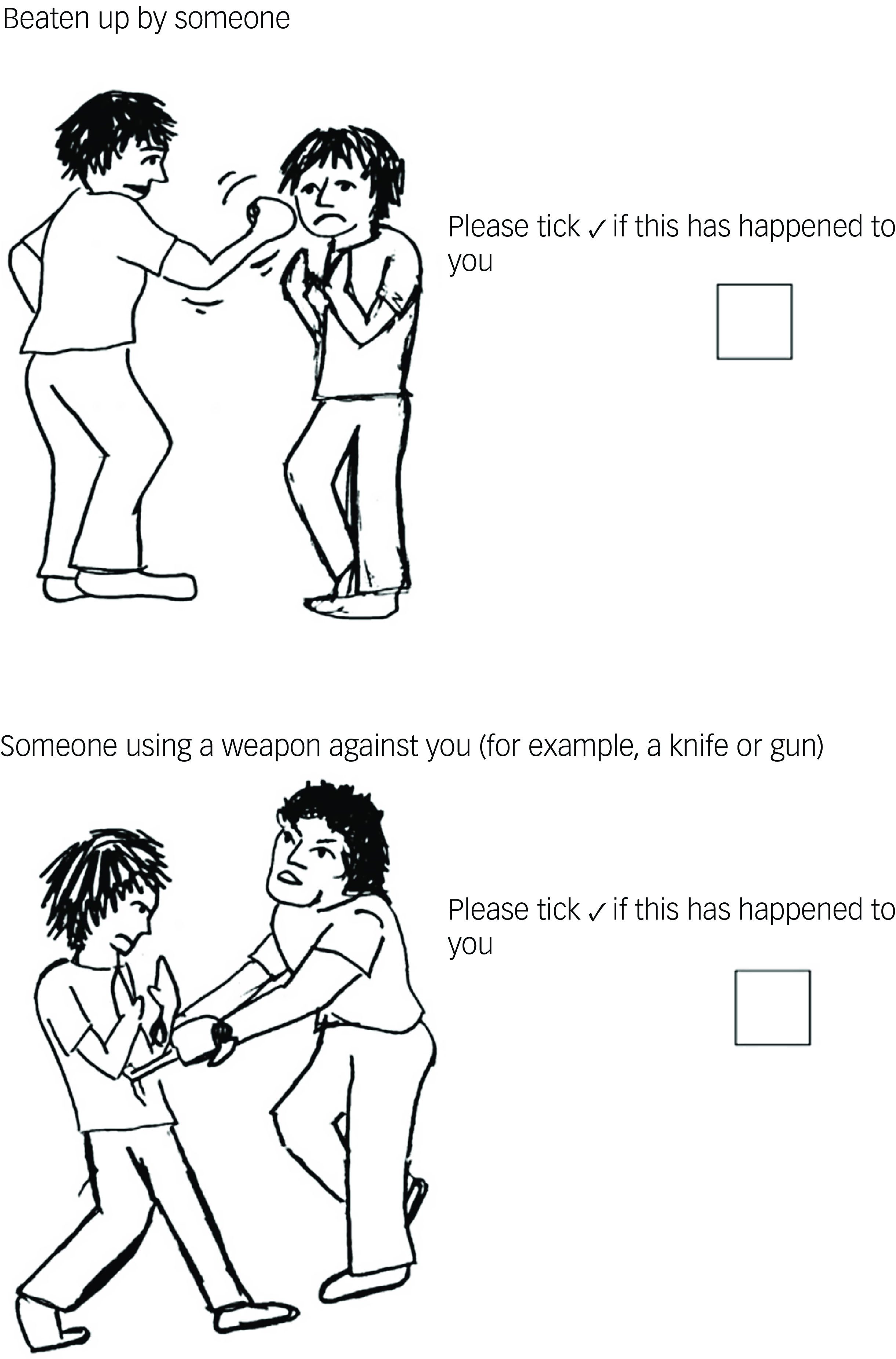
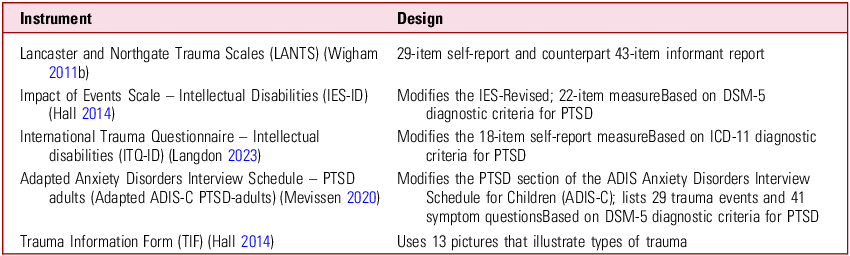
Specific measures have been developed for individuals with intellectual disabilities, such as the Lancaster and Northgate Trauma Scales (LANTS), the Impact of Events Scale – Intellectual Disabilities (IES-ID) and the International Trauma Questionnaire – Intellectual Disabilities (ITQ-ID). Mevissen et al adapted the PTSD section of the Anxiety Disorders Interview Schedule for Children (ADIS-C) to make it suitable for use with adults with mild intellectual disability or borderline intellectual functioning, and evaluated the modified tool (the Adapted ADIS-C PTSD-adults) on a sample of 106 adults (Mevissen Reference Mevissen, Didden and de Jongh2020). The instrument demonstrated good content and convergent validity, and there was high interrater reliability for agreement on exposure to a potentially traumatic event (mean Cohen’s κ = 0.84). Another instrument, the Trauma Information Form, uses pictures depicting diverse types of trauma to aid diagnosis (Fig. 1). Table 1 provides an overview of these validated instruments.
Example of a picture used in the Trauma Information Form (Hall et al, Reference Hall, Jobson and Langdon2014. © 2011 Trauma Information Form (Version 3). CC BY-NC-ND).

Validated instruments for assessing post-traumatic stress disorder (PTSD) in individuals with intellectual disabilities

Despite these promising instruments, there is still a lack of prompt diagnosis and treatment of PTSD in this vulnerable group, and they remain at substantial risk of poor long-term outcomes (Devaney Reference Devaney, Hassiotis and Katona2019; McNally Reference McNally, Taggart and Shevlin2021).
Use of observation
For those with more severe intellectual disability, assessments have focused on changes in behaviour and function compared with the individual’s typical baseline presentation. As mentioned above, increases in aggression, agitation, stereotypies and social withdrawal have been noted as effects of traumatic incidents in such individuals. The assessing psychiatrist may rely on the observations of supporting staff or family members, especially for individuals with severe or profound intellectual disability. Sleep and appetite may also be affected. Assessing PTSD is particularly challenging in individuals with severe or profound intellectual disability. Studies indicate that symptoms often manifest through new and/or unusual behavioural changes reported by caregivers and family members. It is essential to remain vigilant and rule out other problems, especially medical conditions. Box 4 provides a checklist for individuals with severe to profound intellectual disability based on the current literature.
Trauma checklist for severe to profound intellectual disability
Trauma exposure history
-
• Do caregivers report a history of traumatic experiences for the person (e.g. abuse, neglect or medical trauma)?
-
• Have there been any sudden changes in behaviour following a significant event (e.g. aggression, withdrawal or loss of skills)?
-
• Are there unexplained fears or avoidance behaviours (e.g. refusing to enter certain rooms or resisting particular people)?
Emotional and behavioural changes
-
• Is the person more withdrawn, less engaged in activities or displaying reduced social interaction? Has their daily routine become more rigid, with distress evident when routines change?
-
• Are there heightened instances of aggression, self-harm or repetitive behaviours (e.g. rocking, hand-flapping) associated with distress?
Re-experiencing symptoms
-
• Are there sudden, unexplained outbursts of distress without any apparent trigger?
-
• Does the individual display distress (e.g. freezing, crying, vocalising or avoiding) in reaction to certain places, objects or people?
-
• Have caregivers noticed repetitive actions that imitate past trauma (e.g. mimicking being struck or hiding beneath furniture)?
Avoidance and hyperarousal
-
• Do they refuse or resist specific activities that were previously tolerated?
-
• Are there exaggerated startle responses, freezing or flinching without an apparent cause?
-
• Has their sleep been disrupted (e.g. increased nighttime wakefulness, restlessness, night sweats)?
Impact on daily functioning
-
• Have there been any losses of previously acquired abilities (e.g. ceasing the use of adaptive communication tools, regression in toileting skills)?
-
• Have there been increases in self-soothing or self-stimulatory behaviours (e.g. repetitive rocking, humming, thumb-sucking)?
-
• Are caregivers reporting new or worsening behaviours related to distress that affect daily care and safety?
Evaluating children and young people with intellectual disabilities
The advice and recommendations mentioned above generally apply to both adults and children/young people with intellectual disabilities. However, it is essential to consider factors specific to children and young people. It is worth noting that children with intellectual disabilities are more at risk of developing PTSD after being exposed to major life-threatening events (e.g. terror attacks) compared with their peers without intellectual disabilities (Finzi-Dottan Reference Finzi-Dottan, Dekel and Lavi2006). Moreover, a preliminary study in a population of adults with intellectual disabilities found that PTSD symptoms were worse in those who had experienced multiple traumas in both childhood and adult life than in those who had experienced traumatic events only in adulthood (Mason-Roberts Reference Mason-Roberts, Bradley and Karatzias2018). Catani & Sossalla (Reference Catani and Sossalla2015) similarly found that childhood abuse predicts the severity of PTSD symptoms in adults with intellectual disabilities.
There is a growing recognition of the need for standardised scales to assess the significant behavioural changes, ranging from withdrawal to hyperactivity, often exhibited by children with intellectual disabilities who have experienced trauma. One such scale, the Adapted Anxiety Disorders Interview Schedule for Children with PTSD, has shown promise in initial assessments but requires further validation. Studies also show that play-based observations and assessments can be valuable tools (D’Elia Reference D’Elia, Carpinelli and Savarese2022). These observations can help the assessing clinician in gaining insights into traumatic experiences, particularly when children engage in ‘post-traumatic play’ (re-enacting the original trauma through drawings, play or language). Such play-based observations may also help guide subsequent play-based therapy (Koukourikos Reference Koukourikos, Tsaloglidou and Tzeha2021).
Treatment: how should PTSD in this group be managed?
The standard treatment for PTSD includes trauma-focused cognitive–behavioural therapy (TF-CBT) and eye movement desensitisation and reprocessing (EMDR). The National Institute for Health and Care Excellence (NICE) recommends that interventions for PTSD are culturally and linguistically appropriate (NICE 2024): therefore, any intervention must be adapted for those with intellectual disabilities. However, there are currently no national guidelines tailored to the treatment of PTSD in people with intellectual disabilities, although Box 5 lists recommendations for overcoming the often-complex linguistic difficulties experienced by people in this group.
Recommendations when adapting post-traumatic stress disorder (PTSD) therapy for someone with an intellectual disability
-
• Vary the pace of the therapy based on the individual and allow flexibility
-
• Use clear, simple language
-
• Modify written information using accessible read formats
-
• Have regular breaks
-
• Use visual aids
-
• Regularly recap and check the person’s understanding
-
• Avoid abstract language
-
• Involve caregivers and family members
-
• Use an extended preparation phase before commencing the treatment
Evidence shows that traditional treatments for PTSD can be effectively adapted for those with intellectual disabilities, although more extensive studies are urgently needed (McNally Reference McNally, Taggart and Shevlin2021). These treatments include EMDR (Penninx Quevedo Reference Penninx Quevedo, de Jongh and Bouwmeester2021) and cognitive therapy (Karatzias Reference Karatzias, Brown and Taggart2019), which have been successfully tailored for individuals with PTSD and mild intellectual disabilities (Carrigan Reference Carrigan and Allez2017). In a pilot study, an intensive intervention programme involving prolonged exposure, EMDR and ‘physical activation’ was found to be safe and effective for a group of young people with mild intellectual disabilities and trauma-related symptoms (Ooms-Evers Reference Ooms-Evers, Graaf-Loman and Duijvenbode2021). A recent systematic review by Schipper-Eindhoven et al (Reference Schipper-Eindhoven, de Knegt and Mevissen2024) examining EMDR for people with intellectual disabilities outlined the significant challenges therapists often have in adapting treatment protocols for this group. They suggested that EMDR protocols for children and adolescents could be modified and that trusted others, such as a caregiver or family member, could be involved in the treatment. Promising studies are planned over the next several years, including the Trauma-AID study, which is a large randomised, multi-centre trial aimed at evaluating the clinical and cost-effectiveness of an adapted EMDR protocol for adults with mild or moderate intellectual disability experiencing PTSD (National Institute for Health and Care Research 2025).
The treatment of individuals with both PTSD and intellectual disability can be complex, requiring support from the entire multidisciplinary team and family. An example is given in the fictitious vignette in Box 6.
Vignette 2 – recognising variations in symptomatology and adapting treatment
Maria, a 30-year-old woman with moderate intellectual disability, witnessed a violent altercation at her residential facility. Since that incident, she has become distressed by loud noises, often hiding under tables and having difficulty sleeping. Maria struggles to express her fear; when overwhelmed, she cries and rocks back and forth. Initially, the staff believed she was regressing in her behaviour, but an observant psychologist recognised her symptoms as PTSD. A formulation meeting was held with all members of the multidisciplinary team, care staff, Maria and her family to explore the issues. Using insights from the meeting, the psychology team developed a fully customised therapy plan, including an adapted eye movement desensitisation and reprocessing (EMDR) protocol, visual storytelling, flexible and extended sessions, and simplified language. After several months of therapeutic work, with family members supporting each session, Maria’s distress gradually alleviated.
A recent article by Jahoda et al (Reference Jahoda, Dagnan and Hastings2024) notes that there ‘is an almost complete lack of any evidence-based psychological therapies which can be offered to people with a severe or profound intellectual disability’; however, they describe an adaption of a manualised therapy for depression that could serve as a template for adapting existing PTSD therapies. In the absence of well-evidenced adapted therapy for PTSD in people with severe and profound intellectual disability, most existing treatment plans have focused on holistic approaches such as behavioural therapy (e.g. applied behaviour analysis), music and art therapy, speech and language therapy, caregiver and family training, environmental modifications and sensory integration therapy. Many of these approaches have a poor evidence base. There have been reports of individual cases where medications, particularly selective serotonin reuptake inhibitors, have been used to treat PTSD in individuals with intellectual disabilities, with varying levels of success. However, there is a lack of high-quality studies or randomised controlled trials (RCTs) that examine the effectiveness of medication for PTSD in this population.
Research on the effectiveness of sensory integration therapy has been mixed; some case reports and smaller studies have indicated that it can be beneficial. However, a recent high-quality RCT by Randell et al (Reference Randell, Wright and Milosevic2022) (SenITA) found that manualised sensory integration therapy for children with autism (delivered over 26 weeks) did not demonstrate any benefit above standard care. However, the study commented that such therapy ‘might’ be helpful for some children, ‘to focus on specific problems’. Treatments can also include using grounding techniques by a sensory practitioner, occupational therapist, music therapist, etc. Most of these approaches aim to reduce arousal and agitation caused by traumatic experiences.
There is currently no high-quality evidence (such as RCTs) on the most effective treatment approaches for people with intellectual disabilities (all degrees) suffering from PTSD. There are more case reports of treatment approaches for mild intellectual disability but very few for moderate/severe intellectual disability, and those available are of poor quality (McNally Reference McNally, Taggart and Shevlin2021).
How can we improve outcomes for people with intellectual disabilities and PTSD?
Owing to the absence of robust data on the effectiveness of treatments for this population, accurately estimating the prognosis for those undergoing treatment proves challenging. McNally et al (Reference McNally, Taggart and Shevlin2021), who included 41 studies in a comprehensive analysis, discovered that many individuals with intellectual disabilities who have experienced trauma are not offered interventions. When interventions are provided, there are insufficient data on long-term outcomes.
Improving outcomes for individuals with intellectual disabilities and PTSD necessitates a trauma-informed, multifaceted approach. Early identification through routine screening and education in schools and the home/residential setting is vital. Specialised training for caregivers’ family members will enable them to recognise the signs of trauma better and adapt their support accordingly. Psychological therapies must be tailored to align with the individual’s cognitive abilities to ensure effective treatment. Medication management is another potential component of a holistic treatment plan aimed at improving outcomes. However, any prescribed medication should be personalised to the individual, used at the lowest possible dose, monitored for side-effects and regularly reviewed in line with NHS England’s STOMP (‘Stopping over-medication of people with a learning disability and autistic people’) programme. Access to community support, encompassing peer networks, family involvement and accessible crisis intervention services, is crucial for long-term stability.
By integrating these strategies, individuals with intellectual disabilities and PTSD can receive the support they need to achieve better mental health, enhance their quality of life, and experience significantly improved outcomes.
What are the current gaps in knowledge and future priority areas for research and policy?
As highlighted in this article, significant gaps exist in understanding and treating PTSD in individuals with intellectual disabilities, and these affect diagnosis, treatment efficacy and clinician training. Despite considerable advancements in standardised PTSD assessment and screening tools for this population, underdiagnosis and undertreatment persist. Furthermore, trauma-informed care is often lacking in intellectual disability services. Although research into modified therapies is progressing well, pharmacological treatments remain unclear, with limited studies on the effectiveness and side-effects of medications in this population.
Future research should focus on developing and adapting current treatment methods (particularly EMDR and TF-CBT) as well as assessing whether training clinicians and caregivers in trauma-informed care can improve the recognition, support and treatment of PTSD in this vulnerable group. Additionally, trauma among individuals with intellectual disabilities must be consistently acknowledged as a public health issue, facilitating changes to national and international policy.
In conclusion, individuals with intellectual disabilities are at a higher risk of experiencing traumatic events. Research indicates that this group is especially susceptible to adverse psychological effects following such events, often displaying both typical and atypical symptoms of PTSD. Promising evidence over the past two decades suggests that existing psychological therapies can be effectively adjusted to treat PTSD in individuals with intellectual disabilities. Diagnostic assessment tools have also advanced, aiding in the diagnosis of PTSD in this population. However, research on the most effective treatments for those with moderate or severe intellectual disability is lacking. There is an urgent need for higher-quality research in this area, as well as a requirement for internationally validated, specialised diagnostic criteria for PTSD in individuals with intellectual disabilities. This would enable better recognition and timely treatment for this vulnerable group.
MCQs
Select the single best option for each question stem
-
1 Regarding the finding reported in multiple studies that people with intellectual disabilities are more likely to experience trauma:
-
a people with intellectual disabilities are more dependent on others and are therefore at higher risk of abuse/neglect
-
b they have a genetic susceptibility and, therefore, sensitivity to trauma
-
c they are more aggressive, which makes them more vulnerable to trauma
-
d the tend to live in areas that have higher rates of violence
-
e researchers indicate that the studies are biased and do not demonstrate this finding.
-
-
2 Regarding the diagnosis of PTSD in the intellectual disability population:
-
a there are well-established specific diagnostic criteria for PTSD in this population
-
b PTSD always presents atypically in this population
-
c it is not helpful to take a developmental perspective when assessing for PTSD in this population
-
d challenging behaviour can be the sole manifestation of PTSD in this population
-
e It is currently not possible to make a diagnosis of PTSD in this population.
-
-
3 Regarding PTSD symptoms in people with a moderate or severe/profound intellectual disability:
-
a the person will be able to articulate ICD-11 and DSM-5 criteria clearly
-
b people with a moderate or severe intellectual disability cannot display symptoms of PTSD
-
c behavioural changes (new-onset aggression, social withdrawal) are unimportant when diagnosing
-
d it is not essential to diagnose PTSD in this population as there are no effective treatments.
-
e observations are often critical to diagnosis.
-
-
4 The following scale shows promise in measuring trauma in people with a mild to moderate intellectual disability:
-
a Sunderland Trauma Questionnaire (STQ)
-
b St Andrews PTSD star (SAPS)
-
c Lancaster and Northgate Trauma Scales (LANTS)
-
d Short Post-Traumatic Stress Disorder Rating Interview (SPRINT)
-
e Inclusive Trauma Scale (ITS).
-
-
5 When assessing PTSD in intellectual disability it is not useful to:
-
a gain the support of a speech and language therapist
-
b use play-based observations
-
c strictly adhere to international diagnostic guidelines
-
d listen closely to carers and support staff
-
e be clinically aware of the pitfalls of diagnostic overshadowing.
-
MCQ answers
-
1 a
-
2 d
-
3 e
-
4 c
-
5 c
Data availability
Data availability is not applicable to this article as no new data were created or analysed in this study.
Author contributions
P.W. and E.W. were the main authors, with additional material, supervision and guidance provided by J.M.
Funding
This research received no specific grant from any funding agency, commercial or not-for-profit sectors.
Declaration of interest
None.



eLetters
No eLetters have been published for this article.