

Introduction
The Cape Town bubonic plague epidemic of 1901 was a formative event in the history of racial subjugation in South Africa and the period is seen as a major transition to state-organized, urban racial governanceFootnote 1 (Bickford-Smith Reference Bickford-Smith1995; Sambumbu Reference Sambumbu2010; Swanson Reference Swanson1977; van Heyningen Reference van Heyningen1989). On March 12, 1901, due to the fear of the spread of plague from within the city's urban slums, the Cape government forcibly removed 6,000 black Africans under armed guard and transferred them to Uitvlugt, a temporary quarantine site that was later made into a permanent township known as Ndabeni. This event is historically unique, as this evacuation occurred without concern for actual infection or based on exposure to the disease. Removal was solely conditional upon race and living situation. Though it was claimed that the segregated space of Uitvlugt was a temporary site, the Cape government deferred the decision to close the area until 1902, when legislation codified its permanent emplacement. All movement in and out of Uitvlugt, later known as Ndabeni, was prohibited without a pass, a bitter precursor of what was to come in the form of the pass laws in apartheid South Africa.
The Cape Town plague epidemic marks a pivotal moment in which medical practices calibrated with imperial concerns over the maintenance of health in white European populations to produce novel forms of racial governance that would later be concretized and reproduced across South Africa (Swanson Reference Swanson1977). These actions transformed the urban space of the city and produced the blueprint for the first state-monitored and regulated, racially delineated, enclosed residential space in South Africa—the first township. But what prompted such a racially aggressive intervention to an epidemic outbreak?
Arguments for why such an aggressive and racially motivated response occurred at this time cite local racial anxieties intersecting with increased state capacity to act against medical threats as the cause of this reaction to epidemic emergency (Bickford-Smith Reference Bickford-Smith1995; Bickford-Smith et al. Reference Bickford-Smith, van Heyningen and Worden1999; Deacon Reference Deacon1996; Swanson Reference Swanson1977; van Heyningen Reference van Heyningen1989). Such arguments present the transition to segregation within Cape Town as a gradual progression from concerns over sanitation to the mobilization of those concerns into practices of racial segregation. While scholarship has shown that sanitation was a powerful force in shaping the racial geography of Cape Town, this scholarship does not explain why plague in particular provoked this response while an existing epidemic of smallpox occurring at the time did not receive the same response. Smallpox was a disease already associated by the European ruling class with insanitary habits of the nonwhite population of the city. Smallpox had been ravaging Cape Town since 1882 when it killed up to 4,000 people that year (van Heyningen Reference van Heyningen1989). Between 1882 and 1902, the disease regularly infected several thousand annually.
Medically, the two diseases, bubonic plague and smallpox manifest themselves quite similarly on infected persons. Smallpox generally presents with a fever and head and body aches. It is most visibly recognizable from the rash that emerges when the infected person is most contagious (Centers for Disease Control 2004). These rashes develop into raised fluid-filled pustules with a slight depression in the center that eventually, should the infected person survive the duration of the illness, scab over and fall off, leaving visible pitted scars. Bubonic plague likewise produces outwardly visible symptoms. The plague bacillus travels into the lymphatic system through the blood stream, inflaming the lymph node. This inflammation is known as a bubo, which at later stages of illness can turn into bursting, open sores (World Health Organization 2015). Perhaps due to these similarities with plague, smallpox was also a disease for which racial segregation had been proposed as a response. Yet, despite mounting calls for segregation in response to smallpox outbreaks since the 1880s, it was only plague that provoked racial urban separation. Why?
As I will explain, one possible set of explanations for the difference points to local racial ideologies and state power. But as I will show, these factors do not fully explain the divergence. Instead, I will show that while smallpox was certainly a serious local threat to public health, the emergence of bubonic plague was a global phenomenon eliciting widespread concern from various European and Asian empires (Echenberg Reference Echenberg2002, Reference Echenberg2007; Harrison Reference Harrison2013)—and it was this global aspect of the disease that produced novel forms of global disease control and led to the aggressive racial quarantining and surveillance in Cape Town. It was precisely the global threat of plague to European economic interests central to the continued success of the British Cape Colony that provided the justification to enact the local quarantining and permanent surveillance of black African persons in Cape Town. These actions were seen by the medical actors in Cape Town as necessary for protecting white imperial interests around the world. For these reasons, the city of Cape Town marshaled vast resources toward fighting plague. Medical experts from both within Cape Town as well as foreign authorities, and understandings of previous plague outbreaks in India and elsewhere, viewed the arrival of plague in Cape Town as a consequence of racial mixing that guided the local responses to the epidemic, ultimately producing the first urban township in the city.
For arriving at this argument, I consulted several archives collecting textual documents concerning the treatment of plague at the turn of the twentieth century and the Cape Town epidemic. I drew most heavily on the minutes of the Cape Peninsula Plague Advisory Council (Cape Peninsula Advisory Board 1901) and Cape Colony governmental documents from the time, obtained from the Western Cape Archives in Cape Town, to understand the local responses to the disease. I began by analyzing the minutes of the Cape Peninsula Plague Advisory Council: the ad-hoc committee tasked with providing advice and policy suggestions to the governor of the Cape Colony. Attended by the expert medical consultant Dr. William Simpson, all the mayors of the various Cape Town municipalities, several corporate parties, and the colonial health officer, Dr. John Gregory, the minutes of these meetings provided key insights into the power dynamics at work within the council. I also examined communication between the Cape Colony and the British secretary of state for the colonies as well as doctors in Britain offering to consult on the epidemic.
While employing these materials to examine the local health responses to plague in Cape Town, I also examined the archives of Dr. William Simpson, the senior medical consultant to Cape Town during the epidemic, and governmental documents and communiqués between the British secretary of state and the governors of its colonial holdings to understand global discussions about the epidemic. In these archives, I found the text of the Venice International Sanitary Convention (Mayor et al. Reference Mayor1897): one of the first international treaties dedicated to halting the spread of a disease. I also looked at health bulletins telegraphed around the world alerting nations to the spread of plague in Cape Town and supporting documents that correspond to the responses taken in imperial India several years prior to the outbreak in the Cape (Nathan Reference Nathan1898).
In the following text, I first describe the plague epidemic and outline how the response to it differed from those marshaled against smallpox. I then present the existing arguments for why racial segregation was employed as a response to plague. Finally, drawing on my archival research I explain how and why the British imperial concern for the threat of plague triggered specific latent racial anxieties and led to the segregation.
Contrasting Responses to Plague and Smallpox
The first case of plague was discovered in Cape Town on February 2, 1901. By February 4, Dr. John Gregory, the Acting Medical Officer for the colony, had confirmed the diagnosis of plague pending a full bacterial analysis. To coordinate plague-prevention activities, the Cape Plague Advisory Council was formed by the Cape Sanitary Authority and met regularly to provide guidance to the Cape government and report on health activities. This council was comprised of the mayors of each municipality as well as Dr. John Gregory, the Chief Medical Officer for the colony, and Dr. William Simpson. The council met 20 times until July 10 whereupon the members decided it was no longer necessary to convene (Cape Peninsula Advisory Board 1901). The government of Cape Town took on the full financial burden of the outbreak, which was at its conclusion to total more than £300,000 or the equivalent of £30,000,000 today. What resulted was an almost total lockdown of the city.
From the earliest onset of plague, the acting health authorities, namely Dr. Simpson and Dr. Gregory, had a significant remit to quickly enact policy and operated largely unchecked by other authorities. Immediately upon the announcement of plague, Gregory began circulating pamphlets to the public on the prevention and recognition of plague. These pamphlets largely focused on personal hygiene within the home, cleanliness, and how to eradicate rats. These handbills were delivered by a newly enlisted force of sanitation personnel each under the authority of a district medical officer. Very early in the outbreak, health responses galvanized around a racialized logic that placed heightened levels of disease surveillance amongst the city's poorest while reducing the monitoring of Europeans to a minimum. Among their responsibilities were the eradication of rats and the daily inspections “of all lower class houses, and a less frequent inspection of the houses of better class Europeans” (Gregory and Simpson Reference Gregory and Richie Simpson1901: 4). Many of these lower-class homes were populated by recently migrated black Africans from other regions of Southern Africa and inspections galvanized around the concerns of overcrowding within houses occupied by blacks.
The daily inspections of lower-class houses were often carried out in the middle of the night, the logic being that the occupants would have a more difficult time hiding the evidence of overcrowding (Cape Peninsula Advisory Board 1901: 138). Such inspections took place on a daily basis for several months after the initial case of plague. The process of isolating cases of the plague was equally as swift and forceful. All known or likely cases of plague were removed from their homes, along with all other contacts within the home as well as some adjoining houses. They were moved to the newly equipped plague hospital. The houses of infected persons were disinfected and sanitized often taking several days or weeks. All houses labeled unfit for human habitation were permanently shuttered. All infected articles of clothing or goods were either disinfected or destroyed at the will of the medical authorities. All Capetonians attempting to leave the city either by rail or by ship were also stopped and their baggage and their person's searched (Gregory and Simpson Reference Gregory and Richie Simpson1901). Removals from infected homes were proving disastrous for the former inhabitants as those either released from quarantine at the hospital or awaiting the disinfection of their homes were forced effectively into homelessness. The Plague Advisory Council saw this as a major threat of further disease spread (Cape Peninsula Advisory Board 1901).
The health authorities ultimately decided that wholesale segregation of the black urban population in Cape Town, regardless of health status or proximity to the infected was a justifiable response to plague. On March 12, all black Africans inhabiting the city's poorest urban areas were forcibly removed and transferred to the area immediately surrounding the major plague hospital in a former sewage station known as Uitvlugt. By the end of May roughly 6,000 black persons were removed to Uitvlugt.
The reaction to smallpox was very different, even though it too was deadly. The first major outbreak of smallpox swept through Cape Town in 1713. This outbreak wiped out a quarter of the European populace and roughly a third of the enslaved population while also having utterly devastating effects on the Khoi-San population (Ross Reference Ross1977; van Heyningen Reference van Heyningen1989). Later epidemics produced drastic and near-equally deadly consequences in 1735, 1755, and 1767. Epidemics were also common in the early nineteenth century occurring in 1807, 1812, 1840, and 1858 (van Heyningen Reference van Heyningen1989: 123). In 1801, inoculation against smallpox became common practice in Cape Town, however, as the century progressed, the difficulty in receiving effective smallpox cultures from Britain meant that inoculation required a rather painful invasive medical process that proved unpopular (ibid.: 127) and coverage in the early nineteenth century was piecemeal at best.
An outbreak of smallpox in 1882 would prove to have the most significant consequences upon the public health system of any disease prior to the emergence of plague. In 1882, a ship known as the Drummond Castle landed in the Cape with a case of smallpox onboard leading to one of the largest outbreaks in the history of the city and the most deadly since the first epidemics of the disease in the eighteenth century (ibid.: 132). According to various estimates, this outbreak killed between 1,000 to 4,000 people equating to a mortality rate within the population of Cape Town of between 2 and 5 percentFootnote 2 (Bickford-Smith Reference Bickford-Smith2003: 102; Phillips Reference Phillips2012: 157; van Heyningen Reference van Heyningen1989: 135).
The Cape government attempted to implement quarantine though it was poorly organized and severe weather slowed efforts to remove contacts to quarantine sites (van Heyningen Reference van Heyningen1989). There were, prior to the outbreak, no quarantine centers in and around Cape Town and no legislation to coordinate such a large public health crisis. The New Somerset Hospital, the main point of treatment, had no facilities in which to isolate and quarantine patients, and there were no established quarantine areas elsewhere. Tent cities were established on Paarden Island that became even further isolated due to poor weather making it almost impossible to access (ibid.: 134). A farm was offered as a quarantine facility by a local landowner, but this area soon became too small to support the rising infection rate and had to increase the number of beds at the farm by almost 100. The city's sanitation authorities were quickly overwhelmed. Within the quarantine facilities, patients were segregated according to race while smallpox lymphs, used for inoculation, were only taken from white children (Bickford-Smith Reference Bickford-Smith2003: 105).
It was during this outbreak that calls for the segregation, primarily of the colored population reached a certain fever pitch. Letters, both in the Cape Times and the Lantern, two prominent periodicals of the time, called for the residential segregation of the nonwhite population from Europeans. An anonymous letter published under the name “Friend of the Free State” in the Cape Times stated: “[I]t is high time that the White people of the Metropolis built a town for themselves and left the present town for [a] location for the Malays, Mozambiques . . . et hoc genus omne . . . to breed fever” (Cape Times, August 31, 1882, quoted in ibid.: 75).
Despite the end of the 1882 epidemic, the racial animus surrounding smallpox did not cease to exist. When sanitation authorities advocated closing the cemeteries within the boundaries of Cape Town in 1885 and 1886, the focus of blame for contagion shifted to the Muslim burial practices of the MalayFootnote 3 population. The primarily nonwhite European but racially mixed Malay population mobilized to protest the closing of the cemeteries and met with significant resistance from Cape police. Muslim burial ceremonies in Cape Town were large and reflected a strong communal solidarity (Baderoon Reference Baderoon2004: 266). The protests were cast in the public media as “oriental fanaticism” equating Muslim practice with obstinacy in the face of health threats to the larger community and the Malay as insanitary as a result. While preventing burial ceremonies, the closures of the cemeteries also eliminated a major nonwhite display of political unity and communal practice.
Possible Explanations for the Difference
Explanations for the employment of racial segregation as a response to the outbreak of plague in 1901 Cape Town have focused primarily on how epidemic emergency and the threat of massive urban contagion was employed to justify racial separation. Maynard Swanson's Reference Swanson1977 work The Sanitation Syndrome articulates clearly how the specter of epidemic outbreak became a powerful metaphor for rationalizing racially specific urban segregation policies in early-twentieth-century Cape Town. Epidemic outbreaks provided an opportunity for segregationists to justify their positions by arguing that cohabitation of urban spaces by different races presented a public health concern to the European population of the city (Swanson Reference Swanson1977: 387). Scholars on this moment of early urban racial separation have primarily explored the role of public health in promoting segregationist aims (Bickford-Smith Reference Bickford-Smith1995; Bickford-Smith et al. Reference Bickford-Smith, van Heyningen and Worden1999; Swanson Reference Swanson1977; van Heyningen Reference van Heyningen1989).
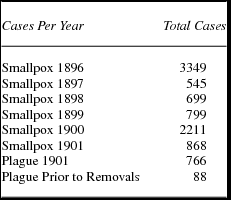
While epidemic moments were indeed periods in which segregationists attempted to co-opt health concerns with racial animus, not all outbreaks engendered the same response. Smallpox is a key example. Calls for segregation had been voiced as early as 1882, and despite racial animus in response to the threat of smallpox, segregation never materialized in response. Table 1 further demonstrates that the scale of the smallpox outbreak both in 1900 and 1901 was far greater than that of plague and had been regularly generating many hundreds of cases per year. Instead, as noted previously, smallpox was treated with more traditional forms of quarantine.
Number of cases from smallpox and plague in Cape Town: 1896–1901

Note: All smallpox data from Mitchell Reference Mitchell1922. All bubonic plague data from van Heyningen Reference van Heyningen1989 and Echenberg Reference Echenberg2002.
A possible explanation for why plague prompted such a dissimilar response to smallpox is one of state capacity. Prior to the outbreak of smallpox in 1882, the Cape sanitary and health authorities had little power with which to disperse funds to support health responses, or centralize activities, this only explains why this particular outbreak did not result in segregation.Footnote 4 After the outbreak of 1882 slowed, the Cape government ratified the Public Health Act of 1883 and established a permanent position of sanitary health officer and required by law that all persons receive smallpox inoculations. The Public Health Act of 1883 was amended in 1897 to provide significantly more powers to colonial health authorities during epidemic events, guaranteeing essentially unlimited government funds to enact reforms and protect the city. The Public Health Act of 1897 No. 15 was ultimately enforced in 1901 to provide colonial medical officers the authority to enact a racial quarantine of Cape Town. However, after 1883, and most importantly in 1901, the legal conditions to enact segregation were the same for both plague and smallpox. During this time smallpox remained a serious threat to the Cape population yet was not met with the responses mobilized to prevent the spread of plague in 1901.
From 1897 to 1901, Cape Town reported up to 2,000 cases of smallpox per year. In 1900, there were 2,200 cases alone almost equaling case totals from the 1882 outbreak. Most of Cape Town's public health legislation was created to prevent the spread of smallpox, and the disease was, prior to 1901, negatively associated with the cities non-European population. Despite increasing infection rates, a legacy of racial stigma toward smallpox, and the state capacity to enact sweeping reforms to combat the spread of the disease, racial quarantine measures were never pursued in the case of smallpox.
Yet another possible explanation would point to differences in medical knowledge about the two diseases. Existing medical knowledge drawn from the time also fails to explain why plague would be responded to with these particular forms of racial governance as opposed to smallpox. Doctors of the period perceived smallpox to be much more interpersonally contagious as opposed to bubonic plague, for which rats were considered the primary vector (Cape Peninsula Advisory Board 1901). A memorandum sent to house owners at the outbreak of plague in Cape Town suggests that personal interaction was less likely to spread plague than smallpox.
Plague is not a highly infectious disease in the sense that small-pox, scarlet fever and spotted typhus are. There is no infection in the air of a clean and well-lighted room in which a Plague patient is lying, nor is there the slightest danger to the persons who nurse or move the patient, as long as they are careful to wash and disinfect their hands, and to disinfect the discharges of the patient and the cups and spoons and other utensils. (ibid.: 15)
This position is derived from a medical paper written a year prior to the outbreak by Dr. William Simpson, the man who would become the consulting medical officer to the Cape on plague.
Plague is not a highly infectious disease in the sense that small-pox, scarlet fever and spotted typhus are and the measures which have proved effective against the latter have proved a signal failure in the case of Plague. Why? Because neither small-pox, scarlet fever, nor typhus are diseases of house vermin: Plague on the other hand is, and therefore unless we can eliminate this element in the sanitary problem, all other efforts are bound to be futile. (Simpson Reference Simpson1900: 12)
These statements would suggest a stronger argument for the quarantining of smallpox patients rather than those infected with plague, as interpersonal contagion would generally mandate a greater need to isolate infected persons capable of spreading the disease through their own agency. The Plague Advisory Council was aware that the greater threat of plague spread stemmed from both surfaces and rodents, yet the focus of interventions came to center on the removal of black Africans and the prevention of their unsurveilled movement around the city and the concealment of cases.
In short, the aforementioned local factors alone cannot explain why, given its veracity and its many years of epidemic spread, smallpox did not provoke similar outcomes to plague even after colonial health officials had the backing of the Public Health Act to invoke major sanitary changes. While state capacity, racial ideologies, and medical knowledge had a significant role to play in the forced removals, these explanations, neither alone nor in combination, can account for why racist sentiments galvanized around the outbreak of plague in this way and not in response to smallpox prior to the arrival of plague.
The 1901 Plague Outbreak: The Arrival of a Global Threat
My alternative argument instead points to factors external to Cape Town contributing to the race-based response to plague. While both plague and smallpox posed very similar epidemiological threats to the city in 1901, plague reflected a very different concern to the Cape Colony than smallpox. Where smallpox presented a particular local threat to public health, the threat of an epidemic of plague in Cape Town was a concern not only to the Cape Colony but also to the British imperial state and empire more broadly. Plague was recognized as a threat not only to Southern Hemispheric colonies but also by extension to imperial interests in their totality. By the time plague arrived in Cape Town in 1901, it had already swept through Bombay and other parts of India as well as Hong Kong. This had crippling effects, not only upon the populations affected but also threatened to destabilize global maritime trade as the concern of plague spread from the Southern Hemisphere to Europe grew.
In the following section, I will show that the turn toward racially specific segregation in response to plague in Cape Town was a response not only to local and long-held racial anxieties amongst colonial powers in the city but also to pressures from (1) the British Empire to eliminate plague or face economic isolation and (2) appointed medical experts that viewed racial separation in colonial spaces as central to the medical health and long-term success of colonial projects. After discussing these aspects, I will show how these concerns calibrated with the fears amongst the white European populace about the threat of racial mixing to the long-term success of the colony.
Imperial Controls and the Threat of Colonial Isolation
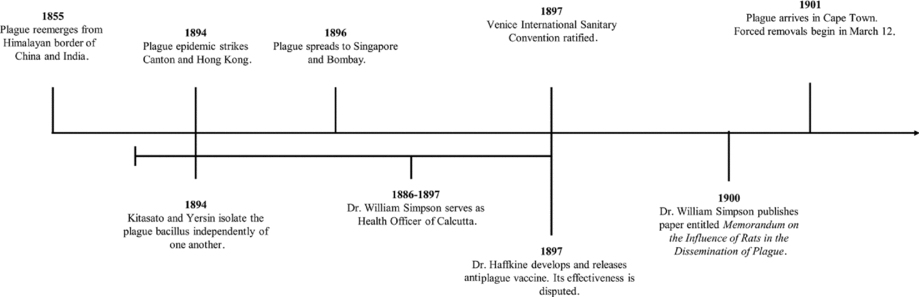
Prior to the emergence of bubonic plague, the Cape Colony was subject to regulations that compelled the colony to respond to plague with quarantine. Such regulations did not exist for smallpox. Significantly before the arrival of the disease, the Cape Colony agreed to a globally binding convention that legislated the responses required in the event of plague outbreak regardless of the severity of that outbreak: The Venice International Sanitary Convention of 1897. This convention ultimately externally dictated a large portion of the responses to bubonic plague.
This international convention regulating the responses to plague was borne out of Europe's anxieties that the disease was imminently capable of traversing the established, yet permeable boundaries of the imperial metropole from the colonial peripheries of their empires. While previous International Sanitary Conventions attempted to coordinate responses to diseases such as cholera and yellow fever (Ersoy et al. Reference Ersoy, Gungor and Akpinar2011; Harrison Reference Harrison2013; Howard-Jones Reference Howard-Jones1975; Huber Reference Huber2006), the actions taken against plague mark one of the firstFootnote 5 coordinated, international disease prevention projects aimed at targeting a single disease that was rapidly implemented with little derision. It was also the most successful to date at preventing disease spread to Europe (Echenberg Reference Echenberg2002).
Timeline of the Third Bubonic Plague Pandemic Prior to Cape Town Epidemic. All dates and data from (Echenberg 2002, 2007; Gregory and Simpson 1901; Mayor et al. 1897; Simpson 1900).

Since 1851, medical and diplomatic representatives from all the major European nations and empires, the Persian and Ottoman empires and the United States met regularly to establish protocols and regulations related to the threat of epidemic disease to Europe.Footnote 6 The Tenth International Sanitary Conference was held in Venice in 1897. Prompted by the devastating effects of the plague outbreak in Bombay that accounted for roughly 15 percent of all of India's deaths that year (Echenberg Reference Echenberg2007: 50) and the risk of plague to Europe from India traveling through the Persian Gulf and Red Sea (ibid.: 79), it was the first conference to focus solely on a single disease—plague. Prior to the Venice Conference there was no formal consensus on how plague was transmitted (Ridgeway Reference Ridgeway1897a).
A greater understanding of the pathology of bubonic plague shifted the focus in Europe from containment after infection to the prevention of transference of the disease to European locales. The convention sought to achieve this through rigorous medical inspections of persons and vessels incoming from plague ports and the isolation and quarantine of those infected if the disease was found to be present (Echenberg Reference Echenberg2002; Ersoy et al. Reference Ersoy, Gungor and Akpinar2011; Howard-Jones Reference Howard-Jones1975; Mayor et al. Reference Mayor1897). Since the medieval era, European quarantine had proven to be a very costly and economically limiting practice. Business and trade in quarantine areas were shuttered during the outbreak and supplies within towns these zones would run scarce. In this period of global trade, the threat of closing down a major European port had all the more potential to cripple economic flows (Huber Reference Huber2006; Tognotti Reference Tognotti2013).
The system of surveillance imposed through the Venice Convention provided a way of exerting constant economic and medical pressure on suspect populations on an individual level without the need for disease to be present amongst them and without exerting direct power at the colonial level. To prevent plague outbreak in Europe, a global monitoring project of non-European bodies and regions had to occur. This contention was backed by bureaucratic regulatory practices of exclusion that prevented access into Europe from infected ports without strict scrutiny and in-depth examination (Mayor et al. Reference Mayor1897).
The first section of the Venice Convention of 1897 bound all signatory countries to alerting one another in the event of plague outbreak within their borders (ibid.: 9, 38). Upon the confirmation of plague within the boundaries of the nation, the convention required all signatories to commit to a prophylactic course of public health requiring the formation of a sanitation force to inspect infected sites and conduct medical examinations; the quarantine and isolation of all infected persons; and the disinfection of all goods, foodstuffs, and clothing susceptible to plague (ibid.: 38–44). The enforcement of these practices was to be carried out under the auspices of the local sanitary authority. Further, all ships bound from plague-afflicted ports were required to uphold strict standards of sanitation, disinfection, and quarantine both on board, during the voyage and in port (Mayor et al. Reference Mayor1897).
The quarantining of vessels and goods traveling across borders presented a commercial threat to many imperial interests and drove demand for standardized practices within the British Empire. On May 24, 1897, the British government sent out a circular dispatch to the governing bodies of each of its self-governing coloniesFootnote 7 detailing the proceedings of the conference and requesting that they observe the convention (Ridgeway Reference Ridgeway1897b). Correspondence between Britain and its colonies demonstrate the economic and political threat posed by the spread of plague. Plague within colonial zones represented not only a medical peril, but also the threat of isolation from both Britain and the empire more broadly. Most colonies accepted the terms of the convention. While the Cape Colony became party to the Venice Convention on July 26, 1897, certain colonial states like Hong Kong and parts of Australia rejected the regulations based on their structural inabilities to maintain the necessary facilities for quarantine; others refused them because they were too lax. Ceylon's colonial government saw the potential emergence of plague in their one port of Colombo and the economic consequences of having all their exports delayed, quarantined, and possibly destroyed, as catastrophic to the fate of the colonial project.
If the plague broke out at Colombo, most vessels would doubtless cease to call there, and there would be no means, except at excessively high freight of exporting tea and other produce. This would mean disaster if not ruin. . . . Before the Venice Convention there was no general agreement even among experts regarding the origin of the disease, the manner by which it could be transmitted and the period of incubation. Each nation judged for itself and as trade with Europe was far more important to this colony than trade with Western India, it was decided to sacrifice the latter in order to ensure the former. (Ridgeway Reference Ridgeway1897a: 2–3)
To maintain trade with Europe, the colonial government of Ceylon's restrictions on India prior to 1897 were more stringent than those outlined in the convention largely due to a decision to isolate itself from India rather than risk a local epidemic. As the correspondence between Ceylon's government and Britain reflects, the economic penalties of such ostracization were most severe. News of plague outbreaks transmitted through telegraph took a matter of days to reach all ports in Europe and the long quarantine or destruction of goods meant heavy losses to colonial corporations and the colonies. Infected port cities would often wait until the last possible moment, once all other causes had been exhausted to report the outbreak.
Most other British colonies followed the provisions of the Venice Convention after its approval generally consisting of a standard set of quarantine policies commensurate with the sanitation of infected materials and sites as well as announcing the presence of plague to the other parties to the convention.
Disease and Colonial Dominance: Dr. William John Ritchie Simpson and the Cape Town Epidemic
The threat of plague to imperial interests forced the British Empire to carefully monitor plague outbreaks within its domains and mandated responses within colonies to be reported back to London (Great Britain Parliament House of Commons 1902; Gregory and Simpson 1901; Nathan Reference Nathan1898; Simpson Reference Simpson1903). The efficacy of responses were judged not only by the state of health within distant colonies but by the methods employed to fight them by governmental leaders in Britain (Great Britain Parliament House of Commons 1902; Nathan Reference Nathan1898).
In sites of plague outbreak within the British Empire, medical consultants with previous experience tackling the plague were often called upon to develop policies (Boyce Reference Boyce1901). The prestige of such a position, derived from competition amongst other elite doctors and researchers from around the world, made their opinions very powerful in setting policy (Haynes Reference Haynes2001; Packard Reference Packard2011). Professor William Simpson who was the primary medical supervising consultant on plague in Cape Town was previously the colonial health officer in Calcutta as well as a lecturer and cofounder of the London School of Tropical Medicine. In 1900, Dr. Simpson published a paper titled Memorandum on the Influence of Rats in the Dissemination of Plague (1900) which was the first to link rats to the spread of plague in scientific terms.
Appointed by the colonial secretary as the leader of the plague response in Cape Town in conjunction with Dr. Gregory, the Chief Medical Officer, he largely had carte blanche to direct Cape funds to their policy directives as a result of the public health laws in place in the city (Gregory and Simpson Reference Gregory and Richie Simpson1901). The choice of Dr. Simpson as the primary medical consultant to the Cape government and who was given overwhelming responsibility to enact responses (Swanson Reference Swanson1977; van Heyningen Reference van Heyningen1989) turned out to be central to the establishment of racial quarantine in Cape Town. Simpson's own experiences in other British dominions as well as his own perspectives on the role of race in preventing disease spread aligned symmetrically with the racial anxieties of both the Plague Advisory Council and much of the European population of Cape Town.
Simpson's approach at forced removals in Cape Town was not his first foray into large-scale evacuations and the racialized approach to public health and hygiene taken in the city was not to be his last. In almost every previous and future placement, regardless of the disease present at the time, Simpson advocated for the separation of the white European population from the local one whenever it could be practicably implemented as strategy to prevent disease spread affecting colonial interests. Simpson was an aggressive advocate for the segregation of tropical colonial cities, both in the interest of malaria prevention and the ever-present threat caused by what he saw as the insanitary habits and environments of the local people.
Prior to his posting in Cape Town, Simpson was the chief medical officer of Calcutta where he unsuccessfully conducted an evacuation of a plague-afflicted area (Great Britain Parliament House of Commons 1902: 334). Reporting on the plague outbreak in Calcutta found that infected persons that were removed from their homes “merely transferred themselves to other houses” (ibid.) both spreading the disease and making the widespread evacuations ineffective in the eyes of the British government. The size of Calcutta's population also rendered the wholesale removal of people from a certain area almost impossible. In Cape Town, however, the scale was far smaller.
After leaving the Cape, Simpson was stationed in Hong Kong to consult upon the continued epidemic of plague in the city. Here he advised for the construction of segregated hospitals to accommodate patients.
Outside the Sanitary Department and in the domain of hospital which is ably and admirably controlled by the Principal improvement Medical Officer of the Colony, is the Government Infectious Hospital, to which the plague patients are sent for treatment. This hospital was not originally built for the purpose for which it is now used and is consequently deficient, in many respects, in the accommodation necessary for such institutions. . . . It is necessary in a well-arranged infectious hospital that separate buildings be provided for each of these diseases, both for Europeans and Chinese. (Simpson Reference Simpson1903: 113)
Soon after his appointment in Hong Kong, Simpson returned to Africa to consult in both West and Central Africa on health, sanitation, and urban planning in the tropics. It was at this time that he wrote several books on the topic of health in the region. Twice more, he advocated strongly for the segregation of colonial urban spaces.
There are certain important points in connection with dwelling houses in the tropics which should be borne in mind when either leasing or building a house. First, the houses should not be surrounded by nor close to native huts. Native children are seldom not infected with malaria, and hence living in a dwelling house in this position increases the risk of infection from that disease. For this reason a dwelling house among native huts is an unhealthy house, apart from the fact that it will also always be in the midst of other insanitary conditions. (Simpson Reference Simpson1905: 32)
Secondly, the segregation of the residential quarters of the Europeans away from the native town. The business quarters, if in the neighbourhood of the natives, should only be occupied during the day. (Simpson Reference Simpson1908: 371)
In this same work, Simpson advocates for strict racial controls akin to the pass laws that were later implemented both in Cape Town and throughout South Africa and were previously extant during the Cape's period of enslavement.
For Europe and other countries advanced in sanitary organization, these regulations secure a very considerable degree of protection, but for tropical countries with their different conditions, and often with no proper sanitary organization, certain modifications are desirable in order to prevent the importation of plague by land or sea. These are, that native passengers from an infected point should at the time of embarkation and inspection by the medical officer of the port produce a certificate of having been inoculated at least a week previously; and that natives from an infected area should not be admitted into healthy areas without passports indicating that they have been inoculated. (ibid.: 359)
Simpson's justifications for segregation in response to disease stemmed both from an argument about cultural incommensurability as well as biological arguments for why European bodies were at heightened risk from local diseases.
[I]t has to be recognized that the standards and mode of life of the Asiatic do not ordinarily consort with the European, whilst the customs of Europeans are at times not acceptable to the Asiatics, and that those of the African unfamiliar with and not adapted to the new conditions of town life will not blend with either. Also that the diseases to which these different races are respectively liable are readily transferable to the European and vice versa, a result especially liable to occur when their dwellings are near each other. In the interests of each community and of the healthiness of the locality and country, it is absolutely essential that in every town and trade centre the town planning should provide well defined and separate quarters or wards for Europeans, Asiatics and Africans, as well as those divisions which are necessary in a town of one nationality and race, and that there should be a neutral belt of open unoccupied country of at least 300 yards in width between the European residences and those of the Asiatic and African. (Simpson 1915 in Curtin Reference Curtin1985: 611)
Simpson's recommendations were ultimately accepted and enacted by the colonial government.
Without the larger global focus upon plague and the significant monitoring imposed by the British Empire to prevent its spread, William Simpson would not have arrived as the senior advisor on plague to Cape Town. The circulation of experts to plague sites around the Southern Hemisphere was driven by the larger concerns of Europe to halt its spread as evidenced in the perspectives and concerns that drove the Venice Convention of 1897.
Racial Mixing and the Threat of Plague in Cape Town
In Cape Town, the particular threat of plague spread to all racial groups within the city reflected a threat to white colonial dominance that was echoed by the economic perils posed by the continued presence of epidemic in Cape Town. This further stoked the long-held concerns among white Europeans over the racial integration of urban space. These desires for racial segregation converged with Dr. Simpson's own understandings of the need for racial segregation to maintain British colonial dominion overseas. It was the melding of the imperial concerns over disease control and the role of racial segregation, perceived as a necessary technology for the management of colonial and colonized populations espoused by Dr. Simpson that aligned with the long-held white Capetonian concerns about how to manage and control an increasing black population in the face of epidemic emergency that produced the first township in the city.
The concerns of plague both as a threat to health but also to colonial stability were evident in the statements made about the disease even before it arrived in Southern Africa. Nearly two years prior to the major outbreak of plague in Cape Town, calls for racial segregation, as well as limitations to immigration in the hopes of preventing major outbreak, were called for both in government and by the general European public. Drawing upon existing language from the Venice Convention, a council made up of representatives not only of the Cape Colony but also from all the territories of South Africa addressed the particular concern of Indian immigration as a potential cause of plague spread at an interstate conference on the disease, held in Pretoria in 1899.
[T]his Conference recommends that steps be immediately taken by all South African Governments to provide for the prohibition or restriction of immigration into this country from countries in which Plague is prevalent; to place under proper, and sufficient restrictions the moving about of persons likely to contribute to the more rapid spread of the infection of Plague within their territories. (van Heyningen Reference van Heyningen1989: 297)
This position, while not accepted by the Cape Colony delegation, demonstrates the concern for plague's arrival from other ports located with the travel of persons rather than trade and goods. Though plague, as stated earlier, was less interpersonally contagious, the threat of immigration particularly of Indians and Asians was ultimately seized upon (ibid.: 300).
The South African League, a British nationalist organization writing in the Cape Times, raised comparisons between the hygienic conditions in Bombay and Cape Town publicly as justification for outright segregation.
In conclusion let me remind your readers that many of the unsanitary conditions of Bombay are in evidence in the crowded, dirty, and ill-ventilated dwellings of our poorer coloured folk, and that plague, once domiciled amongst us, would lead to an appalling mortality and to enormous expense, for no measure short of wholesale segregation, and demolition of many houses in toto, would even shorten the epidemic. (ibid.: 297)
Plague was simultaneously recognized as a threat that can and would spread from far away through ports and with people that could radically destabilize the Cape. In drawing comparisons between the sanitary conditions in Bombay as cause of the outbreak there and urban nonwhite poverty in the Cape, plague and the medical and economic effects it would bring were recognized as the inevitable consequence of racial mixing in the city. This particular recognition of plague being a disease, not only preventable through racial hygiene and separation but also recognized as a foreign threat to domestic economic interests reflects a global comprehension of disease unseen in the language and fears associated with other diseases. This particular fear of disease emerging out of the poorer racially mixed or non-European centers of town were further stoked when the disease landed on South African shores.
The concerns that racial mixing in residential areas might drive and perpetuate the spread of plague was reinforced by claims made by foreign plague experts. Dr. William Simpson, prior to his appointment to the Cape as the primary advisor on the plague outbreak, stated from afar, prior to the epidemic, that:
Next to Bombay, Cape Town is one of the most suitable towns I know of for a plague epidemic. . . . Situated in one of nature's most beautiful spots in the world it has grown up uncared for and neglected so that for its size it has an extraordinary proportion of filthy slums, full of dirty and unsanitary houses. . . . [Occupied by] a heterogeneous population of natives, coloureds, Indians, Malays, and whites of almost every nationality. (Simpson quoted in James Reference James1970: 1432)
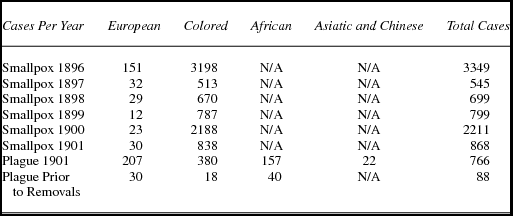
While conservative white-supremacist groups stoked racial animus within the white European population prior to the epidemic in Cape Town, the epidemiological threat of plague only added fuel to the fire. In contrast to smallpox, the racial heterogeneity of plague cases was significant.
As table 2 shows, while smallpox produced a far greater number of cases, the outbreak was largely confined to non-European populations. However, plague cases were far less isolated. Plague was a disease of great medical concern to the European population and the black African populations were seen as responsible for its spread. Though smallpox at the time remained largely isolated to non-Europeans, plague reflected a disease capable of transcending the boundaries of race that smallpox did not. It was the threat from racial mixing of the disease and the financial perils borne out of the arrival of plague that marked it as separate and triggered concerns that had lingered since the emergence of the colony. Once plague arrived in Cape Town, responses focused very heavily upon the threat of non-European populations, both to white Europeans and as vectors of disease spread.
Number of cases from smallpox and plague in Cape Town: 1896–1901 by race
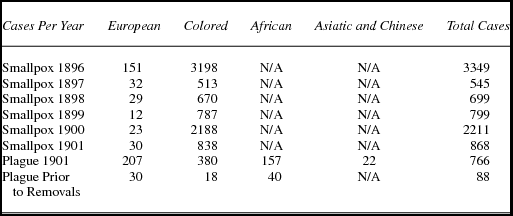
Note: All smallpox data from Mitchell Reference Mitchell1922. All bubonic plague data from van Heyningen Reference van Heyningen1989 and Echenberg Reference Echenberg2002.
The first case of plague was discovered in Cape Town on February 2, 1901 at roughly the same time that Dr. John Gregory, the Acting Medical Officer for the colony, was notified of a large incidence of rat mortality at the port (Gregory and Simpson Reference Gregory and Richie Simpson1901). Clippings from public health reports from that week show that by February 9, London, Berlin, and Washington, D.C. were notified of the outbreak and likely put up restrictions in keeping with the Venice Convention (U.S. Department of Health 1902).Footnote 8 From this point, the implementation of the Venice Convention as well as more recent methods to stamp out plague went into swift effect. On February 14, the Cape Peninsula Plague Advisory Council met for the first time.
The emergence of plague triggered preexisting fears of black and colored subterfuge and mendacity, which provided significant justification for the forced removals that were to take place. In the minutes of the Plague Advisory Council there were numerous references to the threat of free-moving black Africans and non-Europeans:
Dr. GREGORY informed the Board that the death at Sir Lowry's pass of a Kafir who recently reached there with a few others, had been reported: that the District Surgeon had held a post-mortem and diagnosed Plague as the cause of death; and as there were traces of coal dust on the corpse it was probable that the kafirs had escaped from the Docks, especially as they gave evasive answers as to where they had come from . . . and he (Dr. Gregory) remarked that these instances supported his view that the Kafirs were concealing cases, and emphasized the necessity for instituting a daily surprise visitation of all Kafir dwelling-places in each municipality. (Meeting Minutes of the Plague Advisory Council 20 February 1901 [Cape Peninsula Advisory Board 1901: 22])
These statements made by the acting colonial medical officer for the Cape Colony were uttered in the meeting prior to the ultimate decision to compel the Cape government to remove the black population. The medical knowledge on rats became the justification for why existing smallpox regulations were unfit to prevent the further spread of plague. In the same meeting of February 20 Dr. Simpson remarked that:
Plague was primarily a rat disease, but rats could infect human beings, who could then in turn affect other persons and also rats. Thus the measures, which were sufficient for coping with a smallpox outbreak, were not comprehensive enough for an outbreak of Plague. . . . Rats were not great travellers, but of course if infected animals were conveyed with goods by ship or train the disease might be spread far and wide through their agency. (ibid.: 23)
By the meeting of February 27, it was further agreed by the council that the slum areas populated primarily by the black population was too sodden with both rats and plague-infected homes and materials to remain, and they were to be razed (ibid.: 29). The melding of the three concerns over rats, race, and the diseases ability to travel, found in the minutes of the Plague Advisory Council guided the actions of the Cape government. Ultimately, the logic surrounding the threat of rats was mirrored in the justifications for racial quarantine.
He (Dr. Gregory) was of the opinion however, that fresh cases were bound to occur, especially as in one house, with forty Kafir inmates, from which patients had been removed, most of the remaining residents had scattered before they could be collected and isolated. He also represented that a scare had arisen among the Kafirs in the town and that numbers wished to go back to their Districts, but that every effort was being made to dissuade them and to gain their confidence and that the Railway Authorities and Shipping Companies were cooperating by refusing conveyance. In conclusion, he reported that the Uitvlugt camp was well staffed and in good working order, and was capable of a substantial enlargement if required. (Meeting Minutes of the Plague Advisory Council 14 February 1901 [ibid.: 22])
Similar concerns about non-European populations as the agents of plague spread were raised, not only by members of the Advisory Council, but also by corporate interests in further reaches of the Cape Colony such as the town of Paarl.
The CHAIRMAN read a letter from the General Manager of Railways, enclosing a proposal from the Traffic Manager, Paarl that aboriginal natives should not be allowed to travel by rail from the Cape Peninsula. (Meeting Minutes of the Plague Advisory Council 18 February 1901 [ibid.])
In the immediate period prior to and during the forced removals, the concerns not only over racial mixing but also the unsurveilled travel of black Africans became the primary concern of the Cape government and health actors alike. These concerns formed the focal point for the largest and most drastic disease response in the city's history. For plague, the Cape government imported outside medical support in the form of Dr. Simpson who commanded much of the city's response and enacted a civic transformation that deprived many of the Cape's residence of rights and movements previously recognized and tolerated.
The continued presence of plague in Cape Town presented a clear and present threat to the greater Cape economy. So long as plague was present, all vessels and shipments leaving from Cape Town would continue to be subject to the scrutiny, quarantine, and controls laid down by the Venice Convention. This would have the effect of delaying shipments or losing them to sanitary destruction all together. As the Plague Advisory Council deliberated, it became very clear that to them, the unsurveilled travel of black Africans was a foremost concern in shaping plague-prevention policies. So significant was the concern for racial mixing that the desires for segregation in the aftermath of the epidemic reflected a regret that such separation was not enacted within the European populations as well as without. Simpson, in justifying his perspective on the dangers of racial mixing, argues in his summary of the plague responses in the Cape after the epidemic that:
There can be little doubt that, if it had been possible for a similar measure on a more extensive scale to have been undertaken with regard to some of the most overcrowded, most insanitary and most infected quarters inhabited by Malays and the poorer class of Europeans and coloured people, the disease could have been as effectually stamped out among these as it has among the natives. These Europeans are seldom of British origin, but are foreigners from every part of the Continent, consisting largely of Portuguese, Italians, Levantine and Polish Jews. They are extremely dirty in their habits, live under the most insanitary conditions and herd together with the poorer coloured people, who are equally dirty and insanitary. (Gregory and Simpson Reference Gregory and Richie Simpson1901: 9)
Conclusion: Past as Epilogue
Prior to the outbreak of plague disease, the city did not have a state-mandated urban racial separation (Swanson Reference Swanson1977; Trapido Reference Trapido1964), and though racial inequalities and de facto segregation did exist (Bickford-Smith Reference Bickford-Smith1995; Deacon Reference Deacon1996), Cape Town was largely an outlier amongst other African colonial cities. The forced removals and establishment of Ndabeni was not the creation of a racially determinist order but rather the reinscription of it. Prior to 1834, the Cape Colony had maintained a labor system organized significantly around slave labor (Baderoon Reference Baderoon2004; Watson Reference Watson2012; Worden Reference Worden1985). The conditions of slavery established a racialized system of economic and social engagement. Slavery at the Cape was marked by a system of “constant surveillance” (Baderoon Reference Baderoon2014: 11; Mason Reference Mason2003: 110) as well as anxiety regarding the potential actions of unsupervised and unattended enslaved peoples. The Cape Slave Codes, first established in 1754, required all those enslaved to carry passes to enter town. Such acts are reminiscent of later regulations as well as some other more literal forms of discipline that provided a level of visibility to the enslaved. After dark, all enslaved persons were required to carry torches to prevent them from having “conspiratorial conversations in darkened corners” (Baderoon Reference Baderoon2014: 10–12).
When slavery was fully abolished in 1838, anxieties over the free movement of former enslaved persons grew within the landholding community. By the 1840s, academic literature and local Cape newspapers began reporting on the threats of degeneration that could emerge from new European immigrants living in close proximity to the colored population in Cape Town: “[They will] become mixed up with, and run the risk of their children imbibing the filthy, immoral, and degraded habits of the much to be pitied coloured population” (Zuid Afrikaan March 27, 1840 in Watson Reference Watson2012: 246).
Prior to the emergence of plague and spurred largely by the South African war raging in other parts of the country, large numbers of predominately black refugees had entered Cape Town seeking employment and housing. According to reports of the time, 1,500 migrants were living in barracks along the docks and 8,000 lived in overcrowded and cramped conditions elsewhere (Bickford-Smith et al. Reference Bickford-Smith, van Heyningen and Worden1999: 19). This rise of black migrants, seeking refuge from war and uncertainty elsewhere, were interpreted by colonial authorities as vectors of contagion and a threat to empire more broadly. Comments such as those made in the Zuid Afrikaan mirrored those made both by members of the public local government and, notably, foreign medical elites such as Dr. Simpson more than half a century later.
Cape Town's formation primarily as a port, relying from an early period on slave labor that prompted Europeans, Asians, and Africans to live near one another differed greatly from that of other contemporary African colonial cities of the time. Most colonial cities in West Africa were initially designed to enforce segregation so as to prevent malarial spread, placing European settlements at higher altitudes than those of the local population (Curtin Reference Curtin1985). The threat of plague to societal order and colonial stability made present not solely through disease but the global responses to that disease made a reinscription of governmentally controlled and monitored racial order a justifiable solution on the part of the Cape Plague Advisory Council to the epidemic of plague. This threat of residential racial mixing to both the public and economic health of Cape Town, as a result of the global scrutiny placed upon infected sites, meant that plague was no longer solely a Capetonian problem but a British imperial one, that in the minds of the medical authorities mandated a racial solution to maintain white control of the colony. The Cape medical authorities were very conscious of how plague had damaged the global esteem of Bombay and hindered its economic output greatly. Cape Town could ill afford such restrictions.
What ultimately made plague so different from smallpox in Cape Town was that it was a disease capable of destabilizing the existing colonial order where smallpox could not. Through copious inoculation and because it was a disease common to Europe, smallpox rarely produced high rates of mortality within the European population of Cape Town (Echenberg Reference Echenberg2007; Mitchell Reference Mitchell1922; van Heyningen Reference van Heyningen1989). In effect it was a disease that maintained, or failed to shake, colonial power. Plague, however, in two strikingly divergent ways, threatened the legitimacy of the colonial elites of the Cape, both in the high European mortality rates as well as through the threat of isolation from a global economy that they relied upon. Plague was, in effect, understood as an anticolonial disease that had the capacity to challenge existing economic, political, and social power relationships where smallpox was not. The threat to the existing social relations of racial mixing was about more than racial anxieties but about the inability to control, monitor, and constrain nonwhite persons in the ways previously available during slavery. The township model provided both a way to limit the spread of disease that was acceptable to international medical regulations and reestablish a racialized system of labor control. The pass laws issued for those within Ndabeni, that allowed for travel out of the zone for work while restrictions were made for all other movements (Cape Peninsula Advisory Board 1901: 57) reflect a reemergence of the control and regulation over nonwhite Europeans that occurred under slavery.
Appendix 1 Signatories to the Venice International Sanitary Convention of 1897

Note: All data from text of original Venice International Sanitary Convention of 1897 (Mayor et al. 1897).