INTRODUCTION
Ceremonial burials of animals for religious purposes in ancient Egypt began early in Egyptian history (ca. 3100 BC), although the development of extensive necropoleis for the interment of animal mummies is more typical of the Late Period (ca. 712–332 BC) continuing through the Ptolemaic and Early Roman periods (ca. 332 BC–AD 250) (Kessler, Reference Kessler, Helack and Westendorf1986, Reference Kessler1989; Flores Reference Flores2003; Ikram, Reference Ikram2005a; Richardin et al., Reference Richardin, Porcier, Ikram, Louarn and Berthet2017). That these embalmed remains served important religious and economic functions is indicated by the large numbers of animals that were preserved in necropoleis throughout Egypt (Kessler and Nur el-Din, Reference Kessler, Nur el-Din and Ikram2005; Ikram, Reference Ikram, Massiera, Mathieu and Rouffet2015; Nicholson et al., Reference Nicholson, Ikram and Mills2015). Some animal mummies were of sacred individuals treated during their lives as the representatives of specific deities on Earth, and some may have been used in complex rituals ensuring the eternal cycle of creation (Kessler, Reference Kessler1989; Ikram, Reference Ikram2005a; von den Driesch et al., Reference von den Driesch, Kessler, Steinmann, Berteaux and Peters2005), but the vast majority served as votive offerings to their associated gods, acting as continuous prayers or gifts to the gods from their donors (Ikram, Reference Ikram2005a, Reference Ikram and Jánosi2005b; Ikram et al., Reference Ikram, Slabbert, Cornelius, du Plessis, Swanepoel and Weber2015).
The Spanish Mission (also known as the Djehuty Project) has been excavating in Theban Tombs (TT) 11, 12, and -399- (Galán, Reference Galán, Goyon and Cardin2007, Reference Galán, Magee, Bourriau and Quirke2010, Reference Galán, Galán, Bryan and Dorman2014a, Reference Galán and Saiz-Jimenez2014b, Reference Galán, Bryan and Dormanin press; http://www.excavacionegipto.com) and their environs, including two unnumbered tombs (one a Ramesside-era tomb belonging to an overseer of weavers), in the necropolis of Dra Abu el-Naga on the west bank of the Nile River near Luxor, Egypt. Some of the work focused on several burial chambers that had been reused during a portion of the Ptolemaic Period (ca. 280–100 BC) by a flourishing regional cult dedicated to the gods Horus (associated with raptors) and Thoth (associated with ibises) as necropoleis for animal mummies (Di Cerbo and Jasnow, Reference Di Cerbo and Jasnowin press; Ikram and Spitzer, Reference Ikram, Spitzer, Daujat, Hadjikoumis, Berthon, Chahoud, Kassianidou and Vignein press). The animals preserved in these tombs are predominantly birds (>99% avians: 32% falcons [Falconidae], 27% ibises [Threskiornithidae]), but also include mammals, reptiles, and fishes (Ikram and Spitzer, Reference Ikram, Spitzer, Daujat, Hadjikoumis, Berthon, Chahoud, Kassianidou and Vignein press). The mammalian remains are mostly from four species of shrews (Eulipotyphla: Soricidae) and two species of murid rodents (Rodentia: Muridae), among which are two species that no longer occur in Egypt, and one species that no longer inhabits this part of the Nile valley. The Ptolemies of ancient Egypt ruled in the midst of a long-term period of regional climatic change and desertification that began ca. 5500–5000 years ago (Butzer, Reference Butzer1976, Reference Butzer, Williams and Faure1980; Bernhardt et al., Reference Bernhardt, Horton and Stanley2012). Identification of the small mammals from this site provides insight regarding environmental conditions in this part of the Nile River valley during this time, and partly documents the extent of subsequent faunal turnover.
In this paper, we identify and quantify the small (mouse- and rat-sized) mammals whose remains were ceremonially interred in the tombs at Dra Abu el-Naga, compare the small mammal fauna from this site with those from other well-studied archaeological excavations, and discuss the environmental implications of the species present.
MATERIALS AND METHODS
Site description
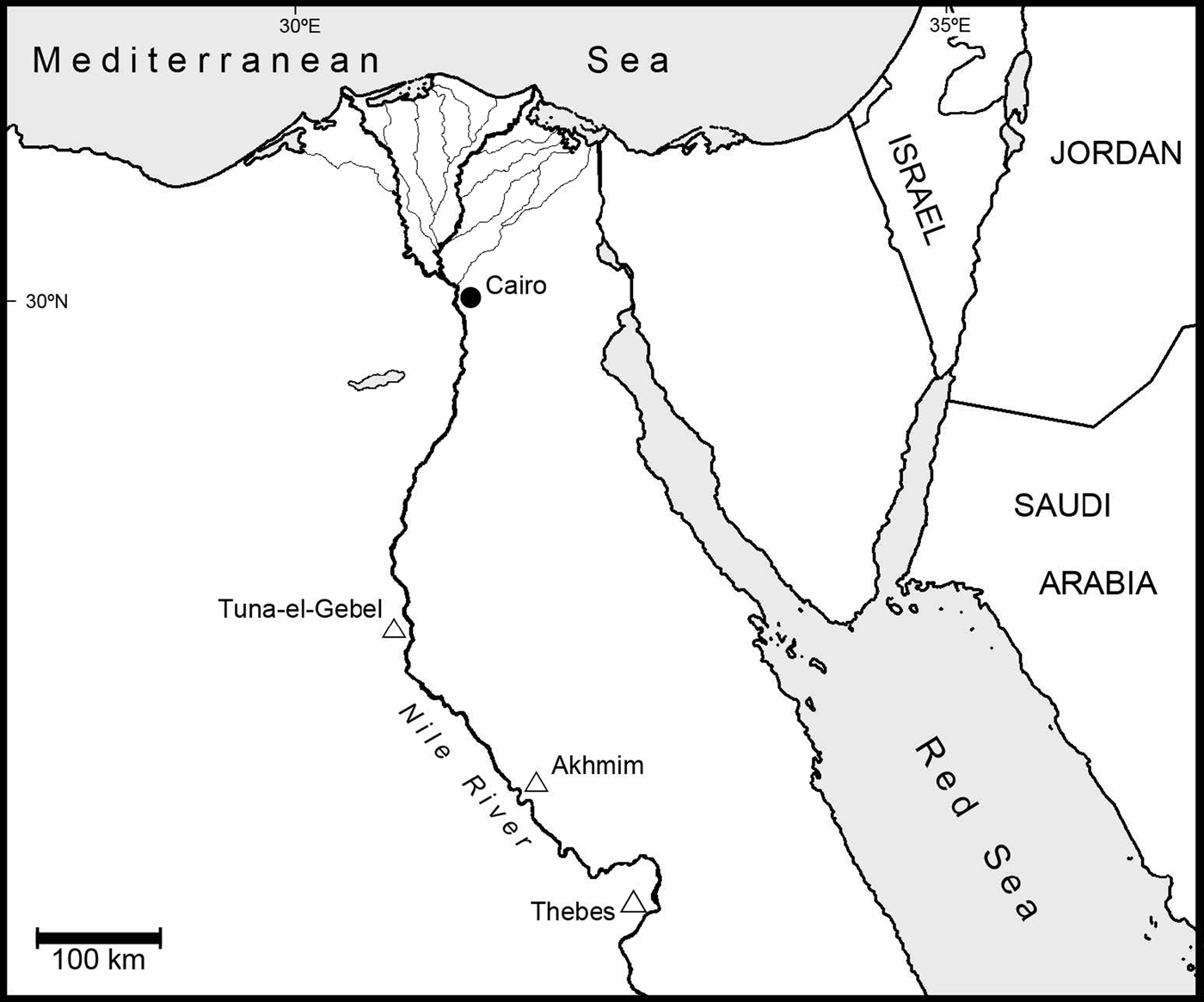
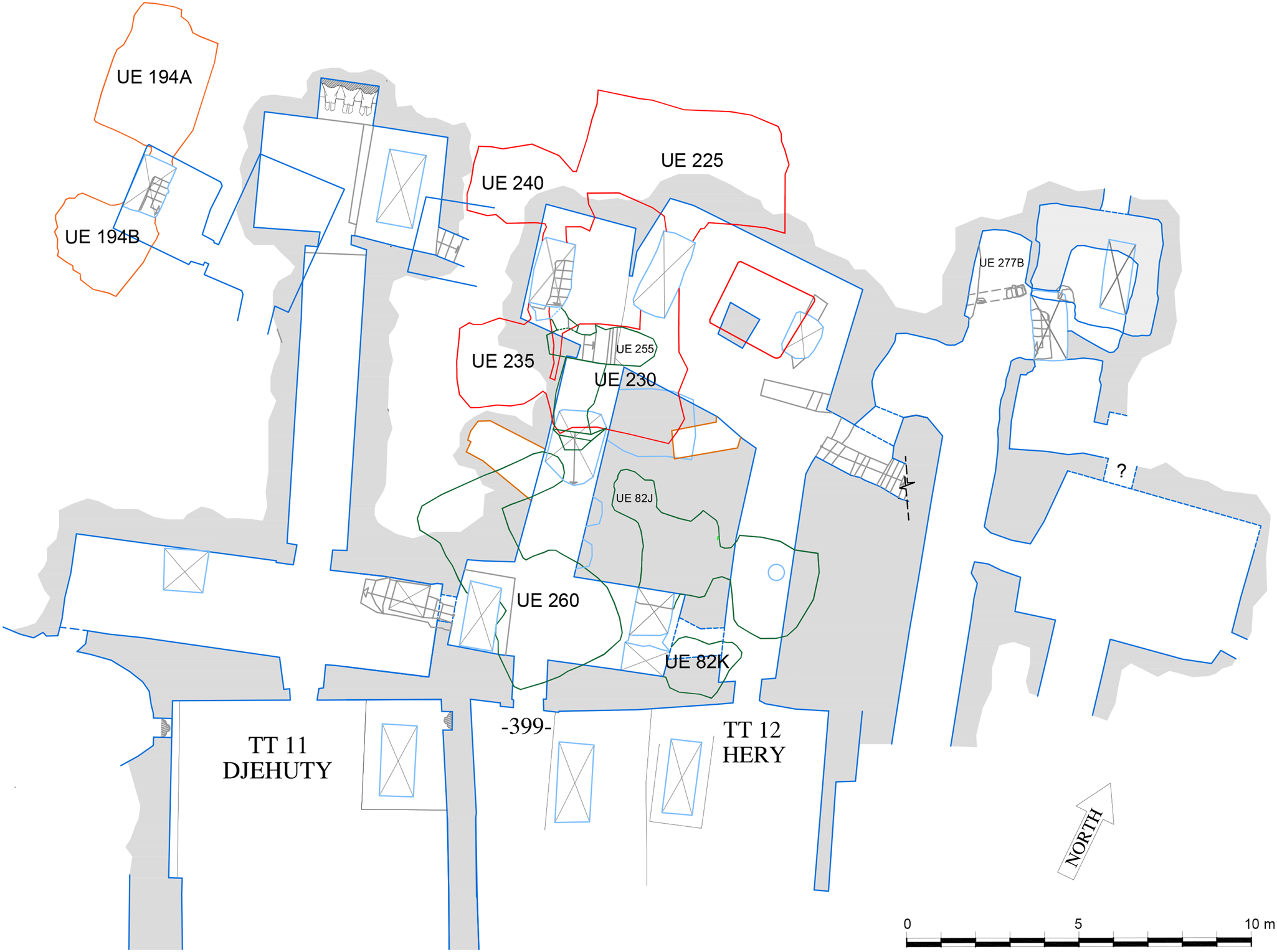
Archaeological excavation and study of mummified faunal remains was carried out as part of the Spanish Mission to the ancient necropolis of Dra Abu el-Naga led by José M. Galán of the Spanish National Research Council (CSIC), Madrid, Spain (Galán, Reference Galán, Goyon and Cardin2007, Reference Galán, Magee, Bourriau and Quirke2010, Reference Galán, Galán, Bryan and Dorman2014a, Reference Galán and Saiz-Jimenez2014b, Reference Galán, Bryan and Dormanin press; http://www.excavacionegipto.com). Investigations of the Spanish Mission center on the rock-cut tomb-chapels of two Eighteenth Dynasty (ca. 1470 BC) court officials, Djehuty (TT11) and Hery (TT12), on the eastern side of a hill arising along the west bank of the Nile River floodplain (Galán, Reference Galán and Saiz-Jimenez2014b). The tombs are near the northern edge of Dra Abu el-Naga, which was associated with the ancient Egyptian city of Thebes, near modern Luxor, Egypt (Fig. 1; ca. 25°44′11″N, 32°37′24″E). Excavation units yielding faunal remains during the 2016–2019 field seasons (UE82K, UE194A, UE230, UE235, UE240, UE255, UE 277, UE331) were associated with burial chambers that had subsequently been reused as necropoleis for votive animal mummies (Fig. 2). Demotic graffiti painted in red ochre on the tomb walls record the repurposing of these tombs to inter animal mummies dedicated to Thoth, the Egyptian god of wisdom, and Horus, a solar god, in the second and probably the third centuries BC (ca. 280–100 BC), during part of the Ptolemaic Period (ca. 332–30 BC) (Di Cerbo and Jasnow, Reference Di Cerbo and Jasnowin press).
Map of northern Egypt showing the locations of ancient sites mentioned in the text (open triangles). Dra Abu el-Naga is associated with Thebes.

Site map showing key excavations units (UEs) of the Spanish Mission to Dra Abu el-Naga near Luxor, Egypt. Chambers outlined in blue and gray are at the elevation of the entrances to TT11 and TT12; those outlined in other colors are below that level. Plan by Juan Ivars, courtesy of the Spanish Mission to Dra Abu el-Naga. (For interpretation of the references to color in this figure legend, the reader is referred to the web version of this article.)

Although birds (ibis and raptors) are mentioned in conjunction with these deities, there are no mentions of shrews or other animals in the graffiti. Also mentioned in nearby graffiti are fires that broke out in some of the burial chambers, possibly caused by a fallen lamp or by spontaneous ignition of flammable resins and other substances used in the mummification process. These fires destroyed mummy wrappings and soft tissues, warping some bones, but resulting in abundant disassociated skeletal remains that could be recovered and examined directly.
Excavation and identification
Each tomb chamber was divided into sections and excavated stratigraphically under the direction of Francisco Bosch-Puche and Salima Ikram. Conditions varied in each tomb chamber, but the upper layers typically contained some partial, fire-blackened animal mummies. In the deeper levels, mummy wrappings were reduced to a powdery reddish ash surrounding highly burnt bones that were often blue in color. Sediments from the excavation units were sieved through screens with 1–5 mm steel mesh to concentrate remains, which were then separated by hand into taxonomic categories.
Small mammal remains were identified, measured, and photographed. Measurements of shrews reported herein were recorded to the nearest 0.1 mm and follow Carraway (Reference Carraway1995) and Hutterer and Kock (Reference Hutterer and Kock2002). These include length of complete upper toothrow, I1 to M3 (I1-M3); height of coronoid process of the dentary (HCP); and distance between the articular and coronoid processes of the dentary (ACP). Measurements from Ptolemaic remains were compared to those of modern specimens housed in the following collections (Supplementary Table 1): Field Museum of Natural History, Chicago, IL, USA (FMNH); Natural History Museum, London, UK (NHMUK); University of Michigan Museum of Zoology, Ann Arbor, MI, USA (UMMZ); National Museum of Natural History, Washington, DC, USA (USNM); and Yale Peabody Museum of Natural History, New Haven, CT, USA (YPM). The minimum number of individuals (MNI) for each taxon was determined by counts of the most abundant element of the skull, which was typically either the left or right dentary. The number of identified remains (NIR) is the total number of remains that could be identified to a particular taxon. Mammalian postcranial remains from this site were reported elsewhere (Woodman et al., Reference Woodman, Wilken and Ikram2019).
RESULTS
Distribution of remains
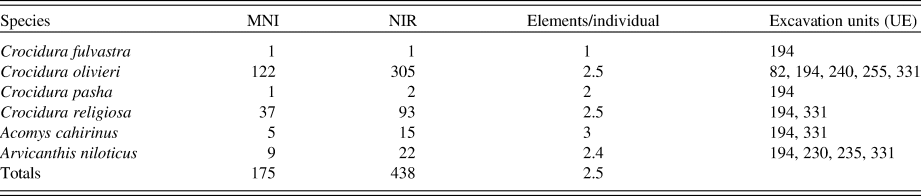
Study of dissociated skull remains of small mammals from the Spanish Mission yielded 438 identifiable elements from a minimum of 175 individuals representing four species of shrews and two species of rodents (Table 1). Several fresh (retaining some soft connective tissue) skeletons of the trident leaf-nosed bat [Chiroptera: Hipposideridae: Asellia tridens (E. Geoffroy Saint-Hilaire, 1813)] also were recovered. Because the remains of A. tridens were clearly of more recent origin than the bulk of the material, they were not considered further. Ikram and Spitzer (Reference Ikram, Spitzer, Daujat, Hadjikoumis, Berthon, Chahoud, Kassianidou and Vignein press) reported isolated remains of pig (Sus scrofa Linnaeus, 1758; NIR = 1), goat (Capra aegagrus hircus Linnaeus, 1758; NIR = 2), indeterminate ovicaprid (NIR = 2), and indeterminate “medium-sized mammal” (NIR = 3) from UE230. That material was not included in our calculations herein.
Abundance and distribution of identified elements among species from Theban Tombs 11, 12, -399-, UE194A, and UE331 in UE277A(?) at Dra Abu el-Naga.a

a Abbreviations: MNI, minimum number of individuals; NIR, number of identified remains.
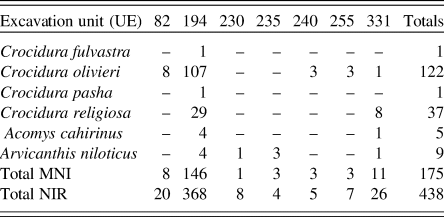
By far the greatest number of small mammal remains and the largest number of individuals (based on MNI) were recovered from tomb chamber UE194A, which is also the only excavation unit from which all six taxa of small mammals were recovered (Table 2). Level UE331 in tomb chamber UE277B contained the next highest numbers of recovered remains (NIR = 28) and individuals (MNI = 11), and it included two species of shrews and two species of rodents. The remaining five excavation units each contained from one to eight individuals of only a single species.
Distribution of identified individuals (based on MNI) and remains among excavation units in Theban Tombs 11, 12, -399-, UE194A, and UE331 in UE277A(?) at Dra Abu el-Naga.a

a Abbreviations: MNI, minimum number of individuals; NIR, number of identified remains.
Identified species
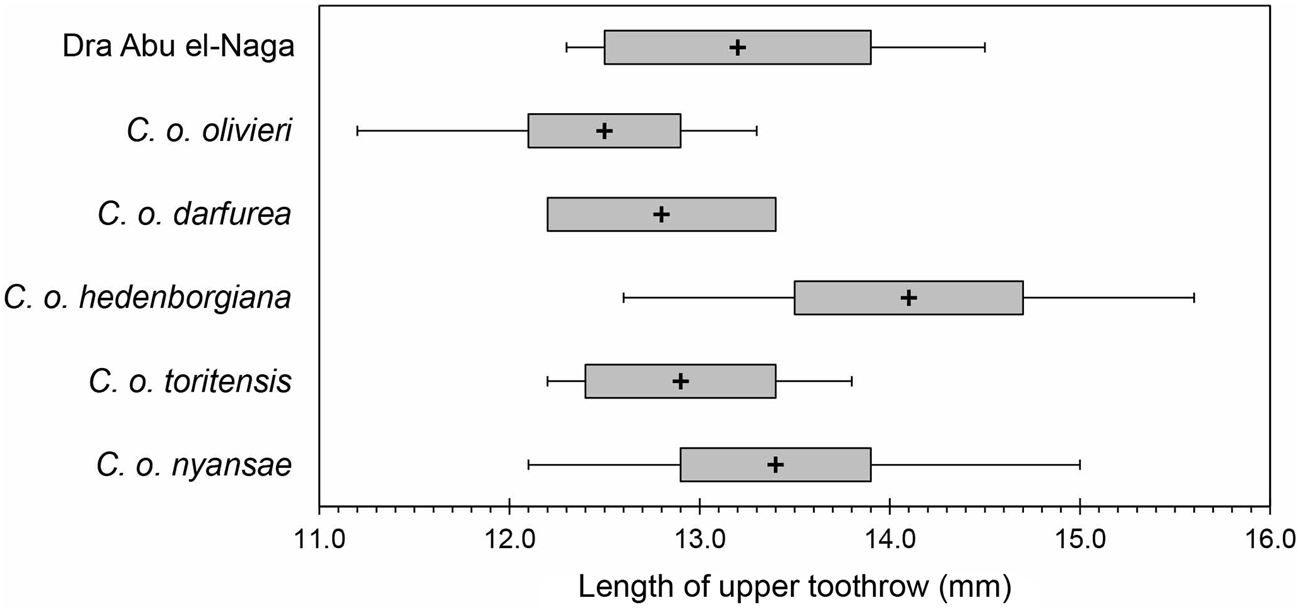
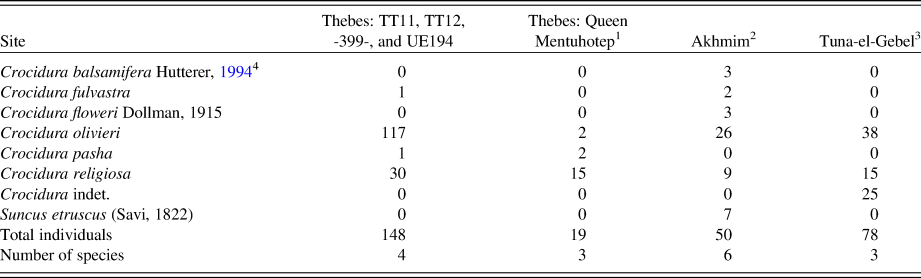
The most abundant small mammal identified from the tombs was the African giant shrew, Crocidura olivieri (Lesson, 1827) (Table 1). Remains of this species were also the most widespread, occurring in five of the seven excavation units (Table 2). Crocidura olivieri is one of the most common and abundant mummified small mammals recovered from ancient Egyptian animal necropoleis (Table 3). In the past, this species was confused taxonomically with Crocidura flavescens (I. Geoffroy Saint-Hilaire, 1827), a much smaller shrew (see Churchfield and Hutterer, Reference Churchfield, Hutterer, Happold and Happold2013). Like C. olivieri from other ancient Egyptian sites, those from the Spanish Mission average larger in size than modern specimens from Egypt (Heim de Balsac and Mein, Reference Heim de Balsac and Mein1971; Fig. 3). Modern C. olivieri is a widespread species complex that occurs in most well-vegetated habitats across Africa, from south of the semidesert zone to northern Namibia and central Mozambique. Habitats range from evergreen forests to grasslands and cultivated fields. In the Nile delta, C. olivieri were observed along the weedy margins of canals, where they nest in moist balls of grass. They also live around human habitations, including in dry wells. Taxonomically typical C. olivieri (sensu stricto) is restricted to an eastern subset of these populations, including a disjunct population (often referred to as the subspecies C. olivieri olivieri) in the northernmost Nile valley and the Fayum in Egypt. It is not currently known to occur in Luxor. In areas currently inhabited by C. olivieri, the species is typically common (de Winton, Reference de Winton, Anderson and de Winton1902; Hoogstraal, Reference Hoogstraal1962; Osborn and Helmy, Reference Osborn and Helmy1980; Churchfield and Hutterer, Reference Churchfield, Hutterer, Happold and Happold2013; Jacquet et al., Reference Jacquet, Denys, Verheyen, Bryja, Hutterer, Kerbis Peterhans and Stanley2015).
Box-and-whisker plot comparing length of the upper toothrow of Ptolemaic Crocidura olivieri from Dra Abu el-Naga (n = 15) with modern samples from northern Egypt (Crocidura olivieri olivieri; n = 88), southern Sudan [Crocidura olivieri hedenborgiana (Sundevall, 1843); n = 40], southwestern Sudan (Crocidura olivieri darfurea Thomas and Hinton, 1923; n = 4), South Sudan (Crocidura olivieri toritensis Setzer, 1956; n = 17), and Kenya (Crocidura olivieri nyansae Neumann, 1900; n = 37). The cross represents the population mean; the gray bar, the SD; the line, the range of measurements.

Assemblages of soricid species (Crocidura and Suncus) from well-studied ancient Egyptian sites.

1 Woodman et al. (Reference Woodman, Koch and Hutterer2017).
2 Hutterer (Reference Hutterer, Merritt, Kirkland and Rose1994).
3 Kessler (Reference Kessler2007).
4 Extinct.
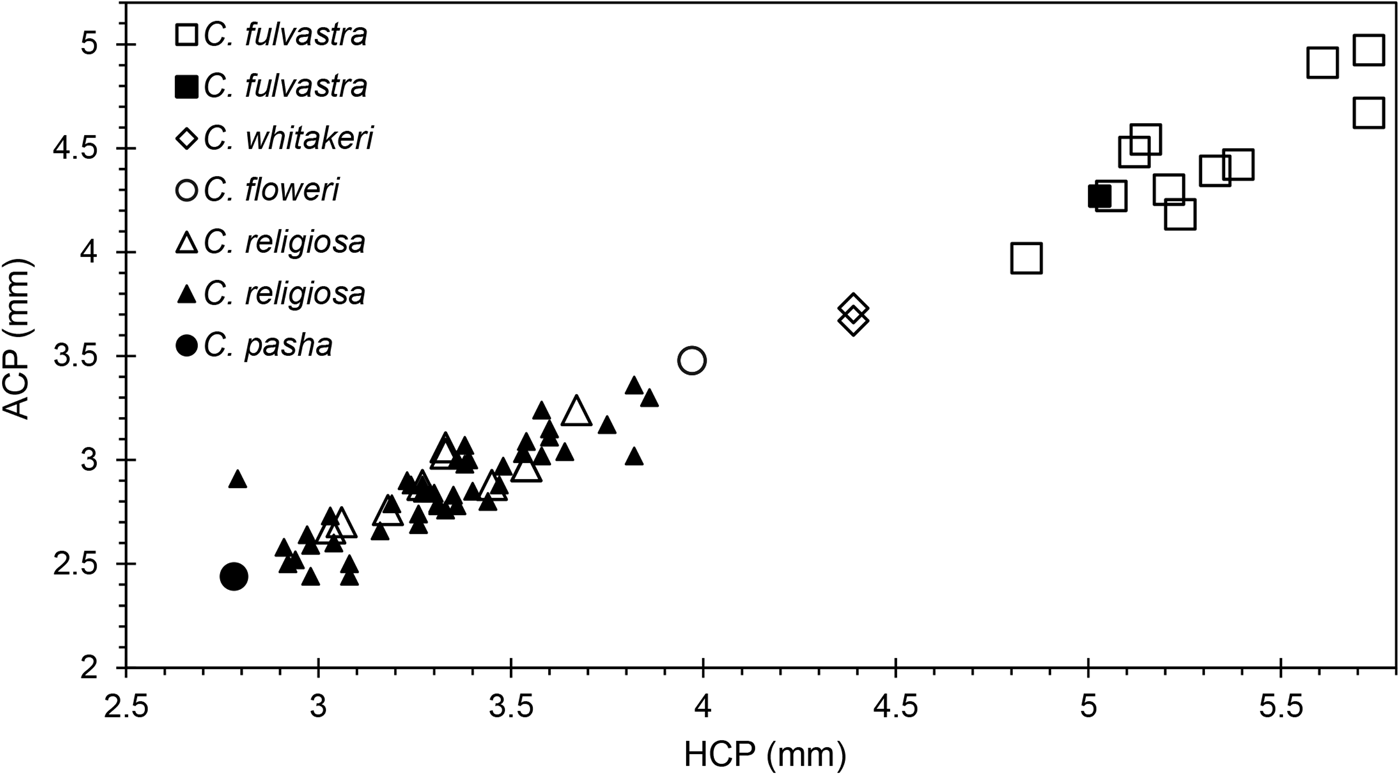
The sacred shrew, Crocidura religiosa (Geoffroy Saint-Hilaire, 1827), was the second most abundant species at the site, although it was recovered only in UE194A and level UE331 in UE277B (Tables 1 and 2). Like C. olivieri, it is also among the most common small mammals mummified by the ancient Egyptians (Fig. 4; Table 3). Before Corbet (Reference Corbet1978), it was often confused taxonomically with Crocidura nana Dobson, 1890 (see also Hutterer, Reference Hutterer, Merritt, Kirkland and Rose1994). The sacred shrew is currently endemic to the northern Nile valley of Egypt, occurring from the delta south to Luxor. It is now the only soricid known to inhabit the Nile valley in the vicinity of Luxor. This is a very small shrew, and it is poorly known. Individuals reportedly have been taken under piles of grasses and cornstalks and under rocks and soil clumps in cultivated fields (Hoogstraal, Reference Hoogstraal1962; Goodman, Reference Goodman1986; Happold, Reference Happold, Happold and Happold2013; Osborn and Helmy, Reference Osborn and Helmy1980).
Plot of height between the articular and coronoid processes (ACP) on height of coronoid process (HCP) from dentaries of modern and Ptolemaic Crocidura. Open symbols represent modern specimens; solid symbols represent Ptolemaic Period individuals from Dra Abu el-Naga.

A single individual of the savannah shrew, Crocidura fulvastra (Sundevall, 1843), was recovered from UE194A (Table 2). This is only the second ancient Egyptian site from which this species has been reported. It was first identified from Akhmim, ca. 150 km NW of Luxor (Heim de Balsac and Mein, Reference Heim de Balsac and Mein1971; Hutterer, Reference Hutterer, Merritt, Kirkland and Rose1994), where it comprised 4% of the recovered shrew fauna (Table 3). This is a large-bodied shrew, although it is smaller than C. olivieri. The modern species has a discontinuous distribution in dry savannah and mesic habitats across central Africa from Mali to southern Sudan and western Ethiopia. It is not currently known to occur in Egypt (Churchfield and Jenkins, Reference Churchfield, Jenkins, Happold and Happold2013a).
The Sahelian tiny shrew, Crocidura pasha Dollman, 1915, is represented at the site by a single individual from UE194A (Table 2). It has been documented from only one other ancient Egyptian site. The species was identified previously among a small collection of mummified animals made by Passalacqua (Reference Passalacqua1826) in the tomb of Queen Mentuhotep at Dra Abu el-Naga (Woodman et al., Reference Woodman, Koch and Hutterer2017). The modern form of this minute shrew is known from a few disjunct populations in semiarid savannah in Mali, Sudan, South Sudan, and Ethiopia. It is not presently known to occur in Egypt (Churchfield and Jenkins, Reference Churchfield, Jenkins, Happold and Happold2013b).
African grass rat, Arvicanthis niloticus (É. Geoffroy Saint-Hilaire, 1803) was the third most common species of small mammal recovered at Dra Abu el-Naga, and it was the second most widely distributed there, occurring in four of the seven excavation units (Tables 1 and 2). This species has been recovered from a number of ancient Egyptian sites with animal burials, including Tuna el-Gebel in the central Nile valley (Kessler, Reference Kessler2007), Quesna in the delta, and Abu Rowash, near the apex of the delta (SI, personal observations), but it is not typically abundant in archaeological contexts (Kessler, Reference Kessler1989, Reference Kessler2007). Modern A. niloticus has a broad distribution in a variety of shrublands, savannahs, and grasslands across central Africa from Senegal to South Sudan and Ethiopia, south to Zambia, and north along the Nile River valley to the delta. The species often lives close to human habitations, in pastures, and in cultivated fields. It is generally considered very common, and it can be a pest species (Cassola, Reference Cassola2016). Arvicanthis niloticus is eaten in parts of Sudan (Fiedler, Reference Fiedler, Davis and Marsh1990), although there is no evidence of it being used for this purpose in ancient Egypt.
A minimum of four individuals of the Egyptian spiny mouse, Acomys cahirinus (É. Geoffroy Saint-Hilaire, 1803) were recovered from UE194A and level UE331 in UE277B (Tables 1 and 2). Remains of this rodent have been recovered from a few archaeological sites in Egypt, but the species is not typically present in any abundance archaeologically (Kessler, Reference Kessler, Helack and Westendorf1986, Reference Kessler1989). Modern populations of Ac. cahirinus are found throughout Egypt, including both the Eastern and Western Deserts. They occur mainly in rocky areas, cliffs, and gravel plains in a broad but discontinuous range across northern Africa, from Morocco to Egypt and south along the Red Sea coast through Djibouti. In Egypt, Ac. cahirinus readily tolerates humans, often living commensally in human habitations, cultivated gardens, and date groves (Osborn and Helmy, Reference Osborn and Helmy1980; Granjon, Reference Granjon2016).
DISCUSSION
Origin of the mammal remains
During the Ptolemaic Period, the rock-cut New Kingdom tombs of Djehuty, Hery, and the unnamed tomb -399-, as well as other funerary monuments nearby, became associated with the local ibis and falcon cult and were reused as sacred repositories for votive mummies. Associated respectively with the gods Thoth and Horus, the ibis and falcon already had a long history as animals sacred to the ancient Egyptians. A sacred animal was thought to contain a part of the “divine essence” or “soul” (ba) of its associated god and was worshipped as such. Only one such sacred animal existed at any time in a given temple. Votive mummies, however, were animals resembling the gods, but not sharing of the divine essence. These were killed (or found dead) and mummified to serve as messengers from people in the physical world to a particular god in the spiritual world (Ikram, Reference Ikram2005a).
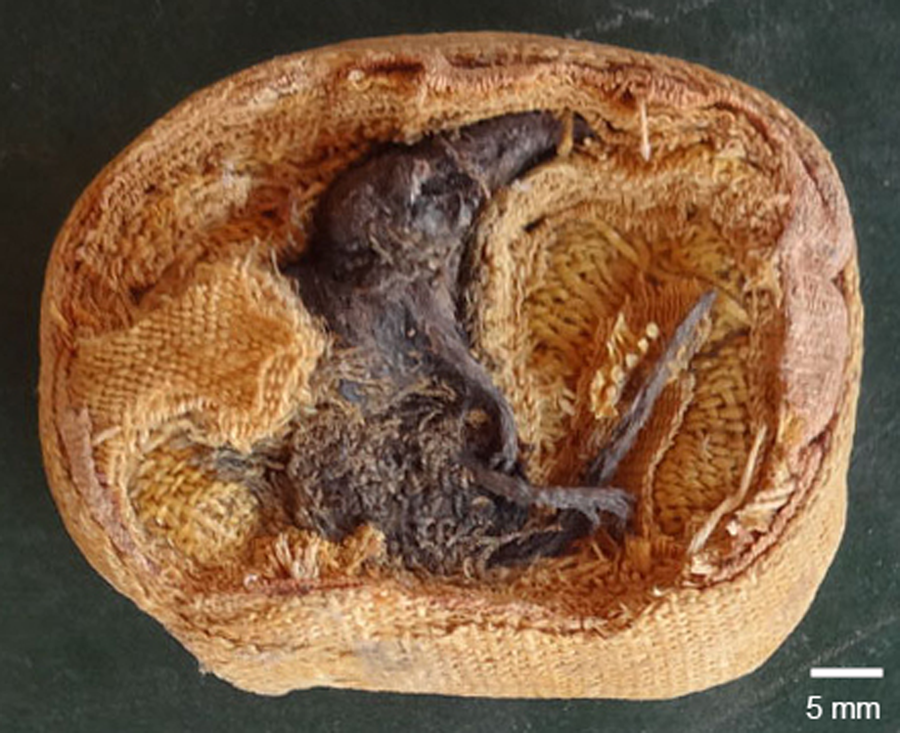
The presence of small mammals in tomb chambers dedicated to mummified birds may at first seem surprising. The recovery, here and elsewhere, of intact mummy bundles containing only embalmed shrews (Fig. 5) demonstrates that these animals were consciously interred in the burial chambers as a consequence of religious ritual and not as part of some raptor's last meal (Kessler, Reference Kessler2007; Charron, Reference Charron2012). Shrews had been incorporated into the religious beliefs of the ancient Egyptians since the time of the New Kingdom (1550–1069 BC), if not earlier (Brunner-Traut Reference Brunner-Traut1965). By the late New Kingdom and continuing through the Ptolemaic Period, they were associated with the falcon-headed god Horus, symbolizing the god's dark (nighttime) aspects in contrast to the light (daytime) aspects represented by falcons and other diurnal raptors (Brunner-Traut, Reference Brunner-Traut1965; Kessler, Reference Kessler1989, Reference Kessler2007; von den Driesch et al., Reference von den Driesch, Kessler, Steinmann, Berteaux and Peters2005; Ikram, Reference Ikram2005a, Reference Ikram and Jánosi2005b; Kessler and Nur el-Din, Reference Kessler, Nur el-Din and Ikram2005; Ikram et al., Reference Ikram, Slabbert, Cornelius, du Plessis, Swanepoel and Weber2015).
(color online) A damaged mummy bundle at Dra Abu el-Naga, exposing the embalmed body of a sacred shrew, Crocidura religiosa.

Seven species of shrews are currently known from a variety of ancient Egyptian archaeological sites (Woodman et al., Reference Woodman, Koch and Hutterer2017). These species include one extinct species and two that no longer occur in Egypt today. Comparison of species from four well-studied necropoleis indicates that the diversity of preserved shrews at a single site ranges from three to six species (Table 3). Crocidura olivieri and C. religiosa are typically the most abundant species, and they are the only species common to all four sites. Variability in environmental conditions and available habitats near the sites probably accounts for some of the variation in species composition and relative numbers of individuals.
A more puzzling presence in the tombs at Dra Abu el-Naga are the rodents, which have no clear association with any ancient Egyptian deities (Germond, Reference Germond and Mellor2001; Ikram, Reference Ikram2005a; Bleiberg et al., Reference Bleiberg, Barbash and Bruno2013). Small numbers of these species occur at other sites containing shrew mummies, such as Tuna el-Gebel, Quesna, and Abu Rowash. Mice and rats were generally viewed as pests in the agriculture-based economy of ancient Egypt (Houlihan, Reference Houlihan1996), and ancient mouse/rat traps found in the town of Lahun/Kahun (e.g., Petrie Museum, University College London: UC 16773), for example, testify to attempts to eradicate them. Here, however, the rodents, like the shrews, were intentionally interred as mummies rather than accidentally introduced into the tombs. The remains lack obvious etching that would be expected had they passed through part of a raptor's digestive tract, and larger birds were more typically eviscerated as part of the mummification process (Wade et al., Reference Wade, Ikram, Conlogue, Beckett, Nelson, Colten, Lawson and Tampieri2012; Ikram et al., Reference Ikram, Slabbert, Cornelius, du Plessis, Swanepoel and Weber2015). Moreover, remains of African grass rats coated in resin preservative and included in animal mummy bundles were previously reported from Tuna el-Gebel (Kessler, Reference Kessler2007) and Abu Rowash (Charron, Reference Charron2012; SI, personal observation). One possible explanation for their presence in the sacred tombs is that their general similarity in size and external shape rendered them acceptable substitutes for shrews for religious purposes (Charron, Reference Charron2003, Reference Charron2012; Kessler and Nur el-Din, Reference Kessler, Nur el-Din and Ikram2005; Kessler, Reference Kessler2007), particularly if shrews were in short supply at times. (As noted by one of our reviewers, the removal of mice and rats as pests elsewhere may also have provided a convenient source for such substitutes.) The diversity of raptors and waterbirds offered to Horus and Thoth, respectively, also fits this “acceptable substitution” model. Alternatively, it has been suggested that any animals or animal remains collected by cult servants in certain sacred areas were considered sacrosanct and thus worthy of mummification and interment (Kessler, Reference Kessler, Helack and Westendorf1986; von den Driesch et al., Reference von den Driesch, Kessler, Steinmann, Berteaux and Peters2005).
Textual and physical evidence indicate that, among the millions of wild animal mummies used as votive offerings, some of the more common species such as sacred ibis [Threskiornis aethiopicus (Latham, 1790)], common kestrel (Falco tinnunculus Linnaeus, 1758), dog (Canis lupus familiaris Linnaeus, 1758), and Nile crocodile (Crocodylus niloticus Laurenti, 1768), were raised in captivity or in protected sanctuaries (Kessler, Reference Kessler and Fitzenreiter2003; von den Driesch et al., Reference von den Driesch, Kessler, Steinmann, Berteaux and Peters2005; Ikram, Reference Ikram2005a; Ikram et al., Reference Ikram, Nicholson, Bertini and Hurley2013, 2015; Molcho, Reference Molcho2014; Di Cerbo and Jasnow, Reference Di Cerbo and Jasnowin press; Ikram, and Spitzer, Reference Ikram, Spitzer, Daujat, Hadjikoumis, Berthon, Chahoud, Kassianidou and Vignein press). It is possible that the ancient Egyptians similarly raised shrews and mice for this purpose. The ancient Romans kept the edible dormouse (Glis glis Linnaeus 1766) in outdoor pens and fattened them in specialized earthenware vessels (gliraria) as delicacies (Beerden, Reference Beerden2012), and they are reported to have kept shrews for medicinal purposes (Pliny, Reference Pliny and Jones1975). The rodents and most of the seven species of shrews recovered as mummified remains from ancient Egyptian sites, however, occur in relatively low numbers (Woodman et al., Reference Woodman, Koch and Hutterer2017; Tables 1 and 3) compared with the 180,000 domestic cat mummies recovered from Beni Hassan (McKnight and Atherton-Woolham, Reference McKnight and Atherton-Woolham2015), the “hundreds of thousands, if not millions” of embalmed ibises at Tuna al-Gebel (Kessler and Nur el-Din, Reference Kessler, Nur el-Din and Ikram2005, p. 155), or the estimated 1.75 million birds and 7.7 million canids, felids, and herpestids at Saqqara (Ikram, Reference Ikram and Bailleul-LeSuer2012, Reference Ikram, Massiera, Mathieu and Rouffet2015; Nicholson et al., Reference Nicholson, Ikram and Mills2015). Although it may have been feasible to raise the more common species of shrews (C. olivieri, C. religiosa) in captivity, it would not have been economically practical to care for uncommon species such as C. fulvastra and C. pasha. The majority of soricid species are solitary and asocial animals that actively defend their territories, so individuals would need to have been maintained in separate enclosures for most of their lives. Because male shrews typically do not have external sexual organs (e.g., testes are permanently located in the abdominal cavity), it can be difficult to distinguish males from females, making breeding these animals more challenging (Churchfield, Reference Churchfield1990).
The relative numbers of rodent and shrew species recovered from Dra Abu el-Naga and other sites (Tables 2 and 3) suggest that it is more likely that they were obtained from free-living populations, possibly by some combination of active trapping and predation by domestic cats (Woodman et al., Reference Woodman, Koch and Hutterer2017). If so, the species present, particularly the shrews, can be informative about the environmental conditions along the Nile River near Luxor during the Ptolemaic Period. This is particularly relevant given that the animals represent a community that inhabited the area during a moist climatic phase ca. 3000–2000 years ago within a longer-term regional trend of drying and desertification that began ca. 5500–5000 years ago (Butzer, Reference Butzer1976, Reference Butzer, Williams and Faure1980; Williams, Reference Williams2009; Bernhardt et al., Reference Bernhardt, Horton and Stanley2012; Williams et al., Reference Williams, Usai, Salvatori, Williams, Zerboni, Maritan and Linseele2015).
Environmental significance of the remains
Both species of rodents recovered by the Spanish Mission from Dra Abu el-Naga are wide-ranging species whose current distributions include the whole of the Nile valley in Egypt. Their presence during the Ptolemaic Period is not particularly informative. In contrast, two of the four species of shrews (C. fulvastra, C. pasha) no longer occur in Egypt, and a third (C. olivieri) is known only from a disjunct population in the northern Nile valley near the delta. Only C. religiosa, an Egyptian endemic, has been documented from modern Luxor (Goodman, Reference Goodman1986). Local abundance and species diversity of shrews has been shown to be higher in more mesic habitats and lower in more xeric habitats (Churchfield, Reference Churchfield1990). One reason for this is that the invertebrate prey species consumed by shrews typically are more abundant in moister habitats. Perhaps more important, the relatively high metabolisms of shrews, particularly among smaller species, results in higher evaporative respiratory loss of water, making them vulnerable to dehydration in dry environments. The presence of four species of soricids in a region currently inhabited by only one species indicates the presence of a greater diversity of moister habitats in the area than at present.
An approximate idea of an environment that might have permitted these six species of shrews and rodents to coexist near Luxor during the Ptolemaic Period is represented in the Yankari Game Preserve, Bauchi State, northern Nigeria. Among the mammals Demeter (Reference Demeter1981) recorded here are C. pasha, C. olivieri, Ar. niloticus, and Acomys johannis Thomas, 1912, the last being a species in the same subclade of the genus as Ac. cahirinus (Aghová et al., Reference Aghová, Palupčíková, Šumbera, Frynta, Lavrenchenko, Meheretu and Sádlová2019). Although C. fulvastra was not found at Yankari, the species is typically found in dry savannah and periodically flooded savannah within the same region (Churchfield and Jenkins, Reference Churchfield, Jenkins, Happold and Happold2013a). Yankari is a rolling landscape dominated by woody savannah and bisected by the Gaji River, the wide floodplain of which supports a complex of swamps, evergreen swamp forests, shrublands, grasslands, and dry grasslands. Both species of shrews documented at Yankari came from habitats close to the river (Demeter, Reference Demeter1981).
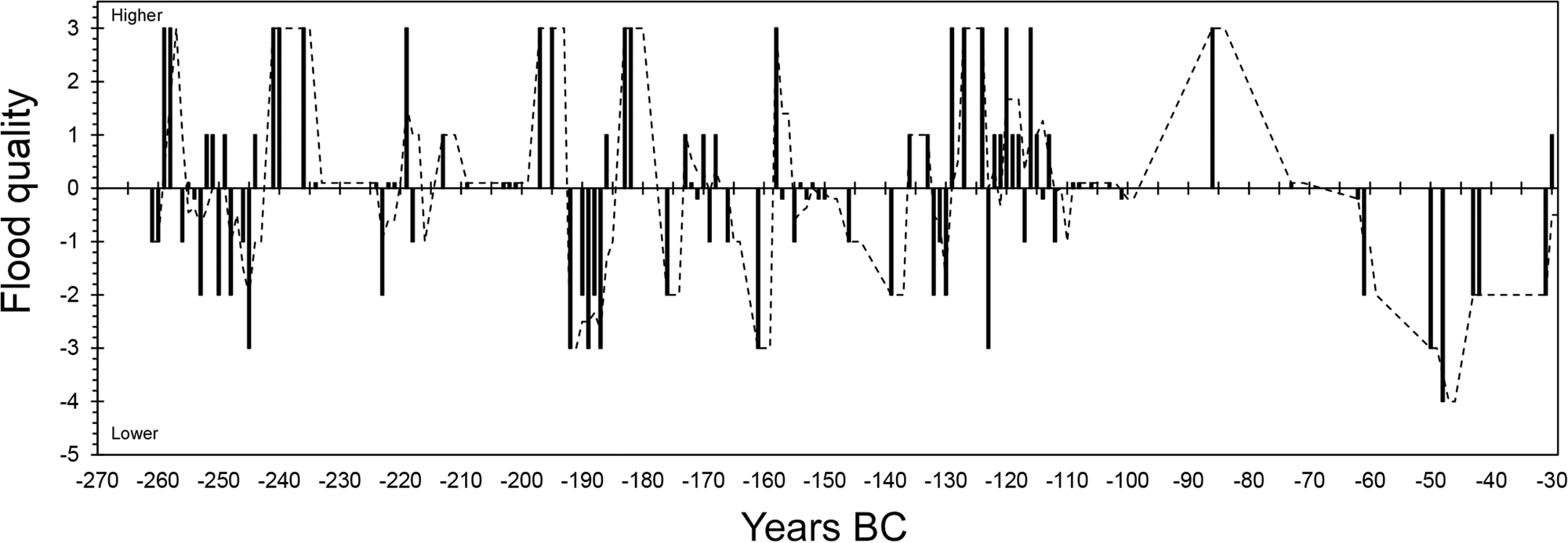
This type of environment is consistent with Hutterer's (Reference Hutterer, Merritt, Kirkland and Rose1994) argument for the periodic presence of marshes and other mesic habitats in the Nile valley based on the shrew fauna from Akhmim (Table 3). It also seems consistent with evidence from a variety of sources for increased moisture during much of the Ptolemaic Period, both in the Nile valley and regionally. Although catastrophic low floods occurred on several occasions during the Ptolemaic Period (Manning et al., Reference Manning, Ludlow, Stine, Boos, Sigl and Marlon2017), the Nile generally maintained a moderate flow during this time (Fig. 6) that was greater than in modern times (Stanley et al., Reference Stanley, Krom, Cliff and Woodward2003; Williams, Reference Williams2009; Bernhardt et al., Reference Bernhardt, Horton and Stanley2012). Sedimentation rates and delta sediment composition indicate increased precipitation around the source areas for the Nile River that resulted in extensive swamps along both banks of the lower White Nile, the primary dry-season tributary of the main Nile River (Adamson et al., Reference Adamson, Clark and Williams1987; Williams, Reference Williams2009), and in greater spring flows from the Blue Nile, the primary wet-season tributary (Krom et al., Reference Krom, Stanley, Cliff and Woodward2002; Stanley et al., Reference Stanley, Krom, Cliff and Woodward2003; Williams, Reference Williams2009). The greater flow in the main Nile increased the abundance of Cyperaceae (sedges) in the Nile delta (Bernhardt et al., Reference Bernhardt, Horton and Stanley2012). Regionally, water level in the Dead Sea, considered a “rain gauge for the region,” increased after 500 BC to ca. 100 BC, flooding the southern Dead Sea basin from ca. 250 to ca. 150 BC (Bookman et al., Reference Bookman, Bartov, Enzel and Stein2006).
Variations in spring floods of the Nile River at Memphis 261–30 BC, determined from ancient Egyptian sources by Bonneau (Reference Bonneau1971) and quantified using the scale of McCormick et al. (Reference McCormick, Büntgen, Cane, Cook, Harper, Huybers and Litt2012). Data are available for 95 of the 232 years of this time interval. Of these 95 years, 43 years (45%) experienced poor to very bad spring floods (flood rise of <4.3 to 6.5 m), 17 (18%) were normal (6.5–7.5 m rise), and 35 (37%) were good to abundant (7.5 to >8.6 m rise). Higher numbers on the flood quality scale indicate higher floods. The dashed line represents a 3-year moving average.

Together, these lines of evidence lead us to conclude that the mummified mammals from Dra Abu el-Naga indicate the presence of moist floodplain habitats near Luxor. Most likely, these would be areas undisturbed by construction projects, intensive agriculture, or other environment-altering human activities. Such sites would probably have been north or south of Luxor, in areas with less human habitation, or in places that were kept as royal preserves for hunting, fishing, and fowling. Additional habitat for shrews and mice may have become available as a result of conflict during the Great Revolt (205–186 BC), when southern Egypt rose up against the Ptolemaic rulers in Alexandria (Veïsse Reference Veïsse2004), and some of the agricultural land at the edges of the Theban area fell fallow.
An intriguing question that remains to be addressed is whether environmental differences between the Ptolemaic Period and modern time influenced variation in the size or postcranial morphology of some of the species of shrews present. Crocidura religiosa from Dra Abu el-Naga were previously shown to have a shorter deltopectoral crest of the humerus than those in the modern population (Woodman et al., Reference Woodman, Wilken and Ikram2019), and as noted previously, C. olivieri from this site and from other ancient Egyptian archaeological sites are larger in size than modern individuals from the remaining Egyptian population in the Nile delta (Heim de Balsac and Mein, Reference Heim de Balsac and Mein1971; Fig. 3). A similar difference in size between ancient and modern populations was noted for sacred ibis from Tuna el-Gebel (von den Driesch et al., Reference von den Driesch, Kessler, Steinmann, Berteaux and Peters2005).
Documenting the assemblages of mammals preserved as mummies by Ptolemaic Period Egyptians has biological relevance that extends beyond the cultural and religious concerns that are more generally the focus of archaeological study. Tomb deposits preserve a partial record of former local faunas that permits researchers to examine how individual species responded to climate change and variation in available moisture during the last 2000 years and how this has affected the small mammal community along the Nile River in Upper Egypt. It should be equally important for understanding patterns of future change, especially given current climatic models predicting continued increases in regional temperature and aridity (Fouda, Reference Fouda2014).
CONCLUSIONS
Two species of rodents and four species of shrews were mummified and entombed at Dra Abu el-Naga in rock-cut tombs that were reused during the Ptolemaic Period for deposition of votive animal mummies associated with a regional ibis and falcon cult. Although deposited as a result of human religious activities, these small mammals most likely originated from local wild populations and therefore are representative of the regional fauna of the Upper Nile valley of Egypt at that time.
The relatively diverse assemblage of shrews, which are generally associated with mesic habitats, indicates the maintenance of a greater abundance and diversity of moist habitats in the area than at present, an interpretation consistent with evidence from geologic, historical, and other sources. Reduction in the number of shrews, from four species in the Ptolemaic Period to the single species currently present, accompanied regional aridification.
ACKNOWLEDGMENTS
We thank the members of the 2018 excavation season of the Spanish Mission to Dra Abu el-Naga, especially J.M. Galán, L. Diaz-Iglesias, and F. Bosch-Puche, who graciously facilitated NW's participation. J. Latova provided access to his digital microscope setup in the field. B.F. Sayed and M. Mohammed patiently sifted sediments and carefully segregated the mammal remains used for this study. R. Jasnow and T. DiCerbo graciously provided access to a prepublication copy of their manuscript on the Demotic graffiti from the site. Thank you to D. Raue for fruitful discussions on shrew cults. The following curators and collections managers provided invaluable access to the collections under their care: L. Heaney and B. Patterson (FMNH), R. Portela-Miguez and L. Tomsett (NHMUK), C.W. Thompson (UMMZ), D.P. Lunde and I. Rochon (USNM), and E.J. Sargis and K. Zyskowski (YPM). Fieldwork was funded by the Spanish Mission to Dra Abu el-Naga, Spanish National Research Council, Madrid. J. Bunbury, R.T. Chesser, S. Feinstein, J.M. Galán, and an anonymous reviewer provided valuable comments on previous versions of this article. This research did not receive any specific grant from funding agencies in the public, commercial, or not-for-profit sectors. Any use of trade, product, or firm names is for descriptive purposes only and does not imply endorsement by the U.S. government.
The authors declare that they have no known competing financial interests or personal relationships that could have appeared to influence the work reported in this paper.
SUPPLEMENTARY MATERIAL
The supplementary material for this article can be found at https://doi.org/10.1017/qua.2020.89