



Introduction: William R. Bascom and the Wúnmọníjẹ̀ headsFootnote 1
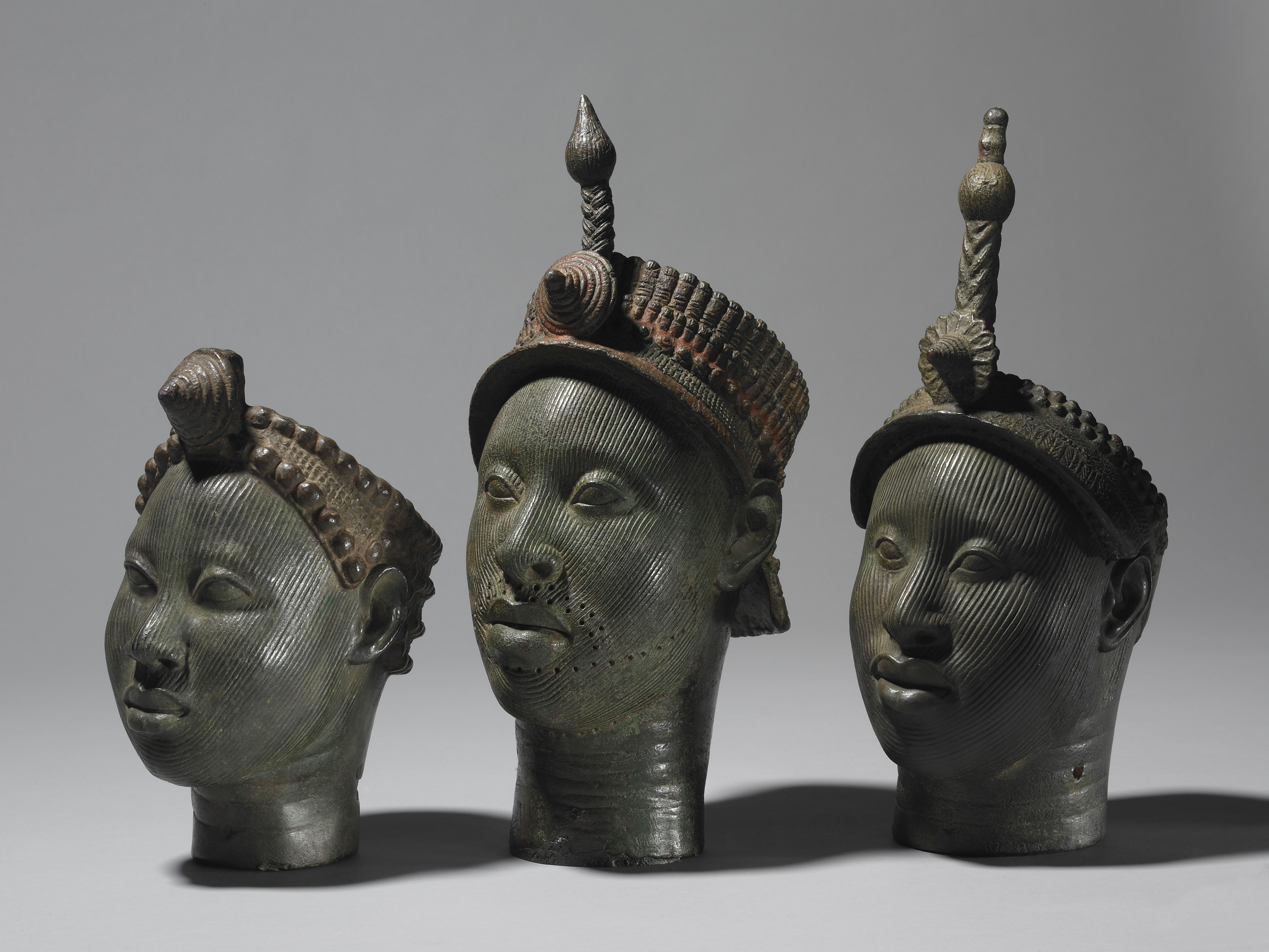
Early in 1938, a discovery was made during the digging of house foundations at Wúnmọníjẹ̀ Compound in the city of Ilé-Ifẹ̀, south-west Nigeria, that would be transformative in the study of African art. A group of highly naturalistic, approximately life-sized copper and copper alloyFootnote 2 heads (sometimes referred to as the Ifẹ̀ bronzes) were uncovered during the construction of a house not far from the contemporary ààfin or palace (Willett Reference Willett2004; Evans Reference Evans2023a; see Figures 1, 2 and 3).Footnote 3 The technological sophistication and naturalistic style of the heads were a surprise to many in the Western art world, whose impressions of African art had long been influenced by notions of racial essentialism.Footnote 4 By happenstance, American anthropologist William R. Bascom (pictured in Figure 4) was conducting ethnographic research in Ifẹ̀ at the time (in 1937–38) and became involved with the discovery and its aftermath. Bascom, who would later become a leading Africanist scholar, was at this time a doctoral candidate at Northwestern University and supervised by Melville J. Herskovits, the renowned Africanist and cultural relativist anthropologist trained by Franz Boas. Early in 1938, Bascom heard word of the Wúnmọníjẹ̀ Compound discoveries and he was the first to report the findings in detail to the wider world in a letter written to the journal Man in 1938 (Bascom Reference Bascom1938). Later in the year, Nigeria’s Inspector of Education, and editor of Nigeria Magazine,Footnote 5 E. H. Duckworth, published a piece on the heads (with photographs) (Duckworth Reference Duckworth1938a), and Bascom published his own article on the heads in the Illustrated London News in 1939 (Bascom Reference Bascom1939; see Figure 1).
A page from an article by W. Bascom in the Illustrated London News from 1939 which helped bring the heads to global attention. One of these was a crowned woman (above left, above right), the other a male without a crown included in the casting (below right).
Source: © Illustrated London News Ltd/Mary Evans Picture Library.

The only three Ifẹ̀ copper alloy heads that include crowns as components of the objects. One was exported by W. Bascom in 1938 then repatriated in 1950 (left); another was exported by journalist H. M. Bate in 1939 and remains in the British Museum (middle); and another was confiscated from anthropologist L. Frobenius in 1910 before he was able to export it to Germany (right).
Source: © The Trustees of the British Museum.
Thirteen other heads from Wúnmọníjẹ̀ Compound on display at University College Ibadan (now the University of Ibadan), Nigeria, in 1949. The heads exported by Bascom are not included as the photograph was taken prior to his repatriation of the heads.
Source: Photograph by William Buller Fagg © RAI.

William and Berta Bascom on their research visit to Nigeria in 1950, during which the heads were returned.
Source: Photograph by Peter Morton Williams © RAI.

However, Bascom did not merely report this discovery: he also covertly purchased two of the heads – a crowned woman and a man without a crown – for £7 and 10 shillings each (Tignor Reference Tignor1990: 425).Footnote 6 He exported them to the USA, without informing the authorities in Nigeria, and then displayed them at exhibitions across various American museums and galleries, where they caused a sensation in the art world and among the press. At this time, the British colonial government had done little to restrict the removal of antiquities from Nigeria, but Bascom’s actions – as well as the reported secret export of several other such heads by a German export company (Duckworth Reference Duckworth1938b; Reference Duckworth1939; Reference Duckworth1940; Reference Duckworth1951; Evans Reference Evans2023b: 8–10) – stimulated change. A handful of officials in Nigeria – most notably Duckworth, as well as his allies among the art curators and scholars of Great Britain – lobbied for the imposition of legislation. This resulted in an Order-in-Council in January 1939 which forbade the export of antiquities from Nigeria without the governor’s permission (Basu Reference Basu, Longair and McAleer2014; Basu and Damodaran Reference Basu and Damodaran2015: 258). A Wúnmọníjẹ̀ head appears to have been secretly exported later that year by British journalist Henry Maclear Bate, and was thus likely in contravention of the Order-in-Council (Evans Reference Evans2023b). This was tolerated by the British authorities as the artefact was eventually obtained by the British Museum that same year, where it has remained ever since (see Figure 2).Footnote 7
Less than two years after the Wúnmọníjẹ̀ discovery, World War Two broke out, and Bascom became involved in the war effort in Nigeria, where he conducted intelligence work on behalf of the United States Office of Strategic Services (Nolte et al. Reference Nolte, Shear and Yelvington2018; Tignor Reference Tignor1990: 429). Following the end of the war, E. H. Duckworth and Kenneth Murray (Nigeria’s Surveyor of Antiquities), who were seeking to repatriate expropriated Ifẹ̀ antiquities, demanded that Bascom return the heads to Nigeria. Duckworth and Murray brought the issue to the official level, sparking a diplomatic row in the late 1940s between the British Foreign Office, British Colonial Office and Nigerian government on the one side, and the US Department of State on the other, over the status of the heads (Tignor Reference Tignor1990: 430). In response to the claims made against him, Bascom sent a series of explanatory letters to the US Department of State that set out several arguments in defence of his actions in 1938.
Despite initial resistance to the demands for the heads’ return, Bascom eventually relented, and they were repatriated to Nigeria in 1950 in tandem with a Fulbright-funded research trip that he undertook. Bascom returned the heads on the condition that Duckworth and Murray provide signed retractions of some of their claims against him, especially their accusation of ‘smuggling’, which he contested on the basis that no laws prohibiting antiquities export were in place in Nigeria at the time (Tignor Reference Tignor1990: 430–1; Ottenberg Reference Ottenberg1994). During a ceremony in December 1950, the heads were formally returned to Ifẹ̀, and a set of casts of all of the Wúnmọníjẹ̀ Compound heads was commissioned by the British Museum at the request of Murray, to be sent to Bascom as thanks for the repatriation (Tignor Reference Tignor1990: 432).
The circumstances surrounding Bascom’s acquisition and export of these two heads have stimulated controversy and scholarly debate. These arguments have focused on a variety of dimensions – the ethics of Bascom’s purchase and export of the heads, the nature of his conflicts with British officials in the 1940s, and the circumstances of his eventual repatriation of these artefacts. This article reviews some of the main points of scholarly contention regarding Bascom’s actions throughout this period, and investigates a range of previously unpublished evidence from several archives to provide additional context to the debate and to scrutinize several claims made. In doing so, the article also seeks to contribute to broader discussions about the character of anthropology in the late colonial era, the impacts of the exhibition of African art in the West, and the nature of the relationship between early cultural heritage preservation efforts in West Africa and the larger colonial project. Two contrasting analyses of the Bascom controversy have been published by scholars in the 1990s. The historian Robert L. Tignor (Reference Tignor1990) was the first to critically approach these events, relying largely on the archives of the US Department of State. In response, the Africanist anthropologist Simon Ottenberg – a former student of Bascom – drew from Bascom’s archives at University of California (UC), Berkeley,Footnote 8 and from his own personal communication with Bascom and others, to provide further information and context on the affair and to contest some of Tignor’s conclusions. First, I summarize some of the broader discussions to which this article contributes before then reviewing the main arguments – and areas of divergence – of Tignor and Ottenberg. Following this, the article presents novel archival material (not cited by either author) and explores what this contributes to our understanding of the aforementioned broad discussions, and how it resolves more specific aspects of the debate between Tignor and Ottenberg.Footnote 9
Anthropology, art exhibition, and the repatriation of cultural patrimony in the late colonial era: areas of discussion
The Bascom affair is an interesting case study, offering several insights into discussions pertaining to the study, exhibition and repatriation of African art during the late colonial period. First, I investigate what Bascom’s activities inform us about the character, role and ethics of anthropology as an evolving discipline in the early twentieth century – especially that of the American cultural relativists who at this time were relative newcomers in Africa. Second, I consider the impacts of Bascom’s popularization of the heads via exhibitions in several museums and galleries, especially in shaping Western views of, and demand for, African art at a time of accelerating expropriation of Nigerian antiquities. Third, I consider the significance of this unusual early repatriation effort in late colonial Nigeria – made long before calls for repatriation intensified in the postcolonial era (see Savoy Reference Savoy2022) – and the relationship between this, the pioneering figures who engineered it, and the wider British colonial project.
Throughout the last few decades, social and cultural anthropologists have scrutinized the discipline’s historical relationship with colonialism, and what this means for its relevance in the postcolonial era (e.g. Hymes Reference Hymes1972; Asad Reference Asad1973; Harrison Reference Harrison1991; Nyamnjoh Reference Nyamnjoh2012). Some have characterized the Africanist anthropologists of the early to mid-twentieth centuryFootnote 10 as ‘reluctant imperialists’ (James Reference James and Asad1973), who, although at times complicit with the colonial project, nevertheless offered potentially radical criticism of the colonial order and were typically considered difficult by some colonial administrators (Ntarangwi Reference Ntarangwi, Grinker, Lubkemann, Steiner and Gonçalves2019). While rarely explicitly criticizing colonialism, these researchers often defended the people they studied from some of the most highly negative, racist characterizations made by many administrators and missionaries of the period, emphasizing the ‘rationality’ and sophistication of these societies. Others, however, view this generation of anthropologists as more willing colonial collaborators who sought to curry favour with imperial authorities for their own benefit. British structural functionalist anthropologists especially were known to cooperate with colonial authorities as they sought funding, relevance and recognition (Mafeje Reference Mafeje1976: 328; Reference Mafeje1997). Furthermore, the work of anthropologists – masked by the veneer of objectivity – was often largely of benefit only to their societies at home rather than to the people they studied.
The legacies of American cultural relativist scholars such as Boas, Herskovits and Bascom have also been vigorously debated. Their anti-racist approaches to anthropology have been lauded as ahead of their time. For example, their scholarship was often welcomed and utilized by leading African American political figures in the early twentieth century (Drake Reference Drake1980: 2–5), and Boas has been praised for empathizing with, and assisting, the plight of African Americans during a period of rampant racism and segregation in America and elsewhere (Williams Reference Williams1995). On the other hand, Willis (Reference Willis and Hymes1972) has argued that Boas and Herskovits were primarily interested in drawing from their observations of ‘primitive’ societies to push for progressive change in (white) America and Western Europe – such as criticism of Nordicism and antisemitism – rather than benefiting the societies that they studied. Meanwhile, and although they have often been portrayed as avowed anti-racists, it has been argued that their work did little to challenge colonialism, and even to have naturalized the abhorrent conditions of colonized societies by creating the impression that these were the result of cultural difference rather than imperial oppression. Unequal power dynamics – ‘relations of superordination and subordination’ (Mafeje Reference Mafeje1997: 4) – existed between these researchers, predominantly white and financially privileged, and the people they studied (Asad Reference Asad1973: 17). Collecting activities often both exemplified and reinforced these unequal relations, as anthropologists were able to cheaply purchase items of importance from impoverished communities in dire need of resources. More extreme examples of such exploitation include instances of looting and theft: most infamously, the covert looting of indigenous graves from the north-west coast of North America, organized by Boas on behalf of the American Museum of Natural History in the late nineteenth century (Bruchac Reference Bruchac2014).
Herskovits was the first major American anthropologist to work in Africa (travelling to Dahomey in 1931 (Blier Reference Blier1988: 125)), and he and his students at Northwestern’s Department of Anthropology – including Bascom – would bring Boasian cultural relativist approaches to the continent. American cultural relativist anthropologists thus form an important part of the above discussion, their position similarly ambiguous to that of other anthropologists of their time. Ottenberg (Reference Ottenberg2022), reflecting on the intellectual environment of the Department of Anthropology at Northwestern as a doctoral student in the 1950s, has emphasized that the professors and graduate students were committed anti-racists. At the same time, he regretted that they did little – at least in their initial research – to consider the impacts of colonialism on Africa, or the implications of being well-off white students studying poorer communities in Africa and elsewhere (ibid.: 30, 40–1). The Bascom debate pertaining to the Ifẹ̀ heads is thus a useful window into the character of early Africanist cultural relativist anthropology in this formative period, especially vis-à-vis the ambiguity of anthropologists’ relationships with the people whom they studied and with the colonial governments that permitted their work. This is especially true given that the nature of Bascom’s conduct as an anthropologist in the field has received far less scholarly attention than that of Boas or Herskovits.
The nature of anthropological practice during this era is also closely tied to a second discussion that this affair can shed light on: the impacts of the exhibition of African art in Western museums and art galleries on both Africa and the West. African collections acquired during the colonial period offered Western audiences education, entertainment and escapism while generating revenues and renown for the institutions and collectors displaying them. As with anthropological research, however, such exhibits typically did not convey the colonial conditions under which these objects were acquired. They also tended to emphasize the alterity of Africans through exoticized display – juxtaposing so-called primitive art with the ‘progressive’ traditions of the West (Willis Reference Willis and Hymes1972; Hicks Reference Hicks2020: 176, 182). Anthropologists were a significant source of such collections, and Ottenberg highlights the importance of collecting among Herskovits’s students – Bascom and his wife Berta (Figure 4) were singled out as particularly avid collectors within the department (Ottenberg Reference Ottenberg2022: 45). Importantly, Ottenberg (Reference Ottenberg1994: 564) has highlighted the fact that Herskovits was intent on using these collections to ‘show that Africa had something to offer the world’, a goal that Bascom, who strove to challenge racism in the West, also shared. Early twentieth-century exhibitions certainly stimulated a greater appreciation of African art as it became influential in shaping avant-garde art movements such as cubism (Achebe Reference Achebe1978; Heymer Reference Heymer and Plankensteiner2007; Biro Reference Biro2013). Furthermore, the looted artworks of Benin, dispersed and displayed across the UK, Germany, France, the USA and elsewhere in the early and mid-twentieth century, were widely praised for their naturalism and high-quality workmanship (Coombes Reference Coombes1994; Nevadomsky and Osemweri Reference Nevadomsky, Osemweri and Plankensteiner2007; Gunsch Reference Gunsch2013: 22).
At the same time, the exhibition of African art in the USA and Europe had severely negative consequences in Africa. The newfound mania for Africana during this period intensified demand for it abroad, and thus stimulated increased expropriation of the continent’s artistic heritage throughout the century. Western exhibitions of African art have regularly served to drive up the demand for, and monetary value of, these objects, benefiting the private collectors, galleries and museums that loaned the objects (Shaw and MacDonald Reference Shaw and MacDonald1995) and in turn contributing to intensified looting (see Schmidt and McIntosh Reference Schmidt and McIntosh1996; Mackenzie et al. Reference Mackenzie, Brodie, Yates and Tsirogiannis2019). Such an explosion in demand occurred in the USA in the early twentieth century following popular exhibitions of African art, especially in New York (Biro Reference Biro2013). These displays inspired many wealthy American collectors to acquire rare art pieces from the continent – exemplified, for instance, by the enthusiastic purchase of Benin art from French dealers beginning in the 1930s (Paudrat Reference Paudrat and Plankensteiner2007: 238). A prime example of this is the collecting activity of Nelson A. Rockefeller, who established the Museum of Primitive Art in New York in 1956, the precursor to the Metropolitan Museum of Art’s Department of the Arts of Africa, Oceania, and the Americas. Among Rockefeller’s most notable feats of collecting was his acquisition of an ivory Queen Mother (Iyoba) pendant mask looted from Benin City by the British in 1897, considered one of the most outstanding examples of Edo art. He prevented this piece from returning to Nigeria when he outbid Kenneth Murray, acting on behalf of the Nigerian Department of Antiquities, during its sale in 1958 (Phillips Reference Phillips2022a). Thus, although the enthusiastic display of African art – such as that of Bascom – had the potential to challenge racial prejudice, it could also contribute to this developing exploitative milieu that has drained the continent of much of its historical art and antiquities (Steiner Reference Steiner1994).
Of course, several pioneering individuals within the colonial government were aware of the escalating demand for Nigeria’s art in this period and took action to stem the tide of expropriation. These were predominantly officers in the education and antiquities departments, such as E. H. Duckworth, Kenneth Murray, Bernard Fagg and Arthur Hunt-Cooke. The third broad area of discussion in this article considers the actions and agendas of these men as they sought to introduce export controls on African art and antiquities, establish new museums, and repatriate expropriated objects; and the nature of their relationship with the larger colonial project. Previous scholarship has underscored the pioneering (and sometimes experimental) activities, transformative impacts and often eccentric nature of these individuals, represented as enthusiastically leading cultural preservation efforts in the face of inaction by neglectful colonial authorities (Crowther Reference Crowther, July and Benson1982: 81; Tignor Reference Tignor1990: 429; Basu Reference Basu, Longair and McAleer2014: 148; Hellman Reference Hellman, Brusius and Singh2018; Phillips Reference Phillips2022a). At the same time, it has been argued that many of their actions and ideologies were in line with the broader paternalism of the late colonial period and the operation of British power in West Africa (Crowther Reference Crowther, July and Benson1982: 90; Ottenberg Reference Ottenberg1994: 564–5; Basu Reference Basu, Longair and McAleer2014: 149; Hellman Reference Hellman2014: 76; Ochiagha Reference Ochiagha2023). For instance, although Duckworth, Murray and B. Fagg were instrumental in establishing Nigeria’s first museums, thus saving many important objects from destruction, they privileged Western museological frameworks over local approaches, practices and attitudes to material culture, imposing their own ideas of preservation, storage and display (Hellman Reference Hellman, Brusius and Singh2018: 90; Reference Hellman2023). There were instances, for example, when Kenneth Murray’s efforts to collect objects left to deteriorate naturally were met with local suspicion or even opposition (Hellman Reference Hellman2014: 84; Phillips Reference Phillips2022a).
Just as the museum has been characterized as a key demonstration of the British imperial presence in Africa (Hellman Reference Hellman2014: 77), so too have export control and repatriation efforts been associated with the enforcement of British power over Nigeria’s cultural heritage (Sogbesan Reference Sogbesan2015: 99). Duckworth’s and Murray’s push for the repatriation of expropriated antiquities was transformative in the history of West African cultural heritage preservation, helping to establish the legislative basis for keeping Nigeria’s patrimony within its borders, and a precedent for the return of items taken prior to the introduction of such laws. However, their early successes in repatriating objects have been contrasted with demands for true cultural restitution (Ochiagha Reference Ochiagha2023). The Nigerian Department of Antiquities kept returned objects in Nigeria’s new museums rather than restore them to their original community contexts; this contrasts, for instance, with Oba Akenzua II of Benin’s ultimately unsuccessful aim of restituting two looted bronze stools to his royal palace in the 1930s and 1940s (Peraldi Reference Peraldi2017; Ochiagha Reference Ochiagha2023).
Furthermore, these returns were rarely accompanied by admissions of wrongdoing or any sense of reparation. On the contrary, such repatriation was often very profitable for those who had expropriated the returned objects, or for those who had purchased or inherited them, rather than for the victims of colonial looting. For example, during the 1940s and 1950s, Murray, as Director of Antiquities in Nigeria, regularly purchased Benin artworks at auction in Western countries (Phillips Reference Phillips2022a) or offered for sale by Western museums (Lundén Reference Lundén2016: 436), often handsomely compensating the sellers with Nigerian government funds. Bascom’s repatriation – in which he returned the two heads without receiving compensation – represents in some senses a transformative moment in the history of repatriation of African art, but it is also important to consider the ways in which it was bound up in, and beneficial for, the colonial relations of power of the period.
R. L. Tignor and S. Ottenberg: contrasting perspectives on the Bascom affair
The research of Tignor (Reference Tignor1990) and Ottenberg (Reference Ottenberg1994) on the Bascom affair connects with several of these discussions, but is also important for other reasons. Notably, their articles are valuable as some of the only contributions made to understanding, and drawing attention to, the history of the expropriation and repatriation of Ifẹ̀ art. This topic, in contrast to the history of the looting, display, and ongoing restitution efforts of the art of Benin City,Footnote 11 has received very little scholarly attention. Yet this is an important area for further study, especially considering the presence of Ifẹ̀ artefacts of high cultural and monetary value, and often with poorly understood provenance, in several prominent Western museums. The affair also represents an unusual case in which a call for the repatriation of African antiquities made prior to the postcolonial era was successful, and thus is potentially a useful case study in informing current repatriation and restitution efforts.
I identify here three main unresolved areas of divergence between the two authors. First, Tignor stated that Bascom did not report his purchases and planned export to the authorities, notably the Ọ̀ọ̀ni (king) of Ifẹ̀,Footnote 12 the British district officer, and Education Department officials. Tignor cited Duckworth, who claimed that Bascom was in contravention of ‘an oral understanding agreed to by Bascom not to take away any Yoruba antiquities’, the heads being ‘the lawful property of the Oni of Ife’ (Tignor Reference Tignor1990: 430). Although this was technically not illegal, Tignor highlighted the fact that Bascom never disputed this accusation against him and states that he ‘may not have had a clear conscience about his actions’ (ibid.: 430). He cited a letter from the Ọ̀ọ̀ni to the senior district officer in 1947 expressing his displeasure at having not been informed by Bascom of his purchase and export as direct evidence that Bascom had hidden the purchase and export from him too.Footnote 13
Ottenberg, meanwhile, questioned whether such an oral understanding existed based on the apparent lack of written evidence for it at Bascom’s archives at UC Berkeley. Ottenberg furthermore claimed that there was ‘a dispute as to whether Bascom did tell the Oni of Ife at the time he took them’ (Reference Ottenberg1994: 562) based on personal communication he had with the art historian Roy Sieber, who had spoken to Ọ̀ọ̀ni Adereẹmi in 1958. Ottenberg stated that there was no evidence that Bascom ‘ever felt guilty over bringing the objects to America and holding on to them. All his correspondence indicates otherwise’ (ibid.: 563). A second area of divergence is that Tignor stated that the export and exhibition of the heads brought Bascom a ‘prominence enjoyed by few professional anthropologists’, especially given that one of the pieces – a crowned woman – is considered among the most spectacular of these heads (Reference Tignor1990: 428).Footnote 14 Although Bascom did not seek direct monetary gain from these exports, Tignor thus emphasized the highly positive impact they had on his scholarly reputation at such an early stage of his career. Ottenberg, meanwhile, played down this aspect, emphasizing instead that it was Bascom’s later publications on Yoruùbaà culture that brought him his fame as an academic (Reference Ottenberg1994: 563).
Third, Tignor depicted Bascom as obdurate throughout the dispute that unfolded during the 1940s, and determined to retain the two heads in the USA. Tignor argued that Bascom yielded the objects only under heavy political pressure and the threat that he would be prevented from carrying out planned research in Nigeria funded by a Fulbright Fellowship that he had applied for in 1949 (Reference Tignor1990: 431–2). Ottenberg, in contrast, concurred with Sieber, who ‘believed that Bascom felt that he would return the heads when he was sure that they would be secure’ (Reference Ottenberg1994: 562). He also pointed to a double standard among British officials such as Duckworth and Murray, who pushed for the return of these heads while remaining largely silent about the continued retention of the Ifẹ̀ head at the British Museum exported by Bate. Furthermore, Ottenberg stated that more recent thefts of antiquities from museums in Nigeria, and elsewhere in Africa, ‘suggest some foresight on Bascom’s part’ in seeking to retain the two heads in America (ibid.: 562). One of the heads that Bascom repatriated – the crownless example – was later stolen from the National Museum, Ifẹ̀, in November 1994 (Willett Reference Willett2004: M17).
A clear conscience? The circumstances of Bascom’s acquisition and export of the heads
A range of additional archival material can help flesh out our understanding of the circumstances surrounding Bascom’s original purchase and export of the heads. Perhaps most notable of all is an important part of the archive at Berkeley that Ottenberg did not draw on in his article. This is Bascom’s correspondence with his friend Arthur Hunt-Cooke, a colleague of E. H. Duckworth working in the Education Department in Nigeria at the time of Bascom’s doctoral fieldwork. The two young men, of a similar age and sharing an interest in Yorùbá culture, quickly became friends during Bascom’s visit in 1937–38. In a letter to his adviser, Melville Herskovits, in November 1937, Bascom was highly complementary of Hunt-Cooke, whom he found easier to get along with than other Britons he had met during his fieldwork.Footnote 15 Following Bascom’s export of the two heads and the resulting turmoil among Education Department officials, Hunt-Cooke reached out to him. He informed Bascom that negative rumours about him were circulating in Nigeria. One source of these was anthropologist M. D. W. Jeffreys, who had heard that the heads had been seen in America; the other was Kenneth Murray, then of the Education Department, who claimed that he had received a letter from a friend of Bascom who had been shown the heads. Hunt-Cooke informed Bascom of Murray’s allegation that Bascom had persuaded the Ọ̀ọ̀ni to part with two heads for a nominal fee. Hunt-Cooke could ‘scarcely believe the stories’ and stated that he ‘should be glad if you would authorise me to refute [the rumours]’.Footnote 16
Bascom wrote a letter in response to Hunt-Cooke confirming that he had not purchased the heads from Ọ̀ọ̀ni Adereùmi, which had been sold to him ‘buy [sic] a native’, something that he would later confirm in his correspondence with the US Department of State. This is further confirmed in the correspondence of Duckworth and a report sent by Murray to the British Colonial Office in 1945. These sources suggest that Bascom originally acquired the two heads from a local Yorùbá man who had excavated them at the Wúnmọníjẹ̀ Compound in 1938. In a draft (unsent) letter from 1947 to Andrew Lynch of the Department of State’s Division of African Affairs, Bascom stated that the heads ‘were purchased from a Yoruba man’ who knew that Bascom was buying art objects, and that they ‘had been found in the ground by the man from whom I purchased them’,Footnote 17 with the latter detail redacted from the final letter that was sent.Footnote 18 Duckworth indicated that he knew the identity of Bascom’s main local accomplice who had helped facilitate his purchase of the heads, identifying him in a report as a ‘dishonest man of the Oni’.Footnote 19 Duckworth suspected that a single local man had sold heads to both Bascom and Bate, and was certain that German agents in Ifẹ̀ had a local accomplice excavating heads on their behalf (Duckworth Reference Duckworth1940). According to one of Duckworth’s informants, these German agents had been purchasing antiquities and stashing them in a secret part of the bush from where they were taken to Lagos and exported. Murray suggested that the local person responsible for selling several of the heads was the same man who was constructing a house at Wúnmọníjẹ̀ Compound in 1938. He had apparently hidden some of his finds from Ọ̀ọ̀ni Adereùmi, who had been collecting any heads discovered at the site to store within the palace.Footnote 20
Adereùmi had a reputation for being a dedicated custodian of Ifẹ̀ arts. He wrote an article for Nigeria Magazine, published in 1937, lamenting the decline of local art and craft practices and calling for their revitalization (Aderemi Reference Aderemi1937: 6). He was instrumental in the development of the museum in Ifẹ̀ and used his influence to collect objects from local shrines and other sites of significance; these were kept in the palace, and later in the museum (Willett Reference Willett2004). Bascom’s research notes from 1938 reveal Adereùmi’s commitment to obtaining all of the heads found at Wúnmọníjẹ̀ Compound, which he claimed ownership of due to the site’s close proximity to the palace: ‘The oni has them all; finder (or owner) tried to keep one, but he kept sending for it.’Footnote 21
Furthermore, after learning of the Bascom, Bate and German exports, Adereùmi conducted his own investigations in Ifẹ̀ in 1939 (Willett Reference Willett2004); these turned up three additional copper alloy heads and a copper alloy half-figure (the so-called Láfògido figure) that had been hidden from him. He would eventually loan the collection of headsFootnote 22 and the half-figure to the British Museum in 1947 for exhibition and examination. He demanded that utmost care be taken in this, insisting that no further heads be shipped until the first consignment had arrived safely in Britain,Footnote 23 and he was adamant that he would personally return the heads to Nigeria in October 1948 following a visit to the UK, in spite of the Keeper of Ethnography H. J. Braunholtz’s protest that more time was needed to clean the heads.Footnote 24 Adereùmi wrote to Braunholtz in September 1948, stating that this was necessary in order to allay the fears of his people, suggesting apprehension among the traditional authorities in Ifẹ̀ at the heads’ presence abroad.Footnote 25
The Ọ̀ọ̀ni was thus very protective of these heads, indicating the unlikelihood that he would have been pleased with the permanent possession of any such objects by institutions abroad. This implication, as well as Adereùmi’s aforementioned letter revealing his lack of knowledge of Bascom’s acquisition of heads in 1938 (Tignor Reference Tignor1990: 433), make Sieber’s and Ottenberg’s suggestions that the Ọ̀ọ̀ni was aware of Bascom’s purchases and export seem unlikely. Furthermore, there is no transcript in Ottenberg’s article of the conversation between Roy Sieber and Ọ̀ọ̀ni Adereùmi that he uses as evidence of this claim, and his short description of this exchange – which occurred twenty years after Bascom’s original visit to Ifẹ̀ – is lacking in detail. Additionally, Bascom, when later defending his actions in correspondence with the US Department of State, did not state that Adereùmi knew about and/or permitted his actionsFootnote 26 – something that, if true, would have been an important argument in his defence. His correspondence with Adereùmi after he learned of the Ọ̀ọ̀ni’s displeasure with the export also does not mention this.Footnote 27 Contrary to Sieber’s and Ottenberg’s argument, the evidence presented here – and by Tignor (Reference Tignor1990) – strongly suggests that Bascom acquired and exported the heads without Adereùmi’s knowledge, directly purchasing them from a local man who was apparently selling heads covertly.
While no legislation restricting the export of antiquities was in place in Nigeria at this time, Bascom would have been aware of the confiscation of German anthropologist Leo Frobenius’s collections – including the copper alloy Olókun head (see Figure 2) – by the British decades earlier, after he was accused of obtaining them by dubious means (Frobenius Reference Frobenius1913). Even with no law in place, informing Adereùmi, or anyone else, of his acquisition of the heads would surely have seen them confiscated. Bascom’s later defence, in his correspondence with the US State Department, downplays the extent to which he knew of the unique value of the heads. He claimed that he did not show them to the district officer or others as it was common knowledge that he was making a collection, and because he purchased them soon before he left (Tignor Reference Tignor1990). It is clear, however, from his correspondence with Hunt-Cooke,Footnote 28 that Bascom knew that the heads were far more valuable than the rest of his collection, and that his taking them to America would risk causing scandal (see below). Therefore, Bascom’s silence is unlikely to have been the result of obliviousness or a lack of time; instead, it was likely a strategy to ensure he retain ownership of the heads. He publicized that he had them only long after he had left the jurisdiction of the authorities in Nigeria.
This brings us to the discussion of the ethics of Bascom’s actions. Ottenberg is correct that there is no direct evidence in Bascom’s archive of there having been an oral understanding between him and the British not to remove antiquities. But, as Tignor states, Bascom, in his correspondence with the State Department and others, does not attempt to dispute or deny the claim that such an understanding existed. Furthermore, Ottenberg’s assertion that there was no evidence of Bascom having felt any guilt over the affair is directly contradicted by one of Bascom’s letters to Arthur Hunt-Cooke in 1939. Bascom, dismayed by his friend’s disapproval of what he did, reveals some reservations about his actions, ultimately providing a consequentialist justification for his export and retention of the heads:
I still have some slight qualms about whether what I did was right or not – and your letter brings them back to me. I can rationalize that if I had not bought them Gates [Bate] would have taken them with the other one which he has written to me about.Footnote 29
The letter goes on to state that:
The test I think – or rather the reason I think I am right and that I feel I am not pilfering in the same sense that Gates [Bate] – and perhaps the Germans (?) – are doing is to be seen in the contrast between what I am doing with my heads, and what the others plan to do with theirs. Gates’ [Bate’s] I am sure, unless Braunholtz (at my suggestion) can buy them for the British Museum, will go to some high priced collector such as [Charles] Ratton in Paris, and very few people in the market for such objects will see them. My first move was to publish the pictures, with the others which were less satisfactory, in the most prominent place I could think of, and where they will reach a great many interested in art and Africana.Footnote 30
At the end of the letter, Bascom wrote:
When I bought the heads, I realized that there would inevitably be scandal attached to my name. This I am willing to bear if I can bring the heads into their deserved place in the world of art. And right now it looks as though I might succeed more fully than our friend Duckworth – whose article I appreciated and enjoyed. It may strike you as curious, but I am less worried about the scandal than I am of your own condemnation, which I seem to have incurred; for I look on you as one of my closest friends and value your opinion of me.Footnote 31
Evidently, these statements support Tignor’s suggestion that Bascom’s behaviour at the time implied that he may not have had a ‘clear conscience about his actions’ – that he was aware of some degree of wrongdoing on his part (Reference Tignor1990: 430). Bascom also wrote of his hope ‘to make people forget about the Benin bronzes’Footnote 32 by promoting these heads, further evidencing his awareness of their outstanding value. Hunt-Cooke showed Bascom’s letter to Duckworth, who brought it to the attention of Sir William Rothenstein and the Colonial Office.Footnote 33 Clearly, then, Bascom had some reservations over his actions, was fully aware of the heads’ unique value, and knew that his export would offend the authorities. For him, the ends of promoting the heads to the world, challenging racial prejudice, and preventing them from being acquired by private interests justified the apparently dubious means by which he had obtained and exported them.
In this regard, Bascom’s actions resemble those of another cultural relativist anthropologist: his intellectual forbear Franz Boas. Boas wrote of his reservations when it came to covertly stealing from indigenous graves in the late nineteenth century, but, like Bascom decades later, he saw it as necessary at the time for the purposes of scientific inquiry (Appiah Reference Appiah2020). In both cases, the building of American ethnographic and art collections, the development of Western knowledge of other cultures, and the undermining of prejudices at home through education appear to have motivated these extreme actions which both men held certain reservations about – and, in Bascom’s case, these assumed consequences would also serve as ethical justification for his actions. Thus, although progressive in transforming attitudes in the West, the liberal ideals of these anthropologists at times stimulated unethical practices, which were exploitative and unequal in who they benefited and who they harmed. Ottenberg’s notion that there was no intrigue in these affairs is thus called into question given that even Bascom himself had qualms about what he had done. But perhaps the greatest harm caused by Bascom’s silence and secrecy was that those seeking to protect antiquities in Ifẹ̀ at the time remained ignorant of the fact that heads were circulating behind their backs. Bate likely obtained his from the same individual as Bascom (Duckworth Reference Duckworth1940),Footnote 34 and the several heads said to have been exported by Germans may also have derived from the same source towards the end of 1938 (Duckworth Reference Duckworth1938b; Reference Duckworth1939; Reference Duckworth1940). These remain unaccounted for to this day.Footnote 35
Altruism or advancement? Bascom’s promotion and exhibition of the heads
Soon after his return from Nigeria, Bascom worked to publicize his research on the Wúnmọníjẹ̀ heads and began exhibiting them across the USA. He promoted his 1939 Illustrated London News article far and wide, and his archive reveals a list of people to whom he planned to send copies of it. This list included many of the leading anthropologists of the day, as well as other renowned scholars, curators and public figures.Footnote 36 The heads had held pride of place in Northwestern University’s collection, where they were exhibited to the university community and to the wider Chicago public, and where they were used by Bascom in his classes on anthropology.Footnote 37 In spite of interruptions caused by his war service, Bascom, from 1940 to 1948, had the heads shown in a range of exhibitions across the country (Tignor Reference Tignor1990). The heads were first exhibited beyond Northwestern University in 1940, when they were displayed as the central pieces at an exhibit at the University of Minnesota, Minneapolis, and reproduced on the cover of the exhibition catalogue. From April to May 1941, they were featured at Harvard’s Peabody Museum, and later that year (November and December) they were also exhibited as the central piece at the Gallery of H. F. Sachs, Inc. in New York City.Footnote 38 Bascom reported in a letter to Ọ̀ọ̀ni Adereùmi that it was at this exhibition in New York that the heads were ‘recognized as superior to the bronzes from Benin’.Footnote 39
During Bascom’s war service in 1942–45, the heads were entrusted for safekeeping at the Milwaukee Public Museum (June 1942–October 1946). In January and February 1945, they were exhibited at the Denver Art Museum, Colorado, and then at the Baltimore Museum of Art in November 1946. After this, they returned to Northwestern University and were the central pieces of an exhibit of Bascom’s African art in March and April 1948. They then went to exhibitions at the M. H. de Young Memorial Museum, San Francisco (September–November 1948) and the University of Wisconsin, Madison (February–March 1950). They were last exhibited at the Art Institute of Chicago late in 1950 (Armstrong et al. Reference Armstrong, Ames, Ames, Peek, Brody, Kopytoff, Lurie, Leis, Ricks, Greenberg, Watrous and Moore1983: 89). Bascom had intended to show the heads in further exhibitions, but this was interrupted by his eventual repatriation of them in 1950. As well as these exhibitions, the heads were further publicized in several national news and art magazines, various newspapers and a number of academic texts. Bascom also made plaster casts of the heads, which he provided to several museums and to a few prominent public figures, including Paul Robeson and Eleanor Roosevelt.Footnote 40 As discussed above, this widespread promotion of the heads by Bascom occurred at a time when interest in African art was intensifying in the USA, and their popularity was both a driving factor behind and a consequence of these developments.
While Bascom highlighted the positive impacts of exhibiting the heads in these places, it has increasingly become clear that widespread publicity can also have more negative impacts on cultural patrimony. As mentioned above, it is particularly notable in the ways that it can drive up demand for African artefacts on the international art market, thus contributing to intensified looting, theft and other exploitative acts undertaken to acquire African antiquities. This is especially true in cases where objects are displayed at prestigious art galleries regularly visited by wealthy collectors and dealers, and Bascom is known to have been approached by multiple dealers who were eager to get their hands on Ifẹ̀ heads (Armstrong et al. Reference Armstrong, Ames, Ames, Peek, Brody, Kopytoff, Lurie, Leis, Ricks, Greenberg, Watrous and Moore1983: 89). To Bascom’s credit, he turned down all such offers. However, Bascom’s and others’ popularization of the heads was accompanied by intensified foreign interest in Ifẹ̀ antiquities, and increased efforts to acquire and expropriate them by Western visitors – from Britain, Germany and elsewhere (Duckworth Reference Duckworth1940). At the time, Bascom assumed that the exhibition and publicity of the heads would have positive impacts on Nigeria and the USA, and his correspondence shows no consideration of some of the potential risks of such actions, which we are now in a better position to appreciate.
I am in accordance with Tignor (Reference Tignor1990) that Bascom’s tireless work in publicizing the heads indeed appears to have helped drive his own advancement as a scholar. The extensive and impressive list of academics and dignitaries to whom Bascom sent reprints, the exhibitions at which he had the heads shown, and the news articles that showed the heads would all contribute to his prestige and reputation as an academic and rising public intellectual at the time. Herskovits is recalled as having stated that, even were Bascom never to continue to advance as an anthropologist, he would nevertheless ‘make anthropological history as the one who found two of the best eight examples of primitive art extant’ (Armstrong et al. Reference Armstrong, Ames, Ames, Peek, Brody, Kopytoff, Lurie, Leis, Ricks, Greenberg, Watrous and Moore1983: 92). Thus, although Ottenberg (Reference Ottenberg1994) is correct that Bascom is now better known for his later publications, it is difficult to argue with Tignor’s conclusion that the heads greatly enhanced Bascom’s professional reputation as a scholar of Yorùbá culture at a critical early stage of his career. Despite all of this, it is important to acknowledge that Bascom’s use of the heads to dispel racist perspectives of Africans was important and transformative at a time when such attitudes were rife in the USA, the British Empire and elsewhere. Bascom’s display of the heads in the 1940s challenged prevailing notions of the ‘otherness’ of African art in portraying what was viewed as their intricate naturalism – an ideal and aspiration of the Western classical tradition – thus disrupting the dichotomy established between ‘primitive’ and Western art.
Furthermore, although anthropology in this era has been represented by some as largely beneficial to white society in the West (see above), Bascom also had the African American communities of Chicago and the wider USA in mind when popularizing the heads. In his Illustrated London News article, he wrote, for example, that ‘interestingly enough, striking resemblances between some of the heads and individual Negroes of the United States have been noticed. A large proportion of the ancestors of American Negroes are, indeed, known to have come from this region of West Africa’ (Bascom Reference Bascom1939: 592). This emphasis echoed the scholarship of other cultural relativist anthropologists of the time, such as Herskovits and Zora Neale Hurston, whose work contributed significantly to better understanding the cultural connections between Africa and diasporic societies in the Americas (Harrison and Harrison Reference Harrison and Harrison1999). Such scholarship became an important resource for certain Pan-Africanist thinkers and civil rights leaders in America (Drake Reference Drake1980; Stuckey Reference Stuckey1976). These included leading figures of the New Negro Movement such as W. E. B. Du Bois, who is known to have drawn on the work of Boas (Williams Reference Williams1995), and Paul Robeson, who – as the recipient of a plaster cast from Bascom – evidently had taken an interest in Bascom’s work on the Ifẹ̀ heads. In this regard, it would not be wholly correct to suggest that Bascom’s exhibition and promotion of the heads benefited, or appealed to, only white Americans.
Forced repatriation? The circumstances and implications of Bascom’s return of the heads
Bascom, in his correspondence, portrayed his eventual repatriation of the heads in 1950 as an altruistic gesture, undertaken due to his friendship with, and debt to, the Ọ̀ọ̀ni, and for the benefit of the people of Ifẹ̀, rather than due to coercion from British officials. This action has also been connected with the foundation of the Ifẹ̀ Museum. Frank Willett wrote, for instance, that ‘after lending them to many exhibitions throughout America, [Bascom] returned them as a gift in 1950 when he learned of the building of the Ife Museum’ (Reference Willett2004). This is a narrative that Ottenberg supported, concurring with Roy Sieber’s belief that Bascom intended to return the heads ‘when he was sure that they would be secure’ (Reference Ottenberg1994: 562). As Ottenberg wrote, Bascom was upset by suggestions that he had returned the two heads only due to compulsion by the British (ibid.: 566). It is clear from the archival record, however, that Bascom continued to try to retain the heads in the USA even after learning of Ọ̀ọ̀ni Adereùmi’s displeasure at his actions, and despite his knowledge that a museum was being developed in Ifẹ̀. Even after agreeing to return the heads, Bascom remained disappointed that they had not stayed in America.
Bascom made it clear to officials from the US Department of State that he considered the heads better off in the USA and suggested that the British, in making these claims while remaining silent over the head kept at the British Museum, were discriminating against him as an American.Footnote 41 He would return the heads in his possession only if the British Museum returned all of their collections taken from Nigeria throughout the colonial era, but he added that he would ‘not recommend that this be done, because I feel that they are doing far more good for art, science, and the eventual betterment of the people of Ife, Benin and Africa as a whole, where they are [in the British Museum]’.Footnote 42 Some time after being informed of Adereùmi’s displeasure at the continued presence of the heads in the USA, Bascom drafted a letter to the Ọ̀ọ̀ni appealing to him to support his view on the matter. In the letter, Bascom sought to convey to Adereùmi all that he felt he had achieved in promoting the heads in the USA, and urged him to ‘give full consideration to the effect that these two heads have had and are having on opinion in America and throughout the English-speaking world about the peoples of Africa’.Footnote 43 While Bascom stated that he would give Adereùmi’s feelings full consideration, he added that:
With entire honesty and complete conviction, I can say that having two of the Ife heads in the United States can do far more to gain world recognition of the achievements of African peoples than having all of them in Ife, or in any other city in Nigeria. The twelve or more in Ife are more than an adequate sample, and there is always the possibility of more being discovered.Footnote 44
Bascom’s main British allies in this affair made similar arguments in his defence. Notable among these was the anthropologist Meyer Fortes and A. F. F. P. (Foley) Newns of the Nigerian Secretariat. Bascom had become acquainted with Fortes during visits to the UK, and he collaborated with Newns during his wartime intelligence work (Tignor Reference Tignor1990: 429–31). For Newns, Bascom was unfairly targeted as a result of his fame and expertise, which lent the ‘amateurs’ Duckworth and Murray – of whom Newns was highly critical and on whom he lay most of the blameFootnote 45 – ‘prestige to appear to show him up’.Footnote 46 Newns, later recounting this affair in a letter in 1996, wrote that he had called on the chief secretary and governor to cease the hostile diplomatic correspondence with America. He considered the diplomats too entrenched in their positions for any satisfactory resolution of the issue, and he instead reached out to Bascom directly to try to resolve the situation – something that appears to have been decisive in persuading Bascom to return the heads (Tignor Reference Tignor1990: 431). Fortes, who wrote to Bascom in 1947 in support of him,Footnote 47 stated that the heads were better off in the USA, where he considered them properly looked after. Furthermore, he stated that ‘if action is indeed contemplated to recover these two heads a most dangerous precedent would be launched’ in providing justification for claims for the repatriation of African art in other Western institutions, objects that he noted ‘were acquired in a thoroughly immoral way’.Footnote 48
The problem with Newns’s narrative of these events is that he was not privy to all of the facts regarding the original controversy in 1938–39, as he was not present in Ifẹ̀, nor was he apparently aware of what was known by the officials of the Education Department, him being an assistant district officer in the eastern region of Nigeria at the time. He implies that the claims made against Bascom were, in part, due to Bascom’s fame and prestige as an anthropologist by the end of the 1940s, making him a target of Duckworth and Murray, as well as due to the influence of changing post-war attitudes regarding the preservation of African antiquities in the face of an expanding private market for them. In actuality, it is clear from Hunt-Cooke’s letters to BascomFootnote 49 and from Duckworth’s Nigeria Magazine editorials (Reference Duckworth1938b; Reference Duckworth1939; Reference Duckworth1940) that Duckworth was already upset by, and condemnatory of, the exports of heads by Bascom, Bate and the Germans, long before Bascom had cultivated his reputation as an anthropologist, and prior to the development of what Newns purports to be a post-war trend. One of Hunt-Cooke’s letters to Bascom from 1939 reveals the deep roots of the controversy:
I’ve shown your letter [of 1 June 1939] to Ducky who is very excited about it. He doesn’t forgive you at all and thinks you ought to return the heads eventually when there is a decent museum for them. So do I really – when there is a decent museum … The other head you mention was taken out by a man called Bate after the ordinance [Order-in-Council of January 1939] was passed, and without license, so we hope to be able to catch him.Footnote 50
Soon after agreeing to return the heads to Nigeria in 1950, in a letter to Fortes, Bascom wrote: ‘I will miss the heads greatly, and I still think that they should have remained in Nigeria [sic], but I did feel I was greatly indebted to the Oni for the assistance he had given me.’Footnote 51 Note that, based on the wording and context of the sentence and letter, the word ‘Nigeria’ appears to have been inserted in error – in actuality he almost certainly is referring here to ‘America’. It is clear from this evidence that returning the heads to Ifẹ̀ was not Bascom’s first choice – even in the event that museum infrastructure was developed there to house them – and he envisioned them remaining in America permanently, eventually going to ‘an outstanding American museum with definite interests in African art’,Footnote 52 as he wrote in a letter to Adereùmi. Bascom’s clear desire to keep the heads in the USA suggests that political pressure – from Adereùmi, Duckworth, Murray and the State Department – did contribute to his eventual repatriation of them. Roy Sieber’s suggestion, as documented by Ottenberg, that ‘Bascom felt that he would return the heads when he was sure that they would be secure’ (Ottenberg Reference Ottenberg1994: 562) is therefore not supported by the archival evidence. Although the argument was made that the heads would be safer abroad, Willett stated that, prior to their return, one of these heads – the crowned woman – had been damaged while in the USA:
The bottom of the neck has been cut off rather roughly with a saw during the time the head was in Bascom’s ownership, probably in an attempt to make it stand more securely. It did not succeed in this for the head still falls forward. Some of this metal was analysed but the results were lost whilst Bascom was on service in the US Navy during the Second World War. (Willett Reference Willett2004: M3)
Bascom returned the heads to the palace at a special ceremony on 2 December 1950, coinciding with his research trip. Each head had been mounted on a plinth with the words ‘Presented by William R. Bascom, Northwestern University, to the Oni and People of Ife’ inscribed on them.Footnote 53 The laudatory nature of these inscriptions is relevant when considering a conversation that occurred between Murray and the Bascoms when they first met in October 1950. Murray wrote of how Berta Bascom had made a remark to him that the bequeathing of the heads at that time ensured that her husband received ‘the credit’ for the heads’ return ‘before he died and not after’ (see Hellman Reference Hellman2023). Between the plinth inscriptions and this, it appears likely that, in this act of repatriation, Bascom sought recognition and acclaim. Tignor stated that the ‘handing-over ceremonies were a great charade’, due to the role of political pressure in forcing Bascom’s hand in returning the heads (Reference Tignor1990: 432). While Tignor’s evaluation is likely partly accurate, I also concur with Ottenberg that the event was a serious, and largely positive, affair (Reference Ottenberg1994: 563) and there is good reason to believe that all parties involved would have felt a sense of relief and jubilation at this act of repatriation.Footnote 54 Murray would have been glad to have successfully seen the two heads back in Nigeria after over a decade of efforts to repatriate them. Adereùmi, who had long been endeavouring to collect and preserve the heads, was thrilled that these two examples had been brought home. And even Bascom, who found it difficult to part with the heads, ‘because they were so real and became almost a part of the family’,Footnote 55 was pleased with the cordiality that he encountered on his return to Ifẹ̀.Footnote 56
Bascom was also overjoyed at Murray’s promise to have a set of casts made at the British Museum and gifted to him. This set was estimated to cost £85–90 to make, far exceeding the price Bascom had paid for the originals.Footnote 57 Bascom’s interactions with Murray were largely amicable during this visit, with Murray approving all the ethnographic objects that Bascom had purchased during his stay for export. They also found common ground in their joint concern over the iconoclastic destruction of local art by the Atinga society, with Bascom praising Murray’s efforts to obtain and evacuate objects before they were destroyed by this ‘witch-finding’ movement.Footnote 58 A further olive branch was Bascom’s contribution of an article on Yorùbá influences on Afro-Cuban religion to Nigeria Magazine while Duckworth was still editor (Bascom Reference Bascom1951). However, some tensions continued, with evidence suggesting that Murray continued to be suspicious of Bascom, as well as other American researchers such as Robert Farris Thompson – whom he was concerned might seek to export objects illicitly – as late as the 1960s.Footnote 59 While Bascom was rewarded throughout his visit – in the congratulatory nature of the ceremony, the retraction of critical claims against him, the praise for him in Nigeria Magazine, and the gifting of a set of casts to him by Murray – no public admission or recognition of wrongdoing on his part was made. This therefore contrasts this early case of late colonial-era repatriation with modern calls for restitution in which recognition of past harm is often foregrounded.
A final area highlighted by Ottenberg, which ties into broader discussions of the agendas behind cultural heritage preservation in Nigeria at this time, is the purported hypocrisy of British officials in demanding the return of the heads held by Bascom while remaining largely silent on the continued presence of the head that ended up in the British Museum. Bate’s export of this head can justifiably be considered more ethically dubious than Bascom’s given its potentially illicit nature and Bate’s desire for personal profit. As described by Hunt-Cooke (see above), the export was likely in contravention of the Order-in-Council implemented in 1939 to prevent the export of antiquities without the governor’s permission. Despite some reservations regarding the nature of its export (such as in an editorial by Duckworth (Reference Duckworth1940) that condemned Bate’s actions), the presence of an Ifẹ̀ head in a British institution was ultimately seen as a positive by British officials and curators. Early plans were even developed by the British Museum in 1939 to conduct an excavation at the Wúnmọníjẹ̀ site, with the aim of having the governor of Nigeria waive the antiquities law so that further artefacts could be brought to the UK.Footnote 60 And although Murray is on record as having stated that the British Museum should return more of its Nigerian collections (notably those from Benin), he was clear that these should be purchased by the Nigerian government rather than donated (Hellman Reference Hellman2023). Undoubtedly, then, Bascom and Ottenberg were correct to emphasize this double standard, and it is clear that the push to repatriate the heads kept by Bascom was bound up in the paternalistic politics of late British colonialism and in the efforts of British authorities to retain control and exclusive rights to Nigeria’s cultural patrimony. Duckworth and Murray, although innovative and pioneering in their approaches to protecting and preserving Nigeria’s material cultural heritage, were nevertheless still subject in certain ways to British power politics – especially when it came to contesting the claims of other Western nations (most notably America and Germany) to Nigerian art and antiquities.
Conclusion: reflecting on the Bascom controversy in an age of restitution
In an effort to resolve the three main areas of disagreement between Tignor and Ottenberg outlined in this article, several conclusions can be reached. First, with regard to the circumstances of Bascom’s acquisitions and export, while it is clear that Bascom’s actions were legal under the colonial legislation of the time, archival material cited here demonstrates some of the ethical problems of Bascom’s actions, even according to his own perspective. The evidence strongly suggests that the Ọ̀ọ̀ni was not aware of the purchase and export of the heads by Bascom, and it is clear from this new evidence that Bascom had some regrets over his actions. Second, Bascom’s publicization and exhibition of the heads raised his profile before an impressive range of scholars, curators and other dignitaries, supporting Tignor’s verdict that the heads were significant in advancing his career. Lastly, Bascom’s plan was not to repatriate the heads when the time was right, but to retain them in the USA regardless of the status of Nigeria’s early museums. While Bascom’s reasons for returning the heads were complex and various, it is difficult to envision a situation in which political pressure did not contribute to this decision.
In an era of renewed calls for the restitution of African cultural heritage from Western museums, what lessons might be learned from the Bascom controversy? Recent governmental, scholarly, institutional and media attention has focused on African material culture that was violently looted during colonial-era wars, as in the cases of the arts of Benin City, Kumasi, Maqdala and elsewhere, or that has been illicitly exported in the postcolonial era. This affair, meanwhile, is a clear example of where nominally legal and peaceful acquisitions of African antiquities by Westerners during the colonial period may nonetheless have been exploitative and ethically dubious. Nothing Bascom did appears to have been illicit according to the colonial laws of the time, nor did he utilize violent or coercive means to acquire the heads, as Frobenius was accused of doing in his acquisition of the Olókun head (Frobenius Reference Frobenius1913). Nevertheless, Bascom paid less per head than even Frobenius had for the Olókun piece in 1910,Footnote 61 a pittance compared with what he knew their eventual value would likely be.Footnote 62 He benefited from the heads in their raising of his reputation as a scholar through publication and exhibition, while there was little gain – monetary or otherwise – for the people of Ifẹ̀. As previously discussed, such unequal relationships between anthropologists and their communities of study in this period have received scrutiny in later scholarship, and, in certain ways, Bascom’s actions appear to have been part of a larger pattern. Like Boas before him, he appears to have used clandestine means of obtaining these valuable objects, justifying his actions with the argument that he, as a cultural relativist anthropologist, would use the heads to change perceptions of Africa in the West for the better. Bascom appears not to have informed Ọ̀ọ̀ni Adereùmi of his actions despite the crucial support that the Ọ̀ọ̀ni gave him throughout his early research, and his silence meant that the authorities remained largely oblivious to the looting and export practices that were occurring in Ifẹ̀ at this time vis-à-vis the copper alloy heads.
In this regard, it is important that such examples of the nominally legal and peaceful yet exploitative acquisition of artefacts remain at the forefront of the restitution priorities of museums and other institutions, and are not ignored or wilfully avoided. Archival research on artefacts of poorly understood provenance can help shed light on the potentially ethically dubious means by which they were obtained from formerly colonized nations. It also has the potential to support further restitution efforts, and not solely those that have successfully captured public attention due to the more explicit forms of violence and/or illegality associated with their acquisition. The Bascom affair is also a useful case study that demonstrates how international political pressure, irrespective of legal mechanisms, can work in encouraging restitution. Furthermore, while Bascom focused on the positives of his exhibition of the heads – in critiquing racist stereotypes of Africa – he does not appear to have explicitly considered the potential negative repercussions of his widespread promotion of them. At a time when antiquities legislation in Nigeria, and in other African nations under colonial rule, was rudimentary at best, Bascom and othersFootnote 63 may well have unwittingly played a role in encouraging increased covert expropriation of Ifẹ̀ (and other African) antiquities for sale on the private market.Footnote 64 It is therefore important for scholars and curators to consider the ways in which such harm might be inflicted by our research when publishing or popularizing African art, and to plan to reduce these risks in our work. This also applies to the exhibition of African art, which, as discussed above, has long been closely connected to the commercial interests of collectors and galleries, often contributing to the compromising of African nations’ control and ownership of their own cultural patrimony.
Lastly, and to Bascom’s credit (as well as that of Duckworth and Murray), his eventual repatriation of the two heads was unusual and progressive for the period. David and Barbara Ames, writing in an obituary of Bascom, noted that ‘none of the possessors of the few Ife terracotta and bronze heads still outside Nigeria has followed Bill’s lead in returning these invaluable pieces to their rightful owners’ (Armstrong et al. Reference Armstrong, Ames, Ames, Peek, Brody, Kopytoff, Lurie, Leis, Ricks, Greenberg, Watrous and Moore1983: 89). That being said, the efforts of Duckworth and Murray in securing the heads, and Bascom’s repatriation, were not wholly altruistic, bound up as they were in the colonial power politics of the time. No recognition of any wrongdoing occurred, and no similar claims were made to return Ifẹ̀ pieces from Britain. The head at the British Museum, for example, remains to this day one of the centrepieces of the Sainsbury Africa Galleries. This piece should be a more prominent part of broader conversations about Nigerian antiquities in Western museums, especially given the controversy surrounding its export in 1939. Lastly, Bascom was provided with a full set of replicas following his repatriation of the two heads in his possession, and the British Museum has a similar such set. A shift towards increased production and exhibition of high-quality replica casts is an important potential solution for ensuring continued education of the world about the beauty of African art history without any need for unethically obtained originals.
Acknowledgements
I give heartfelt thanks to all the archive staff who assisted me throughout my research for this article, notably those at the Deering Library (Northwestern University), Bancroft Library (UC Berkeley), Bodleian Library (University of Oxford), British Museum, Cambridge University Library and National Archives (London) for their kindness and helpfulness. I am also much obliged to William & Mary’s Graduate Studies Advisory Board for funding this research, and to Professors Neil Norman, Grey Gundaker and Gérard Chouin for their support. Lastly, I am grateful to Dumbarton Oaks for supporting me under a fellowship for part of the period during which I prepared this article.
Tomos Llywelyn Evans is a PhD candidate in Anthropology at the College of William & Mary and a Junior Fellow at Dumbarton Oaks. He conducts archaeological research at Sungbo’s Eredo in southern Nigeria which explores long-term engagement between local communities and earthwork landscapes. He also researches the colonial history of archaeology and museums in Nigeria, and the ways in which critical study of the archive can shape and inform contemporary archaeological and museological approaches.



