Introduction
There has been a long tradition of waterfowl subsistence hunting in the Carpathian Basin (Bende and Bozó Reference Bende and Bozó2025). Wetlands in this geographical region were extensive until the mid-19th century, when the Danube, the Tisza and other rivers were managed. Anthropogenic habitat conversion and the drying of lowland wetlands triggered processes that later led to the local decline and even extinction of bird species associated with these habitats (Szép et al. Reference Szép, Csörgő, Halmos, Lovászi, Nagy and Schmidt2021). This is particularly true of Numeniini, three species of which were still regular migrants in the Carpathian Basin in the 19th and 20th centuries (Chernel Reference Chernel1899).
The most widespread and best-known species was the Eurasian Curlew Numenius arquata. Although its breeding was only assumed by Chernel (Reference Chernel1899) at the end of the 19th century, it was probably breeding in small numbers in the Carpathian Basin then, as it is today (Szép et al. Reference Szép, Csörgő, Halmos, Lovászi, Nagy and Schmidt2021). It was common during its migration and was a well-known bird due to its distinctive appearance and sound. In spring, the first individuals returned in mid-March, with the peak migration period in the first half of April. By May, most of them had disappeared from the area and only reappeared during their autumn migration between August and November (Chernel Reference Chernel1899). Nowadays, it migrates in the Carpathian Basin in decreasing numbers (Szép et al. Reference Szép, Csörgő, Halmos, Lovászi, Nagy and Schmidt2021), and its European population has declined significantly in recent decades (Keller et al. Reference Keller, Herrando, Voríšek, Franch, Kipson and Milanesi2020), leading to its listing as a Near Threatened species on the European Red List (BirdLife International 2025). The main reason for this is thought to be habitat loss, fragmentation and drying out of the landscape, caused by mining, residential and commercial development, aquaculture, transport, disturbance, invasive species, pollution (Baines Reference Baines1988; Pearce-Higgins et al. Reference Pearce-Higgins, Brown, Douglas, Alves, Bellio and Bocher2017; BirdLife International 2025), and higher chick mortality (Tuellinghoff and Bergmann Reference Tuellinghoff and Bergmann1993; Fisher and Walker Reference Fisher and Walker2015). Climate change (Renwick et al. Reference Renwick, Massimino, Newson, Chamberlain, Pearce-Higgins and Johnston2012), high pathogenicity avian influenza (BirdLife International 2025) and the changing conditions on wintering and stopover sites (Burton et al. Reference Burton, Armitage, Musgrove and Rehfisch2002a, Reference Burton, Rehfisch and Clark2002b; Pearce-Higgins et al. Reference Pearce-Higgins, Brown, Douglas, Alves, Bellio and Bocher2017) have also been shown to have negative impacts on Eurasian Curlew populations. However, the impact of hunting outside the breeding season is unknown (Keller et al. Reference Keller, Herrando, Voríšek, Franch, Kipson and Milanesi2020).
The Whimbrel Numenius phaeopus has migrated east of the Tisza River in large numbers throughout the Carpathian Basin. In the middle of the 20th century, in late March and early April, flocks of tens of thousands could still be seen in wet grasslands, but during their autumn migration they were much less frequent (Beretzk et al. Reference Beretzk, Keve, Nagy and Szijj1959; Sterbetz Reference Sterbetz1995). The former abundance of this species is well illustrated by the fact that during the peak of migration in mid-April a good hunter in Szeged could shoot 50–60 Whimbrels during the evening migration (Beretzk Reference Beretzk1936) and, according to Beretzk (Reference Beretzk1935a), it was the most hunted Numeniini. Nowadays, the number of Whimbrels migrating through the Carpathian Basin has declined substantially (Szép et al. Reference Szép, Csörgő, Halmos, Lovászi, Nagy and Schmidt2021), and European populations are also under pressure from climate change (Keller et al. Reference Keller, Herrando, Voríšek, Franch, Kipson and Milanesi2020) and the changing conditions of breeding, stopover and wintering habitats (Pearce-Higgins et al. Reference Pearce-Higgins, Brown, Douglas, Alves, Bellio and Bocher2017).
In autumn and spring, the Slender-billed Curlew Numenius tenuirostris also regularly migrated through the area, although in small numbers (Beretzk et al. Reference Beretzk, Keve, Nagy and Szijj1959; Sterbetz Reference Sterbetz1992, Reference Sterbetz1999; Szécsi Reference Zs1892). This is confirmed by numerous contemporary records of hunted specimens (Beretzk Reference Beretzk1935b), and the literature also mentions flocks of 30–60 individuals (Chernel Reference Chernel1899). Solitary or flocking individuals were observed until the 1990s (Hadarics and Zalai Reference Hadarics and Zalai2008), before disappearing from the regional avifauna. Unfortunately, it was declared globally extinct in October 2025 (BirdLife International 2025), with its last irrefutable sighting in the world in 1995 (Buchanan et al. Reference Buchanan, Chapple, Berryman, Crockford, Jansen and Bond2024).
Of the three, the latter species is of particular interest because, despite wintering in North Africa in large numbers in the second half of the 19th century (Glutz von Blotzheim 1986), very little is known about the species. In autumn 1992, five individuals were observed in Albania, one was known from Tunisia (van den Berg Reference van den Berg1992), two individuals returned to their well-known wintering site in Morocco, Merja-Zerga, and two wintering birds were observed in Oman (Albrecht Reference Albrecht1992). Thanks to these sightings, an appeal was made in the early 1990s to Hungarian birdwatchers to document any sightings (Ecsedi Reference Ecsedi1993). In 1991, the global population was estimated to be 100–400 birds (Gretton Reference Gretton1991), while in 2000 the population was estimated to be fewer than 50 individuals (BirdLife International 2021). During this period, Belik (Reference Belik1994) summarised nesting data for the species, suggesting that its nesting range was not in the forested zone of western Siberia, but mostly in the Kazakh and southern Russian steppes. In the early 1990s, several attempts were made to locate its nesting sites in the pristine steppes, and some summer sightings led to the assumption that it was nesting (Moseykin Reference Moseykin1992), but these attempts were eventually abandoned. Later in the 2010s, Buchanan et al. (Reference Buchanan, Bond, Crockford, Kamp, Pearce-Higgins and Hilton2018), using 35 Slender-billed Curlew museum skins for stable-isotope analysis, suggested that the possible breeding range of the species was the steppes of northern Kazakhstan and part of southern Russia between 48°N and 56°N. Drastic changes in land use in the breeding and wintering areas, habitat loss in these areas, hunting and the Allee effect contributed to the decline of the species (Gretton Reference Gretton1996); however, the exact causes will probably never be clarified (Buchanan et al. Reference Buchanan, Chapple, Berryman, Crockford, Jansen and Bond2024). Nevertheless, it is certain that habitat loss was most intense in potential nesting sites at the beginning of the 20th century, when a significant decline in the species’ population was reported (Ushakov Reference Ushakov1912). As with other species nesting in the same region, hunting may have played a significant role, primarily on the wintering grounds and along migration routes (Gretton Reference Gretton1991; Buchanan et al. Reference Buchanan, Chapple, Berryman, Crockford, Jansen and Bond2024).
Several authors have attempted to summarise records of the Slender-billed Curlew across the range (Gallo-Orsi and Boere Reference Gallo-Orsi and Boere2001; Gretton Reference Gretton1991; Kirwan et al. Reference Kirwan, Porter and Scott2015; Nankinov Reference Nankinov1991, Reference Nankinov1998), and in the Carpathian Basin (Beretzk et al. Reference Beretzk, Keve, Nagy and Szijj1959; Sterbetz Reference Sterbetz1992). None of these studies included all available data for the species, nor were the data analysed in detail. In the present study, we first describe the hunting of these species, which was once widespread in the Carpathian Basin and has also provided additional Slender-billed Curlew records. We then report on changes in the conservation status of these species, their trade and small-scale hunting-bag data, and summarise the data on the occurrence of the Slender-billed Curlew in the Carpathian Basin, analysing the typical periods of occurrence of the species and their geographical distribution, as well as the possible causes of its disappearance.
Methods
To evaluate the hunting of Numeniini in the Carpathian Basin (Figures 1, 2 and 3) in the 19th and 20th centuries, we collated and processed the studies in the Hungarian hunting and ornithological literature, as well as in other periodicals and monographs, short reports, advertisements and occasional news (Anon 1904, 1905, 1914; Beretzk Reference Beretzk1935a, Reference Beretzk1935b, Reference Beretzk1935c, Reference Beretzk1936, Reference Beretzk1944, Reference Beretzk1950, Reference Beretzk1955; Boross Reference Boross1942; Boryszlawszky Reference Boryszlawszky1905; Kaufmann Reference Kaufmann1896; Lakatos Reference Lakatos1891; Zsótér Reference Zsótér1890). Most of the relevant journals (Erdészeti Lapok, Nimród, Vadász- és Versenylap, Vadászat és Állatvilág, Vadászlap) have been digitised in recent years and are available to the public on the Arcanum Digital Library (ADT) website (www.adt.arcanum.hu). In this online database, we searched for the terms “póling” (Numeniini) and “póling vadászat” (Numeniini hunting) and reviewed the results individually for the period between 1857 and 2025. The most important ornithological journals published in Hungary (Aquila, Madártani Tájékoztató, Partimadár, Túzok) are not available in this database. We downloaded these issue by issue from the searchable database of Hungarian journal indexes (www.matarka.hu) and partly from the BirdLife Hungary website (www.mme.hu/kiadvanyok), then searched each one individually for the above keywords. In addition to periodicals, we also considered the Hungarian-language hunting monographs and ornithological books published during the period (Chernel Reference Chernel1899; Illés Reference Illés1895; Lakatos Reference Lakatos1903; Szécsi Reference Zs1892). We downloaded articles containing any information useful for the description of their hunting, and after reviewing all sources, we compiled the manuscript based on them.
The location of the Carpathian Basin within Europe.
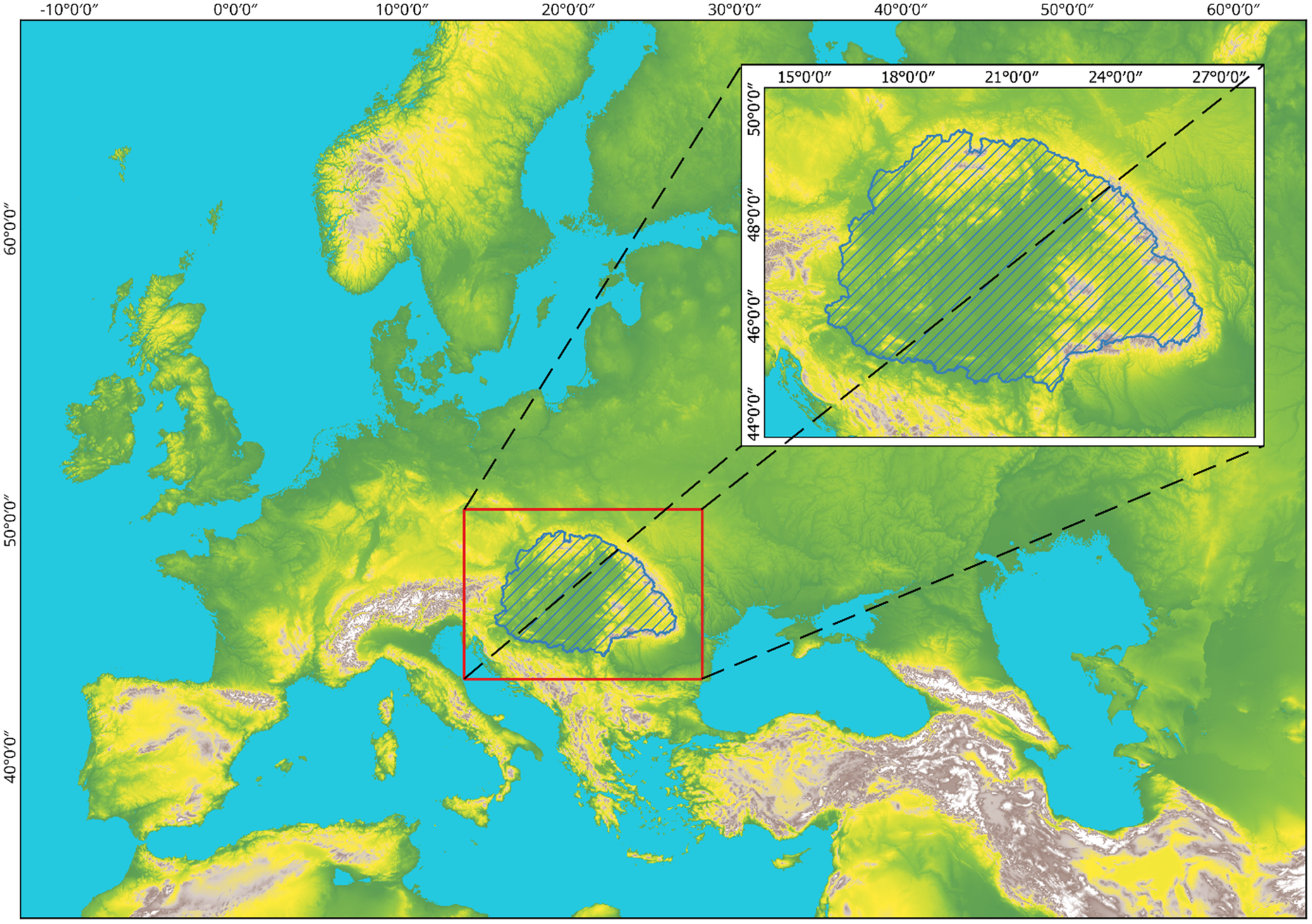
Figure 1. Long description
A topographic relief map of Europe uses a color scale where green represents lowlands and yellow to brown represents higher elevations. The map is framed by a coordinate grid ranging from negative 10 degrees 0 minutes 0 seconds to 60 degrees 0 minutes 0 seconds East, and 40 degrees 0 minutes 0 seconds to 60 degrees 0 minutes 0 seconds North. Centered in Central Europe, a red rectangular bounding box surrounds the Carpathian Basin. This basin is shaded with blue diagonal hatching. Four dashed lines extend from the corners of the red box to a larger inset map located in the top right quadrant. The inset map provides a detailed view of the basin, bounded by the Carpathian Mountains to the North and East, the Alps to the West, and the Dinaric Alps to the South. The inset includes its own coordinate grid from 15 degrees to 27 degrees East and 44 degrees to 50 degrees North.
The counties of the Kingdom of Hungary in 1914, covering the area encompassing the Carpathian Basin. The red line indicates the present border of Hungary.
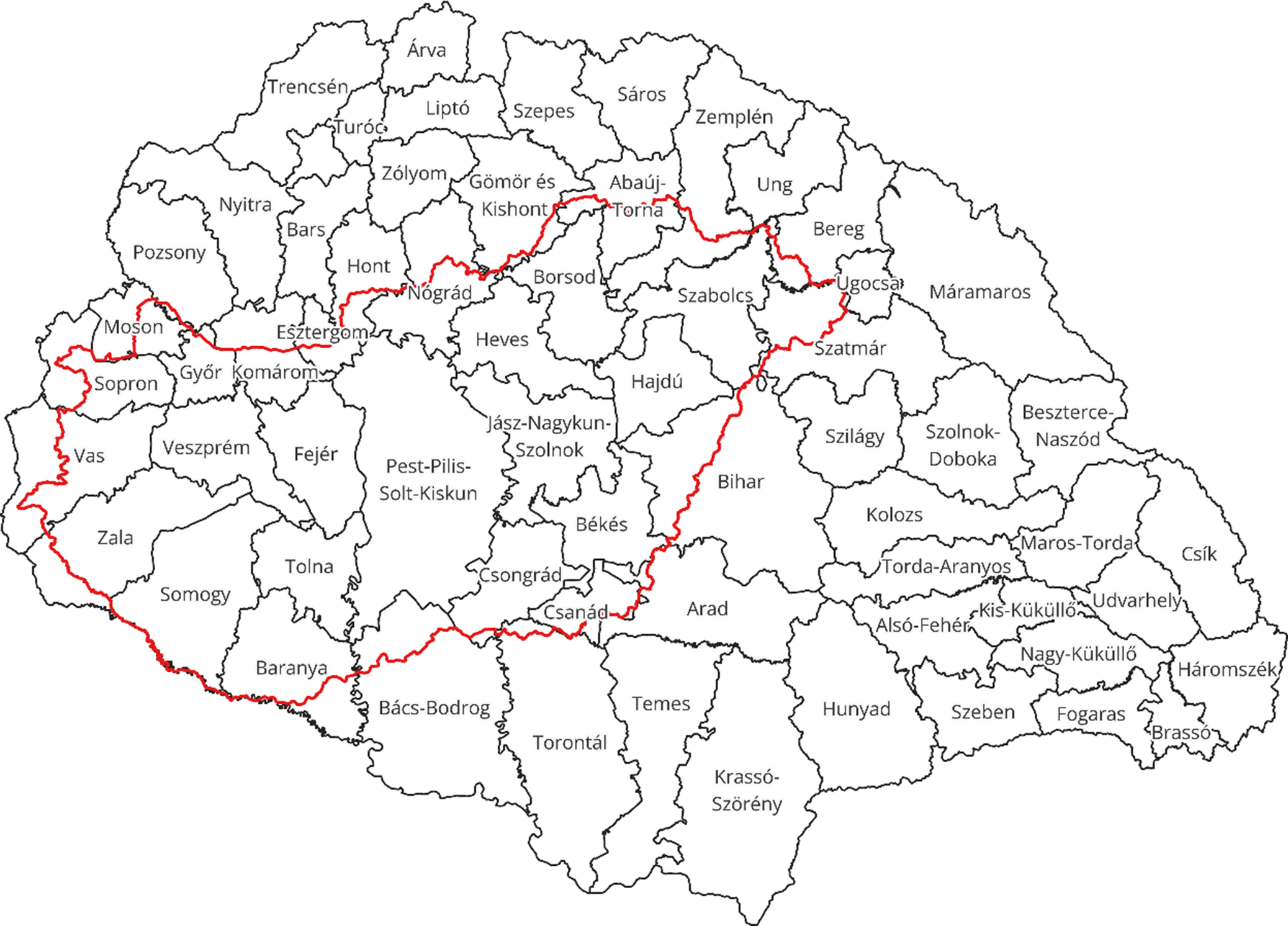
Figure 2. Long description
A black and white political map showing the administrative counties of the Kingdom of Hungary in 1914.
* Northern regions (Northwest to Northeast): Trencsén, Árva, Liptó, Szepes, Sáros, and Zemplén.
* Eastern regions (Northeast to Southeast): Ung, Bereg, Máramaros, Beszterce-Naszód, Csík, Háromszék, and Brassó.
* Southern regions (Southeast to Southwest): Fogaras, Szeben, Hunyad, Krassó-Szörény, Temes, Torontál, Bács-Bodrog, Baranya, and Somogy.
* Western regions (Southwest to Northwest): Zala, Vas, Sopron, Moson, and Pozsony.
* Central and Interior regions: Pest-Pilis-Solt-Kiskun, Jász-Nagykun-Szolnok, Hajdú, Bihar, Békés, Csongrád, Csanád, Arad, Kolozs, Torda-Aranyos, Alsó-Fehér, Kis-Küküllő, Nagy-Küküllő, Udvarhely, Maros-Torda, Szolnok-Doboka, Szilágy, Szatmár, Ugocsa, Szabolcs, Borsod, Heves, Nógrád, Gömör és Kishont, Abaúj-Torna, Hont, Bars, Nyitra, Esztergom, Komárom, Győr, Veszprém, Fejér, and Tolna.
A continuous red line is overlaid on the map, tracing the smaller modern-day borders of Hungary. This line encompasses central counties like Pest-Pilis-Solt-Kiskun and parts of surrounding counties, while leaving the majority of the 1914 peripheral counties outside its boundary.
The most important Numeniini hunting areas in the Carpathian Basin.
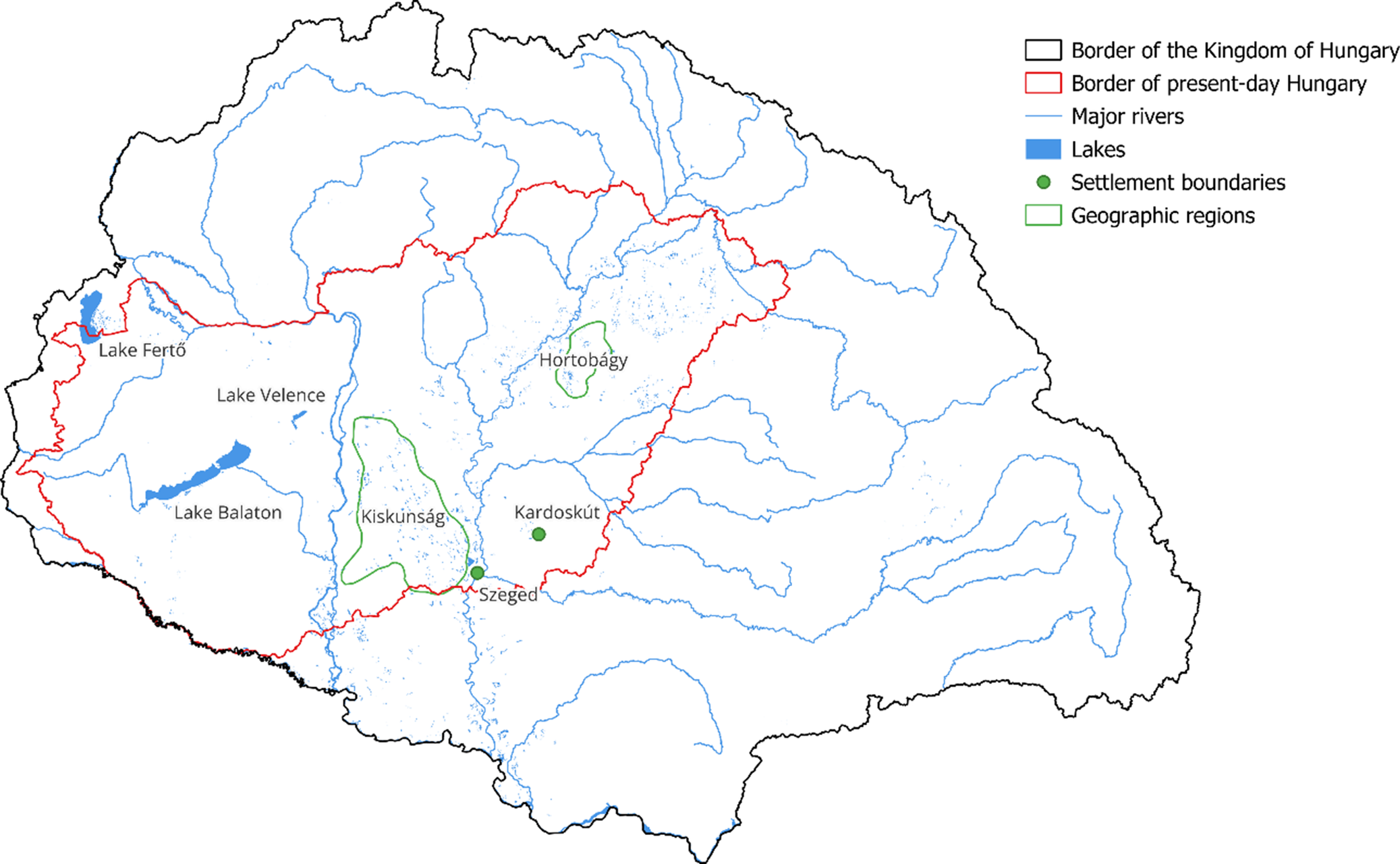
Figure 3. Long description
A geographical map of the Carpathian Basin. A thick black line outlines the historical Border of the Kingdom of Hungary, while a thinner red line inside it marks the Border of present-day Hungary. Blue lines represent major rivers flowing throughout the basin.
Key features from West to East include:
* Lake Fertő on the Northwest border.
* Lake Balaton and Lake Velence in the West-Central region.
* Kiskunság, a geographic region outlined in green in the South-Central area.
* The settlement of Szeged marked with a green dot at the Southern border of Kiskunság.
* Kardoskút marked with a green dot East of Szeged.
* Hortobágy, another geographic region outlined in green, located in the Northeast.
A legend in the top right corner defines the symbols for borders, rivers, lakes, settlement boundaries, and geographic regions.
Following the hunting methods, we show the changes in the conservation status of the three species from the first hunting regulations in 1883 to the present day in the former Kingdom of Hungary and, after 1920, in present-day Hungary. We describe the hunting ban periods and then provide information on species protection, using sources available in the literature and governmental regulations. (Anon 1883a, 1901, 1904, 1912, 1950, 2001; Inkey Reference Inkey1934; Nagy Reference Nagy1923; Rakonczay Reference Rakonczay1989). We then present the available commercial and gastronomic data (Anon 1882, 1883b, 1889; Beretzk Reference Beretzk1935a, Reference Beretzk1935c; Lakatos Reference Lakatos1903; Sterbetz Reference Sterbetz1988), followed by small-scale hunting bags. In the latter case, all data were published in the annual hunting reports of sporting estates in the hunting journals (Vadász- és Versenylap, Vadászlap). The locations mentioned in the texts were plotted on a point map to illustrate their spatial distribution. To geographically locate the settlements associated with each dataset, the county name was given immediately after each locality, and all counties were plotted on the map. The location of each observation was given with at least county-level accuracy. Where the exact location was unknown, we placed the point at the central coordinates of the county.
In addition to the above, we summarise the occurrence and shooting data of the Slender-billed Curlew within the Carpathian Basin from 1845 to 1995 (Supplementary material Table S1). Over the past decade, the validity of numerous sightings in Europe has been questioned following a paper describing how to identify the species (Corso et al. Reference Corso, Jansen and Kókay2014), raising doubts about the validity of data from the Carpathian Basin as well. Almost three-quarters (72.5%) of the sightings are from three people (Péter Beretzk, István Sterbetz and Gábor Kovács), who were renowned ornithologists in Europe at the time, especially with regard to shorebirds. Péter Beretzk also wrote a taxonomic article on the systematic status (species, subspecies) of Numeniini in Hungary (Beretzk et al. Reference Beretzk, Keve, Nagy and Szijj1959). Beretzk and Sterbetz also hunted Numeniini, and several hundred birds passed through their hands (Bende and Bozó Reference Bende and Bozó2025). A further 10.5% of the data (not attributable to these authors) certainly relates to shot individuals. We evaluated the variation in the number of observations between and within years (monthly) and plotted all confirmed occurrences on a point map. Maps were produced using ArcGIS10.3.
Results
The history of hunting Numeniini in the Carpathian Basin
Kaufmann (Reference Kaufmann1896) considered the hunting of Numeniini to be a sporting hunt because they were a difficult group of species to hunt and they were not good to eat. Others reported different hunting methods and also enjoyed hunting (Beretzk Reference Beretzk1935c).
Numeniini were primarily hunted through the use of lesgödör, which were sunken pits or blinds dug so that hunters could conceal themselves from the birds (Anon 1905; Beretzk Reference Beretzk1935a; Lakatos Reference Lakatos1903). The Carpathian Basin consists of flat, open wetlands, mudflats, or agricultural fields, and there is often no natural vegetation like trees or bushes to conceal the hunters, hence the need for sunken pits, which were generally dug in the summer before the autumn migration and took a few days to construct.
Whimbrels were shot in autumn, but typically only a few individuals were taken each year, compared to the Eurasian Curlew, which migrated in larger flocks (Anon 1914). However, Kaufmann (Reference Kaufmann1896) noted that most people who hunted the birds for subsistence were unable to distinguish between them, so accurate data on their numbers are unavailable.
From the description of Lakatos (Reference Lakatos1903), it is clear that the hunting of the Eurasian Curlew had a low success rate, and therefore was not widely practised in the area. In addition to hunting from lesgödör, hunters also concealed themselves using a horse- or ox-drawn cart. According to Boryszlawszky (Reference Boryszlawszky1905), the best way to hunt in spring was to approach the birds which were foraging in among grazing cattle, or to stand for hours in one place waiting for the arrival of any birds. He believed that the best time to hunt them was in autumn, when the young birds were less experienced.
Lakatos (Reference Lakatos1903) recommended that lesgödör should be made every 400–500 m in a large area of pasture, both to allow the shooting points to be changed over time and to allow more people to participate in hunts. Zsótér (Reference Zsótér1890) provided additional information on the Numeniini hunts, including the diameter and orientation of the lesgödör, which looked like an island from a distance.
According to an anonymous author, one had to be much more careful in the autumn than in the spring, because the birds were less attentive to humans in spring (Anon 1905). This could not be confirmed by Beretzk (Reference Beretzk1935a), who found that artificial decoys were as effective in the autumn as in the spring. It was clear, however, that the Numeniini were very wary and would fly if they saw humans a long way away, so that it was impossible to move out of the pit without disturbing the birds if they were in the area (Anon 1905).
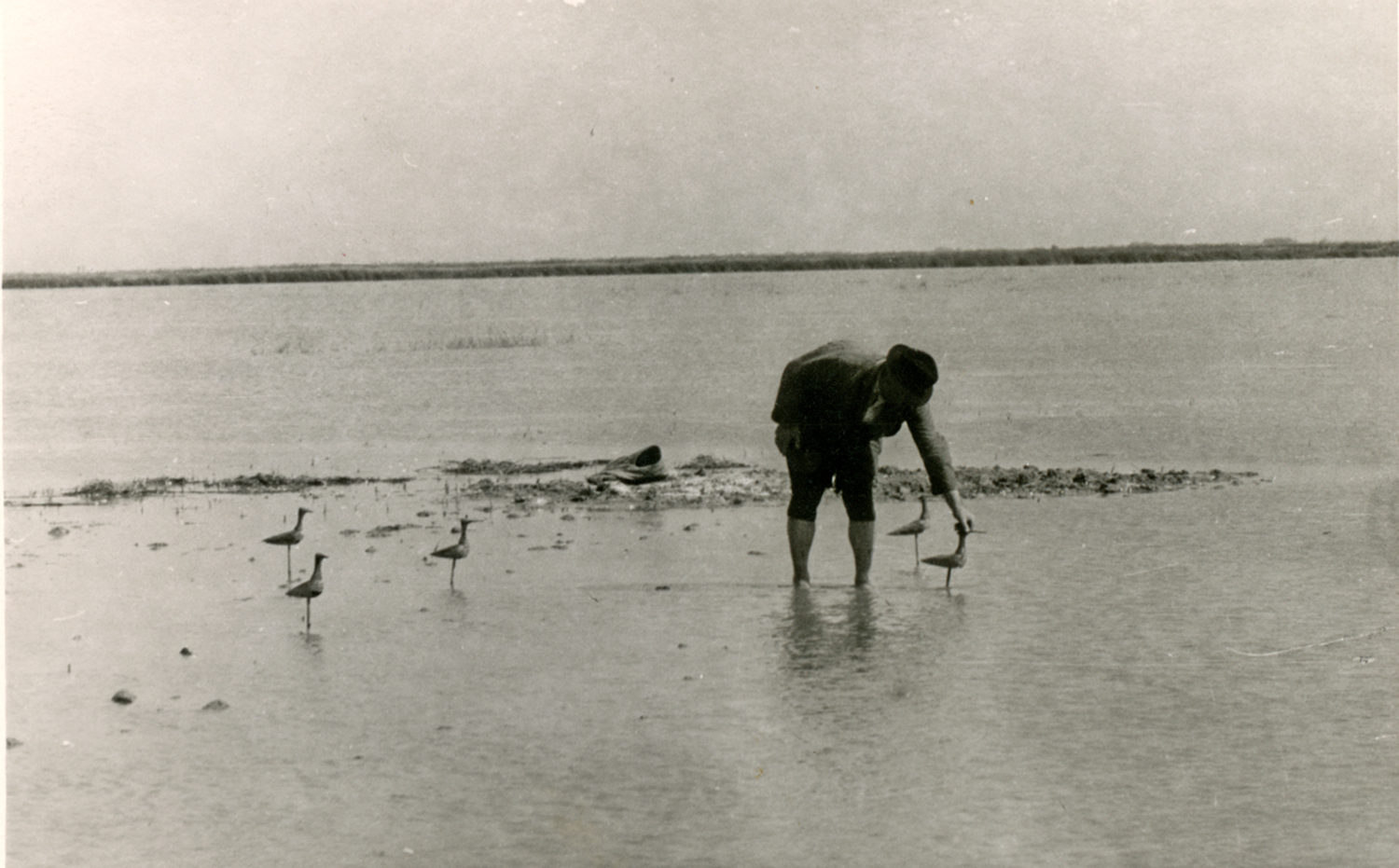
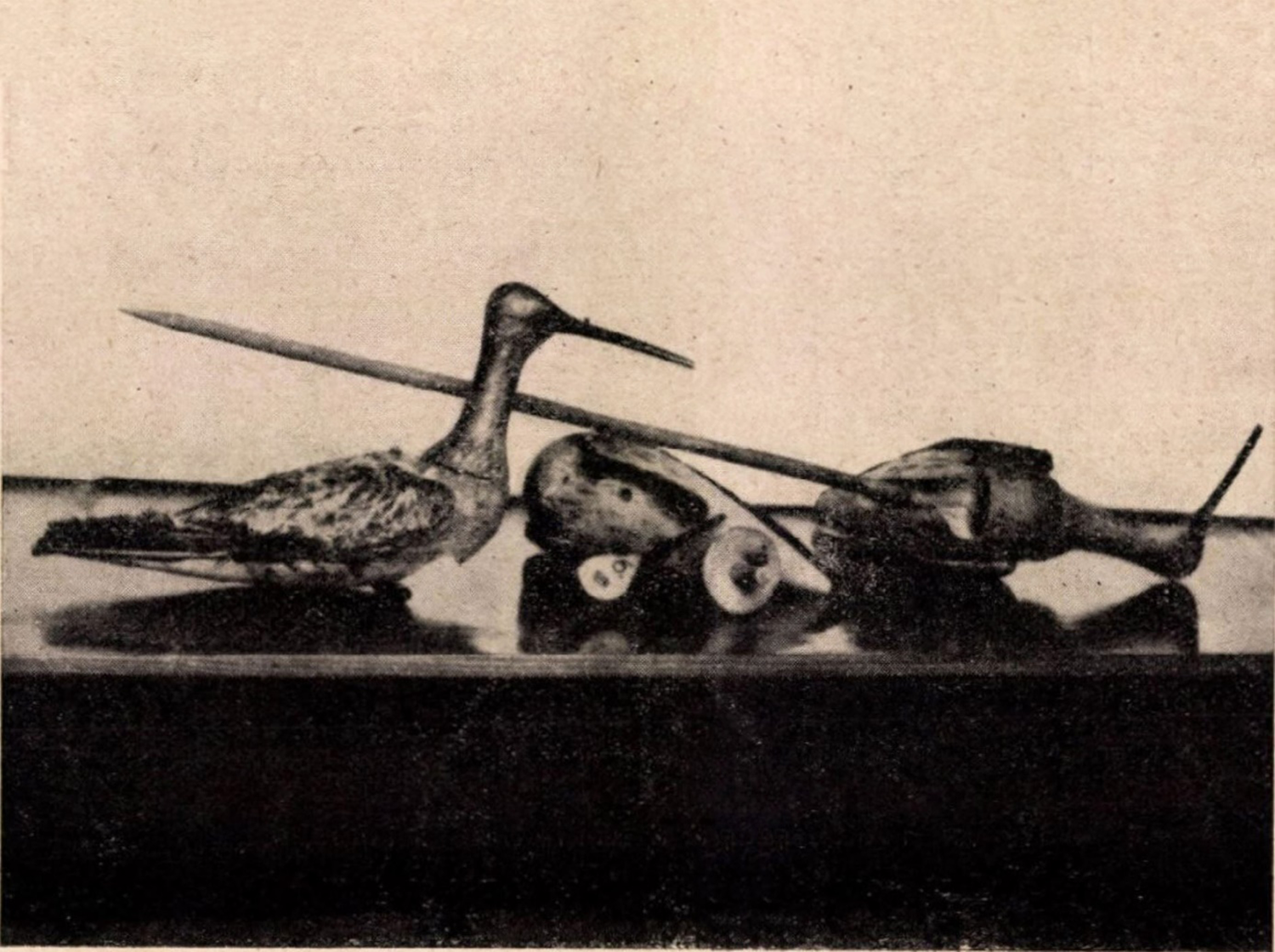
Contrary to Boryszlawszky (Reference Boryszlawszky1905), Kaufmann (Reference Kaufmann1896) and Beretzk (Reference Beretzk1935a) considered spring hunting to be the primary activity. At Lake Fehér in Szeged, they dug lesgödör on the lakeshore and placed decoys in the area. These decoys (so-called ‘masks’), either birds stuffed and dried in a kiln or later imitations made of wood (Figures 4 and 5), were inserted into the ground and secured with a stick. Beretzk (Reference Beretzk1935a) suggested that the birds flew down to the decoys because they could see them and were convinced that the water depth was sufficient. The birds could also be lured with whistles, but this was not necessary, as they would land easily on the decoys themselves. If a bird was shot, it was advisable to wait and reload the gun, as the birds would circle over the bird that had been shot for some time. The tools and decoys were left in the pit, and the next day the hunt was resumed (Beretzk Reference Beretzk1935a).
The installation of the decoy birds (‘masks’).
Modern decoys (#masks’) made of wood.
Obtaining the first real decoy birds required considerable patience and skill. This was done, according to Zsótér (Reference Zsótér1890) and Illés (Reference Illés1895), by making a Numeniini-like shape out of mud, which functioned as a decoy bird. After the first specimen had been successfully shot, it was also placed among the mud piles.
Hunting took place from dawn up to 09:00–10:00 and at dusk (from 17:00), when birds flew between their usual feeding and roosting sites (Chernel Reference Chernel1899). However, Beretzk (Reference Beretzk1935a) found that Numeniini leaving their roosting sites in the early morning, typically did not respond to the decoy birds, either in spring or autumn. In contrast, individuals that came to drink and bathe were more easily hunted. In autumn, dry, warm and windless days proved to be the most productive.
Even in the middle of the 20th century, this kind of hunting was still practised (Sterbetz Reference Sterbetz1988) and was a folk tradition in the Szeged region, providing an important source of income for poor families. From the lesgödör, up to 7–8 Numeniini could be shot, as the birds would still fly around over the decoys even after the first birds had been shot (Beretzk Reference Beretzk1935a).
A less significant hunting method was hunting in autumn in reeds and bogs, which required extreme local knowledge and caution. If the hunter disturbed the alert birds too early, he could hardly get a shot (Kaufmann Reference Kaufmann1896). In addition to the above, occasional kills were made when hunting other species such as the Great Bustard Otis tarda (Takátsy Reference Takátsy1889).
Hunting season, nature conservation status
In the first law on hunting in the Kingdom of Hungary (Law XX of 1883) (Anon 1883a), Numeniini did not appear in the list of the species that could be hunted. This does not mean that they were not hunted, only that they were not considered sufficiently important to appear on the list of huntable species. Waterbirds, including the Numeniini, were not to be hunted during the breeding season, i.e. the closed season ran from 15 April to the end of June. It is worth noting, however, that in Germany these birds were decoyed with whistles and caught with nets, but this method of exploitation was already prohibited in the Kingdom of Hungary at the end of the 19th century (Kaufmann Reference Kaufmann1896).
On the instructions of the Minister of Agriculture, the Hungarian Royal Ornithological Centre compiled a list of species recommended for protection, but the Numeniini were not included in this list (FM. No. 24 655 /VII/1/1901) (Anon 1901). In 1904 (19 384/I. 4. FM.) (Anon 1904) and in 1912 (16 946/IV.26 FM.) (Anon 1912; Rakonczay Reference Rakonczay1989) none of the Numeniini were included in the list of species worthy of protection.
In accordance with the regulations on hunting seasons published in 1923 and 1925, the closed season lasted from 1 February to 15 August, which effectively banned their spring hunting (Inkey Reference Inkey1934; Nagy Reference Nagy1923).
The 1950 decree (16 074/1950 /VI. 27.27./ FM) (Anon 1950) banned the hunting of Numeniini, and in 1954 they were protected under the Bird Protection Decree (Rakonczay Reference Rakonczay1989).
In 1971, both the Slender-billed Curlew and the Eurasian Curlew were listed as strictly protected, while the Whimbrel was listed as a protected species (Rakonczay Reference Rakonczay1989), and this is still the case today (Anon 2001).
Trade and gastronomy
Only a few data are available on the trade of Numeniini in Hungary. In March 1883, the first specimens appeared in the Budapest market hall in the middle of the month (Anon 1883b), while between mid-September and mid-October 1882, more and more arrived every day (Anon 1882). Its meat sold for 1.2 crowns in 1889 (1 kg of beef cost about 0.5 crowns at that time) (Anon 1889).
There is little information on the gastronomic aspects, but these birds were certainly not widely consumed in most of the Carpathian Basin. Lakatos (Reference Lakatos1903) also did not consider these species to be particularly tasty, although in the Szeged region peasants sold them in abundance (Sterbetz Reference Sterbetz1988), as Péter Beretzk saw with his own eyes at the Szeged market as a child. Beretzk (Reference Beretzk1935c) contradicted this, writing that they used to be shipped abroad because their meat was a sought-after commodity, and that he himself was a fan of Numeniini dishes. As for the meat, he noted that spring birds did not taste as good as autumn ones (Beretzk Reference Beretzk1935a).
Sporting estate hunting bags
Unfortunately, we do not have any national-scale hunting bag data, as in the censuses they were included in the ‘other game for commercial use’ category with several other species (Faragó Reference Faragó2009), but time-series data from 11 sporting estates are available. In total, data are available from 13 annual hunting bags (Figure 6), most of which are from the Lake Velence area (Fejér County) (30.8%). Here, 10 birds were shot in 1873, five in 1874, and two in 1878. Taking all the data into account, the average annual hunting bag per estate was 4.3 individuals, with the highest number (13 individuals) being shot in the hunting grounds of Kismarton in 1909.
Distribution of the estates’ hunting bag data of Numeniini in the territory of Kingdom of Hungary between 1851 and 1918.
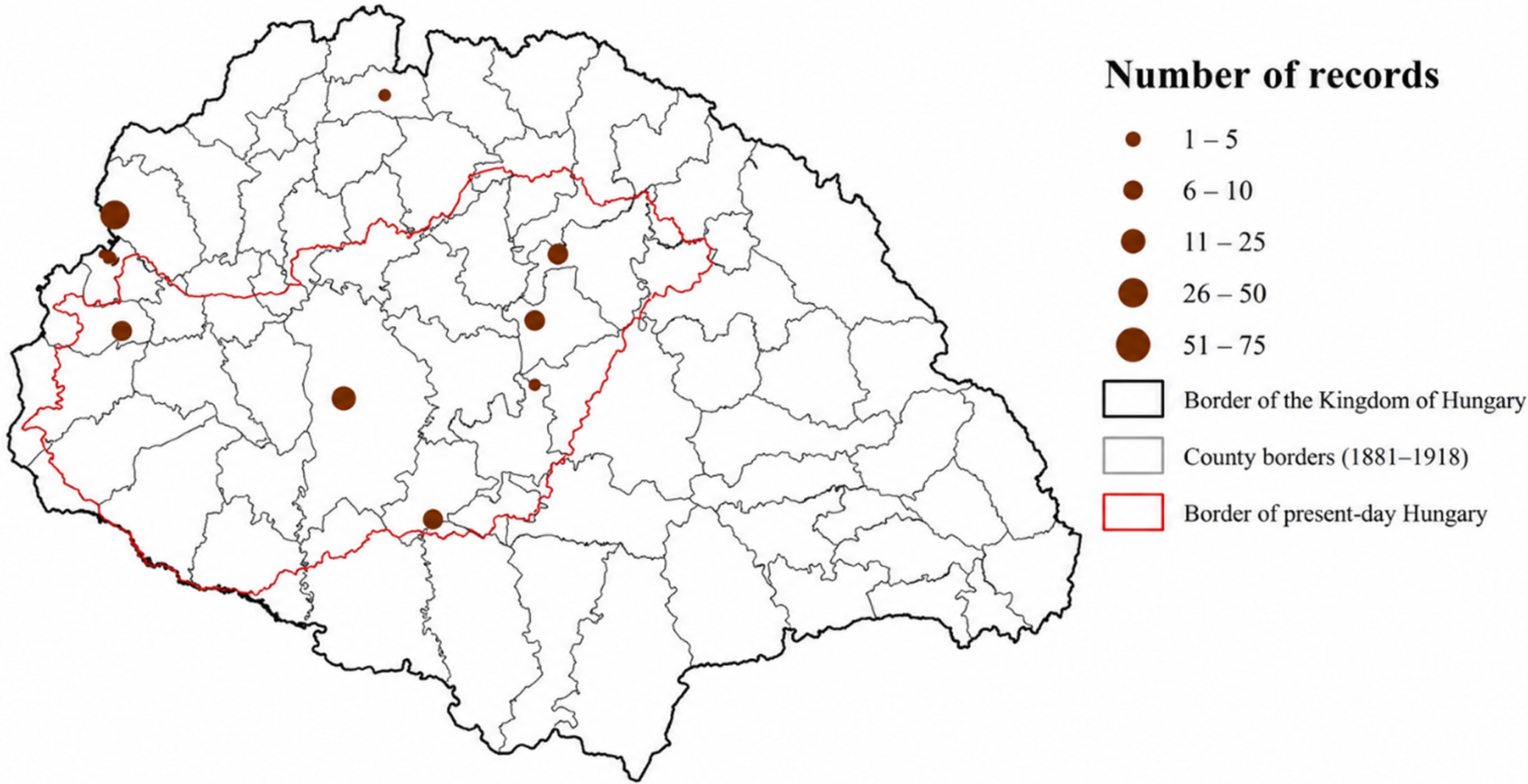
Figure 6. Long description
A map of the Kingdom of Hungary featuring three types of borders: a thick black line for the Kingdom border, thin grey lines for county borders (1881 to 1918), and a red line outlining present-day Hungary.
A legend in the top right titled Number of records uses brown circles of increasing size to represent data ranges:
* Smallest circle: 1 to 5
* Second circle: 6 to 10
* Third circle: 11 to 25
* Fourth circle: 26 to 50
* Largest circle: 51 to 75
Data points are distributed as follows:
* West: One large circle (51 to 75) and two medium circles (11 to 25) are located near the western border of the Kingdom.
* Central: One medium circle (11 to 25) is located in the central-western region within the red present-day Hungary border.
* North: One small circle (1 to 5) is located near the northern border.
* East-Central: A cluster of four circles (ranging from 1 to 25) is located in the eastern half of present-day Hungary.
* South: One small circle (6 to 10) is located on the southern red border line.
Daily and shorter-period bag data reveal that in the 1860s, 13 Numeniini were shot in one morning near Szeged, two in one day on 14 September 1881 in Kis-Sárrét (Bihar and Békés counties), 30 in Kunpeszér (Pest-Pilis-Solt-Kiskun County) in early November 1884, also in a single day, one in Mosonújfalu (Moson County) on 5 December 1898, and 14 in Hortobágy (Bihar County) on 25 October 1918. In March 1898, two were shot in five days in Tiszalök (Jász-Nagykun-Szolnok County), and three in two days in Zurány (Moson County) at the end of October 1903. Between 1851 and 1859, 12 were shot in Mihályi (Sopron County), and between 1867 and 1898 a total of 61 in Stomfa (Pozsony County). Dr. Péter Beretzk reported that a total of 102 Numeniini were shot on 20, 26 and 29 September 1935 and on 3 October 1935 (Beretzk Reference Beretzk1935a).
The Slender-billed Curlew in the Carpathian Basin
Data from Transylvania (Frivaldszky Reference Frivaldszky1891; Linţia Reference Linţia1955; Schenk Reference Schenk1920) and from present-day Hungary (Szeged, Hanság) are known from the 19th century (Beretzk et al. Reference Beretzk, Keve, Nagy and Szijj1959; Faragó and Sterbetz Reference Faragó and Sterbetz1985; Frivaldszky Reference Frivaldszky1891). According to Lakatos (Reference Lakatos1891), the species was shot several times in Szeged in the spring, but he did not provide exact data (Beretzk et al. Reference Beretzk, Keve, Nagy and Szijj1959). On 28 October 1893, a specimen was shot near Kiskunfélegyháza (Pest-Pilis-Solt-Kiskun County) and was delivered to Ottó Herman through a game dealer. He noted that this was the first typical male Slender-billed Curlew west of Transylvania (Herman Reference Herman1894). In response to Ottó Herman’s paper, László Zsótér wrote that one bird was shot on each day of 20 and 27 March 1890 while hunting from a lesgödör in Szeged (Zsótér Reference Zsótér1894). According to Kosztka (Reference Kosztka1894), the species was not rare in certain years and places. Between 10–15 April 1893, it was seen daily in Abádszalók, in the flooded places of the Tisza River, in flocks of 30–60 individuals and on 15 April he shot four birds. According to his observations, this species moved in flocks and, in flight, the flock was cohesive and did not mix with other Numeniini. It was very rarely seen in farmland but was frequent around water bodies (Kosztka Reference Kosztka1894).
Subsequently, the species has been found in several places in the lowlands of the Carpathian Basin (Beretzk et al. Reference Beretzk, Keve, Nagy and Szijj1959; Boross Reference Boross1942; Gaal Reference Gaal1896; Glück Reference Glück1893; Grbac and Krajl Reference Grbac and Kralj2008; Greschik Reference Greschik1910; Kovács Reference Kovács2020; M.O.K.–U.O.C. 1895; Sátori Reference Sátori1939; Schenk Reference Schenk1917; Warga Reference Warga1926; Rare birds of the Carpathian Basin 2026).
According to Péter Beretzk, the occurrence at Lake Fehér in Szeged in the 1930s and 1940s may have been much more frequent than the available evidence suggests. This was because some birds that had been shot were misidentified by hunters who successfully hunted them with the help of decoys. His assumption of its frequency was supported by the fact that in autumn 1943, he hunted on only four occasions, but on two occasions he hunted Slender-billed Curlews. In spring, however, despite intensive hunting of Whimbrels, no confirmed occurrences were recorded (Beretzk Reference Beretzk1944). Evaluating the data from this period, Beretzk et al. (Reference Beretzk, Keve, Nagy and Szijj1959) concluded that the species was not considered to be particularly rare in Szeged, but that the earlier spring records were replaced by autumn occurrences. The number of records declined after the cessation of hunting in the early 1950s (Beretzk Reference Beretzk1955). Typically, solitary specimens or small flocks were seen (Beretzk Reference Beretzk1950, Reference Beretzk1955, Beretzk et al. Reference Beretzk, Keve, Nagy and Szijj1959), the largest group consisting of 12 individuals. Interestingly, one bird spent one month in the area in January 1948 (Beretzk Reference Beretzk1950, Beretzk et al. Reference Beretzk, Keve, Nagy and Szijj1959). The last sighting here was in 1982 (Sterbetz Reference Sterbetz1992).
From the 1950s, thanks to István Sterbetz, birdwatching activity increased at Lake Fehér in Kardoskút (which, like Lake Fehér in Szeged, is a saline lake within 40 km), and the species was recorded on several occasions (Anon 1982a; Sterbetz Reference Sterbetz1975, Reference Sterbetz1992). Typically, he saw solitary birds here, but he also recorded larger flocks, the validity of which was questioned by Konyhás (Reference Konyhás1993).
From the 1970s, bird observations on the Hortobágy became more intensive through the work of Gábor Kovács, and the species was recorded several times (Hadarics and Zalai Reference Hadarics and Zalai2008; Kovács Reference Kovács1981, Reference Kovács1984a, Reference Kovács1984b, Reference Kovács1988, Reference Kovács1990, Reference Kovács1991; Kovács and Ecsedi Reference Kovács, Ecsedi and Ecsedi2004). In 1990, he wrote that eight of his nine observations were made in drained fishponds, and only in one case (19 September 1988) did he observe more than one (namely three) individuals (Kovács Reference Kovács1990). István Sterbetz also reported three personal sightings from this region (Sterbetz Reference Sterbetz1992).
From the middle decades of the 20th century onwards, sightings were also made in other parts of the Hungarian Great Plain (Anon 1981, 1982b; Réthy Reference Zs1977, Sterbetz Reference Sterbetz1992, Reference Sterbetz1999) and in the Hanság (Beretzk et al. Reference Beretzk, Keve, Nagy and Szijj1959, Faragó and Sterbetz Reference Faragó and Sterbetz1985).
In the 1990s, the number of observations decreased drastically. Apart from one sighting in Transdanubia in 1991 (Hadarics and Zalai Reference Hadarics and Zalai2008), five further sightings have been made in the Hortobágy (Ecsedi and Szilágyi Reference Ecsedi and Szilágyi1996; Gorman Reference Gorman1996; Hadarics and Zalai Reference Hadarics and Zalai2008; Szimuly Reference Gy1993). The species was last seen on 15 April 2001 in Apaj (Pest-Pilis-Solt-Kiskun County) (Oláh and Pigniczki Reference Oláh and Cs2010), but this record is not formally accepted (Szabolcs Gál in litt., Rarities Committee of BirdLife Hungary).
Evaluation of the observation data
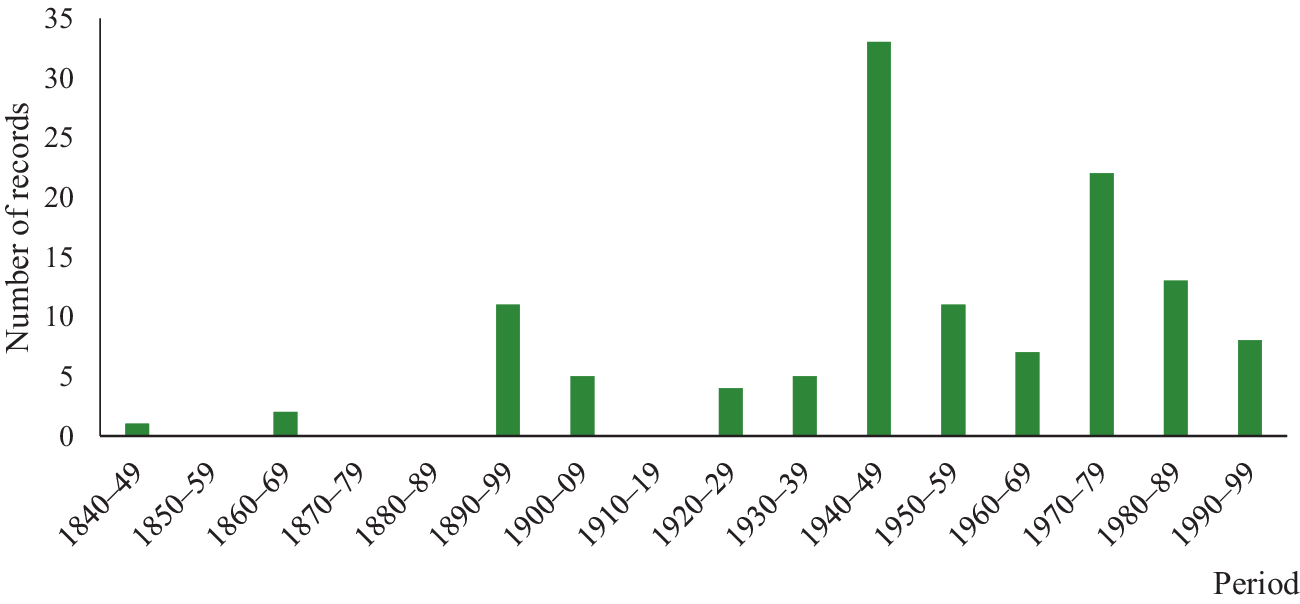
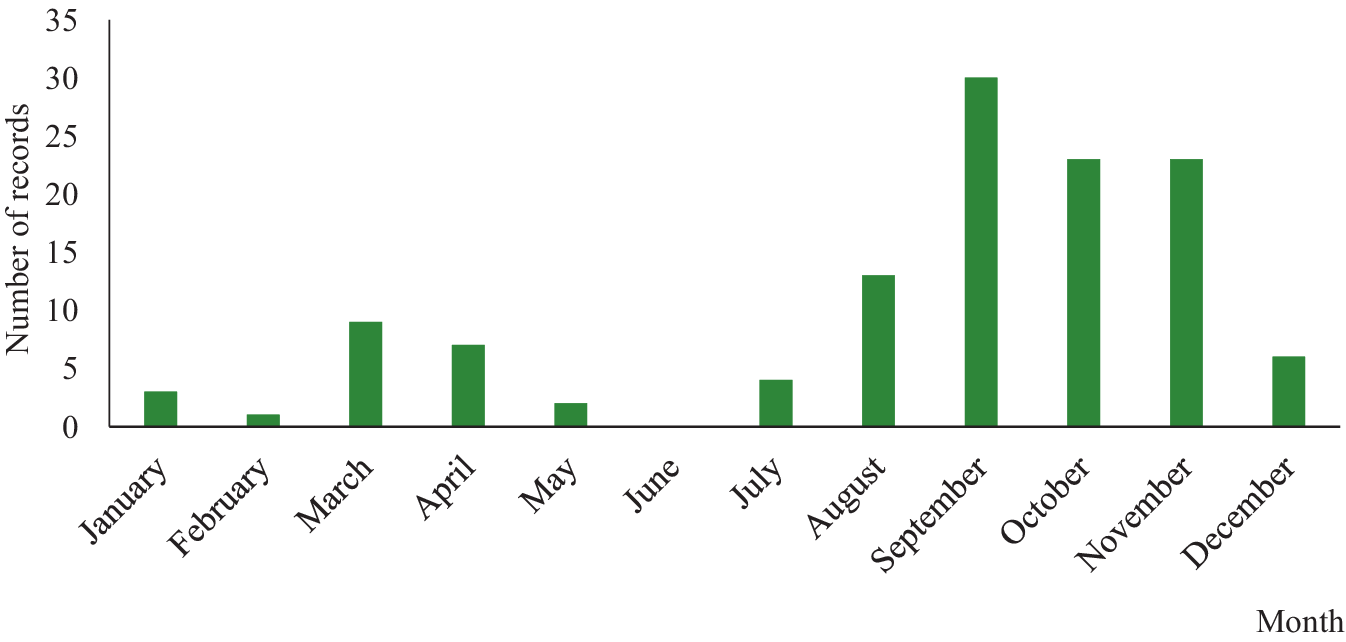
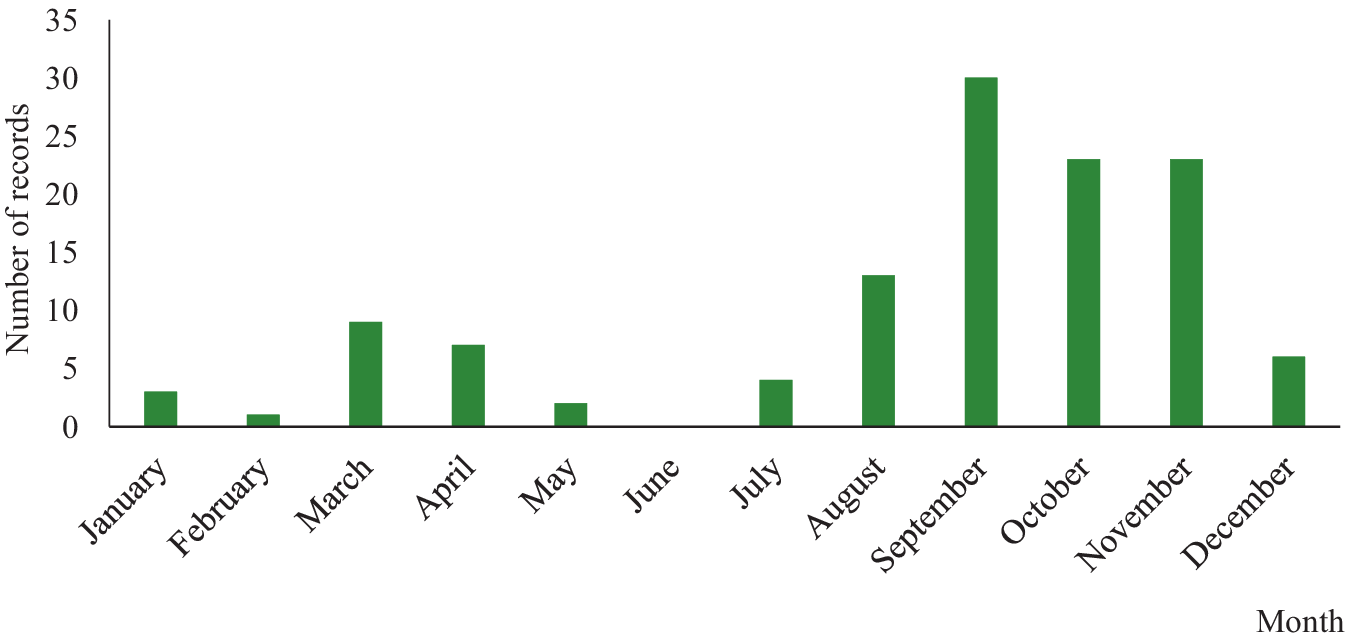
Of the 124 observations of the species in the Carpathian Basin between 1845 and 1995, the exact year is not known for five, but for 119 records the date of observation is known to at least the year (Figure 7). In 118 cases, observations were reported to an accuracy of at least one month (Figure 8). The species was recorded in the area in all months except June, but the majority of the data were from September to November. The spring records are concentrated in March and April, with a few occurrences in winter. A total of 13 of the 19 spring (February–May) records are from the period 1845–1925, after which only 6 sightings were made in spring. For the 90 autumn (July–November) records the ratio is the reverse: 90.2% of the records are from after 1925. In all 124 cases, the place of observation was given. Accordingly, 24.8% of the data came from Szeged, 19.2% from Hortobágy and 16.8% from Kardoskút (Figure 9).
Temporal distribution of Slender-billed Curlew records (n=122) between 1845 and 1995 by 10-year period.
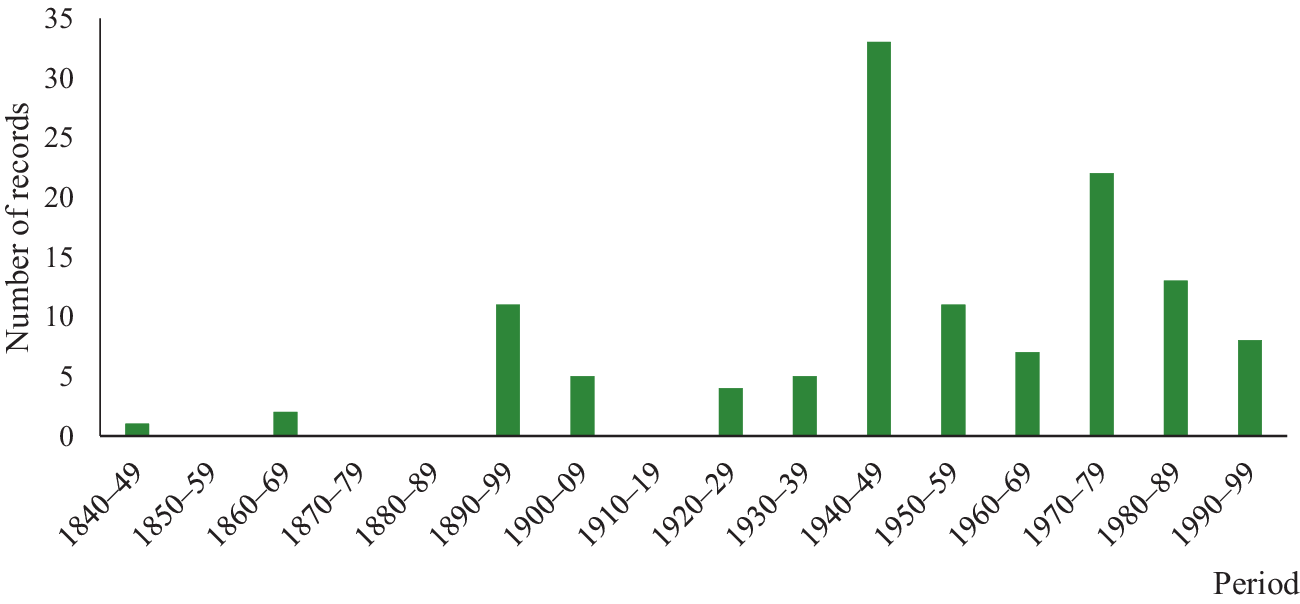
Figure 7. Long description
The y-axis is labeled Number of records and ranges from 0 to 35 in increments of 5. The x-axis is labeled Period and lists 10-year intervals from 1840-49 to 1990-99. The data is represented by green vertical bars.
* 1840-49: 1 record
* 1850-59: 0 records
* 1860-69: 2 records
* 1870-79: 0 records
* 1880-89: 0 records
* 1890-99: 11 records
* 1900-09: 5 records
* 1910-19: 0 records
* 1920-29: 4 records
* 1930-39: 5 records
* 1940-49: 33 records (highest peak)
* 1950-59: 11 records
* 1960-69: 7 records
* 1970-79: 22 records (secondary peak)
* 1980-89: 13 records
* 1990-99: 8 records
Temporal distribution of Slender-billed Curlew records (n=121) by 10-year period between 1845 and 1995.
Geographical distribution of Slender-billed Curlew observations in the Carpathian Basin between 1845 and 1995.
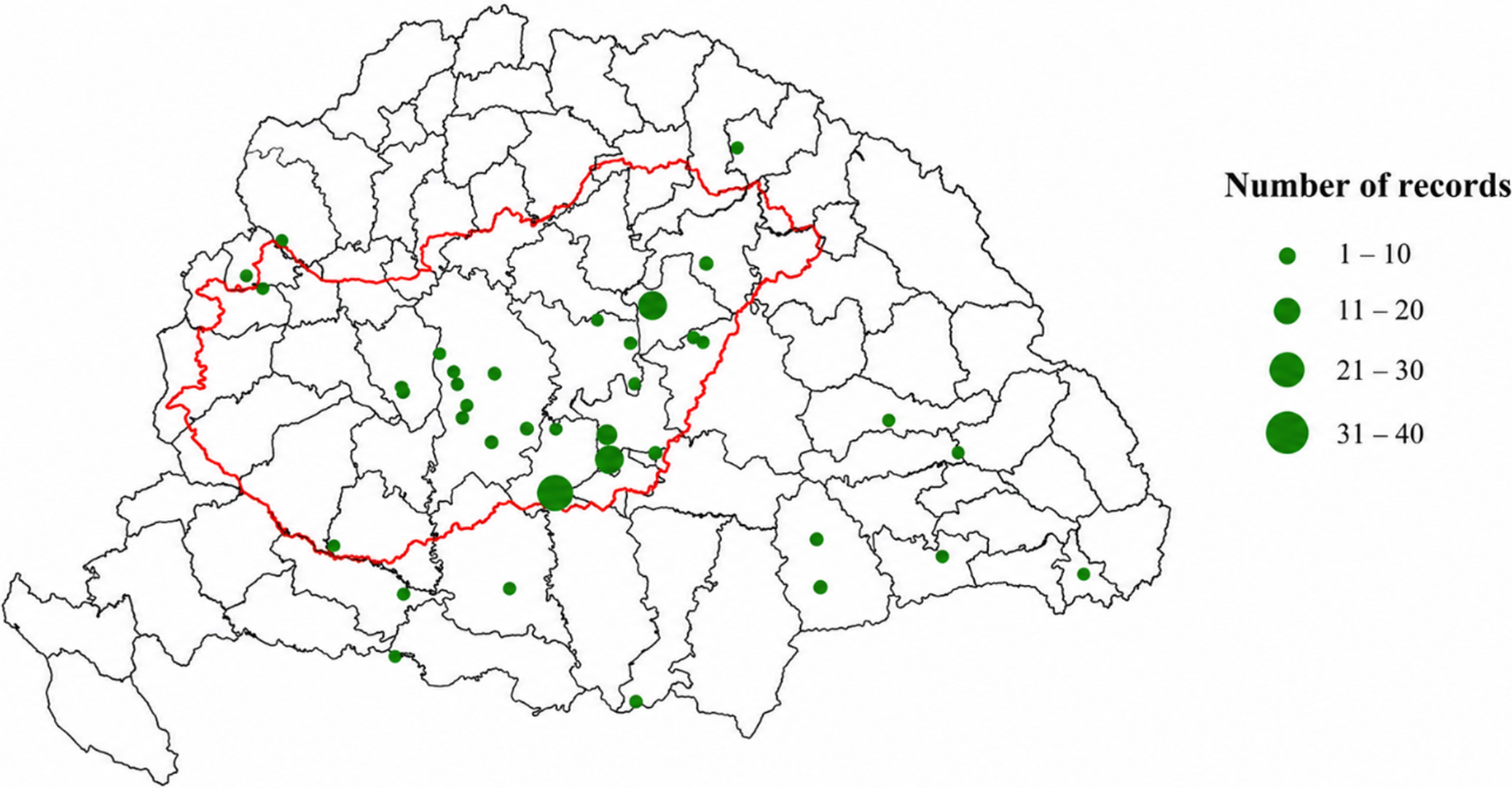
Figure 9. Long description
A geographical map of the Carpathian Basin is divided into numerous administrative or regional districts by black outlines. A thick red border highlights a central sub-region. Green circles of varying sizes represent the Number of records.
* The legend on the right indicates four size categories for the green circles: the smallest represents 1 to 10 records, the next 11 to 20, then 21 to 30, and the largest represents 31 to 40 records.
* The highest concentration of observations is located within the central area enclosed by the red border, particularly in the South-Central and Eastern portions of this sub-region, where several large circles (21 to 40 records) are clustered.
* Scattered smaller circles (1 to 10 records) are distributed across the West, South, and East of the broader basin outside the red border.
* The Northern and far Western regions of the basin show very few to no recorded observations.
Discussion
Based on our research, it appeared that all records of hunted Numeniini came from the lowland, saline lakes of the Carpathian Basin. The available data suggest that in these places, too, the hunted birds were sold in the markets. At the Carpathian Basin level, there cannot have been any significant number of legally hunted Numeniini, as they were not listed as a separate species group in the national censuses of hunting bags initiated by Albert Bedő (Faragó Reference Faragó2009). We have no information on the extent of poaching, but it was presumably negligible (Bende and Bozó Reference Bende and Bozó2025). Their hunting bags were included with those of other species in the category of ‘other huntable game’. The ethnographic data from Szeged are quite remarkable, since, as Sterbetz (Reference Sterbetz1988) wrote, the hunting of Numeniini was a kind of folk tradition there, and an important source of livelihood for poor rural people. Data on the gastronomic use of Numeniini is also available from the Netherlands (Jukema and Piersma Reference Jukema and Piersma2004), and this was also a tradition in the Carpathian Basin around wetlands. The impact of hunting is unknown but given the scale it is unlikely to have been the major driver of the decline of these species, unlike other species such as Gallinago (snipe) species and Common Quail Coturnix coturnix (Bende and Bozó Reference Bende and Bozó2025). However, there is enough information available to show that, for example, at Lake Velence, where hunting data has been reported for several years, hundreds of other waterbirds, such as grebes, were shot during a single season (Bende and Bozó Reference Bende and Bozó2025). However, it should be noted that we only worked with officially reported data, and the number of birds killed during illegal hunting – as has been confirmed for species living in other geographical regions – was therefore likely to be much higher (Liang et al. Reference Liang, Giam, Hu, Ma and Wilcove2023). In addition, it is also a known fact that highly localised mortality sources during migration – particularly passive hunting or entanglement tools such as nets deployed at a small number of key stopover sites – can exert large population-level impacts on migratory shorebirds (Liang et al. Reference Liang, Mu, Yang, Wang, Li and Huang2025). In the case of the Slender-billed Curlew, as the species became increasingly rare from the beginning of the 20th century (Ushakov Reference Ushakov1912), even localised hunting affecting only a few individuals had a significant impact on the species’ population. This is because when hunting mortality exceeds sustainable mortality thresholds, it has a dramatic effect on rare species. In the case of the critically endangered Spoon-billed Sandpiper Calidris pygmaea, for example, sustainable additional mortality has been estimated at only four individuals per year (Turrin and Watts Reference Turrin and Watts2016). The dramatic decline in the populations of these species, especially of the Slender-billed Curlew, also reflects the effects of anthropogenic impacts on breeding areas and migration routes (Brown et al. Reference Brown, Crockford and Sheldon2014; Pearce-Higgins et al. Reference Pearce-Higgins, Brown, Douglas, Alves, Bellio and Bocher2017).
The historical hunting bag data, however, provided important information for reconstructing the occurrence of Slender-billed Curlew in the Carpathian Basin. The annual distribution of the records is clearly an artefact of hunting activity. However, it also draws attention to several facts. First, it is clear that the species began to receive significant attention in the last decade of the 1800s, thanks to an article published in 1894 by Ottó Herman, who issued a call for the publication of data (Herman Reference Herman1894). On the basis of the descriptions and taxidermy records, these data can be considered reliable, even though doubts have arisen in recent years regarding the identification of the species (Corso et al. Reference Corso, Jansen and Kókay2014). According to data from Bosnia in the Balkans, the species migrated through the region from the end of March to the end of May, and it was therefore not even ruled out that it nested in Hungary (M.O.K. 1907). But this statement must be met with some scepticism since, at that time, there was no evidence that the much more common Eurasian Curlew nested in the Carpathian Basin. For this reason, Victor Tschusi published an appeal to Hungarian ornithologists to investigate the situation (M.O.K. 1907).
There was a small peak in the number data in the 1920s, but the real breakthrough came with Peter Beretzk’s hunting of Numeniini in the 1930s, especially the 1940s. During this period, Beretzk shot several Slender-billed Curlews during his waterfowl hunts in Szeged, and clearly established that this species was not as rare in the Carpathian Basin as had previously been thought, at least in the salt lakes. Perhaps its apparent rarity was partly due to uncertainty in identification. Beretzk stopped hunting in the mid-1950s, and this is clearly reflected in the decline in the number of records reported from that time. Outside Szeged, the species was typically found in other saline lakes, so that in the Carpathian Basin these habitats were definitely important resting places for the species. It was rare in the Transdanubian region, but this was certainly not due to low monitoring effort, since most of the important ornithologists of the period lived there (Magyar Reference Magyar2018). If the species was in fact more common there, more specimens would certainly have been collected from Lake Velence, Lake Fertő or Lake Balaton, which were frequently used hunting grounds for waterbirds at the time. It was also rare in Transylvania and other parts of the Carpathian Basin. Taking all the data into account, approximately two-thirds of the records came from the Tiszántúl, which clearly indicates the importance of this geographical region for the migration of the species. This can be paralleled with the migration pattern of the Whimbrel, which also passed through the area in large numbers (Csörgő et al. Reference Csörgő, Zs, Halmos, Magyar, Gyurácz and Szép2009).
The increase in the number of Slender-billed Curlew records in the 1970s was due to the increase in the number of bird observations in the Kardoskút saline lake and the Hortobágy fishpond, partly due to the improvement in the quality of bird identification books, binoculars and telescopes. Towards the end of the 20th century, the global population of the species was very low, and the last confirmed records of this species were in the mid-1990s (Buchanan et al. Reference Buchanan, Chapple, Berryman, Crockford, Jansen and Bond2024).
Taking into account the seasonal distribution of the data, the Slender-billed Curlew migration was significant in March–April and September–November, and in autumn, birds were also seen regularly in August and occasionally in winter. The data we have summarised and processed also confirm the earlier assumption that the species had clearly become rarer in spring by the middle of the 20th century than it had been previously, while the number of autumn observations had increased considerably. Hunting data from Szeged clearly show that this could also be due to natural causes, and not necessarily a methodological effect. Hunting using decoy birds was carried out in spring as well as in autumn, but no Slender-billed Curlews were shot during the spring period. The reason for the shift in the numbers of birds recorded in spring and autumn is not clear, but it is possible that for some reason the migration routes of the species changed during this period.
Supplementary material
The supplementary material for this article can be found at https://doi.org/10.1017/S0959270926100847.
Competing interests
The authors declare none.
Financial support
This research received no specific grant from any funding agency, commercial or not-for-profit sectors.