This is slavery, not to speak one’s thought.
-Euripides
Expressing voice is target-sensitive (Liu, Zhu, & Yang, Reference Liu, Zhu and Yang2010). People are unwilling to speak up to those who desire to perpetuate the status quo because voice stimulates changes in ways of doing things (Van Dyne, Ang, & Botero, Reference Van Dyne, Ang and Botero2003). Employees are concerned about the potential repercussions of speaking up to those who occupy higher positions, often withholding valuable ideas from their superiors based on socially obtained beliefs about what makes voice risky in organizational hierarchies (Detert & Edmondson, Reference Detert and Edmondson2011). As such, leaders are inherently central to the voicing process in that they are primary targets of voice, the people with control over or access to important resources in the workplace (Detert & Burris, Reference Detert and Burris2007).
For business success, leaders need employees who openly express their novel ideas and make valuable suggestions for change to proactively respond to dynamic business environments (Morrison, Reference Morrison2011). The improvement-oriented voices of subordinates is not only the basic premise of industrial relations (Batt, Colvin, & Keefe, Reference Batt, Colvin and Keefe2002), but also a precursor to innovative ideas that challenge conventional understanding (Rank, Pace, & Frese, Reference Rank, Pace and Frese2004). Yet, fostering employees to speak up to those in power is difficult because many issues are not wholly encompassed in the chain of command within organizations. Power imbalance between leaders and subordinates may shape how employees decide to speak up or to remain silent (Morrison & Rothman, Reference Morrison and Rothman2009). Considerable research has highlighted the importance of leadership in encouraging employees to speak up (Detert & Burris, Reference Detert and Burris2007; Liu, Zhu, & Yang, Reference Liu, Zhu and Yang2010). Despite the importance of leadership in the voice process, a gap exists in the voice literature because it has not been adequately investigated the underlying mechanism linking leadership to voice with an emphasis on a subordinate-centered contingency. As noted by Morrison (Reference Morrison2014), answering the question of when and why employees engage in upward voice requires a multilevel perspective with an emphasis on understanding how contextual factors, including leader behaviors, work in concert with subordinates’ individual factors. Recently, Bashshur and Oc (Reference Bashshur and Oc2015) called for greater consideration of the context in which voice occurs, emphasizing the role of power distance in how voice is valued. Examining effects of subordinates’ individual orientation to such contextual factors is important because this is a response to the call to understand the leadership effect on subordinate voice behavior from the subordinate-centered perspective.
With these limitations of the existing literature, we had two aims in the current study. First, we examine the influence of humble and empowering leader behaviors on subordinate prosocial voice. Developing and testing a mediated moderation model, we investigate subordinate power distance orientation as a possible moderator of this relationship and explore subordinate psychological empowerment as the underlying mechanism behind this moderating effect. According to Morgan-Lopez and Mackinnon (Reference Morgan-Lopez and Mackinnon2006), mediated moderation occurs when the interaction between two variables (leader behaviors, power distance orientation) affects a mediator (psychological empowerment), which then affects a dependent variable (prosocial voice). In so doing, we direct our theoretical and empirical attention to humble leadership and empowering leadership. Humble and empowering leader behaviors are viewed as the core of the bottom-up approach to leadership grounded in the humanistic nature (Owens & Hekman, Reference Owens and Hekman2012), which distinctively differ from traditional leadership approach. As modern organizations have replaced their traditional hierarchical structures with empowered teams, leaders have had to alter their leadership roles, providing emotional encouragement and showing openness to new ideas rather than directing or controlling individual work (Arnord, Arad, Rhoades, & Drasgow, Reference Arnord, Arad, Rhoades and Drasgow2000). The problem with an exclusively top-down model of traditional, power-centralized leadership is that it does not allow lower-level employees to become a part of the decision-making process, which may impede sharing of unique insights from all levels of an organization. Yet, less is known about how and why such nontraditional leadership approach is more effective in encouraging subordinates to speak up.
Second, we explore the concept of power distance orientation to identify the boundary condition under which such leader behaviors are associated with higher or lower levels of voice. Individual power distance orientation reflects personal values about the endorsement of authority and what is acceptable in leader–subordinate relationships, which eventually guides the way subordinates evaluate their leaders and select actions as social actors (Schwartz, Reference Schwartz1999). While power distance orientation has been previously examined as a moderating factor in the leadership literatures, results of its moderating effect have been inconsistent depending on the nature of leader behaviors and subordinate outcomes (Kirkman, Chen, Farh, Chen, & Lowe, Reference Kirkman, Chen, Farh, Chen and Lowe2009; Lian, Ferris, & Brown, Reference Lian, Ferris and Brown2012). Because a leader-centric view has dominated existing voice literature (Detert & Edmondson, Reference Detert and Edmondson2011), special emphasis on power distance orientation based on subordinates’ cultural value is pertinent.
A subordinate-focused, bottom-up approach is particularly crucial for understanding the effect of leadership on prosocial voice. As Ashford, Sutcliffe, and Christianson (Reference Ashford, Sutcliffe and Christianson2009) argued, leaders commonly have difficulty in accepting constructive challenge and responding to voice because of cognitive biases or structural constraints. They further stated that the stronger leaders lead by reinforcing their position with significant power, the less likely subordinates are to perceive that their voices will be valued. Indeed, voice itself does not automatically make things change for those who speak up, and the value of voice rests largely on leaders who are motivated to take action on the suggestions made by their subordinates (McClean, Burris, & Detert, Reference McClean, Burris and Detert2013). Top-down directives or power-centered leadership may lead to shared perceptions of futility among subordinates because such leadership limits opportunities for self-directed behavior and conveys to their subordinates little confidence in their capabilities. Theoretically, on the other hand, subordinate-centered leader behaviors may develop their full potential as human beings (de Jong & van Witteloostuijn, Reference de Jong and van Witteloostuijn2004) and provide motivational cues that they welcome employee input from below through humble and empowering behaviors. With a strong emphasis on orientation toward others, such leaders tend to solicit subordinates’ involvement in decision making by expressing willingness to learn from others of lower rank (Owens, Johnson, & Mitchell, Reference Owens, Johnson and Mitchell2013).
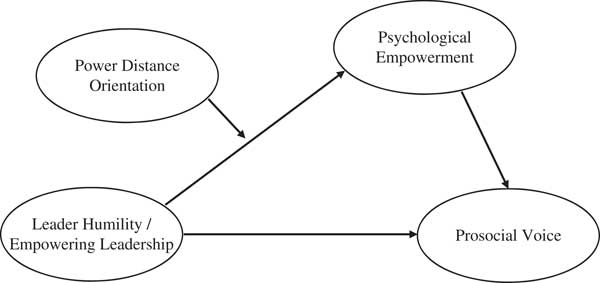
Despite the assumed prominence of bottom-up leadership in organizations, little empirical attention has been directed toward understanding the psychological processes that may differentiate the voice behavior of subordinates of humble and empowering leaders from that of subordinates of less such leaders. The present study contributes to a thriving stream of research on voice by investigating how and why specific leader behaviors improve subordinates’ prosocial voice and uncovering the mechanism linking leadership and voice through use of a relevant theoretical framework. The hypothesized model is presented in Figure 1.
The hypothesized model

LITERATURE REVIEW AND HYPOTHESES
Leadership and prosocial voice
As a type of challenging-promotive extra-role behavior, prosocial voice is defined as discretionary upward communication behavior that emphasizes expression of a constructive challenge intended to improve rather than criticize a given situation (Van Dyne, Ang, & Botero, Reference Van Dyne, Ang and Botero2003). Research on voice has documented that employees consider leader behaviors as key signs of the extent to which prosocial voice will be welcomed and supported (Detert & Burris, Reference Detert and Burris2007). To explore the effect of leadership on prosocial voice, we particularly focus on two types of leadership: humble leadership and empowering leadership.
As a fundamental virtue connoting self-awareness, openness, and transcendence (Morris, Brotheridge, & Urbanski, Reference Morris, Brotheridge and Urbanski2005), humility is defined as ‘an interpersonal characteristic that emerges in social contexts and connotes (a) a willingness to view oneself accurately, (b) an appreciation of others’ strengths and contributions, and (c) teachability, or openness to new ideas and feedback’ (Owens & Hekman, Reference Owens and Hekman2016: 1088). Humble leadership highlights a neglected source of human strength reflecting accurate self-appraisal and appreciation of others’ worth (Tangney, Reference Tangney2002), which positively links to prosocial voice. In specific, humble leaders evaluate their strengths and weaknesses objectively, acknowledge their limitations, and search for productive feedback to improve themselves (Owens, Johnson, & Mitchell, Reference Owens, Johnson and Mitchell2013). Those humble behaviors indicate that the leaders may not consider prosocial voice as a threat or receiving with skepticism. In response, subordinates assume that leaders appreciate hearing about constructive bottom-up ideas and that they have more freedom in challenging the status quo and taking initiative in voicing their concerns about important issues. Similarly, when humble leaders appreciate and value others’ efforts and contributions, individuals are less afraid to speak up and more willing to take risks to express their thoughts. When their humble leaders are teachable, employees are more likely to feel comfortable with upward expression of potentially contradictory thoughts regardless of the organizational hierarchy.
Empowering leadership is defined as ‘behaviors whereby power is shared with subordinates and that raise their level of intrinsic motivation’ (Srivastava, Bartol, & Locke, Reference Srivastava, Bartol and Locke2006: 1240). Arnord et al. (Reference Arnord, Arad, Rhoades and Drasgow2000) noted that empowering leadership is associated with the process of increasing employees’ feelings of control and eliminating conditions that foster a sense of powerlessness. Supervisors regarded as low in empowering leadership tend to focus more on monitoring behaviors and directing the individual and team’s work. By contrast, leaders characterized as high in empowering leadership share power with their subordinates by delegating authority to them, involving subordinates in decision making, and expressing confidence in their capabilities to handle demanding tasks (Ahearne, Mathieu, & Rapp, Reference Ahearne, Mathieu and Rapp2005). Those empowering leader behaviors are closely related to subordinate voice in that participatory opportunities stemming from empowering leadership allow employees to use their voices to make a difference in their work environment. Consistent with this argument, Spreitzer (Reference Spreitzer2007) claimed that key features of empowering leadership and systems are to foster more open and egalitarian decision making and to provide social controls that curtail the potential use of coercive power.
Humble and empowering leaders value employees’ views and seek their input on important decisions regardless of their level on the hierarchy. Drawing on Spreitzer’s (Reference Spreitzer2007) perspective on participatory leadership and organizational democracy, we suggest that the key underlying mechanism through which leadership influences subordinate prosocial voice is through building capacity for voice. That is, humble/empowering leader behaviors can contribute to increased employees’ competencies and skills to proactively challenge the status quo and make constructive suggestions for change. Opportunities to make change-oriented comments suggesting different ways of doing things are rare for lower-level employees within hierarchical organizations (de Jong & van Witteloostuijn, Reference de Jong and van Witteloostuijn2004). Scholars have pointed out that leader behaviors provide salient cues that subordinates use in evaluating whether speaking up is risky because most employees lack the courage to challenge power holders (Morrison & Milliken, Reference Morrison and Milliken2000; Detert & Burris, Reference Detert and Burris2007). While little empirical research have examined the impact of leader humility on prosocial voice, prior research has indicated that empowering leadership predicted employee voice (e.g., Raub & Robert, Reference Raub and Robert2010; Gao, Janssen, & Shi, Reference Gao, Janssen and Shi2011). Taken together, we hypothesize that employees are more willing to speak up to those power holders who exhibit more humble or empowering leader behaviors.
Hypothesis 1: (a) Humble and (b) empowering leadership positively relates to subordinates’ prosocial voice.
The mediating role of psychological empowerment
The leadership–prosocial voice relationship may be more complex than simple enactment of leader behaviors (Detert & Burris, Reference Detert and Burris2016). In this study, we examine an intermediate mechanism, psychological empowerment as an emergent state in this relationship. Psychological empowerment refers to a set of psychological states that are necessary for individuals to feel a sense of control in relation to their work (Spreitzer, Reference Spreitzer1995). Thomas and Velthouse (Reference Thomas and Velthouse1990) viewed psychological empowerment as intrinsic task motivation manifested in a set of four cognitions: meaning, competence, self-determination, and impact. Scholars have described that psychological empowerment highlights individual subjective experiences influenced by social interactions at work (Seibert, Silver, & Randolph, Reference Seibert, Silver and Randolph2004). In keeping with this view, we suggest that humble or empowering leader behaviors influence subordinates’ prosocial voice by increasing their psychological empowerment.
Psychological empowerment is a process of fostering feelings of self-efficacy (Conger & Kanungo, Reference Conger and Kanungo1988). As noted by Van Dyne, Ang, and Botero (Reference Van Dyne, Ang and Botero2003), employees may be reluctant to speak up and withhold their ideas if they have feelings of low self-efficacy about personal capability. Humble leader behaviors are likely to increase subordinates’ psychological empowerment by positively influencing their self-concept and the way they view their work (Owens & Hekman, Reference Owens and Hekman2012). Humble leaders exhibit self-transcendent attitudes (Ou, Tsui, Kinicki, Waldman, Xiao, & Song, Reference Ou, Tsui, Kinicki, Waldman, Xiao and Song2014) and appreciate others’ positive worth and contribution (Morris, Brotheridge, & Urbanski, Reference Morris, Brotheridge and Urbanski2005). Being appreciated by their leader signals to employees that their capability to achieve a high level of performance has been acknowledged, which helps them recognize the significance of their contribution to organizational outcomes. Because humble leaders are open to new or contradictory ideas (Tangney, Reference Tangney2002), they are more likely to provide subordinates with opportunities for self-determination and freedom to initiate tasks. Accordingly, their subordinates may experience feelings of increased self-efficacy and beliefs, which encourage them to realize that they are equipped with vital knowledge and resources to engage in proactive behavior (Gagné, Reference Gagné2009).
Similarly, empowering leadership behaviors are likely to promote subordinates’ psychological empowerment. By helping employees understand the importance of their contribution to organizational effectiveness, empowering leaders enhance employees’ belief that their work is personally meaningful (Zhang & Bartol, Reference Zhang and Bartol2010), and help to foster employees’ feelings of competence by expressing confidence in high performance (Ahearne, Mathieu, & Rapp, Reference Ahearne, Mathieu and Rapp2005). When leaders allow employees autonomy and encourage their participation in decision making, they feel released from bureaucratic constraints and enjoy a sense of power that they can make a difference in achieving work outcomes successfully (Kirkman & Rosen, Reference Kirkman and Rosen1999; Zhang & Bartol, Reference Zhang and Bartol2010). Consequently, psychologically empowered employees believe that they can influence their work environments, exercise choice in initiating actions (Conger & Kanungo, Reference Conger and Kanungo1988; Thomas & Velthouse, Reference Thomas and Velthouse1990), and proactively express improvement-oriented voice rather than remain silent. Prior studies have identified a significant relationship between psychological empowerment and innovative behavior, including employee voice (e.g., Raub & Robert, Reference Raub and Robert2010; Zhang & Bartol, Reference Zhang and Bartol2010).
Hypothesis 2: Subordinates’ psychological empowerment mediates the relationship between (a) humble and (b) empowering leadership and subordinates’ prosocial voice.
The moderating role of power distance orientation
Power distance refers to the extent to which the less powerful members of organizations expect and accept that power is distributed unequally (Hofstede, Reference Hofstede2001). Kirkman et al. (Reference Kirkman, Chen, Farh, Chen and Lowe2009) coined the term, power distance orientation, to identify a construct which is the psychological orientation to power distance that is distinct in each individual. Drawing upon implicit voice theory with a subordinate-centric perspective, we propose that individual power distance orientation may influence the evaluation process through which employees choose whether to engage in voicing their opinions and expressing their concerns or not.
According to implicit voice theory, ‘Ordinary life experiences in hierarchical social institutions shape beliefs about where, when, and about what speaking up is risky’ (Detert & Edmondson, Reference Detert and Edmondson2011: 465). It also suggests that subordinates automatically use implicit cues as filters for construing current stimuli and making decisions about speaking up. This perspective implies that individual beliefs are central to account for voice behavior commonly considered leadership effects. The authors described that subordinates’ presumptions about leader reactions based on their own cognitive frameworks can have more influence on subordinate voice than leaders’ actual behavior.
We argue that power distance orientation moderates the effects of humble or empowering leadership on prosocial voice. Cultural values related to power distance underlie the norms that inform people about what is appropriate, and people draw on these values to select socially appropriate behaviors and rationalize their chosen behaviors (Schwartz, Reference Schwartz1999). As Hofstede (Reference Hofstede1980) described, power distance reflects a subordinate’s fear of disagreeing with his or her supervisors. In research on cultural value frameworks, high power distance is commonly regarded as inherent to organizations with hierarchical structures, and low power distance is associated with egalitarianism (Kirkman et al., Reference Kirkman, Chen, Farh, Chen and Lowe2009). Subordinates with high power distance orientation are likely to accept a hierarchy that differentiates them from their supervisors (Lee, Reference Lee1997; Smith, Peterson, & Schwartz, Reference Smith, Peterson and Schwartz2002). Applying the implicit voice theory to our model, we theorize that subordinates with high power distance orientation are more likely to be influenced by ‘a hypothetical or archetypical authority, constructed over many years and experiences, rather than an accurate reflection of an employee’s current manager or managers’ (Detert & Edmondson, Reference Detert and Edmondson2011: 482), in that individual take-for-granted beliefs about the risks or inappropriateness of speaking up are rooted in their experience of hierarchical organizations.
Prosocial voice is intended to benefit others and facilitate effective unit or organizational functioning based on cooperative motives (Morrison, Reference Morrison2011). One of the key features of humble and empowering leader behaviors is to stimulate subordinates’ agency by sending social cues that new ideas are welcome and representing open-mindedness toward their subordinates (Lian, Ferris, & Brown, Reference Lian, Ferris and Brown2012). Because subordinates with high power distance orientation are more likely to be affected by the social cues of power holders who take a bottom-up approach, they may see prosocial voice as a new responsibility or expectation rather than a nonrequired discretionary behavior. This argument can be further explained using Grant and Hofmann’s (Reference Grant and Hofmann2011) perspective on role expansion, which suggests that interpersonal influence processes affect role incumbents’ decision about whether or not to expand a role in a social position. Role expansion occurs ‘when individuals choose to incorporate a broader set of responsibilities into their personal definitions of their roles, treating these responsibilities as expectations rather than discretionary activities’ (Grant & Hofmann, Reference Grant and Hofmann2011: 12). According to them, the social exchange in the communication process from a sender to a receiver constitutes ‘an exercise of dyadic influence’ (Grant & Hofmann, Reference Grant and Hofmann2011: 12), and the sender (leader) is seeking to persuade the receiver (subordinate) to accept the role. Humble and empowering leaders depend on subordinates to expand their roles to include prosocial voice that makes positive changes. In this vein, subordinates with high power distance subordinates are more likely to accept their leader’s role-expanding request, as they tend to treat the leader’s request as responsibilities and incorporate them into their roles. Likewise, Cable and Judge (Reference Cable and Judge2003) demonstrate that individuals with high power distance tend to adapt their behaviors to those with higher power and engage in behaviors that match their supervisors’ leadership styles in the role-expansion decision. Therefore, we hypothesize that:
Hypothesis 3: Subordinates’ power distance orientation moderates the relationship between (a) humble and (b) empowering leadership and subordinates’ prosocial voice, such that the relationship is strengthened for subordinates with high power distance orientations.
For subordinates with high power distance orientation, humble and empowering leadership can be perceived as a sacrifice of certain legitimate powers inherent in organizational hierarchies (Ahearne, Mathieu, & Rapp, Reference Ahearne, Mathieu and Rapp2005; Owens & Hekman, Reference Owens and Hekman2012). Such subordinates tend to view those leader behaviors as a way of exhibiting recognition, thereby leading to subordinates’ enhanced intrinsic motivation. Accordingly, subordinates with high power distance orientation perceive their interactions with leaders through a lens of increased sense of power. Such untypical types of leader behaviors are considered to be at odds (i.e., in a positive way) with their cultural value framework. Thus, leaders’ contradictory humble or empowering behaviors strongly influence subordinates’ psychological empowerment and motivation to speak up by weakening their unproven, negative preconceptions about what will happen if they do. By contrast, humble and empowering leader behaviors are less likely to provide a sense of empowerment for subordinates with low power distance orientation. These individuals tend to take consulting with supervisors for granted and to expect subordinate disagreement. Humble and empowering leader behaviors may signal of soliciting constructive insights or feedback from subordinates. As prosocial voice may be activated based on a give-and-take standpoint, such leader behaviors are less likely to be a source of sense of empowerment for subordinates with low power distance orientation. Building on the above arguments, we hypothesize that:
Hypothesis 4: Subordinates’ power distance orientation moderates the relationship between (a) humble and (b) empowering leadership and subordinates’ psychological empowerment, such that the relationship is strengthened for subordinates with high power distance orientations.
Integrating previous discussions and four hypotheses, we develop a mediated moderation model (a conceptual definition and difference from a moderated mediation model will be discussed in later sections; also see Muller, Judd, & Yzerbyt, Reference Muller, Judd and Yzerbyt2005) demonstrating that the moderating effect of power distance orientation on the relationship between leadership and voice is grounded in the moderating effect of power distance orientation on the relationship between leadership and psychological empowerment, given that psychological empowerment is a potential mediator between two types of leader behaviors and prosocial voice. Thus, the final hypothesis is:
Hypothesis 5: Subordinates’ psychological empowerment mediates the moderating effect of subordinates’ power distance orientation on the relationship between (a) humble and (b) empowering leadership and prosocial voice.
Methods
Data collection and sample demographics
The data were collected from employees of a Korean business conglomerate, which consists of multiple large corporations. In collaboration with its administrative staff, we distributed 350 paper surveys to the employees between their training sessions. In total, 311 employees participated. Three cases were eliminated due to severe missing values in major variables. The missing values in the remaining cases were imputed using conditional mean imputation. In addition, we also omitted two anomalous cases detected by a multivariate outlier test based on Mahalanobis distance (Penny, Reference Penny1996; Cohen, Cohen, West, & Aiken, Reference Cohen, Cohen, West and Aiken2003). The data set for the main analysis therefore included 306 cases, resulting in a response rate of 87.43%.
Of the 306 participants, 249 were male (81.4%), and the average age was 35.63 years (SD=5.56). The average tenure for each participant in the current organization was 5.91 years (SD=5.81) with a range of 15 days to 24 years. The participants had worked with their current direct supervisors for 2.16 years on average (SD=2.90). With respect to education, 89.2% had a 4-year Bachelor’s degree or higher. In terms of formal rank within the organization, 40.2% were senior managers. In addition, 26.5% of the participants worked in marketing/sales jobs, and ~two-thirds (67.6%) worked in the electronics/IT industry.
Measures
Five scales were adopted using 7-point Likert scales, anchored at 1=‘strongly disagree,’ and 7=‘strongly agree.’ As the data collection was implemented in a Korean context, we developed a Korean version of the questionnaire based on the translation-back-translation method with the help of two Korean–English bilinguals, minimizing loss of meaning from the original versions.
Leader humility
The instrument of Owens, Johnson, and Mitchell (Reference Owens, Johnson and Mitchell2013) was adopted to measure leader humility. Following Owens, Johnson, and Mitchell (Reference Owens, Johnson and Mitchell2013), we measured each participant’s perception of his or her direct supervisor’s expressed humility. Three items were included for each of the three previously mentioned subdimensional structures (i.e., willingness to view oneself accurately, appreciation of others’ strengths, and teachability). These items each demonstrated sufficient reliability and validity in the original study (Owens, Johnson, & Mitchell, Reference Owens, Johnson and Mitchell2013). A sample item is ‘My direct supervisor is willing to learn from others.’
In this study, the second-order confirmatory factor analysis (CFA) showed a desirable latent factor structure (χ2[24]=62.86, χ2 /df=2.62, comparative fit index (CFI)=0.98, Tucker Lewis Index (TLI)=0.96, incremental fit index (IFI)=0.98, normed fit index (NFI)=0.96, root mean square error of approximation (RMSEA)=0.07, standardized root mean square residual (SRMR)=0.03). Three subdimensions were significantly loaded to the main latent variable (0.76, 0.76, and 0.89), and the items’ loadings were all above 0.75. Average variance extracted (AVE) was 0.67, composite reliability (CR) was 0.95, and internal consistency reliabilities (Cronbach’s α) were of 0.89, 0.83, and 0.85 for the three subdimensions, and 0.90 overall.
Empowering leadership
Empowering leadership was also measured directly in terms of subordinates’ perceptions using the instrument of Ahearne, Mathieu, and Rapp (Reference Ahearne, Mathieu and Rapp2005). The measure consists of four subdimensions (i.e., enhancing the meaningfulness of work, fostering participation in decision making, expressing confidence in high performance, and providing autonomy from bureaucratic constraints) with three items included for each. A sample item is ‘My direct supervisor makes many decisions together with me.’
Second-order CFA results showed an acceptable fit (χ2[48]=182.21, χ2 /df=3.79, CFI=0.94, TLI=0.92, IFI=0.94, NFI=0.92, RMSEA=0.09, SRMR=0.06) with desirable factor loadings (i.e., 0.77, 0.73, 0.80, and 0.76 for the four subdimensions, respectively, and above 0.67 for the items). AVE and CR were 0.66 and 0.96, respectively. Values for internal consistency reliability were 0.86, 0.86, 0.81, and 0.88 for each of the four subdimensions, respectively, and 0.90 for all 12 items.
Power distance orientation
Individual power distance orientation was measured using the single-order, 8-item instrument of Earley and Erez (Reference Earley and Erez1997). A sample item is ‘In work-related matters, managers have a right to expect obedience from their subordinates.’
Items 2, 6, and 8 were eliminated due to low factor loadings (below 0.04). Results of the CFA for the remaining five items showed a desirable fit (χ2[4]=6.89, χ2 /df=1.72, CFI=0.99, TLI=0.98, IFI=0.99, NFI=0.98, RMSEA=0.05, SRMR=0.02) with loadings above 0.54. Values for AVE, CR, and internal consistency reliability were 0.42, 0.79, and 0.77, respectively. In prior research, this scale also showed marginal reliability (e.g., Kirkman et al., Reference Kirkman, Chen, Farh, Chen and Lowe2009; Helpap, Reference Helpap2016).
Psychological empowerment
Spreitzer’s (Reference Spreitzer1995) 12-item instrument, which has been well validated in previous research (e.g., Spreitzer, De Janasz, & Quinn, Reference Spreitzer, De Janasz and Quinn1999) was utilized. This scale has four subdimensions (i.e., meaning, competence, self-determination, and autonomy), each of which includes three items. A sample item is ‘The work I do is meaningful to me.’
The second-order CFA revealed that the measure demonstrated a marginally acceptable fit (χ2[48]=224.58, χ2 /df=4.68, CFI=0.93, TLI=0.91, IFI=0.93, NFI=0.92, RMSEA=0.11, SRMR=0.09) with relatively low loadings for the four subdimensions (0.56, 0.59, 0.77, and 0.74, respectively) and better item loadings (around 0.85, except one item, which was 0.66). AVE was 0.73, CR was 0.97, and the values for internal consistency reliability were 0.91, 0.85, 0.86, and 0.91, respectively, for each subdimension and as a whole, 0.89.
Prosocial voice
We utilized six items from Van Dyne and LePine (Reference Van Dyne and LePine1998). A sample item is ‘I speak up and encourage others in my work unit to get involved in issues that affect our work.’ A single-order CFA provided evidence of a desirable fit (χ2[7]=22.62, χ2 /df=3.23, CFI=0.98, TLI=0.96, IFI=0.98, NFI=0.97, RMSEA=0.08, SRMR=0.02) with item loadings above 0.64. AVE was 0.51, CR was 0.86, and the value for internal consistency reliability was 0.86.
Control variables
Prior studies (e.g., LePine & Van Dyne, Reference LePine and Van Dyne2001; Stamper & Van Dyne, Reference Stamper and Van Dyne2001) found that demographic differences influence individual voice behavior. In this study, therefore, a set of control variables (i.e., gender, tenure, and education) were included in the main analyses to eliminate spurious relationships.
Results
Descriptive statistics and correlations
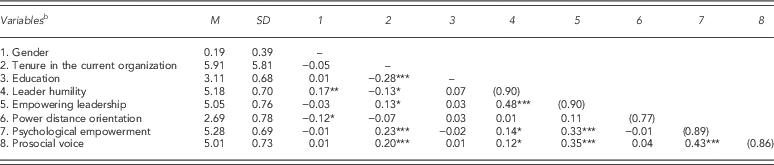
Table 1 presents the descriptive statistics and the Pearson correlations. A significant relationship was found between the two types of leadership behaviors (i.e., leader humility and empowering leadership) (r=0.48, p<.001). The two types of leadership were also significantly related to subordinates’ psychological empowerment (r=0.14, p<.05; r=0.33, p<.001, respectively), indicating a stronger relationship between empowering leadership and subordinate empowerment. While leader humility showed a relatively weak correlation with subordinates’ prosocial voice (r=0.12, p<.05), the linkage between empowering leadership and subordinates’ voice was more significant (r=0.35, p<.001). In addition, a significant relationship was found between psychological empowerment and prosocial voice (r=0.43, p<.001).
Descriptive statistics and correlationsFootnote a

Note.
a n=306. Coefficient αs are on the diagonal in parentheses.
b For gender, 0=male, 1=female; tenure in years; for education, 1=high school graduate, 2=associate degree, 3=bachelor’s degree, 4=Master’s degree, and 5=doctoral degree.
*p<.05; **p<.01; ***p<.001; two-tailed tests.
According to both classic (e.g., Blum & Naylor, Reference Blum and Naylor1968; Zedeck, Reference Zedeck1971) and modern (e.g., Hayes, Reference Hayes2013) studies, a moderator does not necessarily link to any independent, dependent, and/or mediating variables whose relations were moderated. Indeed, in this study, no significant correlation was found between power distance orientation and any other study variables.
Measurement model assessment
A set of second-order CFAs were conducted. The full five-factor model demonstrated an acceptable fit (χ2[818]=1,713.06, χ2 /df=2.09, CFI=0.90, IFI=0.90, RMSEA=0.06, SRMR=0.08), indicating that the data fit well with the structure of the hypothesized model. We also tested aggregated factor structures including four-factor (i.e., leader humility and empowering leadership combined, empowering leadership and psychological empowerment combined, and leader humility and psychological empowerment combined; ∆χ2 (df)=124.86[4], 92.37[4], and 132.72[4], relative to the full five-factor model, respectively), three-factor (i.e., leader humility, empowering leadership, and psychological empowerment combined, leader humility, empowering leadership, and power distance orientation combined; ∆χ2(df)=210.52[7] and 669.23[7]), two-factor (i.e., all combined except prosocial voice, ∆χ2(df)=789.10[9]), and single-factor (i.e., all combined, ∆χ2 (df)=926.35[10]) models. The χ2 differences at a given degree of freedom were all significant at the 0.001 level, confirming that the original five-factor structure demonstrated a significantly better fit.
While Siemsen, Roth, and Oliveira argued that moderation ‘cannot be artificially created through common method variance’ (Reference Siemsen, Roth and Oliveira2009: 472), mediation and mediated moderation effects may still be influenced by the bias. As the data were collected in a cross-sectional design based on the participants’ self-perceptions, there may be a chance of common method bias (Podsakoff, Mackenzie, & Podsakoff, Reference Podsakoff, MacKenzie and Podsakoff2012). To test the level of data contamination, Harman’s single-factor test was conducted. The fixed single factor explained only 22.75% of the overall covariance of the variables. In addition, we implemented a subsequent second-order CFA with a common latent factor linked to all observed items (χ2[817]=1,694.73, χ2 /df=2.07, CFI=0.90, IFI=0.90, RMSEA=0.06, SRMR=0.08), and the parameters were set equally to avoid underidentification (Podsakoff, MacKenzie, Lee, & Podsakoff, Reference Podsakoff, MacKenzie, Lee and Podsakoff2003). The significance levels of factor loadings were not distinct from the original model, indicating that, while there is a certain degree of common method bias, the data are not seriously contaminated by it.
The participants in this study were from different divisions of distinct subsidiaries of a business conglomerate, as recipients of a training opportunity which was awarded to a member of each work group. As a result, each dyad of a participant and his or her direct supervisor is unique and does not overlap with others. The data structure is not hierarchically nested; therefore, we adopted a hierarchical moderated regression analysis with bootstrapping rather than hierarchical linear modeling. Before the main analysis, the variables were mean centered to avoid the multicollinearity problem, as the models contain interaction terms (Aiken & West, Reference Aiken and West1991; Cohen et al., Reference Cohen, Cohen, West and Aiken2003). In this study, the maximum variance inflation factor was 1.49 for all regression models, indicating an acceptable level of multicollinearity.
Testing main effects and mediation
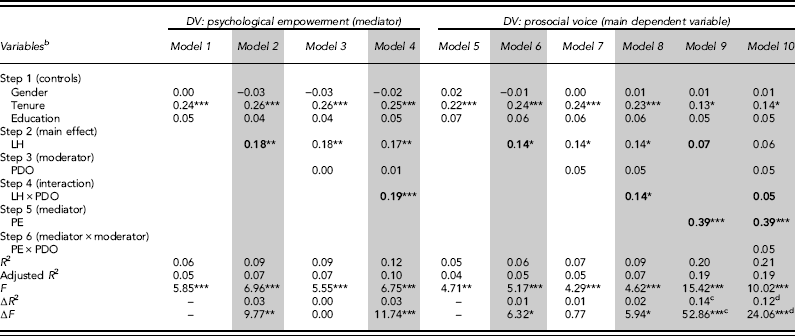
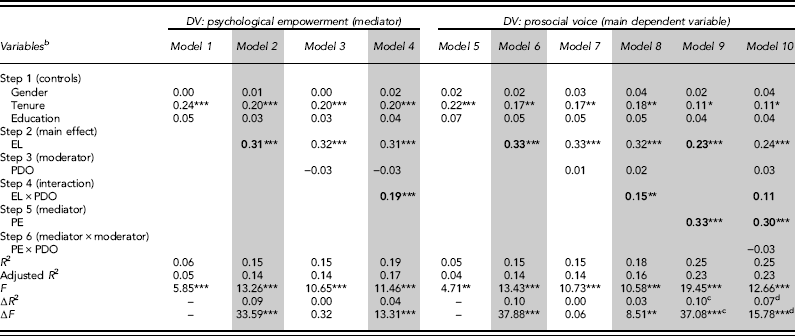
The main argument of the present study is that the overall effects of leadership on subordinates’ prosocial voice is moderated by the latter’s power distance orientation, and that this interaction is due to the effect of the leadership on the psychological empowerment of subordinates, which is the mediator between leadership and prosocial voice, and also due to the moderation of that mediation effect by power distance orientation. Tables 2 and 3 show the results of the regression analysis, in which the two types of leadership behaviors are included as main predictors, respectively. We followed the logic of testing a mediated moderation effect described in Muller, Judd, and Yzerbyt (Reference Muller, Judd and Yzerbyt2005). Muller, Judd, and Yzerbyt argued that in a mediated moderation model, ‘there must be mediation and one or both of the indirect paths … to the outcome must be moderated’ (Reference Muller, Judd and Yzerbyt2005: 856). First, we investigated whether there are significant main effects of two types of leadership on prosocial voice. According to Model 6 in Tables 2 and 3, leader humility and empowering leader behaviors, respectively, have significant effects on subordinates’ level of prosocial voice (β=0.14, t=2.51, p<.05; β=0.33, t=6.16, p<.001); thus, Hypotheses 1 is supported.
Hierarchical multiple regression analysis: leader humility as a predictorFootnote a

Note.
a n=306. Values are standardized regression coefficients. Numbers in bold in gray-colored models are relevant to hypothesis testing.
b Continuous study variables are mean centered (except DVs). Interactions are the products of centered values. All VIFs are below 1.32.
c Compared with Model 6.
d Compared with Model 8.
DV=dependent variable; LH=leader humility; PDO=power distance orientation; PE=psychological empowerment.
*p<.05; **p<.01; ***p<.001; two-tailed tests.
Hierarchical multiple regression analysis: empowering leadership as a predictorFootnote a

Note.
a n=306. Values are standardized regression coefficients. Numbers in bold in gray-colored models are relevant to hypothesis testing.
b Continuous study variables are mean centered (except DVs). Interactions are the products of centered values. All VIFs are below 1.49.
c Compared with Model 6.
d Compared with Model 8.
DV=dependent variable; EL=empowering leadership; PDO=power distance orientation; PE=psychological empowerment.
*p<.05; **p<.01; ***p<.001; two-tailed tests.
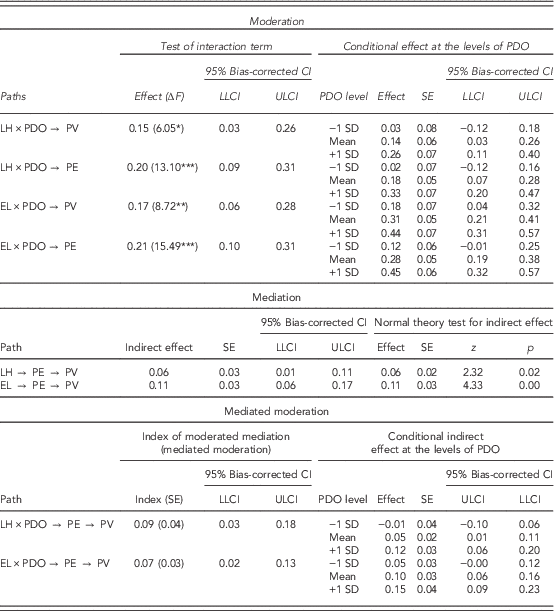
Next, we examined whether there are significant mediation effects of subordinates’ psychological empowerment between two types of leader behavior and prosocial voice. For leader humility, the bootstrapping test (Hayes, Reference Hayes2013) confirmed a significant indirect effect via psychological empowerment with a 95% bias-corrected confidence intervals (BCCI), [0.01, 0.11], based on 5,000 bootstrapped samples (see Table 4). The bootstrapping outcome conforms to the test result using a traditional procedure of Baron and Kenny (Reference Baron and Kenny1986). As presented in Table 2, in addition to the main effect, a significant effect of leader humility on subordinates’ psychological empowerment (β=0.18, t=3.13, p<.01; Model 2) was observed. In addition, subordinates’ psychological empowerment had a strongly significant effect on prosocial voice (β=0.39, t=7.27, p<.001; Model 9), controlling for leader humility. The effect of leader humility, as a result, turned out to be nonsignificant (β=0.07, t=1.39, p>.05), indicating full mediation.
Unstandardized bootstrapping estimates for moderation, mediation, and mediated moderationFootnote a

Note.
a n=306. 5,000 bootstrap samples.
EL, empowering leadership; LH=leader humility; LLCI and ULCI=lower- and upper-levels of confidence intervals, respectively; PDO=power distance orientation; PE=psychological empowerment; PV=prosocial voice.
For empowering leadership, as shown in Table 4, the bootstrapping test confirmed a significant indirect effect with a 95% BCCI of [0.06, 0.17]. According to Table 3, the effect of empowering leadership on psychological empowerment were significant (β=0.31, t=5.80, p<.001; Model 2). The effect of psychological empowerment on prosocial voice, controlling for empowering leadership, was also strongly significant (β=0.33, t=6.09, p<.001; Model 9). Empowering leadership maintained the same significance level (β=0.23, t=4.25, p<.001); however, the size of the effect was reduced. These results indicated a partial mediation effect by psychological empowerment. Therefore, Hypothesis 2 is supported.
Testing moderation
According to Muller, Judd, and Yzerbyt (Reference Muller, Judd and Yzerbyt2005), the primary difference between mediated moderation and moderated mediation is whether there is a moderation for the main effect between two primary variables. If there is a moderation effect and that moderation for the main effect is mediated by a mediator, there is a mediated moderation effect. That is, the moderation effect size for the residual main effect will be reduced because the moderation through the indirect path is significant. Therefore, the first step is to examine whether there is moderation effects of subordinates’ power distance orientation on the relationship between humble and empowering leadership and subordinates’ prosocial voice.
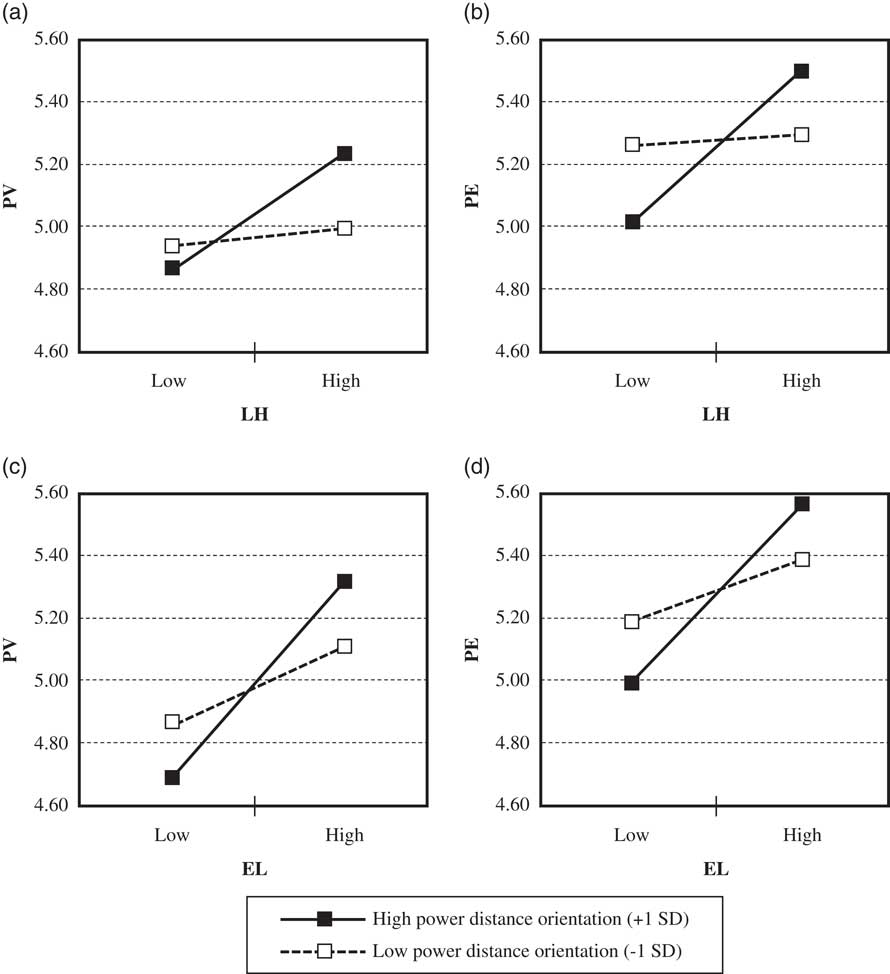
By testing the interaction terms (see Model 8 in Tables 2 and 3), we see the significant moderating effects of subordinates’ power distance orientation on the relationship between leader humility and prosocial voice (β=0.14, t=2.44, p<.05) and on the relationship between empowering leadership and prosocial voice (β=0.15, t=2.92, p<.01). As hypothesized, the effect of leadership was greater for subordinates with higher levels of power distance orientation (see Figures 2a and 2c), as indicated by the steeper slopes for these employees than those for lower-level employees (i.e., t=3.50 [p<.001]>t=.38 [p>.05] for leader humility; t=6.62 [p<.001]>t=2.61 [p<.01]) for empowering leadership). Both moderation effects were reconfirmed by bootstrapping tests with 95% BCCI of [0.03, 0.26] and [0.06, 0.28]. Therefore, Hypotheses 3 is supported.
Two-way interaction graphs: simple slopes based on the bootstrapped results. EL=empowering leadership; LH=leader humility; PE=psychological empowerment; PV=prosocial voice. The conditional effects at the lower level (−1 SD) of power distance orientation are not significant at the level of .05 – t=0.38 for (a); t=0.29 for (b); t=1.87 for (d) – except for (c), t=2.61, p<.01
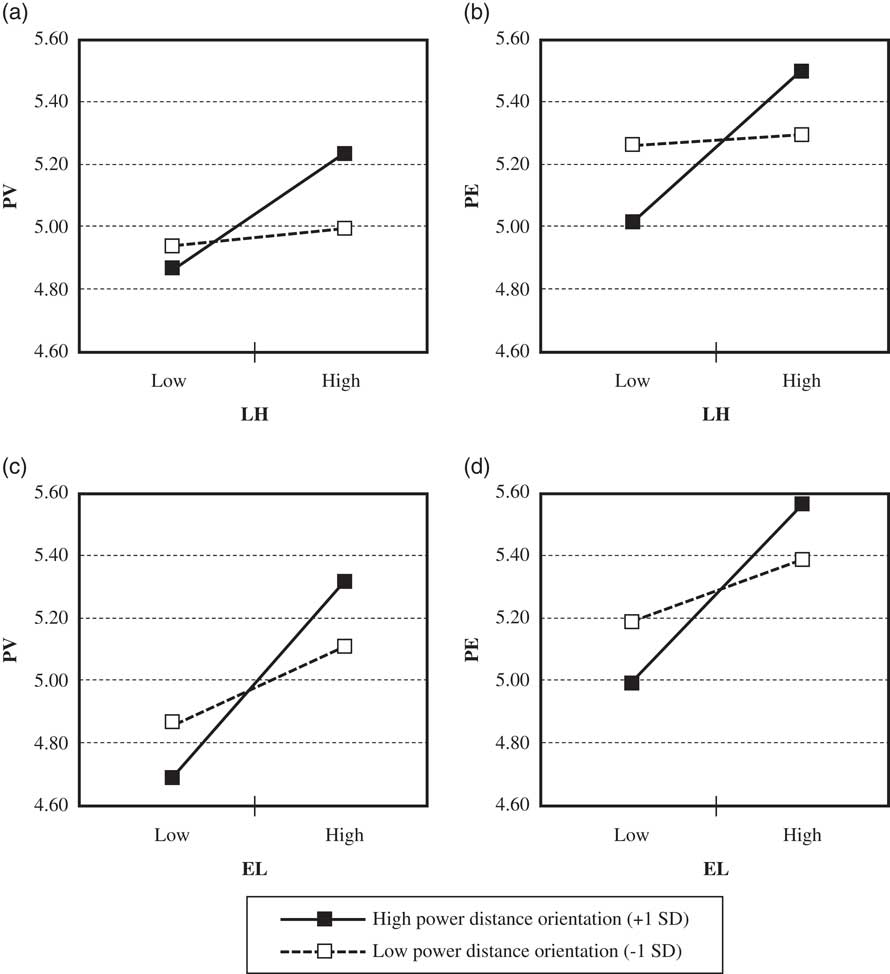
In addition, as discussed earlier, the former linkage of an indirect path between leaders’ humble behavior and subordinates’ psychological empowerment is moderated by subordinates’ power distance orientation, which is the same moderator for the main effect. This moderation was also confirmed (β=0.19, t=3.43, p<.001; see Model 4 in Table 2) with a 95% bootstrapped BCCI, [0.09, 0.31]. As expected, the effect was strengthened for subordinates with high power distance orientation rather than lower power distance orientation (t=4.86 [p<.001]>t=0.29 [p>.05]; see Figure 2b).
We observed a similar pattern for empowering leader behavior. The moderation effect of subordinates’ power distance orientation for the former indirect path (i.e., empowering leadership to psychological empowerment) was also confirmed (β=0.19, t=3.65, p<.001) with a 95% bootstrapped BCCI, [0.10, 0.31]. As shown in Figure 2d, this effect was more notable for subordinates with high power distance orientation compared with those with lower power distance orientation (t=7.16 [p<.001]>t=1.87 [p>.05]). Thus, Hypothesis 4 is supported.
Testing mediated moderation
According to Muller, Judd, and Yzerbyt (Reference Muller, Judd and Yzerbyt2005), to confirm a mediated moderation effect, a researcher must prove that either (1) the effect from an independent variable to a mediator depends on a moderator and the average partial effect of the mediator on the dependent variable remains significant, and/or (2) the partial effect of a mediator on a dependent variable relies on a moderator and the average effect of an independent variable on the mediator is significant. In any case, there should be a moderating effect for the relationship between the main independent and dependent variables (note this important difference from a moderated mediation model). Therefore, in a mediated moderation model, the residual main effect is moderated, controlling for the mediator. As a result, the size of the effect of moderation should be reduced compared with the moderation effect for the original main effect.
In this study, as indicated in Models 4 and 10 in Tables 2 and 3 for humble and empowering leader behaviors, respectively, significant moderation effects were observed for subordinates’ psychological empowerment by power distance orientation (as previously confirmed); in addition, the values for psychological empowerment remain significant in Model 10 (β=0.39, t=6.91, p<.001 for leader humility; β=0.30, t=5.25, p<.001 for empowering leadership). These results satisfy the former condition of Muller, Judd, and Yzerbyt (Reference Muller, Judd and Yzerbyt2005) for a mediated moderation effect. As a result, the size of the original moderation effect on the relationship between two types of leader behaviors and subordinates’ prosocial voice (β=0.14, t=2.44, p<.05; β=0.15, t=2.92, p<.01, respectively) became nonsignificant (β=0.05, t=0.77, p>.05; β=0.11, t=1.82, p>.05), providing evidence of fully mediated moderation. Integrating all the results, we finally conclude that there are fully mediated moderation effects for both types of leader behavior. Therefore, Hypotheses 5 is supported.
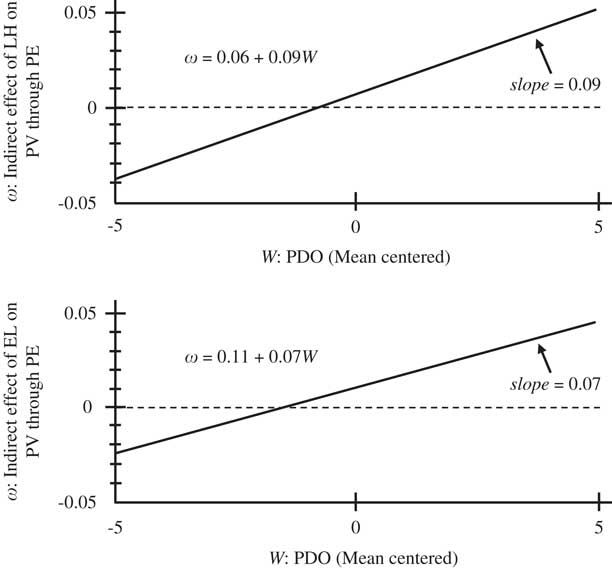
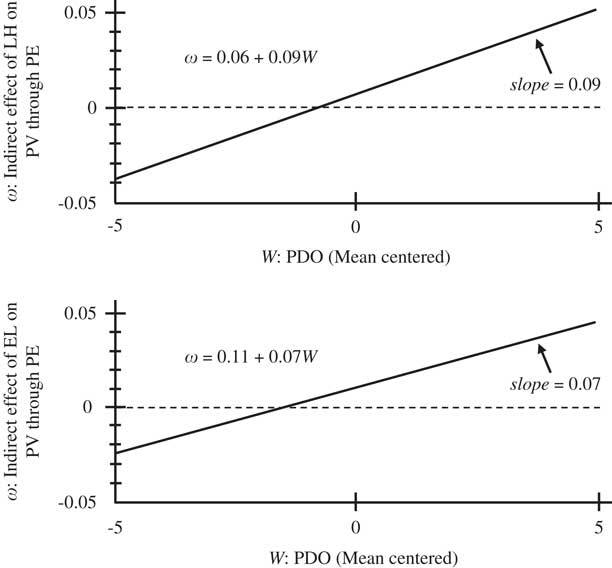
While this study attempts to differentiate mediated moderation from moderated mediation model, the bootstrapped conditional indirect effects described at the bottom of Table 4 are typical phenomena that can be observed in a moderated mediation model. Following Hayes (Reference Hayes2015), we illustrated the conditional indirect effect, which is a linear function of the moderator. Using the index of moderated mediation as a slope (Hayes, Reference Hayes2015), we visually presented the linear function relating power distance orientation to the indirect effect via psychological empowerment in Figure 3.
The visual presentation of the linear function relating power distance orientation to the indirect effect of leader humility/empowering leadership on prosocial voice through psychological empowerment. EL=empowering leadership; LH=leader humility; PDO=power distance orientation; PE=psychological empowerment; PV=prosocial voice
Discussion
The results of this study show that the moderation effects by subordinates’ power distance orientation on the relationship between two types of leader behavior (i.e., leader humility and empowering leadership) and subordinates’ prosocial voice were fully mediated by subordinates’ psychological empowerment, which is an important mediator between the two main variables constructing the main effect. It can be concluded that the moderation for the main effect, in fact, was caused by the significant moderation effect in the indirect path between the two main variables via the mediator. In more detailed explanation, the moderating effect by power distance orientation on the relationship between leader humility and psychological empowerment (β=0.19, t=3.43, p<.001) was greater than that between leader humility and prosocial voice behavior (β=0.14, t=2.44, p<.05). The same patterns were found for empowering leader behavior (β=0.19, t=3.65, p<.001; β=0.15, t=2.92, p<.01), and a notable change in significance level was evident in both cases. (The bootstrapped moderation results show similar patterns; refer to the moderation section in Table 4.) In addition, in comparing Figure 2a and 2b, and also Figure 2c and 2d, we see that the graphs in Figure 2b and 2d (i.e., the interactions between leader behaviors and psychological empowerment, the mediator) are located in higher positions than in graphs in Figure 2a and 2c (i.e., the interaction for the main effects). The results, in sum, rationalize the phenomena that both main moderation effects turned out to be nonsignificant due to the greater moderation effects in the indirect routes via a mediator.
The conditional indirect effects according to the levels of power distance orientation are summarized in Table 4. While power distance orientation strengthens the main and indirect paths in the same direction, the conditional indirect effect is augmented as power distance orientation increases for both types of leader behaviors (see the linear functions in Figure 3). As noted in the result section, these are typical observations in a moderated mediation model; indeed, mediated moderation and moderated mediation are the flip sides of the same coin. As Muller, Judd, and Yzerbyt argued, when we model and test mediation and moderation mechanisms simultaneously in different combinations such as mediated moderation or moderated mediation, we should ‘recognize that they both define the common coin’ (Reference Muller, Judd and Yzerbyt2005: 862).
Theoretical implications
Our study highlights the importance of humble/empowering leadership – as a critical influence on improvement-oriented voice. Our results particularly contribute to the flourishing literature exploring humble leadership by providing additional evidence for ‘the strengths-based view of humility’ (Owens & Hekman, Reference Owens and Hekman2016: 1104). Although leader humility has emerged as an essential feature of an effective leader, empirical research on humble leadership is very rare. This study is the first empirical effort to confirm the impact of leader humility on other-oriented voice behavior.
Another contribution of this study is its meaningful insight into the processes by which employees decide whether or not to speak up. We found that empowering and humble leadership influenced subordinates’ prosocial voice through the mediating influence of subordinates’ perceptions of psychological empowerment. Furthermore, our theoretical rationale and empirical findings highlight the importance of subordinates’ power distance orientation and contribute to the debate about its value as an important cultural contingency. We provided support for the mediating role of psychological empowerment in transforming humble and empowering leader behaviors into subordinate prosocial voice and also investigated how psychological empowerment mediates the moderation effect of subordinates’ power distance orientation between leadership and prosocial voice. Whereas prior studies found psychological safety to play a mediating role in the leader behavior–voice relationship (Detert & Burris, Reference Detert and Burris2007), we provide another potential explanation.
The most fascinating finding of this study was that the impact of leadership on voice was much stronger when subordinate power distance orientation was high than when it was low. More interestingly, we showed that the moderation effect for the main relationship between leadership and voice was indeed caused by the significant moderation effect in the indirect path between those two variables via psychological empowerment. This result contradicts the findings of previous research (e.g., Kirkman et al., Reference Kirkman, Chen, Farh, Chen and Lowe2009) investigating power distance orientation as a moderator in the leadership process. Those studies have largely suggested that for subordinates with lower, rather than higher, power distance orientation, the positive relationship between leadership and subordinate outcomes is more likely to be strong. In future studies, a systematic focus on power distance orientation may open the possibility for new theoretical explanations of voice in organizations.
Practical implications
Organizations increasingly rely on employees’ proactive behavior due to the uncertain nature of contemporary workplace. Yet personal initiatives are not always appreciated by supervisors. A variety of interventions or tools to encourage employees to speak up, including an open-door policy, suggestion boxes for anonymous feedback, or climate surveys, are often futile regardless of good intentions (Detert & Burris, Reference Detert and Burris2007). Our findings provide valuable practical insights for supervisors; we highlight the importance of humble and empowering leader behaviors for promoting employee voice. We identify the conditions that facilitate prosocial voice by suggesting that employees with high power distance orientation tend to be influenced more strongly than those with low power distance orientation by humble or empowering leader behaviors. Therefore, it may be beneficial for practitioners to undertake programs in leadership development that are designed to emphasize the bottom-up approach to encourage employees to speak up.
Another practical implication of this study is related to the application of the mediated moderation mechanism in specific cultural contexts. The integrative effects of moderation and mediation in our study imply that both leadership effects may be more meaningful in geographic locations where power distance as a cultural dimension is high (e.g., Asia Pacific regions) and/or in organizations where hierarchical culture is dominant (e.g., military organizations). In these contexts, individuals may be more likely to have high power distance orientation; as a result, humble and empowering leader behaviors may influence variables of interest more significantly than in other cultural contexts.
Limitations and future research directions
The present study has several limitations that can be addressed in further research. From a theoretical aspect, our study focused on one type of voice highlighting expression of change-oriented verbal expression, although voice is a multidimensional construct. Also, the question of why employees do not speak up requires more consideration, and a thorough conceptualization of employee silence is necessary because ‘intentionally withholding ideas (silence) is not necessarily the absence of voice’ (Van Dyne, Ang, & Botero, Reference Van Dyne, Ang and Botero2003). Future research can incorporate different constructs into the theoretical framework presented here with consideration of individual motivations behind employee voice and silence. Most importantly, the scope of this study was limited to voice behavior and its antecedents. While voice behavior tends to be considered as a dependent variable similar to organizational citizenship behavior, recent studies have begun to empirically explore the consequences of voice behavior such as employee turnover and performance (Whiting, Podsakoff, & Pierce, Reference Whiting, Podsakoff and Pierce2008; McClean, Burris, & Detert, Reference McClean, Burris and Detert2013). Proving the consequences of voice behavior provides us with the true rationale for why we study this concept (Morrison, Reference Morrison2011). Therefore, future research should more focus on the outcomes of voice behavior.
From a methodological standpoint, the data were collected using a cross-sectional survey based on self-perception, which leaves some room for common method variance. While the relevant tests proved that the data were not seriously contaminated by the bias, future researchers should adopt a longitudinal design to solve the issues of reverse causality and endogeneity and include additional supervisor-rated outcomes. Finally, the sample was confined to highly educated male managers in for-profit organizations in Korea. Subsequent studies should retest the mediated moderation mechanism presented here in various contexts (e.g., other countries or organizations where general levels of power distance as a cultural value dimension are higher or lower) and at different levels (e.g., collective voice at the team level, considering both means and standard deviations of the level of voice in each team).
In conclusion, this study extends our understanding of the leadership–voice relationship and suggests specific ways leaders can foster relatively powerless individuals to provide valuable input by speaking up in organizations. Along with providing new insights into the literature on employee voice, our study may serve as a foundation for future inquiry into related research questions.
Acknowledgement
None.
Financial Support
This research was supported by the Global PhD Fellowship Program through the National Research Foundation of Korea (NRF) funded by the Ministry of Education of the Republic of Korea (grant number: 2015H1A2A1032037).
Conflicts of Interest
None.