INTRODUCTION
From the perspective of England and Wales, which has a long tradition of selective law reporting, it is easy to look to New York, see a system of comprehensive law-reporting, and immediately think that its advantages easily outweigh the English model. But comprehensive law-reporting presents its own challenges, chief among them is removing the law reporter's vital role in selecting the significant decisions to be reported. Yet this has been the New York approach since the early 1800s when the prevailing thought was that New York was not England and that New York should have its own law different from that of England. That precept—that New York was not England and that New York law was not English law—was reflected in early law-reporting practices.
THE ROLE OF JAMES KENT
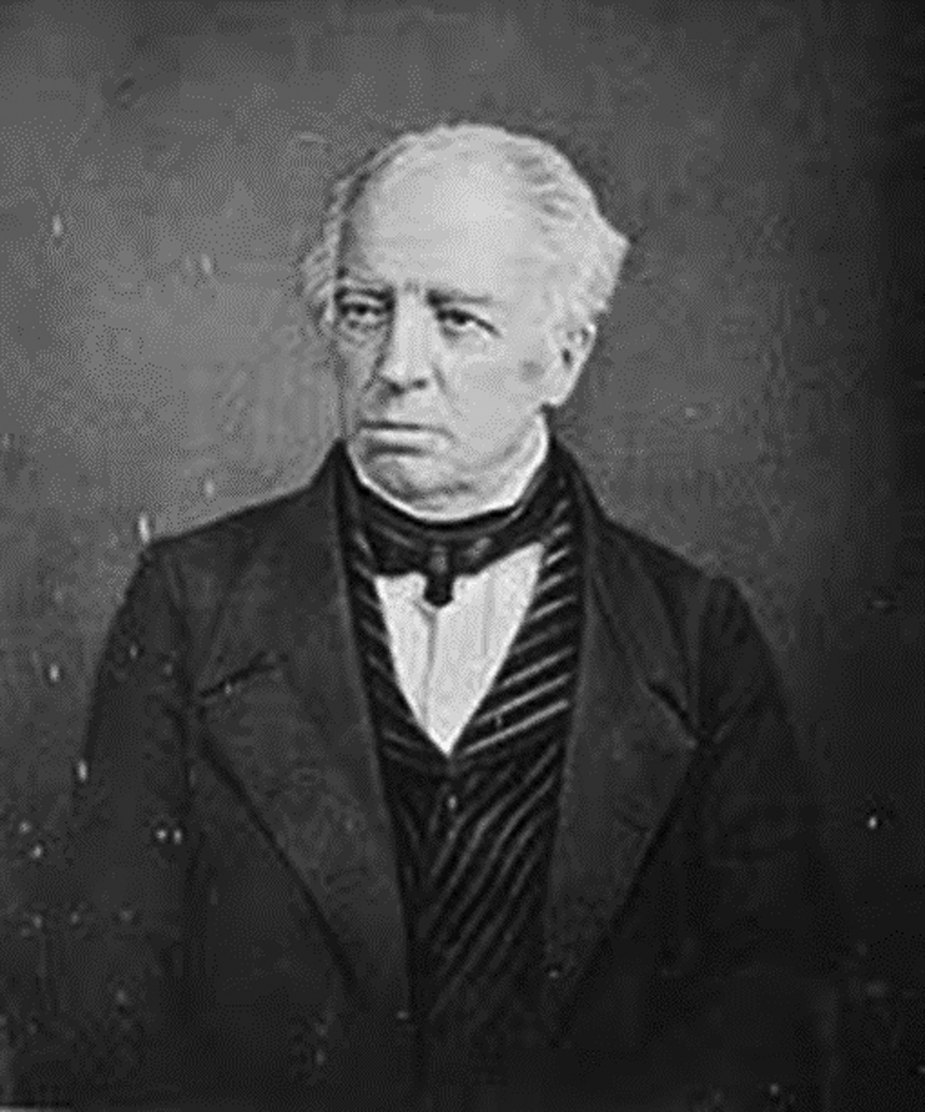
The history of official law-reporting in New York begins with James Kent. Kent was a seminal figure in American law. He saw American law as separate from English law. He is most well known for his law lectures delivered at Columbia College beginning in 1823.Footnote 1 Those lectures were published between 1826 and 1830 as Commentaries on American Law.Footnote 2 The success of Kent's Commentaries as a lawbook was profound. It supplanted Blackstone's Commentaries on the Laws of England as the most popular and important lawbook in America.Footnote 3
James Kent.Footnote *

But before his forced retirement at the age of 60, Kent had been a judge. He was appointed in 1798 to New York's Supreme Court of Judicature.Footnote 4 He was named chief justice in 1804.Footnote 5 Later, in 1814, he was appointed chancellor.Footnote 6
Kent understood the central role that judicial decisions would play in American law. One of Kent's many contributions to developing a uniquely American legal system was to move away from the oral tradition as practiced in the English courts. In its place, Kent championed a system in which the judges no longer delivered oral opinions but, instead, wrote out their judgments and included them in law reports.Footnote 7 Kent also understood the advantages of widely available judicial decisions. As the historian Lawrence M. Friedman explains, “Kent noticed that no one ever cited the work of his predecessors. Their opinions, unpublished, were gone with the wind. He made sure he would not share that fate.”Footnote 8
It was no accident then that New York's legislature established the office of supreme court reporter in 1804,Footnote 9 the same year that Kent was named chief justice. As initially set up, the supreme court reporter was responsible for reporting only the decisions of the Supreme Court of Judicature and the Court for the Trial of Impeachments and the Correction of Errors, an appellate court made up of state senators. The first law reporter was George Caines. But Caines, who fell out with Kent,Footnote 10 lasted only a year. William Johnson replaced Caines in 1806 and served until 1823. Kent saw the important work that Johnson was doing as the court's law reporter. So when Kent became chancellor in 1814, an act of the legislature allowed Johnson as “State Reporter to publish such decisions as the Chancellor should deem important.”Footnote 11 Kent so admired Johnson that when Kent published the fourth and final volume of his Commentaries on American Law, he dedicated them to Johnson “to assure you of my constant esteem and regard.”Footnote 12
Throughout the remainder of the nineteenth and into the early twentieth century, judicial reforms in New York saw the end of the court of chancery with the merger of law and equity, the establishment of the court of appeals as New York's court of final appeal, and the introduction of an intermediate appellate court with the general terms of the supreme court and, later, with the appellate division. At the same time, separate law reporters were established and disestablished for different courts.Footnote 13 The practice, though not mandated by statute, was for the early reporters to publish more, rather than less.
THE MODERN ERA AND THE LAW REPORTING BUREAU
Under a 1930s reform, the legislature established the state's law reporting bureau and installed the state reporter at its head.Footnote 14 The court of appeals is responsible for appointing the state reporter.Footnote 15 Distinguished lawyers, such as Samuel Hand, who later served on the court of appeals, and Edward J. Dimock, who later served as a United States district judge, have held the position. The current state reporter is Cara J. Brousseau, who has devoted her professional career to law-reporting. She oversees the law reporting bureau, which is now made-up of 30 lawyers and support staff.Footnote 16 The law reporting bureau publishes New York's official law reports.
The New York official reports are the largest official caselaw collection in the United States. The reports are divided into three series. Each series is further divided into separate reports for the court of appeals, the appellate division, and the lower courts. The New York Reports (N.Y. or N.Y.2d or N.Y.3d) were begun in 1847 and include decisions of the Court of Appeals of New York. The Appellate Division Reports (A.D. or A.D.2d or A.D.3d) were begun in 1896 with the legislature's establishing the Appellate Division of the Supreme Court, an intermediate appellate court. The Appellate Division Reports include, as their name suggests, decisions of the Appellate Division of the Supreme Court. A third set of reports, the Miscellaneous Reports (Misc. or Misc.2d or Misc.3d), was started in 1893. They were set up to include decisions of courts below the court of appeals and now include decisions of courts other than the court of appeals and the appellate division.
The first series of the official law reports includes 803 volumes. The second series of the official law reports began in 1956 and includes 605 volumes. A third series of official law reports was started in 2004. The law reporting bureau includes additional, unpublished decisions in its caselaw database.
The same 1938 statute that sets up the law reporting bureau also sets out what is to be reported. Section 431 of the Judiciary Law directs the law reporting bureau to report every decision of the court of appeals and the appellate division and, in addition, to report such other decisions as the state reporter considers worthy of publication because of their usefulness as a precedent or their importance as a matter of public interest.
The law reporting bureau shall report every cause determined in the court of appeals and every cause determined in the appellate divisions of the supreme court, unless otherwise directed by the court deciding the cause; and, in addition, any cause determined in any other court which the state reporter, with the approval of the court of appeals, considers worthy of being reported because of its usefulness as a precedent or its importance as a matter of public interest. Footnote 17
Section 431 requires comprehensive reporting of decisions of the court of appeals and the appellate division when it says “shall report every cause determined.”Footnote 18 It also provides for selective reporting of decisions from the lower courts, such as the appellate term, trial courts of general jurisdiction, such as the supreme court and the county court, and specialized subject-matter courts, such as the family court and the surrogate's court, when it says “shall report … any cause determined in any other court which the state reporter … considers worthy of being reported because of its usefulness as a precedent or its importance as a matter of public interest.”Footnote 19
The statute thus gives the state reporter discretion in selecting decisions of lower courts for publication. She selects decisions for publication by applying these criteria:
• Precedential Significance: true “landmark” opinions;
• Novelty: opinions that deal with issues of first impression;
• Public Importance: opinions of broad interest to the bar or to the public;
• Practical Significance: opinions that address issues unique to trial-court practice;
• Subject-matter, geographical, and author diversity; and
• Literary Quality: preference is given to short (no more than 10 typewritten pages) concisely written opinions.Footnote 20
These criteria are flexible enough for the law reporting bureau to publish many trial-court decisions. In fact, it is commonplace for judges to submit decisions to the state reporter with an eye toward securing their publication in the official law reports. Much of the state reporter's time is spent selecting from among these submitted, lower-court decisions which ones to publish in the Miscellaneous Reports.
Beginning in 1988, the law reporting bureau was authorized by statute to report decisions “in any medium or format.”Footnote 21 That statutory change allowed the state reporter to set up a database of published decisions. The database also includes lower-court decisions that are worthy of reporting. But not so worthy as to be included in the published Miscellaneous Reports.
COMPREHENSIVE LAW REPORTING BY THE NUMBERS
As might be imagined, the number of decisions reported under a comprehensive system of law-reporting for the principal appellate courts is staggering. The easiest way to appreciate just how many decisions are published, is to look at the different courts, the three law reports, and the decisions included in them.
The court of appeals is New York's highest court. It is presided over by the chief judge, Janet DeFiore, who is joined by six associate judges. It is a true appellate court. It has no original jurisdiction. Most appeals to the court of appeals are by permission, not as of right.
In 2018, the court released 78 full opinions consisting of 1502 pages to which the state reporter added 151 headnotes.Footnote 22 The court also released 61 memorandum decisions, which are shorter and often leave out a full recitation of the facts. Those 61 memorandum decisions took up 582 pages and 70 headnotes.Footnote 23 All decisions were published in New York Reports. In 2018, the state reporter put the decisions from the court of appeals into two bound volumes.Footnote 24
The closest British equivalent to the court of appeals is the Supreme Court of the United Kingdom. That court releases each year fewer judgments than does the court of appeals. But the supreme court's judgments tend to run longer. One difference between the New York court of appeals and the Supreme Court of the United Kingdom is the number of judges. The court of appeals has seven judges. Seven judges participate in all appeals. The Supreme Court of the United Kingdom has twelve justices, of which typically five or seven hear any one appeal. The supreme court also has a supplementary panel of retired justices who may sit. The courts are different, but their output is comparable.
The Appellate Division Reports contain decisions of the Appellate Division of the Supreme Court. The appellate division is New York's principal intermediate appellate court. It is made up of approximately sixty justices of the supreme court whom the governor appoints to sit as appellate judges in one of four judicial departments. The First Department sits in Manhattan and hears appeals from Manhattan and Bronx counties. The Second Department sits in Brooklyn and hears appeals from Long Island, Staten Island, and five upstate counties. The Third Department sits in Albany and hears appeals from the eastern half of New York State. The Fourth Department sits in Rochester and hears appeals from the western portion of the state. The appellate division sits in panels of four or five justices.
Most appeals to the appellate division are as of right. The court also has some first-instance jurisdiction. Counting only the number of justices on the court, the appellate division is roughly the same size as the Court of Appeal in England and Wales, considering that many High Court (and circuit) judges regularly sit in the court's criminal division.
The judicial output of the appellate division is enormous. In 2018, the state reporter published 254 full opinions, which took up 2146 pages and 394 headnotes in the Appellate Division Reports.Footnote 25 But full opinions are not the principal output of the appellate division. Most opinions in the appellate division are memorandum decisions. These decisions invariably are much shorter, often no longer than four to six paragraphs. In 2018, the state reporter published 8897 memorandum decisions running 12,656 pages with 10,709 headnotes.Footnote 26 In 2018, the appellate division's decisions took up eleven volumes of the official law reports.Footnote 27
A typical memorandum decision from the appellate division is Parchment v. TJX Cos. Inc.,Footnote 28 an April 24, 2019 decision of the Second Department. The decision reads in full,
Dorothy Parchment et al., Appellants, v
The TJX Companies, Inc., Respondent.
Supreme Court, Appellate Division, Second Department, New York
2017-05029, 63529/12
April 24, 2019
In an action to recover damages for personal injuries, etc., the plaintiffs appeal from a judgment of the Supreme Court, Westchester County (Orazio R. Bellantoni, J.), dated April 20, 2017. The judgment, upon a jury verdict in favor of the defendant on the issue of liability, is in favor of the defendant and against the plaintiffs, in effect, dismissing the complaint.
Ordered that the judgment is affirmed, with costs.
The plaintiff Dorothy Parchment (hereinafter the injured plaintiff) allegedly sustained injuries when she slipped and fell on a puddle of water that was situated on the floor of a store owned and operated by the defendant. The injured plaintiff, and her spouse suing derivatively, commenced this personal injury action against the defendant. Following a trial, the jury found that the defendant was not negligent. The Supreme Court issued a judgment dated April 20, 2017, in favor of the defendant and against the plaintiffs, in effect, dismissing the complaint. The plaintiffs appeal from the judgment.
The plaintiffs’ current contentions regarding the Supreme Court's charge to the jury with respect to PJI 2:91 are unpreserved for appellate review, since the plaintiffs did not object to the jury charge on the grounds now argued. (See Thomas v. East Coast 6, LLC, 153 A.D.3d 1296, 1298 [2017]; Abuzeed v. Mile Sq. Transp., Inc., 119 A.D.3d 621, 622 [2014]).
The plaintiffs’ challenge to certain testimony that the defendant elicited from the injured plaintiff on cross-examination is largely unpreserved for appellate review (see Volino v. Long Is. R.R. Co., 83 A.D.3d 693, 694 [2011]). To the extent the alleged error is preserved for our review, it does not warrant reversal. Scheinkman, P.J., Leventhal, Connolly and Brathwaite Nelson, J.J., concur.
The court's decision is short. It contains only five paragraphs. The first paragraph describes the nature of the action and the judgment from which the appeal is taken. The second paragraph states that the appellate division is affirming the judgment. The next paragraph sets out—albeit briefly—the procedural history. The following paragraph rejects in a single sentence the plaintiffs’ challenges to the trial court's instructions to the jury. The final paragraph rejects the plaintiffs’ challenge to the trial court's admission of one plaintiff's evidence during cross-examination.
This memorandum decision is sufficient for the parties and their counsel. They are familiar with the appellate record and the issues raised in the appeal. They will understand without additional writing why the appellate division decided the appeal the way that it did.
But the memorandum decision is not much help to other lawyers and judges. It contains very little in the way of the historical facts. So it is difficult to see how the legal issues arose. On the first point, the plaintiffs’ failure to preserve their objections to the trial court's instructions to the jury, the court tells us nothing about the specific objections to the charge and how it was not preserved for appellate review. On the second point, the plaintiffs’ challenge to testimony admitted on cross-examination, the court does not say what the testimony was, what was said in the trial court by way of objection, and why whatever was said left the objection “largely unpreserved.”Footnote 29 In short, the decision is sufficient for the parties and their counsel. But it is not much use to anyone else. And that, at bottom, is the principal drawback to comprehensive law-reporting.
New York's model of comprehensive reporting of decisions of the appellate division may be contrasted with the practice in New Jersey. New Jersey's highest court is the Supreme Court of New Jersey. New Jersey also has an intermediate appellate court, the Appellate Division of the Superior Court, which hears appeals from final decisions of New Jersey's trial courts. By court rule, New Jersey publishes all opinions of the supreme court but only selective opinions of the appellate division. The three-judge panel hearing the appeal must direct that the court's opinion be published.
Appellate Opinions. All opinions of the Supreme Court shall be published except where otherwise directed by the Court. Opinions of the Appellate Division shall be published only upon the direction of the panel issuing the opinion.Footnote 30
No more than two or three decisions of the appellate division are published in a typical week. New Jersey also selectively reports decisions of trial courts when those opinions are approved by a committee of retired appellate division judges. Even fewer trial court decisions are reported.
New York's reporting of decisions of trial courts could not be more different than that in New Jersey. The law reporting bureau includes within the Miscellaneous Reports decisions of lower courts. In 2018, the reporter included 454 opinions in the Miscellaneous Reports consisting of 3917 pages and 757 headnotes.Footnote 31
In addition, the reporter also selects additional opinions for on-line publication only. In these cases, the law reporting bureau's staff prepares and publishes an abstract in the Miscellaneous Reports but includes the decision itself only within the law reporting bureau's database. A typical abstract reads,
Pasquis v. Osorio, 2017 NY Slip Op 51922(U). Motor Vehicles—Collision—Rear-End Collision with Stopped Vehicle—Non-Negligent Explanation. Attorney and Client—Disqualification—Conflict of Interest—Dual Representation of Driver and Passenger in Automobile Collision. (Sup Ct, Kings County, June 30, 2017, Wooten, J.)Footnote 32
The additional decisions that are abstracted are given a citation that includes the letter A in round brackets after the page number on which the abstract is published.
In 2018, the law reporting bureau prepared and published 2102 abstracts for which it included the full decision in its database.Footnote 33 The opinion for the quoted abstract is available in the database under the citation: 2017 NY Slip Op 51922(U). The U in round brackets indicates that the decision is unpublished (i.e., not included in the printed law reports). These unpublished decisions typically are picked up in full by both Westlaw and Lexis. For example, Pasquis v. Osorio, the decision for which the abstract appears in the preceding paragraph, is reported at 2017 WL 6614784 and at 2017 N.Y. Misc. LEXIS 5099.
In addition to the lower-court decisions for which the law reporting bureau prepares an abstract, it also includes in its electronic database additional, unabstracted decisions of the appellate term, a lower appellate court, and of trial courts. In 2018, the state reporter included 6137 such decisions in the database.Footnote 34 Those decisions are not edited, other than to include star pagination. The reporter assigns a citation in the NY Slip Op 30000 series, which indicates that the decision is neither reported nor abstracted in the printed reports. The reporter also includes a cover page with a yellow box with information about the decision.

Both Westlaw and Lexis include at least some of these 30000 series decisions in full in their databases.
So, adding up the numbers, the state reporter included for 2018 over 8000 decisions of trial and lower appellate courts in the database. That is, by any standard, an overwhelming number of lower-court decisions. Surely more than any one person could review. But that is the result of comprehensive law-reporting.
THE ADVANTAGES AMD DISADVANTAGES OF COMPREHENSIVE LAW REPORTING IN NEW YORK
From the perspective of transparency, the New York model gets high marks. No decision of the court of appeals or of the appellate decision is unpublished. Similarly, all decisions of the appellate term are available. Moreover, thousands of trial-court decisions are included each year in the law reporting bureau's database.
The system scores high on reliability too. Decisions reported by the state reporter are official. And the courts require citation to the official reports.Footnote 35
But the usefulness of so many reported decisions is questionable. First, trial court decisions usually are of little precedential value because other trial courts are not required to follow them. True, decisions reported in full in the Miscellaneous Reports gain the aura of their having been specially selected for full publication, which sets them apart. And some of that aura may rub off on the decisions that are abstracted. But, at bottom, trial-court decisions are not binding on other courts. Their value is limited.
Second, memorandum decisions of the appellate courts—and this is especially true of the shorter memorandum decisions of the appellate division—often don't include enough of the factual background, the procedural history, and the court's rationale to make the decision useful to another court. Simply saying that error is unpreserved or that the jury's verdict is supported by the evidence doesn't say why the error is unpreserved or why the evidence is sufficient.
And, third, less often is more. No lawyer can hope to read all the decisions included each year in the law reporting bureau's database. And only the most obsessive of lawyers will read the over 9000 decisions of the court of appeals and the appellate division reported each year. Were the state reporter to report less, lawyers might read more.
CONCLUDING THOUGHTS
James Kent knew that reported decisions were integral to developing a body of distinct American law. Kent understood the vital role of the reporter in publishing judicial decisions so that they would be widely available. But comprehensive law-reporting in New York now has moved far beyond anything that Kent might have imagined.