Introduction
The successful establishment of many invasive weeds such as African lovegrass [Eragrostis curvula (Schrad.) Nees] is based on a plant’s ability to germinate readily and vigorously outcompete desirable species (Firn Reference Firn2009). Therefore, understanding which environmental factors regulate seed germination can be beneficial in generating species-targeted management. Eragrostis curvula is described as an aggressive, long-lived perennial grass that forms dense swards in grass-dominated vegetation (Firn Reference Firn2009; Leigh and Davidson Reference Leigh and Davidson1968; Wang et al. Reference Wang, Gopurenko, Wu and Lepschi2017). These swards are competitive toward other grasses and alter the carrying capacity of the land (Ekwealor et al. Reference Ekwealor, Echereme, Ofobeze and Okereke2019; Firn et al. Reference Firn, Ladouceur and Dorrough2018). Further, research has also identified variation between populations of E. curvula in terms of their invasiveness, palatability, and phenotypical appearance (Firn et al. Reference Firn, House and Buckley2010; Leigh and Davidson Reference Leigh and Davidson1968; Rodrigo et al. Reference Rodrigo, Zappacosta, Selva, Garbus, Albertini and Echenique2017). Consequently, one management strategy is unlikely to be suitable for controlling the species at all locations.
Treatments such as heavy grazing (Williams Reference Williams2012), herbicide application (Firn et al. Reference Firn, Ladouceur and Dorrough2018), large-scale burning (Archibald et al. Reference Archibald, Bond, Stock and Fairbanks2005), and slashing (removal of vegetation via mechanical or handheld mechanisms; Firn et al. Reference Firn, Ladouceur and Dorrough2018), have shown limited long-term success in controlling E. curvula (Nechet et al. Reference Nechet, Vitorino, Vieira, Halfeld-Vieira, Souza, Vazquez and Marucci2019). The lack of effective control treatments is blamed on laissez-faire attitudes to management in many landscapes, the strong competitive nature of the species, and limited knowledge of its biology (Archibald et al. Reference Archibald, Bond, Stock and Fairbanks2005; Firn et al. Reference Firn, Ladouceur and Dorrough2018; Ghebrehiwot et al. Reference Ghebrehiwot, Aremu and Van Staden2014). Further, such treatments have also been known to increase tiller density and subsequent seed development (Firn et al. Reference Firn, Ladouceur and Dorrough2018; McFarland and Mitchell Reference McFarland and Mitchell2000). Therefore, improving the biological knowledge of E. curvula is essential in developing effective long-term management (Ahmed et al. Reference Ahmed, Opeña and Chauhan2015).
Research has shown that drought stress can prolong or limit seed germination (Fenner and Thompson Reference Fenner and Thompson2005). Therefore, identifying the level of drought tolerance in E. curvula can give a greater insight into when and where it is most likely to germinate. Further, radiant heat (often produced by fire), can encourage or inhibit seed germination (Baskin and Baskin Reference Baskin and Baskin2014). So, identifying the lethal temperature for E. curvula seeds can be useful in developing planned burns to reduce seedling establishment. Similarly, seed burial depth and duration (longevity) has been poorly studied in E. curvula (Firn et al. Reference Firn, Ladouceur and Dorrough2018; Leigh and Davidson Reference Leigh and Davidson1968). However, these factors are important in long-term management, as they can identify the period of seed dormancy and help find suitable soil management practices to reduce emergence (Csurhes et al. 2016; Nguyen et al. Reference Nguyen, Keizer, Van Eeuwijk, Smeekens and Bentsink2012). Consequently, this study investigated the effect of drought stress, radiant heat stress, and burial depth and duration (longevity) on four geographically distinct populations of E. curvula in Australia (from Maffra and Shepparton, VIC; Tenterfield, NSW; and Midvale, WA). This geographic range was chosen to represent genetic diversity within the species and identify any variation in the species germination between climatically varied regions (Seglias et al. Reference Seglias, Williams, Bilge and Kramer2018).
Materials and Methods
Seed Collection, Storage, and Site Description
Mature E. curvula seeds were collected using haphazard sampling methods from >100 individual plants from four climatically varied localities in Australia (February 2019) (Figures 1 and 2). Upon collection, seeds were placed into labeled paper bags and transported to Federation University’s seed ecology laboratory. Seeds were then cleaned and air-dried for a week and stored in airtight containers. One population was collected from a disturbed open plains woodland in Maffra, VIC (37.92486°S, 146.996279°E), which has a mild temperate climate (Figure 2A). A second population was collected from a disturbed grassy woodland in Tenterfield, NSW (29.092974°S, 152.002629E), which also has a mild temperate climate (Figure 2B). A third population was collected from a disturbed open plains woodland in Shepparton, VIC (36.347527°S, 145.367604°E), which has a hot dry summer with cool winter climate (Figure 2C). A fourth population was collected from a disturbed open eucalypt woodland in Midvale, WA (31.872262°S, 116.033336°E), which has a warm temperate climate (Figure 2D).
Eragrostis curvula seed collection and seed longevity sites, Australia.

(A) The average climatic conditions for Maffra, VIC. Rainfall data were averaged between 1993 and 2020 (Maffra weather station: 85297). Temperature data were averaged between 1945 and 2020 (East Sale weather station: 85072). (B) The average climatic conditions for Tenterfield, NSW. Rainfall and temperature data were averaged between 1888 and 2020 (Tenterfield Federation Park weather station: 56032). (C) The average climatic conditions for Shepparton, VIC. Rainfall data were averaged between 1885 and 2020 (Mooroopna weather station: 81032). Temperature data were averaged between 1996 and 2020 (Shepparton Airport weather station: 81125). (D) The average climatic conditions for Midvale, WA. Rainfall data were averaged between 1914 and 2020 (Midvale weather station: 9025). Temperature data were averaged between 1944 and 2020 (Perth Airport weather station: 9021) All data were collected from the Bureau of Meteorology (2020).

Seed Germination Protocol
Seeds were surface-sterilized using 5% sodium hypochlorite (2 min) and thoroughly cleaned with reverse osmosis water. Twenty seeds per population, per replicate, were then evenly spaced in 9-cm petri dishes lined with Whatman® No. 10 filter paper (Maidstone, UK) and moistened with ˜10 ml of reverse osmosis water. Each petri dish was then sealed with Parafilm® (Bemis, Neenah, WI, USA) and placed randomly into light and temperature incubators (Thermoline Scientific and Humidity Cabinet, TRISLH-495-1-SD, Vol 240, Wetherill Park, NSW, Australia) fitted with white fluorescent lamps that provided a photosynthetic photon flux of 40 μmol m−2 s−1. Seeds were monitored for 30 d and were considered germinated when their radicles had emerged and reached ∼2 mm in length (Ferrari and Parera Reference Ferrari and Parera2015). Nongerminated seeds were treated for viability using the triphenyl tetrazolium chloride test (Waes and Debergh Reference Waes and Debergh1986). All populations were incubated under 12-h light and 12-h dark photoperiod at 30/20 C, as this was found to be the optimal growing conditions for the species (Roberts Reference Roberts2020). For each individual treatment, a total of three replicates were used per trial, and this was immediately repeated, giving a total of six replicates for each of the four populations.
Effect of Drought Stress
To determine the effect of drought stress, polyethylene glycol 8000® (Sigma-Aldrich, St Louis, MO, USA) was dissolved in sterilized reverse osmosis water making up aqueous solutions of 0 (reverse osmosis water, control), −0.1, −0.2, −0.4, −0.6, −0.8, and −1.0 MPa. Polyethylene glycol (PEG) is a solute that imposes water stress and is commonly used to simulate drought stress conditions on seeds (Verslues and Bray Reference Verslues and Bray2004). A higher concentration of PEG results in a lower osmotic potential of water surrounding the seeds; therefore, greater drought stress is stimulated. Seeds were treated with each solution and incubated following the seed germination protocol. To make each solution, PEG was weighed using an electronic scale and dissolved in 250 ml of reverse osmosis water: 24.100, 34.075, 48.175, 59.000, 68.125, and 76.150 g, respectively.
Effect of Radiant Heat Stress
The effect of radiant heat stress on seed germination and viability was simulated in the lab by exposing seeds to different temperatures for various time frames. Seeds were placed into round aluminum trays (8-cm diameter by 3-cm depth) and placed into a digital oven (Memmert, Type No. ULE500, Schwabach, Germany) at 40 and 100 C for 3, 6, and 9 min. These temperature and time combinations were used to simulate a range of surface soil temperatures experienced throughout the year and seasonal burning conditions generated by fire. Once removed, seeds were placed into petri dishes and germinated following the seed germination protocol. The trial was then immediately repeated for all populations.
Effects of Seed Burial Depth and Duration (Longevity)
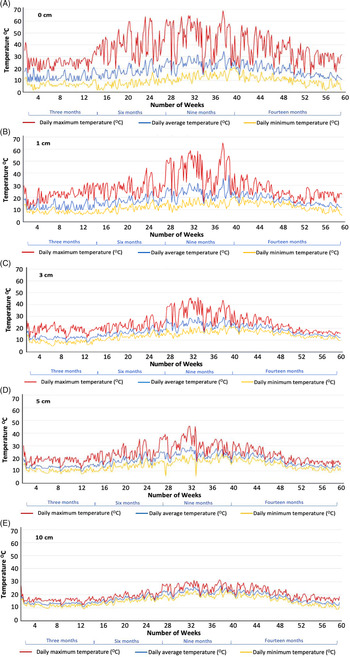
Due to cost and time constraints, along with the widespread geographic locations where seeds were originally collected, only seeds harvested from Maffra, VIC, were chosen for this trial. To examine the seed longevity in situ, approximately 3,000 seeds were buried at the Maffra site. Twenty-four mesh envelopes (2.5 cm by 4.5 cm by 2cm) were randomly placed or buried at depths of 0, 1, 3, 5, and 10 cm and retrieved after 3, 6, 9, and 14 mo, beginning in May 2019 for a total of six envelopes (replicates) per depth, per retrieval period. Envelopes were made out of a fine aluminum mesh (0.5- to 0.024-mm hole size) and edges were sealed using a hot glue gun to avoid any seeds slippage but allowing for water and other microorganisms to naturally flow through. Upon retrieval, seeds were transported to the seed ecology laboratory and counted for germination, hereafter referred to as the “in-field germination percentage.” Nongerminated seeds were thoroughly rinsed with reverse osmosis water and incubated following the seed germination protocol, and results were added to the in-field germination percentage to give the overall final germination percentage. In addition, three temperature data loggers (Thermodata Temperature Logging and Reporting Buttons fitted into plastic fobs; DC1921G, Thermochron 2k, −40 to +80 C, Manila, Philippines) were placed at each depth to monitor the temperature during the trial period. Temperature data were logged at intervals of 60 min for the duration of the trial.
Statistical Analysis
This study analyzed the effects of various environmental factors by comparing any difference in the means of each treatment and population by using the following measures described by Kader (Reference Kader2005): final germination percentage (FGP), germination index (GI), mean germination time (MGT), time taken to reach 50% germination (T 50) and time taken to start germination (T SG). ANOVA and relevant post hoc tests (such as Tukey’s test) were used to compare any difference in the levels of each factor, population, and their interaction. Drought stress was analyzed using a two-way ANOVA comparing the population, drought stress levels, and their interaction. Radiant heat stress was analyzed using a three-way ANOVA comparing temperature, time, population, and all their interactions. For the seed longevity trial, a linear mixed model was used to compare the in-field germination percentage and final germination percentage in terms of depth and time. The envelopes containing the seeds were a random effect, and the depth and time were both fixed effects. Therefore, a mixed model was used due to seeds within the envelopes having a homogeneous environment, while the envelopes were selected randomly for the depth and time intervals. All significant interactions were then analyzed by investigating the simple main effects with Bonferroni adjustments. For each ANOVA conducted, the assumptions of normality were investigated. Due to several measures investigated and a large number of ANOVAs constructed, only results with a P < 0.001 were used to identify any significant difference. This cutoff value was chosen to address some slight departures from the assumptions, while also addressing any concerns over inflated type I errors. All statistical tests were analyzed using SPSS statistical software (v. 23, IBM, Armonk, NY, USA).
The following equations were used to determine various measures as shown below:
 $${\rm{Final}}\,{\rm{germination}}\,{\rm{percentage}} = {{{\rm{NSG}}} \over {{\rm{TNS}}}} \times 100$$
where NSG is the final number of seeds germinated, and TNS is the total number of seeds before germination.
 $${\rm{Germination}}\,{\rm{index}} = \left({{\rm{n}} \over {{\rm{days}}\,{\rm{of}}\,{\rm{count}}}}\right) + ( \ldots ) + \left({{\rm{n}} \over {{\rm{day}}\,{\rm{of}}\,{\rm{count}}}}\right)$$
where GI is the final germination index, and n is the number of germinated seeds.
 $${\rm{Mean}}\,{\rm{germination}}\,{\rm{time}} = \left({{\sum \,D_n} \over {\sum \,n}}\right)$$
where n is the seeds germinated on day D, and D n is the total number of days from the beginning of the trial.
 $${\rm{Time}}\,{\rm{taken}}\,{\rm{to}}\,{\rm{reach}}\,{\rm{50}}\% \,{\rm{germination}} = ti{{({n \over 2} - n_i)(t_j - t_i)} \over {(n_j - n_i)}}$$
where n is the total number of seeds germinated, n j and n i are the collective number of seeds germinated at the counts at days t j and t i .
Time to start germination (T SG) (Equation 5) was calculated by averaging the days taken for seeds to start germinating.
Results and Discussion
Effect of Drought Stress
Key results from this study suggest that E. curvula seeds from Maffra, Tenterfield, Shepparton, and Midvale are moderately drought tolerant. Collectively, seed germination was reduced or slower at the osmotic potential of −0.6 MPa or lower. For all measures investigated, there was a significant interaction between the population and osmotic potential (Table 1). For the final germination percentage (FGP), post hoc tests indicated that the mean FGP was significantly lower at the greater PEG concentrations, with an osmotic potential of ≤−0.4 MPa compared with >−0.4 MPa for Maffra (24% vs. 83%) and Shepparton (41% vs. 74%). However, for Tenterfield (35% vs. 99%) and Midvale (32% vs. 91%), the mean FGP was significantly lower at ≤−0.6 MPa compared with >−0.6 MPa. For the germination index (GI), Maffra (1.9 vs. 6.5) had a significantly lower mean GI at ≤−0.1 MPa compared with the control. For Tenterfield (0.9 vs. 5.6) and Shepparton (0.8 vs. 3.4), it was significantly lower at ≤−0.6 MPa compared with >−0.6 MPa. For Midvale (1.7 vs. 7.1), it was significantly lower at ≤−0.2 MPa compared with >−0.2 MPa. For the mean germination time (MGT), Maffra (14.4 d vs. 5.1 d) had a significantly longer MGT at ≤−0.8 MPa compared with >−0.8 MPa. For Tenterfield (10.4 d vs. 3.7 d), it was longer at ≤−0.6 MPa compared with >−0.6 MPa, and it was longer for Midvale (9.5 d vs. 4.3 d) at ≤−0.4 MPa compared with >−0.4 MPa. However, Shepparton had a consistent MGT across all levels. For the time taken to reach 50% germination (T 50), Maffra (14.1 d vs. 4.2 d) and Shepparton (7.7 d vs. 3.8 d) had a significantly longer mean T 50 at ≤−0.8 MPa compared with >−0.8 MPa. For Tenterfield (9.6 d vs. 2.9 d) and Midvale (8.5 d vs. 3.9 d), it was longer at ≤−0.6 MPa compared with >−0.6 MPa. For the time taken to start germination (T SG), Maffra (12.8 d vs. 3.4 d) and Shepparton (7.1 d vs. 3.4 d) had a significantly longer mean T SG at ≤−0.8 MPa compared with >−0.8 MPa, while the T SG for Tenterfield (8.8 d vs. 3 d) and Midvale (7.4 d vs. 2.8 d) was longer at ≤−0.6 MPa compared with >−0.6 MPa.
The effect of drought stress on Eragrostis curvula seed germination.a

a For each measure, values (means) that run down each column (within that population) and have the same lowercase letter are not significantly different at P < 0.001. Also, for each measure, values (means) that run across each row and have the same uppercase letter are not significantly different at P < 0.001.
Soil moisture levels of well-watered soils are defined as those with an osmotic potential between 0 and −0.3 MPa, while severe drought conditions are classified between −1.5 and −2.0 MPa (Haswell and Verslues Reference Haswell and Verslues2015). Therefore, in drought conditions, it is expected that E. curvula germination will significantly decline. However, as water becomes increasingly available after a drought, it is expected that E. curvula will be favored by this change and germinate before many species that might be more sensitive to drought conditions. Previous studies have shown that under stressful or drought-like conditions, E. curvula can continue to reproduce via apomixis (Rodrigo et al. Reference Rodrigo, Zappacosta, Selva, Garbus, Albertini and Echenique2017; Selva et al. Reference Selva, Zappacosta, Carballo, Rodrigo, Bellido, Gallo and Echenique2020). This is beneficial to the species, as it can produce thousands of moderately drought-tolerant seeds and dominate the soil seedbank in conditions that many other species cannot. Several native species that coexist with E. curvula in Australia, such as kangaroo grass (Themeda triandra Forssk.) and spear grass [Heteropogon contortus (L.) P. Beauv. ex Roem. & Schult.] have significantly reduced germination at ≤−0.3 MPa (Van den Berg and Zeng Reference Van den Berg and Zeng2006). Therefore, in water-limited conditions, it is likely that E. curvula will strongly compete with the native species. In contrast, there are several native species that can tolerate drought conditions and are found within the same niche as E. curvula; these include wallaby grass [Rytidosperma caespitosum (Gaudich.) Connor & Edgar] and barbed wire grass [Cymbopogon refractus (R. Br.) A. Camus] (Walters et al. Reference Walters, Dear, Hackney, Jessop and Melville2008). Therefore, future management should aim to utilize drought-tolerant native species in revegetation programs to help compete with and suppress E. curvula germination.
Effect of Radiant Heat Stress
Key results from this study suggest that E. curvula seed germination was significantly reduced and slower at 100 C for Shepparton, Tenterfield, and Midvale. For the Maffra population, germination was consistent across all temperature and exposure times. For all measures, there was a significant interaction between the population and temperature (Table 2). For the final germination percentage (FGP), post hoc tests indicated that Tenterfield (63% vs. 100%), Shepparton (15% vs. 89%), and Midvale (41% vs. 100%) had a significantly lower mean FGP at 100 C compared with 40 C. However, Maffra (86% vs. 75%) had consistent germination at 40 and 100 C. For the germination index (GI), post hoc tests indicated that Tenterfield (1.2 vs. 5), Shepparton (0.3 vs. 4.1), and Midvale (1.2 vs. 4.8) had a significantly lower mean GI at 100 C compared with 40 C, while it was consistent for Maffra (3.5 vs. 4.1). For the mean germination time (MGT), post hoc tests indicated that Tenterfield (10.2 d vs. 4 d) had a significantly longer mean MGT at 100 C, Shepparton (10.1 d vs. 5 d) at 100 C (3 min), and Midvale (9.5 d vs. 4.7 d) at 100 C (9 min), compared with all other combinations. For Maffra (4.1 d vs. 4.5 d) the MGT was consistent for 40 and 100 C. For the time taken to reach 50% germination (T 50), post hoc tests indicated that Tenterfield (10.1 d vs. 3.5 d) had a longer mean T 50 at 100 C, Shepparton (9.4 d vs. 4.7 d) at 100 C (3 min) and Midvale (9.4 d vs. 3.7 d) at 100 C (9 min), compared with all other combinations. For Maffra (3.5 d vs. 3.8 d), the mean MGT was consistent for 40 and 100 C. For the time taken to start germination (T SG), post hoc tests indicated that Tenterfield (8.1 d vs. 4.6 d) had a significantly longer mean T SG at 100 C (9 min) and Shepparton (9.1 d vs. 4.7 d) at 100 C (3 min), compared with all combinations. For Maffra (4 d) and Midvale (4 d vs. 5.1 d), the mean T SG was consistent for 40 and 100 C. Furthermore, the duration of heating did not significantly affect the germination outcome at both the 40 and 100 C temperature combinations. This suggests that the period of temperature exposure (which varied from 3 to 9 min) did not significantly influence E. curvula seed germination in this trial.
The effect of radiant heat stress on Eragrostis curvula seed germination. a

a For each measure, values (means) that run down each column (within that population) and have the same lowercase letter are not significantly different at P < 0.001. Also, for each measure, values (means) that run across each row and have the same uppercase letter are not significantly different at P < 0.001.
Radiant heat generated by fire, as well as fire itself, can often remove surrounding competitive vegetation and open up vegetative gaps within which seeds can germinate (Trabaud Reference Trabaud1980). The removal of vegetation can play a negative or positive role on seed germination, as it can increase solar radiation and further heat and dry the soil at an accelerated rate (Santana et al. Reference Santana, Bradstock, Ooi, Denham, Auld and Baeza2010). This can lead to greater fluctuations in soil temperature, which may influence germination by breaking the physical dormancy and allowing water to be absorbed more rapidly (Moreira and Pausas Reference Moreira and Pausas2012; Musso et al. Reference Musso, Miranda, Aires, Bastos, Soares and Loureiro2015). It can also influence germination, as seeds exposed to harsher conditions from increased light and temperature can experience changes to the enzymatic and metabolic processes required for germination (Fenner and Thompson Reference Fenner and Thompson2005; Fichino et al. Reference Fichino, Dombroski, Pivello and Fidelis2016). Research has shown that smaller-seeded species are often less tolerant of high radiant heat stress (Escudero et al. Reference Escudero, Nunez and Perez-Garcials2000; Fichino et al. Reference Fichino, Dombroski, Pivello and Fidelis2016). Short-exposure or short-duration heat stress can decrease protein stabilization and synthesis, which can impact cellular and metabolic processes (Baskin and Baskin Reference Baskin and Baskin2014; Schoffl et al. 1999). However, for long-exposure or long-duration heat stress, the impacts may be more severe (Baskin and Baskin Reference Baskin and Baskin2014). This damage to cell organelles can kill seeds. It is clear from this study that germination was significantly reduced and slower at 100 C for Tenterfield, Shepparton, and Midvale. However, seed germination for Maffra was not significantly reduced or slower at this temperature or with greater exposure time. This is likely due to localized adaptation or maternal effects whereby seeds may have evolved to withstand greater levels of radiant heat compared with the other populations. This could be in response to previous fires within the region, whereas Tenterfield, Shepparton, and Midvale may not have burnt as frequently, and those populations therefore did not need to adapt. In contrast, radiant heat of 100 C did not increase or promote germination for E. curvula across all populations. Planned burning is a common method for reducing invasive species, as it diminishes soil seedbanks and aboveground biomass (Clarke and French Reference Clarke and French2005; Johnson et al. Reference Johnson, Catford, Driscoll and Gibbons2018). Therefore, burning is likely a useful method in reducing E. curvula seed germination, although the rate of success may vary between populations.
Effects of Seed Burial Depth and Duration (Longevity)
Key results from this study indicate that the overall germination of E. curvula seeds from Maffra was greatest at 6 mo, followed by a decline at 9 and 14 mo. Seed longevity of E. curvula also increased with depth. For the in-field germination percentage, there was a significant interaction that occurred between the depth and time (Table 3). Relevant post hoc tests indicated that for the 3-mo period (0% vs. 23%), the mean in-field germination percentage was significantly lower at 0 cm compared with 3, 5, and 10 cm. At 6 mo (14% vs. 50%), the mean in-field germination percentage was significantly lower at 0 cm compared with 3 and 10 cm. At 9 mo (17% vs. 41%), the mean in-field germination percentage was significantly lower at 0 cm compared with 5 and 10 cm, while the 14-mo period had consistent germination across all depths. Furthermore, there was variation in the in-field germination percentage between each month. At 3 mo, the mean in-field germination percentage was significantly lower compared with all other months (18% vs. 32%). In addition, there was also variation in the in-field germination percentage between each depth. The 0-cm burial depth had a significantly lower mean in-field germination percentage compared with all other depths (12% vs. 34%). For the final germination percentage (FGP), there was no significant interaction between the depth and time (Table 4). However, there was a variation in the mean FGP. Collectively, the 0-cm burial depth had a significantly lower mean FGP compared with the 3-, 5-, and 10-cm depths (24% vs. 55%). In addition, the 3- (23% vs. 58%) and 6-mo periods (30% vs. 63%) had a significantly lower mean FGP at 0 cm compared with 10 cm. At 9 (21% vs. 58%) and 14 mo (23% vs. 67%), the mean FGP was significantly lower at 0 cm compared with 5 and 10 cm.
Seed longevity: in-field germination percentage of Eragrostis curvula seeds from Maffra, VIC. a

a Values (means) that run down each column and have the same lowercase letter are not significantly different at P < 0.001. Values (means) that run across each row and have the same uppercase letter are not significantly different at P < 0.001.
Seed longevity: final germination percentage (FGP) of Eragrostis curvula seeds from Maffra, VIC. a

a Values (means) that run down each column and have the same lowercase letter are not significantly different at P < 0.001. Values (means) that run across each row and have the same uppercase letter are not significantly different at P < 0.001.
At the 3-mo stage of the experiment, the average monthly rainfall at the study site was consistent (25 to 40 mm), whereas the average daily temperature (4 to 17 C) was the lowest during the study (Figure 3). This may have resulted in the in-field germination percentage being the lowest at this time, as research by Roberts (Reference Roberts2020) highlights that E. curvula seed germination from the Maffra region is significantly reduced at temperatures between 7 and 17 C. This suggests that E. curvula seeds can stay dormant in the cooler months of the year, followed by germination in the warmer months. The in-field germination percentage collectively across all depths significantly increased at 6, 9, and 14 mo. During this period, the average monthly rainfall (30 to 120 mm) and temperature (5 to 30 C) both increased, which may have encouraged germination (Figure 3). Research suggests that seed germination is strongly correlated with seasonal fluctuation in temperature and water availability (Donohue et al. Reference Donohue, Casas, Burghardt, Kovach and Willis2010; Li et al. Reference Li, Liu, Qiao, Wang, Cai, Dong, Shi, Liu, Li and Liu2013).
The average monthly temperature and rainfall for Maffra, VIC, during the seed longevity sample period (May 2019 to June 2020). Rainfall data were collected from the Maffra weather station (station number 85297) and temperature data were collected from the East Sale weather station (station number 85072) (Bureau of Meteorology 2020).

Seeds buried deeper within the soil had a higher overall final germination percentage compared with those closer to the surface. Temperature data loggers buried at each depth during the sample period showed that seeds closer to the surface experienced a greater fluctuation in temperature, including both high and low extremes, whereas those buried deeper had less fluctuation (Figure 4). The temperature fluctuation was greatest at 0 (3 to 68 C) and 1 cm (6 to 64 C) depths, while it slightly decreased at 3 (5 to 45 C) and 5 cm (6 to 44 C) (Figure 4). However, for 10 cm (9 to 30 C), temperatures stayed relatively consistent with little fluctuation during the sample period. In comparison with E. curvula, greater depths have also been associated with increased seed longevity in several Eragrostis species, such as South Africa lovegrass (Eragrostis plana Nees) (Medeiros et al. Reference Medeiros, Focht, Menegon and Freitas2014) and feather lovegrass [Eragrostis tenella (L.) Beauv. ex Roemer & J.A Schultes] (Chauhan Reference Chauhan2013). This suggests that E. curvula seeds buried deeper within the soil, which experienced less fluctuation in temperature, may have experienced a longer physiological dormancy period that was broken by optimal growing conditions ex situ. This pattern of seed dormancy and germination has also been observed in serrated tussock [Nassella trichotoma (Nees) Hack.] (Ruttledge et al. Reference Ruttledge, Whalley, Falzon, Backhouse and Sindel2020). Furthermore, there was no significant difference in the germination of E. curvula across a 14-mo period, collectively, across each depth. Therefore, it is recommended that when managing landscapes infested with E. curvula, soil disturbance should be kept at a minimum to avoid spreading viable (dormant) seeds to areas where they could readily germinate.
The daily average and maximum and minimum temperatures recorded from different depths (A) 0 cm, (B) 1 cm, (C) 3 cm, (D) 5 cm, and (E) 10 cm from Maffra, VIC (37.92486°S, 146.996279°E). Temperatures were recorded from May 23, 2019, to July 2, 2020, using data loggers (Thermodata Temperature Logging and Reporting Buttons fitted into plastic fobs (DC1921G, Thermochron 2k, −40 to +80 C) at an interval of 1 h.

In summary, this study highlights several similarities and differences in the seed germination of E. curvula. All populations investigated were moderately drought tolerant. However, radiant heat exposure at 100 C significantly reduced germination for Tenterfield, Shepparton, and Midvale, although Maffra stayed consistent. Therefore, radiant heat produced by burning, which would easily exceed 100 C in surface soils, could be a useful method in reducing seed load and subsequent seed germination, although success may vary between populations. In regard to burial depth and duration (longevity), seeds from Maffra showed no significant difference in germination across a 14-mo period, suggesting seeds can remain viable and germinate readily for at least this period. In addition, seed longevity increased with depth; therefore, soil disturbance and soil practices such as scraping or tilling should be limited across infested sites to avoid spreading viable (dormant) seeds to new areas. With this study showing slight variation in the seed ecology of the species across its distribution in southern Australia, it is expected that there may be greater variations in regions with more varied climatic conditions and selective pressures. This study highlights the importance of studying and comparing different populations of widespread invasive species across a range of climatic regions to guide more effective and tailored landscape-scale management.
Acknowledgments
The authors would like to acknowledge Michael McBain for Figure 1.
No conflicts of interest have been declared. This research received no specific grant from any funding agency or the commercial or not-for-profit sectors.