Introduction
Litter decomposition plays a crucial role in the cycling of matter within ecosystems, facilitating the immobilisation and mineralisation of essential nutrients for organisms inhabiting natural ecosystems (Swift et al. Reference Swift, Heal and Anderson1979). This process is foundational to a multitude of ecosystem functions, including primary productivity (Gartner and Cardon Reference Gartner and Cardon2004; Xiong and Nilsson Reference Xiong and Nilsson1999), as well as ecosystem services such as carbon storage (Canadell et al. Reference Canadell, Le Quéré, Raupach, Field, Buitenhuis, Ciais, Conway, Gillett, Houghton and Marland2007; Griffiths et al. Reference Griffiths, Eggleton, Hemming-Schroeder, Swinfield, Woon, Allison, Coomes, Ashton and Parr2021). Multiple factors interact to modulate decomposition rates, including the physical and chemical traits of litter, environmental conditions such as microclimate, and the soil biota (Aerts Reference Aerts1997; Hättenschwiler et al. Reference Hättenschwiler, Tiunov and Scheu2005; Tan et al. Reference Tan, Yin, Zhang, Xu, Liu, He, Zhang, Li, Wang, Liu, You and Peng2021).
Heterogeneous litter mixtures often decompose more rapidly than single-species litter, as they provide a greater variety of microhabitats and resources for decomposers (Handa et al. Reference Handa, Aerts, Berendse, Berg, Bruder, Butenschoen, Chauvet, Gessner, Jabiol, Makkonen, McKie, Malmqvist, Peeters, Scheu, Schmid, van Ruijven, Vos and Hättenschwiler2014; Seastedt Reference Seastedt1984). However, the effects of litter diversity on decomposition appear to be highly variable and idiosyncratic (Cardinale et al. Reference Cardinale, Srivastava, Emmett Duffy, Wright, Downing, Sankaran and Jouseau2006; Cardinale et al. Reference Cardinale, Matulich, Hooper, Byrnes, Duffy, Gamfeldt, Balvanera, O.’Connor and Gonzalez2011; Gartner and Cardon Reference Gartner and Cardon2004). Numerous studies have reported increased decomposition rates in litter mixtures (Kaneko and Salamanca Reference Kaneko and Salamanca1999; Mori et al. Reference Mori, Cornelissen, Fuji, Okada and Isbell2020), while others have shown the opposite pattern (Hoorens et al. Reference Hoorens, Coomes and Aerts2010; Porre et al. Reference Porre, van der Werf, De Deyn, Stomph and Hoffland2020). These divergent results may be attributed to factors such as the functional diversity and specific traits of the plant litter (Díaz and Cabido Reference Díaz and Cabido2001; Freschet et al. Reference Freschet, Aerts and Cornelissen2012), and to the identity and activity of decomposers (Joly et al. Reference Joly, Coq and Subke2023). Decomposers typically prioritise to explore high-quality litter, which can facilitate nutrient transfer to adjacent low-quality substrates, thereby influencing overall decomposition dynamics (Hättenschwiler et al. Reference Hättenschwiler, Tiunov and Scheu2005).
Taxonomic richness in plant litter can significantly influence decomposition dynamics, particularly when species differ in their niche requirements or functional roles to the ecosystem (Díaz and Cabido Reference Díaz and Cabido2001). Such diversity may enhance the availability of complementary resources for soil organisms, potentially leading to synergistic interactions and accelerated decomposition rates. These synergistic effects on litter decomposition can arise from niche complementarity, where species exhibit distinct and complementary activities (also known as identity effects) (Mikola et al. Reference Mikola, Nieminen, Ilmarinen and Vestberg2005). Additionally, decomposition can be disproportionally driven by the presence of fast-decomposing species within the mixture – known as the sampling effect (Vos et al. Reference Vos, van Ruijven, Berg, Peeters and Berendse2013). However, assessing niche and functional traits can be challenging due to unknown traits shared among related species, which may possess similar functional traits (Srivastava et al. Reference Srivastava, Cadotte, MacDonald, Marushia and Mirotchnick2012), occupy similar niches (Wiens et al. Reference Wiens, Ackerly, Allen, Anacker, Buckley, Cornell, Damschen, Jonathan Davies, Grytnes, Harrison, Hawkins, Holt, McCain and Stephens2010), and engage in similar ecological interactions (Gomez et al. Reference Gomez, Verdu and Perfectti2010).
Soil invertebrates play crucial direct and indirect roles in litter decomposition processes. Through fragmentation and partial digestion of organic material, they increase the surface area available for microbial colonisation and enhance physical contact between decomposers and litter, thereby accelerating decomposition processes (Hättenschwiler et al. Reference Hättenschwiler and Gasser2005; Njoroge et al. Reference Njoroge, Dossa, Ye, Lin, Schaefer, Tomlinson, Zuo and Cornelissen2023). Factors such as elevated temperature and precipitation, and larger habitat area can enhance litter decomposition by influencing the abundance, diversity and activity of soil fauna (García-Palacios et al. Reference García-Palacios, Maestre, Kattge and Wall2013; Paolucci et al. Reference Paolucci, Sobrinho and Schoereder2016; Wall et al. Reference Wall, Bradford, St John, Trofymow, Behan-Pelletier, Bignell, Dangerfield, Parton, Rusek, Voigt, Wolters, Gardel, Ayuke, Bashford, Beljakova, Bohlen, Brauman, Flemming, Henschel, Johnson, Jones, Kovarova, Kranabetter, Kutny, Lin, Maryati, Masse, Pokarzhevskii, Rahman, Sabará, Salamon, Swift, Varela, Vasconcelos, White and Zou2008). Consequently, greater arthropod diversity potentially enhances organic matter mineralisation through complementary functional roles and trophic interactions (Griffiths et al. Reference Griffiths, Eggleton, Hemming-Schroeder, Swinfield, Woon, Allison, Coomes, Ashton and Parr2021), although this aspect remains underexplored in this field (Joly et al. Reference Joly, Coq and Subke2023).
Despite the extensive empirical research on the decomposition of mixed litter, most studies primarily focus on the individual effects of litter taxonomic diversity (Chomel et al. Reference Chomel, Guittonny-Larchevêque, DesRochers and Baldy2016), functional diversity (Cornwell et al. Reference Cornwell, Cornelissen, Amatangelo, Dorrepaal, Eviner, Godoy, Hobbie, Hoorens, Kurokawa and Pérez-Harguindeguy2008), or arthropod diversity (Kaneko and Salmanca Reference Kaneko and Salamanca1999). This approach often overlooks the potential interactive effects among these variables (with some exceptions such as Handa et al. Reference Handa, Aerts, Berendse, Berg, Bruder, Butenschoen, Chauvet, Gessner, Jabiol, Makkonen, McKie, Malmqvist, Peeters, Scheu, Schmid, van Ruijven, Vos and Hättenschwiler2014; Njoroge et al. Reference Njoroge, Dossa, Ye, Lin, Schaefer, Tomlinson, Zuo and Cornelissen2023) – despite their concurrent presence under natural conditions. Furthermore, many studies on the decomposition of mixed litter are conducted in garden or laboratory microcosm experiments, which, while controlled, often exclude the influence of the plant host community on the decomposition microenvironment (Jewell et al. Reference Jewell, Shipley, Low-Décarie, Tobner, Paquette, Messier and Reich2017).
In this study, we conducted a natural microcosm experiment within a remnant of the Brazilian tropical Atlantic rainforest to explore mechanisms driving litter decomposition. Our goal was to investigate whether litter taxonomic diversity, independent of litter species identity, enhances local litter decomposition. Additionally, we examined the potential mediating role of arthropod diversity in this process. We hypothesised that greater plant diversity would increase arthropod richness and abundance, which in turn would promote and facilitate litter decomposition.
Materials and methods
Study site and experimental design
We conducted this study in ‘Mata do Paraíso’, an Atlantic rainforest remnant of about 300 ha located in Viçosa, Minas Gerais, Brazil (20°48ʹ S, 42°51ʹ W). The local climate is characterised as a moderate subtropical moist climate, with a rainy season occurring from September to April and a dry season from May to August (Golfari Reference Golfari1975). The annual mean temperature is 20°C, with a relative humidity of 80% and an average annual rainfall of 1,300 mm (Castro et al. Reference Castro, Valente, Coelho and Ramalho1983). The altitude of the area ranges from 600 to 800 m, and the dominant vegetation type is secondary seasonal semi-deciduous montane forest (Veloso et al. Reference Veloso, Rangel Filho and Lima1991).
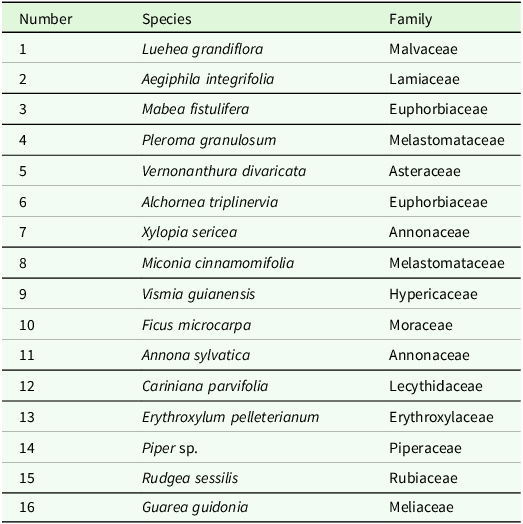
In May 2009, we collected fallen litter leaves from a forest remnant located within the campus of the Federal University of Viçosa, which exhibited similar conditions to our study site. All the species used in our experiment are native to the study region and were selected based on their high occurrence within the remnant we studied (Table 1). The collected leaves were oven-dried for 72 hours at 60°C and then allocated into litterbags measuring 25 × 25 cm with a mesh size of four mm. The total amount of litter used in all treatment levels (corresponding to the number of litter species) was determined as 10 g. Specifically, litterbags with one plant species contained 10 g of litter, two species had 5 g from each species, four species had 2.5 g of each, eight species had 1.25 g of each, and 16 species had 0.625 g of litter from each species. We used a high-precision digital scale to weigh the exact quantities of leaves of each plant species.
Plant species used in the experiment, which we chose based on their frequent presence within our study site, a forest remnant of about 300 ha in southeastern Brazil. We assigned a number to each species in order to identify the composition of each treatment, shown in Table 2

Plant species drawn to compose each species richness treatment and sampling point. Numbers in each sampling point column identify the plant species used, which corresponds to the numbers shown in Table 1

To investigate the effects of diversity per se, without accounting for individual effects, we randomly selected the species used in each treatment. This approach ensured that the effects of responsive species were diluted across the different numbers of litter species treatments. Additionally, each treatment was not repeated among replicates with the same richness value (except for the treatment with 16 species, which included all studied plant species) (Table 2). This design allowed us to examine whether an increase in plant richness alone leads to higher litter decay. Furthermore, this experimental design enabled us to investigate the potential effects of litter species diversity independent of the chemical characteristics of dominant species, including any antagonistic or synergistic effects that may arise when combined with other species.
As our study aimed to analyse an ecosystem process that occurs at a local scale (litter decomposition), we conducted it in one large remnant. This approach decreased the influence of factors that vary at larger scales, such as microclimate, physical-chemical characteristics of the soil, and soil biota. In the study area, we established five sampling points, each measuring 2 × 1 m, within the forest remnant. These sampling points were positioned at least five metres apart from each other. We established the sampling points in locals with different characteristics within the fragment, covering edge areas, clearings, and forest interiors, increasing the heterogeneity and independence among the sampling points, to diminish any effect due to context-dependence. The entire litter was removed from each sampling point, and the area was then covered with shade cloth, placed at a height of 70 cm, to prevent fallen leaves from nearby trees from entering the sampling area. We placed a total of 45 litterbags within each sampling point. These litterbags represented five treatments, corresponding to different litter species richness levels (one, two, four, eight, or 16 species). Thus, there were nine litterbags per treatment at each sampling point (Tables 1 and 2).
Arthropod sampling was conducted by selecting one litterbag from each treatment and sampling point every 21 days throughout the experiment (up to the 189th day). We then took the selected litterbags to the laboratory for arthropod extraction using Berlese funnels. Data obtained from the first eight sampled litterbags were used to calculate the accumulated arthropod richness and abundance over the entire experimental period. However, these data were not used to estimate litter decomposition, which was estimated solely from the last sampled litterbag.
After each sampling event, all litterbags were placed in Berlese funnels for seven days to extract arthropods. Arthropod richness and abundance for each treatment at each sampling point were determined by summing the contents of all nine litterbags from the same treatment and sampling point. The extracted arthropods were sorted and identified to the lowest possible taxonomic level using taxonomic keys and with the assistance of specialists.
Following arthropod extraction, the litter obtained from the final sampling event was oven-dried for 72 hours at 60°C and weighed. Litter decomposition was estimated for each litter richness treatment by subtracting the weight obtained in the last sampling event (after 189 days) from the initial litter weight (10 g).
Statistical analyses
Plant litter mixture, represented by the plant litter richness variable, shows a distinct log2-series pattern. Thus, we applied a log2 transformation to this variable, as well as to all other corresponding response variables, to ensure their suitability for our statistical models. To investigate the relationship between litter decomposition and the litter mixture diversity, we built linear mixed models (LMMs) with a normal error distribution. We treated the sampling point as a random effect, with weight loss (log2) as the response variable and plant litter richness (log2) as the continuous explanatory variable. We conducted two complementary analyses. The first included all samples from all treatments, encompassing plant species richness levels from 1 to 16 species. However, the 16-species treatment was unique as it included all species used in the experiment and was not randomly assembled, unlike the other richness levels, which were based on random species combinations. This non-random, full-species composition could introduce a species identity effect, since the complete set of 16 species may display unique synergistic or antagonistic interactions not present in the randomly assembled lower-diversity treatments. To account for this potential bias, we performed a second LMM excluding the 16-species treatment. This analysis included only treatments with 1 to 8 species and was used to evaluate the overall relationship between species richness and decomposition. If a consistent positive relationship between decomposition and species richness is observed in this restricted dataset, we considered it appropriate to include the 16-species treatment in subsequent analyses.
To investigate the potential relationship between arthropod abundance and richness and plant litter richness, we used two distinct LMMs. In each model, arthropod abundance (log2) and richness (log2) were the response variables, while litter richness (log2) was included as the continuous explanatory variable. Again, the sampling point was treated as a random effect.
Finally, since the abundance of arthropods responded to the increase in plant species richness within the litter mixture, we investigated whether the rise in arthropod abundance could serve as a mechanism to explain the faster decomposition of the litter. For this, we conducted a GLMM analysis, using the sampling points with a random effect. Litter weight loss was treated as the response variable, while arthropod abundance was the explanatory variable.
We also compared marginal and conditional R 2 across all models to estimate the proportion of variance attributed to fixed and random effects (Nakagawa and Schielzeth Reference Nakagawa and Schielzeth2013). This analysis was performed to disentangle potential effects caused by the variable of interest or due to the context dependence of the sampling points. We utilised the performance package version 0.13.0 (Lüdecke et al. Reference Lüdecke, Ben-Shachar, Patil, Waggoner and Makowski2021) for these R 2 comparisons.
All analyses were conducted using the R software (R Core Team Reference Team2023). To check for dispersion in the Generalised Linear Mixed Models (GLMs), we employed the DHARMa package, version 0.4.1 (Hartig Reference Hartig2021).
Results
We collected a total of 3,634 individual arthropods, representing 142 different taxa across eight Classes: Arachnida, Chilopoda, Diplopoda, Entognatha, Insecta, Malacostraca, Pauropoda e Symphyla (Table 3). The most abundant Class was Entognatha (2090 individuals), followed by Insecta (543), Malacostraca (401), Arachnida (334), Diplopoda (170), Chilopoda (71), Symphyla (24) e Pauropoda with one individual.
Arthropod taxa recorded in litter bags during the decomposition experiment, identified to the lowest possible taxonomic level

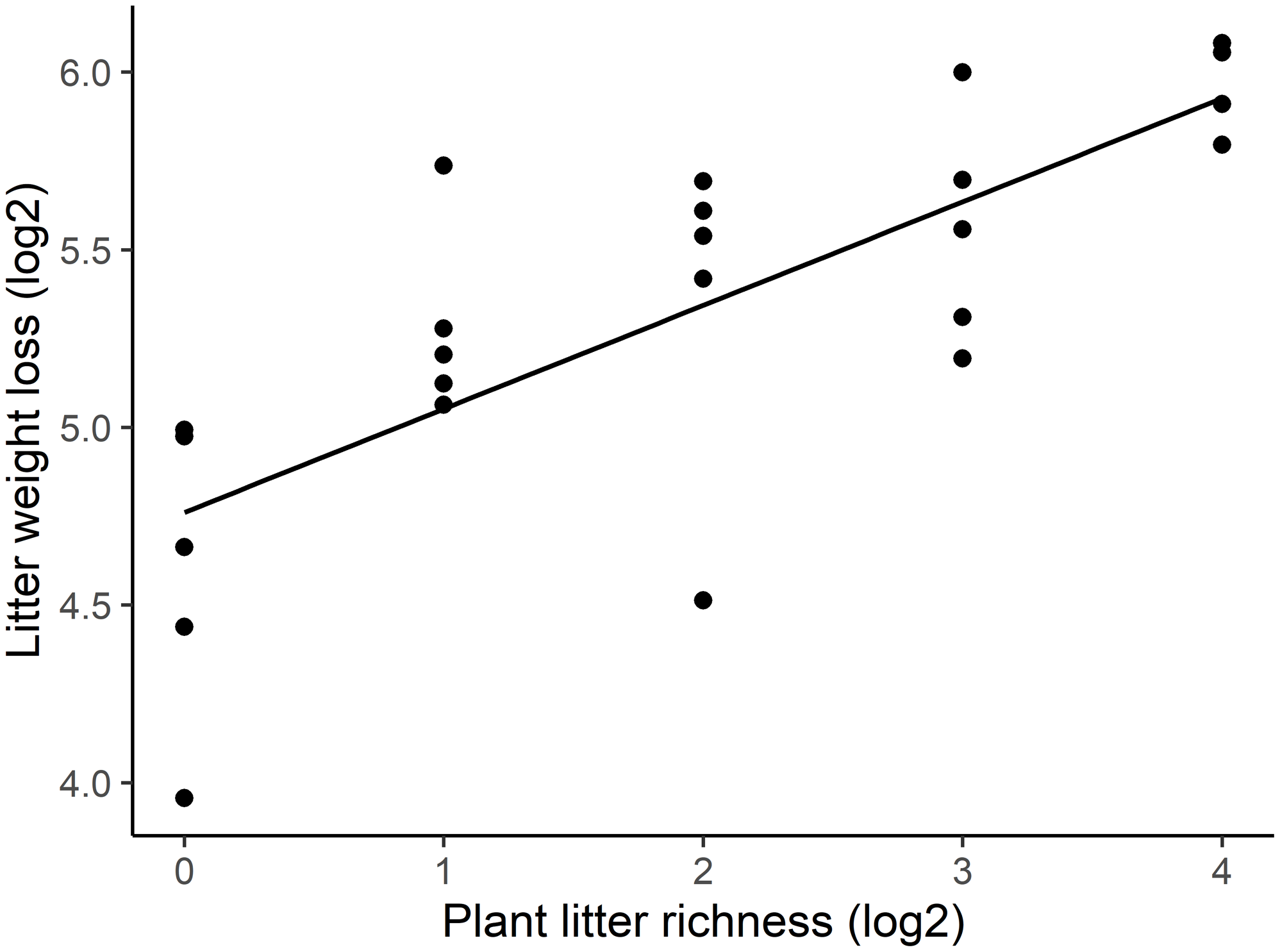
Litter decomposition, estimated by weight loss, ranged from 15.5% to 67.7%, with a mean of 43.8% [SD = 14.19%] across samples. Additionally, 80% of our samples exhibited weight losses exceeding 33% over the 189-day field decomposition period. Initially, as expected, we observed an increase in litter decomposition (measured as weight loss) in response to plant species diversity in the litterbags. This pattern was evident even when considering only the treatments with 1 to 8 species (F 1,3 = 10.86, P < 0.01; R 2M = 0.405, R 2C = 0.405), highlighting the effect of diversity per se, and ruling out the possibility that the higher decomposition observed in the 16-species treatment was driven by unique synergistic interactions among the full set of species. Therefore, all subsequent results are based on analyses conducted using the full dataset, including all samples with plant species richness ranging from 1 to 16.
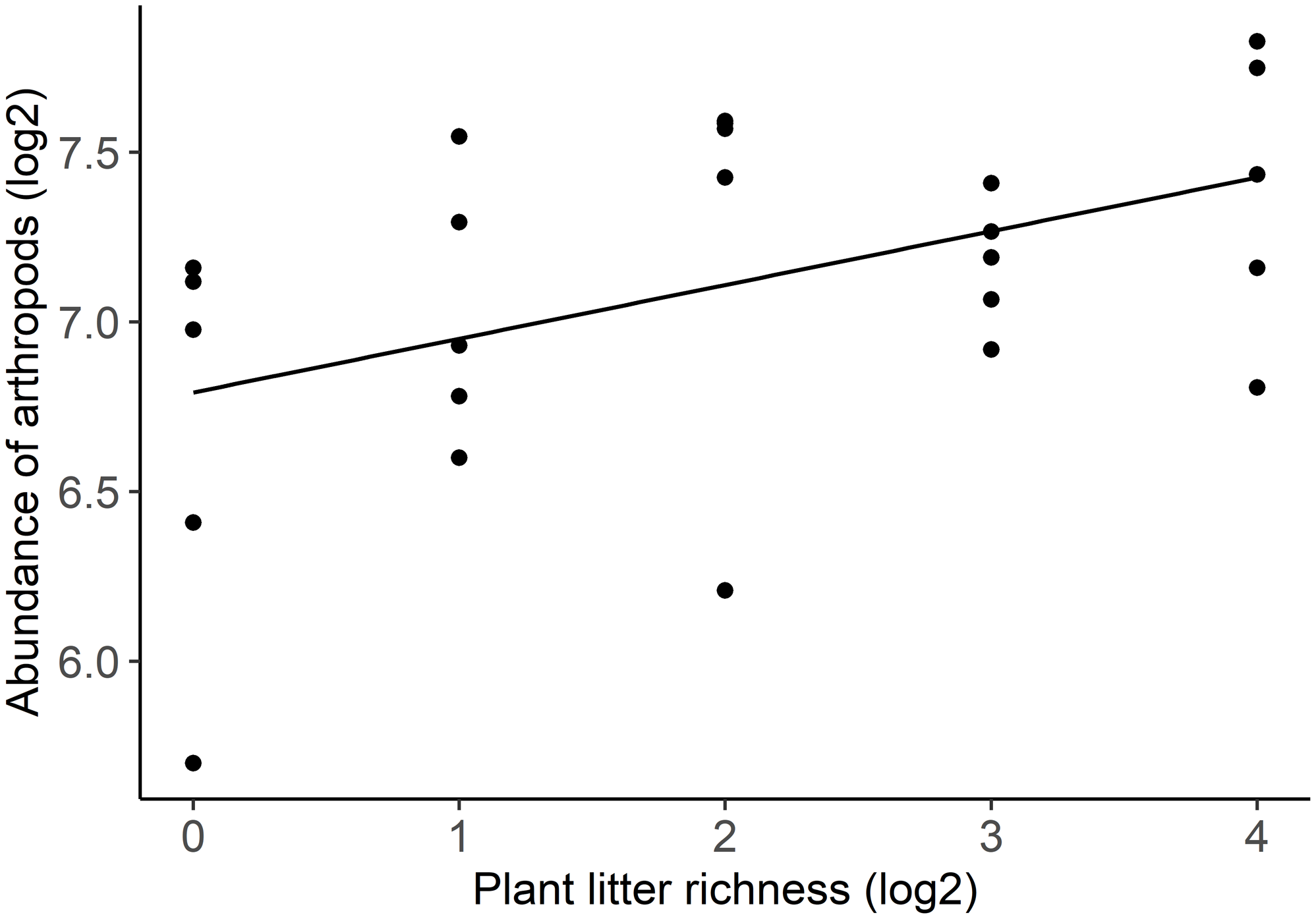
Consistent with our expectations, we observed that litter decomposition increases with a greater plant litter species richness (F 1,3 = 56.51, P < 0.01; R 2M = 0.6249, R 2C = 0.725; Figure 1). Arthropod richness did not respond to the plant litter species richness (P > 0.05), However, we found that the abundance of arthropods increases with the litter plant species (F 1,3 = 6.09, P < 0.01; R 2M = 0.203, R 2C = 0.203; Figure 2), as expected.
Positive relationship between litter decomposition (weight loss) (log2) and litter species richness (log2) in a secondary forest remnant of Brazilian Atlantic Forest. Each point represents a sample.

Positive relationship between arthropod abundance (log2) and litter species richness (log2) in a secondary forest remnant of Brazilian Atlantic Forest. Each point represents a sample.

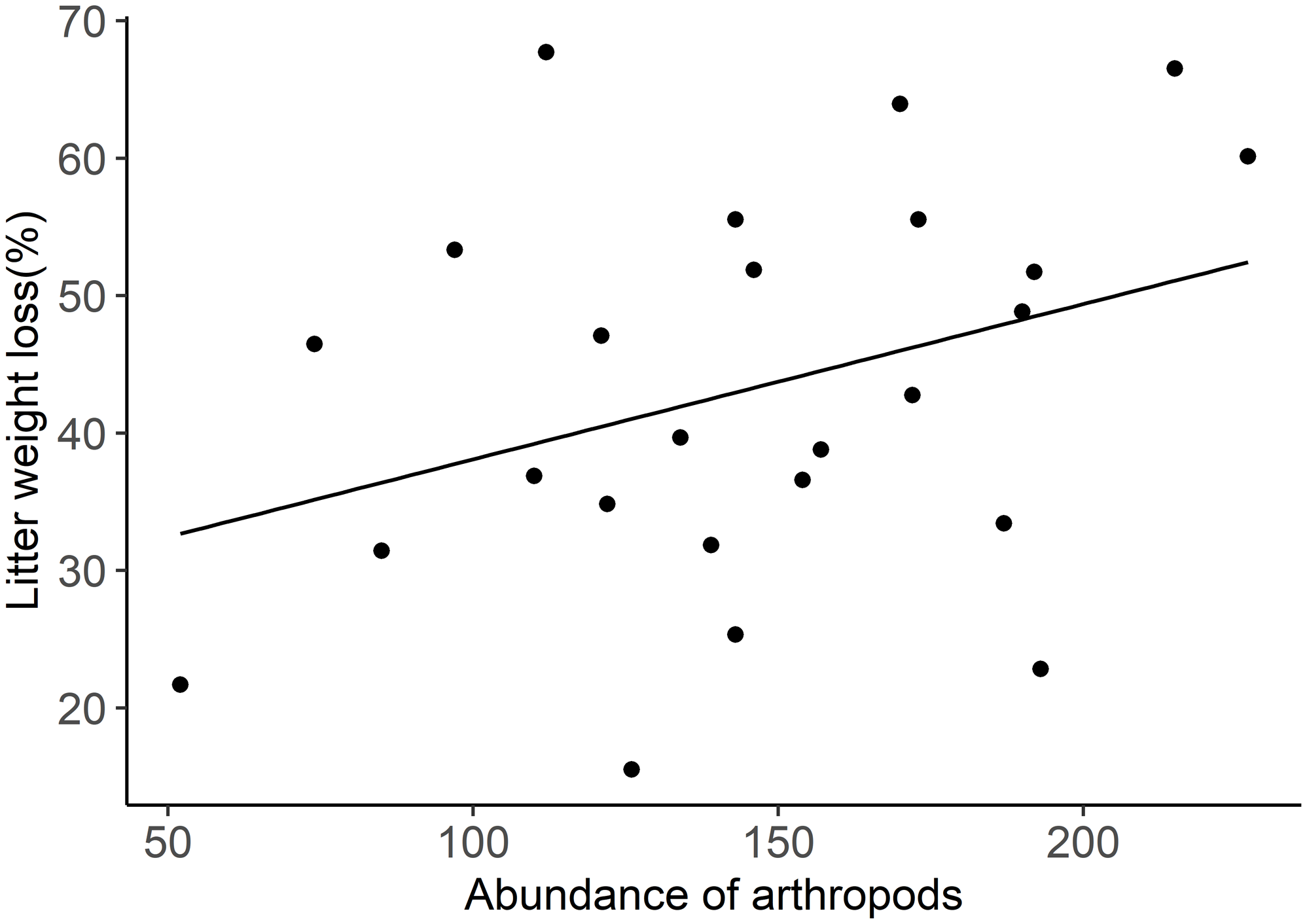
We also found a positive relationship between litter decomposition (weight loss) and arthropod abundance (F 1,3 = 6.39, P = 0.022; R 2M = 0.203, R 2C = 0.271; Figure 3), indicating that higher arthropod abundance was associated with increased litter decomposition. However, litter decomposition did not vary with arthropod species richness (P > 0.05).
Positive relationship between litter decomposition (percentage of weight loss) and arthropod abundance in a secondary forest remnant of Brazilian Atlantic Forest. Each point represents a sample.

In the models, the marginal R 2 is concerned with variance explained by fixed factors, and the conditional R 2 is concerned with variance explained by both fixed and random factors. While a portion of the total variance in all models can be attributed to the random factor – an expected outcome given that all sampling points are in the same area – there is also a significant contribution from the fixed variables of interest to the variance observed in our tested response variables. Therefore, by conducting our experiment in one remnant, we could better control confounding variables while capturing the effects of our variable of interest (fixed factors).
Discussion
In this study, we investigated the impact of taxonomic litter diversity on litter decomposition within a tropical rainforest. Additionally, we examined whether arthropod abundance and richness serve as mediating mechanisms in this relationship. Our findings revealed a positive correlation between litter species richness and both litter decomposition and arthropod abundance. However, litter diversity did not correlate with arthropod species richness, suggesting that increased decomposition may be driven more by the quantity of arthropods than by their taxonomic diversity.
Our findings diverge from previous studies that have suggested a minor role of litter species number alone in influencing decomposition rates (Barantal et al. Reference Barantal, Roy, Fromin, Schimann and Hättenschwiler2011; Jewell et al. Reference Jewell, Shipley, Low-Décarie, Tobner, Paquette, Messier and Reich2017; Wardle et al. Reference Wardle, Bonner and Nicholson1997). The relationship between biodiversity and decomposition remains an ongoing debate (Cardinale et al. Reference Cardinale, Matulich, Hooper, Byrnes, Duffy, Gamfeldt, Balvanera, O.’Connor and Gonzalez2011; Gessner et al. Reference Gessner, Swan, Dang, McKie, Bardgett, Wall and Hättenschwiler2010; Guerrero-Ramírez et al. Reference Guerrero-Ramírez, Craven, Messier, Potvin, Turner and Handa2016), largely due to its context-dependent nature. Site-specific conditions such as habitat area size (Paolucci et al. Reference Paolucci, Sobrinho and Schoereder2016), experimental design, and the specific composition of litter species (Handa et al. Reference Handa, Aerts, Berendse, Berg, Bruder, Butenschoen, Chauvet, Gessner, Jabiol, Makkonen, McKie, Malmqvist, Peeters, Scheu, Schmid, van Ruijven, Vos and Hättenschwiler2014) may contribute to these varying effects. Nevertheless, our experimental approach minimised variations in site-specific conditions across treatments while also controlling for the influence of fast- or slow-decomposing species, isolating the influence of litter taxonomic diversity per se on decomposition.
We attribute the observed increase in litter decomposition to the indirect effects of arthropod activities. A more diverse mixture of litter species promoted greater arthropod abundance, which, in turn, was associated with increased litter decomposition (Njoroge et al. Reference Njoroge, Dossa, Ye, Lin, Schaefer, Tomlinson, Zuo and Cornelissen2023; García-Palacios et al. Reference García-Palacios, Maestre, Kattge and Wall2013; Wall et al. Reference Wall, Bradford, St John, Trofymow, Behan-Pelletier, Bignell, Dangerfield, Parton, Rusek, Voigt, Wolters, Gardel, Ayuke, Bashford, Beljakova, Bohlen, Brauman, Flemming, Henschel, Johnson, Jones, Kovarova, Kranabetter, Kutny, Lin, Maryati, Masse, Pokarzhevskii, Rahman, Sabará, Salamon, Swift, Varela, Vasconcelos, White and Zou2008). This synergistic interaction among litter species richness, soil fauna, and decomposition has been previously demonstrated in temperate regions (Njoroge et al. Reference Njoroge, Dossa, Ye, Lin, Schaefer, Tomlinson, Zuo and Cornelissen2023; Hättenschwiler and Gasser Reference Hättenschwiler and Gasser2005) and appears to hold true in tropical rainforests. Although plant identity and key functional groups are often regarded as the primary drivers of soil community structure (Wardle et al. Reference Wardle, Yeates, Barker and Bonner2006), our findings provide additional evidence for an important role of taxonomic diversity (Eisenhauer et al. Reference Eisenhauer, Milcu, Sabais, Bessler, Brenner, Engels, Klarner, Maraun, Partsch and Roscher2011; Knops et al. Reference Knops, Tilman, Haddad, Naeem, Mitchell, Haarstad, Ritchie, Howe, Reich and Siemann1999) – along with the abundance of arthropods, which increased with litter species richness. Soil fauna, through the process of fragmenting litter (Hättenschwiler et al. Reference Hättenschwiler, Tiunov and Scheu2005; Yang et al. Reference Yang, Yang, Warren and Chen2012), contributes to a positive feedback loop that enhances litter decomposition (Njoroge et al. Reference Njoroge, Dossa, Ye, Lin, Schaefer, Tomlinson, Zuo and Cornelissen2023). Notably, we observed that fungivorous arthropods, particularly collembola, comprised a significant portion (59%) of the total arthropod abundance in our samples. Collembolas feed on microbiota, particularly fungi, which are key agents of decomposition (Rusek Reference Rusek1998). Their grazing activities can enhance fungal extracellular activity and hyphal growth (Hedlund et al. Reference Hedlund, Boddy and Preston1991). An additional mechanism likely involves decomposers themselves, as a more diverse litter composition in tropical forests may support more abundant fungal assemblages (Lodge Reference Lodge1997), thereby facilitating higher rates of litter decomposition. Together, these findings highlight the multifaceted role of biodiversity in regulating ecosystem functions such as nutrient cycling and organic matter turnover.
Arthropods promote the physical fragmentation of plant litter in the initial stages of decomposition (Bokhorst and Wardle Reference Bokhorst and Wardle2013). This mechanical breakdown facilitates microbial mineralisation by increasing litter surface area and altering its physical structure, thereby enhancing accessibility for fungi and bacteria (Shehzad et al. Reference Shehzad, Tu, Majeed, Lei and Zhang2024). This mechanism is probably driving the observed patterns in our study. In treatments with greater plant litter diversity, we recorded a corresponding increase in arthropod abundance, which likely intensified litter fragmentation. This enhanced physical modification may have promoted increased microbial (fungal and bacterial) activity, ultimately resulting in the higher decomposition rates (i.e., greater mass loss) observed in these samples.
In contrast to the patterns observed for arthropod abundance, we found no relationship between arthropod species richness and either litter diversity or litter decomposition. While a more diverse mixture of litter species may provide a broader array of resources for macro-detrivores (Dudgeon et al. Reference Dudgeon, Ma and Lam1990), the prevalence of generalist feeders among soil fauna often results in functional redundancy (Hättenschwiler et al. Reference Hättenschwiler, Tiunov and Scheu2005). This redundancy is likely more pronounced in tropical rainforests, which are characterised by high levels of biodiversity. Our findings support the notion of high functional redundancy among soil invertebrates, at least in the context of litter decomposition, as arthropod species richness did not show a significant relationship with decomposition. Instead, our results suggest that the abundance of soil fauna can have an impact on decomposition even in the absence of an effect on species diversity. This aligns with previous findings indicating that faunal abundance often outweighs diversity in driving litter decomposition (Hättenschwiler et al. Reference Hättenschwiler, Tiunov and Scheu2005).
In conclusion, our study highlights that within litter mixtures of secondary Neotropical rainforest, higher litter heterogeneity, rather than the specific composition of individual litter types, plays a crucial role in shaping decomposition patterns. Additionally, our findings suggest that the influence of arthropods on this process is primarily driven by their abundances, rather than the number of species present or the presence of key species. This implies that arthropod species may have redundant roles in litter decomposition – and potentially on other ecosystem functions, particularly in ecosystems characterised by high levels of biodiversity, such as tropical rainforests.
Acknowledgments
We thank Elisângela Silva, Estácio Hagge, and Raphael Freitas for their field assistance, and E. Silva for helping with arthropod sorting. Thank you to Antônio Brescovit, Gabriel Queiroz, and Lorena Ferrari, who identified spiders, collembola, and hemiptera, respectively, and to Ademir, from Dendrology Lab at UFV, who helped with litter sampling. Guilherme de Medeiros Antar helped with plant identification.
Financial support
TGS, JHS, and LNP (#302673/2025–3) were supported by Conselho Nacional de Desenvolvimento Científico e Tecnológico (CNPq) grants. ASP was supported by Coordenação de Aperfeiçoamento de Pessoal de Nível Superior (CAPES) grants.
Competing interests
The authors declare that they have no conflict of interest related to the publication of this manuscript.